

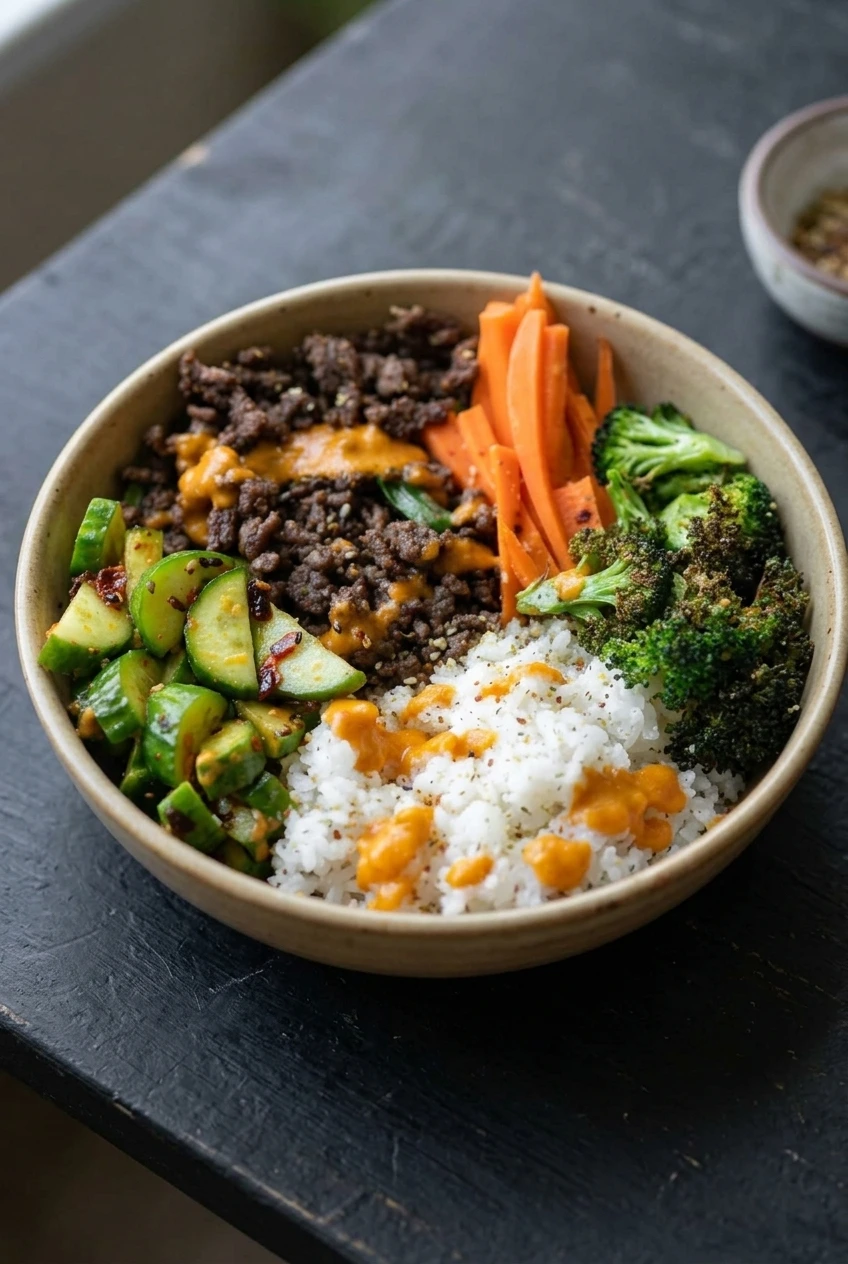
Beef Bulgogi Rice Bowls
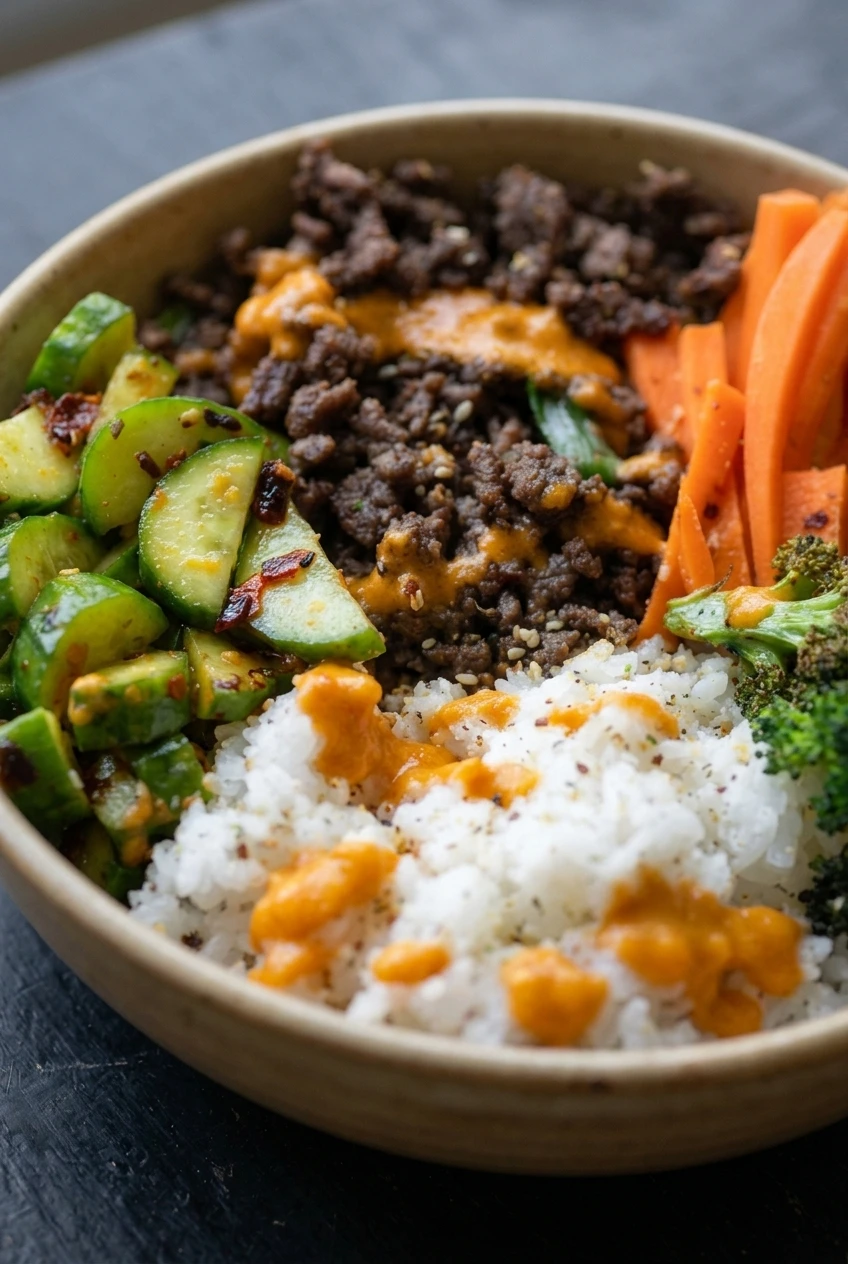
These Korean-inspired bowls combine glossy, sweet-savory ground beef with white rice, roasted broccoli, crisp carrot batons, and lightly dressed cucumber. The beef browns in a skillet before the sauce goes in—no steak-style marinade needed. Giving it time against the hot pan helps the crumbles brown instead of steam.
Keep the rice, beef, and vegetables in separate sections, then finish with a creamy orange gochujang-mayo drizzle. It’s a finishing sauce, not the sauce used to cook the beef.
Makes 4 bowls. Prep: 20 minutes. Cook: 25 minutes. Total: 45 minutes.
Ingredients for Beef Bulgogi Rice Bowls
- 1 1/2 cups uncooked white rice (285g)
- 1 lb ground beef, preferably 85–90% lean (450g)
- 1/4 cup soy sauce
- 2 tablespoons honey
- 3 garlic cloves, minced
- 1 tablespoon grated fresh ginger
- 1 teaspoon toasted sesame oil
- 1 lb broccoli florets (450g)
- 1 tablespoon neutral oil, divided between the broccoli and skillet as needed
- 2 medium carrots, cut into thin batons (120g)
- 1 medium cucumber, cut into chunky pieces (300g)
- 1 tablespoon rice vinegar
- 1/3 cup mayonnaise (75g)
- 1 tablespoon gochujang, or to taste
Optional toppings: Sesame seeds, sliced scallions, chili flakes, or a little chili crisp.
Ingredient swaps: Coconut aminos can replace the soy sauce; adjust the honey to taste, since sweetness varies by brand. Brown sugar can replace the honey. Use less gochujang for a milder drizzle.
How to Make Beef Bulgogi Rice Bowls
- Cook the rice: Rinse the rice and cook it according to the package or rice-cooker directions. Keep it covered while you prepare the toppings, then fluff before serving.
- Roast the broccoli: Heat the oven to 425°F (220°C). Dry the florets, toss them with some of the neutral oil, and spread them in one layer on a rimmed baking sheet, leaving space between them. Roast uncovered for 18 to 22 minutes, turning once. Start checking at 16 minutes; the tips should be browned and the stems just tender.
- Mix the sauces: Stir the soy sauce, honey, garlic, ginger, and sesame oil together for the beef. In a separate bowl, stir the mayonnaise and gochujang until smooth. Set the creamy sauce aside for serving.
- Dress the cucumber: Toss the cucumber with the rice vinegar. Keep it crisp and lightly coated, and drain off excess liquid before adding it to the bowls. Add a little chili, if desired.
- Brown the beef: Heat a wide skillet over medium-high heat. Add a little of the remaining neutral oil if needed, then add the beef. Let it brown briefly before breaking it into small crumbles. Cook for about 5 to 7 minutes, stirring as needed, until browned and no longer pink. If the skillet is crowded, cook in batches so the beef browns instead of steaming.
- Glaze the beef: Reduce the heat to medium or medium-low and add the soy mixture. Simmer uncovered for 2 to 4 minutes, stirring, until the sauce is glossy and clings to the crumbles rather than pooling in the pan. The ground beef should reach 160°F (70°C). Remove from the heat and let stand for 2 to 3 minutes.
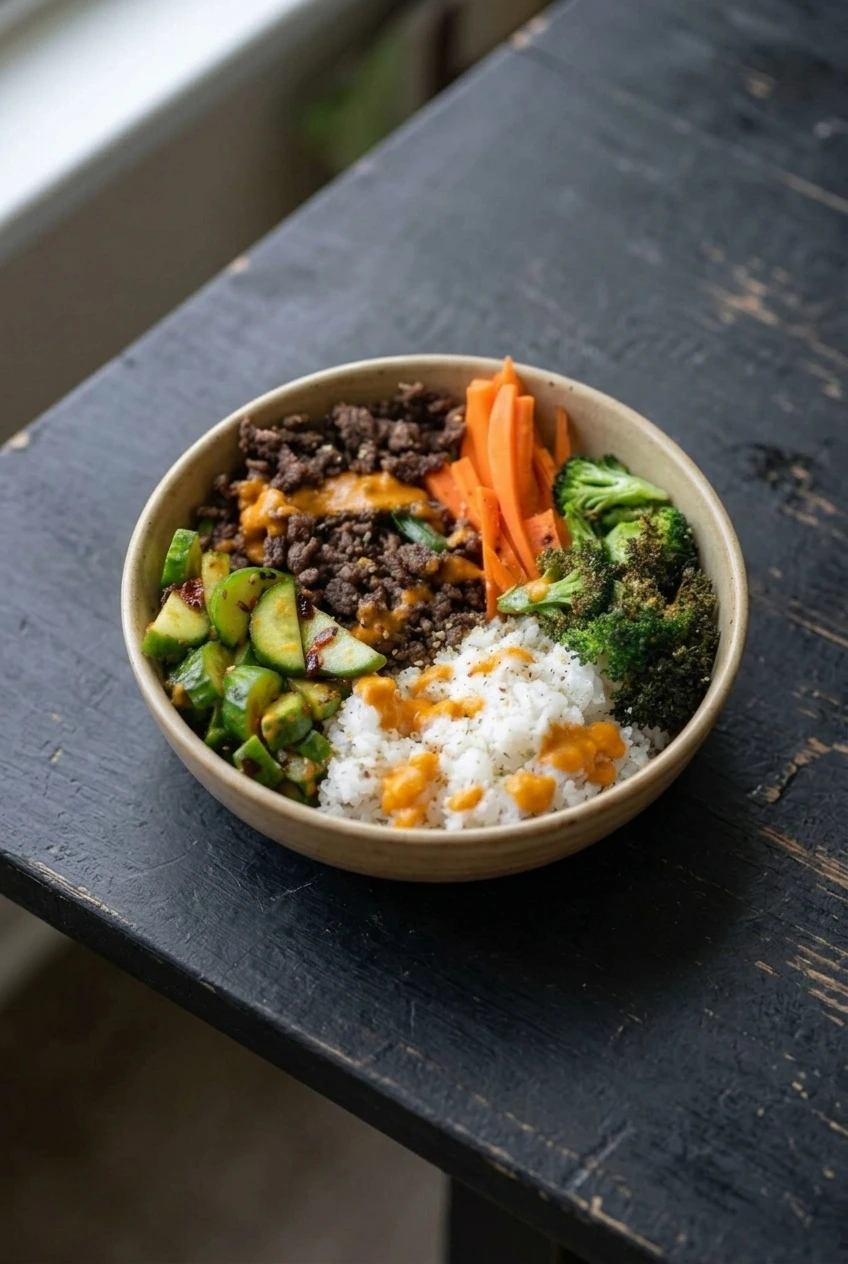
- Assemble the bowls: Divide the warm rice among four shallow bowls. Arrange the beef, carrots, broccoli, and drained cucumber in separate sections. Drizzle the creamy orange sauce over the beef and rice just before serving.
How to Tell When the Beef Sauce Is Ready
The sauce should leave the beef glossy, with little thin liquid left in the skillet. If it still runs off the crumbles, simmer uncovered for another minute or two, stirring so the honey does not scorch. If the beef looks gray and watery before the sauce is added, give it more room in the skillet on the next batch.
Make-Ahead and Storage
Refrigerate cooked beef and rice in airtight containers for up to 4 days. Rice, beef, and roasted broccoli can be prepared ahead; keep the cucumber and creamy sauce separate from the hot components. Cut or dress the cucumber close to serving so it stays crisp.
Reheat the beef and rice until hot, then add the cucumber and creamy sauce. Cooked beef may be frozen in an airtight, freezer-safe container. Do not freeze the fresh cucumber, creamy sauce, or assembled bowls.
Nutrition
Approximate nutrition per serving, based on 1 of 4 bowls (about 550g): 740 calories, 33g protein, 30g fat, and 83g carbohydrates. Per 100g: about 135 calories, 6g protein, 5g fat, and 15g carbohydrates. Values vary with the beef’s fat content and the brands used.
Equipment
- Rice cooker or saucepan
- Rimmed baking sheet
- Wide skillet
- Mixing bowls
Ingredients
For the bowls
- 1 1/2 cups uncooked white rice (285g)
- 1 lb ground beef, preferably 85–90% lean (450g)
- 1 lb broccoli florets (450g)
- 1 tablespoon neutral oil, divided between the broccoli and skillet as needed
- 2 medium carrots, cut into thin batons (120g)
- 1 medium cucumber, cut into chunky pieces (300g)
- 1 tablespoon rice vinegar
For the beef sauce
- 1/4 cup soy sauce
- 2 tablespoons honey
- 3 garlic cloves, minced
- 1 tablespoon grated fresh ginger
- 1 teaspoon toasted sesame oil
For the creamy sauce
- 1/3 cup mayonnaise (75g)
- 1 tablespoon gochujang, or to taste
Optional toppings
- Sesame seeds
- Sliced scallions
- Chili flakes
- Chili crisp
Instructions
- Rinse the rice and cook it according to the package or rice-cooker directions. Keep covered, then fluff before serving.
- Preheat the oven to 425°F (220°C). Dry the broccoli, toss with some of the neutral oil, and spread in one layer on a rimmed baking sheet.
- Roast the broccoli uncovered for 18 to 22 minutes, turning once. Start checking at 16 minutes; the tips should be browned and the stems just tender.
- Stir together the soy sauce, honey, garlic, ginger, and sesame oil in a bowl. In a separate bowl, stir the mayonnaise and gochujang until smooth; set aside for serving.
- Toss the cucumber with the rice vinegar. Drain off excess liquid before serving.
- Heat a wide skillet over medium-high heat. Add a little of the remaining neutral oil if needed, then add the beef. Let it brown briefly before breaking it into small crumbles.
- Cook the beef for 5 to 7 minutes, stirring as needed, until browned and no longer pink. Cook in batches if the skillet is crowded.
- Reduce the heat to medium or medium-low and add the soy sauce mixture. Simmer uncovered for 2 to 4 minutes, stirring, until glossy and clinging to the beef. Confirm the beef reaches 160°F (70°C), then remove from the heat and let stand for 2 to 3 minutes.
- Divide the rice among four shallow bowls. Arrange the beef, carrots, broccoli, and drained cucumber in separate sections. Drizzle with the creamy sauce and add optional toppings.
Tips
- Dry the broccoli before roasting and leave space between the florets so they brown.
- Give the beef time against the hot pan before breaking it up to help it brown rather than steam.
- Cook the beef in batches if the skillet is crowded.
- Simmer the beef sauce uncovered until glossy, stirring so the honey does not scorch.
- Keep the cucumber crisp by cutting or dressing it close to serving.
Variations
- Coconut Aminos Beef Bowls: Replace the soy sauce with coconut aminos and adjust the honey to taste.
- Brown Sugar Beef Bowls: Replace the honey with brown sugar.
- Milder Gochujang Mayo: Use less gochujang in the creamy sauce.