

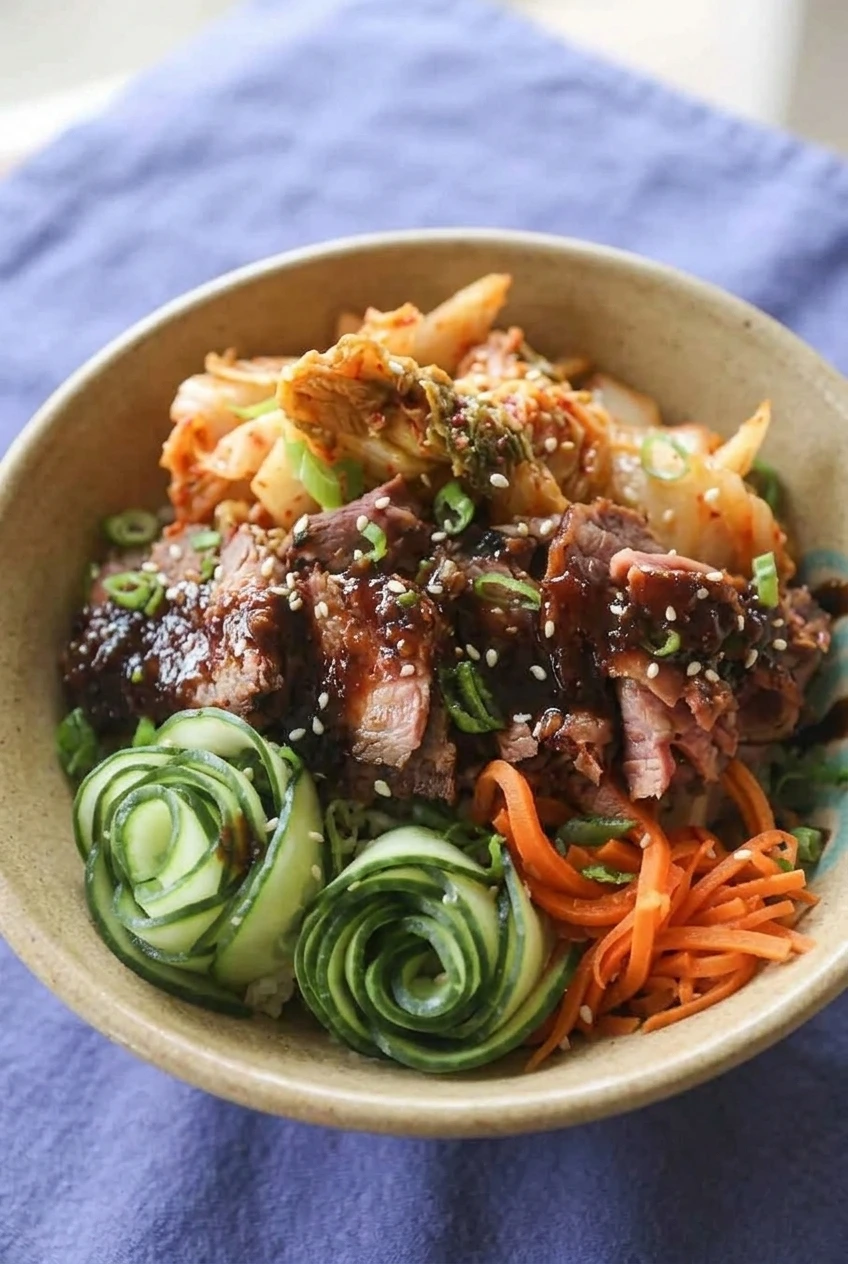
Korean BBQ Steak Rice Bowls
Thin slices of pear-soy marinated steak sear quickly for these Korean-inspired rice bowls. A wide, hot skillet and small batches give the beef room to brown; a clean portion of the marinade becomes a light glaze after a brief simmer.
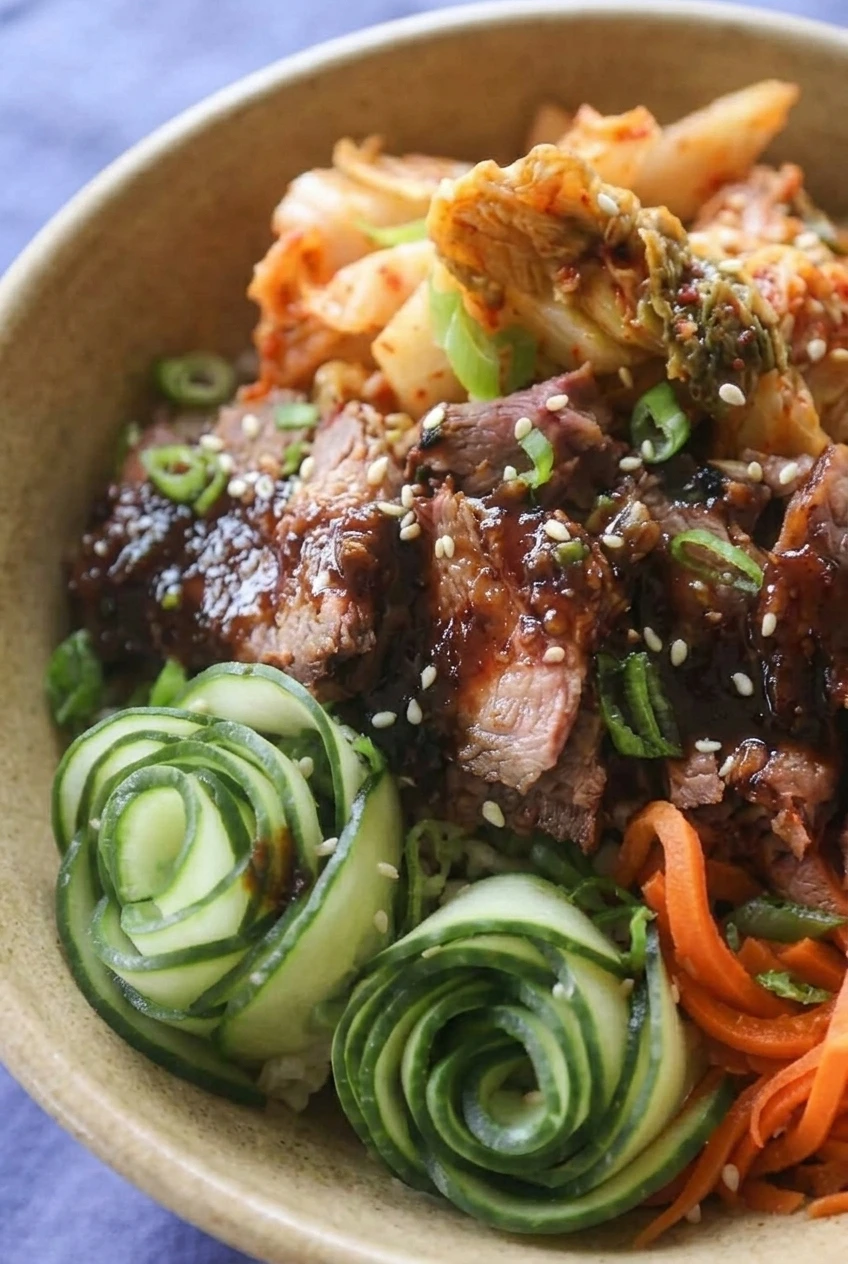
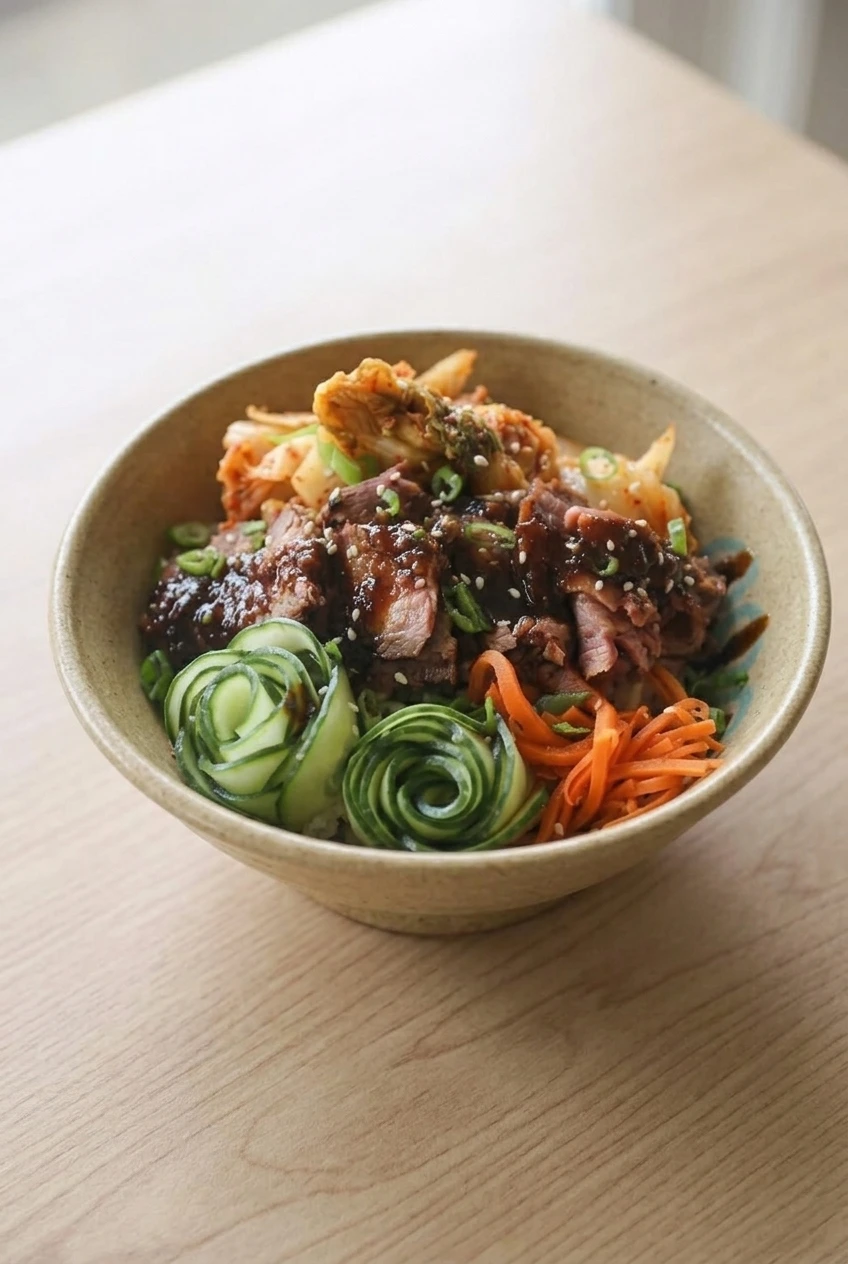
Serve the steak over white rice with kimchi, fine carrot strands, and cucumber ribbons rolled into coils. Keep the toppings in separate sections so the warm beef and rice do not soften the fresh vegetables before serving.
Ingredients for Korean BBQ Steak Rice Bowls
- 1 1/2 cups uncooked white rice (280g)
- 1 1/4 pounds flank or sirloin steak (about 575g)
- 1/2 medium Asian pear or ripe Bartlett pear, finely grated or blended, about 1/2 cup (90g)
- 1/3 cup low-sodium soy sauce (80g)
- 1 1/2 tablespoons brown sugar (20g)
- 1 tablespoon toasted sesame oil
- 3 garlic cloves, minced
- 1 tablespoon grated fresh ginger
- 1 tablespoon neutral high-heat oil, as needed across batches
- 1 large cucumber (300g)
- 1 medium carrot (60g)
- 1 cup napa cabbage kimchi (150g)
- 2 scallions, thinly sliced
- 2 teaspoons sesame seeds
Makes 4 bowls. Allow about 25 minutes of prep and 20 minutes of cooking, plus a 30-minute refrigerated marinade.
How to Make Korean BBQ Steak Rice Bowls
- Cook the rice: Rinse the rice if desired, then cook it in a medium saucepan according to the package directions. Keep it covered and warm.
- Mix and reserve the marinade: Stir together the pear, soy sauce, brown sugar, sesame oil, garlic, and ginger until the sugar is mostly dissolved. Pour about 1/4 cup into a clean small saucepan before the marinade touches the beef.
- Slice and marinate the steak: If the steak is difficult to slice, firm it in the freezer for 15–20 minutes. Cut it across the grain into thin, even strips. Toss with the remaining marinade, cover, and refrigerate for about 30 minutes.
- Prepare the toppings: Shave the cucumber into long, thin ribbons with a vegetable peeler or mandoline and blot away excess moisture. Cut the carrot into fine matchsticks. Portion the kimchi, scallions, and sesame seeds; roll the cucumber ribbons into loose coils close to serving.
- Simmer the glaze: Bring the clean, reserved marinade to a gentle simmer over medium heat. Cook for 2–3 minutes, until hot and slightly thickened but still pourable. Set aside.
- Sear the steak: Heat a wide 12-inch skillet or wok over high heat until very hot. Let excess marinade drip off the beef. Add a little neutral oil, then arrange one batch of strips in a loose single layer. Sear uncovered for about 1–2 minutes per batch, turning once or twice, until browned and cooked to the desired doneness. Start checking after about 1 minute. Transfer each batch out of the pan and let the skillet reheat before adding more beef and oil as needed. Discard the marinade that held the raw beef.
- Glaze and assemble: Toss the cooked steak with just enough simmered glaze to give it a light shine. Divide the rice among four bowls. Place the steak across the center, kimchi toward the back, cucumber coils at the front-left, and carrot at the front-right. Sprinkle with scallions and sesame seeds.
For whole-muscle beef, USDA guidance is 145°F (65°C) followed by a 3-minute rest. Thin strips are difficult to probe individually; if checking temperature, use a representative thicker piece.
How to Get Thin, Browned Steak Strips
Briefly chilling the steak makes it easier to cut evenly. Slice across the visible muscle fibers so the cooked pieces are easier to chew. Thick pieces will take longer than the thin strips used here, so use browning and doneness cues rather than the clock alone.
If liquid pools in the skillet and the beef turns gray, the batch is too crowded or carrying too much marinade. Give the strips space and let the pan heat back up between batches. The pear and sugar can darken quickly, so remove each batch once the beef is browned and cooked to the doneness you want.
How to Keep the Cucumber Coils Crisp
Thin, flexible ribbons roll more easily than thick ones. Blot them dry, roll them loosely, and keep them away from the wet kimchi until the bowls are assembled.
Variations
For a grilled version, marinate a larger steak, grill it using timing appropriate to its thickness and desired doneness, then rest and slice it across the grain. Do not use the thin-strip skillet timing for a whole steak. A fried or soft-cooked egg or extra heat from gochujang or sriracha can be added at the table; white rice and the listed toppings make the bowl described above.
Make-Ahead and Storage
For packed lunches, refrigerate the rice, beef, cucumber, carrot, kimchi, and glaze promptly in separate covered containers. Assemble shortly before eating to keep the vegetables crisp. No specific storage duration is established for the cooked beef or assembled bowls.
Reheat the rice and beef separately until hot, then add the chilled toppings and as much glaze as desired. Keep the cucumber and carrot out of the hot components until serving.
Nutrition
Approximate nutrition per bowl, based on 4 servings: 675 calories, 38g protein, 25g fat, and 72g carbohydrates. Approximate nutrition per 100g: 145 calories, 8g protein, 5g fat, and 15g carbohydrates. Values vary with the steak cut, cooked rice yield, and amount of marinade and glaze used.
Equipment
- Medium saucepan
- Small saucepan
- 12-inch skillet or wok
- Vegetable peeler or mandoline
- Knife
- Cutting board
Ingredients
For the rice and steak
- 1 1/2 cups uncooked white rice (280 g)
- 1 1/4 pounds flank or sirloin steak (about 575 g)
- 1 tablespoon neutral high-heat oil, as needed across batches
For the marinade and glaze
- 1/2 medium Asian pear or ripe Bartlett pear, finely grated or blended, about 1/2 cup (90 g)
- 1/3 cup low-sodium soy sauce (80 g)
- 1 1/2 tablespoons brown sugar (20 g)
- 1 tablespoon toasted sesame oil
- 3 garlic cloves, minced
- 1 tablespoon grated fresh ginger
For the toppings
- 1 large cucumber (300 g)
- 1 medium carrot (60 g)
- 1 cup napa cabbage kimchi (150 g)
- 2 scallions, thinly sliced
- 2 teaspoons sesame seeds
Instructions
- Cook the rice in a medium saucepan according to the package directions. Keep it covered and warm.
- Stir together the pear, soy sauce, brown sugar, sesame oil, garlic, and ginger until the sugar is mostly dissolved.
- Pour about 1/4 cup of the marinade into a clean small saucepan before the marinade touches the beef.
- If needed, firm the steak in the freezer for 15–20 minutes. Slice it across the grain into thin, even strips.
- Toss the steak with the remaining marinade, cover, and refrigerate for about 30 minutes.
- Shave the cucumber into long, thin ribbons and blot away excess moisture. Cut the carrot into fine matchsticks. Portion the kimchi, scallions, and sesame seeds, then roll the cucumber ribbons into loose coils close to serving.
- Bring the reserved marinade to a gentle simmer over medium heat. Cook for 2–3 minutes, until hot and slightly thickened but still pourable, then set aside.
- Heat a wide 12-inch skillet or wok over high heat until very hot. Let excess marinade drip off the beef.
- Add a little neutral oil to the skillet and arrange one batch of steak in a loose single layer. Sear uncovered for about 1–2 minutes, turning once or twice, until browned and cooked to your desired doneness. Start checking after about 1 minute.
- Transfer each batch out of the pan and let the skillet reheat before cooking the next batch. Add more oil as needed. Discard the marinade that held the raw beef.
- Toss the cooked steak with just enough simmered glaze to give it a light shine.
- Divide the rice among four bowls. Arrange the steak, kimchi, cucumber coils, and carrot in separate sections. Sprinkle with scallions and sesame seeds.
Tips
- Chill the steak briefly if it is difficult to slice evenly.
- Slice across the visible muscle fibers for more tender bites.
- Cook the steak in uncrowded batches and let the skillet reheat between batches.
- If liquid pools in the pan or the beef turns gray, reduce crowding and let excess marinade drip off.
- Blot cucumber ribbons dry and keep them separate from the kimchi until serving.
Variations
- Grilled Korean BBQ Steak: Marinate a larger steak, grill it according to its thickness and desired doneness, rest it, then slice across the grain.
- Egg or Spicy Topping: Add a fried or soft-cooked egg, or serve with gochujang or sriracha for extra heat.