

Christmas Roast Duck with Orange Glaze
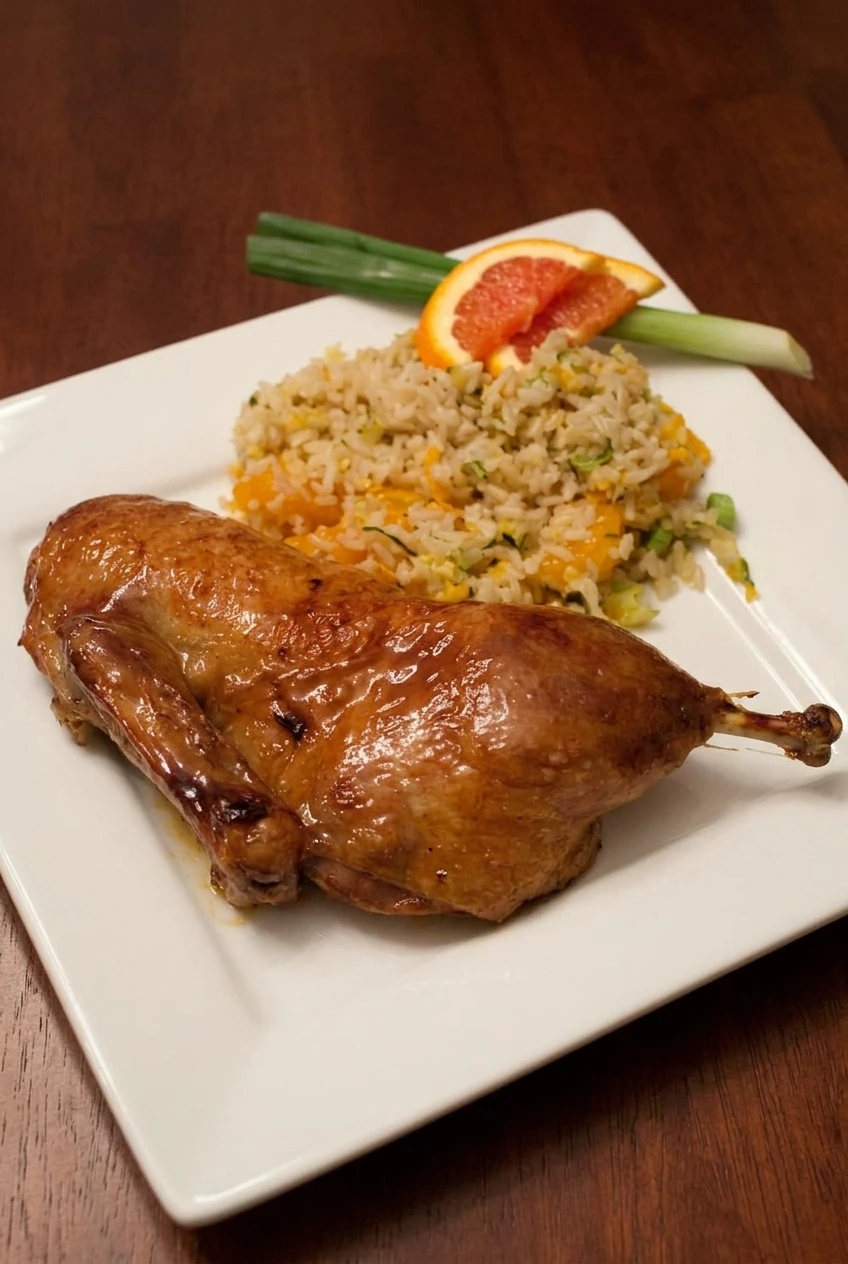
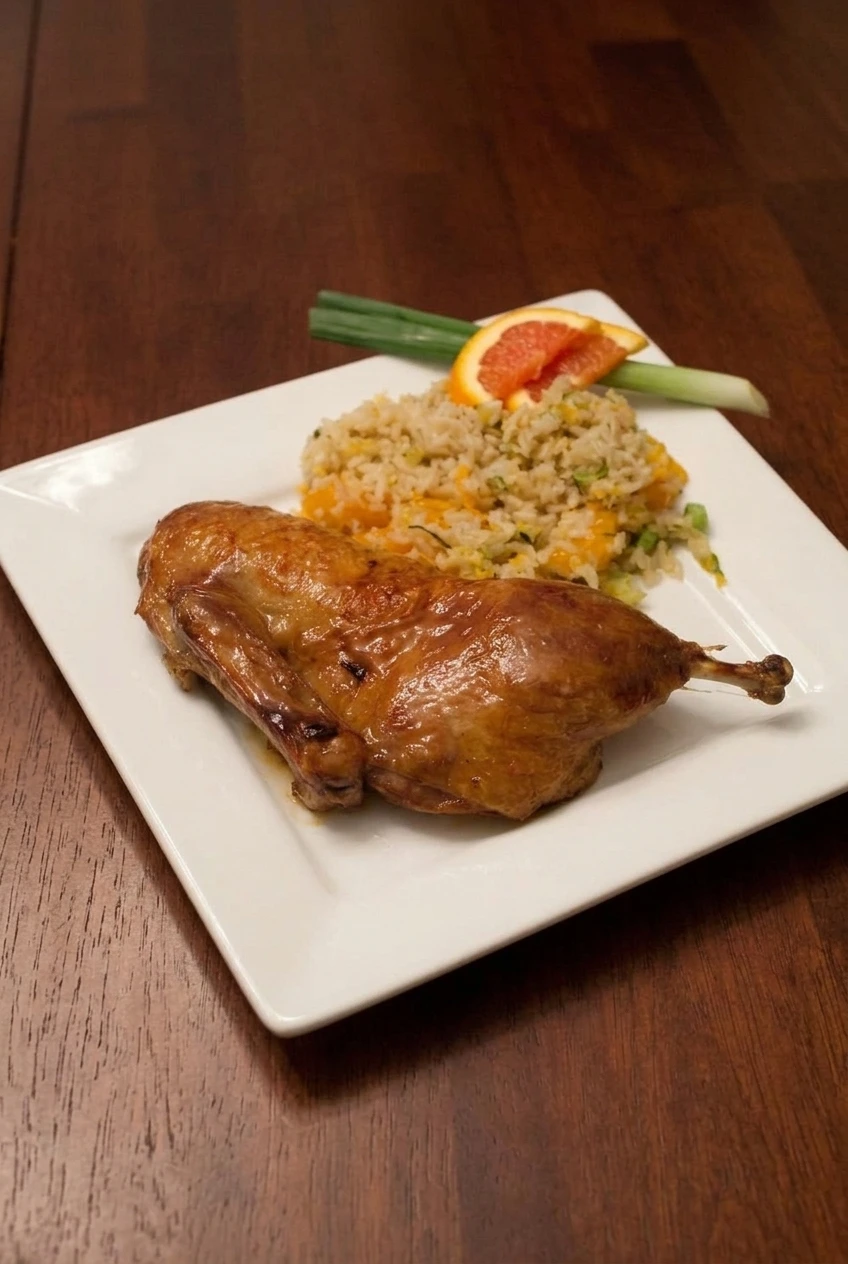
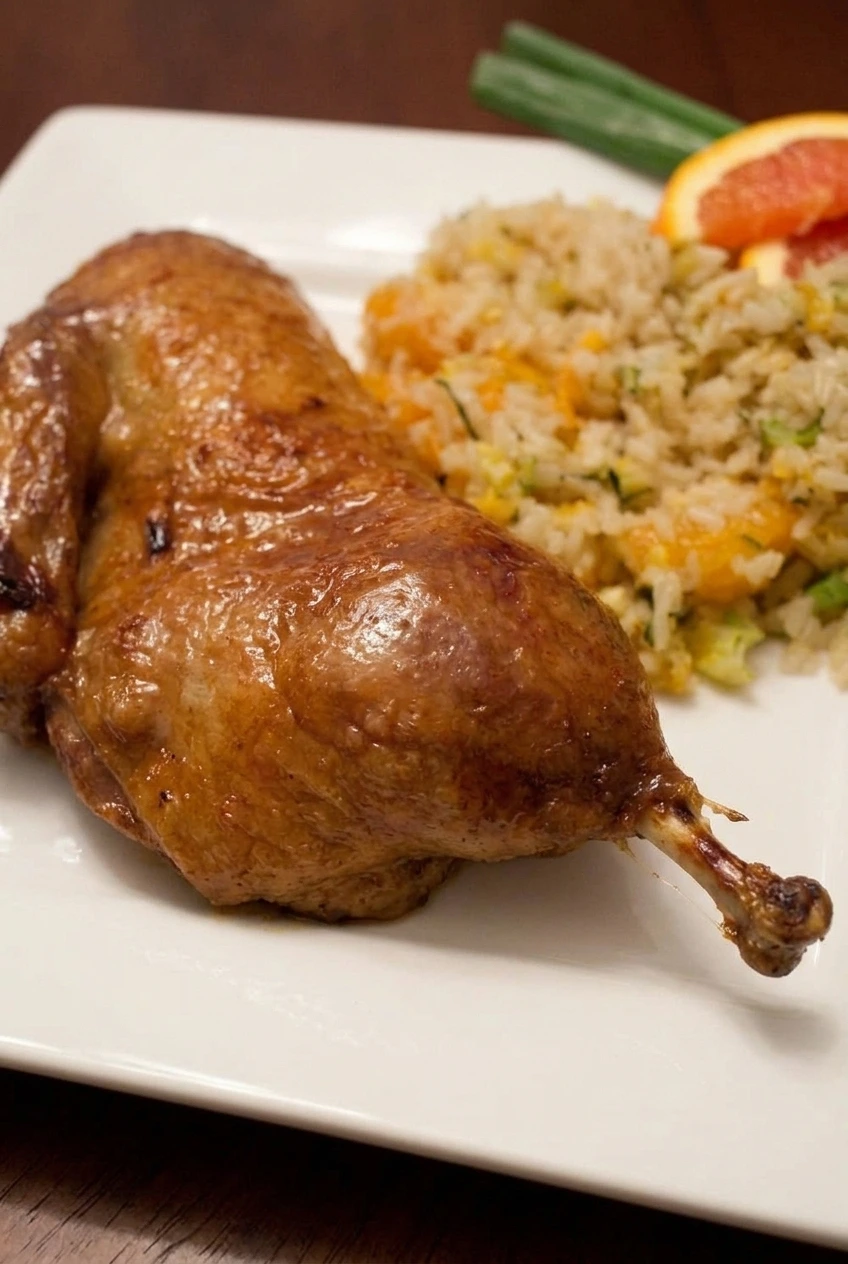
A whole roast duck makes a glossy, browned centerpiece when brushed with orange-ginger glaze near the end of cooking. Carve it after resting and serve a glazed leg portion with rice, orange, and green onion.
Drying and shallow-scoring the skin help the fat render, while a rack keeps the duck above the fat in the pan. Roast time can vary considerably, so start checking with a thermometer before the estimated finish time rather than relying on the color of the skin.
Ingredients for Christmas Roast Duck
Serves 4–6.
- 1 whole duck, 5–6 lb, thawed and giblets removed
- 2 teaspoons kosher salt, plus more to taste
- 1/2 teaspoon black pepper
- 1 orange, quartered for the cavity, plus 1 teaspoon zest for the glaze
- 1/2 yellow onion, cut into wedges
- 3 fresh thyme sprigs
- 1 cup orange juice
- 1/3 cup honey
- 2 tablespoons soy sauce
- 1 tablespoon finely grated fresh ginger
- 1 tablespoon rice vinegar
- 1 small garlic clove, finely grated or minced
For the plated serving, optional: 1 cup uncooked long-grain rice, 1/2 cup diced carrot, 2 sliced scallions, 2 whole green onion stalks, and 1 fresh orange slice per plate. Cook the rice according to its package directions, adding the carrot while it cooks. Fold in the sliced scallions before serving.
How to Roast Duck with Orange Glaze
- Dry and score the duck: Pat it thoroughly dry, including inside the cavity. With a sharp knife, score the skin in a shallow crosshatch pattern, cutting through the skin and fat but not into the meat. Season with salt and pepper. For a drier surface, refrigerate the duck uncovered on a rack overnight; otherwise, proceed after patting it dry. Do not leave it out to dry at room temperature.
- Prepare the pan: Preheat a conventional oven to 350°F (175°C) with a rack in the center. Set a roasting rack inside a deep roasting pan. Place the orange quarters, onion, and thyme loosely in the cavity, then set the duck breast-side up on the rack. Do not add oil to the skin or liquid to the pan.
- Roast and manage the fat: Roast uncovered, without flipping. Begin checking the duck around 2 hours; a 5–6 lb bird may take about 2 1/2–3 1/2 hours in total. Check the pan periodically. If fat accumulates deeply or begins to smoke, carefully pour off the excess into a stable, heatproof container. Rotate the pan once if the duck browns unevenly.
- Make the glaze: Combine the orange juice, zest, honey, soy sauce, ginger, vinegar, and garlic in a small saucepan. Simmer over medium-low heat for 10–15 minutes, until the glaze lightly coats a spoon but remains brushable. Set aside some clean glaze for serving before dipping a brush into the rest.
- Glaze and check for doneness: Check the thickest parts of the thigh and breast with an instant-read thermometer, avoiding bone. When the duck is approaching doneness, brush a thin coat of glaze over the skin for the final 15 minutes of roasting. Watch closely and loosely tent with foil if the glaze darkens too quickly. Continue roasting until both the thigh and breast reach at least 165°F (75°C).
- Rest and carve: Transfer the duck to a carving board and rest for 15–20 minutes. Carve the legs and breast, keeping the skin attached to the leg portions where possible.
- Serve: Place a glazed leg or thigh portion beside a mound of rice, if using. Add a fresh orange slice and the whole green onion stalks, and offer the reserved glaze on the side.
How to Tell When the Duck Is Done
Browned skin does not mean the meat is cooked through. Begin checking around 2 hours, then use the thermometer readings—not the estimated roast time—to decide when to take the duck out. A larger bird or a different oven may need longer than the stated range.
How to Store and Reheat Roast Duck
Refrigerate carved duck promptly in a covered container and use within 3–4 days. Reheat gently, covered, until hot throughout; the skin may lose some crispness. The glaze can be made ahead and refrigerated separately, then rewarmed gently until brushable. For the best skin, roast the duck fresh.
Nutrition
Approximate nutrition per serving, based on 1/6 of the duck and glaze, without rice or garnishes: 700 calories, 38g protein, 53g fat, and 16g carbohydrates. Approximate nutrition per 100g: 330 calories, 18g protein, 25g fat, and 8g carbohydrates. Values vary with the duck’s size, the amount of fat rendered, and how much glaze is eaten.
Christmas Roast Duck with Orange Glaze
Equipment
- Roasting pan
- Roasting rack
- Instant-read thermometer
- Small saucepan
- Pastry brush
- Carving board
- Carving knife
- Heatproof container
Ingredients
For the Duck
- 1 whole duck, 5–6 lb, thawed and giblets removed
- 2 teaspoons kosher salt, plus more to taste
- 1/2 teaspoon black pepper
- 1 orange, quartered for the cavity
- 1/2 yellow onion, cut into wedges
- 3 fresh thyme sprigs
For the Glaze
- 1 cup orange juice
- 1 teaspoon orange zest
- 1/3 cup honey
- 2 tablespoons soy sauce
- 1 tablespoon finely grated fresh ginger
- 1 tablespoon rice vinegar
- 1 small garlic clove, finely grated or minced
Optional for Serving
- 1 cup uncooked long-grain rice
- 1/2 cup diced carrot
- 2 scallions, sliced
- 2 whole green onion stalks
- 1 fresh orange slice per plate
Instructions
- Pat the duck thoroughly dry, including inside the cavity.
- Shallow-score the skin in a crosshatch pattern, cutting through the skin and fat without cutting into the meat. Season with salt and pepper.
- For a drier surface, refrigerate the duck uncovered on a rack overnight. Otherwise, proceed after patting it dry; do not dry it at room temperature.
- Preheat a conventional oven to 350°F (175°C) with a rack in the center. Set a roasting rack inside a deep roasting pan.
- Place the orange quarters, onion, and thyme loosely in the cavity. Set the duck breast-side up on the rack. Do not add oil to the skin or liquid to the pan.
- Roast uncovered without flipping. Begin checking around 2 hours; a 5–6 lb duck may take about 2 1/2–3 1/2 hours total.
- Check the pan periodically and carefully pour excess fat into a stable, heatproof container if it accumulates deeply or begins to smoke. Rotate the pan once if the duck browns unevenly.
- Combine the orange juice, orange zest, honey, soy sauce, ginger, vinegar, and garlic in a small saucepan. Simmer over medium-low heat for 10–15 minutes, until the glaze lightly coats a spoon but remains brushable.
- Set aside some clean glaze for serving before dipping a brush into the remaining glaze.
- Check the thickest parts of the thigh and breast with an instant-read thermometer, avoiding bone. When the duck is approaching doneness, brush a thin coat of glaze over the skin for the final 15 minutes of roasting.
- Watch the glaze closely and loosely tent the duck with foil if it darkens too quickly. Continue roasting until both the thigh and breast reach at least 165°F (75°C).
- Transfer the duck to a carving board and rest for 15–20 minutes. Carve the legs and breast, keeping the skin attached to the leg portions where possible.
- If serving rice, cook it according to package directions, adding the carrot while it cooks. Fold in the sliced scallions before serving.
- Serve a glazed leg or thigh portion with rice, if using, and add an orange slice and whole green onion stalks. Offer the reserved glaze on the side.
Tips
- Dry and shallow-score the skin to help the fat render.
- Use a roasting rack to keep the duck above the fat in the pan.
- Start checking the duck with a thermometer around 2 hours; cooking time varies by bird and oven.
- Pour off excess pan fat carefully if it accumulates deeply or begins to smoke.
- Reserve clean glaze for serving before using a brush on the duck.