

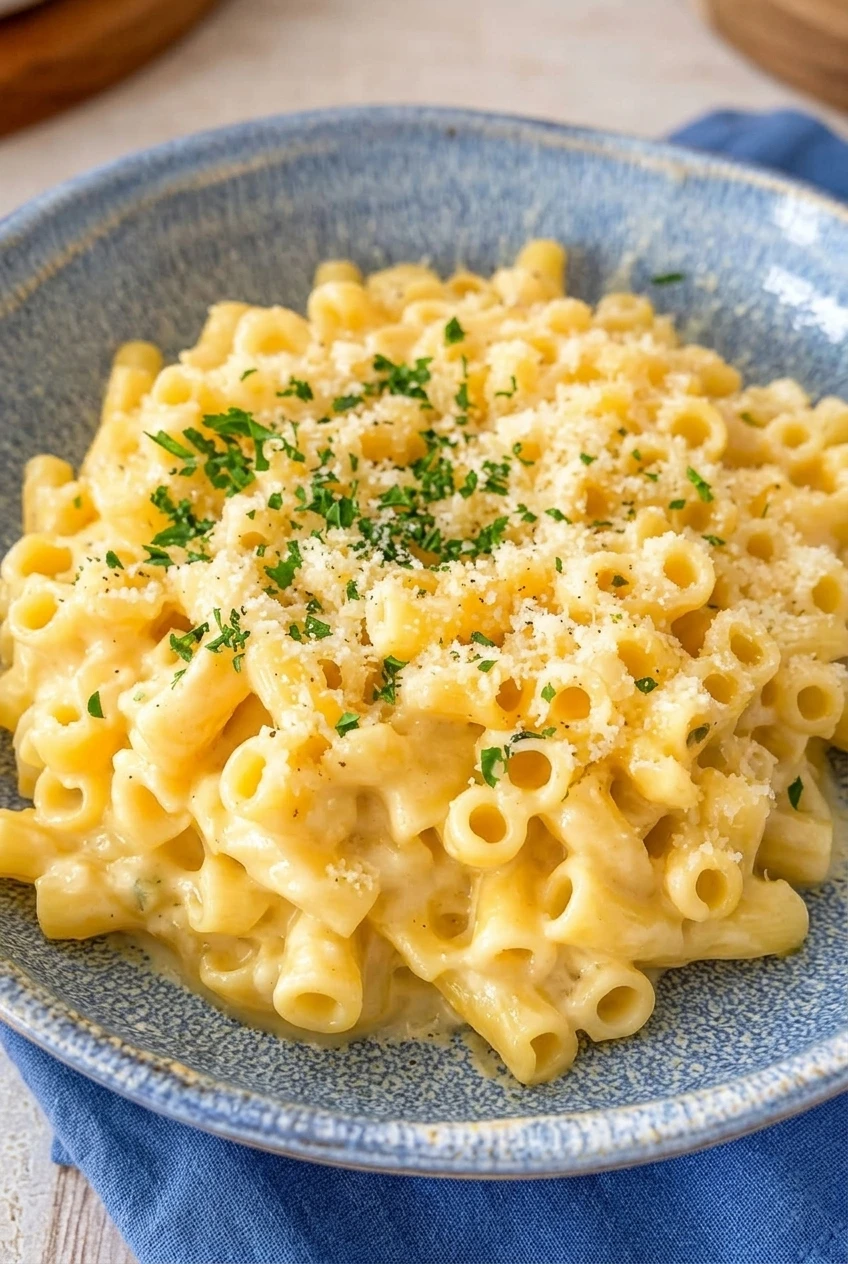
Ditalini Pasta
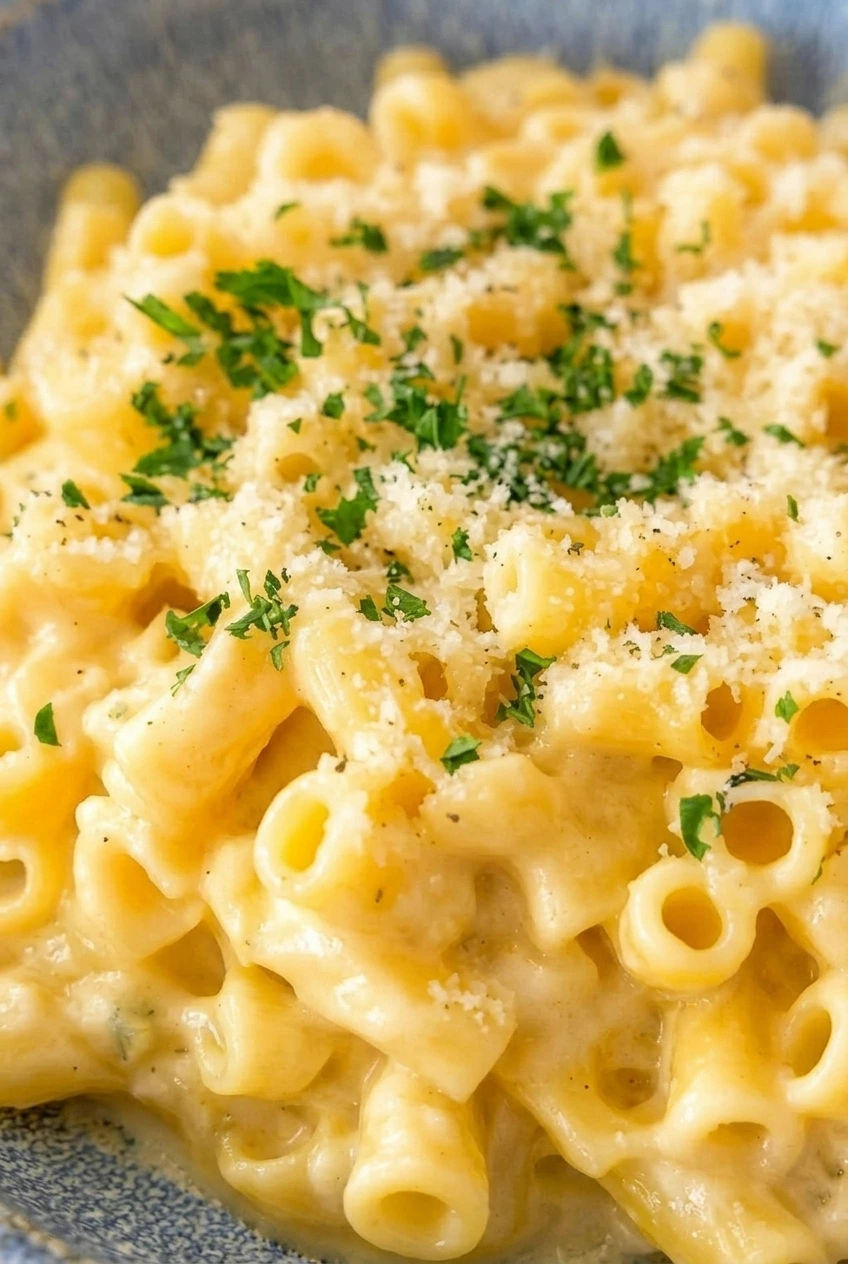
Ditalini simmers directly in broth, then cream, butter, and Parmesan turn the remaining liquid into a glossy sauce that clings to the small pasta tubes. Stir regularly and start tasting near the end of cooking: the pasta should be tender but still hold its shape. Finish the cheese sauce off the heat, then serve the ditalini loose and creamy with more Parmesan, parsley, and black pepper.
Ingredients for Ditalini Pasta
- 8 ounces ditalini pasta (225g)
- 3 cups low-sodium chicken or vegetable broth (720ml), plus extra warm broth as needed
- 2 tablespoons unsalted butter (30g), divided
- 2 cloves garlic, finely minced
- 1/2 cup heavy cream (120g)
- 3/4 cup finely grated Parmesan (75g), divided
- Kosher salt, to taste; start with 1/4 teaspoon if using low-sodium broth
- 1/4 teaspoon freshly ground black pepper, plus more for serving
- 2 tablespoons finely chopped fresh parsley
How to Make Ditalini Pasta
- Soften the garlic: Melt 1 tablespoon of butter in a large, wide skillet over medium heat. Add the garlic and stir for 30 to 60 seconds, until fragrant but still pale.
- Add the broth and pasta: Pour in the 3 cups of broth and add the dry ditalini. Stir and bring to a gentle simmer over medium heat. Cover mostly with a lid left slightly ajar.
- Simmer until tender: Reduce the heat to medium-low or low. Cook for 8 to 12 minutes, stirring regularly and scraping the bottom of the skillet. Start tasting at about 8 minutes, checking more often near the package’s suggested cooking time. Add warm broth a splash at a time if the pan dries out before the pasta is tender. The ditalini should hold its tubular shape, with most of the broth absorbed or incorporated into the sauce. If there is too much liquid near the end, uncover the skillet and let it reduce.
- Finish off the heat: Turn off the heat. Stir in the cream, remaining tablespoon of butter, and about 1/2 cup of the Parmesan, stirring almost continuously until the cheese melts and the sauce looks glossy. Add a splash of warm broth if the pasta looks stiff or dry.
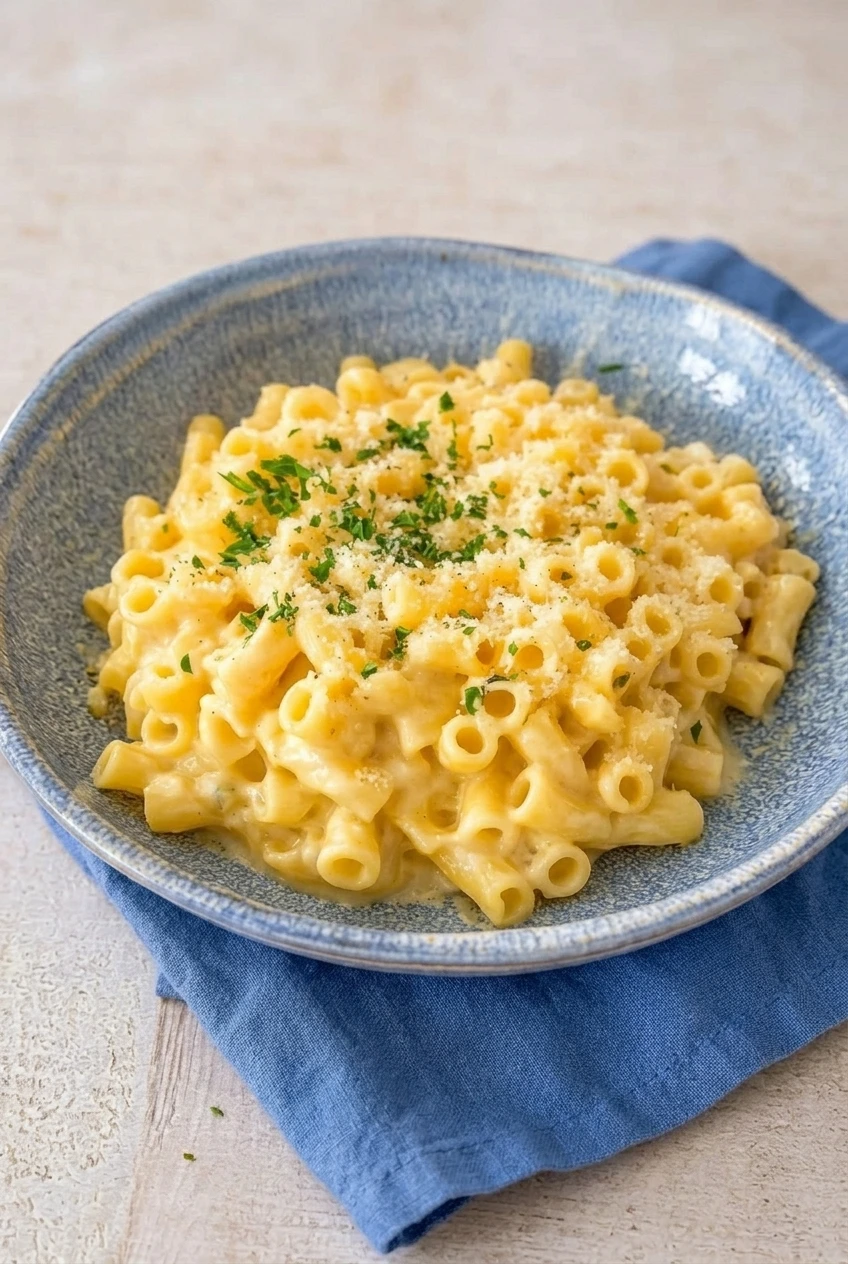
- Season and serve: Stir in the 1/4 teaspoon black pepper and salt to taste. Let the pasta sit for 1 to 2 minutes, then spoon it into shallow bowls or plates. Top with the remaining Parmesan, parsley, and another grind of black pepper. Serve while the sauce is loose and creamy.
How to Keep the Pasta and Sauce Creamy
A wide skillet gives the ditalini room to move, but pan width and pasta brand affect how quickly the broth disappears. Keep the simmer gentle and stir more frequently as the liquid reduces so the pasta does not catch on the bottom. If it needs more time to become tender, add small splashes of warm broth rather than letting the pan run dry.
Finely grated Parmesan melts more evenly than coarse shreds. Add it off the heat with the cream so it blends into the sauce instead of clumping over a strong simmer. Ditalini continues to absorb liquid as it sits; stir in another splash of broth if the sauce tightens before serving.
To cook the pasta separately instead, follow the package directions and reserve some pasta water to bring the creamy sauce together. The one-pot broth amount and simmer time do not apply to that method.
Serving Ditalini Pasta
Serve with a simple green vegetable or garlic bread. For a heartier creamy pasta, try creamy sausage and spinach pasta.
How to Store and Reheat Ditalini Pasta
Refrigerate leftovers in an airtight container for up to 3 days. The sauce thickens as it chills; reheat gently on the stovetop or in the microwave with a splash of water, broth, or cream to loosen it.
Freezing is possible in a freezer-safe container for up to 3 months, though the pasta may soften and the creamy sauce may change texture after thawing.
Nutrition
Approximate nutrition per serving, based on 4 servings: 445 calories, 16g protein, 23g fat, and 44g carbohydrates. Per 100g: approximately 180 calories, 6g protein, 9g fat, and 18g carbohydrates. Values vary with the broth, cream, and Parmesan used.
Ditalini Pasta
Equipment
- Large wide skillet
- Skillet lid
Ingredients
- 8 ounces ditalini pasta (225 g)
- 3 cups low-sodium chicken or vegetable broth (720 ml), plus extra warm broth as needed
- 2 tablespoons unsalted butter (30 g), divided
- 2 cloves garlic, finely minced
- 1/2 cup heavy cream (120 g)
- 3/4 cup finely grated Parmesan (75 g), divided
- Kosher salt, to taste; start with 1/4 teaspoon if using low-sodium broth
- 1/4 teaspoon freshly ground black pepper, plus more for serving
- 2 tablespoons finely chopped fresh parsley
Instructions
- Melt 1 tablespoon of butter in a large, wide skillet over medium heat.
- Add the garlic and stir for 30 to 60 seconds, until fragrant but still pale.
- Pour in the broth and add the dry ditalini. Stir and bring to a gentle simmer over medium heat.
- Cover the skillet mostly with a lid, leaving it slightly ajar. Reduce the heat to medium-low or low.
- Cook for 8 to 12 minutes, stirring regularly and scraping the bottom of the skillet. Start tasting at about 8 minutes and check more often as the pasta approaches its package cooking time.
- Add warm broth a splash at a time if the skillet dries out before the pasta is tender. If there is too much liquid near the end, uncover the skillet and let it reduce.
- Turn off the heat. Stir in the cream, the remaining tablespoon of butter, and about 1/2 cup of the Parmesan until the cheese melts and the sauce looks glossy.
- Add a splash of warm broth if the pasta looks stiff or dry. Stir in the black pepper and salt to taste.
- Let the pasta sit for 1 to 2 minutes, then serve topped with the remaining Parmesan, parsley, and more black pepper.
Tips
- Keep the simmer gentle and stir more frequently as the broth reduces to prevent the pasta from sticking.
- Add small splashes of warm broth if the pan dries out before the ditalini is tender.
- Use finely grated Parmesan so it melts smoothly into the sauce.
- Finish with the cream and Parmesan off the heat to help prevent the cheese from clumping.
- Stir in another splash of broth if the sauce thickens before serving.
Variations
- Separately Cooked Ditalini: Cook the pasta according to the package directions, reserve some pasta water, and use it to bring the creamy sauce together.