

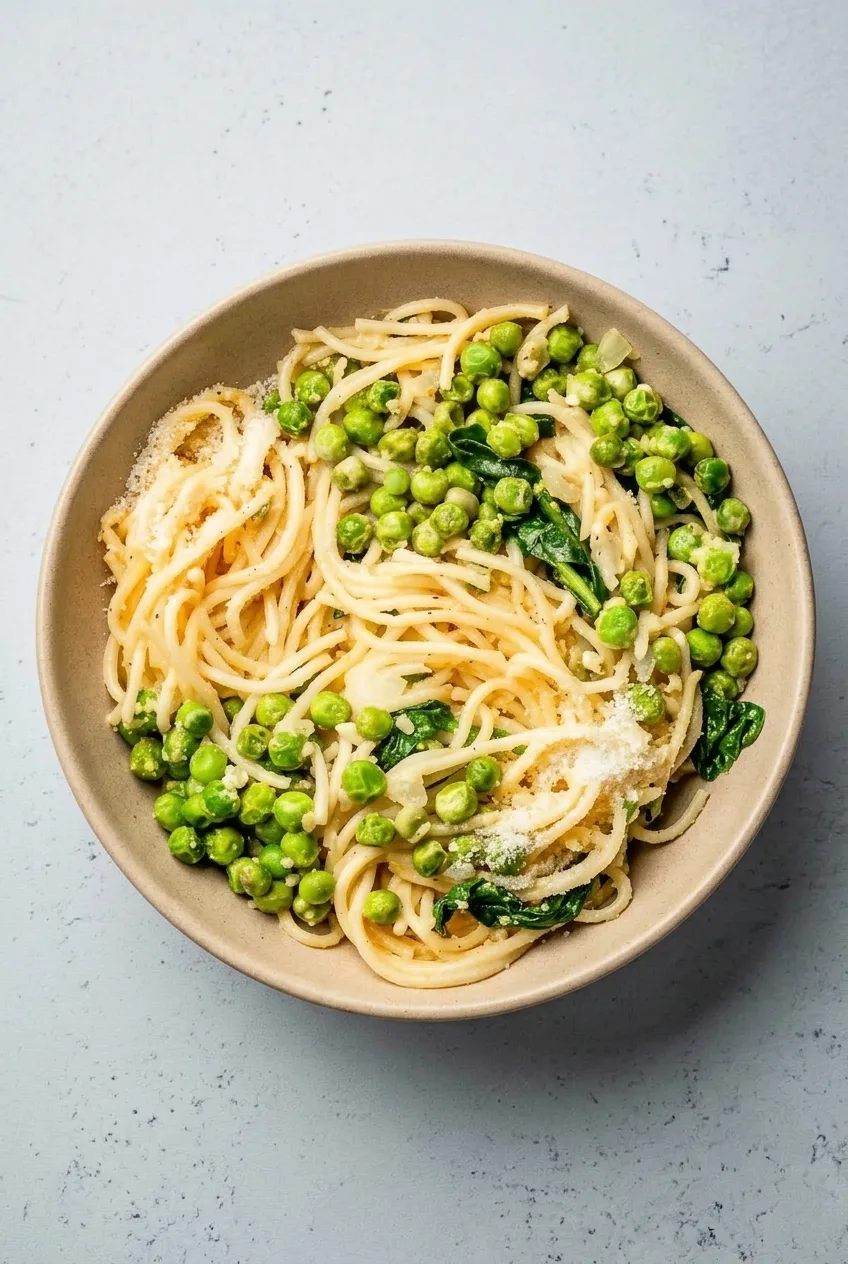
Parmesan Pea Pasta for Kids
Long spaghetti strands, whole peas, and a few wilted spinach leaves get a light Parmesan coating in this stovetop pasta. Frozen peas cook in the same pot as the spaghetti, while butter and reserved pasta water help the cheese coat the strands without heavy cream.
Cook the spaghetti to the tenderness that suits the child eating it, keeping the strands intact. Add the Parmesan off heat to help it coat smoothly, then serve the pasta while it is glossy.
Ingredients for Parmesan Pea Pasta
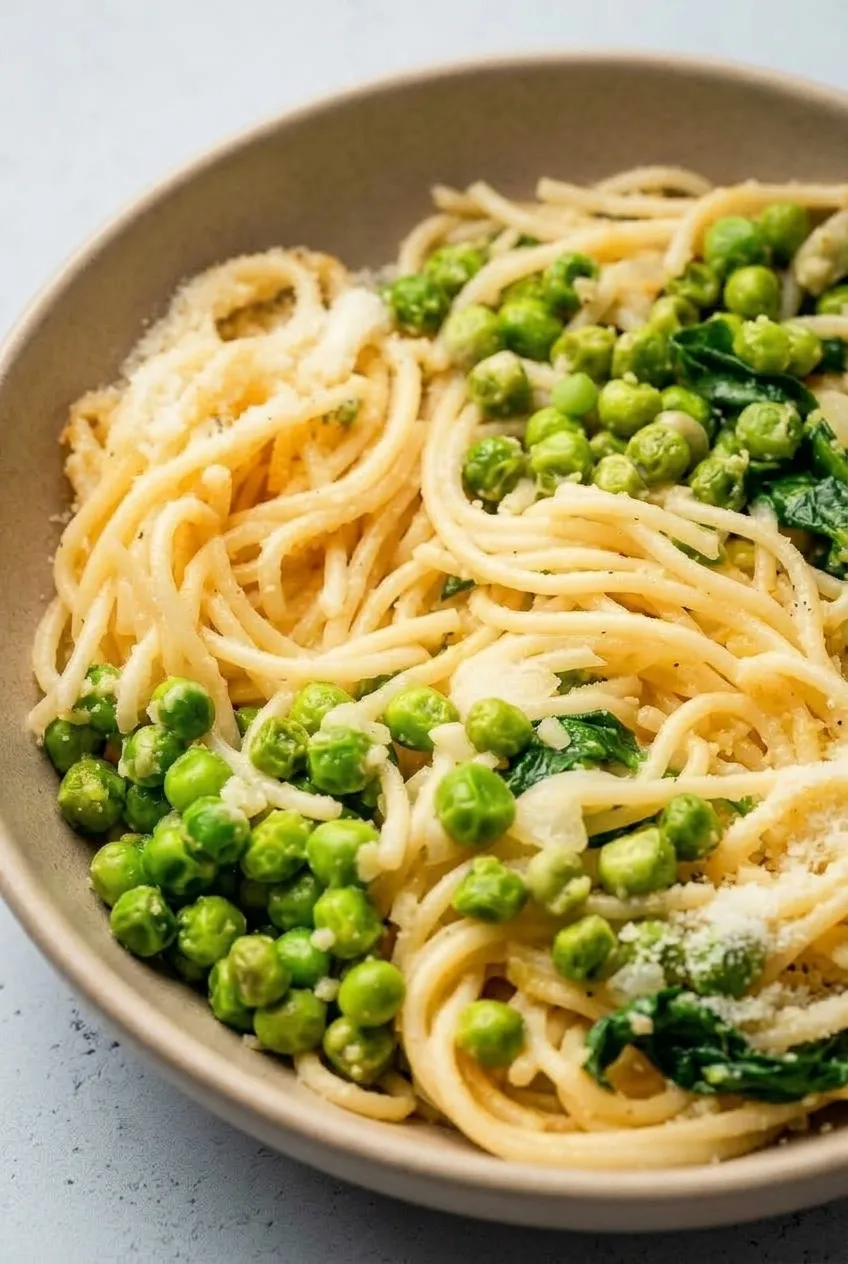
- 8 ounces dry spaghetti (about 225g)
- 1 1/2 cups frozen peas (about 225g)
- 2 loosely packed cups baby spinach (about 60g)
- 2 tablespoons unsalted butter (28g)
- 1/2 cup finely grated Parmesan, plus 2 tablespoons for serving (about 55g total)
- Salt for the pasta water, plus a pinch at the end if needed
- Reserved pasta cooking water: about 1/4 cup to start; reserve at least 1 cup
Optional: Offer a small pinch of freshly ground black pepper at the table.
Yield: 4 child-size servings or 2–3 larger servings. Time: 5 minutes prep; 12–15 minutes cooking, depending on the spaghetti; about 20 minutes total.
How to Make Parmesan Pea Pasta
- Boil the spaghetti: Bring a large pot of salted water to a boil. Add the spaghetti and stir during the first minute to separate the strands. Boil uncovered according to the package directions. Check the pasta shortly before the package time ends so you can add the peas with 2 minutes remaining.
- Add the peas: Stir the frozen peas into the boiling water for the final 2 minutes. The spaghetti should be tender to your family’s preference but still hold its shape; the peas should be hot, bright green, and distinct. Scoop out at least 1 cup of pasta water, then drain the spaghetti and peas.
- Wilt the spinach: Return the spaghetti and peas to the pot with the butter and baby spinach. Toss over low heat for 30–60 seconds, until the butter melts and the spinach softens but remains visibly leafy.
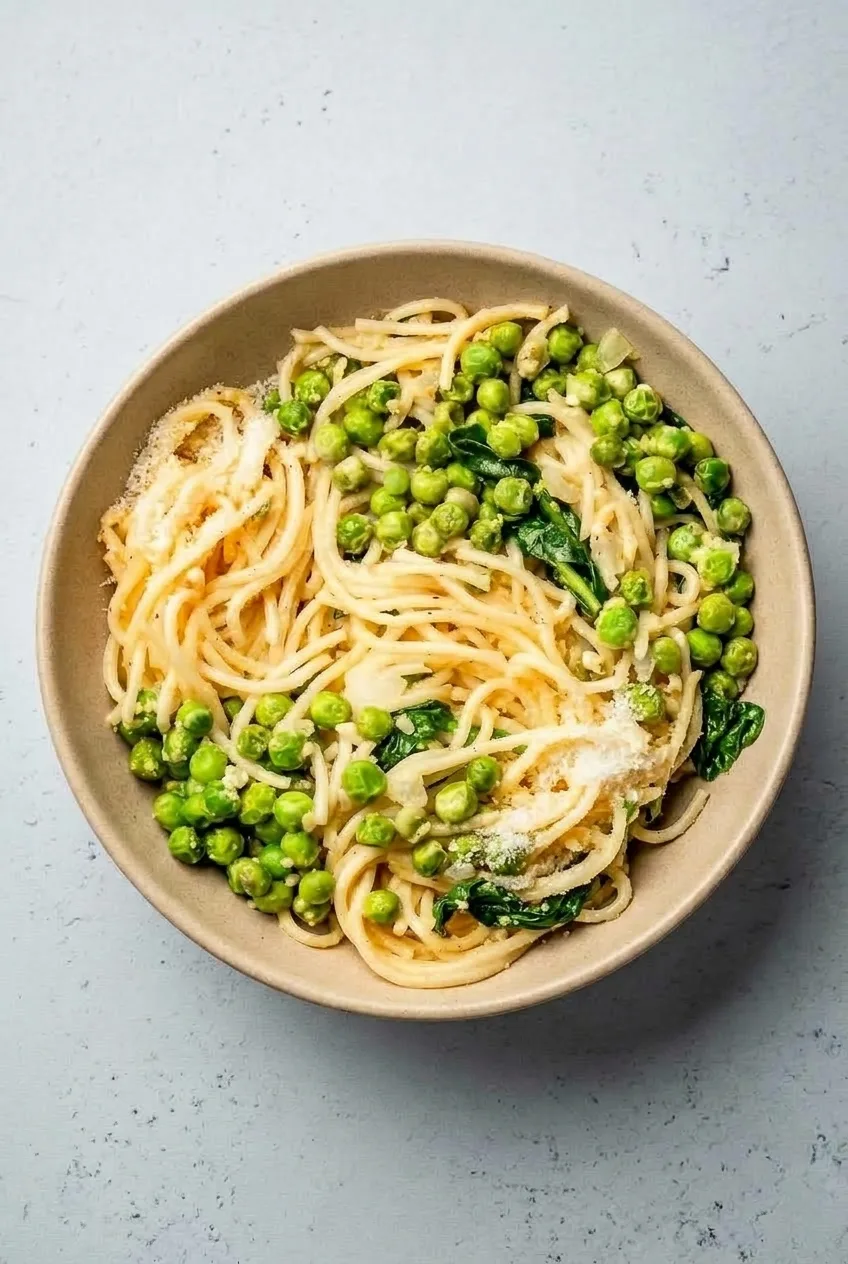
- Coat with Parmesan: Turn off the heat. Add about 1/4 cup reserved pasta water, then gradually add the 1/2 cup Parmesan, tossing with tongs. Add more warm pasta water a tablespoon or two at a time until the cheese lightly coats the strands. The pasta should look glossy, not dry or soupy. Taste and add a pinch of salt if needed.
- Serve: Divide among bowls, distributing any peas left in the pot. Sprinkle with the remaining 2 tablespoons Parmesan and serve promptly. Offer pepper separately if desired.
How to Keep the Parmesan Coating Smooth
Finely grated Parmesan disperses more easily than coarse shreds. Active heat or too little liquid can make it clump, so add it only after turning off the heat and toss it in gradually with warm pasta water. If the spaghetti looks dry while you portion it, toss it with another small splash of the reserved water.
Pasta Shape and Pea Timing
Spaghetti gives this version its long strands. If shorter pieces are easier to eat, cut the spaghetti after serving or substitute small shells or macaroni, following that pasta’s package timing. Add frozen peas for the final 2 minutes either way so they heat through without becoming mushy.
Fresh peas can be used instead; cook them until tender. If using drained canned peas, add them near the end just long enough to warm through.
How to Store and Reheat Leftovers
For the best texture, cook and sauce the pasta just before serving. Refrigerate leftovers promptly in a covered container for up to 2 days. Reheat gently in a saucepan over low heat with a splash of water, stirring until warmed through. The coating will be less silky than when freshly made. Freezing the finished pasta is not recommended because the strands may become mushy after thawing.
For another easy stovetop lunch, try these kid-friendly grilled cheese roll-ups.
Nutrition
Approximate nutrition per child-size serving, based on 4 servings: 365 calories, 16g protein, 11g fat, and 51g carbohydrates. Per 100g of finished pasta: approximately 155 calories, 7g protein, 5g fat, and 22g carbohydrates. Values are estimates and vary with the Parmesan used and the amount of water the pasta retains.
Equipment
- Large pot
- Colander
- Measuring cup
- Tongs
Ingredients
- 8 ounces dry spaghetti (about 225 g)
- 1 1/2 cups frozen peas (about 225 g)
- 2 loosely packed cups baby spinach (about 60 g)
- 2 tablespoons unsalted butter (28 g)
- 1/2 cup finely grated Parmesan, plus 2 tablespoons for serving (about 55 g total)
- Salt, for the pasta water, plus a pinch at the end if needed
- Reserved pasta cooking water: about 1/4 cup to start; reserve at least 1 cup
- Optional: freshly ground black pepper, for serving
Instructions
- Bring a large pot of salted water to a boil. Add the spaghetti and stir during the first minute to separate the strands.
- Boil the spaghetti uncovered according to package directions. Check it shortly before the package time ends.
- Add the frozen peas for the final 2 minutes of cooking.
- Scoop out at least 1 cup of pasta water, then drain the spaghetti and peas.
- Return the spaghetti and peas to the pot. Add the butter and spinach, then toss over low heat for 30–60 seconds, until the butter melts and the spinach softens.
- Turn off the heat. Add about 1/4 cup reserved pasta water and gradually toss in 1/2 cup Parmesan.
- Add more warm pasta water a tablespoon or two at a time until the cheese lightly coats the strands. Taste and add a pinch of salt if needed.
- Divide among bowls, sprinkle with the remaining 2 tablespoons Parmesan, and serve promptly. Offer pepper separately if desired.
Tips
- Check the spaghetti before the package cooking time ends so you can add the peas for the final 2 minutes.
- Finely grated Parmesan coats more smoothly than coarse shreds.
- Add the Parmesan off the heat and toss it in gradually with warm pasta water to help prevent clumping.
- If the pasta looks dry while portioning, toss it with another small splash of reserved pasta water.
- Cook the spaghetti to the tenderness that suits the child eating it while keeping the strands intact.
Variations
- Short pasta: Use small shells or macaroni instead of spaghetti, following the package timing, and add the peas for the final 2 minutes.
- Fresh or canned peas: Cook fresh peas until tender, or add drained canned peas near the end just long enough to warm through.