

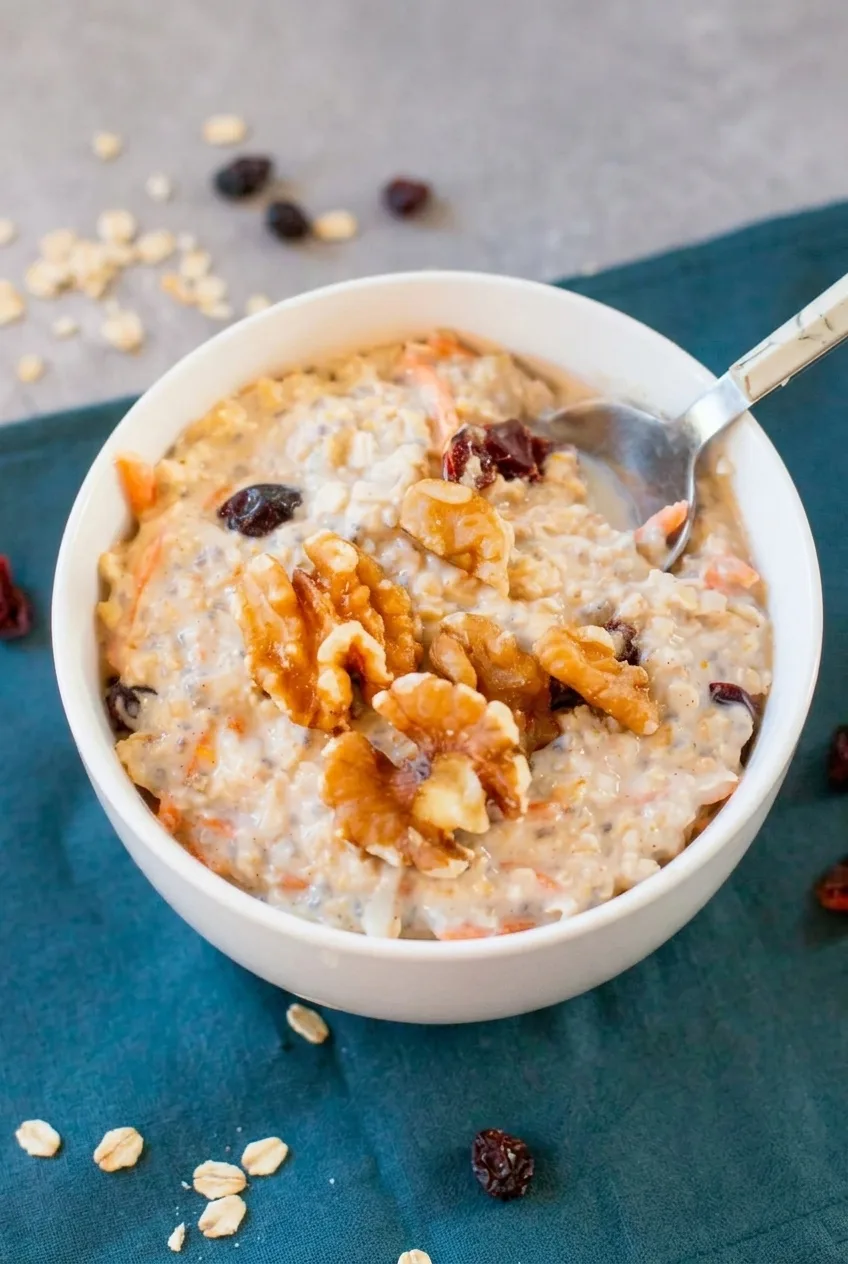
Carrot Cake Overnight Oats
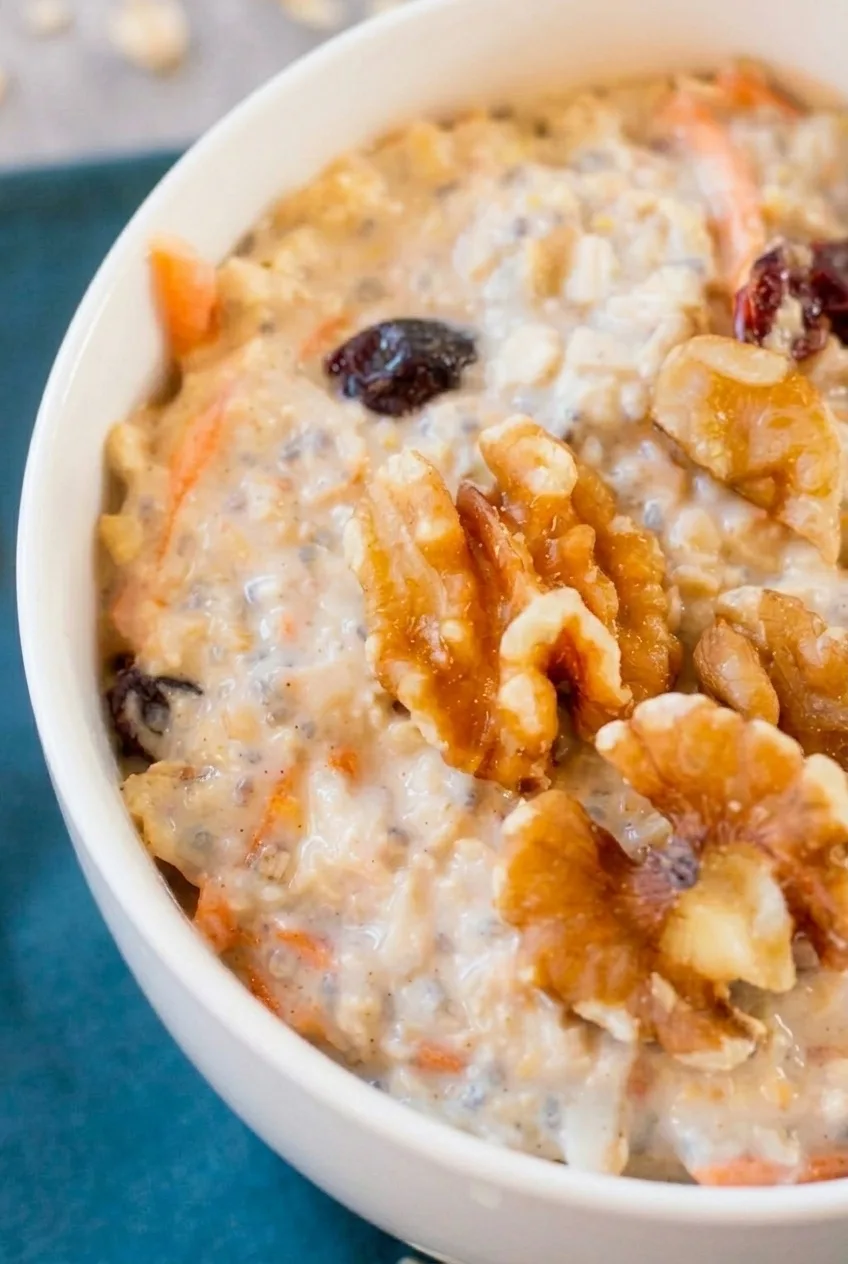
Carrot cake overnight oats are a no-cook breakfast with soft, distinct oat flakes, fine carrot shreds, raisins, and warm spices in a creamy milk-and-yogurt base. Finely grating the carrot helps it soften alongside the oats. After at least 6 hours in the refrigerator, stir the mixture and add milk if it needs loosening. Spoon it into two bowls and add the walnuts just before serving so they stay crunchy.
Ingredients for Carrot Cake Overnight Oats
- 1 cup old-fashioned rolled oats (90g)
- 1 cup milk, dairy or unsweetened plant-based (240g), plus more as needed
- 1/3 cup plain Greek yogurt (80g)
- 1/2 cup lightly packed finely grated fresh carrot (55g)
- 1 tablespoon maple syrup (20g)
- 2 tablespoons raisins (20g)
- 1 teaspoon ground cinnamon
- 1/8 teaspoon ground nutmeg
- 1/2 teaspoon vanilla extract
- 1 small pinch fine salt
- 1/4 cup walnuts in large pieces (30g), for serving
How to Make Carrot Cake Overnight Oats
- Grate the carrot: Use the fine side of a box grater to make thin, short shreds. Measure 1/2 cup lightly packed.
- Mix the oats: In a bowl, stir together the milk, yogurt, maple syrup, cinnamon, nutmeg, vanilla, and salt. Add the oats, carrot, and raisins. Stir until all the oats are coated and the carrot and raisins are distributed throughout.
- Cover and chill: Cover the bowl, or divide the mixture between two lidded containers. Refrigerate for at least 6 hours, preferably overnight. Keep the walnuts separate.
- Check the texture: Stir the chilled oats. The flakes should be soft but still recognizable, and the mixture should be thick, moist, and spoonable. If it is too thick or looks dry, stir in milk 1 tablespoon at a time.
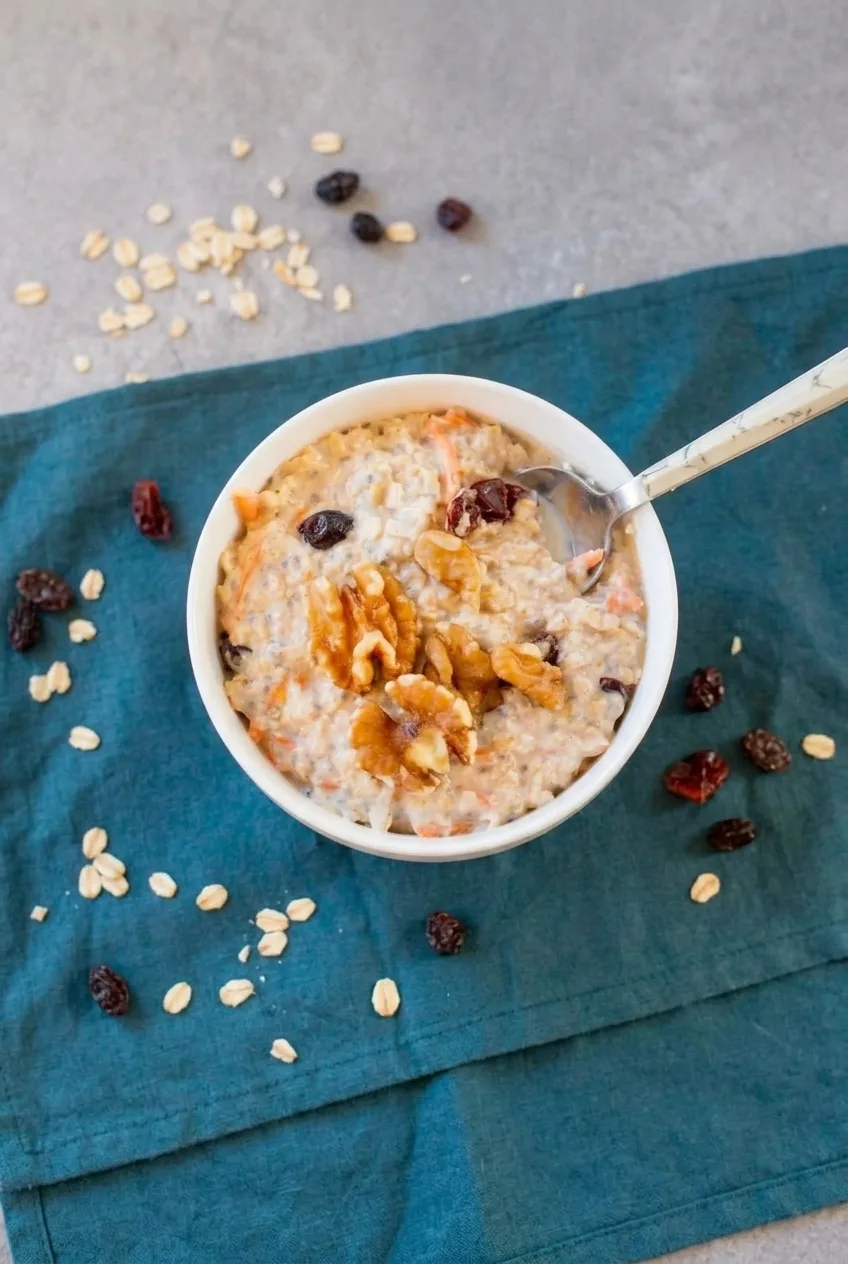
- Serve: Spoon into two bowls and top with the walnut pieces. Leave some carrot shreds and raisins visible among the oats.
Choosing Oats and Grating the Carrot
Old-fashioned rolled oats hold their shape during a long soak. Quick oats can turn mushy overnight, while steel-cut oats do not soften enough on this schedule. Finely grate fresh carrot rather than using thick packaged shreds, which can remain firm after the oats are ready.
Adjusting the Texture and Ingredients
Oat brands and yogurt thickness affect how much liquid the mixture absorbs. Stir before judging the texture, then add milk by the tablespoon if the oats are too thick. They should mound softly on a spoon, not form dry clumps or pour like a drink.
For a dairy-free version, use plant milk and a thick, plain plant-based yogurt; check the consistency after chilling because plant yogurts vary. Certified gluten-free rolled oats can be used if needed. Pecans can replace the walnuts, though they change the walnut-topped finish of the main recipe.
Make-Ahead and Storage
Keep the oat mixture covered in the refrigerator for up to 3 days, with the walnuts stored separately until serving. It can soak in one container or two jars; spoon it into bowls to serve. Freezing is not recommended for the best texture.
To serve a portion warm, transfer it to a microwave-safe bowl, warm briefly, and stir. Add a little milk if needed, then top with walnuts.
For a simpler base, try these classic creamy overnight oats. For a fresh-fruit version, try apple cinnamon overnight oats.
Nutrition
Approximate per serving, based on 2 servings: 430 calories, 18g protein, 16g fat, and 57g carbohydrates. Approximate per 100g: 160 calories, 7g protein, 6g fat, and 21g carbohydrates. Estimates use 2% dairy milk and plain nonfat Greek yogurt; values vary with substitutions and any extra milk added.
Equipment
- Box grater
- Mixing bowl
- Measuring cups and spoons
- Covered container or lidded jars
Ingredients
For the oats
- 1 cup old-fashioned rolled oats (90 g)
- 1 cup milk, dairy or unsweetened plant-based (240 g), plus more as needed
- 1/3 cup plain Greek yogurt (80 g)
- 1/2 cup lightly packed finely grated fresh carrot (55 g)
- 1 tablespoon maple syrup (20 g)
- 2 tablespoons raisins (20 g)
- 1 teaspoon ground cinnamon
- 1/8 teaspoon ground nutmeg
- 1/2 teaspoon vanilla extract
- 1 small pinch fine salt
For serving
- 1/4 cup walnuts in large pieces (30 g)
Instructions
- Finely grate the carrot with the fine side of a box grater and measure 1/2 cup lightly packed.
- In a bowl, stir together the milk, yogurt, maple syrup, cinnamon, nutmeg, vanilla, and salt.
- Add the oats, grated carrot, and raisins. Stir until evenly combined and all the oats are coated.
- Cover the bowl or divide the mixture between two lidded containers. Refrigerate for at least 6 hours, preferably overnight, keeping the walnuts separate.
- Stir the chilled oats. If they are too thick or look dry, add milk 1 tablespoon at a time until moist and spoonable.
- Spoon into two bowls and top with the walnut pieces.
Tips
- Use old-fashioned rolled oats; quick oats can become mushy, and steel-cut oats will not soften enough.
- Finely grate fresh carrot so it softens during the overnight soak.
- Stir the oats before checking their consistency, then add milk gradually if needed.
- Add walnuts just before serving to keep them crunchy.
Variations
- Dairy-free: Use plant milk and a thick, plain plant-based yogurt, then check the consistency after chilling.
- Gluten-free: Use certified gluten-free rolled oats.
- Pecan topping: Replace the walnuts with pecans.