

Cheese and Spinach Ravioli for Kids
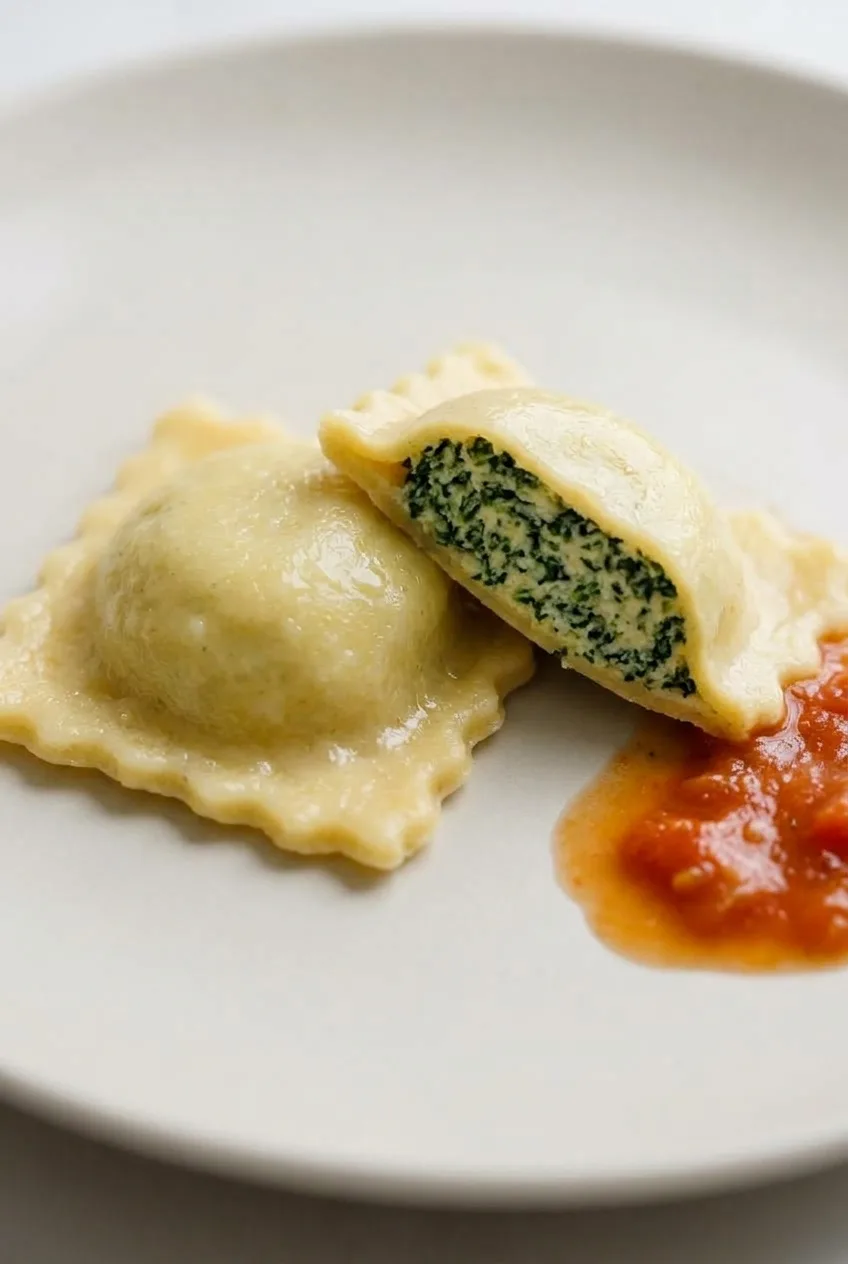
Thin egg pasta wraps a mild filling of spinach, ricotta, Parmesan, and mozzarella in these homemade ravioli. Small mounds of filling create rounded centers; careful sealing and a fluted pastry wheel give each piece its square shape without a ravioli mold.
The filling needs to be dry enough to hold its shape, and the pasta borders need to be sealed before cutting. Boil the ravioli gently until tender, then serve warm marinara on the side. Allow about 75–85 minutes from start to finish, including the dough rest.
Ingredients for Cheese and Spinach Ravioli
- 2 cups all-purpose flour (240g), plus 2–3 tablespoons for dusting as needed
- 3 large eggs
- 1/4 teaspoon kosher salt for the dough
- 5 ounces frozen chopped spinach, thawed (140g before squeezing)
- 3/4 cup whole-milk ricotta (185g)
- 1/4 cup finely grated Parmesan (25g)
- 1/4 cup shredded low-moisture mozzarella (30g)
- 1/4 teaspoon kosher salt for the filling
- About 2 teaspoons kosher salt for the pasta water
- 1 cup mild prepared marinara (240g), for serving
Optional: Serve with 1–2 tablespoons extra grated Parmesan.
How to Make Cheese and Spinach Ravioli
- Mix and rest the dough: Mix the 2 cups flour, eggs, and dough salt with a fork until a dough forms. Knead until cohesive and reasonably smooth, using a little dusting flour if it sticks. Cover and rest at room temperature for 30 minutes.
- Make the filling: During the rest, squeeze the thawed spinach firmly in a clean kitchen towel until no liquid drips out. Break up large pieces. Drain the ricotta if it looks watery, then mix it with the spinach, Parmesan, mozzarella, and filling salt. A spoonful of filling should hold its shape.
- Roll the pasta: Divide the dough into manageable portions and keep unused portions covered. On a lightly floured surface, roll a pair of thin, pliable sheets with a rolling pin or pasta roller, aiming for about 1/32–1/16 inch thick. Work with one pair at a time so the pasta stays soft enough to seal.
- Fill and seal: Place about 2 teaspoons of filling in spaced mounds on one sheet, leaving room for approximately 2 1/2-inch squares. Lay the second sheet over the mounds. Press close to each mound, then outward to remove trapped air. Firmly seal the flat dough around each pocket, keeping filling out of the seams.
- Cut the ravioli: Use a fluted pastry wheel to cut squares with about 1/4–3/8 inch of continuous sealed border around each mound. Re-press loose edges. Set the pieces apart on a lightly floured, parchment-lined tray. Repeat with the remaining dough and filling; expect about 28–32 ravioli.
- Boil in batches: Bring about 4 quarts of water and the pasta-water salt to a boil in a large pot. Add 8–12 ravioli at a time, depending on the pot’s width. Adjust the heat to maintain a gentle, uncovered boil and stir carefully once to prevent sticking. Start checking at about 3 minutes. Thin, fresh ravioli generally take 3–5 minutes per batch; they should float, and a sampled pasta border should be tender rather than floury or tough.
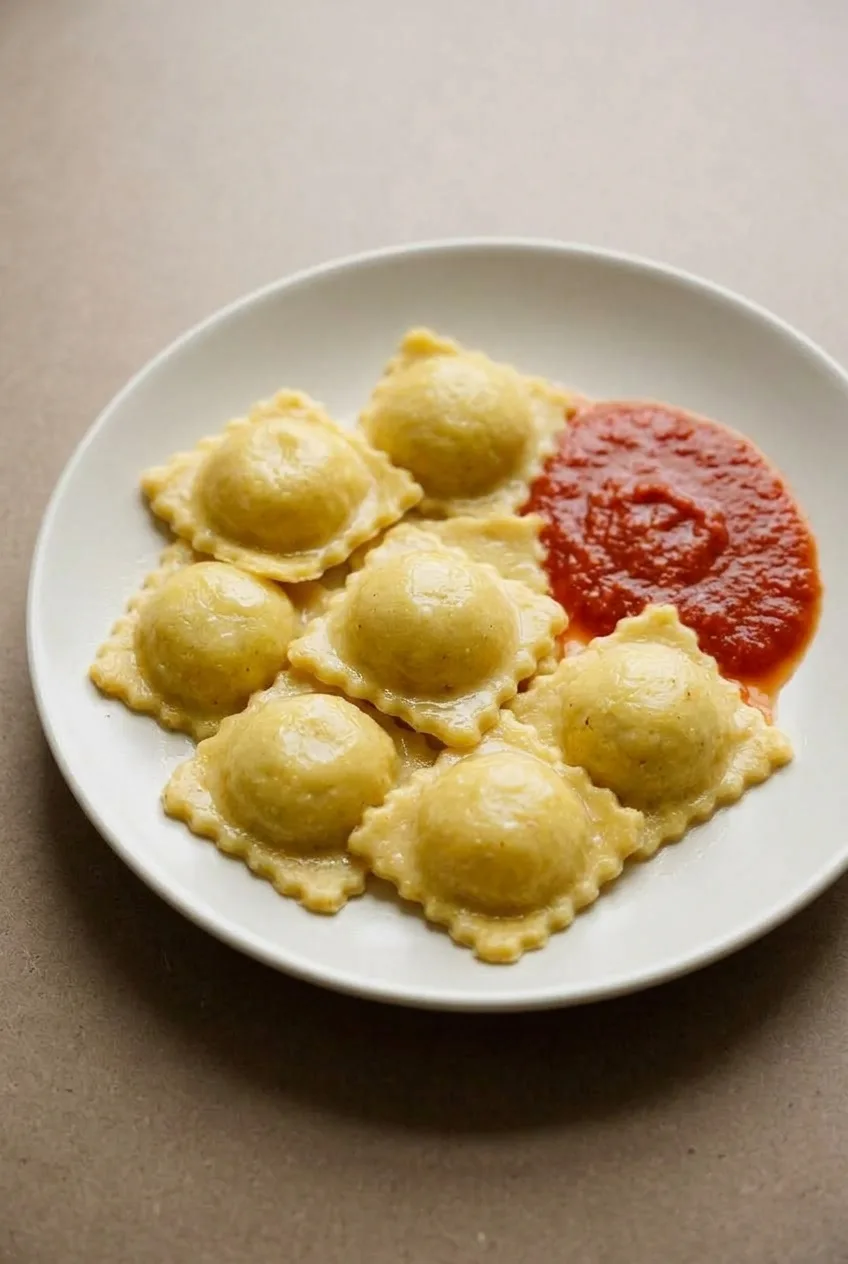
- Serve: Lift the ravioli with a spider or slotted spoon rather than draining them into a colander. Warm the marinara separately and offer about 1/4 cup alongside each of four portions.
How to Shape the Domed Ravioli
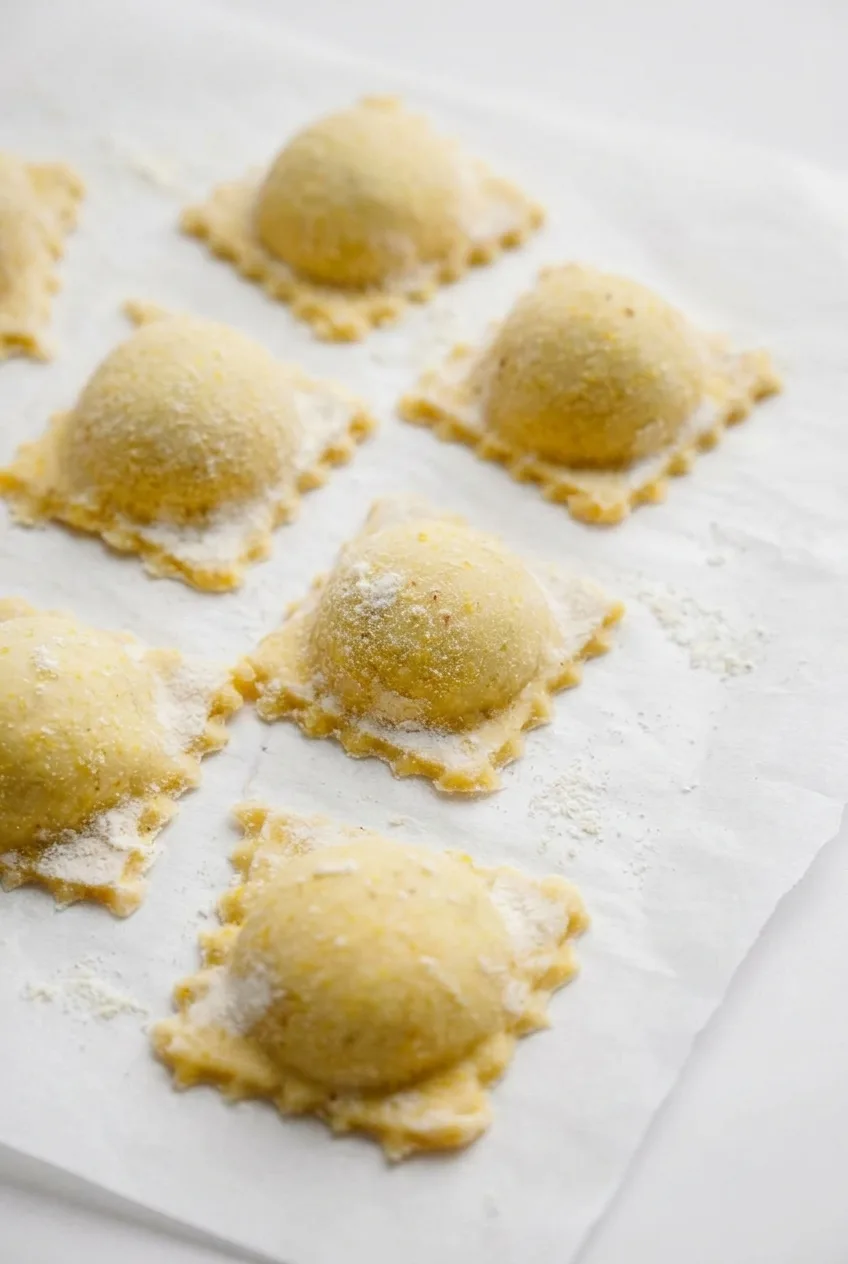
Keep the filling mounds small so they rise above a flat border without pushing cheese into the seam. Press air out before cutting, and run the fluted wheel outside the sealed area. Overfilling, trapped air, or a gap in the border can cause a pocket to open in the water.
The lightly floured ravioli on the tray are still uncooked. After boiling, the pasta should be tender and lightly glossy, without a dry flour coating. For a simpler spinach pasta dinner, try Easy Spinach Pasta for Kids.
Keep the Filling Dry
If liquid pools around the spinach, squeeze it again. Drain visibly watery ricotta before filling the pasta, too. Moist filling spreads instead of forming a rounded mound and can make the dough too slippery to seal.
How to Tell When the Ravioli Are Done
Floating is a cue to check the ravioli, not a guarantee that the pasta is cooked through. Taste or cut a border: it should be tender, while the pocket remains intact and the pasta is not mushy. Thicker sheets may need longer than the suggested 3–5 minutes.
Make Ahead, Freeze, and Reheat
Keep uncooked ravioli covered and separate in a single layer on lightly floured parchment. If refrigerating them, cook within about 4 hours. For longer make-ahead storage, freeze them on the tray until firm, then transfer to a freezer-safe bag. Use within about 2–3 weeks for best quality.
Boil frozen ravioli directly from frozen in uncrowded batches. They will need longer than fresh ravioli; check a border for tenderness rather than relying on the fresh cooking time.
Refrigerate cooked leftovers promptly in a covered container. Reheat gently with a little sauce or water until hot, without vigorous stirring that could tear the pasta. For another dinner with marinara, see Baked Turkey Meatballs for Kids.
Can Kids Help Make the Ravioli?
Kids can portion filling and press pasta borders with supervision. An adult should handle the sharp pastry wheel and boiling water. Wonton wrappers can be used for a separate shortcut version, but they require different shaping and cooking directions and will not produce these homemade fluted squares.
Nutrition
Approximate per serving: 445 calories, 23g protein, 14g fat, and 55g carbohydrates, based on 4 servings with marinara. Approximate per 100g of the cooked dish: 155 calories, 8g protein, 5g fat, and 19g carbohydrates. Values will vary with the marinara and the amount of water absorbed by the pasta.
Equipment
- Mixing bowl
- Clean kitchen towel
- Rolling pin or pasta roller
- Fluted pastry wheel
- Parchment-lined tray
- Large pot
- Spider or slotted spoon
Ingredients
For the Dough
- 2 cups all-purpose flour (240 g), plus 2–3 tablespoons for dusting
- 3 large eggs
- 1/4 teaspoon kosher salt
For the Filling
- 5 ounces frozen chopped spinach, thawed (140 g before squeezing)
- 3/4 cup whole-milk ricotta (185 g)
- 1/4 cup finely grated Parmesan (25 g)
- 1/4 cup shredded low-moisture mozzarella (30 g)
- 1/4 teaspoon kosher salt
For Cooking and Serving
- About 2 teaspoons kosher salt, for the pasta water
- 1 cup mild prepared marinara (240 g)
- Optional: 1–2 tablespoons extra grated Parmesan
Instructions
- Mix the flour, eggs, and dough salt with a fork until a dough forms.
- Knead until the dough is cohesive and reasonably smooth, using a little dusting flour if needed. Cover and rest at room temperature for 30 minutes.
- Squeeze the thawed spinach firmly in a clean kitchen towel until no liquid drips out, then break up any large pieces.
- Drain the ricotta if it looks watery. Mix it with the spinach, Parmesan, mozzarella, and filling salt until the filling holds its shape.
- Divide the dough into manageable portions and keep unused portions covered. Roll pairs of sheets on a lightly floured surface to about 1/32–1/16 inch thick.
- Place about 2 teaspoons of filling in spaced mounds on one sheet, leaving room for approximately 2 1/2-inch squares.
- Lay a second sheet over the filling. Press close to each mound and outward to remove trapped air, then firmly seal the dough around each pocket without getting filling in the seams.
- Cut around the pockets with a fluted pastry wheel, leaving about 1/4–3/8 inch of sealed border. Re-press any loose edges and place the ravioli apart on a lightly floured, parchment-lined tray. Repeat with the remaining dough and filling to make about 28–32 ravioli.
- Bring about 4 quarts of water and the pasta-water salt to a boil in a large pot.
- Boil 8–12 ravioli at a time. Adjust the heat to maintain a gentle, uncovered boil and stir carefully once to prevent sticking. Start checking at about 3 minutes; fresh ravioli generally take 3–5 minutes per batch.
- Check that the ravioli float and that a sampled pasta border is tender. Lift them out with a spider or slotted spoon.
- Warm the marinara separately and serve about 1/4 cup alongside each portion. Offer extra Parmesan if desired.
Tips
- Squeeze the spinach until no liquid drips out, and drain ricotta that looks watery.
- Keep filling mounds small and leave a clean border so the ravioli seal properly.
- Press trapped air out before cutting and re-press any loose edges.
- Boil in uncrowded batches and check a pasta border for tenderness; floating alone does not mean the ravioli are done.
- Keep unused dough covered so it stays soft enough to seal.