

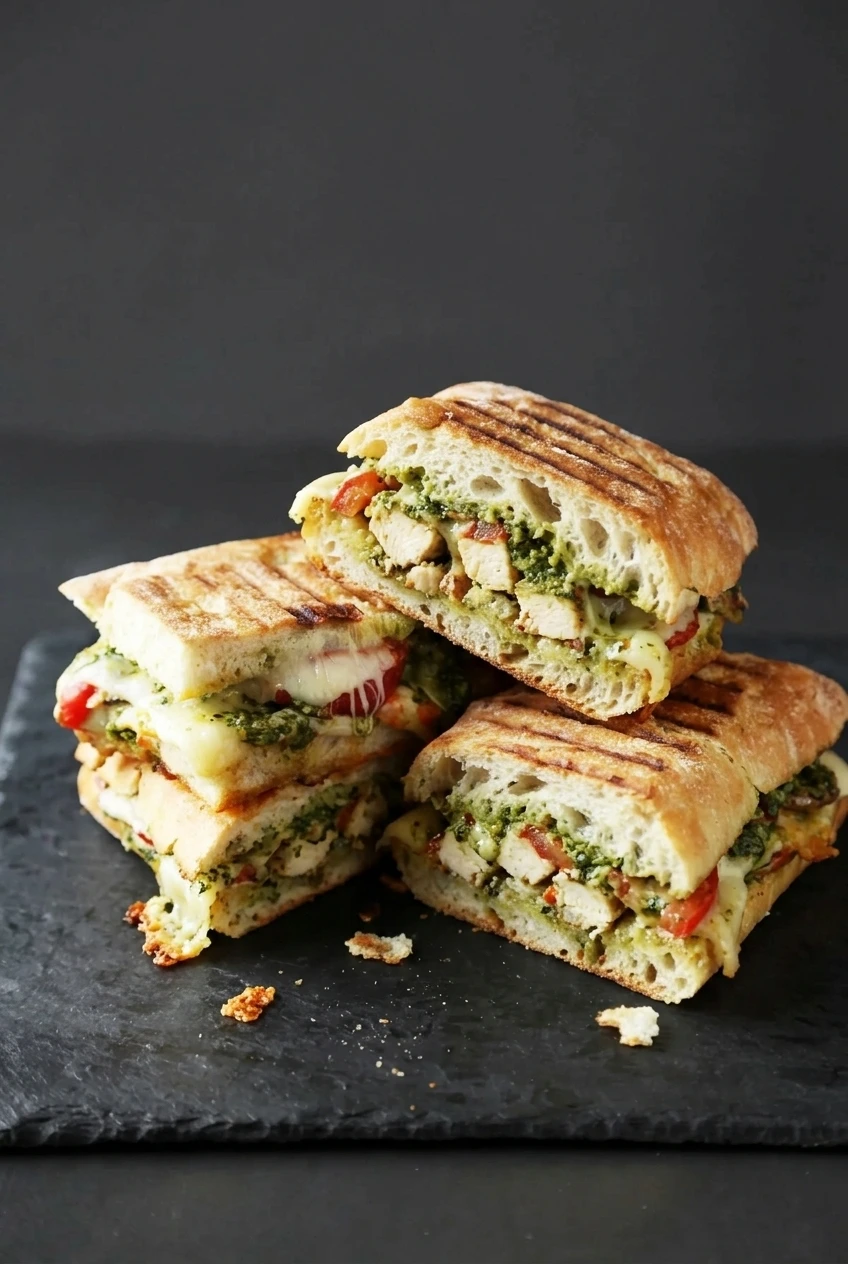
Chicken Pesto Panini
Rustic ciabatta holds layers of cooked chicken, basil pesto, mozzarella, and fresh tomato in these hot, pressed panini. The bread should be golden and crisp, with visible grill marks and cheese melted around the filling. A panini press toasts both sides at once; a skillet works too, but needs a flip. Pat the tomato dry and keep the layers even so the bread stays crisp and the filling doesn’t spill out.
Ingredients for Chicken Pesto Panini
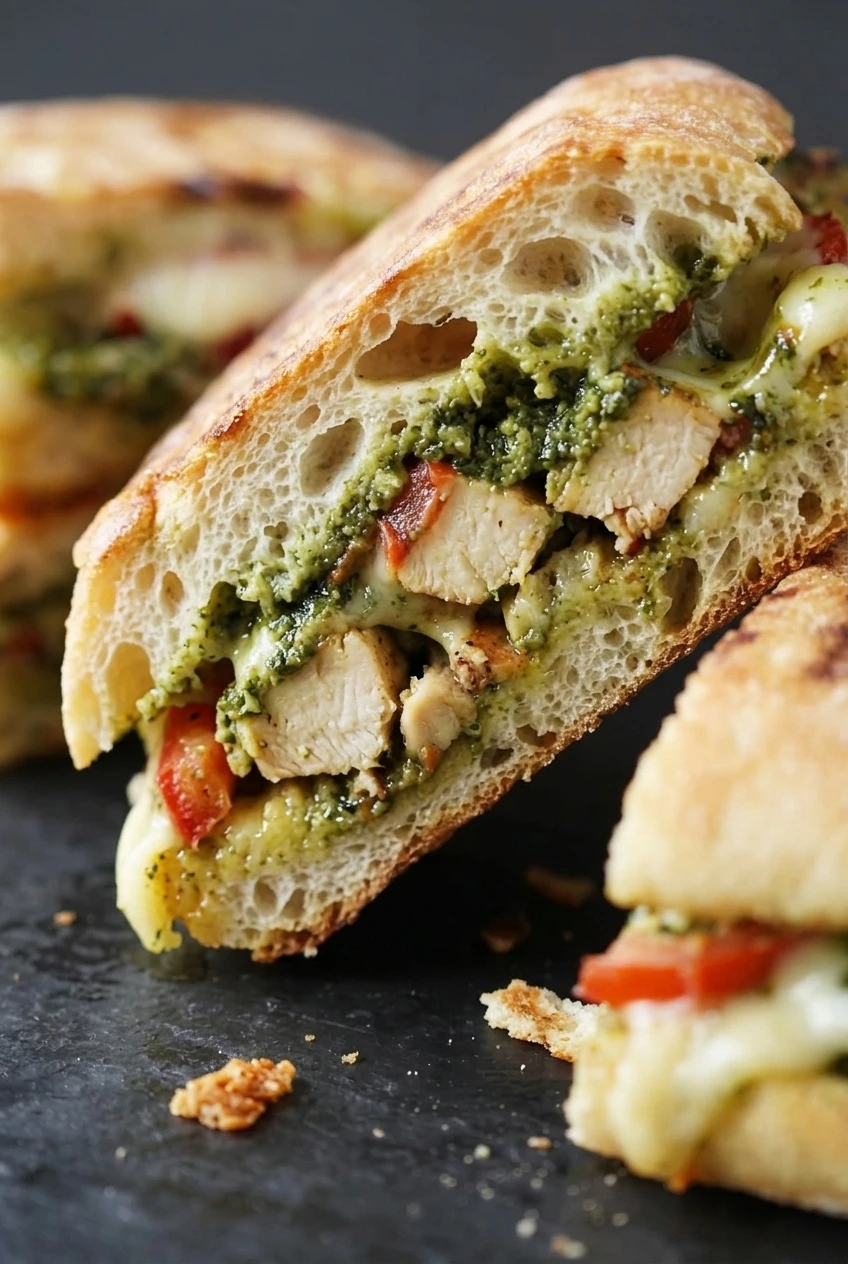
- 2 large rustic ciabatta rolls, about 6–7 ounces each (380g total), split horizontally
- 8 ounces cooked chicken, sliced or shredded (225g)
- 1/3 cup basil pesto (85g)
- 6 ounces low-moisture mozzarella, thinly sliced or shredded (170g)
- 1 medium tomato, thinly sliced (120g)
- 1–2 teaspoons olive oil, for the bread exterior
Rotisserie or leftover chicken works well. The chicken must be fully cooked before assembly; the brief pressing step will only warm it. If starting with raw chicken, cook it separately to 165°F (75°C) first.
How to Make Chicken Pesto Panini
- Prepare the fillings: Slice or shred the cooked chicken. Pat the tomato slices dry to remove surface moisture.
- Preheat the press: Heat a panini press or closed panini grill according to its instructions.
- Assemble the panini: Spread pesto over the cut sides of both rolls. Divide the mozzarella, chicken, and tomato between the bottom halves, placing some cheese below the filling and the rest on top. Close the rolls without packing the filling too high.
- Oil the bread: Lightly brush the outside of the rolls with olive oil. Use just a thin coating; nonstick press plates may need little or none.
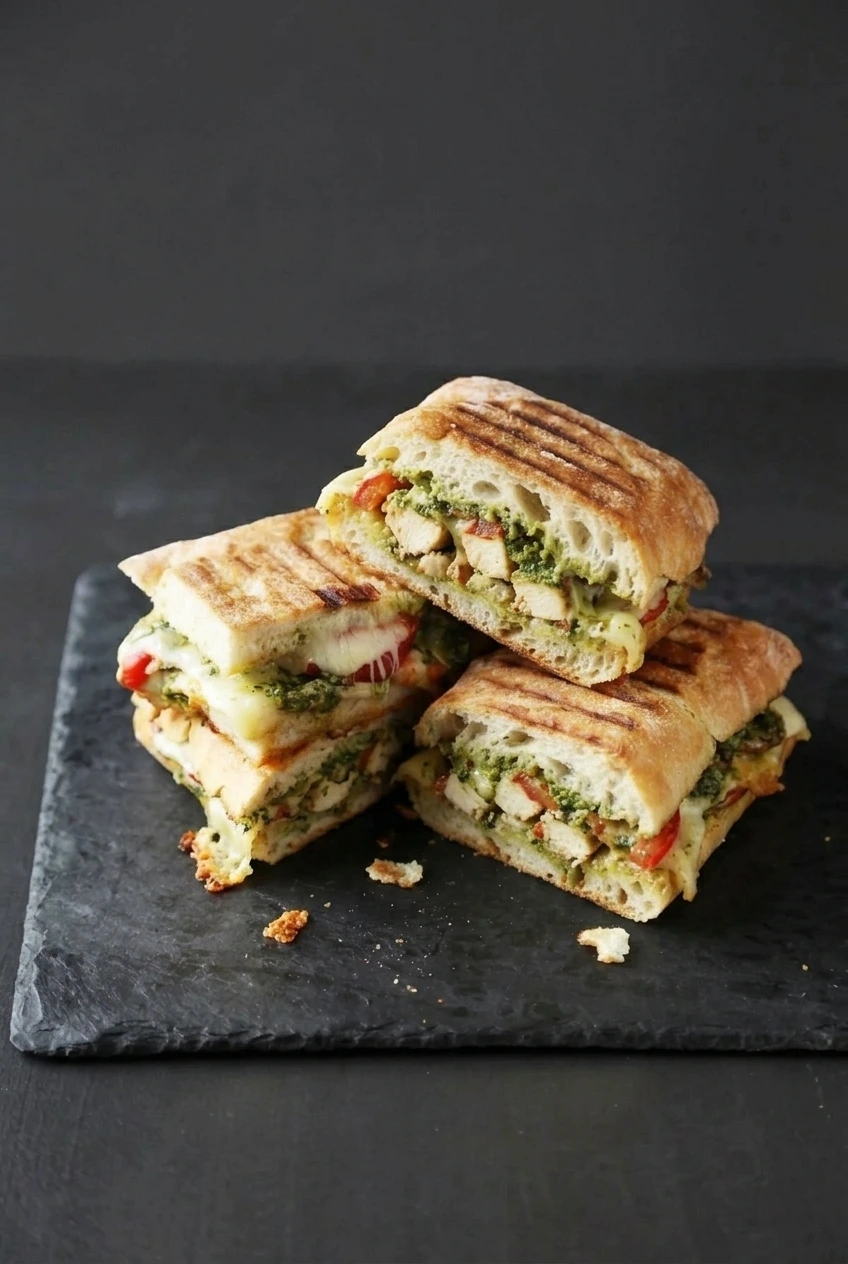
- Press: Cook in the closed press for about 3–5 minutes, checking after about 3 minutes. The bread should be golden and crisp with grill marks, and the mozzarella should be melted. Do not force the press closed; cook in batches if the panini do not fit comfortably.
- Rest and serve: Let the panini stand for about 1 minute, then cut each across the middle. Stack the halves at an angle to show the chicken, pesto, cheese, and tomato layers. Makes 2 panini, or 4 halves.
How to Make Them Without a Panini Press
Preheat a skillet over medium-low to medium heat. Add the assembled panini and press gently with a wide spatula or a second heavy pan. Check the first side after about 2 minutes; flip when golden, then cook the second side for about 2–4 minutes, until the cheese melts and the filling is hot.
If the bread browns before the cheese melts, lower the heat and briefly cover the skillet. Unlike a closed press, a skillet cooks one side at a time and may not produce ridged grill marks.
How to Keep the Bread Crisp
Assemble the panini just before cooking. Drying the tomato slices limits moisture against the bread, while an even layer of filling helps the sandwich press without spilling. A thick roll or a less powerful press may need more time, so use golden bread and melted cheese—not the clock alone—to judge when it is ready.
Ingredient Swaps
Sturdy focaccia or sourdough can replace ciabatta, though bread thickness will affect browning time. Provolone, Monterey Jack, or Fontina can replace the mozzarella. For a variation, add a small handful of spinach or arugula without overfilling the rolls.
Serving and Leftovers
Serve hot with tomato soup or a leafy green salad, or with chips and a pickle for lunch. The bread is crispest just after pressing.
Refrigerate leftover cooked panini promptly in an airtight container and use within 1–2 days. Reheat in a nonstick skillet over medium-low heat, turning once, until warmed through and the cheese softens. A microwave will warm the sandwich but soften the bread. To prepare ahead, keep the fillings separate and assemble just before pressing. Freezing assembled panini is not recommended because the bread and fillings may lose quality.
Nutrition
Approximate nutrition per serving, based on 1 panini (half the recipe): 1,215 calories, 75g protein, 54g fat, and 103g carbohydrates. Approximate nutrition per 100g: 245 calories, 15g protein, 11g fat, and 21g carbohydrates. Values vary with the bread, pesto, and cheese used.
Equipment
- Panini press
- Pastry brush
- Skillet
- Wide spatula
Ingredients
- 2 large rustic ciabatta rolls, about 6–7 ounces each (380 g total), split horizontally
- 8 ounces cooked chicken, sliced or shredded (225 g)
- 1/3 cup basil pesto (85 g)
- 6 ounces low-moisture mozzarella, thinly sliced or shredded (170 g)
- 1 medium tomato, thinly sliced (120 g)
- 1–2 teaspoons olive oil, for the bread exterior
Instructions
- Slice or shred the cooked chicken. Pat the tomato slices dry.
- Preheat a panini press according to its instructions.
- Spread pesto over the cut sides of the rolls.
- Divide the mozzarella, chicken, and tomato between the bottom halves, placing some cheese beneath the filling and the rest on top. Close the rolls without overfilling.
- Lightly brush the outside of the rolls with olive oil.
- Press for about 3–5 minutes, checking after about 3 minutes, until the bread is golden and crisp with grill marks and the mozzarella is melted. Cook in batches if needed; do not force the press closed.
- Let the panini rest for about 1 minute, then cut each in half and serve.
- To cook without a press, heat a skillet over medium-low to medium heat. Add the panini and press gently with a wide spatula or a second heavy pan.
- Check the first side after about 2 minutes. Flip when golden and cook the second side for about 2–4 minutes, until the cheese melts and the filling is hot. Lower the heat and briefly cover the skillet if the bread browns before the cheese melts.
Tips
- Dry the tomato slices to help keep the bread crisp.
- Assemble the panini just before cooking.
- Keep the filling layers even and avoid overfilling the rolls.
- Use golden bread and melted cheese to judge doneness, since thicker rolls or a less powerful press may need more time.
- Use only a thin coating of oil; nonstick press plates may need little or none.
Variations
- Focaccia or Sourdough Panini: Replace the ciabatta with sturdy focaccia or sourdough; adjust cooking time for the bread thickness.
- Panini with Different Cheese: Replace the mozzarella with provolone, Monterey Jack, or Fontina.
- Greens and Chicken Pesto Panini: Add a small handful of spinach or arugula without overfilling the rolls.