

Classic Spaghetti Carbonara
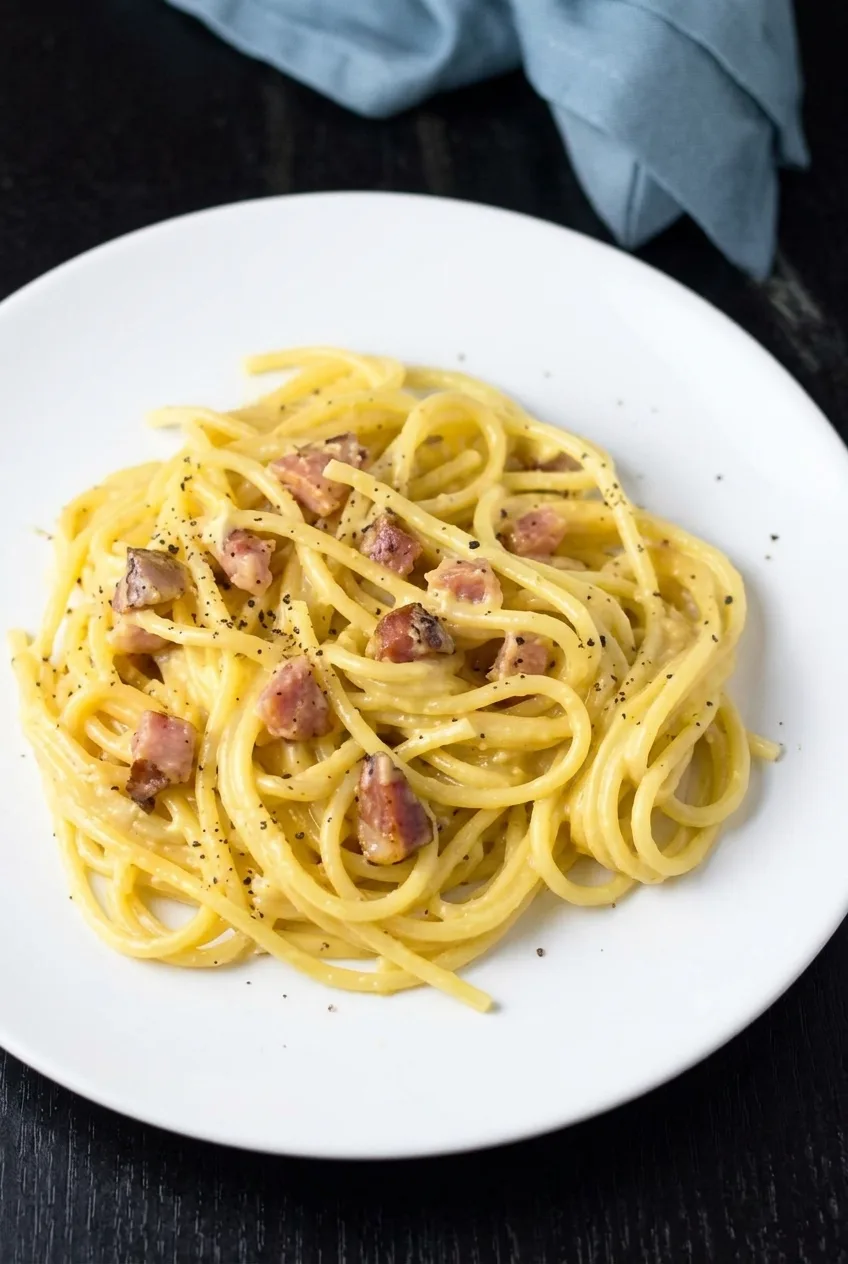
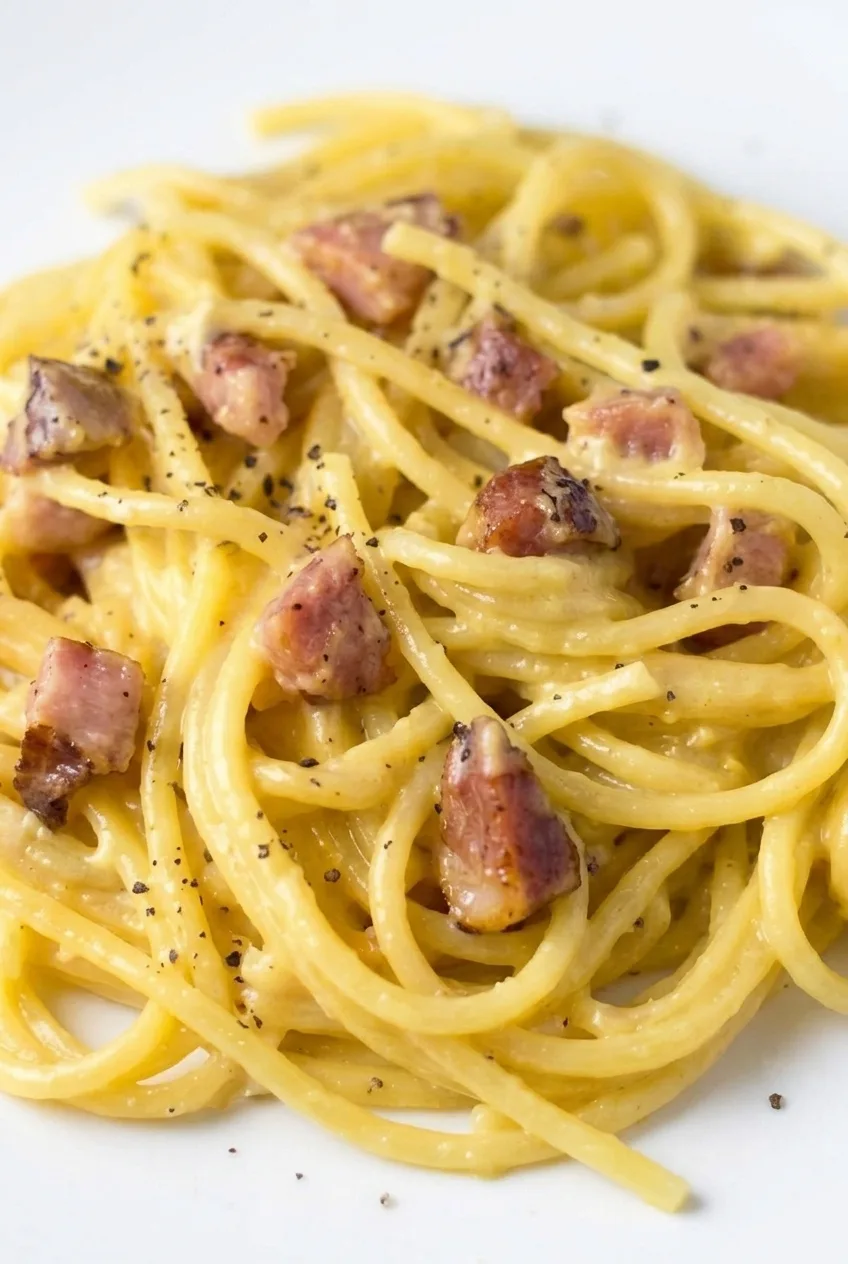
Spaghetti carbonara should have a glossy, pale-yellow sauce that clings to the noodles, with tender pieces of cured pork and plenty of black pepper. Eggs, Pecorino Romano, rendered pork fat, and starchy pasta water create that coating without cream.
This version uses pancetta in place of guanciale and combines whole eggs with extra yolks. Tossing the very hot pasta with the egg mixture in a heatproof bowl, away from the burner, helps the sauce turn silky rather than scrambled.
Prep time: 10 minutes | Cook time: 15 minutes | Total time: 25 minutes | Serves: 4
Ingredients for Spaghetti Carbonara
- 12 ounces spaghetti (340g)
- 4 ounces pancetta, cut into small pieces (115g)
- 2 large eggs
- 2 large egg yolks
- About 3/4 cup freshly and finely grated Pecorino Romano (75g), plus more to serve if desired
- About 1 teaspoon freshly ground black pepper, plus more to finish
- About 2 teaspoons kosher salt for the pasta water, adjusted to the amount of water
- About 1 cup starchy pasta cooking water, reserved; use only as needed
Grate the cheese finely so it mixes readily with the eggs. Salt the pasta water with restraint: the pancetta and Pecorino will also season the finished dish.
How to Make Spaghetti Carbonara
- Prepare the egg mixture. Set a large pot of water over high heat. In a large heatproof bowl, whisk the eggs, yolks, Pecorino, and black pepper until evenly combined. Keep the bowl near the stove so it is ready for the hot pasta.
- Render the pancetta. Put the pancetta in a cool skillet in a single layer. Cook uncovered over medium-low to medium heat for about 6 to 8 minutes, stirring occasionally, until the fat renders and the pieces have golden edges but remain tender. Turn off the heat and leave the pancetta in the skillet with its fat.
- Cook the spaghetti. Salt the boiling water and cook the spaghetti until al dente, following the package directions and checking 1 to 2 minutes early. This usually takes 8 to 10 minutes. Reserve about 1 cup of cloudy cooking water, then drain the pasta.
- Coat the pasta. Add the very hot spaghetti to the skillet with the pancetta, keeping the burner off. Toss for about 30 seconds, just until the strands have a light sheen and the pancetta is distributed. If there is substantially more fat than needed to coat the noodles lightly, remove the excess.
- Make the sauce off heat. Immediately transfer the spaghetti and pancetta to the bowl of egg mixture. Toss continuously with tongs, adding reserved pasta water a small splash at a time and tossing well after each addition. Stop when the sauce is smooth and glossy and clings to the strands without pooling. You may not need all the water; do not return the egg-coated pasta to the burner.
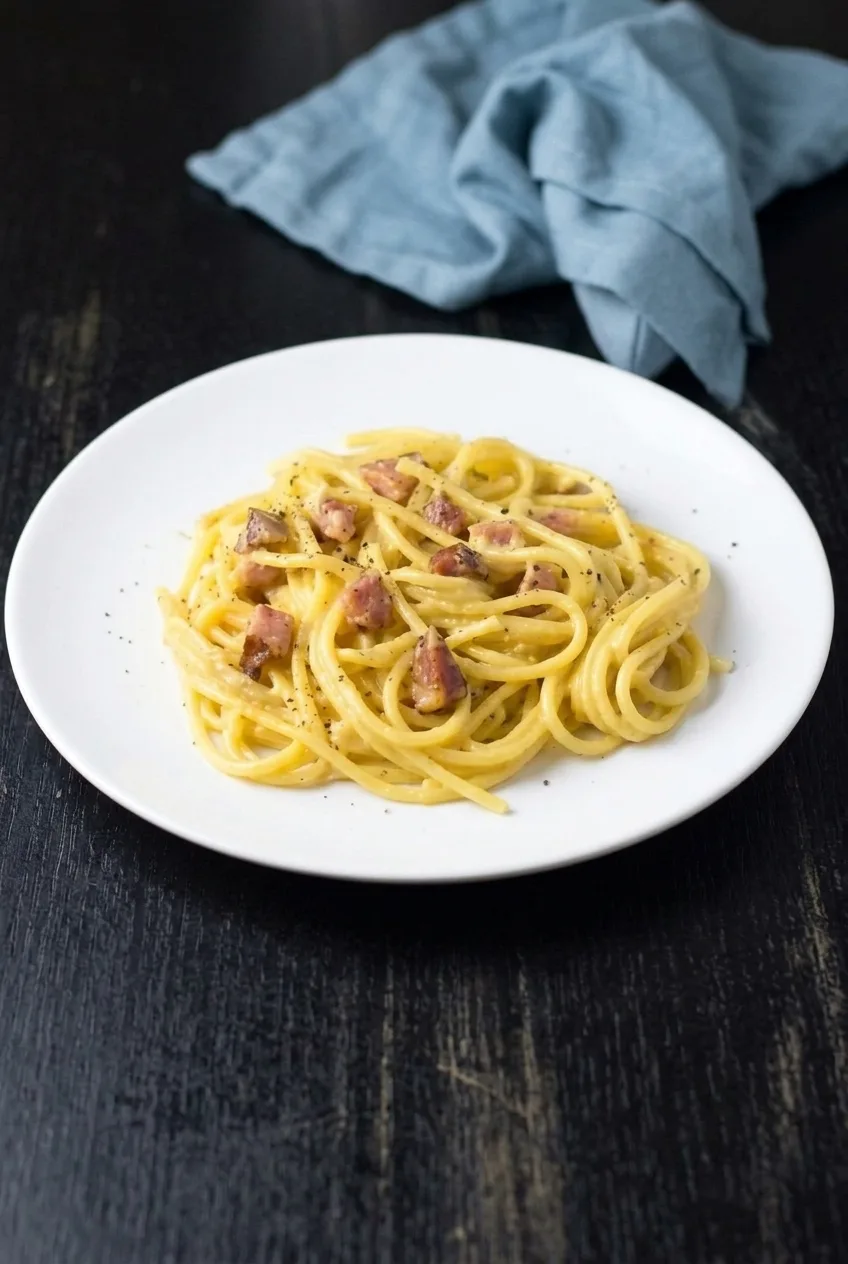
- Serve immediately. Lift the spaghetti into loose mounds on plates, with pancetta pieces visible throughout. Finish with more black pepper and a little Pecorino, if desired.
How to Keep Carbonara Silky
The pasta must still be very hot when it reaches the egg mixture. Start tossing immediately so its residual heat thickens the sauce evenly, rather than forming egg curds against a hot pan.
If the sauce looks thick or clumpy, toss in another small splash of warm pasta water. Add water gradually: too much at once can leave a thin sauce beneath the noodles. The finished spaghetti should look glossy, not wet.
Choosing the Pork and Cheese
Guanciale is the traditional cured-pork choice and can replace the pancetta in the same amount. Thick-cut unsmoked bacon can also work, though it gives the pasta a smokier flavor. Whichever you use, cook the pieces until their edges are golden rather than dry and deeply crisp.
Pecorino Romano gives the sauce a sharp, salty flavor. Parmesan or Parmigiano-Reggiano can replace some or all of it for a milder result. For a distinctly different bacon-and-cheese pasta, try Garlic Parmesan Bacon Ranch Spaghetti.
Serving and Storing Carbonara
Serve carbonara as soon as the sauce turns glossy; it thickens as it sits. You can grate the cheese and prepare the egg mixture before cooking the spaghetti, but wait until serving time to toss everything together.
Refrigerate leftovers promptly in a covered container and use within 3 to 4 days. Reheat gently in a covered nonstick skillet with a small splash of water. The sauce will not return to its freshly made texture. Freezing is not recommended because the egg-and-cheese sauce may lose its smoothness.
Nutrition
Approximate nutrition per serving, based on 4 servings: 580 calories, 24g protein, 25g fat, and 64g carbohydrates. Approximate nutrition per 100g of finished pasta: 210 calories, 9g protein, 9g fat, and 23g carbohydrates. Values vary with the pasta, pancetta, and cheese used.
Equipment
- Large pot
- Skillet
- Heatproof bowl
- Whisk
- Tongs
Ingredients
For the Carbonara
- 12 ounces spaghetti (340 g)
- 4 ounces pancetta, cut into small pieces (115 g)
- 2 large eggs
- 2 large egg yolks
- About 3/4 cup finely grated Pecorino Romano (75 g), plus more to serve if desired
- About 1 teaspoon freshly ground black pepper, plus more to finish
- About 2 teaspoons kosher salt for the pasta water, adjusted to the amount of water
- About 1 cup reserved starchy pasta cooking water, as needed
Instructions
- Bring a large pot of water to a boil.
- In a large heatproof bowl, whisk the eggs, egg yolks, Pecorino Romano, and black pepper until combined. Set the bowl near the stove.
- Place the pancetta in a single layer in a cool skillet. Cook uncovered over medium-low to medium heat for 6 to 8 minutes, stirring occasionally, until the fat renders and the edges are golden but the pieces remain tender.
- Turn off the heat and leave the pancetta in the skillet with its rendered fat.
- Salt the boiling water and cook the spaghetti until al dente, following the package directions and checking 1 to 2 minutes early. This usually takes 8 to 10 minutes.
- Reserve about 1 cup of pasta water, then drain the spaghetti.
- Add the hot spaghetti to the skillet with the pancetta, keeping the burner off. Toss for about 30 seconds to coat the strands lightly. Remove excess fat if needed.
- Immediately transfer the spaghetti and pancetta to the bowl with the egg mixture. Toss continuously with tongs, adding reserved pasta water a small splash at a time until the sauce is smooth, glossy, and clings to the pasta.
- Serve immediately, topped with more black pepper and Pecorino Romano if desired.
Tips
- Grate the Pecorino finely so it mixes smoothly with the eggs.
- Salt the pasta water lightly because the pancetta and cheese are already salty.
- Keep the pasta very hot when adding it to the egg mixture, and toss immediately.
- Add pasta water gradually to avoid making the sauce too thin.
- Do not return the egg-coated pasta to the burner; residual heat thickens the sauce without scrambling the eggs.
Variations
- Guanciale Carbonara: Replace the pancetta with the same amount of guanciale.
- Bacon Carbonara: Use thick-cut unsmoked bacon instead of pancetta for a smokier flavor.
- Parmesan Carbonara: Replace some or all of the Pecorino Romano with Parmesan or Parmigiano-Reggiano for a milder flavor.