

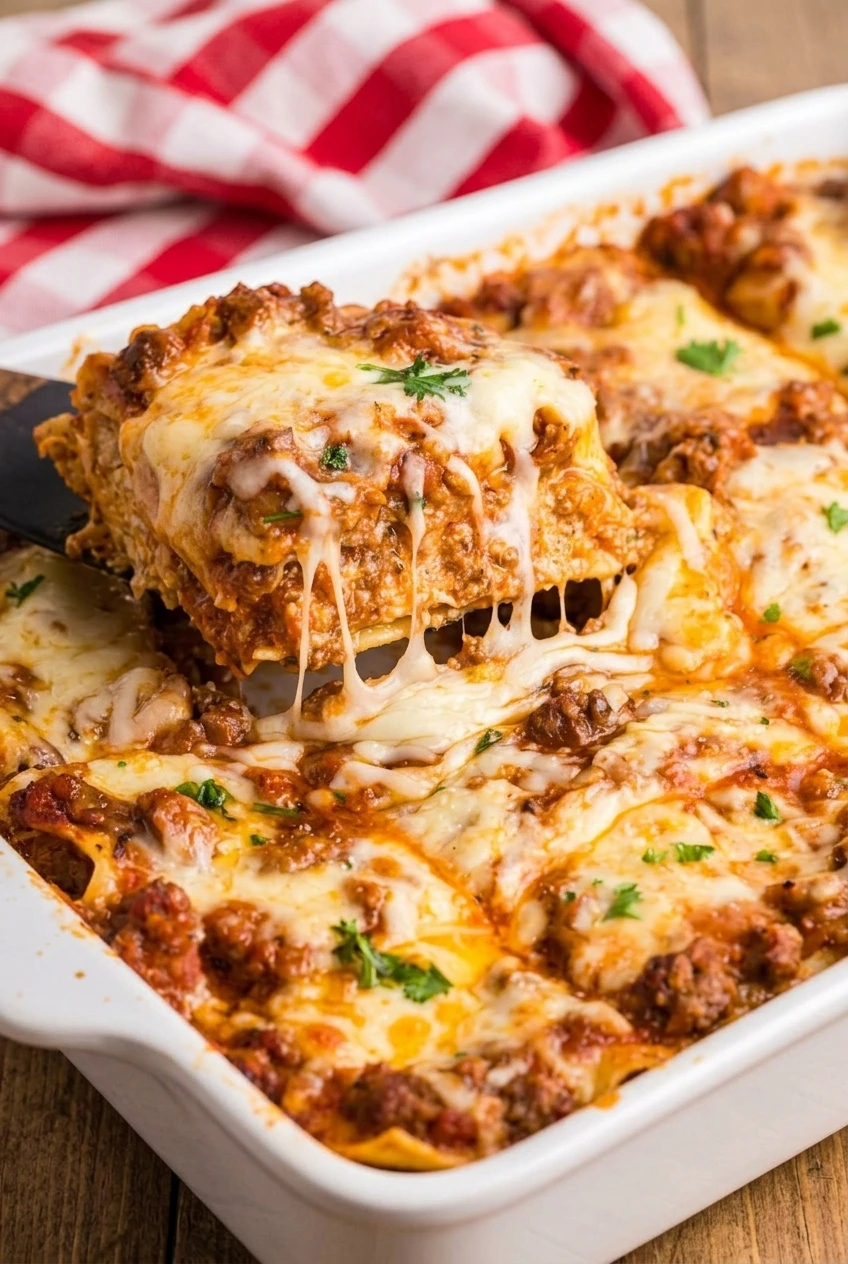
Easy No-Boil Lasagna
Oven-ready lasagna sheets go straight into this meat-and-cheese casserole—no separate pot of water needed. Beef marinara runs between the pasta layers, ricotta adds a creamy filling, and mozzarella melts into a lightly browned top.
The key to tender sheets is sauce beneath and between them, followed by a covered bake that holds in moisture. Check the center before uncovering: the pasta should be tender and the sauce bubbling. A short rest helps the lasagna hold its layers when cut into thick squares.
Makes 8 servings. Allow about 25 minutes to prepare, 60–70 minutes to bake, and 15 minutes to rest.
Ingredients
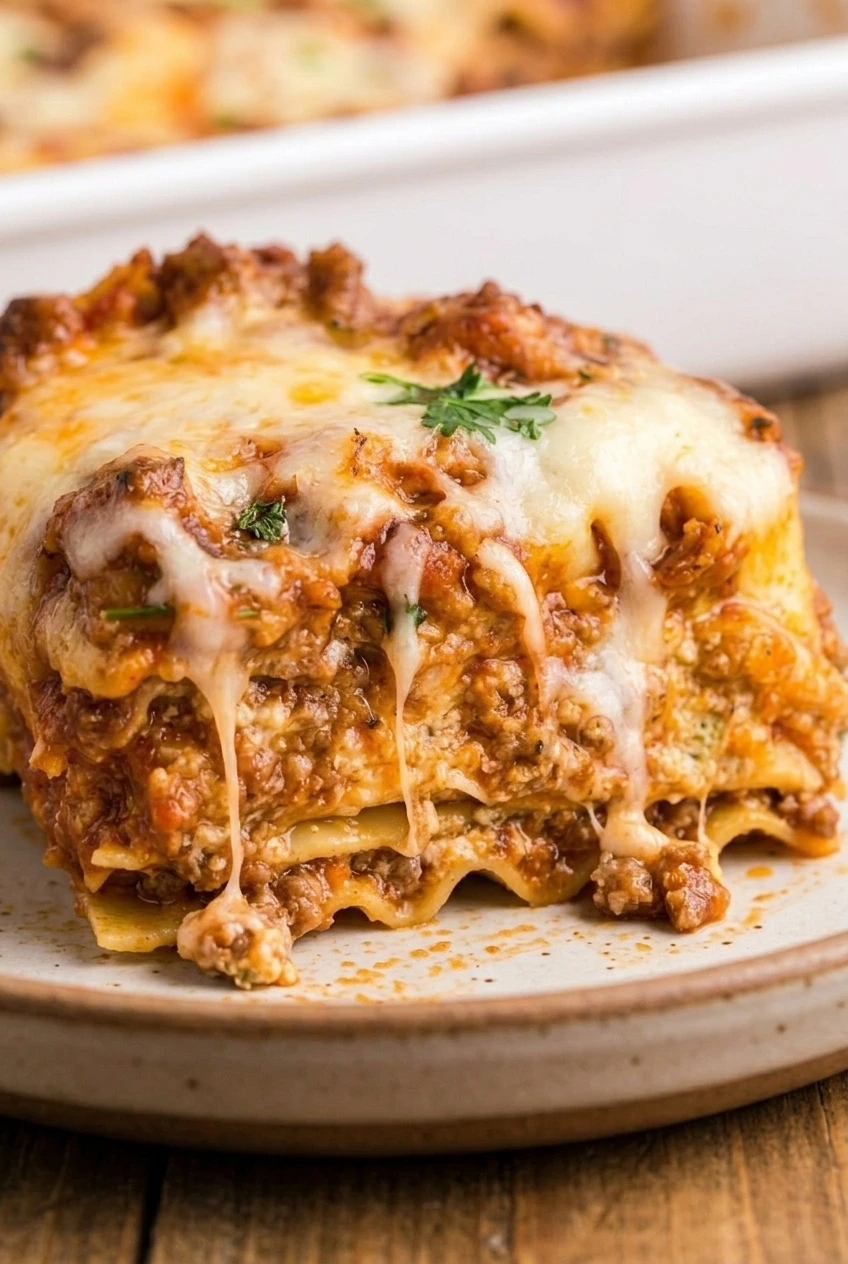
- 1 lb lean ground beef (450g)
- Two 24-oz jars marinara or tomato pasta sauce (48 oz total; about 1,350g)
- About 12 oven-ready lasagna sheets (250g), enough for three layers in a 9-by-13-inch dish
- 15 oz whole-milk ricotta (425g)
- 1 large egg
- 3 cups shredded mozzarella (340g), divided
- 1/2 cup grated Parmesan (50g), divided
- 1 teaspoon Italian seasoning
- Up to 1/2 cup water, only if the sauce is unusually thick
Optional: Salt and black pepper to taste; 1–2 tablespoons chopped fresh parsley for serving. Taste the marinara before adding salt, since the sauce and Parmesan may already be salty.
How to Make No-Boil Lasagna
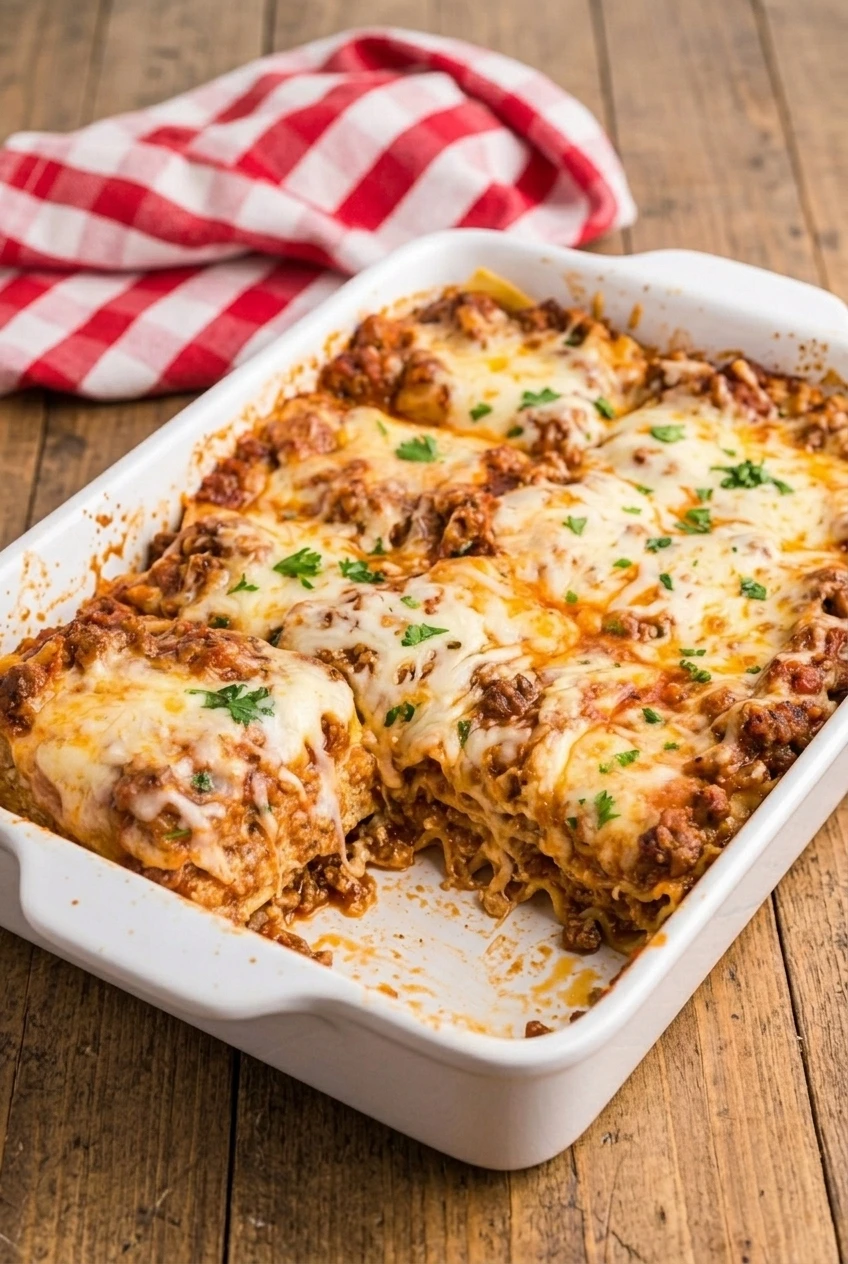
- Preheat the oven: Heat to 375°F (190°C). Use a deep 9-by-13-inch baking dish with room for the sauce to bubble. Set it on a rimmed baking sheet if overflow is a concern.
- Make the meat sauce: In a large skillet over medium heat, cook the beef, breaking it into small pieces, until browned throughout, about 10–12 minutes. Drain excess fat. Stir in the marinara and Italian seasoning. If the sauce is unusually thick and difficult to spread, stir in up to 1/2 cup water; otherwise, leave it out.
- Mix the ricotta: Stir together the ricotta, egg, and half the Parmesan. Season lightly with salt and pepper if needed.
- Build the layers: Spread a thin layer of meat sauce across the bottom of the dish. Add the first layer of uncooked sheets, then half the ricotta mixture, more meat sauce, and some mozzarella. Repeat with a second layer of sheets, the remaining ricotta, more sauce, and some mozzarella. Add a third layer of sheets and cover them completely with the remaining sauce. Top with the remaining mozzarella and Parmesan. Do not force extra layers into the dish.
- Bake covered: Cover tightly with foil. Tent it above the cheese or lightly coat its inward-facing side with cooking spray to prevent sticking. Bake for 50–55 minutes; the covered bake helps the sheets soften in the sauce.
- Check and finish: Begin checking at about 50 minutes. A knife inserted into the center should meet tender pasta, and the sauce should bubble near the center as well as at the edges. If the sheets are firm or the center is not bubbling, cover and bake longer before checking again. Once the pasta is tender, uncover and bake for 10–15 minutes, until the mozzarella is melted with a few lightly browned spots.
- Rest and slice: Let the lasagna rest for about 15 minutes before cutting it into thick squares. Sprinkle lightly with parsley, if using. If the first slice is loose, give the casserole a little more time to rest.
How to Keep No-Boil Noodles Tender
Oven-ready sheets soften by absorbing moisture from the sauce, so cover the bottom of the dish and leave no top sheet dry. Keep the foil on for the main bake rather than uncovering early. Add water only when the sauce is notably thick; a loose, plentiful sauce does not need it.
Noodle brand, sauce thickness, oven, and dish depth can change the baking time. If the center sheets still resist a knife, continue baking covered before browning the cheese. Use oven-ready sheets for this method; regular dry noodles may need different liquid guidance.
Lasagna Variations
Sausage Lasagna
Replace the beef with Italian sausage. Brown it and drain excess fat before stirring in the sauce; keep the layering and baking method the same.
Meatless Cheese Lasagna
Omit the beef and layer the marinara, ricotta mixture, mozzarella, Parmesan, and oven-ready sheets. Keep sauce beneath and between the pasta layers.
For a different take on beef-and-pasta flavors, try Bowtie Pasta Lasagna. For a sausage pasta dinner with a creamy sauce, try Creamy Sausage and Spinach Pasta.
Serving, Make-Ahead, and Storage
Serve thick squares with a simple Italian or Caesar salad, or with garlic bread. To assemble ahead, cover and refrigerate the unbaked lasagna. A chilled casserole may need more baking time; check for tender pasta and bubbling sauce in the center.
Cool leftovers and refrigerate them in a covered container within two hours. Keep for 3–5 days. Reheat a larger portion covered in a 325°F (165°C) to 350°F (175°C) oven until hot throughout; cover individual portions when microwaving. A little marinara can help prevent oven-reheated portions from drying out.
Lasagna can be frozen before or after baking, tightly wrapped, for up to 2–3 months. Thaw an assembled, unbaked casserole in the refrigerator before baking for more even cooking. Baking time will vary if the dish is still cold.
Nutrition
Approximate nutrition per serving, based on 1/8 of the casserole (about 350g): 560 calories, 37g protein, 26g fat, and 38g carbohydrates. Per 100g: about 160 calories, 11g protein, 7g fat, and 11g carbohydrates. Values vary with the beef, sauce, noodles, and cheese used.
Equipment
- Large skillet
- 9-by-13-inch baking dish
- Aluminum foil
- Rimmed baking sheet
Ingredients
For the Lasagna
- 1 lb lean ground beef (450 g)
- Two 24-oz jars marinara or tomato pasta sauce (48 oz total; about 1,350 g)
- About 12 oven-ready lasagna sheets (250 g), enough for three layers
- 15 oz whole-milk ricotta (425 g)
- 1 large egg
- 3 cups shredded mozzarella (340 g), divided
- 1/2 cup grated Parmesan (50 g), divided
- 1 teaspoon Italian seasoning
- Up to 1/2 cup water, only if the sauce is unusually thick
Optional
- Salt and black pepper, to taste
- 1–2 tablespoons chopped fresh parsley, for serving
Instructions
- Preheat the oven to 375°F (190°C). Use a deep 9-by-13-inch baking dish; set it on a rimmed baking sheet if overflow is a concern.
- In a large skillet over medium heat, cook the beef, breaking it into small pieces, until browned throughout, about 10–12 minutes. Drain excess fat.
- Stir the marinara and Italian seasoning into the beef. If the sauce is unusually thick and difficult to spread, add up to 1/2 cup water.
- Stir together the ricotta, egg, and half the Parmesan. Season lightly with salt and pepper if needed.
- Spread a thin layer of meat sauce across the bottom of the baking dish. Add a layer of uncooked lasagna sheets, half the ricotta mixture, more meat sauce, and some mozzarella.
- Add a second layer of sheets, the remaining ricotta mixture, more sauce, and some mozzarella.
- Add a third layer of sheets and cover them completely with the remaining sauce. Top with the remaining mozzarella and Parmesan. Do not force extra layers into the dish.
- Cover tightly with foil, tenting it above the cheese or lightly coating its inward-facing side with cooking spray.
- Bake covered for 50–55 minutes. Begin checking at about 50 minutes: a knife inserted into the center should meet tender pasta, and the sauce should bubble near the center as well as at the edges.
- If the pasta is still firm or the center is not bubbling, cover and bake longer before checking again. Once tender, uncover and bake for 10–15 minutes, until the mozzarella is melted with a few lightly browned spots.
- Rest for about 15 minutes before cutting into thick squares. Sprinkle with parsley, if using.
Tips
- Use oven-ready sheets; regular dry noodles may need different liquid guidance.
- Spread sauce beneath and between the pasta layers, and cover the top layer completely.
- Keep the lasagna covered during the main bake so the sheets can soften in the sauce.
- Add water only if the sauce is notably thick.
- Check for tender pasta and bubbling sauce in the center before uncovering.
Variations
- Sausage Lasagna: Replace the beef with Italian sausage. Brown it and drain excess fat before adding the sauce.
- Meatless Cheese Lasagna: Omit the beef and layer the marinara, ricotta mixture, mozzarella, Parmesan, and oven-ready sheets.