

French Apple Tart
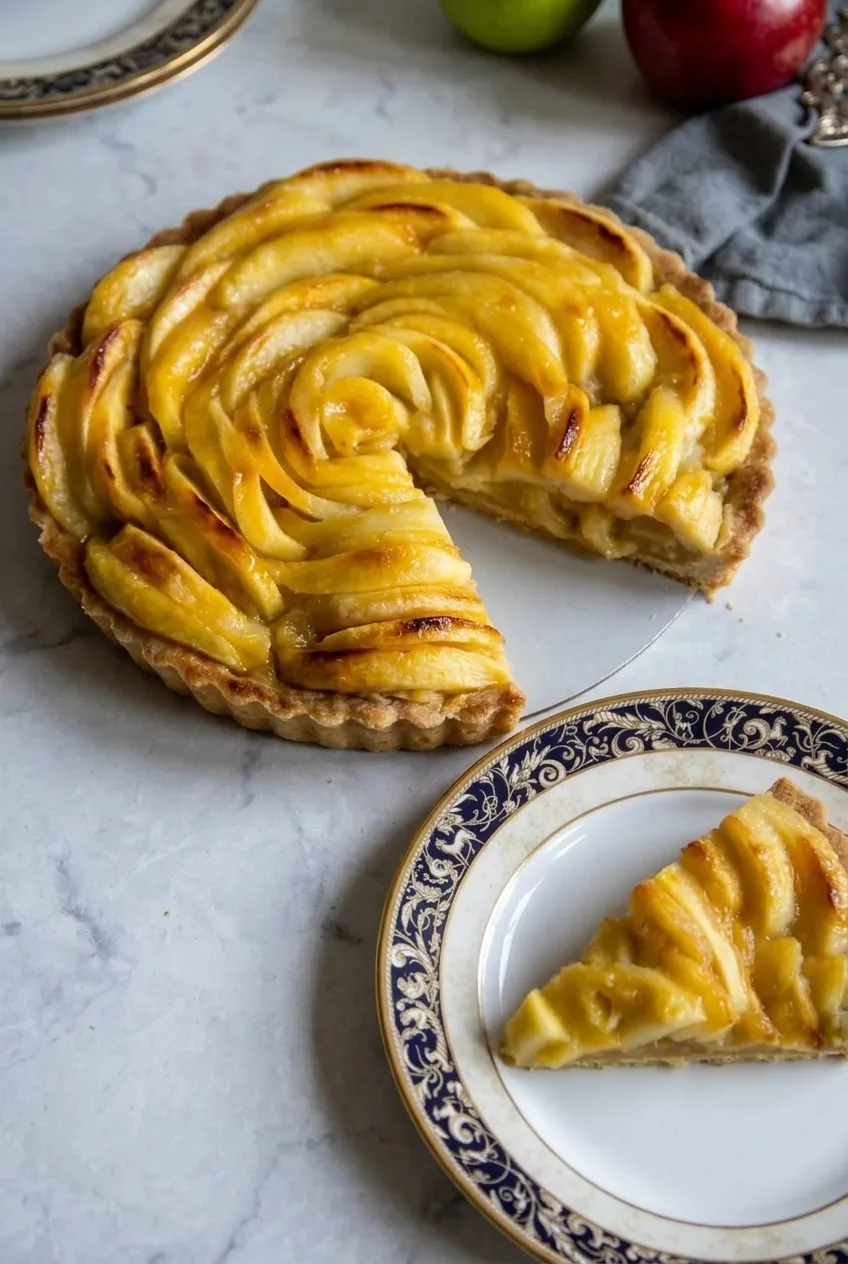
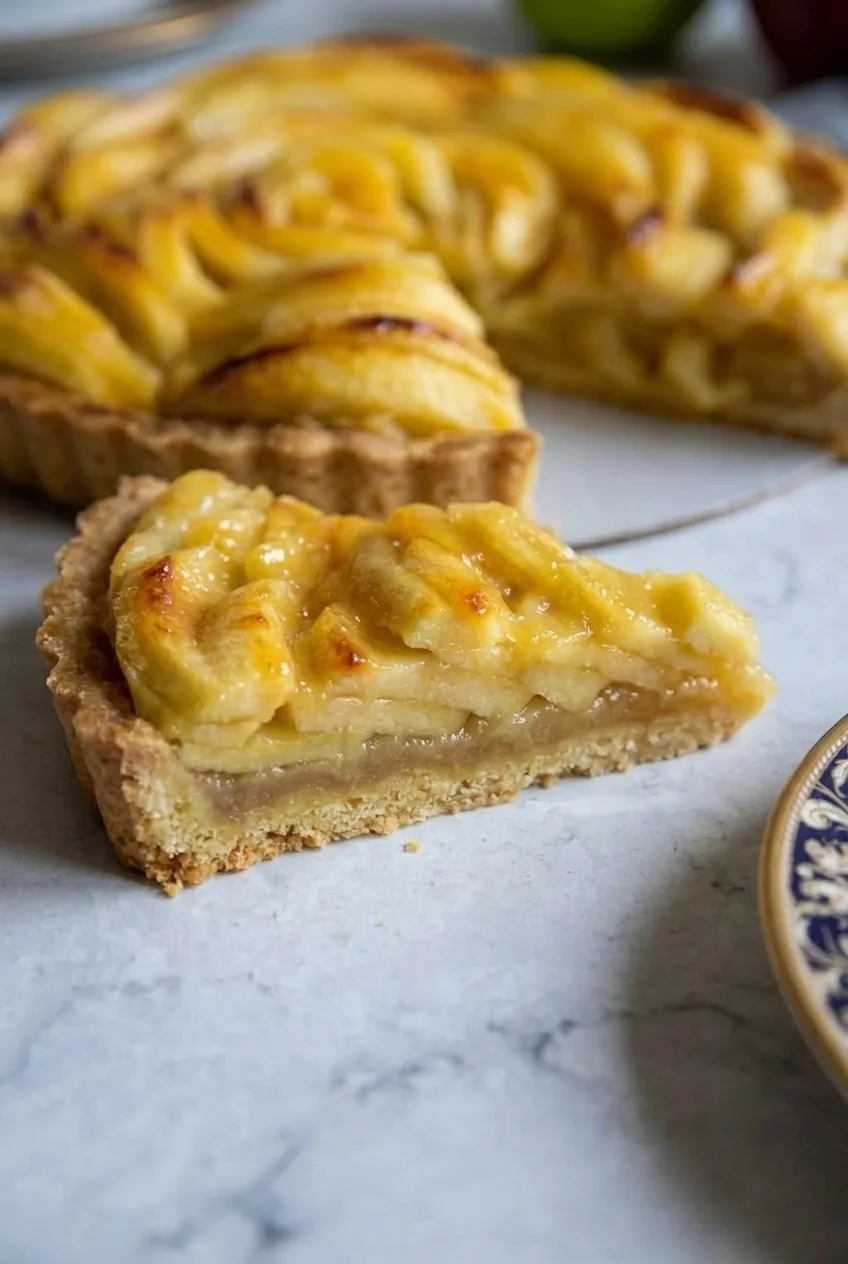
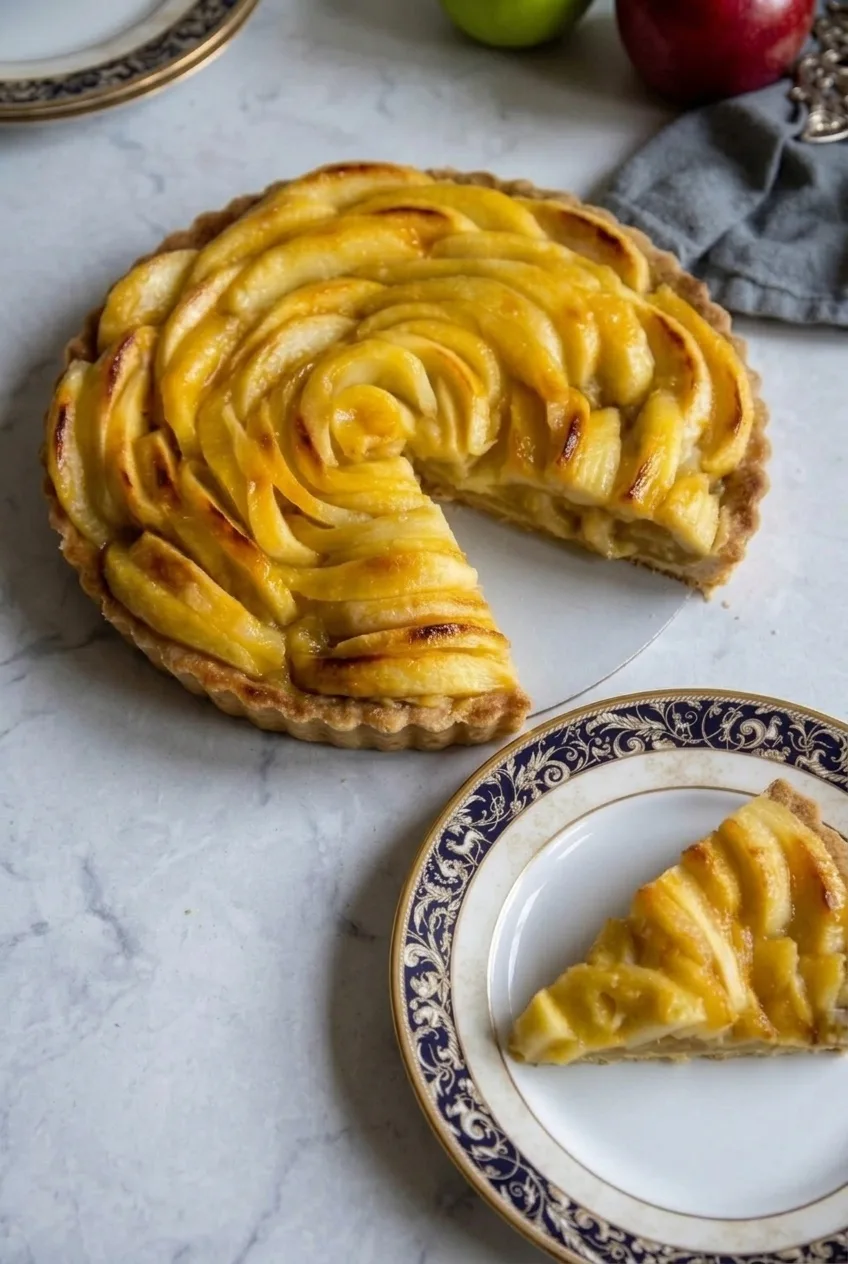
A fluted butter crust holds a thin layer of cooked apple beneath a dense spiral of tender slices. The apples bake until golden, then get a light apricot glaze. For a crust that holds up to the filling, blind bake the pastry until the base looks dry and reduce the cooked apple until it is thick enough to spread.
Allow about 50 minutes of active work and 2½ to 3 hours overall, including chilling and cooling. The tart makes 8 wedges and has its best crust texture on the day it is baked.
Ingredients for French Apple Tart
For the pastry
- 1¼ cups all-purpose flour (150g)
- ¼ cup powdered sugar (30g)
- ¼ teaspoon fine salt
- ½ cup (1 stick) cold unsalted butter, cubed (115g)
- 1 large egg yolk
- 1 to 2 tablespoons ice water, as needed
For the apples and glaze
- 5 medium firm baking apples, about 2¼ pounds total (about 1kg), divided
- 3 tablespoons granulated sugar, divided
- 1 tablespoon lemon juice, divided
- 2 tablespoons water, for the apple purée
- 1 tablespoon unsalted butter, melted (15g)
- ¼ cup apricot preserves (80g), divided
How to Make French Apple Tart
- Make and chill the pastry: Mix the flour, powdered sugar, and salt. Cut in the cold butter until crumbly, then add the egg yolk and just enough ice water for the dough to hold together when pressed. Roll out the dough and fit it into a 9-inch fluted tart pan with a removable bottom. Press it gently into the flutes without stretching, trim the edge, and refrigerate for 30 minutes.
- Cook the apple base: Peel, core, and dice 2 apples. Put them in a medium saucepan with 2 tablespoons of the granulated sugar, 2 teaspoons of the lemon juice, and 2 tablespoons of water. Cover and cook over medium-low heat until the apples soften. Uncover, mash, and stir often until the purée holds a brief trail when a spatula is drawn through it, about 15 to 20 minutes total. You should have roughly ¾ to 1 cup. Let it cool.
- Blind bake the shell: Preheat the oven to 375°F (190°C) with a rack near the center. Set the chilled tart pan on a baking sheet. Line the pastry with parchment and fill with pie weights or dried beans. Bake for 20 to 25 minutes, then remove the weights and parchment. Bake for another 8 to 10 minutes, checking the exposed base at 8 minutes. It should look dry and lightly golden, not pale or damp.
- Slice the topping apples: While the shell bakes, peel and core the remaining 3 apples. Cut them into even slices about 1/8 to 3/16 inch thick. Keep similarly sized slices together and gently coat them with the remaining teaspoon of lemon juice.
- Seal and fill the shell: Warm the apricot preserves until brushable. Brush about 1 tablespoon in a thin layer across the baked pastry base. Spread the cooled apple purée evenly over it, keeping the filling below the rim.
- Arrange the spiral: Starting near the outer rim, overlap the apple slices generously in a curved row. Continue in close rows toward the middle so large patches of purée do not show. Curl smaller, pliable slices into a compact center. Brush the apples with melted butter and sprinkle with the remaining tablespoon of sugar.
- Bake the tart: Bake at 375°F for 30 to 40 minutes, checking from 30 minutes. The slices should yield to a knife tip but remain distinct, with a few amber-brown edges and a golden-brown crust. Rotate the tart if it browns unevenly. If the fluted edge darkens before the apples are tender, shield it loosely with foil. Do not broil.
- Glaze and cool: Warm the remaining preserves, adding 1 to 2 teaspoons of water only if needed to brush them on thinly. Brush over the warm apples without leaving pools of jam. Cool for at least 30 minutes before removing the pan ring and cutting into wedges.
How to Keep the Tart Crust Crisp
Fitting the dough without stretching it and chilling the lined pan help the fluted sides keep their shape. The weighted bake supports those sides; the uncovered bake dries the bottom. If the exposed base still looks pale or damp, it needs more time before filling.
The apple purée should be thick enough to hold a brief spatula trail. If it flows back immediately, keep cooking it uncovered to remove moisture. The thin layer of preserves helps separate the filling from the pastry, but it will not prevent the crust from gradually softening.
Arranging the Apple Spiral
Even slices are easier to overlap and soften at a similar rate. Keep their broad curved edges visible as you work from the outside inward, overlapping each slice with the next. Finish with the smallest pliable slices at the center rather than piling fruit above the rim.
Choosing Apples and Shortcuts
Firm apples such as Pink Lady, Honeycrisp, or Braeburn hold their shape in the visible topping. One variety is enough; the 2 apples cooked for the base do not need to stay intact. Because apples vary in moisture and sweetness, judge the purée by its thickness and the topping by tenderness, not time alone.
Thick prepared applesauce can replace the cooked base; reduce it first if it is watery. An all-butter prepared shortcrust can replace homemade pastry, but it still needs to be fitted, chilled, and blind baked until dry and golden. Apple jelly can replace apricot preserves in both the shell and the finishing glaze.
Serving, Storing, and Making Ahead
Serve the tart slightly warm or at room temperature, plain or with vanilla ice cream or crème fraîche alongside each wedge. Cover and refrigerate leftovers for up to about 2 days. The base will soften; let a leftover wedge come to room temperature or warm it briefly in a low oven, without expecting the crust to become fresh-baked again.
To work ahead, line and chill the pastry and prepare the cooked purée separately. Assemble the tart close to baking rather than storing it with raw apple slices on top. Freezing the finished tart is not recommended.
For a different baked apple dessert, try this classic apple crumb pie. For a no-bake apple snack, see these apple slices with peanut butter and chocolate.
Nutrition
Approximate nutrition per wedge, based on 8 wedges: 300 calories, 2g protein, 14g fat, and 39g carbohydrates. Per 100g: approximately 230 calories, 2g protein, 10g fat, and 30g carbohydrates. Values vary with apple size, trimming, and the preserves used.
Equipment
- 9-inch fluted tart pan with removable bottom
- Baking sheet
- Parchment paper
- Pie weights or dried beans
- Medium saucepan
- Pastry brush
Ingredients
For the pastry
- 1 1/4 cups all-purpose flour (150g)
- 1/4 cup powdered sugar (30g)
- 1/4 teaspoon fine salt
- 1/2 cup (1 stick) cold unsalted butter, cubed (115g)
- 1 large egg yolk
- 1 to 2 tablespoons ice water, as needed
For the apples and glaze
- 5 medium firm baking apples, about 2 1/4 pounds total (about 1kg), divided
- 3 tablespoons granulated sugar, divided
- 1 tablespoon lemon juice, divided
- 2 tablespoons water, for the apple purée
- 1 tablespoon unsalted butter, melted (15g)
- 1/4 cup apricot preserves (80g), divided
Instructions
- Mix the flour, powdered sugar, and salt. Cut in the cold butter until crumbly.
- Add the egg yolk and just enough ice water for the dough to hold together when pressed. Roll out the dough and fit it into a 9-inch fluted tart pan with a removable bottom. Press it gently into the flutes without stretching, trim the edge, and refrigerate for 30 minutes.
- Peel, core, and dice 2 apples. Put them in a medium saucepan with 2 tablespoons of sugar, 2 teaspoons of lemon juice, and the water. Cover and cook over medium-low heat until softened. Uncover, mash, and stir often until the purée holds a brief spatula trail, about 15 to 20 minutes total. You should have roughly 3/4 to 1 cup. Let cool.
- Preheat the oven to 375°F (190°C) with a rack near the center. Set the chilled tart pan on a baking sheet. Line the pastry with parchment and fill with pie weights or dried beans.
- Bake the shell for 20 to 25 minutes. Remove the weights and parchment, then bake for another 8 to 10 minutes, checking at 8 minutes. The base should look dry and lightly golden.
- While the shell bakes, peel and core the remaining 3 apples. Cut them into even slices about 1/8 to 3/16 inch thick and gently coat with the remaining 1 teaspoon of lemon juice.
- Warm about 1 tablespoon of the apricot preserves until brushable. Brush it in a thin layer over the baked pastry base. Spread the cooled apple purée evenly over it, keeping the filling below the rim.
- Overlap the apple slices in curved rows, starting near the outer rim and working toward the middle. Use smaller, pliable slices to make a compact center. Brush the apples with melted butter and sprinkle with the remaining 1 tablespoon of sugar.
- Bake at 375°F (190°C) for 30 to 40 minutes, checking from 30 minutes. The slices should yield to a knife tip but remain distinct, with some amber-brown edges and a golden-brown crust. Rotate if browning unevenly and loosely shield the edge with foil if it darkens before the apples are tender.
- Warm the remaining preserves, adding 1 to 2 teaspoons of water only if needed to make them brushable. Brush a thin layer over the warm apples without leaving pools of jam.
- Cool for at least 30 minutes before removing the pan ring and cutting into wedges.
Tips
- Fit the dough into the pan without stretching it, then chill it to help the fluted sides hold their shape.
- Bake the shell until its exposed base looks dry and lightly golden before adding the filling.
- Cook the apple purée until it holds a brief spatula trail; reduce it uncovered longer if it flows back immediately.
- Use firm baking apples and slice them evenly so they soften at a similar rate.
- Arrange the apples from the outside inward and keep the center compact rather than piling fruit above the rim.
Variations
- Prepared applesauce base: Replace the cooked apple base with thick prepared applesauce, reducing it first if it is watery.
- Prepared shortcrust: Use an all-butter prepared shortcrust in place of homemade pastry; fit, chill, and blind bake it until dry and golden.
- Apple jelly glaze: Replace the apricot preserves with apple jelly for the shell layer and finishing glaze.