

Gingerbread Cookies Without Molasses
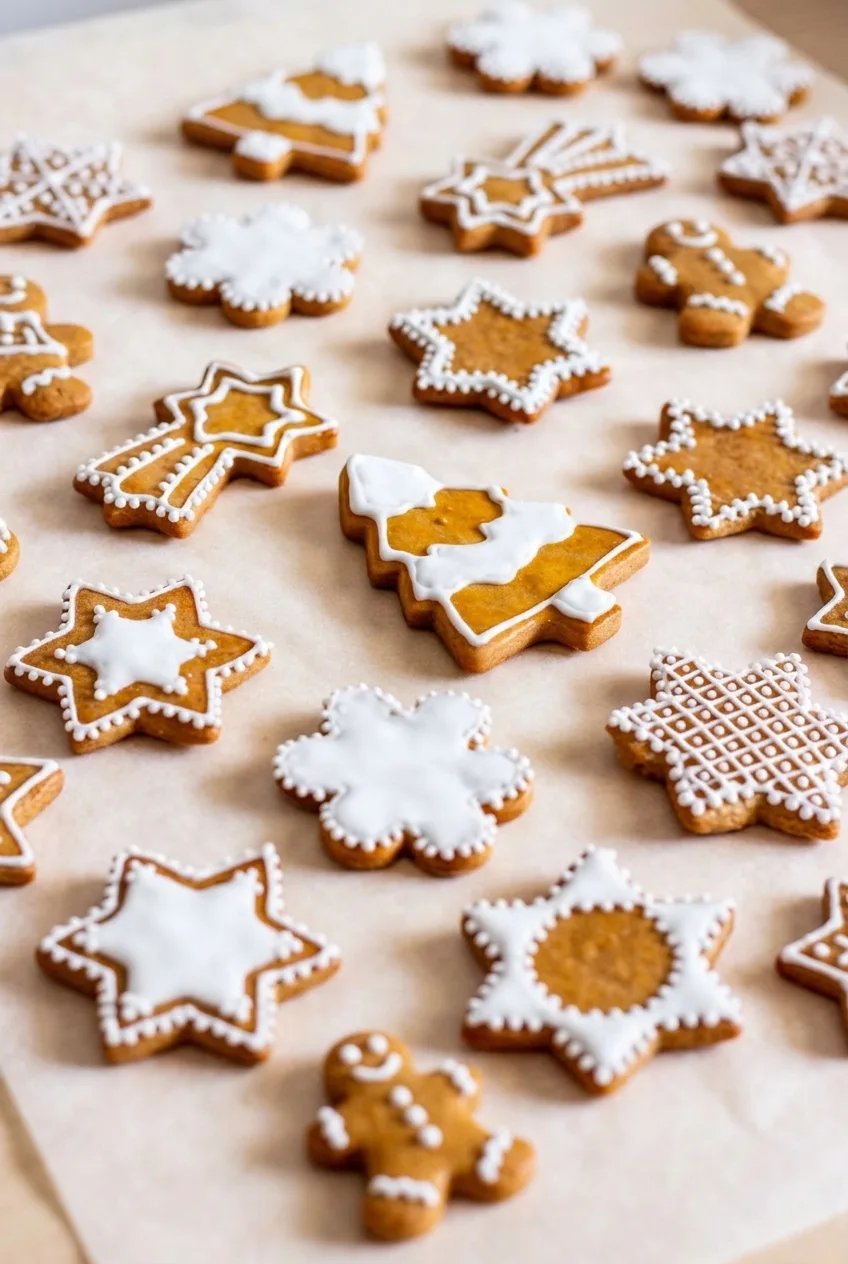
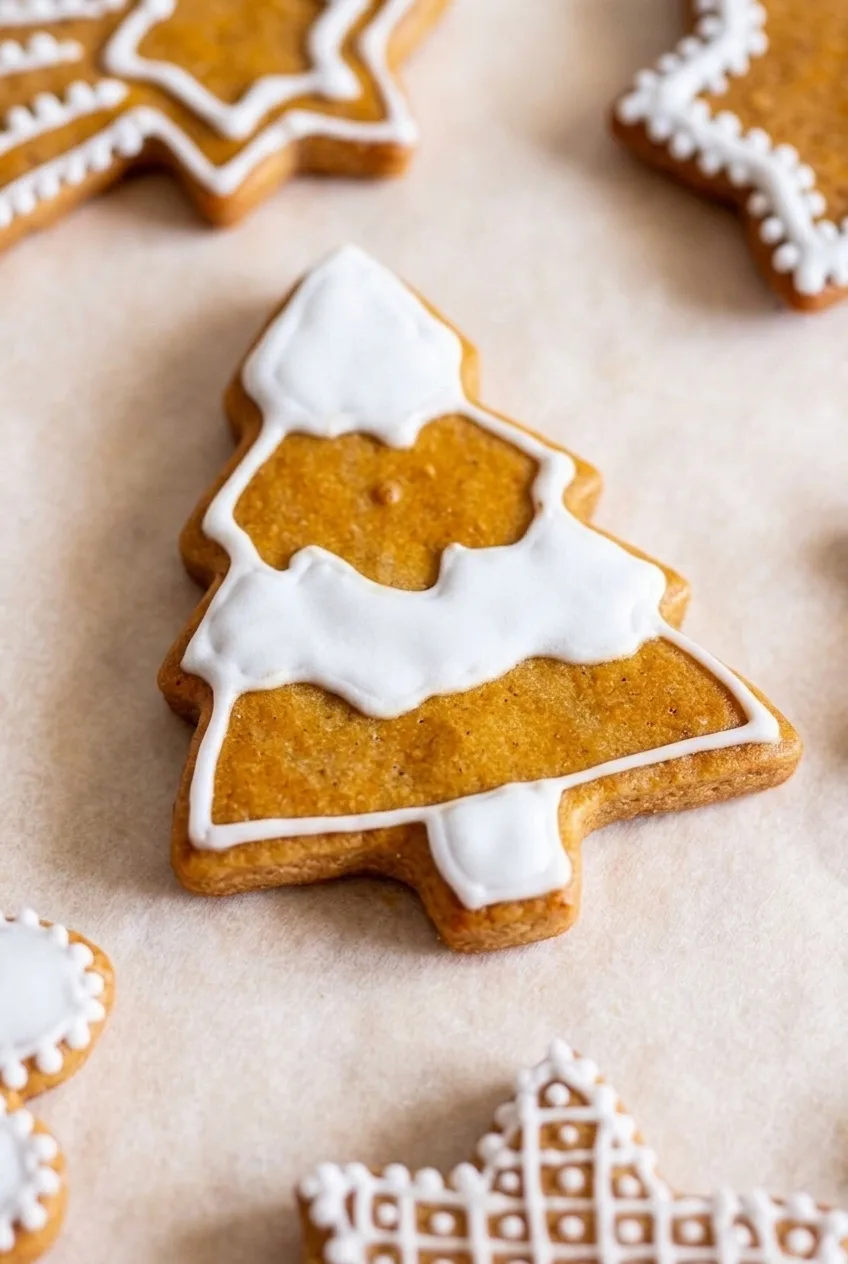
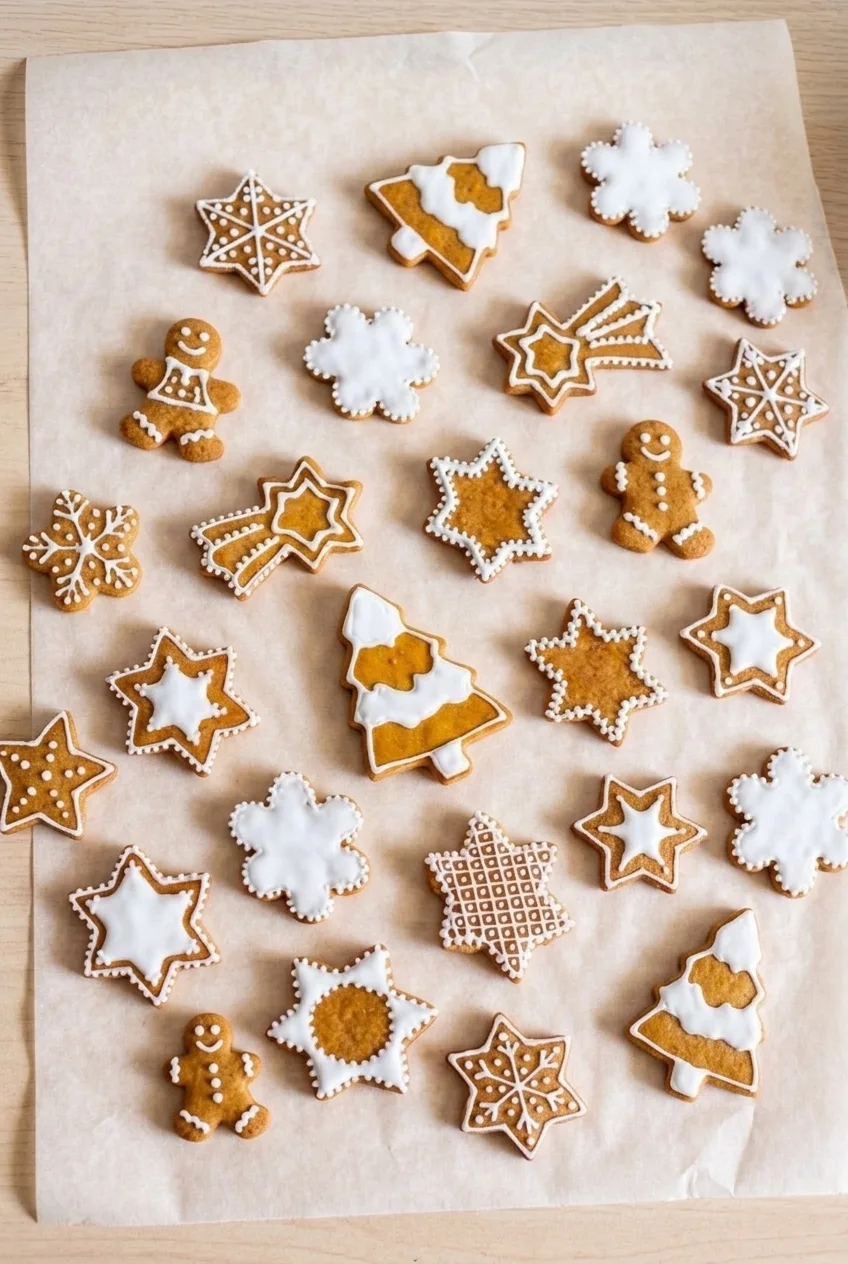
Honey and brown sugar sweeten these rolled gingerbread cutouts without molasses. The cookies bake golden brown with defined edges, then get white piped outlines, dots, and filled icing details.
Honey dough can feel tacky, so chill it before rolling and work with one portion at a time. Roll it about 1/4 inch thick and check the cookies early: size and bake time affect their texture, and they firm up as they cool.
Ingredients for Gingerbread Cookies Without Molasses
Cookies
- 3 cups all-purpose flour (375g)
- 2 teaspoons ground ginger
- 1 teaspoon ground cinnamon
- 1/4 teaspoon ground cloves
- 1 teaspoon baking soda
- 1/2 teaspoon fine salt
- 1/2 cup unsalted butter, softened (1 stick; 115g)
- 1/2 cup packed light brown sugar (100g)
- 1/2 cup honey (170g)
- 1 large egg
- 1 teaspoon vanilla extract
White icing
- 3 cups powdered sugar (360g)
- 2 tablespoons meringue powder (about 20g)
- About 4–6 tablespoons water, added gradually
Optional: A little extra all-purpose flour for rolling, if needed. Use it sparingly so the cookies do not become dry.
How to Make Gingerbread Cutout Cookies
- Mix the dry ingredients: Whisk together the flour, ginger, cinnamon, cloves, baking soda, and salt.
- Make the dough: Beat the butter and brown sugar until creamy. Mix in the honey, egg, and vanilla. Add the dry ingredients and mix just until no dry flour remains. The dough will be soft and may feel slightly tacky.
- Chill: Divide the dough into two flat discs, wrap them, and refrigerate for at least 2 hours or overnight.
- Roll and cut: Position a rack in the center of the oven and preheat to 350°F (175°C). Roll one disc at a time between sheets of parchment or on a lightly floured surface to about 1/4 inch thick; keep the other disc refrigerated. Cut a mix of shapes, such as trees, stars, and gingerbread people. Arrange similar-sized cutouts about 1 inch apart on parchment-lined, light-colored baking sheets. If the shapes soften during transfer, chill the sheet briefly before baking.
- Bake: Bake one sheet at a time, uncovered, for about 8–10 minutes. Start checking small or thin shapes at 7 minutes. The edges should be set and lightly darker than the centers, and the centers should look dry rather than glossy. Rotate the sheet halfway through only if your oven browns unevenly.
- Cool: Leave the cookies on the sheet for a few minutes, then transfer them to a wire rack. Cool completely, at least 30 minutes, before icing.
- Make the icing: Beat the powdered sugar, meringue powder, and 4 tablespoons water until smooth. Add more water gradually if needed, keeping some icing thick enough to hold a piped line. Thin a separate portion a few drops at a time until it settles smoothly inside an outline without running off the cookie.
- Decorate: Pipe white outlines, dots, and lines onto the cool cookies. Fill selected outlined areas with the thinner icing. Leave the cookies undisturbed until the icing is firm enough to handle and stack, about 1–3 hours or longer depending on its thickness and room conditions.
How to Keep the Cutouts Neat
Measure the honey accurately; too much can make the dough harder to handle. If it sticks while rolling, return it to the refrigerator rather than working in a large amount of extra flour. Parchment also helps prevent sticking.
Very cold dough may crack. Let it stand briefly until pliable, rotate it as you roll, and press small cracks together. Keep the thickness even so the shapes bake at roughly the same rate. For another cutout option, see No-Spread Gingerbread Cutout Cookies with White Icing.
How to Tell When the Cookies Are Done
Remove the cookies when their edges are set and their centers look dry, even if they still feel tender. Waiting for them to feel firm in the oven can leave them hard or too dark after cooling. Larger shapes may need longer than small ones, so bake different sizes separately when possible.
How to Adjust the White Icing
Outline icing should hold its shape when piped. If the lines spread, mix a little powdered sugar into that portion. Use the thinner icing only for filling outlined areas, and make sure the cookies are fully cool so the decoration does not smear.
Serving and Storage
Serve the cookies with tea, hot chocolate, or milk. Store fully cooled cookies in an airtight container at room temperature. Let decorated cookies’ icing set before stacking them, and place parchment between layers if needed. Humidity and icing can soften the cookies during storage.
For make-ahead baking, refrigerate the wrapped dough discs overnight. Freezing this honey dough is another possible option, though results may vary; thaw it in the refrigerator until pliable before rolling.
Nutrition
Approximate nutrition per cookie, based on 24 cookies and including the icing: 200 calories, 2g protein, 4g fat, and 38g carbohydrates. Approximate nutrition per 100g: 385 calories, 5g protein, 8g fat, and 73g carbohydrates. Values vary with cookie size and the amount of icing used.
Equipment
- Mixing bowls
- Electric mixer
- Whisk
- Rolling pin
- Cookie cutters
- Baking sheets
- Parchment paper
- Wire rack
- Piping bags
Ingredients
Cookies
- 3 cups all-purpose flour (375g), plus a little extra for rolling if needed
- 2 teaspoons ground ginger
- 1 teaspoon ground cinnamon
- 1/4 teaspoon ground cloves
- 1 teaspoon baking soda
- 1/2 teaspoon fine salt
- 1/2 cup unsalted butter, softened (1 stick; 115g)
- 1/2 cup packed light brown sugar (100g)
- 1/2 cup honey (170g)
- 1 large egg
- 1 teaspoon vanilla extract
White Icing
- 3 cups powdered sugar (360g)
- 2 tablespoons meringue powder (about 20g)
- 4–6 tablespoons water, added gradually
Instructions
- Whisk together the flour, ginger, cinnamon, cloves, baking soda, and salt.
- Beat the butter and brown sugar until creamy. Mix in the honey, egg, and vanilla.
- Add the dry ingredients and mix just until no dry flour remains. The dough will be soft and may feel slightly tacky.
- Divide the dough into two flat discs, wrap them, and refrigerate for at least 2 hours or overnight.
- Position a rack in the center of the oven and preheat to 350°F (175°C).
- Roll one disc at a time between sheets of parchment or on a lightly floured surface to about 1/4 inch thick. Keep the other disc refrigerated.
- Cut out shapes and arrange similar-sized cookies about 1 inch apart on parchment-lined, light-colored baking sheets. Briefly chill the sheet if the shapes soften during transfer.
- Bake one sheet at a time for about 8–10 minutes, checking small or thin shapes at 7 minutes. Bake until the edges are set and lightly darker than the centers and the centers look dry. Rotate the sheet halfway through only if your oven browns unevenly.
- Cool the cookies on the baking sheet for a few minutes, then transfer them to a wire rack. Cool completely, at least 30 minutes.
- Beat the powdered sugar, meringue powder, and 4 tablespoons water until smooth. Add more water gradually as needed, keeping some icing thick enough to hold a piped line.
- Thin a separate portion of icing a few drops at a time until it settles smoothly inside an outline without running off the cookie.
- Pipe outlines, dots, and lines onto the cool cookies. Fill selected outlined areas with the thinner icing, then leave the cookies undisturbed until the icing is firm, about 1–3 hours or longer.
Tips
- Measure the honey accurately; too much can make the dough difficult to handle.
- If the dough sticks while rolling, chill it again rather than adding a large amount of flour.
- If very cold dough cracks, let it stand briefly until pliable and press small cracks together.
- Keep the dough an even 1/4 inch thick so the cookies bake at a similar rate.
- Bake different cookie sizes separately when possible, and check small shapes early.
- Keep outline icing thick and use thinner icing only to fill outlined areas.