

Oatmeal Raisin Cookies
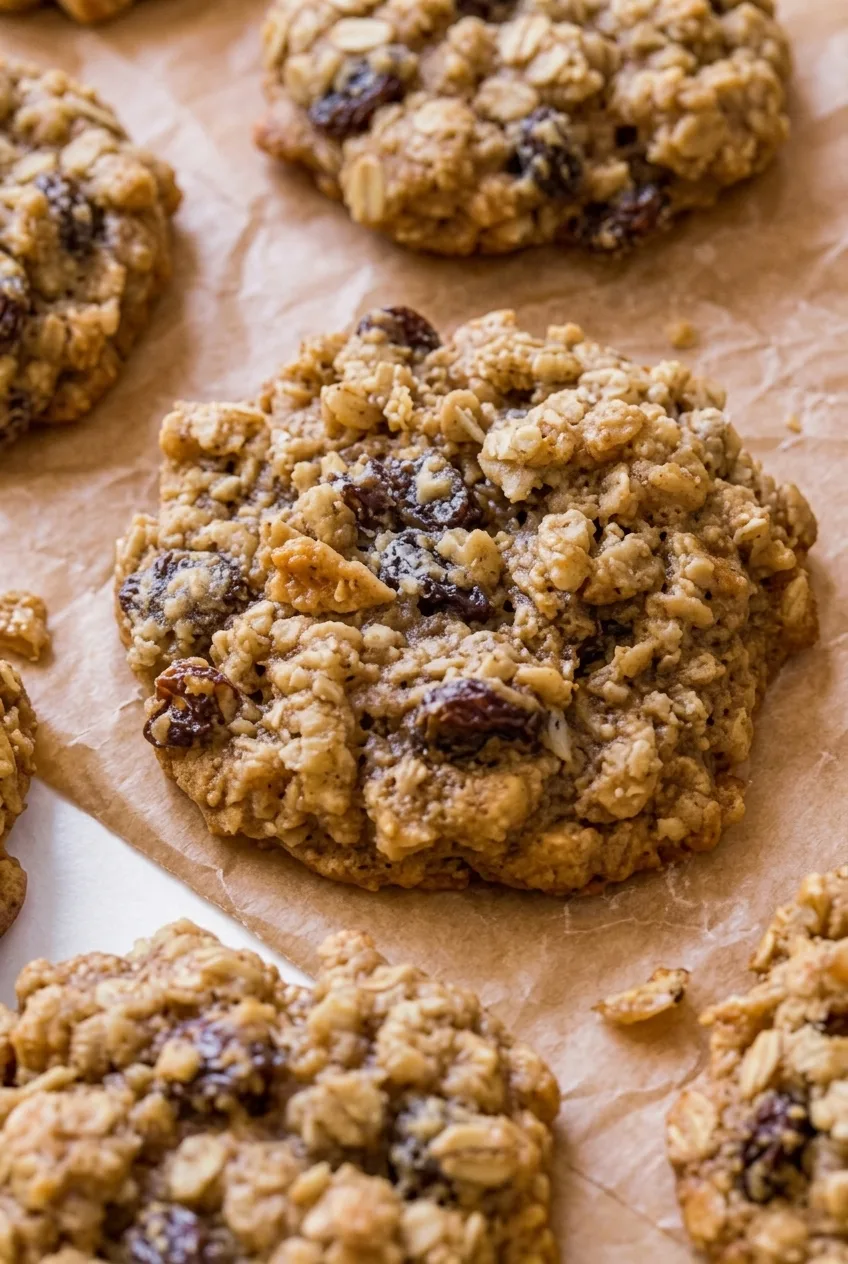
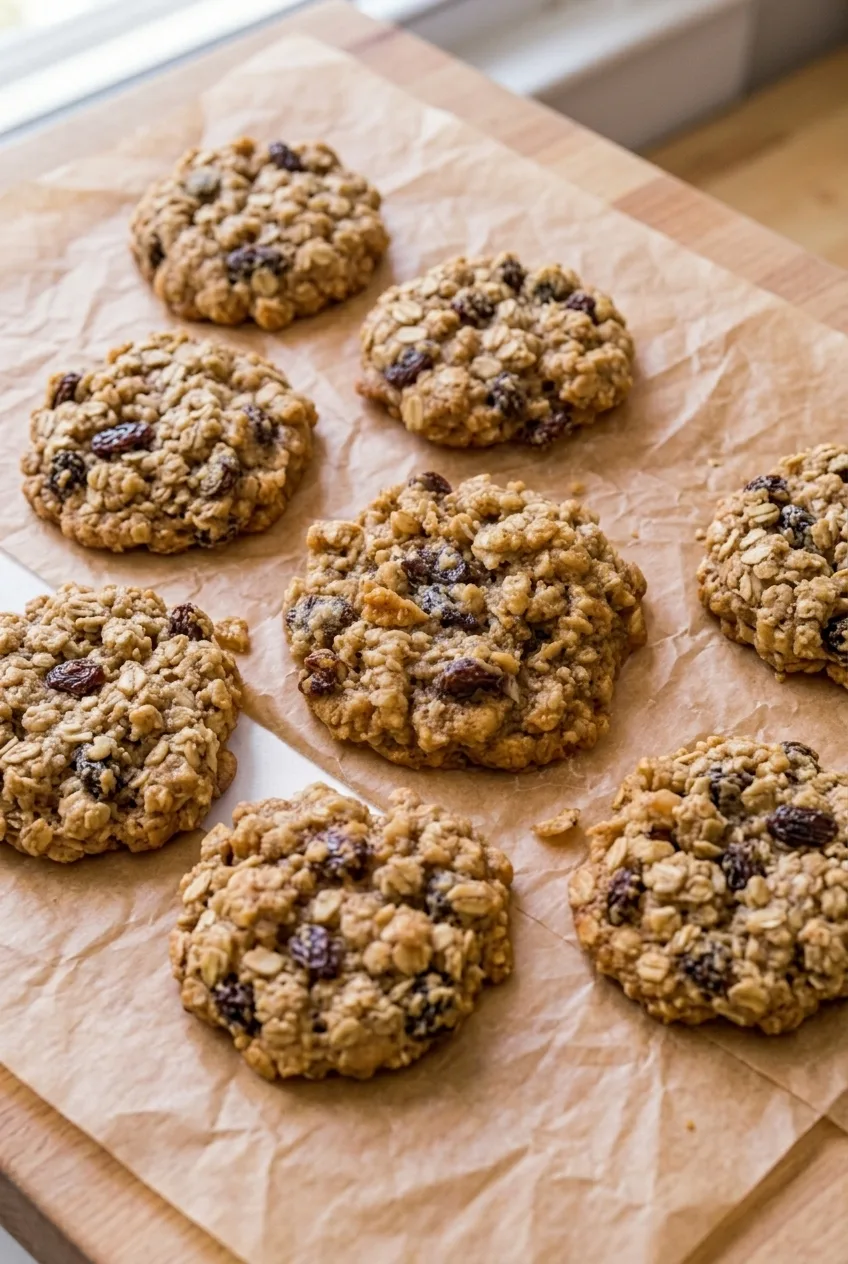
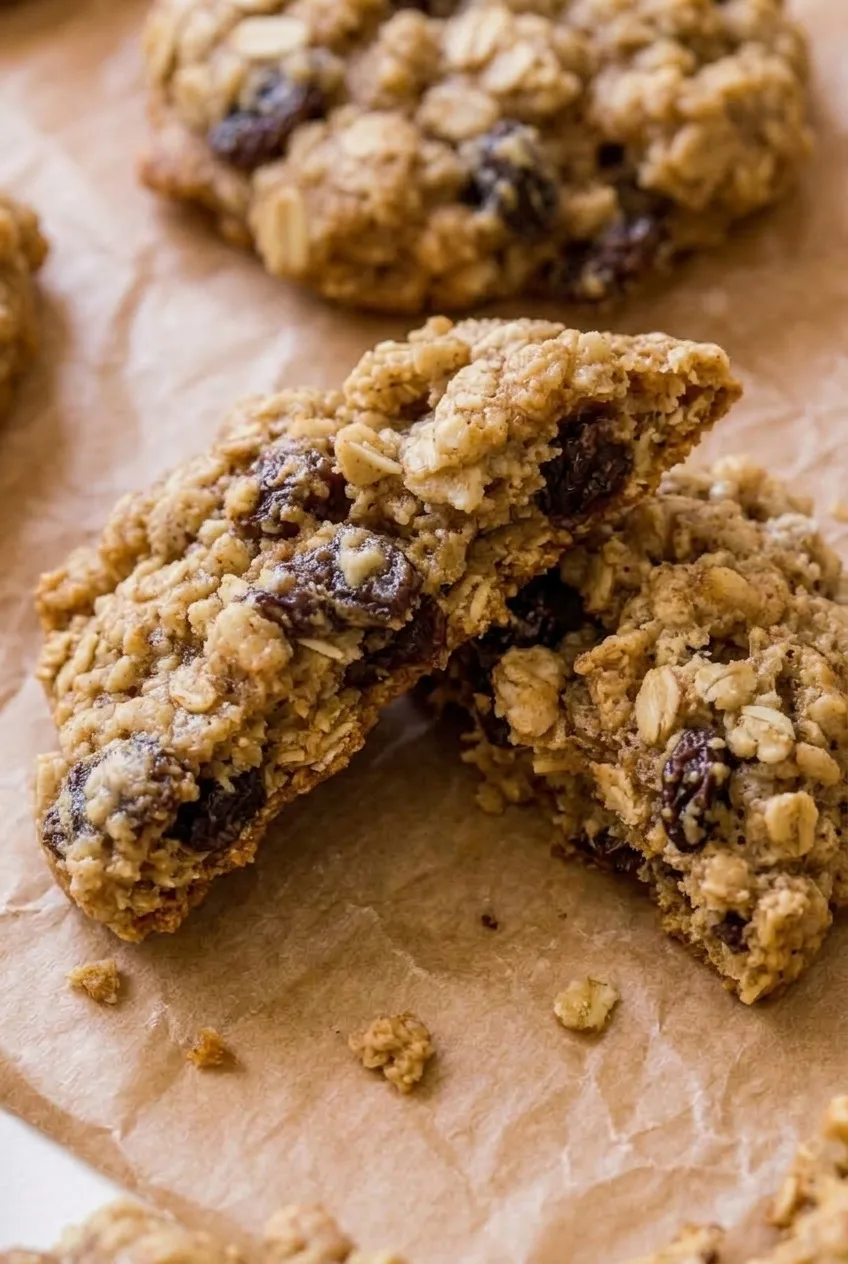
These oatmeal raisin cookies are rustic drop cookies with craggy oat surfaces, visible raisins, lightly golden edges, and soft centers. Old-fashioned rolled oats give them their hearty texture, while cinnamon adds a warm spice note.
A 20- to 30-minute chill makes the dough easier to scoop. Pressing each portion slightly afterward helps the cookies spread without turning thin. The recipe makes about 28 to 32 cookies using roughly 2 tablespoons of dough each.
Ingredients for Oatmeal Raisin Cookies
- 1 cup unsalted butter, softened (225g)
- 3/4 cup packed light brown sugar (150g)
- 1/2 cup granulated sugar (100g)
- 2 large eggs
- 2 teaspoons vanilla extract
- 1 1/2 cups all-purpose flour, spooned and leveled (180g)
- 1 teaspoon baking soda
- 1 1/2 teaspoons ground cinnamon
- 1/2 teaspoon fine salt
- 3 cups old-fashioned rolled oats (270g)
- 1 cup raisins (150g)
How to Bake Oatmeal Raisin Cookies
- Cream the butter and sugars: Beat the softened, not melted, butter with both sugars until combined and somewhat fluffy, about 4 to 5 minutes. Beat in the eggs one at a time, then mix in the vanilla.
- Add the dry ingredients: Whisk the flour, baking soda, cinnamon, and salt in a separate bowl. Add to the butter mixture and mix just until no dry flour remains.
- Fold in the oats and raisins: Mix until evenly distributed. The thick dough should hold its shape when scooped.
- Chill and preheat: Cover the dough and refrigerate for 20 to 30 minutes, until less sticky but still scoopable. Meanwhile, preheat the oven to 350°F (175°C) with a rack in the center. Line baking sheets with parchment.
- Scoop and press: Place roughly 2-tablespoon mounds on a cool prepared sheet, at least 2 inches apart. Gently press each to about 3/4 inch thick, leaving the edges rough rather than flattening the dough into discs. Turn a few raisins already in each mound toward the top.
- Bake: Bake one sheet at a time for about 10 to 13 minutes, starting to check at 10 minutes. Rotate the sheet if your oven browns unevenly. The edges should be lightly golden and the tops set rather than wet; the centers should still look soft.
- Cool: Leave the cookies on the sheet for about 5 minutes to firm up, then transfer them to a wire rack. Let the sheet cool before filling it with another batch.
How to Keep the Cookies Chewy
Take the cookies out when the edges are golden but the centers still look soft. Baking until the centers look firm all the way through can leave them dry. They finish setting during the brief rest on the baking sheet.
Getting the Right Amount of Spread
If the cookies stay in tall mounds, check that the flour was spooned and leveled or weighed. Dough chilled much longer than 30 minutes may also be too firm to spread; gently pressing each scoop helps it bake into a moderately thick cookie.
If the cookies spread too much, the butter may have been too warm or the dough may have gone onto a hot sheet. Start with softened butter, complete the short chill, and use a cool sheet for each batch.
Rolled Oats, Quick Oats, and Raisins
Old-fashioned rolled oats give these cookies their distinct flakes. Quick oats can replace them in equal volume, but the cookies will have a finer texture and fewer visible oat flakes. Avoid instant oats.
Raisins can go straight into the dough. For softer raisins, soak them in warm water first, then drain and blot them thoroughly so they do not add excess moisture. For a separate oat-cookie recipe with a different mix-in, try these oatmeal chocolate chip cookies.
Storing and Freezing Oatmeal Raisin Cookies
Cool the cookies completely, then store them in an airtight container at room temperature for up to 1 week. Freeze cooled baked cookies airtight for up to 3 months.
Portioned dough can also be frozen for up to 3 months. Bake from frozen at 350°F, allowing approximately 1 to 2 extra minutes. Check for lightly golden edges, set tops, and soft centers rather than relying only on the time.
Nutrition
Approximate per cookie, based on a batch of 30: 165 calories, 3g protein, 7g fat, and 23g carbohydrates. Approximate per 100g of baked cookies: 445 calories, 7g protein, 19g fat, and 62g carbohydrates. Values are estimates; cookie size and moisture lost during baking will affect them.
Equipment
- Electric mixer
- Mixing bowls
- Whisk
- Baking sheets
- Parchment paper
- Wire rack
Ingredients
- 1 cup unsalted butter, softened (225g)
- 3/4 cup packed light brown sugar (150g)
- 1/2 cup granulated sugar (100g)
- 2 large eggs
- 2 teaspoons vanilla extract
- 1 1/2 cups all-purpose flour, spooned and leveled (180g)
- 1 teaspoon baking soda
- 1 1/2 teaspoons ground cinnamon
- 1/2 teaspoon fine salt
- 3 cups old-fashioned rolled oats (270g)
- 1 cup raisins (150g)
Instructions
- Beat the softened butter and both sugars for 4 to 5 minutes, until combined and somewhat fluffy.
- Beat in the eggs one at a time, then mix in the vanilla.
- Whisk the flour, baking soda, cinnamon, and salt in a separate bowl. Add the dry ingredients to the butter mixture and mix just until no dry flour remains.
- Fold in the oats and raisins until evenly distributed.
- Cover the dough and refrigerate for 20 to 30 minutes, until less sticky but still scoopable.
- Meanwhile, preheat the oven to 350°F (175°C) with a rack in the center. Line baking sheets with parchment.
- Scoop roughly 2-tablespoon portions onto a cool prepared sheet, spacing them at least 2 inches apart.
- Gently press each mound to about 3/4 inch thick, keeping the edges rough. Turn a few raisins in each mound toward the top.
- Bake one sheet at a time for 10 to 13 minutes, checking at 10 minutes. Rotate the sheet if your oven browns unevenly. Remove the cookies when the edges are lightly golden, the tops are set, and the centers still look soft.
- Let the cookies rest on the baking sheet for about 5 minutes, then transfer them to a wire rack. Cool the sheet before using it for another batch.
Tips
- Use softened butter, not melted butter.
- Spoon and level the flour or weigh it to help prevent cookies from staying in tall mounds.
- Press the chilled dough portions gently so the cookies spread without becoming thin.
- Use a cool baking sheet for each batch to help prevent excess spreading.
- Take the cookies out while the centers still look soft; they finish setting as they rest.
Variations
- Quick Oat Cookies: Replace the rolled oats with an equal volume of quick oats for a finer texture and fewer visible oat flakes.