

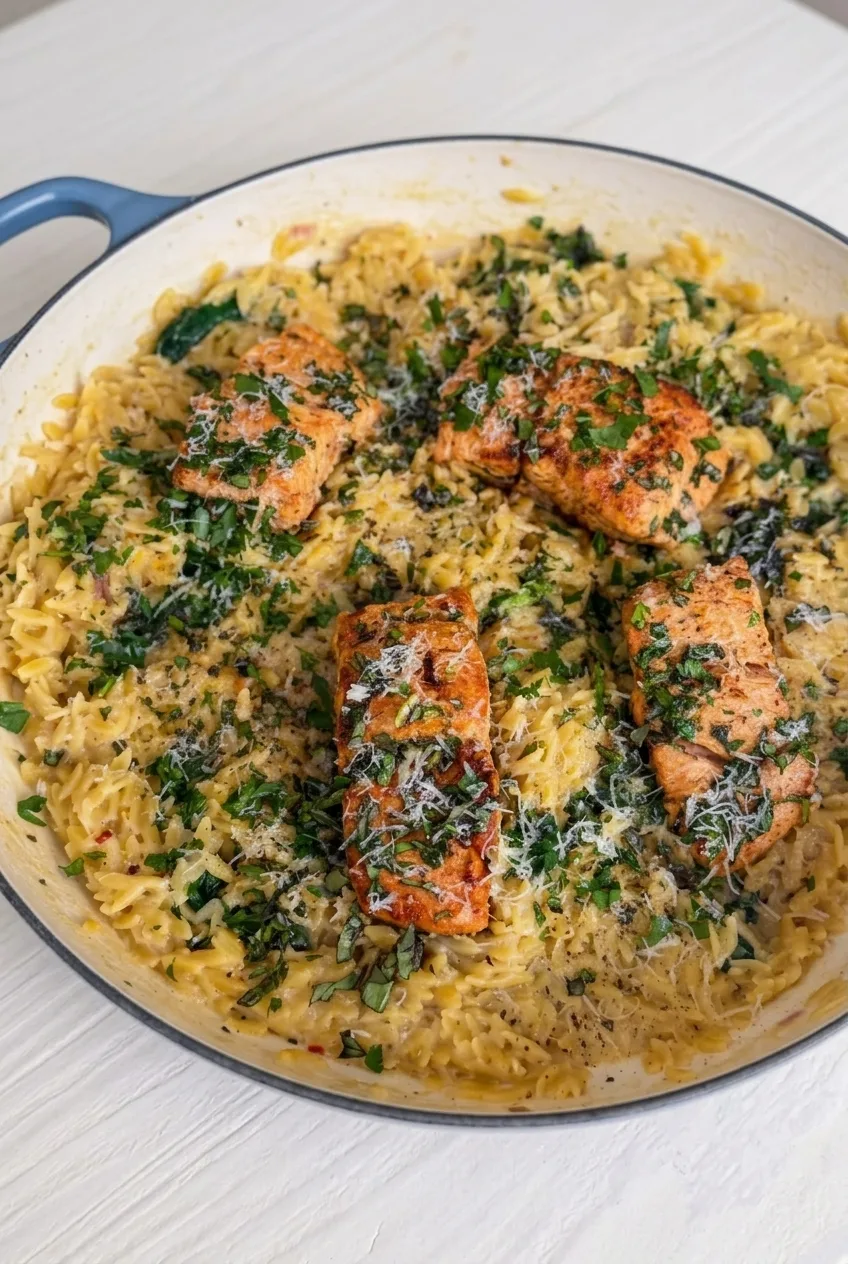
One-Skillet Salmon with Lemon Orzo
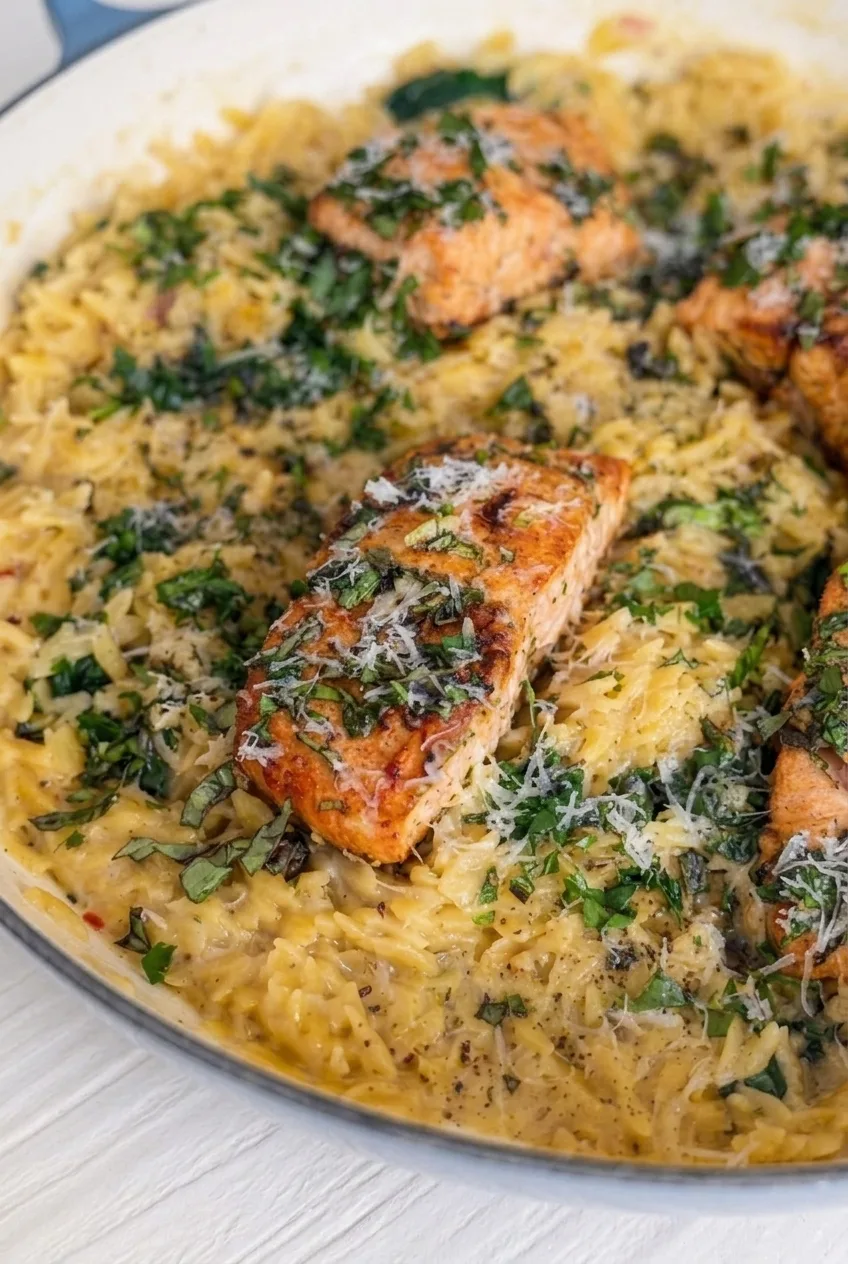
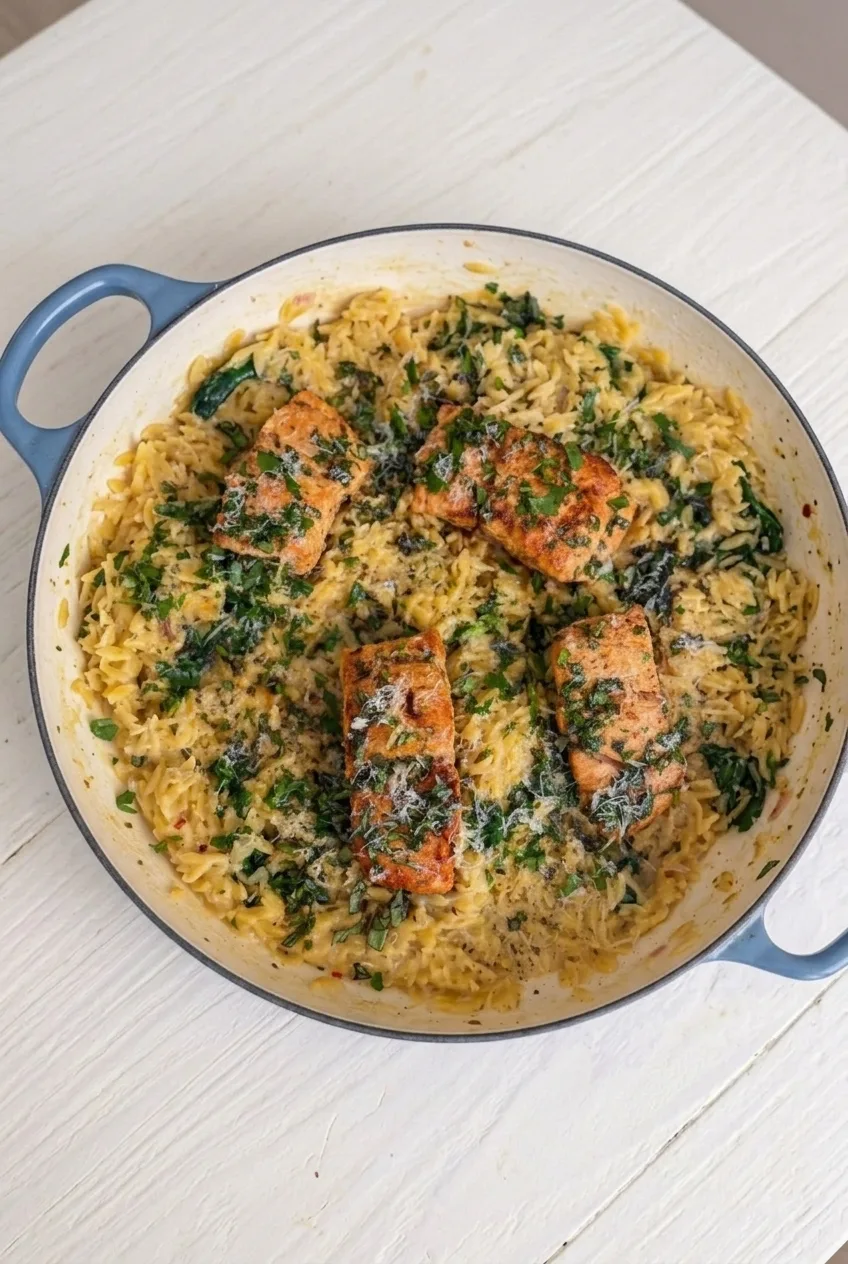
Four seared salmon portions sit over creamy lemon-Parmesan orzo with wilted spinach, parsley, and a little more grated cheese. The salmon browns first, then rests on a plate while dry orzo cooks in broth in the same skillet. Returning the fish only near the end gives the pasta time to become tender without leaving the salmon over the heat for the full simmer. Serve it while the orzo is loose and glossy.
Makes 4 servings. Prep time: 15 minutes. Cook time: 20–25 minutes.
Ingredients for Salmon with Lemon Orzo
- 4 salmon fillets, about 5–6 oz each (about 625g total), preferably similar in thickness
- 2 tablespoons olive oil, divided
- About 1 teaspoon kosher salt, divided, plus more to taste
- 1/2 teaspoon freshly ground black pepper, divided
- 1 medium shallot, finely chopped (about 40g)
- 3 garlic cloves, minced
- 1 1/2 cups dry orzo (about 270g)
- 3 cups low-sodium chicken or vegetable broth, plus up to 1/2 cup more for adjusting
- 3 packed cups baby spinach (about 85g)
- 1/3 cup heavy cream (about 80g)
- 1 large lemon, zested and juiced; use 2 tablespoons juice, plus more to taste
- 1/2 cup finely grated Parmesan, plus 2 tablespoons for finishing (about 65g total)
- 1/4 cup chopped fresh flat-leaf parsley (about 15g)
Use a wide, deep 12-inch skillet with a lid. Keep the extra broth nearby: pan width and simmer strength affect how quickly the orzo absorbs liquid.
How to Make One-Skillet Salmon with Lemon Orzo
- Prepare the salmon and aromatics: Pat the salmon dry and season it with about half the salt and pepper. Chop the shallot and parsley, mince the garlic, and zest and juice the lemon.
- Sear the salmon: Heat 1 tablespoon olive oil in the skillet over medium-high heat. Add the salmon skin-side down if using skin-on fillets. Cook for about 3–4 minutes, until browned and reasonably easy to release from the pan. Flip once and cook for 1–2 minutes more, then transfer to a plate while the centers still need a brief finish. Sear in two batches in the same skillet if the fillets would otherwise be crowded.
- Toast the orzo: Reduce the heat to medium. Add the remaining tablespoon of oil and the shallot; cook until softened. Stir in the garlic briefly, just until fragrant. Add the dry orzo and stir for 1–2 minutes, until lightly glossy but not dark brown.
- Simmer the orzo: Pour in 3 cups broth, scraping up the browned bits from the skillet bottom. Add the remaining salt and pepper. Simmer uncovered at a gentle, steady bubble, stirring regularly across the bottom. Start checking at 9 minutes. If the pan looks dry before the orzo softens, add warm broth in small splashes. After about 9–12 minutes, the orzo should be nearly tender with some liquid still around it.
- Add the spinach and finish the salmon: Stir the spinach and lemon zest into the orzo. Add the cream and reduce the heat to low. Set all four salmon portions on top, cover, and cook gently for about 2–5 minutes, checking the thickest part early. The spinach should be wilted, the orzo tender, and the salmon should separate into moist flakes. For a thermometer-based food-safety check, cook the salmon to 145°F (65°C) in its thickest part; thicker fillets may need longer.
- Finish off heat: Turn off the heat. Gently stir 1/2 cup Parmesan and 2 tablespoons lemon juice into the exposed orzo without breaking up the salmon. If the pasta is stiff, add a little warm broth until it is glossy and spoonable. Taste and adjust the salt or lemon juice. Scatter the parsley and remaining 2 tablespoons Parmesan over the fish and pasta. Serve directly from the skillet.
How to Keep the Salmon Tender
The initial sear builds browned edges; it does not need to cook the fish through. Leaving salmon in the skillet during the entire orzo simmer can dry it out. Thin fillets may need less searing or almost no final cooking, while thick portions may need longer under the lid. Check the thickest part rather than relying on the clock.
How to Keep the Orzo Saucy
Stir across the skillet bottom while the orzo simmers so it cooks evenly without sticking. The finished pasta should hold distinct pieces in a sauce that flows around a spoonful—not form a dry mound or sit in a pool of broth. Orzo keeps absorbing liquid as it stands, so loosen it with warm broth if needed and serve promptly.
Keep the heat low after adding the cream. Stirring in Parmesan and lemon juice off heat helps the sauce stay smooth rather than boiling the cheese and dairy.
Serving and Storing Leftovers
Scoop the spinach orzo from beneath each salmon portion and serve from the skillet. For another skillet pasta dinner, try Creamy Tuscan Ravioli.
Refrigerate leftovers promptly in an airtight container and use within 2–3 days. Reheat gently with a splash of broth to loosen the orzo, warming the salmon only until heated through. The texture is best freshly made; freezing is not recommended for this creamy version because the sauce and fish may lose texture.
Nutrition
Approximate nutrition per serving, based on 4 servings: 810 calories, 47g protein, 41g fat, and 56g carbohydrates. Approximate nutrition per 100g of finished dish: 170 calories, 10g protein, 9g fat, and 12g carbohydrates. Values vary with the salmon, broth, and amount of liquid absorbed or evaporated.
Equipment
- 12-inch deep skillet with lid
- Instant-read thermometer
Ingredients
Salmon and Orzo
- 4 salmon fillets, about 5–6 oz each (about 625 g total), preferably similar in thickness
- 2 tablespoons olive oil, divided
- About 1 teaspoon kosher salt, divided, plus more to taste
- 1/2 teaspoon freshly ground black pepper, divided
- 1 medium shallot, finely chopped (about 40 g)
- 3 garlic cloves, minced
- 1 1/2 cups dry orzo (about 270 g)
- 3 cups low-sodium chicken or vegetable broth, plus up to 1/2 cup more for adjusting
- 3 packed cups baby spinach (about 85 g)
- 1/3 cup heavy cream (about 80 g)
- 1 large lemon, zested and juiced; use 2 tablespoons juice, plus more to taste
- 1/2 cup finely grated Parmesan, plus 2 tablespoons for finishing (about 65 g total)
- 1/4 cup chopped fresh flat-leaf parsley (about 15 g)
Instructions
- Pat the salmon dry and season it with about half the salt and pepper. Chop the shallot and parsley, mince the garlic, and zest and juice the lemon.
- Heat 1 tablespoon olive oil in a wide, deep 12-inch skillet over medium-high heat. Add the salmon skin-side down if using skin-on fillets. Cook for 3–4 minutes, until browned and easy to release. Flip and cook for 1–2 minutes more, then transfer to a plate. Sear in two batches if needed to avoid crowding.
- Reduce the heat to medium. Add the remaining tablespoon of olive oil and the shallot; cook until softened. Stir in the garlic briefly, then add the orzo and toast for 1–2 minutes, stirring until lightly glossy.
- Pour in 3 cups broth and scrape up the browned bits from the skillet. Add the remaining salt and pepper. Simmer uncovered at a gentle, steady bubble, stirring regularly across the bottom. Start checking the orzo at 9 minutes; add warm broth in small splashes if the pan looks dry before the orzo softens. Cook for about 9–12 minutes, until nearly tender with some liquid remaining.
- Stir the spinach and lemon zest into the orzo. Add the cream and reduce the heat to low. Set the salmon on top, cover, and cook gently for about 2–5 minutes, checking the thickest part early. Cook until the spinach is wilted, the orzo is tender, and the salmon flakes moistly. For a thermometer-based food-safety check, cook the salmon to 145°F (65°C) in its thickest part.
- Turn off the heat. Gently stir 1/2 cup Parmesan and 2 tablespoons lemon juice into the exposed orzo without breaking up the salmon. Add a little warm broth if needed to make the orzo glossy and spoonable. Taste and adjust the salt or lemon juice, then top with parsley and the remaining 2 tablespoons Parmesan. Serve promptly.
Tips
- Sear the salmon only until browned; it will finish cooking under the lid.
- Check the thickest part of the salmon rather than relying only on the cooking time.
- Stir across the bottom of the skillet while the orzo simmers to prevent sticking.
- Keep extra warm broth nearby and add it in small splashes to keep the orzo loose and saucy.
- Stir in the Parmesan and lemon juice off the heat to help keep the sauce smooth.