

Salmon & Garlic Asparagus Dinner
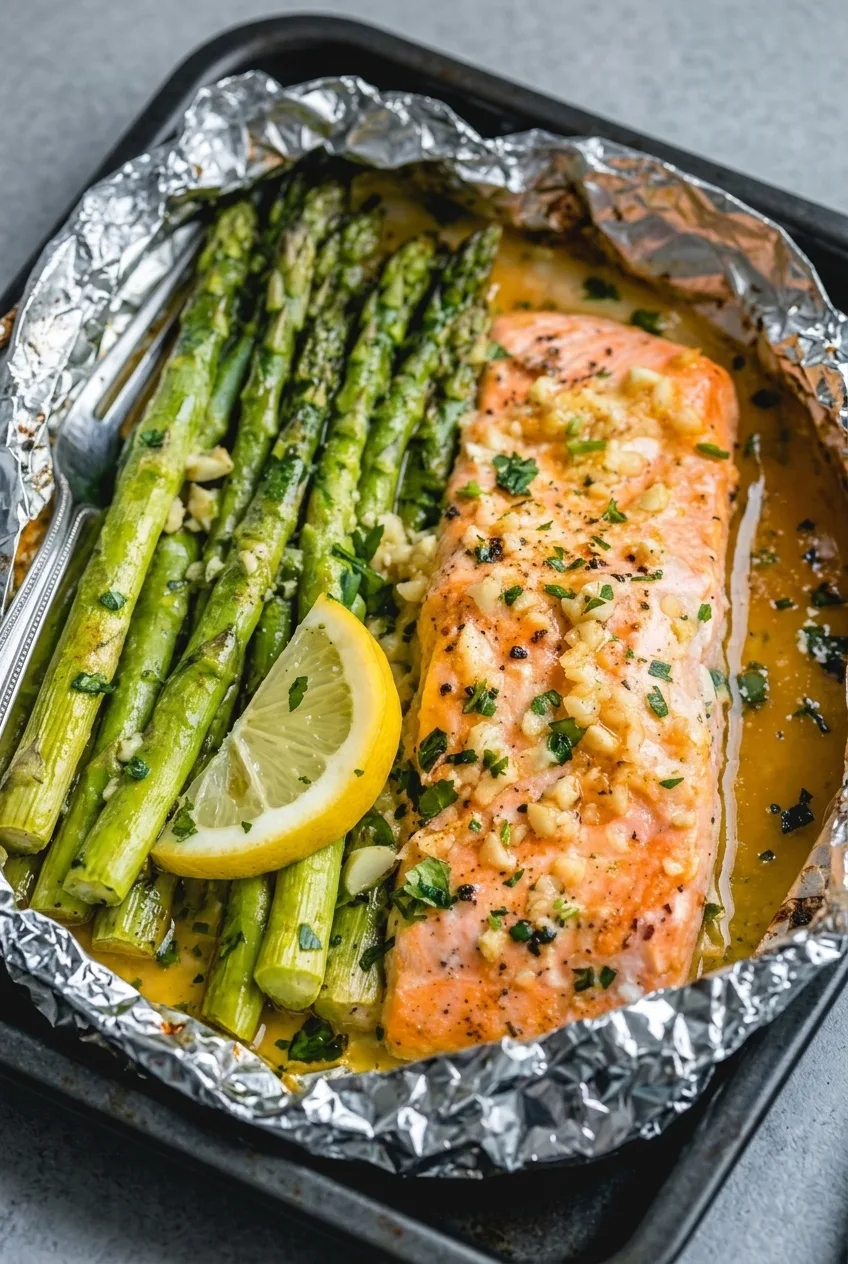
One large salmon fillet roasts beside whole asparagus spears in an open, foil-lined pan. Chopped garlic, olive oil, and lemon give the fish a light coating rather than a heavy sauce; parsley and the collected pan juices finish it.
Start checking the salmon and asparagus separately at 12 minutes. Medium to thick spears may finish alongside the fillet, but thinner asparagus can turn limp before the fish is done.
Ingredients for Salmon and Garlic Asparagus
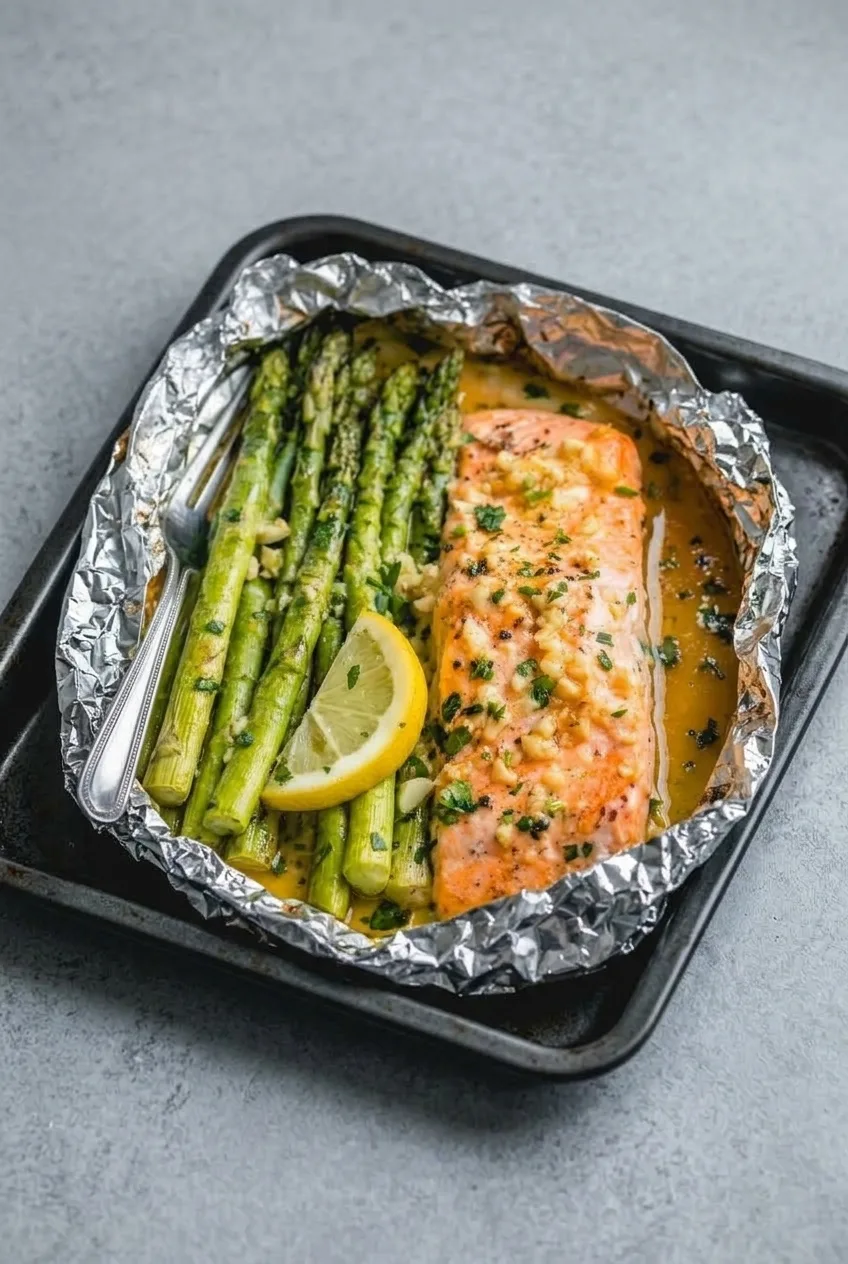
- 1 large center-cut salmon fillet, preferably skin-on, about 1 1/4 pounds (570g)
- 1 pound medium to thick asparagus, woody ends trimmed (450g)
- 2 tablespoons olive oil
- 4 garlic cloves, finely chopped
- 1 medium lemon, for 1 tablespoon juice and serving wedges
- 3/4 teaspoon kosher salt, or to taste
- 1/4 teaspoon freshly ground black pepper
- 2 tablespoons chopped fresh flat-leaf parsley
Yield: 4 servings. Prep: 10–15 minutes. Cook: about 15–20 minutes, depending on fillet thickness.
How to Roast Salmon and Garlic Asparagus
- Prepare the pan: Preheat the oven to 450°F (230°C). Line a rimmed baking sheet with sturdy foil, turning up the edges slightly to catch the juices. Leave the top open so the food roasts rather than steaming in a sealed packet.
- Arrange the salmon and asparagus: Pat the salmon dry and place it intact on one side of the pan. Spread the asparagus beside it in a mostly single layer.
- Season: Mix the olive oil, chopped garlic, and 1 tablespoon lemon juice. Coat the asparagus with some of the mixture and spoon the rest over the salmon. Keep the garlic on the food rather than bare foil, where it can scorch. Season both with salt and pepper.
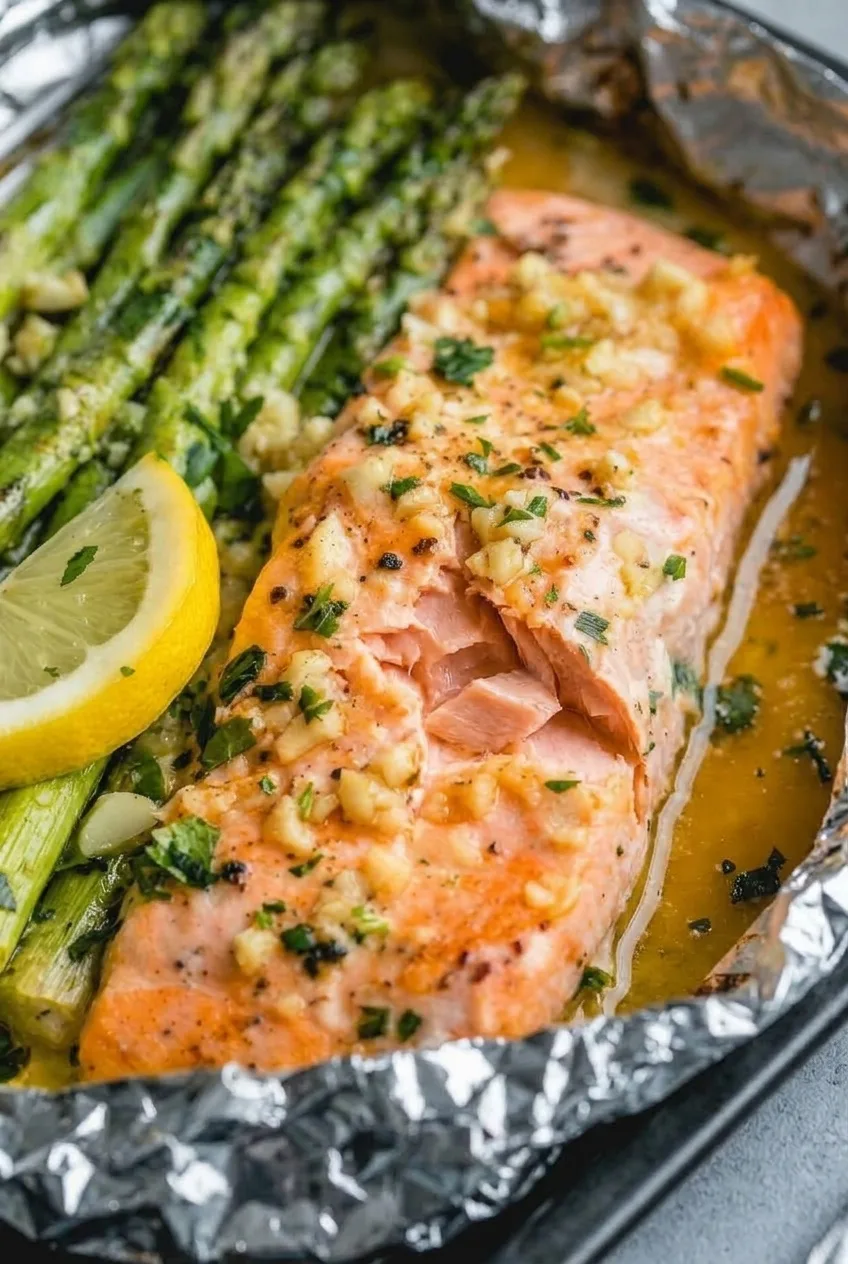
- Roast and check: Roast uncovered, without flipping. Begin checking both foods at 12 minutes. If the asparagus is tender at the thick end but still green and holding its shape, transfer it off the hot pan with tongs. Continue roasting the salmon as needed. A roughly 1- to 1 1/4-inch-thick fillet may take 15–20 minutes total, but thickness affects the timing. Check the thickest part: the flesh should be opaque and separate into moist flakes when gently pressed. For the US food-safety endpoint, use an instant-read thermometer to check for 145°F (65°C).
- Finish: Return any removed asparagus beside the salmon. Spoon the collected pan juices over both, scatter with parsley, and add the lemon wedges. Let the salmon stand for about 3 minutes before dividing it into four portions.
How to Keep the Asparagus from Overcooking
Medium to thick spears are better suited to roasting alongside a large fillet. If the asparagus finishes first, move it off the hot pan until the salmon is ready. For very thin spears, add them partway through the salmon’s roast instead of cooking them for the full time.
Serving and Variations
Serve from the open pan and squeeze the lemon wedges over individual portions. For a more substantial dinner, add Mediterranean lentils and rice on the side.
Fresh dill can replace the parsley. If using individual salmon portions instead of one large fillet, arrange them beside the asparagus and begin checking earlier; their size and thickness will affect the roast time.
How to Store and Reheat Leftovers
Refrigerate leftover salmon and asparagus in an airtight container for up to 3 days. Reheat gently in a 350°F (175°C) oven just until warmed through; extended reheating can dry out the fish.
Nutrition
Approximate nutrition per serving, based on 4 servings: 385 calories, 31g protein, 26g fat, and 6g carbohydrates. Approximate values per 100g of raw recipe ingredients: 130 calories, 11g protein, 9g fat, and 2g carbohydrates. Values exclude uneaten lemon wedges and vary with the salmon and the amount of pan juices served; cooking also changes the finished weight.
Equipment
- Oven
- Rimmed baking sheet
- Sturdy foil
- Small bowl
- Tongs
- Instant-read thermometer
Ingredients
For the Salmon and Asparagus
- 1 large center-cut salmon fillet, preferably skin-on, about 1 1/4 pounds (570g)
- 1 pound medium to thick asparagus, woody ends trimmed (450g)
- 2 tablespoons olive oil
- 4 garlic cloves, finely chopped
- 1 medium lemon, for 1 tablespoon juice and serving wedges
- 3/4 teaspoon kosher salt, or to taste
- 1/4 teaspoon freshly ground black pepper
- 2 tablespoons chopped fresh flat-leaf parsley
Instructions
- Preheat the oven to 450°F (230°C). Line a rimmed baking sheet with sturdy foil and turn up the edges slightly to catch juices, leaving the top open.
- Pat the salmon dry and place it intact on one side of the pan. Arrange the asparagus beside it in a mostly single layer.
- Mix the olive oil, chopped garlic, and 1 tablespoon lemon juice.
- Coat the asparagus with some of the oil mixture and spoon the rest over the salmon, keeping the garlic on the food rather than the foil.
- Season the salmon and asparagus with salt and pepper.
- Roast uncovered without flipping. Begin checking the salmon and asparagus at 12 minutes.
- When the asparagus is tender at the thick end but still green and holding its shape, transfer it off the hot pan with tongs. Continue roasting the salmon as needed.
- Check the thickest part of the salmon for opaque flesh that separates into moist flakes. For the US food-safety endpoint, verify it reaches 145°F (65°C) with an instant-read thermometer.
- Return the asparagus beside the salmon. Spoon the pan juices over both, scatter with parsley, and serve with lemon wedges.
- Let the salmon stand for about 3 minutes, then divide it into four portions.
Tips
- Use medium to thick asparagus spears so they are more likely to finish alongside the salmon.
- Check the asparagus and salmon separately starting at 12 minutes.
- Move asparagus off the hot pan as soon as it is tender to prevent overcooking.
- Add very thin asparagus partway through the salmon’s roasting time.
- Keep the garlic on the food rather than bare foil to prevent it from scorching.
Variations
- Dill Salmon: Replace the parsley with fresh dill.
- Individual Salmon Portions: Use individual salmon portions and begin checking earlier, since their size and thickness affect roasting time.