

Old-Fashioned Lemon Chess Pie
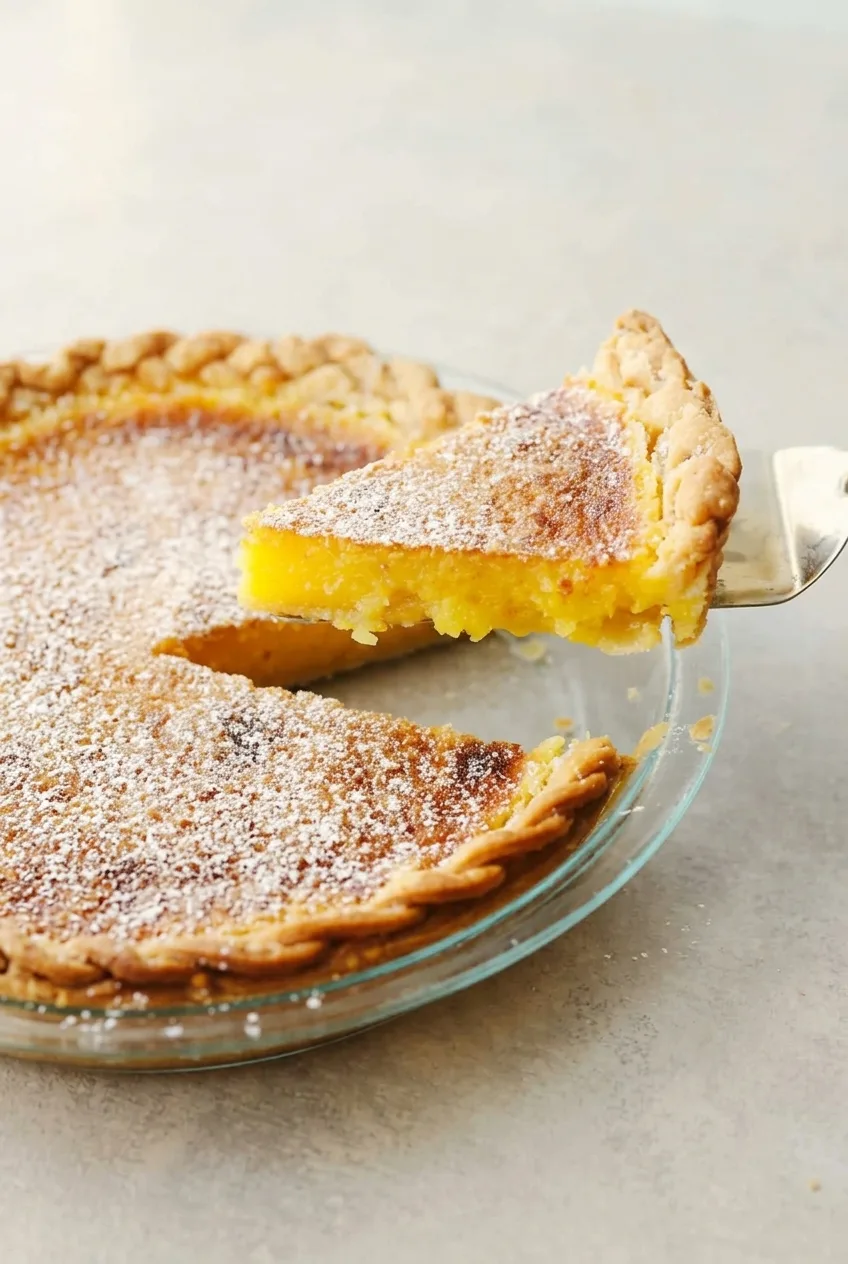
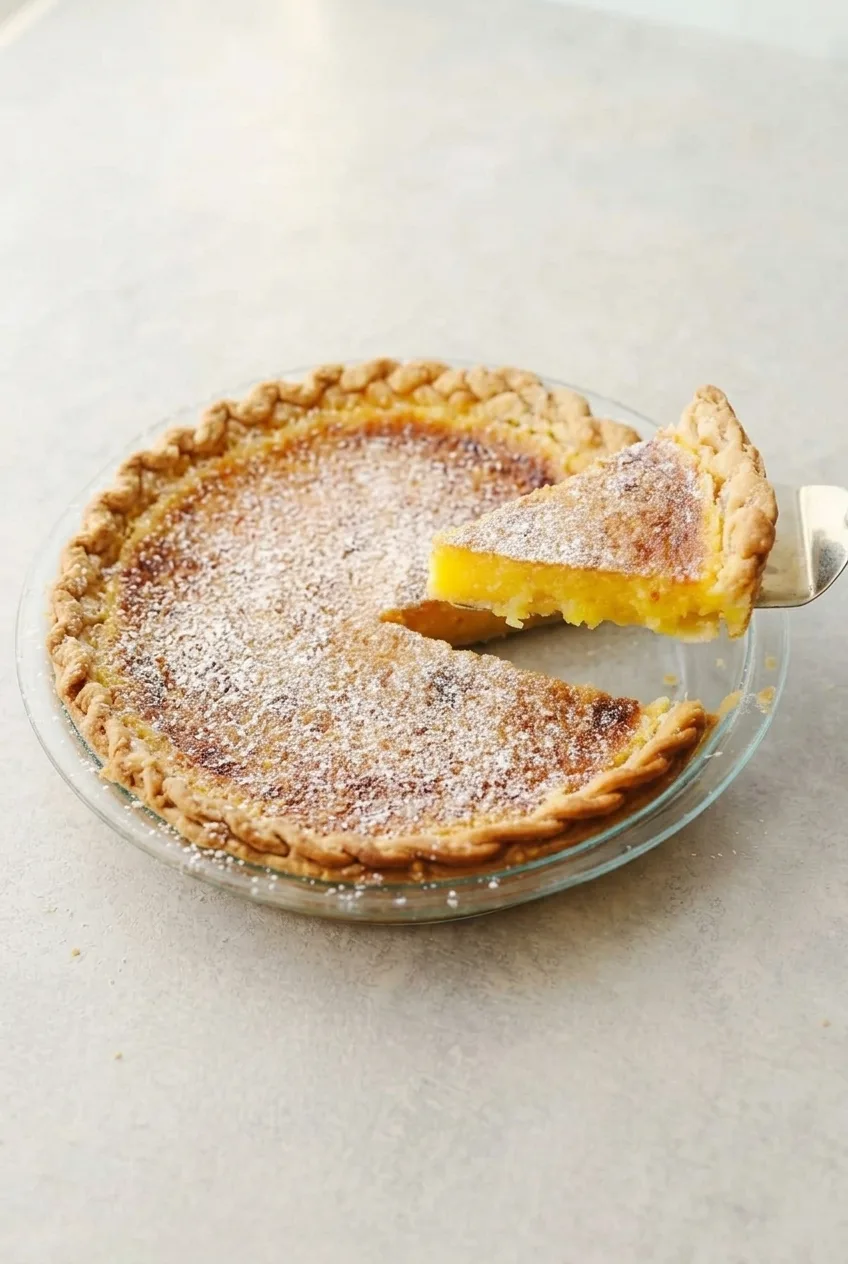
Lemon chess pie has a dense, sweet-tart filling, a thin browned top, and a crimped pastry crust. Fresh lemon juice and zest provide the flavor; cornmeal and flour help give the custard its characteristic sliceable texture. This version bakes in a chilled, unbaked shell. The center can still wobble slightly when the pie leaves the oven, but it needs several hours to cool before you cut it into wedges.
Yield: One 9-inch pie, 8 slices. Prep: 20 minutes, plus 15 minutes to chill the crust. Bake: 45 to 55 minutes. Cool: 3 to 4 hours.
Ingredients for Lemon Chess Pie
- 1 unbaked 9-inch pastry pie crust, fitted in a pie plate and crimped
- 1 1/2 cups granulated sugar (300g)
- 2 tablespoons fine yellow cornmeal (about 20g)
- 1 tablespoon all-purpose flour (8g)
- 1/4 teaspoon fine salt
- 4 large eggs
- 1/2 cup unsalted butter, melted and slightly cooled (about 115g)
- 1/4 cup fresh lemon juice
- 1 tablespoon finely grated lemon zest
- 1/4 cup whole milk
- 1 to 2 teaspoons confectioners’ sugar, for dusting
Use a standard 9-inch shell with enough room for the filling. A properly sized store-bought pastry shell works; keep it unbaked and chilled for this method.

How to Bake Lemon Chess Pie
- Chill the crust: Fit the pastry into a standard 9-inch pie plate without stretching it, and crimp the rim. Chill for about 15 minutes. Set an oven rack in the lower third and fully preheat the oven to 350°F (175°C).
- Mix the dry ingredients: Whisk the sugar, cornmeal, flour, and salt in a bowl, breaking up any lumps.
- Make the filling: Whisk in the eggs until combined. Add the slightly cooled melted butter, lemon juice, zest, and milk. Whisk until the filling is evenly yellow, with no streaks of egg or pooled butter. It should be pourable, not whipped airy.
- Fill and bake: Set the chilled crust on a baking sheet and pour in the filling. Carefully transfer it to the lower-third rack. Bake uncovered for about 45 to 55 minutes, starting to check at 40 minutes. The top should be golden with light brown mottling, and the center should wobble only slightly as one piece. If the crimped edge darkens too quickly, loosely shield just the edge with foil.
- Cool completely: Move the pie to a wire rack and cool in its plate for about 3 to 4 hours, until the custard is firm enough to slice.
- Dust and serve: Shortly before serving, sift a light layer of confectioners’ sugar over the cooled pie. Cut into wedges and lift with a pie server.
How to Tell When Lemon Chess Pie Is Done
Gently nudge the plate. The outer filling should be set, while the center may have a small, unified wobble. If it ripples like liquid, bake it longer and check again. Use these cues rather than the clock alone, especially if baking in a heavy glass pie plate.
Why the Crust and Cooling Matter
Fine cornmeal is part of the characteristic chess-pie filling; together with the flour, it contributes to the custard’s set texture. This recipe fills a chilled, unbaked crust. Blind-baking first would require a different baking schedule, and the direct-bake method does not guarantee a deeply browned bottom crust.
The filling continues to firm as it cools, so cutting a warm pie can leave the center loose. Wait until it is completely cool before slicing. Add the confectioners’ sugar shortly before serving so the fine dusting stays visible on the browned top.
Storing and Serving Leftovers
Once completely cool, cover the pie and refrigerate leftovers for up to about 3 days. For a less-cold custard texture, let individual slices stand briefly before serving. To make the pie ahead, bake and cool it fully, then refrigerate it covered and dust with sugar just before serving.
For a chilled lemon dessert, try this no-bake lemon cream cheese pie. For a different baked pie with a fluffy topping, see this classic lemon meringue pie.
Nutrition
Approximate per slice (1/8 pie): 420 calories, 5g protein, 20g fat, and 54g carbohydrates. Approximate per 100g: 390 calories, 5g protein, 19g fat, and 50g carbohydrates. Values vary with the pastry crust used and the finished pie’s weight.
Equipment
- 9-inch pie plate
- Mixing bowl
- Whisk
- Baking sheet
- Wire rack
- Citrus zester
- Fine-mesh sieve
Ingredients
- 1 unbaked 9-inch pastry pie crust, fitted in a pie plate and crimped
- 1 1/2 cups granulated sugar (300g)
- 2 tablespoons fine yellow cornmeal (about 20g)
- 1 tablespoon all-purpose flour (8g)
- 1/4 teaspoon fine salt
- 4 large eggs
- 1/2 cup unsalted butter, melted and slightly cooled (about 115g)
- 1/4 cup fresh lemon juice
- 1 tablespoon finely grated lemon zest
- 1/4 cup whole milk
- 1 to 2 teaspoons confectioners’ sugar, for dusting
Instructions
- Fit the pastry into a standard 9-inch pie plate without stretching it, then crimp the rim. Chill for about 15 minutes.
- Set an oven rack in the lower third and preheat the oven to 350°F (175°C).
- Whisk the sugar, cornmeal, flour, and salt in a bowl, breaking up any lumps.
- Whisk in the eggs until combined. Add the melted butter, lemon juice, lemon zest, and milk. Whisk until evenly yellow, with no egg streaks or pooled butter; do not whip it airy.
- Set the chilled crust on a baking sheet and pour in the filling.
- Bake uncovered on the lower-third rack for about 45 to 55 minutes, starting to check at 40 minutes. The top should be golden with light brown mottling, and the center should wobble only slightly as one piece. Loosely shield the crimped edge with foil if it darkens too quickly.
- Transfer the pie to a wire rack and cool in its plate for 3 to 4 hours, until firm enough to slice.
- Shortly before serving, sift a light layer of confectioners’ sugar over the cooled pie. Cut into wedges and serve.
Tips
- Keep the pastry shell unbaked and chilled before adding the filling.
- Use a standard 9-inch shell with enough room for the filling.
- Check for doneness by gently nudging the plate: the edges should be set and the center should have a small, unified wobble.
- If the center ripples like liquid, bake the pie longer and check again.
- Cool the pie completely before slicing so the custard can firm up.
- Dust with confectioners’ sugar shortly before serving so it stays visible.