

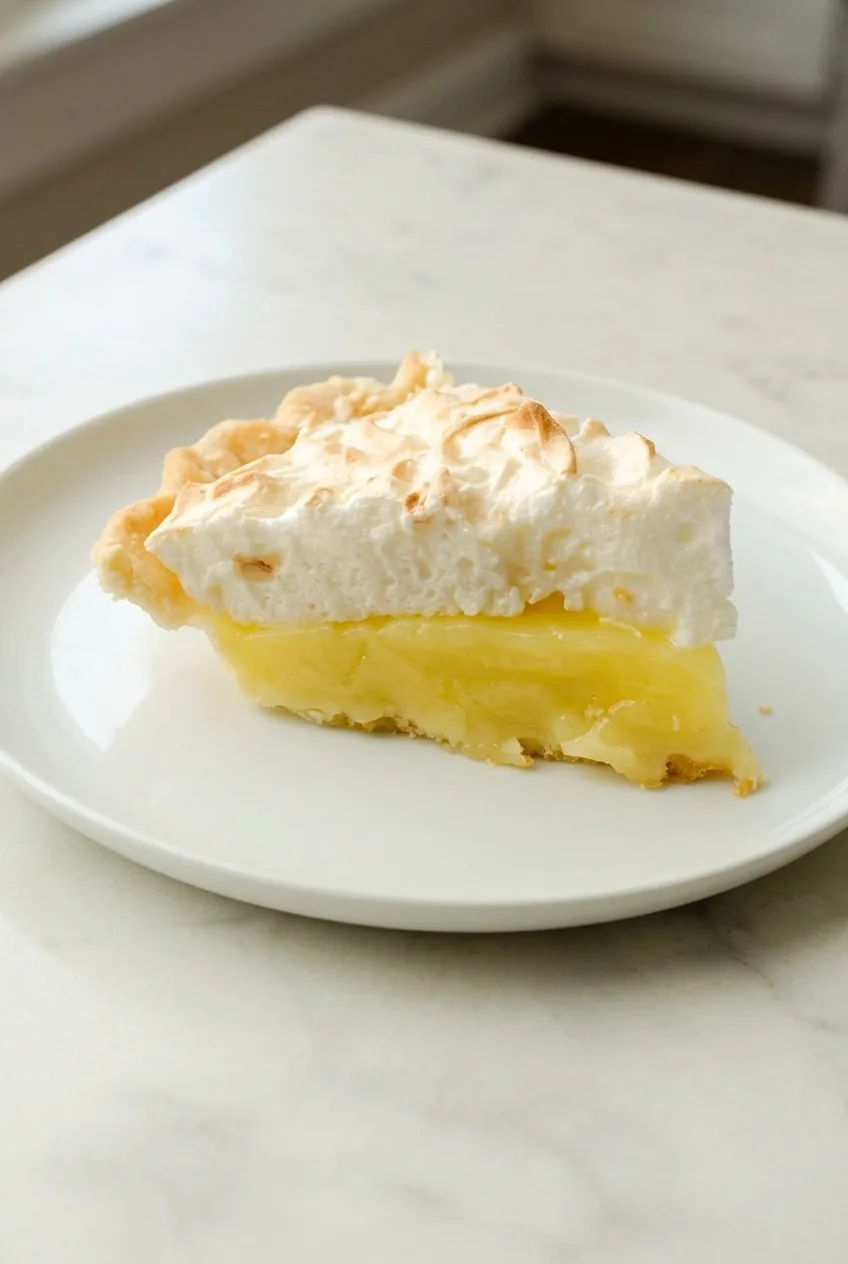
Classic Lemon Meringue Pie
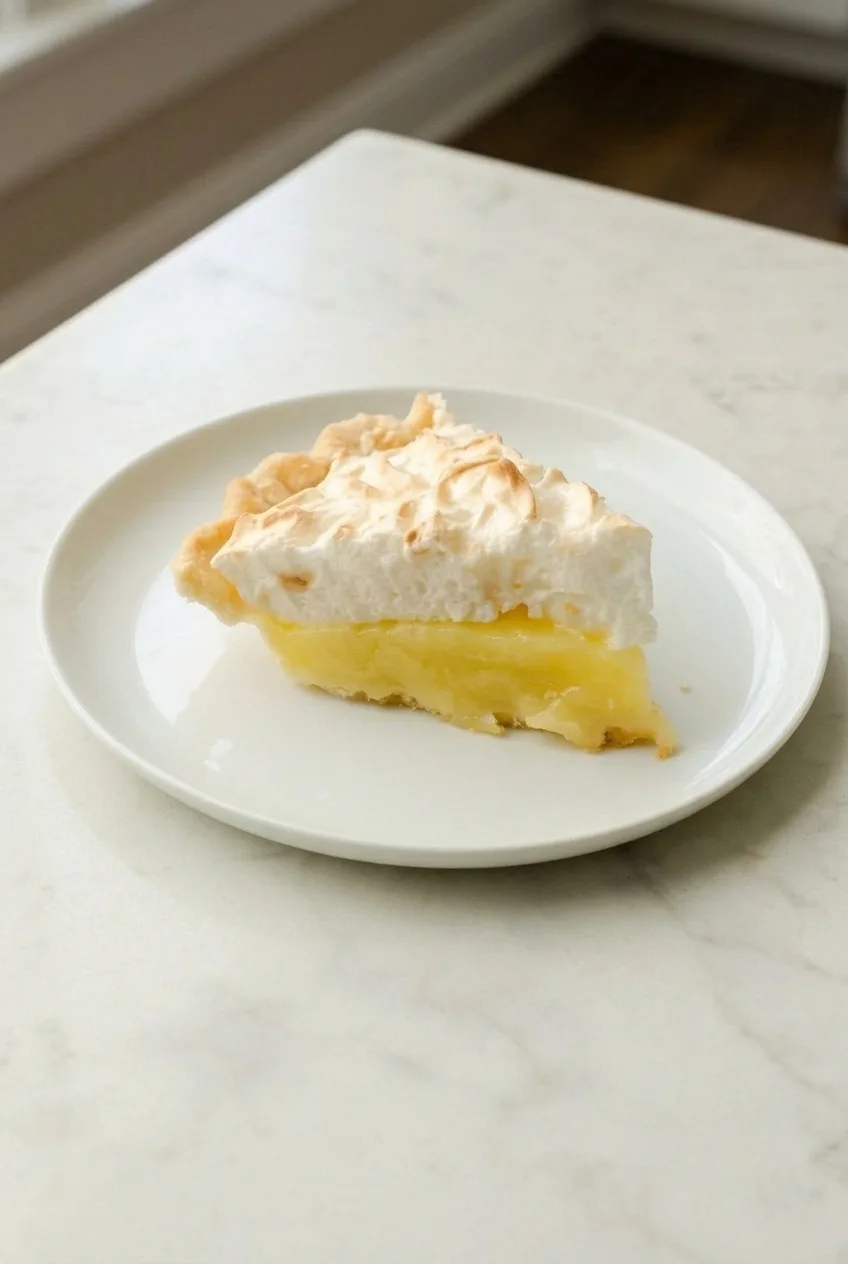
Classic lemon meringue pie needs three distinct layers: a lightly golden pastry crust, a thick lemon filling that holds its shape, and lofty white meringue with toasted peaks. Fully bake the crust before adding the stovetop filling; the short final bake will not finish a damp pastry base. Spread the meringue over the filling while it is hot, then allow enough time for the pie to cool and chill before cutting.
Yield: One 9-inch pie, 8 generous slices. Prep: 30 minutes. Cook: About 45–55 minutes. Total: About 4½–5 hours, including cooling and chilling.
Ingredients for Lemon Meringue Pie
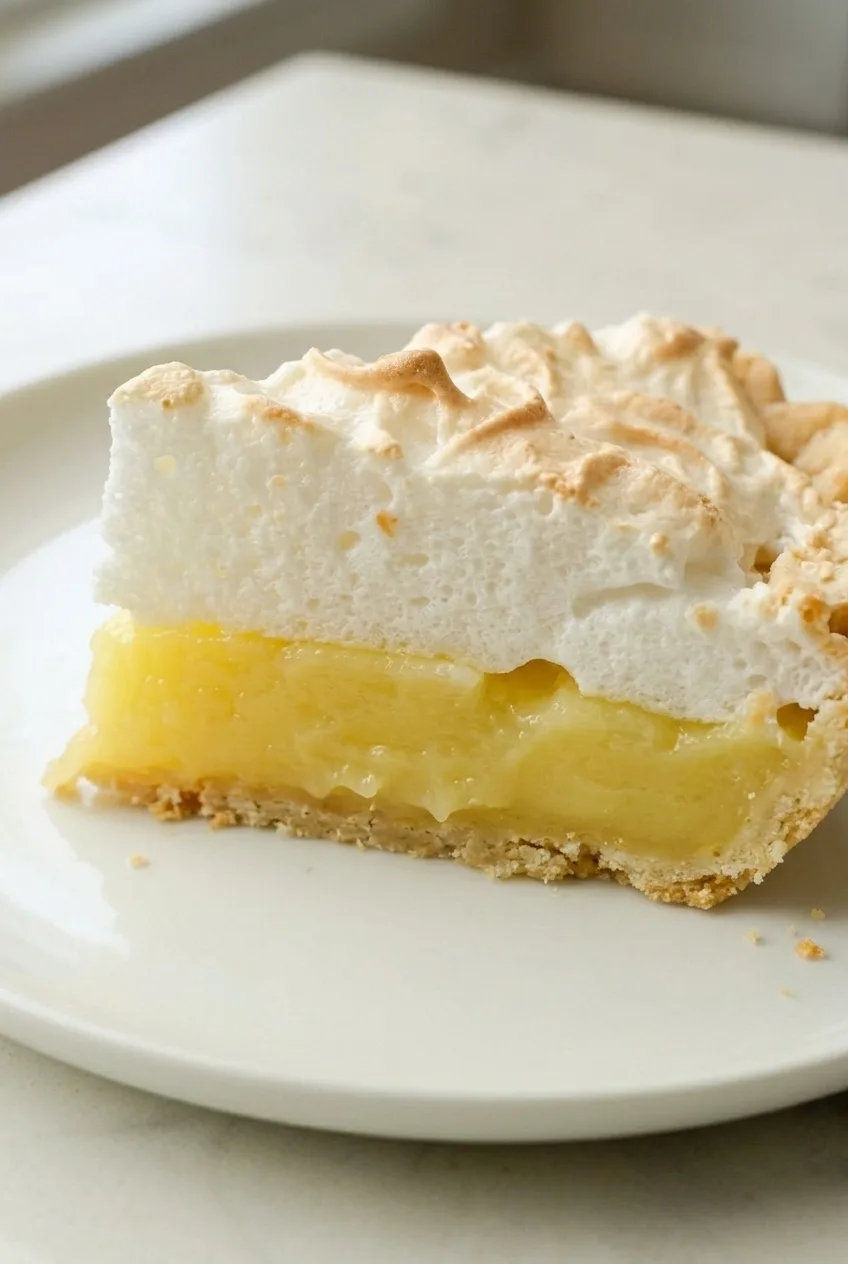
Pastry crust
- 1 refrigerated pastry crust for a 9-inch pie, unbaked (about 200g)
Lemon filling
- 1 cup granulated sugar (200g)
- 1/3 cup cornstarch (40g)
- 1/4 teaspoon fine salt
- 1½ cups water
- 4 large egg yolks, from the eggs separated for the meringue
- 1/2 cup fresh lemon juice, measured after squeezing
- 1 tablespoon finely grated lemon zest
- 2 tablespoons unsalted butter (about 30g)
Meringue
- 4 large egg whites, completely free of yolk
- 1/4 teaspoon cream of tartar
- 1/2 cup granulated sugar (100g)
How to Make Lemon Meringue Pie
- Fully bake the crust: Preheat the oven to 425°F (220°C). Fit the dough into a 9-inch pie plate and crimp the edge. Line with parchment and fill with pie weights or dried beans. Bake for 15–18 minutes, then carefully remove the parchment and weights. Bake uncovered for another 7–10 minutes, checking after 7 minutes, until the base and sides look dry and lightly golden rather than damp or translucent.
- Prepare the eggs and lemons: Separate the eggs, placing the whites in a clean, grease-free mixing bowl. Whisk the yolks in a separate heat-safe bowl. Zest and juice the lemons, measuring out 1/2 cup juice. Lower the oven temperature to 350°F (175°C).
- Thicken the starch base: In a medium heavy-bottomed saucepan, whisk together the filling sugar, cornstarch, and salt. Gradually whisk in the water until smooth. Cook over medium heat, whisking constantly, for about 5–8 minutes, until thick and visibly bubbling.
- Temper and finish the filling: Slowly whisk about 1/2 cup of the hot starch mixture into the yolks to warm them without scrambling. Whisk the yolks back into the saucepan. Cook over medium-low to medium heat, whisking constantly, until thick and gently bubbling again; continue stirring for about 1 minute. Remove from the heat and stir in the lemon juice, zest, and butter until smooth. Pour into the baked crust while hot, keeping the filling below the rim if your pie plate is shallow.
- Whip and seal the meringue: Beat the whites and cream of tartar with an electric mixer until foamy. Add the meringue sugar gradually and beat until the whites are glossy and hold stiff peaks. Immediately spread the meringue over the hot filling, pressing it against the pastry edge all the way around so no filling shows at the perimeter. Lift the topping into tall, irregular peaks.
- Bake the topping: Bake uncovered on the middle rack for approximately 15–20 minutes. Start checking at 12 minutes, or sooner if the peaks brown quickly. The meringue should remain mostly white with scattered pale-golden tips. Check its thickest portion with a clean instant-read thermometer for 160°F (70°C); browned peaks alone do not show whether the center of this tall, raw-egg-white topping is heated through. If the peaks brown first, loosely shield them with foil and continue baking as needed.
- Cool and slice: Cool on a wire rack for about 1½–2 hours, then refrigerate for about 1½–2 hours, until the filling holds its cut edge. Do not leave the egg-based pie at room temperature for more than 2 hours. Cut generous wedges with a hot knife, wiping the blade between slices.
How to Tell When the Layers Are Ready
The pastry base needs to look dry and lightly golden after the weights come out. The starch mixture must thicken and visibly bubble, then bubble gently again after the yolks are added; stopping short can leave the filling loose. Whipped meringue should hold stiff, glossy peaks. Let the finished pie set before slicing rather than judging the filling by the color of the topping.
How to Limit Meringue Shrinking and Weeping
Spreading the meringue over hot filling and sealing it to the crust edge helps it stay attached as the pie cools. Let the pie cool before loosely covering it, and serve it the day it is made when possible. Some moisture beads or shrinkage can still develop, particularly during longer storage.
Make-Ahead and Storage
The empty pastry shell can be fully baked ahead. A purchased, fully baked 9-inch pastry shell also works; an unbaked purchased shell still needs blind-baking. Make the filling and meringue close to serving day for the best crust texture and topping appearance.
Refrigerate leftovers once cooled, loosely covered without pressing wrap against the meringue, and aim to eat them within 1–2 days. The crust may soften and the meringue may weep over time. Do not reheat or freeze the finished pie.
For another pastry-crust dessert, try this rustic apple pie.
Nutrition
Approximate nutrition per generous slice (1/8 of the pie): 335 calories, 5g protein, 11g fat, and 55g carbohydrates. Per 100g: approximately 225 calories, 3g protein, 7g fat, and 37g carbohydrates. Values vary with the pastry crust used and the finished weight of the pie.
Equipment
- 9-inch pie plate
- Parchment paper
- Pie weights or dried beans
- Medium heavy-bottomed saucepan
- Mixing bowls
- Whisk
- Electric mixer
- Instant-read thermometer
- Wire rack
Ingredients
Pastry crust
- 1 refrigerated pastry crust for a 9-inch pie, unbaked (about 200g)
Lemon filling
- 1 cup granulated sugar (200g)
- 1/3 cup cornstarch (40g)
- 1/4 teaspoon fine salt
- 1½ cups water
- 4 large egg yolks
- 1/2 cup fresh lemon juice
- 1 tablespoon finely grated lemon zest
- 2 tablespoons unsalted butter (about 30g)
Meringue
- 4 large egg whites, completely free of yolk
- 1/4 teaspoon cream of tartar
- 1/2 cup granulated sugar (100g)
Instructions
- Preheat the oven to 425°F (220°C). Fit the pastry dough into a 9-inch pie plate and crimp the edge.
- Line the crust with parchment and fill with pie weights or dried beans. Bake for 15–18 minutes, then carefully remove the parchment and weights. Bake uncovered for another 7–10 minutes, checking after 7 minutes, until the crust is dry and lightly golden. Lower the oven temperature to 350°F (175°C).
- Separate the eggs, placing the whites in a clean, grease-free bowl and the yolks in a separate heat-safe bowl. Zest and juice the lemons, measuring out 1/2 cup of juice.
- In a medium heavy-bottomed saucepan, whisk together the filling sugar, cornstarch, and salt. Gradually whisk in the water until smooth. Cook over medium heat, whisking constantly, for about 5–8 minutes, until thick and visibly bubbling.
- Slowly whisk about 1/2 cup of the hot starch mixture into the yolks. Whisk the warmed yolks back into the saucepan. Cook over medium-low to medium heat, whisking constantly, until thick and gently bubbling again. Stir for about 1 minute, then remove from the heat and stir in the lemon juice, zest, and butter until smooth.
- Pour the hot filling into the baked crust, keeping it below the rim if the pie plate is shallow.
- Beat the egg whites and cream of tartar with an electric mixer until foamy. Gradually add the meringue sugar and beat until glossy, stiff peaks form.
- Immediately spread the meringue over the hot filling, pressing it against the pastry edge all the way around to seal it. Lift the topping into tall peaks.
- Bake uncovered on the middle rack for approximately 15–20 minutes. Start checking at 12 minutes, or sooner if the peaks brown quickly. The meringue should be mostly white with pale-golden tips. Check the thickest portion with a clean instant-read thermometer for 160°F (70°C). If the peaks brown first, loosely shield them with foil and continue baking as needed.
- Cool on a wire rack for about 1½–2 hours, then refrigerate for about 1½–2 hours, until the filling holds its cut edge. Slice with a hot knife, wiping the blade between slices.
Tips
- Bake the crust fully before adding the filling; the short final bake will not finish a damp pastry base.
- Let the starch mixture visibly bubble, and let the filling bubble gently again after adding the yolks, so it thickens properly.
- Spread the meringue over the filling while it is hot and seal it to the pastry edge to help limit shrinking and weeping.
- Use an instant-read thermometer to check that the thickest part of the meringue reaches 160°F (70°C); browned peaks alone do not confirm doneness.
- If the meringue peaks brown before the center is heated through, loosely cover them with foil.