

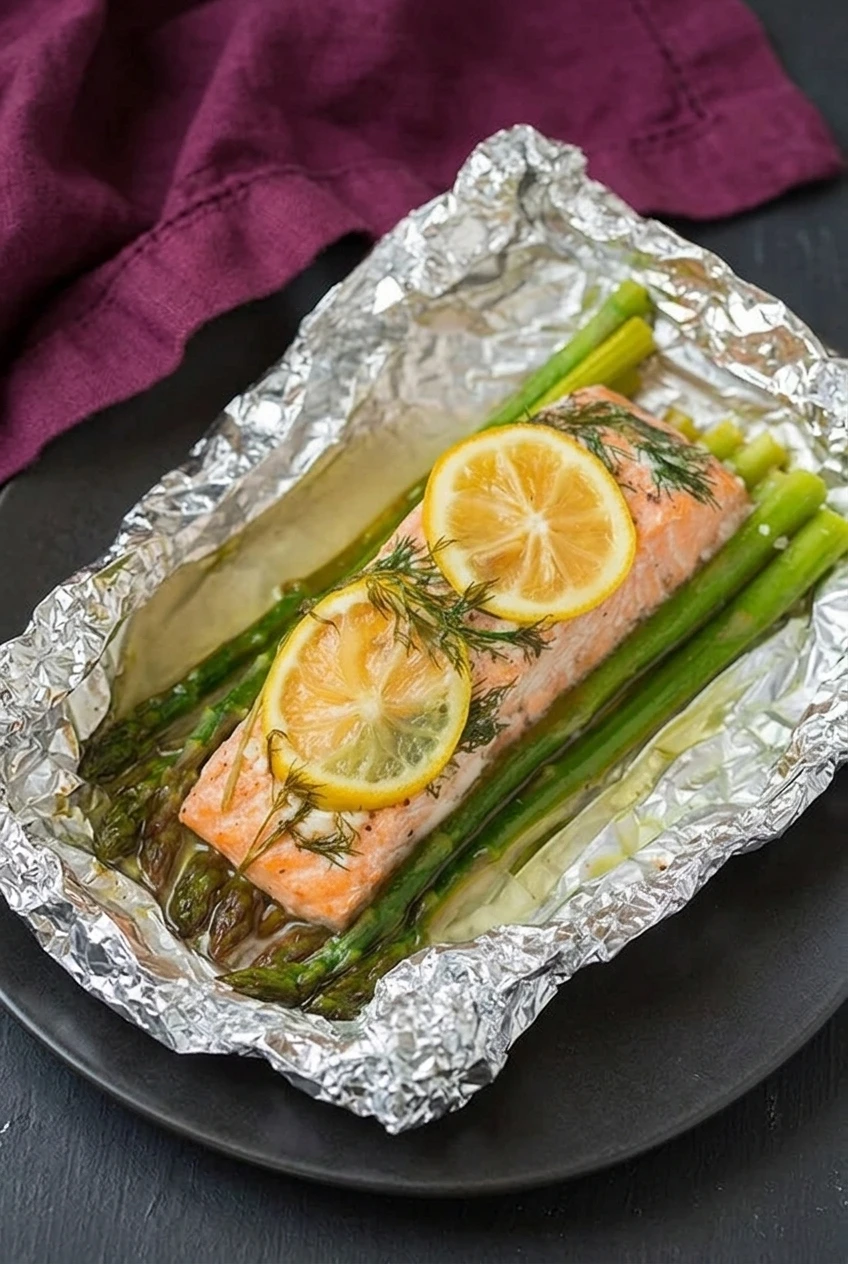
Baked Salmon with Lemon and Asparagus Foil Packets
Each foil packet holds a salmon fillet over asparagus, with garlic butter, lemon rounds, and fresh dill. The packets stay sealed in the oven to hold in the cooking juices, then open into shallow foil boats for serving. The salmon should be moist and lightly flaky, while the asparagus is tender enough to pierce. Because fillet thickness and asparagus size affect the bake time, start checking early rather than relying on the clock alone.
Ingredients
- 4 skinless salmon fillets, about 6 ounces each and similar in thickness (about 1½ pounds total; 675g)
- 1 pound asparagus, tough ends trimmed (450g)
- 1 medium lemon, thinly sliced into 4 to 8 rounds
- 4 tablespoons unsalted butter (55g)
- 2 cloves garlic, finely minced
- ¾ teaspoon fine salt, or to taste
- ¼ teaspoon black pepper, or to taste
- 2 tablespoons chopped fresh dill, plus a few small sprigs for topping
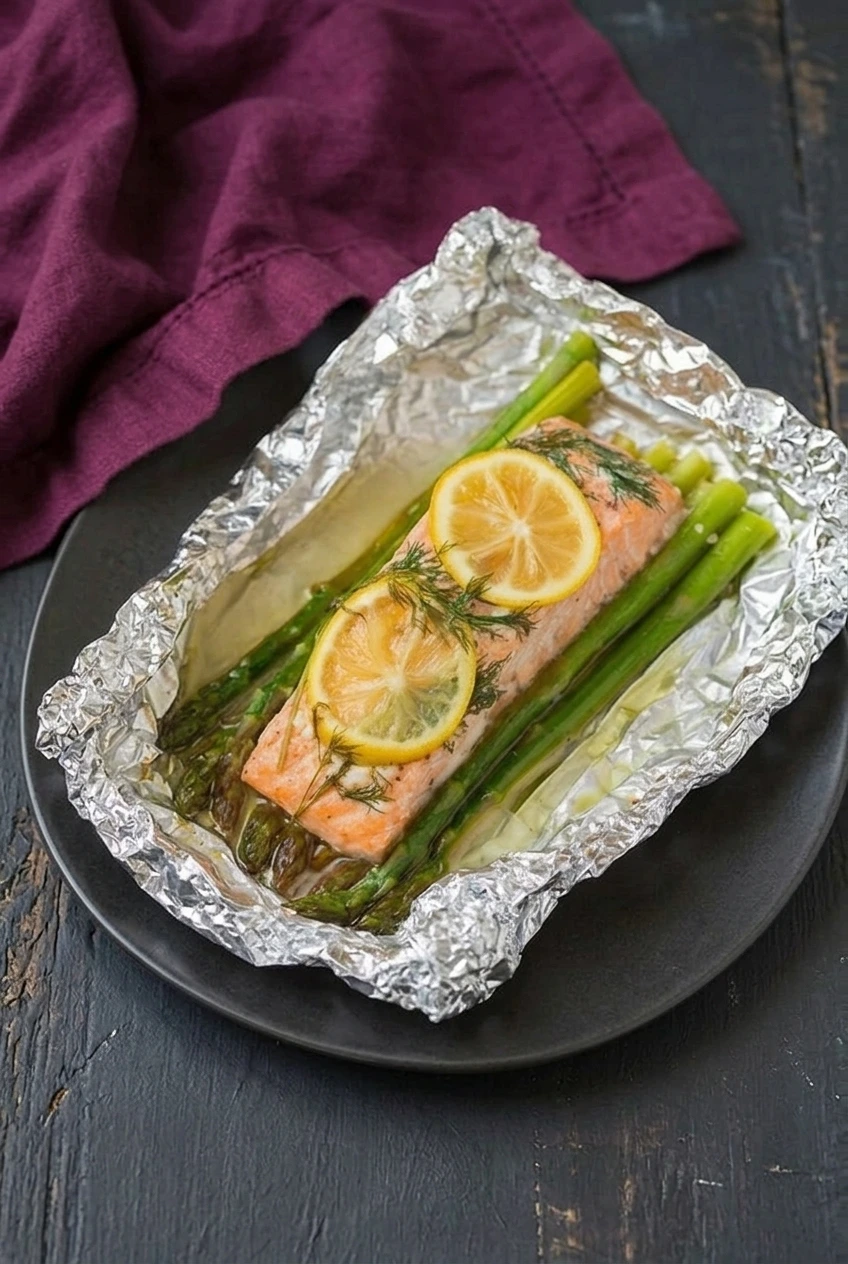
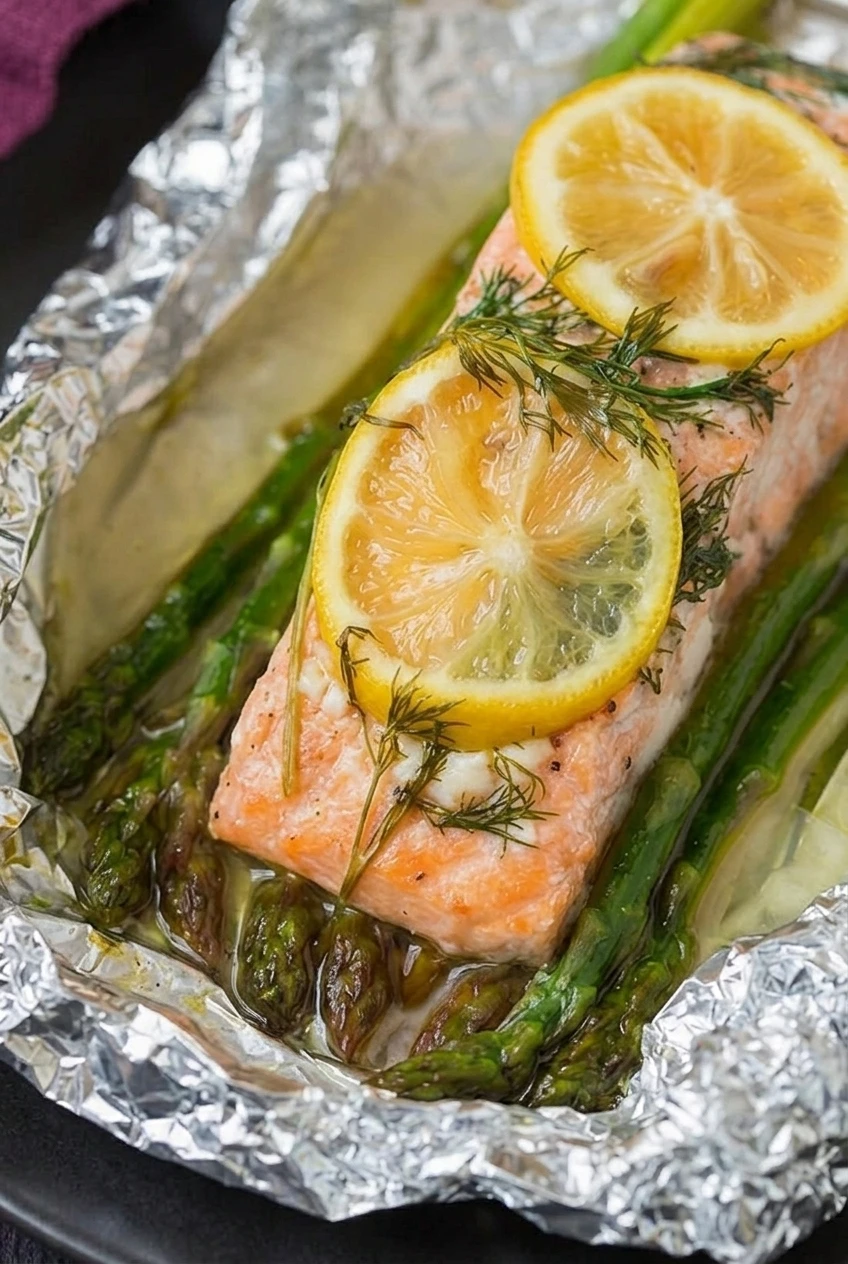
How to Bake Salmon and Asparagus in Foil Packets
- Prepare the oven and foil: Preheat the oven to 400°F (205°C). Cut four sheets of heavy-duty aluminum foil, about 12 by 18 inches each, and place them on a rimmed baking sheet.
- Arrange the asparagus: Snap or cut off any remaining tough ends. Divide the spears among the foil sheets in close, mostly even layers. If the spears vary widely in thickness, group similar sizes together.
- Add the salmon: Set one fillet diagonally over each bed of asparagus. Divide the salt, pepper, garlic, butter, and chopped dill among the packets. Place one or two lemon rounds and a few dill sprigs on top of each fillet.
- Seal the packets: Bring the foil edges together above each portion and fold them closed. Crimp the ends securely to keep the butter and juices inside, leaving a little headroom above the fish. Keep the packets seam-side up in a single layer on the baking sheet.
- Bake and check: Bake for about 15 to 18 minutes, beginning to check thinner fillets at 12 to 14 minutes. The thickest part of the salmon should be opaque and flake with gentle pressure; for a food-safety endpoint, check that it reaches 145°F (65°C). The asparagus should be tender when pierced. If either needs more time, reseal the packet and bake briefly before checking again.
- Open and serve: Let the packets stand for about 2 minutes. Using oven mitts or tongs, open each packet away from your face and hands to release the hot steam. Flare the foil into a shallow boat and serve the salmon over the asparagus with its cooking juices.
How to Check the Salmon and Asparagus
Check the fish at its thickest point, not near a thin edge. A thicker fillet may need longer than the suggested window, while a thin one can finish earlier. Check the asparagus separately: the spears should yield to a fork but still hold their shape. Thick stalks may take longer than thin ones.
Why Seal the Foil Packets?
Secure folds help keep the butter and cooking juices around the salmon and asparagus instead of letting them leak onto the pan. Leave space above the food so the foil does not press against the fish. The packets are opened only after baking, giving you the moist enclosed cook and the open foil-boat presentation for serving.
Ingredient Swaps
- Herbs: Fresh parsley or thyme can replace the dill, though dill gives the pictured finish.
- Butter: Use a little olive oil in place of some or all of the butter, not in addition to it.
- Salmon: Thaw frozen fillets before using this timing; it does not apply to salmon cooked from frozen.
- Foil: Folded parchment can be used for oven cooking, but it will not create the same foil-boat presentation.
Make-Ahead
You can assemble the unbaked packets and refrigerate them for up to a day. Keep them chilled until baking. Packets going into the oven cold may need more time, so check both the salmon and asparagus for doneness.
Nutrition
Approximate nutrition per serving, based on 1 of 4 packets: 385 calories, 38g protein, 23g fat, and 8g carbohydrates. Approximate nutrition per 100g: 120 calories, 12g protein, 7g fat, and 3g carbohydrates. Values vary with the salmon and the amount of butter used.
Equipment
- Oven
- Heavy-duty aluminum foil
- Rimmed baking sheet
- Food thermometer
Ingredients
For the packets
- 4 skinless salmon fillets, about 6 ounces each and similar in thickness (about 1½ pounds total; 675g)
- 1 pound asparagus, tough ends trimmed (450g)
- 1 medium lemon, thinly sliced into 4 to 8 rounds
- 4 tablespoons unsalted butter (55g)
- 2 cloves garlic, finely minced
- ¾ teaspoon fine salt, or to taste
- ¼ teaspoon black pepper, or to taste
- 2 tablespoons chopped fresh dill, plus a few small sprigs for topping
Instructions
- Preheat the oven to 400°F (205°C). Cut four sheets of heavy-duty foil, about 12 by 18 inches each, and place them on a rimmed baking sheet.
- Trim any remaining tough asparagus ends. Divide the spears among the foil sheets in close, mostly even layers, grouping similar sizes together.
- Place one salmon fillet diagonally over each bed of asparagus.
- Divide the salt, pepper, garlic, butter, and chopped dill among the packets. Top each fillet with one or two lemon rounds and a few dill sprigs.
- Bring the foil edges together above each portion and fold closed. Crimp the ends securely, leaving a little headroom above the fish. Arrange the packets seam-side up in a single layer.
- Bake for about 15 to 18 minutes, checking thinner fillets at 12 to 14 minutes. Check the thickest part of the salmon for doneness; it should be opaque and flake with gentle pressure, or reach 145°F (65°C) for a food-safety endpoint. Check that the asparagus is tender when pierced. Reseal and bake briefly longer if needed.
- Let the packets stand for about 2 minutes. Open them carefully, away from your face and hands, to release the hot steam. Flare the foil into shallow boats and serve the salmon over the asparagus with the cooking juices.
Tips
- Check the salmon at its thickest point, since thin fillets may finish sooner.
- Group asparagus spears of similar thickness so they cook more evenly.
- Leave headroom inside each sealed packet so the foil does not press against the fish.
- Keep the packets seam-side up to help prevent butter and juices from leaking.
- Open packets away from your face and hands to avoid hot steam.
Variations
- Parsley or Thyme Salmon: Replace the fresh dill with fresh parsley or thyme.
- Olive Oil Salmon: Replace some or all of the butter with olive oil.
- Parchment Packets: Use folded parchment for oven cooking; it will not create the same foil-boat presentation.