

Honey Garlic Glazed Salmon
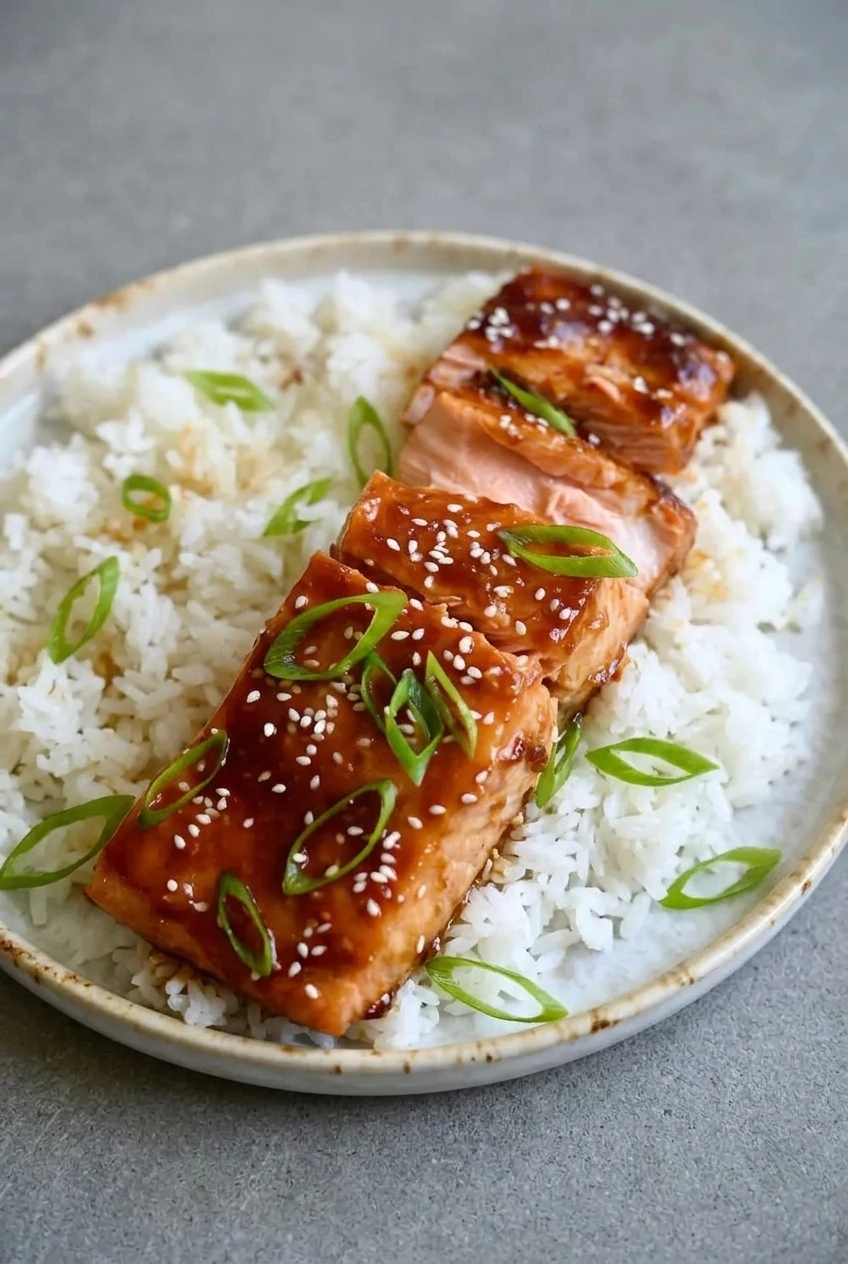
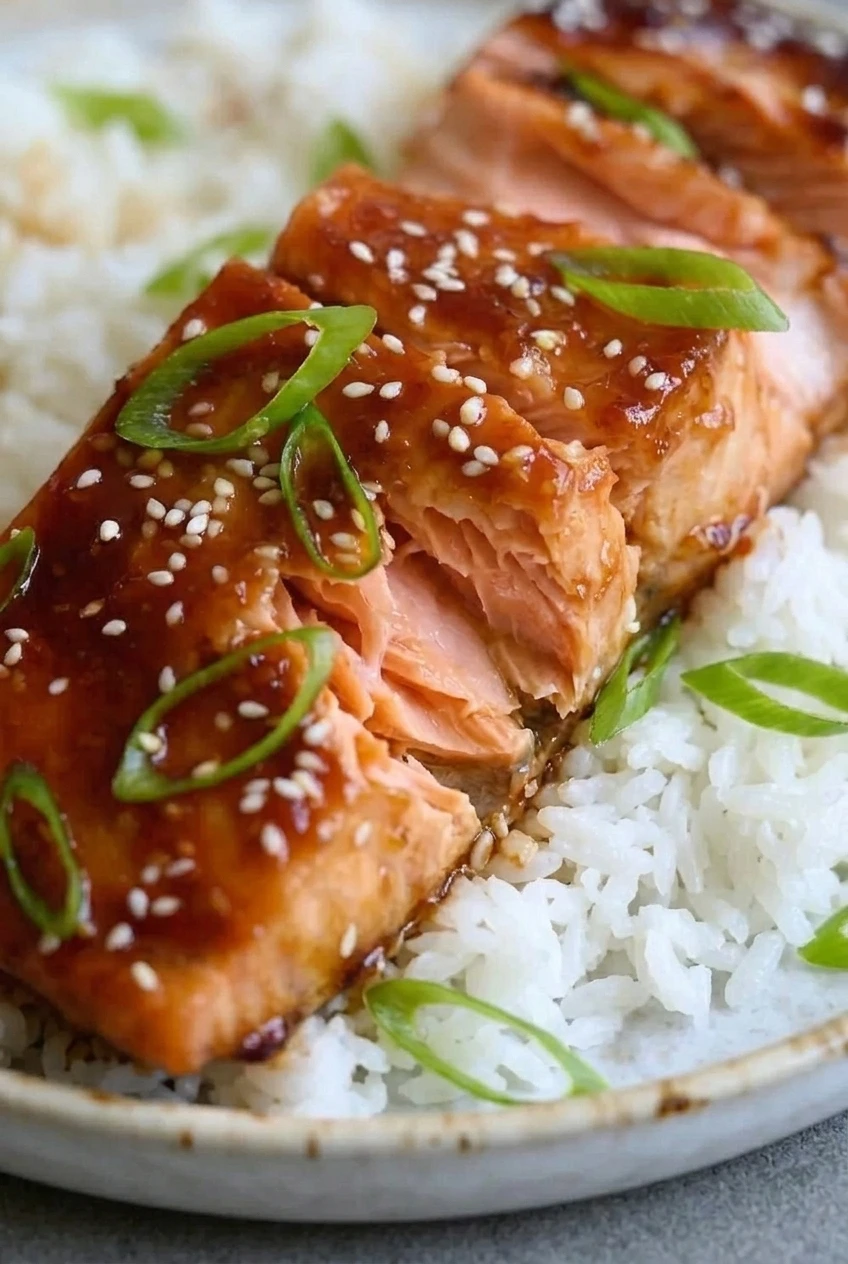
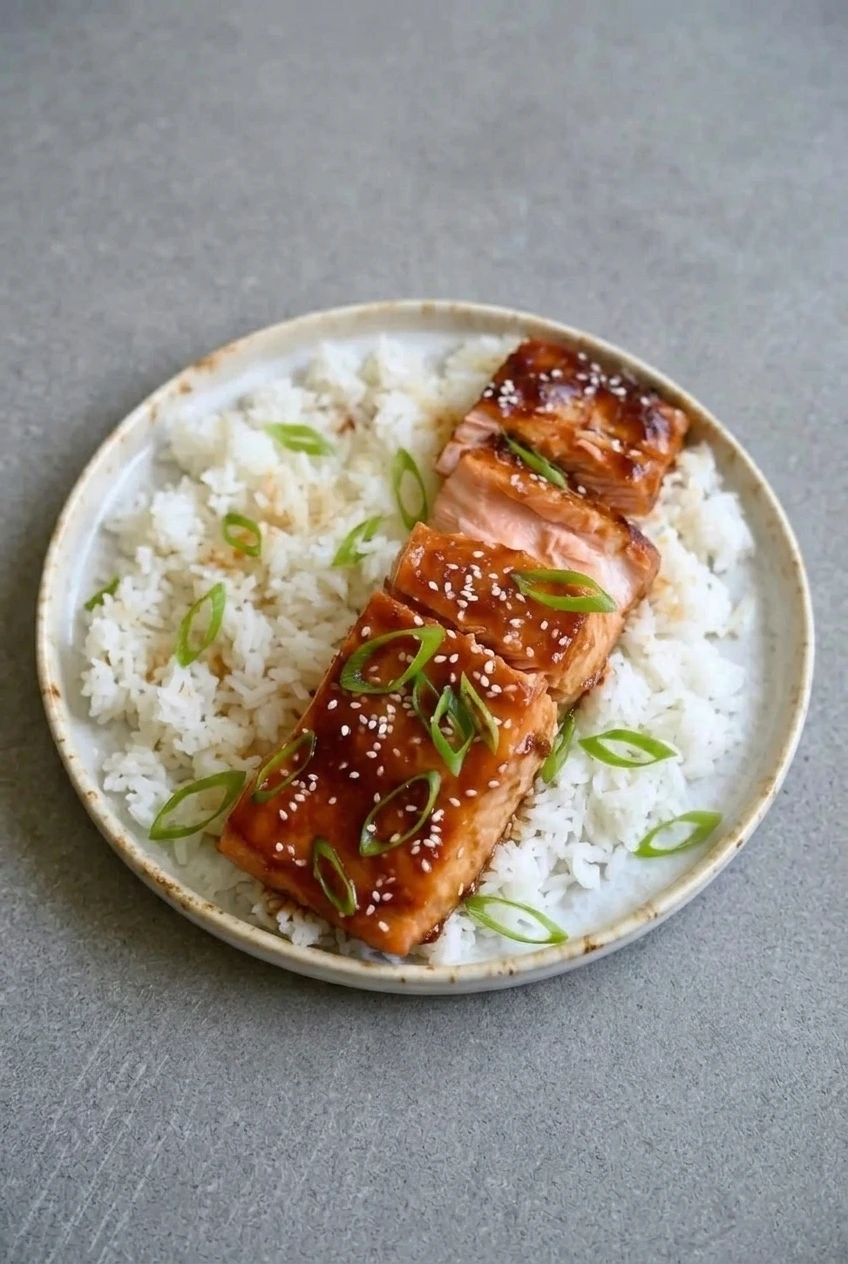
A whole center-cut salmon fillet bakes while a honey, garlic, soy sauce, and rice vinegar glaze simmers on the stove. Brushing on the glaze after baking gives the fish a glossy coating without leaving the honey in the oven long enough to scorch. Serve the salmon in thick, partly separated sections over white rice, with sesame seeds and sliced scallions on top.
Serves 4 | Prep: 15 minutes | Cook: 20–25 minutes | Total: 35–40 minutes
Ingredients
- 1 cup long-grain white rice (185g)
- 1½ cups water for the rice, or the amount directed on the package
- 1½ pounds center-cut salmon fillet, preferably skin-on (680g)
- 1 teaspoon neutral oil
- ¼ teaspoon kosher salt, or less to taste
- ⅓ cup honey (115g)
- 2 tablespoons soy sauce
- 1 tablespoon rice vinegar
- 3 garlic cloves, finely minced
- 1 teaspoon cornstarch, only if needed to thicken the glaze
- 1 tablespoon water, for the cornstarch slurry if needed
- 1 teaspoon sesame seeds
- 2 scallions, thinly sliced on the diagonal
How to Make Honey Garlic Glazed Salmon
- Cook the rice: Rinse the rice if desired, then cook it with the water according to the package directions. Keep it covered and warm.
- Prepare the salmon: Heat the oven to 400°F (205°C) and line a rimmed baking sheet with parchment. Pat the salmon dry and check for pin bones. Place it on the sheet skin-side down, if skin-on, with space around the fillet. Brush with oil and season lightly with salt; the glaze will add saltiness.
- Bake: Bake uncovered without flipping. Start checking at 10–12 minutes. A roughly 1½-pound center-cut fillet may take 12–16 minutes, but a thicker piece can take longer. Check the thickest part rather than relying on the time alone.
- Simmer the glaze: While the salmon bakes, combine the honey, soy sauce, rice vinegar, and garlic in a small saucepan. Simmer over low to medium-low heat for 3–5 minutes, stirring occasionally, until glossy and lightly thickened. Lower the heat if it bubbles hard. If it remains too thin to coat a spoon, mix the cornstarch with 1 tablespoon water. Stir the slurry into the glaze a little at a time and cook briefly until it thickens.
- Check and glaze: The thickest part of the salmon should be opaque and separate into moist flakes when gently pressed. Use an instant-read thermometer to check for this recipe’s conservative target of 145°F (65°C) at the thickest part. Remove the salmon from the oven and brush or spoon the warm glaze over it. Keep any glaze reserved for serving separate from utensils or surfaces that touched raw fish.
- Rest and serve: Let the salmon rest for about 3 minutes. Divide it into four portions, leaving each in thick, partly separated sections rather than breaking it into small flakes. Spoon the rice onto plates, lay the salmon lengthwise over it, and finish with sesame seeds and scallions.
How to Keep the Glaze Glossy
Honey can darken and turn bitter if the glaze boils hard. Use a gentle simmer and take the pan off the heat once the sauce looks shiny and lightly coats a spoon. Let it reduce before reaching for the cornstarch; the slurry is only a backup if the glaze will not cling to the fish.
How to Tell When Salmon Is Done
Thickness matters more than the weight of the fillet when judging baking time. Begin checking early, especially at a thinner end, and insert the thermometer into the thickest section. The 145°F target is the conservative choice for this recipe; doneness preferences vary, so the estimated baking time is not a universal guide.
Ingredient and Portion Options
Individual fillets or skinless salmon also work. Leave space between individual pieces and check them early, since they may cook faster than one large fillet. Handle skinless portions with a wide spatula because they can be more delicate.
For a ginger variation, add 1 teaspoon finely grated fresh ginger to the glaze with the garlic. For gentle heat, add a pinch of chili flakes or ½ teaspoon sriracha.
Leftovers and Reheating
Refrigerate leftovers promptly in an airtight container and use within about 3 days. Store extra glaze separately when possible so it does not soak into the salmon or rice.
Reheat the salmon covered in a low oven with a small splash of water or reserved glaze, checking early to limit drying. The glaze can be made ahead and refrigerated; warm it gently and stir in a little water if it has thickened too much. Freezing cooked salmon is not preferred because its texture can become tough or rubbery. If you freeze it, use it later in a mixed dish where that change is less noticeable.
Nutrition
Approximate nutrition per serving, based on 1 of 4 servings including rice and glaze: 635 calories, 38g protein, 25g fat, and 63g carbohydrates. Approximate nutrition per 100g: 190 calories, 11g protein, 7g fat, and 19g carbohydrates. Values vary with the salmon and the amount of glaze served.
Equipment
- Rimmed baking sheet
- Parchment paper
- Small saucepan
- Rice pot
- Pastry brush
- Instant-read thermometer
Ingredients
For the Rice
- 1 cup long-grain white rice (185 g)
- 1½ cups water, or the amount directed on the package
For the Salmon
- 1½ pounds center-cut salmon fillet, preferably skin-on (680 g)
- 1 teaspoon neutral oil
- ¼ teaspoon kosher salt, or less to taste
For the Glaze
- ⅓ cup honey (115 g)
- 2 tablespoons soy sauce
- 1 tablespoon rice vinegar
- 3 garlic cloves, finely minced
- 1 teaspoon cornstarch, only if needed
- 1 tablespoon water, for the cornstarch slurry if needed
For Serving
- 1 teaspoon sesame seeds
- 2 scallions, thinly sliced on the diagonal
Instructions
- Rinse the rice if desired, then cook it with the water according to the package directions. Keep covered and warm.
- Preheat the oven to 400°F (205°C) and line a rimmed baking sheet with parchment paper.
- Pat the salmon dry and check for pin bones. Place it skin-side down on the baking sheet, if skin-on. Brush with oil and season lightly with salt.
- Bake uncovered without flipping. Begin checking at 10–12 minutes; a roughly 1½-pound center-cut fillet may take 12–16 minutes, and thicker pieces may take longer.
- While the salmon bakes, combine the honey, soy sauce, rice vinegar, and garlic in a small saucepan. Simmer over low to medium-low heat for 3–5 minutes, stirring occasionally, until glossy and lightly thickened. Lower the heat if it bubbles hard.
- If the glaze is too thin to coat a spoon, mix the cornstarch with 1 tablespoon water. Stir the slurry into the glaze a little at a time and cook briefly until thickened.
- Check the thickest part of the salmon for opaque, moist flakes and an internal temperature of 145°F (65°C). Remove it from the oven and brush or spoon the warm glaze over the fish.
- Rest the salmon for about 3 minutes. Divide it into four thick, partly separated portions.
- Spoon rice onto plates, place the salmon over it, and finish with sesame seeds and scallions.
Tips
- Use a gentle simmer for the glaze; hard boiling can make the honey dark and bitter.
- Let the glaze reduce before using cornstarch, which is only needed if it will not cling to the fish.
- Check salmon early and judge doneness by the thickest section, not by time alone.
- Keep any glaze reserved for serving separate from utensils or surfaces that touched raw fish.
- Leave space between individual fillets and check them early, as they may cook faster than a whole fillet.
Variations
- Ginger Honey Garlic Salmon: Add 1 teaspoon finely grated fresh ginger to the glaze with the garlic.
- Spicy Honey Garlic Salmon: Add a pinch of chili flakes or ½ teaspoon sriracha to the glaze.