Author

Julia

Browsing

Fresh Strawberry Cake with Strawberry Frosting

Fresh strawberry puree flavors both layers of this round cake and its pale pink cream cheese frosting. The frosting goes between the layers and over the top and sides, with soft spatula swoops and a small cluster of fresh berries to finish. Measure the puree rather than estimating by berry count: too much liquid can affect the batter and loosen the frosting. Let the layers cool completely before assembling so the frosting stays spreadable and the cake stays steady.

Prep: 35 minutes, plus cooling | Cook: 30–35 minutes | Total: About 2 hours 30 minutes, or longer if the layers need more time to cool | Yield: 12–16 slices

Ingredients for Fresh Strawberry Cake
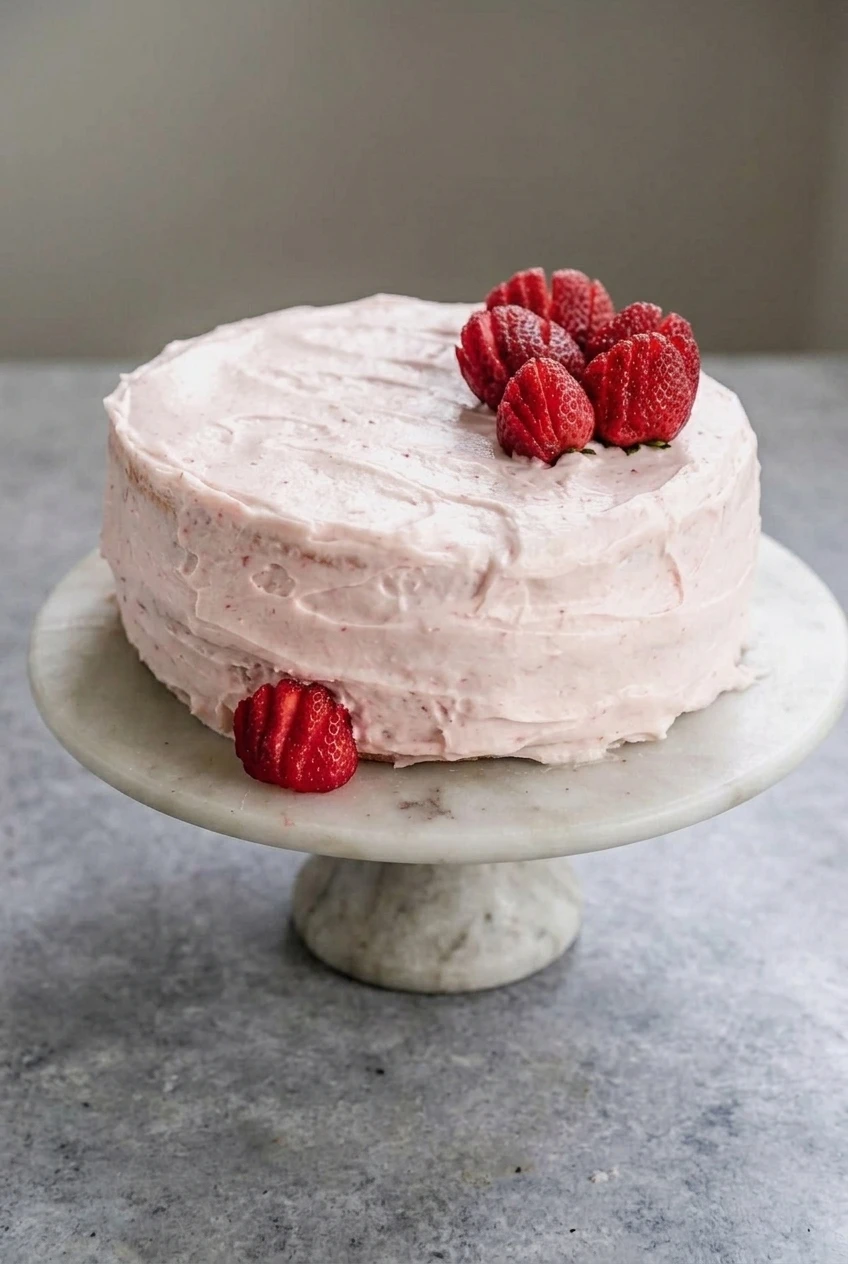
A whole fresh strawberry layer cake on its pedestal stand, shown with more of the surrounding countertop.
  • About 300g fresh strawberries, hulled and pureed; measure 1 cup for the cake and 2–3 tablespoons for the frosting
  • 2 1/2 cups all-purpose flour (315g)
  • 1 3/4 cups granulated sugar (350g)
  • 1 cup unsalted butter, softened (225g)
  • 2 large eggs and 2 large egg whites, at room temperature
  • 1/2 cup whole milk, at room temperature
  • 2 teaspoons baking powder
  • 1/2 teaspoon fine salt
  • 2 teaspoons vanilla extract

For the Strawberry Cream Cheese Frosting

  • 8 ounces cream cheese, softened (225g)
  • 1/2 cup unsalted butter, softened (115g)
  • 4 cups powdered sugar (480g), plus more if needed
  • 1 teaspoon vanilla extract
  • 2–3 tablespoons measured strawberry puree
  • 4–6 small fresh strawberries, whole or halved, for garnish
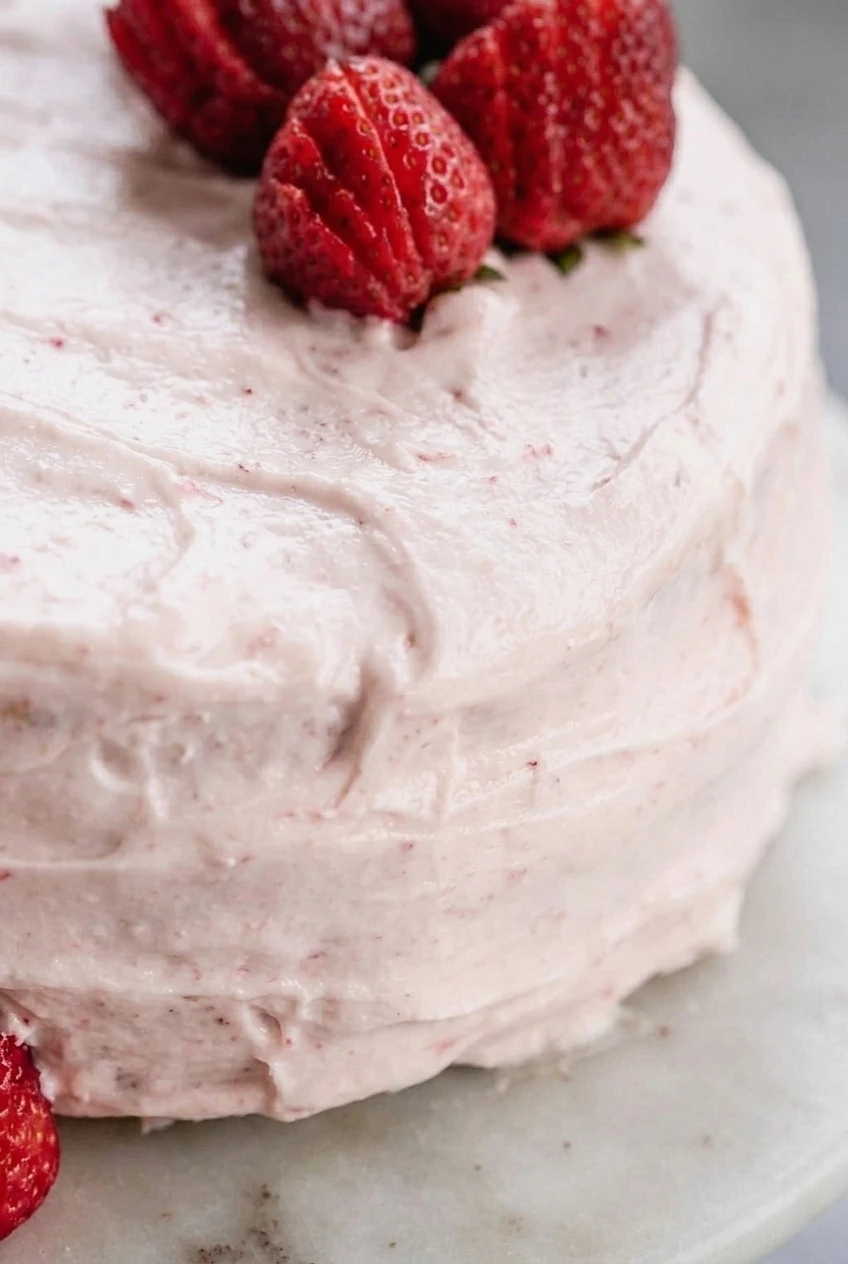
Close view of the strawberry cake’s pale pink frosting, soft spatula swoops, and two-layer edge.

How to Bake Fresh Strawberry Cake

  1. Prepare the pans and puree: Preheat the oven to 350°F (175°C). Grease two matching 9-inch round cake pans and line the bottoms with parchment. Puree the hulled strawberries until smooth. Measure 1 cup for the cake and set aside 2–3 tablespoons for the frosting.
  2. Combine the dry ingredients: Whisk the flour, baking powder, and salt together in a bowl.
  3. Mix the batter: Beat the butter and sugar until light. Beat in the eggs and egg whites, then mix in the vanilla and 1 cup strawberry puree. Add the dry ingredients in portions, alternating with the milk. Stop mixing as soon as no dry flour remains.
  4. Bake the layers: Divide the batter evenly between the pans and bake uncovered for about 30–35 minutes. Start checking around 30 minutes. The layers are done when the tops spring back lightly and a toothpick inserted into each center comes out clean.
  5. Cool completely: Let the cakes cool briefly in their pans, then turn them out onto racks. Wait until the centers and undersides feel cool before frosting.
  6. Make the frosting: Beat the cream cheese and butter just until smooth. Mix in the vanilla and 2 tablespoons strawberry puree, then gradually add the powdered sugar. Add the remaining tablespoon of puree if the frosting can still hold soft ridges. If it is too loose, add a little more powdered sugar or chill it briefly.
  7. Stack and frost: Place one cooled layer on a cake stand or plate and spread frosting over it. Add the second layer, then cover the top and sides with the remaining frosting. Leave soft spatula swoops in the finish. If the layers shift, chill the cake briefly before finishing.
  8. Garnish and refrigerate: Arrange a small cluster of dry, fresh strawberries on top. Tuck another berry against the lower edge if desired. Cover and refrigerate the cake until serving.

How to Keep the Cake Tender and the Frosting Stable

Once the flour is added, mix only until combined; continued beating can toughen the cake. Use the toothpick and spring-back checks rather than the clock alone, since pan material and oven accuracy can affect bake time. If using a convection oven, lower the temperature to 325°F (165°C) and begin checking early.

Warm layers can melt cream cheese frosting and cause the cake to slide. Measure the puree, beat the cream cheese mixture only until smooth, and chill soft frosting briefly before spreading it. Strawberry color and flavor may vary with the berries; the frosting is meant to be pale pink rather than vivid red.

Can You Use Frozen Strawberries?

Thawed frozen strawberries can replace fresh berries for the puree. Drain them before blending, then measure the puree as directed. Use fresh, dry strawberries for the garnish. This batter calls for unreduced puree; cooked-down puree is not a one-for-one substitute.

Optional Strawberry Jam Filling

For a distinct fruit filling, spread about 1/3 cup strawberry jam between the layers in place of some of the frosting. Leave a ring of frosting around the edge to contain the jam, and keep the filling thin so the layers do not slide.

Make-Ahead, Storage, and Freezing

Wrap cooled, unfrosted layers airtight and keep them at room temperature for about one day, or freeze them for up to two months. Thaw frozen layers before assembling.

Keep the finished cake covered in the refrigerator because the frosting contains cream cheese. Without sliced fresh berries, it may keep for up to five days; with sliced berries on top, it is best within about three days. These are quality guidelines, not guarantees. Let refrigerated slices stand at room temperature briefly before serving to soften the frosting.

A well-wrapped frosted cake can be frozen for up to two months. Remove the fresh berry garnish before freezing when practical, thaw the cake overnight in the refrigerator, and add fresh strawberries after thawing.

Nutrition

Approximate nutrition per 1/14 of the cake: 590 calories, 5g protein, 27g fat, and 79g carbohydrates. Approximate nutrition per 100g: 355 calories, 4g protein, 16g fat, and 48g carbohydrates. Values vary with frosting amounts and slice size.

Fresh Strawberry Cake with Strawberry Frosting

Fresh strawberry puree flavors two tender cake layers topped with pale pink strawberry cream cheese frosting.
Course: Dessert
Cuisine: American
Prep: 35 min
Cook: 35 min
Total: 150 min
Servings: 14 Calories: 590 kcal

Equipment

  • Two 9-inch round cake pans
  • Parchment paper
  • Blender or food processor
  • Mixing bowls
  • Electric mixer
  • Wire racks
  • Cake stand or serving plate

Ingredients

For the Cake

  • About 300 g fresh strawberries, hulled and pureed; measure 1 cup for the cake and reserve 2–3 tablespoons for the frosting
  • 2 1/2 cups all-purpose flour (315 g)
  • 1 3/4 cups granulated sugar (350 g)
  • 1 cup unsalted butter, softened (225 g)
  • 2 large eggs and 2 large egg whites, at room temperature
  • 1/2 cup whole milk, at room temperature
  • 2 teaspoons baking powder
  • 1/2 teaspoon fine salt
  • 2 teaspoons vanilla extract

For the Strawberry Cream Cheese Frosting

  • 8 ounces cream cheese, softened (225 g)
  • 1/2 cup unsalted butter, softened (115 g)
  • 4 cups powdered sugar (480 g), plus more if needed
  • 1 teaspoon vanilla extract
  • 2–3 tablespoons measured strawberry puree
  • 4–6 small fresh strawberries, whole or halved, for garnish

Instructions

  1. Preheat the oven to 350°F (175°C). Grease two matching 9-inch round cake pans and line the bottoms with parchment.
  2. Puree the hulled strawberries until smooth. Measure 1 cup for the cake and set aside 2–3 tablespoons for the frosting.
  3. Whisk the flour, baking powder, and salt together in a bowl.
  4. Beat the butter and sugar until light. Beat in the eggs and egg whites, then mix in the vanilla and 1 cup strawberry puree.
  5. Add the dry ingredients in portions, alternating with the milk. Stop mixing as soon as no dry flour remains.
  6. Divide the batter evenly between the pans. Bake for 30–35 minutes, starting to check at 30 minutes. The tops should spring back lightly and a toothpick inserted in the centers should come out clean.
  7. Cool the cakes briefly in their pans, then turn them out onto wire racks. Cool completely before frosting.
  8. Beat the cream cheese and butter just until smooth. Mix in the vanilla and 2 tablespoons strawberry puree, then gradually add the powdered sugar. Add the remaining tablespoon of puree if the frosting can still hold soft ridges; if it is too loose, add powdered sugar or chill briefly.
  9. Place one cooled layer on a cake stand or plate and spread frosting over it. Add the second layer and cover the top and sides with the remaining frosting, leaving soft spatula swoops. Chill briefly if the layers shift.
  10. Arrange dry fresh strawberries on top, adding another berry against the lower edge if desired. Cover and refrigerate until serving.

Tips

  • Measure the strawberry puree rather than estimating; excess liquid can affect the batter and loosen the frosting.
  • Once you add the flour, mix only until combined to keep the cake tender.
  • Use the toothpick and spring-back checks as well as the bake time, since ovens and pans can vary.
  • Make sure the cake layers are completely cool before frosting.
  • Beat the cream cheese mixture only until smooth, and chill the frosting briefly if it is too soft.

Variations

  • Strawberry Jam Filling: Spread about 1/3 cup strawberry jam between the layers in place of some of the frosting, leaving a ring of frosting around the edge to contain the jam.
  • Frozen Strawberry Puree: Use thawed, drained frozen strawberries for the puree, measuring it as directed; use fresh, dry strawberries for the garnish.
Notes

Keep the frosted cake covered in the refrigerator. It keeps for up to five days without sliced berries on top, or about three days with them. Unfrosted layers can be kept airtight at room temperature for about one day or frozen for up to two months. A frosted cake can also be frozen for up to two months; thaw overnight in the refrigerator and add fresh garnish after thawing.

Nutrition

Calories: 590 kcal | Protein: 5 g | Fat: 27 g | Carbohydrates: 79 g

Classic Strawberry Shortcake

Classic strawberry shortcake starts with tender, lightly sweet buttermilk biscuits rather than sponge cake. Split each biscuit and stack it with juicy strawberries and soft whipped cream, then add more berries and cream on top.

Toss the strawberries with sugar before making the biscuits so they have time to release their own red syrup. Keep the dough cold and handle it gently for a tender crumb. Assemble the shortcakes close to serving, adding just enough syrup to flavor the biscuit without soaking it.

Ingredients for Classic Strawberry Shortcake

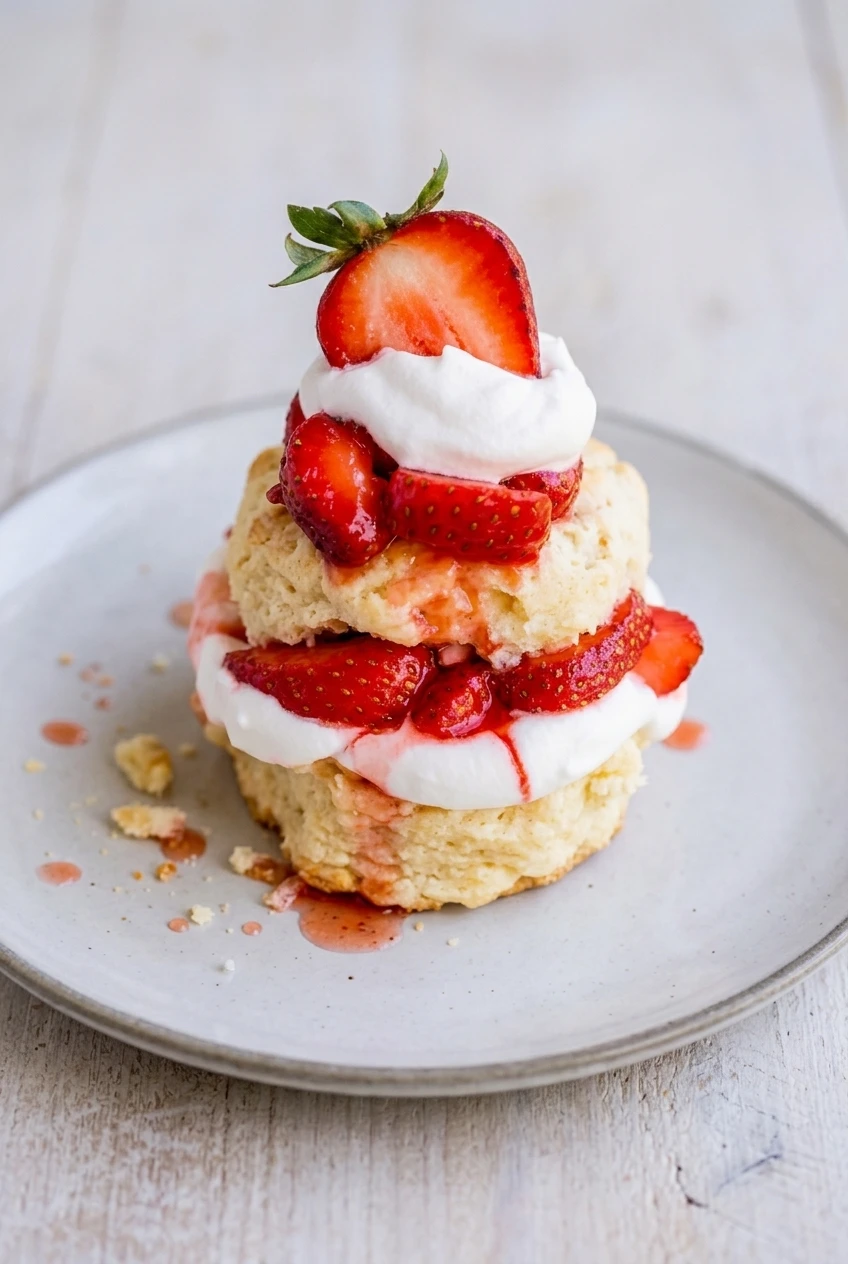
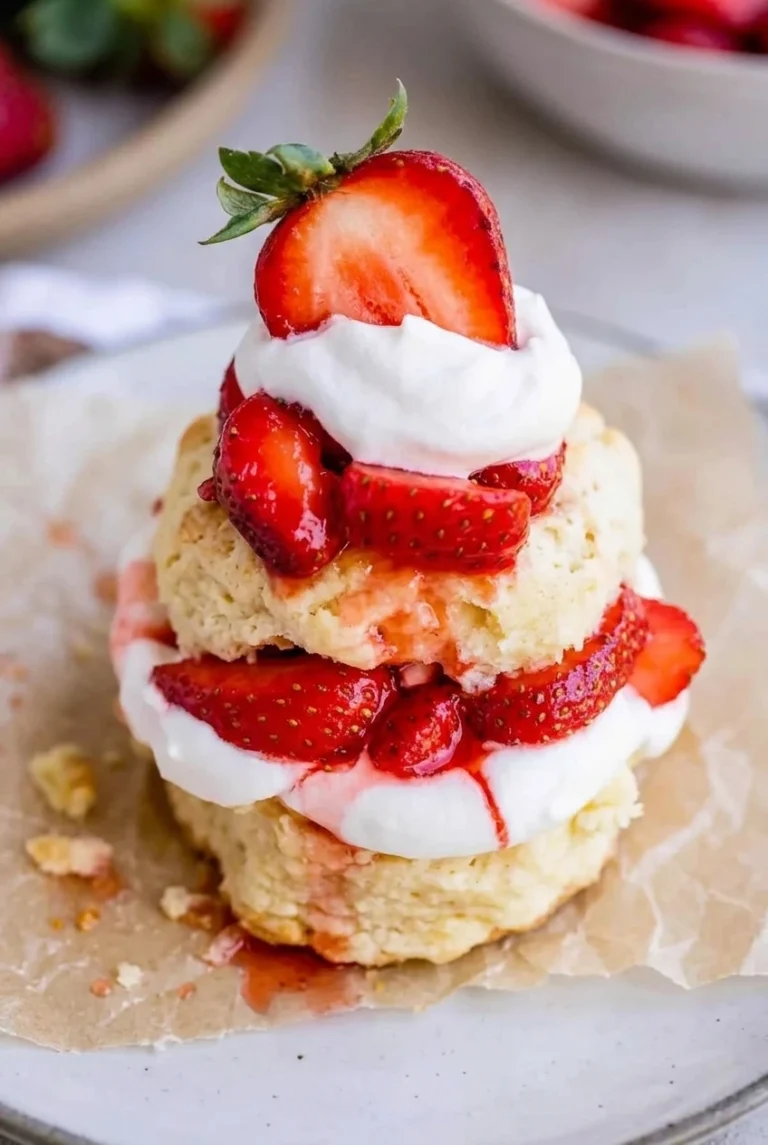
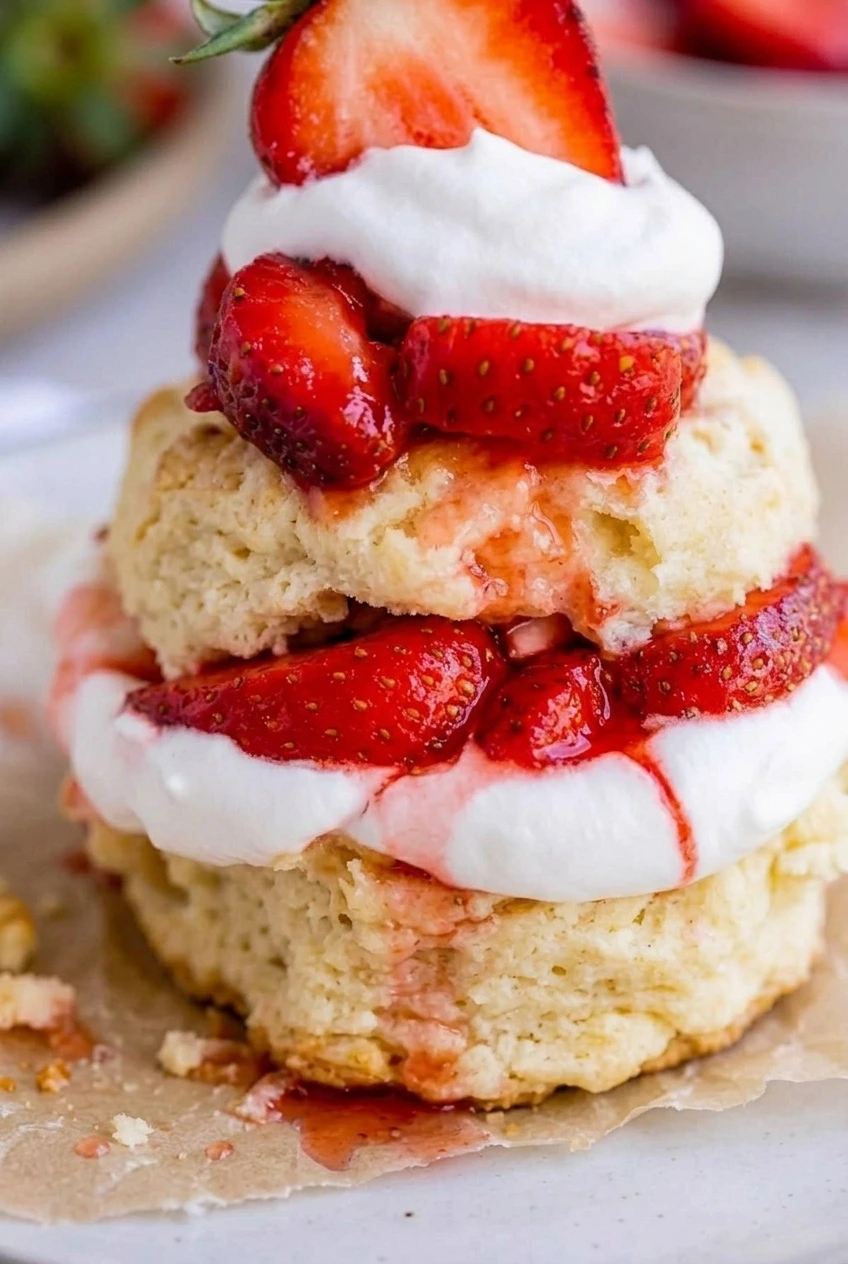
Close detail of strawberry shortcake showing berry syrup on tender biscuit crumb beneath strawberries and whipped cream
  • 2 pounds fresh strawberries, hulled and sliced (about 900g)
  • 1/3 cup granulated sugar, for the strawberries (65g)
  • 2 cups all-purpose flour, spooned and leveled (250g)
  • 1/4 cup granulated sugar, for the biscuits (50g)
  • 1 tablespoon baking powder
  • 1/2 teaspoon fine salt
  • 6 tablespoons cold unsalted butter, cubed (85g)
  • 3/4 cup cold buttermilk, plus a little more for brushing (180g)
  • 1 1/2 cups cold heavy whipping cream (360g)
  • 2 tablespoons powdered sugar (15g)
  • 1 teaspoon vanilla extract
  • Optional: 1 tablespoon coarse sugar, for the biscuit tops

How to Make Classic Strawberry Shortcake

A complete strawberry shortcake stack on a light plate, with biscuit layers, strawberries, and whipped cream
  1. Macerate the strawberries: Toss the sliced strawberries with 1/3 cup granulated sugar. Let stand for 20–30 minutes, stirring once, until the slices are glossy and have released some red juice. Leave the slices intact rather than mashing them.
  2. Mix the biscuit dough: Preheat the oven to 425°F (220°C) with a rack in the center. Line a rimmed baking sheet with parchment. Whisk the flour, 1/4 cup granulated sugar, baking powder, and salt in a large bowl. Cut in the cold butter until pea-size pieces remain. Stir in the cold buttermilk just until a shaggy dough holds together; do not knead it smooth.
  3. Cut the biscuits: Turn the dough onto a lightly floured surface and gently pat it to about 3/4 inch thick. Press a 2 1/2-inch round cutter straight down without twisting. Gather the scraps gently as needed to cut 8 biscuits. Set them about 2 inches apart on the prepared sheet.
  4. Bake: Brush the tops lightly with buttermilk and sprinkle with coarse sugar, if using. Bake uncovered for about 16–20 minutes, starting to check at 15 minutes. The tops should be golden, the sides set, and the bottoms lightly browned. If unsure, split one biscuit: the center should be tender, not wet or gummy. Return the biscuits to the oven briefly if needed.
  5. Whip the cream: Beat the cold heavy cream with the powdered sugar and vanilla until smooth and billowy, about 2–4 minutes. Stop when it holds soft-to-medium peaks; further beating can make it grainy.
  6. Cool and split: Let the biscuits cool until warm or at room temperature, about 10–15 minutes, so they will not melt the cream. Split each horizontally with a small serrated knife.
  7. Assemble: Place each biscuit bottom on a plate. Add a generous layer of whipped cream and strawberries, then replace the top. Finish with more cream and berries. Spoon on a little berry syrup, or serve it on the side. If the berries are especially juicy, lift them from the bowl with a slotted spoon before layering. Serve promptly.

How to Keep the Biscuits Tender

Spoon the flour into the measuring cup and level it rather than scooping it from the bag, which can pack in too much. Keep the butter cold and use only enough flour on the work surface to prevent sticking. Gentle mixing and shaping leave the biscuits with a rustic, tender crumb; twisting the cutter can press their edges together and limit their rise.

Strawberry Options

Thawed frozen strawberries can stand in for fresh when needed, but they will be softer and release more liquid. Lift them from their juices carefully and add less syrup when assembling.

For a citrus variation, add a little lemon zest to the biscuit dough or a small amount of lemon juice or zest to the berries.

Make-Ahead and Storage

Macerate the strawberries up to about 24 hours ahead and refrigerate them. They will soften and release more juice as they sit. Whipped cream can also be made ahead and refrigerated; whisk it briefly if it loosens.

Store baked biscuits covered and separate from the berries and cream. You can warm the biscuits gently, but let them cool before adding whipped cream. Baked biscuits can also be frozen separately, well wrapped, then thawed before serving. Do not freeze assembled shortcakes.

Assemble close to serving to keep the biscuits from softening. Refrigerate any leftover assembled shortcakes covered, bearing in mind that the berry juice will continue to soak into the biscuits.

Nutrition Information

Approximate nutrition per shortcake, based on 8 servings: 460 calories, 6g protein, 26g fat, and 52g carbohydrates. Approximate nutrition per 100g: 190 calories, 2g protein, 11g fat, and 22g carbohydrates. Values vary with portion size and the amount of berry syrup served.

Classic Strawberry Shortcake

Tender buttermilk biscuits are layered with macerated strawberries and vanilla whipped cream.
Course: Dessert
Cuisine: American
Prep: 52 min
Cook: 18 min
Total: 70 min
Servings: 8 Calories: 460 kcal

Equipment

  • Rimmed baking sheet
  • Parchment paper
  • Mixing bowls
  • Whisk
  • 2 1/2-inch round cutter
  • Electric mixer
  • Small serrated knife

Ingredients

For the Strawberries

  • 2 pounds fresh strawberries, hulled and sliced (about 900 g)
  • 1/3 cup granulated sugar (65 g)

For the Biscuits

  • 2 cups all-purpose flour, spooned and leveled (250 g)
  • 1/4 cup granulated sugar (50 g)
  • 1 tablespoon baking powder
  • 1/2 teaspoon fine salt
  • 6 tablespoons cold unsalted butter, cubed (85 g)
  • 3/4 cup cold buttermilk, plus a little more for brushing (180 g)
  • 1 tablespoon coarse sugar, optional, for the biscuit tops

For the Whipped Cream

  • 1 1/2 cups cold heavy whipping cream (360 g)
  • 2 tablespoons powdered sugar (15 g)
  • 1 teaspoon vanilla extract

Instructions

  1. Toss the sliced strawberries with 1/3 cup granulated sugar. Let stand for 20–30 minutes, stirring once, until glossy and juicy.
  2. Preheat the oven to 425°F (220°C) with a rack in the center. Line a rimmed baking sheet with parchment.
  3. Whisk the flour, 1/4 cup granulated sugar, baking powder, and salt in a large bowl. Cut in the cold butter until pea-size pieces remain.
  4. Stir in the cold buttermilk just until a shaggy dough holds together. Do not knead it smooth.
  5. Turn the dough onto a lightly floured surface and gently pat it to about 3/4 inch thick. Cut out biscuits with a 2 1/2-inch cutter, pressing straight down without twisting. Gather scraps gently as needed to make 8 biscuits, then place them about 2 inches apart on the baking sheet.
  6. Brush the biscuit tops lightly with buttermilk and sprinkle with coarse sugar, if using. Bake for 16–20 minutes, checking at 15 minutes, until golden with set sides and lightly browned bottoms. The centers should be tender, not wet or gummy.
  7. Beat the cold cream with the powdered sugar and vanilla for 2–4 minutes, stopping when it holds soft-to-medium peaks.
  8. Cool the biscuits for 10–15 minutes, until warm or at room temperature. Split each horizontally with a small serrated knife.
  9. Layer each biscuit bottom with whipped cream and strawberries, replace the top, then finish with more cream and berries. Add a little berry syrup or serve it on the side, and serve promptly.

Tips

  • Spoon flour into the measuring cup and level it instead of scooping from the bag.
  • Keep the butter cold and use only enough flour on the work surface to prevent sticking.
  • Handle the dough gently and press the cutter straight down without twisting for tender, well-risen biscuits.
  • Stop whipping the cream at soft-to-medium peaks to keep it from becoming grainy.
  • If the berries are very juicy, lift them from the bowl with a slotted spoon before layering.

Variations

  • Frozen Strawberry Shortcake: Use thawed frozen strawberries; lift them carefully from their juices and add less syrup when assembling.
  • Citrus Strawberry Shortcake: Add a little lemon zest to the biscuit dough or a small amount of lemon juice or zest to the berries.

Notes

Macerate the berries up to 24 hours ahead and refrigerate. Store biscuits separately from berries and cream; warm biscuits gently and cool before adding cream. Freeze baked biscuits separately, but do not freeze assembled shortcakes. Nutrition is approximate per serving based on 8 servings.

Nutrition

Calories: 460 kcal | Protein: 6 g | Fat: 26 g | Carbohydrates: 52 g

Broccoli Cheddar Potato Soup

Broccoli cheddar potato soup should be creamy and easy to ladle, with tender potato cubes, green broccoli florets, and small pieces of carrot in every bowl. This one-pot version uses whole milk and a modest flour-thickened base rather than heavy cream.

The potatoes simmer first because they take longer to cook than the broccoli. Add the florets once the potatoes are nearly tender, then stir in the cheddar gradually off the heat so it melts into the broth without clumping.

Prep time: 15 minutes | Cook time: 35 minutes | Total time: 50 minutes | Serves: 6

Ingredients for Broccoli Cheddar Potato Soup

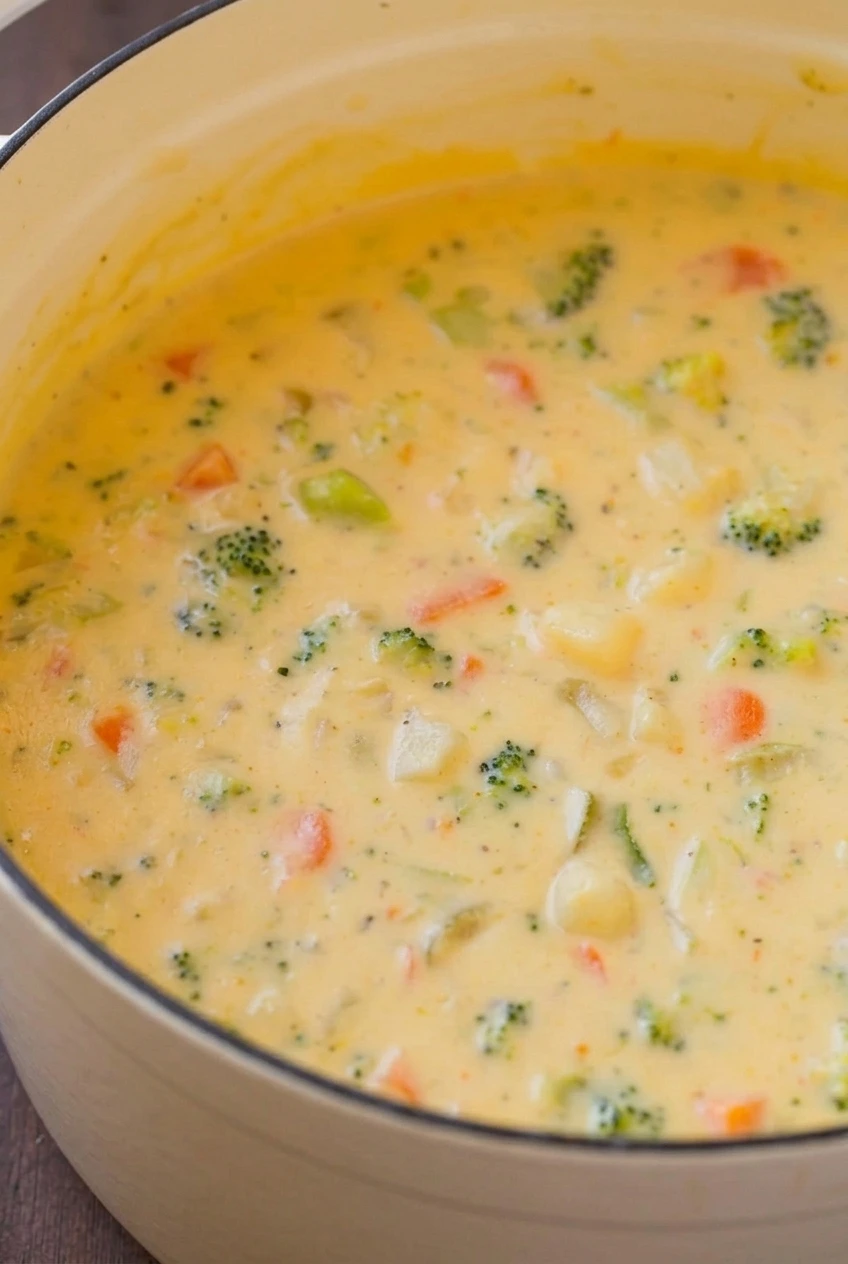
Close view of creamy broccoli cheddar potato soup with distinct broccoli florets, potato chunks, and carrots
  • 4 tablespoons unsalted butter
  • 1 medium yellow onion, finely diced (150g)
  • 2 medium carrots, peeled and diced small (120g)
  • 2 ribs celery, diced small (80g)
  • 2 cloves garlic, minced
  • 1/4 cup all-purpose flour (30g)
  • 4 cups low-sodium chicken broth, or vegetable broth for a vegetarian version
  • 1 1/2 lb Yukon Gold potatoes, cut into 1/2-inch cubes (680g)
  • 3/4 teaspoon kosher salt, plus more to taste
  • 1/4 teaspoon black pepper
  • 2 cups whole milk
  • 4 cups fresh broccoli florets, cut into small bite-size pieces (280g)
  • 2 cups freshly shredded sharp cheddar (225g)

How to Make Broccoli Cheddar Potato Soup

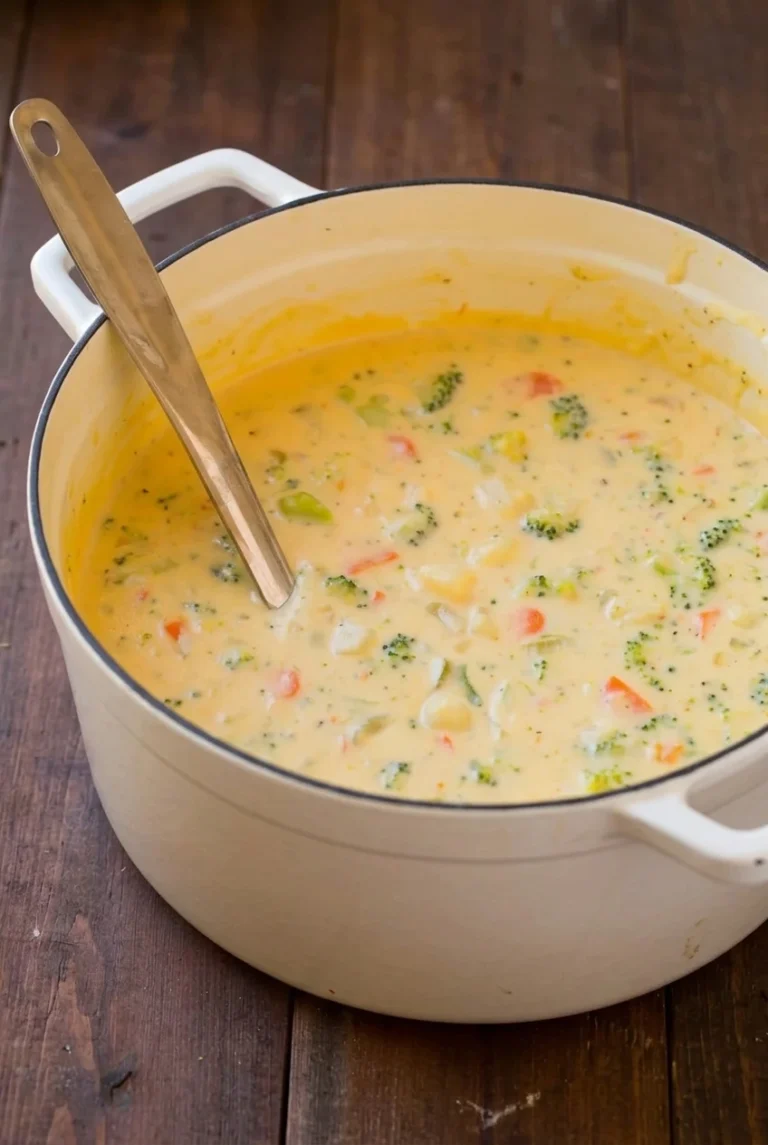
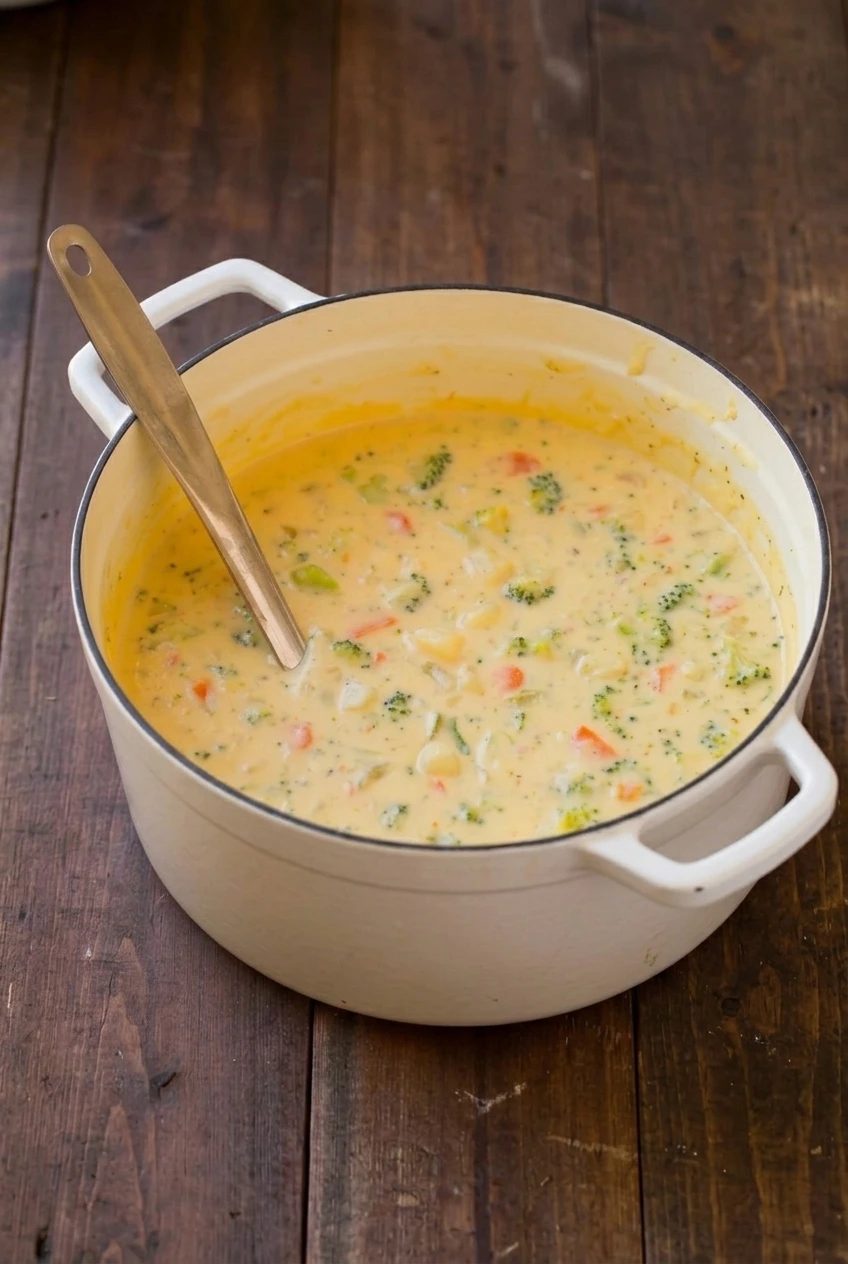
A full pot of chunky broccoli cheddar potato soup centered on a dark wood surface
  1. Prepare the vegetables: Dice the onion, carrots, and celery small. Keep the potato cubes roughly the same size, and cut any large broccoli florets into bite-size pieces.
  2. Soften the vegetables: Melt the butter in a heavy-bottomed 5- to 6-quart Dutch oven or soup pot over medium heat. Add the onion, carrots, and celery. Cook, stirring, for 5 to 7 minutes, until they begin to soften and the onion turns translucent at the edges. Stir in the garlic just until fragrant.
  3. Make the base: Sprinkle the flour over the vegetables and stir to coat them. Cook briefly, stirring, then pour in the broth gradually while stirring until the flour blends into a smooth base.
  4. Simmer the potatoes: Add the potatoes, salt, and pepper. Bring to a gentle simmer over medium heat, then reduce to medium-low. Simmer mostly uncovered for about 10 to 15 minutes, stirring regularly and scraping the bottom of the pot to prevent sticking. Start checking after 10 minutes; the potatoes should be nearly fork-tender but still hold their shape.
  5. Add the broccoli and milk: Stir them in and keep the soup at a gentle simmer over low to medium-low heat. Cook for about 4 to 7 minutes, checking the broccoli after 4 minutes. The potatoes should be easily pierced with a fork, and the broccoli should be tender but still distinct.
  6. Melt in the cheddar: Turn off the heat or reduce it to very low. Stir in the cheddar a small handful at a time, letting each addition melt before adding more. Do not let the soup boil after the cheese goes in.
  7. Adjust and serve: For a thicker broth, mash a few potato pieces against the side of the pot, leaving most intact. The soup should coat a spoon but still flow easily from a ladle. Taste and adjust the seasoning, then let it settle for a few minutes before serving. If it is too thick, stir in warm broth or milk a splash at a time.

How to Keep the Soup Creamy

Adding broth gradually helps the flour blend without lumps. Freshly shredded cheddar also melts more evenly than pre-shredded cheese. Keep the pot off the heat or over very low heat as you add it: boiling after the cheese goes in can leave the broth grainy or the cheese clumped.

Can You Use Frozen Broccoli?

Yes. Add frozen broccoli after the potatoes are nearly tender, as you would fresh broccoli, but check it early. It may soften faster and finish less firmly than fresh florets, so use tenderness rather than the suggested cooking time as your guide.

Serving and Storing the Soup

Serve in bowls or family-style from the pot, with toasted sourdough or another bread alongside. Chives or sliced green onions are optional toppings.

Cool leftovers and refrigerate promptly in a covered container for up to about 3 days. Reheat gently on the stovetop over low heat, stirring regularly. Add a splash of broth or milk if the soup has thickened, and avoid a hard boil.

Freezing is not ideal if you want to keep the original texture: the dairy may separate and the potatoes may soften. If you freeze leftovers, expect those changes and thaw and reheat gently.

For another cheese-forward soup, try Apple Cheddar Sweet Potato Soup. For a different creamy vegetable soup, see Creamy Roasted Cauliflower Soup.

Nutrition

Approximate nutrition per serving, based on 6 servings: 400 calories, 16g protein, 23g fat, and 34g carbohydrates. Approximate nutrition per 100g: 80 calories, 3g protein, 5g fat, and 7g carbohydrates. Values vary with the broth, milk, and cheddar used.

Broccoli Cheddar Potato Soup

A creamy one-pot soup with tender potatoes, broccoli, carrots, and sharp cheddar.
Course: Soup
Cuisine: American
Prep: 15 min
Cook: 35 min
Total: 50 min
Servings: 6 Calories: 400 kcal

Equipment

  • 5- to 6-quart Dutch oven or soup pot

Ingredients

For the Soup

  • 4 tablespoons unsalted butter
  • 1 medium yellow onion, finely diced (150 g)
  • 2 medium carrots, peeled and diced small (120 g)
  • 2 ribs celery, diced small (80 g)
  • 2 cloves garlic, minced
  • 1/4 cup all-purpose flour (30 g)
  • 4 cups low-sodium chicken broth
  • 1 1/2 lb Yukon Gold potatoes, cut into 1/2-inch cubes (680 g)
  • 3/4 teaspoon kosher salt, plus more to taste
  • 1/4 teaspoon black pepper
  • 2 cups whole milk
  • 4 cups fresh broccoli florets, cut into bite-size pieces (280 g)
  • 2 cups freshly shredded sharp cheddar (225 g)

Optional for Serving

  • Chives or sliced green onions

Instructions

  1. Dice the onion, carrots, and celery. Cut the potatoes into roughly even cubes and any large broccoli florets into bite-size pieces.
  2. Melt the butter in a heavy-bottomed Dutch oven or soup pot over medium heat. Add the onion, carrots, and celery and cook, stirring, for 5 to 7 minutes, until softened and the onion is translucent at the edges.
  3. Stir in the garlic just until fragrant.
  4. Sprinkle the flour over the vegetables and stir to coat. Cook briefly, then gradually pour in the broth while stirring until smooth.
  5. Add the potatoes, salt, and pepper. Bring to a gentle simmer over medium heat, then reduce to medium-low. Simmer mostly uncovered for 10 to 15 minutes, stirring regularly and scraping the bottom of the pot, until the potatoes are nearly fork-tender but still hold their shape.
  6. Stir in the milk and broccoli. Keep the soup at a gentle simmer over low to medium-low heat for 4 to 7 minutes, until the potatoes are easily pierced and the broccoli is tender.
  7. Turn off the heat or reduce it to very low. Stir in the cheddar a small handful at a time, allowing each addition to melt before adding more. Do not let the soup boil.
  8. For a thicker soup, mash a few potato pieces against the side of the pot. Taste and adjust the seasoning, then let the soup settle for a few minutes before serving. If it is too thick, stir in warm broth or milk a splash at a time.
  9. Serve with chives or sliced green onions, if desired.

Tips

  • Add the broth gradually while stirring to help the flour blend smoothly.
  • Check the potatoes after 10 minutes; they should be nearly tender before adding the broccoli.
  • Shred the cheddar fresh so it melts more evenly.
  • Add the cheese off the heat or over very low heat, and do not boil the soup afterward.

Variations

  • Vegetarian Version: Use vegetable broth instead of chicken broth.
  • Frozen Broccoli Version: Use frozen broccoli and check it early, since it may soften faster than fresh florets.

Notes

Refrigerate leftovers in a covered container for up to 3 days. Reheat gently over low heat, stirring regularly; add a splash of broth or milk if needed and avoid boiling. Freezing may change the texture of the dairy and potatoes.

Nutrition

Calories: 400 kcal | Protein: 16 g | Fat: 23 g | Carbohydrates: 34 g

Creamy Potato Leek Soup

Potato leek soup gets its body from potatoes simmered until fork-tender, then puréed with softened leeks and broth. A little cream stirred in at the end makes this version richer without needing flour. Rinse the leeks between their layers to keep grit out of the soup, and stop blending as soon as it is smooth so the potatoes do not turn gummy. Finish each bowl with green onion, fresh thyme, and cracked black pepper.

Prep time: 15 minutes | Cook time: 30 minutes | Total time: 45 minutes | Serves: 4

Ingredients for Creamy Potato Leek Soup

  • 2 tablespoons unsalted butter (30g)
  • 2 large leeks, white and light green parts only (about 350g trimmed)
  • 3/4 teaspoon kosher salt, plus more to taste
  • 2 garlic cloves, minced
  • 1 1/2 pounds Yukon Gold potatoes, peeled and cut into 1/2-inch cubes (680g)
  • 4 cups low-sodium chicken broth or vegetable broth (960ml)
  • 3 fresh thyme sprigs for simmering, plus 2 to 4 small sprigs for garnish
  • 1/4 teaspoon freshly ground black pepper, plus more for garnish
  • 1/2 cup heavy cream (120ml)
  • 2 tablespoons thinly sliced green onion
  • Up to 1/2 cup warm broth or water, if needed to thin the soup
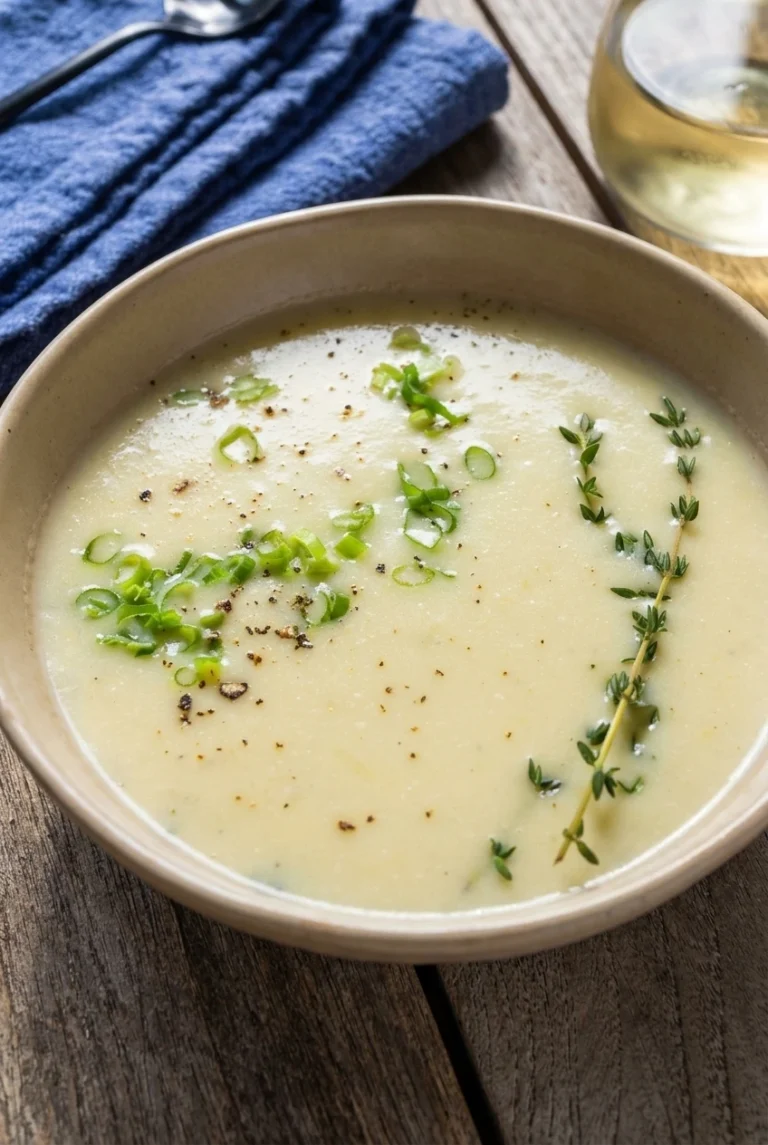
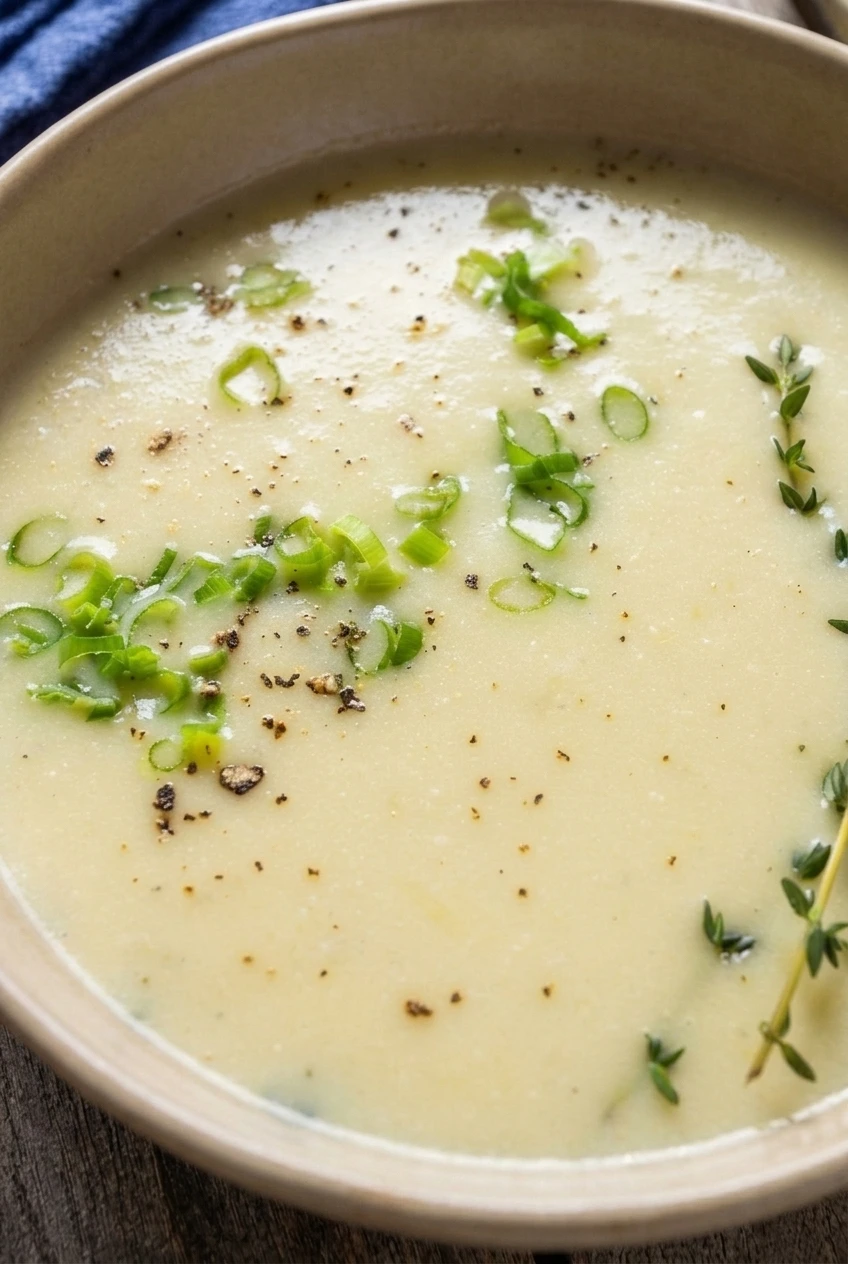
Close view of smooth, pale potato leek soup with green onion, thyme leaves, and cracked black pepper

How to Clean Leeks

Trim off the roots and tough dark green tops. Split the white and light green portions lengthwise, fan the layers apart, and rinse thoroughly under running water. Check between the layers for grit, then slice the leeks and drain them before cooking.

How to Make Creamy Potato Leek Soup

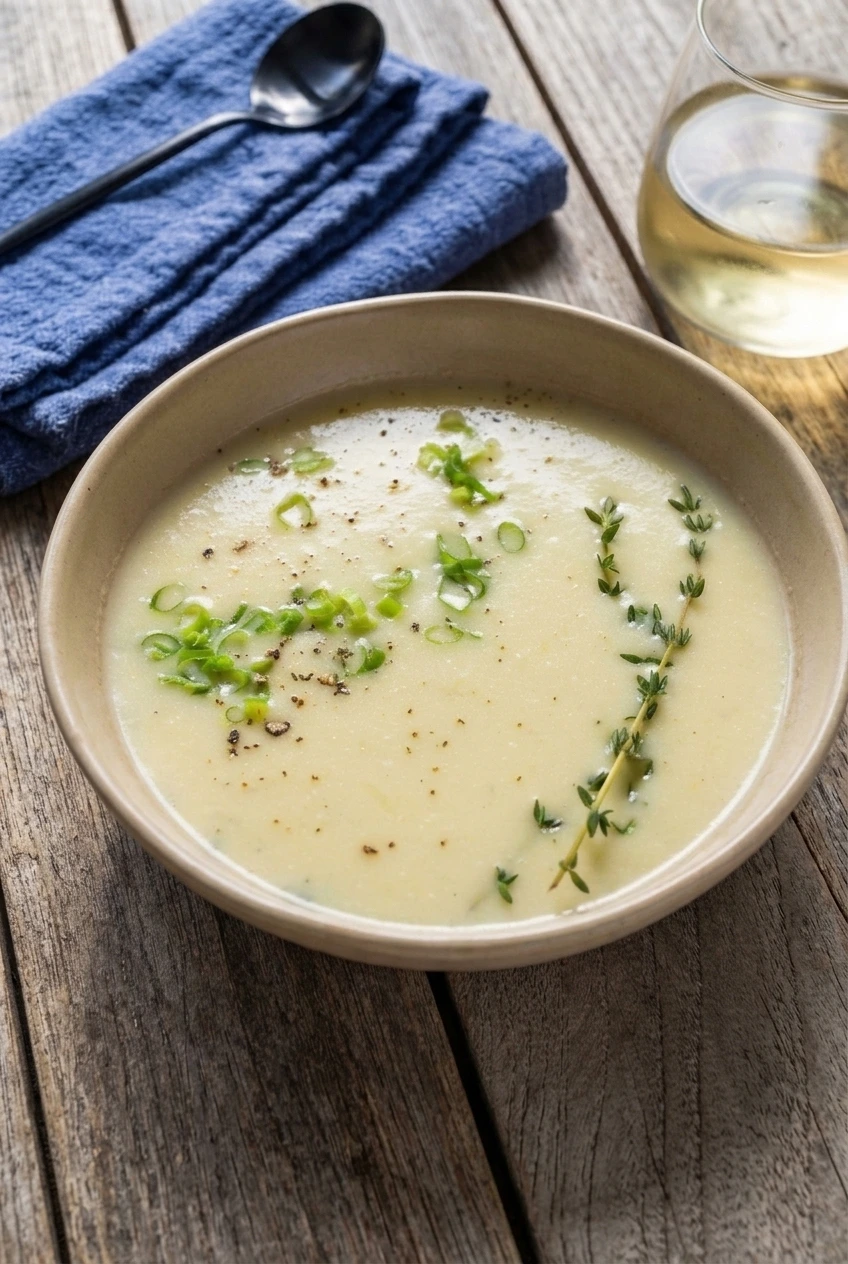
A full bowl of creamy potato leek soup centered on a wooden table with green onion and thyme garnish
  1. Prepare the vegetables: Clean and slice the leeks as described above. Peel the potatoes and cut them into even 1/2-inch cubes so they cook at a similar rate.
  2. Soften the leeks: Warm a 5- to 6-quart soup pot or Dutch oven over medium heat, then add the butter and reduce the heat to medium-low. Add the leeks and salt. Cook, stirring occasionally, for 6 to 8 minutes, until soft and translucent but not browned. Add the garlic and cook for about 30 seconds, until fragrant.
  3. Simmer the potatoes: Stir in the potatoes, 4 cups broth, and 3 thyme sprigs. Bring to a gentle simmer over medium heat, then lower the heat and partially cover the pot. Stir as the soup returns to a simmer. Start checking the potatoes after about 12 minutes; they will typically need 12 to 18 minutes, but size and stove heat can change the timing. Cook until a fork passes easily through a potato cube.
  4. Blend until smooth: Remove the simmered thyme sprigs and turn off the heat. Purée the soup with an immersion blender until no potato pieces remain, then stop. Prolonged blending can make the potatoes gummy. If the soup is too thin, simmer it gently, uncovered, for a few minutes before adding the cream.
  5. Add the cream: Stir in the cream and warm over low heat for 2 to 3 minutes without boiling. Add the 1/4 teaspoon black pepper, then taste and adjust the salt. If the soup is too thick, stir in warm broth or water a little at a time until it is spoonable.
  6. Garnish and serve: Ladle the smooth soup into shallow bowls. Gather the sliced green onion loosely on one side, place fresh thyme sprigs on the other, and scatter a little cracked black pepper over the surface.

If using a countertop blender instead, follow its instructions for hot liquids. Blend in small batches with the jar no more than halfway full; hot soup can build pressure in an overfilled blender and splatter.

Adjusting the Texture

The potatoes should be very tender before blending; firm pieces will not purée smoothly. The soup may also thicken as it stands. Add warm broth gradually when reheating until it reaches the consistency you want.

For a dairy-free version, use 2 tablespoons olive oil in place of the butter and omit the cream or use a plant-based cream alternative. The finished soup will differ in richness. Russet potatoes can replace Yukon Golds, though they may make a starchier purée; blend only until smooth.

Serving, Storage, and Freezing

Serve hot with crusty bread or toasted baguette, or alongside a simple salad or sandwich. Add the green onion and fresh thyme just before serving.

Cool leftovers promptly and refrigerate in an airtight container for 3 to 4 days. Reheat gently on the stovetop, stirring occasionally, and add a splash of broth if the soup has thickened.

If you plan to freeze the soup, freeze it before adding the cream for the best chance of maintaining its texture. Thaw in the refrigerator, reheat gently, and stir in the cream near the end. A finished batch containing cream may change texture after freezing.

For another smooth vegetable soup, try Creamy Roasted Cauliflower Soup. For a heartier option with beans and mushrooms, see High-Protein White Bean Soup with Mushrooms.

Nutrition

Approximate nutrition per serving, based on 4 servings: 350 calories, 7g protein, 17g fat, and 43g carbohydrates. Approximate nutrition per 100g: 65 calories, 1g protein, 3g fat, and 8g carbohydrates. Values vary with the broth and ingredient brands used.

Creamy Potato Leek Soup

Potatoes and softened leeks are simmered in broth, blended smooth, and finished with cream and fresh herbs.
Course: Soup
Cuisine: American
Prep: 15 min
Cook: 30 min
Total: 45 min
Servings: 4 Calories: 350 kcal per serving; 65 kcal per 100 g

Equipment

  • 5- to 6-quart soup pot or Dutch oven
  • Immersion blender
  • Knife and cutting board

Ingredients

  • 2 tablespoons unsalted butter (30 g)
  • 2 large leeks, white and light green parts only (about 350 g trimmed)
  • 3/4 teaspoon kosher salt, plus more to taste
  • 2 garlic cloves, minced
  • 1 1/2 pounds Yukon Gold potatoes, peeled and cut into 1/2-inch cubes (680 g)
  • 4 cups low-sodium chicken broth or vegetable broth (960 ml), plus up to 1/2 cup warm broth or water if needed
  • 3 fresh thyme sprigs for simmering, plus 2 to 4 small sprigs for garnish
  • 1/4 teaspoon freshly ground black pepper, plus more for garnish
  • 1/2 cup heavy cream (120 ml)
  • 2 tablespoons thinly sliced green onion

Instructions

  1. Trim the roots and tough dark green tops from the leeks. Split the white and light green parts lengthwise, fan apart the layers, and rinse thoroughly between them. Slice and drain the leeks.
  2. Peel the potatoes and cut them into even 1/2-inch cubes.
  3. Warm a 5- to 6-quart soup pot over medium heat. Add the butter and reduce the heat to medium-low. Add the leeks and salt; cook, stirring occasionally, for 6 to 8 minutes until soft and translucent but not browned.
  4. Add the garlic and cook for about 30 seconds, until fragrant.
  5. Stir in the potatoes, 4 cups broth, and 3 thyme sprigs. Bring to a gentle simmer over medium heat, then lower the heat and partially cover the pot. Cook for 12 to 18 minutes, stirring as the soup returns to a simmer, until a fork passes easily through a potato cube.
  6. Remove the thyme sprigs and turn off the heat. Purée with an immersion blender just until smooth.
  7. If the soup is too thin, simmer it gently uncovered for a few minutes. Stir in the cream and warm over low heat for 2 to 3 minutes without boiling.
  8. Stir in the 1/4 teaspoon black pepper. Taste and adjust the salt. If the soup is too thick, add warm broth or water a little at a time.
  9. Ladle into bowls and garnish with green onion, fresh thyme sprigs, and cracked black pepper.

Tips

  • Rinse between the leek layers to remove hidden grit.
  • Cut the potatoes into even cubes so they cook at a similar rate.
  • Blend only until smooth; prolonged blending can make the potatoes gummy.
  • Check the potatoes for tenderness before blending.
  • Add warm broth gradually if the soup thickens as it stands.

Variations

  • Dairy-Free Potato Leek Soup: Use 2 tablespoons olive oil instead of butter and omit the cream or use a plant-based cream alternative.
  • Russet Potato Leek Soup: Replace the Yukon Gold potatoes with russet potatoes; blend only until smooth, as russets may make the soup starchier.

Notes

Refrigerate leftovers in an airtight container for 3 to 4 days and reheat gently with a splash of broth if needed. For freezing, freeze before adding the cream; thaw in the refrigerator and stir in the cream near the end of reheating. When using a countertop blender, blend hot soup in small batches with the jar no more than halfway full.

Nutrition

Calories: 350 kcal per serving; 65 kcal per 100 g | Protein: 7 g per serving; 1 g per 100 g | Fat: 17 g per serving; 3 g per 100 g | Carbohydrates: 43 g per serving; 8 g per 100 g

Creamy Sausage and Potato Soup

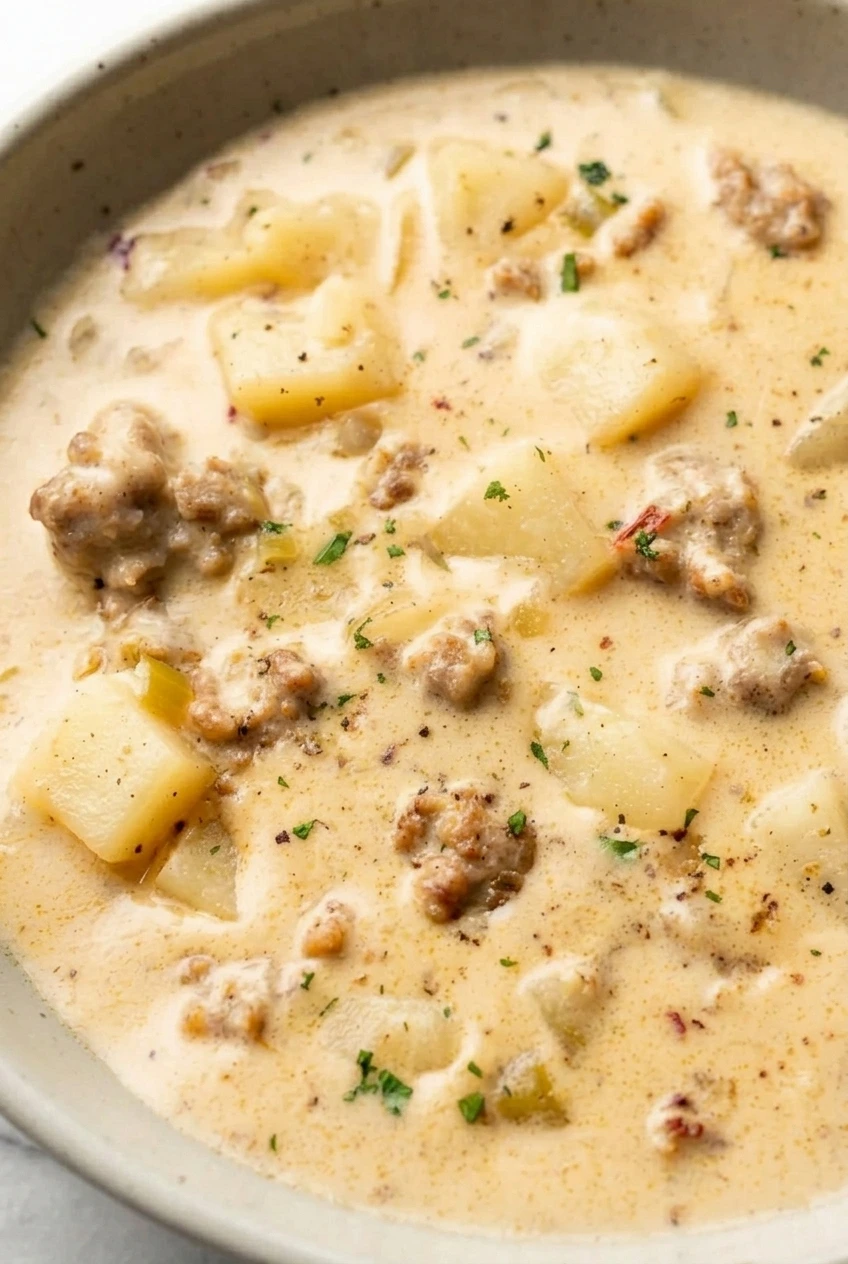
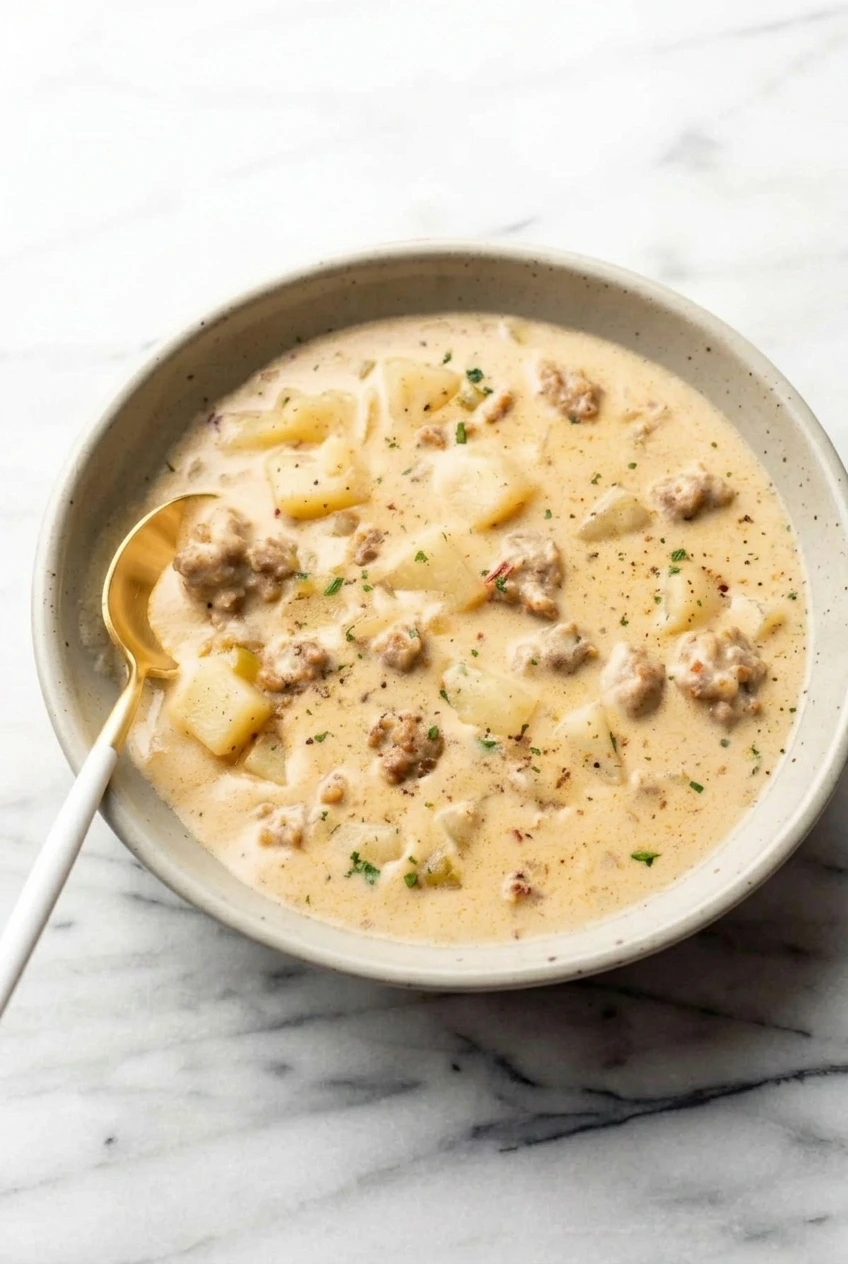
Browned Italian sausage and tender Yukon Gold potatoes sit in a pale, creamy broth that stays fluid enough to spoon around the chunks. The sausage is cooked first for flavor, then the potatoes simmer until fork-tender without being mashed or blended.

A little flour thickens the broth; adding the liquid gradually keeps it smooth. Half-and-half goes in only after the potatoes are done, so the finished soup can warm gently without boiling. Makes 6 servings in about 50 minutes, including 15 minutes of prep.

Ingredients for Creamy Sausage and Potato Soup

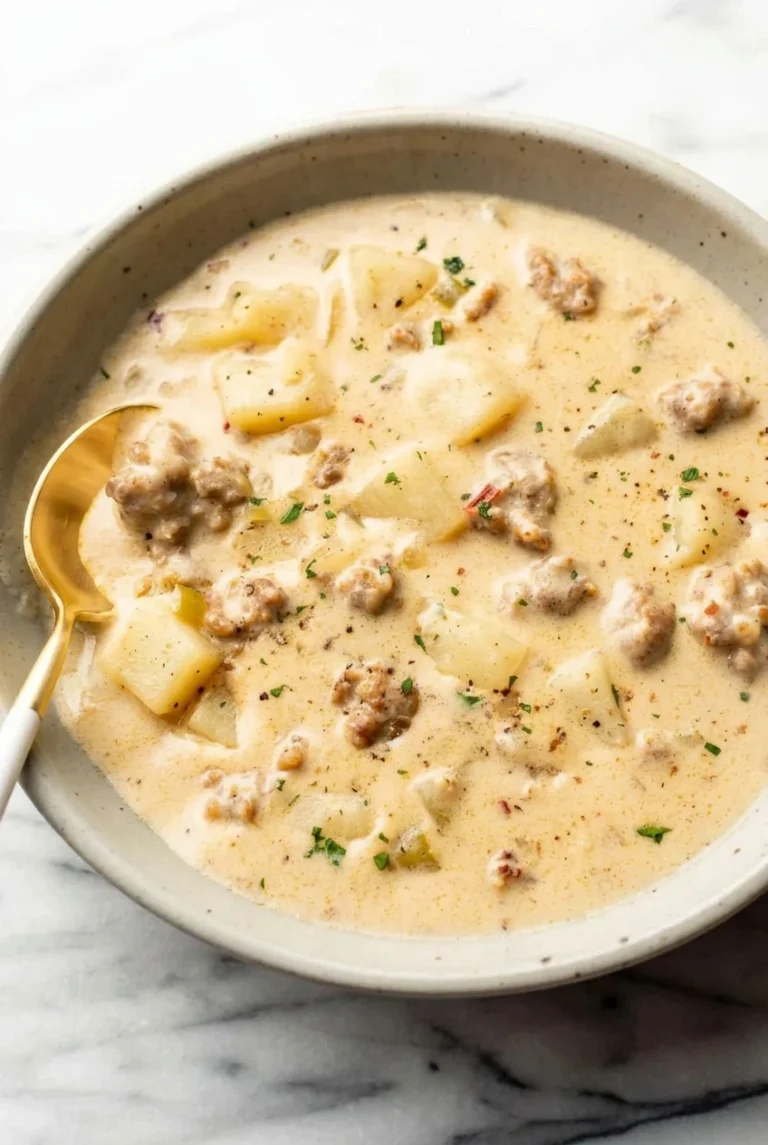
Close detail of tender potato chunks, browned sausage crumbles, and parsley in creamy soup
  • 1 pound fresh mild or hot Italian sausage, casings removed if needed (450g)
  • 2 pounds Yukon Gold potatoes, cut into roughly 3/4-inch pieces (900g)
  • 1 medium yellow onion, finely diced (about 1 cup; 150g)
  • 2 cloves garlic, minced
  • Up to 2 tablespoons unsalted butter, if needed for the flour base (30g)
  • 3 tablespoons all-purpose flour (25g)
  • 4 cups low-sodium chicken broth, plus up to 1/2 cup more if needed
  • 1 1/2 cups half-and-half
  • 3/4 teaspoon kosher salt, plus more to taste
  • 1/2 teaspoon black pepper, plus more for serving
  • 1 tablespoon finely chopped fresh parsley, plus a little for serving
  • Optional: a pinch of crushed red pepper flakes

How to Make Creamy Sausage and Potato Soup

A full bowl of creamy sausage and potato soup centered on a pale stone surface
  1. Prepare the vegetables: Dice the onion, mince the garlic, and cut the potatoes into similar-size pieces so they cook evenly.
  2. Brown the sausage: Warm a 5- to 6-quart Dutch oven or heavy soup pot over medium heat. Add the sausage without oil and cook for 7 to 9 minutes, breaking it into small crumbles, until browned and cooked through. Transfer it to a plate. Drain excess fat, leaving about 1 tablespoon in the pot.
  3. Cook the aromatics and flour: Reduce the heat to medium-low. Cook the onion for 3 to 4 minutes, until softened. Add the garlic and, if using, the red pepper flakes; stir briefly until fragrant. If the pot is too dry to moisten the flour, add the butter. Stir in the flour and cook for about 1 minute, stirring so it does not scorch.
  4. Add the broth and potatoes: Pour in the 4 cups of broth gradually, whisking well between additions until the base is smooth. Scrape up the browned bits from the bottom of the pot. Add the potatoes, salt, and pepper. The potatoes should be mostly covered; add a splash of the extra broth or water if needed.
  5. Simmer the potatoes: Bring the soup to a gentle simmer, then lower the heat to medium-low and partially cover the pot, leaving the lid ajar. Simmer for about 15 to 20 minutes, stirring occasionally. Start checking the largest potato pieces around 15 minutes. They are done when a fork pierces them easily but they still hold their shape. Uncover near the end if the broth needs to reduce slightly.
  6. Finish the soup: Return the sausage to the pot and reduce the heat to low. Stir in the half-and-half and warm for 2 to 3 minutes, until hot and steaming but not boiling. Stir in the parsley, then taste and adjust the salt and pepper. Skim off any visible excess fat. If the soup is too thick, stir in a little extra broth or water.
  7. Serve: Ladle into bowls, giving each serving plenty of potato chunks and sausage crumbles. Finish with a little parsley and black pepper.

Choosing Potatoes for This Soup

Yukon Gold potatoes become tender while keeping recognizable chunks in the broth. Red potatoes also hold their shape, though they may be firmer. Russets soften more readily and release more starch, making the broth thicker and the pieces less distinct. Whichever variety you use, check the largest pieces with a fork rather than relying on the simmer time alone.

How to Keep the Creamy Broth Smooth

Whisk the first pours of broth thoroughly into the flour mixture before adding more liquid; break up any lumps before the potatoes go in. Once the potatoes are tender, add the half-and-half over low heat. Keep the soup hot without boiling it, which can make the dairy look separated or grainy.

What to Serve with the Soup

Crusty bread, dinner rolls, or garlic bread work well alongside it. A simple green salad makes a lighter side.

For another creamy soup, try Creamy Roasted Cauliflower Soup. For a different hearty bowl, see High-Protein White Bean Soup with Mushrooms.

Storing and Reheating Leftovers

Cool the soup promptly and refrigerate it in a covered airtight container for about 3 to 4 days. The broth will thicken as it chills.

Reheat gently over low to medium-low heat, stirring occasionally and adding broth or water a splash at a time until the soup is spoonable again. To microwave, heat in short intervals and stir between them. Avoid boiling.

Can You Freeze Creamy Sausage and Potato Soup?

Freezing the finished soup may cause the half-and-half to separate and the potatoes to soften after thawing. If you plan to freeze a batch, you can set it aside before adding the half-and-half, then stir the dairy in during gentle reheating. The texture may still vary.

Nutrition Information

Approximate nutrition per serving, based on 6 servings: 490 calories, 19g protein, 30g fat, and 36g carbohydrates. Approximate nutrition per 100g: 110 calories, 4g protein, 7g fat, and 8g carbohydrates. Values vary with the sausage, broth, and amount of fat drained.

Creamy Sausage and Potato Soup

Italian sausage and tender Yukon Gold potatoes simmer in a smooth, creamy broth.
Course: Soup
Cuisine: American
Prep: 15 min
Cook: 35 min
Total: 50 min
Servings: 6 Calories: 490 kcal

Equipment

  • 5- to 6-quart Dutch oven or heavy soup pot
  • Whisk
  • Cutting board
  • Knife

Ingredients

For the Soup

  • 1 pound fresh mild or hot Italian sausage, casings removed if needed (450 g)
  • 2 pounds Yukon Gold potatoes, cut into roughly 3/4-inch pieces (900 g)
  • 1 medium yellow onion, finely diced (about 1 cup; 150 g)
  • 2 cloves garlic, minced
  • Up to 2 tablespoons unsalted butter, if needed for the flour base (30 g)
  • 3 tablespoons all-purpose flour (25 g)
  • 4 cups low-sodium chicken broth, plus up to 1/2 cup more if needed
  • 1 1/2 cups half-and-half
  • 3/4 teaspoon kosher salt, plus more to taste
  • 1/2 teaspoon black pepper, plus more for serving
  • 1 tablespoon finely chopped fresh parsley, plus a little for serving
  • Optional: a pinch of crushed red pepper flakes

Instructions

  1. Dice the onion, mince the garlic, and cut the potatoes into similar-size pieces.
  2. Warm a 5- to 6-quart Dutch oven or heavy soup pot over medium heat. Add the sausage without oil and cook for 7 to 9 minutes, breaking it into small crumbles, until browned and cooked through.
  3. Transfer the sausage to a plate. Drain excess fat from the pot, leaving about 1 tablespoon.
  4. Reduce the heat to medium-low. Cook the onion for 3 to 4 minutes, until softened.
  5. Add the garlic and optional red pepper flakes, if using, and stir briefly until fragrant.
  6. If the pot is too dry to moisten the flour, add the butter. Stir in the flour and cook for about 1 minute, stirring so it does not scorch.
  7. Gradually pour in the 4 cups of broth, whisking between additions until smooth. Scrape up the browned bits from the bottom of the pot.
  8. Add the potatoes, salt, and pepper. Add a splash of extra broth or water if needed so the potatoes are mostly covered.
  9. Bring the soup to a gentle simmer. Reduce the heat to medium-low, partially cover the pot with the lid ajar, and simmer for 15 to 20 minutes, stirring occasionally.
  10. Check the largest potato pieces starting around 15 minutes. Cook until a fork pierces them easily but they still hold their shape. Uncover near the end if the broth needs to reduce slightly.
  11. Return the sausage to the pot and reduce the heat to low. Stir in the half-and-half and warm for 2 to 3 minutes, until hot and steaming but not boiling.
  12. Stir in the parsley. Taste and adjust the salt and pepper, skim off any visible excess fat, and add a little broth or water if the soup is too thick.
  13. Ladle into bowls and finish with parsley and black pepper.

Tips

  • Cut the potatoes into similar-size pieces so they cook evenly.
  • Whisk the broth into the flour mixture gradually to help prevent lumps.
  • Check the largest potato pieces with a fork rather than relying only on the simmer time.
  • Add the half-and-half over low heat and do not let the soup boil.
  • If the soup thickens, loosen it with a splash of broth or water.

Variations

  • Red Potato Soup: Use red potatoes in place of Yukon Gold potatoes; they hold their shape but may be firmer.
  • Russet Potato Soup: Use russet potatoes for a thicker broth and softer, less distinct potato pieces.
  • Spicy Sausage and Potato Soup: Use hot Italian sausage and add a pinch of crushed red pepper flakes.

Notes

Refrigerate in a covered airtight container for 3 to 4 days. Reheat gently without boiling, adding broth or water as needed. For freezing, set aside a portion before adding the half-and-half; the texture may still vary after thawing.

Nutrition

Calories: 490 kcal | Protein: 19 g | Fat: 30 g | Carbohydrates: 36 g | Per 100g Calories: 110 kcal | Per 100g Protein: 4 g | Per 100g Fat: 7 g | Per 100g Carbohydrates: 8 g

Vegan Creamy Potato Soup

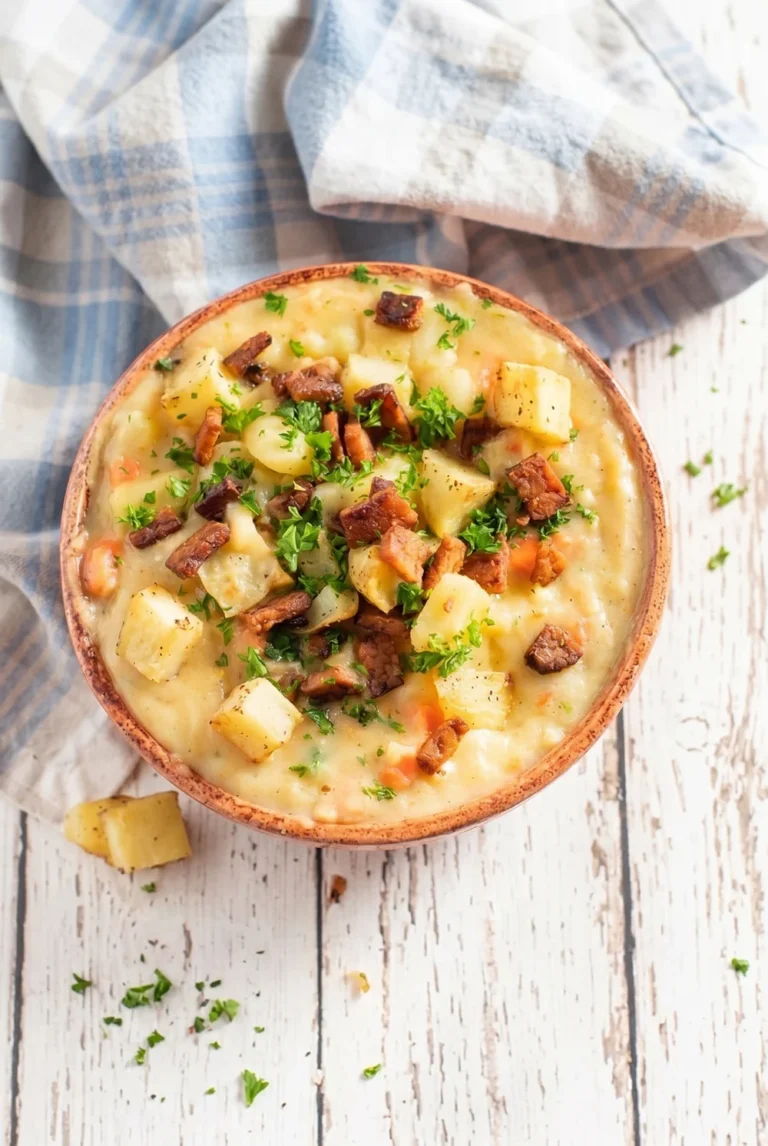
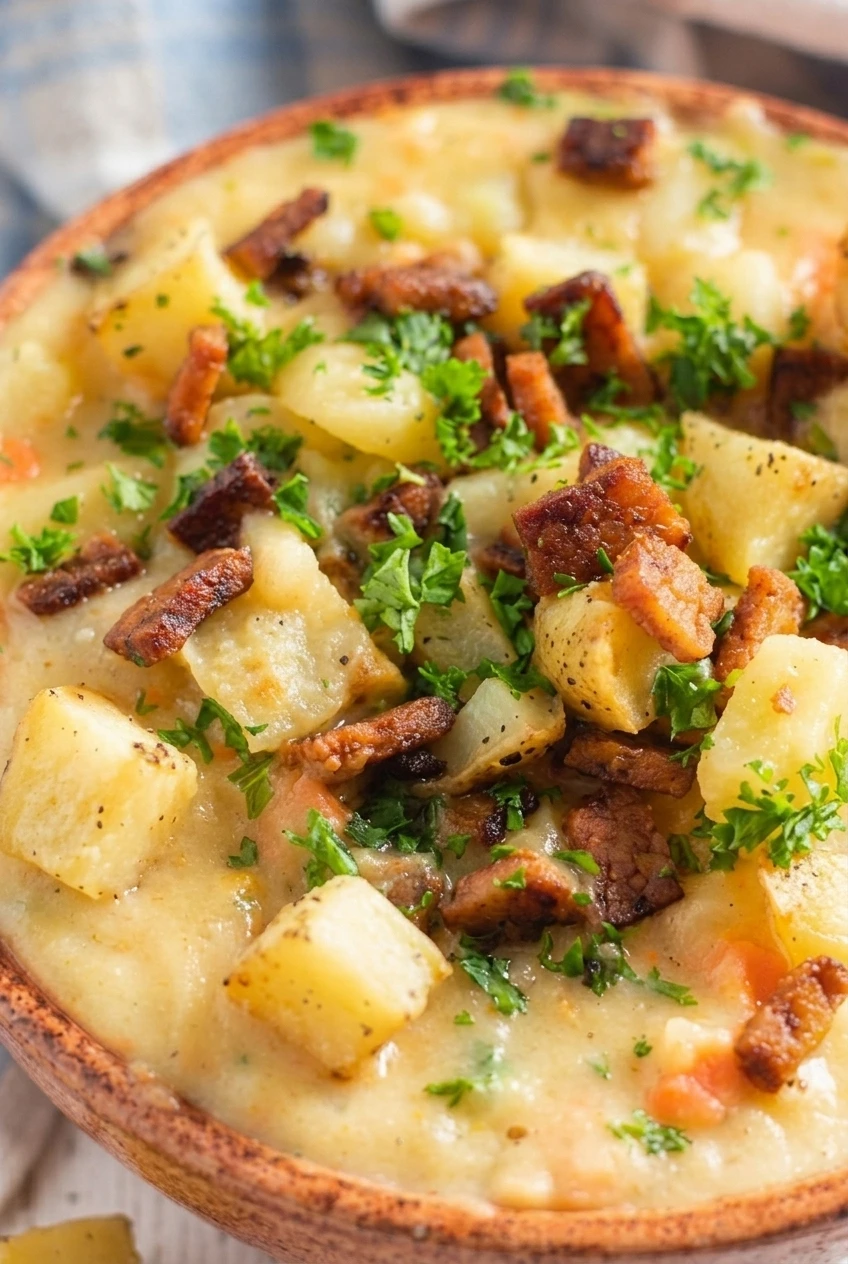
This stovetop potato soup has a thick, pale-golden broth with tender potato cubes and small pieces of carrot. A brief flour roux and plain, unsweetened oat milk make the broth creamy; blending only a small portion gives it body without losing the chunks. Brown the vegan bacon separately, then scatter it over each bowl with fresh parsley just before serving so the topping stays crisp.

Ingredients for Vegan Creamy Potato Soup

Close view of creamy vegan potato soup showing tender potato chunks, carrots, vegan bacon, and parsley
  • 2 1/2 pounds Yukon Gold potatoes, cut into roughly 1-inch cubes (about 1,150g)
  • 3 tablespoons olive oil or vegan butter
  • 1 medium yellow onion, diced (150g)
  • 2 medium carrots, diced small (120g)
  • 3 garlic cloves, minced
  • 1/4 cup all-purpose flour (30g)
  • 5 cups vegetable broth
  • 1 1/2 cups plain, unsweetened oat milk
  • 1 teaspoon dried thyme
  • 1 bay leaf
  • 1 teaspoon kosher salt, plus more to taste
  • 1/2 teaspoon black pepper, plus more to taste
  • 4 ounces vegan bacon, chopped (about 115g)
  • 2 tablespoons chopped fresh parsley, plus extra for serving

Use plain, unsweetened plant milk; sweetened or flavored milk will change the savory taste. Unsweetened soy or cashew milk can replace the oat milk. For a gluten-free version, use a gluten-free all-purpose flour blend in place of the flour and adjust the finished thickness with liquid if needed.

How to Make Vegan Creamy Potato Soup

A full bowl of chunky vegan creamy potato soup with vegan bacon and parsley on a rustic tabletop
  1. Prepare the vegetables and topping: Cut the potatoes into even, roughly 1-inch cubes. Dice the onion and carrots. Cook the chopped vegan bacon in a small skillet over medium heat until browned and crisp at the edges, then transfer it to a plate. Keep it separate from the soup.
  2. Soften the vegetables: Warm the olive oil or vegan butter in a 5- to 6-quart soup pot or Dutch oven over medium heat. Add the onion and carrots and cook for 5 to 7 minutes, stirring occasionally, until the onion softens and begins to look translucent. Add the garlic near the end and cook until fragrant, without browning it.
  3. Cook the flour: Sprinkle the flour over the vegetables and stir continuously for about 1 minute, until it is moistened by the fat and smells lightly toasty. This brief cook helps prevent a raw flour taste.
  4. Add the broth and potatoes: Gradually whisk in the vegetable broth until the base is smooth. Add the potatoes, thyme, bay leaf, salt, and pepper. Bring to a gentle simmer over medium heat, then reduce the heat to medium-low.
  5. Simmer until tender: Partially cover the pot and simmer gently for about 18 to 25 minutes, stirring occasionally. Start checking after about 15 minutes. The potatoes are ready when a fork slides in easily but the cubes still hold their shape; cut size and simmer intensity affect the timing.
  6. Finish the creamy broth: Remove the bay leaf. Stir in the oat milk and warm gently over low to medium-low heat for 3 to 5 minutes without boiling hard. Carefully blend a small portion of the hot soup and stir it back into the pot, or briefly use an immersion blender in one area. Stop when the broth has body and plenty of potato and carrot pieces remain.
  7. Season and serve: Taste and adjust the salt and pepper. If the soup is too thick, stir in a little broth, oat milk, or water. Ladle into bowls and top with the vegan bacon and chopped parsley.

How to Keep the Soup Creamy but Chunky

Blend just enough soup to thicken the broth around the intact potatoes. Blending too much, or blending for too long, can make potato soup gummy. For a chunkier bowl, blend less rather than blending the whole pot. If using a standard blender, work with a small portion at a time and handle the hot liquid carefully.

Choosing and Cooking the Potatoes

Yukon Gold potatoes give this version recognizable chunks and a creamy broth. Other all-purpose potatoes can work, though they may break down differently. Keep the cubes close to the same size and use fork tenderness—not the clock alone—to decide when they are done.

Serving the Soup

Add the vegan bacon to individual bowls just before serving; stirring it into the pot will soften it. Finish with parsley and serve with crusty bread or a simple green salad. For another creamy vegetable soup, try Creamy Roasted Cauliflower Soup.

How to Store and Reheat

Cool leftovers promptly and refrigerate in a covered container for 3 to 4 days. The soup thickens as it sits. Reheat gently on the stovetop over medium-low heat, stirring occasionally and adding broth, oat milk, or water a little at a time to loosen it. For microwave reheating, heat in short intervals and stir between them. Keep the vegan bacon separate and add it after reheating.

Freezing is possible, but the potatoes may taste grainy or floury after thawing. If freezing, cool the soup, transfer it to a freezer-safe container, and thaw overnight in the refrigerator before reheating.

Nutrition Information

Approximate nutrition per serving, based on 6 servings: 330 calories, 10g protein, 11g fat, and 48g carbohydrates. Approximate nutrition per 100g: 65 calories, 2g protein, 2g fat, and 10g carbohydrates. Values vary with the vegetable broth, oat milk, and vegan bacon used.

Vegan Creamy Potato Soup

A chunky potato soup with a creamy oat milk broth, tender vegetables, and crisp vegan bacon.
Course: Soup
Cuisine: American
Prep: 15 min
Cook: 40 min
Total: 55 min
Servings: 6 Calories: 330 kcal

Equipment

  • 5- to 6-quart soup pot or Dutch oven
  • Small skillet
  • Whisk
  • Immersion blender or standard blender

Ingredients

For the Soup

  • 2 1/2 pounds Yukon Gold potatoes, cut into roughly 1-inch cubes (about 1,150g)
  • 3 tablespoons olive oil or vegan butter
  • 1 medium yellow onion, diced (150g)
  • 2 medium carrots, diced small (120g)
  • 3 garlic cloves, minced
  • 1/4 cup all-purpose flour (30g)
  • 5 cups vegetable broth
  • 1 1/2 cups plain, unsweetened oat milk
  • 1 teaspoon dried thyme
  • 1 bay leaf
  • 1 teaspoon kosher salt, plus more to taste
  • 1/2 teaspoon black pepper, plus more to taste

For Serving

  • 4 ounces vegan bacon, chopped (about 115g)
  • 2 tablespoons chopped fresh parsley, plus extra for serving

Instructions

  1. Cut the potatoes into roughly 1-inch cubes. Dice the onion and carrots, and mince the garlic.
  2. Cook the vegan bacon in a small skillet over medium heat until browned and crisp at the edges. Transfer to a plate and set aside.
  3. Warm the olive oil or vegan butter in a 5- to 6-quart soup pot over medium heat. Add the onion and carrots and cook for 5 to 7 minutes, stirring occasionally, until the onion softens.
  4. Add the garlic and cook until fragrant without browning it.
  5. Sprinkle the flour over the vegetables and stir continuously for about 1 minute.
  6. Gradually whisk in the vegetable broth until smooth. Add the potatoes, thyme, bay leaf, salt, and pepper. Bring to a gentle simmer, then reduce the heat to medium-low.
  7. Partially cover and simmer gently for about 18 to 25 minutes, stirring occasionally. Start checking after about 15 minutes; the potatoes are ready when a fork slides in easily but the cubes still hold their shape.
  8. Remove the bay leaf. Stir in the oat milk and warm over low to medium-low heat for 3 to 5 minutes without bringing the soup to a hard boil.
  9. Blend a small portion of the soup and stir it back into the pot, or briefly blend one area with an immersion blender. Stop while plenty of potato and carrot pieces remain.
  10. Taste and adjust the salt and pepper. If the soup is too thick, add a little broth, oat milk, or water. Serve topped with vegan bacon and parsley.

Tips

  • Use plain, unsweetened plant milk to keep the soup savory.
  • Cut the potatoes into evenly sized cubes and check doneness with a fork.
  • Blend only a small portion; over-blending can make potato soup gummy.
  • Add vegan bacon to individual bowls just before serving so it stays crisp.
  • If using a standard blender, blend small portions carefully because the soup is hot.

Variations

  • Soy or Cashew Milk Version: Replace the oat milk with unsweetened soy or cashew milk.
  • Gluten-Free Version: Use a gluten-free all-purpose flour blend in place of the all-purpose flour and adjust the finished thickness with liquid if needed.

Notes

Refrigerate leftovers in a covered container for 3 to 4 days. Reheat gently, adding liquid as needed, and keep the vegan bacon separate until serving. Freezing is possible, though the potatoes may become grainy or floury after thawing.

Nutrition

Calories: 330 kcal | Protein: 10 g | Fat: 11 g | Carbohydrates: 48 g | Per 100g Calories: 65 kcal | Per 100g Protein: 2 g | Per 100g Fat: 2 g | Per 100g Carbohydrates: 10 g

Slow Cooker Creamy Potato Soup

Fresh Yukon Gold potatoes cook in broth until tender, then a portion is mashed to give this soup a thick, creamy base with plenty of potato chunks. Cooked bacon is stirred in near the end, with some saved for topping. A smooth mixture of flour, evaporated milk, and cheddar finishes the soup without leaving dairy in the slow cooker for hours.

Allow 6–8 hours on LOW or 3–4 hours on HIGH, plus 20–30 minutes to finish. Potato size and slow-cooker performance affect the timing, so wait until the potatoes are fork-tender before adding the creamy mixture.

Ingredients for Slow Cooker Creamy Potato Soup

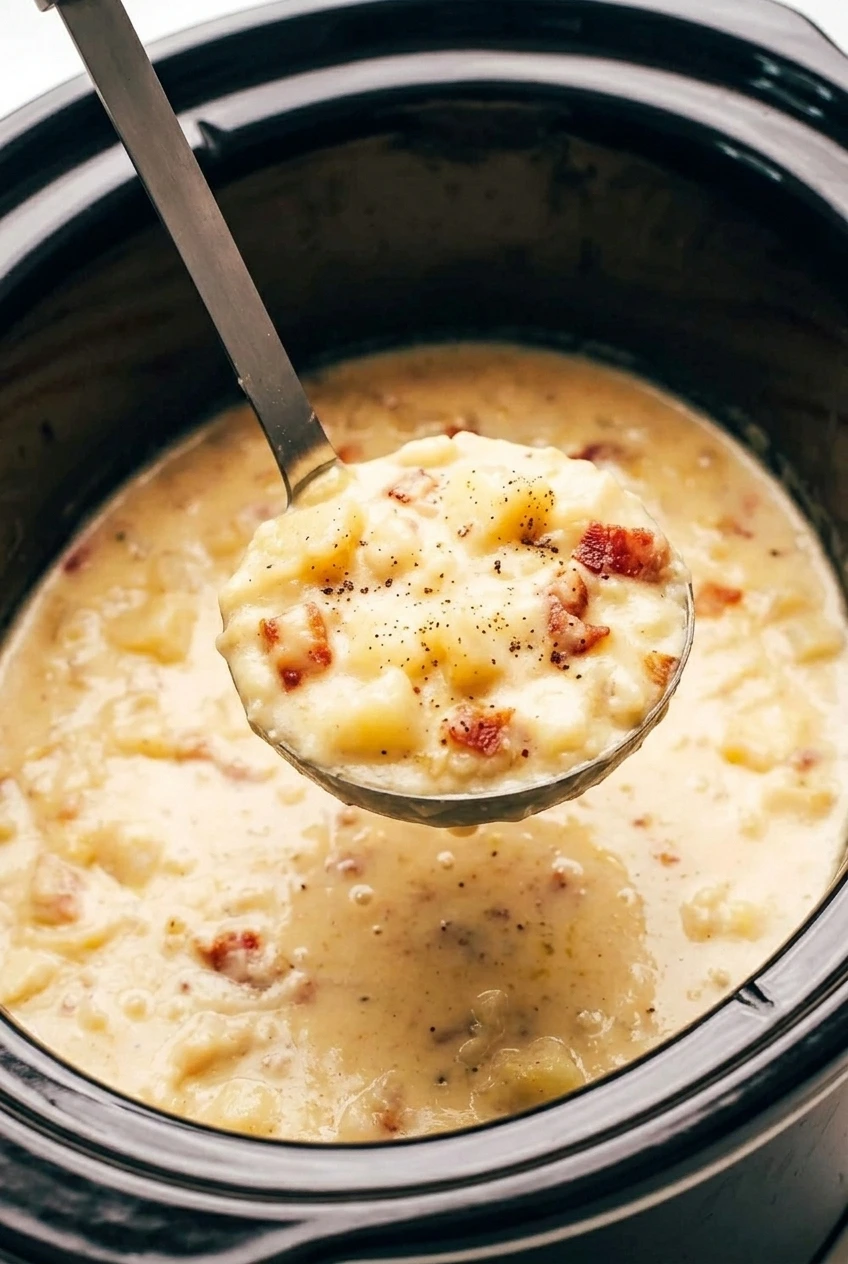
Close-up of a ladleful of creamy potato soup showing tender Yukon Gold chunks, bacon pieces, and black-pepper flecks.
  • 3 pounds Yukon Gold potatoes, peeled and cut into even ¾-inch pieces (about 1,350g)
  • 4 cups low-sodium chicken broth, plus more as needed
  • 1 medium yellow onion, finely chopped (about 150g)
  • 2 cloves garlic, minced
  • ½ teaspoon kosher salt, plus more to taste
  • ½ teaspoon black pepper, plus more for serving
  • 6 slices bacon (about 170g)
  • 3 tablespoons unsalted butter (about 45g)
  • ¼ cup all-purpose flour (about 30g)
  • 2 cups evaporated milk
  • 1 cup freshly grated sharp cheddar cheese (about 115g)

Optional for serving: 2 tablespoons chopped fresh chives or green onions, and sour cream.

Yukon Golds soften enough to mash while leaving distinct pieces in the soup. Russets also work, but they break down more readily and may make the soup thicker and less chunky. This recipe uses fresh potatoes; frozen hash browns have different timing and texture.

How to Make Slow Cooker Creamy Potato Soup

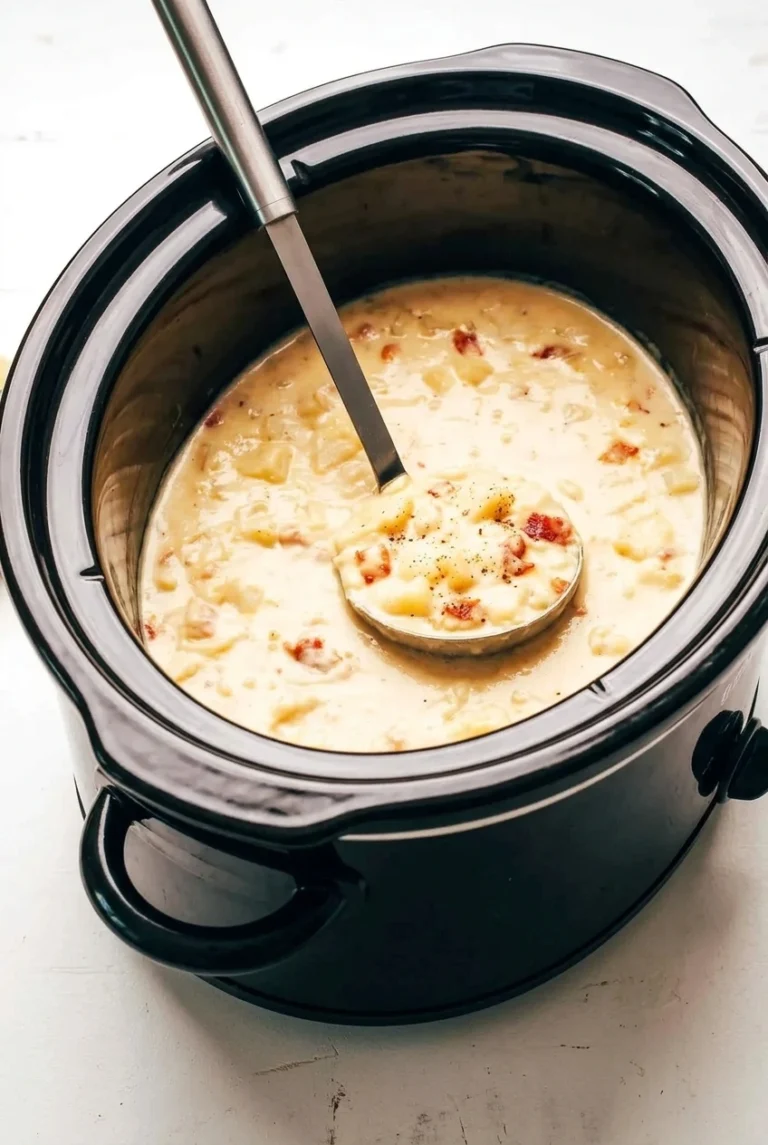
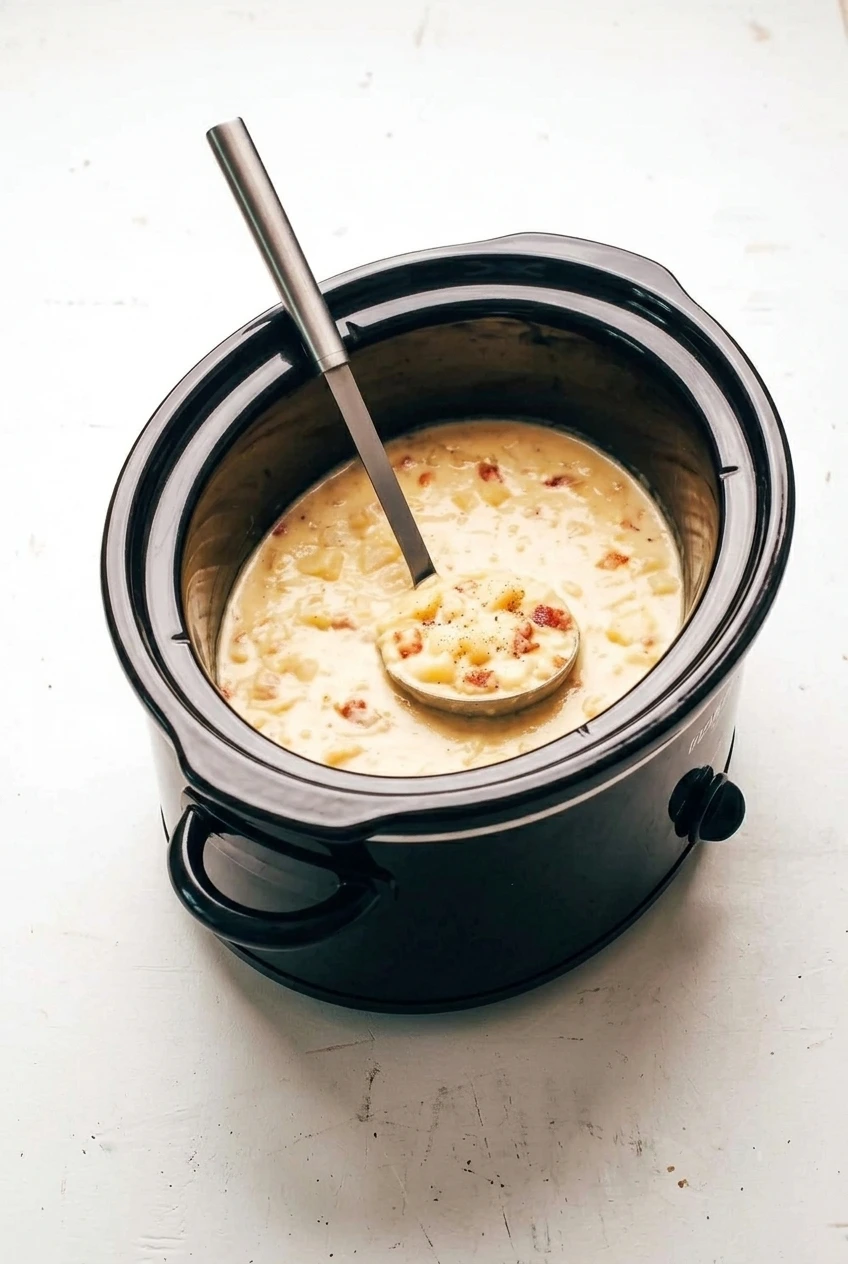
A full black slow cooker of creamy potato soup with visible potato chunks and bacon, photographed with more countertop around it.
  1. Load the slow cooker: Add the potatoes, onion, garlic, broth, salt, and pepper to a 5- to 6-quart slow cooker. Stir once to distribute the seasonings. The broth should surround the potatoes without filling the cooker to the rim.
  2. Cook the potatoes: Cover and cook on LOW for 6–8 hours or HIGH for 3–4 hours. Start checking around 5 hours on LOW or 2½ hours on HIGH. Continue cooking if needed, until the potatoes yield easily to a fork and can be mashed against the side of the cooker.
  3. Cook the bacon: While the potatoes cook, fry the bacon in a skillet over medium heat for 8–12 minutes, until browned and crisp at the edges. Drain off the excess fat, chop the bacon, and reserve some for topping.
  4. Partially mash: Mash some of the tender potatoes in the slow cooker, leaving plenty of chunks intact. Stir in most of the bacon.
  5. Make the creamy finish: Melt the butter in a small saucepan over low heat and whisk in the flour. Gradually whisk in the evaporated milk until smooth, with no dry flour pockets. Stir in the cheddar until melted.
  6. Finish the soup: Stir the creamy mixture into the slow cooker. Cover and cook on LOW for 20–30 minutes, stirring once, until warmed through, thickened, and still easy to ladle. Taste and adjust the salt and pepper after the bacon and cheese are incorporated.
  7. Serve: Ladle into bowls or serve from the slow cooker. Top with the reserved bacon, a little black pepper, and optional chives or green onions.

How to Keep the Soup Creamy but Chunky

Mash only enough potatoes to give the broth body, then check the consistency before mashing more. Leave distinct pieces in each ladleful. Fully pureeing or vigorously blending cooked potatoes can make the soup pasty or gummy.

How to Adjust the Thickness

If the soup is too thick, stir in warm broth a little at a time until it is easy to ladle. If it needs more body, mash a few more potato pieces against the cooker wall. The soup will also thicken as it cools.

Serving and Variations

Keep some bacon out of the slow cooker so it retains more texture on top. Offer chives or green onions, sour cream, and extra black pepper at the table. Dinner rolls or a simple salad work alongside the soup.

For a vegetarian variation, use vegetable broth and omit the bacon; the flavor and appearance will differ from the main recipe. For another potato-and-cheddar soup with a different flavor profile, try Apple Cheddar Sweet Potato Soup. Another creamy vegetable option is Creamy Roasted Cauliflower Soup.

How to Store and Reheat

Cool leftovers and refrigerate in an airtight container for up to 3 days. Store the reserved bacon and other toppings separately when possible.

Reheat the soup gently on the stovetop over medium-low heat, stirring until hot. Add broth gradually if it has thickened. Microwave individual portions in short intervals, stirring between intervals. The potato base can be made ahead, but add the creamy finish and toppings closer to serving. Freezing is not preferred because the soup’s texture may change after thawing.

Nutrition

Approximate nutrition per serving, based on 8 servings and the core ingredients: 450 calories, 20g protein, 23g fat, and 41g carbohydrates. Approximate values per 100g: 110 calories, 5g protein, 6g fat, and 10g carbohydrates. Values vary with the bacon, broth, and cheese used.

Slow Cooker Creamy Potato Soup

Yukon Gold potatoes simmer until tender in broth, then are partially mashed and finished with bacon, cheddar, and evaporated milk.
Course: Soup
Cuisine: American
Prep: 20 min
Cook: 510 min
Total: 530 min
Servings: 8 Calories: 450 kcal

Equipment

  • 5- to 6-quart slow cooker
  • skillet
  • small saucepan
  • whisk
  • potato masher

Ingredients

For the soup

  • 3 pounds Yukon Gold potatoes, peeled and cut into even 3/4-inch pieces (about 1,350 g)
  • 4 cups low-sodium chicken broth, plus more as needed
  • 1 medium yellow onion, finely chopped (about 150 g)
  • 2 cloves garlic, minced
  • 1/2 teaspoon kosher salt, plus more to taste
  • 1/2 teaspoon black pepper, plus more for serving
  • 6 slices bacon (about 170 g)
  • 3 tablespoons unsalted butter (about 45 g)
  • 1/4 cup all-purpose flour (about 30 g)
  • 2 cups evaporated milk
  • 1 cup freshly grated sharp cheddar cheese (about 115 g)

Optional toppings

  • 2 tablespoons chopped fresh chives or green onions
  • Sour cream

Instructions

  1. Add the potatoes, onion, garlic, broth, salt, and pepper to a 5- to 6-quart slow cooker. Stir to distribute the seasonings.
  2. Cover and cook on LOW for 6–8 hours or HIGH for 3–4 hours, until the potatoes are fork-tender and mash easily against the side of the cooker.
  3. Meanwhile, fry the bacon in a skillet over medium heat for 8–12 minutes, until browned and crisp at the edges. Drain, chop, and reserve some for topping.
  4. Mash some of the potatoes in the slow cooker, leaving plenty of chunks. Stir in most of the bacon.
  5. Melt the butter in a small saucepan over low heat. Whisk in the flour, then gradually whisk in the evaporated milk until smooth. Stir in the cheddar until melted.
  6. Stir the creamy mixture into the slow cooker. Cover and cook on LOW for 20–30 minutes, stirring once, until warmed through and thickened. Taste and adjust the salt and pepper.
  7. Serve topped with the reserved bacon, black pepper, and optional chives or green onions.

Tips

  • Check the potatoes for fork tenderness before adding the creamy mixture; cooking time varies by potato size and slow cooker.
  • Mash only enough potatoes to thicken the broth while leaving distinct chunks.
  • Avoid fully pureeing or vigorously blending the potatoes, which can make the soup pasty or gummy.
  • If the soup is too thick, stir in warm broth a little at a time; mash more potato pieces if it needs extra body.
  • Keep some bacon aside for topping so it retains more texture.

Variations

  • Vegetarian Potato Soup: Use vegetable broth and omit the bacon; the flavor and appearance will differ from the original.

Notes

Refrigerate leftovers in an airtight container for up to 3 days, storing toppings separately when possible. Reheat gently, adding broth if needed. Freezing is not preferred because the texture may change.

Nutrition

Calories: 450 kcal | Protein: 20 g | Fat: 23 g | Carbohydrates: 41 g

Chicken and Potato Soup

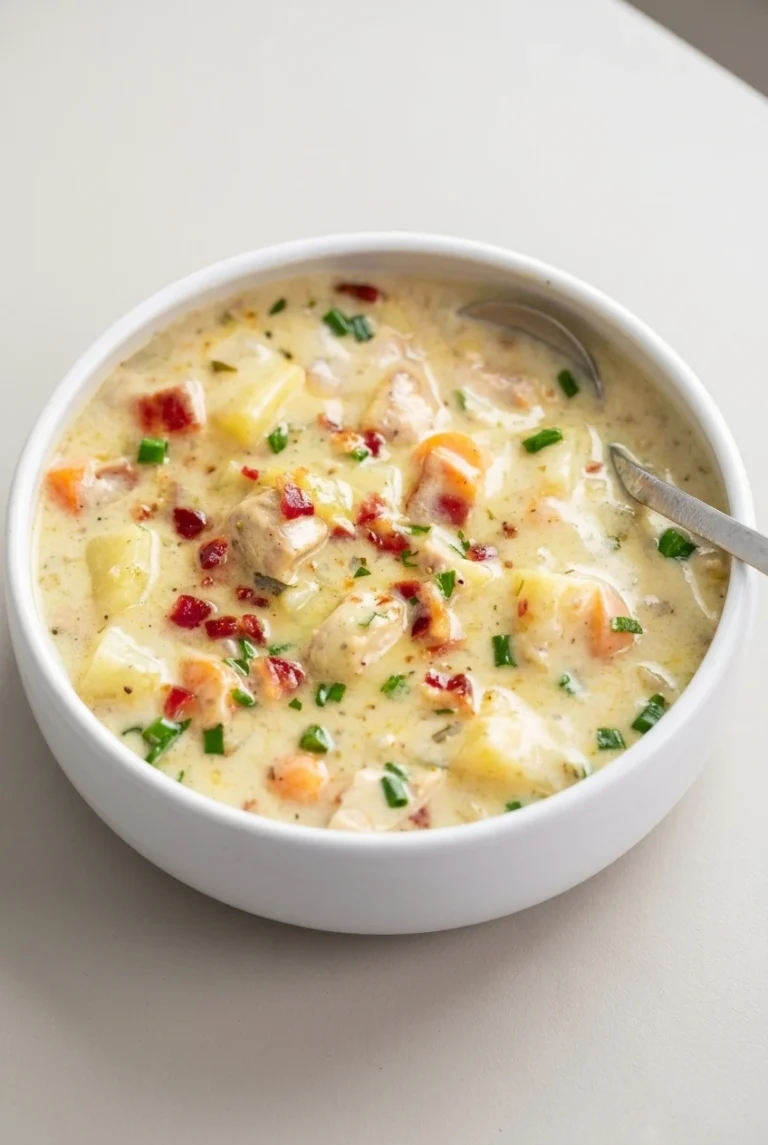
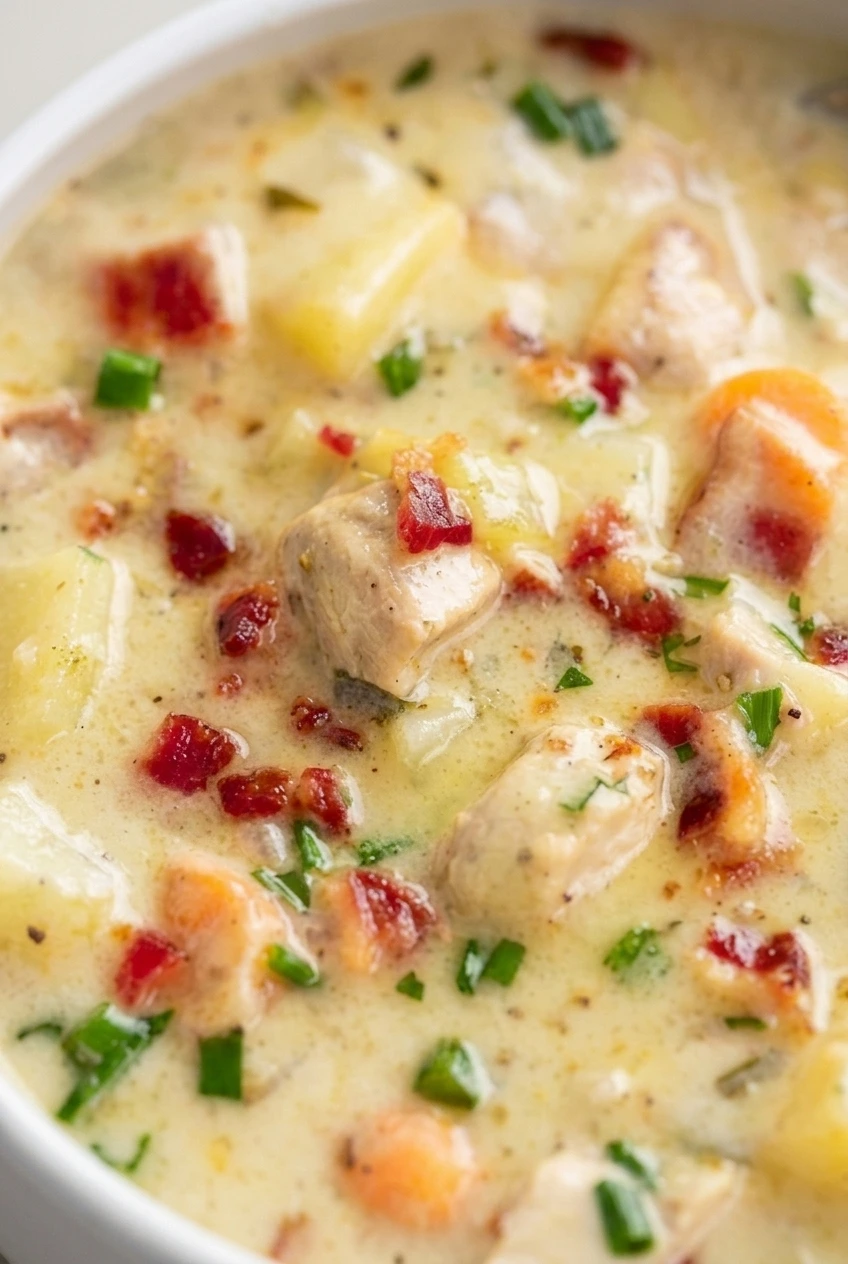
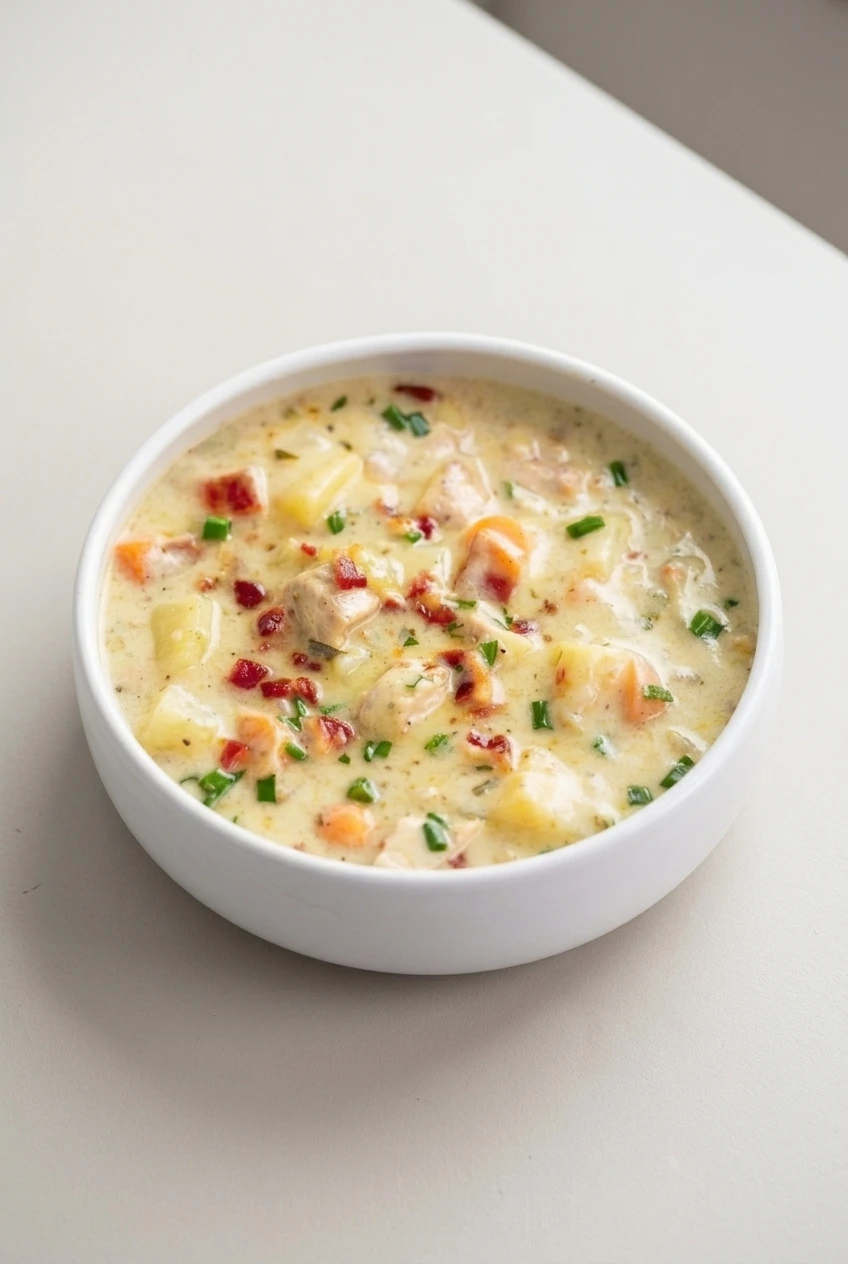
This one-pot chicken and potato soup has tender, distinct chunks of chicken and Yukon Gold potatoes in a pale, lightly thickened broth. Bacon flavors the pot and adds a few crisp bits to each bowl; half-and-half gives the soup its creamy finish without cheese.

Cut the potatoes into even 1/2-inch cubes and cook them just until a fork passes through easily. Add the half-and-half only after the potatoes and chicken are done, then warm the soup gently to keep the broth smooth.

Ingredients for Chicken and Potato Soup

Close detail of creamy chicken and potato soup showing tender chunks, carrots, bacon, and green herbs.

Makes 6 servings. Allow about 15 minutes to prepare the ingredients and 35–40 minutes to cook.

  • 4 slices thick-cut bacon, chopped (about 4 ounces/115g)
  • 1 pound boneless, skinless chicken breast, cut into 3/4-inch pieces (450g)
  • 1 medium yellow onion, diced (150g)
  • 2 medium carrots, diced (120g)
  • 2 ribs celery, diced (80g)
  • 2 cloves garlic, minced
  • 1/4 cup all-purpose flour (30g)
  • 5 cups low-sodium chicken broth
  • 1 1/2 pounds Yukon Gold potatoes, cut into 1/2-inch cubes (680g)
  • 1 teaspoon dried thyme
  • 1 cup half-and-half
  • 1/2 teaspoon kosher salt to start, plus more to taste
  • 1/4 teaspoon black pepper
  • 2 tablespoons finely chopped green onion tops or chives

Broth and bacon vary in saltiness, so taste the finished soup before adding extra salt.

How to Make Chicken and Potato Soup

A full white bowl of creamy chicken and potato soup centered on a pale surface.
  1. Cook the bacon: In a heavy 5- to 6-quart soup pot or Dutch oven, cook the bacon over medium heat for 5–7 minutes, stirring, until crisp at the edges. Transfer to a paper-towel-lined plate and set aside a little for garnish. Leave about 1 tablespoon of fat in the pot and carefully discard any excess.
  2. Brown the chicken: Season the chicken with a pinch of the salt and some of the pepper. Cook in the bacon fat over medium to medium-high heat for 3–5 minutes, in batches if needed, until lightly browned in spots. Transfer to a plate. It will finish cooking in the soup.
  3. Soften the vegetables: Add the onion, carrots, and celery to the pot. Cook over medium heat for 5–7 minutes, stirring occasionally, until beginning to soften. Add the garlic and thyme and stir briefly, until fragrant. Sprinkle in the flour and stir until it coats the vegetables; this helps it thicken the broth without forming lumps.
  4. Add the broth and potatoes: Gradually pour in the broth, stirring to loosen the flour mixture and smooth out any clumps. Add the potatoes and most of the bacon. Bring to a gentle simmer, about 3–5 minutes, then reduce the heat to medium-low and partially cover the pot.
  5. Simmer the potatoes and chicken: Simmer for about 8 minutes, then return the chicken and any juices to the pot. Continue at a gentle simmer for about 7–10 minutes, stirring occasionally. Start checking the potatoes after about 12 minutes of simmering in total: a fork should pass through easily, but the cubes should hold their shape. The thickest chicken pieces should be opaque throughout and reach 165°F (75°C).
  6. Finish the broth: Reduce the heat to low and stir in the half-and-half. Warm for 3–5 minutes, until the soup is steaming and the broth lightly coats a spoon. Do not let it boil. Taste and add the remaining salt or more pepper as needed.
  7. Rest and serve: Take the pot off the heat and let the soup stand for 3–5 minutes. Ladle into bowls and scatter the reserved bacon and green onion tops or chives over each serving.

How to Keep the Potatoes Intact

Yukon Gold potatoes hold their shape well in this chunky soup, but cut size and simmer strength affect how quickly they cook. Keep the cubes even, use a gentle simmer rather than a hard boil, and stop cooking when they are fork-tender. Extra simmering can cause the edges to break down into the broth.

Chicken Shortcuts and Ingredient Swaps

For a shortcut, use cooked or rotisserie chicken. Skip the browning step, simmer the potatoes until tender, then add the cooked chicken and warm it through before stirring in the half-and-half. Adding it near the end keeps it from spending the full potato-cooking time in the pot.

Boneless chicken thighs can replace the breast; check the thickest pieces for doneness, since timing depends on their size. Red potatoes can replace Yukon Gold, while russets may break down more and thicken the soup. Milk or light cream can replace half-and-half, though the richness will differ.

Serving and Storing Chicken and Potato Soup

Serve hot in wide bowls with the reserved bacon and green garnish. Crusty bread or a simple green salad works alongside it.

Cool leftovers promptly, refrigerate in an airtight container, and use within 3–4 days. Reheat over medium-low heat, stirring occasionally, until hot without letting the soup boil hard. For individual portions, microwave in short intervals and stir between them. The potatoes may soften as the soup sits.

Freezing is possible, but the potatoes may turn mushy or grainy and the dairy may lose some smoothness. If freezing, portion the cooled soup into airtight containers, thaw in the refrigerator, and reheat gently.

Related Soup Recipes

For another creamy chicken soup, try Creamy Parmesan Pasta Soup with Chicken. For a vegetable-centered bowl, see Creamy Roasted Cauliflower Soup. Apple Cheddar Sweet Potato Soup offers a different sweet-savory option.

Nutrition

Approximate nutrition per serving, based on 1 of 6 servings: 380 calories, 29g protein, 15g fat, and 31g carbohydrates. Approximate nutrition per 100g: 75 calories, 6g protein, 3g fat, and 6g carbohydrates. Values vary with the bacon, broth, and other ingredients used.

Chicken and Potato Soup

Chicken, Yukon Gold potatoes, and bacon simmer in a lightly thickened broth finished with half-and-half.
Course: Soup
Cuisine: American
Prep: 15 min
Cook: 40 min
Total: 55 min
Servings: 6 Calories: 380 kcal

Equipment

  • 5- to 6-quart soup pot or Dutch oven
  • Meat thermometer

Ingredients

  • 4 slices thick-cut bacon, chopped (about 4 ounces/115 g)
  • 1 pound boneless, skinless chicken breast, cut into 3/4-inch pieces (450 g)
  • 1 medium yellow onion, diced (150 g)
  • 2 medium carrots, diced (120 g)
  • 2 ribs celery, diced (80 g)
  • 2 cloves garlic, minced
  • 1/4 cup all-purpose flour (30 g)
  • 5 cups low-sodium chicken broth
  • 1 1/2 pounds Yukon Gold potatoes, cut into 1/2-inch cubes (680 g)
  • 1 teaspoon dried thyme
  • 1 cup half-and-half
  • 1/2 teaspoon kosher salt, plus more to taste
  • 1/4 teaspoon black pepper
  • 2 tablespoons finely chopped green onion tops or chives

Instructions

  1. Cook the bacon in a heavy 5- to 6-quart soup pot or Dutch oven over medium heat for 5–7 minutes, until crisp at the edges. Transfer to a paper-towel-lined plate and reserve a little for garnish. Leave about 1 tablespoon of fat in the pot and carefully discard the excess.
  2. Season the chicken with a pinch of the salt and some of the pepper. Cook in the bacon fat over medium to medium-high heat for 3–5 minutes, working in batches if needed, until lightly browned in spots. Transfer to a plate; the chicken will finish cooking in the soup.
  3. Add the onion, carrots, and celery to the pot. Cook over medium heat for 5–7 minutes, stirring occasionally, until beginning to soften. Add the garlic and thyme and stir briefly until fragrant. Sprinkle in the flour and stir to coat the vegetables.
  4. Gradually pour in the broth, stirring to loosen the flour mixture and smooth out any clumps. Add the potatoes and most of the bacon. Bring to a gentle simmer for about 3–5 minutes, then reduce the heat to medium-low and partially cover the pot.
  5. Simmer for about 8 minutes, then return the chicken and any juices to the pot. Continue simmering gently for about 7–10 minutes, stirring occasionally. Check that the potatoes are fork-tender but still hold their shape and that the thickest chicken pieces are opaque throughout and reach 165°F (75°C).
  6. Reduce the heat to low and stir in the half-and-half. Warm for 3–5 minutes, until steaming and the broth lightly coats a spoon. Do not let the soup boil. Taste and add more salt or pepper as needed.
  7. Remove the pot from the heat and let the soup stand for 3–5 minutes. Serve with the reserved bacon and green onion tops or chives.

Tips

  • Cut the potatoes into even 1/2-inch cubes so they cook at the same rate.
  • Keep the soup at a gentle simmer to help the potatoes hold their shape.
  • Add the half-and-half after the potatoes and chicken are cooked, and warm gently without boiling.
  • Taste before adding extra salt because the bacon and broth can vary in saltiness.
  • Check the thickest chicken pieces with a thermometer; they should reach 165°F (75°C).

Variations

  • Rotisserie Chicken Soup: Skip browning the chicken and add cooked or rotisserie chicken near the end, warming it through before adding the half-and-half.
  • Chicken Thigh Soup: Replace the chicken breast with boneless chicken thighs and check the thickest pieces for doneness.
  • Red Potato Soup: Replace the Yukon Gold potatoes with red potatoes; russets can also be used but may break down more and thicken the soup.
  • Milk or Light Cream Finish: Replace the half-and-half with milk or light cream; the richness will differ.

Notes

Refrigerate leftovers promptly in an airtight container and use within 3–4 days. Reheat gently without letting the soup boil hard. Freezing is possible, but the potatoes may become mushy or grainy and the dairy may lose smoothness.

Nutrition

Calories: 380 kcal | Protein: 29 g | Fat: 15 g | Carbohydrates: 31 g | Per 100 G Calories: 75 kcal | Per 100 G Protein: 6 g | Per 100 G Fat: 3 g | Per 100 G Carbohydrates: 6 g

Classic Old-Fashioned Potato Soup

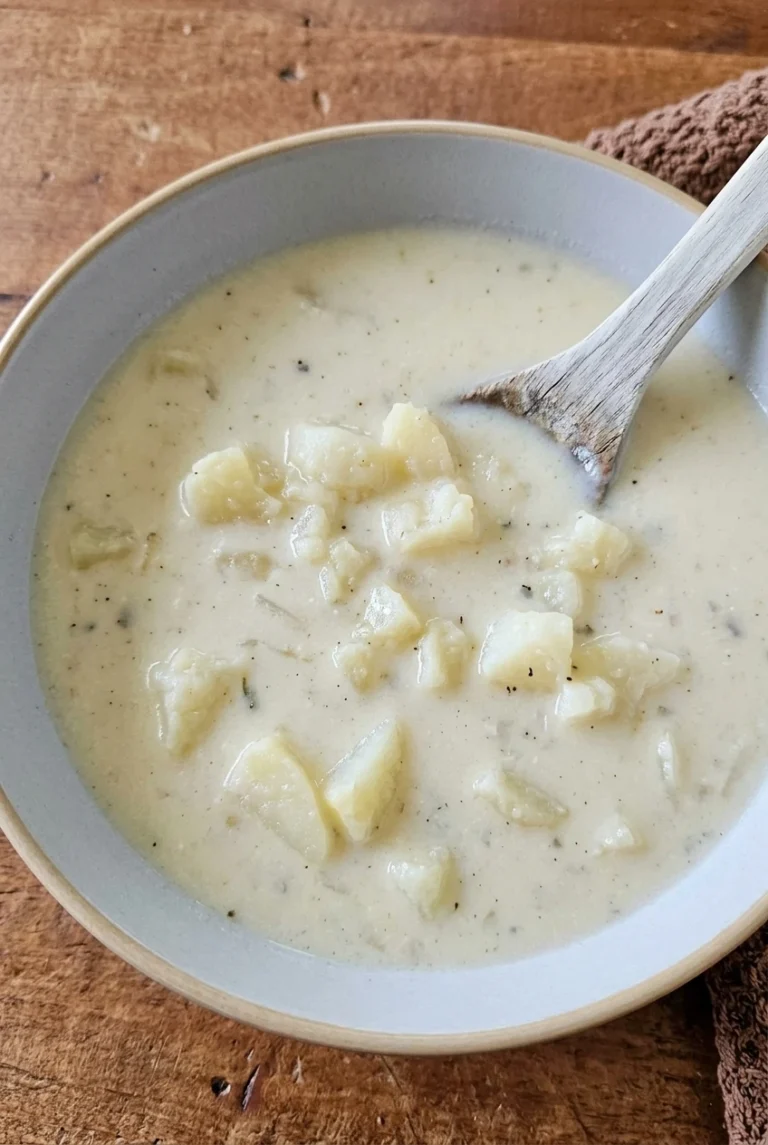
Classic old-fashioned potato soup has tender chunks in a pale, lightly creamy milk broth. This stovetop version uses potatoes, milk, butter, salt, and pepper—no flour or blender. Mashing just a small portion of the potatoes gives the broth body while leaving plenty of pieces intact. Once the milk goes in, low heat keeps it steaming without bringing it to a full boil.

Makes 4 servings. Prep time: 10 minutes; cook time: about 20 minutes; total time: about 30 minutes.

Ingredients

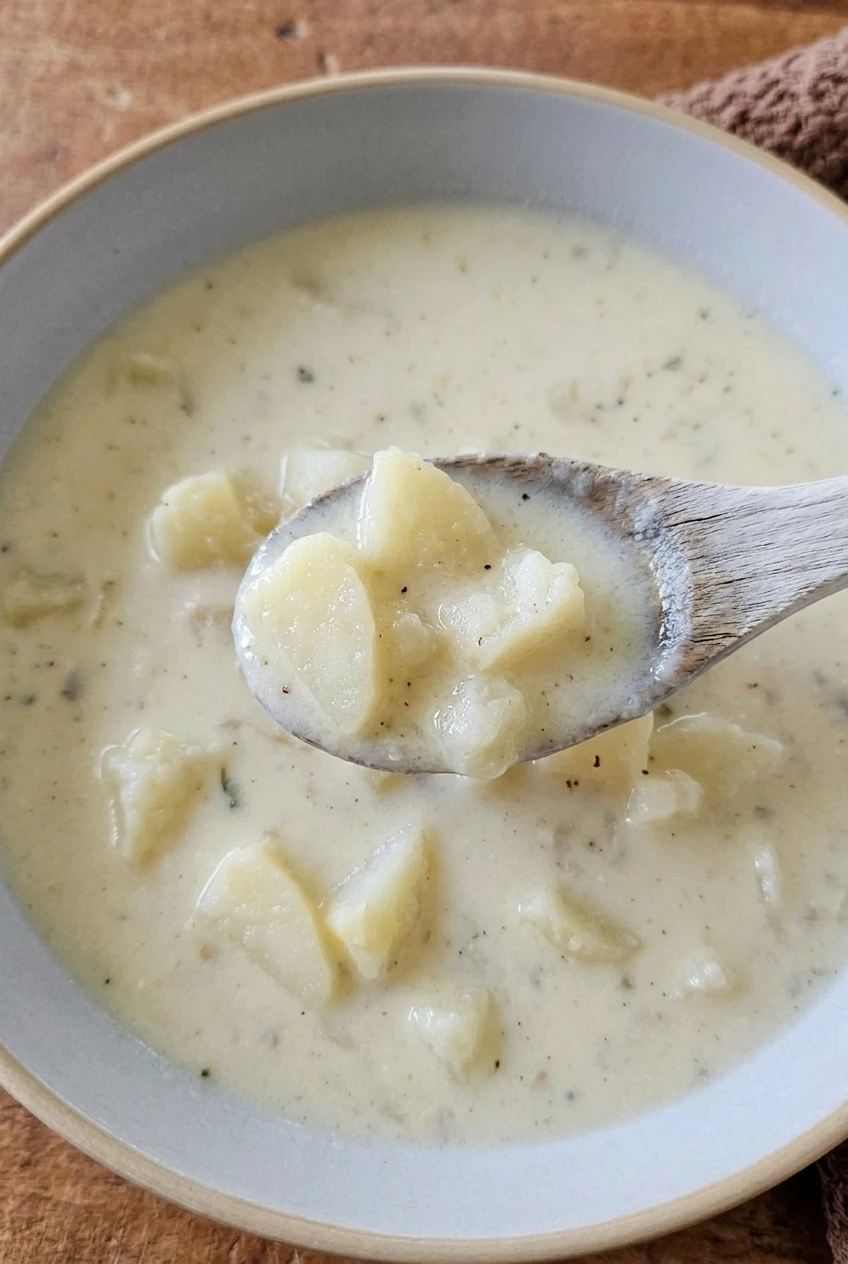
Close view of tender potato chunks and black pepper flecks in the creamy soup broth.
  • 2 pounds Yukon Gold potatoes, peeled and cut into roughly 1/2-inch cubes (900g)
  • 4 cups water, plus more if needed
  • 1 teaspoon kosher salt, or to taste
  • 3 cups whole milk (730g)
  • 3 tablespoons unsalted butter (40g)
  • 1/4 teaspoon ground black pepper, or to taste

How to Make Old-Fashioned Potato Soup

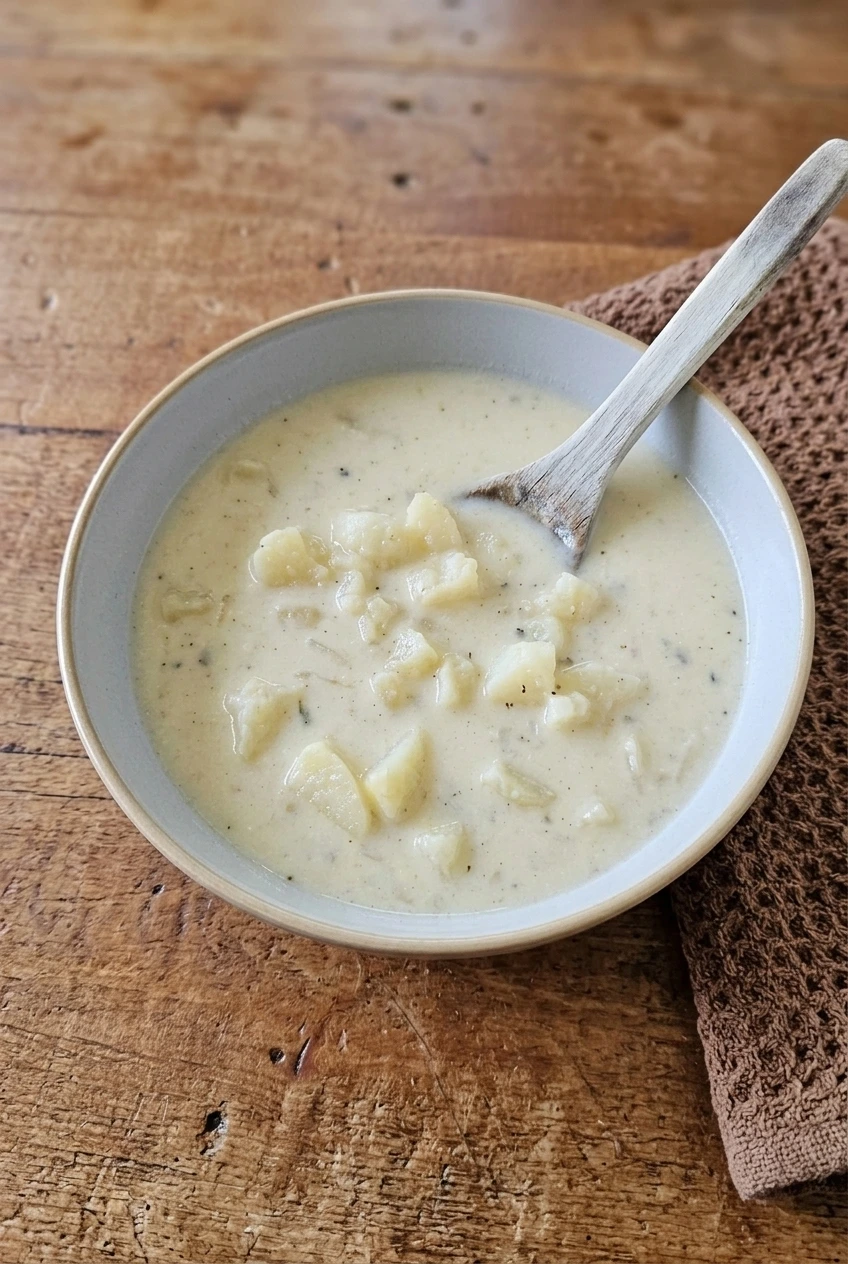
A full bowl of chunky old-fashioned potato soup on a warm brown textured surface.
  1. Cut the potatoes: Peel and cut them into roughly 1/2-inch cubes. Keep the pieces similar in size so they finish cooking together.
  2. Simmer until tender: Put the potatoes, water, and salt in a 4- to 5-quart soup pot. Bring to a boil over medium-high heat, then reduce to a gentle simmer. Partially cover and stir occasionally. Start checking after 10 minutes; the largest pieces should be easily pierced with a fork but still hold their shape. Half-inch cubes often take 10 to 15 minutes.
  3. Reserve the cooking water: Turn off the heat and scoop out about 1 cup of potato cooking water. Drain the potatoes and return them to the pot. Keep the reserved water for adjusting the soup later; do not add it all back.
  4. Warm the milk and butter: Add the milk and butter. Cook uncovered over low heat for about 4 to 6 minutes, stirring gently along the bottom of the pot, until the butter melts and the soup steams. Small bubbles at the edges are fine, but do not let the milk come to a full boil.
  5. Mash and season: Gently mash about 1 cup of potatoes against the side of the pot, leaving the rest in chunks. Stir in the pepper and taste for salt. If the broth is too thick, add reserved cooking water a few tablespoons at a time.
  6. Finish: Warm over low heat for another 1 to 2 minutes, stirring gently, until hot throughout. Ladle into bowls with the potato chunks visible.

How to Keep the Broth Creamy and Chunky

Partial mashing releases enough potato starch to give the milk broth light body. Stop once it looks creamy but still has plenty of distinct pieces. Vigorous mashing or blending, especially with starchier potatoes, can make the soup gluey. If it thickens as it stands, stir in a little reserved cooking water or milk.

Choosing Potatoes

Yukon Golds give this soup tender chunks that hold their shape. Russets also work, but they release more starch and make a thicker soup with softer pieces; mash them sparingly. With either variety, check the largest pieces with a fork rather than relying only on the clock.

Potato Soup Variations

  • More savory: For an onion version, sauté 1/2 cup finely diced yellow onion in the butter until soft. Transfer the onion and butter to a bowl, cook and drain the potatoes as directed, then return them when adding the milk. Alternatively, replace up to 2 cups of the potato cooking water with vegetable broth and adjust the salt after cooking.
  • Dairy-free: Substitute unsweetened non-dairy milk and plant-based butter. The flavor and texture will differ; warm the milk gently as directed.

Serving

Serve hot with a light scattering of black pepper. Bread or rolls can go on the side. For a loaded variation, offer bacon, cheddar, sour cream, or chives separately rather than adding them to the pot.

Storing and Reheating

Cool leftovers promptly and refrigerate in an airtight container for up to 3 days. Reheat over low heat on the stovetop, stirring occasionally, or microwave until hot. Add a splash of milk or water if the soup has thickened, and avoid boiling it.

Freezing is not recommended if preserving the creamy texture matters. Dairy-based potato soup may turn grainy or separate after thawing.

More Soup Recipes

For another creamy soup, try Creamy Roasted Cauliflower Soup. Apple Cheddar Sweet Potato Soup offers a sweet-savory change, while High-Protein White Bean Soup with Mushrooms is a heartier bean-based option.

Nutrition

Approximate nutrition per serving, based on 1/4 of the recipe: 365 calories, 10g protein, 15g fat, and 47g carbohydrates. Approximate nutrition per 100g: 85 calories, 2g protein, 4g fat, and 11g carbohydrates. Values may vary with ingredient brands and the amount of cooking water added.

Classic Old-Fashioned Potato Soup

Tender Yukon Gold potato chunks simmer in a lightly creamy milk broth thickened by mashing a small portion of the potatoes.
Course: Soup
Cuisine: American
Prep: 10 min
Cook: 20 min
Total: 30 min
Servings: 4 Calories: 365 kcal

Equipment

  • 4- to 5-quart soup pot
  • Measuring cup
  • Ladle

Ingredients

  • 2 pounds Yukon Gold potatoes, peeled and cut into roughly 1/2-inch cubes (900g)
  • 4 cups water, plus more if needed
  • 1 teaspoon kosher salt, or to taste
  • 3 cups whole milk (730g)
  • 3 tablespoons unsalted butter (40g)
  • 1/4 teaspoon ground black pepper, or to taste

Instructions

  1. Peel the potatoes and cut them into roughly 1/2-inch cubes.
  2. Add the potatoes, water, and salt to a 4- to 5-quart soup pot. Bring to a boil over medium-high heat, then reduce to a gentle simmer.
  3. Partially cover and simmer, stirring occasionally. Start checking after 10 minutes; cook until the largest pieces are easily pierced with a fork but still hold their shape, usually 10 to 15 minutes for 1/2-inch cubes.
  4. Turn off the heat and scoop out about 1 cup of the cooking water. Drain the potatoes and return them to the pot. Set the reserved water aside.
  5. Add the milk and butter. Cook uncovered over low heat for about 4 to 6 minutes, stirring gently along the bottom, until the butter melts and the soup steams. Do not let the milk come to a full boil.
  6. Gently mash about 1 cup of potatoes against the side of the pot, leaving the rest in chunks. Stir in the pepper and taste for salt.
  7. If the broth is too thick, add reserved cooking water a few tablespoons at a time. Warm over low heat for another 1 to 2 minutes, stirring gently, until hot throughout.

Tips

  • Cut the potatoes into similar-sized pieces so they cook evenly.
  • Check the largest potato pieces with a fork rather than relying only on the cooking time.
  • Mash only about 1 cup of potatoes to thicken the broth while keeping plenty of chunks.
  • Avoid vigorous mashing or blending, which can make the soup gluey.
  • Add reserved cooking water a few tablespoons at a time to adjust the thickness.

Variations

  • Onion Potato Soup: Sauté 1/2 cup finely diced yellow onion in the butter until soft, then add it with the butter when adding the milk.
  • Vegetable Broth Version: Replace up to 2 cups of the potato cooking water with vegetable broth, then adjust the salt after cooking.
  • Dairy-Free Potato Soup: Use unsweetened non-dairy milk and plant-based butter, warming the milk gently as directed.

Notes

Refrigerate leftovers in an airtight container for up to 3 days. Reheat gently over low heat or in the microwave; add a splash of milk or water if thickened and avoid boiling. Freezing is not recommended because the soup may become grainy or separate.

Nutrition

Calories: 365 kcal | Protein: 10 g | Fat: 15 g | Carbohydrates: 47 g | Per 100g Calories: 85 kcal | Per 100g Protein: 2 g | Per 100g Fat: 4 g | Per 100g Carbohydrates: 11 g

Honey Mustard Chicken Salad

Honey Mustard Chicken Salad is a chilled, scoopable mix of bite-size chicken in a creamy honey-Dijon dressing. Small cubes of red-skinned apple and celery add crispness, while chopped pecans add crunch. The dressing uses mostly mayonnaise with a little Greek yogurt for tang.

Start with fully cooked, cooled rotisserie or leftover chicken, and there’s no cooking required. Whisk and taste the dressing before folding it into the salad so you can adjust the sweetness and mustard flavor without breaking up the chicken.

Prep time: 20 minutes | Cook time: 0 minutes | Serves: 4 | Optional chilling: 20 to 30 minutes

Ingredients

Close view of creamy honey mustard chicken salad showing chicken, red-skinned apple, celery, and pecans
  • 3 cups cooked, cooled chicken, cut into bite-size pieces (420g)
  • 1/3 cup mayonnaise (75g)
  • 2 tablespoons plain Greek yogurt (30g)
  • 1 1/2 tablespoons Dijon mustard (25g)
  • 1 tablespoon honey (20g)
  • 1 teaspoon fresh lemon juice
  • 1/4 teaspoon kosher salt, or to taste
  • 1/4 teaspoon black pepper, plus more for serving
  • 1/2 cup finely diced celery (50g)
  • 1 medium red-skinned apple, cored and diced small (150g)
  • 1/3 cup chopped pecans (35g)
  • Celery sticks and round crackers, for serving

How to Make Honey Mustard Chicken Salad

A full platter of honey mustard chicken salad with crackers and celery sticks on a light stone surface
  1. Whisk the dressing: In a small bowl, whisk the mayonnaise, Greek yogurt, Dijon, honey, lemon juice, salt, and pepper until smooth. Taste and adjust the honey, Dijon, or lemon juice a little at a time.
  2. Prepare the mix-ins: Cut the cooled chicken into distinct bite-size pieces, not a fine mince. Dice the celery and apple small so they distribute evenly, and chop the pecans.
  3. Fold together: Combine the chicken, celery, apple, and most of the pecans in a large bowl. Fold in the dressing gradually, using enough to coat the pieces evenly without leaving dressing pooled at the bottom. Reserve a few pecans for serving.
  4. Chill or serve: Cover and refrigerate for 20 to 30 minutes if desired, or serve right away. Stir before serving and taste for seasoning.
  5. Finish: Spoon the salad onto a shallow platter. Scatter the reserved pecans and a little black pepper over the top. Serve cold with celery sticks and round crackers alongside.

If cooking chicken separately, use a method suited to the cut and cook it to 165°F (75°C) in the thickest part. Let it cool before adding the creamy dressing.

How to Balance the Dressing

The dressing should taste creamy and tangy-sweet, with mustard present but not overpowering. If it tastes too sharp or mustard-forward, add a little honey. For more mustard flavor, add Dijon; for more tang, add lemon juice. Make these adjustments before the dressing goes into the chicken.

Ingredient Swaps

The apple, celery, and pecans give this version its color and crunch, but mix-ins can vary. For a richer, dairy-free dressing, replace the Greek yogurt with an equal amount of mayonnaise. For a tangier, no-mayo version, use plain Greek yogurt in place of the mayonnaise and adjust the honey and lemon to taste.

Yellow or spicy brown mustard can replace Dijon, though the flavor will change. Omit the pecans if serving someone who needs a nut-free salad.

Ways to Serve It

Serve the salad on a platter with crackers and celery sticks for scooping, or use it as a filling for a sandwich, wrap, croissant, or pita. It can also be spooned over greens; the salad itself remains a creamy chicken mixture.

Make-Ahead and Storage

Keep the salad covered in an airtight container in the refrigerator and use it within 3 days. It can be made the night before; stir it before serving. For the freshest crunch, keep any extra pecans separate until serving.

If liquid collects during storage, drain the excess or stir it back in, depending on the texture you prefer. If the salad then seems dry, fold in a small spoonful of mayonnaise or yogurt. Serve cold rather than reheating. Freezing is not recommended for the best texture because the creamy mixture may change after thawing.

Nutrition

Approximate nutrition per serving, based on 1/4 of the recipe (about 200g): 405 calories, 34g protein, 24g fat, and 11g carbohydrates. Per 100g: about 200 calories, 17g protein, 12g fat, and 6g carbohydrates. Values vary with the chicken and brands of mayonnaise, yogurt, and mustard used.

Honey Mustard Chicken Salad

A chilled chicken salad with creamy honey-Dijon dressing, crisp apple and celery, and crunchy pecans.
Course: Salad
Cuisine: American
Prep: 20 min
Total: 50 min
Servings: 4 Calories: 405 kcal

Equipment

  • Small bowl
  • Whisk
  • Large bowl
  • Knife
  • Cutting board

Ingredients

For the Salad

  • 3 cups cooked, cooled chicken, cut into bite-size pieces (420g)
  • 1/2 cup finely diced celery (50g)
  • 1 medium red-skinned apple, cored and diced small (150g)
  • 1/3 cup chopped pecans (35g)

For the Dressing

  • 1/3 cup mayonnaise (75g)
  • 2 tablespoons plain Greek yogurt (30g)
  • 1 1/2 tablespoons Dijon mustard (25g)
  • 1 tablespoon honey (20g)
  • 1 teaspoon fresh lemon juice
  • 1/4 teaspoon kosher salt, or to taste
  • 1/4 teaspoon black pepper, plus more for serving

For Serving

  • Celery sticks and round crackers

Instructions

  1. Whisk the mayonnaise, Greek yogurt, Dijon, honey, lemon juice, salt, and pepper in a small bowl until smooth.
  2. Taste the dressing and adjust the honey, Dijon, or lemon juice a little at a time.
  3. Cut the cooled chicken into bite-size pieces. Dice the celery and apple, and chop the pecans.
  4. Combine the chicken, celery, apple, and most of the pecans in a large bowl.
  5. Fold in the dressing gradually, using enough to coat the ingredients evenly. Reserve a few pecans for serving.
  6. Cover and refrigerate for 20 to 30 minutes if desired, or serve right away. Stir and taste for seasoning before serving.
  7. Spoon the salad onto a shallow platter. Top with the reserved pecans and a little black pepper, and serve cold with celery sticks and crackers.

Tips

  • Use fully cooked, cooled chicken to keep the dressing creamy.
  • Cut the chicken into bite-size pieces rather than mincing it.
  • Dice the apple and celery small so they distribute evenly.
  • Taste and adjust the dressing before adding it to the chicken.
  • Keep extra pecans separate until serving for the freshest crunch.

Variations

  • Dairy-Free Dressing: Replace the Greek yogurt with an equal amount of mayonnaise.
  • No-Mayo Dressing: Replace the mayonnaise with plain Greek yogurt and adjust the honey and lemon to taste.
  • Alternate Mustard: Replace the Dijon with yellow or spicy brown mustard; the flavor will change.
  • Nut-Free Salad: Omit the pecans.

Notes

Store covered in an airtight container in the refrigerator for up to 3 days. Serve cold; freezing is not recommended. If cooking chicken separately, cook it to 165°F (75°C) in the thickest part and cool before adding the dressing.

Nutrition

Calories: 405 kcal | Protein: 34 g | Fat: 24 g | Carbohydrates: 11 g