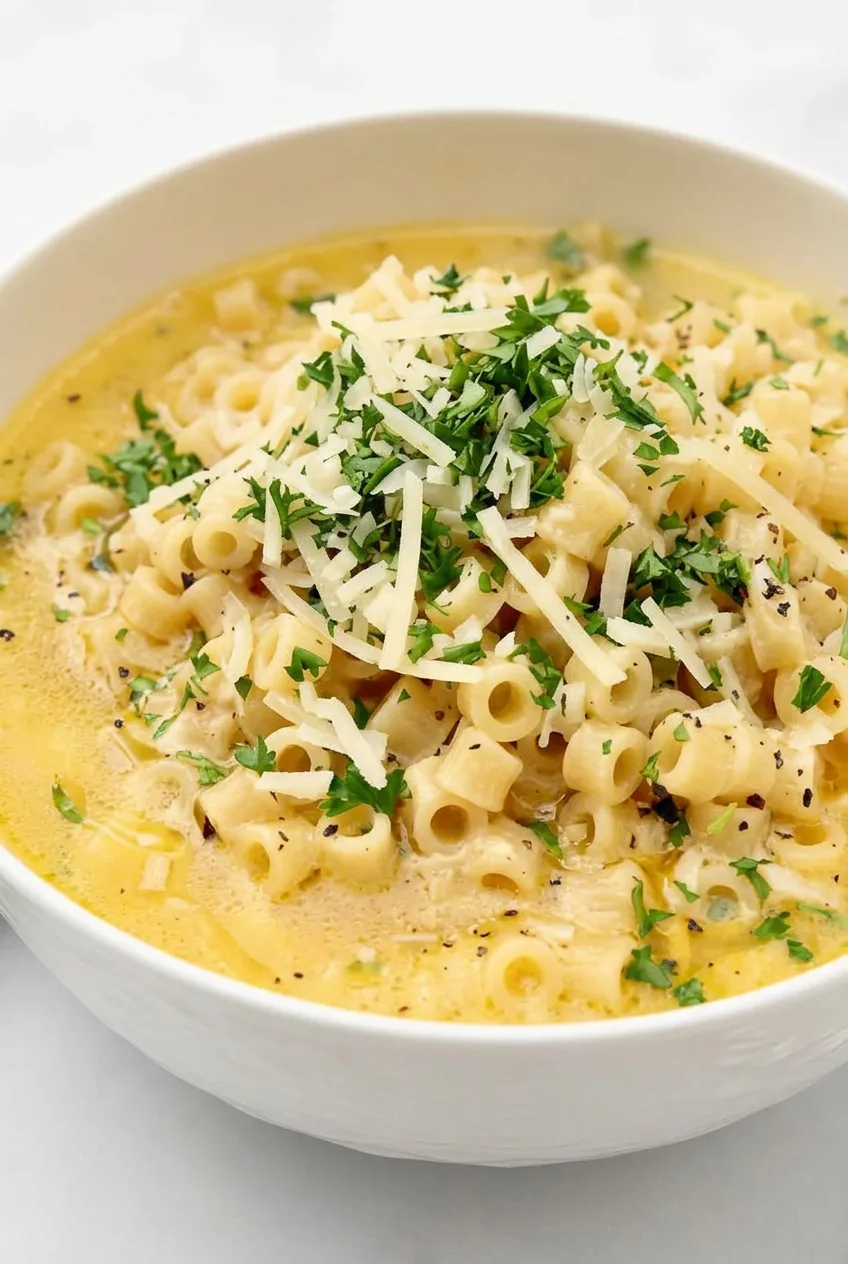
Parmesan Pasta Soup
Parmesan pasta soup should be creamy and pale golden, but loose enough for broth to pool around the ditalini. This version pairs the small pasta with shredded chicken and finishes each bowl with Parmesan, parsley, and black pepper.
Cook the ditalini separately and add it when serving. It stays distinct instead of soaking up the broth, and leftovers are easier to reheat without turning the soup thick.
Ingredients for Parmesan Pasta Soup
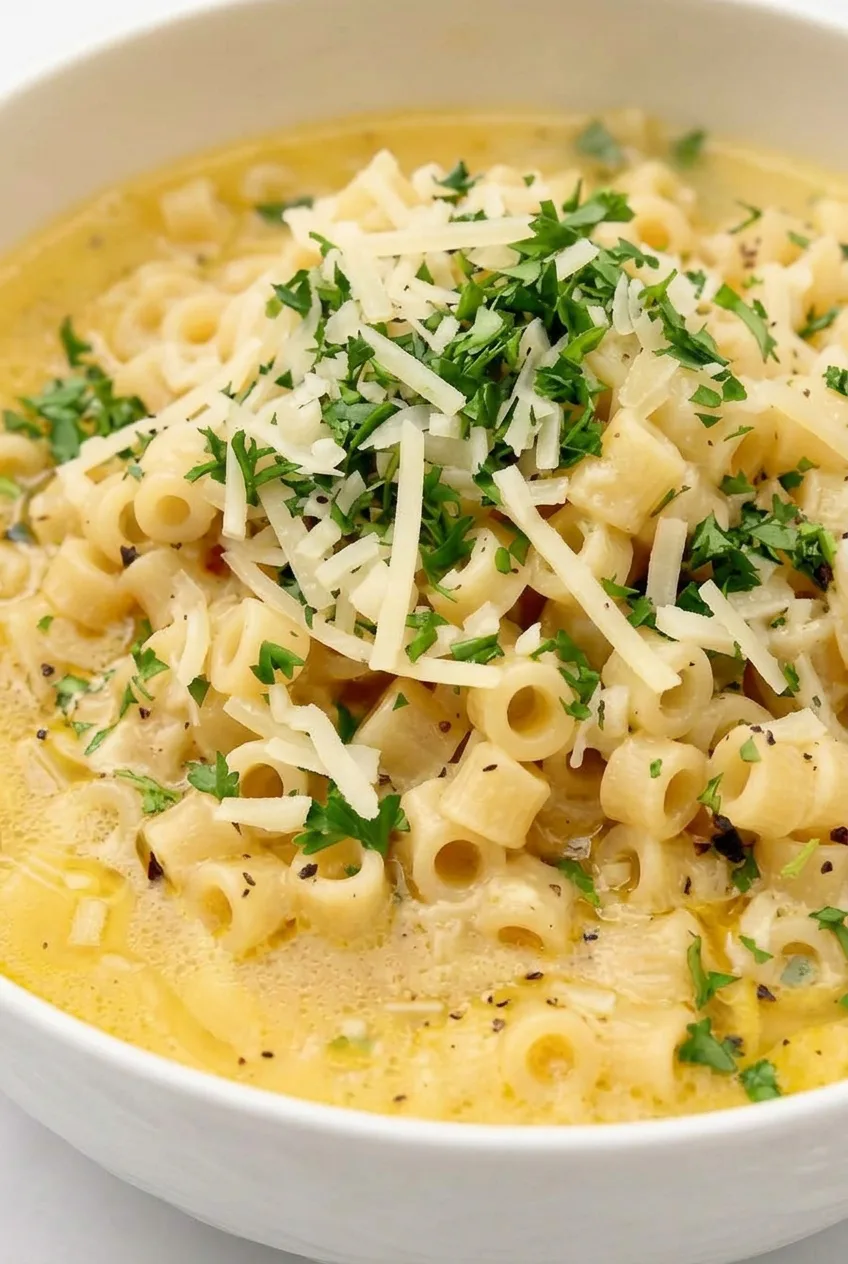
Makes 6 main-course servings. Prep time: 15 minutes. Cook time: about 20 minutes. Total time: about 35 minutes.
- 8 ounces ditalini pasta (225g)
- 1 tablespoon olive oil
- 1 medium yellow onion, finely diced (about 1 cup)
- 1 medium carrot, finely diced (about 1/2 cup)
- 1 celery rib, finely diced (about 1/2 cup)
- 3 garlic cloves, minced
- 1 teaspoon Italian seasoning
- 6 cups low-sodium chicken broth, plus up to 1 additional cup for thinning
- 2 cups cooked shredded chicken (about 280g)
- 3/4 cup heavy cream
- 1 cup freshly grated Parmesan (about 90g), divided
- 1/4 cup finely chopped fresh flat-leaf parsley
- Kosher salt and freshly ground black pepper, to taste
Finely grate the Parmesan that will go into the broth so it melts readily. Reserve some shreds for topping the bowls. Low-sodium broth leaves room to adjust the salt after the cheese is added.
How to Make Parmesan Pasta Soup
- Cook the ditalini: Bring a medium saucepan of salted water to a boil. Start checking the pasta 2 minutes before the package’s al dente time; drain it when tender around the edges but still faintly firm in the center, about 1 to 2 minutes shy of al dente. Set aside rather than adding it to the soup pot.
- Soften the vegetables: Meanwhile, heat the olive oil in a 5- to 6-quart Dutch oven or heavy soup pot over medium heat. Add the onion, carrot, celery, and a pinch of salt. Cook uncovered, stirring occasionally, for 6 to 8 minutes. Check after about 5 minutes: the vegetables should be glossy and softening, not browning. Stir in the garlic and Italian seasoning for the final 30 seconds.
- Simmer the broth: Pour in 6 cups of chicken broth. Bring just to a boil, then reduce to a gentle medium-low simmer. Cook mostly uncovered for 10 to 12 minutes, until the carrot and celery are tender. Look for small, quiet bubbles; partially cover the pot if the broth is reducing too quickly.
- Warm the chicken: Stir in the shredded chicken and simmer gently for 3 to 4 minutes, until hot throughout.
- Finish with cream and Parmesan: Reduce the heat to low. Stir in the cream, then gradually stir in about 3/4 cup of the Parmesan until melted and the broth is smooth and lightly opaque, about 2 to 3 minutes. Do not let it boil hard. Taste, add black pepper, and season with more salt only if needed. Let stand off the heat for 3 to 5 minutes.
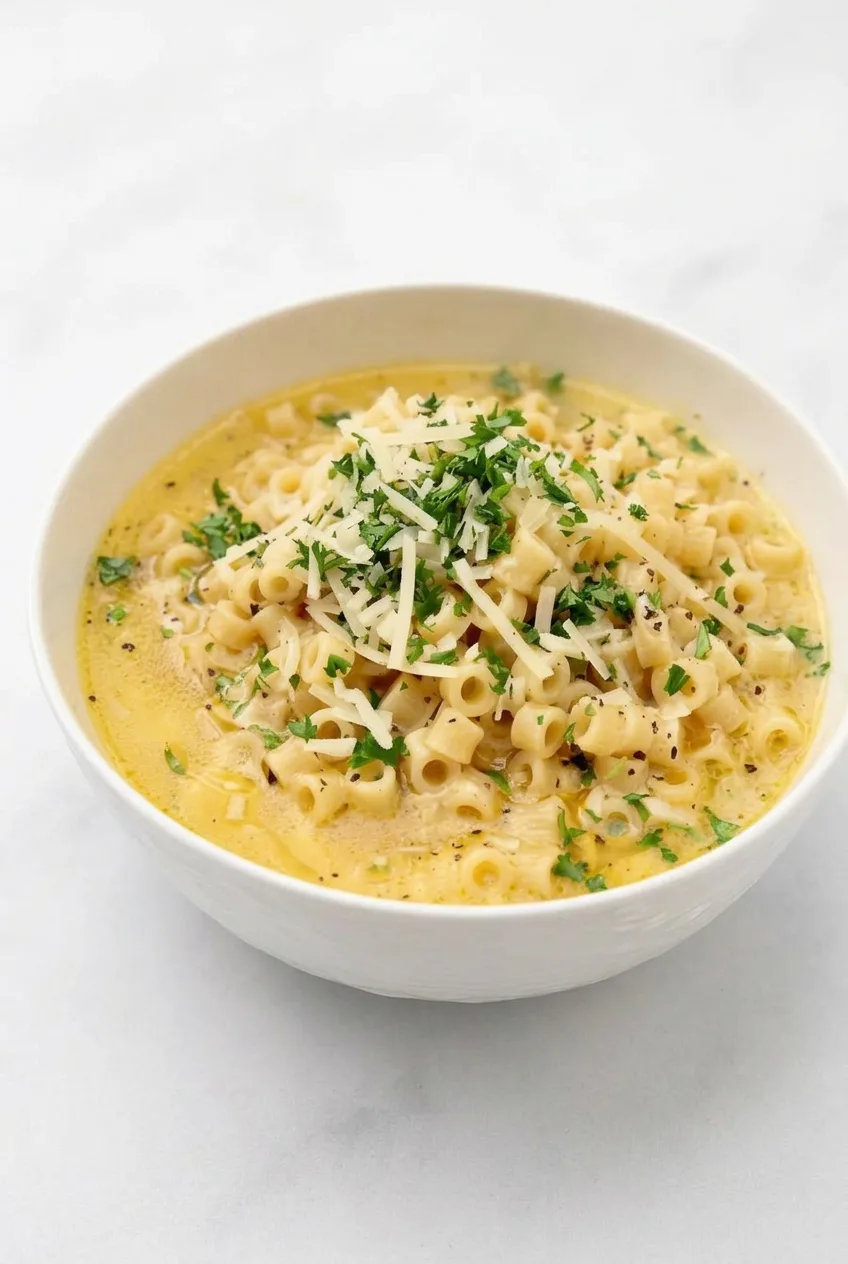
- Assemble the bowls: Divide the warm ditalini among six bowls. Ladle the chicken and broth around and over the pasta. If needed, add a little warm broth so liquid pools around it. Top with the remaining Parmesan, parsley, and more black pepper. Serve hot.
Why Cook the Ditalini Separately?
Ditalini continues absorbing liquid after cooking. Leaving it in the soup pot can make the pasta swollen and the broth too thick, particularly in leftovers. Cooking it just shy of al dente gives it room to soften in the hot soup.
If serving the entire pot immediately, you can stir in the cooked pasta just before ladling. Otherwise, add it to individual bowls and store any remaining pasta separately.
How to Keep the Parmesan Broth Smooth and Brothy
Add the cream and finely grated Parmesan only after the vegetables have simmered, with the heat on low. Stir in the cheese gradually and avoid a hard boil afterward; high heat can leave the broth looking greasy or grainy. Taste for salt once the Parmesan has melted, since both cheese and broth vary in saltiness.
The soup should flow easily from a ladle rather than coat the pasta like a sauce. If it thickens, add warm broth a few tablespoons at a time until liquid is visible around the pasta again.
Substitutions and Serving
Small shells, elbows, or mini bow ties can replace ditalini; cook them separately to the same slightly firm stage. For a meatless version, use vegetable broth and omit the chicken. Half-and-half can replace the heavy cream, though the broth will be less rich and opaque.
Serve with crusty bread or focaccia. For a brighter chicken-and-pasta soup, try this Lemon Chicken Orzo Soup with Spinach.
How to Store and Reheat
Cool the soup and pasta, then refrigerate them in separate airtight containers. Keep extra Parmesan and parsley separate for topping reheated bowls. Follow standard food-safety guidance for storing cooked chicken soup.
Reheat the soup gently on the stovetop over medium-low heat without boiling it hard. Add broth if it has thickened, then warm only the pasta you need in the hot soup just before serving. Finish each bowl with Parmesan, parsley, and pepper.
For make-ahead prep, prepare the soup and pasta separately and assemble bowls when ready to eat. If freezing, leave out the pasta and cook fresh ditalini after the soup base has thawed and been gently reheated. Dairy-based soup may change texture after freezing; stir or whisk gently and add broth as needed.
Nutrition
Approximate per serving, based on 6 servings: 420 calories, 28g protein, 20g fat, and 33g carbohydrates. Approximate per 100g of prepared soup with pasta: 95 calories, 6g protein, 4g fat, and 7g carbohydrates. Values vary with the broth, chicken, Parmesan, and amount of extra broth used.
Equipment
- Medium saucepan
- Colander
- 5- to 6-quart Dutch oven or heavy soup pot
- Ladle
Ingredients
For the Pasta
- 8 ounces ditalini pasta (225 g)
For the Soup
- 1 tablespoon olive oil
- 1 medium yellow onion, finely diced (about 1 cup)
- 1 medium carrot, finely diced (about 1/2 cup)
- 1 celery rib, finely diced (about 1/2 cup)
- 3 garlic cloves, minced
- 1 teaspoon Italian seasoning
- 6 cups low-sodium chicken broth, plus up to 1 additional cup for thinning
- 2 cups cooked shredded chicken (about 280 g)
- 3/4 cup heavy cream
- 1 cup freshly grated Parmesan (about 90 g), divided
- 1/4 cup finely chopped fresh flat-leaf parsley
- Kosher salt and freshly ground black pepper, to taste
Instructions
- Bring a medium saucepan of salted water to a boil. Cook the ditalini until tender around the edges but still faintly firm in the center, about 1 to 2 minutes shy of al dente. Drain and set aside.
- Heat the olive oil in a 5- to 6-quart Dutch oven or heavy soup pot over medium heat. Add the onion, carrot, celery, and a pinch of salt.
- Cook the vegetables uncovered, stirring occasionally, until glossy and softened but not browned, 6 to 8 minutes. Stir in the garlic and Italian seasoning for the final 30 seconds.
- Pour in 6 cups of chicken broth. Bring to a boil, then reduce the heat to a gentle medium-low simmer. Cook mostly uncovered until the carrot and celery are tender, 10 to 12 minutes.
- Stir in the shredded chicken and simmer gently until heated through, 3 to 4 minutes.
- Reduce the heat to low. Stir in the cream, then gradually add about 3/4 cup of the Parmesan, stirring until melted and the broth is smooth, 2 to 3 minutes. Do not boil hard.
- Season with black pepper and add salt if needed. Remove from the heat and let stand for 3 to 5 minutes.
- Divide the warm ditalini among 6 bowls. Ladle the chicken and broth over the pasta, adding warm broth as needed for a looser consistency. Top with the remaining Parmesan, parsley, and more black pepper.
Tips
- Cook the ditalini separately so it does not absorb too much broth or become swollen in leftovers.
- Finely grate the Parmesan for smoother melting in the broth.
- Keep the heat low after adding cream and cheese to prevent a grainy or greasy broth.
- Add warm broth a few tablespoons at a time if the soup thickens.
- Taste for salt only after the Parmesan has melted, since broth and cheese vary in saltiness.
Variations
- Meatless Parmesan Pasta Soup: Use vegetable broth and omit the shredded chicken.
- Half-and-Half Version: Replace the heavy cream with half-and-half for a lighter, less rich broth.
- Alternate Pasta: Use small shells, elbows, or mini bow ties instead of ditalini, cooking them separately until slightly firm.
