

Gingerbread Cheesecake
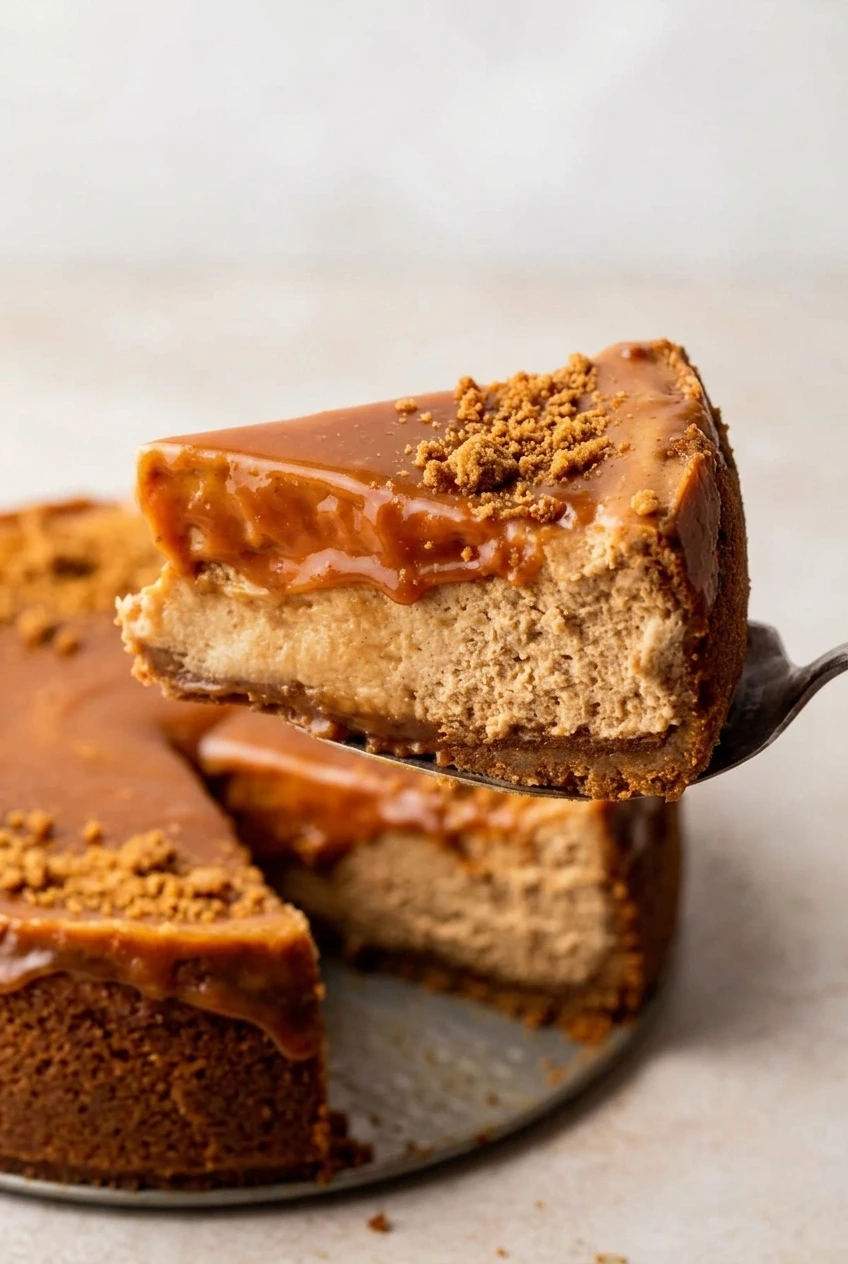
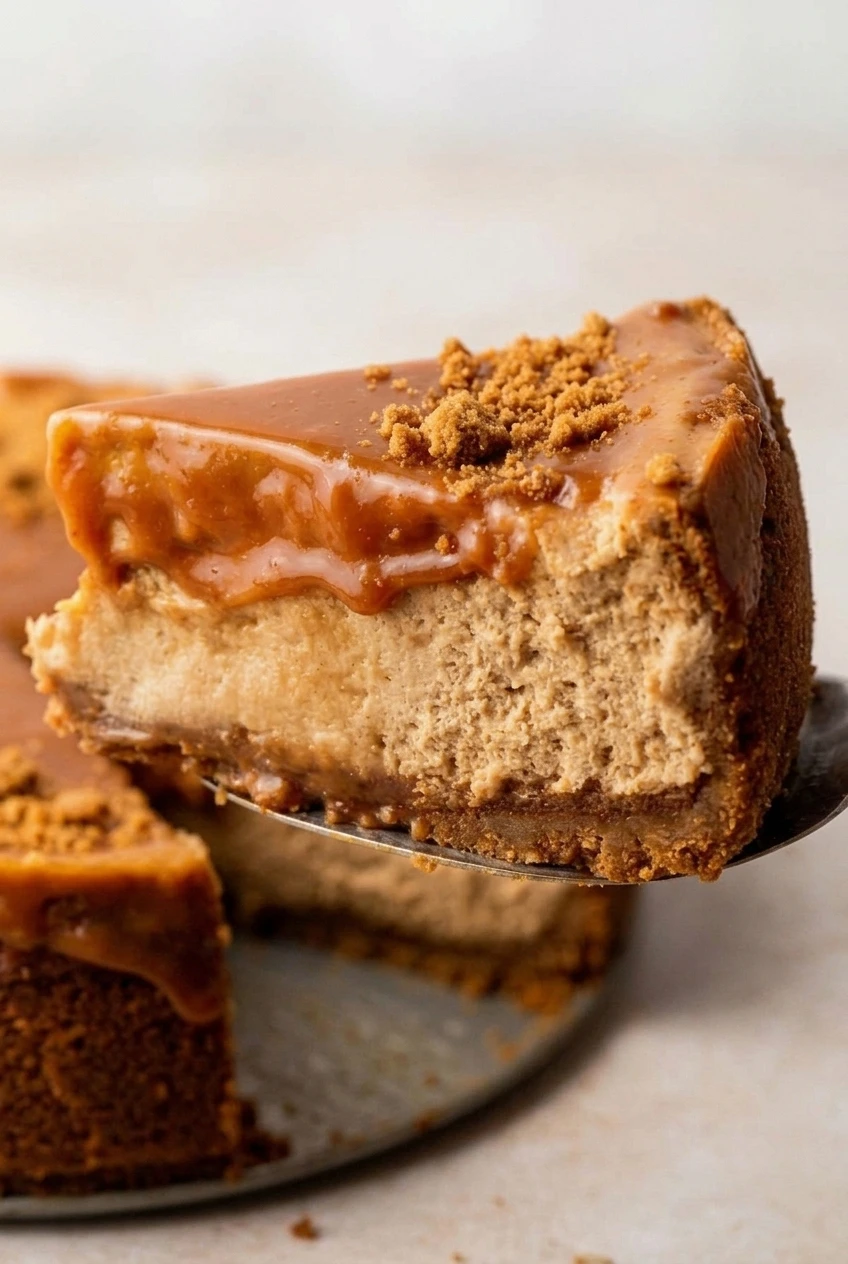
Gingerbread cheesecake pairs a thick gingersnap crust with a creamy filling flavored with molasses, ginger, cinnamon, nutmeg, and cloves. Once chilled, it’s finished with glossy caramel and a light scattering of cookie crumbs.
The filling needs gentle baking and plenty of time to set. A water bath and gradual cooling help limit cracks, but the most useful doneness test is a slight wobble in the center—not a fixed bake time. Plan for at least 6 hours of chilling before slicing.
Ingredients for Gingerbread Cheesecake
Gingersnap Crust
- 2 cups finely crushed gingersnap cookies (240g)
- 6 tablespoons unsalted butter, melted (85g)
- 1 tablespoon granulated sugar
Gingerbread Filling
- 4 packages (8 ounces each) full-fat brick cream cheese, softened (about 910g)
- 1 cup packed light brown sugar (215g)
- 1/4 cup regular unsulphured molasses (85g), not blackstrap
- 1/2 cup sour cream, at room temperature (120g)
- 4 large eggs, at room temperature
- 2 teaspoons vanilla extract
- 2 teaspoons ground ginger
- 1 1/2 teaspoons ground cinnamon
- 1/4 teaspoon ground nutmeg
- 1/8 teaspoon ground cloves
- 1/4 teaspoon fine salt
To Finish
- About 3/4 cup caramel sauce, or enough to coat the top and drape slightly over the edge (240g)
- 2 tablespoons coarse gingersnap or gingerbread cookie crumbs (15g)
Plain, full-fat Greek yogurt can replace the sour cream. Use regular molasses rather than blackstrap, which can taste bitter in the filling.
How to Make Gingerbread Cheesecake
- Prepare the pan: Position a rack in the lower-middle of the oven and preheat to 325°F (165°C). Lightly grease a 9-inch springform pan if needed. Wrap the outside securely in heavy-duty foil, covering the bottom and sides without gaps. The foil edge must sit above the waterline of the bath.
- Prebake the crust: Mix the gingersnap crumbs, melted butter, and sugar. The mixture should feel like damp sand and hold together when squeezed; if it remains dry and loose, mix in a little more melted butter. Press it firmly over the bottom and slightly up the sides of the pan. Bake for about 10 minutes, then let cool briefly.
- Mix the filling: Beat the softened cream cheese until smooth. Mix in the brown sugar, molasses, sour cream, vanilla, spices, and salt. Add the eggs one at a time on low speed, mixing just until each disappears. Beating in excess air can contribute to cracks.
- Set up the water bath: Pour the filling over the crust and smooth the top. Set the springform pan inside a roasting pan, then place the roasting pan on a stable oven rack. Carefully add hot water to the roasting pan, keeping it below the foil edge and out of the cheesecake pan. Foil reduces the risk of leaks but does not guarantee a watertight seal.
- Bake: Bake uncovered, beginning to check the filled cheesecake at 50 minutes. The approximate filling-bake range is 50 to 80 minutes. The outer portion should look set, while a gentle nudge produces a slight, controlled wobble in the center. If the center sloshes like liquid, continue baking in short increments.
- Cool gradually: Turn off the oven, crack the door, and leave the cheesecake inside for about 1 hour. Carefully remove it from the water bath and let it cool to room temperature before covering. Gradual cooling helps limit cracks, though it cannot prevent every one.
- Chill: Cover and refrigerate for at least 6 hours, preferably overnight. Once the cheesecake is cold and set, run a thin knife around the edge if needed and release the springform ring.
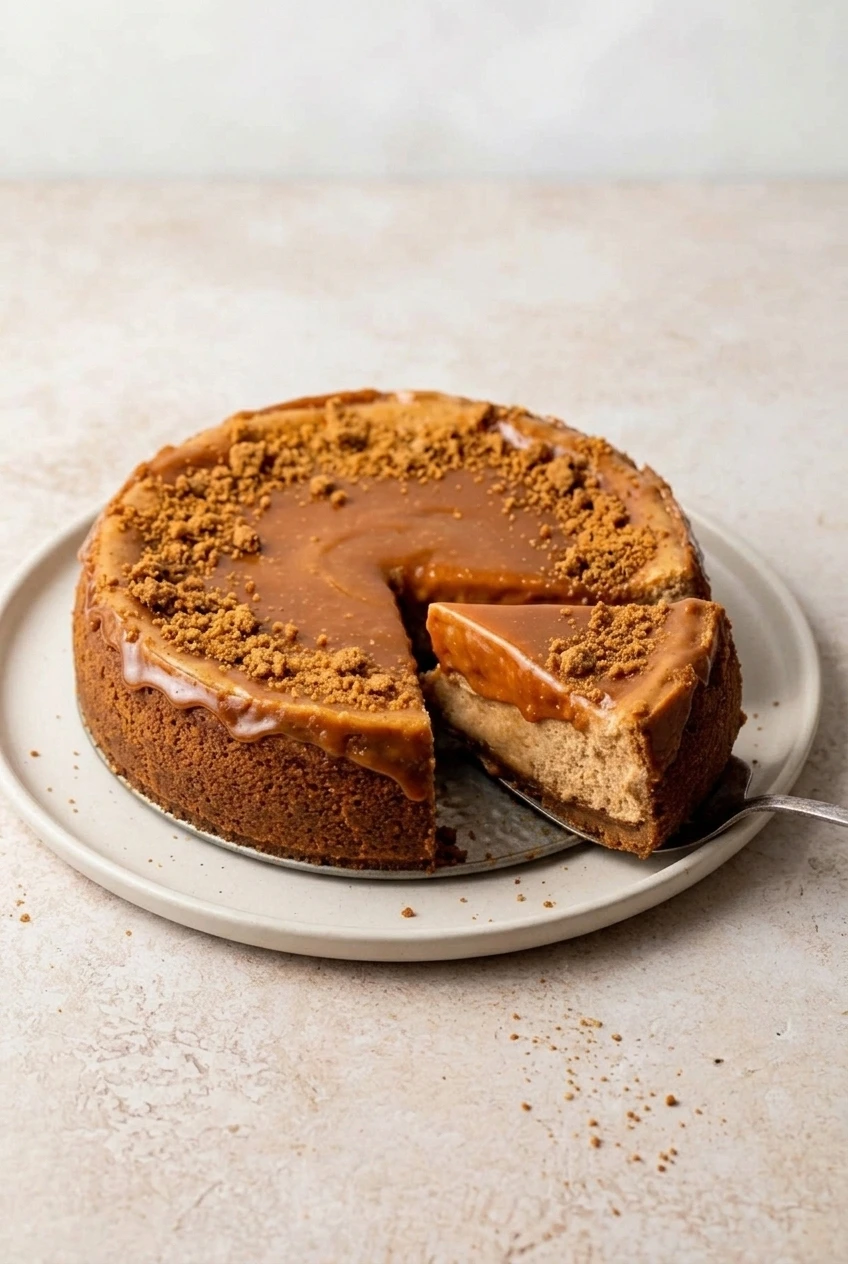
- Finish and slice: Spread or drizzle cool, pourable caramel over the chilled cheesecake, letting a little drape over the edge. Scatter the cookie crumbs lightly on top and cut into 12 thick wedges.
How to Tell When the Cheesecake Is Done
Use the center’s movement to judge doneness within the bake-time range. It should wobble slightly as one area when the pan is gently nudged, rather than slosh like liquid. Don’t wait for it to become completely rigid in the oven; the filling continues to set as it cools and chills. Ovens and batters can differ, so start checking at 50 minutes rather than assuming one exact finish time.
How to Store Gingerbread Cheesecake
Keep the cheesecake covered in an airtight container in the refrigerator for up to about 5 days. For the clearest caramel finish and distinct crumbs, add the toppings near serving time. Serve chilled; do not reheat.
You can bake the cheesecake a day ahead and chill it overnight before decorating. To freeze it, wrap the chilled, undecorated cheesecake airtight and freeze for up to about 30 days. Thaw in the refrigerator before adding the caramel and crumbs. Undecorated individual slices can be frozen the same way.
Nutrition
Approximate nutrition per slice, based on 12 slices: 610 calories, 8g protein, 40g fat, and 51g carbohydrates. Per 100g of finished cheesecake: approximately 365 calories, 5g protein, 24g fat, and 31g carbohydrates. Values vary with the cookies, cream cheese, and caramel sauce used.
Gingerbread Cheesecake
Equipment
- 9-inch springform pan
- Heavy-duty foil
- Roasting pan
- Electric mixer
- Oven
Ingredients
Gingersnap Crust
- 2 cups finely crushed gingersnap cookies (240 g)
- 6 tablespoons unsalted butter, melted (85 g)
- 1 tablespoon granulated sugar
Gingerbread Filling
- 4 packages (8 ounces each) full-fat brick cream cheese, softened (about 910 g)
- 1 cup packed light brown sugar (215 g)
- 1/4 cup regular unsulphured molasses (85 g), not blackstrap
- 1/2 cup sour cream, at room temperature (120 g)
- 4 large eggs, at room temperature
- 2 teaspoons vanilla extract
- 2 teaspoons ground ginger
- 1 1/2 teaspoons ground cinnamon
- 1/4 teaspoon ground nutmeg
- 1/8 teaspoon ground cloves
- 1/4 teaspoon fine salt
To Finish
- About 3/4 cup caramel sauce (240 g)
- 2 tablespoons coarse gingersnap or gingerbread cookie crumbs (15 g)
Instructions
- Position a rack in the lower-middle of the oven and preheat to 325°F (165°C). Lightly grease a 9-inch springform pan if needed.
- Wrap the outside of the pan securely in heavy-duty foil, covering the bottom and sides with no gaps. Make sure the foil edge will sit above the waterline.
- Mix the gingersnap crumbs, melted butter, and sugar until the mixture feels like damp sand and holds together when squeezed.
- Press the crumb mixture firmly over the bottom and slightly up the sides of the pan. Bake for about 10 minutes, then let cool briefly.
- Beat the softened cream cheese until smooth. Mix in the brown sugar, molasses, sour cream, vanilla, spices, and salt.
- Add the eggs one at a time on low speed, mixing just until each egg disappears.
- Pour the filling over the crust and smooth the top. Set the springform pan inside a roasting pan.
- Place the roasting pan on a stable oven rack and carefully add hot water, keeping it below the foil edge and out of the cheesecake pan.
- Bake uncovered, starting to check at 50 minutes. Bake for approximately 50 to 80 minutes, until the edges look set and the center has a slight, controlled wobble.
- Turn off the oven, crack the door, and leave the cheesecake inside for about 1 hour.
- Carefully remove the pan from the water bath and cool the cheesecake to room temperature. Cover and refrigerate for at least 6 hours, preferably overnight.
- Once chilled and set, run a thin knife around the edge if needed and release the springform ring.
- Spread or drizzle cool, pourable caramel over the cheesecake and scatter the cookie crumbs on top. Cut into 12 slices.
Tips
- Use regular unsulphured molasses rather than blackstrap, which can taste bitter.
- Mix the eggs in on low speed and only until combined to avoid incorporating excess air.
- Start checking for doneness at 50 minutes; the center should wobble slightly, not slosh.
- Keep the water below the foil edge, but remember that foil does not guarantee a watertight seal.
- Use cool, pourable caramel for topping the chilled cheesecake.
Variations
- Greek Yogurt Filling: Replace the sour cream with plain, full-fat Greek yogurt.