

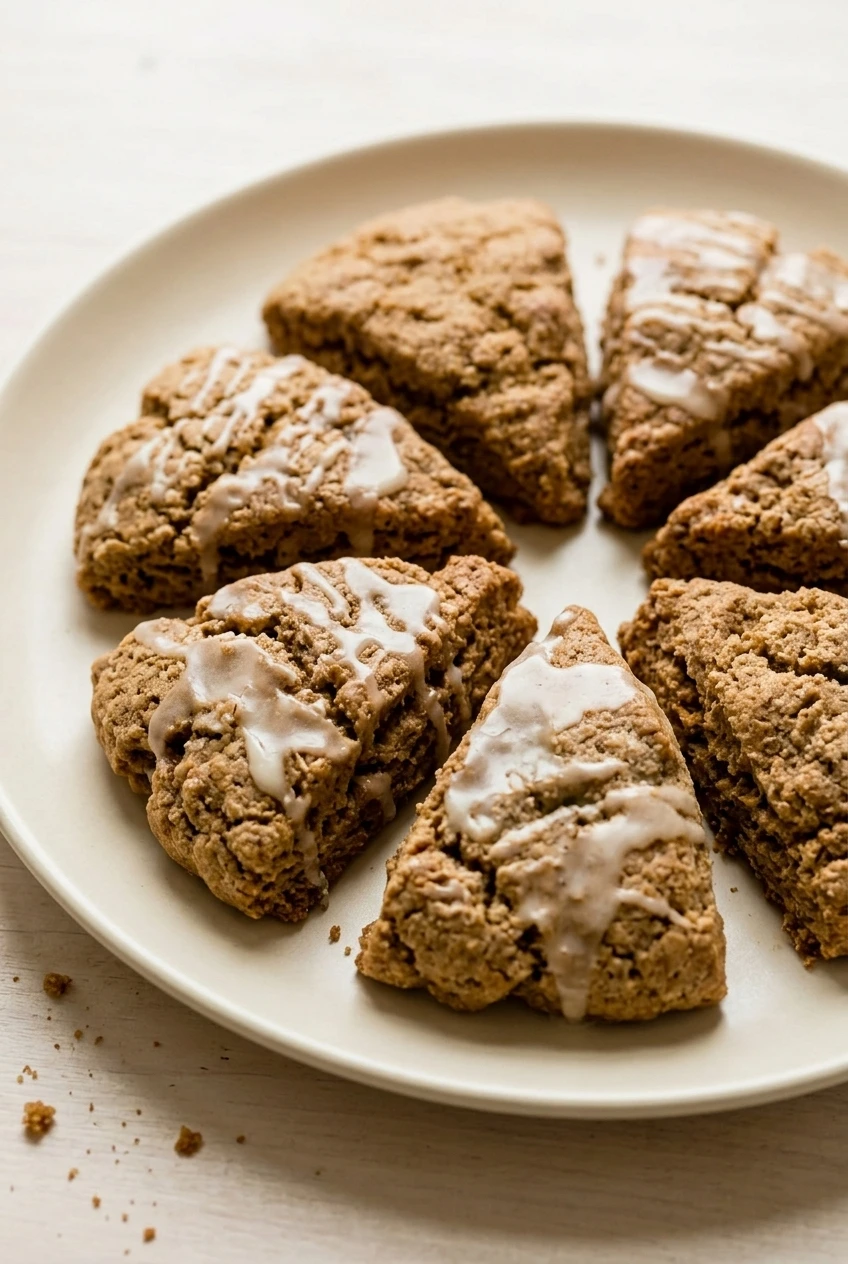
Gingerbread Scones with Vanilla Glaze
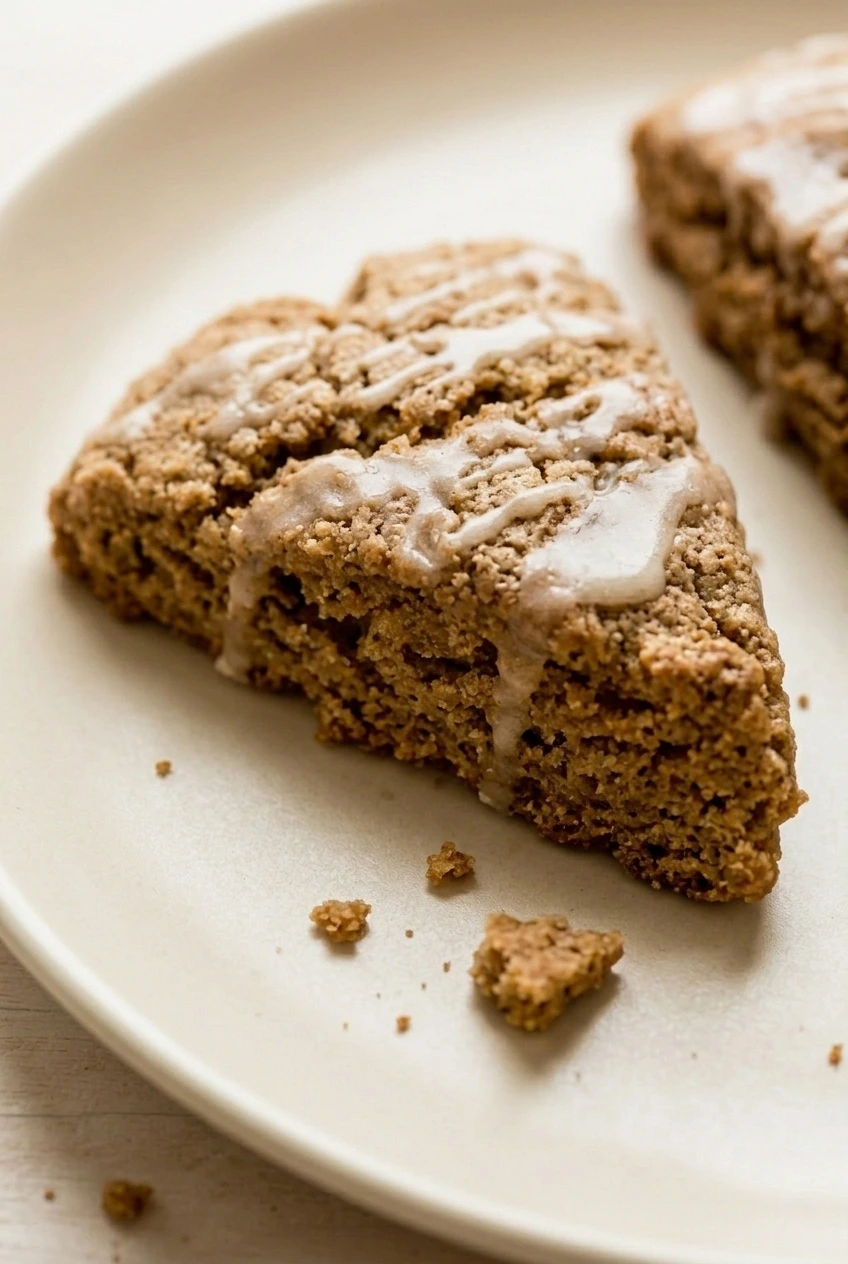
These gingerbread scones get their warm flavor from molasses, brown sugar, ginger, cinnamon, cloves, and nutmeg. The dough is cut into eight rustic wedges, baked until the edges are lightly golden, and finished with a pale vanilla glaze.
For tender scones that hold their shape, keep the butter cold and stop mixing while the dough is still shaggy. A short chill before baking firms the cut wedges; cooling them before glazing keeps the drizzle visible instead of letting it run off.
Ingredients for Gingerbread Scones
For the scones
- 2 cups all-purpose flour (250g)
- 1/3 cup packed light brown sugar (65g)
- 2 teaspoons baking powder
- 2 teaspoons ground ginger
- 1 teaspoon ground cinnamon
- 1/4 teaspoon ground cloves
- 1/4 teaspoon ground nutmeg
- 1/2 teaspoon fine salt
- 1/2 cup (1 stick) unsalted butter, cold and cut into small cubes (115g)
- 1 large egg
- 1/3 cup heavy cream, plus a little more only if needed
- 2 tablespoons molasses (40g)
For the vanilla glaze
- 1 cup confectioners’ sugar (120g)
- 1 tablespoon milk, plus more as needed
- 1/2 teaspoon vanilla extract
How to Make Gingerbread Scones
- Mix the dry ingredients: Whisk the flour, brown sugar, baking powder, spices, and salt in a large bowl.
- Cut in the butter: Work the cold butter into the flour mixture with a pastry cutter or your fingertips until it resembles coarse crumbs, with small pieces of butter still visible.
- Bring the dough together: Whisk the egg, cream, and molasses in a small bowl. Add to the dry mixture and stir gently until a shaggy dough begins to hold together. A few loose crumbs are fine if they hold when pressed. If the dough is unusually dry, add cream a teaspoon at a time.
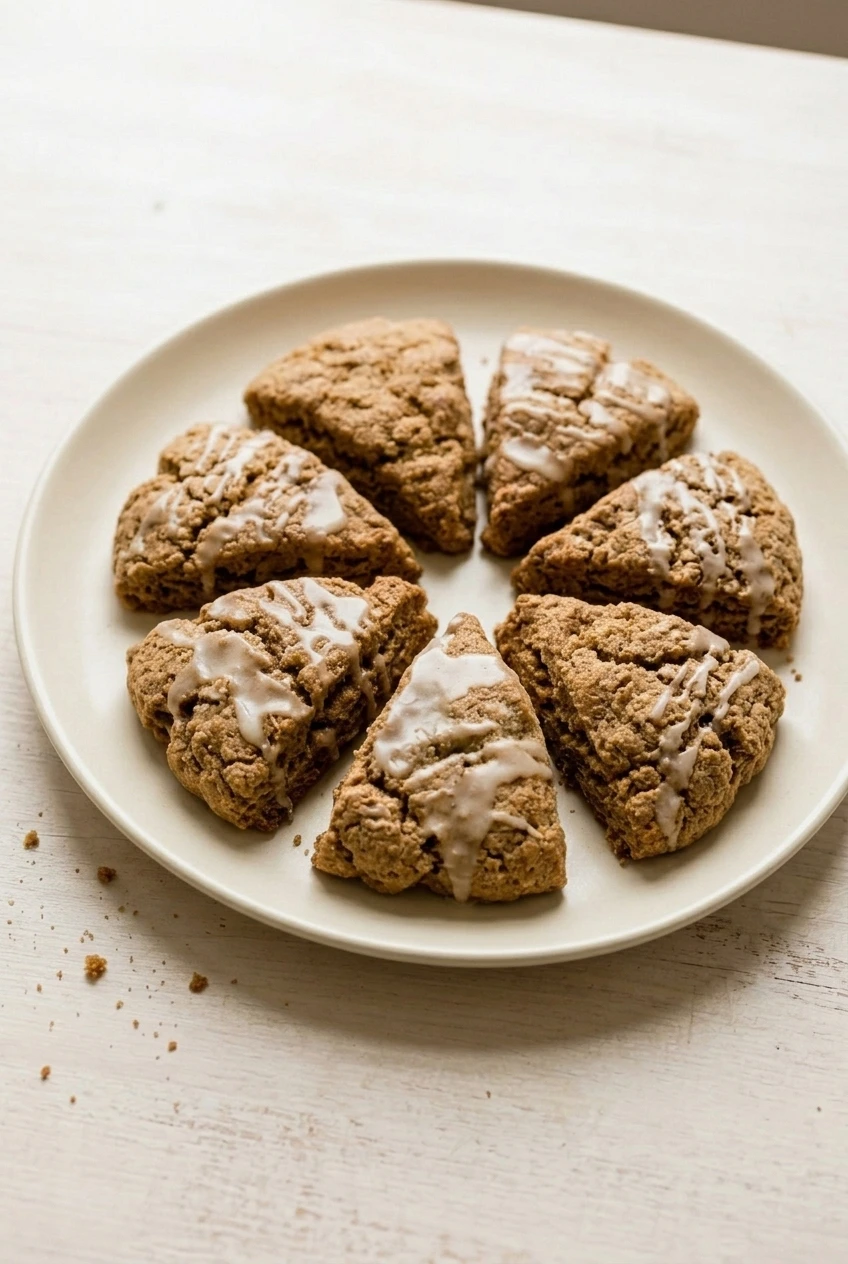
- Shape the wedges: Gently bring the dough together on a parchment-lined rimmed baking sheet. Pat it into a round about 7 inches wide and 3/4 inch thick. Cut into eight triangular wedges and separate them slightly.
- Chill and preheat: Refrigerate the wedges on the baking sheet for 20 to 30 minutes. Meanwhile, preheat the oven to 400°F (205°C).
- Bake: Bake the chilled wedges uncovered for 18 to 23 minutes, beginning to check at 18 minutes. The tops and edges should be lightly golden, the cut sides should look set rather than wet, and the wedges should feel firm enough to lift without bending. Rotate the sheet only if they are browning unevenly.
- Cool and glaze: Let the scones cool on the baking sheet for several minutes, then transfer them to a rack. Once they are warm or near room temperature, whisk the confectioners’ sugar, milk, and vanilla until smooth. Add more milk a little at a time until the glaze falls from a spoon in a thick ribbon, then drizzle it over the scones.
How to Keep the Scones Tender
Leave small pieces of cold butter visible in the flour mixture rather than blending it into a paste. Mix only until the dough holds together, and pat it into shape without kneading it smooth. Chilling the cut wedges firms the butter again and helps the scones keep their triangular shape as they bake.
How to Tell When the Scones Are Done
Use the 18-to-23-minute range as a guide, not a fixed endpoint. Thicker wedges or an oven that browns unevenly may change the timing. Check the cut sides for a baked, non-wet appearance, and remove the scones once the edges are lightly browned rather than leaving them in for the full time automatically.
Serving and Storage
Serve the glazed scones with coffee or tea. For another gingerbread-flavored treat, try Gingerbread Cheesecake Dip with a Festive Cookie.
Store fully cooled, glazed scones in an airtight container at room temperature for up to 2 days. Let the glaze set before stacking, or separate layers with parchment. For a warm scone, briefly heat it unglazed in a low oven, let it cool slightly, then add the glaze.
To make ahead, cover the shaped wedges and keep them chilled for a short time before baking. For longer storage, freeze the unbaked wedges on a tray until firm, then transfer them to an airtight container. Bake from frozen, allowing extra time and checking for lightly browned edges and set cut sides. Fully cooled baked scones can also be frozen without glaze; thaw before glazing.
Nutrition
Approximate nutrition per scone, based on 1 of 8 scones (about 90g): 370 calories, 5g protein, 16g fat, and 52g carbohydrates. Per 100g: about 420 calories, 5g protein, 18g fat, and 60g carbohydrates. Values vary with portion size and the amount of glaze used.
Gingerbread Scones with Vanilla Glaze
Equipment
- Large mixing bowl
- Small bowl
- Whisk
- Pastry cutter
- Rimmed baking sheet
- Parchment paper
- Cooling rack
Ingredients
For the scones
- 2 cups all-purpose flour (250g)
- 1/3 cup packed light brown sugar (65g)
- 2 teaspoons baking powder
- 2 teaspoons ground ginger
- 1 teaspoon ground cinnamon
- 1/4 teaspoon ground cloves
- 1/4 teaspoon ground nutmeg
- 1/2 teaspoon fine salt
- 1/2 cup (1 stick) unsalted butter, cold and cut into small cubes (115g)
- 1 large egg
- 1/3 cup heavy cream, plus a little more only if needed
- 2 tablespoons molasses (40g)
For the vanilla glaze
- 1 cup confectioners’ sugar (120g)
- 1 tablespoon milk, plus more as needed
- 1/2 teaspoon vanilla extract
Instructions
- Whisk the flour, brown sugar, baking powder, ginger, cinnamon, cloves, nutmeg, and salt in a large bowl.
- Cut the cold butter into the flour mixture until it resembles coarse crumbs with small pieces of butter still visible.
- Whisk the egg, cream, and molasses in a small bowl. Add to the dry ingredients and stir gently until a shaggy dough begins to hold together. If unusually dry, add cream a teaspoon at a time.
- Bring the dough together on a parchment-lined rimmed baking sheet. Pat it into a round about 7 inches wide and 3/4 inch thick, then cut into eight wedges and separate them slightly.
- Refrigerate the wedges for 20 to 30 minutes. Meanwhile, preheat the oven to 400°F (205°C).
- Bake for 18 to 23 minutes, checking at 18 minutes. Remove when the edges are lightly golden and the cut sides look set rather than wet.
- Cool the scones on the baking sheet for several minutes, then transfer them to a rack.
- Whisk the confectioners’ sugar, milk, and vanilla until smooth. Add milk a little at a time until the glaze falls from a spoon in a thick ribbon, then drizzle over the cooled scones.
Tips
- Keep the butter cold and leave small pieces visible in the flour mixture.
- Mix only until the dough holds together; avoid kneading it smooth.
- Chill the cut wedges before baking to help them keep their shape.
- Check the scones at 18 minutes and use their color and set cut sides to judge doneness.
- Let the scones cool before glazing so the drizzle stays visible.