

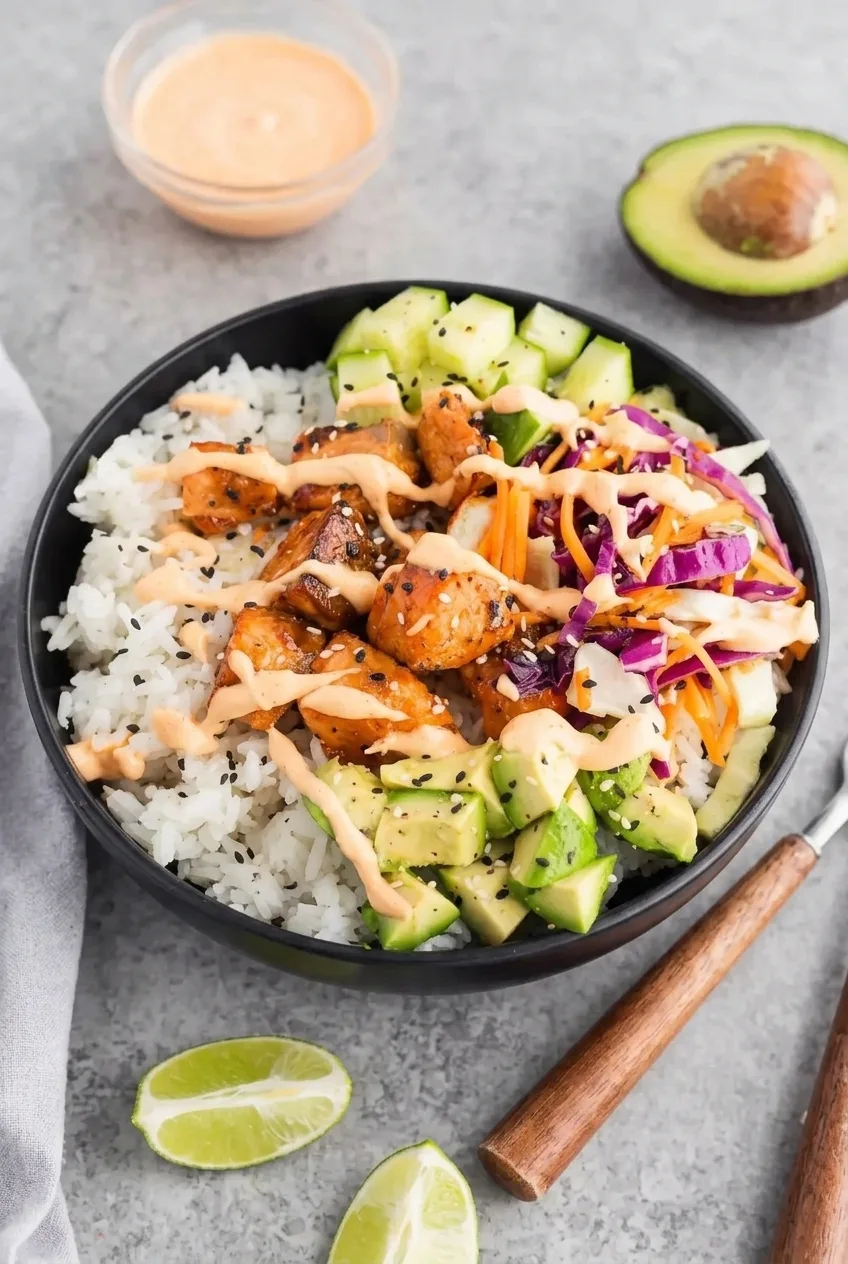
High-Protein Salmon Rice Bowls
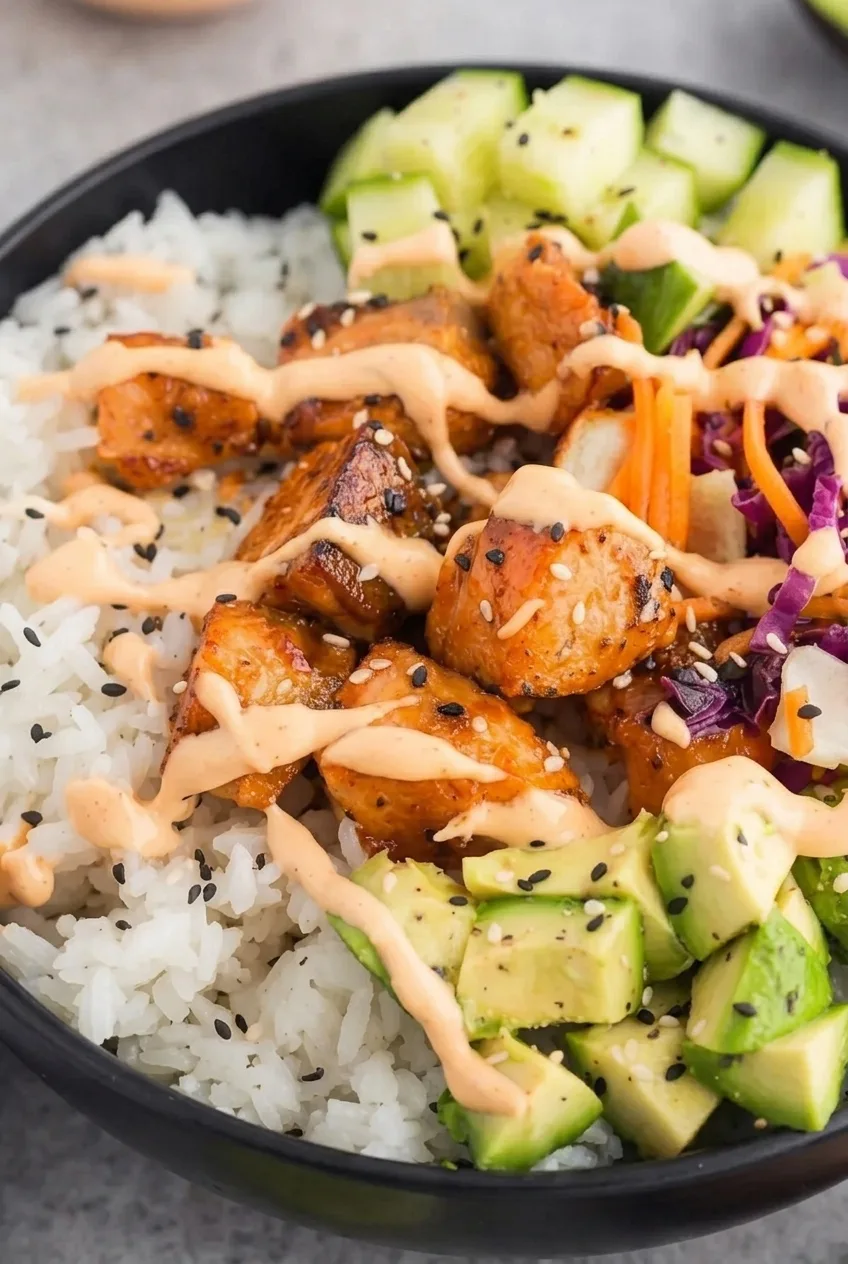
Browned salmon cubes, fluffy white rice, and fresh toppings make up these composed bowls. The salmon gets a brief soy-ginger-honey glaze in the skillet, while cucumber, avocado, and a purple cabbage-carrot slaw stay crisp until serving. A separate sriracha mayonnaise drizzle and mixed sesame seeds finish each bowl.
Start the rice first, then prepare the sauces and vegetables while it cooks. The salmon takes only a few minutes in the skillet, so have the glaze ready before the fish goes in. Makes 4 bowls; allow about 20 minutes to prep and 20 minutes to cook.
Ingredients
- 1 1/2 cups dry long-grain white rice (280g)
- Water, as directed for the rice; about 2 1/4 cups for many long-grain varieties
- 1 1/2 lb boneless, skinless salmon, cut into roughly 1-inch cubes (680g)
- 1 tablespoon neutral high-heat oil
- 1/4 cup low-sodium soy sauce
- 2 tablespoons honey
- 1 tablespoon rice vinegar
- 1 teaspoon finely grated fresh ginger
- 1 small garlic clove, finely grated or minced
- 1/3 cup mayonnaise
- 1 to 2 teaspoons sriracha, plus more to taste
- 2 cups thinly shredded purple cabbage (140g)
- 1 medium carrot, shredded or cut into thin matchsticks (60g)
- 1 medium cucumber, cut into chunky pieces (200g)
- 1 ripe medium avocado, cut into chunks (150g)
- 1 tablespoon mixed black and white sesame seeds
Optional for serving: Lime wedges and extra sriracha. For a gluten-free version, use tamari instead of soy sauce and check product labels.
How to Make Salmon Rice Bowls
- Cook the rice: Rinse it if desired, then cook in a saucepan or rice cooker according to the package or appliance directions. Keep it covered until assembly.
- Prepare the sauces and toppings: Whisk the soy sauce, honey, rice vinegar, ginger, and garlic in a small bowl. In a separate bowl, stir the mayonnaise and sriracha until smooth. Shred the cabbage and carrot, cut the cucumber, and keep the toppings separate. Cut the avocado close to serving.
- Sear the salmon: Pat the cubes dry. Preheat a large, about 12-inch nonstick or well-seasoned skillet over medium-high heat, then add the oil. When it shimmers but does not smoke, add the salmon in one uncrowded layer. Cook uncovered, turning to brown several sides. Begin checking after about 4 minutes; skillet cooking usually takes 6 to 8 minutes, depending on cube size and the pan. If necessary, sear in batches and return all the salmon to the skillet for glazing.
- Glaze briefly: When the salmon is nearly cooked, reduce the heat to medium-low. Add the soy-honey mixture and toss gently for 30 to 60 seconds, until it looks glossy and clings to the cubes. Check the thickest piece: it should be opaque and flake when gently pressed. For a conservative food-safety endpoint, cook it to 145°F (65°C), using an instant-read thermometer where practical. If it needs more time, continue cooking gently rather than simmering it in the glaze over high heat.
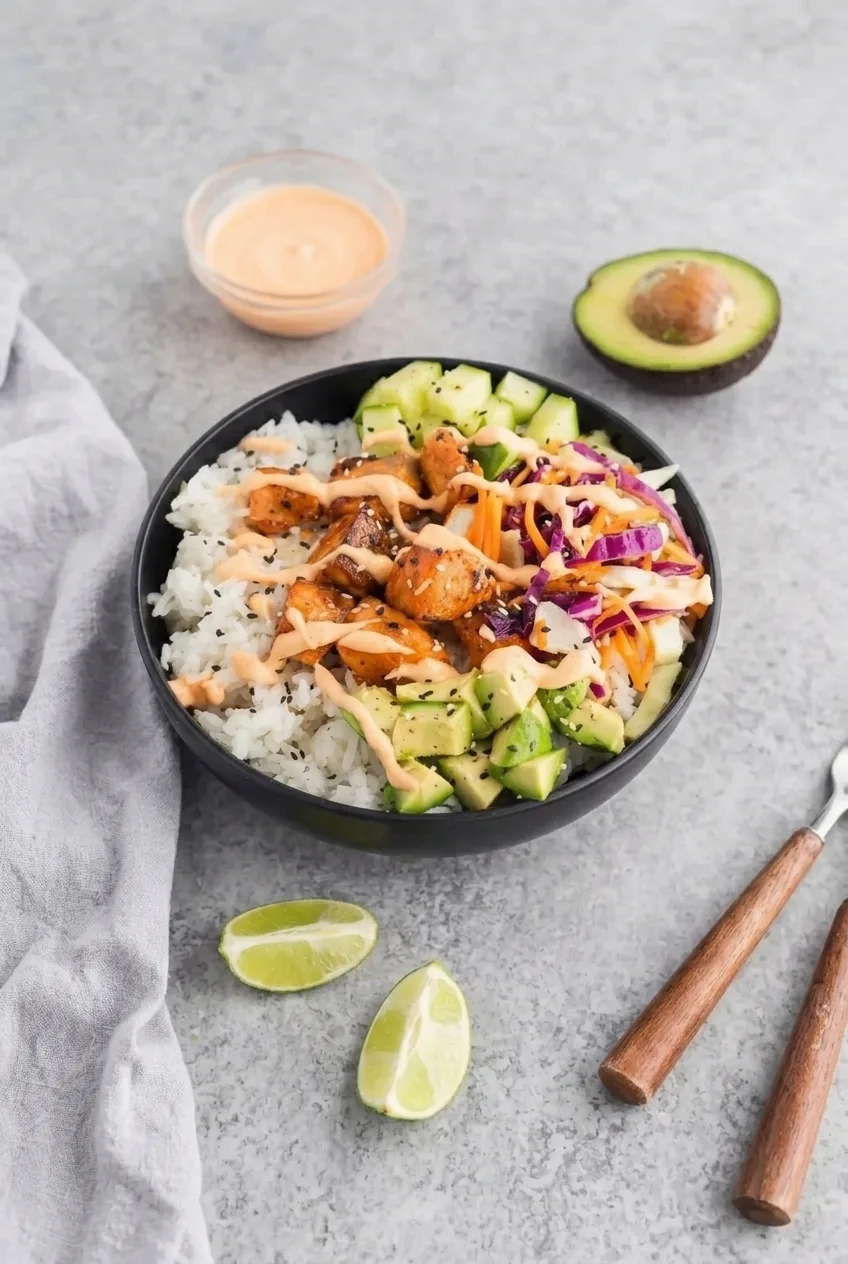
- Assemble the bowls: Divide the rice among four bowls. Group the salmon near the center, then arrange the cucumber, avocado, and cabbage-carrot slaw in separate sections, leaving some rice visible.
- Finish: Drizzle the sriracha mayonnaise over the bowls and scatter with sesame seeds. Serve promptly, with lime wedges or extra sriracha if desired.
How to Keep the Salmon Browned and Tender
Dry fish and space in the skillet matter more than a rigid cooking time. Wet or crowded cubes release moisture and steam instead of developing browned patches. If they will not fit in one layer, sear them in batches.
The honey glaze goes in only when the salmon is nearly done. Lowering the heat and tossing briefly lets it coat the fish without scorching. Because smaller cubes cook faster, check the thickest piece early rather than relying on the clock alone.
Make-Ahead and Leftovers
For make-ahead bowls, refrigerate the cooked rice and salmon promptly in separate airtight containers. Keep the slaw, cucumber, and creamy sauce apart from the warm components; cut the avocado close to serving.
Reheat the rice with a small splash of water. Warm the salmon separately and briefly to limit drying, or serve it cold if preferred. Add the fresh toppings, sauce, and sesame seeds afterward. Freezing fully assembled bowls is not recommended because the vegetables and creamy sauce lose quality.
More Bowl and Seafood Dinners
For another rice-based dinner, try Ground Beef Philly Cheesesteak Bowls. For another seafood option, see High-Protein Honey Garlic Shrimp.
Nutrition
Approximate nutrition per serving, based on 1 of 4 bowls: 910 calories, 43g protein, 48g fat, and 76g carbohydrates. Approximate values per 100g: 160 calories, 8g protein, 8g fat, and 13g carbohydrates. Values vary with ingredient brands, cooked rice yield, and portion size.
Equipment
- Saucepan or rice cooker
- 12-inch skillet
- Mixing bowls
- Instant-read thermometer
Ingredients
Rice and Salmon
- 1 1/2 cups dry long-grain white rice (280 g)
- Water, as directed for the rice (about 2 1/4 cups for many long-grain varieties)
- 1 1/2 lb boneless, skinless salmon, cut into roughly 1-inch cubes (680 g)
- 1 tablespoon neutral high-heat oil
Soy-Ginger Glaze
- 1/4 cup low-sodium soy sauce
- 2 tablespoons honey
- 1 tablespoon rice vinegar
- 1 teaspoon finely grated fresh ginger
- 1 small garlic clove, finely grated or minced
Sriracha Mayonnaise
- 1/3 cup mayonnaise
- 1 to 2 teaspoons sriracha, plus more to taste
Toppings
- 2 cups thinly shredded purple cabbage (140 g)
- 1 medium carrot, shredded or cut into thin matchsticks (60 g)
- 1 medium cucumber, cut into chunky pieces (200 g)
- 1 ripe medium avocado, cut into chunks (150 g)
- 1 tablespoon mixed black and white sesame seeds
- Optional: lime wedges and extra sriracha
Instructions
- Cook the rice in a saucepan or rice cooker according to the package or appliance directions. Keep covered until ready to serve.
- Whisk the soy sauce, honey, rice vinegar, ginger, and garlic together in a small bowl.
- Stir the mayonnaise and sriracha together in a separate bowl until smooth.
- Shred the cabbage and carrot, cut the cucumber, and keep the toppings separate. Cut the avocado close to serving.
- Pat the salmon cubes dry. Heat a large nonstick or well-seasoned skillet over medium-high heat, then add the oil.
- When the oil shimmers but does not smoke, add the salmon in one uncrowded layer. Cook uncovered, turning to brown several sides. Begin checking after about 4 minutes; cook for about 6 to 8 minutes total, depending on cube size and pan. Sear in batches if needed.
- When the salmon is nearly cooked, reduce the heat to medium-low. Add the soy-honey mixture and toss gently for 30 to 60 seconds, until glossy and coating the salmon.
- Check the thickest piece for doneness. It should be opaque and flake when gently pressed; for a conservative food-safety endpoint, cook to 145°F (65°C).
- Divide the rice among four bowls. Arrange the salmon, cucumber, avocado, and cabbage-carrot slaw in separate sections.
- Drizzle with the sriracha mayonnaise and sprinkle with sesame seeds. Serve promptly with lime wedges or extra sriracha if desired.
Tips
- Pat the salmon dry and leave space between the cubes so they brown instead of steam.
- Sear the salmon in batches if it will not fit in the skillet in one layer.
- Add the honey glaze only when the salmon is nearly cooked, and toss it briefly over lower heat to prevent scorching.
- Check the thickest salmon piece early because smaller cubes cook faster.
Variations
- Gluten-Free Salmon Rice Bowls: Use tamari instead of soy sauce and check product labels.