

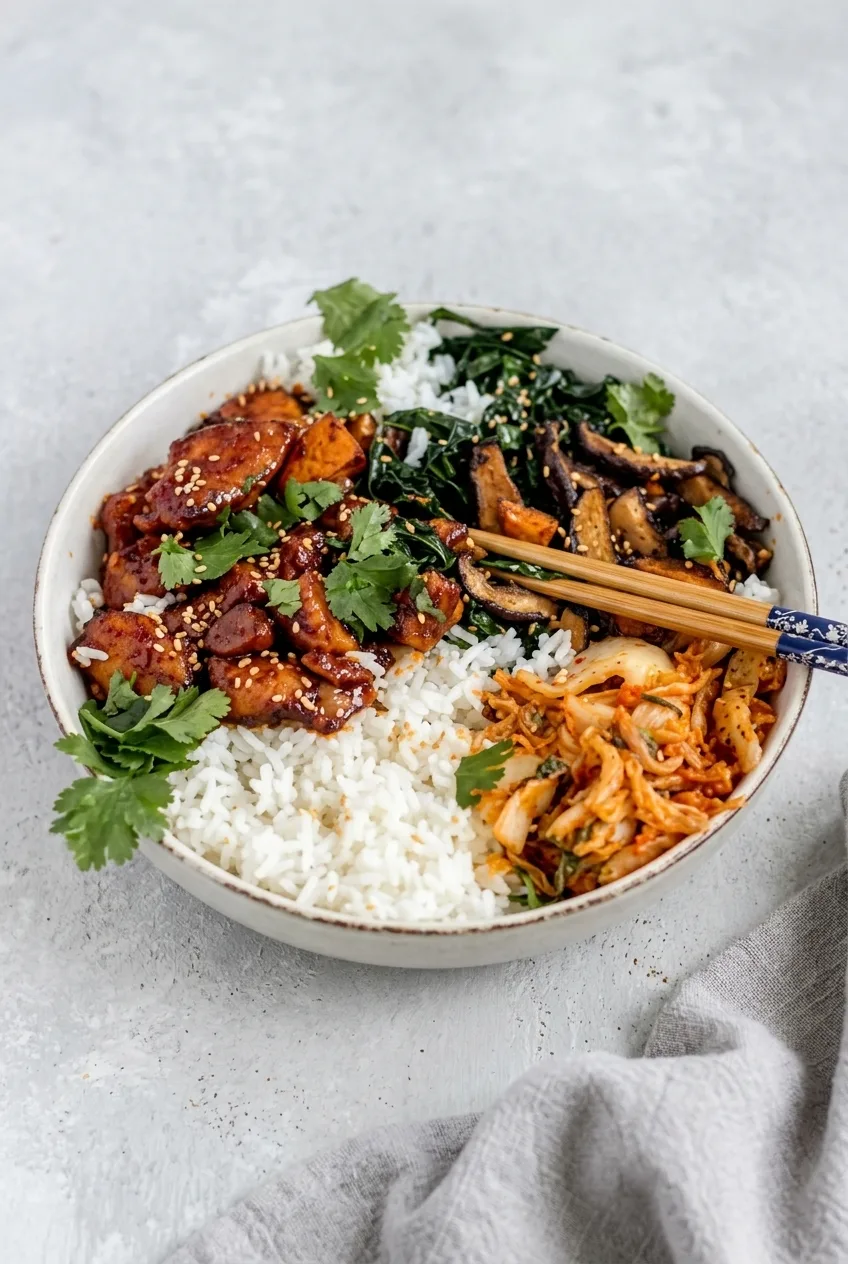
Korean BBQ Chicken Rice Bowls
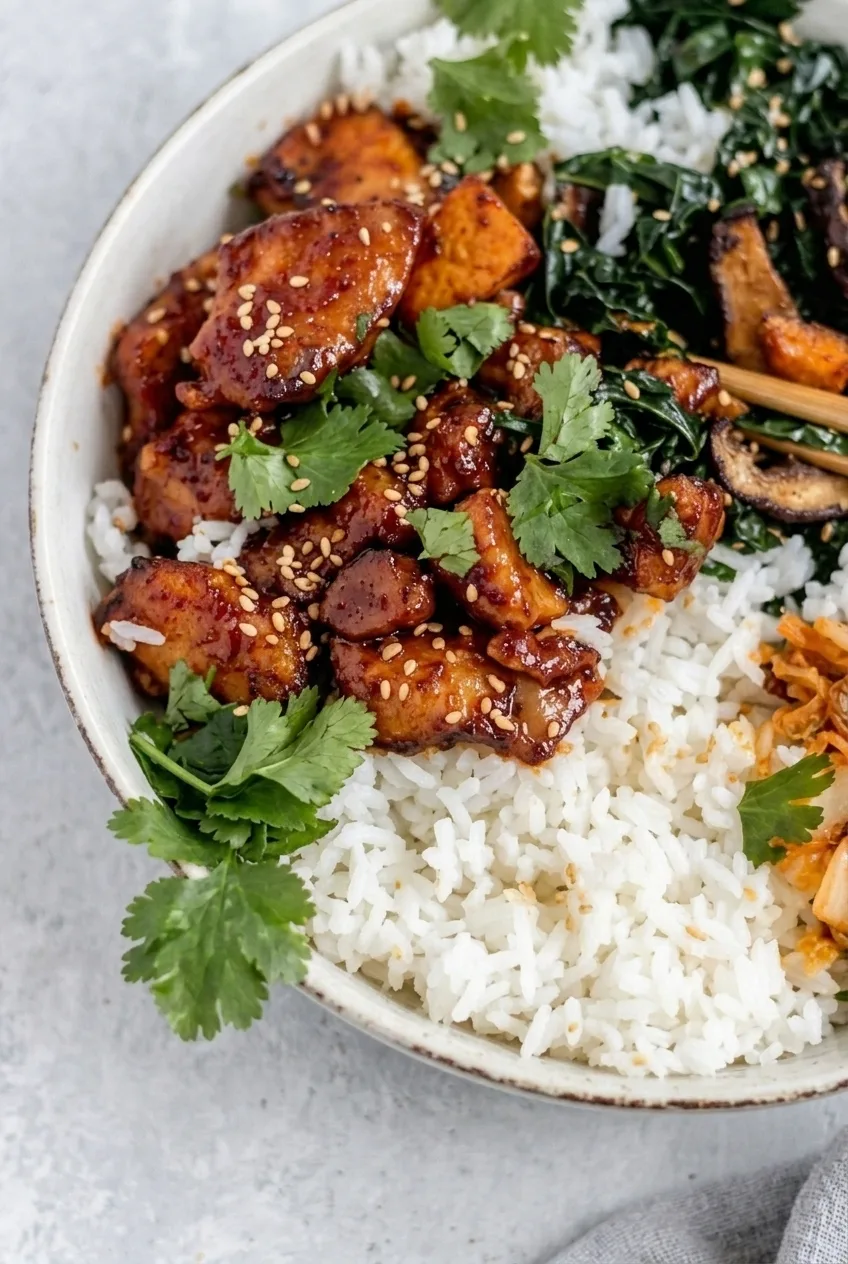
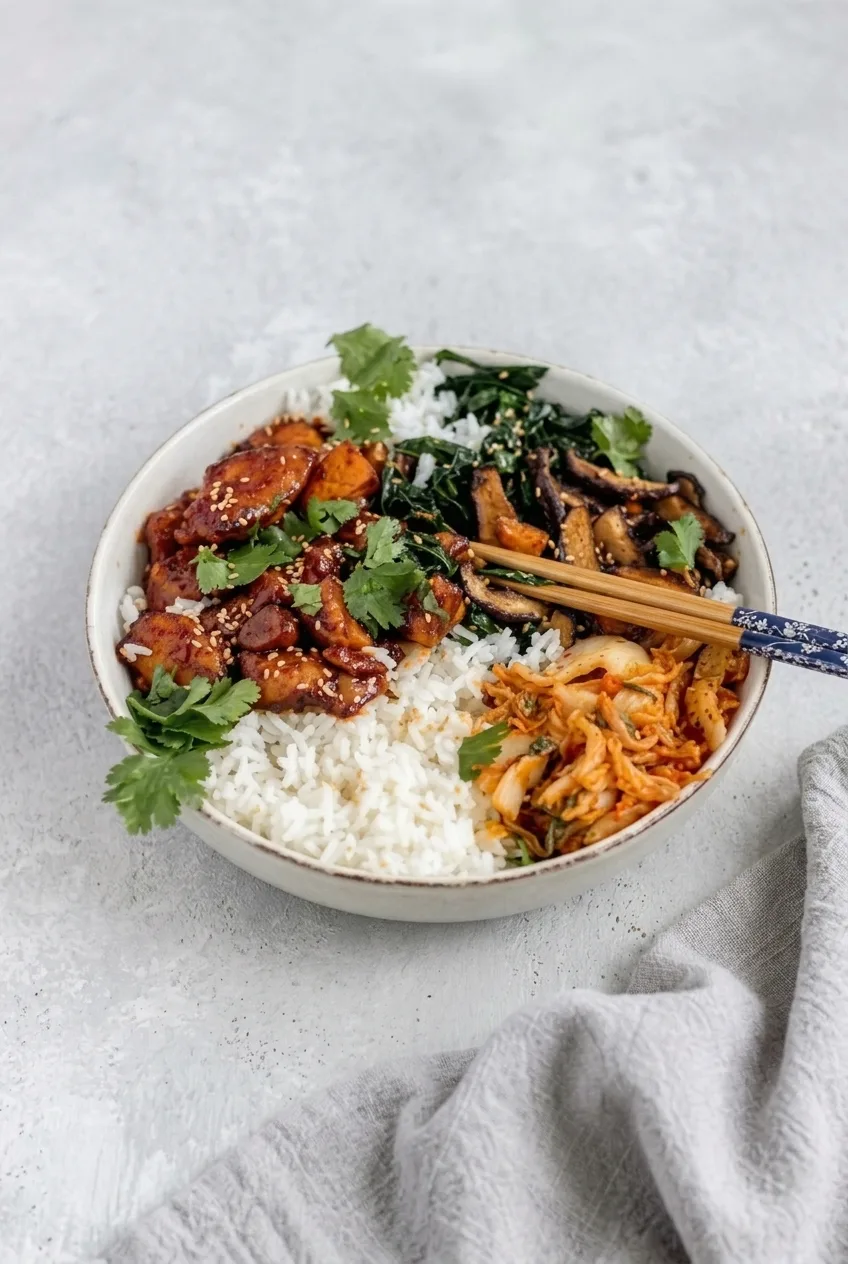
These Korean-inspired bowls bring together glossy gochujang chicken, white rice, roasted sweet potato, wilted kale, and cool kimchi. Keep the components in separate sections so the rice stays fluffy and the kimchi contrasts with the warm toppings.
Boneless skinless thighs stay juicy as they roast. A light coating of sauce seasons the chicken on the sheet pan; sauce reserved before it touches raw chicken adds the finishing glaze without exposing the sweet sauce to high heat for too long. Makes 4 bowls in about 50 minutes.
Ingredients for Korean BBQ Chicken Rice Bowls
- 1 1/2 cups uncooked jasmine rice (285g)
- 1 lb sweet potato, cut into short, thin wedges or strips (450g)
- 1 1/2 lb boneless skinless chicken thighs, cut into roughly 1-inch pieces (680g)
- 4 packed cups chopped kale (140g)
- 1 cup kimchi, drained slightly if very wet (150g)
- 3 tablespoons gochujang
- 3 tablespoons low-sodium soy sauce
- 1 tablespoon honey
- 1 tablespoon rice vinegar
- 2 teaspoons toasted sesame oil
- 2 garlic cloves, finely grated or minced
- 1 tablespoon finely grated fresh ginger
- 1 tablespoon neutral oil, plus more as needed for the vegetables
- 2 tablespoons water, plus a splash as needed to thin the sauce
- Kosher salt, used lightly to taste
- 1 tablespoon sesame seeds
- 1/4 cup loosely packed cilantro leaves
Optional: 2 sliced green onions for garnish.
How to Make Korean BBQ Chicken Rice Bowls
- Cook the rice: Prepare the jasmine rice according to the package directions. When tender, keep it covered off the heat until assembly.
- Start the sweet potato: Heat the oven to 425°F (220°C) with a rack in the center. Toss the sweet potato with some of the neutral oil and a light pinch of salt. Spread it in a single layer on a large rimmed sheet pan. Roast uncovered for about 15 minutes, until the edges begin to brown.
- Mix and reserve the sauce: Whisk together the gochujang, soy sauce, honey, rice vinegar, sesame oil, garlic, ginger, and 2 tablespoons water. Set aside a clean portion for glazing and serving before any sauce touches the raw chicken.
- Roast the chicken: Toss the chicken with enough of the remaining sauce to coat it lightly. Turn the sweet potato, then add the chicken to the open space on the pan. Leave room between the pieces so they brown rather than steam; use a second sheet pan if needed. Roast for about 12 to 18 minutes, turning the chicken once if it browns unevenly. Start checking after 12 minutes. The thickest piece must reach 165°F (75°C); the sweet potato should be tender when pierced and browned at the edges.
- Glaze and rest: Lightly brush or toss the cooked chicken with some of the reserved clean sauce. For more browned edges, broil for 1 to 2 minutes, watching continuously. Rest the chicken for about 5 minutes.
- Wilt the kale: Warm a little neutral oil in a small skillet over medium heat. Add the kale and a small splash of water. Stir for 3 to 5 minutes, until tender but still green, then season lightly with salt.
- Build the bowls: Divide the rice among four wide, shallow bowls. Arrange the chicken, kale, sweet potato, and cool kimchi in distinct sections. Scatter with cilantro and sesame seeds. Serve any remaining reserved sauce on the side, and add green onion if desired.
How to Keep the Chicken Glazed, Not Burnt
Gochujang and honey can scorch, especially under the broiler. The sauce on the raw chicken should be a light coating, not a pool on the pan. Use only sauce reserved before it touched raw chicken for the finishing glaze or a table drizzle. Discard any uncooked sauce left over from coating the chicken.
Make-Ahead, Storage, and Reheating
The sauce and rice can be prepared ahead. Refrigerate cooked chicken and rice in airtight containers for 3 to 4 days. Cooked kale and sweet potato can be stored with the warm components, though they may soften. Keep the kimchi, cilantro, and reserved sauce separate.
Reheat the chicken and rice in a microwave or skillet until hot, then add the cool kimchi and fresh herbs. Loosen thickened sauce with a splash of water. Cooked chicken and rice may be frozen separately for up to about 3 months; thaw in the refrigerator before reheating. Do not freeze assembled bowls with kimchi or fresh garnishes.
Korean BBQ Chicken Rice Bowl Variations
- Chicken breast: Use evenly cut boneless skinless breast pieces instead of thighs. Breast meat is leaner and may cook faster, so check early and remove it when the thickest piece reaches 165°F.
- Different rice base: Use brown rice or cauliflower rice in place of jasmine rice. Prepare it according to its own package directions or recipe.
Nutrition
Approximate nutrition per bowl, based on 1/4 of the recipe: 855 calories, 45g protein, 32g fat, and 96g carbohydrates. Per 100g: approximately 145 calories, 8g protein, 6g fat, and 16g carbohydrates. Values vary with ingredient brands, the amount of sauce used, and cooked yield.
Equipment
- Oven
- Rimmed sheet pan
- Rice pot
- Mixing bowl
- Whisk
- Skillet
- Instant-read thermometer
Ingredients
For the Bowls
- 1 1/2 cups uncooked jasmine rice (285g)
- 1 lb sweet potato, cut into short, thin wedges or strips (450g)
- 1 1/2 lb boneless skinless chicken thighs, cut into roughly 1-inch pieces (680g)
- 4 packed cups chopped kale (140g)
- 1 cup kimchi, drained slightly if very wet (150g)
- 1 tablespoon neutral oil, plus more as needed for the vegetables
- Kosher salt, used lightly to taste
For the Sauce
- 3 tablespoons gochujang
- 3 tablespoons low-sodium soy sauce
- 1 tablespoon honey
- 1 tablespoon rice vinegar
- 2 teaspoons toasted sesame oil
- 2 garlic cloves, finely grated or minced
- 1 tablespoon finely grated fresh ginger
- 2 tablespoons water, plus a splash as needed to thin the sauce
For Serving
- 1 tablespoon sesame seeds
- 1/4 cup loosely packed cilantro leaves
- 2 sliced green onions (optional)
Instructions
- Prepare the jasmine rice according to the package directions. When tender, keep it covered off the heat.
- Heat the oven to 425°F (220°C) with a rack in the center.
- Toss the sweet potato with some of the neutral oil and a light pinch of salt. Spread it in a single layer on a large rimmed sheet pan.
- Roast the sweet potato uncovered for about 15 minutes, until the edges begin to brown.
- Whisk together the gochujang, soy sauce, honey, rice vinegar, sesame oil, garlic, ginger, and 2 tablespoons water.
- Set aside a clean portion of the sauce for glazing and serving before any sauce touches the raw chicken.
- Toss the chicken with enough of the remaining sauce to coat it lightly. Turn the sweet potato and add the chicken to the open space on the pan, leaving room between pieces. Use a second sheet pan if needed.
- Roast for about 12 to 18 minutes, turning the chicken once if it browns unevenly. Start checking after 12 minutes; the thickest piece must reach 165°F (75°C), and the sweet potato should be tender and browned at the edges.
- Brush or toss the cooked chicken with some of the reserved clean sauce. For more browned edges, broil for 1 to 2 minutes, watching continuously.
- Rest the chicken for about 5 minutes.
- Warm a little neutral oil in a small skillet over medium heat. Add the kale and a small splash of water; stir for 3 to 5 minutes, until tender but still green. Season lightly with salt.
- Divide the rice among four wide, shallow bowls. Arrange the chicken, kale, sweet potato, and kimchi in separate sections.
- Scatter with cilantro and sesame seeds. Serve any remaining reserved sauce on the side and add green onion if desired.
Tips
- Reserve clean sauce before it touches raw chicken for glazing and serving.
- Coat the chicken lightly; excess sauce on the pan can scorch.
- Leave space between chicken pieces so they brown instead of steam.
- Check the chicken early and cook until the thickest piece reaches 165°F (75°C).
- Watch the chicken continuously if broiling, since gochujang and honey can scorch.
Variations
- Chicken Breast: Use evenly cut boneless skinless chicken breast pieces instead of thighs; check early and remove when the thickest piece reaches 165°F.
- Brown Rice or Cauliflower Rice: Replace the jasmine rice with brown rice or cauliflower rice, prepared according to its package directions or recipe.