

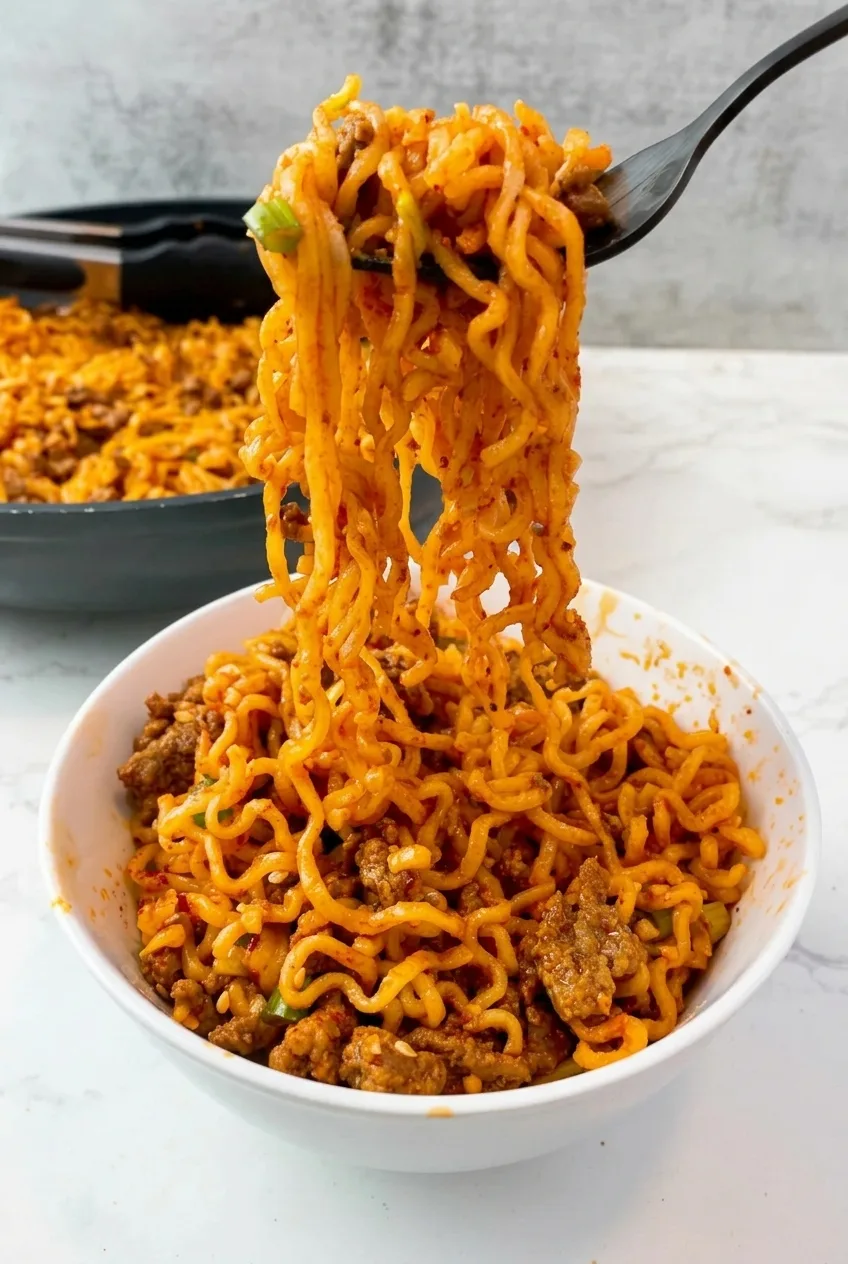
Korean Gochujang Ramen
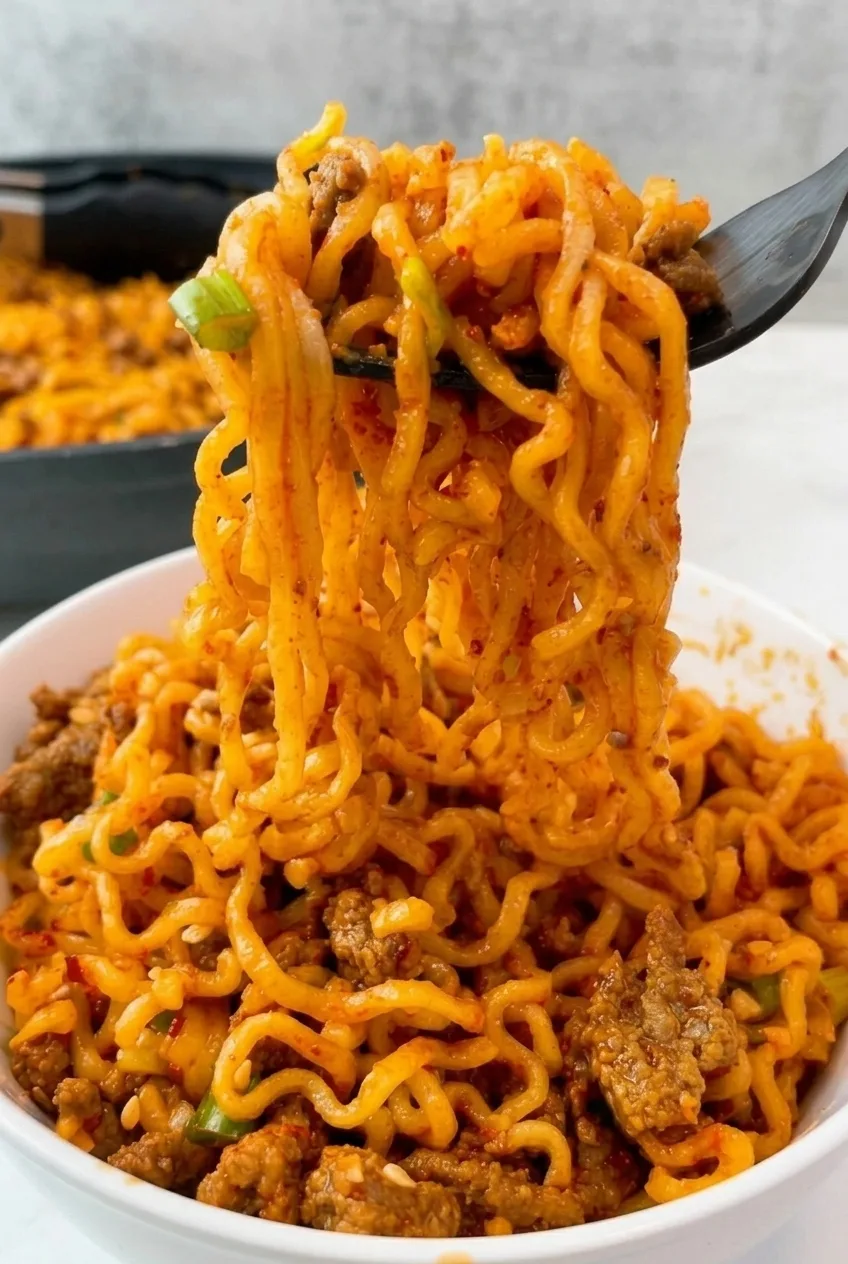
Curly ramen and browned ground beef are tossed in a glossy, orange-red gochujang sauce for a hot, brothless noodle dish. Boil the noodles separately, then give them only a brief toss in the skillet so they stay loose and liftable.
Start with 2 tablespoons of gochujang and add more only after tasting the warm sauce; brands vary in heat and saltiness. Leave out the ramen seasoning packets—the gochujang, soy sauce, mirin, and sesame oil season the dish.
Ingredients for Korean Gochujang Ramen
- 3 packages instant ramen noodles, about 9 oz dry total (255g); discard the seasoning packets
- 1 lb lean ground beef (450g)
- 1 teaspoon neutral cooking oil
- 3 garlic cloves, minced
- 2 tablespoons gochujang, plus up to 1 tablespoon more to taste
- 2 tablespoons soy sauce
- 1 tablespoon mirin
- 2 teaspoons toasted sesame oil
- 3 green onions, thinly sliced
- 2 teaspoons toasted sesame seeds
Reserve 1/2 cup of the ramen cooking water before draining. You will likely use only 1 to 4 tablespoons to loosen the sauce.
How to Make Gochujang Ramen
- Whisk the sauce: In a small bowl, whisk 2 tablespoons gochujang with the soy sauce, mirin, and sesame oil until smooth. Set the extra gochujang aside.
- Cook the ramen: Boil the noodles according to the package directions, checking at the earliest stated time. They should be tender but intact. Reserve 1/2 cup cooking water, then drain without rinsing.
- Brown the beef: Heat the oil in a 12-inch skillet over medium-high heat until it shimmers. Add the beef and cook uncovered, stirring and breaking it into crumbles, for about 5 to 7 minutes, until browned and fully cooked. If using a thermometer, ground beef should reach 160°F (70°C). Drain excess fat if needed, then stir in the garlic for 30 to 60 seconds, until fragrant.
- Warm the sauce: Reduce the heat to medium-low. Stir the sauce into the beef and let it bubble gently for 2 to 3 minutes. Taste before adding any extra gochujang.
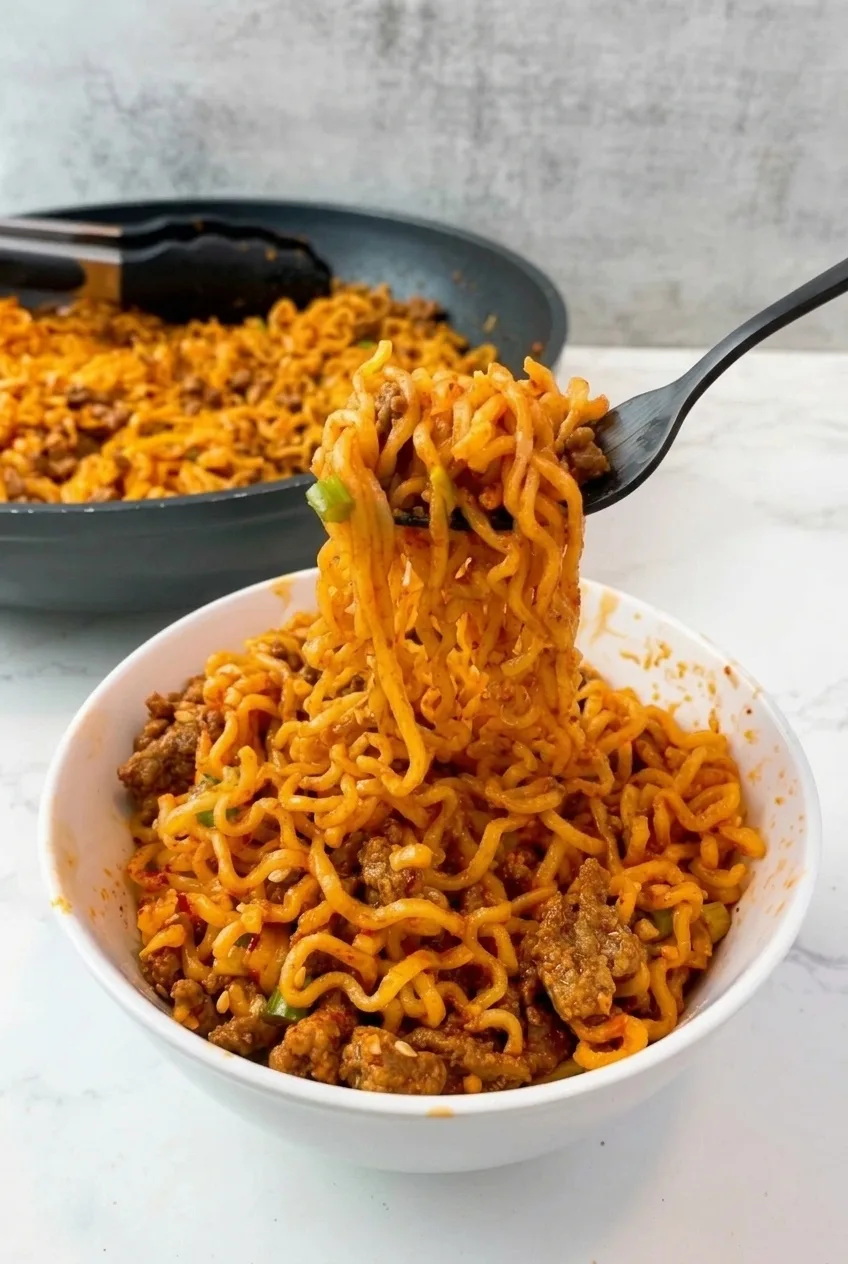
- Toss the noodles: Add the drained ramen and most of the green onions. Turn with tongs for 1 to 2 minutes, adding reserved noodle water 1 tablespoon at a time as needed. Stop when the strands are separate, shiny, and evenly coated, with no dry patches or substantial liquid pooling in the skillet.
- Serve: Divide among four bowls. Top with the remaining green onions and toasted sesame seeds, and serve hot.
How to Keep the Sauce Glossy, Not Soupy
Gochujang is thick and can cling to noodles in patches. Add a little reserved cooking water while tossing to spread the sauce across the strands, stopping as soon as the noodles lift freely. Keep the skillet toss short: the ramen is already cooked and will soften further if left over the heat.
Adjusting the Heat and Making Swaps
For extra heat in individual bowls, add a pinch of gochugaru at the table rather than making the whole skillet spicier.
Ground turkey, chicken, or pork can replace the beef; cook any substituted ground meat fully. Other noodles will work differently and will not give the dish the same curly ramen texture. For another brothless noodle dinner, try Sesame Garlic Ramen Noodles.
Storing and Warming Leftovers
Cool leftovers promptly and refrigerate in a covered container. The noodles absorb sauce as they stand, so they will be less loose than when freshly made. When warming them, add a small splash of water if needed to help separate the strands. Freezing is not recommended for preserving the finished noodles’ texture.
Nutrition
Approximate nutrition per serving, based on 4 servings: 560 calories, 30g protein, 26g fat, and 46g carbohydrates. Per 100g of finished ramen: approximately 170 calories, 9g protein, 8g fat, and 14g carbohydrates. Values are estimates and will vary with ramen package size, beef leanness, sauce brands, and the amount of cooking water used.
Equipment
- Small bowl
- Whisk
- Large pot
- Colander
- 12-inch skillet
- Tongs
Ingredients
For the Ramen
- 3 packages instant ramen noodles, about 9 oz dry total (255 g); discard seasoning packets
- 1 lb lean ground beef (450 g)
- 1 teaspoon neutral cooking oil
- 3 garlic cloves, minced
- 1/2 cup ramen cooking water, reserved for loosening the sauce as needed
For the Sauce and Toppings
- 2 tablespoons gochujang, plus up to 1 tablespoon more to taste
- 2 tablespoons soy sauce
- 1 tablespoon mirin
- 2 teaspoons toasted sesame oil
- 3 green onions, thinly sliced
- 2 teaspoons toasted sesame seeds
Instructions
- Whisk 2 tablespoons gochujang with the soy sauce, mirin, and sesame oil in a small bowl until smooth. Set any extra gochujang aside.
- Boil the ramen according to the package directions, checking at the earliest stated time. Cook until tender but intact.
- Reserve 1/2 cup of the cooking water, then drain the noodles without rinsing.
- Heat the oil in a 12-inch skillet over medium-high heat until shimmering. Add the beef and cook uncovered for 5 to 7 minutes, stirring and breaking it into crumbles, until browned and fully cooked. Ground beef should reach 160°F (70°C). Drain excess fat if needed.
- Stir the garlic into the beef and cook for 30 to 60 seconds, until fragrant.
- Reduce the heat to medium-low. Stir in the sauce and let it bubble gently for 2 to 3 minutes. Taste before adding more gochujang.
- Add the drained ramen and most of the green onions. Toss with tongs for 1 to 2 minutes, adding reserved cooking water 1 tablespoon at a time as needed, until the noodles are shiny and evenly coated.
- Divide among four bowls. Top with the remaining green onions and sesame seeds, and serve hot.
Tips
- Start with 2 tablespoons of gochujang; brands vary in heat and saltiness, so taste the warm sauce before adding more.
- Reserve the noodle cooking water before draining, and add it a tablespoon at a time to loosen the sauce.
- Do not rinse the ramen after draining.
- Keep the skillet toss brief so the cooked noodles stay loose and do not soften too much.
Variations
- Ground Turkey, Chicken, or Pork Ramen: Replace the ground beef with ground turkey, chicken, or pork, and cook the substituted meat fully.
- Extra-Spicy Ramen: Add a pinch of gochugaru to individual bowls at the table.