

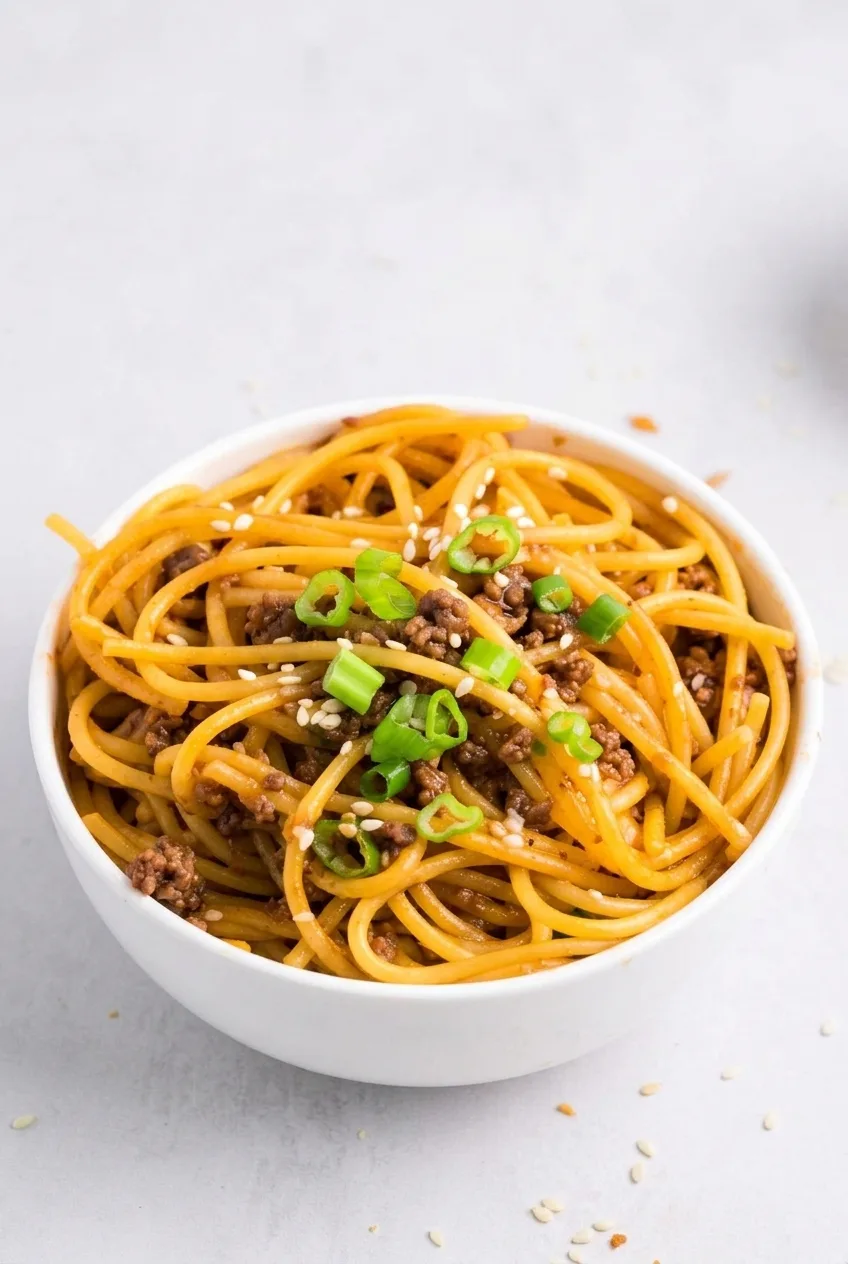
Mongolian Ground Beef Noodles
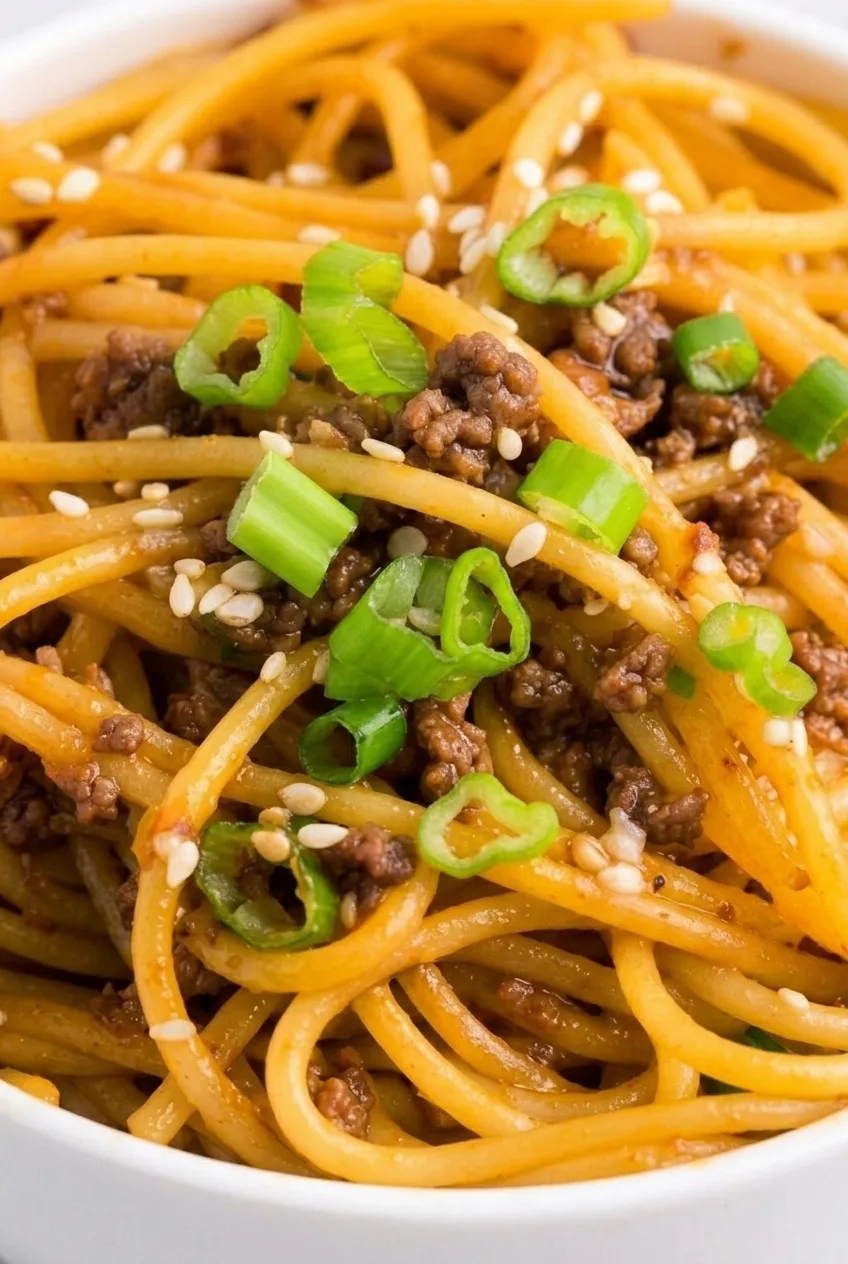
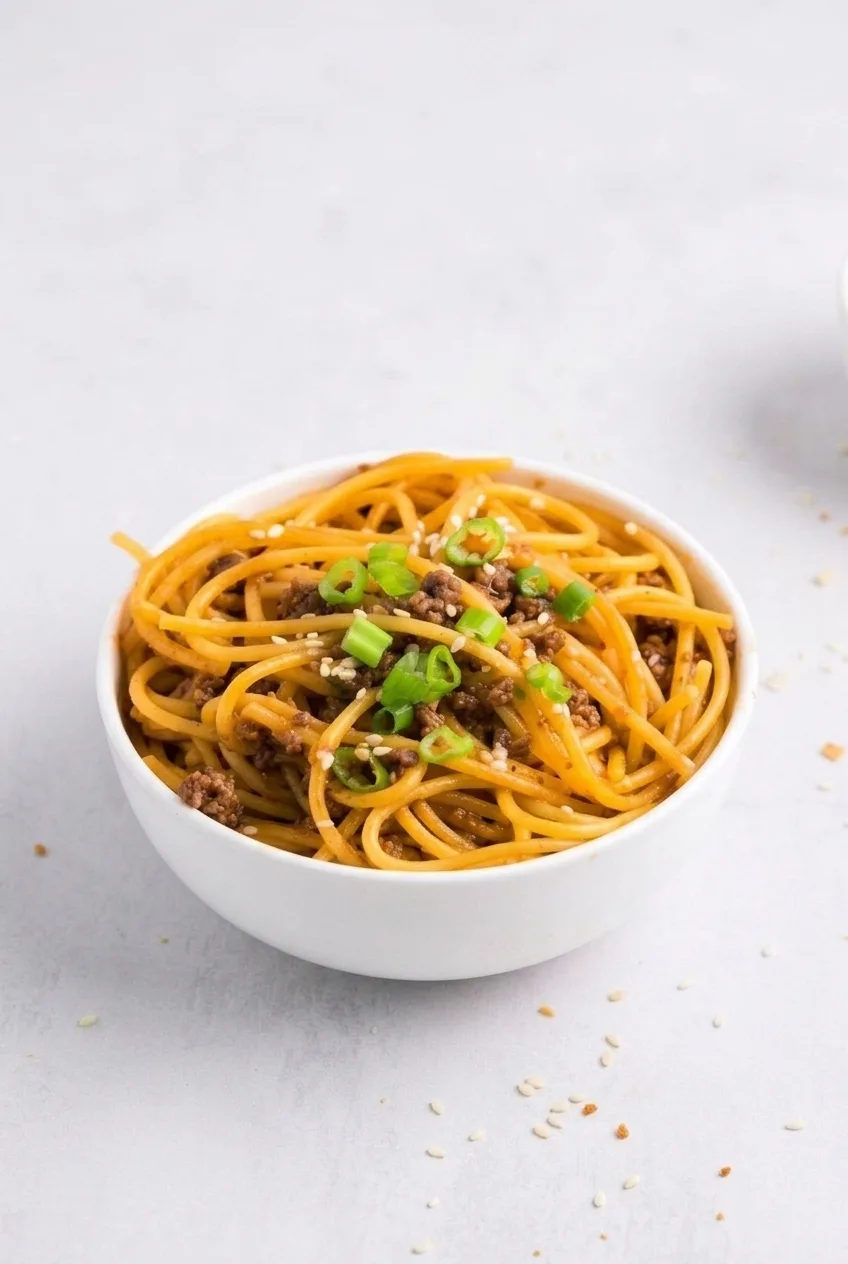
Spaghetti and browned ground beef are tossed in a glossy, savory-sweet Mongolian-style sauce, then finished with green onions and sesame seeds. Cook the spaghetti separately and stop at al dente: it will soften a little more during the final toss. The sauce needs only a brief simmer to coat the noodles without turning sticky.
Ingredients for Mongolian Ground Beef Noodles
Makes 4 servings. Prep time: 10 minutes. Cook time: about 20 minutes.
- 8 ounces dried spaghetti (225g)
- 1 pound lean ground beef, preferably 90/10 (450g)
- 1/3 cup low-sodium soy sauce (80g)
- 1/2 cup beef broth (120g)
- 2 tablespoons honey (40g)
- 2 tablespoons hoisin sauce (30g)
- 1 tablespoon cornstarch (8g)
- 3 garlic cloves, minced
- 1 tablespoon finely grated fresh ginger
- 1 teaspoon neutral cooking oil, only if needed
- 2 green onions, thinly sliced
- 1 teaspoon sesame seeds
Optional: 1/8 to 1/4 teaspoon red pepper flakes for heat, or 1 teaspoon toasted sesame oil to stir in just before serving.
How to Make Mongolian Ground Beef Noodles
- Cook the spaghetti: Bring a large pot of salted water to a boil. Cook the spaghetti according to the package directions, checking at the earliest suggested al dente time. It should still have a slight bite. Reserve about 1/2 cup pasta water, then drain. Time the spaghetti to finish close to the sauce so the strands do not sit and clump.
- Whisk the sauce: In a bowl, whisk the soy sauce, broth, honey, hoisin, and cornstarch until no dry starch remains.
- Brown the beef: Heat a 12-inch skillet over medium-high heat. Add the beef, using the oil only if needed to prevent sticking. Break it into small crumbles and cook uncovered for 5 to 7 minutes, stirring until browned and no longer pink. Ground beef should reach 160°F (70°C). Drain excess fat if the skillet looks greasy.
- Add the aromatics: Reduce the heat to medium. Stir in the garlic and ginger for 30 to 60 seconds, until fragrant but not browned.
- Simmer the sauce: Whisk the sauce again in case the cornstarch has settled, then pour it into the skillet. Stir as it reaches a gentle simmer. Cook for 1 to 3 minutes, checking after the first minute, until smooth and glossy and able to lightly coat a spoon. Lower the heat if it bubbles vigorously; do not reduce it to a sticky glaze.
- Toss the noodles: Add the drained spaghetti and toss over medium-low heat for 1 to 2 minutes, until the beef is distributed and the sauce coats the strands. If the sauce is too thick, add reserved pasta water 1 tablespoon at a time until the noodles loosen.
- Serve: Divide among bowls and top with the sliced green onions and sesame seeds. Serve promptly.
How to Keep the Sauce Glossy
Whisking cornstarch into the cool sauce ingredients prevents lumps when the mixture hits the hot skillet. Stop simmering once the sauce lightly coats a spoon; it will thicken further as it cools. If the noodles look dry before serving, toss them with a splash of reserved pasta water or broth.
Noodle and Sauce Variations
Spaghetti is the noodle for this version. Rice noodles, ramen, or glass noodles need their own package directions and may handle differently during the final toss. For a vegetable-added version, sauté 1 to 2 cups thinly sliced bell pepper or snap peas before adding the sauce; avoid crowding the skillet.
Tamari can replace soy sauce for a gluten-free adaptation only if the noodles, hoisin, and all other ingredients are also certified gluten-free. The standard recipe is not gluten-free or soy-free. Coconut aminos will change the sauce’s saltiness and sweetness. Arrowroot can replace cornstarch if whisked into the cool sauce; avoid boiling it vigorously for a prolonged time.
Serve with broccoli or snap peas on the side, and offer red pepper flakes or chili crisp at the table for adjustable heat. For another ground-beef dinner with a different flavor profile, try these Mexican Street Corn Sweet Potato Bowls with Beef.
Make-Ahead, Storage, and Reheating
For the best texture, prepare the beef and sauce ahead and cook the spaghetti close to serving time. Refrigerate leftovers in an airtight container for up to 3 days. Reheat gently in a skillet over medium-low heat with a splash of water or broth, stirring until hot. For the microwave, heat in short intervals, stirring between them and adding a little liquid if needed.
To freeze, cool the beef and sauce mixture and freeze it without the noodles for up to about 1 month. Thaw and reheat it, then toss with freshly cooked spaghetti. Fully assembled noodles may lose texture in the freezer.
Nutrition
Approximate nutrition per serving, based on 4 servings: 505 calories, 33g protein, 13g fat, and 60g carbohydrates. Approximate nutrition per 100g: 155 calories, 10g protein, 4g fat, and 18g carbohydrates. Values vary with ingredient brands, beef fat content, and the amount of liquid used to loosen the sauce.
Equipment
- Large pot
- 12-inch skillet
- Mixing bowl
- Whisk
- Colander
Ingredients
Noodles and beef
- 8 ounces dried spaghetti (225 g)
- 1 pound lean ground beef, preferably 90/10 (450 g)
- 1 teaspoon neutral cooking oil, only if needed
- Salt, for pasta water
- About 1/2 cup reserved pasta water, as needed
For the sauce
- 1/3 cup low-sodium soy sauce (80 g)
- 1/2 cup beef broth (120 g)
- 2 tablespoons honey (40 g)
- 2 tablespoons hoisin sauce (30 g)
- 1 tablespoon cornstarch (8 g)
- 3 garlic cloves, minced
- 1 tablespoon finely grated fresh ginger
For serving
- 2 green onions, thinly sliced
- 1 teaspoon sesame seeds
- Optional: 1/8 to 1/4 teaspoon red pepper flakes
- Optional: 1 teaspoon toasted sesame oil
Instructions
- Bring a large pot of salted water to a boil. Cook the spaghetti according to package directions, checking at the earliest suggested al dente time.
- Reserve about 1/2 cup pasta water, then drain the spaghetti. Time it to finish close to the sauce.
- Whisk the soy sauce, beef broth, honey, hoisin sauce, and cornstarch in a bowl until no dry starch remains.
- Heat a 12-inch skillet over medium-high heat. Add the ground beef and oil only if needed. Break the beef into small crumbles and cook uncovered for 5 to 7 minutes, stirring, until browned and no longer pink. Cook to 160°F (70°C); drain excess fat if needed.
- Reduce the heat to medium. Stir in the garlic and ginger for 30 to 60 seconds, until fragrant but not browned.
- Whisk the sauce again, then pour it into the skillet. Stir over a gentle simmer for 1 to 3 minutes, until smooth and glossy and able to lightly coat a spoon.
- Add the drained spaghetti and toss over medium-low heat for 1 to 2 minutes, until coated. Add reserved pasta water 1 tablespoon at a time if the sauce is too thick.
- Divide among bowls and top with green onions and sesame seeds. Serve promptly.
Tips
- Cook the spaghetti just to al dente; it will soften further when tossed with the sauce.
- Whisk the sauce again just before adding it, since the cornstarch can settle.
- Stop simmering when the sauce lightly coats a spoon; it thickens further as it cools.
- Use reserved pasta water a tablespoon at a time to loosen thick sauce or noodles that look dry.
Variations
- Add vegetables: Sauté 1 to 2 cups thinly sliced bell pepper or snap peas before adding the sauce, taking care not to crowd the skillet.
- Use different noodles: Replace the spaghetti with rice noodles, ramen, or glass noodles, cooking them according to their package directions.
- Gluten-free adaptation: Use tamari and ensure the noodles, hoisin, and all other ingredients are certified gluten-free.
- Adjust the heat: Add red pepper flakes to the sauce or serve chili crisp at the table.
- Use arrowroot: Replace the cornstarch with arrowroot, whisking it into the cool sauce and avoiding a prolonged vigorous boil.