

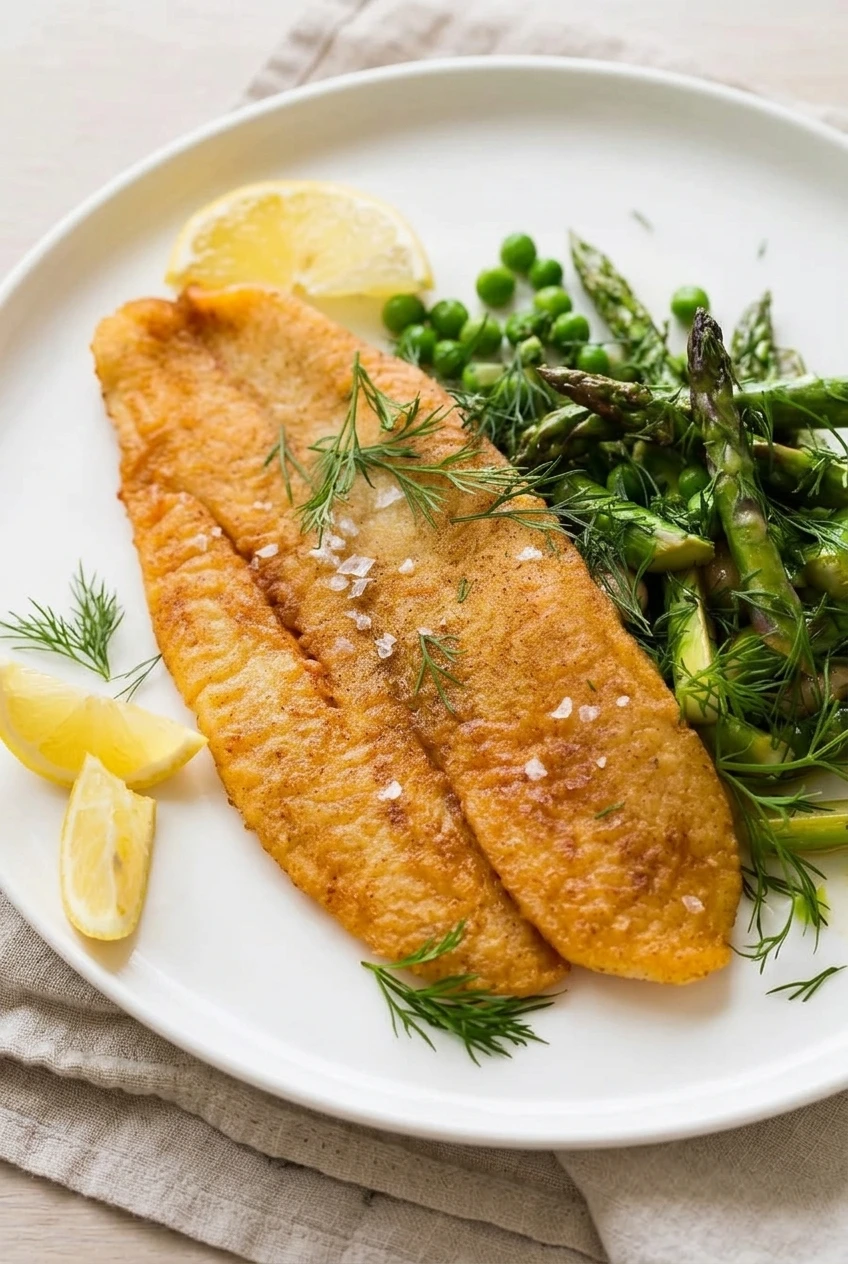
Pan-Fried Fish Fillets with Crispy Golden Crust
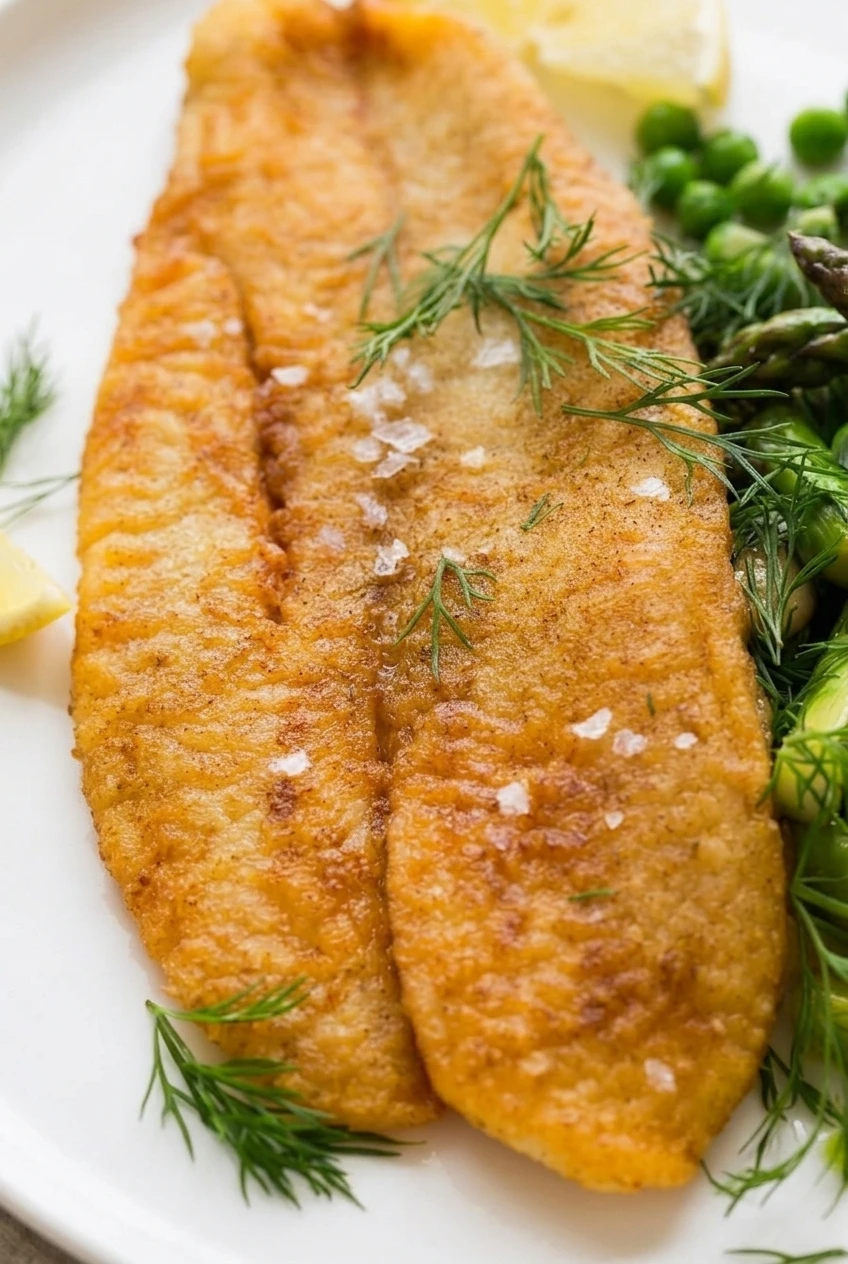
Thin white-fish fillets need only a light flour coating to develop a golden crust in the skillet. The key is to dry the fish well, shake off excess flour, and wait until the oil shimmers before frying. Leave the first side alone until it browns and releases easily; turning too soon can tear the delicate fillets.
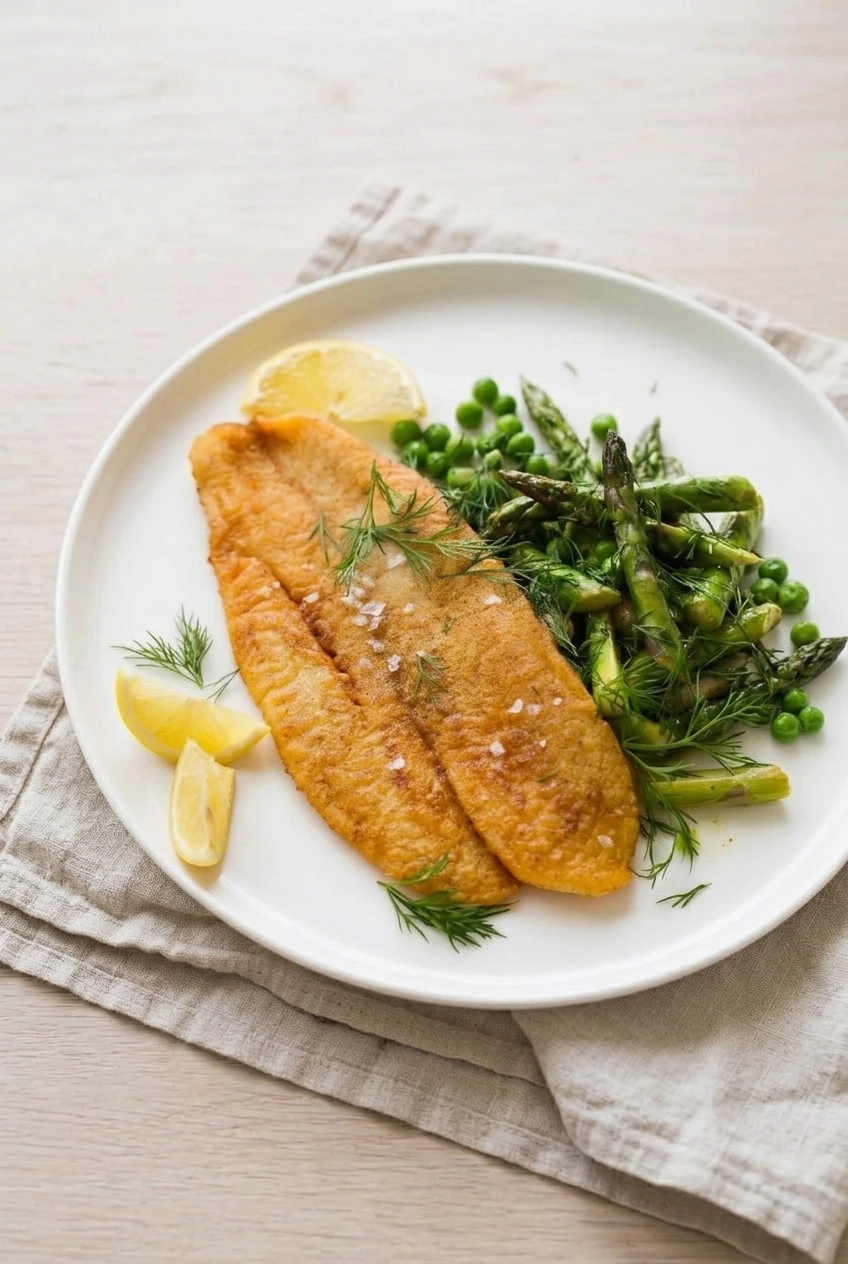
Serve the fish whole, with fresh dill, a little flaky salt, and lemon wedges. It is best eaten soon after frying, while the crust is still crisp.
Ingredients
- 4 skinless mild white-fish fillets, about 5 ounces each and ½ inch thick (about 570g total), such as cod, haddock, or pollock
- ½ cup all-purpose flour (60g)
- ¾ teaspoon fine salt, divided
- ¼ teaspoon ground black pepper
- About ½ cup neutral high-heat oil, such as canola or vegetable oil, or as needed for a shallow layer in the skillet
- 2 tablespoons loosely packed fresh dill fronds, plus more if desired
- 1 lemon, cut into wedges
- ½ teaspoon flaky sea salt, or to taste
Frozen fillets work if thawed completely. Blot them especially well before seasoning and dredging.
How to Pan-Fry the Fish
- Dry and season: Pat the fillets thoroughly dry on both sides with paper towels. Sprinkle with ¼ teaspoon of the fine salt.
- Dredge lightly: Mix the flour, remaining ½ teaspoon fine salt, and black pepper in a shallow dish. Coat each fillet, then shake off loose flour so only a thin, even layer remains.
- Heat the oil: Set a heavy 12-inch skillet, preferably stainless steel or cast iron, over medium to medium-high heat. Add enough oil to make a shallow layer about ⅛ inch deep. Wait until it shimmers but does not smoke. If it smokes, lower the heat before adding the fish.
- Cook the first side: Lay the fillets in the skillet in a single uncrowded layer, working in batches if needed. They should sizzle on contact. Cook uncovered and undisturbed; begin checking at about 2 minutes. When the undersides are golden and release easily under a thin spatula, turn the fillets. If they stick, wait briefly and test again rather than pulling them free.
- Finish cooking: Cook the second side for about 2–3 minutes, checking the thickest part early. The fish should be opaque through the center and flake easily; an instant-read thermometer should read 145°F (65°C). If the crust darkens before the center is done, lower the heat slightly.
- Drain and serve: Transfer the fish briefly to a wire rack or paper-towel-lined plate, keeping the fillets in a single layer. Add a little oil if the skillet is dry before cooking another batch. Finish with flaky salt and dill, and serve promptly with lemon wedges.
How to Keep the Flour Crust Crisp
Moisture on the fish can leave the coating pale or soft. A thick layer of flour can turn pasty or fall into the oil and burn. Dry the fillets well and shake off excess flour before they reach the pan. Give each fillet room to fry rather than steam, and avoid stacking the cooked fish while the next batch finishes.
Fish Thickness and Cooking Time
Allow about 2–3 minutes per side for fillets around ½ inch thick, or 8–12 minutes of cooking for two batches. Fish varies in shape, and thicker portions may need longer. Check the center rather than relying on the clock alone.
Serving Suggestions
For a plated meal, arrange two whole fillets slightly overlapping with lemon wedges alongside. Asparagus and peas make an optional side. Offer tartar sauce at the table, if desired, rather than covering the crust.
Storing and Reheating Leftovers
Cool leftovers promptly, then refrigerate in a covered container for up to about 2 days. The flour crust will soften in storage. Reheat in a 375°F (190°C) oven until hot; it may crisp somewhat, but it will not have quite the same texture as freshly fried fish. Avoid the microwave if preserving the crust matters.
Nutrition
Approximate nutrition per serving, based on 4 servings: 410 calories, 26g protein, 29g fat, and 13g carbohydrates. Per 100g: approximately 205 calories, 13g protein, 14g fat, and 6g carbohydrates. These estimates count all the listed oil; actual values depend on how much remains in the skillet and the type of fish used.
Equipment
- 12-inch heavy skillet
- Shallow dish
- Thin spatula
- Instant-read thermometer
- Wire rack or paper-towel-lined plate
Ingredients
- 4 skinless mild white-fish fillets, about 5 ounces each and 1/2 inch thick (about 570 g total), such as cod, haddock, or pollock
- 1/2 cup all-purpose flour (60 g)
- 3/4 teaspoon fine salt, divided
- 1/4 teaspoon ground black pepper
- About 1/2 cup neutral high-heat oil, such as canola or vegetable oil, or as needed for a shallow layer
- 2 tablespoons loosely packed fresh dill fronds, plus more if desired
- 1 lemon, cut into wedges
- 1/2 teaspoon flaky sea salt, or to taste
Instructions
- Pat the fillets thoroughly dry on both sides with paper towels. Sprinkle with 1/4 teaspoon of the fine salt.
- Mix the flour, remaining 1/2 teaspoon fine salt, and black pepper in a shallow dish.
- Coat each fillet in the flour mixture, then shake off the excess so only a thin, even layer remains.
- Set a heavy 12-inch skillet over medium to medium-high heat. Add enough oil to make a shallow layer about 1/8 inch deep.
- Wait until the oil shimmers but does not smoke. If it smokes, lower the heat before adding the fish.
- Arrange the fillets in a single uncrowded layer, working in batches if needed. Cook uncovered and undisturbed, beginning to check after about 2 minutes.
- When the undersides are golden and release easily under a thin spatula, turn the fillets. If they stick, wait briefly and test again.
- Cook the second side for about 2–3 minutes. Check the thickest part; the fish should be opaque through the center, flake easily, and reach 145°F (65°C). Lower the heat slightly if the crust darkens before the fish is cooked through.
- Transfer the fish to a wire rack or paper-towel-lined plate in a single layer. Add a little oil if needed before frying another batch.
- Finish with flaky salt and dill, and serve promptly with lemon wedges.
Tips
- Thaw frozen fillets completely and blot them especially well before seasoning.
- Shake off excess flour to prevent a pasty coating or burnt flour in the oil.
- Do not crowd the skillet; fry in batches so the fish browns instead of steaming.
- Leave the first side undisturbed until it is golden and releases easily.
- Keep cooked fillets in a single layer rather than stacking them.