

Prime Rib Roast
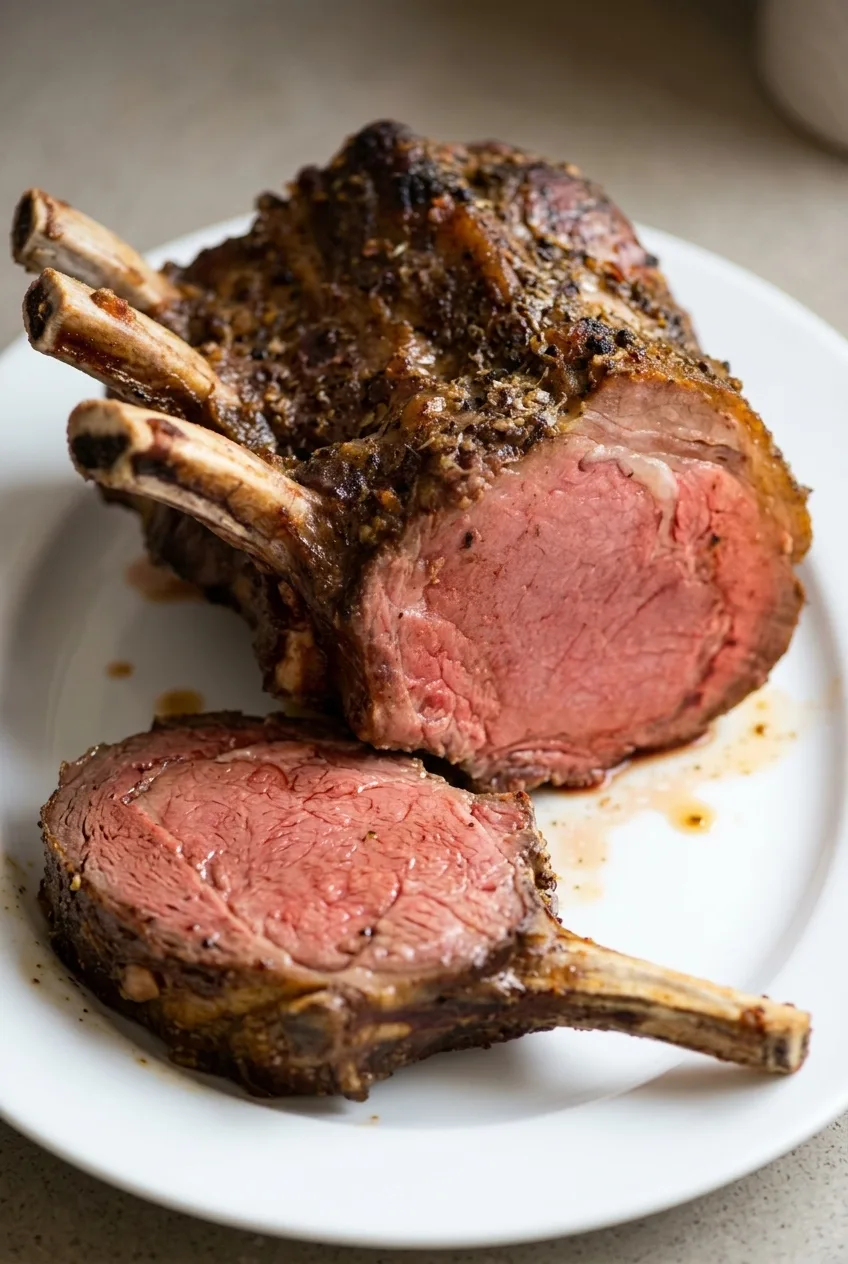
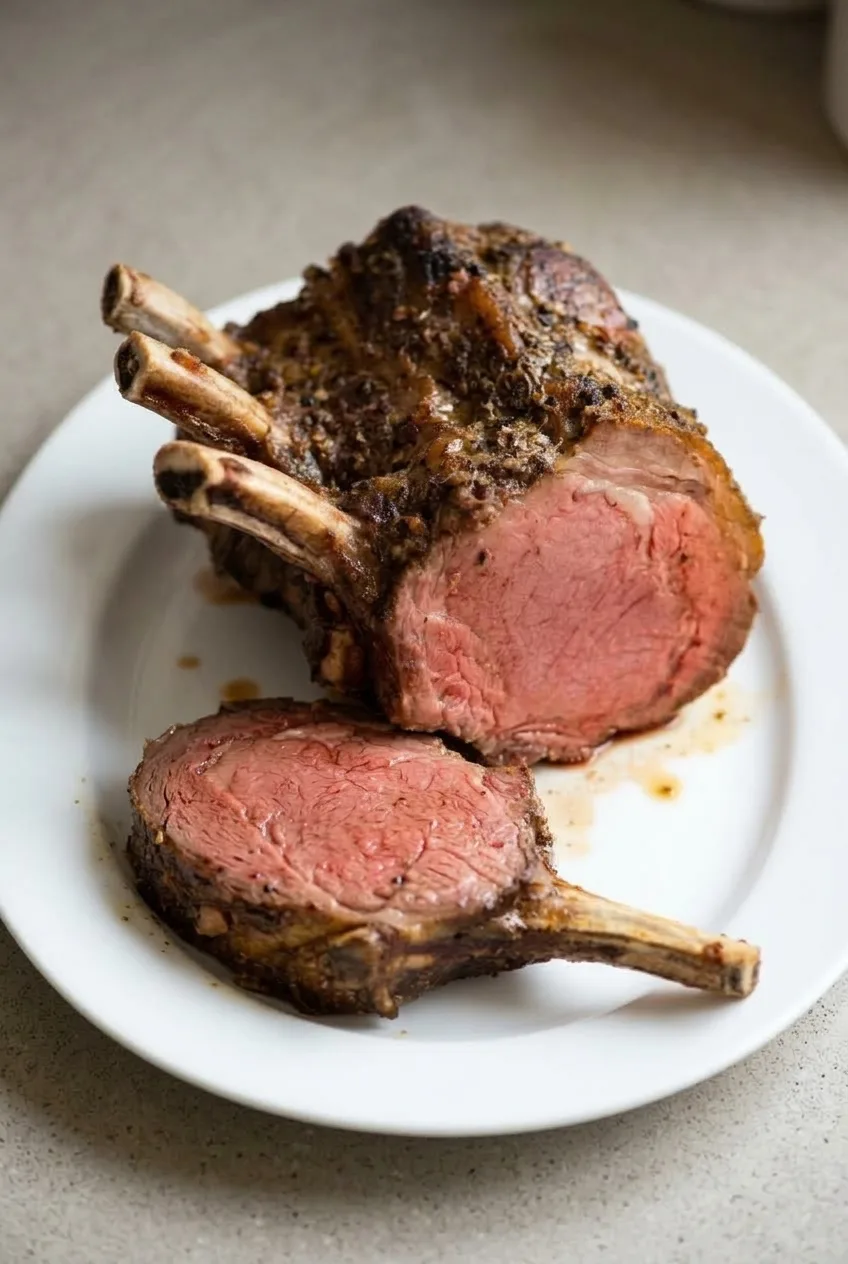
This bone-in prime rib gets its dark, garlic-herb crust from a hot start in the oven, then finishes at a lower temperature for a rosy center. The roast’s thickness and the oven can change the cooking time, so a thermometer matters more than the clock. After resting, cut one thick slice with its rib attached to reveal the pink center, then carve the remaining beef into smaller portions.
Serves: 6–8. Prep: 20 minutes, plus an optional 45-minute wait before roasting. Roast: Approximately 1 hour 45 minutes to 2 hours 30 minutes. Rest: 25–30 minutes.
Ingredients for Prime Rib Roast
- 1 bone-in standing rib roast, 2–3 ribs, about 5 lb (2.3 kg)
- 4 tablespoons unsalted butter, softened (55g)
- 1 tablespoon Diamond Crystal kosher salt or 2 teaspoons Morton kosher salt
- 2 teaspoons coarsely ground black pepper
- 4 garlic cloves, finely minced
- 2 teaspoons chopped fresh thyme leaves
- 1 teaspoon finely chopped fresh rosemary leaves
How to Roast Prime Rib
- Prepare the roast: Pat the beef dry and keep the ribs attached. If convenient, leave it out for up to 45 minutes while you prepare the oven; do not leave it at room temperature for more than 2 hours total. Fully preheat a conventional oven to 450°F (230°C).
- Season and position: Mix the butter, salt, pepper, garlic, thyme, and rosemary. Rub over the exposed beef and fat. Place the roast fat side up, bones down, on a rack in a sturdy roasting pan. If using an oven-safe probe, set its tip in the thickest meat, away from bone and large fat pockets.
- Brown the exterior: Roast uncovered at 450°F for 20 minutes. Without removing the roast, reduce the oven to 250°F (120°C).
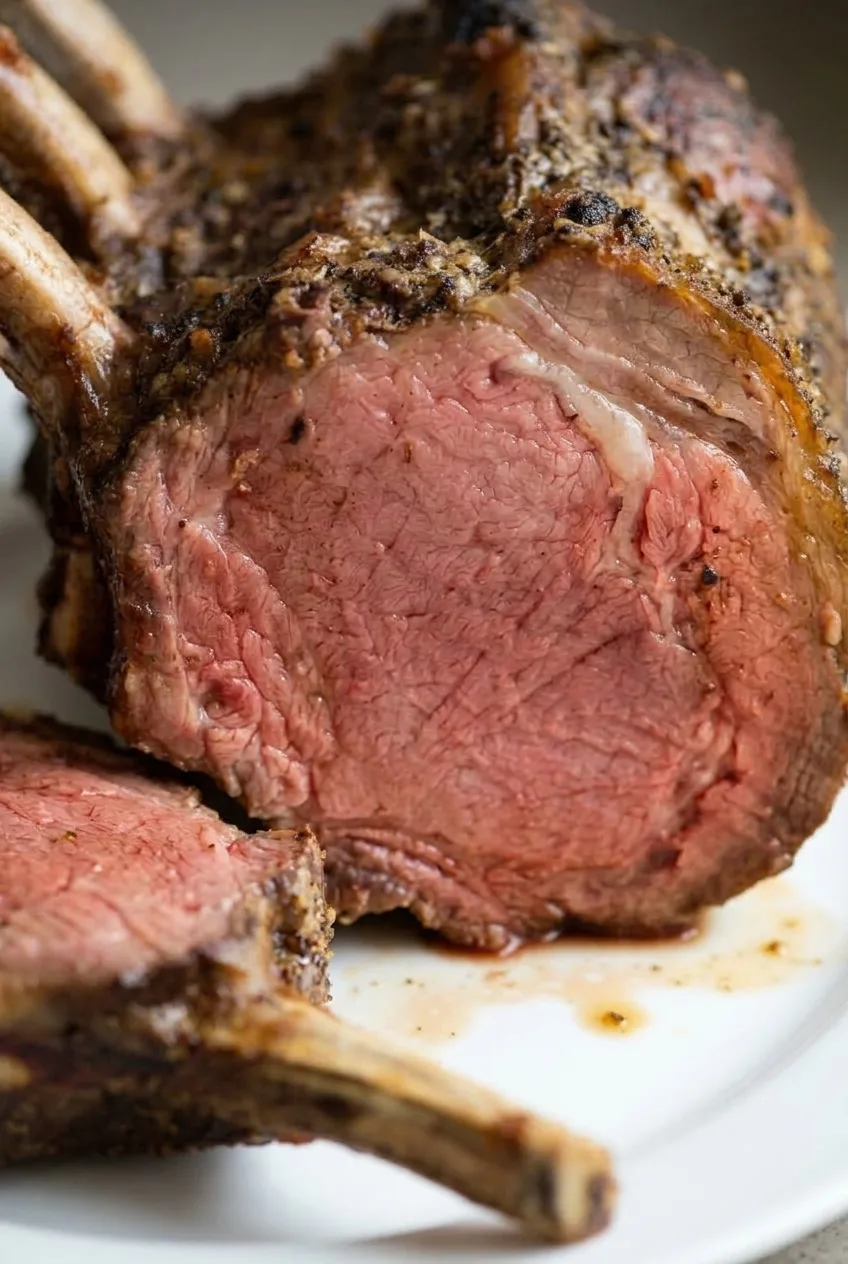
- Finish by temperature: Continue roasting until the center reaches 122–125°F (about 50°C) for the selected medium-rare finish. Begin checking about 75 minutes into this lower-temperature stage, or earlier if the roast is unusually thin. The exterior should be dark brown and herb-flecked. If drippings begin to scorch, carefully add about 1/2 cup hot water to the pan bottom, not over the beef; hot drippings may splash. Total oven time is approximately 1 hour 45 minutes to 2 hours 30 minutes, but use the thermometer to decide when to remove the roast.
- Rest: Transfer the roast to a large cutting board and tent loosely with foil for 25–30 minutes. Check its temperature during the rest; it may rise toward 130–135°F (about 55°C), but the amount of carryover varies. Rest before carving so less juice spills onto the board.
- Carve: Cut one thick slice alongside a rib, leaving the bone attached to the slice. Set it in front of the roast so the rosy cut face and rib bones remain visible. Carve the remaining beef into smaller serving portions.
Where to Put the Thermometer
Insert the probe into the center of the thickest meat without touching the ribs along one side or sitting in a large fat seam. If a reading seems out of line with earlier checks, test a second spot in the center. A thinner roast may reach the target sooner; a boneless roast also needs earlier checks and will not make the same bone-in presentation slice.
Pull Temperature, Resting, and Food Safety
The 122–125°F target is the temperature when the roast leaves the oven, not after it rests. The planned medium-rare result is approximately 130–135°F after resting, though that rise is not guaranteed. This medium-rare target is below the USDA minimum for beef roasts: 145°F (65°C) followed by a 3-minute rest. Cook to that minimum if you need to follow it.
Serving and Storing Prime Rib
Serve with mashed potatoes or potatoes au gratin and a green vegetable. Offer pan juices separately so they do not cover the crust or cut face. The thick bone-in slice is a presentation piece, not necessarily one individual serving.
Refrigerate leftovers promptly in a covered container and use within 3–4 days. Keeping the remaining beef in a larger piece lets you slice portions as needed. Warm thin slices gently only until heated to your desired level; aggressive reheating will cook the pink interior further.
For a beef centerpiece made from a different cut, try roasted beef tenderloin with garlic herb butter.
Nutrition
Approximate per serving: Based on 7 portions of cooked, edible beef, 550 calories, 35g protein, 45g fat, and 1g carbohydrates. Approximate per 100g: 315 calories, 20g protein, 26g fat, and less than 1g carbohydrates. Values vary substantially with fat, bone weight, trimming, and portion size.
Equipment
- Roasting pan with rack
- Oven-safe probe thermometer
- Cutting board
- Aluminum foil
Ingredients
- 1 bone-in standing rib roast, 2–3 ribs, about 5 lb (2.3 kg)
- 4 tablespoons unsalted butter, softened (55 g)
- 1 tablespoon Diamond Crystal kosher salt or 2 teaspoons Morton kosher salt
- 2 teaspoons coarsely ground black pepper
- 4 garlic cloves, finely minced
- 2 teaspoons chopped fresh thyme leaves
- 1 teaspoon finely chopped fresh rosemary leaves
- About 1/2 cup hot water, as needed if drippings begin to scorch
Instructions
- Pat the roast dry and keep the ribs attached. If convenient, let it sit out for up to 45 minutes while the oven heats; do not leave it at room temperature for more than 2 hours total.
- Preheat a conventional oven to 450°F (230°C).
- Mix the butter, salt, pepper, garlic, thyme, and rosemary. Rub the mixture over the exposed beef and fat.
- Place the roast fat side up and bones down on a rack in a sturdy roasting pan. If using an oven-safe probe, insert it into the thickest part of the meat, away from bone and large fat pockets.
- Roast uncovered at 450°F (230°C) for 20 minutes. Without removing the roast, reduce the oven temperature to 250°F (120°C).
- Continue roasting until the center reaches 122–125°F (about 50°C). Begin checking about 75 minutes into this lower-temperature stage, or earlier if the roast is unusually thin. If drippings begin to scorch, carefully add about 1/2 cup hot water to the pan bottom, not over the beef.
- Transfer the roast to a cutting board and tent loosely with foil for 25–30 minutes. Check the temperature during the rest; it may rise toward 130–135°F (about 55°C).
- Cut one thick slice alongside a rib, leaving the bone attached. Set it in front of the roast, then carve the remaining beef into serving portions.
Tips
- Use a thermometer rather than relying on the estimated cooking time.
- Place the thermometer in the thickest meat without touching bone or sitting in a large fat seam.
- If a thermometer reading seems inconsistent, check a second spot in the center.
- Add hot water carefully to the pan if drippings begin to scorch; hot drippings may splash.
- Rest the roast before carving to help reduce juice loss.