

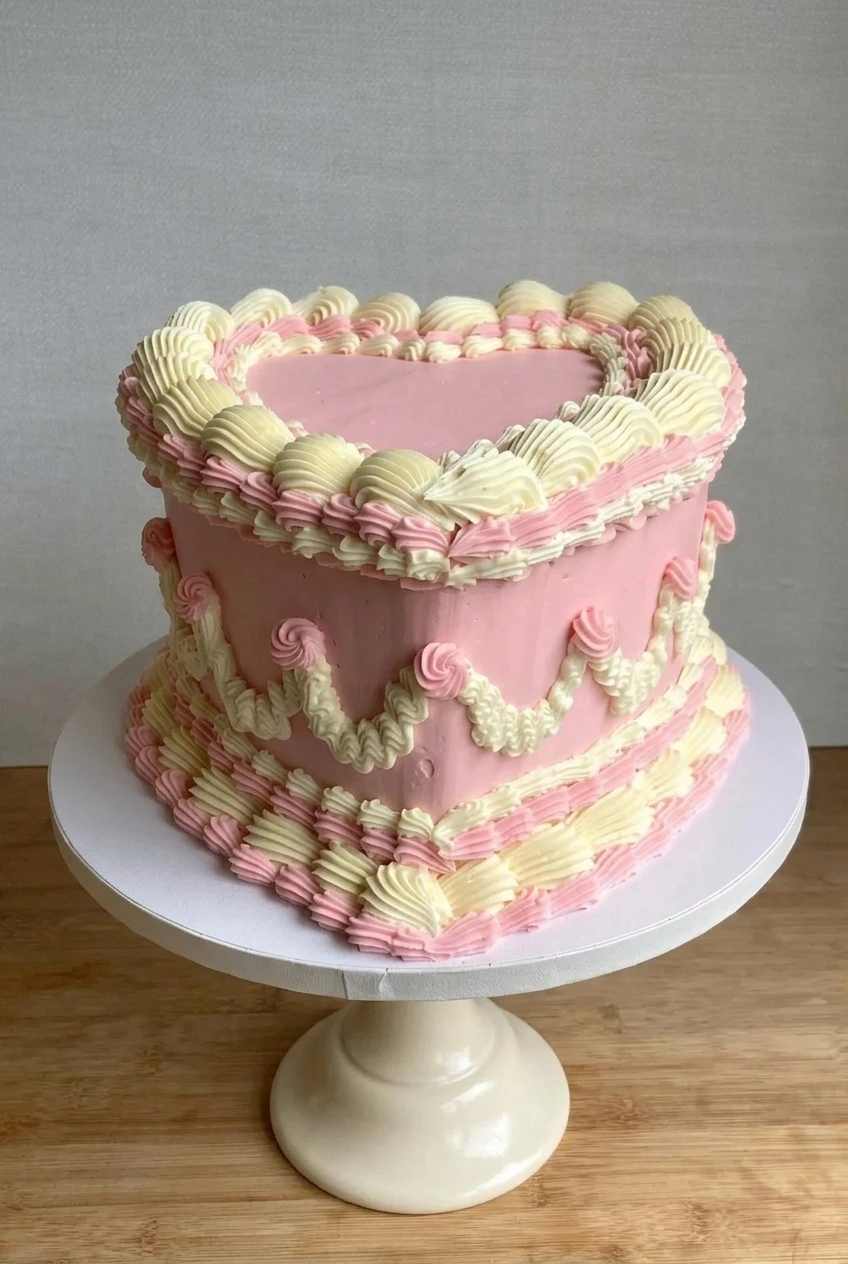
Vintage Heart Birthday Cake
Two vanilla cake layers become a tall heart-shaped cake without a specialty pan. Cut the fully cooled rounds using the same paper template, then secure any repositioned pieces with buttercream. A thin crumb coat and a short chill help hold the shape while you frost it.
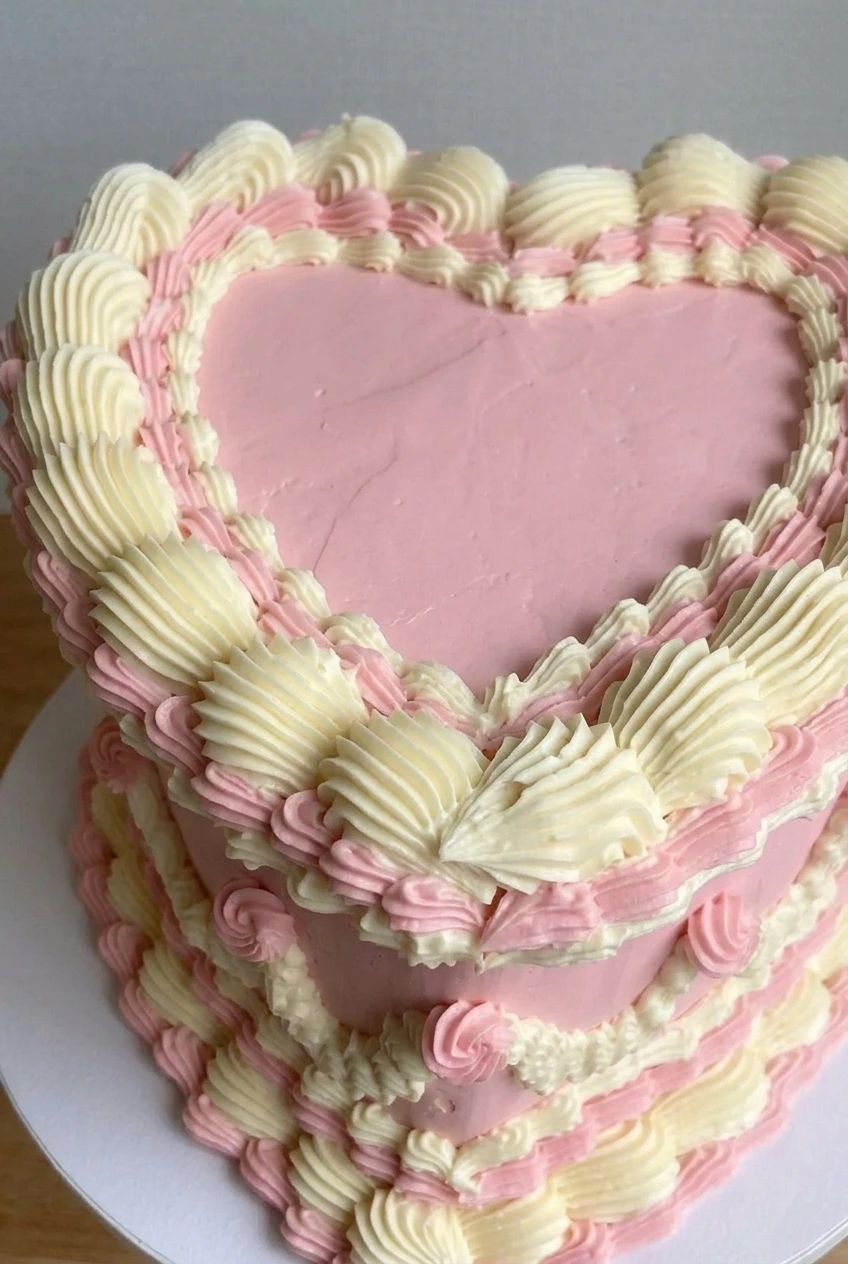
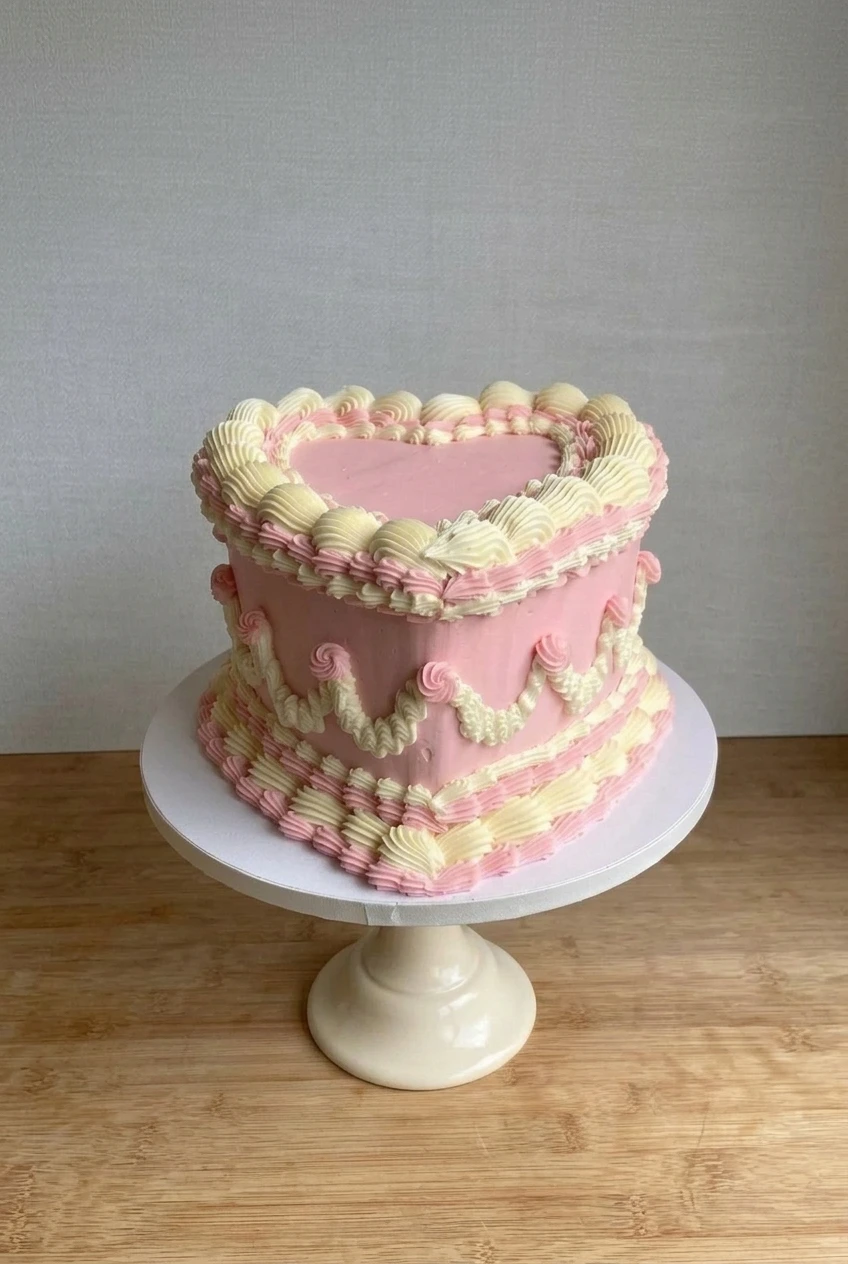
The finished cake has a smooth pale pink top and sides, framed by raised ivory-and-pink piping. Simple shells, swags, and rosettes give it a vintage-inspired finish without requiring an intricate pattern.
Ingredients for Vintage Heart Birthday Cake
For the cake
- 2 1/2 cups all-purpose flour (315g)
- 2 teaspoons baking powder
- 1/2 teaspoon fine salt
- 3/4 cup unsalted butter, softened
- 1 1/2 cups granulated sugar (300g)
- 3 large eggs
- 2 teaspoons vanilla extract
- 1/2 cup 2% or whole milk
- 3/4 cup sour cream (180g)
For the American buttercream
- 3 cups unsalted butter, softened
- About 7 1/2 cups confectioners’ sugar, sifted (900g)
- 2 teaspoons vanilla extract
- 1/4 to 1/3 cup 2% or whole milk, as needed
- A few drops of pale pink gel food coloring, added gradually
Optional
- A tiny amount of deeper pink gel food coloring for a second piping shade
How to Make Vintage Heart Birthday Cake
- Prepare the pans: Preheat the oven to 350°F (175°C). Line the bottoms of two 8-inch round cake pans with parchment rounds and lightly grease the pans with cooking spray or butter.
- Mix the batter: Whisk together the flour, baking powder, and salt. In a separate bowl, beat the butter and sugar until lighter and fluffy. Beat in the eggs and vanilla. Add the dry ingredients in portions, alternating with the milk, then mix in the sour cream on low speed. Stop as soon as no large streaks of flour remain; continued mixing can make the cake tough.
- Bake and cool: Divide the batter evenly between the pans and bake uncovered. Start checking at 23 minutes; the layers will generally take 23 to 25 minutes, though oven and pan differences may affect the time. Remove them when the tops look set and spring back lightly and a toothpick inserted in the center comes out clean or with a few dry crumbs. Cool briefly in the pans, then turn out and cool completely before cutting.
- Make the buttercream: Beat the butter until smooth. Gradually beat in the confectioners’ sugar and vanilla, then add milk a little at a time until the frosting spreads smoothly but still holds a piped ridge. Reserve some buttercream ivory for the borders. Tint enough of the remainder pale pink to coat the cake, and divide the rest between the ivory and pink piping portions.
- Shape and stack the heart: Level the cooled layers if needed. Use the same paper heart template to cut both layers, forming rounded upper lobes and a clear lower point. Attach any repositioned cake sections with buttercream and press them gently into place. Set the first heart layer on a round cake board, spread with buttercream, and stack the matching layer on top.
- Crumb-coat and chill: Spread a thin layer of buttercream over the top and sides, covering the joins and trapping loose crumbs. Refrigerate for 15 to 20 minutes, or until the coat feels firm enough to frost without pulling up crumbs.
- Apply the pink coat: Cover the chilled cake with pale pink buttercream. Smooth the top and sides, keeping the lobes and point distinct and leaving the center of the top mostly open.
- Pipe the borders: Pipe a prominent ivory-and-pink border around the top edge. Add repeated shells, swags, ruffles, or small rosettes along the sides and around the base. If the piping loses definition, briefly chill the cake or frosting before continuing. Let the borders set before moving the cake.
How to Shape a Heart from Round Layers
Trace an 8-inch circle on paper, then draw a heart within it with a notch between the upper lobes and a point at the bottom. Cut out the template and use it on both completely cooled layers so their outlines match. If you need to reposition cut sections to round out the lobes, spread buttercream on the joins and press the pieces gently into place. The crumb coat and chill help keep those joins secure during final frosting.
A heart-shaped pan can replace the cutting step, but its baking time will depend on the pan’s size and depth. Check for the same set-top and toothpick cues rather than assuming the round-pan timing will apply.
Make-Ahead and Storage
To make the layers ahead, wrap them well once completely cool and freeze for up to two months. Thaw them in the refrigerator before shaping and assembling.
Keep leftover cake airtight or wrapped for up to three days in a cool room or up to five days refrigerated. Keep the decorated cake covered and away from warmth, which can soften the buttercream. Leftover cake may also be wrapped and frozen for up to two months. Cut into wedges to serve; ice cream or a drizzle of raspberry sauce are optional.
Nutrition
Approximate nutrition per serving, based on 1/12 of the cake: 1,060 calories, 5g protein, 62g fat, and 121g carbohydrates. Approximate nutrition per 100g: 435 calories, 2g protein, 26g fat, and 50g carbohydrates. Values will vary with slice size and the amount of frosting used.
Equipment
- Two 8-inch round cake pans
- Parchment paper
- Electric mixer
- Mixing bowls
- Whisk
- Paper heart template
- Cake board
- Offset spatula
- Piping bags and tips
Ingredients
For the cake
- 2 1/2 cups all-purpose flour (315g)
- 2 teaspoons baking powder
- 1/2 teaspoon fine salt
- 3/4 cup unsalted butter, softened
- 1 1/2 cups granulated sugar (300g)
- 3 large eggs
- 2 teaspoons vanilla extract
- 1/2 cup 2% or whole milk
- 3/4 cup sour cream (180g)
For the American buttercream
- 3 cups unsalted butter, softened
- About 7 1/2 cups confectioners’ sugar, sifted (900g)
- 2 teaspoons vanilla extract
- 1/4 to 1/3 cup 2% or whole milk, as needed
- A few drops of pale pink gel food coloring, added gradually
Optional
- A tiny amount of deeper pink gel food coloring for a second piping shade
Instructions
- Preheat the oven to 350°F (175°C). Line the bottoms of two 8-inch round cake pans with parchment rounds and lightly grease the pans.
- Whisk together the flour, baking powder, and salt.
- Beat the butter and sugar until lighter and fluffy. Beat in the eggs and vanilla.
- Add the dry ingredients in portions, alternating with the milk. Mix in the sour cream on low speed, stopping when no large streaks of flour remain.
- Divide the batter evenly between the pans. Bake for 23 to 25 minutes, starting to check at 23 minutes.
- Remove the cakes when the tops are set and spring back lightly and a toothpick inserted in the center comes out clean or with a few dry crumbs. Cool briefly in the pans, then turn out and cool completely.
- Beat the butter for the buttercream until smooth. Gradually beat in the confectioners’ sugar and vanilla, then add milk a little at a time until the frosting spreads smoothly and holds a piped ridge.
- Reserve some buttercream ivory for the borders. Tint enough of the remaining frosting pale pink to coat the cake, then divide the rest between the ivory and pink piping portions.
- Trace an 8-inch circle on paper and draw a heart inside it, with rounded upper lobes, a notch between them, and a point at the bottom. Cut out the template.
- Level the cooled cake layers if needed. Use the same template to cut both layers into matching hearts. Attach any repositioned cake sections with buttercream and gently press them into place.
- Set one heart layer on a round cake board, spread it with buttercream, and stack the matching layer on top.
- Spread a thin layer of buttercream over the top and sides to trap crumbs and cover joins. Refrigerate for 15 to 20 minutes, until firm.
- Cover the chilled cake with pale pink buttercream. Smooth the top and sides while keeping the lobes and point distinct and the center of the top mostly open.
- Pipe an ivory-and-pink border around the top edge. Add shells, swags, ruffles, or small rosettes along the sides and around the base. Chill the cake or frosting briefly if the piping loses definition, and let the borders set before moving the cake.
Tips
- Use the same paper template for both layers so their outlines match.
- Cool the cake layers completely before cutting to help prevent crumbling.
- Mix the batter only until the large flour streaks disappear to avoid a tough cake.
- Add milk to the buttercream gradually so it stays firm enough for piping.
- Chill the crumb-coated cake until firm before applying the final pink coat.
Variations
- Deeper pink piping: Tint a small portion of the buttercream a deeper pink for a second piping shade.
- Heart-pan version: Use a heart-shaped pan instead of cutting round layers; check for doneness using the set-top and toothpick cues.