

Garlic Parmesan Pasta
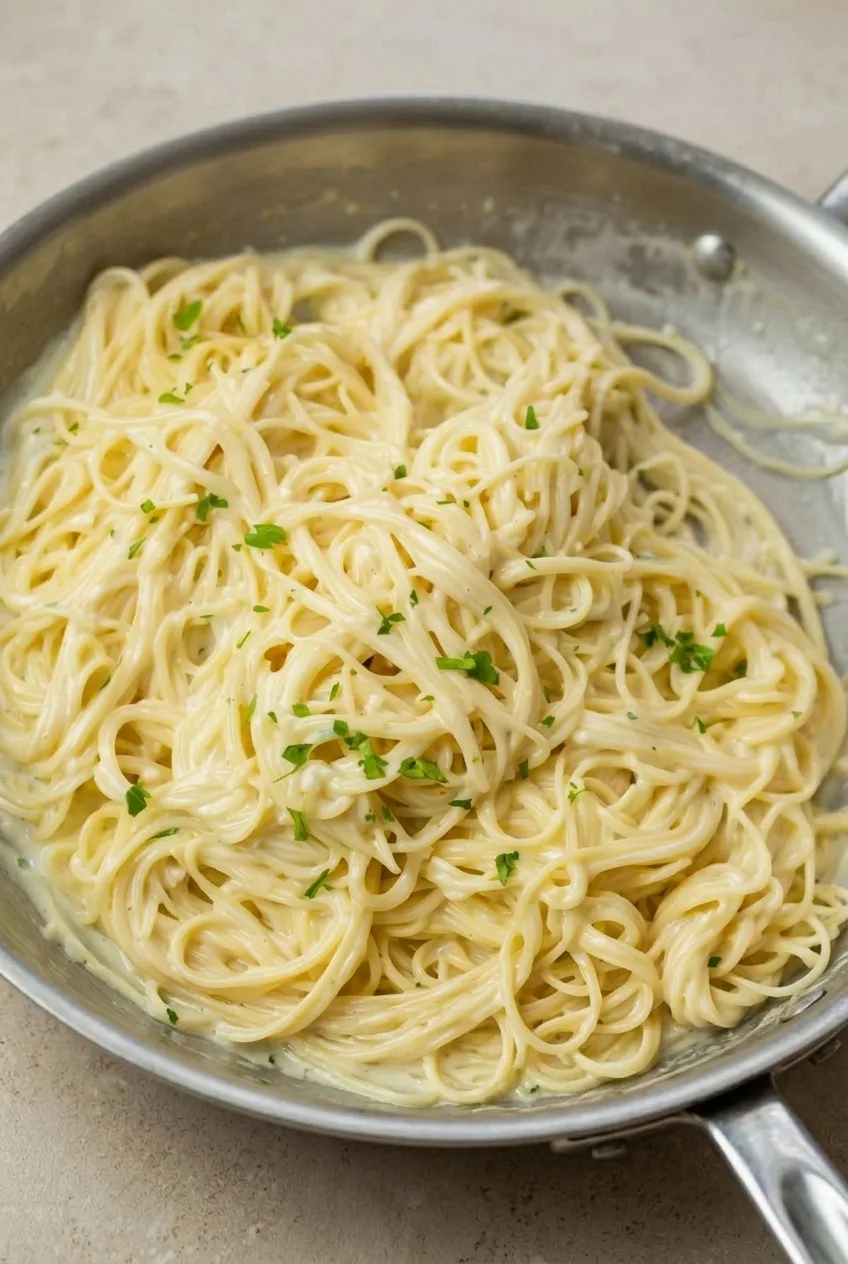
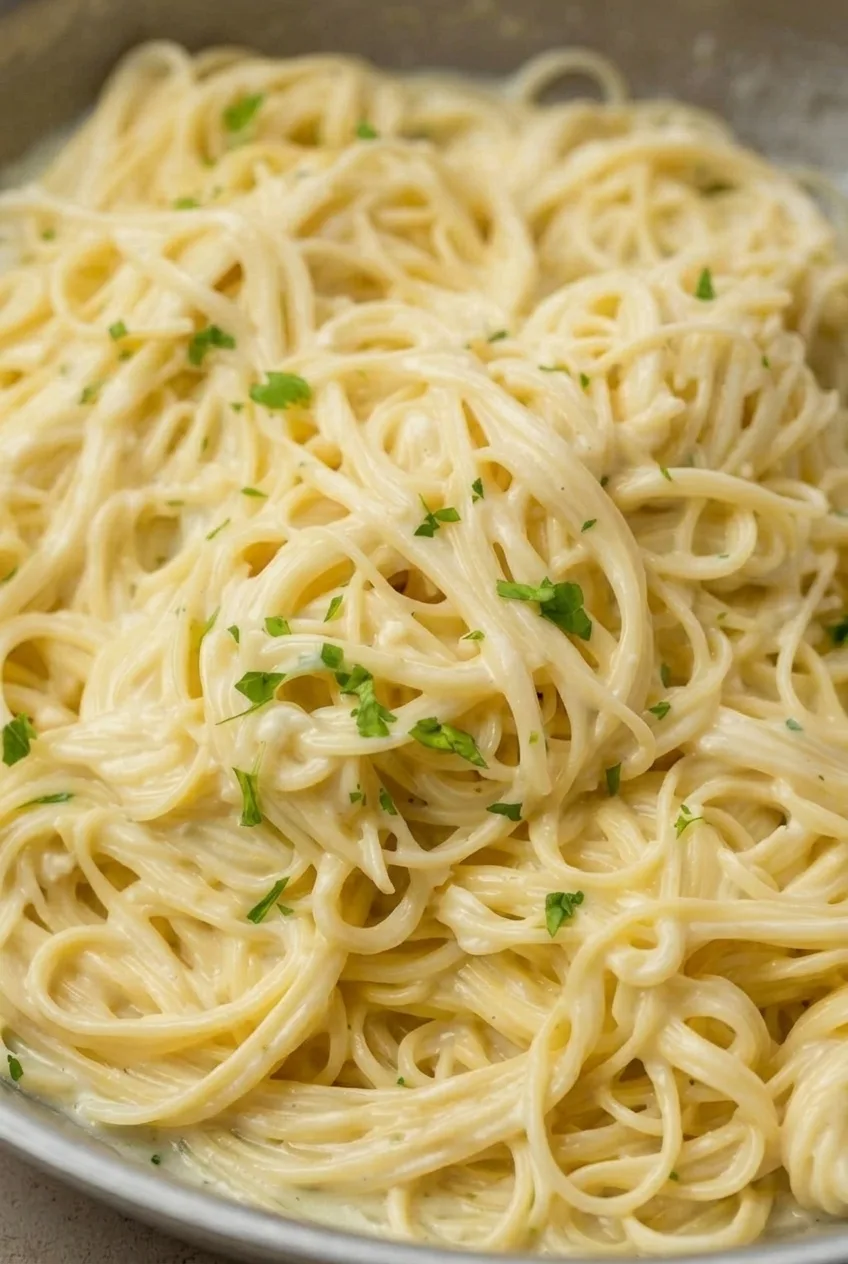
Long strands of spaghetti are coated in a pale, creamy sauce of garlic, butter, half-and-half, and Parmesan. This version cooks the pasta separately so you can stop it at al dente, then uses reserved pasta water to make the sauce glossy and loose enough to cling to the strands. Add the Parmesan off the heat to help it melt smoothly, and serve the pasta while the coating is still silky.
Makes 4 side portions or 2 to 3 main-course portions. Allow about 5 minutes to prep and 15 minutes to cook.
Ingredients for Garlic Parmesan Pasta
- 8 ounces spaghetti (225g)
- Kosher salt, about 1 tablespoon for a large pot of pasta water
- 3 tablespoons unsalted butter (45g)
- 3 medium garlic cloves, finely minced
- 3/4 cup half-and-half (180g)
- 1/4 teaspoon black pepper, or to taste
- 1 cup lightly packed finely grated Parmesan (90g), preferably freshly grated
- Reserved pasta water, up to 1/2 cup as needed
- 1 tablespoon finely chopped fresh parsley
How to Make Garlic Parmesan Pasta
- Cook the spaghetti: Bring a large pot of salted water to a boil. Add the spaghetti and cook uncovered according to the package directions, stirring soon after adding it and occasionally afterward. Start checking at the earliest package time; it usually takes about 8 to 10 minutes. The strands should be tender with slight firmness at the center.
- Reserve water and drain: Before draining, scoop out at least 1 cup of the starchy pasta water. Drain the spaghetti without rinsing it.
- Cook the garlic: While the spaghetti cooks, melt the butter in a wide 10- to 12-inch skillet over medium-low heat. Add the garlic and stir for 30 to 60 seconds, until fragrant but still pale. Lower the heat if it begins to brown.
- Warm the sauce: Add the half-and-half and black pepper. Stir over low to medium-low heat for 2 to 3 minutes, until warm and lightly steamy. Do not let it boil hard or reduce substantially.
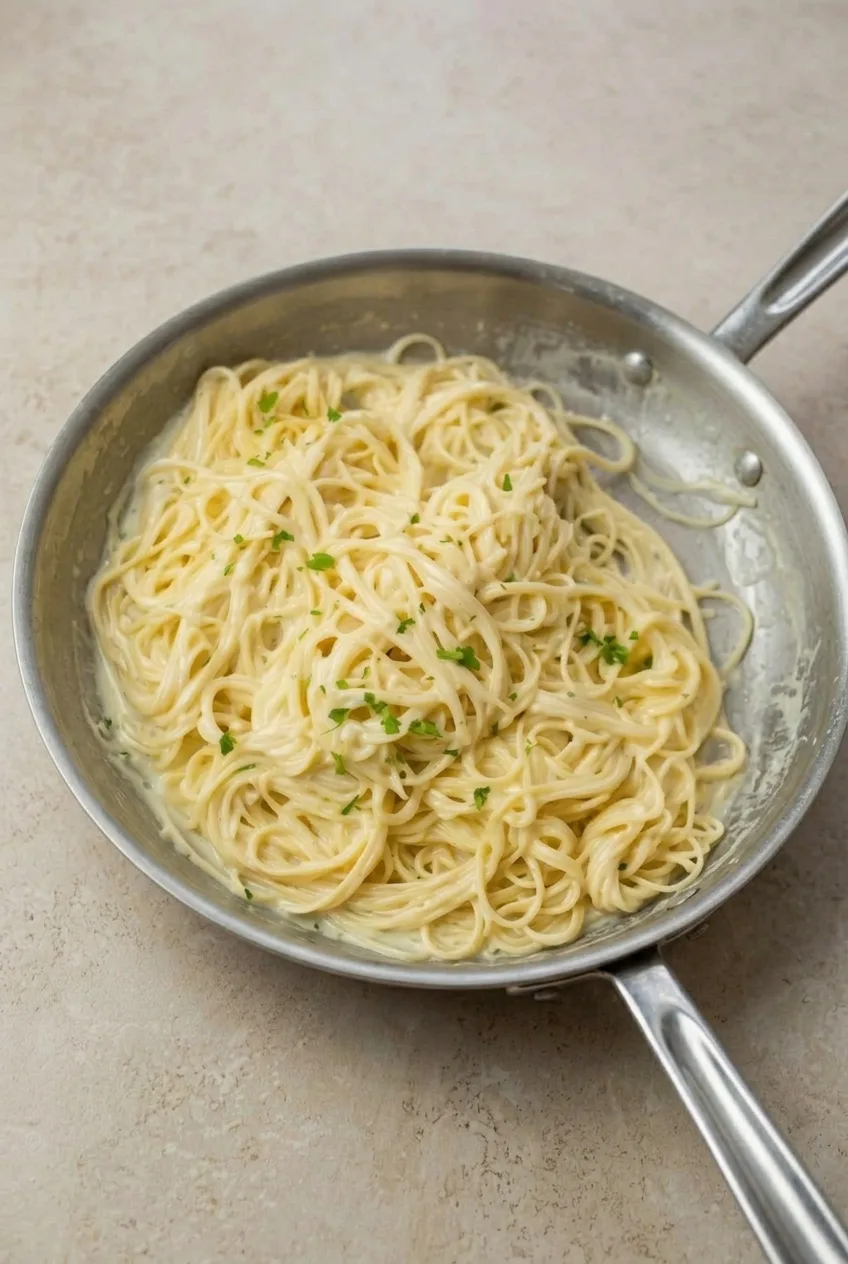
- Toss with Parmesan: Add the drained spaghetti and about 1/4 cup reserved pasta water to the skillet. Toss to coat, then turn off the heat. Stir in the Parmesan gradually until the sauce is smooth and clings to the strands. If it looks thick or dry, toss in more pasta water a splash at a time, using up to 1/2 cup total as needed.
- Finish and serve: Scatter the parsley lightly over the pasta. Serve promptly in the shallow skillet or a warm bowl, while the sauce is glossy.
How to Keep the Parmesan Sauce Smooth
Finely grated Parmesan incorporates more readily than coarse shreds. Letting the skillet come off the heat before adding the cheese helps prevent clumps or a grainy sauce. Stir it in a little at a time, and do not bring the finished sauce back to a boil.
When to Add More Pasta Water
The spaghetti continues absorbing sauce after it is tossed. If the coating tightens before serving, add a small splash of the reserved water and toss again. Stop when the strands look glossy and coated, without liquid pooling in the pan.
Serving and Variations
Serve as a main dish or alongside roasted broccoli, a green salad, or garlic bread. For a less creamy version, omit the half-and-half and make a lighter sauce with butter, Parmesan, and reserved pasta water; it will not have the same creamy finish.
For a seafood variation, try Creamy Garlic Shrimp Pasta with Parmesan Sauce. For a different cream-free spaghetti dinner, see Classic Spaghetti Carbonara Without Cream.
Storing and Reheating Leftovers
Refrigerate cooled leftovers in an airtight container for up to 3 days. The spaghetti will absorb sauce as it sits, so leftovers will be thicker than freshly made pasta.
Reheat gently in a skillet over low heat with a splash of water, milk, or half-and-half, stirring until warmed and loosened. For one portion, microwave in short intervals, stirring between intervals and adding a little liquid if needed. Avoid a hard boil.
Nutrition
Approximate nutrition per side portion, based on 4 portions: 450 calories, 18g protein, 21g fat, and 46g carbohydrates. Per 100g: approximately 210 calories, 8g protein, 10g fat, and 22g carbohydrates. Values vary with the ingredients used.
Equipment
- Large pot
- 10- to 12-inch skillet
- Colander
- Measuring cup
Ingredients
- 8 ounces spaghetti (225 g)
- Kosher salt, about 1 tablespoon for a large pot of pasta water
- 3 tablespoons unsalted butter (45 g)
- 3 medium garlic cloves, finely minced
- 3/4 cup half-and-half (180 g)
- 1/4 teaspoon black pepper, or to taste
- 1 cup lightly packed finely grated Parmesan (90 g), preferably freshly grated
- Reserved pasta water, up to 1/2 cup as needed
- 1 tablespoon finely chopped fresh parsley
Instructions
- Bring a large pot of salted water to a boil. Add the spaghetti and cook uncovered according to the package directions, stirring soon after adding and occasionally afterward. Start checking at the earliest package time; it usually takes 8 to 10 minutes. Cook until tender with slight firmness at the center.
- Before draining, scoop out at least 1 cup of the pasta water. Drain the spaghetti without rinsing.
- While the spaghetti cooks, melt the butter in a wide 10- to 12-inch skillet over medium-low heat. Add the garlic and stir for 30 to 60 seconds, until fragrant but still pale. Lower the heat if it begins to brown.
- Add the half-and-half and black pepper. Stir over low to medium-low heat for 2 to 3 minutes, until warm and lightly steamy. Do not let it boil hard or reduce substantially.
- Add the drained spaghetti and about 1/4 cup reserved pasta water to the skillet. Toss to coat, then turn off the heat.
- Stir in the Parmesan gradually until the sauce is smooth and clings to the spaghetti. If the pasta looks thick or dry, add more pasta water a splash at a time, using up to 1/2 cup total as needed.
- Scatter the parsley over the pasta and serve promptly while the sauce is glossy.
Tips
- Finely grated Parmesan melts more readily than coarse shreds.
- Take the skillet off the heat before adding the Parmesan to help prevent clumps or a grainy sauce.
- Add pasta water a splash at a time until the spaghetti looks glossy and coated, without liquid pooling in the pan.
- Do not boil the finished sauce.
Variations
- Cream-Free Garlic Parmesan Pasta: Omit the half-and-half and make a lighter sauce with butter, Parmesan, and reserved pasta water.