

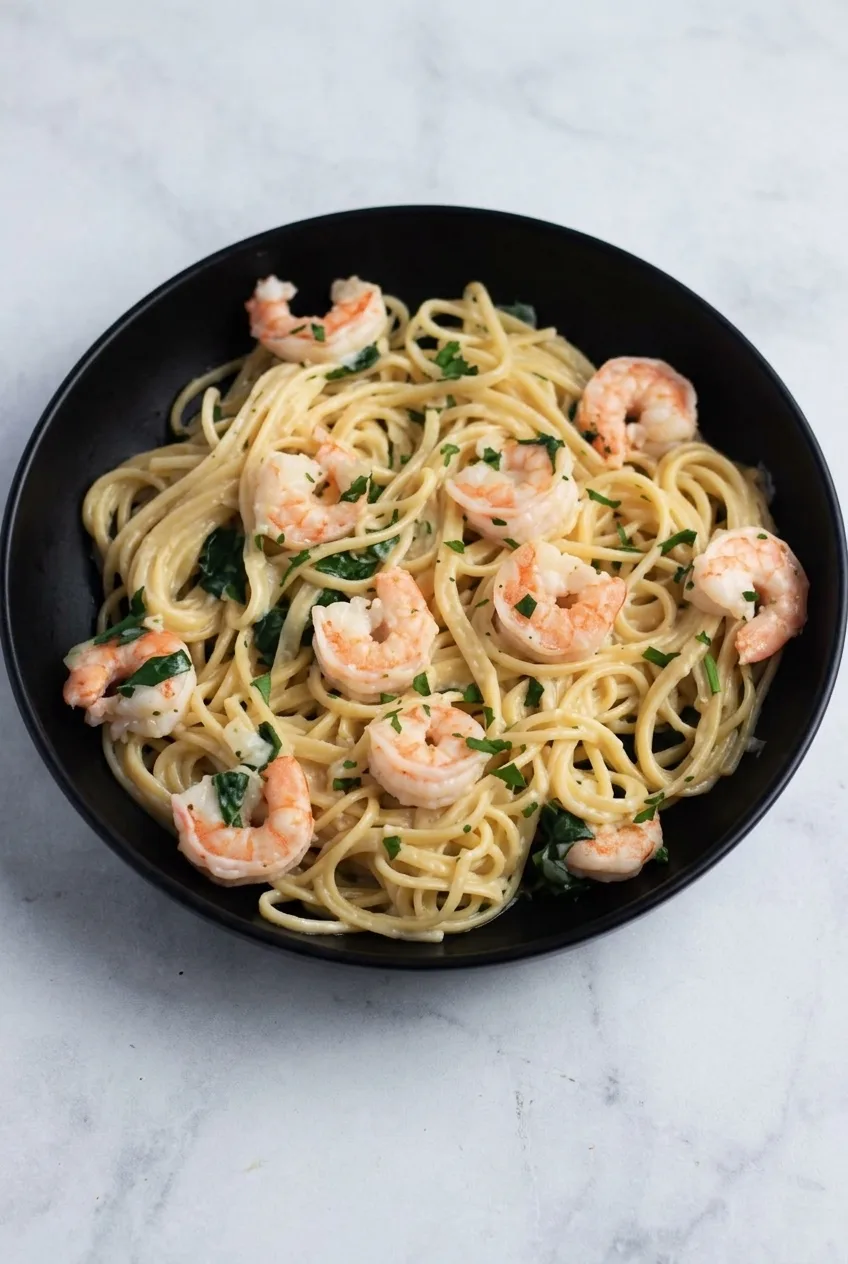
Creamy Garlic Shrimp Pasta
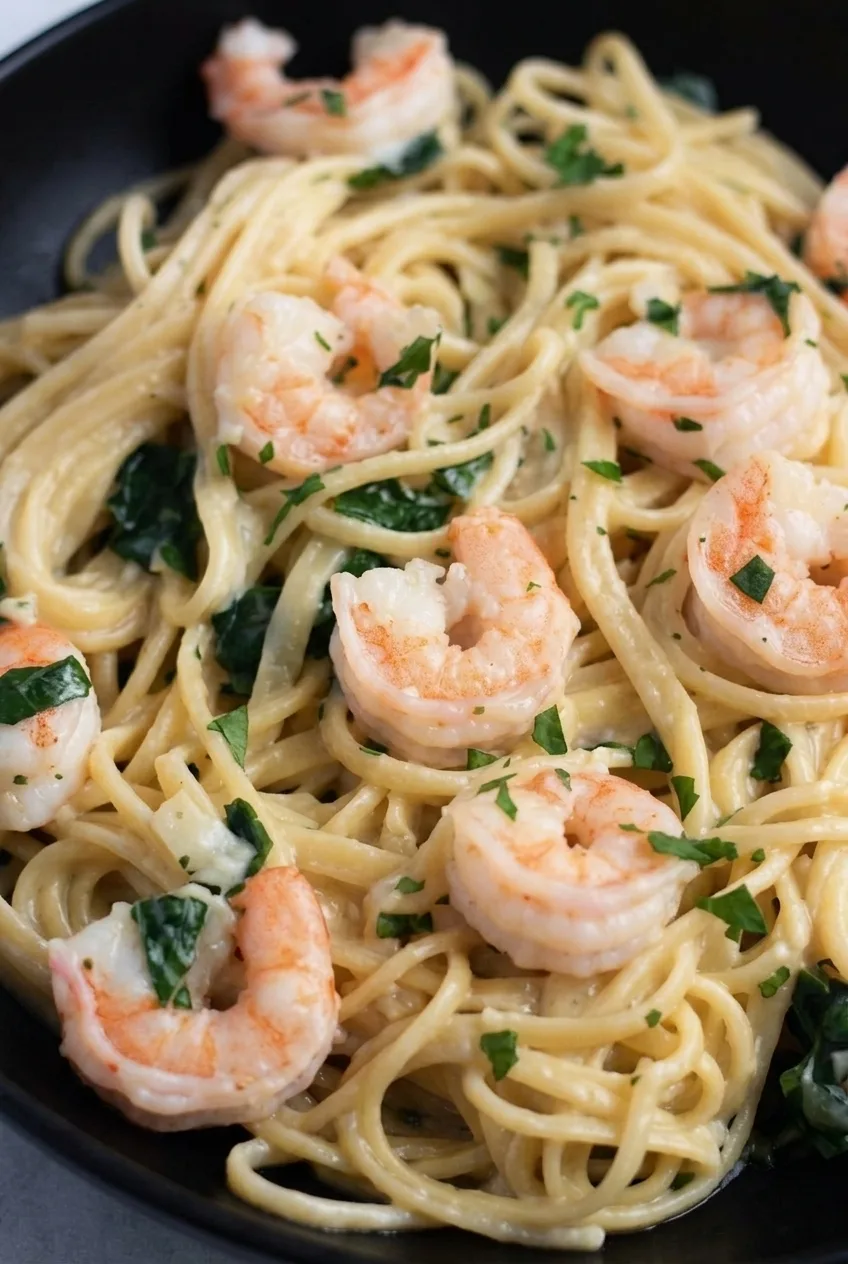
Whole shrimp and linguine are tossed in a light garlic-Parmesan cream sauce, then finished with lemon juice and parsley. The sauce should cling to the long strands without pooling in the bowl.
Sear the shrimp briefly and set it aside while the sauce cooks; returning it at the end helps keep it tender. Reserve some pasta water before draining so you can loosen the sauce a splash at a time as it coats the noodles.
Ingredients for Creamy Garlic Shrimp Pasta
- 8 ounces linguine (225g)
- 1 pound large raw shrimp, peeled and deveined (450g)
- 1 tablespoon olive oil
- 2 tablespoons unsalted butter
- 4 cloves garlic, finely minced (about 12g)
- 1 cup heavy cream
- 1/2 cup lightly packed freshly grated Parmesan (45g)
- 1 tablespoon lemon juice, or to taste
- Kosher salt, for the pasta water and about 1/4 teaspoon for the shrimp, plus more to taste
- 1/4 teaspoon black pepper, plus more to taste
- 2 tablespoons finely chopped fresh parsley (about 8g)
Fettuccine or spaghetti can replace the linguine; follow the package cooking time. If using frozen shrimp, thaw it completely, drain it, and pat it dry before seasoning. For mild heat, add an optional pinch of red pepper flakes to the butter before the garlic.
How to Make Creamy Garlic Shrimp Pasta
- Boil the linguine: Bring a large pot of salted water to a boil. Cook the pasta until al dente, checking at the earliest time on the package. Before draining, reserve about 1 cup of pasta water.
- Season the shrimp: Pat the shrimp thoroughly dry. Season with about 1/4 teaspoon kosher salt and a little of the black pepper.
- Sear and set aside: Heat a 12-inch skillet over medium-high heat until hot, then add the olive oil. Arrange the shrimp in a single layer, working in batches if needed so they sear rather than steam. Check after about 1 minute on the first side, then turn once. Large shrimp may take about 1–2 minutes per side, depending on their size and the pan heat. Transfer them to a plate when pink and opaque throughout; an instant-read thermometer should register 145°F (65°C).
- Make the garlic cream sauce: Reduce the heat to medium-low and melt the butter in the same skillet. Stir in the garlic just until fragrant, keeping it pale. Pour in the cream, scrape up the browned bits, and simmer gently, uncovered, for about 3–5 minutes, until the sauce lightly coats a spoon.
- Add the Parmesan: Lower the heat and stir in the Parmesan until melted. Stir in the lemon juice and remaining black pepper. Keep the sauce below a hard boil.
- Coat the pasta: Add the drained linguine and toss over low heat. Add reserved pasta water a splash at a time until the sauce lightly coats the strands without pooling; you may not need all of it. Taste and add salt if needed, keeping in mind that the Parmesan and pasta water also season the sauce.
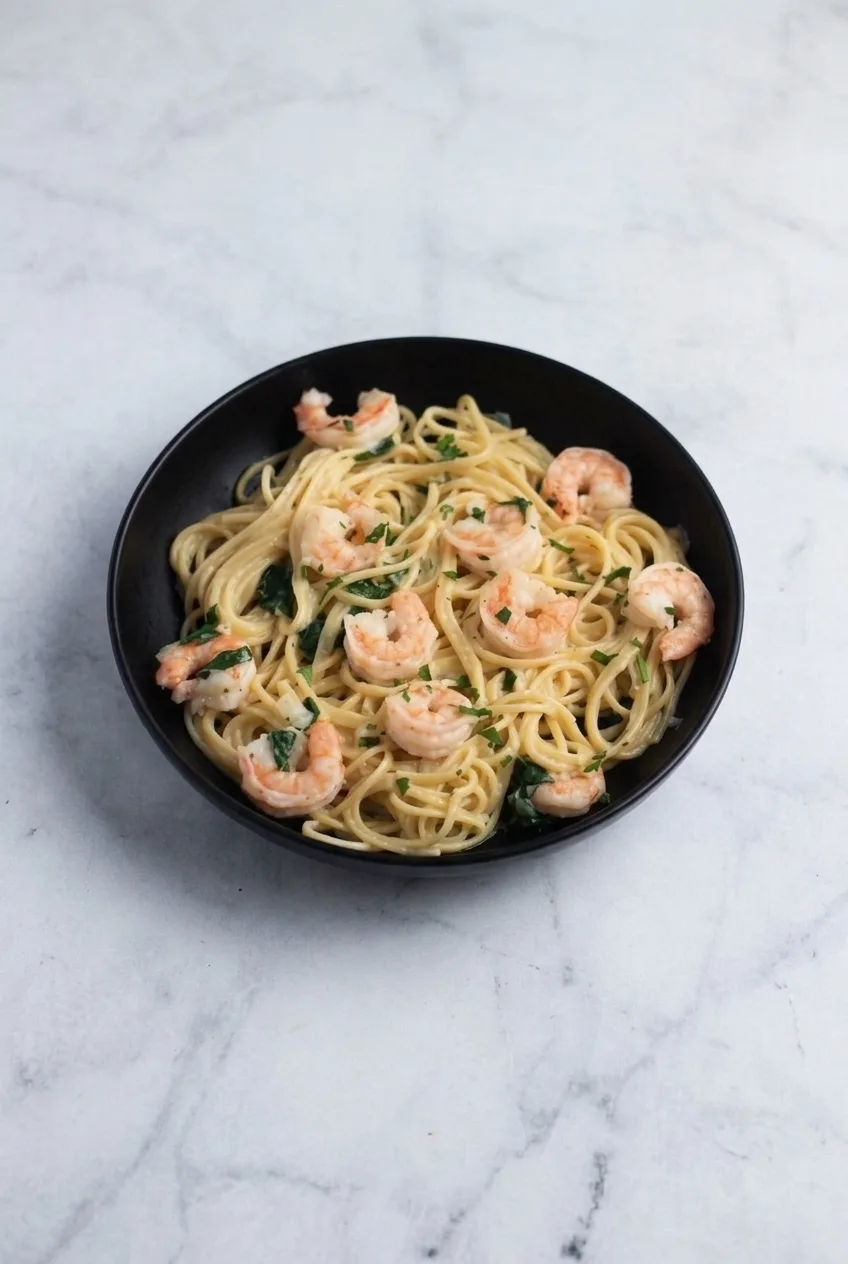
- Finish and serve: Fold in the shrimp and any juices from the plate just long enough to warm through, about 1 minute. Remove from the heat, scatter the parsley over the pasta, and serve promptly in shallow bowls.
How to Keep the Shrimp Tender
Shrimp size changes the cooking time, so check for pink, opaque flesh rather than relying only on the clock. Remove the shrimp as soon as it is cooked instead of leaving it in the skillet while the sauce simmers. Smaller shrimp may be ready sooner than the times given for large shrimp.
How to Get a Sauce That Clings
Let the cream simmer gently before adding the Parmesan over low heat. Freshly grated cheese melts more smoothly than pre-shredded cheese. If the sauce still looks thin, give it a little more time at a gentle simmer before adding any pasta water.
Once the linguine is in the skillet, use small splashes of reserved pasta water to adjust the coating. Leave the sauce slightly looser than you want on the plate: it thickens as the pasta rests and cools.
Storing and Reheating Leftovers
Refrigerate leftovers in an airtight container and use within 2 days. Reheat gently over low heat on the stovetop or in short microwave intervals, stirring as needed. Add a splash of water, milk, or cream to loosen the sauce as it warms.
For another rich pasta dinner with a different sauce style, try classic spaghetti carbonara.
Nutrition
Approximate nutrition per serving, based on 4 servings: 655 calories, 35g protein, 36g fat, and 45g carbohydrates. Approximate nutrition per 100g: 200 calories, 11g protein, 11g fat, and 14g carbohydrates. Values are estimates and vary with the ingredients and final serving size.
Equipment
- large pot
- 12-inch skillet
- colander
- instant-read thermometer
Ingredients
Pasta and Shrimp
- 8 ounces linguine (225g)
- 1 pound large raw shrimp, peeled and deveined (450g)
- 1 tablespoon olive oil
Sauce and Seasoning
- 2 tablespoons unsalted butter
- 4 cloves garlic, finely minced (about 12g)
- 1 cup heavy cream
- 1/2 cup lightly packed freshly grated Parmesan (45g)
- 1 tablespoon lemon juice, or to taste
- Kosher salt, for the pasta water and about 1/4 teaspoon for the shrimp, plus more to taste
- 1/4 teaspoon black pepper, plus more to taste
- 2 tablespoons finely chopped fresh parsley (about 8g)
Instructions
- Bring a large pot of salted water to a boil. Cook the linguine until al dente, checking at the earliest package time. Reserve about 1 cup of pasta water, then drain.
- Pat the shrimp thoroughly dry and season with about 1/4 teaspoon kosher salt and a little black pepper.
- Heat a 12-inch skillet over medium-high heat until hot, then add the olive oil. Arrange the shrimp in a single layer, working in batches if needed.
- Sear the shrimp for about 1 minute on the first side, then turn once. Cook for about 1–2 minutes per side, until pink and opaque throughout and an instant-read thermometer registers 145°F (65°C). Transfer to a plate.
- Reduce the heat to medium-low and melt the butter in the same skillet. Stir in the garlic just until fragrant, keeping it pale.
- Pour in the cream, scrape up the browned bits, and simmer gently, uncovered, for 3–5 minutes, until the sauce lightly coats a spoon.
- Lower the heat and stir in the Parmesan until melted. Stir in the lemon juice and remaining black pepper; do not let the sauce boil hard.
- Add the drained linguine and toss over low heat. Add reserved pasta water a splash at a time until the sauce lightly coats the pasta. Taste and add salt if needed.
- Fold in the shrimp and any juices from the plate and warm for about 1 minute. Remove from the heat, scatter with parsley, and serve promptly.
Tips
- Pat shrimp dry before seasoning so they sear instead of steam.
- Cook shrimp just until pink and opaque, then remove them from the skillet while the sauce simmers.
- Use freshly grated Parmesan for a smoother-melting sauce.
- Add pasta water a splash at a time; you may not need the full cup.
- Leave the sauce slightly looser than desired, as it thickens while the pasta rests.
Variations
- Fettuccine or Spaghetti: Replace the linguine with fettuccine or spaghetti and follow the package cooking time.
- Mildly Spicy Shrimp Pasta: Add an optional pinch of red pepper flakes to the butter before adding the garlic.