

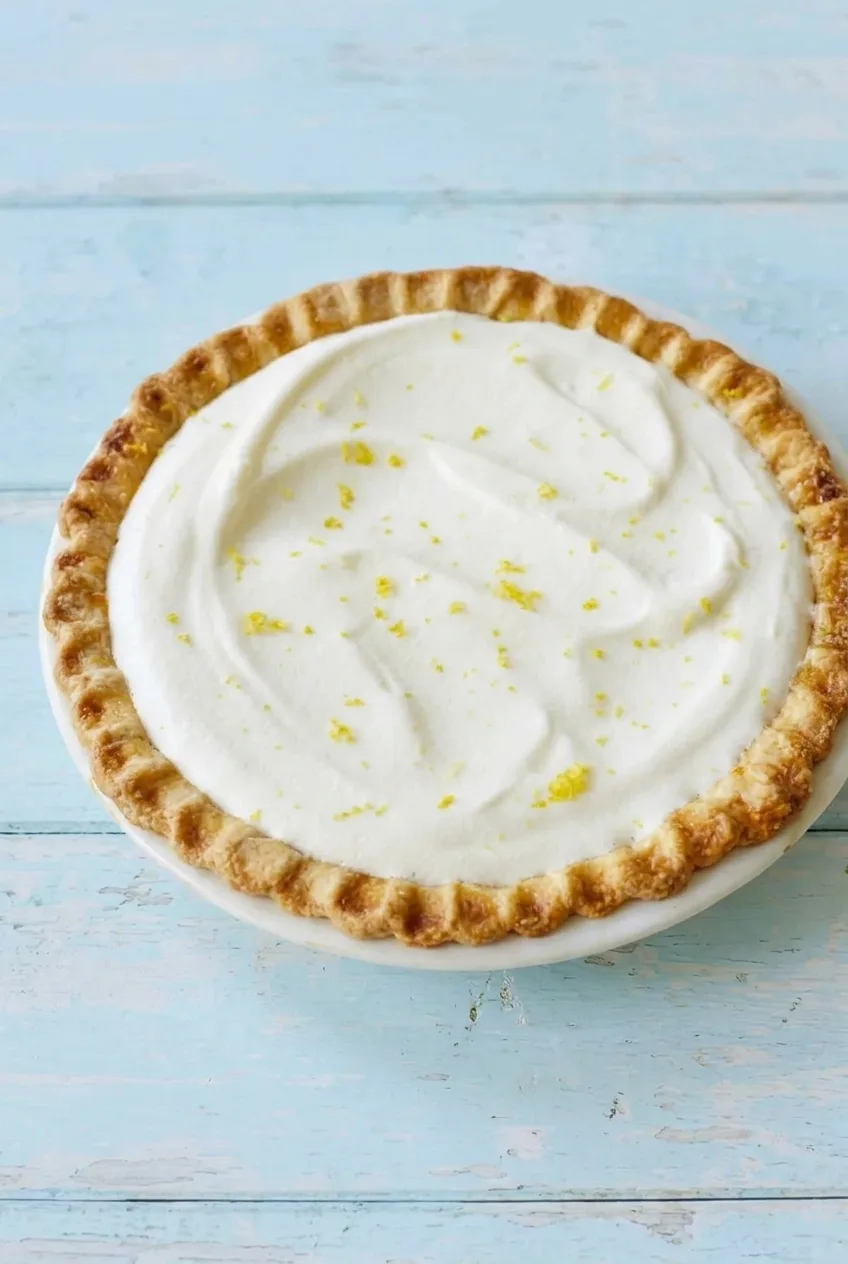
Lemon Chiffon Pie
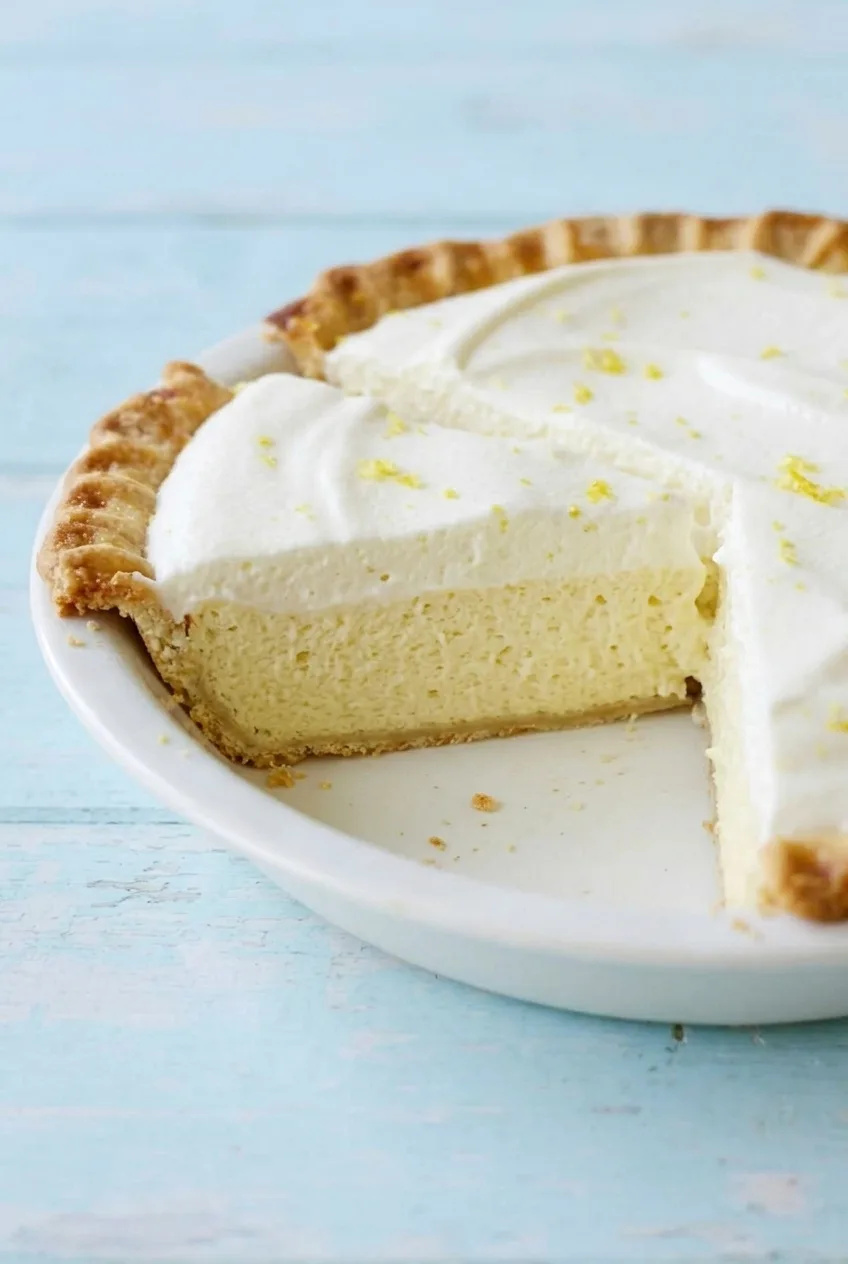
Lemon chiffon pie pairs a golden pastry shell with a light, sweet-tart filling that sets firmly enough to slice. A cooked lemon custard and gelatin give the filling structure; whipped egg whites folded in after cooling make it airy. Unlike classic lemon meringue pie, the whites go inside the filling, and the white topping is whipped cream rather than toasted meringue.
The shell is baked before filling, but the assembled pie is not. Allow at least 4 hours for it to chill, and check that the center is set before adding the cream.
Ingredients for Lemon Chiffon Pie
- 1 unbaked 9-inch pastry pie crust
- 1 envelope unflavored powdered gelatin (about 2 1/4 teaspoons or 7g)
- 1/4 cup cold water
- 3/4 cup granulated sugar (150g), divided
- 3 large pasteurized shell eggs, separated
- 1/2 cup fresh lemon juice
- About 1 tablespoon finely grated lemon zest, divided
- 1 cup cold heavy whipping cream (240g)
- 2 tablespoons powdered sugar (15g)
Use pasteurized shell eggs because the whites are folded in after the custard is cooked and are not heated afterward. Keep yolk out of the whites so they whip properly. The pastry shell must be fully baked and cooled before filling.
How to Make Lemon Chiffon Pie
- Blind-bake the shell: Preheat the oven to 375°F (190°C). Fit the pastry into a 9-inch pie plate and crimp the edge. Line with parchment and fill with pie weights or dried beans. Bake for 15–18 minutes, checking near the end of that range. Remove the parchment and weights, then bake for another 8–12 minutes, until the bottom looks dry and the rim is golden brown. Cool completely.
- Bloom the gelatin: Sprinkle the gelatin evenly over the cold water. Let stand for about 5 minutes, until the water is absorbed.
- Cook the lemon custard: In a medium heavy-bottomed saucepan, whisk the egg yolks with 1/2 cup of the granulated sugar, the lemon juice, and about 2 teaspoons of the zest. Cook over medium-low heat, whisking constantly. Start checking after about 6 minutes; the custard should coat the back of a spoon and reach at least 160°F (70°C), usually after 6–10 minutes. Do not let it boil vigorously. Remove from the heat and stir in the bloomed gelatin until no grains remain. If there are small egg lumps, strain the custard while warm.
- Cool the custard: Transfer it to a bowl and stir occasionally for about 20–30 minutes. It should no longer feel warm and should be beginning to thicken, but still be loose enough to fold. Do not wait until it gels.
- Whip and fold the whites: In a clean, grease-free bowl, beat the pasteurized egg whites until foamy. Gradually add the remaining 1/4 cup granulated sugar and beat until glossy, firm peaks hold their shape. Pasteurized whites may take 5–15 minutes to whip. Fold a portion into the custard to lighten it, then gently fold in the rest just until combined.
- Fill and chill: Spoon the filling into the completely cooled shell and level the top. Refrigerate uncovered for at least 4 hours, until the center holds steady when the pie is gently moved. Chill longer if it still moves loosely.
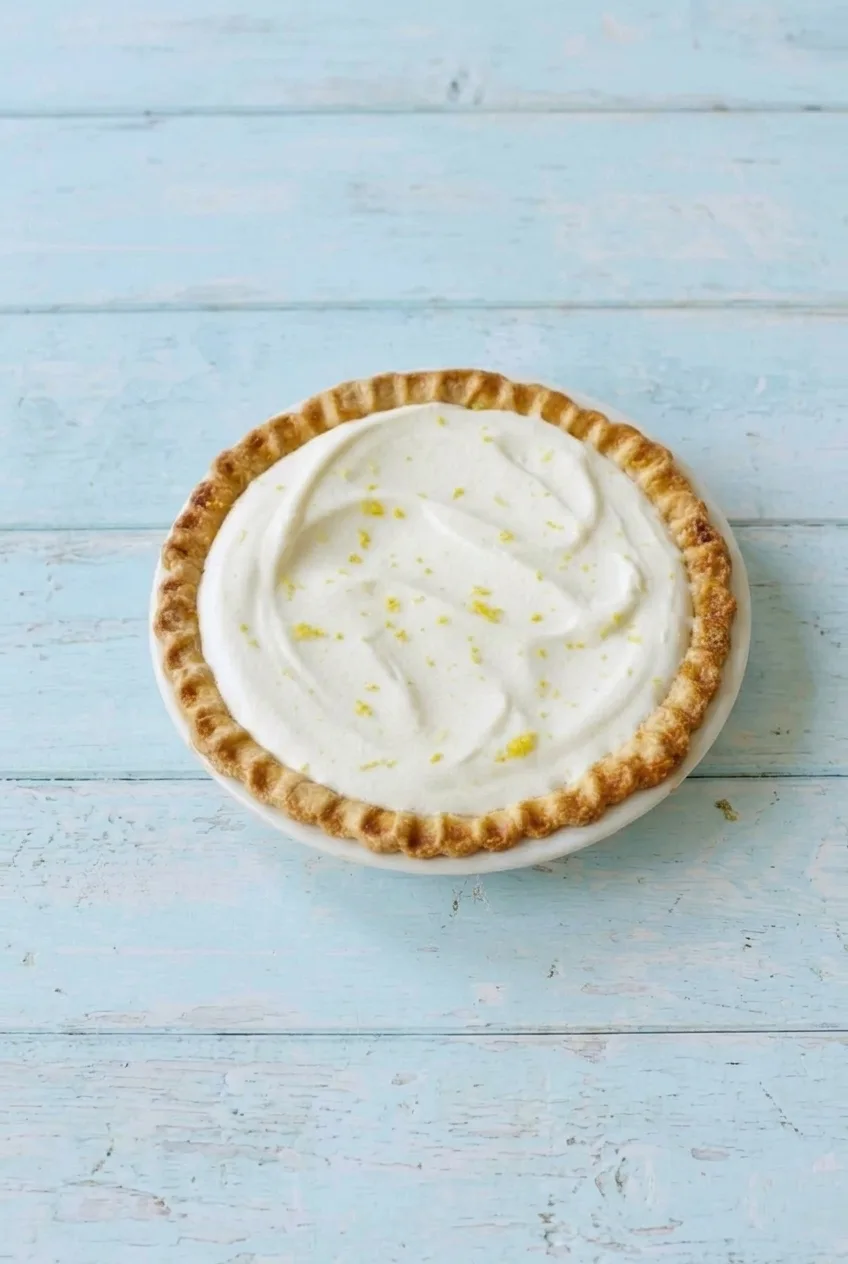
- Finish the pie: Shortly before serving, whip the cold cream with the powdered sugar to soft-to-medium peaks. Spread it over the set filling in a nearly level layer with a few broad, shallow sweeps. Leave the golden pastry rim visible and scatter the remaining zest lightly over the cream.
How to Keep the Chiffon Filling Airy
Fold the whites into custard that is cool but still fluid. A warm base can deflate them, while a gelled base is difficult to combine without losing air. If the filling turns out dense, the whites may not have reached firm peaks or may have been stirred too forcefully into the custard.
When Is the Pie Ready to Slice?
Use the center, not the clock alone, as your guide. It should look set and hold steady when you gently move the plate. If it is still soft, keep chilling before adding the cream. Serve cold, wiping the knife between cuts for neat slices. If the pie remains runny after a longer chill, gelatin that did not fully dissolve may be the cause.
Make-Ahead and Storage
The filled pie can be made the day before serving. Once set, cover it without touching the surface and keep it refrigerated. Add the whipped cream and zest close to serving so the topping keeps its soft sweeps.
Cover leftovers without pressing on the cream and refrigerate for up to 2 days for best texture. Serve cold; do not reheat. Freezing may change the texture of the filling. If necessary, freeze the pie without cream for up to 2 months, thaw overnight in the refrigerator, and add fresh topping before serving.
Nutrition
Approximate nutrition per slice, based on 8 slices: 340 calories, 5g protein, 20g fat, and 35g carbohydrates. Approximate nutrition per 100g: 300 calories, 5g protein, 18g fat, and 31g carbohydrates. Values vary with the pastry crust and slice size.
Equipment
- 9-inch pie plate
- Oven
- Parchment paper
- Pie weights or dried beans
- Heavy-bottomed saucepan
- Mixing bowls
- Whisk
- Instant-read thermometer
- Electric mixer
- Fine grater
- Refrigerator
Ingredients
For the crust
- 1 unbaked 9-inch pastry pie crust
For the filling
- 1 envelope unflavored powdered gelatin (about 2 1/4 teaspoons or 7 g)
- 1/4 cup cold water
- 3/4 cup granulated sugar (150 g), divided
- 3 large pasteurized shell eggs, separated
- 1/2 cup fresh lemon juice
- About 1 tablespoon finely grated lemon zest, divided
For the topping
- 1 cup cold heavy whipping cream (240 g)
- 2 tablespoons powdered sugar (15 g)
Instructions
- Preheat the oven to 375°F (190°C). Fit the pastry into a 9-inch pie plate and crimp the edge.
- Line the pastry with parchment and fill with pie weights or dried beans. Bake for 15–18 minutes.
- Remove the parchment and weights. Bake for another 8–12 minutes, until the bottom looks dry and the rim is golden brown. Cool the shell completely.
- Sprinkle the gelatin evenly over the cold water and let it stand for about 5 minutes, until the water is absorbed.
- In a medium heavy-bottomed saucepan, whisk the egg yolks with 1/2 cup of the granulated sugar, the lemon juice, and about 2 teaspoons of the zest.
- Cook over medium-low heat, whisking constantly, until the custard coats the back of a spoon and reaches at least 160°F (70°C), usually 6–10 minutes. Do not let it boil vigorously.
- Remove the custard from the heat and stir in the bloomed gelatin until no grains remain. If needed, strain out any small egg lumps while the custard is warm.
- Transfer the custard to a bowl and stir occasionally for 20–30 minutes, until it is no longer warm and is beginning to thicken but remains fluid.
- In a clean, grease-free bowl, beat the pasteurized egg whites until foamy. Gradually add the remaining 1/4 cup granulated sugar and beat until glossy, firm peaks form.
- Fold a portion of the egg whites into the custard to lighten it, then gently fold in the remaining whites just until combined.
- Spoon the filling into the cooled pastry shell and level the top. Refrigerate uncovered for at least 4 hours, until the center holds steady when the pie is gently moved.
- Shortly before serving, whip the cold cream with the powdered sugar to soft-to-medium peaks. Spread it over the set filling, leaving the pastry rim visible, and scatter the remaining zest over the cream.
Tips
- Use pasteurized shell eggs because the whites are folded into the filling after the custard is cooked.
- Keep yolk out of the whites and use a clean, grease-free bowl so the whites whip properly.
- Fold the whites into custard that is cool but still fluid; a warm or gelled base can make folding difficult.
- Check that the center is set before adding the whipped cream, and chill longer if it still moves loosely.
- Wipe the knife between cuts for neat slices.