Author

Julia

Browsing

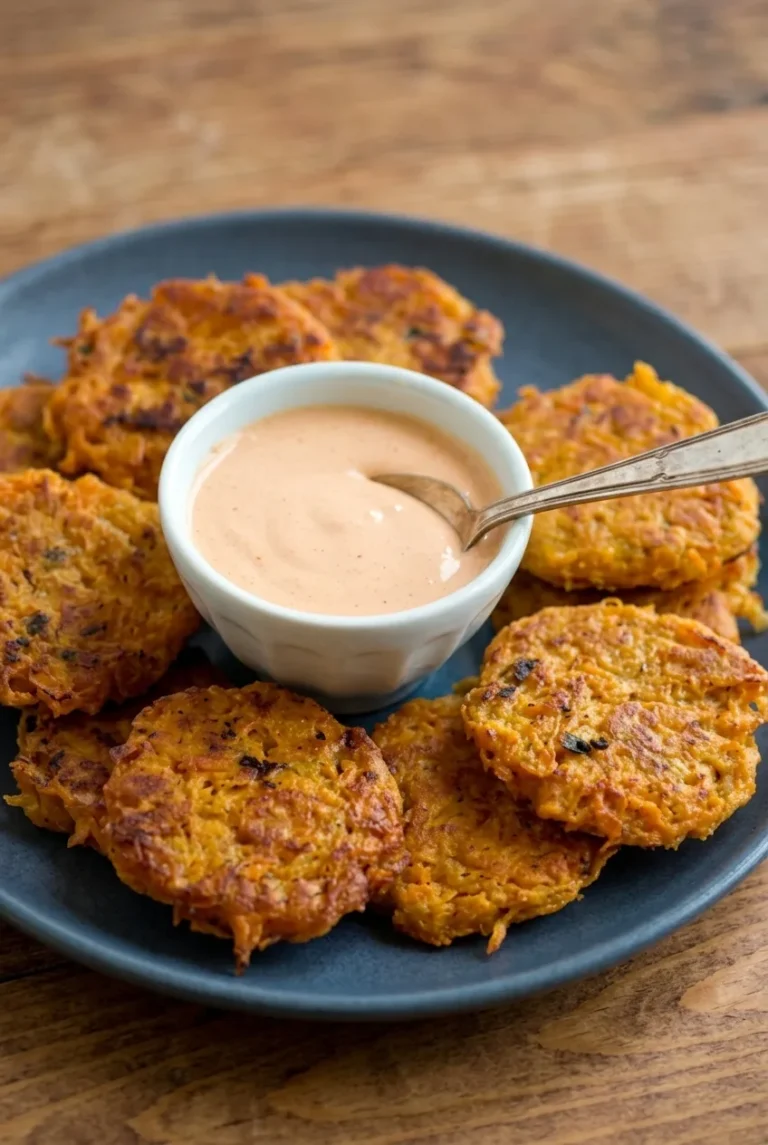
Sweet Potato Fritters with Sriracha Mayo

These skillet-fried fritters have visible sweet potato shreds, browned, ragged edges, and tender centers. A smooth sriracha mayo stays in a separate bowl for dipping.

For fritters that hold together, squeeze the grated potatoes before mixing, press them into thin patties, and let the first side brown before flipping. The skillet gives the shreds crisp edges without turning them into smooth mashed-potato cakes.

Ingredients for Sweet Potato Fritters
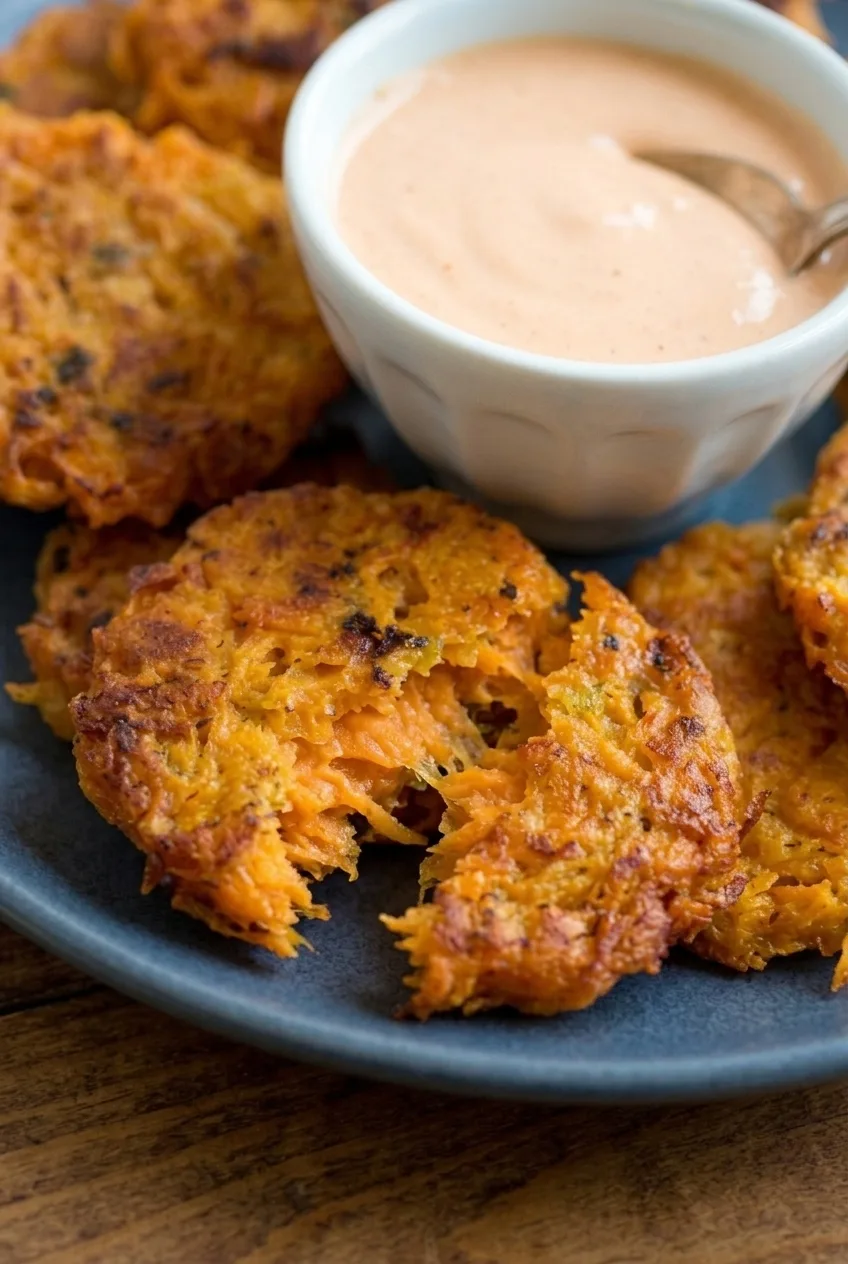
Close view of a broken sweet potato fritter showing tender shreds and a crisp browned edge

Makes about 8 fritters, or 4 appetizer or side-dish servings. Prep time: 20 minutes. Cook time: 20–25 minutes in batches. Total time: 40–45 minutes.

  • 1 lb sweet potatoes, about 2 medium, peeled and coarsely grated (450g)
  • 1 large egg
  • 1/4 cup all-purpose flour (30g), plus more if needed
  • 2 tablespoons finely sliced scallions
  • 1/2 teaspoon garlic powder
  • 3/4 teaspoon kosher salt
  • 1/4 teaspoon ground black pepper
  • About 1/4 cup neutral frying oil, such as canola or avocado oil, as needed for batches

For the sriracha mayo

  • 1/2 cup mayonnaise (about 115g)
  • 1 tablespoon sriracha, plus more to taste

How to Make Sweet Potato Fritters with Sriracha Mayo
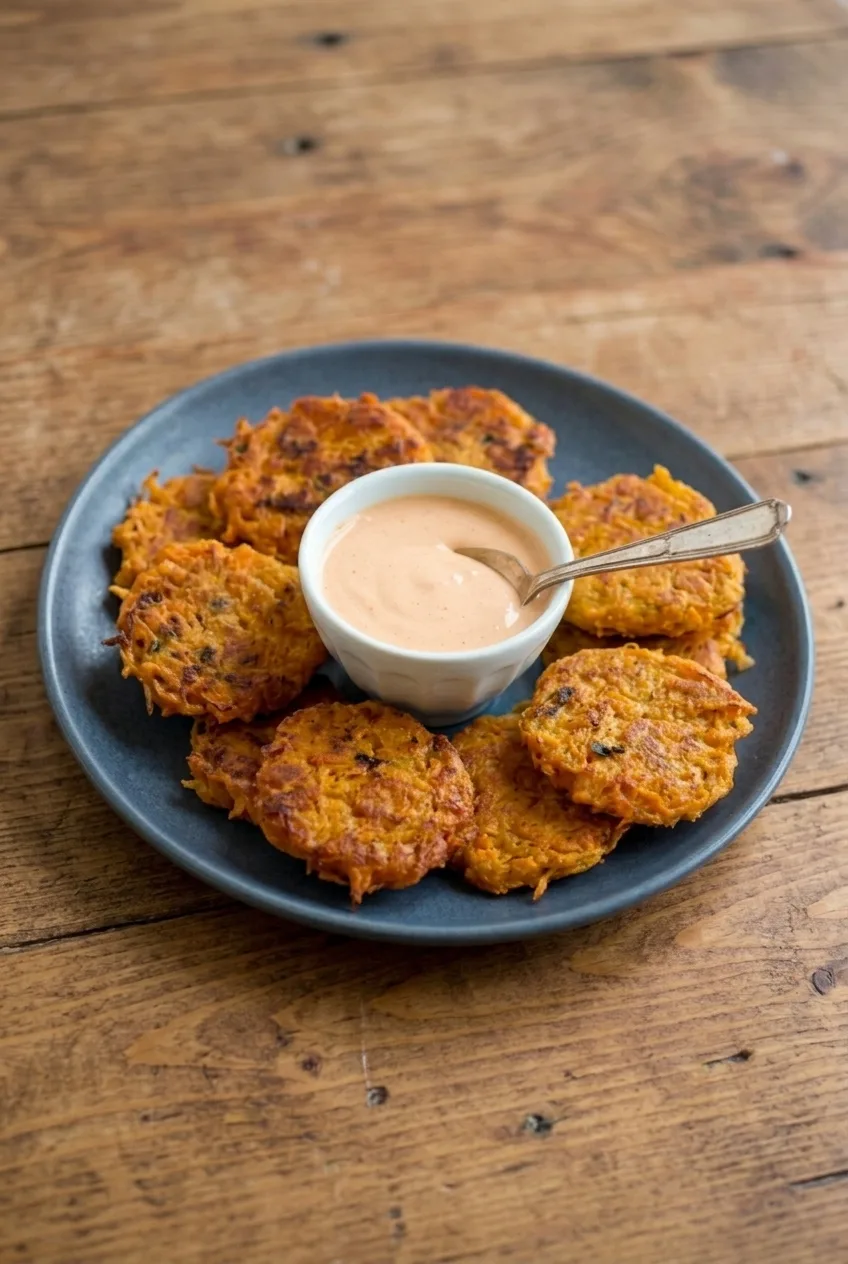
Full plate of sweet potato fritters surrounding a small bowl of pale peach sriracha mayo
  1. Squeeze the sweet potatoes: Wrap the coarse shreds in a clean kitchen towel and squeeze out excess moisture. The strands should remain distinct, but a handful should not readily drip liquid.
  2. Mix the fritters: Combine the shreds, egg, flour, scallions, garlic powder, salt, and pepper in a bowl. Firmly squeeze a small handful of the mixture. If it will not hold together, mix in more flour 1 tablespoon at a time, only as needed.
  3. Make the dip: Stir the mayonnaise and 1 tablespoon sriracha together until smooth and pale peach-pink. Taste and add more sriracha if you want more heat.
  4. Shape and heat the skillet: Firmly shape the mixture into about eight irregular patties, roughly 3 inches wide and 1/2 inch thick. Heat enough oil to generously coat the bottom of a 10- to 12-inch skillet over medium heat. It is ready when it shimmers and a stray shred sizzles on contact.
  5. Fry in batches: Add three or four patties, leaving space between them. Fry uncovered and undisturbed for about 3–4 minutes. Start checking around 3 minutes; when the undersides are set and golden-brown, turn each patty once with a thin spatula. Fry the second side for about 3–4 minutes, until both sides have browned patches and the centers are tender rather than crunchy. Lower the heat slightly if the edges darken before the centers soften. Repeat with the remaining patties, adding oil as needed.
  6. Drain and serve: Transfer the fritters to a rack over a lined sheet, or to a paper towel-lined plate. Keep them in a single layer and serve warm with the mayo in a separate small bowl.

How to Keep the Fritters Together

Sweet potatoes vary in moisture. After squeezing the shreds, check that a firmly compressed handful of mixture holds its shape; add extra flour only if it stays loose. In the skillet, wait until the first side has formed a browned crust before lifting the patty to flip. Turning too early can pull the strands apart.

Getting Crisp Edges Without a Crunchy Center

Keep the patties close to 1/2 inch thick so the centers soften before the edges get too dark. The oil should sizzle steadily without smoking. Fry in spaced batches, then drain without stacking so the edges stay crisp.

Serve the fritters as an appetizer or alongside sandwiches and burgers. For another grated-potato skillet dish, try classic potato pancakes. For a bite-size appetizer made with mashed potatoes instead, see these loaded mashed potato bites.

Storing and Reheating Leftovers

Cool leftover fritters, then refrigerate them in an airtight container. Refrigerate the mayo separately. To regain some crispness, reheat the fritters in a single layer in a 400°F (205°C) oven. Check before 10 minutes and continue until hot and crisp, about 10–15 minutes depending on their size. Microwaving will soften the crust.

If freezing cooked fritters, cool them first, freeze in a single layer until solid, then transfer to a freezer-safe container. Reheat from frozen in a 400°F oven until hot and crisp; the time will depend on their size.

Nutrition

Approximate nutrition per serving (2 fritters with one-quarter of the dip): 450 calories, 4g protein, 35g fat, and 30g carbohydrates. Estimated per 100g: 245 calories, 2g protein, 19g fat, and 16g carbohydrates. These are rough estimates; frying oil absorption and cooked weight will vary.

Sweet Potato Fritters with Sriracha Mayo

Grated sweet potatoes are fried into crisp-edged fritters and served with a separate sriracha mayo for dipping.
Course: Appetizer
Cuisine: American
Prep: 20 min
Cook: 25 min
Total: 45 min
Servings: 4 Calories: 450 kcal

Equipment

  • Clean kitchen towel
  • Box grater
  • Mixing bowl
  • Small bowl
  • 10- to 12-inch skillet
  • Thin spatula
  • Wire rack or paper towel-lined plate

Ingredients

For the fritters

  • 1 lb sweet potatoes, about 2 medium, peeled and coarsely grated (450g)
  • 1 large egg
  • 1/4 cup all-purpose flour (30g), plus more if needed
  • 2 tablespoons finely sliced scallions
  • 1/2 teaspoon garlic powder
  • 3/4 teaspoon kosher salt
  • 1/4 teaspoon ground black pepper
  • About 1/4 cup neutral frying oil, such as canola or avocado oil, as needed for batches

For the sriracha mayo

  • 1/2 cup mayonnaise (about 115g)
  • 1 tablespoon sriracha, plus more to taste

Instructions

  1. Wrap the grated sweet potatoes in a clean kitchen towel and squeeze out excess moisture.
  2. Combine the sweet potatoes, egg, flour, scallions, garlic powder, salt, and pepper in a bowl.
  3. Squeeze a small handful of the mixture to check that it holds together. If it does not, mix in more flour 1 tablespoon at a time as needed.
  4. Stir the mayonnaise and 1 tablespoon sriracha together in a small bowl until smooth. Add more sriracha to taste.
  5. Shape the mixture into about eight patties, roughly 3 inches wide and 1/2 inch thick.
  6. Heat enough oil to generously coat the bottom of a 10- to 12-inch skillet over medium heat. When the oil shimmers and a stray shred sizzles on contact, add three or four patties, leaving space between them.
  7. Fry the patties uncovered and undisturbed for about 3–4 minutes, until the undersides are set and golden-brown.
  8. Turn each patty once with a thin spatula and fry for about 3–4 minutes, until both sides have browned patches and the centers are tender.
  9. Repeat with the remaining patties, adding oil as needed. Lower the heat slightly if the edges darken before the centers soften.
  10. Drain the fritters in a single layer on a rack or paper towel-lined plate. Serve warm with the sriracha mayo in a separate bowl.

Tips

  • Squeeze excess moisture from the grated potatoes so the mixture holds together.
  • Add extra flour only if a firmly compressed handful of mixture stays loose.
  • Wait until the first side is browned and set before flipping to help keep the patties intact.
  • Keep patties about 1/2 inch thick so the centers soften before the edges get too dark.
  • Fry in spaced batches and avoid stacking the fritters after cooking to preserve crisp edges.
Notes

Refrigerate cooled fritters in an airtight container and store the mayo separately. Reheat fritters in a single layer at 400°F (205°C) for about 10–15 minutes, checking before 10 minutes. Microwaving softens the crust. Cooked fritters can be frozen and reheated from frozen in a 400°F oven until hot and crisp.

Nutrition

Calories: 450 kcal | Protein: 4 g | Fat: 35 g | Carbohydrates: 30 g

Baked Garlic Parmesan Potato Wedges

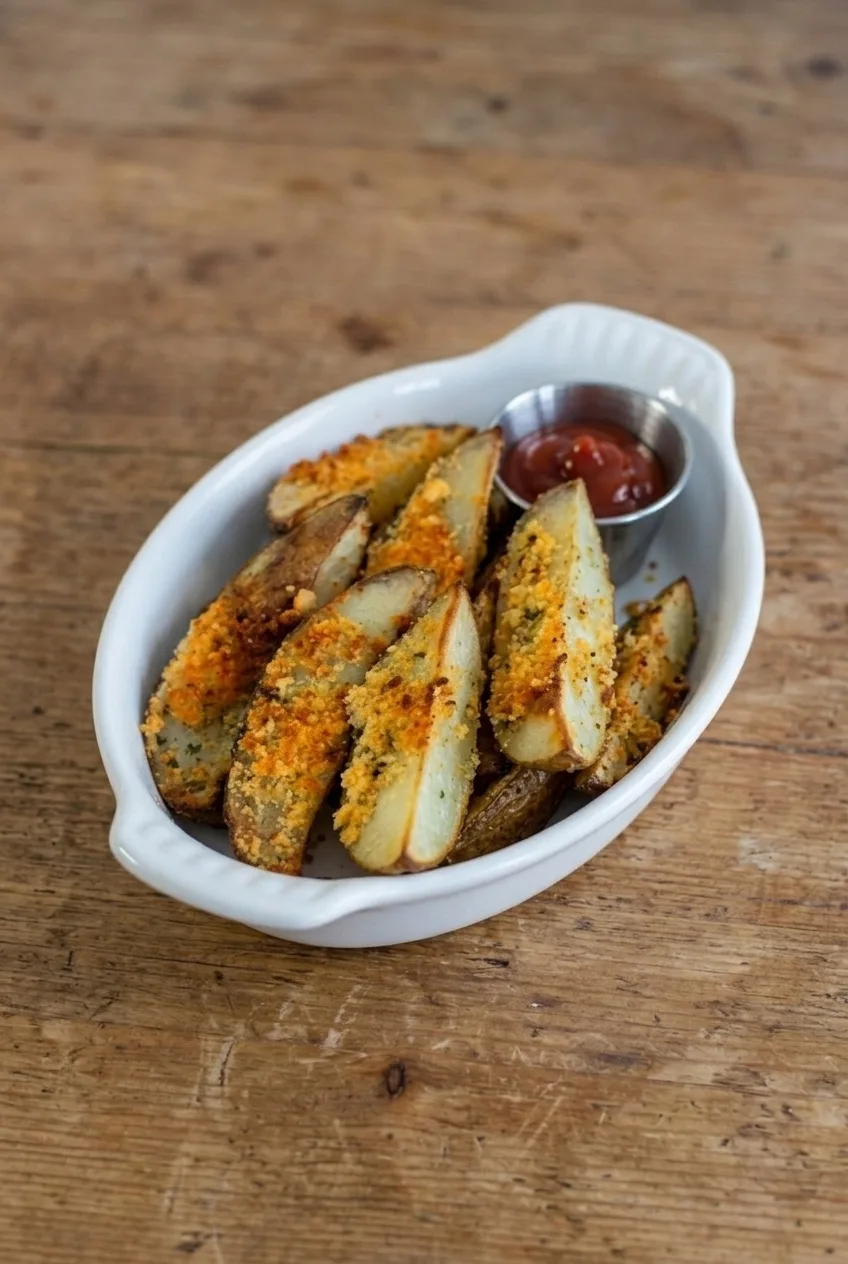
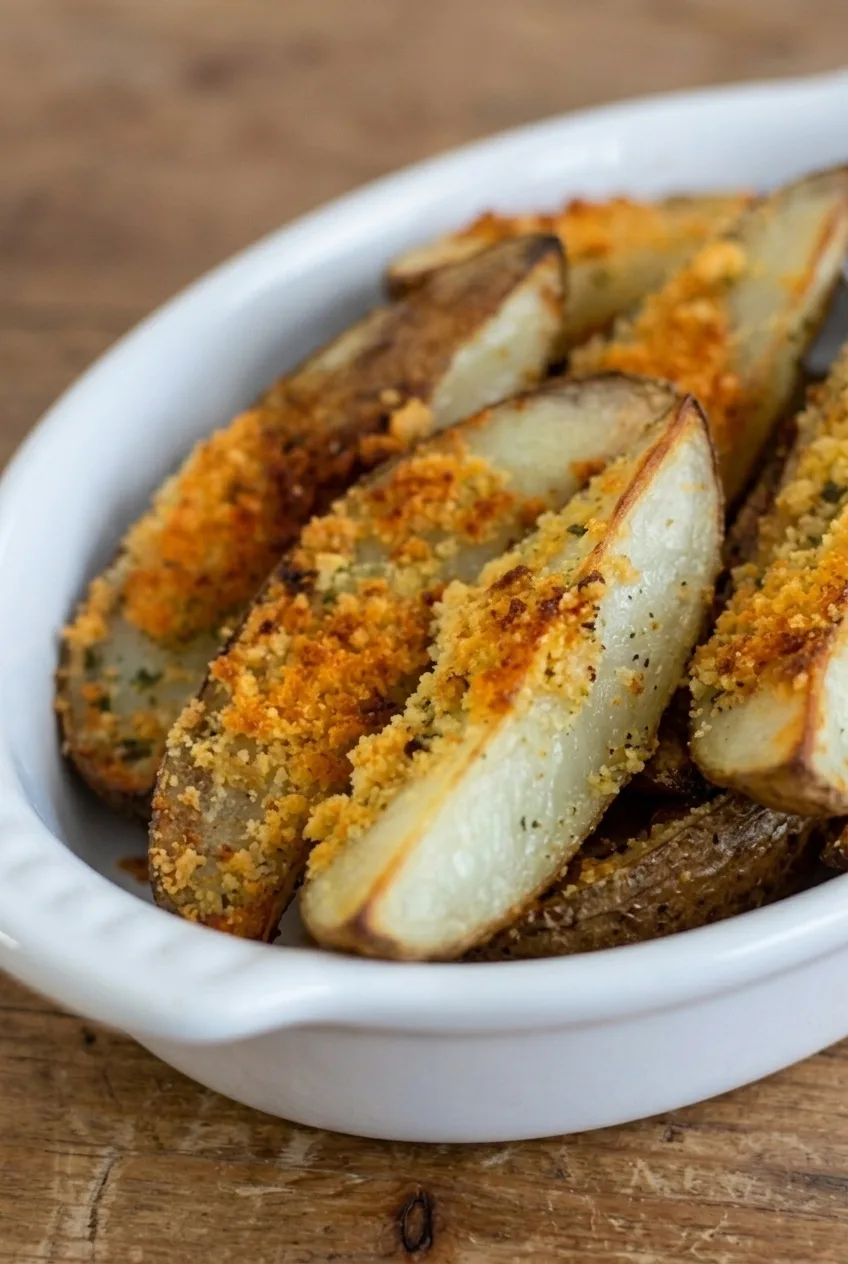
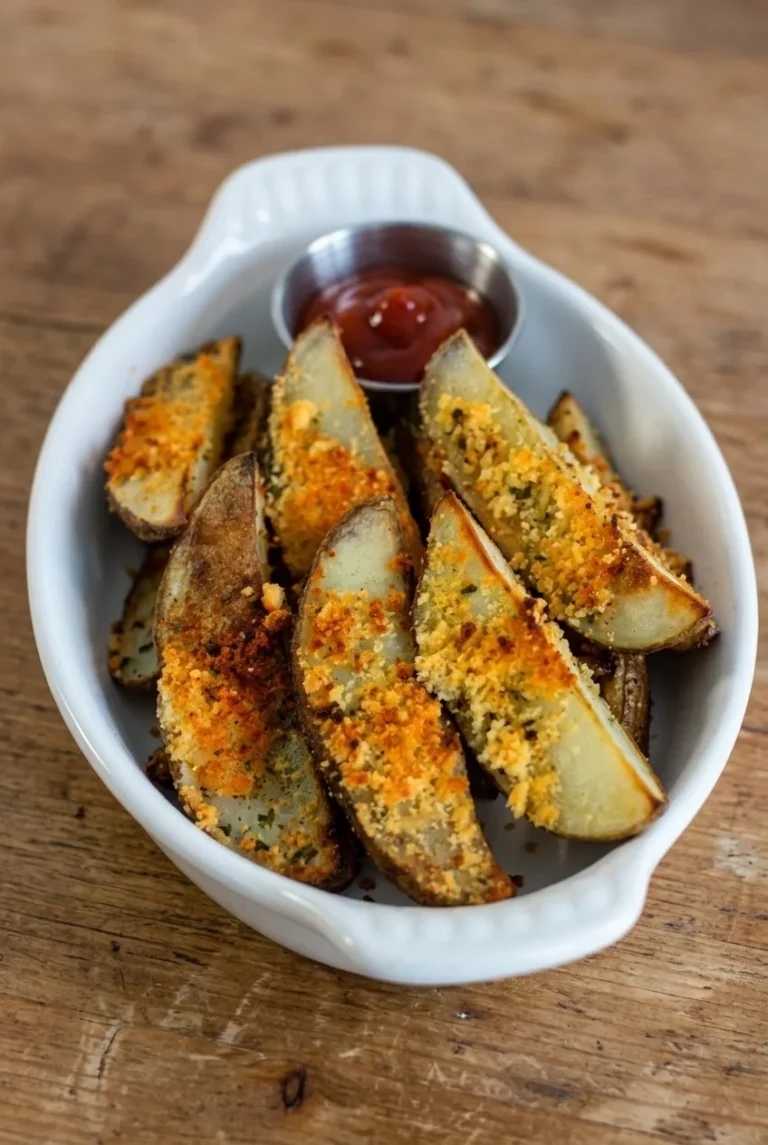
These thick, skin-on wedges bake with a golden-orange coating of garlic, paprika, herbs, and toasted Parmesan. The cut sides brown while the centers stay tender, with some pale potato still visible beneath the cheese.

No soak is required. Dry the potatoes, give them room on the baking sheet, and turn them gently so the Parmesan stays on the wedges. Bake time depends on their thickness, so check the largest wedge for tenderness before serving. Makes 4 side-dish servings in about 45 to 50 minutes.

Ingredients for Garlic Parmesan Potato Wedges

Full dish of baked garlic Parmesan potato wedges on a tabletop, with a small cup of ketchup beside them
  • 2 pounds russet potatoes, about 3 medium to large potatoes, scrubbed and unpeeled (900g)
  • 3 tablespoons olive oil
  • 1/2 cup finely grated Parmesan cheese (45g)
  • 1 teaspoon garlic powder
  • 1 teaspoon paprika
  • 1 teaspoon dried Italian seasoning
  • 1/2 teaspoon fine salt, plus more to taste after baking
  • 1/4 teaspoon freshly ground black pepper

Optional for serving: 1 tablespoon chopped fresh parsley and ketchup for dipping.

Close view of a potato wedge showing toasted Parmesan bits, browned skin, and a pale tender center

How to Bake Garlic Parmesan Potato Wedges

  1. Preheat the oven: Heat to 400°F (205°C). Lightly oil a rimmed metal baking sheet or line it with parchment rated for 400°F. Have a second sheet ready if the wedges will not fit without overlapping.
  2. Cut and dry: Cut each potato in half lengthwise, then cut each half lengthwise into about 4 substantial, similarly sized wedges. Keep the skins attached and pat the cut surfaces thoroughly dry.
  3. Coat the wedges: Toss the potatoes with the olive oil, garlic powder, paprika, Italian seasoning, salt, and pepper. Add the Parmesan and toss again so it clings to the cut faces. The oil should coat the wedges thinly without pooling.
  4. Bake the first side: Arrange the wedges on one cut side in a single layer, with small gaps between them. Bake uncovered for about 15 minutes, until the undersides begin to brown.
  5. Turn and finish: Gently slide a thin spatula beneath each wedge to loosen the browned cheese, then turn it onto its other cut side. Bake for another 15 to 20 minutes, checking from 25 minutes total. The cut faces and Parmesan should be golden brown, and a fork should enter the thickest wedge without resistance. If the cheese has browned but the center is firm, continue baking while watching for overly dark spots.
  6. Serve: Transfer to a shallow bowl with some coated cut faces showing. Taste before adding more salt; Parmesan saltiness varies. Scatter with parsley if using, and serve ketchup separately.

How to Keep the Wedges from Steaming or Sticking

Wet potatoes or an overcrowded pan can leave the wedges pale and soft. Dry the cut surfaces and use two sheets rather than overlap the pieces. At the halfway turn, ease the spatula under each wedge instead of scraping forcefully; toasted Parmesan can stick to the pan.

Do You Need to Soak the Potatoes?

Not for this method. You can soak the cut wedges if you prefer, but it adds preparation time. Dry them thoroughly before adding oil and seasoning so surface moisture does not interfere with browning.

Garlic, Parmesan, and Potato Options

The finely grated Parmesan bakes onto the cut faces to form irregular toasted bits. Adding it only after baking will give a different finish. For fresh garlic instead of garlic powder, toss minced garlic with a little oil and add it at the halfway turn so it does not spend the full bake in the hot oven.

Yukon Gold potatoes can replace russets. Keep the wedges substantial and similarly sized, then judge them by browning and fork-tenderness rather than expecting identical timing.

Serving and Leftovers

Serve the wedges hot as a side or appetizer, with dipping sauce on the side so the coating does not soften. For another garlic-forward potato side, try garlic butter roasted baby potatoes with sage.

Refrigerate leftovers promptly in a covered container. Reheat them spread out and uncovered in the oven until hot and the edges regain some firmness. They will not be as crisp as freshly baked wedges.

Nutrition

Approximate nutrition per serving, based on 4 side-dish servings without optional parsley or ketchup: 315 calories, 9g protein, 14g fat, and 41g carbohydrates. Per 100g of cooked wedges: approximately 160 calories, 4g protein, 7g fat, and 21g carbohydrates. Per-100g values vary with moisture lost during baking.

Baked Garlic Parmesan Potato Wedges

Thick russet potato wedges bake with garlic, paprika, herbs, and Parmesan until golden outside and tender inside.
Course: Side Dish
Cuisine: American
Prep: 15 min
Cook: 35 min
Total: 50 min
Servings: 4 Calories: 315 kcal

Equipment

  • Rimmed metal baking sheet
  • Oven
  • Knife
  • Mixing bowl
  • Thin spatula

Ingredients

For the Wedges

  • 2 pounds russet potatoes, about 3 medium to large potatoes, scrubbed and unpeeled (900g)
  • 3 tablespoons olive oil
  • 1/2 cup finely grated Parmesan cheese (45g)
  • 1 teaspoon garlic powder
  • 1 teaspoon paprika
  • 1 teaspoon dried Italian seasoning
  • 1/2 teaspoon fine salt, plus more to taste after baking
  • 1/4 teaspoon freshly ground black pepper

Optional for Serving

  • 1 tablespoon chopped fresh parsley
  • Ketchup for dipping

Instructions

  1. Preheat the oven to 400°F (205°C). Lightly oil a rimmed metal baking sheet or line it with parchment rated for 400°F. Prepare a second sheet if needed to avoid overlapping the wedges.
  2. Cut each potato in half lengthwise, then cut each half lengthwise into about 4 substantial, similarly sized wedges. Pat the cut surfaces thoroughly dry.
  3. Toss the potatoes with the olive oil, garlic powder, paprika, Italian seasoning, salt, and pepper.
  4. Add the Parmesan and toss again so it clings to the cut faces.
  5. Arrange the wedges on one cut side in a single layer with small gaps between them. Bake uncovered for about 15 minutes, until the undersides begin to brown.
  6. Gently slide a thin spatula beneath each wedge to loosen the browned cheese, then turn each wedge onto its other cut side.
  7. Bake for another 15 to 20 minutes, checking from 25 minutes total. The cut faces and Parmesan should be golden brown, and a fork should enter the thickest wedge without resistance.
  8. Transfer to a serving bowl. Taste before adding more salt, then scatter with parsley if using and serve with ketchup on the side.

Tips

  • Dry the cut potato surfaces thoroughly to help them brown.
  • Leave small gaps between wedges, using two baking sheets if needed.
  • Use a thin spatula to loosen the toasted Parmesan gently when turning the wedges.
  • Check the thickest wedge for fork-tenderness; baking time depends on wedge thickness.
  • Taste before adding extra salt because Parmesan saltiness varies.

Variations

  • Yukon Gold Potato Wedges: Replace the russet potatoes with Yukon Gold potatoes and check for browning and fork-tenderness rather than relying on the same timing.
  • Fresh Garlic Wedges: Replace the garlic powder with minced garlic tossed with a little oil, and add it at the halfway turn.

Notes

Refrigerate leftovers promptly in a covered container. Reheat spread out and uncovered in the oven until hot; the wedges will be less crisp than freshly baked.

Nutrition

Calories: 315 kcal | Protein: 9 g | Fat: 14 g | Carbohydrates: 41 g

Cheesy Ranch Roasted Potatoes

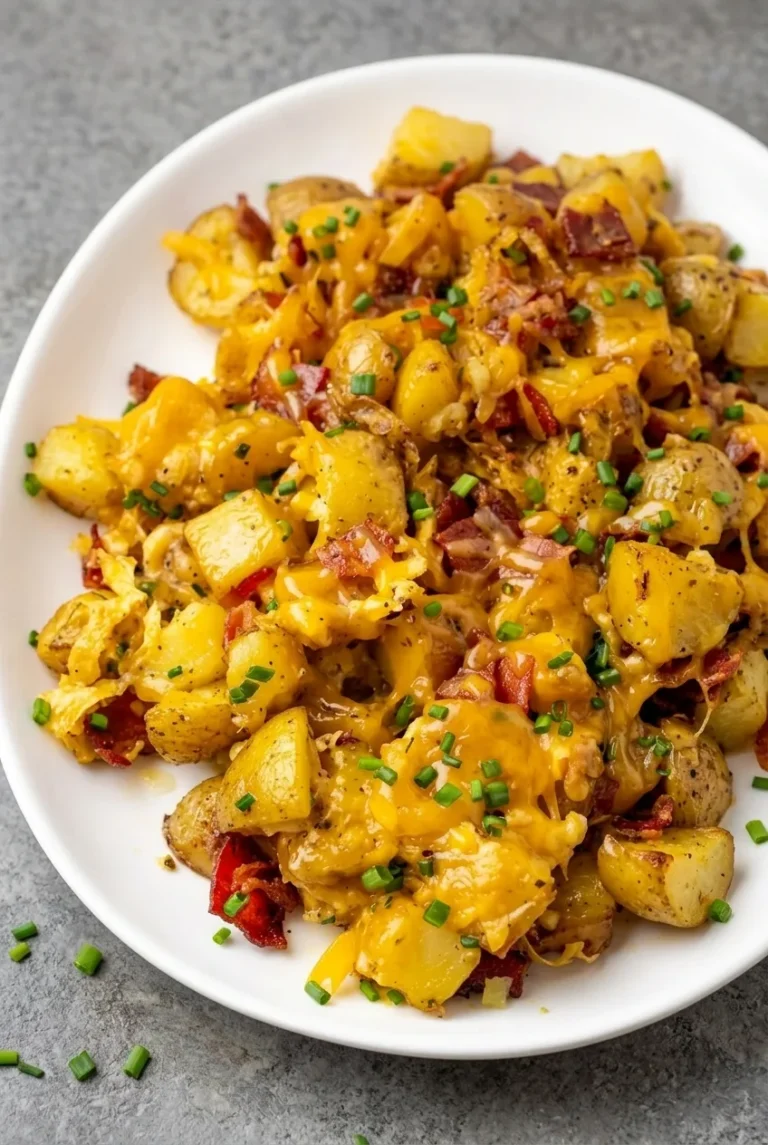
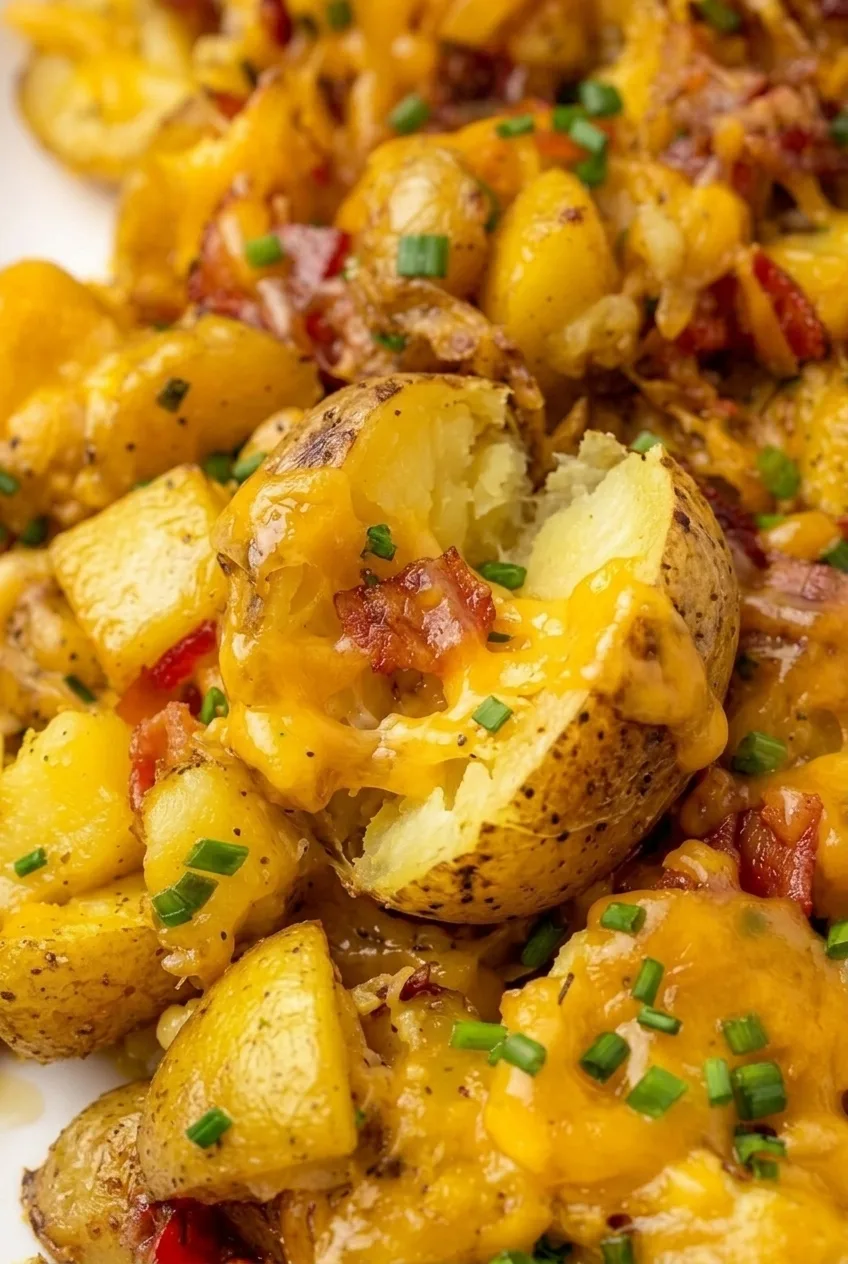
Skin-on potato chunks are parboiled, lightly coated with ranch, and roasted until fork-tender with browned patches. Cheddar and cooked bacon go on at the end, giving the potatoes pockets of melted cheese without baking it into a hard crust. Fresh chives finish the dish.

The short roast depends on parboiling first. Drain the potatoes well and spread them in a shallow layer so they brown rather than steam.

Ingredients for Cheesy Ranch Roasted Potatoes

Close view of a tender potato interior with browned skin, melted cheddar, bacon, and chives
  • 2 pounds small red or yellow potatoes, skins on, cut into 1- to 1 1/2-inch chunks (about 900g)
  • 1/3 cup bottled ranch dressing (about 80g)
  • 1 tablespoon olive oil
  • 1/2 teaspoon garlic powder
  • 1/4 teaspoon black pepper
  • 1 1/2 cups shredded sharp cheddar cheese (about 170g)
  • 4 strips bacon, cooked crisp and crumbled (about 40g)
  • 2 tablespoons finely chopped fresh chives

Optional: Salt to taste after cooking. Taste a potato first; the ranch, cheddar, and bacon may provide enough salt.

How to Make Cheesy Ranch Roasted Potatoes

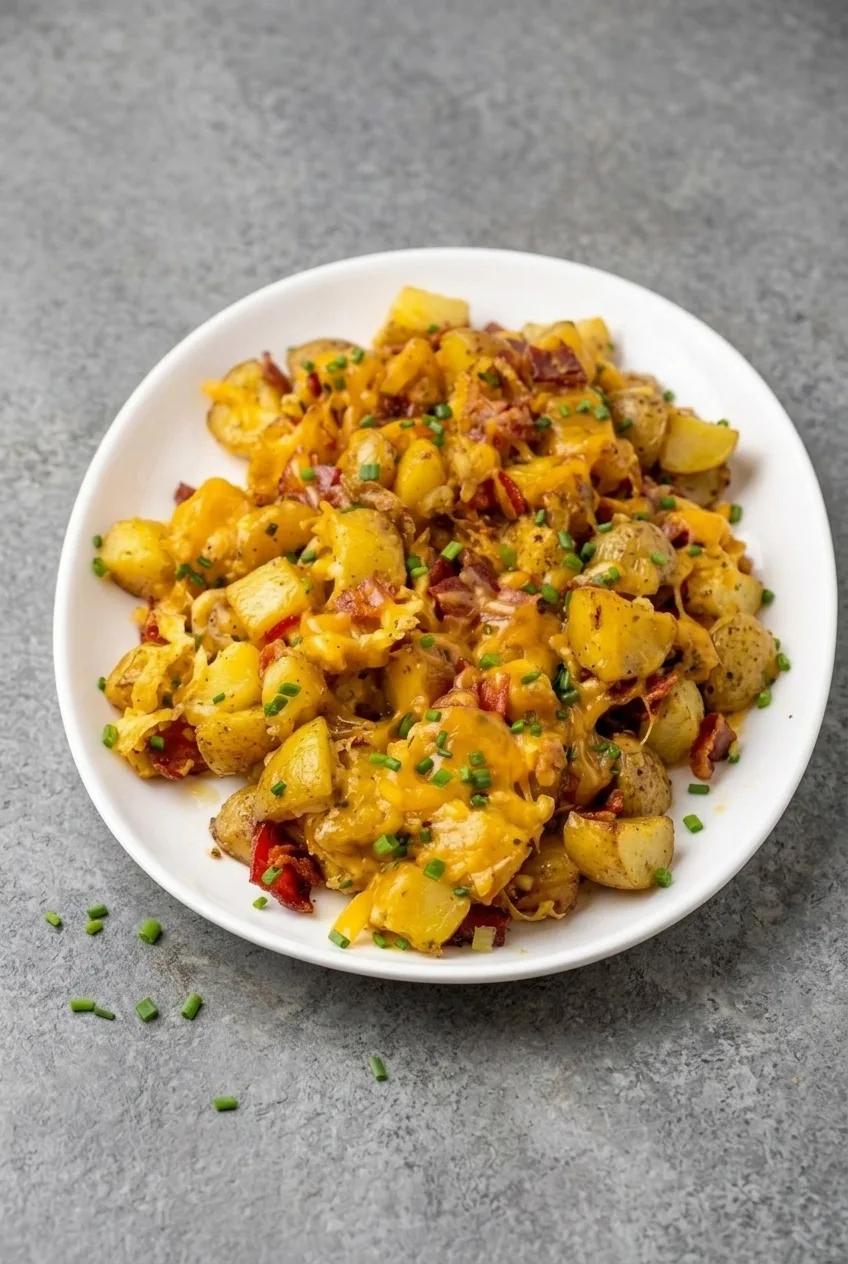
Full platter of cheesy ranch roasted potatoes with bacon and chives on a gray surface
  1. Prepare: Preheat the oven to 400°F (205°C). Cut the unpeeled potatoes into evenly sized chunks. Cook and crumble the bacon if it is not already prepared.
  2. Parboil: Put the potatoes in a large pot and cover with water. Bring to a boil, then reduce to a gentle simmer. Start checking after 8 minutes; at about 8 to 10 minutes, a fork should enter a chunk with some resistance. The pieces should still hold their shape.
  3. Drain and coat: Drain the potatoes and let them steam-dry in the colander for 2 to 3 minutes, until no visible water clings to them. Gently toss with the ranch dressing, olive oil, garlic powder, and pepper.
  4. Roast: Spread the potatoes in a shallow, mostly single layer in a lightly greased 9-by-13-inch baking dish or on a rimmed sheet pan. Roast uncovered for 20 to 25 minutes, turning gently once halfway through. Check at 20 minutes. If the centers do not pierce easily with a fork, keep roasting before adding the cheese. Look for some golden-brown edges.
  5. Melt the cheese: Scatter the cheddar over the tender potatoes and distribute the cooked bacon between and over the pieces. Return to the 400°F oven for about 3 to 5 minutes. Watch closely and remove the pan when the cheese is glossy and melted.
  6. Finish: Let stand for 2 to 3 minutes. Scatter the chives over the top, taste before adding any salt, and serve warm on a platter.

Why Parboil Before Roasting?

Parboiling starts cooking the centers before the potatoes are coated with ranch. Stop while the pieces are still firm enough to toss; they finish becoming tender in the oven. Letting them steam-dry after draining keeps excess water out of the roasting pan.

The 20- to 25-minute roast is for parboiled potatoes. Raw chunks need a substantially longer, different baking method.

How to Get Browned Potatoes and Gooey Cheese

A shallow layer leaves more potato surfaces exposed to the hot pan. A deep or crowded layer traps moisture and browns less. Because the potatoes have a ranch coating, expect browned patches rather than a crisp shell on every piece.

Add the cheddar and cooked bacon only after the potato centers are fork-tender. The brief final bake melts the cheese while leaving distinct potato pieces and visible bacon.

Small red or yellow potatoes both work; even chunk sizes matter more than the variety. For an alternative, replace the cheddar with the same amount of shredded Mexican-style cheese blend, though the color and melt may differ. Omit the bacon for a meat-free version.

Storing and Reheating

Cool leftovers promptly and refrigerate in an airtight container for up to 3 days. Reheat covered in a 350°F (175°C) oven until hot, adding a small splash of water if the potatoes seem dry. Individual portions can also be microwaved in short intervals. Reheated potatoes will likely be softer than freshly roasted ones. Freezing is not recommended for the dairy-coated potatoes.

For a firmer cheese crust, try crispy Parmesan crusted potatoes. For a casserole instead of distinct roasted chunks, make funeral potatoes with a crispy cornflake topping.

Nutrition

Approximate nutrition per serving, based on 6 side-dish servings: 345 calories, 13g protein, 21g fat, and 28g carbohydrates. Estimated per 100g of finished dish: 175 calories, 6g protein, 10g fat, and 14g carbohydrates. Values vary with the ranch dressing, bacon, and moisture lost during cooking.

Cheesy Ranch Roasted Potatoes

Parboiled potatoes are roasted with ranch dressing, then topped with melted cheddar, bacon, and fresh chives.
Course: Side Dish
Cuisine: American
Prep: 15 min
Cook: 40 min
Total: 58 min
Servings: 6 Calories: 345 kcal

Equipment

  • Large pot
  • Colander
  • 9-by-13-inch baking dish or rimmed sheet pan
  • Oven

Ingredients

Potatoes

  • 2 pounds small red or yellow potatoes, skins on and cut into 1- to 1 1/2-inch chunks (about 900 g)
  • 1/3 cup bottled ranch dressing (about 80 g)
  • 1 tablespoon olive oil
  • 1/2 teaspoon garlic powder
  • 1/4 teaspoon black pepper

Toppings

  • 1 1/2 cups shredded sharp cheddar cheese (about 170 g)
  • 4 strips bacon, cooked crisp and crumbled (about 40 g)
  • 2 tablespoons finely chopped fresh chives
  • Salt to taste, optional

Instructions

  1. Preheat the oven to 400°F (205°C). Cut the unpeeled potatoes into evenly sized chunks and cook and crumble the bacon if needed.
  2. Place the potatoes in a large pot and cover with water. Bring to a boil, then reduce to a gentle simmer.
  3. Start checking the potatoes after 8 minutes. Parboil for about 8 to 10 minutes, until a fork enters with some resistance and the pieces still hold their shape.
  4. Drain the potatoes and let them steam-dry in the colander for 2 to 3 minutes, until no visible water clings to them.
  5. Gently toss the potatoes with the ranch dressing, olive oil, garlic powder, and black pepper.
  6. Spread the potatoes in a shallow, mostly single layer in a lightly greased 9-by-13-inch baking dish or on a rimmed sheet pan.
  7. Roast uncovered for 20 to 25 minutes, turning gently once halfway through. Check at 20 minutes and continue roasting until fork-tender with some golden-brown edges.
  8. Scatter the cheddar over the tender potatoes and distribute the cooked bacon between and over the pieces.
  9. Return the pan to the oven for about 3 to 5 minutes, until the cheese is glossy and melted.
  10. Let stand for 2 to 3 minutes. Top with chives, taste before adding optional salt, and serve warm.

Tips

  • Drain the potatoes well and let them steam-dry before adding the ranch mixture.
  • Keep the potatoes in a shallow layer so they brown instead of steam.
  • Parboil until the potatoes are still firm enough to toss; they finish cooking in the oven.
  • Add the cheese and bacon only after the potato centers are fork-tender.
  • Check the seasoning before adding salt, since the ranch, cheddar, and bacon may already be salty.

Variations

  • Mexican-Style Cheese: Replace the cheddar with the same amount of shredded Mexican-style cheese blend.
  • Meat-Free: Omit the bacon.

Notes

Refrigerate leftovers in an airtight container for up to 3 days. Reheat covered in a 350°F (175°C) oven until hot, adding a small splash of water if dry, or microwave individual portions in short intervals. Reheated potatoes will be softer; freezing is not recommended.

Nutrition

Calories: 345 kcal | Protein: 13 g | Fat: 21 g | Carbohydrates: 28 g | Per 100g Calories: 175 kcal | Per 100g Protein: 6 g | Per 100g Fat: 10 g | Per 100g Carbohydrates: 14 g

Garlic Butter Roasted Baby Potatoes

These skin-on red and yellow baby potato halves roast cut-side down for browned faces and tender centers. A quick garlic-sage butter goes on after roasting, leaving visible garlic and herb flecks in a light, glossy coating without exposing the chopped garlic to the hot oven. Use small, similarly sized potatoes and give them room on the pan; the roast time is for halves, not whole baby potatoes.

Ingredients for Garlic Butter Roasted Baby Potatoes

  • 2 lb mixed baby red and yellow potatoes, halved (900g)
  • 2 tablespoons olive oil
  • 1 teaspoon kosher salt, plus more to taste
  • 1/4 teaspoon freshly ground black pepper
  • 3 tablespoons unsalted butter (40g)
  • 4 cloves fresh garlic, finely chopped
  • 1 tablespoon chopped fresh sage
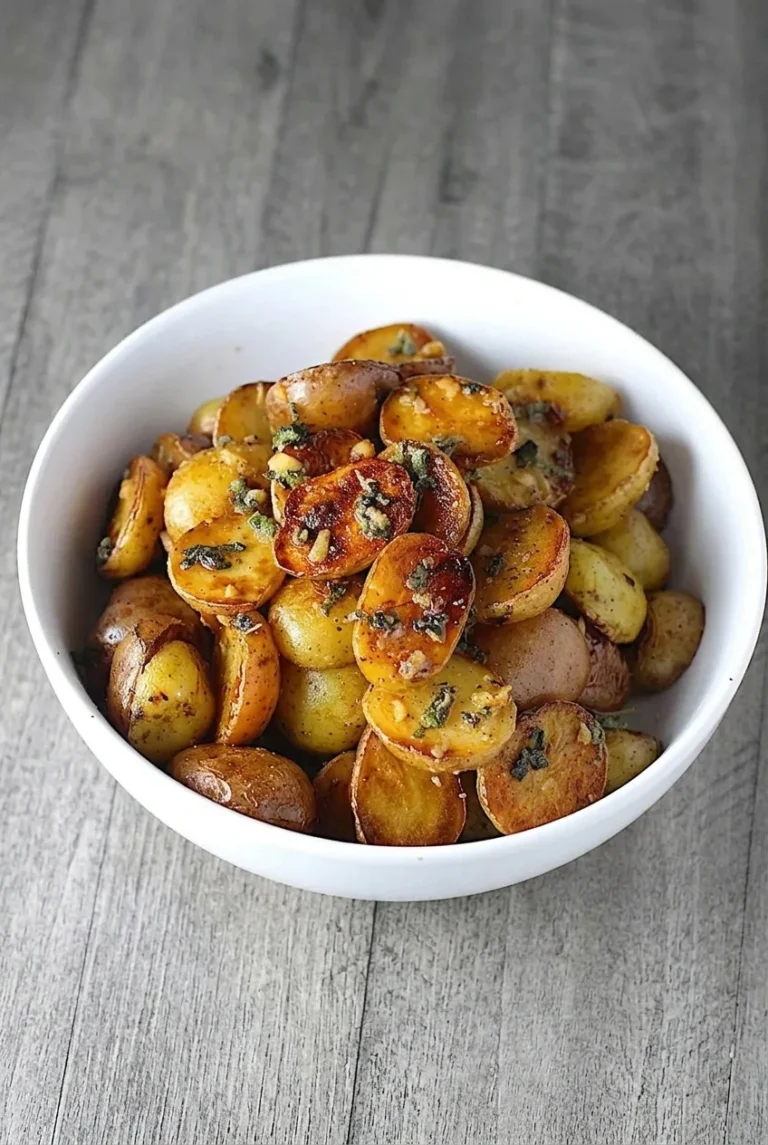
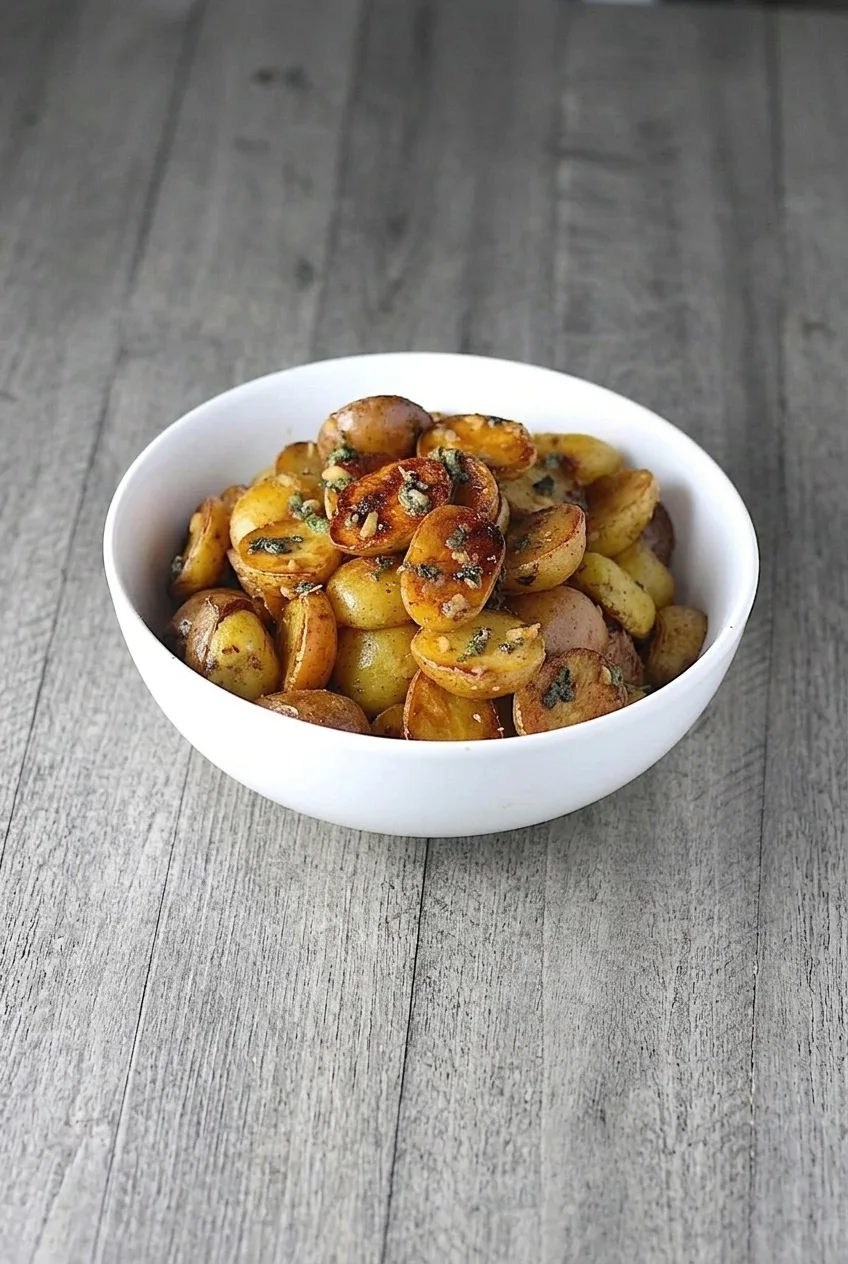
Full bowl of garlic butter roasted baby potatoes on a gray tabletop, viewed from farther back
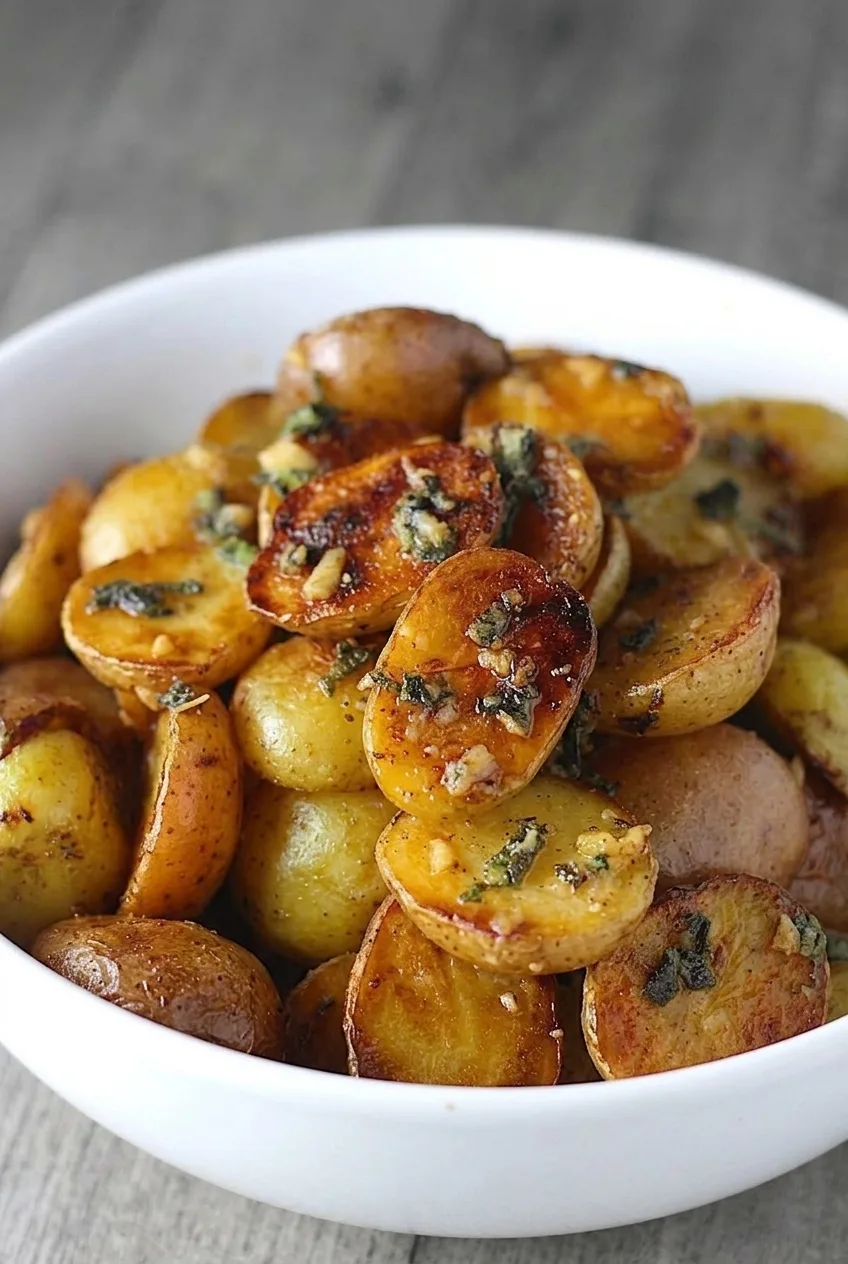
Close view of a browned baby potato half with intact skin, garlic pieces, and sage-flecked butter

How to Roast the Potatoes

  1. Prepare the potatoes: Fully preheat the oven to 425°F (220°C). Wash and thoroughly dry the potatoes, then halve them into small, fairly even pieces.
  2. Arrange cut-side down: Lightly oil a rimmed metal baking sheet with a little of the measured olive oil. Toss the potatoes with the remaining oil, salt, and pepper. Spread them cut-side down in one uncrowded layer, using a second sheet if needed.
  3. Roast until browned and tender: Roast uncovered without routinely flipping. Rotate the pan halfway through if it browns unevenly. Start checking at 22 minutes; small halves generally take 25 to 35 minutes. They are done when the cut faces have golden-to-deep-brown patches and a fork slides easily into the center of a larger half. If a piece sticks, let it roast a little longer before lifting it gently with a thin spatula.
  4. Make the garlic-sage butter: Near the end of roasting, melt the butter in a small skillet or saucepan over medium-low heat. Add the sage and cook briefly, then stir in the garlic for 30 to 60 seconds, just until fragrant. Remove from the heat while the garlic is still pale.
  5. Toss and serve: Transfer the hot potatoes to a wide serving bowl and gently toss with the garlic-sage butter. Taste for salt and serve promptly, with some browned cut faces showing.

How to Get Browned Cut Sides

Wet or crowded potatoes steam rather than brown. Dry them after washing and leave space between the halves so their cut faces can sit directly against the metal pan. Keep them cut-side down during the roast; lifting them too early can tear away the developing crust. Parchment makes cleanup easier, but a bare sheet gives the potatoes more direct pan contact.

Why Add the Garlic Butter After Roasting?

Roasting the potatoes with oil lets the cut sides brown without leaving chopped garlic in the oven long enough to scorch. Gently cooking the sage and garlic in butter near the end keeps the garlic pale and fragrant. If it begins to brown, take the pan off the heat.

Potato Size and Doneness

The 25- to 35-minute window applies to small, similarly sized halves. Whole baby potatoes or larger pieces need more time. Check both the browned cut sides and the center of a larger piece before removing the pan from the oven.

Serving and Variations

Serve warm beside roast chicken, steak, pork, or fish with a fresh salad. For a milder herb note, replace the sage with a modest amount of fresh thyme.

For a softer potato side, try melting potatoes with garlic-thyme butter sauce. For a separate cheese-crusted recipe, try these crispy Parmesan crusted potatoes.

Storing and Reheating

Cool leftovers and refrigerate in an airtight container for up to 3 days. Reheat in a single layer on a sheet pan at 350°F (175°C) until hot, roughly 10 minutes for a modest portion; larger amounts may take longer. The surfaces soften in storage, though dry-heat reheating can restore some crispness.

Nutrition

Approximate nutrition per serving, based on 6 side-dish servings: 210 calories, 3g protein, 10g fat, and 27g carbohydrates. Per 100g, estimated from ingredient weights before roasting: 125 calories, 2g protein, 6g fat, and 16g carbohydrates. Values are estimates; moisture lost during roasting changes the finished weight and per-100g figures.

Garlic Butter Roasted Baby Potatoes

Halved baby potatoes roast cut-side down until browned and tender, then get tossed with fragrant garlic-sage butter.
Course: Side Dish
Cuisine: American
Prep: 15 min
Cook: 35 min
Total: 50 min
Servings: 6 Calories: 210 kcal

Equipment

  • rimmed metal baking sheet
  • small skillet or saucepan
  • wide serving bowl
  • thin spatula

Ingredients

  • 2 lb mixed baby red and yellow potatoes, halved (900g)
  • 2 tablespoons olive oil
  • 1 teaspoon kosher salt, plus more to taste
  • 1/4 teaspoon freshly ground black pepper
  • 3 tablespoons unsalted butter (40g)
  • 4 cloves fresh garlic, finely chopped
  • 1 tablespoon chopped fresh sage

Instructions

  1. Fully preheat the oven to 425°F (220°C).
  2. Wash and thoroughly dry the potatoes, then halve them into small, fairly even pieces.
  3. Lightly oil a rimmed metal baking sheet with a little of the measured olive oil.
  4. Toss the potatoes with the remaining olive oil, salt, and pepper.
  5. Spread the potatoes cut-side down in one uncrowded layer, using a second sheet if needed.
  6. Roast uncovered without routinely flipping. Rotate the pan halfway through if it browns unevenly.
  7. Start checking at 22 minutes; small halves generally take 25 to 35 minutes. They are ready when the cut faces have golden-to-deep-brown patches and a fork slides easily into the center of a larger half.
  8. If a potato sticks, let it roast a little longer, then gently lift it with a thin spatula.
  9. Near the end of roasting, melt the butter in a small skillet or saucepan over medium-low heat.
  10. Add the sage and cook briefly, then stir in the garlic for 30 to 60 seconds, just until fragrant. Remove from the heat while the garlic is still pale.
  11. Transfer the hot potatoes to a wide serving bowl and gently toss with the garlic-sage butter.
  12. Taste for salt and serve promptly, with some browned cut faces showing.

Tips

  • Use small, similarly sized potatoes so the halves cook evenly.
  • Dry the potatoes thoroughly after washing to help them brown instead of steam.
  • Leave space between the halves and keep them cut-side down for direct pan contact.
  • Avoid lifting the potatoes too early; give sticking pieces more time to release.
  • Add the garlic butter after roasting to keep the chopped garlic from scorching.

Variations

  • Fresh Thyme Potatoes: Replace the sage with a modest amount of fresh thyme for a milder herb note.

Notes

Refrigerate leftovers in an airtight container for up to 3 days. Reheat in a single layer at 350°F (175°C) for roughly 10 minutes for a modest portion; larger amounts may take longer.

Nutrition

Calories: 210 kcal | Protein: 3 g | Fat: 10 g | Carbohydrates: 27 g

Funeral Potatoes

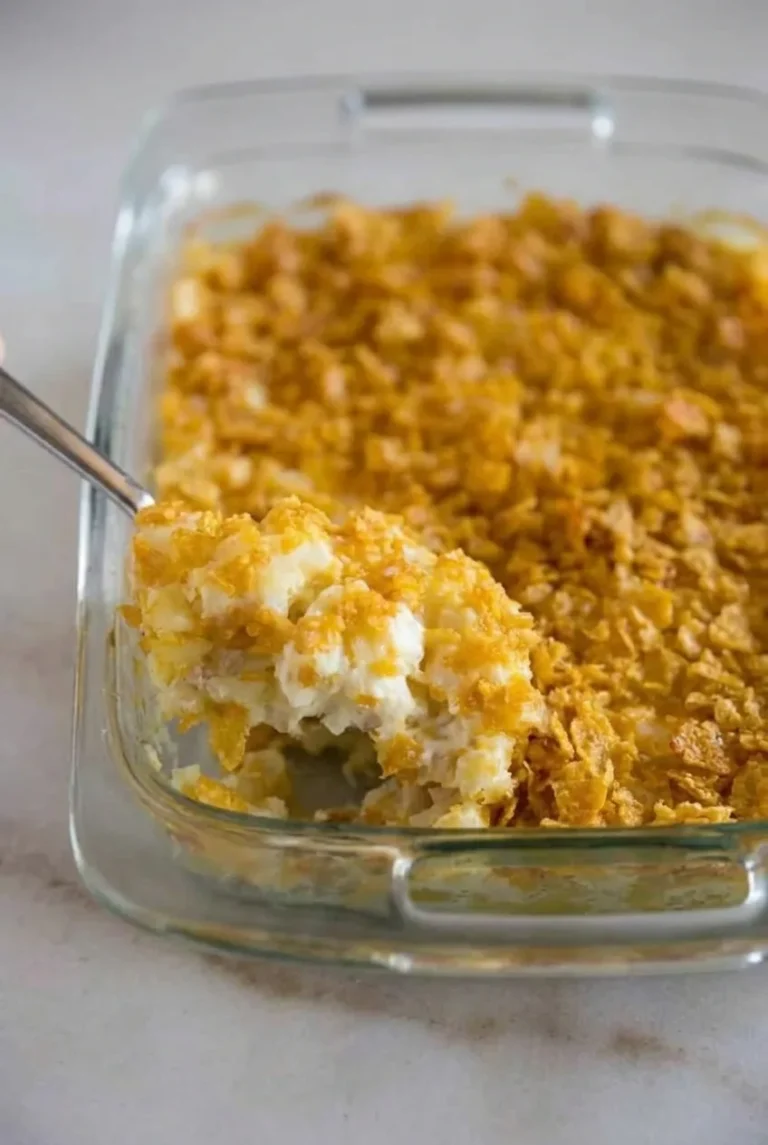
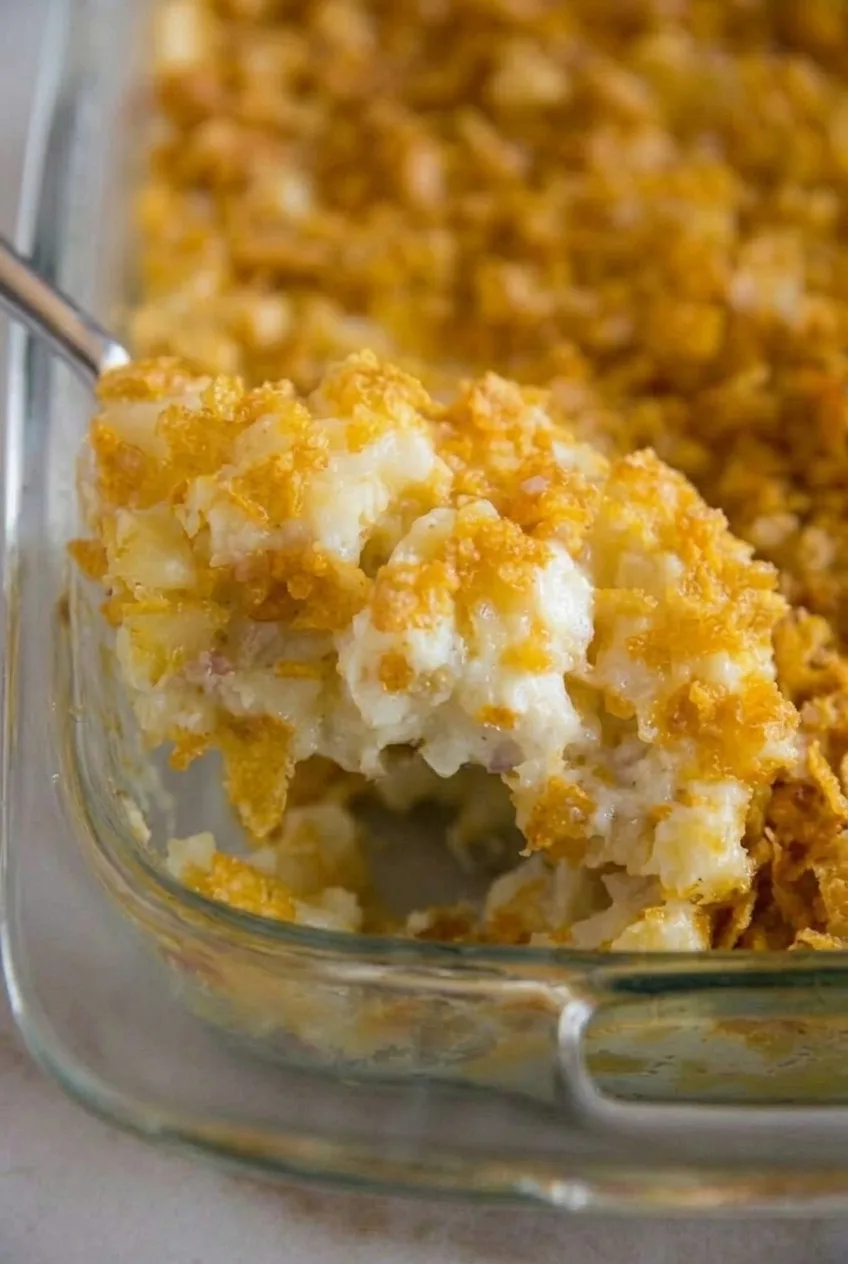
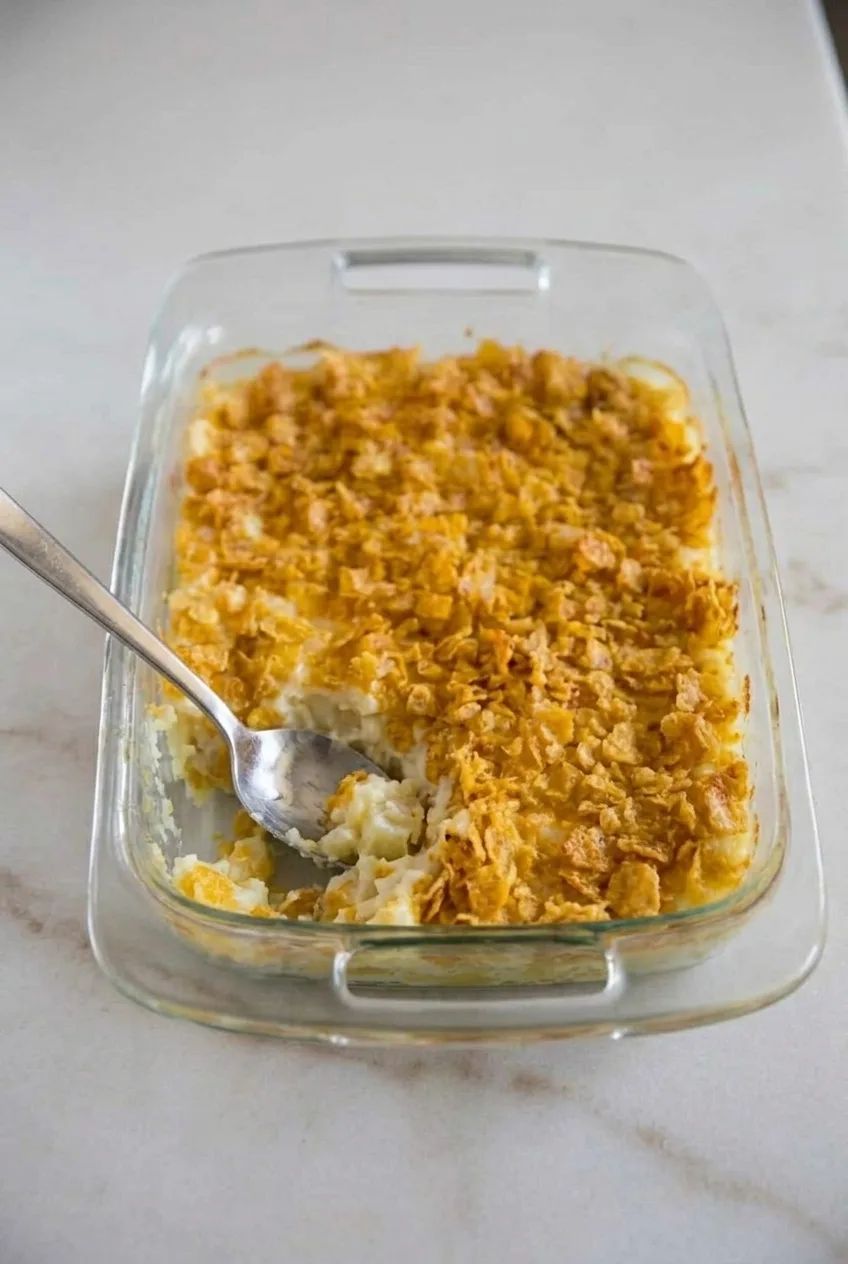
Funeral potatoes are a creamy, cheesy hash-brown casserole baked in a 9-by-13-inch dish and served by the spoonful. Diced potatoes give the filling distinct pieces beneath a coarse, golden cornflake crust. Thaw and drain the hash browns before mixing so the sauce stays thick, and save the buttered cornflakes until just before baking if you assemble the casserole ahead.

Makes 12 side-dish servings. Allow 15 minutes of prep, 40 to 50 minutes of baking, and a 10-minute rest—about 65 to 75 minutes total, plus advance thawing.

Ingredients for Funeral Potatoes

Close view of diced potatoes in thick, creamy filling beneath coarse golden cornflakes
  • 1 bag (30 ounces) frozen diced hash browns, fully thawed and drained (850g)
  • 1 can (10.5 ounces) condensed cream of chicken soup (about 300g)
  • 2 cups sour cream (about 450g)
  • 2 cups shredded sharp cheddar cheese (about 225g)
  • 4 tablespoons unsalted butter, melted, for the filling (about 55g)
  • 1 teaspoon onion powder
  • 1/2 teaspoon freshly ground black pepper
  • Up to 1/4 teaspoon fine salt, only if needed
  • 3 cups plain cornflakes, measured before crushing (85g)
  • 4 tablespoons unsalted butter, melted, for the topping (about 55g)

How to Make Funeral Potatoes

Full glass dish of cornflake-topped funeral potatoes with a spoon-served opening at the front
  1. Thaw and drain: Thaw the hash browns completely in the refrigerator ahead of time. Drain any collected liquid and blot the potatoes if they still look wet. No ice or pooled liquid should remain.
  2. Prepare the oven and dish: Preheat the oven to 350°F (175°C) with a rack near the center. Lightly grease a 9-by-13-inch glass baking dish.
  3. Mix the sauce: In a large bowl, stir together the condensed soup, sour cream, 4 tablespoons melted butter, onion powder, and pepper. Taste and add a little salt only if needed; the cheddar will add salt too.
  4. Add the potatoes and cheese: Gently fold in the drained hash browns and cheddar until coated, taking care not to mash the potato pieces. Spread the mixture evenly in the dish.
  5. Add the topping: Lightly crush the cornflakes into coarse, recognizable pieces. Toss with the remaining 4 tablespoons melted butter, then scatter over the filling without pressing down.
  6. Bake: Bake uncovered for 40 to 50 minutes, starting to check at 40 minutes. The sauce should bubble at the edges, the center should be hot, and the cornflakes should be golden. If the topping browns before the center heats through, tent loosely with foil and continue baking.
  7. Rest and serve: Let stand for about 10 minutes before serving by the spoonful. The filling should be thick and creamy, with distinct potato pieces.

Choosing and Draining the Hash Browns

Diced hash browns keep their shape in the creamy filling. Shredded hash browns work at the same weight, but make a softer, less chunky casserole. Either cut needs to be fully thawed and drained: liquid left in the potatoes can thin the sauce as it bakes.

If using fresh diced potatoes instead, cook them just until firm-tender and drain them before folding them into the sauce. For a condensed-soup swap, use cream of mushroom or cream of celery. Check the label if the casserole needs to be vegetarian; simply omitting the soup will not produce the same sauce.

How to Keep the Cornflake Topping Crisp

Crush the cornflakes lightly rather than grinding them into crumbs, then coat them with melted butter. For a make-ahead casserole, keep the flakes separate until just before baking. Left against the creamy filling during storage, they will soften.

How to Tell When Funeral Potatoes Are Done

A golden topping does not necessarily mean the middle is ready. Check for bubbling sauce at the edges and a hot center. A casserole that goes into the oven refrigerator-cold may need about 5 to 15 minutes beyond the usual baking window; tent the flakes with foil if they darken before the filling is hot.

Make-Ahead, Storage, and Reheating

To make the casserole ahead, assemble the filling without the topping, cover, and refrigerate for up to 1 day. Add freshly buttered cornflakes just before baking. For longer storage, tightly wrap and freeze the assembled casserole without its topping; use within about 2 to 3 months for best quality. Thaw overnight in the refrigerator, add the topping, and bake until bubbly and hot throughout.

Refrigerate leftovers promptly in an airtight container and use within 3 to 4 days. Reheat portions in a moderate oven until hot to preserve some topping crunch. A microwave is quicker but will soften the flakes.

Serve warm alongside ham, turkey, roasted chicken, or eggs at brunch. For a baked potato side with a different topping, try this French onion potato bake.

Nutrition

Approximate per serving, based on 12 side-dish servings: 325 calories, 8g protein, 23g fat, and 21g carbohydrates. Approximate per 100g: 190 calories, 5g protein, 13g fat, and 13g carbohydrates. Values vary with ingredient brands and moisture lost during baking.

Funeral Potatoes

A creamy hash-brown casserole topped with buttery, golden cornflakes.
Course: Side Dish
Cuisine: American
Prep: 15 min
Cook: 45 min
Total: 70 min
Servings: 12 Calories: 325 kcal

Equipment

  • 9-by-13-inch glass baking dish
  • Large mixing bowl
  • Aluminum foil

Ingredients

For the Filling

  • 1 bag (30 ounces) frozen diced hash browns, fully thawed and drained (850 g)
  • 1 can (10.5 ounces) condensed cream of chicken soup (about 300 g)
  • 2 cups sour cream (about 450 g)
  • 2 cups shredded sharp cheddar cheese (about 225 g)
  • 4 tablespoons unsalted butter, melted (about 55 g)
  • 1 teaspoon onion powder
  • 1/2 teaspoon freshly ground black pepper
  • Up to 1/4 teaspoon fine salt, only if needed

For the Topping

  • 3 cups plain cornflakes, measured before crushing (85 g)
  • 4 tablespoons unsalted butter, melted (about 55 g)

Instructions

  1. Thaw the hash browns completely in the refrigerator. Drain any collected liquid and blot the potatoes if they still look wet.
  2. Preheat the oven to 350°F (175°C) with a rack near the center. Lightly grease a 9-by-13-inch glass baking dish.
  3. Stir together the condensed soup, sour cream, 4 tablespoons melted butter, onion powder, and pepper in a large bowl. Taste and add salt only if needed.
  4. Gently fold in the drained hash browns and cheddar until coated, taking care not to mash the potatoes. Spread the mixture evenly in the dish.
  5. Lightly crush the cornflakes into coarse pieces. Toss them with the remaining 4 tablespoons melted butter and scatter over the filling without pressing down.
  6. Bake uncovered for 40 to 50 minutes, checking at 40 minutes. Bake until the sauce bubbles at the edges, the center is hot, and the topping is golden. Tent loosely with foil if the topping browns before the center is hot.
  7. Let the casserole rest for about 10 minutes before serving.

Tips

  • Thaw and drain the hash browns completely so excess liquid does not thin the sauce.
  • Fold the potatoes in gently to keep the diced pieces intact.
  • Crush the cornflakes lightly so the topping stays coarse and crisp.
  • If assembling ahead, keep the buttered cornflakes separate and add them just before baking.
  • Check that the center is hot and the sauce bubbles at the edges; a golden topping alone does not mean the casserole is done.

Variations

  • Shredded Hash Brown Funeral Potatoes: Use shredded hash browns at the same weight for a softer, less chunky casserole.
  • Cream of Mushroom or Celery: Replace the cream of chicken soup with condensed cream of mushroom or cream of celery soup.
  • Fresh Diced Potatoes: Use fresh diced potatoes cooked until firm-tender and drained before folding them into the sauce.

Notes

Assemble the filling without the topping and refrigerate for up to 1 day. Freeze without the topping for about 2 to 3 months; thaw overnight in the refrigerator before baking. Refrigerate leftovers promptly for 3 to 4 days and reheat in a moderate oven until hot. A refrigerator-cold casserole may need 5 to 15 extra minutes in the oven.

Nutrition

Calories: 325 kcal | Protein: 8 g | Fat: 23 g | Carbohydrates: 21 g

Cheesy Taco Potatoes

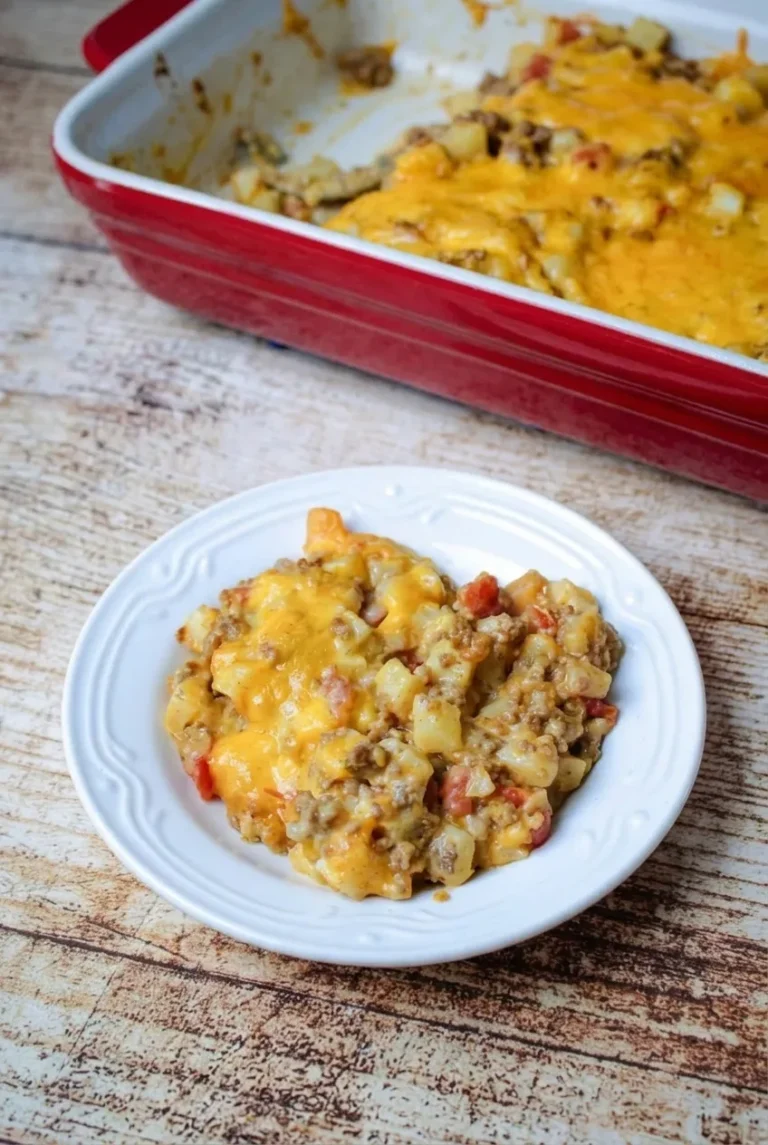
Small potato cubes, taco-seasoned ground beef, and tomato-chile pieces bake in a creamy cheese sauce beneath a melted cheddar top. The casserole stays soft and scoopable rather than cutting into squares.

Thawed cubed hash browns keep the potatoes distinct and help them heat through during the covered bake. Check a cube near the center before adding the final cheese layer: it should be fork-tender but still hold its shape.

Ingredients for Cheesy Taco Potatoes

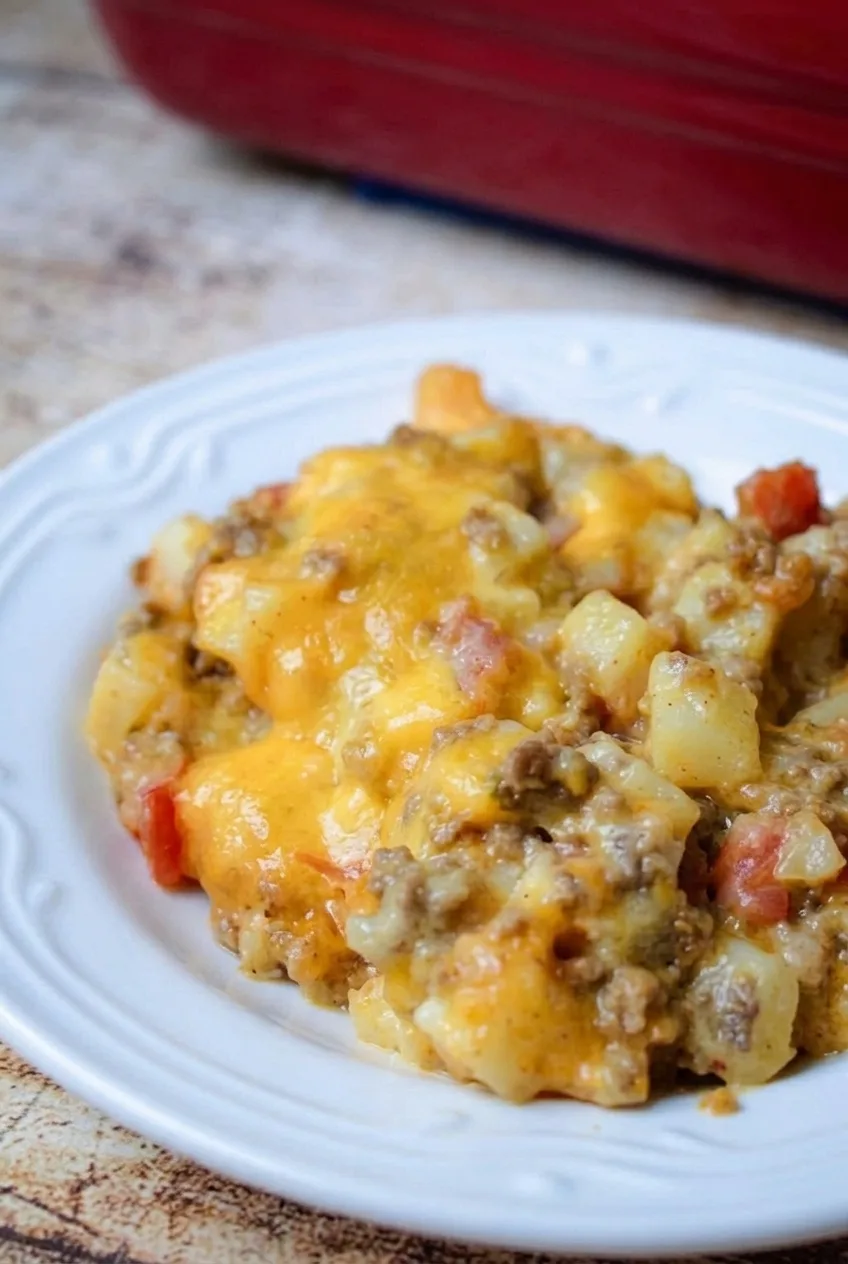
Close view of potato cubes, ground beef, and tomato pieces coated in creamy sauce and melted cheddar
  • 1 package frozen cubed hash brown potatoes, thawed (about 30 ounces or 850g)
  • 1 pound ground beef (about 450g)
  • 1 packet taco seasoning (about 1 ounce or 30g)
  • 1/3 cup water
  • 1 can diced tomatoes with green chiles, drained (10 ounces)
  • 1 can condensed cheddar cheese soup (10.5 ounces)
  • 1/2 cup sour cream (120g)
  • 2 cups shredded sharp cheddar cheese, divided (about 225g)

Yield: 6 servings. Prep: About 15 minutes, plus time to thaw the potatoes. Allow about 10–12 minutes to cook the beef, 50–60 minutes to bake, and 5–10 minutes to rest.

How to Make Cheesy Taco Potatoes

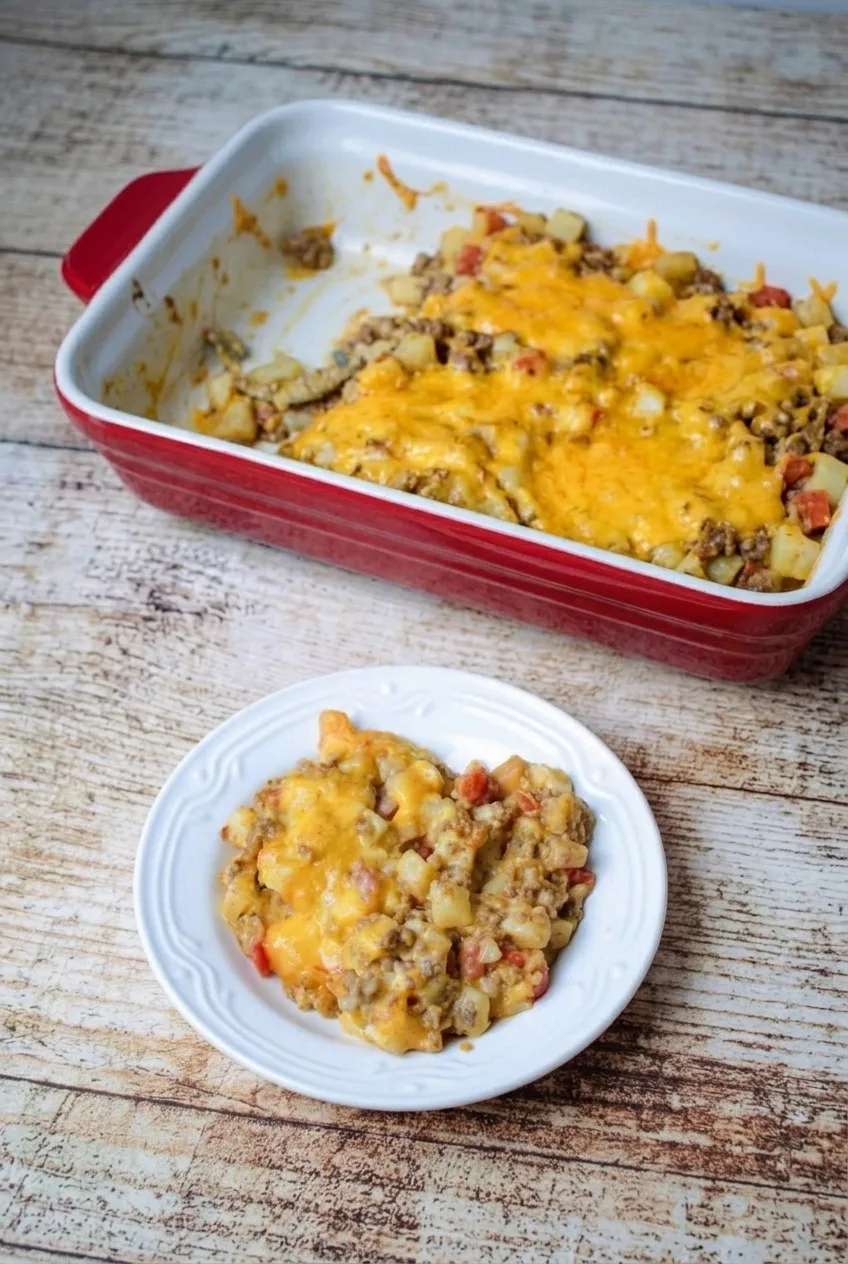
Wider view of the Cheesy Taco Potatoes casserole in its baking dish with a loose plated serving
  1. Prepare the dish: Preheat the oven to 350°F (175°C). Lightly grease a 9-by-13-inch baking dish. Make sure the potato cubes are thawed and no longer frozen together.
  2. Brown and season the beef: Cook and crumble the beef in a large skillet over medium-high heat, about 8–10 minutes, until fully cooked. Drain excess fat. If using a thermometer, the beef should reach 160°F (70°C) before assembly. Reduce the heat to medium, add the taco seasoning and water, and simmer until the meat is coated and little free liquid remains.
  3. Mix the casserole: In a large bowl, combine the potatoes, seasoned beef, drained tomatoes, cheddar cheese soup, sour cream, and 1 cup of the shredded cheddar. Stir until the cubes are evenly coated, then spread the mixture in the prepared dish.
  4. Bake covered: Cover loosely with foil, keeping it off the mixture, and bake for 40–45 minutes. Start checking a potato cube near the center at 40 minutes. If it is still firm, continue baking covered until the center potatoes are fork-tender.
  5. Melt the cheese: Remove the foil and scatter the remaining 1 cup cheddar over the casserole. Bake uncovered for 10–15 minutes, until the cheese is melted and the edges bubble lightly. Let stand for 5–10 minutes, then serve in loose scoops.

Use Cubed, Thawed Potatoes

Choose cubed hash browns rather than shredded ones for distinct pieces in each serving. The baking time assumes the potatoes are thawed and the assembled casserole is not refrigerator-cold. If using fresh potatoes, cut them into similarly small cubes and parboil until nearly tender before mixing; raw cubes will not cook on the same schedule.

How to Keep the Casserole Creamy, Not Watery

Drain the beef and tomatoes, and let the seasoning water cook down before mixing. Excess fat or liquid can pool around the potatoes. Adding half the cheddar to the filling and saving half for the uncovered bake gives the casserole a separate melted cheese top.

Serving, Make-Ahead, and Storage

Scoop onto plates and offer sour cream or fresh taco toppings separately, if desired. For another beef-and-potato bake, try Hamburger Potato Casserole with Corn and Cheddar.

To assemble ahead, cover and refrigerate the casserole for up to one day before baking. A refrigerator-cold dish may need longer under the foil; check a center potato cube for tenderness before adding the final cheese.

Refrigerate leftovers in an airtight container for up to 3–4 days. Microwave individual portions until hot throughout, about 2–3 minutes depending on portion size and microwave power. If using a thermometer, reheat to 165°F (75°C). The potatoes will remain soft rather than crisp.

Nutrition

Approximate per serving (1/6 of the casserole): 535 calories, 29g protein, 31g fat, and 39g carbohydrates. Approximate per 100g: 160 calories, 9g protein, 9g fat, and 12g carbohydrates. Values will vary with the brands used, the amount of fat drained from the beef, and the casserole’s finished weight.

Cheesy Taco Potatoes

Thawed cubed potatoes, taco-seasoned beef, tomatoes, and cheddar bake together in a creamy casserole.
Course: Main Course
Cuisine: American
Prep: 15 min
Cook: 73 min
Total: 88 min
Servings: 6 Calories: 535 kcal

Equipment

  • 9-by-13-inch baking dish
  • Large skillet
  • Large mixing bowl
  • Aluminum foil

Ingredients

For the Casserole

  • 1 package frozen cubed hash brown potatoes, thawed (about 30 ounces or 850g)
  • 1 pound ground beef (about 450g)
  • 1 packet taco seasoning (about 1 ounce or 30g)
  • 1/3 cup water
  • 1 can diced tomatoes with green chiles, drained (10 ounces)
  • 1 can condensed cheddar cheese soup (10.5 ounces)
  • 1/2 cup sour cream (120g)
  • 2 cups shredded sharp cheddar cheese, divided (about 225g)

Instructions

  1. Preheat the oven to 350°F (175°C). Lightly grease a 9-by-13-inch baking dish. Make sure the potatoes are thawed and no longer frozen together.
  2. Cook and crumble the ground beef in a large skillet over medium-high heat for 8–10 minutes, until fully cooked. Drain excess fat. If using a thermometer, check that the beef reaches 160°F (70°C).
  3. Reduce the heat to medium. Add the taco seasoning and water, and simmer until the beef is coated and little free liquid remains.
  4. Combine the potatoes, seasoned beef, drained tomatoes, cheddar cheese soup, sour cream, and 1 cup of cheddar in a large bowl. Stir until the potatoes are evenly coated.
  5. Spread the mixture in the prepared dish. Cover loosely with foil, keeping it off the mixture.
  6. Bake covered for 40–45 minutes. Check a potato cube near the center at 40 minutes; if it is still firm, continue baking until the center potatoes are fork-tender.
  7. Remove the foil and scatter the remaining 1 cup of cheddar over the casserole. Bake uncovered for 10–15 minutes, until the cheese is melted and the edges bubble lightly.
  8. Let stand for 5–10 minutes, then serve in loose scoops.

Tips

  • Use cubed hash browns rather than shredded potatoes to keep distinct pieces in each serving.
  • Thaw the potatoes before assembling; the baking time assumes they are not frozen or refrigerator-cold.
  • Drain the beef and tomatoes, and cook down the seasoning water to help prevent excess liquid.
  • Check a potato cube near the center for tenderness before adding the final cheese layer.

Variations

  • Fresh Potato Version: Cut fresh potatoes into similarly small cubes and parboil them until nearly tender before mixing.

Notes

Refrigerate leftovers in an airtight container for 3–4 days. Microwave portions for about 2–3 minutes, until hot throughout; reheat to 165°F (75°C) if using a thermometer. Nutrition is approximate per serving.

Nutrition

Calories: 535 kcal | Protein: 29 g | Fat: 31 g | Carbohydrates: 39 g

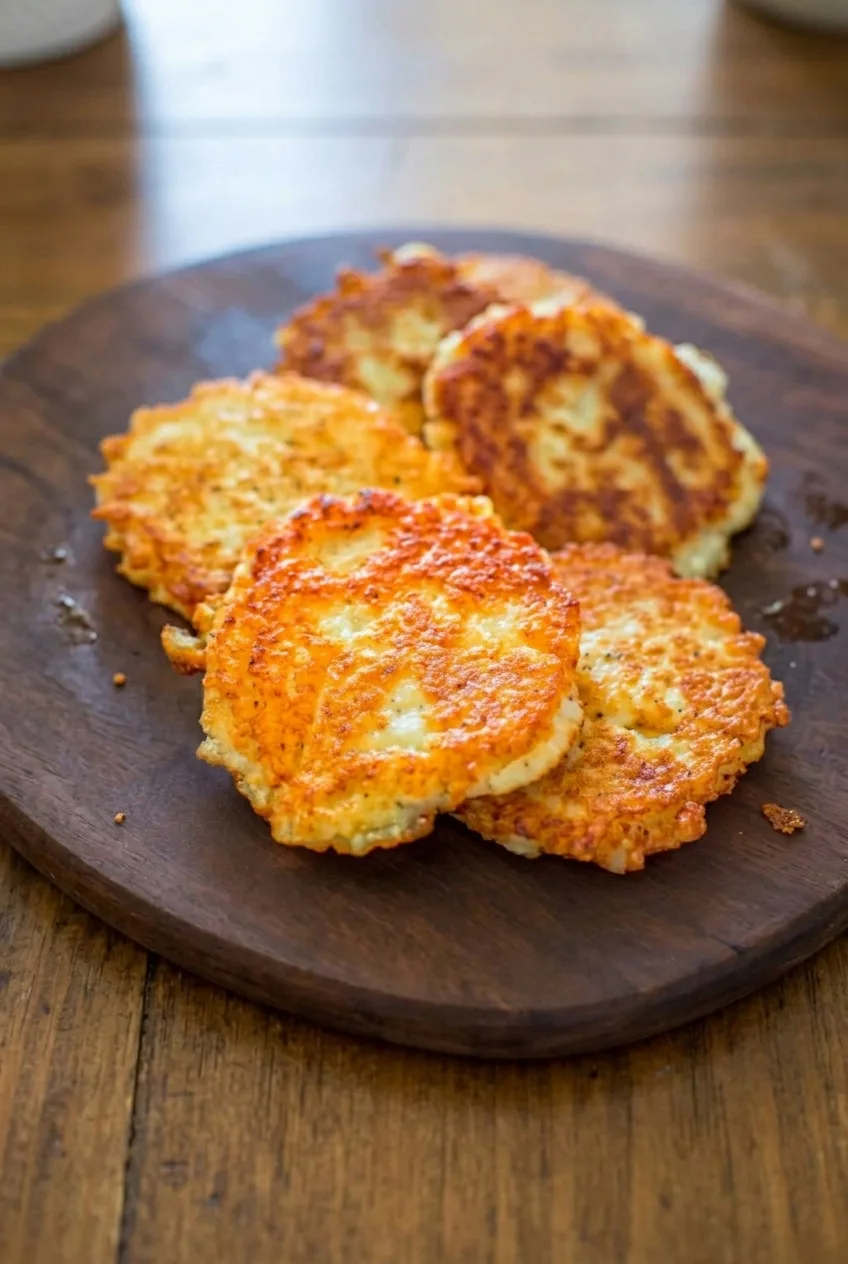
Classic Potato Pancakes

Classic potato pancakes have crisp, ragged edges, golden-brown surfaces, and tender centers with visible shreds of potato. This version starts with raw russets and onion, not leftover mashed potatoes. Wringing moisture from the grated vegetables helps the pancakes brown in the skillet, while uncrowded batches give their edges room to crisp. Serve them hot with sour cream or applesauce on the side.

Ingredients for Classic Potato Pancakes

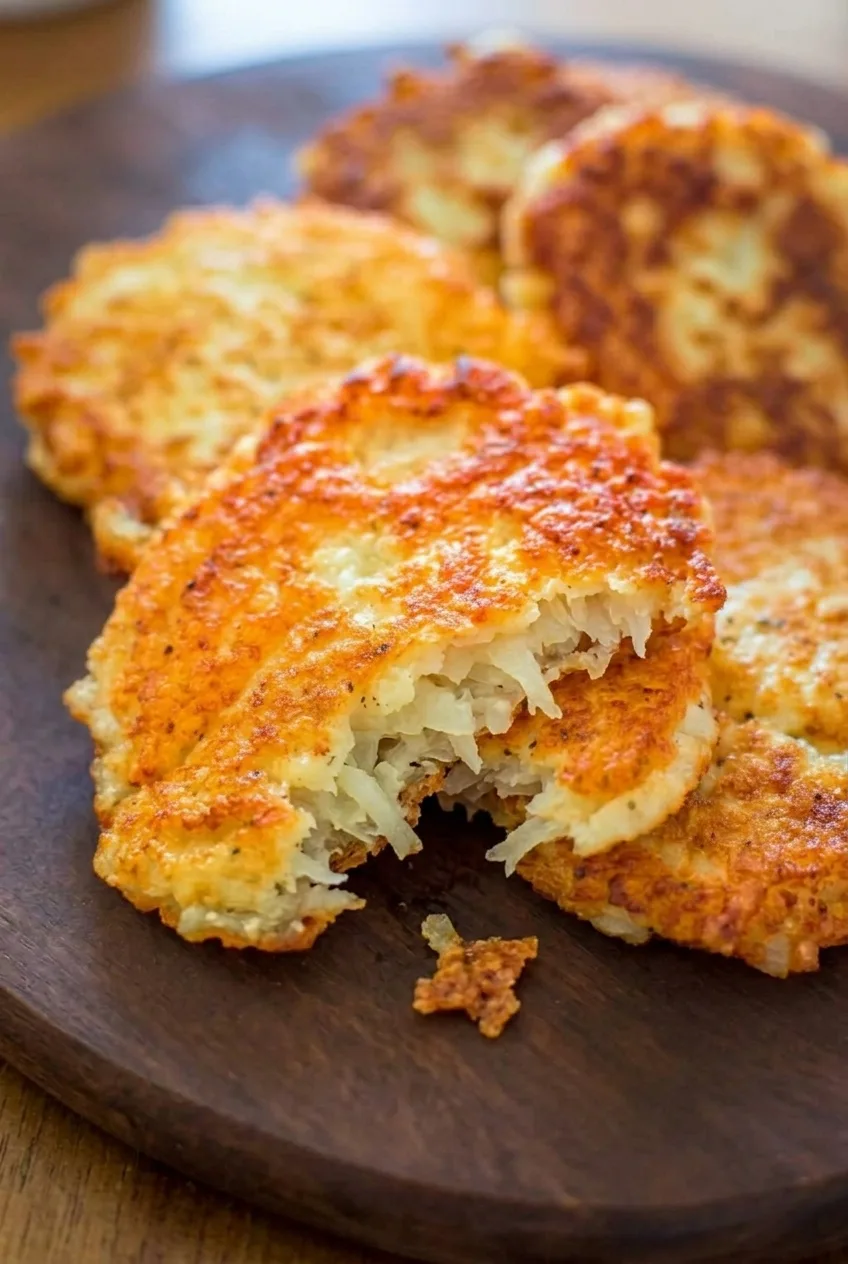
Close view of a broken potato pancake showing tender shreds beneath its browned crust
  • 2 pounds russet potatoes, peeled (900g)
  • 1 medium yellow onion, peeled (about 150g)
  • 2 large eggs
  • 1/4 cup all-purpose flour (30g)
  • 1 teaspoon kosher salt, or to taste
  • 1/4 teaspoon freshly ground black pepper
  • Up to 1/2 cup neutral vegetable oil, for frying as needed

Optional for serving: sour cream or applesauce.

Yield: About 12 pancakes, or 4 servings. Time: 20 minutes prep; about 24 to 30 minutes cooking in batches; about 45 to 50 minutes total.

How to Make Potato Pancakes in a Skillet

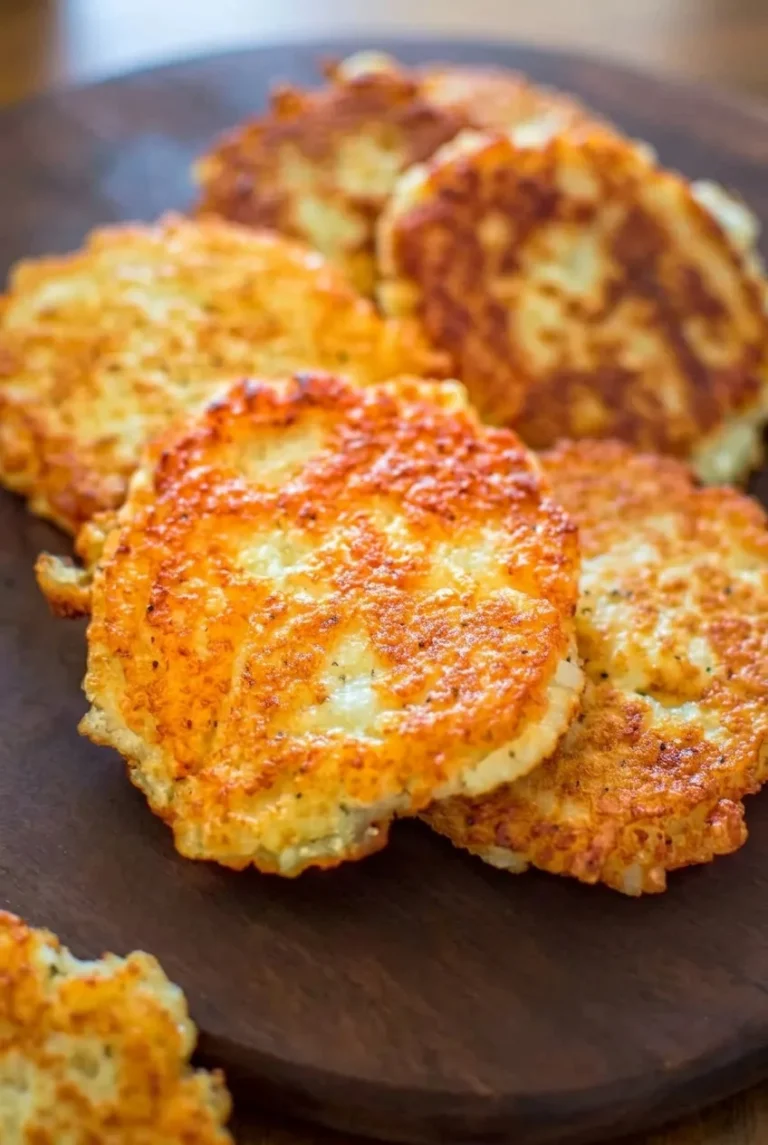
Full plate of irregular golden potato pancakes in a loose, overlapping serving arrangement
  1. Grate the vegetables: Coarsely grate the potatoes and onion with a box grater or a food processor fitted with a shredding disk. Work promptly, keeping the shreds distinct rather than turning them into a puree.
  2. Squeeze and save the starch: Wrap the grated vegetables in a clean kitchen towel and wring firmly over a bowl until they feel noticeably drier. Do not rinse them. Let the liquid stand briefly, then carefully pour off the watery layer, leaving any white starch settled at the bottom.
  3. Mix: Add the squeezed potato and onion to the bowl with the reserved starch. Mix in the eggs, flour, salt, and pepper. The mixture should hold together when scooped without sitting in a puddle of liquid.
  4. Heat the oil: Pour enough oil into a 10- to 12-inch heavy skillet to make a shallow layer about 1/8 inch deep. Heat over medium until the oil shimmers and a test potato shred sizzles promptly. The oil should not smoke.
  5. Fry the first batch: Add roughly 1/4-cup portions, 3 to 4 at a time, leaving space to turn them. Gently flatten each into an irregular pancake about 3 to 4 inches across and 1/4 to 3/8 inch thick. Fry uncovered for about 3 to 4 minutes on the first side, checking underneath after 3 minutes. Flip when the underside is golden brown and releases readily. Cook for about 3 to 4 minutes more, until both sides are golden-amber, the edges are crisp, and the center of a test pancake is tender rather than raw and crunchy.
  6. Finish the batches: Transfer cooked pancakes to a wire rack; do not stack them while hot. Loosely cover the remaining mixture between batches. Stir it briefly and pour off any newly pooled liquid before scooping. Add oil as needed and let it return to a steady sizzle before each batch. If the crust darkens before the center cooks, lower the heat slightly and flatten the next batch more evenly. For a short serving delay, hold finished pancakes on the rack in a 200°F (95°C) oven.
  7. Serve: Arrange the hot pancakes in a loose overlap with their browned surfaces visible. Offer sour cream or applesauce alongside, if desired.

How to Keep Potato Pancakes Crisp

Wet shreds and oil that is too cool can leave the pancakes soft or greasy. Wring the potato and onion thoroughly, then wait for a steady sizzle before adding each batch. Give the pancakes space in the skillet so their edges can brown.

Let the first side form a firm crust before flipping; turning too soon can break a pancake apart. Drain finished batches on a rack so steam can escape instead of softening their undersides.

Should You Save the Potato Starch?

If a white layer settles beneath the liquid squeezed from the potatoes, keep it in the bowl when you pour off the water. Mixing that starch back into the shreds helps the pancakes hold together without adding another ingredient. It is fine if little or no starch settles out.

What to Serve with Potato Pancakes

Serve sour cream or applesauce in separate bowls rather than spreading either over the crisp tops. For another crisp potato side with a different preparation, try Crispy Parmesan Crusted Potatoes.

Storage, Freezing, and Reheating

Cool cooked pancakes before storing them in an airtight container in the refrigerator. Use within about 3 to 4 days. Reheat in a single layer on a baking sheet at 350°F (175°C) for about 8 to 12 minutes, flipping halfway, until hot and re-crisped. Microwaving will soften the crust.

To freeze, arrange fully cooked, cooled pancakes in a single layer until firm, then transfer them to a freezer-safe container for up to about 2 months. Reheat from frozen in a single layer at 400°F (205°C) for about 15 to 20 minutes, until the centers are hot and the outsides are crisp.

Nutrition

Approximate nutrition per serving (about 3 pancakes): 340 calories, 9g protein, 13g fat, and 49g carbohydrates. Approximate values per 100g cooked pancakes: 155 calories, 4g protein, 6g fat, and 22g carbohydrates. Estimates exclude optional accompaniments and assume roughly 3 tablespoons of frying oil remain in the pancakes; actual values vary with oil absorption and moisture loss.

Classic Potato Pancakes

Crisp-edged potato pancakes made with grated russet potatoes and onion, fried until golden and tender.
Course: Side Dish
Cuisine: American
Prep: 20 min
Cook: 27 min
Total: 48 min
Servings: 4 Calories: 340 kcal

Equipment

  • Box grater or food processor with shredding disk
  • Clean kitchen towel
  • Mixing bowl
  • 10- to 12-inch heavy skillet
  • Wire rack

Ingredients

For the pancakes

  • 2 pounds russet potatoes, peeled (900 g)
  • 1 medium yellow onion, peeled (about 150 g)
  • 2 large eggs
  • 1/4 cup all-purpose flour (30 g)
  • 1 teaspoon kosher salt, or to taste
  • 1/4 teaspoon freshly ground black pepper
  • Up to 1/2 cup neutral vegetable oil, for frying as needed

For serving (optional)

  • Sour cream or applesauce

Instructions

  1. Coarsely grate the potatoes and onion with a box grater or a food processor fitted with a shredding disk. Keep the shreds distinct and work promptly.
  2. Wrap the grated vegetables in a clean kitchen towel and wring firmly over a bowl until noticeably drier. Do not rinse.
  3. Let the squeezed liquid stand briefly, then pour off the watery layer, leaving any settled white starch in the bowl.
  4. Add the grated vegetables to the reserved starch. Mix in the eggs, flour, salt, and pepper until the mixture holds together when scooped.
  5. Pour enough oil into a 10- to 12-inch heavy skillet to make a shallow layer about 1/8 inch deep. Heat over medium until shimmering and a test potato shred sizzles promptly; do not let the oil smoke.
  6. Scoop roughly 1/4-cup portions into the skillet, 3 to 4 at a time, leaving space between them. Flatten each into an irregular pancake about 3 to 4 inches across and 1/4 to 3/8 inch thick.
  7. Fry uncovered for about 3 to 4 minutes on the first side. Flip when the underside is golden brown and releases readily, then fry for about 3 to 4 minutes more, until both sides are golden-amber, the edges are crisp, and the center is tender.
  8. Transfer cooked pancakes to a wire rack without stacking. Loosely cover the remaining mixture between batches, stir briefly, and pour off any newly pooled liquid.
  9. Add oil as needed and let it return to a steady sizzle before frying each batch. If the crust darkens before the center cooks, lower the heat slightly and flatten the next batch more evenly.
  10. For a short serving delay, hold the pancakes on the rack in a 200°F (95°C) oven. Serve hot with sour cream or applesauce, if desired.

Tips

  • Wring the grated potatoes and onion thoroughly to help the pancakes brown instead of turning soft or greasy.
  • Wait for the oil to shimmer and sizzle steadily before adding a batch.
  • Avoid crowding the skillet so the edges have room to crisp.
  • Let a firm crust form before flipping to help keep pancakes intact.
  • Drain finished pancakes on a wire rack rather than stacking them while hot.

Notes

Refrigerate cooled pancakes in an airtight container for 3 to 4 days. Reheat in a single layer at 350°F (175°C) for 8 to 12 minutes, flipping halfway. Freeze cooked, cooled pancakes for up to 2 months; reheat from frozen at 400°F (205°C) for 15 to 20 minutes. Microwaving softens the crust.

Nutrition

Calories: 340 kcal | Protein: 9 g | Fat: 13 g | Carbohydrates: 49 g

Loaded Mashed Potato Bites

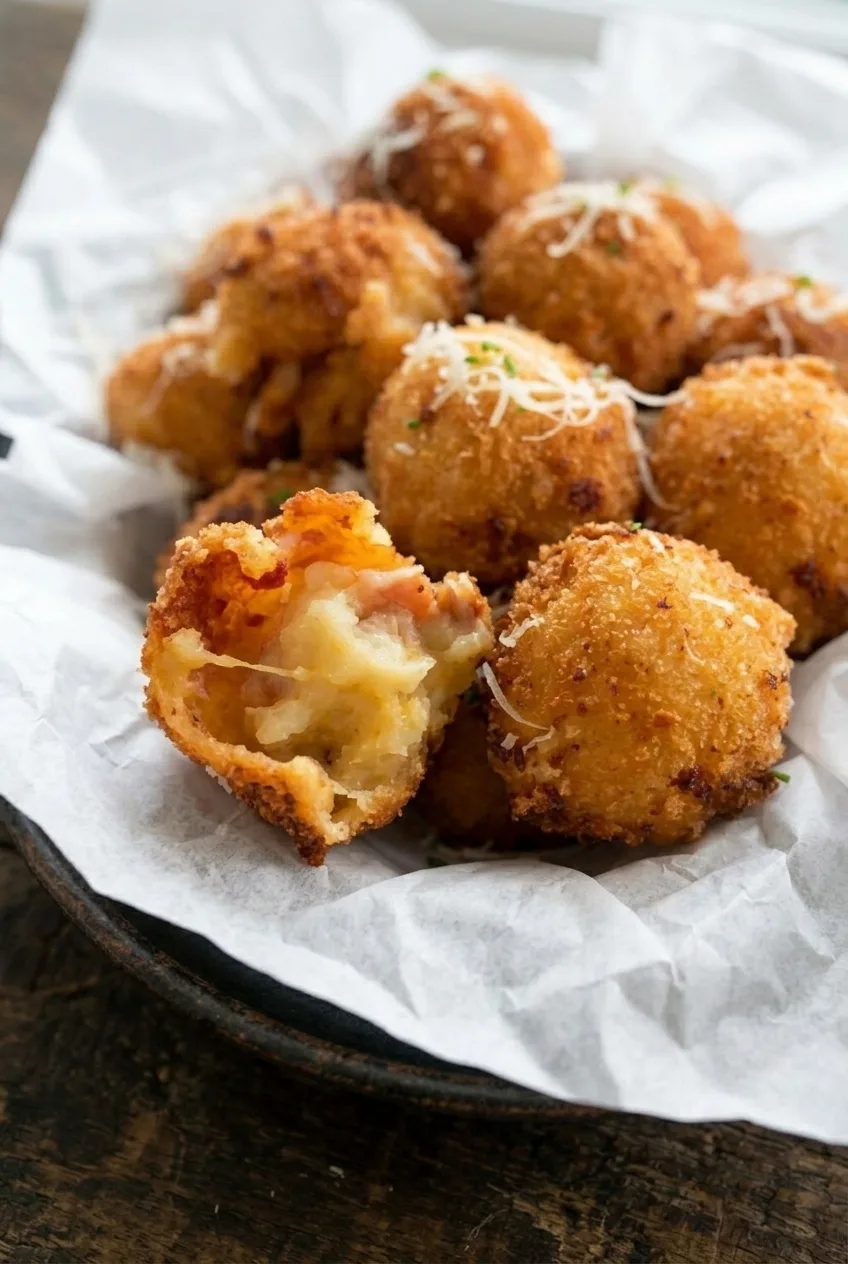
These fried potato bites have a coarse, golden panko crust and a soft center with cheddar, bacon, and scallions mixed throughout. Cold, firm mashed potatoes are essential: loose mash can smear during shaping or open in the oil. Keep the rounds small, coat them completely, and chill them before frying so the crust has time to crisp while the center heats through.

Ingredients for Loaded Mashed Potato Bites

  • 3 cups cold, firm prepared mashed potatoes (about 630g)
  • 1 cup shredded sharp cheddar (about 115g)
  • 6 slices cooked, crisp bacon, finely crumbled (about 1/3 cup or 45g)
  • 2 scallions, finely chopped
  • 1/4 cup panko breadcrumbs, for the filling (about 15g)
  • 1/2 cup all-purpose flour (about 60g)
  • 2 large eggs, beaten
  • 1 1/2 cups panko breadcrumbs, for coating (about 90g)
  • Neutral frying oil, enough to reach about 2 inches deep in a heavy pot (typically 6–8 cups, depending on the pot)
  • 2 tablespoons finely grated Parmesan (about 10g)
  • 1 tablespoon finely chopped chives or reserved scallion greens

Yield: About 20–22 bites, or 6–8 appetizer servings. Allow about 25 minutes to prepare, 25–30 minutes to chill, and 20–25 minutes to fry; total time is about 1 hour 15 minutes.

Close view of a broken loaded mashed potato bite showing its coarse panko crust and creamy bacon filling.

Choosing Mashed Potatoes That Will Hold Their Shape

The potatoes should stay in a mound when scooped and compress into a ball without smearing across your hands. If the mixed filling is loose, chill it first. If it still will not hold together, mix in instant potato flakes or more panko, 1 tablespoon at a time. Do not add liquid. Taste before adding salt; the potatoes, bacon, and cheese may already be well seasoned.

How to Make Loaded Mashed Potato Bites

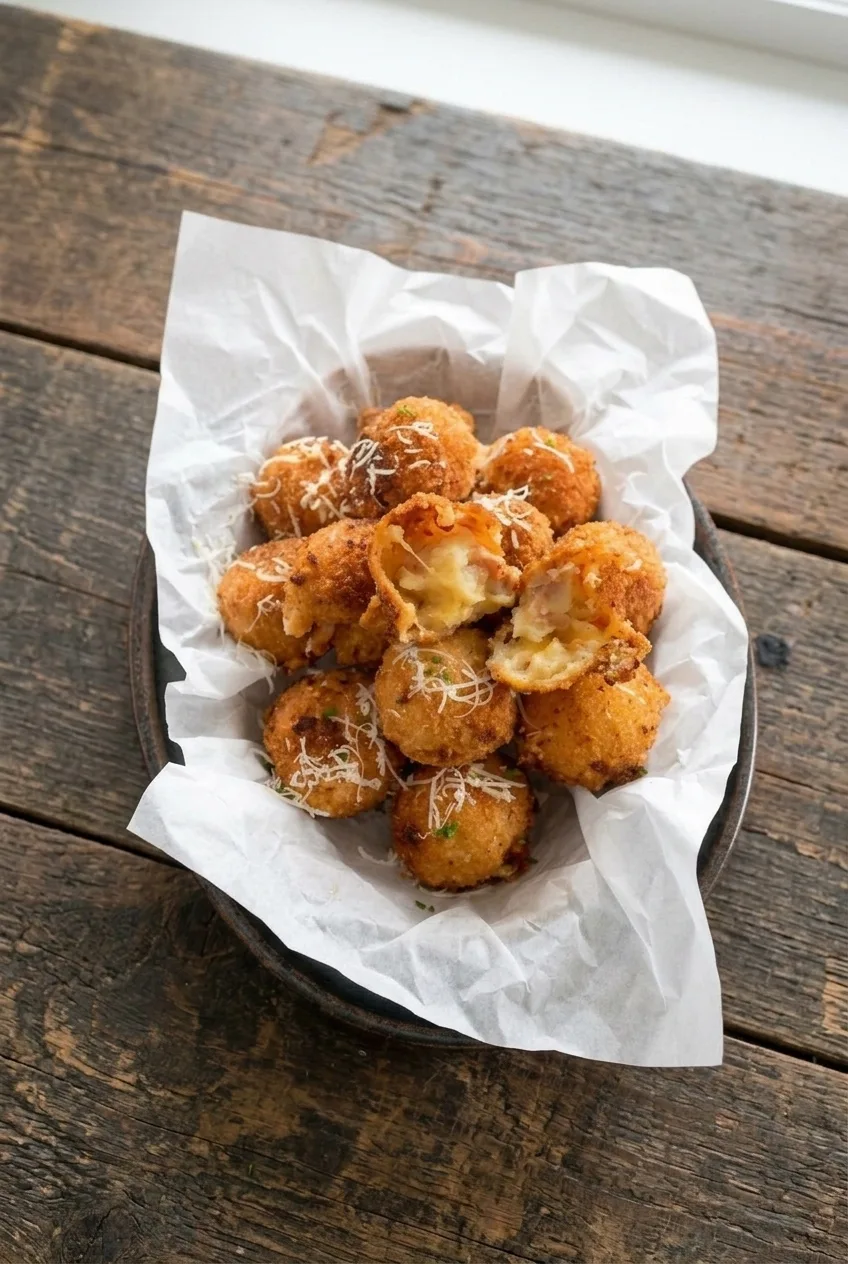
Full paper-lined serving dish of golden loaded mashed potato bites on a neutral tabletop.
  1. Mix the filling: Combine the cold mashed potatoes, cheddar, bacon, scallions, and 1/4 cup panko. The mixture should feel cold and cohesive.
  2. Shape the rounds: Scoop about 2 tablespoons per bite and compress or roll into roughly 20–22 compact rounds, about golf-ball size or slightly smaller. Smooth any large cracks.
  3. Bread and chill: Place the flour, beaten eggs, and remaining 1 1/2 cups panko in separate shallow dishes. Coat each round in flour, then egg, then panko, pressing crumbs onto any bare spots. Set on a tray and refrigerate for 25–30 minutes, until firm enough to lift without losing shape.
  4. Heat the oil: Toward the end of the chill, pour about 2 inches of oil into a deep, heavy pot, leaving ample space below the rim. Heat to 350°F (175°C), using a deep-fry thermometer. Set a wire rack over a rimmed tray.
  5. Fry in batches: Gently lower a few bites into the oil. Fry uncovered, turning carefully as needed, and start checking at about 3 minutes. For bites this size, each batch generally takes 3–5 minutes. Lift them out when the crust is crisp and golden to deep golden. Split one from the first batch to check that the center is hot. If the crust darkens too quickly, check the oil temperature and keep the remaining portions near 2 tablespoons. Let the oil return toward 350°F between batches.
  6. Drain and serve: Transfer the bites to the rack. Lightly scatter Parmesan and chives over them while warm, leaving the crunchy coating visible. Break open one or two to show the filling. Serve warm, with sour cream or ranch alongside if desired.

Can You Air Fry These Bites?

For an air-fryer variation, mist the coated bites with oil and arrange them in uncrowded batches. Air fry at 400°F (205°C), checking within about 6–12 minutes and turning as needed, until browned and hot in the center. Timing and browning depend on the air fryer; the crust may not look the same as the deep-fried version.

For a softer baked option, try cheesy mashed potato puffs. Those unbreaded mini-muffin bites are a different shape and texture, not a direct method swap.

Make-Ahead, Storage, and Reheating

Shaped, breaded uncooked bites can be refrigerated for up to 24 hours before frying. Cool cooked leftovers promptly and refrigerate in an airtight container for up to 3–4 days, counting the time the mashed potatoes were already stored. Frying does not reset the storage age of leftover potatoes.

Reheat cooked bites on a rack or baking sheet in a 350°F oven. Check after about 8 minutes and continue until hot and crisp. Breaded bites can also be frozen separately on a tray, then packed together, either before or after frying. Texture after reheating depends on the mashed potatoes used. If frying uncooked bites from frozen, allow extra time and check that the centers are hot.

Nutrition

Approximate per serving: Based on 7 appetizer servings of about 3 bites each, 380 calories, 13g protein, 21g fat, and 35g carbohydrates. Approximate per 100g: 250 calories, 9g protein, 14g fat, and 23g carbohydrates. Values vary with the prepared potatoes, amount of breading used, and oil absorbed during frying. The full quantity of frying oil is not counted as consumed.

Loaded Mashed Potato Bites

Crispy panko-coated bites with a soft mashed potato center mixed with cheddar, bacon, and scallions.
Course: Appetizer
Cuisine: American
Prep: 25 min
Cook: 25 min
Total: 75 min
Servings: 7 Calories: 380 kcal

Equipment

  • Mixing bowl
  • Shallow dishes
  • Deep heavy pot
  • Deep-fry thermometer
  • Rimmed tray
  • Wire rack

Ingredients

For the filling

  • 3 cups cold, firm prepared mashed potatoes (about 630 g)
  • 1 cup shredded sharp cheddar (about 115 g)
  • 6 slices cooked, crisp bacon, finely crumbled (about 1/3 cup or 45 g)
  • 2 scallions, finely chopped
  • 1/4 cup panko breadcrumbs (about 15 g)

For breading and frying

  • 1/2 cup all-purpose flour (about 60 g)
  • 2 large eggs, beaten
  • 1 1/2 cups panko breadcrumbs (about 90 g)
  • Neutral frying oil, enough to reach about 2 inches deep in a heavy pot (typically 6–8 cups)

For serving

  • 2 tablespoons finely grated Parmesan (about 10 g)
  • 1 tablespoon finely chopped chives or reserved scallion greens
  • Sour cream or ranch, optional

Instructions

  1. Combine the cold mashed potatoes, cheddar, bacon, scallions, and 1/4 cup panko until cohesive.
  2. Scoop about 2 tablespoons of filling per bite and shape into 20–22 compact rounds. Smooth any large cracks.
  3. Place the flour, beaten eggs, and remaining 1 1/2 cups panko in separate shallow dishes.
  4. Coat each round in flour, then egg, then panko, pressing crumbs onto any bare spots.
  5. Arrange the bites on a tray and refrigerate for 25–30 minutes, until firm.
  6. Pour about 2 inches of oil into a deep, heavy pot, leaving ample space below the rim. Heat to 350°F (175°C) and set a wire rack over a rimmed tray.
  7. Fry a few bites at a time, turning carefully as needed. Cook each batch for about 3–5 minutes, until crisp and golden to deep golden.
  8. Check that the first batch is hot in the center. Let the oil return toward 350°F between batches.
  9. Transfer the bites to the rack and scatter with Parmesan and chives while warm. Serve warm, with sour cream or ranch if desired.

Tips

  • Use cold, firm mashed potatoes so the bites hold their shape.
  • If the filling is loose, chill it before shaping; if needed, mix in instant potato flakes or extra panko 1 tablespoon at a time.
  • Do not add liquid to the filling, and taste before adding salt.
  • Keep the bites compact and about 2 tablespoons each so the crust can crisp as the center heats.
  • Avoid crowding the pot and let the oil return toward 350°F between batches.

Variations

  • Air-Fryer Mashed Potato Bites: Mist the coated bites with oil and air fry in uncrowded batches at 400°F (205°C), checking within about 6–12 minutes and turning as needed, until browned and hot in the center.

Notes

Breaded uncooked bites can be refrigerated for up to 24 hours. Refrigerate cooked leftovers in an airtight container for 3–4 days, counting prior storage time for the mashed potatoes. Reheat on a rack or baking sheet in a 350°F oven, checking after about 8 minutes. Freeze bites separately before packing; add time when frying from frozen and check that centers are hot. Approximate nutrition per 100 g: 250 calories, 9 g protein, 14 g fat, and 23 g carbohydrates.

Nutrition

Calories: 380 kcal | Protein: 13 g | Fat: 21 g | Carbohydrates: 35 g

Hasselback Potatoes

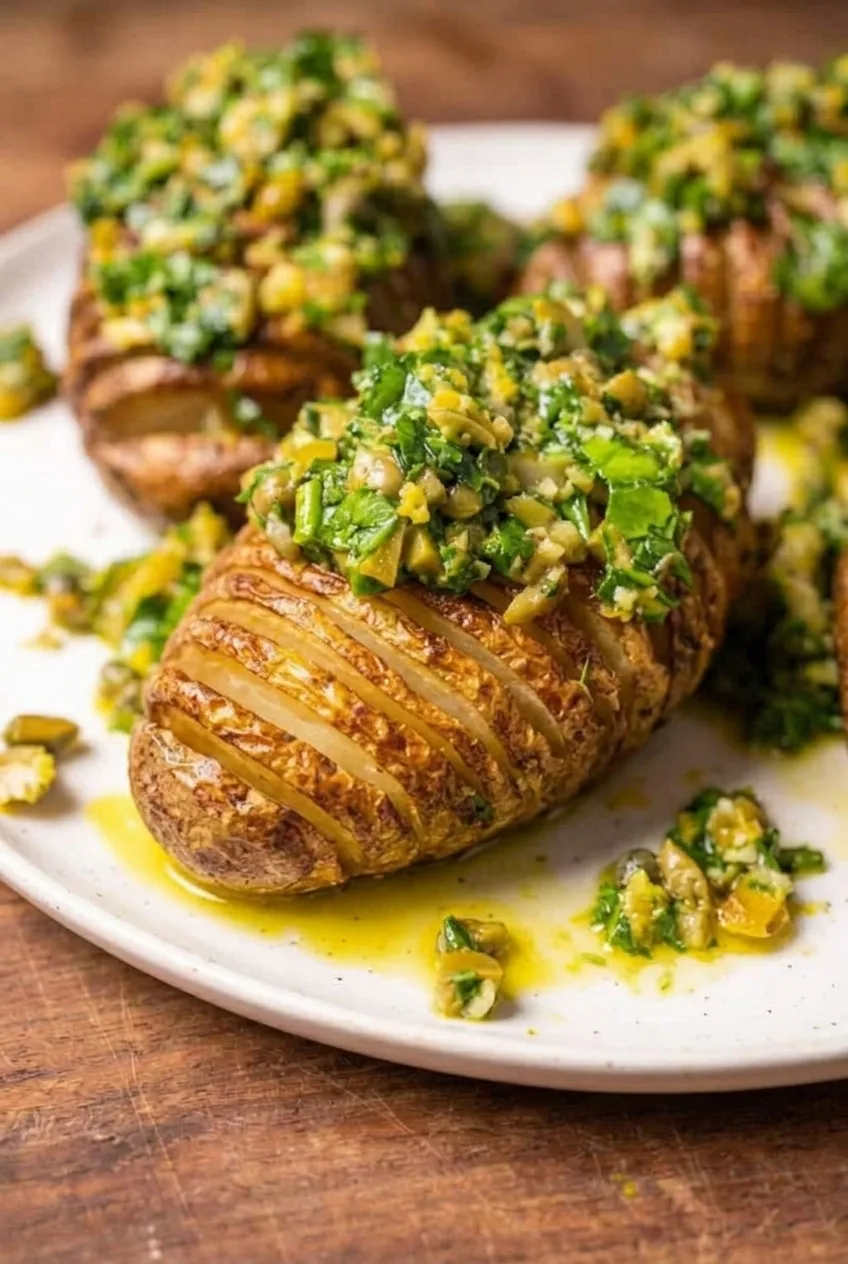
Thin crosswise cuts let these whole roasted potatoes fan open, creating golden edges around tender centers. Brush them with olive oil again after the slices begin to separate; the second brushing reaches surfaces that were too tight to coat when the potatoes were raw.

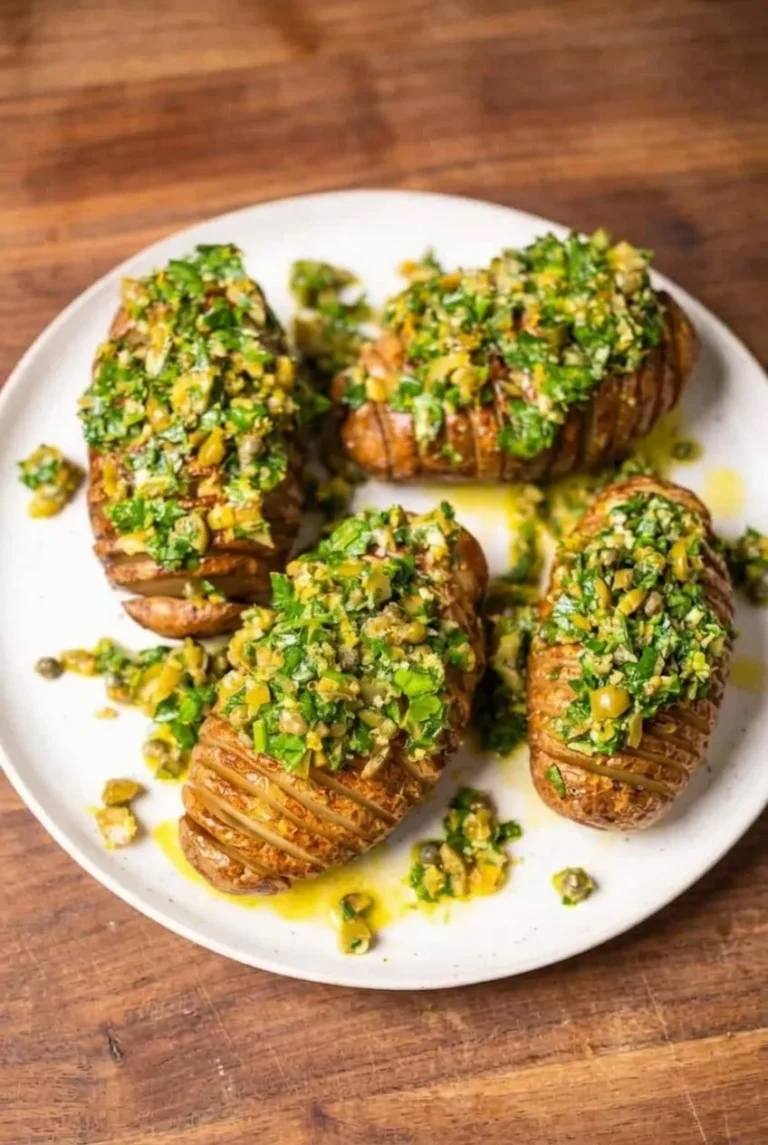
A chunky dressing of parsley, cilantro, green olives, capers, and lemon goes on just before serving. It gives each potato a fresh, briny finish while leaving some browned slices exposed.

Ingredients for Hasselback Potatoes

Close view of browned Hasselback slices beneath chunky green herb and olive dressing
  • 4 similarly sized medium russet potatoes, about 2 lb total (900g), scrubbed and dried
  • 6 tablespoons extra-virgin olive oil, divided
  • 3/4 teaspoon kosher salt, plus a pinch for the dressing if needed
  • 1/2 cup finely chopped fresh flat-leaf parsley (15g)
  • 1/4 cup finely chopped fresh cilantro (about 10g)
  • 1/3 cup finely chopped pitted green olives (50g)
  • 1 tablespoon capers, drained and roughly chopped
  • 1 lemon, for about 1 teaspoon zest and 1 tablespoon juice

Optional: Add a few grinds of black pepper to the potatoes before roasting or to the dressing.

How to Make Hasselback Potatoes

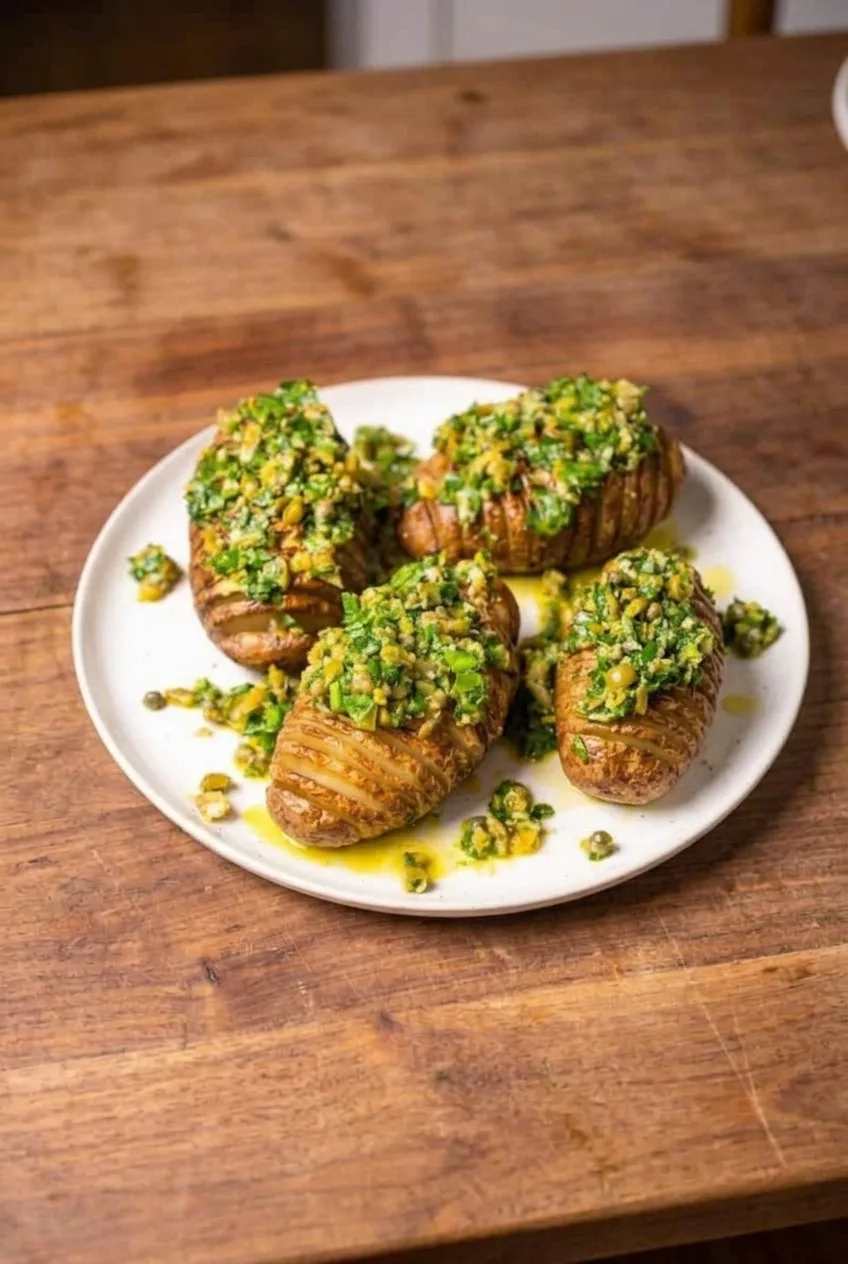
Full plate of four dressed Hasselback potatoes on a wooden table
  1. Preheat and prepare: Heat the oven to 425°F (220°C). Thoroughly dry the potatoes. If one rocks on the cutting board, trim a very thin strip from its underside so it sits flat.
  2. Cut the potatoes: Place one potato between two chopsticks, with a chopstick alongside each long edge. Cut crosswise into roughly 1/8-inch slices. Let the chopsticks stop the knife before it reaches the bottom, leaving the slices connected at the base. Repeat with the remaining potatoes.
  3. Start roasting: Set the potatoes cut-side up on a rimmed baking sheet, leaving space between them. Brush with about 1 1/2 tablespoons olive oil, working it into the cuts where possible. Sprinkle with the 3/4 teaspoon salt and roast uncovered for 30 minutes.
  4. Brush again and finish roasting: Once the slices begin to open, gently ease them apart and brush the remaining 1 1/2 tablespoons roasting oil into the openings. Do not flip the potatoes. Roast for another 30 to 40 minutes, rotating the pan if they brown unevenly. Start checking after 55 to 60 minutes total: a thin knife should easily pierce the thickest part near the base, and the exposed edges should be golden-brown. If the centers are firm, continue roasting and check again in short intervals.
  5. Make the dressing: While the potatoes finish roasting, stir together the parsley, cilantro, olives, capers, lemon zest, lemon juice, and remaining 3 tablespoons olive oil. Keep the mixture loose and visibly chopped, not puréed. Taste before adding any extra salt; the olives and capers may provide enough.
  6. Dress and serve: Let the potatoes stand for about 5 minutes, then transfer them to a platter. Spoon the dressing generously along each top, leaving some browned slices visible. Serve warm.

How to Cut Hasselback Potatoes Without Slicing Through

Keep the chopsticks alongside the potato, not underneath it. They act as knife stops while leaving the bottom connected. Closely spaced cuts create more exposed edges, but each potato should stay in one piece as it fans open.

Potato Options and Advance Slicing

Similarly sized Yukon Gold potatoes can replace russets. They will have a denser, creamier center, so check for tenderness rather than assuming they will finish at exactly the same time. If you prefer to omit the cilantro, replace it with more parsley.

Slicing shortly before roasting is simplest. If you need to cut the potatoes a day ahead, keep them submerged in water in the refrigerator, then dry them thoroughly before oiling and roasting.

Leftovers and Reheating

Refrigerate leftover cooked potatoes in an airtight container for up to 5 days. When practical, keep unused dressing separate and add it after reheating. Reheat the potatoes at 400°F (205°C) until hot, about 20 to 25 minutes. The edges may not be as crisp as when freshly roasted, and microwaving will soften them further. Freezing is not recommended if crisp edges are a priority.

For another tender-centered potato side with a different preparation, try Melting Potatoes with Garlic-Thyme Butter Sauce.

Nutrition

Approximate nutrition per serving (1 potato with one-quarter of the dressing): 375 calories, 5g protein, 22g fat, and 40g carbohydrates. Per 100g of finished dish: approximately 160 calories, 2g protein, 9g fat, and 17g carbohydrates. Values vary with potato size, moisture lost during roasting, and the amount of oil and dressing served.

Hasselback Potatoes

Whole roasted potatoes fan open into golden slices and are finished with a chunky parsley, cilantro, olive, caper, and lemon dressing.
Course: Side Dish
Cuisine: American
Prep: 20 min
Cook: 70 min
Total: 95 min
Servings: 4 Calories: 375 kcal

Equipment

  • Rimmed baking sheet
  • Chopsticks
  • Sharp knife
  • Pastry brush
  • Mixing bowl

Ingredients

For the potatoes

  • 4 similarly sized medium russet potatoes, about 2 lb total (900g), scrubbed and dried
  • 6 tablespoons extra-virgin olive oil, divided
  • 3/4 teaspoon kosher salt
  • Optional: a few grinds of black pepper

For the dressing

  • 1/2 cup finely chopped fresh flat-leaf parsley (15g)
  • 1/4 cup finely chopped fresh cilantro (about 10g)
  • 1/3 cup finely chopped pitted green olives (50g)
  • 1 tablespoon capers, drained and roughly chopped
  • 1 lemon, for about 1 teaspoon zest and 1 tablespoon juice
  • A pinch of kosher salt, if needed
  • Optional: a few grinds of black pepper

Instructions

  1. Preheat the oven to 425°F (220°C). Thoroughly dry the potatoes. If a potato rocks on the cutting board, trim a very thin strip from its underside so it sits flat.
  2. Place a potato between two chopsticks, with one alongside each long edge. Cut crosswise into roughly 1/8-inch slices, letting the chopsticks stop the knife before it reaches the bottom. Repeat with the remaining potatoes.
  3. Set the potatoes cut-side up on a rimmed baking sheet, leaving space between them. Brush with about 1 1/2 tablespoons olive oil, working it into the cuts where possible. Sprinkle with 3/4 teaspoon salt.
  4. Roast uncovered for 30 minutes.
  5. When the slices begin to open, gently ease them apart and brush the remaining 1 1/2 tablespoons roasting oil into the openings. Do not flip the potatoes.
  6. Roast for another 30 to 40 minutes, rotating the pan if the potatoes brown unevenly. Start checking after 55 to 60 minutes total. Continue roasting in short intervals if a thin knife does not easily pierce the thickest part near the base.
  7. While the potatoes roast, stir together the parsley, cilantro, olives, capers, lemon zest, lemon juice, and remaining 3 tablespoons olive oil. Keep the dressing chunky. Taste before adding a pinch of salt.
  8. Let the potatoes stand for about 5 minutes, then transfer them to a platter. Spoon the dressing along each top, leaving some browned slices exposed, and serve warm.

Tips

  • Keep the chopsticks alongside the potato so they stop the knife while leaving the bottom connected.
  • Dry the potatoes thoroughly before slicing and roasting.
  • Brush oil into the openings after the slices begin to separate for better coverage.
  • Check doneness with a thin knife near the base; roasting time may vary with potato size.

Variations

  • Yukon Gold Hasselback Potatoes: Replace the russets with similarly sized Yukon Gold potatoes and check for tenderness, as their denser centers may take a different amount of time.
  • Parsley Dressing: Omit the cilantro and replace it with more parsley.

Notes

Refrigerate leftover potatoes in an airtight container for up to 5 days. Keep extra dressing separate when practical and reheat potatoes at 400°F (205°C) for about 20 to 25 minutes. Freezing is not recommended if crisp edges are a priority.

Nutrition

Calories: 375 kcal | Protein: 5 g | Fat: 22 g | Carbohydrates: 40 g

Crispy Smashed Potato Salad

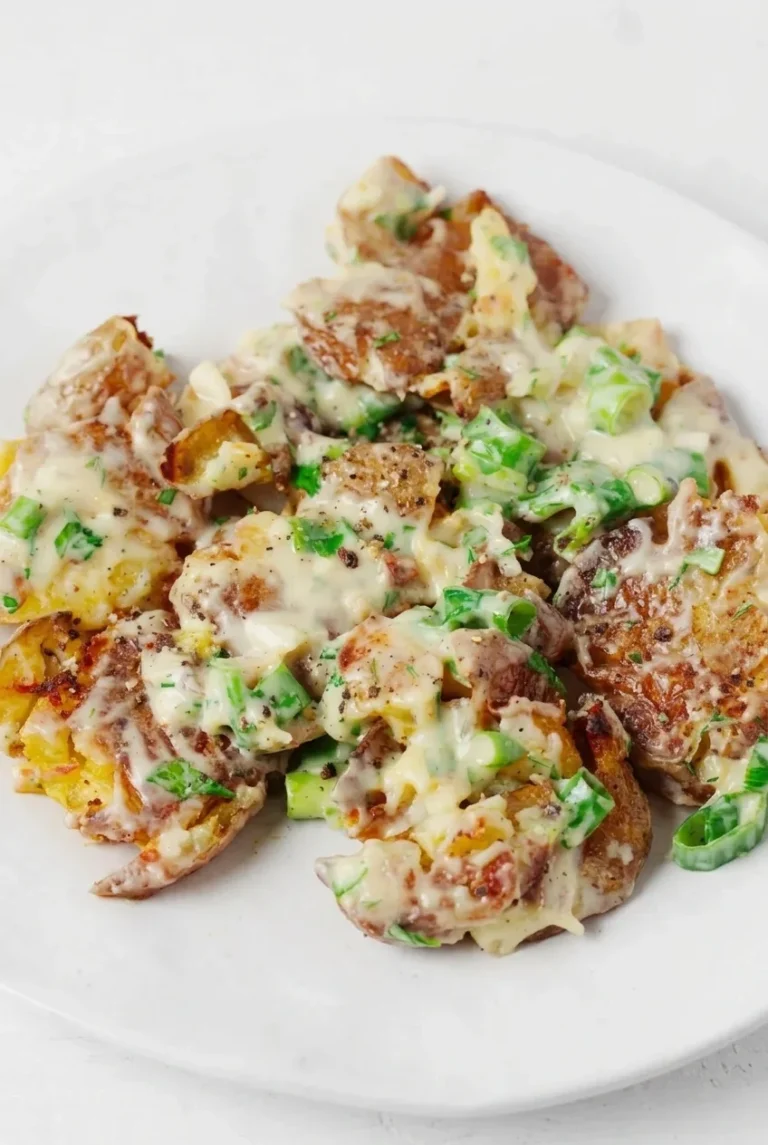
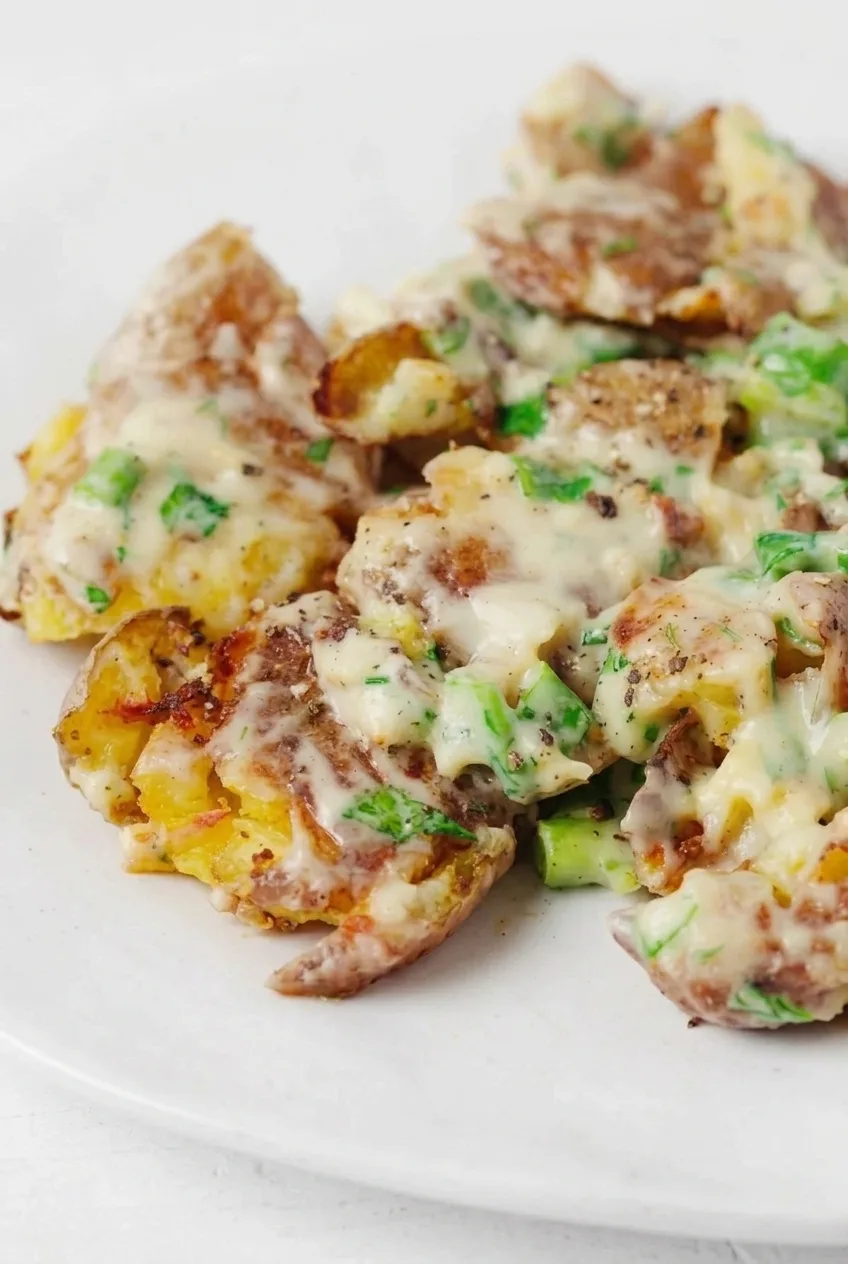
Small potatoes are boiled until tender, smashed, and roasted until their rough edges turn golden and crisp. They become a creamy potato salad when folded with a lemon-Dijon dressing, but they keep their irregular shape and soft centers. Scallions, dill, and black pepper finish the dish.

Dress the potatoes shortly before serving. The creamy coating softens the roasted edges as it sits, so leave some browned patches exposed and serve the salad warm or near room temperature.

Ingredients for Crispy Smashed Potato Salad

Close view of browned smashed potato edges and yellow centers beneath creamy dressing and scallions
  • 2 pounds small red or mixed baby potatoes, preferably similar in size (about 900g)
  • 3 tablespoons olive oil
  • 3/4 teaspoon fine salt, plus more for the boiling water and to taste
  • 1/2 cup mayonnaise (about 115g)
  • 1/4 cup plain Greek yogurt (about 60g)
  • 2 teaspoons Dijon mustard
  • 1 tablespoon fresh lemon juice
  • 4 scallions, thinly sliced
  • 2 tablespoons finely chopped fresh dill
  • 1/2 teaspoon coarsely ground black pepper, or to taste

Similarly sized small gold potatoes also work. For a plant-based dressing, replace both the mayonnaise and yogurt with vegan versions; use plain, unsweetened yogurt.

Yield: 6 side servings. Prep: 15 minutes. Cook: about 50–60 minutes. Total: about 70–80 minutes, including a brief rest.

How to Make Crispy Smashed Potato Salad

Full white plate of crispy smashed potato salad on a pale surface, with scallions and herbs visible
  1. Boil the potatoes: Put the potatoes in a large saucepan and cover with salted water. Bring to a steady boil and cook for about 12–18 minutes, checking after 12 minutes. A fork should slide in easily, but the potatoes should still hold together when lifted. Preheat the oven to 425°F (220°C) while they boil.
  2. Drain and smash: Drain well and let the potatoes steam-dry for a few minutes. Arrange them across two large baking sheets with space between pieces. Gently press each potato with the bottom of a measuring cup or glass to about 1/2 inch thick, leaving the centers together and the edges irregular.
  3. Oil and roast: Drizzle or brush the potatoes with the olive oil, coating the rough edges, and season with the 3/4 teaspoon salt and some of the pepper. Roast uncovered for about 35–45 minutes, checking their color after 30 minutes. They are ready when they have substantial golden-brown patches, crisp edges, and tender centers. After about 20–25 minutes, turn pieces that hold together using a thin spatula; leave fragile pieces undisturbed. Rotate or swap the sheets as needed for even browning.
  4. Mix the dressing: While the potatoes roast, stir together the mayonnaise, yogurt, Dijon, lemon juice, dill, and most of the scallions. Add some of the remaining pepper and taste for salt. Reserve a few scallions and a little pepper for serving.
  5. Dress and serve: Let the roasted potatoes stand for about 5 minutes. Gently fold them with the dressing just before serving, keeping the pieces separate and some browned surfaces visible. Pile loosely onto a serving plate and finish with the reserved scallions and pepper.

How to Get Crisp, Golden Edges

Drain the potatoes thoroughly before smashing so surface moisture can evaporate. Press them to about 1/2 inch: thick pieces have less surface to brown, while very thin pieces can break when turned. Two spaced baking sheets give the potatoes room to roast rather than steam. If they are still pale at 45 minutes, keep roasting until the rough edges are visibly browned; potato size, tray loading, and oven performance affect the timing.

For a dressing-free take on smashed potatoes, try garlic Parmesan smashed potatoes.

When to Add the Dressing

Let the potatoes cool briefly, then fold in the dressing close to serving. It should cling in patches rather than hide every crisp edge. The salad will soften as it sits; for a version made with boiled potato pieces instead, see classic creamy potato salad.

Make-Ahead and Leftovers

For make-ahead preparation, refrigerate the roasted potatoes and dressing separately, then combine them close to serving. If needed, re-crisp the undressed potatoes in a 425°F oven for about 5–10 minutes. Let them cool briefly before adding the dressing.

Refrigerate leftovers promptly in an airtight container for up to 3–4 days. Fully dressed leftovers will be softer; reheating them will not restore their original crispness.

Nutrition

Approximate nutrition per serving, based on 6 side servings: 320 calories, 4g protein, 21g fat, and 28g carbohydrates. Approximate values per 100g of finished salad: 175 calories, 2g protein, 12g fat, and 15g carbohydrates. Values vary with the mayonnaise, yogurt, and moisture lost during roasting.

Crispy Smashed Potato Salad

Tender potatoes are smashed and roasted until crisp, then folded with a lemon-Dijon dressing, scallions, and dill.
Course: Salad
Cuisine: American
Prep: 15 min
Cook: 55 min
Total: 75 min
Servings: 6 Calories: 320 kcal

Equipment

  • Large saucepan
  • Two large baking sheets
  • Measuring cup or glass
  • Thin spatula
  • Mixing bowl

Ingredients

Potatoes

  • 2 pounds small red or mixed baby potatoes, preferably similar in size (about 900g)
  • 3 tablespoons olive oil
  • 3/4 teaspoon fine salt, plus more for the boiling water and to taste
  • 1/2 teaspoon coarsely ground black pepper, or to taste

Dressing

  • 1/2 cup mayonnaise (about 115g)
  • 1/4 cup plain Greek yogurt (about 60g)
  • 2 teaspoons Dijon mustard
  • 1 tablespoon fresh lemon juice
  • 4 scallions, thinly sliced
  • 2 tablespoons finely chopped fresh dill

Instructions

  1. Put the potatoes in a large saucepan and cover with salted water. Bring to a steady boil and cook for 12–18 minutes, checking after 12 minutes. The potatoes should be fork-tender but still hold together.
  2. Preheat the oven to 425°F (220°C) while the potatoes boil.
  3. Drain the potatoes well and let them steam-dry for a few minutes. Arrange them with space between pieces on two large baking sheets.
  4. Gently press each potato with the bottom of a measuring cup or glass until about 1/2 inch thick, keeping the centers together and the edges irregular.
  5. Drizzle or brush the potatoes with olive oil. Season with the 3/4 teaspoon salt and some of the pepper.
  6. Roast uncovered for 35–45 minutes, checking the color after 30 minutes. After 20–25 minutes, turn potatoes that hold together with a thin spatula; leave fragile pieces undisturbed. Rotate or swap the sheets as needed. Roast until the edges are crisp and browned and the centers are tender.
  7. While the potatoes roast, stir together the mayonnaise, yogurt, Dijon, lemon juice, dill, and most of the scallions. Add some of the remaining pepper and taste for salt. Reserve a few scallions and a little pepper for serving.
  8. Let the roasted potatoes stand for about 5 minutes. Gently fold them with the dressing just before serving, leaving some browned surfaces visible.
  9. Pile the salad loosely onto a serving plate and finish with the reserved scallions and pepper.

Tips

  • Drain the potatoes thoroughly and let them steam-dry before smashing so surface moisture can evaporate.
  • Press the potatoes to about 1/2 inch thick; thicker pieces brown less, while very thin pieces can break when turned.
  • Space the potatoes across two baking sheets so they roast rather than steam.
  • If the potatoes are still pale after 45 minutes, continue roasting until the rough edges are visibly browned.
  • Dress the potatoes shortly before serving to help preserve their crisp edges.
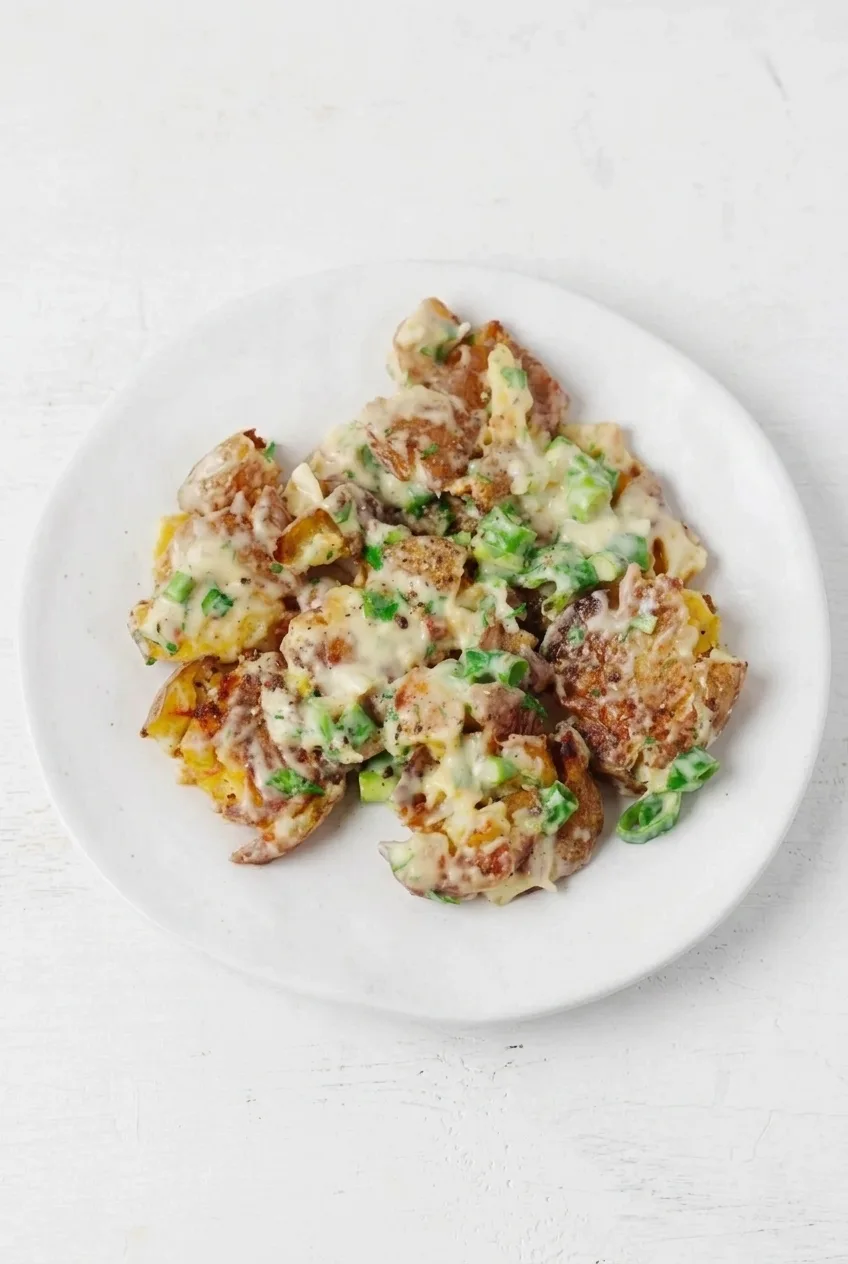
Variations

  • Small Gold Potato Salad: Use similarly sized small gold potatoes in place of the red or mixed baby potatoes.
  • Plant-Based Potato Salad: Replace the mayonnaise and Greek yogurt with vegan versions, using plain, unsweetened yogurt.

Notes

Refrigerate roasted potatoes and dressing separately for make-ahead preparation. Re-crisp undressed potatoes in a 425°F oven for 5–10 minutes, then cool briefly before dressing. Refrigerate leftovers in an airtight container for up to 3–4 days; dressed leftovers soften and will not regain their crispness when reheated.

Nutrition

Calories: 320 kcal | Protein: 4 g | Fat: 21 g | Carbohydrates: 28 g