Author

Julia

Browsing

Kielbasa Sausage and Potato Casserole

Skin-on red potato wedges, smoked kielbasa, carrots, and onion bake uncovered in a shallow pan until the potatoes are tender and the sausage is browned in spots. Unlike a creamy potato casserole, the pieces stay distinct, with just a light coating of seasoned oil and a little parsley on top.

The substantial wedges get a short parboil before baking. It helps their centers soften without covering the pan or adding liquid, which would limit browning.

Ingredients
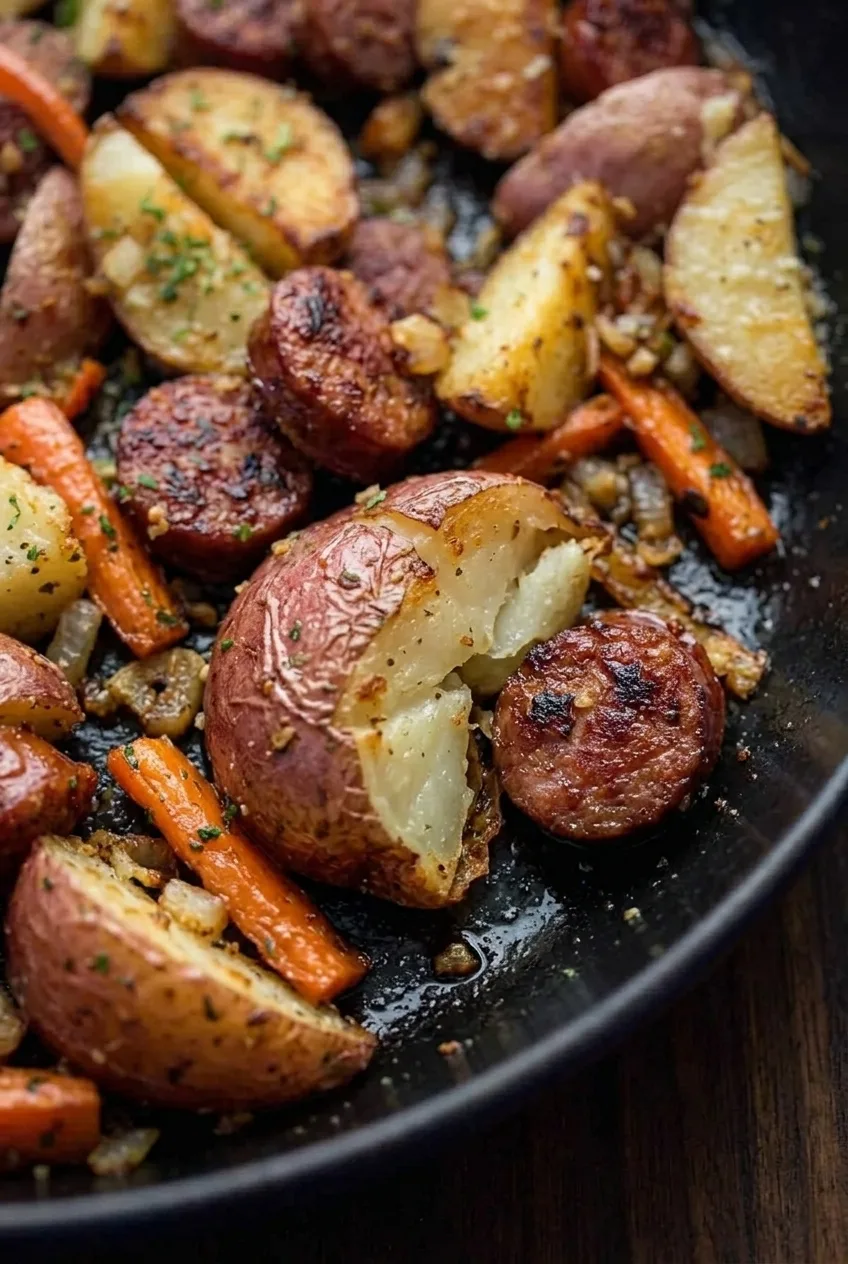
Close view of a tender red potato wedge beside browned kielbasa rounds and carrot strips
  • 1 3/4 pounds red potatoes (about 800g), scrubbed and cut lengthwise into similar-size, substantial wedges
  • 14 ounces fully cooked smoked kielbasa (about 400g), cut into thick rounds
  • 2 medium carrots (about 120g), cut into thin batons
  • 1/2 medium yellow onion (about 75g), finely chopped
  • 3 garlic cloves, minced
  • 3 tablespoons olive oil, divided
  • 1 teaspoon paprika
  • 1/2 teaspoon kosher salt, plus more for the potato water
  • 1/2 teaspoon freshly ground black pepper
  • 2 tablespoons finely chopped fresh parsley

Use a wide, shallow 12- to 13-inch oven-safe skillet or braiser, or a similarly sized shallow baking dish. Check that the pan and handles are rated for the oven temperature.

How to Make Kielbasa Sausage and Potato Casserole
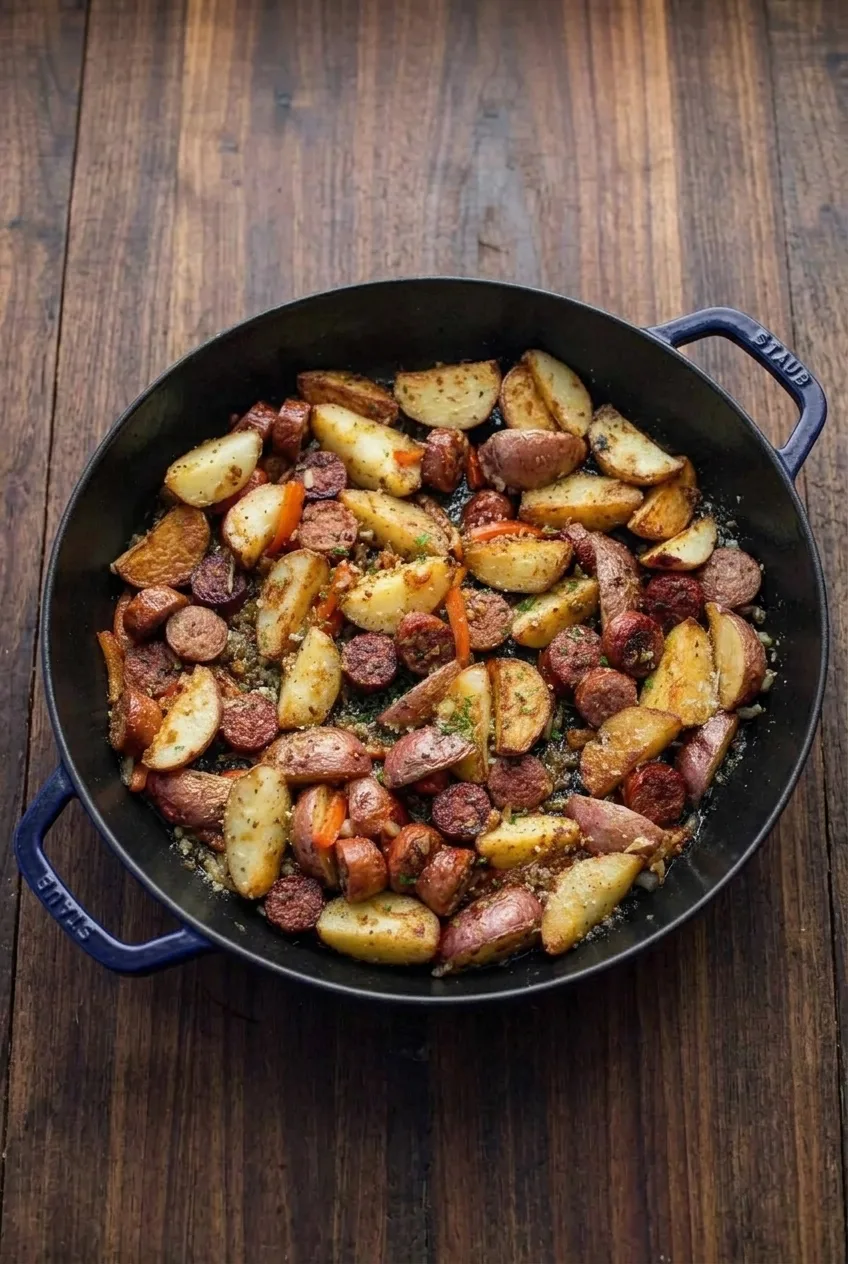
Wide view of the complete kielbasa and potato casserole in its shallow black pan on a wooden table
  1. Preheat and prepare: Set a rack near the center of the oven and heat to 425°F (220°C). Cut the potatoes into wedges of similar thickness, leaving the skins on. Prepare the carrots, onion, kielbasa, and garlic.
  2. Parboil the potatoes: Put the wedges in a saucepan of salted water and bring to a boil. Reduce to a gentle boil and cook for 6 to 8 minutes, until the outer edges begin to soften but the wedges still hold their shape. Drain well and let them steam-dry for a few minutes.
  3. Start the vegetable bake: Lightly coat the oven-safe pan with some of the first 2 tablespoons of olive oil. Add the potatoes, carrots, and onion with the rest of that oil, the paprika, salt, and pepper. Toss gently and spread into a fairly even layer. Bake uncovered for 20 minutes, until the potatoes begin to show golden patches.
  4. Add the kielbasa and garlic: Turn the vegetables once. Add the kielbasa and garlic with the remaining 1 tablespoon olive oil, tossing lightly to distribute them. Tuck the garlic among the other ingredients so it does not scorch, and leave some sausage faces exposed to brown.
  5. Finish baking: Bake uncovered for another 15 to 20 minutes. Start checking the thickest potato wedge after about 35 minutes of total oven time: a fork should pass easily through its center. The potatoes and kielbasa should be browned in spots. If the wedge is still firm, bake a few minutes longer and check again. Rest for about 5 minutes, scatter the parsley over the pan, and serve.
Why Parboil the Potato Wedges?

Large wedges can brown before their centers soften. Parboiling gives them a head start, but stop while they still hold their shape. After draining, let surface moisture steam away; wet potatoes are more likely to steam than brown. Wedge thickness can shift the bake time, so check the thickest one before serving.

How to Keep the Casserole Browned, Not Watery

Use a wide, shallow pan so moisture can escape during the uncovered bake. If the ingredients would be piled deep, divide them between two shallow oven-safe dishes. Do not add broth or sauce; the finished pieces should have a light sheen, not sit in liquid.

Serve directly from the pan with a green salad or cooked green beans. For a different, cheesier potato bake, try Hamburger Potato Casserole with Corn and Cheddar.

Storage and Reheating

Cool leftovers promptly, transfer them to an airtight container, and refrigerate for 3 to 4 days. Reheat portions thoroughly in a covered microwave-safe dish or a moderate oven until hot. Oven reheating better preserves the browned edges, though the potatoes will be softer than when freshly baked. Freezing is not recommended if potato texture is a priority.

Nutrition

Approximate nutrition per serving, based on 5 servings: 450 calories, 14g protein, 30g fat, and 34g carbohydrates. Per 100g of finished casserole: approximately 170 calories, 5g protein, 11g fat, and 13g carbohydrates. Values are estimates; kielbasa brands and the finished weight of the casserole will affect them.

Kielbasa Sausage and Potato Casserole

Red potato wedges, smoked kielbasa, carrots, and onion bake uncovered with seasoned olive oil until tender and browned.
Course: Main Course
Cuisine: American
Prep: 15 min
Cook: 50 min
Total: 65 min
Servings: 5 Calories: 450 kcal

Equipment

  • 12- to 13-inch oven-safe skillet or shallow baking dish
  • Saucepan

Ingredients

Casserole

  • 1 3/4 pounds red potatoes (about 800 g), scrubbed and cut into similar-size wedges
  • 14 ounces fully cooked smoked kielbasa (about 400 g), cut into thick rounds
  • 2 medium carrots (about 120 g), cut into thin batons
  • 1/2 medium yellow onion (about 75 g), finely chopped
  • 3 garlic cloves, minced
  • 3 tablespoons olive oil, divided
  • 1 teaspoon paprika
  • 1/2 teaspoon kosher salt, plus more for the potato water
  • 1/2 teaspoon freshly ground black pepper
  • 2 tablespoons finely chopped fresh parsley

Instructions

  1. Set a rack near the center of the oven and preheat to 425°F (220°C). Prepare the potatoes, carrots, onion, kielbasa, and garlic.
  2. Put the potato wedges in a saucepan of salted water and bring to a boil. Reduce to a gentle boil and cook for 6 to 8 minutes, until the edges begin to soften but the wedges still hold their shape.
  3. Drain the potatoes well and let them steam-dry for a few minutes.
  4. Lightly coat a wide, shallow oven-safe pan with some of the first 2 tablespoons of olive oil. Add the potatoes, carrots, and onion, then add the remaining oil from that first 2 tablespoons, paprika, salt, and pepper. Toss gently and spread into an even layer.
  5. Bake uncovered for 20 minutes, until the potatoes begin to show golden patches.
  6. Turn the vegetables once. Add the kielbasa and garlic with the remaining 1 tablespoon olive oil, and toss lightly. Tuck the garlic among the ingredients and leave some sausage faces exposed.
  7. Bake uncovered for another 15 to 20 minutes. Check the thickest potato wedge after about 35 minutes of total oven time; bake a few minutes longer if it is still firm.
  8. Rest for about 5 minutes, scatter the parsley over the pan, and serve.

Tips

  • Cut the potato wedges to a similar thickness so they cook evenly.
  • Stop parboiling while the wedges still hold their shape, then let them steam-dry for a few minutes.
  • Use a wide, shallow pan and avoid crowding; divide the ingredients between two dishes if they would be piled deep.
  • Tuck the garlic among the other ingredients to help prevent it from scorching.
  • Check the thickest potato wedge for doneness; a fork should pass easily through its center.
Notes

Refrigerate leftovers in an airtight container for 3 to 4 days. Reheat thoroughly in a covered microwave-safe dish or a moderate oven; oven reheating better preserves the browned edges. Freezing is not recommended if potato texture is a priority.

Nutrition

Calories: 450 kcal | Protein: 14 g | Fat: 30 g | Carbohydrates: 34 g

French Onion Potato Bake

Thin slices of russet potato bake in cream, sour cream, and dry French onion soup mix, then get a browned Gruyère topping. The finished casserole should be creamy and easy to scoop, with distinct potato slices beneath the cheese.

The key is to cook the potatoes through before adding the final layer of cheese. Bake covered until a knife slides easily through the center, then uncover to brown the top. A short rest helps the sauce settle without turning the casserole into a firm, sliceable square.

Ingredients for French Onion Potato Bake

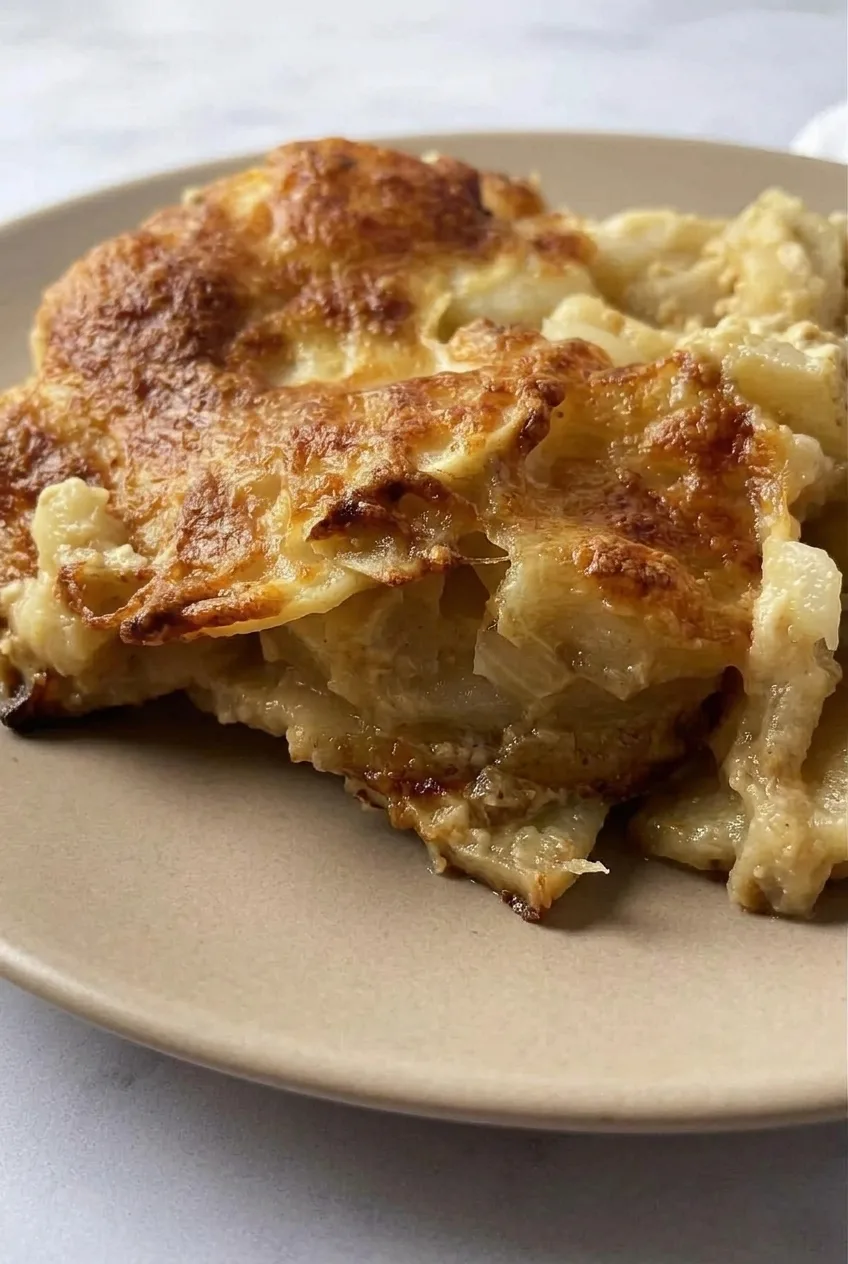
Close view of creamy potato slices beneath the browned Gruyère topping
  • 1 teaspoon unsalted butter, for the dish
  • 1 1/2 cups heavy cream (360g)
  • 1/2 cup sour cream (120g)
  • 1 packet dry French onion soup mix, about 1 ounce (28g)
  • 3 pounds russet potatoes (about 1,350g), peeled and sliced about 1/8 inch thick
  • 2 cups shredded Gruyère cheese (225g), divided

Soup-mix packets vary in saltiness, so do not add salt automatically.

How to Make French Onion Potato Bake

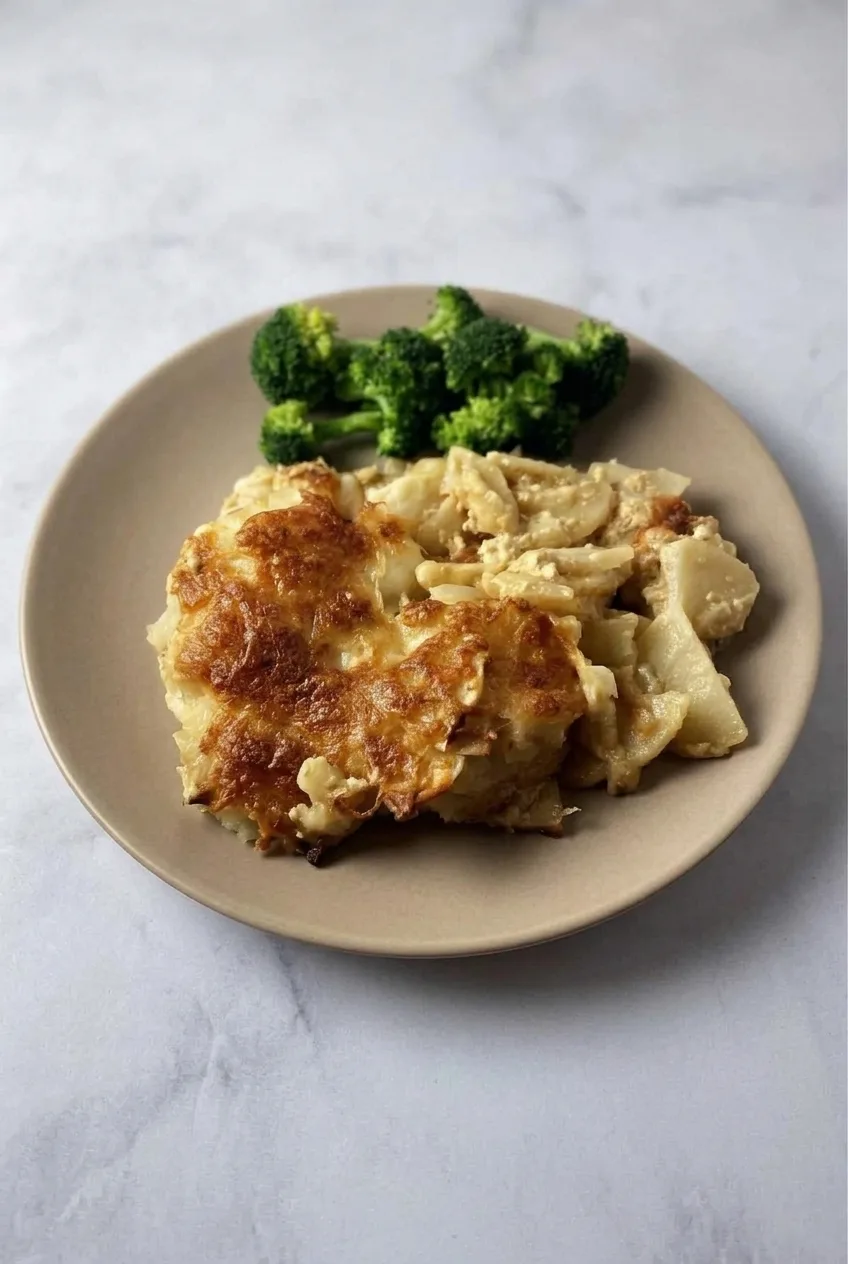
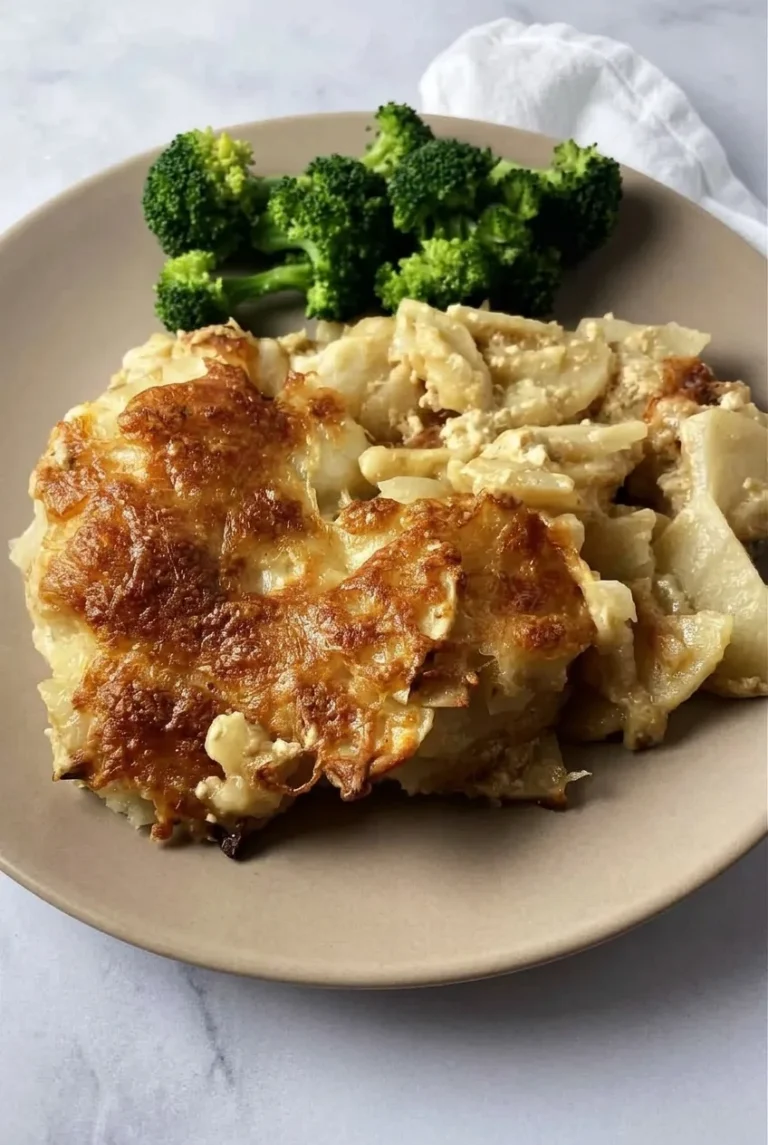
Full plate with a serving of French onion potato bake and broccoli alongside
  1. Prepare the oven and dish: Preheat the oven to 400°F (205°C). Lightly butter a 9-by-13-inch baking dish deep enough to hold the sauce without filling it to the rim.
  2. Mix the onion cream: Whisk the heavy cream, sour cream, and entire soup-mix packet in a large bowl until evenly combined.
  3. Slice and layer: Peel and slice the potatoes about 1/8 inch thick. Work promptly so the cut potatoes do not sit exposed and discolor. Arrange half the slices in overlapping layers in the dish. Pour over half the onion cream and scatter with 1 cup Gruyère. Add the remaining potatoes and cream, coating the top slices. Reserve the last cup of cheese.
  4. Bake until tender: Cover securely with foil, keeping it off the potatoes where possible. If the foil must touch the surface, place parchment beneath it. Bake for about 50 to 65 minutes. Starting at 50 minutes, test the center with a thin knife. If you feel firm resistance, cover again and bake in 10-minute increments until the knife slides through easily and the sauce bubbles near the edges.
  5. Brown the cheese: Remove the foil and scatter the reserved Gruyère over the potatoes. Bake uncovered for about 10 to 15 minutes, checking after 8 minutes, until the cheese bubbles and develops uneven golden to deep amber-brown patches.
  6. Rest and serve: Let the casserole stand for 10 to 15 minutes before scooping. Portions should hold together loosely, with creamy, visible potato slices beneath the browned cheese.

Why the Center-Tenderness Test Matters

Even 1/8-inch slices help the potatoes cook at the same rate, but the center can lag behind the edges. Test the middle before adding the topping: if the potatoes are still firm after the cheese browns, more oven time could take the cheese too far. Thicker slices, a deeper dish, or a casserole baked cold from the refrigerator may need extra covered time.

Ingredient Swaps

Shredded Swiss can replace the Gruyère in the same amount. Yukon Gold potatoes also work, though the sauce may be looser; keep the center-tenderness check and resting time. For another sliced-potato bake, try Cheesy Au Gratin Potatoes with Golden Cheddar.

Serving, Make-Ahead, and Leftovers

Serve with roast chicken, pork tenderloin, or a green vegetable such as broccoli. For a different creamy potato side, see Steakhouse Potatoes Romanoff with Sharp Cheddar.

To assemble ahead, cover the unbaked casserole and refrigerate it for a few hours. If it goes into the oven cold, allow extra covered baking time and use the center-knife test to judge when it is ready for the cheese topping.

Refrigerate leftovers in an airtight container for up to 3 days. Reheat gently until hot throughout; the potatoes may be softer than when freshly baked. Freezing is possible, but thawed potatoes may soften further.

Nutrition

Approximate nutrition per serving, based on 8 side-dish servings: 450 calories, 14g protein, 29g fat, and 34g carbohydrates. Per 100g of finished casserole: approximately 190 calories, 6g protein, 12g fat, and 15g carbohydrates. Values vary with the soup mix, cheese, and moisture lost during baking.

French Onion Potato Bake

Thinly sliced russet potatoes bake in a creamy French onion sauce beneath a browned Gruyère topping.
Course: Side Dish
Cuisine: American
Prep: 20 min
Cook: 80 min
Total: 115 min
Servings: 8 Calories: 450 kcal

Equipment

  • 9-by-13-inch baking dish
  • Large mixing bowl
  • Whisk
  • Aluminum foil
  • Thin knife

Ingredients

For the casserole

  • 1 teaspoon unsalted butter, for the dish
  • 1 1/2 cups heavy cream (360g)
  • 1/2 cup sour cream (120g)
  • 1 packet dry French onion soup mix, about 1 ounce (28g)
  • 3 pounds russet potatoes (about 1,350g), peeled and sliced about 1/8 inch thick
  • 2 cups shredded Gruyère cheese (225g), divided

Instructions

  1. Preheat the oven to 400°F (205°C). Lightly butter a 9-by-13-inch baking dish deep enough to hold the sauce without filling it to the rim.
  2. Whisk the heavy cream, sour cream, and French onion soup mix together in a large bowl.
  3. Peel and slice the potatoes about 1/8 inch thick. Arrange half in overlapping layers in the dish.
  4. Pour half the onion cream over the potatoes and sprinkle with 1 cup Gruyère. Add the remaining potatoes and cream, coating the top slices. Reserve the remaining cheese.
  5. Cover the dish securely with foil, keeping it off the potatoes if possible. If the foil may touch the surface, place parchment beneath it.
  6. Bake for 50 to 65 minutes. Starting at 50 minutes, test the center with a thin knife. If the potatoes are firm, cover again and bake in 10-minute increments until the knife slides through easily and the sauce bubbles near the edges.
  7. Remove the foil and sprinkle the reserved Gruyère over the potatoes. Bake uncovered for 10 to 15 minutes, checking after 8 minutes, until bubbling and browned.
  8. Rest for 10 to 15 minutes before scooping and serving.

Tips

  • Slice the potatoes evenly, about 1/8 inch thick, so they cook at a similar rate.
  • Test the center for tenderness before adding the cheese topping.
  • Avoid adding salt automatically because soup-mix packets vary in saltiness.
  • If baking the casserole straight from the refrigerator, allow extra covered baking time and check the center with a knife.
  • Rest the casserole briefly so the sauce can settle while remaining creamy.

Variations

  • Swiss Cheese Potato Bake: Replace the Gruyère with the same amount of shredded Swiss cheese.
  • Yukon Gold Potato Bake: Use Yukon Gold potatoes instead of russets; the sauce may be looser, so keep the center-tenderness check and resting time.

Notes

Refrigerate leftovers in an airtight container for up to 3 days and reheat gently until hot throughout. Freezing is possible, though thawed potatoes may soften. Nutrition is approximate per side-dish serving.

Nutrition

Calories: 450 kcal | Protein: 14 g | Fat: 29 g | Carbohydrates: 34 g

Cheesy Mashed Potato Puffs

Cheesy mashed potato puffs bake in a mini muffin tin, with pale, tender sides and uneven tops browned by a sprinkle of Cheddar. Eggs bind the potatoes so each puff holds its shape without rolling or breading.

Start with cooled mashed potatoes thick enough to mound on a spoon. Their moisture and seasoning affect the result, so check both before mixing. Serve the puffs warm, adding small dollops of sour cream and fresh chives to just a few so the golden tops remain visible.

Ingredients for Cheesy Mashed Potato Puffs

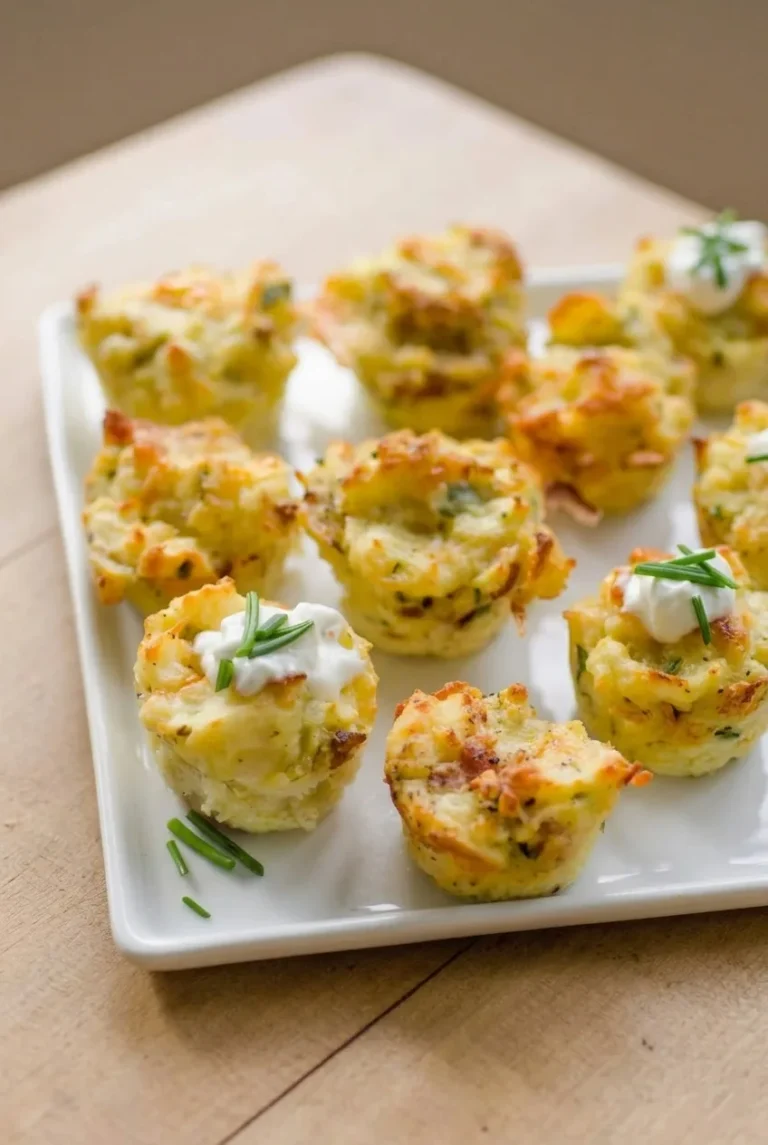
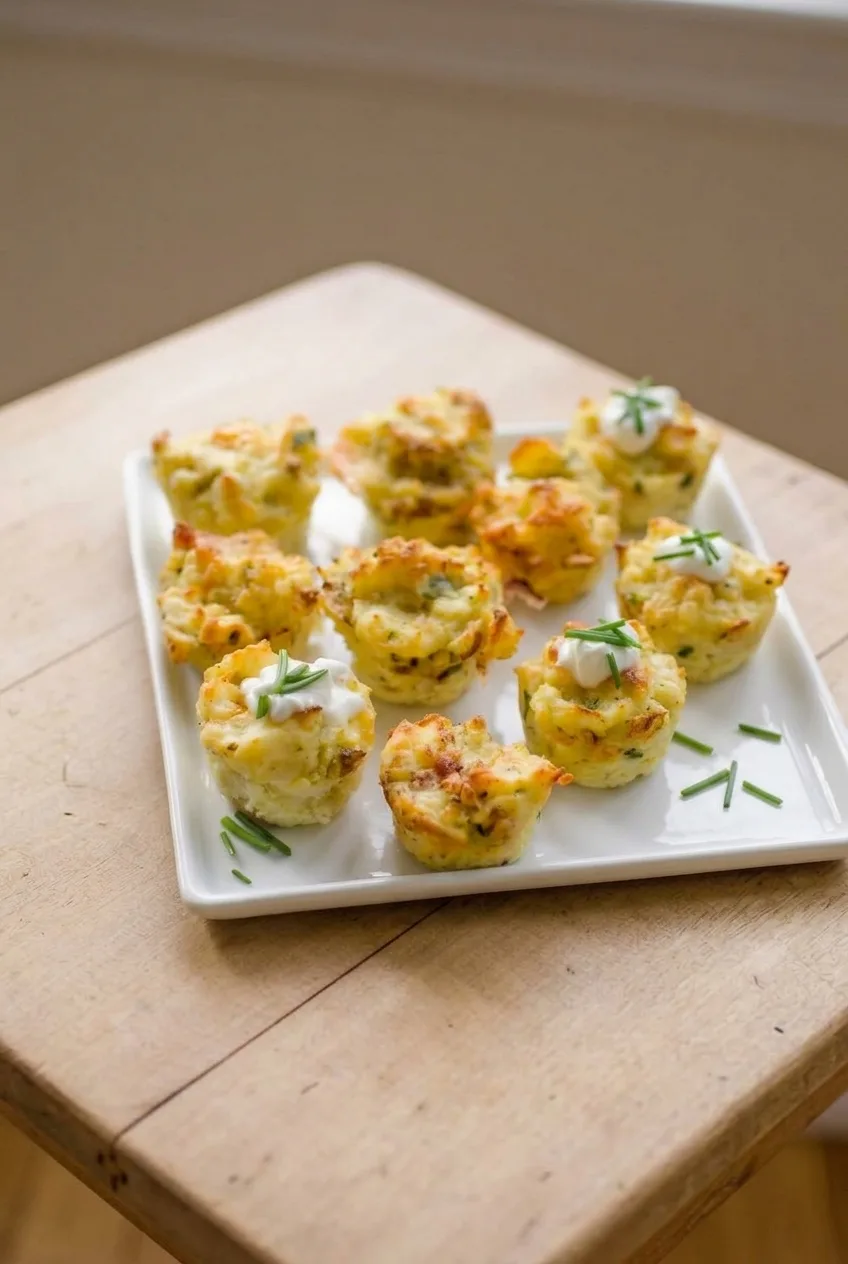
Wider view of a white platter of mini mashed potato puffs, some topped with sour cream and chives
  • 2 cups cooled mashed potatoes (about 450g)
  • 2 large eggs, beaten
  • 3/4 cup shredded sharp Cheddar (about 85g), divided
  • 2 tablespoons finely chopped fresh chives, plus 1 tablespoon for finishing
  • 1/4 teaspoon freshly ground black pepper, or to taste
  • Cooking spray or softened butter, for generously greasing the pan
  • About 1/4 cup sour cream (60g), for serving
  • Optional: A pinch of salt, only if needed
  • Optional: 2 to 3 slices cooked bacon, finely chopped
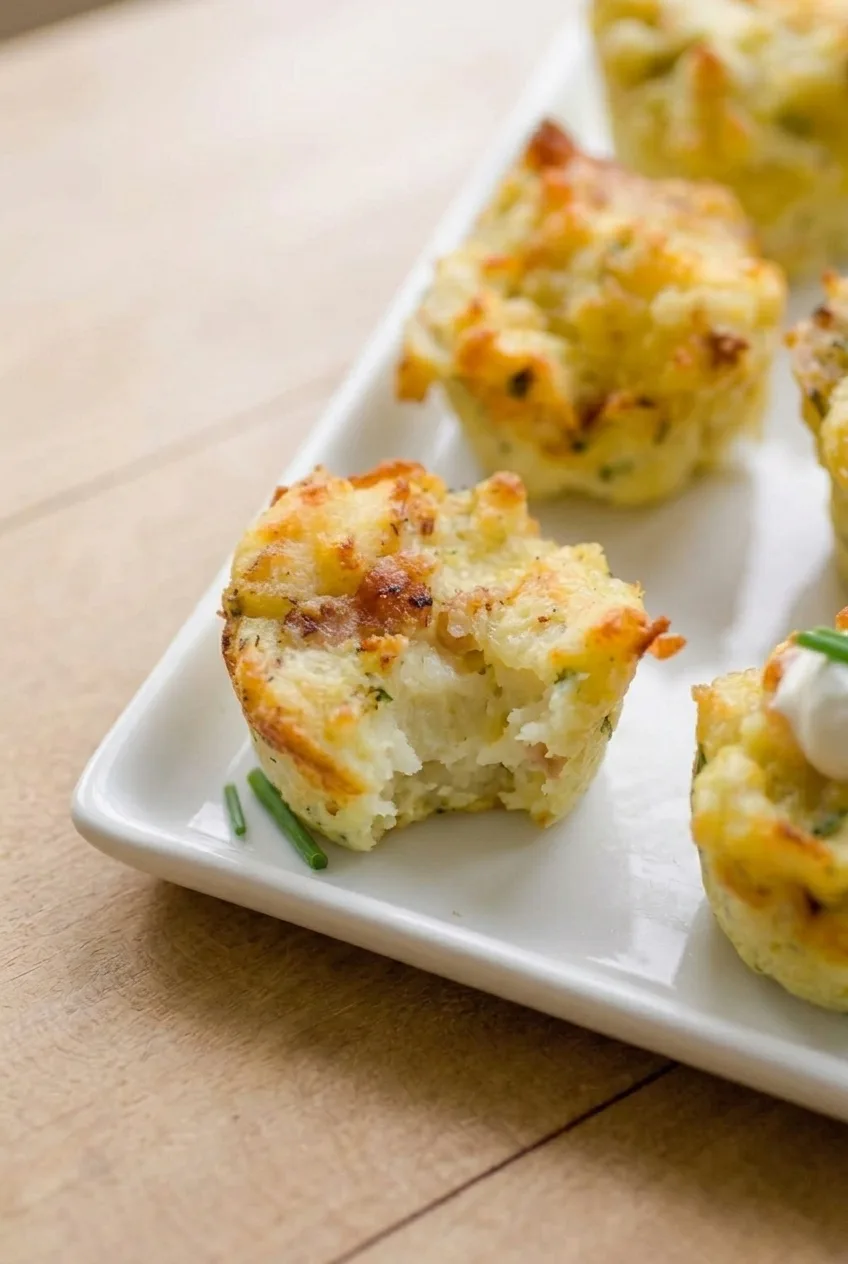
Opened mashed potato puff showing its soft interior beside craggy, golden Cheddar-topped puffs

How to Bake Mashed Potato Puffs

  1. Preheat and grease: Heat the oven to 400°F (205°C) with a rack in the center. Generously grease all 24 wells of a mini muffin tin, including the sides.
  2. Check the potatoes: Use cooled mashed potatoes that hold a mound on a spoon rather than run off it. Taste before adding the eggs, and stir in a pinch of salt only if needed.
  3. Mix: Stir the beaten eggs into the potatoes with 1/2 cup of the Cheddar, 2 tablespoons chives, and the pepper. Fold in the bacon, if using. Mix until no streaks of egg remain.
  4. Fill the wells: Divide the mixture among the wells, leaving generous, uneven mounds rather than smoothing the tops. Sprinkle with the remaining 1/4 cup Cheddar.
  5. Bake: Bake uncovered, starting to check at 18 minutes. The puffs should take about 18 to 22 minutes; look for golden-brown cheese and potato peaks and centers that appear set, not wet. Rotate the pan only if it browns unevenly.
  6. Rest and serve: Let the puffs rest in the tin for 5 minutes. Gently loosen the sides with a thin butter knife or small offset spatula and lift them out. Add small sour cream dollops and the remaining chives to some of the puffs, leaving others bare.

Choose Mashed Potatoes That Hold Their Shape

Leftover mashed potatoes work if they are thick enough to mound on a spoon. Loose, runny potatoes can make softer puffs; do not add liquid to the mixture. Freshly made potatoes also work, but cool them before adding the eggs so the eggs do not cook on contact. For a fresh batch, let creamy garlic mashed potatoes cool before making the puffs.

Mashed potatoes vary in saltiness, and the Cheddar adds more seasoning. Taste the potatoes before adding the eggs rather than salting the mixture automatically.

How to Get Golden Tops and Release the Puffs

Leaving the spooned tops uneven exposes potato and the reserved Cheddar to the oven’s heat, creating browned patches. Grease the wells thoroughly, then give the baked puffs a 5-minute rest before loosening them; they are delicate straight from the oven.

This recipe uses mini muffin wells. Standard muffin wells make larger puffs that need a longer bake. Check for browned tops and set centers rather than relying on the mini-pan time.

Serving and Storing

Serve warm, with extra sour cream alongside if desired. For a larger cheesy potato side, try steakhouse potatoes Romanoff.

Refrigerate cooled leftover puffs in an airtight container for up to 3 days, keeping the sour cream separate. Reheat on a baking sheet in a 400°F oven for about 15 minutes, checking sooner for small portions and heating until warmed through. Add fresh sour cream and chives after reheating.

Nutrition

Approximate nutrition per serving, based on 6 servings of about 4 mini puffs each: 185 calories, 7g protein, 11g fat, and 13g carbohydrates. Approximate values per 100g: 155 calories, 6g protein, 10g fat, and 11g carbohydrates. Estimates include the sour cream but not optional bacon; values vary with the ingredients and moisture content of the mashed potatoes.

Cheesy Mashed Potato Puffs

Cooled mashed potatoes, eggs, Cheddar, and chives bake into golden mini muffin puffs.
Course: Side Dish
Cuisine: American
Prep: 15 min
Cook: 20 min
Total: 40 min
Servings: 6 Calories: 185 kcal

Equipment

  • Oven
  • Mini muffin tin
  • Mixing bowl
  • Thin butter knife or small offset spatula

Ingredients

For the Puffs

  • 2 cups cooled mashed potatoes (about 450 g)
  • 2 large eggs, beaten
  • 3/4 cup shredded sharp Cheddar (about 85 g), divided
  • 2 tablespoons finely chopped fresh chives, plus 1 tablespoon for finishing
  • 1/4 teaspoon freshly ground black pepper, or to taste
  • Cooking spray or softened butter, for generously greasing the pan
  • Optional: A pinch of salt, only if needed
  • Optional: 2 to 3 slices cooked bacon, finely chopped

For Serving

  • About 1/4 cup sour cream (60 g)

Instructions

  1. Preheat the oven to 400°F (205°C) with a rack in the center. Generously grease all 24 wells of a mini muffin tin, including the sides.
  2. Check that the cooled mashed potatoes hold a mound on a spoon. Taste them and add a pinch of salt only if needed.
  3. Stir the beaten eggs into the potatoes with 1/2 cup of the Cheddar, 2 tablespoons of chives, and the pepper.
  4. Fold in the bacon, if using, and mix until no streaks of egg remain.
  5. Divide the mixture among the muffin tin wells, leaving uneven mounds. Sprinkle with the remaining 1/4 cup Cheddar.
  6. Bake uncovered for 18 to 22 minutes, checking at 18 minutes. The cheese and potato peaks should be golden brown, and the centers should look set rather than wet.
  7. Let the puffs rest in the tin for 5 minutes. Gently loosen the sides with a thin butter knife or small offset spatula and lift them out.
  8. Serve warm with small dollops of sour cream and the remaining chives.

Tips

  • Use cooled mashed potatoes thick enough to hold a mound on a spoon; do not add liquid.
  • Taste the potatoes before adding eggs, since the potatoes and Cheddar may already be salty.
  • Grease the muffin wells thoroughly, including the sides, to help the puffs release.
  • Leave the tops uneven for browned potato peaks and Cheddar patches.
  • Let the puffs rest for 5 minutes before loosening them; they are delicate straight from the oven.

Variations

  • Bacon Cheddar Potato Puffs: Fold in 2 to 3 slices of finely chopped cooked bacon before filling the muffin tin.

Notes

Refrigerate cooled leftovers in an airtight container for up to 3 days, keeping sour cream separate. Reheat on a baking sheet at 400°F for about 15 minutes, checking smaller portions sooner. Approximate nutrition per 100 g: 155 calories, 6 g protein, 10 g fat, and 11 g carbohydrates.

Nutrition

Calories: 185 kcal | Protein: 7 g | Fat: 11 g | Carbohydrates: 13 g

Melting Potatoes

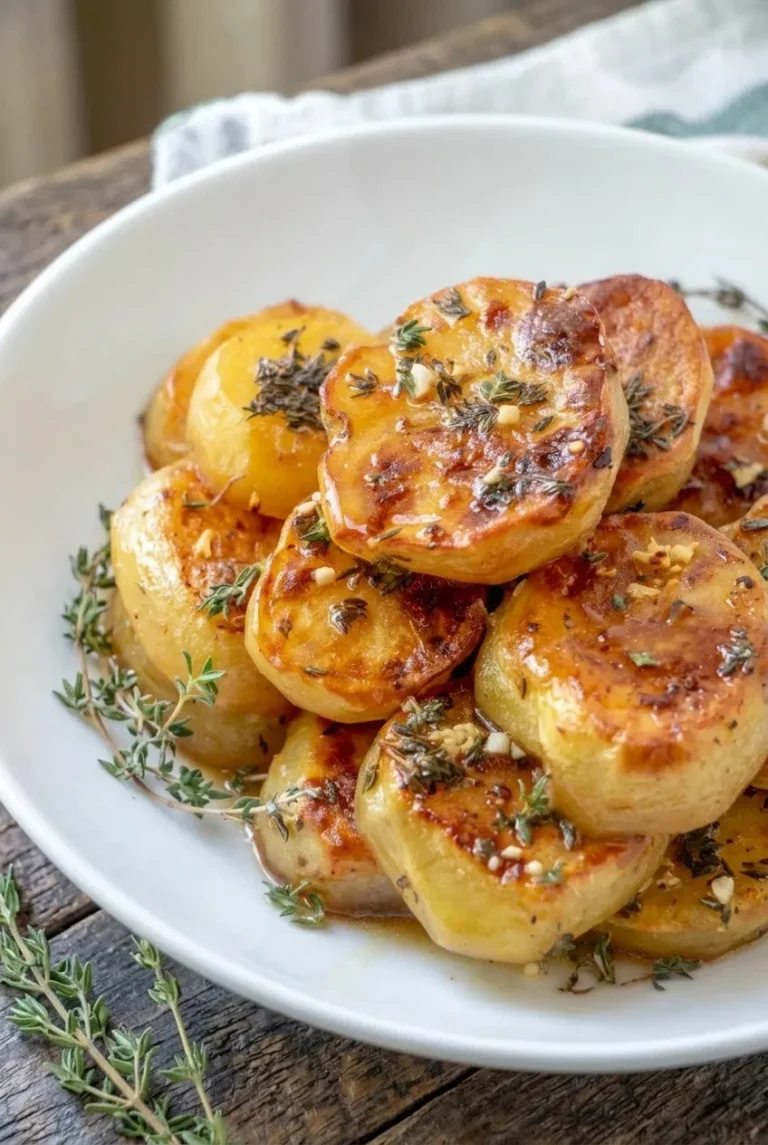
Melting potatoes are thick rounds with browned cut faces and tender, creamy centers. They roast in oil until both sides develop color, then finish with broth, butter, garlic, and thyme. A little of the liquid reduces into a glossy sauce to spoon over them.

This fondant-inspired version stays in the oven from start to finish. Roast the rounds in a single layer, then pile them loosely for serving with their browned faces showing.

Ingredients for Melting Potatoes

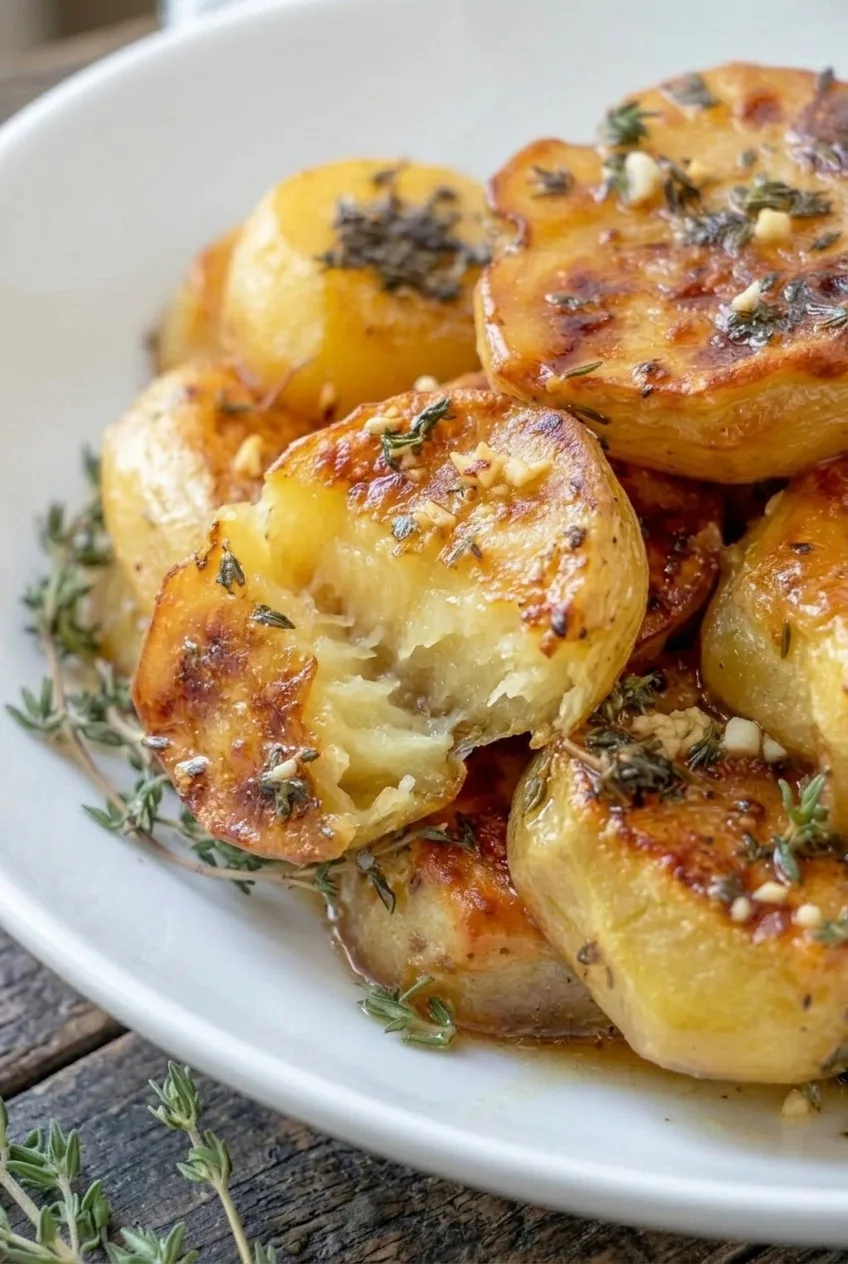
Close view of a browned melting potato round opened to show its creamy center
  • 2 pounds Yukon Gold potatoes, peeled and cut crosswise into approximately 1-inch rounds (900g)
  • 2 tablespoons neutral cooking oil
  • 1 teaspoon Diamond Crystal kosher salt, or 1/2 teaspoon Morton kosher salt
  • 1/4 teaspoon freshly ground black pepper
  • 1/2 cup low-sodium chicken broth, plus up to 1/4 cup more if needed
  • 4 tablespoons unsalted butter (57g)
  • 3 garlic cloves, finely chopped
  • 6 small fresh thyme sprigs, divided

Time: 15 minutes prep; 45 to 50 minutes cooking. Yield: 6 side-dish servings.

How to Make Melting Potatoes

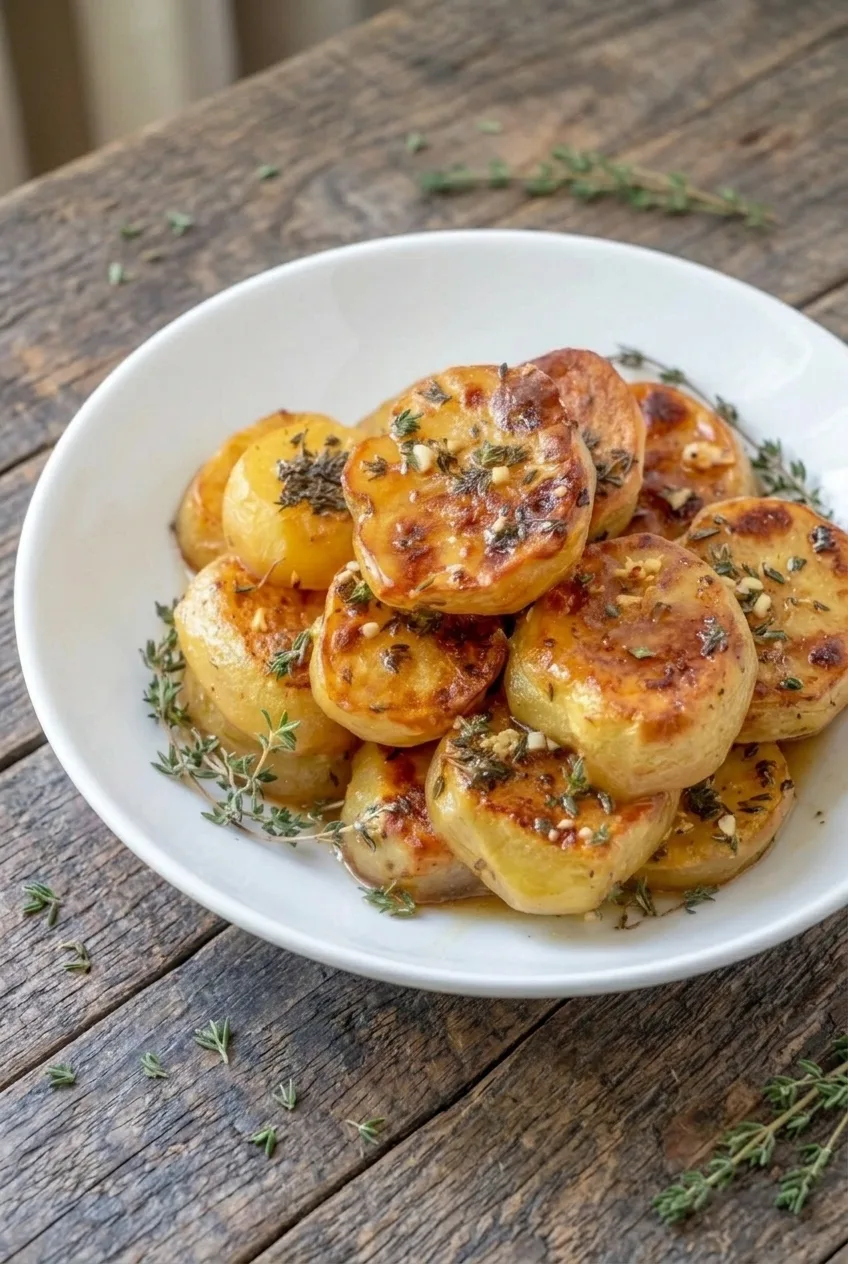
Full plate of melting potatoes with browned faces and thyme on a simple table
  1. Preheat and cut: Fully preheat the oven to 450°F (230°C). Trim the potato ends if needed, cut the potatoes into rounds of similar thickness, and pat the cut faces dry.
  2. Season and arrange: Coat the rounds with oil, salt, and pepper. Place them in a spaced single layer in a rimmed metal 9-by-13-inch baking pan, with one cut face against the pan. Use a second metal pan if they would overlap; do not use glass.
  3. Brown both faces: Roast uncovered for about 15 minutes. Turn each round with a thin spatula. If one resists, give it a few more minutes to brown and release rather than forcing it loose. Roast about 15 minutes more, until both cut faces are golden with deeper brown patches.
  4. Add broth and aromatics: Pour 1/2 cup broth around the rounds without submerging them. Add the butter, garlic, and 4 thyme sprigs, distributing the garlic in the liquid rather than leaving it on a dry spot.
  5. Finish until tender: Return the uncovered pan to the 450°F oven for 15 to 20 minutes. Check the liquid after about 10 minutes. If the pan is dry but the centers are still firm, add a few tablespoons of the reserved broth. The potatoes are done when a small knife slips easily through the center and a little glossy sauce remains.
  6. Serve: Loosely pile the rounds on a serving plate with several browned faces visible. Spoon over the sauce and garlic, then scatter on leaves from the remaining thyme and add the fresh sprigs. Serve warm.

Why the Broth Goes in Last

Broth added at the start would interfere with browning. Roasting both cut faces first builds the deep golden patches; the final broth stage softens the centers and creates a buttery sauce. The finished pan should hold a little liquid to spoon over the potatoes, not be dry or full of broth.

For a drier, crispier side, try these crispy oven roasted potatoes.

Getting the Potato Rounds Right

Keep the rounds close to 1 inch thick. Potato diameter and pan size affect how quickly the faces brown and the broth reduces, so use color, tenderness, and the amount of sauce—not the clock alone—to judge the finish. If the pan dries out before the potatoes soften, a small splash of reserved broth also keeps the garlic from scorching.

Yukon Golds give the centers a creamy texture. Russets work too, but finish fluffier and may need a different amount of time. Use vegetable broth instead of chicken broth for a vegetarian version.

Storing Leftovers

Refrigerate leftover potatoes in an airtight container for up to 5 days. Their browned surfaces soften during storage, so serve them fresh when that contrast matters most.

Nutrition

Approximate nutrition per serving, based on 6 servings: 230 calories, 3g protein, 12g fat, and 26g carbohydrates. Approximate values per 100g of finished potatoes: 140 calories, 2g protein, 7g fat, and 16g carbohydrates. Values are estimates; the finished weight depends on how much liquid reduces.

Melting Potatoes

Thick Yukon Gold potato rounds roast until golden, then finish in broth, butter, garlic, and thyme for creamy centers and a glossy sauce.
Course: Side Dish
Cuisine: American
Prep: 15 min
Cook: 50 min
Total: 65 min
Servings: 6 Calories: 230 kcal

Equipment

  • Oven
  • Rimmed metal 9-by-13-inch baking pan
  • Thin spatula
  • Small knife

Ingredients

  • 2 pounds Yukon Gold potatoes, peeled and cut crosswise into approximately 1-inch rounds (900g)
  • 2 tablespoons neutral cooking oil
  • 1 teaspoon Diamond Crystal kosher salt, or 1/2 teaspoon Morton kosher salt
  • 1/4 teaspoon freshly ground black pepper
  • 1/2 cup low-sodium chicken broth, plus up to 1/4 cup more if needed
  • 4 tablespoons unsalted butter (57g)
  • 3 garlic cloves, finely chopped
  • 6 small fresh thyme sprigs, divided

Instructions

  1. Preheat the oven to 450°F (230°C). Trim the potato ends if needed, cut the potatoes into rounds of similar thickness, and pat the cut faces dry.
  2. Toss the potato rounds with the oil, salt, and pepper. Arrange them in a spaced single layer in a metal 9-by-13-inch baking pan, with one cut face against the pan. Use a second metal pan if needed; do not use glass.
  3. Roast uncovered for about 15 minutes. Turn each round with a thin spatula, giving any resistant rounds a few more minutes to brown and release.
  4. Roast for about 15 minutes more, until both cut faces are golden with deeper brown patches.
  5. Pour 1/2 cup broth around the potatoes without submerging them. Add the butter, garlic, and 4 thyme sprigs, distributing the garlic in the liquid.
  6. Return the uncovered pan to the oven for 15 to 20 minutes. Check the liquid after about 10 minutes; if the pan is dry while the centers are still firm, add a few tablespoons of reserved broth. Cook until a small knife slips easily through the centers and a little glossy sauce remains.
  7. Loosely pile the potatoes on a serving plate with browned faces visible. Spoon over the sauce and garlic, scatter on leaves from the remaining thyme, and serve warm.

Tips

  • Cut the rounds close to 1 inch thick so they cook at a similar rate.
  • Keep the rounds in a spaced single layer to help both cut faces brown.
  • Let a resistant round brown longer before turning rather than forcing it loose.
  • Add reserved broth a few tablespoons at a time if the pan dries before the potatoes are tender.
  • Judge doneness by the browned color, tender centers, and a little remaining sauce—not the clock alone.

Variations

  • Vegetarian Melting Potatoes: Use vegetable broth instead of chicken broth.
  • Russet Melting Potatoes: Use russet potatoes for a fluffier center; cooking time may vary.

Notes

Refrigerate leftovers in an airtight container for up to 5 days. The browned surfaces soften during storage.

Nutrition

Calories: 230 kcal | Protein: 3 g | Fat: 12 g | Carbohydrates: 26 g

Crispy Parmesan Crusted Potatoes

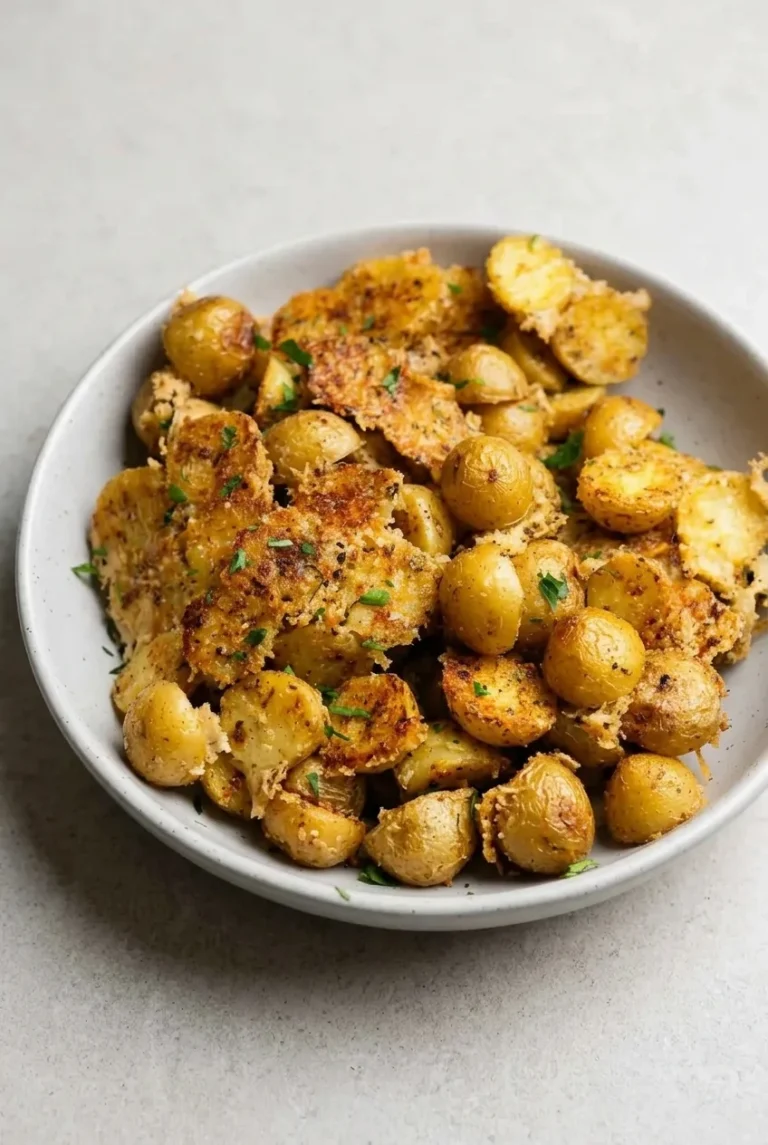
Small, skin-on potato halves roast cut-side down on a layer of Parmesan. The cheese browns against the pan and forms a craggy crust on each flat face, while the centers turn tender. Garlic, Italian seasoning, and a light scatter of parsley finish the potatoes without hiding their crisp edges.

This version roasts directly, without boiling or flipping. Start checking before the expected roast time is up: the potatoes need to be fork-tender, and the cheese should be golden rather than blackened.

Ingredients for Parmesan Crusted Potatoes

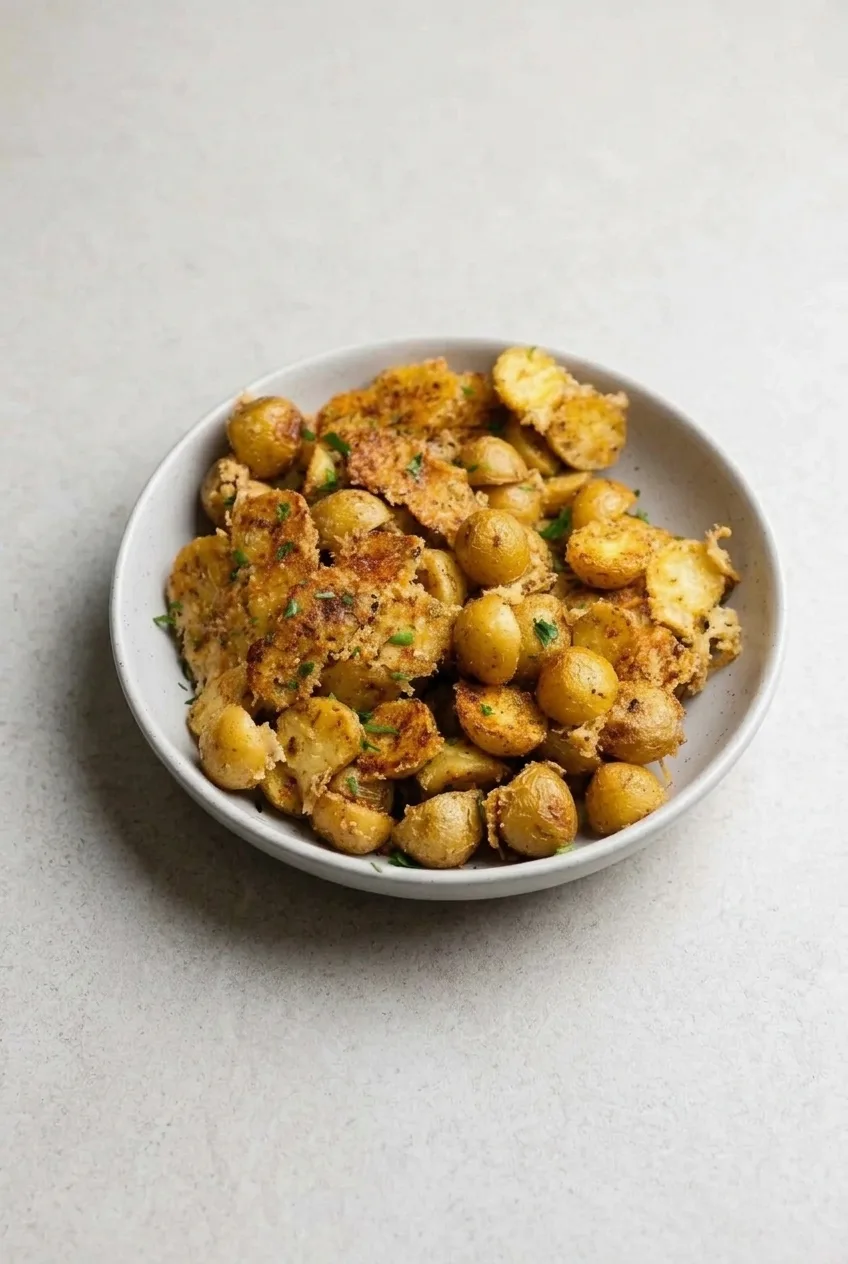
Complete bowl of Parmesan crusted potato halves on a pale surface, with skins and crisp cut sides visible
  • 1 1/2 pounds baby gold potatoes (680g)
  • 1 cup loosely packed finely grated Parmesan, preferably grated from a block (85g)
  • 2 tablespoons olive oil, divided
  • 1 teaspoon garlic powder
  • 1 teaspoon dried Italian seasoning
  • 1/4 teaspoon kosher salt
  • 1/4 teaspoon freshly ground black pepper
  • 2 tablespoons chopped flat-leaf parsley

Yield: 4–6 side servings. Time: 15 minutes prep, 30–40 minutes roasting, plus a 5-minute rest.

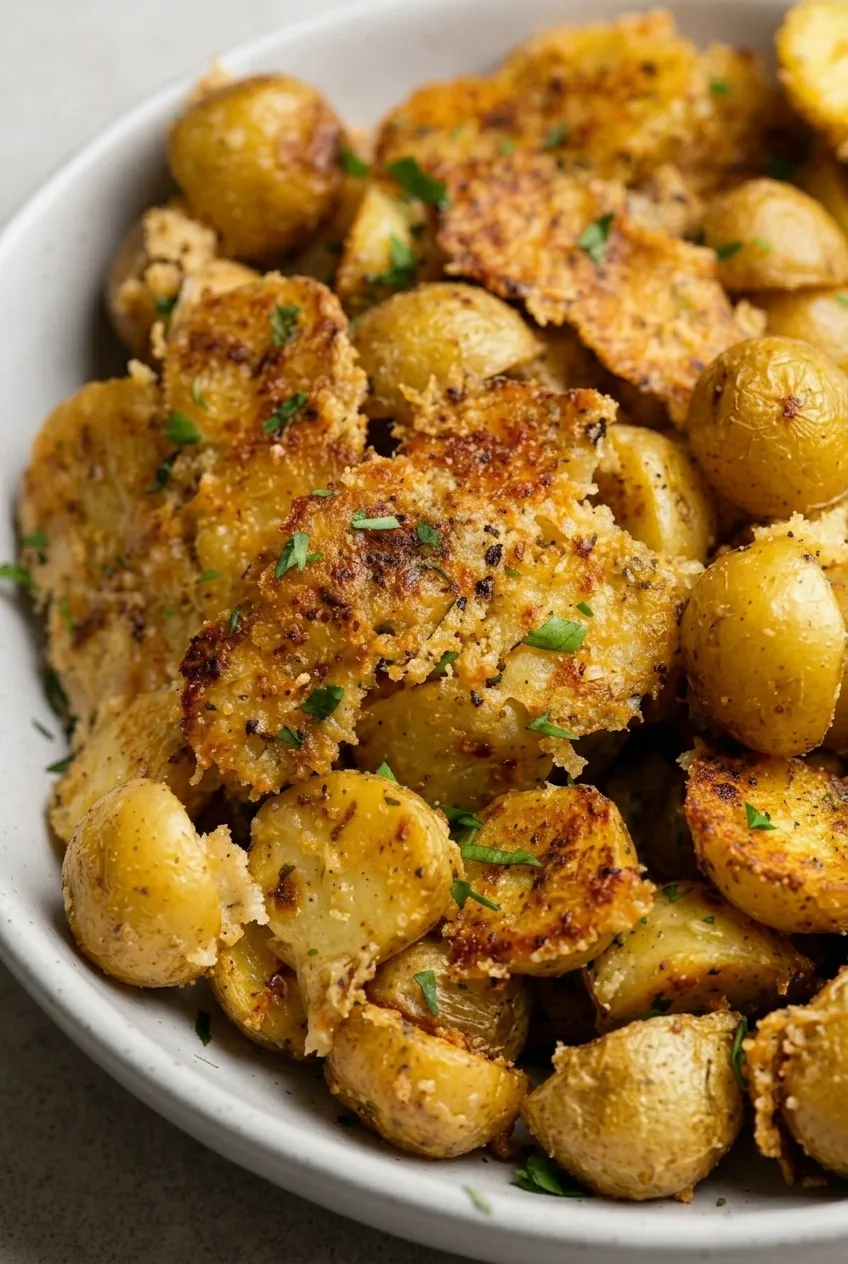
Close view of a potato half with craggy Parmesan crust, a tender yellow center, and parsley flecks

How to Roast Parmesan Crusted Potatoes

  1. Preheat and cut: Heat the oven to 400°F (205°C) with a rack in the middle. Wash and thoroughly dry the potatoes, then halve them to make flat cut faces. Cut any noticeably larger potatoes into similarly sized, bite-size pieces.
  2. Prepare the pan and cheese: Lightly coat a large, unlined rimmed metal baking sheet with 1 tablespoon olive oil, leaving no pools. Toss the potatoes with the remaining tablespoon of oil, salt, and pepper. Mix the Parmesan, garlic powder, and Italian seasoning, then spread it evenly over the area of the pan the potatoes will occupy.
  3. Press into place: Set the potatoes cut-side down on the cheese, pressing each piece firmly into it. Leave a little space between pieces so they roast rather than steam. Use a second baking sheet if needed.
  4. Roast without flipping: Roast uncovered for about 30–40 minutes. Begin checking at 25 minutes, testing thick pieces near both the center and edges of the pan. The potatoes are done when a fork enters easily and the cheese underneath is golden to deep golden brown, with crisp edges. If browning is uneven, rotate the pan without moving the potatoes.
  5. Rest and serve: Leave the potatoes on the pan for about 5 minutes so the crust can firm up. Slide a thin metal spatula beneath the cheese and lift it with the potatoes. Pile them in a shallow bowl with some crusted faces turned up and some rounded skins showing. Scatter the parsley lightly over the top.

How to Keep the Parmesan Crust Attached

Dry cut faces and firm contact with the cheese help create an even crust. Wet potatoes or a crowded pan can leave the bottoms soft and patchy. Keep the potatoes cut-side down throughout roasting, then let the cheese rest before lifting from beneath it; pulling up hot potatoes one by one can leave the crust on the pan.

For a different crispy potato shape, try Garlic Parmesan Smashed Potatoes With Crispy Edges.

When Are the Potatoes Done?

Check both the thickest potatoes and the color of the cheese. Small, similarly sized halves are more likely to become tender before the crust gets too dark. If the cheese is browning quickly but the potatoes are still firm, move the pan to a lower rack and watch closely as they finish rather than roasting toward a fixed time.

Small red potatoes can replace the gold potatoes, but check their tenderness rather than assuming they will finish at the same time. Refrigerated pre-grated Parmesan is also an option; its browning may differ from finely grated block Parmesan.

Leftovers and Reheating

Let leftovers cool before transferring them to a covered container; trapped steam softens the crust. Refrigerate for up to 3–4 days. Reheat uncovered on a baking sheet at 400°F for about 8–10 minutes, until hot and crisp at the edges. A microwave will warm the potatoes but soften the crust. Freezing is not recommended for this version because thawed potatoes may turn grainy.

Nutrition

Approximate nutrition per serving, based on 6 side servings: 190 calories, 8g protein, 9g fat, and 21g carbohydrates. Approximate values per 100g of finished potatoes: 170 calories, 7g protein, 8g fat, and 19g carbohydrates. Values vary with the Parmesan and moisture lost during roasting.

Crispy Parmesan Crusted Potatoes

Baby gold potatoes roast cut-side down on Parmesan until tender with a crisp, golden cheese crust.
Course: Side Dish
Cuisine: Italian-American
Prep: 15 min
Cook: 35 min
Total: 55 min
Servings: 6 Calories: 190 kcal

Equipment

  • Oven
  • Rimmed metal baking sheet
  • Mixing bowl
  • Thin metal spatula

Ingredients

For the Potatoes

  • 1 1/2 pounds baby gold potatoes (680 g)
  • 2 tablespoons olive oil, divided
  • 1/4 teaspoon kosher salt
  • 1/4 teaspoon freshly ground black pepper

For the Parmesan Crust

  • 1 cup loosely packed finely grated Parmesan, preferably grated from a block (85 g)
  • 1 teaspoon garlic powder
  • 1 teaspoon dried Italian seasoning

To Finish

  • 2 tablespoons chopped flat-leaf parsley

Instructions

  1. Preheat the oven to 400°F (205°C) with a rack in the middle position.
  2. Wash and thoroughly dry the potatoes. Halve them to create flat cut faces, and cut any noticeably larger potatoes into similarly sized pieces.
  3. Lightly coat a large, unlined rimmed metal baking sheet with 1 tablespoon of olive oil, without leaving pools of oil.
  4. Toss the potatoes with the remaining tablespoon of olive oil, salt, and pepper.
  5. Mix the Parmesan, garlic powder, and Italian seasoning. Spread the mixture evenly over the area of the baking sheet the potatoes will cover.
  6. Arrange the potatoes cut-side down on the Parmesan and press each piece firmly into the cheese. Leave space between pieces; use a second baking sheet if needed.
  7. Roast uncovered for about 30–40 minutes, checking from 25 minutes. The potatoes are done when a fork enters easily and the cheese is golden to deep golden brown with crisp edges. Rotate the pan if browning is uneven, without moving the potatoes.
  8. Let the potatoes rest on the pan for about 5 minutes. Slide a thin metal spatula beneath the cheese and lift the potatoes, then scatter parsley over the top.

Tips

  • Dry the potatoes thoroughly so the crust browns evenly.
  • Press each cut face firmly into the Parmesan and keep the potatoes cut-side down while roasting.
  • Avoid crowding the pan; use a second baking sheet if necessary.
  • Start checking at 25 minutes and test thick potatoes near both the center and edges of the pan.
  • Let the crust rest before lifting, and slide a spatula beneath it to help keep it attached.

Variations

  • Red Potato Version: Replace the baby gold potatoes with small red potatoes and check them for tenderness as they roast.
  • Pre-Grated Parmesan Version: Use refrigerated pre-grated Parmesan; the crust may brown differently than it does with finely grated block Parmesan.

Notes

Refrigerate cooled leftovers in a covered container for up to 3–4 days. Reheat uncovered on a baking sheet at 400°F for about 8–10 minutes; microwaving softens the crust. Freezing is not recommended.

Nutrition

Calories: 190 kcal | Protein: 8 g | Fat: 9 g | Carbohydrates: 21 g

Steakhouse Potatoes Romanoff

Potatoes Romanoff is a creamy, cheesy casserole that still looks and feels like shredded potato—not mashed potatoes. Bake russets, chill them until firm, then grate them coarsely and fold them with sour cream, shallots, and sharp cheddar. The cold potatoes hold their shape during mixing, while a loose, uneven surface develops lightly browned cheese-topped peaks in the oven.

Lift generous portions onto plates rather than cutting the casserole into squares. Finish each serving with a little sliced green onion.

Ingredients for Potatoes Romanoff

Close view of creamy potato shreds, melted cheddar, browned edges, and green onion in Potatoes Romanoff
  • 3 pounds russet potatoes, about 4 to 5 large, scrubbed and dried (1,350g)
  • 1 tablespoon unsalted butter, for the baking dish (15g)
  • 1 1/2 cups sour cream (360g)
  • 1 cup freshly grated sharp white cheddar (about 115g)
  • 1 cup freshly grated sharp orange cheddar (about 115g)
  • 2 medium shallots, finely minced, about 1/3 cup (50g)
  • 3/4 teaspoon kosher salt, plus more to taste
  • 1/2 teaspoon freshly ground black pepper
  • 2 green onions, thinly sliced, for serving

Yield: 8 side-dish servings. Time: About 20 minutes active preparation, 1 hour 35 minutes to 2 hours baking, and at least 4 hours chilling.

How to Make Steakhouse Potatoes Romanoff

Plated Potatoes Romanoff with green onion beside the remaining casserole in a white baking dish
  1. Bake the potatoes: Preheat the oven to 400°F (205°C). Prick the potatoes, place them on a baking sheet, and bake uncovered for 55 to 75 minutes. Start checking at 55 minutes: a skewer should reach the center without meeting a hard core, but the potatoes should still hold their shape.
  2. Chill until firm: Let the potatoes stop steaming, then refrigerate them promptly until completely cold and firm, at least 4 hours or overnight. Warm potatoes are more likely to collapse when grated.
  3. Prepare the binder: Preheat the oven to 350°F (175°C) and butter a shallow 9-by-13-inch baking dish. In a large bowl, combine the sour cream, shallots, salt, pepper, and 1 1/2 cups of the mixed cheddars. Reserve the remaining 1/2 cup cheese for the top.
  4. Grate and fold: Grate the chilled potatoes, skins on, through the coarse holes of a box grater. A few soft chunks are fine. Gently fold them into the sour cream mixture just until coated. Taste a small amount and adjust the salt if needed; the cheddar will add saltiness.
  5. Fill the dish: Transfer the mixture to the buttered dish without pressing it down. Leave the surface uneven and scatter the reserved white and orange cheddar over the peaks.
  6. Bake uncovered: Bake for about 35 to 45 minutes, starting to check at 30 minutes. The edges should bubble, the center should be thoroughly hot, and the raised cheese-topped areas should have scattered golden-brown spots. Do not judge doneness by the browned top alone.
  7. Rest and serve: Let the casserole rest for 5 to 10 minutes. Lift loose portions onto plates and scatter sliced green onion over each serving.

How to Keep the Potato Shreds Fluffy

Russets give this casserole a fluffier texture than waxier potatoes, but chilling is what helps the baked potatoes form distinct shreds. They do not have to sit overnight; they do need to feel cold and firm throughout before grating.

Use the coarse side of a box grater and fold only until the strands are coated. Vigorous stirring or packing the mixture into the dish makes the filling dense. A loose surface also gives the cheese small peaks to brown without forming a thick crust.

Make It Ahead and Adjust the Bake

Bake and chill the potatoes the day before assembly, or assemble the casserole, cover it, and refrigerate it overnight. If the assembled dish goes into the oven fully chilled, start checking around 40 minutes and allow about 45 to 55 minutes total. A deeper dish may also take longer. In either case, check that the center is hot before taking it out of the oven.

Serving and Storing

Serve loose portions alongside grilled steak, roast beef, roast chicken, or baked salmon. For a different shredded-potato casserole, try cheesy hashbrown casserole. If you prefer sliced potatoes, make cheesy au gratin potatoes.

Cover and refrigerate leftovers for up to 3 days. Reheat covered at 350°F until hot, then uncover near the end to refresh the top. Individual microwave portions will be softer. Freezing is possible, but it is not recommended if you want to preserve the distinct shreds; thawed potatoes may be soft or watery.

Nutrition

Approximate nutrition per serving, based on 8 side-dish servings: 350 calories, 12g protein, 20g fat, and 33g carbohydrates. Approximate values per 100g of finished casserole: 160 calories, 5g protein, 9g fat, and 15g carbohydrates. Values will vary with the ingredients used and moisture lost during baking.

Steakhouse Potatoes Romanoff

Baked russet potatoes are grated and folded with sour cream, shallots, and cheddar for a creamy casserole with distinct potato shreds.
Course: Side Dish
Cuisine: American
Prep: 20 min
Cook: 105 min
Total: 373 min
Servings: 8 Calories: 350 kcal

Equipment

  • Baking sheet
  • Shallow 9-by-13-inch baking dish
  • Large bowl
  • Box grater

Ingredients

For the casserole

  • 3 pounds russet potatoes, about 4 to 5 large, scrubbed and dried (1,350g)
  • 1 tablespoon unsalted butter, for the baking dish (15g)
  • 1 1/2 cups sour cream (360g)
  • 1 cup freshly grated sharp white cheddar (about 115g)
  • 1 cup freshly grated sharp orange cheddar (about 115g)
  • 2 medium shallots, finely minced, about 1/3 cup (50g)
  • 3/4 teaspoon kosher salt, plus more to taste
  • 1/2 teaspoon freshly ground black pepper

For serving

  • 2 green onions, thinly sliced

Instructions

  1. Preheat the oven to 400°F (205°C). Prick the potatoes, place them on a baking sheet, and bake uncovered for 55 to 75 minutes, checking from 55 minutes. A skewer should reach the center without meeting a hard core, while the potatoes still hold their shape.
  2. Let the potatoes stop steaming, then refrigerate promptly until completely cold and firm, at least 4 hours or overnight.
  3. Preheat the oven to 350°F (175°C) and butter a shallow 9-by-13-inch baking dish.
  4. In a large bowl, combine the sour cream, shallots, salt, pepper, and 1 1/2 cups of the mixed cheddars. Reserve the remaining 1/2 cup cheese for the topping.
  5. Grate the chilled potatoes, skins on, through the coarse holes of a box grater. Gently fold them into the sour cream mixture just until coated. Taste and adjust the salt if needed.
  6. Transfer the mixture to the buttered dish without pressing it down. Leave the surface uneven and scatter the reserved cheddar over the peaks.
  7. Bake uncovered for about 35 to 45 minutes, checking from 30 minutes. The edges should bubble, the center should be thoroughly hot, and the raised cheese-topped areas should have scattered golden-brown spots.
  8. Rest the casserole for 5 to 10 minutes. Lift loose portions onto plates and top with sliced green onion.

Tips

  • Chill the baked potatoes until cold and firm before grating so they hold their shape.
  • Use russet potatoes for a fluffier texture.
  • Grate with the coarse side of a box grater and fold gently just until the strands are coated.
  • Keep the mixture loose in the dish and leave the surface uneven for browned cheese-topped peaks.
  • Check that the center is hot; a browned top alone does not indicate doneness.

Notes

Refrigerate leftovers, covered, for up to 3 days. Reheat covered at 350°F until hot, uncovering near the end to refresh the top. Freezing may soften or make the potato shreds watery.

Nutrition

Calories: 350 kcal | Protein: 12 g | Fat: 20 g | Carbohydrates: 33 g

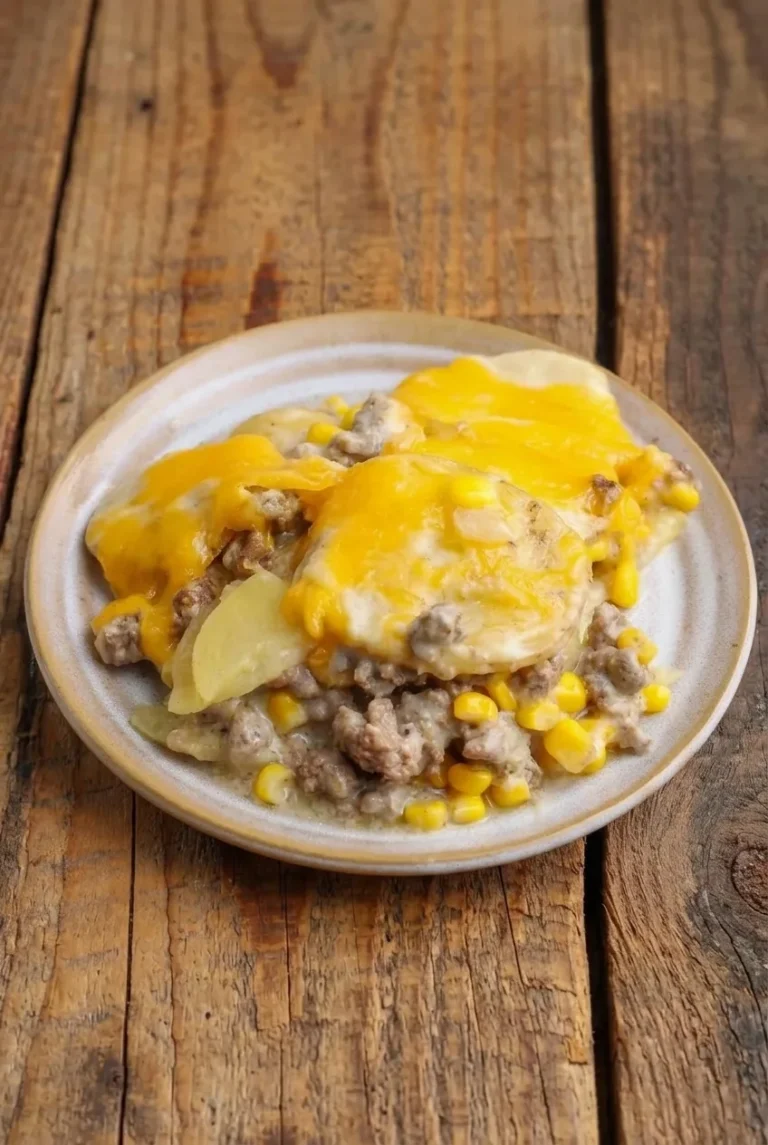
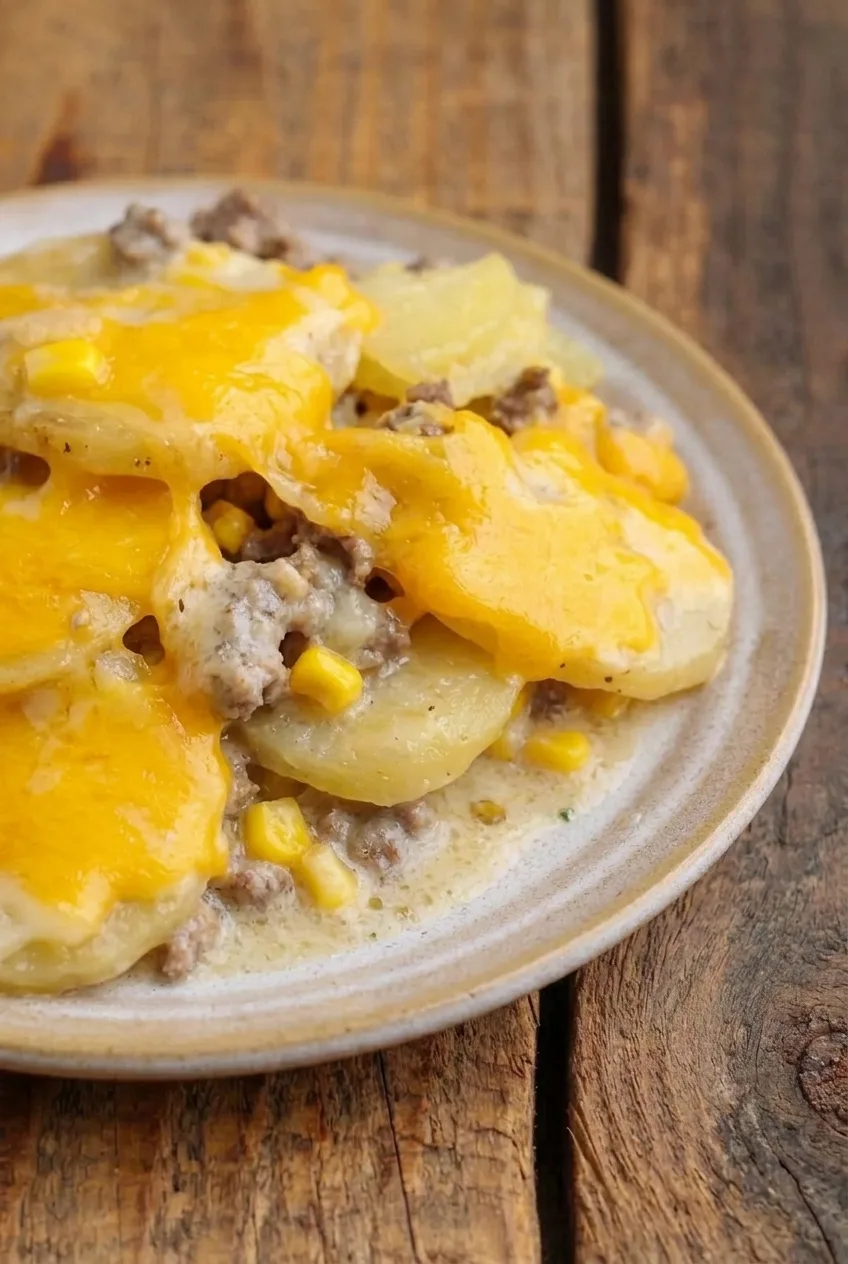
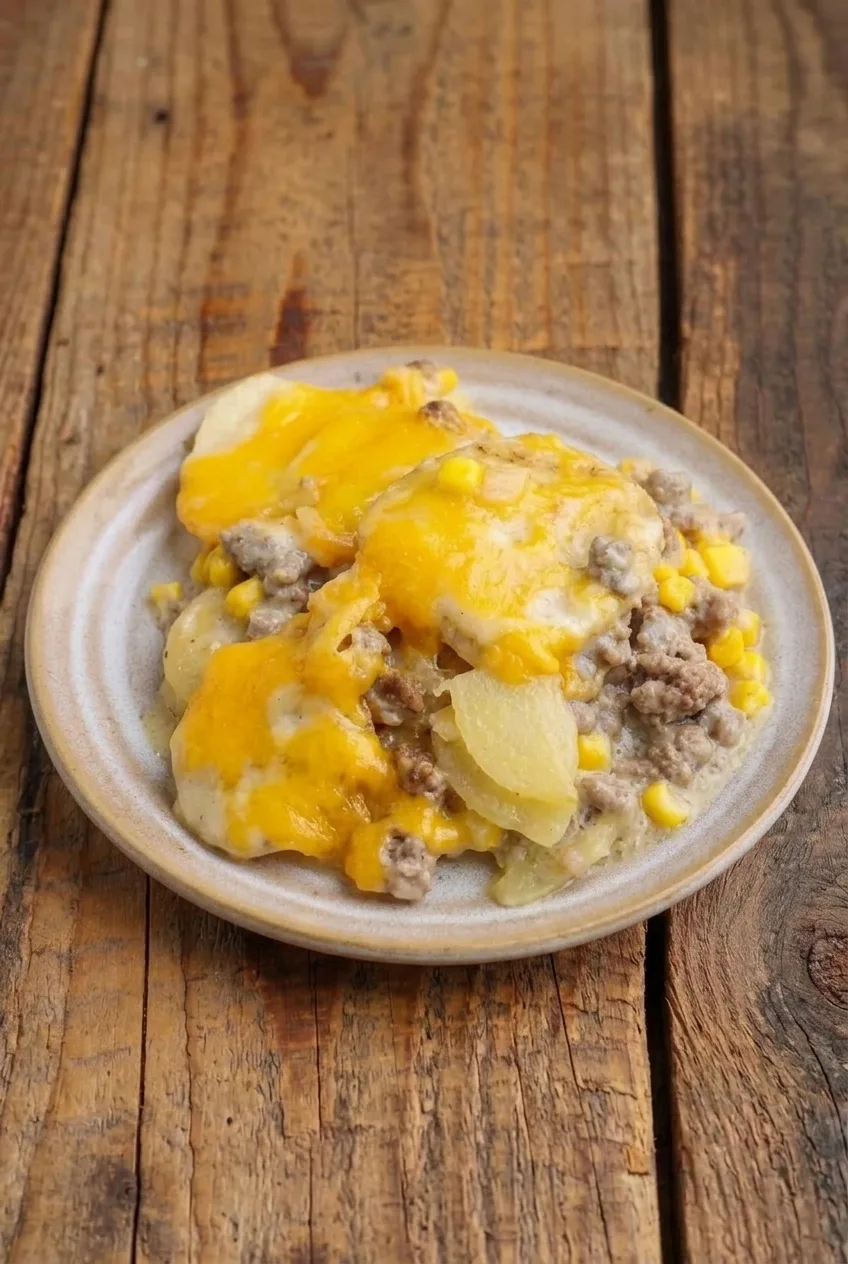
Hamburger Potato Casserole

Fresh potato slices bake in layers with browned ground beef, corn, and a creamy milk-and-broth sauce. A generous cheddar topping melts over the finished casserole, which serves as a rustic scoop with the potato slices, beef, and yellow corn still visible.

Fresh potatoes need a long covered bake. Check a slice at the center before adding the cheese: a melted topping cannot tell you whether the potatoes underneath are tender.

Ingredients for Hamburger Potato Casserole

Close view of potato slices layered over beef and corn in creamy sauce beneath melted cheddar
  • 2 pounds yellow or Yukon Gold potatoes (about 900g), peeled and sliced about 1/8 inch thick
  • 1 pound ground beef (about 450g)
  • 1 medium yellow onion (about 150g), diced
  • 2 garlic cloves, minced
  • 1 cup corn kernels (about 165g), thawed if frozen and well drained
  • 3 tablespoons unsalted butter (about 45g), plus a little for greasing the dish if desired
  • 3 tablespoons all-purpose flour (about 25g)
  • 1 1/2 cups milk
  • 1 cup low-sodium beef broth
  • 2 cups shredded sharp cheddar (about 8 ounces or 225g)
  • About 1 teaspoon kosher salt, divided and adjusted to taste
  • 1/2 teaspoon black pepper, divided

Keep the potato slices thin and even so they cook at the same rate. A sharp knife works, or use a mandoline with a hand guard.

How to Make Hamburger Potato Casserole

Full plate of hamburger potato casserole on a wooden table, with potato, beef and corn layers visible
  1. Prepare the dish: Preheat the oven to 350°F (175°C). Lightly grease a 9-by-13-inch baking dish. Peel the potatoes and cut them into even, approximately 1/8-inch slices.
  2. Brown the beef: Cook the beef and onion in a large skillet over medium-high heat for 8 to 10 minutes, breaking up the beef, until it is browned and the onion has softened. Add the garlic and cook briefly. Drain excess fat, season with some of the salt and pepper, and transfer the mixture to a bowl.
  3. Make the sauce: Reduce the heat to medium. Melt the butter in the skillet, whisk in the flour, and cook briefly until no dry flour remains. Gradually whisk in the milk and broth. Simmer, whisking, for 5 to 7 minutes, until the sauce lightly coats a spoon but still pours easily. Season with the remaining salt and pepper, tasting before adding all the salt.
  4. Layer the casserole: Arrange half the potato slices in overlapping layers in the dish. Add half the beef, half the drained corn, and half the sauce. Repeat with the remaining potatoes, beef, corn, and sauce. Spread the sauce across the top potatoes so they are moistened. If it has become too thick to flow between the layers, whisk in a small splash of milk. Reserve all the cheddar.
  5. Bake covered: Cover the dish securely with foil and bake for 60 to 70 minutes. Start checking at 60 minutes: a small knife should slip through potato slices near the center with little resistance, and the sauce should bubble at the edges. If the potatoes are still firm, replace the foil and bake in roughly 10-minute increments, checking again each time.
  6. Add the cheese: Remove the foil and scatter the cheddar over the casserole. Bake uncovered for 8 to 12 minutes, until the cheese is fully melted and glossy, not darkly browned. Rest for 10 minutes before scooping. The creamy layers will hold together loosely rather than cut into firm squares.

Why the Covered Bake Matters

Foil holds in moisture while the fresh potatoes cook. The center takes longest, so test a potato slice there rather than judging by the bubbling edges. Thicker slices, a deeper dish, or a casserole assembled cold may need more covered baking time. Adding the cheddar only after the potatoes are tender keeps it melted and glossy instead of overbrowned.

Make-Ahead and Leftovers

Serve with a green salad or steamed green beans. Cool leftovers and refrigerate them in an airtight container for up to 3 days. Cover individual portions and microwave until hot throughout, or cover a larger portion and warm it in a 350°F oven until hot.

If assembling the casserole ahead and refrigerating it, allow additional covered baking time and check the center potatoes before adding cheese. Cooked, cooled portions can be frozen airtight for up to 2 months. Thaw in the refrigerator before reheating; the potatoes may be softer afterward.

Potato Questions

Can I use frozen hash browns instead?

Not with this method or timing. Hash browns need a different casserole mixture and bake schedule, and they will not produce the visible sliced-potato layers.

Do I have to peel the potatoes?

Peeled potatoes give the layers described here. Thin-skinned Yukon Golds can be left unpeeled if preferred; keep the slices about 1/8 inch thick.

For a different beef-and-potato format, try cheesy hamburger potato casserole with potato crust.

Nutrition

Approximate nutrition per serving, based on 6 servings: 530 calories, 30g protein, 31g fat, and 41g carbohydrates. Approximate values per 100g of cooked casserole: 140 calories, 8g protein, 8g fat, and 11g carbohydrates. Values will vary with the beef fat drained away, the milk used, and the casserole’s finished weight.

Hamburger Potato Casserole

Thinly sliced potatoes bake with browned ground beef, corn, and a creamy milk-and-broth sauce under a melted cheddar topping.
Course: Main Course
Cuisine: American
Prep: 25 min
Cook: 100 min
Total: 125 min
Servings: 6 Calories: 530 kcal

Equipment

  • 9-by-13-inch baking dish
  • Large skillet
  • Foil
  • Whisk
  • Sharp knife or mandoline

Ingredients

For the Casserole

  • 2 pounds yellow or Yukon Gold potatoes (about 900g), peeled and sliced about 1/8 inch thick
  • 1 pound ground beef (about 450g)
  • 1 medium yellow onion (about 150g), diced
  • 2 garlic cloves, minced
  • 1 cup corn kernels (about 165g), thawed if frozen and well drained
  • 2 cups shredded sharp cheddar (about 8 ounces or 225g)

For the Sauce

  • 3 tablespoons unsalted butter (about 45g), plus a little for greasing the dish if desired
  • 3 tablespoons all-purpose flour (about 25g)
  • 1 1/2 cups milk
  • 1 cup low-sodium beef broth
  • About 1 teaspoon kosher salt, divided and adjusted to taste
  • 1/2 teaspoon black pepper, divided

Instructions

  1. Preheat the oven to 350°F (175°C). Lightly grease a 9-by-13-inch baking dish.
  2. Peel the potatoes and slice them evenly, about 1/8 inch thick.
  3. Cook the ground beef and onion in a large skillet over medium-high heat for 8 to 10 minutes, breaking up the beef, until browned and the onion has softened.
  4. Add the garlic and cook briefly. Drain excess fat, season with some of the salt and pepper, and transfer the beef mixture to a bowl.
  5. Reduce the skillet heat to medium. Melt the butter, whisk in the flour, and cook briefly until no dry flour remains.
  6. Gradually whisk in the milk and beef broth. Simmer for 5 to 7 minutes, whisking, until the sauce lightly coats a spoon but still pours easily. Season with the remaining salt and pepper, tasting before adding all the salt.
  7. Arrange half the potato slices in overlapping layers in the baking dish. Top with half the beef, half the corn, and half the sauce.
  8. Repeat with the remaining potatoes, beef, corn, and sauce. Spread the sauce over the top potatoes. If the sauce is too thick to flow between the layers, whisk in a small splash of milk. Reserve the cheddar.
  9. Cover the dish securely with foil and bake for 60 to 70 minutes. Begin checking at 60 minutes; a knife should slip through a potato slice near the center with little resistance.
  10. If the center potatoes are still firm, replace the foil and continue baking in roughly 10-minute increments, checking again each time.
  11. When the potatoes are tender, remove the foil and scatter the cheddar over the casserole. Bake uncovered for 8 to 12 minutes, until the cheese is fully melted and glossy.
  12. Rest for 10 minutes before serving.

Tips

  • Slice the potatoes thinly and evenly so they cook at the same rate.
  • Use a mandoline with a hand guard if you have one.
  • Test a potato slice near the center before adding the cheddar; bubbling edges do not guarantee the middle is tender.
  • Keep the casserole covered while the fresh potatoes bake to hold in moisture.
  • Add the cheddar only after the potatoes are tender to keep it melted and glossy rather than overbrowned.

Variations

  • Unpeeled Yukon Gold Potato Casserole: Leave thin-skinned Yukon Gold potatoes unpeeled and slice them about 1/8 inch thick.

Notes

Refrigerate leftovers in an airtight container for up to 3 days. Reheat covered in the microwave or in a 350°F oven until hot throughout. Cooked portions can be frozen airtight for up to 2 months; thaw in the refrigerator before reheating.

Nutrition

Calories: 530 kcal | Protein: 30 g | Fat: 31 g | Carbohydrates: 41 g

Classic Creamy Potato Salad

Classic creamy potato salad has recognizable potato chunks, chopped egg, crisp celery, and a mayonnaise-mustard dressing that clings instead of pooling. Sweet relish and green onions give this version its familiar tang and mild sweetness.

Start the Yukon Gold potatoes in cold water, then check a larger piece for tenderness rather than relying only on the clock. Drain them well, cool them before dressing, and fold gently to keep most of the chunks intact. Chill the salad for at least 2 hours before serving.

Ingredients for Classic Creamy Potato Salad

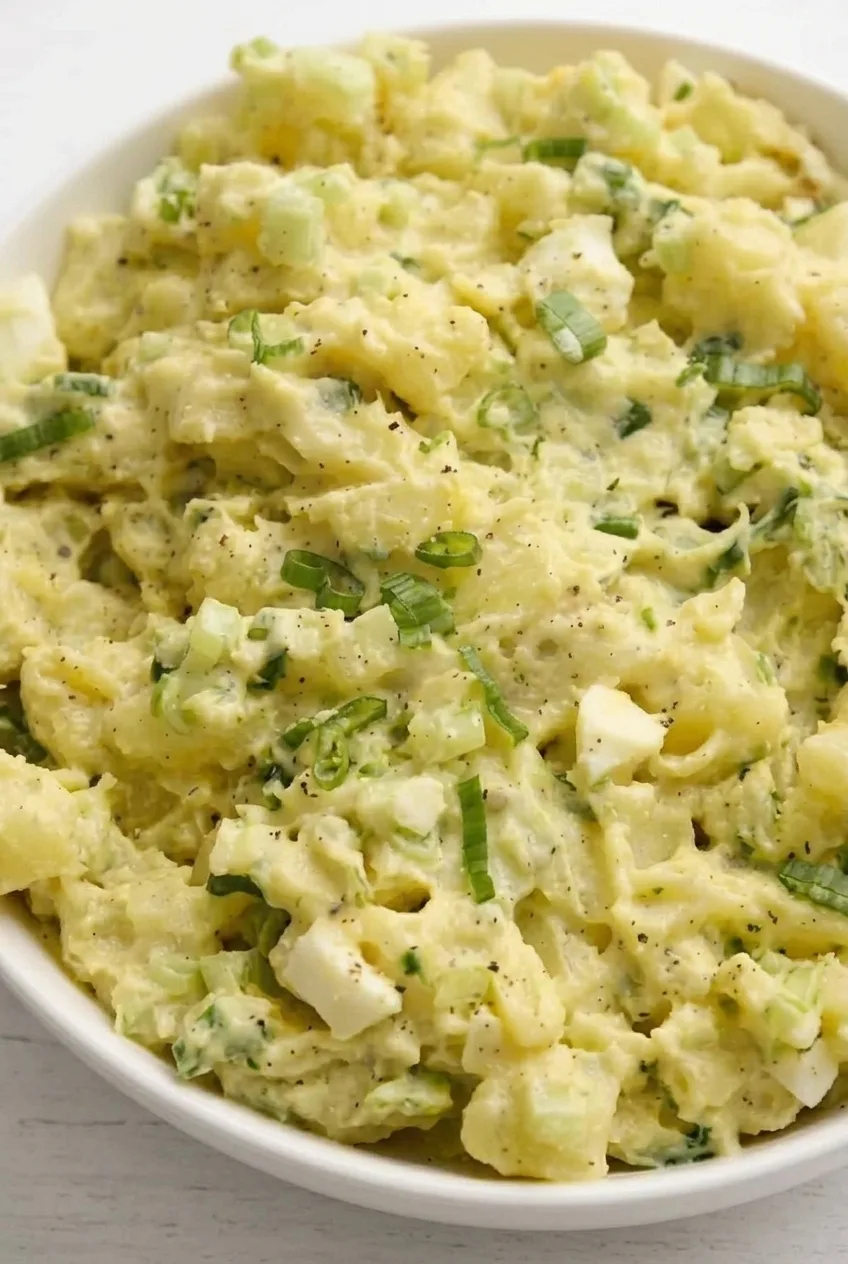
Close view of potato and egg pieces coated in thick dressing with celery and green onion
  • 2 pounds Yukon Gold potatoes, cut into roughly 1-inch pieces (900g)
  • 2 teaspoons kosher salt, for the cooking water
  • 3 large hard-boiled eggs, peeled and chopped
  • 3/4 cup mayonnaise (170g), plus 1–2 tablespoons more if needed after chilling
  • 1 1/2 tablespoons yellow mustard
  • 2 tablespoons sweet pickle relish
  • 1 tablespoon white vinegar
  • 2 medium celery stalks, finely diced (about 1/2 cup)
  • 3 green onions, thinly sliced (about 1/3 cup); reserve a few slices for serving
  • 1/2 teaspoon kosher salt, for the dressing, plus more to taste
  • 1/4 teaspoon freshly ground black pepper, plus a little for serving

Yield: 8 side-dish servings. Time: About 25 minutes prep, 15–20 minutes cooking, 20 minutes cooling, and at least 2 hours chilling; about 3 hours 5 minutes total. If the eggs are not already prepared, cook them while the potatoes cook.

How to Make Creamy Potato Salad

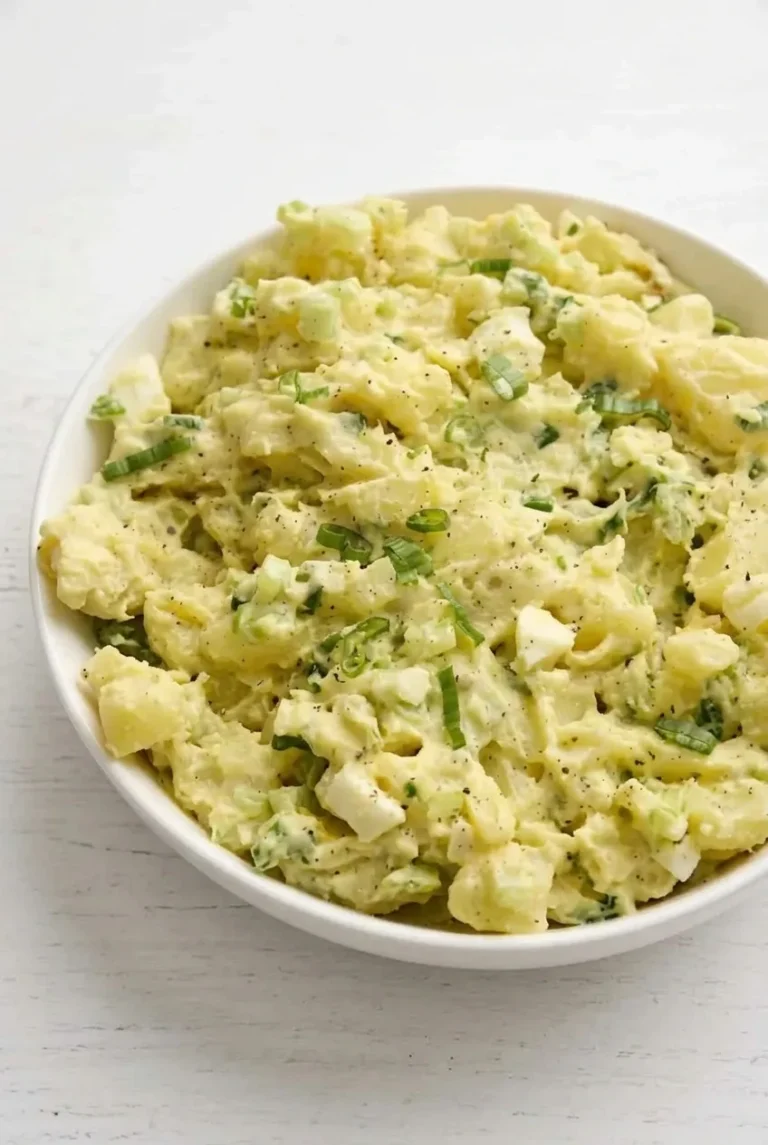
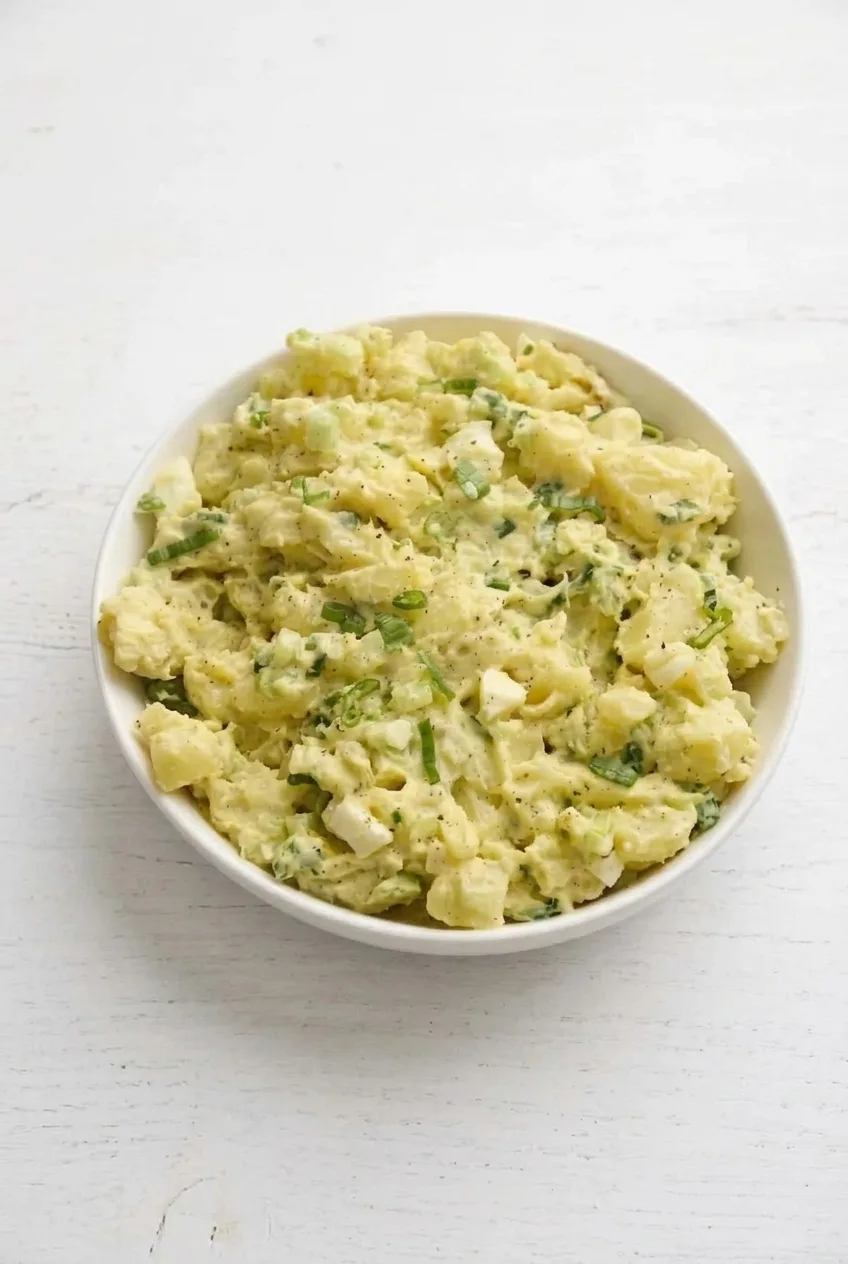
Complete white bowl of creamy potato salad on a pale tabletop, with green onion and pepper on top
  1. Prepare the mix-ins: Hard-boil and cool the eggs if needed, then peel and chop them. Dice the celery and slice the green onions, reserving a few green slices for the top.
  2. Cook the potatoes: Put the potatoes in a large pot and cover with cold water by about 1 inch. Add 2 teaspoons kosher salt. Bring to a boil over high heat, then reduce to a gentle boil over medium or medium-high heat. Start checking a larger piece after about 8 minutes at a boil; roughly 1-inch pieces usually take 8–12 minutes once the water boils. A fork should slide through the center, but the piece should stay intact when lifted.
  3. Drain and cool: Drain thoroughly in a colander without rinsing. Let the steam escape until the potatoes are no longer warm to the touch, about 20 minutes.
  4. Mix the dressing: In a large bowl, stir together the mayonnaise, mustard, relish, vinegar, 1/2 teaspoon kosher salt, and 1/4 teaspoon pepper.
  5. Fold together: Add the cooled potatoes, eggs, celery, and most of the green onions. Fold just until coated. A few softened potato edges are fine, but most chunks should remain intact and the dressing should cling without pooling.
  6. Chill and serve: Cover and refrigerate for at least 2 hours. Gently stir and taste, adjusting the salt, pepper, or mustard if needed. If the potatoes have absorbed too much dressing, fold in 1–2 tablespoons extra mayonnaise. Spoon into a large white serving bowl in a loose mound and finish with the reserved green onions and a little black pepper.

How to Keep the Potatoes Chunky

Cut the potatoes into roughly even pieces so their centers cook at a similar rate. Test one of the larger pieces: if it breaks apart as you lift it, the potatoes are likely to become mushy when mixed. Fold the salad only until coated, leaving a few creamy edges among mostly intact chunks.

Why Drain and Cool the Potatoes?

For this version, drain the potatoes without rinsing them. Letting surface water and steam escape keeps the dressing from thinning out. Wait until the potatoes are no longer warm before folding them into the mayonnaise mixture.

Serving and Simple Swaps

Serve cold alongside burgers, grilled chicken, or pulled pork sandwiches. Red potatoes can replace Yukon Gold; check a larger piece for tenderness rather than assuming the cooking time will be the same. For a sharper, less sweet salad, replace the relish with finely chopped dill pickles and taste before adding all the vinegar. Apple cider vinegar can replace white vinegar.

For a warm potato side instead, try cheesy hashbrown casserole. For a hot side with a smooth texture, make creamy garlic mashed potatoes.

Make-Ahead, Storage, and Cookout Safety

Make the salad up to one day ahead and refrigerate it covered. Stir gently and taste before serving; the seasoning can seem milder after chilling. Refrigerate leftovers promptly in an airtight container for up to 3–4 days.

Do not leave the salad out for more than 2 hours, or more than 1 hour when the temperature is above 90°F (30°C). Serve it chilled, not reheated. Do not freeze it; the potatoes and dressing can become watery after thawing.

Nutrition

Approximate per side-dish serving, based on 8 servings: 270 calories, 5g protein, 18g fat, and 23g carbohydrates. Approximate per 100g: 155 calories, 3g protein, 10g fat, and 13g carbohydrates. Values vary with the mayonnaise and other ingredients used.

Classic Creamy Potato Salad

Yukon Gold potatoes, chopped eggs, celery, and green onions are folded into a creamy mayonnaise-mustard dressing with sweet relish.
Course: Side Dish
Cuisine: American
Prep: 25 min
Cook: 20 min
Total: 185 min
Servings: 8 Calories: 270 kcal

Equipment

  • Large pot
  • Colander
  • Large mixing bowl
  • Knife and cutting board

Ingredients

  • 2 pounds Yukon Gold potatoes, cut into roughly 1-inch pieces (900 g)
  • 2 teaspoons kosher salt, for the cooking water
  • 3 large hard-boiled eggs, peeled and chopped
  • 3/4 cup mayonnaise (170 g), plus 1–2 tablespoons more if needed after chilling
  • 1 1/2 tablespoons yellow mustard
  • 2 tablespoons sweet pickle relish
  • 1 tablespoon white vinegar
  • 2 medium celery stalks, finely diced (about 1/2 cup)
  • 3 green onions, thinly sliced (about 1/3 cup), plus a few slices for serving
  • 1/2 teaspoon kosher salt, for the dressing, plus more to taste
  • 1/4 teaspoon freshly ground black pepper, plus a little for serving

Instructions

  1. If needed, hard-boil and cool the eggs, then peel and chop them. Dice the celery and slice the green onions, reserving a few slices for serving.
  2. Place the potatoes in a large pot and cover with cold water by about 1 inch. Add 2 teaspoons kosher salt.
  3. Bring the water to a boil over high heat, then reduce to a gentle boil over medium or medium-high heat. Begin checking a larger piece after about 8 minutes; roughly 1-inch pieces usually take 8–12 minutes at a boil.
  4. Check that a fork slides through the center of a potato piece while the piece stays intact when lifted. Drain thoroughly in a colander without rinsing.
  5. Let the potatoes cool until no longer warm to the touch, about 20 minutes.
  6. In a large bowl, stir together the mayonnaise, mustard, relish, vinegar, 1/2 teaspoon kosher salt, and 1/4 teaspoon pepper.
  7. Add the cooled potatoes, chopped eggs, celery, and most of the green onions. Fold gently just until coated.
  8. Cover and refrigerate for at least 2 hours.
  9. Gently stir and taste before serving; adjust the salt, pepper, or mustard as needed. If the potatoes have absorbed too much dressing, fold in 1–2 tablespoons extra mayonnaise.
  10. Spoon into a serving bowl and garnish with the reserved green onions and a little black pepper.

Tips

  • Start the potatoes in cold, salted water so they cook evenly.
  • Check a larger potato piece for tenderness rather than relying only on the clock.
  • Drain the potatoes thoroughly and let them cool before adding the dressing.
  • Fold gently and stop as soon as the potatoes are coated to keep the chunks intact.
  • Chill for at least 2 hours so the flavors can come together.

Variations

  • Red Potato Salad: Replace the Yukon Gold potatoes with red potatoes and check a larger piece for tenderness.
  • Dill Pickle Potato Salad: Replace the sweet relish with finely chopped dill pickles and taste before adding all the vinegar.
  • Apple Cider Vinegar Potato Salad: Use apple cider vinegar in place of white vinegar.

Notes

Make up to one day ahead and refrigerate covered. Store leftovers in an airtight container for 3–4 days. Do not leave out longer than 2 hours, or 1 hour above 90°F (30°C). Serve chilled; do not reheat or freeze.

Nutrition

Calories: 270 kcal | Protein: 5 g | Fat: 18 g | Carbohydrates: 23 g

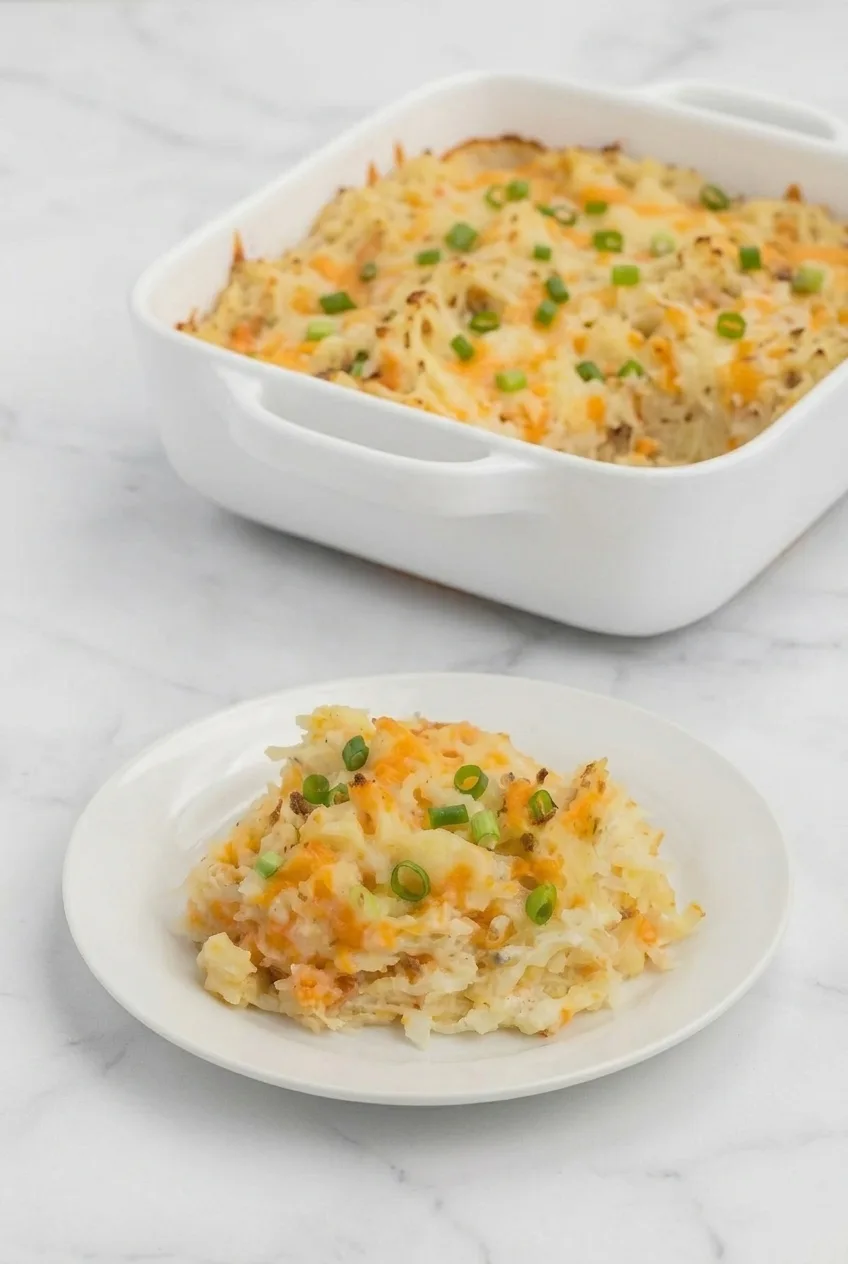
Cheesy Hashbrown Casserole

Cheesy hashbrown casserole should come out creamy and scoopable, with distinct strands of potato beneath a crunchy topping. Condensed soup, sour cream, and cheddar bind the shredded hash browns in a family-size baking dish. Coarsely crushed ridged potato chips go on near the end of baking, giving them time to turn lightly golden without sitting against the moist filling for the full bake.

Ingredients for Cheesy Hashbrown Casserole

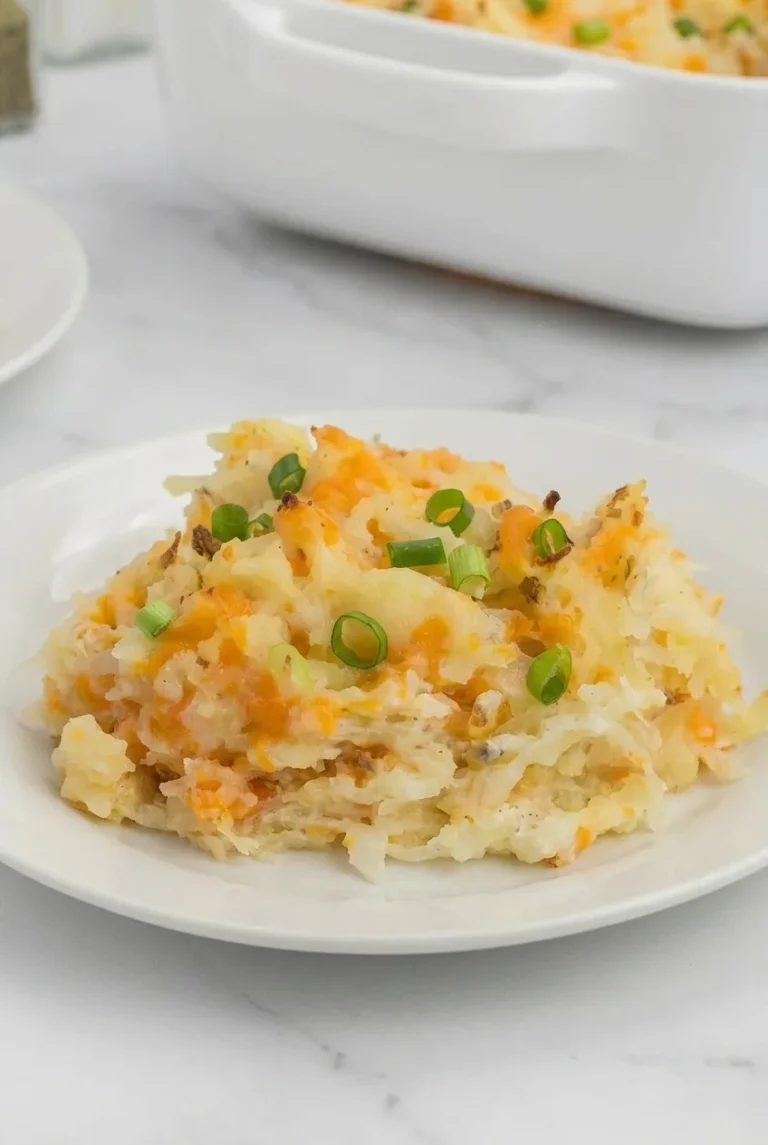
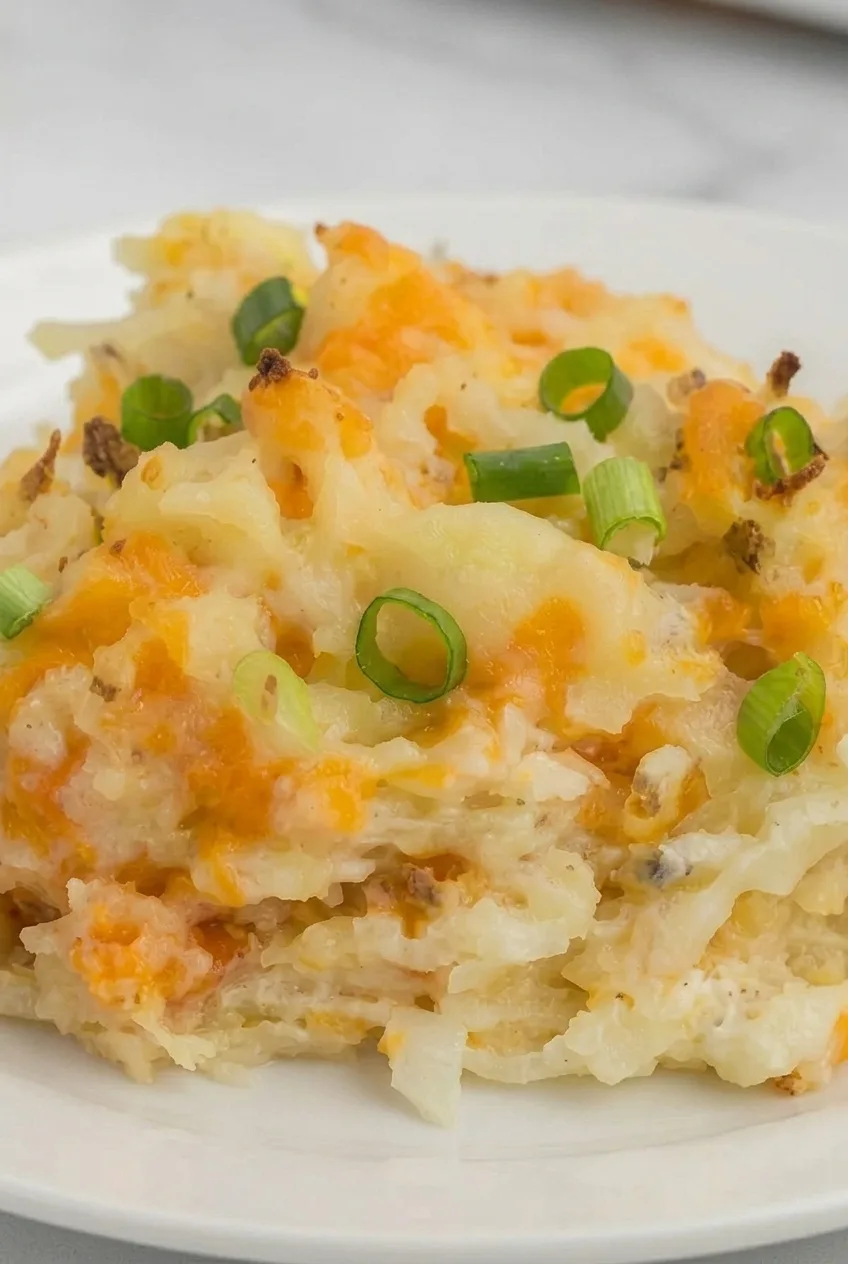
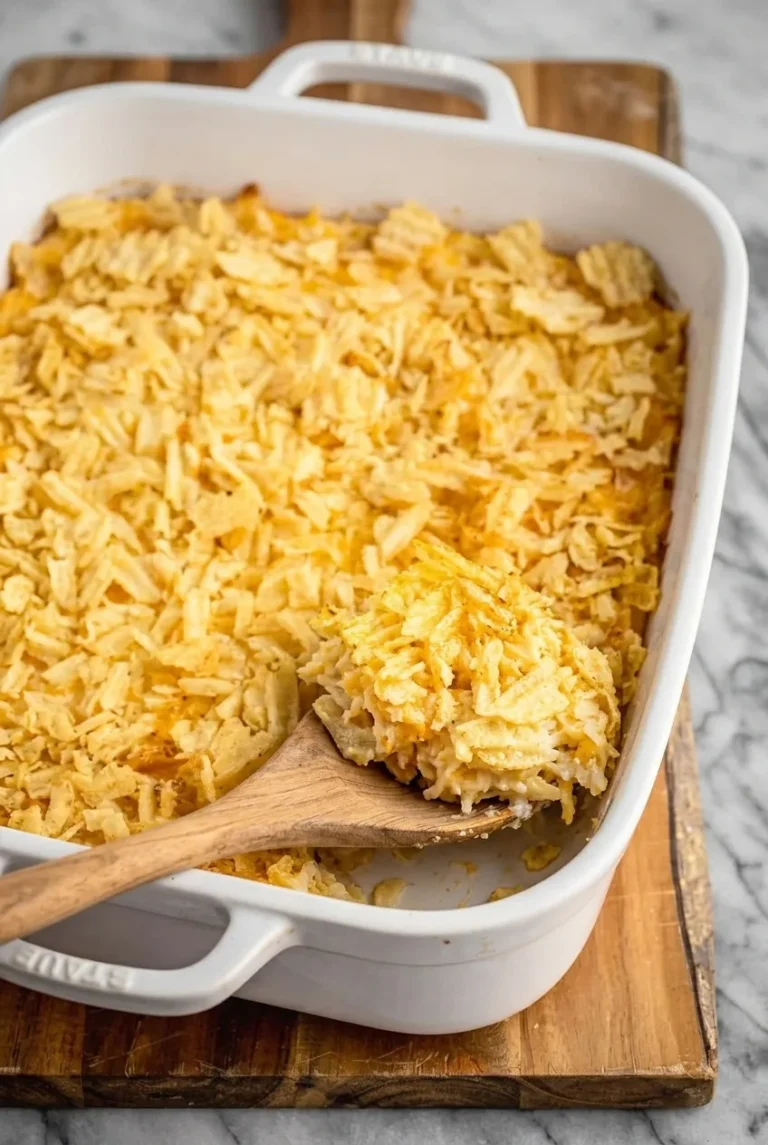
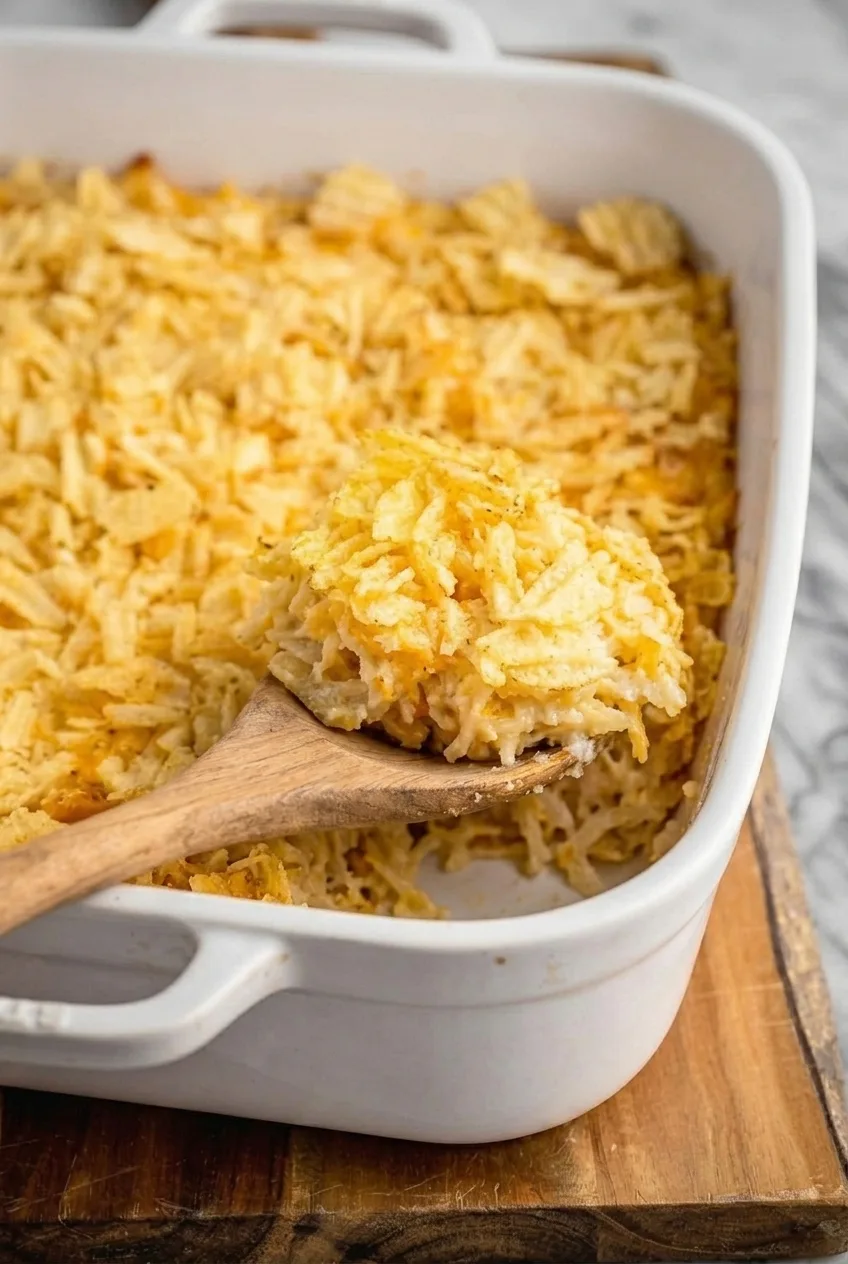
Close view of creamy shredded hash browns and golden ridged chips on a lifted spoonful
  • 1 bag (32 ounces) frozen shredded hash browns, thawed and patted dry (about 900g)
  • 1 can (10.5 ounces) condensed cream of chicken soup, undiluted (about 300g)
  • 1 cup sour cream (230g)
  • 2 cups shredded sharp cheddar cheese (225g)
  • 4 tablespoons unsalted butter, melted (55g), plus a little butter or nonstick spray for the dish
  • 1/2 cup finely chopped yellow onion (75g)
  • 1/4 teaspoon ground black pepper
  • About 2 cups coarsely crushed ridged potato chips (roughly 2 ounces or 55g)

Do not add salt to the filling by default: the soup, cheddar, and chips already contain it. Season individual servings after baking if needed.

How to Make Cheesy Hashbrown Casserole

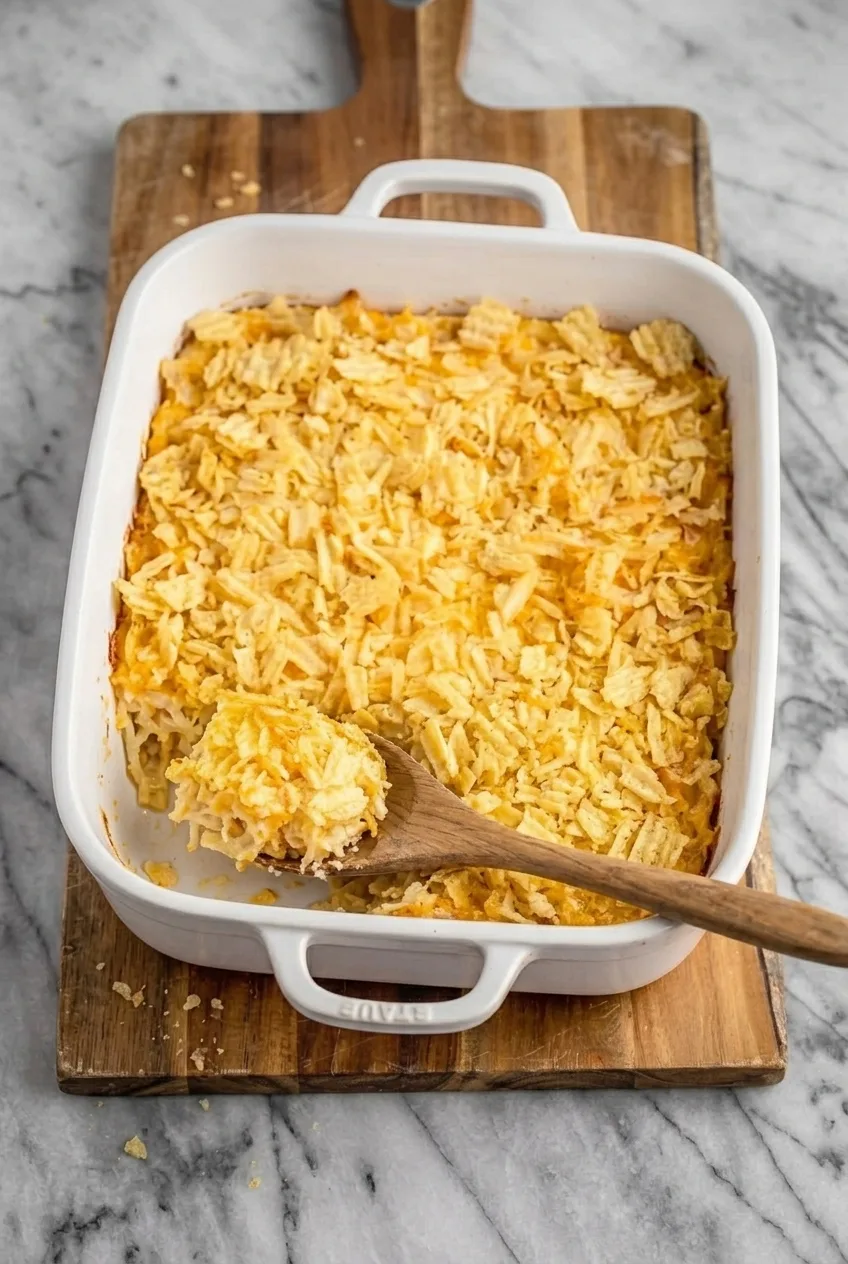
Full rectangular dish of cheesy hashbrown casserole with a corner scooped out and a wooden spoon above it
  1. Prepare the dish and potatoes: Preheat the oven to 350°F (175°C) and grease a 9-by-13-inch baking dish. Pat or gently press the thawed hash browns with a clean towel or paper towels to remove visible moisture. The shreds should be pliable, with no puddles of thaw liquid.
  2. Mix the filling: In a large bowl, stir together the undiluted soup, sour cream, melted butter, cheddar, onion, and pepper. Fold in the hash browns until evenly coated.
  3. Bake the filling: Spread the mixture evenly in the dish without packing it down. Bake uncovered for 35 to 40 minutes, starting to check at 35 minutes. The edges should be bubbling before the topping goes on.
  4. Add the chips: Scatter the coarsely crushed chips over the casserole, leaving recognizable ridged pieces. Bake uncovered for another 12 to 15 minutes, until the chips are lightly golden and the filling bubbles toward the center. Check with a spoon that the potatoes in the middle are hot and tender. If the chips brown first, tent the dish loosely with foil and continue baking.
  5. Rest and serve: Let the casserole rest for 10 minutes, then serve in loose spoonfuls.

Allow about 15 minutes of active prep, plus thawing, and roughly 45 to 55 minutes in the oven. Including the rest, total time is about 70 to 80 minutes after the potatoes have thawed. Makes 10 to 12 side-dish servings.

Why Thaw and Dry the Hash Browns?

Thawed shreds are easier to coat evenly, and removing visible thaw liquid helps keep the filling creamy rather than watery. There is no need to squeeze the potatoes completely dry. Use the condensed soup undiluted; adding milk or water would loosen the filling.

Keeping the Chip Topping Crunchy

Crush the chips into uneven pieces rather than fine crumbs so some ridges remain visible. Adding them for only the final baking stage limits browning and gives them less time against the creamy filling. The topping will soften when leftovers are stored.

Soup and Topping Variations

Condensed cream of mushroom soup can replace cream of chicken soup. For a vegetarian version, check the soup and chip labels to make sure they meet your dietary needs. Crushed cornflakes can replace the chips for a different topping, but they will not give the casserole its ridged-chip finish.

Keep shredded hash browns in the main recipe for its distinct potato strands. Diced hash browns will change the texture and may take longer to become tender.

Serving, Make-Ahead, and Storage

Serve with ham or eggs at brunch, or alongside roast chicken for dinner. For a sliced-potato side instead, try cheesy au gratin potatoes.

To make the casserole ahead, assemble the filling in the dish up to 1 day in advance. Cover and refrigerate it without the chips. Bake as directed, adding the chips near the end; filling baked straight from the refrigerator may need extra time, so check the center.

Cover leftovers and refrigerate for up to 3 to 4 days. Reheat covered in a 350°F oven until hot, uncovering near the end if desired. Individual portions can be microwaved, though the chips will not regain their crunch. For longer storage, freeze the unbaked filling without chips for up to 2 months. Thaw in the refrigerator before baking, and allow extra baking time if it is still cold.

Nutrition

Approximate nutrition per serving, based on 11 side-dish servings: 275 calories, 8g protein, 18g fat, and 20g carbohydrates. Approximate values per 100g of baked casserole: 155 calories, 4g protein, 10g fat, and 11g carbohydrates. Values vary with ingredient brands, serving size, and moisture lost during baking.

Cheesy Hashbrown Casserole

Shredded hash browns are baked with sour cream, cheddar, and condensed soup under a crunchy potato chip topping.
Course: Side Dish
Cuisine: American
Prep: 15 min
Cook: 55 min
Total: 80 min
Servings: 11 Calories: 275 kcal

Equipment

  • 9-by-13-inch baking dish
  • Large mixing bowl
  • Clean towel or paper towels

Ingredients

For the casserole

  • 1 bag (32 ounces) frozen shredded hash browns, thawed and patted dry (about 900 g)
  • 1 can (10.5 ounces) condensed cream of chicken soup, undiluted (about 300 g)
  • 1 cup sour cream (230 g)
  • 2 cups shredded sharp cheddar cheese (225 g)
  • 4 tablespoons unsalted butter, melted (55 g), plus a little butter or nonstick spray for the dish
  • 1/2 cup finely chopped yellow onion (75 g)
  • 1/4 teaspoon ground black pepper

For the topping

  • About 2 cups coarsely crushed ridged potato chips (roughly 2 ounces or 55 g)

Instructions

  1. Preheat the oven to 350°F (175°C) and grease a 9-by-13-inch baking dish.
  2. Pat or gently press the thawed hash browns with a clean towel or paper towels to remove visible moisture.
  3. In a large bowl, stir together the undiluted soup, sour cream, melted butter, cheddar, onion, and pepper.
  4. Fold in the hash browns until evenly coated.
  5. Spread the mixture evenly in the baking dish without packing it down.
  6. Bake uncovered for 35 to 40 minutes, starting to check at 35 minutes. Wait until the edges are bubbling before adding the topping.
  7. Scatter the crushed chips over the casserole, leaving some ridged pieces recognizable.
  8. Bake uncovered for another 12 to 15 minutes, until the chips are lightly golden and the filling bubbles toward the center. Check that the potatoes in the middle are hot and tender.
  9. If the chips brown before the potatoes are tender, tent the dish loosely with foil and continue baking.
  10. Let the casserole rest for 10 minutes before serving in loose spoonfuls.

Tips

  • Thaw and pat the hash browns dry to help keep the filling creamy rather than watery.
  • Use the condensed soup undiluted; adding milk or water can loosen the filling.
  • Add the chips only for the final baking stage to help them stay crisp and lightly golden.
  • Crush the chips unevenly so some ridged pieces remain visible.
  • Do not add salt to the filling by default; the soup, cheese, and chips are already salty.

Variations

  • Cream of Mushroom Casserole: Replace the condensed cream of chicken soup with condensed cream of mushroom soup.
  • Vegetarian Version: Use soup and potato chips whose labels meet your vegetarian dietary needs.
  • Cornflake Topping: Replace the crushed potato chips with crushed cornflakes for a different topping.

Notes

Assemble the filling up to 1 day ahead and refrigerate it without the chips; add extra baking time if it is cold. Refrigerate leftovers for 3 to 4 days and reheat covered at 350°F until hot. Freeze the unbaked filling without chips for up to 2 months; thaw in the refrigerator before baking.

Nutrition

Calories: 275 kcal | Protein: 8 g | Fat: 18 g | Carbohydrates: 20 g

Cheesy Au Gratin Potatoes

Thin Yukon Gold potato slices sit in overlapping, slightly upright rows, with creamy Cheddar sauce between the layers and browned cheese on top. Covering the casserole first helps the potatoes soften; uncovering it after adding the finishing cheese gives the surface its golden spots. Keep the slices a uniform thickness and test the center with a knife—a browned top does not always mean the potatoes underneath are tender.

Servings: 8 side-dish servings. Prep: 25 to 30 minutes. Bake: About 75 to 90 minutes, plus a 15-minute rest.

Ingredients for Cheesy Au Gratin Potatoes

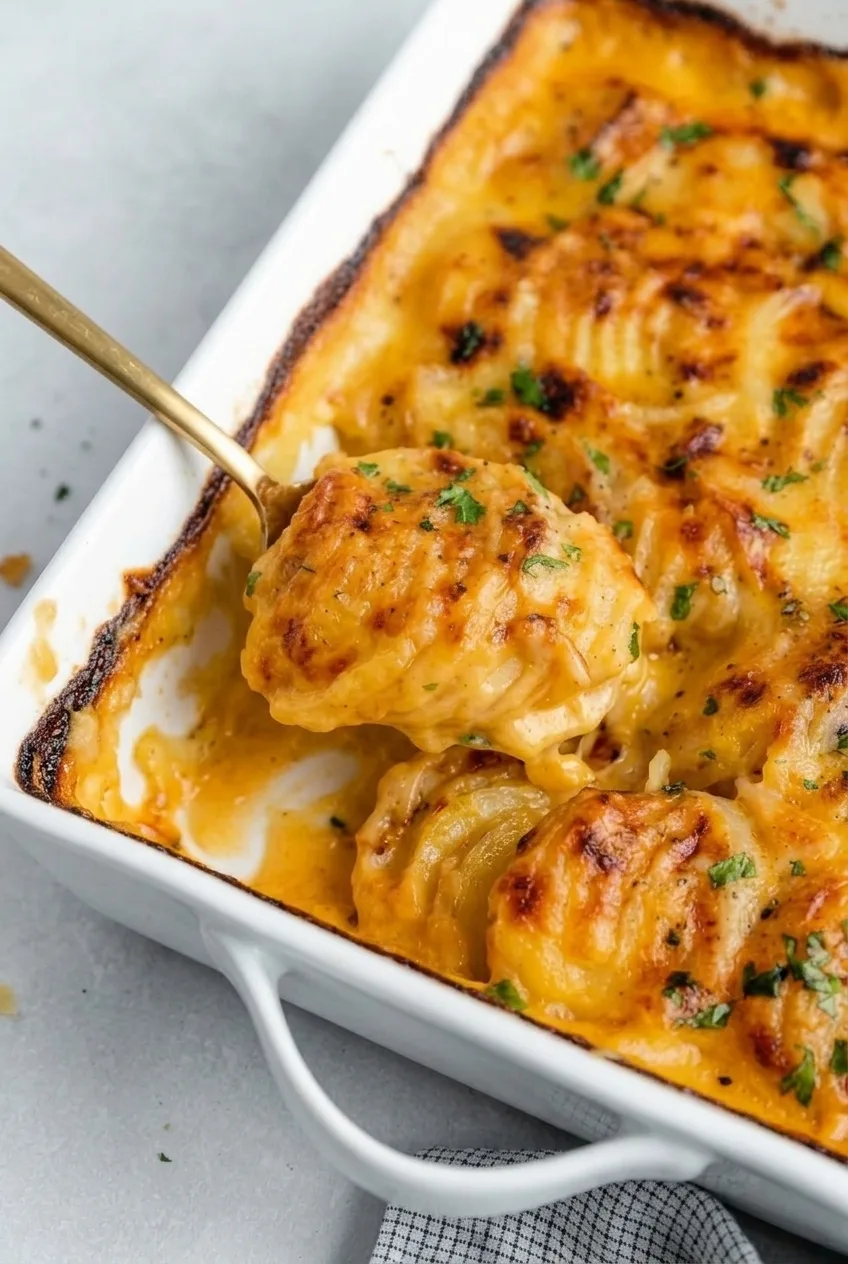
Close view of tender potato layers lifted from the gratin, with creamy Cheddar sauce between the slices
  • 3 pounds Yukon Gold potatoes, scrubbed (about 1,350g)
  • 3 tablespoons unsalted butter (about 45g), plus a little more for the dish
  • 2 cloves garlic, minced
  • 3 tablespoons all-purpose flour (about 25g)
  • 2 cups whole milk (480g)
  • 1/2 cup heavy cream (120g)
  • 2 1/2 cups freshly shredded sharp Cheddar (about 280g), divided
  • 1 teaspoon kosher salt, or to taste
  • 1/2 teaspoon freshly ground black pepper
  • 2 tablespoons chopped fresh flat-leaf parsley

How to Make Cheesy Au Gratin Potatoes

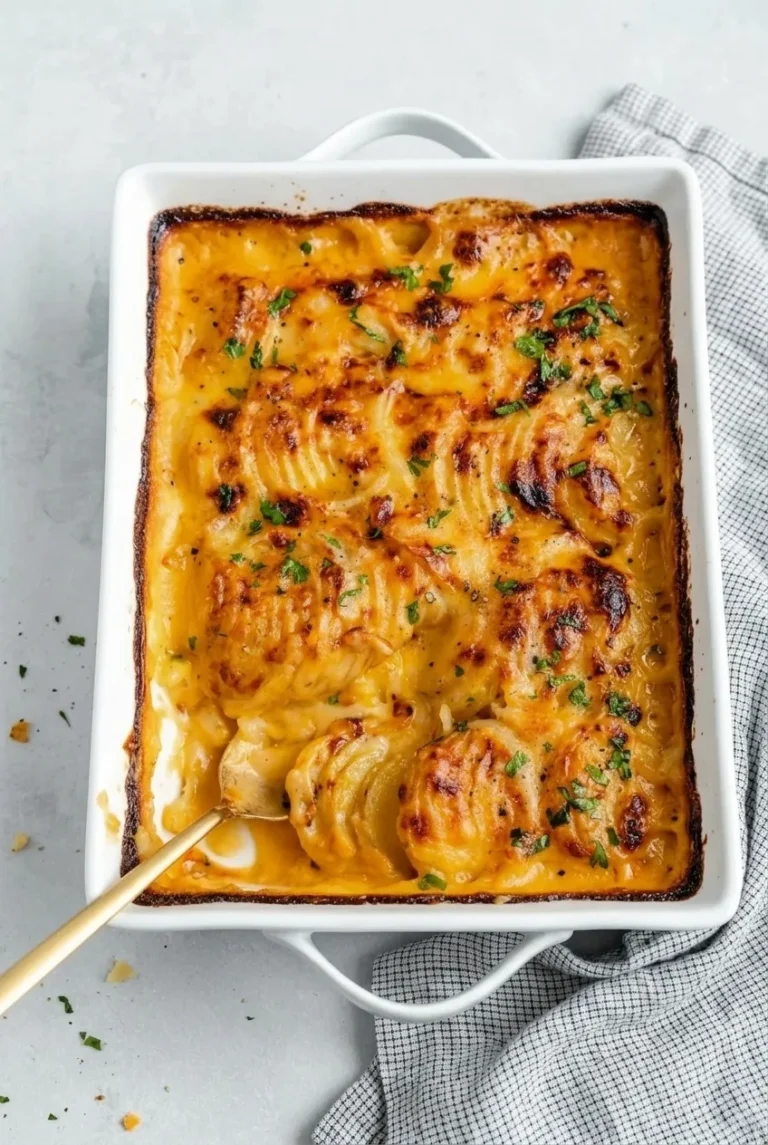
Full white casserole of cheesy au gratin potatoes on a pale countertop, topped with parsley
  1. Prepare the oven and dish: Preheat the oven to 375°F (190°C). Lightly butter a 9-by-13-inch baking dish, approximately 3 quarts. Set aside 1/2 cup of the Cheddar for the top.
  2. Slice and arrange the potatoes: Cut the potatoes into uniform slices about 1/8 inch thick. Use a mandoline with its hand guard or a sharp knife. Arrange the slices in compact, overlapping rows tilted slightly upright, leaving narrow gaps for the sauce. Do not compress them into tight vertical bundles.
  3. Make the roux: Melt the 3 tablespoons butter in a medium saucepan over medium-low heat. Add the garlic and cook briefly, until fragrant but not browned. Whisk in the flour and cook for about 1 minute, stirring, until it forms a smooth paste.
  4. Finish the sauce: Gradually whisk in the milk and cream. Increase the heat to medium if needed and bring to a gentle simmer. Whisk for about 7 to 10 minutes, until the sauce lightly coats a spoon. Remove from the heat and stir in 2 cups Cheddar, the salt, and pepper until smooth and pourable. Taste and adjust the salt; Cheddar varies in saltiness.
  5. Sauce the potatoes: Pour the sauce slowly between the rows and across their tops. It should reach into the gaps, though some potato ridges will remain visible. Cover the dish tightly with foil.
  6. Bake covered: Bake for 45 minutes. Carefully lift the foil away from you to avoid the steam.
  7. Brown and check: Scatter the reserved 1/2 cup Cheddar over the potatoes. Bake uncovered for about 30 to 45 minutes more, starting to check the center after roughly 25 minutes uncovered. A thin knife should slide easily through slices near the center, not just around the edges. The sauce should bubble, and the cheese should be golden with scattered deeper brown spots. If the top browns before the center is tender, tent loosely with foil and continue baking.
  8. Rest and serve: Let the gratin rest uncovered for 15 minutes so the sauce settles around the slices. Scatter the parsley over the top, then scoop portions from the dish.

How to Arrange and Sauce the Potato Rows

Lean the slices against one another rather than standing them straight up. The slight tilt keeps their edges visible while leaving paths for sauce to flow between them. Pour sauce over exposed tops as well as into the gaps so the upper slices do not dry out. A substantially smaller or deeper dish can crowd the rows and lengthen the bake.

How to Tell When the Gratin Is Done

Test several spots near the center with a thin knife. If it meets resistance, keep baking even if the cheese is browned; tent the dish loosely with foil if the top is getting too dark. Thicker slices, a deeper dish, or a casserole baked straight from the refrigerator may need more time. After the 15-minute rest, the sauce should cling to a lifted serving rather than run freely.

Potato and Cheese Choices

Scrubbed Yukon Golds can be left unpeeled or peeled for a smoother appearance. Russets also work, though their slices may soften more and hold less definition. Freshly shredded Cheddar melts smoothly into the sauce.

The flour thickens the listed milk-and-cream sauce; omitting it without changing the liquid will produce a different result. For a nuttier variation, replace up to 1 cup of the Cheddar in the sauce with shredded Gruyère, keeping Cheddar for the topping.

Serving and Leftovers

Serve with ham, roast chicken, turkey, or beef, alongside a green salad or roasted vegetables. For another creamy potato side, try creamy garlic mashed potatoes.

The casserole can be assembled ahead and refrigerated. If baking it cold, allow extra time and use center tenderness as the final check. Refrigerate leftovers covered or in an airtight container for up to 3 to 4 days. Reheat covered in a 350°F (175°C) oven until hot throughout, or microwave individual portions until heated through. Freezing is not recommended for best texture: the potatoes may become mealy and the dairy sauce may separate.

Nutrition

Approximate per serving (1/8 of the casserole): 405 calories, 15g protein, 23g fat, and 36g carbohydrates. Approximate per 100g of finished gratin: 155 calories, 6g protein, 9g fat, and 14g carbohydrates. Values are estimates; serving size, cheese brand, and moisture lost during baking will affect them.

Cheesy Au Gratin Potatoes

Yukon Gold potatoes bake in a creamy Cheddar sauce beneath a golden, browned cheese topping.
Course: Side Dish
Cuisine: American
Prep: 30 min
Cook: 90 min
Total: 135 min
Servings: 8 Calories: 405 kcal

Equipment

  • 9-by-13-inch baking dish
  • Mandoline or sharp knife
  • Medium saucepan
  • Whisk
  • Aluminum foil

Ingredients

For the potatoes and sauce

  • 3 pounds Yukon Gold potatoes, scrubbed (about 1,350 g)
  • 3 tablespoons unsalted butter (about 45 g), plus more for the dish
  • 2 cloves garlic, minced
  • 3 tablespoons all-purpose flour (about 25 g)
  • 2 cups whole milk (480 g)
  • 1/2 cup heavy cream (120 g)
  • 2 1/2 cups freshly shredded sharp Cheddar (about 280 g), divided
  • 1 teaspoon kosher salt, or to taste
  • 1/2 teaspoon freshly ground black pepper
  • 2 tablespoons chopped fresh flat-leaf parsley

Instructions

  1. Preheat the oven to 375°F (190°C). Lightly butter a 9-by-13-inch baking dish, about 3 quarts, and set aside 1/2 cup of the Cheddar for the topping.
  2. Slice the potatoes uniformly, about 1/8 inch thick. Arrange them in compact, overlapping rows, tilted slightly upright with narrow gaps between the slices.
  3. Melt the 3 tablespoons butter in a medium saucepan over medium-low heat. Add the garlic and cook briefly until fragrant but not browned.
  4. Whisk in the flour and cook for about 1 minute, stirring, until a smooth paste forms.
  5. Gradually whisk in the milk and cream. Bring to a gentle simmer and whisk for 7 to 10 minutes, until the sauce lightly coats a spoon.
  6. Remove the sauce from the heat. Stir in 2 cups of the Cheddar, the salt, and pepper until smooth and pourable. Taste and adjust the salt as needed.
  7. Pour the sauce between the potato rows and over their tops. Cover the dish tightly with foil.
  8. Bake covered for 45 minutes. Carefully lift the foil away from you to avoid the steam.
  9. Sprinkle the reserved 1/2 cup Cheddar over the potatoes. Bake uncovered for about 30 to 45 minutes, checking the center after about 25 minutes.
  10. Check the center with a thin knife; it should slide easily through the potato slices. If the top browns before the center is tender, tent loosely with foil and continue baking.
  11. Rest uncovered for 15 minutes. Scatter the parsley over the top and serve.

Tips

  • Keep potato slices a uniform 1/8 inch thick so they cook evenly.
  • Use a mandoline with its hand guard or slice carefully with a sharp knife.
  • Tilt the potato slices slightly and leave gaps so the sauce can flow between them.
  • Check tenderness in several spots near the center; a browned top does not guarantee the potatoes are done.
  • Use a 9-by-13-inch dish to avoid crowding the rows and extending the baking time.

Variations

  • Cheddar and Gruyère Potatoes: Replace up to 1 cup of the Cheddar in the sauce with shredded Gruyère, keeping Cheddar for the topping.

Notes

Refrigerate leftovers covered for 3 to 4 days. Reheat covered in a 350°F (175°C) oven until hot throughout, or microwave individual portions. Baking the casserole cold may require extra time. Freezing is not recommended because the potatoes may become mealy and the sauce may separate.

Nutrition

Calories: 405 kcal | Protein: 15 g | Fat: 23 g | Carbohydrates: 36 g