Author

Julia

Browsing

Ginger Garlic Chicken Ramen

This brothy ramen combines ginger-garlic chicken broth, curly noodles, shiitake mushrooms, and just-wilted spinach. Slices of browned chicken sit on top with a light soy glaze that gives them shine without sweetening the soup.

The chicken sears while the broth infuses. Cooking the noodles separately takes another pot, but lets you add them to the bowls at the last minute, while they are still springy.

Ingredients for Ginger Garlic Chicken Ramen
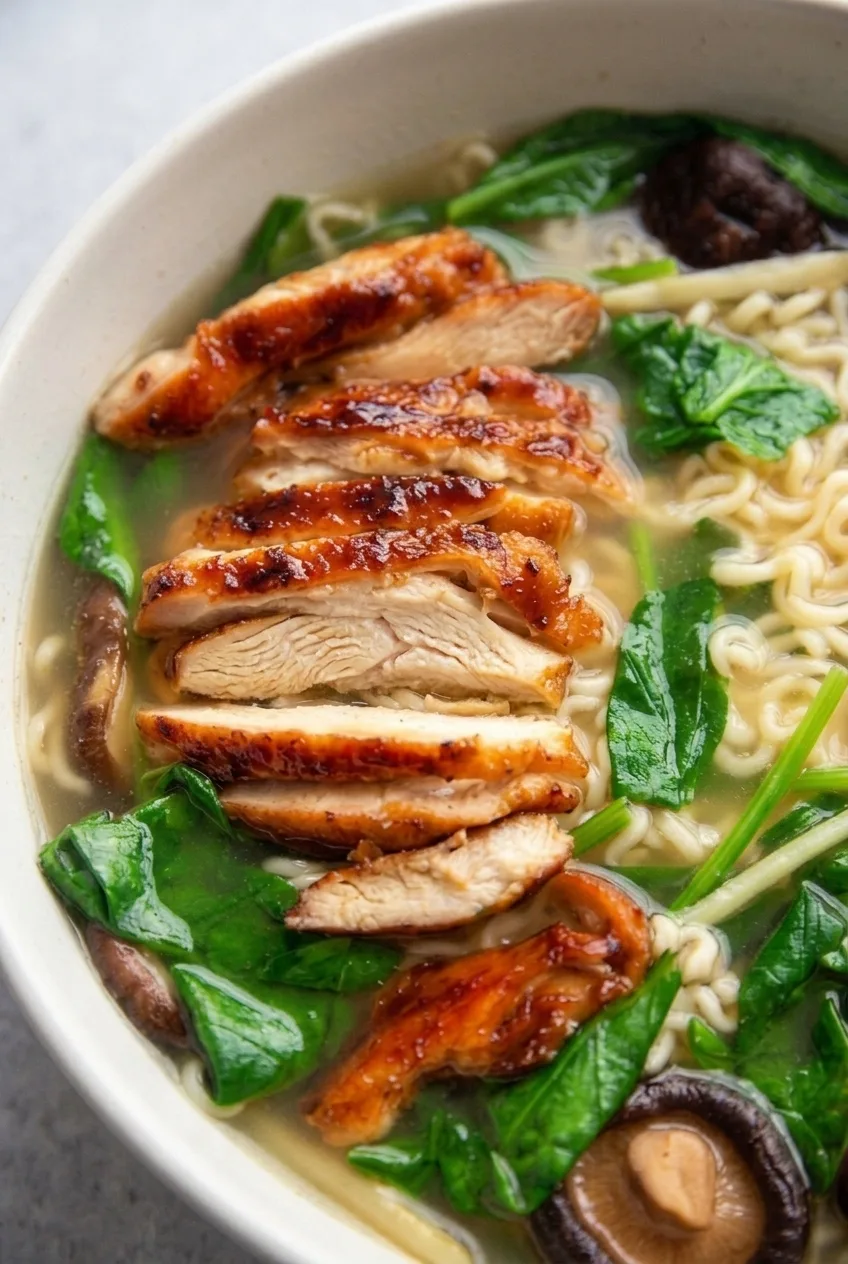
Close view of browned chicken slices, curly noodles, shiitake caps, and spinach in light broth

Serves: 4 bowls | Prep: 15 minutes | Cook: 25–30 minutes | Total: 40–45 minutes

  • 1¼ pounds boneless skinless chicken thighs (about 570g)
  • 3 packages plain instant ramen noodles, about 9 ounces total (255g); discard the seasoning packets
  • 6 cups reduced-sodium chicken broth
  • 2 tablespoons thinly sliced fresh ginger (about 12g)
  • 4 garlic cloves, lightly smashed
  • 3 tablespoons reduced-sodium soy sauce, divided
  • 6 ounces small shiitake mushrooms, stems removed (about 170g)
  • 4 ounces baby spinach, about 4 loosely packed cups (about 115g)
  • 1 tablespoon neutral cooking oil
  • 2 teaspoons packed brown sugar
  • 1 tablespoon water for the glaze, plus water for boiling the noodles

Optional for serving: Thinly sliced green onions, 1–2 tablespoons per bowl, or chili crisp, sriracha, or red pepper flakes to taste.

Tamari can replace the soy sauce; check its sodium level before adding any extra seasoning. Similarly sized cremini mushrooms can replace the shiitakes, though they will look different in the finished bowls.

How to Make Ginger Garlic Chicken Ramen
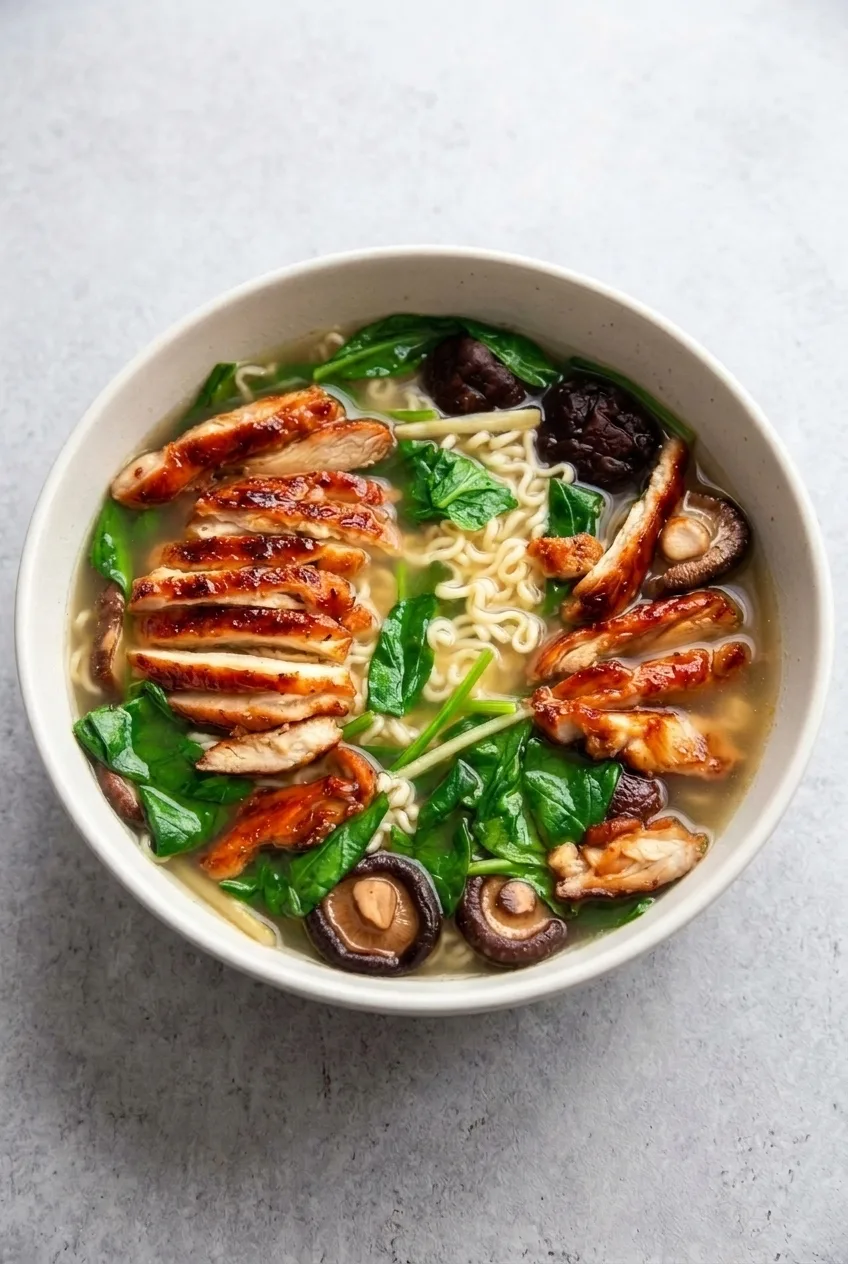
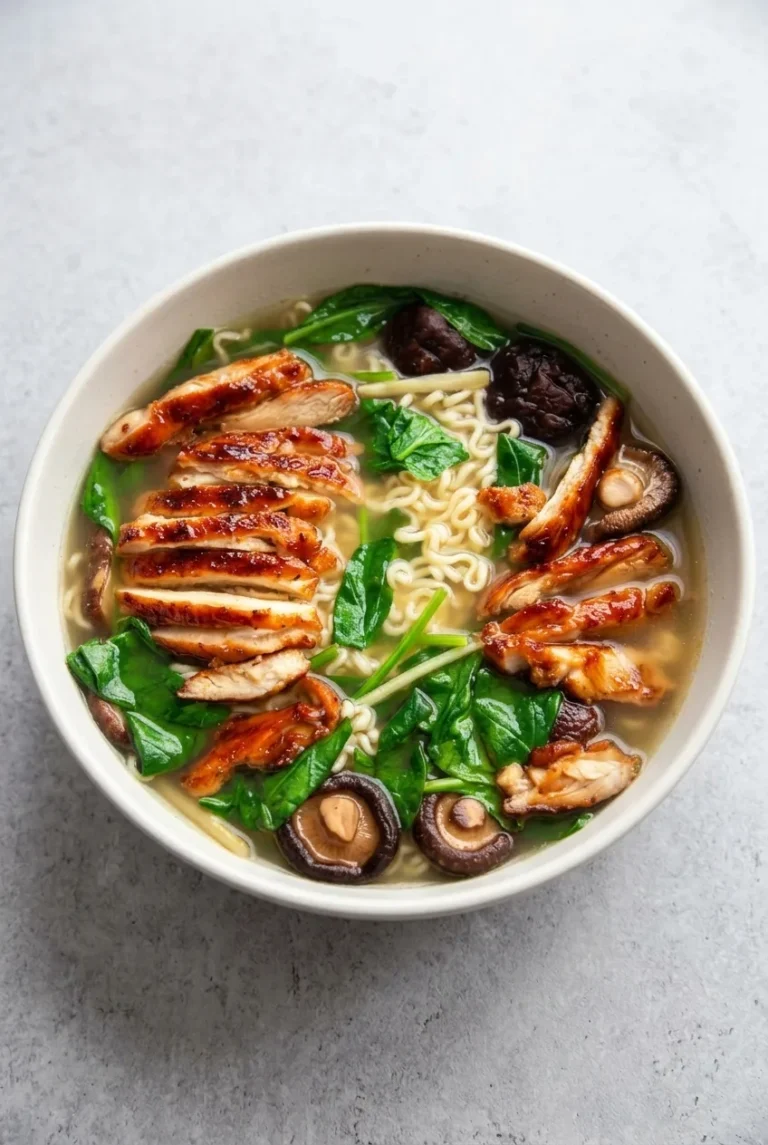
Complete bowl of ginger garlic chicken ramen on a pale stone surface
  1. Prepare the ingredients: Pat the chicken dry. Leave small shiitake caps whole and halve any large ones. Set aside 2 tablespoons of the soy sauce for the broth and 1 tablespoon for the glaze.
  2. Infuse the broth: Bring the chicken broth, ginger, garlic, and 2 tablespoons soy sauce to a gentle simmer in a medium soup pot. Partially cover, reduce the heat to medium-low, and simmer for 12–15 minutes. Remove the ginger and garlic with a strainer or slotted spoon.
  3. Sear the chicken while the broth infuses: Heat the oil in a 10- to 12-inch skillet over medium-high heat. Add the thighs in one layer; cook in batches if necessary so they brown rather than steam. Turn once and cook until browned and the thickest part of each thigh reaches 165°F (75°C), about 10–14 minutes total depending on thickness. Begin checking roughly 5 minutes after turning. Lower the heat if the outside browns before the center is cooked.
  4. Glaze and rest: Return any chicken cooked in batches to the skillet and reduce the heat to medium-low. Add the remaining 1 tablespoon soy sauce, brown sugar, and 1 tablespoon water. Turn the chicken for 1–2 minutes, just until lightly coated and glossy. Transfer to a board and rest for about 5 minutes before slicing.
  5. Finish the broth: Add the shiitake caps to the broth and simmer uncovered for 5–7 minutes, until tender. Stir in the spinach during the last minute, just until wilted. Taste before adding any more seasoning: the broth and soy sauce already contribute salt.
  6. Cook the noodles and serve: While the mushrooms simmer, boil the ramen in a separate pot of plain water for about 1 minute less than the package directs. Drain and divide among four deep bowls. Add the hot broth, mushrooms, and spinach, leaving some broth visible. Arrange overlapping chicken slices on top and serve immediately with optional garnishes at the table.

How to Keep Ramen Noodles from Getting Mushy

Ramen continues to soften once hot broth is poured over it. Stopping about a minute short of the package time leaves room for the noodles to finish in the bowl. If preparing bowls for later, keep the noodles out of the broth until serving.

If fewer pots matter more than controlling noodle texture, one-pot chicken ramen with broccoli uses a different method.

Getting Glossy Chicken Without Sweetening the Broth

The soy-and-brown-sugar glaze goes into the skillet after the chicken is cooked, not into the soup pot. Turn the chicken over reduced heat only until the glaze clings lightly; cooking it longer can leave the sugar scorched or sticky and dry. A short rest makes the thighs easier to slice for serving.

Make-Ahead and Leftover Bowls

The infused broth and cooked chicken can be made ahead. Refrigerate the chicken, broth with vegetables, and any cooked noodles separately in airtight containers within 2 hours; use refrigerated leftovers within 3–4 days.

Reheat the broth to a simmer and heat the chicken thoroughly before assembling bowls. Freshly boiled noodles give leftover bowls the best texture. Stored noodles can be reheated briefly, but they will be softer. Do not freeze assembled bowls; the noodles tend to soften. The broth and cooked chicken can be frozen separately if desired.

Nutrition

Approximate per bowl, based on 4 bowls: 570 calories, 38g protein, 24g fat, and 46g carbohydrates. Approximate per 100g of prepared ramen: 80 calories, 5g protein, 3g fat, and 6g carbohydrates. Values exclude optional toppings and vary with noodle and broth brands, cooking loss, and the amount of broth served in each bowl.

Ginger Garlic Chicken Ramen

Chicken thighs with a light soy glaze are served over ramen noodles in ginger-garlic broth with shiitake mushrooms and spinach.
Course: Soup
Cuisine: Global
Prep: 15 min
Cook: 30 min
Total: 45 min
Servings: 4 Calories: 570 kcal

Equipment

  • Medium soup pot
  • 10- to 12-inch skillet
  • Separate pot for noodles
  • Strainer or slotted spoon
  • Cutting board

Ingredients

For the Ramen

  • 1¼ pounds boneless skinless chicken thighs (about 570 g)
  • 3 packages plain instant ramen noodles, about 9 ounces total (255 g); discard seasoning packets
  • 6 cups reduced-sodium chicken broth
  • 2 tablespoons thinly sliced fresh ginger (about 12 g)
  • 4 garlic cloves, lightly smashed
  • 3 tablespoons reduced-sodium soy sauce, divided
  • 6 ounces small shiitake mushrooms, stems removed (about 170 g)
  • 4 ounces baby spinach, about 4 loosely packed cups (about 115 g)
  • 1 tablespoon neutral cooking oil
  • Water for boiling the noodles

For the Chicken Glaze

  • 2 teaspoons packed brown sugar
  • 1 tablespoon water

Optional for Serving

  • Thinly sliced green onions, 1–2 tablespoons per bowl
  • Chili crisp, sriracha, or red pepper flakes, to taste

Instructions

  1. Pat the chicken dry. Leave small shiitake caps whole and halve any large ones.
  2. Set aside 2 tablespoons soy sauce for the broth and 1 tablespoon for the glaze.
  3. Bring the chicken broth, ginger, garlic, and 2 tablespoons soy sauce to a gentle simmer in a medium soup pot. Partially cover and simmer over medium-low heat for 12–15 minutes.
  4. Remove the ginger and garlic with a strainer or slotted spoon.
  5. While the broth simmers, heat the oil in a 10- to 12-inch skillet over medium-high heat. Add the chicken in one layer, working in batches if needed.
  6. Turn the chicken once and cook until browned and the thickest part reaches 165°F (75°C), about 10–14 minutes total. Begin checking about 5 minutes after turning, and lower the heat if the outside browns too quickly.
  7. Return any chicken cooked in batches to the skillet and reduce the heat to medium-low. Add the remaining 1 tablespoon soy sauce, brown sugar, and 1 tablespoon water. Turn the chicken for 1–2 minutes, until lightly coated and glossy.
  8. Transfer the chicken to a cutting board and rest for about 5 minutes before slicing.
  9. Add the shiitake caps to the broth and simmer uncovered for 5–7 minutes, until tender. Stir in the spinach during the last minute, just until wilted. Taste before adding more seasoning.
  10. While the mushrooms simmer, boil the ramen in a separate pot of plain water for about 1 minute less than the package directs. Drain and divide among four deep bowls.
  11. Add the hot broth, mushrooms, and spinach to the bowls. Arrange sliced chicken on top and serve immediately with optional garnishes.

Tips

  • Cook the noodles about 1 minute less than the package directs so they finish softening in the hot broth.
  • Keep noodles separate from the broth if preparing bowls ahead.
  • Cook chicken in batches if needed so it browns instead of steaming.
  • Glaze the cooked chicken over reduced heat only until the glaze lightly clings.
  • Taste the broth before adding extra seasoning because the broth and soy sauce already provide salt.

Variations

  • Tamari Ramen: Replace the soy sauce with tamari and check its sodium level before adding extra seasoning.
  • Cremini Mushroom Ramen: Replace the shiitake mushrooms with similarly sized cremini mushrooms.
Notes

Refrigerate the chicken, broth with vegetables, and cooked noodles separately within 2 hours; use within 3–4 days. Reheat the broth to a simmer and heat the chicken thoroughly. The broth and chicken can be frozen separately; do not freeze assembled bowls.

Nutrition

Calories: 570 kcal | Protein: 38 g | Fat: 24 g | Carbohydrates: 46 g

Sweet and Spicy Ramen Noodles

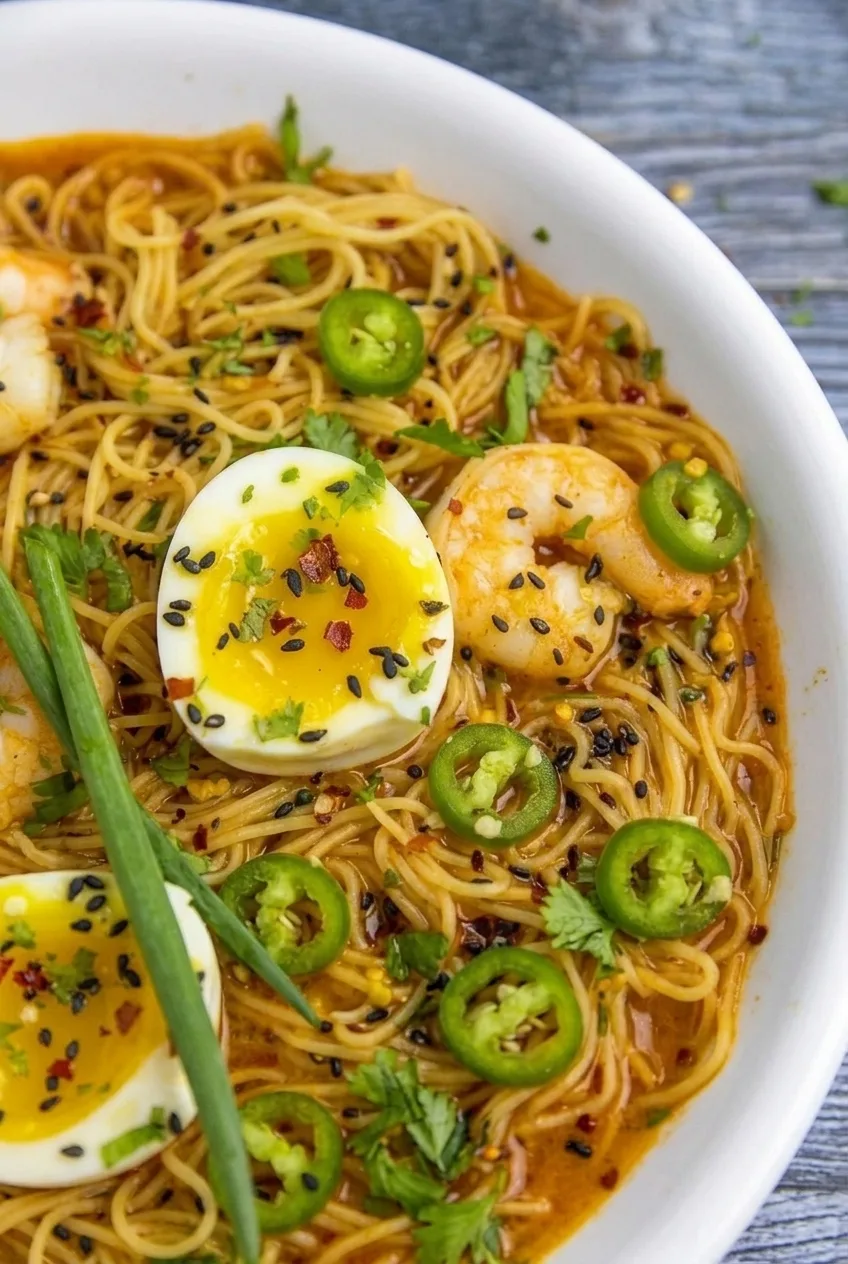
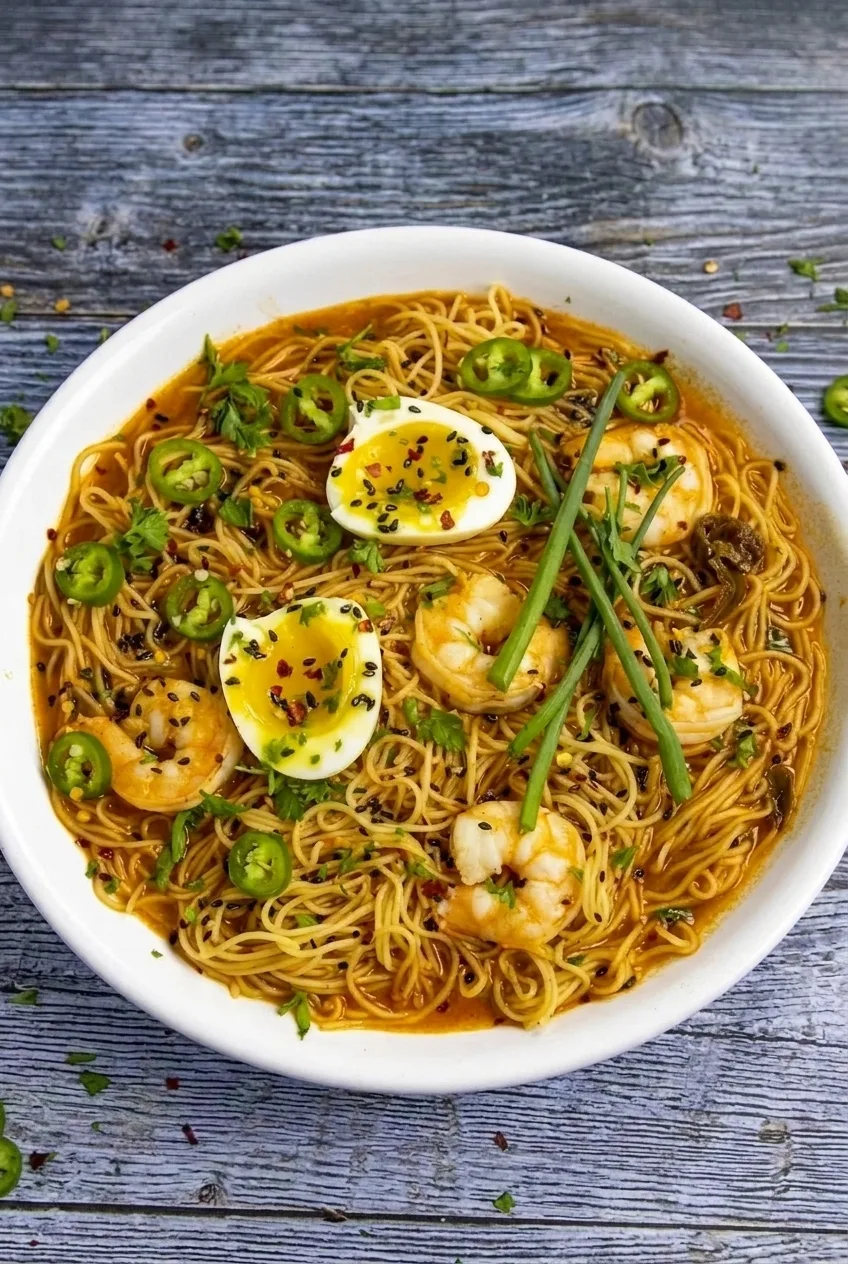
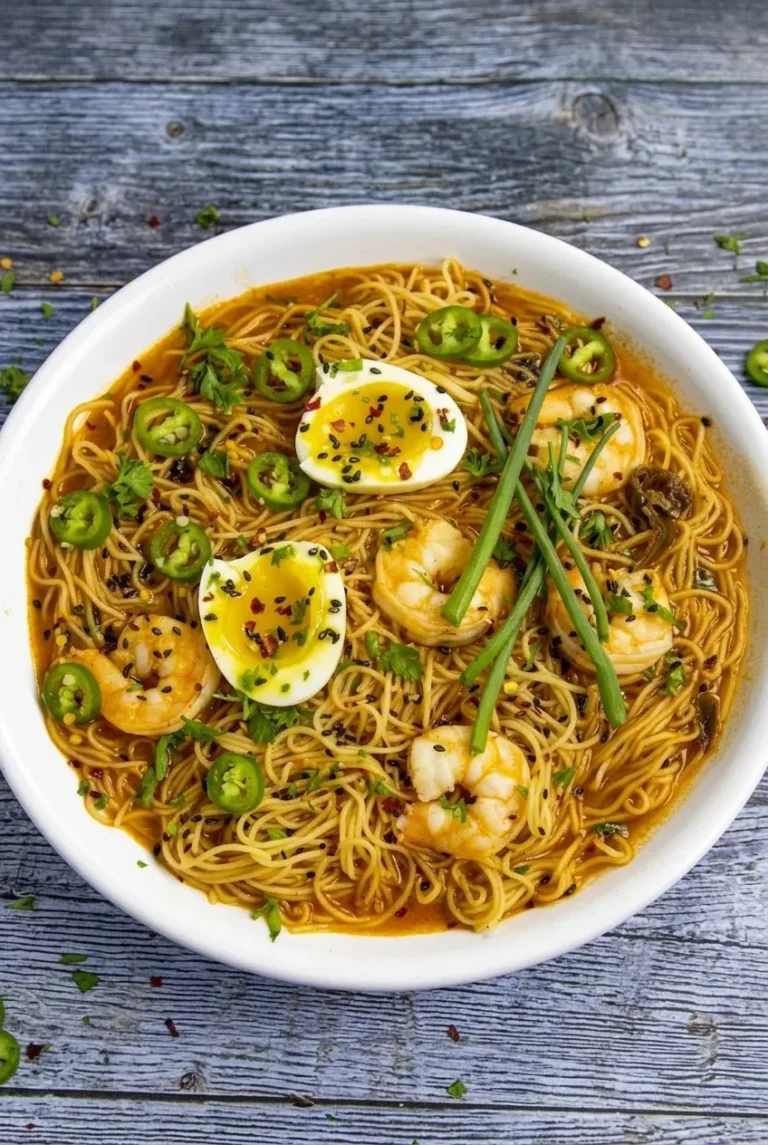
These ramen noodles sit in an orange-red, sweet-and-spicy broth rather than a dry sauce. Shrimp, halved jammy eggs, jalapeño rings, scallion greens, and black sesame make two generously filled bowls. Cook the eggs and noodles separately, then simmer the shrimp briefly in the broth. That order keeps the yolks soft, the noodles chewy, and the shrimp tender.

Ingredients for Sweet and Spicy Ramen Noodles

Close view of soft egg yolk, shrimp, and distinct ramen strands in glossy orange-red broth
  • 2 packages dried ramen noodles, about 6 ounces total (170g), seasoning packets discarded
  • 8 ounces peeled and deveined shrimp (225g)
  • 2 large eggs
  • 3 cups low-sodium chicken or vegetable broth
  • 1 teaspoon neutral oil
  • 3 garlic cloves, minced
  • 1 tablespoon gochujang
  • 2 tablespoons low-sodium soy sauce
  • 1 tablespoon packed brown sugar
  • 1 teaspoon rice vinegar
  • 1 small jalapeño, thinly sliced
  • 2 scallions, greens cut into long pieces
  • 1 teaspoon black sesame seeds

How to Make Sweet and Spicy Ramen Noodles

Complete bowl of shrimp and jammy egg ramen on a gray wooden table
  1. Boil the eggs: Bring a saucepan of water to a boil. Gently lower in the eggs and cook for about 7 minutes, until the whites are set and the yolks are still soft. Transfer to cold water to stop the cooking. Peel and halve once cool enough to handle.
  2. Mix the seasonings: Stir the gochujang, soy sauce, brown sugar, and rice vinegar together in a small bowl until no large lumps of chile paste remain.
  3. Make the broth: Heat the oil in a 3- to 4-quart saucepan over medium heat. Stir in the garlic briefly, just until fragrant; do not let it brown. Add the broth and seasoning mixture, stirring until the paste disperses. Bring to a boil, then simmer uncovered for several minutes. Taste before adding the shrimp. Add a little brown sugar or gochujang if needed, or a little water if the broth tastes too salty or intense.
  4. Cook the noodles: Bring fresh water to a boil in the egg saucepan. Cook the ramen according to its package, checking before the full suggested time. Drain when the strands have loosened but still have slight resistance when bitten. Divide between two wide bowls.
  5. Simmer the shrimp: Add the shrimp to the gently simmering broth. Turn as needed and cook for about 2 to 4 minutes, checking after 2 minutes. The shrimp should be opaque and firm, with no translucent centers. Avoid a vigorous simmer, which can make them tough. If using a thermometer, cook to 145°F (65°C).
  6. Fill the bowls: Ladle the broth around and between the noodles, leaving liquid visible and the noodles prominent. Arrange the shrimp and egg halves on top, then add the jalapeño rings, long scallion greens, and black sesame seeds. Serve immediately.

How to Keep the Noodles Chewy

Ramen continues to soften in hot broth. Stop cooking it just shy of tender and assemble the bowls only when ready to eat. Fresh ramen also works, but follow its package instructions rather than the dried noodles’ cooking time.

Adjusting the Sweetness and Heat

Gochujang and broth vary in heat and saltiness, so taste the broth before the shrimp goes in. Add more gochujang a little at a time for extra heat, or offer chile flakes at the table. Use fewer jalapeño slices in a milder bowl while keeping a few rings on top.

For another brothy bowl, try spicy ramen noodles with jammy eggs and miso broth. For a different chile-forward noodle dish, see chili oil ramen noodles with an egg.

Make-Ahead and Leftovers

The eggs and broth can be prepared ahead, but cook the noodles close to serving. Refrigerate leftovers promptly in airtight containers for up to 3 days. When practical, keep the noodles apart from the broth and refrigerate the eggs separately.

Reheat the broth and shrimp gently until heated through. Add the noodles just long enough to warm them, then top with the eggs. Prolonged simmering will soften the noodles and toughen the shrimp.

Nutrition

Approximate nutrition per generous bowl (1 of 2 servings): 680 calories, 42g protein, 25g fat, and 73g carbohydrates. Approximate values per 100g of prepared ramen: 95 calories, 6g protein, 3g fat, and 10g carbohydrates. Values vary with the ramen, broth, and amount of liquid in each bowl.

Sweet and Spicy Ramen Noodles

Ramen noodles are served in a sweet-and-spicy broth with shrimp, soft-boiled eggs, jalapeño, scallions, and black sesame.
Course: Soup
Cuisine: Asian
Prep: 10 min
Cook: 20 min
Total: 30 min
Servings: 2 Calories: 680 kcal

Equipment

  • 3- to 4-quart saucepan
  • Small bowl
  • Colander
  • Knife and cutting board

Ingredients

  • 2 packages dried ramen noodles, about 6 ounces total (170g), seasoning packets discarded
  • 8 ounces peeled and deveined shrimp (225g)
  • 2 large eggs
  • 3 cups low-sodium chicken or vegetable broth
  • 1 teaspoon neutral oil
  • 3 garlic cloves, minced
  • 1 tablespoon gochujang
  • 2 tablespoons low-sodium soy sauce
  • 1 tablespoon packed brown sugar
  • 1 teaspoon rice vinegar
  • 1 small jalapeño, thinly sliced
  • 2 scallions, greens cut into long pieces
  • 1 teaspoon black sesame seeds

Instructions

  1. Bring a saucepan of water to a boil. Gently lower in the eggs and cook for about 7 minutes, until the whites are set and the yolks are still soft.
  2. Transfer the eggs to cold water to stop the cooking. Peel and halve once cool enough to handle.
  3. In a small bowl, stir together the gochujang, soy sauce, brown sugar, and rice vinegar until the chile paste is mostly smooth.
  4. Heat the oil in a 3- to 4-quart saucepan over medium heat. Stir in the garlic just until fragrant, without letting it brown.
  5. Add the broth and seasoning mixture, stirring until the paste disperses. Bring to a boil, then simmer uncovered for several minutes. Taste and adjust with a little brown sugar, gochujang, or water as needed.
  6. Bring fresh water to a boil in the egg saucepan. Cook the ramen according to the package, checking before the full suggested time. Drain when the noodles have loosened but still have slight resistance, then divide between two wide bowls.
  7. Add the shrimp to the gently simmering broth. Turn as needed and cook for about 2 to 4 minutes, checking after 2 minutes, until opaque and firm with no translucent centers. If using a thermometer, cook to 145°F (65°C).
  8. Ladle the broth around and between the noodles. Arrange the shrimp and egg halves on top, then add the jalapeño, scallion greens, and black sesame seeds. Serve immediately.

Tips

  • Stop cooking the noodles just shy of tender; they will continue to soften in the hot broth.
  • Taste the broth before adding the shrimp because gochujang and broth vary in heat and saltiness.
  • Keep the broth at a gentle simmer while cooking the shrimp to help prevent them from becoming tough.
  • Assemble the bowls just before serving to keep the noodles chewy.

Variations

  • Milder Ramen: Use fewer jalapeño slices and add only a little gochujang to the broth.
  • Extra-Spicy Ramen: Add more gochujang a little at a time or offer chile flakes at the table.
  • Fresh Ramen: Use fresh ramen and follow its package cooking instructions.

Notes

Prepare the eggs and broth ahead, but cook the noodles close to serving. Refrigerate leftovers in airtight containers for up to 3 days; keep noodles and eggs separate when practical. Reheat the broth and shrimp gently, then warm the noodles briefly.

Nutrition

Calories: 680 kcal | Protein: 42 g | Fat: 25 g | Carbohydrates: 73 g | Per 100g Calories: 95 kcal | Per 100g Protein: 6 g | Per 100g Fat: 3 g | Per 100g Carbohydrates: 10 g

Ramen with Crispy Chicken

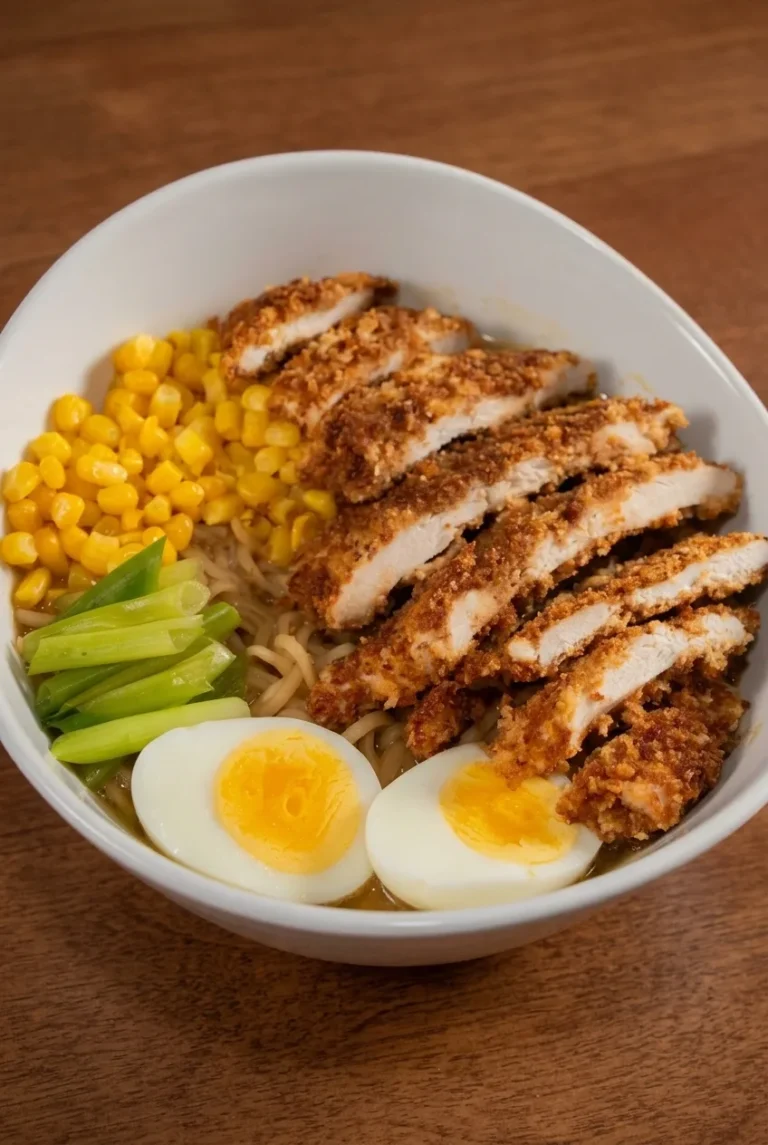
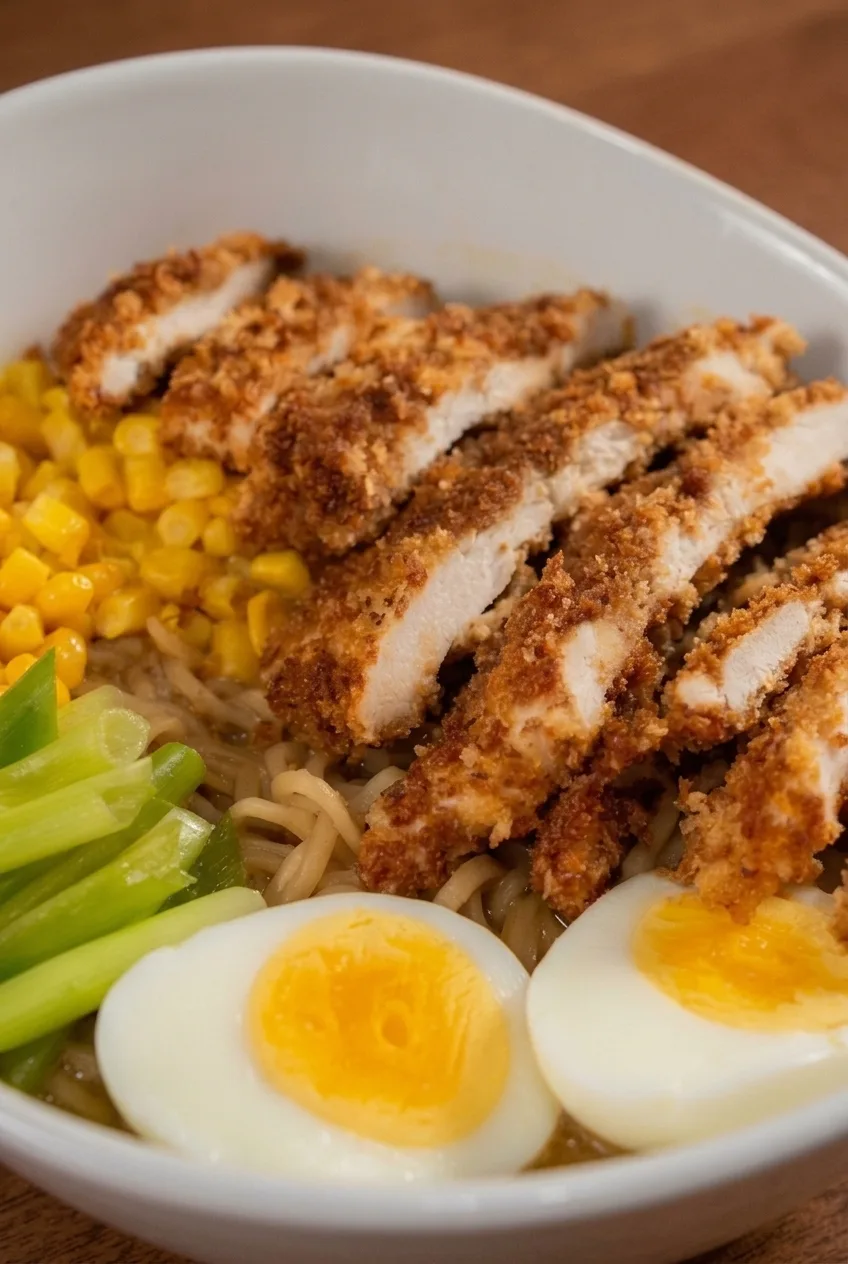
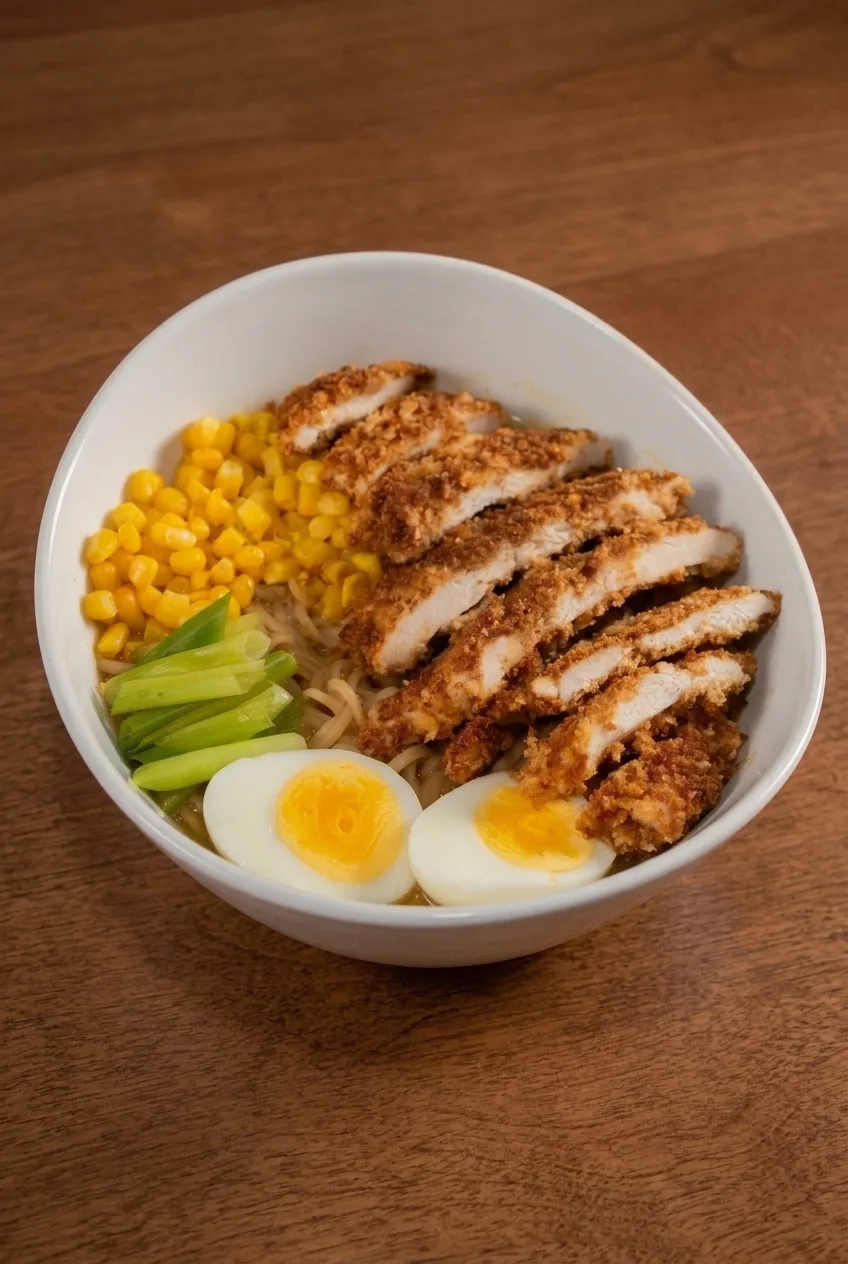
Golden panko-crusted chicken sits over noodles in a light soy-seasoned broth, with corn, green onions, and a halved boiled egg in each bowl. The chicken is pan-fried separately, then sliced and added at the last moment so most of its crust stays above the liquid.

Cook the noodles separately, too. They can go straight from the pot into the bowls without waiting in hot broth, where they would continue to soften.

Ingredients for Ramen with Crispy Chicken

Close view of golden panko crust and white chicken interior above ramen noodles

Makes 2 generous bowls. Prep time: 15–20 minutes. Cook time: 20–25 minutes with overlapping tasks. Total time: about 40 minutes.

  • 2 small boneless, skinless chicken breasts, about 12 oz total (340g)
  • 1/4 teaspoon salt, plus more to taste
  • 1/4 teaspoon black pepper
  • 1/4 cup all-purpose flour (30g)
  • 3 large eggs: 1 for breading and 2 for serving
  • 3/4 cup panko breadcrumbs (45g)
  • About 1/3 cup neutral cooking oil for frying, plus 1 teaspoon for the broth
  • 2 garlic cloves, minced
  • 1 teaspoon grated fresh ginger
  • 3 cups low-sodium chicken broth
  • 1 tablespoon low-sodium soy sauce, plus more to taste
  • 2 portions plain ramen noodles, about 3 oz each (170g total); discard the seasoning packets if using instant ramen
  • 3/4 cup corn kernels, thawed if frozen (120g)
  • 3 green onions, cut on a bias into short, substantial pieces

Optional for serving: a few drops of chili oil per bowl.

How to Make Ramen with Crispy Chicken

Complete bowl of crispy chicken ramen on a wooden table, with corn, green onions, and egg visible
  1. Boil the topping eggs: Lower 2 eggs into boiling water and cook for about 8–9 minutes, until the whites are set and the yolks are golden and mostly set. Cool briefly in cold water, then peel and halve. Reserve the third egg for breading.
  2. Bread the chicken: Pound each breast to an even 1/2-inch thickness and season both sides with the salt and pepper. Put the flour, the remaining egg (beaten), and the panko in three separate shallow dishes. Coat each cutlet in flour, then egg, then panko, pressing gently to help the crumbs adhere.
  3. Fry the cutlets: Heat about 1/3 cup oil in a 10- to 12-inch skillet over medium heat until shimmering. Fry uncovered for approximately 3–4 minutes per side, turning when the underside is golden. Cook one at a time if both will not fit without crowding, adding a little more oil if needed. Start checking the browning near 3 minutes per side. The crust should be deeply golden, and the thickest part of the chicken must reach 165°F (75°C). If the crumbs darken before the center is done, reduce the heat. Transfer to a wire rack and rest for about 3 minutes.
  4. Simmer the broth: While the chicken cooks, heat 1 teaspoon oil in a saucepan over medium heat. Cook the garlic and ginger briefly until fragrant, without browning. Add the broth and soy sauce, bring to a simmer, then reduce the heat to low. Simmer gently for 8–10 minutes, stirring occasionally; partially cover if needed to limit reduction. Taste before adding more soy sauce or salt.
  5. Cook the noodles and warm the corn: Near serving time, cook the noodles in a separate pot of water according to package directions. Check at the early end of the suggested time and drain as soon as they are tender. Warm the corn in the hot broth for 1–2 minutes, then lift it out to use as a separate topping.
  6. Assemble the bowls: Slice the chicken into thick strips. Divide the noodles between two wide bowls and ladle the broth around them, leaving some noodles visible. Arrange the corn, green onions, and two egg halves in distinct areas of each bowl. Add the chicken last, laying the slices in overlapping rows with most of the crust above the broth. Serve immediately.

How to Keep the Chicken Crisp

Even, thin cutlets can cook through before the panko gets too dark. Leave space around them in the skillet so the coating browns rather than steams, and use a rack after frying so steam does not collect underneath. Keep the chicken whole until just before assembly. The crust will soften where it touches broth, even when the slices are added last.

Getting the Timing and Broth Level Right

Boil the eggs first; they can wait while the cutlets and broth cook. Hold the broth at a gentle simmer and save the noodles for the end. Noodle packages differ, and cutlet thickness and skillet heat affect frying time, so use the package directions and the chicken’s golden crust and 165°F reading rather than the clock alone.

Three cups of broth gives these generously topped bowls a modest broth level, though depth depends on the bowls. Pour around the noodles, not over the chicken, and offer any extra hot broth separately.

For a version with fewer separate cooking steps, try one-pot chicken ramen with broccoli.

Storing and Reheating Leftovers

Refrigerate leftover chicken, broth, and noodles in separate covered containers when possible; refrigerate leftover corn and egg as well. Prompt refrigeration and use within 3–4 days are general food-safety guidance, not a promise that the breading will stay crisp.

Reheat the broth until steaming hot and heat the chicken separately until hot throughout, then assemble the bowl. Broth and eggs can be prepared ahead, but cook the noodles near serving. Assembled leftovers will be softer, and freezing assembled ramen is not recommended for its noodle and breading texture.

Nutrition

Approximate nutrition per generous bowl: 1,000 calories, 65g protein, 34g fat, and 105g carbohydrates. Approximate values per 100g of prepared ramen: 100 calories, 7g protein, 3g fat, and 11g carbohydrates. Values vary with the noodles, broth, portion sizes, and how much frying oil the chicken absorbs; the estimate does not count all the oil left in the skillet.

Ramen with Crispy Chicken

Panko-crusted chicken is served over ramen noodles in a light soy-seasoned broth with corn, green onions, and boiled egg.
Course: Soup
Cuisine: Japanese
Prep: 20 min
Cook: 25 min
Total: 40 min
Servings: 2 Calories: 1,000 kcal

Equipment

  • Saucepan
  • Skillet
  • Pot
  • Shallow dishes
  • Wire rack
  • Meat thermometer

Ingredients

For the Chicken

  • 2 small boneless, skinless chicken breasts, about 12 oz (340 g) total
  • 1/4 teaspoon salt, plus more to taste
  • 1/4 teaspoon black pepper
  • 1/4 cup all-purpose flour (30 g)
  • 1 large egg, beaten
  • 3/4 cup panko breadcrumbs (45 g)
  • About 1/3 cup neutral cooking oil, plus more if needed

For the Broth and Noodles

  • 1 teaspoon neutral cooking oil
  • 2 garlic cloves, minced
  • 1 teaspoon grated fresh ginger
  • 3 cups low-sodium chicken broth
  • 1 tablespoon low-sodium soy sauce, plus more to taste
  • 2 portions plain ramen noodles, about 3 oz each (170 g total); discard seasoning packets if using instant ramen
  • 3/4 cup corn kernels (120 g), thawed if frozen

For Serving

  • 2 large eggs
  • 3 green onions, cut on a bias into short pieces
  • Chili oil, optional

Instructions

  1. Bring a pot of water to a boil. Lower in 2 eggs and cook for 8–9 minutes, until the whites are set and the yolks are mostly set.
  2. Cool the eggs briefly in cold water, peel, and halve. Set aside the remaining egg for breading.
  3. Pound the chicken breasts to an even 1/2-inch thickness and season both sides with salt and pepper.
  4. Set the flour, beaten remaining egg, and panko in separate shallow dishes. Coat each chicken breast in flour, then egg, then panko, pressing gently so the crumbs adhere.
  5. Heat about 1/3 cup oil in a 10- to 12-inch skillet over medium heat until shimmering. Fry the chicken uncovered for about 3–4 minutes per side, cooking one piece at a time if needed.
  6. Check the chicken’s browning starting at about 3 minutes per side. Cook until deeply golden and the thickest part reaches 165°F (75°C). Reduce the heat if the crumbs darken before the chicken is cooked through.
  7. Transfer the chicken to a wire rack and rest for about 3 minutes.
  8. While the chicken cooks, heat 1 teaspoon oil in a saucepan over medium heat. Briefly cook the garlic and ginger until fragrant, without browning.
  9. Add the chicken broth and soy sauce. Bring to a simmer, reduce the heat to low, and simmer gently for 8–10 minutes, partially covering if needed. Taste and adjust with more soy sauce or salt.
  10. Near serving time, cook the noodles in a separate pot according to package directions. Check them at the early end of the suggested time and drain as soon as tender.
  11. Warm the corn in the hot broth for 1–2 minutes, then lift it out and set aside as a topping.
  12. Slice the chicken into thick strips. Divide the noodles between two wide bowls and ladle broth around them, leaving some noodles visible.
  13. Arrange the corn, green onions, and two egg halves in each bowl. Add the chicken last, keeping most of the crust above the broth. Serve immediately.

Tips

  • Leave space around the chicken in the skillet so the coating browns instead of steaming.
  • Rest fried chicken on a wire rack to prevent steam from collecting underneath.
  • Keep the chicken whole until just before assembly to help preserve its crust.
  • Cook noodles separately and add them to the bowls just before serving to prevent them from softening in the broth.
  • Pour broth around the noodles rather than over the chicken, and serve any extra broth separately.

Notes

Refrigerate leftovers in separate covered containers and use within 3–4 days. Reheat broth until steaming hot and heat chicken separately until hot throughout. Approximate nutrition per 100 g: 100 calories, 7 g protein, 3 g fat, and 11 g carbohydrates.

Nutrition

Calories: 1,000 kcal | Protein: 65 g | Fat: 34 g | Carbohydrates: 105 g

Cheesy Ramen Noodles

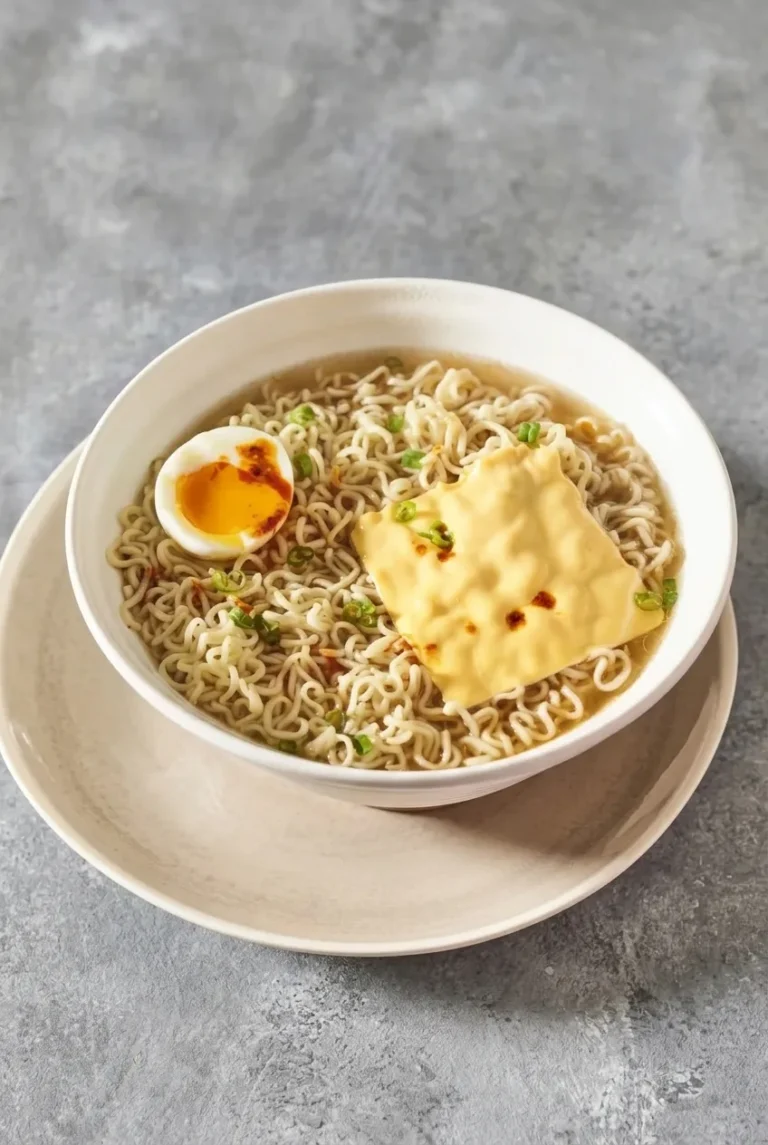
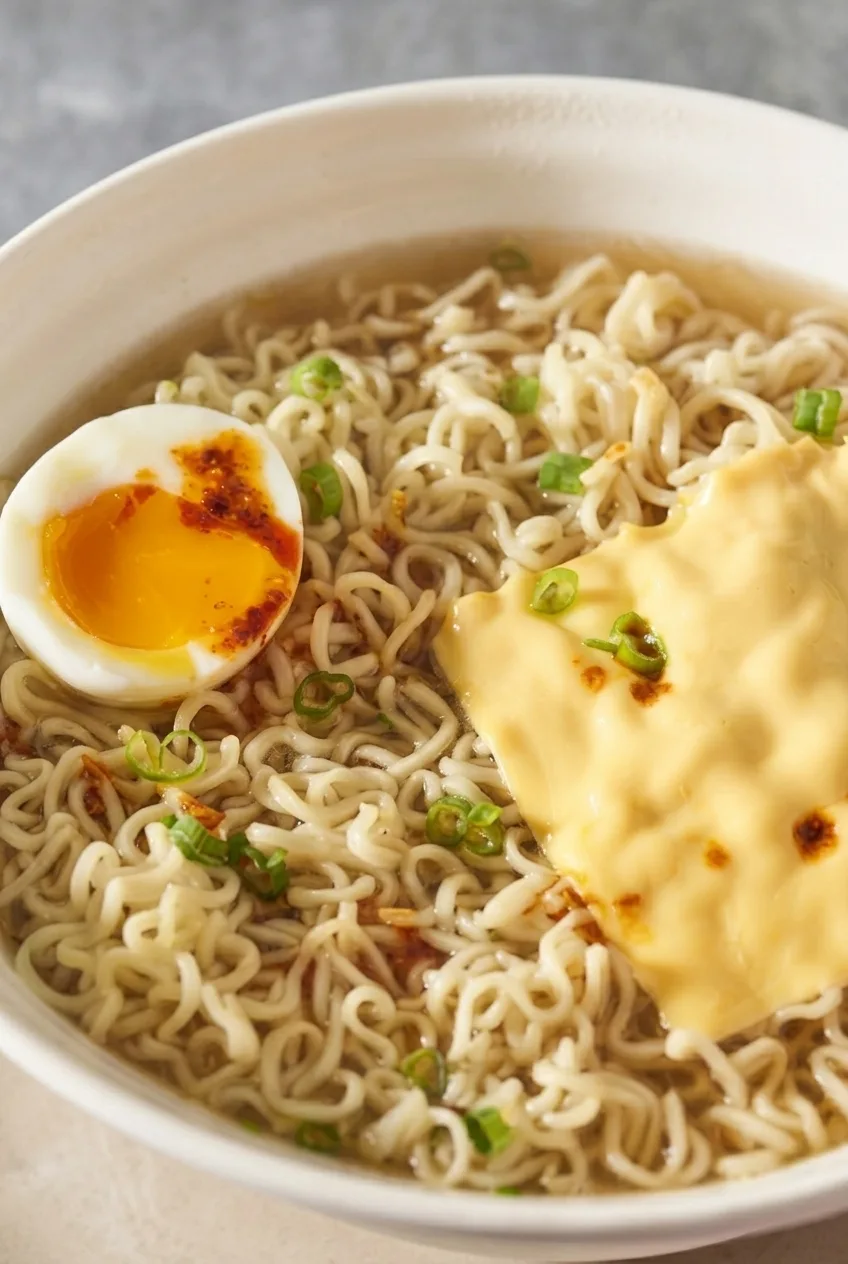
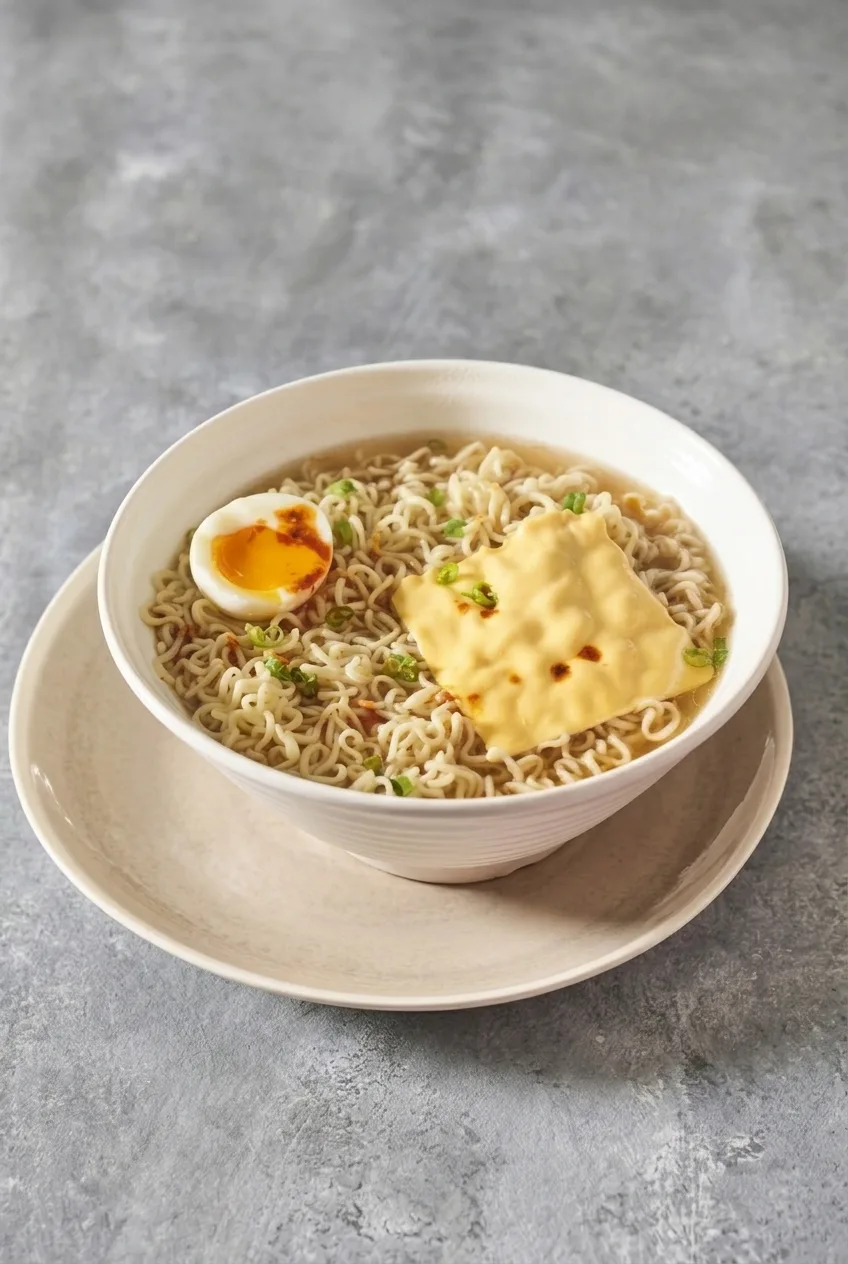
These ramen noodles stay brothy, with a softened cheese slice draped over each bowl rather than stirred into a sauce. Add the cheese as soon as the hot noodles are portioned so it melts while the broth remains visible. A jammy egg half, sliced green onion, and a little chili oil finish each bowl.

Ramen brands differ in cooking time and seasoning strength. Follow the noodle package for tenderness, and start with one seasoning packet for the two-package batch before adding more to taste.

Ingredients for Cheesy Ramen Noodles

Close view of softened cheese over curly ramen noodles beside a jammy egg and visible broth
  • 2 standard packages instant ramen, with seasoning packets (about 170g total)
  • About 4 cups water for the ramen, plus water to boil the egg
  • 2 American-style cheese slices (about 40g total)
  • 1 large egg
  • 1 green onion, thinly sliced
  • About 1 teaspoon chili crisp or chili oil, for finishing

Yield: 2 bowls. Time: About 5 minutes prep and 12–15 minutes cooking, or 17–20 minutes total. A prepared jammy egg makes it quicker.

How to Make Cheesy Ramen Noodles

Full bowl of cheesy ramen noodles in broth, with egg, green onion, and chili oil on a gray tabletop
  1. Boil the egg: Bring water to a boil in a medium saucepan. Gently lower in the egg and maintain a steady boil for about 7 minutes. Transfer it to cold water to cool briefly, then peel and halve it. The white should be set and the yolk soft.
  2. Cook and season the ramen: Bring about 4 cups fresh water to a boil in the saucepan, or use the package liquid directions if they differ. Add both noodle bundles and one seasoning packet. Cook uncovered according to the package directions, gently loosening the noodles as they cook. Start checking near the early end of the cooking range; the noodles should be separated and tender, not mushy. Taste the broth and add some of the second packet only if needed.
  3. Melt the cheese: Divide the noodles and broth between two wide bowls, leaving broth visible around the noodles. Lay one cheese slice over an exposed mound of noodles in each bowl. Let it soften for 30–60 seconds, until the edges droop but the slice is still recognizable. If an edge stays stiff, spoon a little hot broth around it rather than stirring the cheese into the broth.
  4. Finish and serve: Place one egg half beside the cheese in each bowl. Scatter the green onion over the top and add a few small dabs of chili crisp or its oil. Serve immediately, before the noodles absorb too much broth.

Why Add the Cheese in the Bowl?

The heat from freshly served ramen softens the slice without turning the broth into a cheese sauce. American-style cheese melts smoothly while remaining visible on top. Another mild melting cheese slice can work, but it may soften or hold its shape differently.

Seasoning the Broth

Starting with one packet for both ramen packages leaves room to adjust. Seasoning packets vary, and the cheese and chili crisp add salt too. Taste the broth before adding any of the second packet, then add it a little at a time if needed.

Leftovers and Reheating

Cheesy ramen is best eaten right away. Refrigerate leftovers promptly in a covered container; the noodles will continue absorbing broth. Reheat until hot in a saucepan or microwave, adding a splash of water if needed. Expect softer noodles.

The egg can be boiled ahead and chilled, leaving only the ramen to cook before serving. For a bowl with a bolder chili finish, try Chili Oil Ramen Noodles with a Sunny-Side-Up Egg.

Nutrition

Approximate per bowl, based on 2 servings: 500 calories, 14g protein, 24g fat, and 58g carbohydrates. Approximate per 100g of finished ramen, including broth: 85 calories, 2g protein, 4g fat, and 10g carbohydrates. Values vary with the ramen brand, seasoning used, and amount of broth in each bowl.

Cheesy Ramen Noodles

Brothy instant ramen is topped with softened American cheese, jammy egg, green onion, and chili oil.
Course: Main Course
Cuisine: Japanese
Prep: 5 min
Cook: 15 min
Total: 20 min
Servings: 2 Calories: 500 kcal

Equipment

  • Medium saucepan
  • Two wide bowls

Ingredients

For the ramen

  • 2 standard packages instant ramen with seasoning packets (about 170 g total)
  • About 4 cups water for the ramen, plus water to boil the egg
  • 2 American-style cheese slices (about 40 g total)
  • 1 large egg
  • 1 green onion, thinly sliced
  • About 1 teaspoon chili crisp or chili oil

Instructions

  1. Bring water to a boil in a medium saucepan.
  2. Gently lower in the egg and boil steadily for about 7 minutes. Transfer it to cold water to cool briefly, then peel and halve it.
  3. Bring about 4 cups of fresh water to a boil in the saucepan, or follow the package liquid directions if they differ.
  4. Add both noodle bundles and one seasoning packet. Cook uncovered according to the package directions, gently loosening the noodles as they cook.
  5. Taste the broth and add some of the second seasoning packet a little at a time if needed.
  6. Divide the noodles and broth between two wide bowls, keeping broth visible around the noodles.
  7. Place one cheese slice over the noodles in each bowl. Let it soften for 30–60 seconds, until the edges droop but the slice remains recognizable. Spoon hot broth around any stiff edges rather than stirring the cheese into the broth.
  8. Add one egg half to each bowl. Top with green onion and a few small dabs of chili crisp or chili oil, then serve immediately.

Tips

  • Follow the noodle package directions and check for tenderness near the early end of the cooking range.
  • Start with one seasoning packet for both packages; the cheese and chili crisp also add salt.
  • Add the cheese after portioning so it softens on top while the broth remains visible.
  • Use a prepared jammy egg to shorten the time before serving.

Variations

  • Alternative Melting Cheese: Use another mild melting cheese slice in place of American-style cheese; it may soften or hold its shape differently.

Notes

Best eaten right away. Refrigerate leftovers promptly in a covered container and reheat until hot with a splash of water if needed; the noodles will be softer.

Nutrition

Calories: 500 kcal | Protein: 14 g | Fat: 24 g | Carbohydrates: 58 g

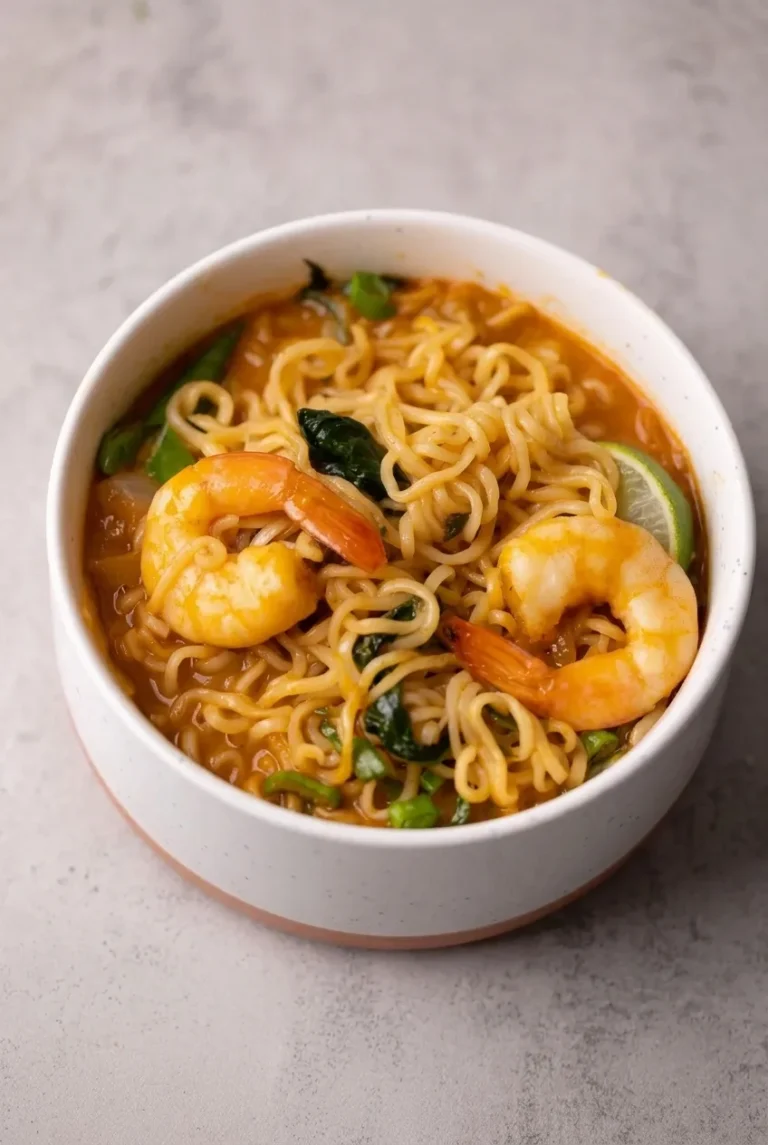
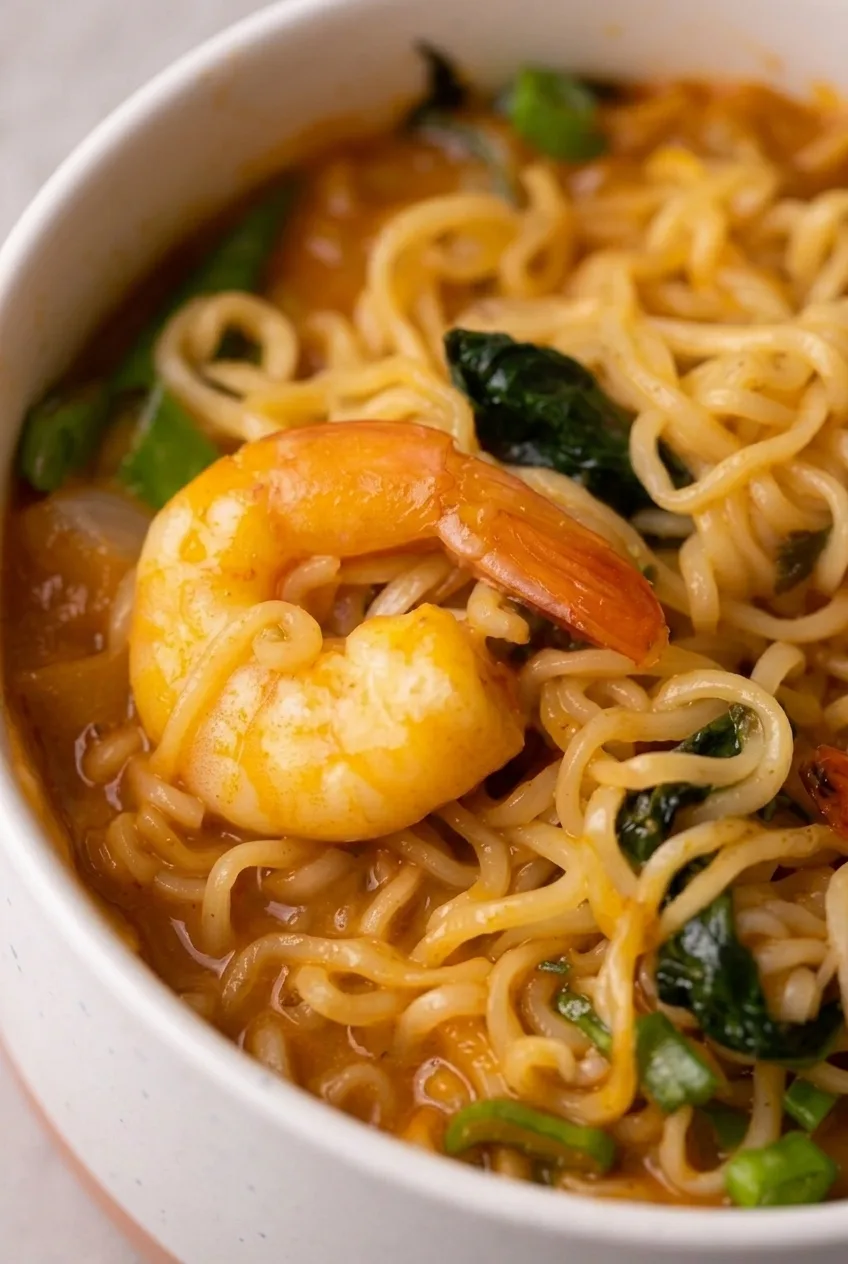
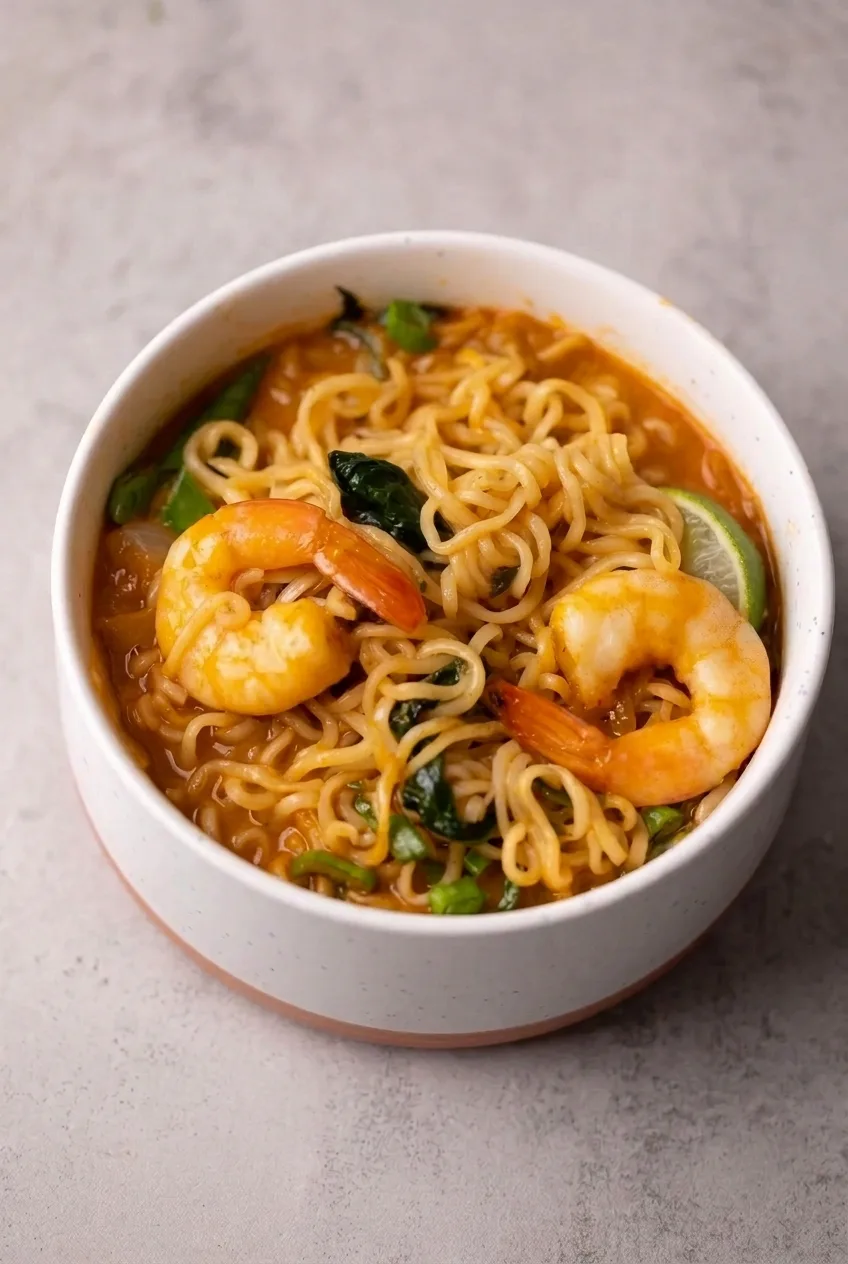
Spicy Garlic Shrimp Ramen

Curly noodles and large shrimp fill these bowls, with orange-red garlic-chile broth visible around the edges. Spinach wilts into the broth, while scallions and lime add a fresh finish. This is a savory ramen soup, not a dry noodle stir-fry.

The shrimp leave the pot before the broth simmers so they stay tender. The noodles cook in separate water and go into the bowls just before serving, keeping them springy and the broth from turning starchy.

Ingredients for Spicy Garlic Shrimp Ramen

Close view of pink shrimp and curly ramen noodles beside wilted spinach in orange-red broth
  • 12 ounces large shrimp, peeled and deveined, tails on (340g)
  • 2 packages plain ramen noodles, about 3 ounces each (170g total); discard the seasoning packets
  • 1 tablespoon neutral cooking oil
  • 1/2 small onion, thinly sliced (about 75g)
  • 5 garlic cloves, minced
  • 2 teaspoons grated fresh ginger
  • 1 tablespoon tomato paste
  • 1 tablespoon sriracha, plus more to taste
  • 3 cups low-sodium chicken broth
  • 1 tablespoon soy sauce
  • 2 loosely packed cups baby spinach (about 60g)
  • 1 lime, half juiced and half cut into 2 wedges
  • 2 scallions, thinly sliced

Yield: 2 generous bowls. Time: About 15 minutes prep and 15–18 minutes cooking; 30–35 minutes total.

How to Make Spicy Garlic Shrimp Ramen

Complete bowl of spicy garlic shrimp ramen on a gray surface, with broth, greens, scallions, and lime visible
  1. Prepare the ingredients: If using frozen shrimp, thaw, drain, and pat them dry. Slice the onion and scallions, mince the garlic, grate the ginger, and prepare the lime. Bring a medium saucepan of water to a boil for the noodles.
  2. Cook the shrimp: Heat the oil in a wide 3- to 4-quart pot or deep skillet over medium-high heat. Add the shrimp in a single layer, cooking in two quick batches if needed. Start checking after about 1 minute per side; turn once and cook for about 1–2 minutes per side, until pink, opaque, and just firm. Transfer to a plate so they do not continue cooking while the broth simmers. If using a thermometer, check for 145°F (65°C).
  3. Cook the aromatics: Reduce the heat to medium. Add the onion to the same pot and cook for 2–3 minutes, until it begins to soften. Stir in the garlic and ginger for about 30 seconds, then add the tomato paste and 1 tablespoon sriracha. Stir for another 30–60 seconds without letting the garlic scorch.
  4. Simmer the broth: Pour in the chicken broth and soy sauce, scraping up any bits from the bottom of the pot. Simmer gently, uncovered, for about 5 minutes. Keep it at small bubbles rather than a hard boil. Taste before adding anything salty; the soy sauce and sriracha already season the broth.
  5. Cook the noodles separately: While the broth simmers, add the ramen to the boiling water and loosen the strands. Start checking at the earliest package time, typically around 2 minutes. Drain when just tender, usually after 2–3 minutes. Briefly rinse with cool water to stop the cooking, drain well, and divide between two deep bowls.
  6. Finish the broth: Stir in the spinach and simmer for about 1 minute, until just wilted but still green. Turn off the heat and stir in the juice from half the lime. Taste and add more sriracha if desired.
  7. Assemble: Ladle the hot broth, onion, and spinach over and around the noodles, leaving broth visible at the edges. Arrange the shrimp on top, scatter with scallions, and tuck a lime wedge into each bowl. Serve immediately; diners can remove the shrimp tails at the table.

How to Keep the Shrimp and Noodles Tender

Shrimp size and pan heat affect cooking time, so use their appearance and texture rather than the clock alone. Remove them as soon as they are opaque and just firm; leaving them in the pot through the broth simmer can make them tough.

Ramen softens quickly in hot liquid. Cooking it separately keeps excess starch out of the broth and lets you stop while the strands still have some spring. Add the broth only when you are ready to eat.

Adjusting the Broth’s Heat

Start with the tablespoon of sriracha in the ingredients, then taste the finished broth. Brands vary in heat and seasoning. Add more to individual bowls if some diners want a spicier serving without changing the whole pot.

Simple Ingredient Swaps

Vegetable broth can replace chicken broth, though the dish still contains shrimp. Baby bok choy can replace spinach; add its chopped stems before the leaves to give them more time to soften. If using coconut aminos instead of soy sauce, taste the broth and adjust the seasoning as needed.

For another brothy shrimp bowl, try this shrimp ramen noodle soup.

Make-Ahead and Leftovers

The broth can be made up to 2 days ahead. Cool and refrigerate it separately from the noodles, then reheat it to a gentle simmer and finish with the spinach and lime. Keep any cooked shrimp separate and warm them only briefly in the hot broth rather than boiling them again.

For leftovers, separate the broth and noodles when possible. Noodles that have already sat in broth will be softer when reheated. Freezing fully assembled ramen is not recommended.

Nutrition

Approximate per generous bowl, based on 2 servings: 650 calories, 46g protein, 23g fat, and 69g carbohydrates. Approximate per 100g of prepared ramen: 80 calories, 6g protein, 3g fat, and 9g carbohydrates. Values vary with ramen and broth brands, noodle water absorption, and the amount of broth served in each bowl.

Spicy Garlic Shrimp Ramen

Tender shrimp, springy ramen noodles, and spinach are served in a savory garlic-chile broth with scallions and lime.
Course: Soup
Cuisine: Asian
Prep: 15 min
Cook: 18 min
Total: 35 min
Servings: 2 Calories: 650 kcal

Equipment

  • Wide 3- to 4-quart pot or deep skillet
  • Medium saucepan
  • Colander
  • Deep serving bowls

Ingredients

  • 12 ounces large shrimp, peeled and deveined, tails on (340g)
  • 2 packages plain ramen noodles, about 3 ounces each (170g total); discard seasoning packets
  • 1 tablespoon neutral cooking oil
  • 1/2 small onion, thinly sliced (about 75g)
  • 5 garlic cloves, minced
  • 2 teaspoons grated fresh ginger
  • 1 tablespoon tomato paste
  • 1 tablespoon sriracha, plus more to taste
  • 3 cups low-sodium chicken broth
  • 1 tablespoon soy sauce
  • 2 loosely packed cups baby spinach (about 60g)
  • 1 lime, half juiced and half cut into 2 wedges
  • 2 scallions, thinly sliced

Instructions

  1. If using frozen shrimp, thaw, drain, and pat dry. Slice the onion and scallions, mince the garlic, grate the ginger, and prepare the lime. Bring a medium saucepan of water to a boil.
  2. Heat the oil in a wide pot or deep skillet over medium-high heat. Add the shrimp in a single layer, working in batches if needed. Cook for about 1–2 minutes per side, until pink, opaque, and just firm. Transfer to a plate; if using a thermometer, check for 145°F (65°C).
  3. Reduce the heat to medium. Add the onion and cook for 2–3 minutes, until beginning to soften. Stir in the garlic and ginger for about 30 seconds.
  4. Add the tomato paste and 1 tablespoon sriracha. Stir for 30–60 seconds, taking care not to scorch the garlic.
  5. Pour in the chicken broth and soy sauce, scraping up any browned bits. Simmer uncovered for about 5 minutes, keeping the broth at a gentle bubble.
  6. While the broth simmers, cook the ramen in the boiling water according to the package timing, usually 2–3 minutes, until just tender. Drain, briefly rinse with cool water, drain well, and divide between two deep bowls.
  7. Stir the spinach into the broth and simmer for about 1 minute, until just wilted. Turn off the heat, stir in the juice from half the lime, and taste; add more sriracha if desired.
  8. Ladle the broth, onion, and spinach over and around the noodles. Arrange the shrimp on top, add the scallions, and tuck a lime wedge into each bowl. Serve immediately.

Tips

  • Remove the shrimp as soon as they are opaque and just firm so they do not toughen while the broth simmers.
  • Cook the noodles separately to keep excess starch out of the broth and preserve their springy texture.
  • Keep the broth at a gentle simmer rather than a hard boil.
  • Taste the broth before adding extra salt because the soy sauce and sriracha already season it.
  • Add extra sriracha to individual bowls for diners who prefer more heat.

Variations

  • Bok Choy Shrimp Ramen: Replace the spinach with baby bok choy, adding the chopped stems before the leaves so they have more time to soften.
  • Vegetable Broth Ramen: Replace the chicken broth with vegetable broth; the dish still contains shrimp.
  • Coconut Aminos Ramen: Replace the soy sauce with coconut aminos and adjust the seasoning to taste.

Notes

The broth can be refrigerated separately for up to 2 days. Reheat to a gentle simmer, then add the spinach and lime. Store noodles and cooked shrimp separately when possible; warm shrimp briefly in the hot broth without boiling.

Nutrition

Calories: 650 kcal | Protein: 46 g | Fat: 23 g | Carbohydrates: 69 g

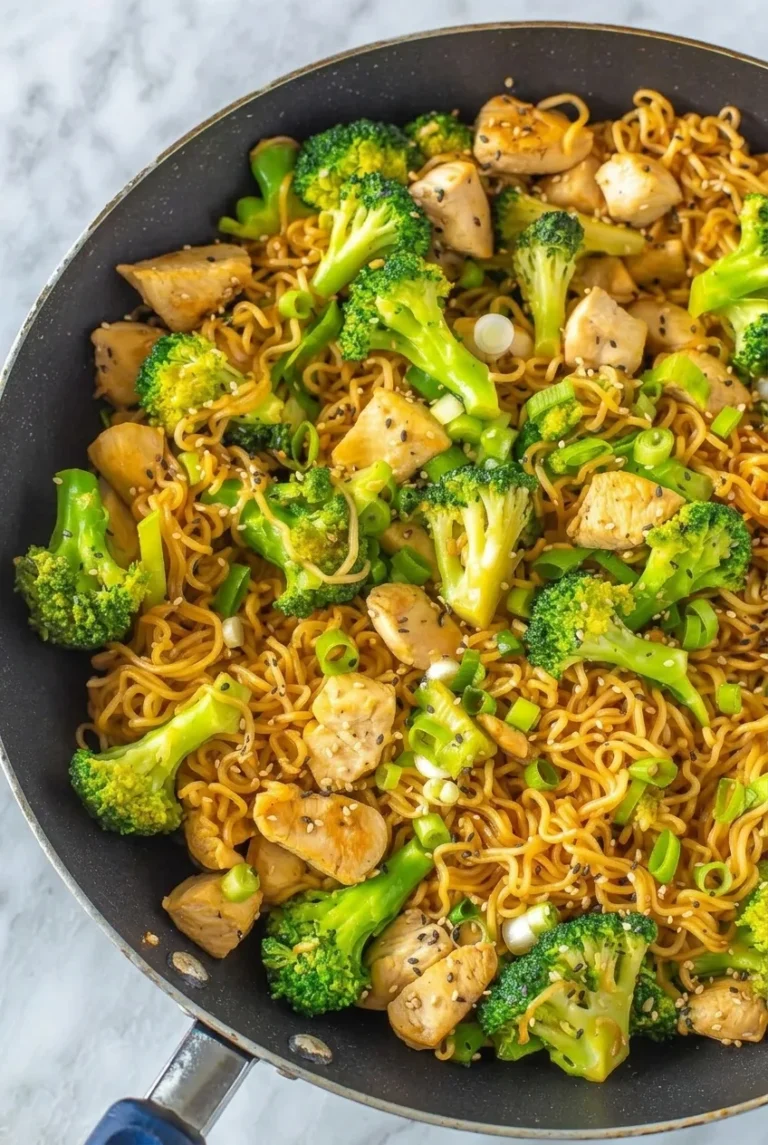
One-Pot Chicken Ramen

This chicken ramen is a skilletful of glossy, soy-seasoned noodles with bite-size chicken and plenty of broccoli—not a bowl of broth. The ramen softens directly in a shallow amount of liquid, so there is no separate pot of boiling water.

Cook the chicken through first, then briefly steam the broccoli before adding the noodles. Turn the ramen blocks as they loosen, and finish cooking when the strands are tender and lightly coated, rather than relying on the clock alone.

Ingredients for One-Pot Chicken Ramen

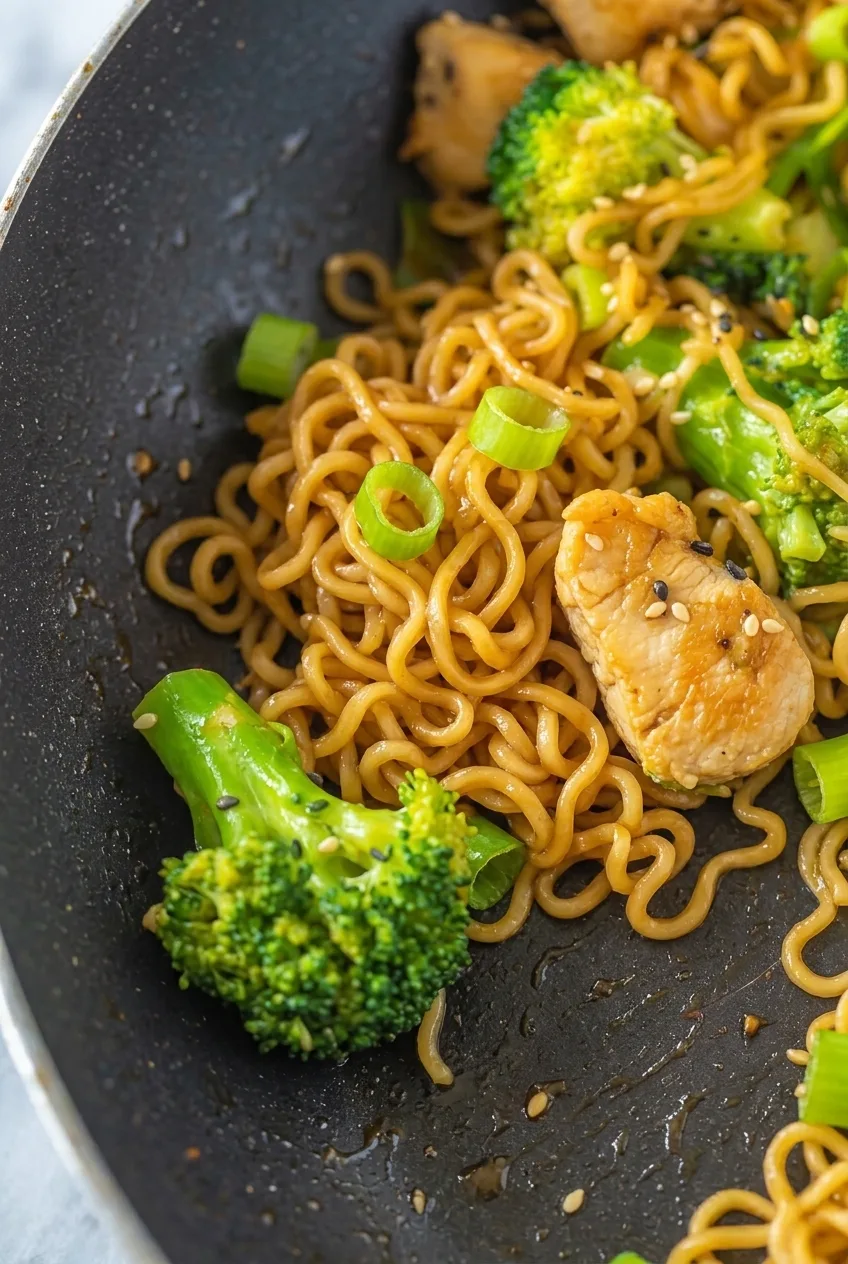
Close view of glossy ramen curls, lightly browned chicken, and broccoli in the skillet
  • 12 ounces boneless, skinless chicken breast, cut into bite-size pieces (340g)
  • 2 packages plain ramen noodles, about 3 ounces each (170g total); discard the seasoning packets
  • 3 cups bite-size broccoli florets (225g)
  • 1 tablespoon neutral cooking oil
  • 2 garlic cloves, minced
  • 1 1/4 cups reduced-sodium chicken broth, divided
  • 2 tablespoons reduced-sodium soy sauce
  • 1 tablespoon honey
  • 2 green onions, thinly sliced
  • 2 teaspoons mixed white and black sesame seeds

Keep water nearby to add 2 tablespoons at a time only if the skillet dries out before the noodles soften.

How to Make One-Pot Chicken Ramen

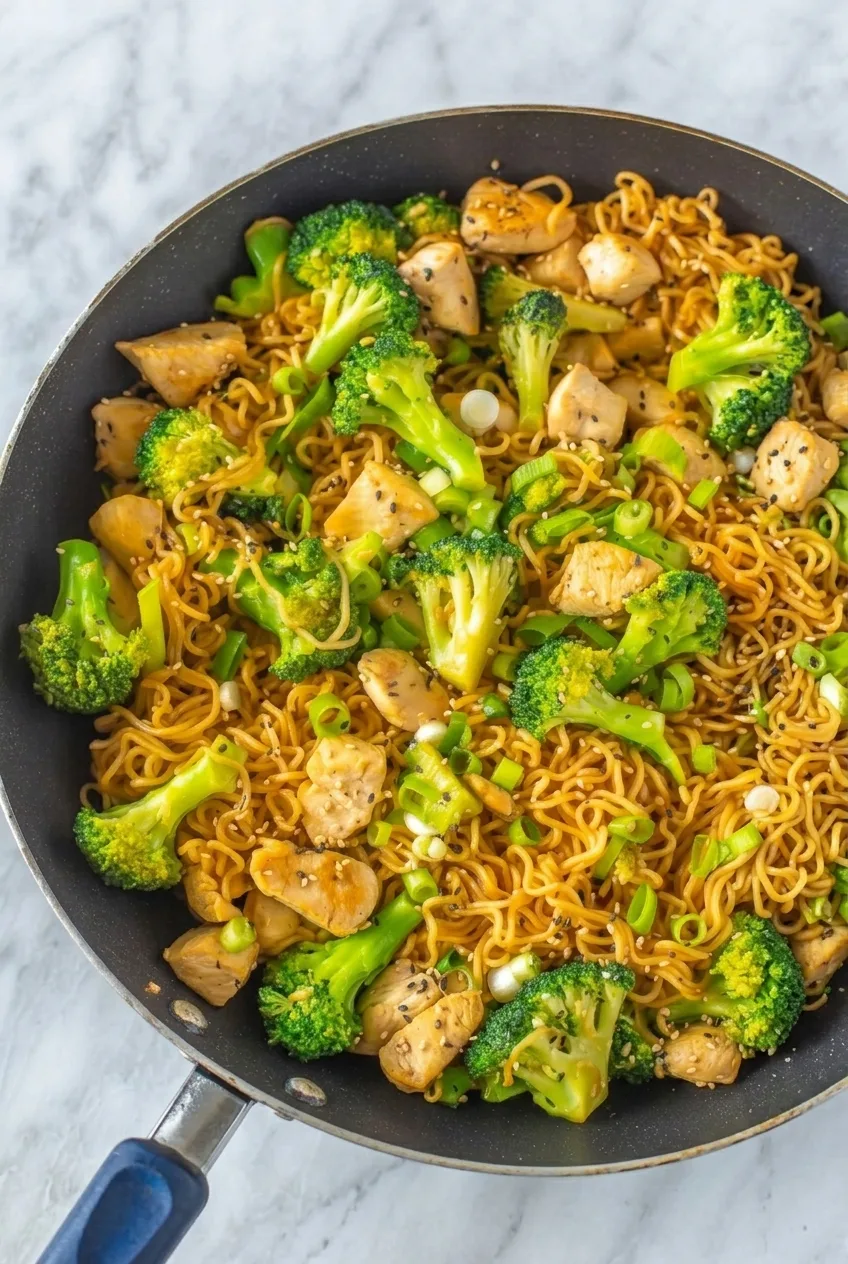
Complete skillet of chicken ramen with broccoli on a pale stone surface
  1. Prepare the ingredients: Cut the chicken into evenly sized pieces and the broccoli into bite-size florets. Stir the soy sauce and honey together. Measure the broth, and reserve the green onions and sesame seeds for serving.
  2. Cook the chicken: Heat the oil in a 12-inch deep skillet with a lid over medium-high heat until it shimmers. Add the chicken in an even layer; the roomy skillet gives it space to brown and will hold both noodle blocks later. Cook for about 6 to 8 minutes, turning occasionally, until lightly browned and cooked through. The thickest pieces should reach 165°F (75°C) if checked with a thermometer. If they brown before cooking through, reduce the heat and finish cooking them before moving on. Add the garlic and stir for about 30 seconds, until fragrant.
  3. Steam the broccoli: Reduce the heat to medium. Add the broccoli and 1/2 cup of the broth. Cover and cook for about 2 to 3 minutes, checking after 2 minutes. The florets should be bright green and beginning to turn crisp-tender.
  4. Soften the ramen: Add the remaining 3/4 cup broth and the soy-honey mixture. Nestle the ramen blocks into the skillet and keep the liquid at a gentle simmer. Cover for 1 to 2 minutes if needed to loosen the blocks, then uncover, turn them, and separate the strands as they soften. Cook for about 3 to 5 minutes, checking around 3 minutes. If the skillet dries out while the noodles are still firm, add water 2 tablespoons at a time.
  5. Toss and serve: Once the noodles are tender, toss them with the chicken and broccoli uncovered for about 1 to 2 minutes. Stop when the strands are glossy and little free liquid remains. Remove from the heat, scatter with green onions and sesame seeds, and serve promptly.

How Much Liquid Do the Noodles Need?

The broth starts shallow: 1/2 cup steams the broccoli, and the remaining 3/4 cup helps soften the ramen. Noodle brands and skillet heat affect how quickly the liquid disappears. If the pan looks dry but the strands are firm, add a little water and keep turning them. If tender noodles sit in a pool of liquid, toss them uncovered at a gentle simmer until the sauce coats the strands.

Use the noodle blocks without their seasoning packets. The measured soy sauce seasons the dish; adding the packets as well could make it too salty.

Can I Use Cooked Chicken?

Yes. Skip browning raw chicken and add chopped, already cooked chicken during the noodle phase to warm it through. The cooking time will change, but the broccoli and noodles still cook in the skillet.

For a separate vegetable-forward recipe with a different sauce and noodle method, try this chicken ramen stir fry.

Storing and Reheating Leftovers

Serve the ramen soon after cooking for the best noodle texture. Refrigerate leftovers promptly in a covered container; the noodles will continue to absorb the sauce. Reheat thoroughly with a small splash of water, stirring to loosen the strands. Freezing is not recommended for this noodle texture.

Nutrition

Approximate nutrition per serving (2 generous servings): 760 calories, 54g protein, 27g fat, and 72g carbohydrates. Approximate nutrition per 100g: 160 calories, 11g protein, 6g fat, and 15g carbohydrates. Values are estimates; ramen brands and the finished weight of the dish will affect them.

One-Pot Chicken Ramen

Chicken, broccoli, and ramen noodles cook together in a skillet with a simple soy-honey sauce.
Course: Main Course
Cuisine: Japanese
Prep: 10 min
Cook: 20 min
Total: 30 min
Servings: 2 Calories: 760 kcal

Equipment

  • 12-inch deep skillet with lid
  • Measuring cups and spoons
  • Instant-read thermometer

Ingredients

For the Ramen

  • 12 ounces boneless, skinless chicken breast, cut into bite-size pieces (340g)
  • 2 packages plain ramen noodles, about 3 ounces each (170g total); discard the seasoning packets
  • 3 cups bite-size broccoli florets (225g)
  • 1 tablespoon neutral cooking oil
  • 2 garlic cloves, minced
  • 1 1/4 cups reduced-sodium chicken broth, divided
  • 2 tablespoons reduced-sodium soy sauce
  • 1 tablespoon honey
  • 2 green onions, thinly sliced
  • 2 teaspoons mixed white and black sesame seeds
  • Water, as needed

Instructions

  1. Cut the chicken into evenly sized bite-size pieces and cut the broccoli into bite-size florets.
  2. Stir together the soy sauce and honey. Measure the broth, and set aside the green onions and sesame seeds for serving.
  3. Heat the oil in a 12-inch deep skillet with a lid over medium-high heat until shimmering.
  4. Add the chicken in an even layer. Cook for 6 to 8 minutes, turning occasionally, until lightly browned and cooked through. Check that the thickest pieces reach 165°F (75°C).
  5. Add the garlic and stir for about 30 seconds, until fragrant.
  6. Reduce the heat to medium. Add the broccoli and 1/2 cup of the broth. Cover and cook for 2 to 3 minutes, until bright green and beginning to turn crisp-tender.
  7. Add the remaining 3/4 cup broth and the soy-honey mixture. Nestle the ramen blocks into the skillet and maintain a gentle simmer.
  8. Cover for 1 to 2 minutes if needed to loosen the ramen blocks. Uncover, turn the blocks, and separate the strands as they soften. Cook for about 3 to 5 minutes, until tender.
  9. If the skillet dries out while the noodles are still firm, add water 2 tablespoons at a time.
  10. Toss the tender noodles with the chicken and broccoli uncovered for 1 to 2 minutes, until glossy and little free liquid remains.
  11. Remove from the heat, top with green onions and sesame seeds, and serve promptly.

Tips

  • Use the ramen blocks without their seasoning packets to avoid making the dish too salty.
  • Keep the liquid at a gentle simmer while the noodles soften.
  • If the pan dries out before the noodles are tender, add water 2 tablespoons at a time.
  • If tender noodles are sitting in excess liquid, toss them uncovered at a gentle simmer until the sauce coats the strands.

Variations

  • Cooked Chicken Ramen: Skip browning raw chicken and add chopped cooked chicken during the noodle phase to warm it through.

Notes

Refrigerate leftovers promptly in a covered container. Reheat thoroughly with a small splash of water, stirring to loosen the noodles. Freezing is not recommended.

Nutrition

Calories: 760 kcal | Protein: 54 g | Fat: 27 g | Carbohydrates: 72 g

Soy Garlic Ramen Noodles

Curly ramen noodles get a light soy-garlic-sesame coating in this hot, brothless dish. Thin strips of red pepper, carrot, and celery stay crisp among the noodles, while scallions, cilantro, and black sesame seeds add a fresh finish.

The noodles boil separately, then spend about a minute in the skillet with the sauce. Stop boiling them just shy of tender: that brief finish coats the strands without making them mushy. The recipe makes two servings in about 17 minutes.

Ingredients for Soy Garlic Ramen Noodles

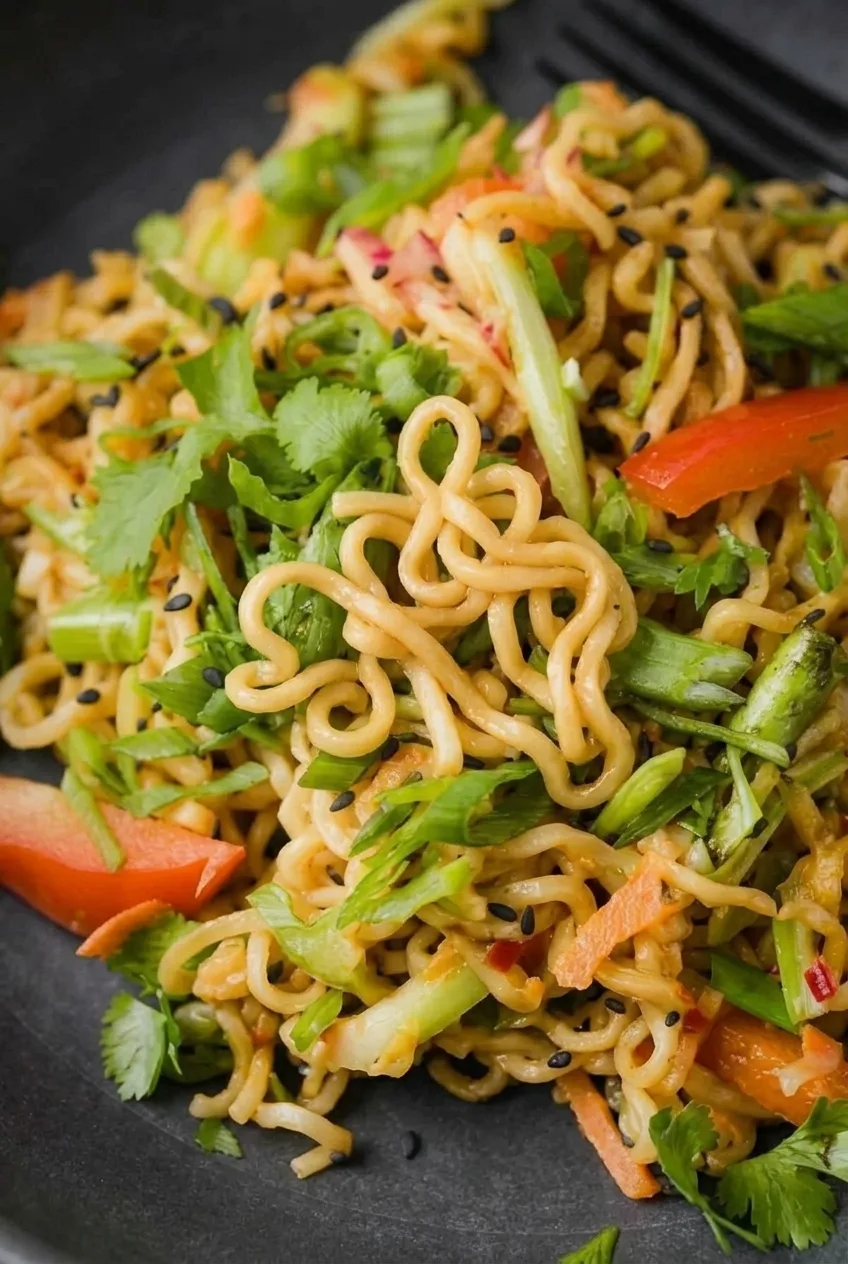
Close view of glossy curly ramen strands with red pepper, celery, fresh herbs, and black sesame
  • 2 packages dry instant ramen noodles, about 6 ounces total (170g); discard the seasoning packets
  • 2 tablespoons reduced-sodium soy sauce
  • 2 tablespoons water, plus a little reserved noodle-cooking water if needed
  • 2 teaspoons toasted sesame oil
  • 1 teaspoon brown sugar
  • 1 teaspoon neutral oil
  • 1/2 medium red bell pepper, thinly sliced (about 75g)
  • 1 small carrot, cut into thin matchsticks or coarsely shredded (about 55g)
  • 1 small celery stalk, thinly sliced on the diagonal (about 35g)
  • 3 garlic cloves, minced
  • 1 teaspoon minced fresh ginger
  • 2 scallions, thinly sliced
  • 2 tablespoons loosely packed fresh cilantro leaves
  • 1 teaspoon black sesame seeds

Discard the ramen seasoning packets; the measured sauce provides the seasoning. Using reduced-sodium soy sauce makes the final saltiness easier to adjust.

How to Make Soy Garlic Ramen Noodles

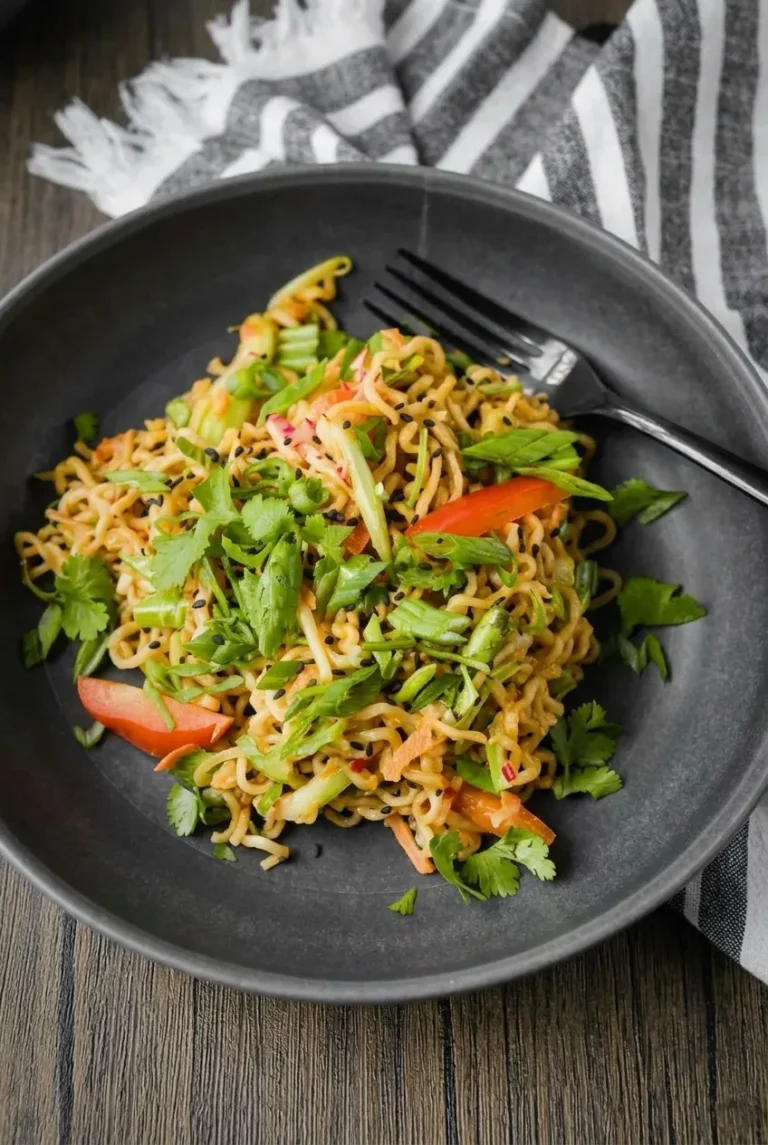
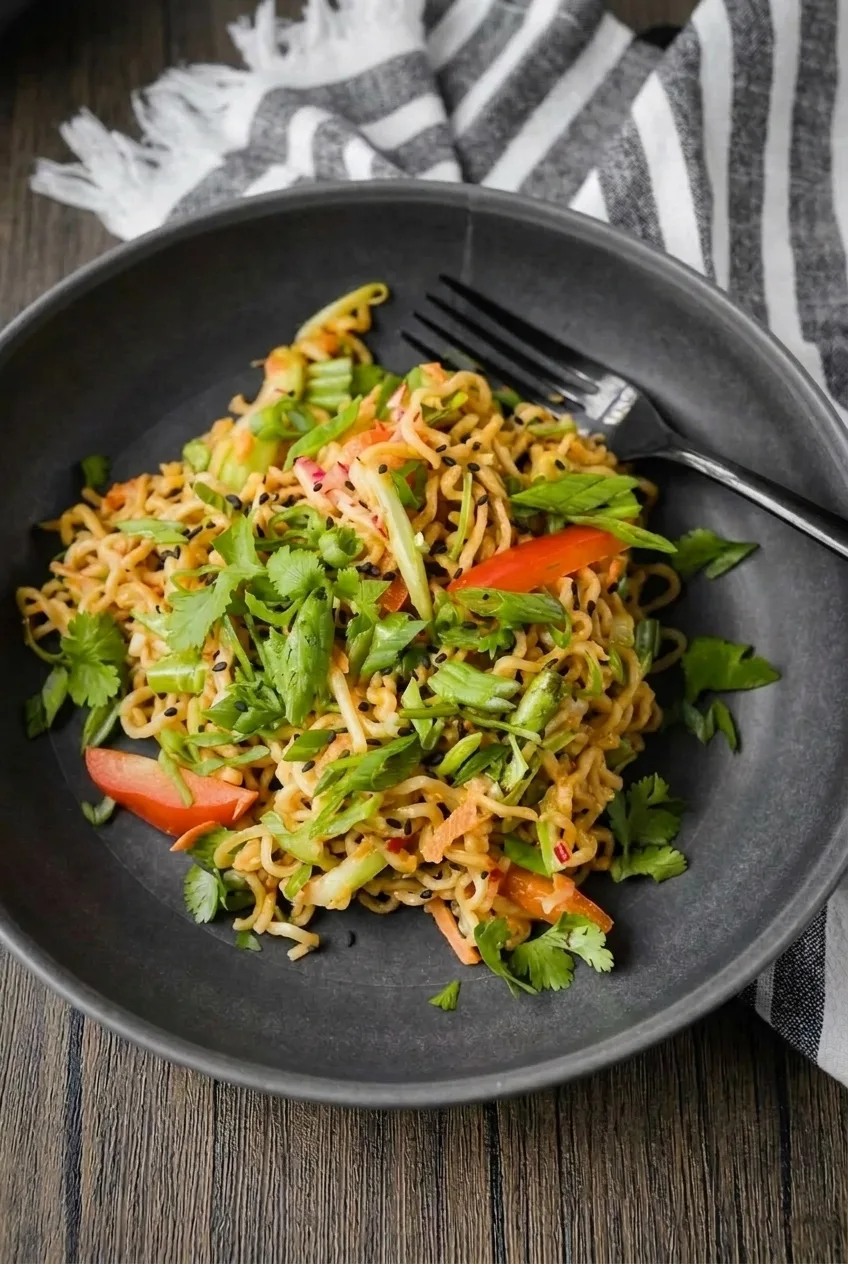
Complete plate of soy garlic ramen noodles on a dark wood table beside a striped cloth
  1. Prepare the sauce and vegetables: Whisk the soy sauce, 2 tablespoons water, toasted sesame oil, and brown sugar in a small bowl. Prepare the vegetables, garlic, and ginger. Set the scallions, cilantro, and sesame seeds aside for serving.
  2. Boil the ramen: Bring a medium saucepan of water to a boil. Add the noodles and stir to separate the strands. Start checking at the early end of the package’s cooking range, usually 2 to 4 minutes. When the noodles are pliable but still a little chewy, reserve some cooking water and drain. Do not rinse.
  3. Cook the vegetables: Heat the neutral oil in a 10- to 12-inch skillet over medium heat. Add the bell pepper, carrot, and celery. Stir-fry for about 2 minutes, until bright and still somewhat crisp.
  4. Add the aromatics: Reduce the heat to medium-low. Add the garlic and ginger and stir for about 30 seconds, just until fragrant. Do not let the garlic brown.
  5. Finish the noodles: Pour in the sauce and add the drained ramen promptly so it does not sit and clump. Toss continuously for about 1 minute, until the noodles are tender with a little chew and lightly coated, with no sauce pooling in the skillet. If they look dry, add reserved noodle water 1 tablespoon at a time. Taste before adding more soy sauce.
  6. Garnish and serve: Remove from the heat. Divide the noodles between two shallow plates, keeping the vegetables visible. Scatter the scallions, cilantro, and black sesame seeds over the top and serve promptly.

How to Keep the Ramen Chewy

Package cooking times vary, so use the early end of the range as a checking point rather than boiling the noodles until fully soft. Stir the noodle blocks as they cook to separate the strands, then move the drained noodles into the sauce without leaving them to sit. The skillet finish should coat them, not fry them until dry.

How to Keep the Sauce from Getting Too Salty or Dry

Soy sauce brands vary in saltiness. Taste after the sauce has coated the noodles and vegetables, not before. If the coating looks dry or concentrated, a tablespoon of reserved noodle water will loosen it without turning the dish into soup. If using regular soy sauce instead, start with less and adjust after tasting.

Vegetables and Variations

Slice the pepper, carrot, and celery thinly so they cook quickly but retain some crunch. Add the scallions, cilantro, and sesame seeds off heat to keep the greens fresh. Thinly sliced bok choy stems can replace the celery for a similar crisp element.

For mild heat, whisk 1/2 to 1 teaspoon sriracha or chili garlic sauce into the sauce. For a hotter noodle dish, see chili oil ramen noodles with an egg. For another quick option, try sesame garlic ramen noodles.

Leftovers

Refrigerate leftovers promptly. The noodles will absorb sauce and lose some of their gloss as they sit. Warm them gently with a small splash of water to help loosen the strands. If preparing garnishes ahead, keep them separate and add them when serving.

Nutrition

Approximate per serving (1 of 2): 505 calories, 12g protein, 22g fat, and 66g carbohydrates. Approximate per 100g of prepared noodles: 145 calories, 4g protein, 6g fat, and 19g carbohydrates. Values are estimates; ramen brands and the amount of water absorbed during cooking will affect them.

Soy Garlic Ramen Noodles

Curly ramen noodles are tossed with a light soy-garlic-sesame sauce and crisp vegetables, then finished with fresh herbs and black sesame seeds.
Course: Main Course
Cuisine: Japanese-inspired
Prep: 7 min
Cook: 10 min
Total: 17 min
Servings: 2 Calories: 505 kcal

Equipment

  • Medium saucepan
  • Small bowl
  • Whisk
  • 10- to 12-inch skillet
  • Colander

Ingredients

Noodles and Sauce

  • 2 packages dry instant ramen noodles, about 6 ounces total (170 g), seasoning packets discarded
  • 2 tablespoons reduced-sodium soy sauce
  • 2 tablespoons water, plus reserved noodle-cooking water as needed
  • 2 teaspoons toasted sesame oil
  • 1 teaspoon brown sugar

Vegetables and Aromatics

  • 1 teaspoon neutral oil
  • 1/2 medium red bell pepper, thinly sliced (about 75 g)
  • 1 small carrot, cut into thin matchsticks or coarsely shredded (about 55 g)
  • 1 small celery stalk, thinly sliced on the diagonal (about 35 g)
  • 3 garlic cloves, minced
  • 1 teaspoon minced fresh ginger

For Serving

  • 2 scallions, thinly sliced
  • 2 tablespoons loosely packed fresh cilantro leaves
  • 1 teaspoon black sesame seeds

Instructions

  1. Whisk the soy sauce, 2 tablespoons water, toasted sesame oil, and brown sugar in a small bowl.
  2. Prepare the bell pepper, carrot, celery, garlic, and ginger. Set the scallions, cilantro, and sesame seeds aside for serving.
  3. Bring a medium saucepan of water to a boil. Add the ramen and stir to separate the strands. Start checking at the early end of the package cooking range, usually 2 to 4 minutes.
  4. When the noodles are pliable but still slightly chewy, reserve some cooking water and drain them. Do not rinse.
  5. Heat the neutral oil in a 10- to 12-inch skillet over medium heat. Add the bell pepper, carrot, and celery, and stir-fry for about 2 minutes, until bright and still somewhat crisp.
  6. Reduce the heat to medium-low. Add the garlic and ginger and stir for about 30 seconds, just until fragrant. Do not let the garlic brown.
  7. Pour in the sauce and promptly add the drained noodles. Toss continuously for about 1 minute, until tender with a little chew and lightly coated. If the noodles look dry, add reserved noodle water 1 tablespoon at a time.
  8. Remove the skillet from the heat. Divide the noodles between two plates and top with the scallions, cilantro, and black sesame seeds. Serve promptly.

Tips

  • Start checking the noodles at the early end of the package cooking time so they stay chewy.
  • Stir the noodle blocks while boiling to separate the strands.
  • Transfer the drained noodles promptly to the skillet so they do not sit and clump.
  • Add reserved noodle water 1 tablespoon at a time if the noodles look dry.
  • Taste after the sauce coats the noodles before adding any more soy sauce.

Variations

  • Mildly Spicy Ramen: Whisk 1/2 to 1 teaspoon sriracha or chili garlic sauce into the sauce.
  • Bok Choy Ramen: Replace the celery with thinly sliced bok choy stems.

Notes

Refrigerate leftovers promptly. Reheat gently with a small splash of water to loosen the noodles; add any separately stored garnishes when serving.

Nutrition

Calories: 505 kcal | Protein: 12 g | Fat: 22 g | Carbohydrates: 66 g

Thai Coconut Curry Ramen

Thai-inspired coconut curry ramen is a noodle soup with a creamy, fluid orange broth—not noodles coated in sauce. Ginger, garlic, and red curry paste build the broth, while browned tofu, carrot, and snap peas make each bowl substantial. The curry paste can vary in heat, so start with a small amount and adjust after tasting.

Cook the ramen separately to keep its curly strands distinct, then ladle the broth around the noodles. Raw bean sprouts, cilantro, and lime add a crisp, fresh finish.

Ingredients for Thai Coconut Curry Ramen

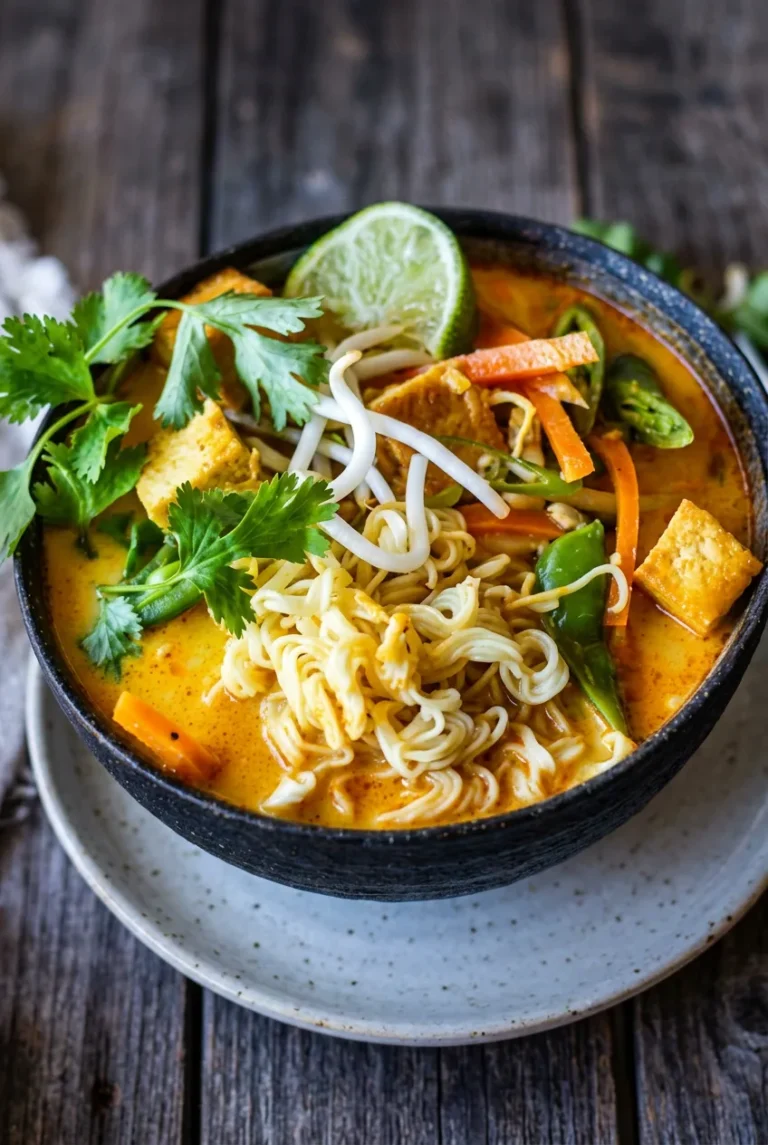
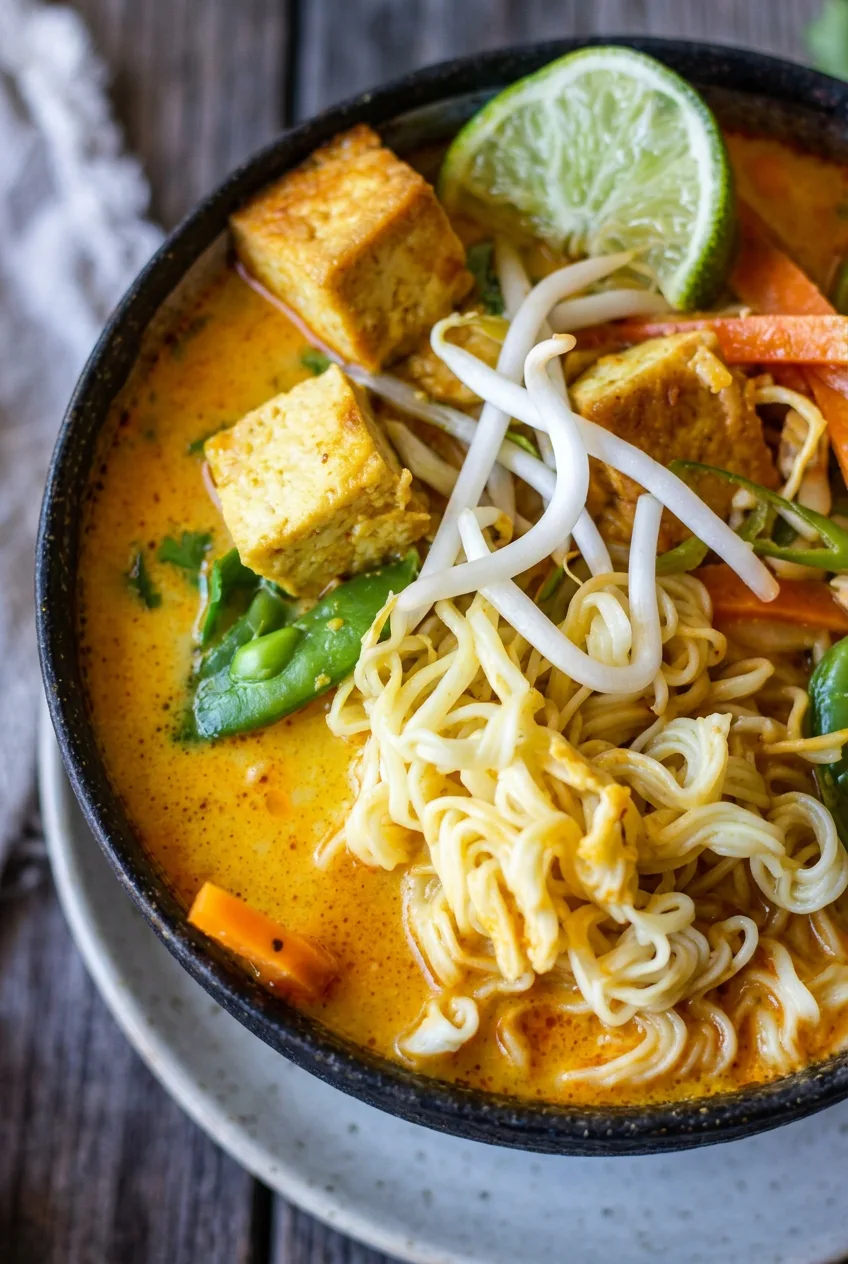
Close view of curly ramen, golden tofu cubes and vegetables in fluid orange coconut curry broth

Makes 4 generous bowls. Prep time: 15 minutes. Cook time: about 20 minutes.

  • 1 package firm or extra-firm tofu (about 14 ounces or 400g), drained and cut into roughly 3/4-inch cubes
  • 2 tablespoons neutral oil, divided
  • 1 small shallot, finely chopped
  • 1 tablespoon grated fresh ginger
  • 3 garlic cloves, minced
  • 1 to 2 tablespoons Thai red curry paste, to taste
  • 4 cups vegetable broth
  • 1 can (13.5 ounces) full-fat coconut milk
  • 1 tablespoon soy sauce, plus more to taste
  • 1 medium carrot, cut into thin matchsticks
  • 1 cup snap peas, halved diagonally
  • 8 ounces dry curly instant-style ramen noodles (225g), seasoning packets discarded
  • 2 limes
  • 1 cup bean sprouts
  • 1/2 cup loosely packed cilantro leaves and tender sprigs

How to Make Thai Coconut Curry Ramen

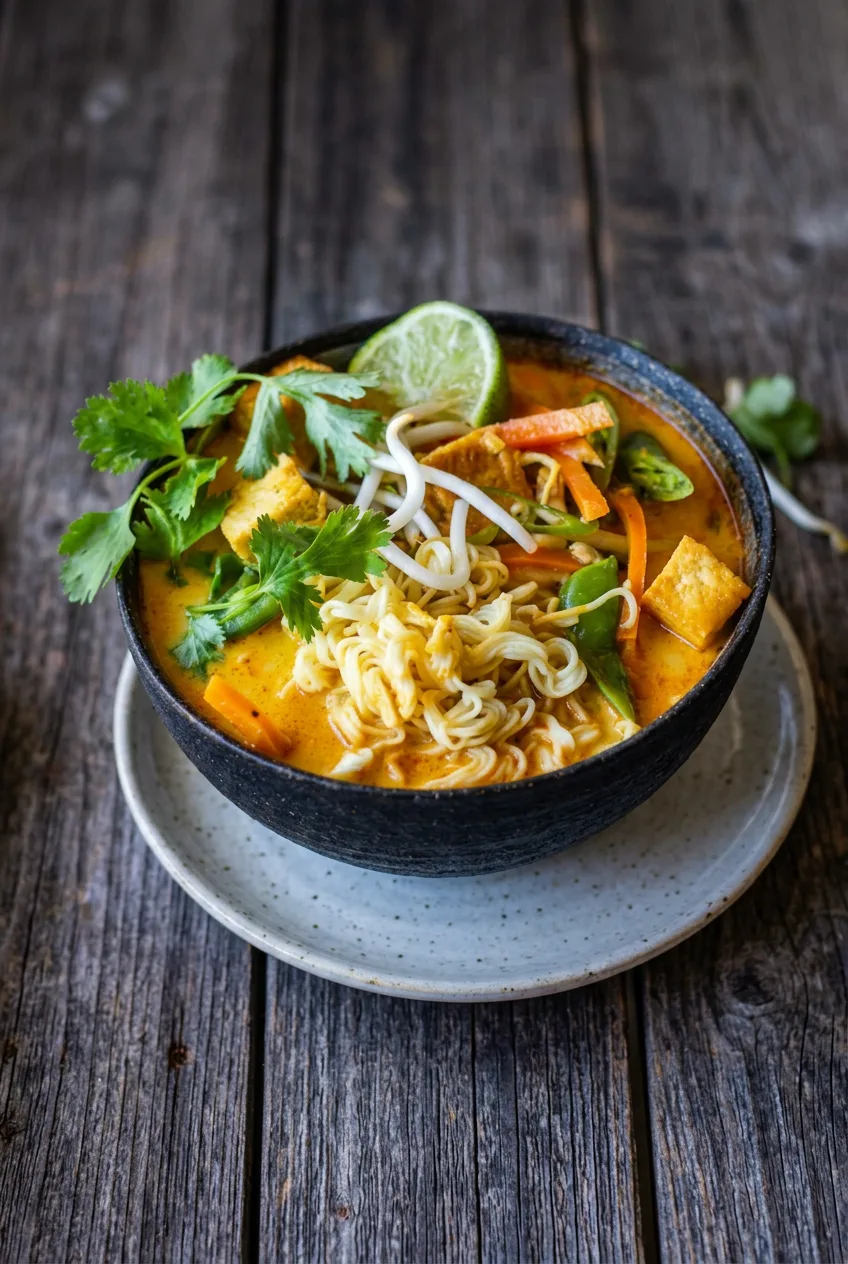
Complete bowl of Thai coconut curry ramen on a pale plate with the tabletop visible around it
  1. Prepare the ingredients: Pat the drained tofu dry so it browns more readily. Chop the shallot, ginger, and garlic; cut the carrot and snap peas. Squeeze 1 tablespoon juice from the limes and cut the remainder into wedges.
  2. Brown the tofu: Heat 1 tablespoon oil in a wide-bottomed 5- to 6-quart soup pot over medium-high heat. Add the tofu in a single layer, working in batches if needed so it browns rather than steams. Turn to brown several sides, about 6 to 8 minutes total. Start checking after 3 minutes; when the edges are lightly golden, transfer the tofu to a plate.
  3. Cook the curry base: Reduce the heat to medium. Add the remaining tablespoon oil and the shallot; cook for about 2 minutes. Stir in the ginger, garlic, and 1 tablespoon curry paste. Cook, stirring frequently, for about 1 minute, until fragrant without deeply browning the garlic.
  4. Simmer the broth: Stir in the vegetable broth, coconut milk, soy sauce, and carrot. Bring to a gentle simmer and cook uncovered for about 4 minutes, checking the carrot after 3 minutes. Add the snap peas and simmer for about 2 minutes more, until the carrot is tender-crisp and the peas are bright green. Taste before stirring in more curry paste, a little at a time; simmer briefly after each addition to incorporate it.
  5. Cook the noodles separately: While the broth simmers, bring water to a boil in a medium saucepan. Cook the ramen according to its package directions, stirring to separate the strands and checking at the earliest suggested time. Drain and divide among four deep bowls. Do not use the seasoning packets.
  6. Finish the bowls: Gently return the tofu to the broth just long enough to heat through, without vigorous stirring that could break the cubes. Turn off the heat and stir in 1 tablespoon lime juice. Taste and add a little more soy sauce or lime if needed. Ladle broth, tofu, and vegetables around the noodles, leaving the curly strands and some carrot visible. Top with bean sprouts and cilantro, and serve each bowl with a lime wedge.

How to Keep the Ramen from Getting Soggy

Ramen continues to soften in hot broth. Follow the cooking directions on your particular package, drain the noodles, and assemble the bowls just before eating. Separate cooking also makes it easier to keep the noodles visible above the broth.

Adjusting the Curry Broth

Red curry pastes vary in heat and saltiness. Start with 1 tablespoon, taste the simmered broth, and add more gradually. Make any final soy sauce adjustment after tasting. Add lime off heat to keep its flavor fresh, and leave the bean sprouts raw for a crisp topping.

Variations and More Ramen Bowls

Light coconut milk works if you prefer a thinner, less rich broth. Tamari can replace soy sauce; check labels if avoiding gluten. For a vegan bowl, check the curry paste and noodles for animal-derived ingredients.

For another tofu noodle bowl with a different broth, try spicy peanut butter ramen with tofu and bok choy.

Storage and Reheating

Refrigerate cooled broth with the tofu and vegetables separately from the cooked noodles in airtight containers for up to 3 days. Keep the sprouts, cilantro, and lime separate, too.

Warm the broth, tofu, and vegetables in a saucepan until hot throughout. Place the noodles in bowls and ladle the soup over them, then add the fresh toppings. For the best noodle texture, make the broth ahead and cook fresh ramen near serving time.

Nutrition

Approximate per serving, based on 4 generous bowls: 630 calories, 20g protein, 42g fat, and 50g carbohydrates. Approximate per 100g: 105 calories, 3g protein, 7g fat, and 8g carbohydrates. Values will vary with the tofu, ramen, curry paste, and coconut milk used.

Thai Coconut Curry Ramen

Curly ramen noodles are served in a creamy coconut curry broth with browned tofu, vegetables, bean sprouts, cilantro, and lime.
Course: Soup
Cuisine: Thai-inspired
Prep: 15 min
Cook: 20 min
Total: 35 min
Servings: 4 Calories: 630 kcal

Equipment

  • 5- to 6-quart soup pot
  • Medium saucepan

Ingredients

For the Soup

  • 1 package firm or extra-firm tofu (about 14 ounces or 400 g), drained and cut into roughly 3/4-inch cubes
  • 2 tablespoons neutral oil, divided
  • 1 small shallot, finely chopped
  • 1 tablespoon grated fresh ginger
  • 3 garlic cloves, minced
  • 1 to 2 tablespoons Thai red curry paste, to taste
  • 4 cups vegetable broth
  • 1 can (13.5 ounces) full-fat coconut milk
  • 1 tablespoon soy sauce, plus more to taste
  • 1 medium carrot, cut into thin matchsticks
  • 1 cup snap peas, halved diagonally

For Serving

  • 8 ounces (225 g) dry curly instant-style ramen noodles, seasoning packets discarded
  • 2 limes
  • 1 cup bean sprouts
  • 1/2 cup loosely packed cilantro leaves and tender sprigs

Instructions

  1. Pat the tofu dry. Chop the shallot, ginger, and garlic; cut the carrot and snap peas. Squeeze 1 tablespoon juice from the limes and cut the remaining lime into wedges.
  2. Heat 1 tablespoon oil in a wide-bottomed 5- to 6-quart soup pot over medium-high heat. Add the tofu in a single layer, working in batches if needed. Brown on several sides for about 6 to 8 minutes total, then transfer to a plate.
  3. Reduce the heat to medium. Add the remaining tablespoon of oil and the shallot; cook for about 2 minutes. Stir in the ginger, garlic, and 1 tablespoon curry paste. Cook, stirring frequently, for about 1 minute until fragrant.
  4. Stir in the vegetable broth, coconut milk, soy sauce, and carrot. Bring to a gentle simmer and cook uncovered for about 4 minutes. Add the snap peas and simmer for about 2 minutes, until the carrot is tender-crisp and the peas are bright green. Taste the broth and add more curry paste gradually if desired, simmering briefly after each addition.
  5. While the broth simmers, bring water to a boil in a medium saucepan. Cook the ramen according to the package directions, stirring to separate the strands and checking at the earliest suggested time. Drain and divide among four deep bowls. Discard the seasoning packets.
  6. Gently return the tofu to the broth just long enough to heat through. Turn off the heat and stir in 1 tablespoon lime juice. Taste and add more soy sauce or lime juice if needed.
  7. Ladle the broth, tofu, and vegetables around the noodles. Top with bean sprouts and cilantro, and serve with lime wedges.

Tips

  • Pat the tofu dry before browning, and cook it in batches if needed so it browns instead of steams.
  • Start with 1 tablespoon of curry paste; add more gradually after tasting the simmered broth.
  • Cook the ramen separately and assemble the bowls just before eating to help keep the noodles from getting soggy.
  • Add lime juice off the heat to keep its flavor fresh.
  • Return the tofu to the broth gently to avoid breaking the cubes.

Variations

  • Lighter Coconut Curry Ramen: Use light coconut milk for a thinner, less rich broth.
  • Tamari Coconut Curry Ramen: Replace the soy sauce with tamari; check labels if avoiding gluten.
  • Vegan Coconut Curry Ramen: Check that the curry paste and noodles contain no animal-derived ingredients.

Notes

Refrigerate the broth, tofu, and vegetables separately from the noodles and fresh toppings in airtight containers for up to 3 days. Reheat the broth mixture in a saucepan until hot throughout and assemble with the noodles and toppings just before serving.

Nutrition

Calories: 630 kcal | Protein: 20 g | Fat: 42 g | Carbohydrates: 50 g

Ground Beef Ramen Stir Fry

Ground beef ramen stir fry combines browned beef crumbles, broccoli, red bell pepper, and carrot with noodles coated in a glossy soy-ginger sauce. It should be a skilletful of distinct, springy noodles—not ramen in broth.

Boil the noodles just short of tender, then finish them briefly in the skillet. This gives the sauce time to cling without making the ramen soft. Discard the seasoning packets; low-sodium soy sauce seasons the dish more predictably.

Ingredients for Ground Beef Ramen Stir Fry

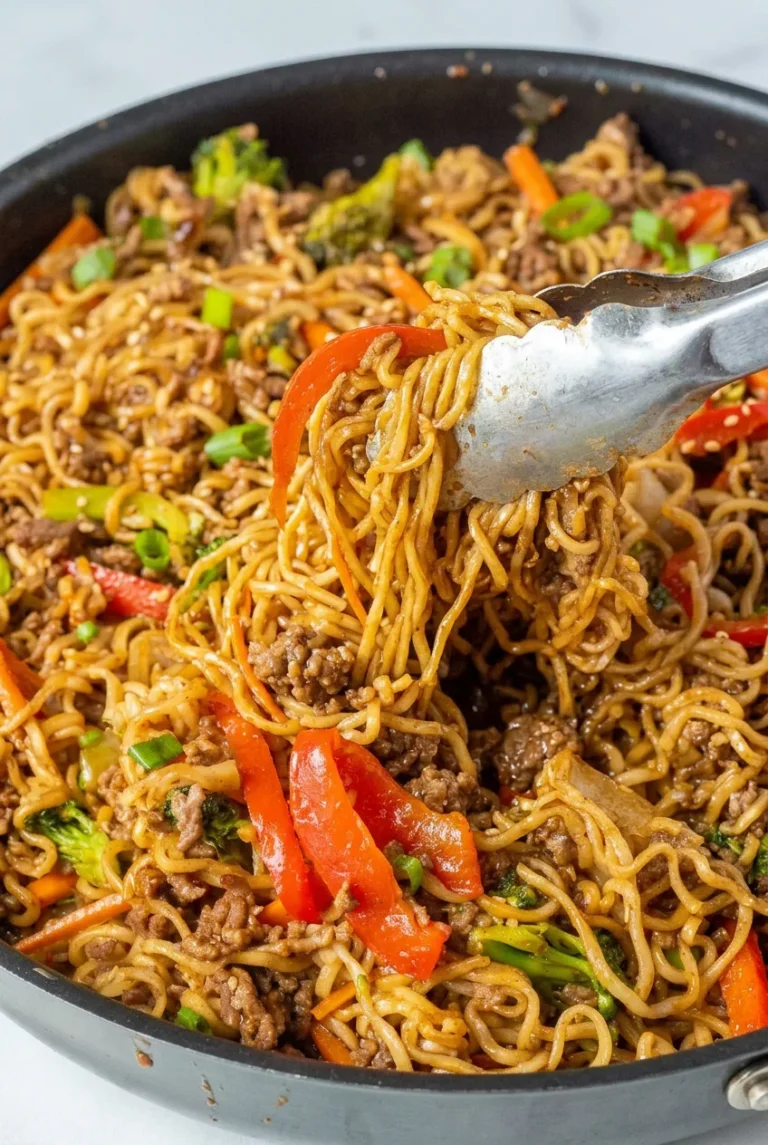
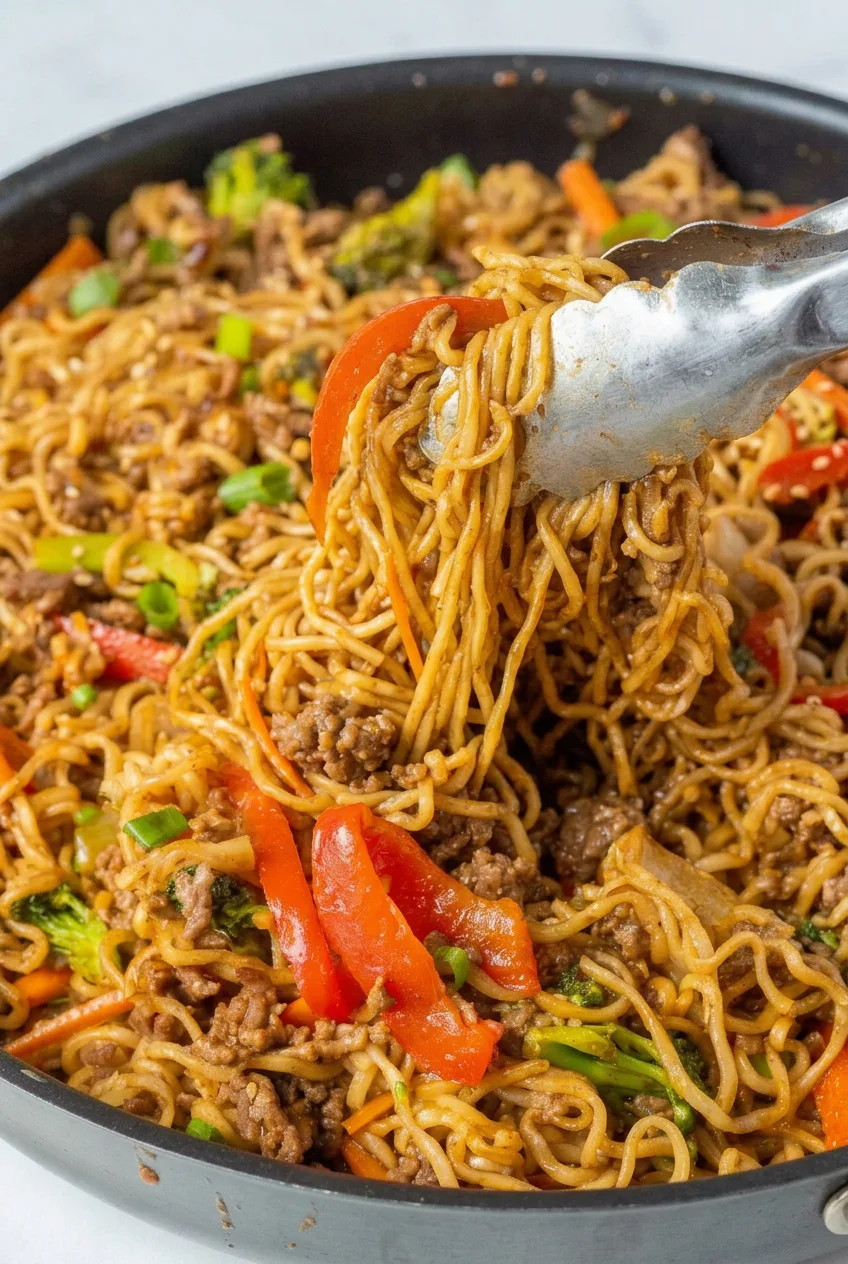
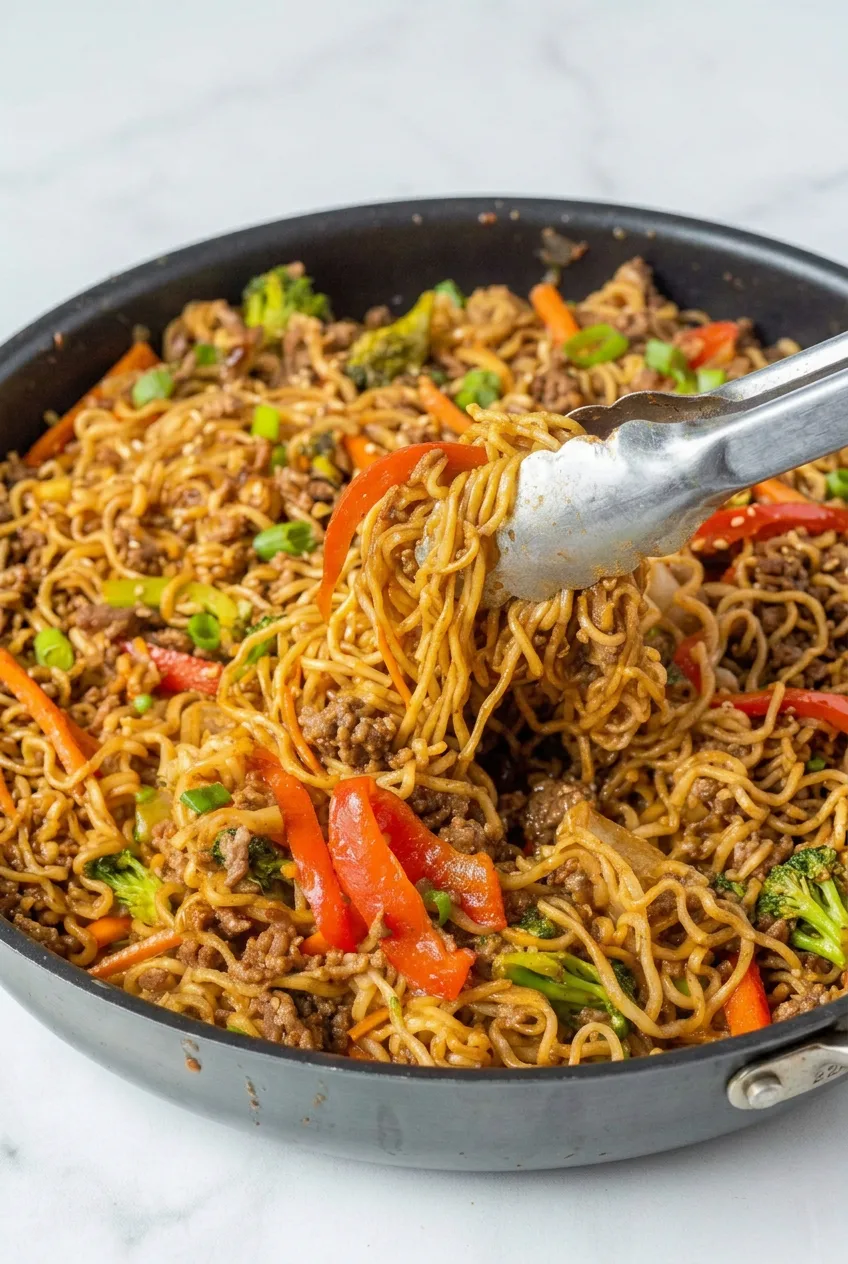
Close view of glossy ramen strands, browned beef crumbles, red pepper, broccoli, and carrot

Prep: 15 minutes | Cook: 15 minutes | Total: 30 minutes | Servings: 4

  • 1 lb lean ground beef, about 90% lean (450g)
  • 3 packages instant ramen noodles, about 3 oz each (255g); discard the seasoning packets
  • 2 cups small broccoli florets (160g)
  • 1 medium red bell pepper, thinly sliced (150g)
  • 1 medium carrot, cut into thin matchsticks (70g)
  • 1 tablespoon neutral cooking oil
  • 3 garlic cloves, minced
  • 1 tablespoon grated fresh ginger
  • 1/4 cup low-sodium soy sauce
  • 1/3 cup water
  • 1 tablespoon packed brown sugar
  • 1 tablespoon unseasoned rice vinegar
  • 2 teaspoons toasted sesame oil
  • 2 teaspoons cornstarch
  • 3 green onions, thinly sliced
  • Optional: 1 teaspoon sesame seeds, plus Sriracha or chili crisp to taste

Keep the broccoli florets bite-size so they can become crisp-tender in the same short cooking time as the thinly cut pepper and carrot.

How to Make Ground Beef Ramen Stir Fry

Full skillet of ground beef ramen stir fry with broccoli, red pepper, carrot, and green onions
  1. Mix the sauce: Whisk the soy sauce, 1/3 cup water, brown sugar, rice vinegar, sesame oil, and cornstarch in a small bowl until smooth. Have the vegetables, garlic, ginger, and green onions ready before heating the skillet.
  2. Par-cook the ramen: Bring a saucepan of plain water to a boil. Discard the seasoning packets and cook the noodles for about 1 minute less than the package directs. Drain when the strands have loosened but are still slightly firm. Start heating the skillet while the water comes to a boil.
  3. Brown the beef: Heat a 12-inch skillet or wok over medium-high heat. Add the beef and let it sit briefly to develop browned edges, then break it into small crumbles. Cook for about 5 to 7 minutes, until browned and no longer pink. Ground beef should reach 160°F (70°C) when checked with a food thermometer. Drain excess fat and transfer the beef to a plate.
  4. Cook the vegetables: Add the neutral oil, broccoli, bell pepper, and carrot to the skillet. Let them sit briefly against the hot pan, then toss for about 4 to 6 minutes. Start checking around 4 minutes: the broccoli should be bright green and yield to a fork while retaining some bite. If it is still firm, add 1 to 2 tablespoons water and cover briefly. Uncover and let the water evaporate before continuing. Cook the vegetables in two batches if the skillet is crowded so they brown instead of steam.
  5. Add the aromatics: Reduce the heat to medium. Stir in the garlic and ginger for about 30 seconds, until fragrant but not browned. Return the beef to the skillet.
  6. Glaze the noodles: Rewhisk the sauce, pour it into the skillet, and add the drained ramen. Toss with tongs for about 1 to 2 minutes, until the noodles are tender and the lightly thickened sauce coats the noodles, beef, and vegetables. No liquid should pool in the pan.
  7. Serve: Remove from the heat and scatter the green onions over the stir fry. Serve promptly from the skillet, with optional sesame seeds, Sriracha, or chili crisp.

How to Keep the Ramen from Getting Soggy

Use the package cooking time as a guide; ramen brands and noodle thicknesses vary. Drain the noodles while they are still slightly firm so they can finish in the hot sauce. Once coated, take the skillet off the heat rather than holding the assembled stir fry warm.

Do not add dry ramen cakes directly to this sauce. Its 1/3 cup water is enough to finish drained noodles, not to hydrate dry ones.

Getting a Glossy Sauce Without Too Much Salt

Leave out the ramen seasoning packets and taste before adding any extra salt. Cornstarch settles as the sauce sits, so whisk it again just before pouring. Stop tossing when the sauce clings lightly to the noodles; it should be glossy, not thick like gravy or thin enough to pool.

For a simpler noodle-focused dish with related flavors, see Sesame Garlic Ramen Noodles.

Leftovers and Make-Ahead

Refrigerate cooled leftovers in an airtight container for 3 to 4 days. The noodles will soften as they sit. Reheat gently in a skillet over medium-low heat, or microwave a serving and stir partway through. Add a small splash of water if the noodles seem dry.

For better make-ahead texture, prepare the beef, vegetables, and sauce ahead, then cook fresh noodles shortly before serving. The noodle-free beef and vegetable base can be frozen as an option; reheat it and add freshly cooked noodles. Freezing the completed stir fry is not recommended for the best noodle texture.

Nutrition

Approximate per serving, based on 4 servings: 600 calories, 33g protein, 28g fat, and 55g carbohydrates. Approximate per 100g of finished stir fry: 170 calories, 9g protein, 8g fat, and 16g carbohydrates. Values vary with the ramen brand, beef, and moisture in the finished dish; optional garnishes are not included.

Ground Beef Ramen Stir Fry

Browned ground beef, ramen noodles, and crisp-tender vegetables are tossed in a glossy soy-ginger sauce.
Course: Main Course
Cuisine: Asian
Prep: 15 min
Cook: 15 min
Total: 30 min
Servings: 4 Calories: 600 kcal

Equipment

  • Saucepan
  • Small bowl
  • 12-inch skillet or wok
  • Whisk
  • Tongs
  • Food thermometer

Ingredients

For the Stir Fry

  • 1 lb lean ground beef, about 90% lean (450g)
  • 3 packages instant ramen noodles, about 3 oz each (255g), seasoning packets discarded
  • 2 cups small broccoli florets (160g)
  • 1 medium red bell pepper, thinly sliced (150g)
  • 1 medium carrot, cut into thin matchsticks (70g)
  • 1 tablespoon neutral cooking oil
  • 3 garlic cloves, minced
  • 1 tablespoon grated fresh ginger
  • 3 green onions, thinly sliced

For the Sauce

  • 1/4 cup low-sodium soy sauce
  • 1/3 cup water
  • 1 tablespoon packed brown sugar
  • 1 tablespoon unseasoned rice vinegar
  • 2 teaspoons toasted sesame oil
  • 2 teaspoons cornstarch

Optional Garnishes

  • 1 teaspoon sesame seeds
  • Sriracha or chili crisp, to taste

Instructions

  1. Whisk the soy sauce, water, brown sugar, rice vinegar, sesame oil, and cornstarch in a small bowl until smooth.
  2. Bring a saucepan of plain water to a boil. Discard the ramen seasoning packets and cook the noodles about 1 minute less than the package directs. Drain when loosened but still slightly firm.
  3. Heat a 12-inch skillet or wok over medium-high heat. Add the ground beef and let it sit briefly to brown, then break it into small crumbles. Cook for 5 to 7 minutes, until browned and no longer pink. Check that it reaches 160°F (70°C), then drain excess fat and transfer the beef to a plate.
  4. Add the neutral oil, broccoli, bell pepper, and carrot to the skillet. Let the vegetables sit briefly against the hot pan, then toss and cook for 4 to 6 minutes, until crisp-tender. If needed, add 1 to 2 tablespoons water and cover briefly to soften the broccoli; uncover and let the water evaporate. Cook in batches if the skillet is crowded.
  5. Reduce the heat to medium. Stir in the garlic and ginger and cook for about 30 seconds, until fragrant but not browned. Return the beef to the skillet.
  6. Rewhisk the sauce and pour it into the skillet. Add the drained ramen and toss with tongs for 1 to 2 minutes, until the noodles are tender and the sauce lightly coats everything.
  7. Remove the skillet from the heat. Scatter the green onions over the stir fry and serve promptly with optional sesame seeds, Sriracha, or chili crisp.

Tips

  • Cook the ramen about 1 minute less than the package directs so it can finish in the sauce.
  • Cut the vegetables into small, thin pieces so they cook quickly and evenly.
  • Cook the vegetables in batches if needed to help them brown instead of steam.
  • Rewhisk the sauce just before adding it because the cornstarch settles.
  • Stop tossing once the sauce lightly coats the noodles; it should not pool or thicken like gravy.

Variations

  • Spicy Ramen Stir Fry: Serve with Sriracha or chili crisp to taste.

Notes

Refrigerate cooled leftovers in an airtight container for 3 to 4 days. Reheat gently in a skillet or microwave, adding a splash of water if dry. Noodles soften as they sit; freeze the beef and vegetable base without noodles for better texture.

Nutrition

Calories: 600 kcal | Protein: 33 g | Fat: 28 g | Carbohydrates: 55 g

Chili Oil Ramen Noodles

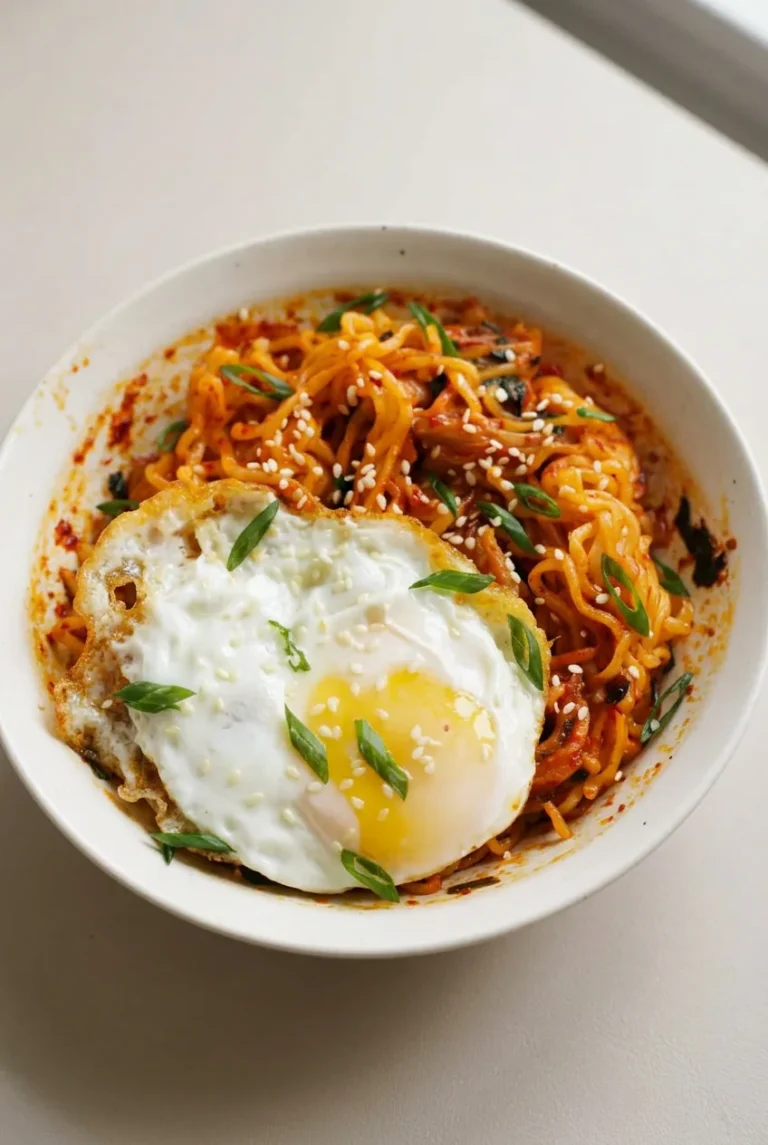
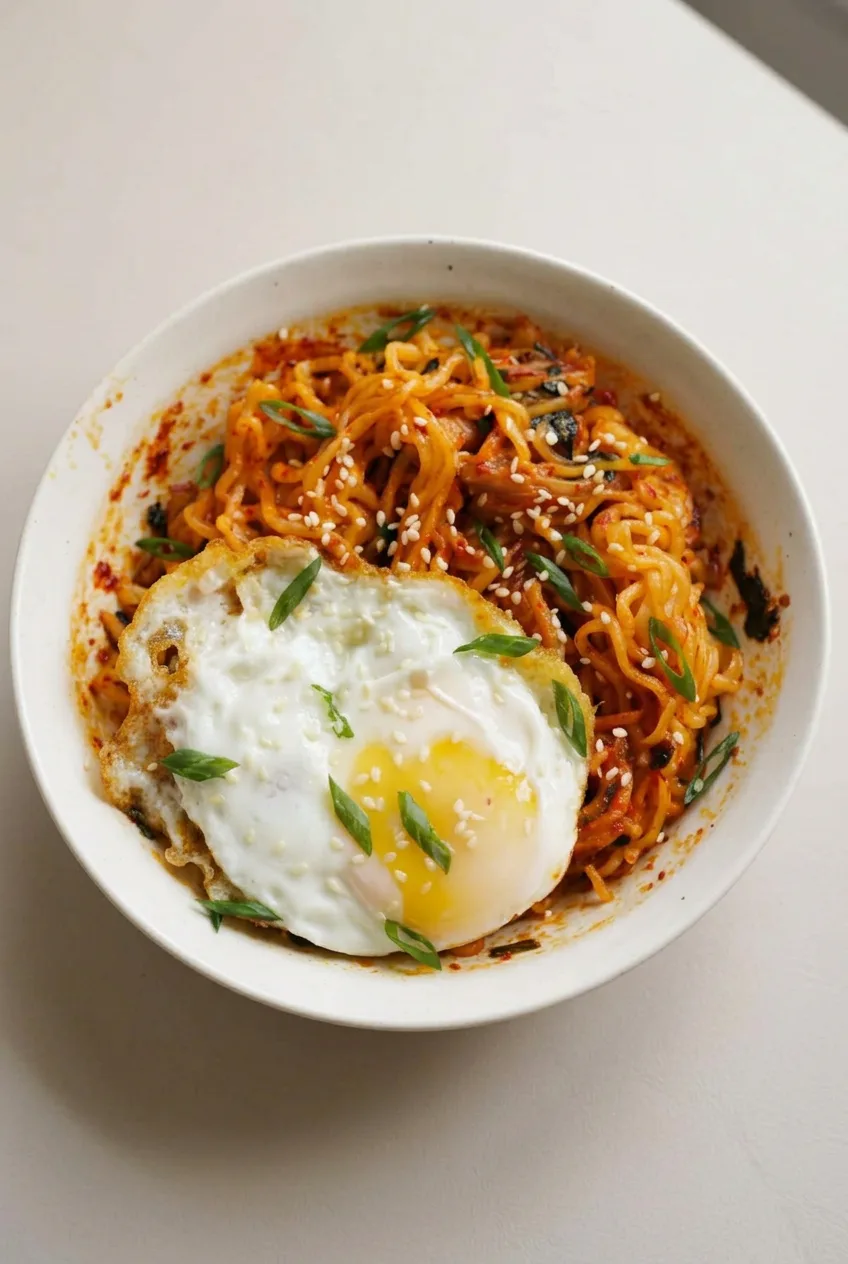
These dry-style ramen noodles are tossed in freshly bloomed garlic-chili oil until the strands are glossy and orange-red. A sunny-side-up egg rests partly over the noodles, with scallion greens and sesame seeds scattered on top. There’s no broth or ramen seasoning packet; soy sauce and a little rice vinegar season the coating.

Cook the noodles just until chewy, then drain and toss them promptly. If the strands clump, a teaspoon or two of reserved cooking water helps distribute the chili oil without turning the bowl soupy.

Ingredients for Chili Oil Ramen Noodles

Close view of glossy chili-coated ramen strands beside a soft-yolk fried egg and sesame seeds
  • 1 package instant ramen noodles, about 3 oz (85g); set aside the seasoning packet
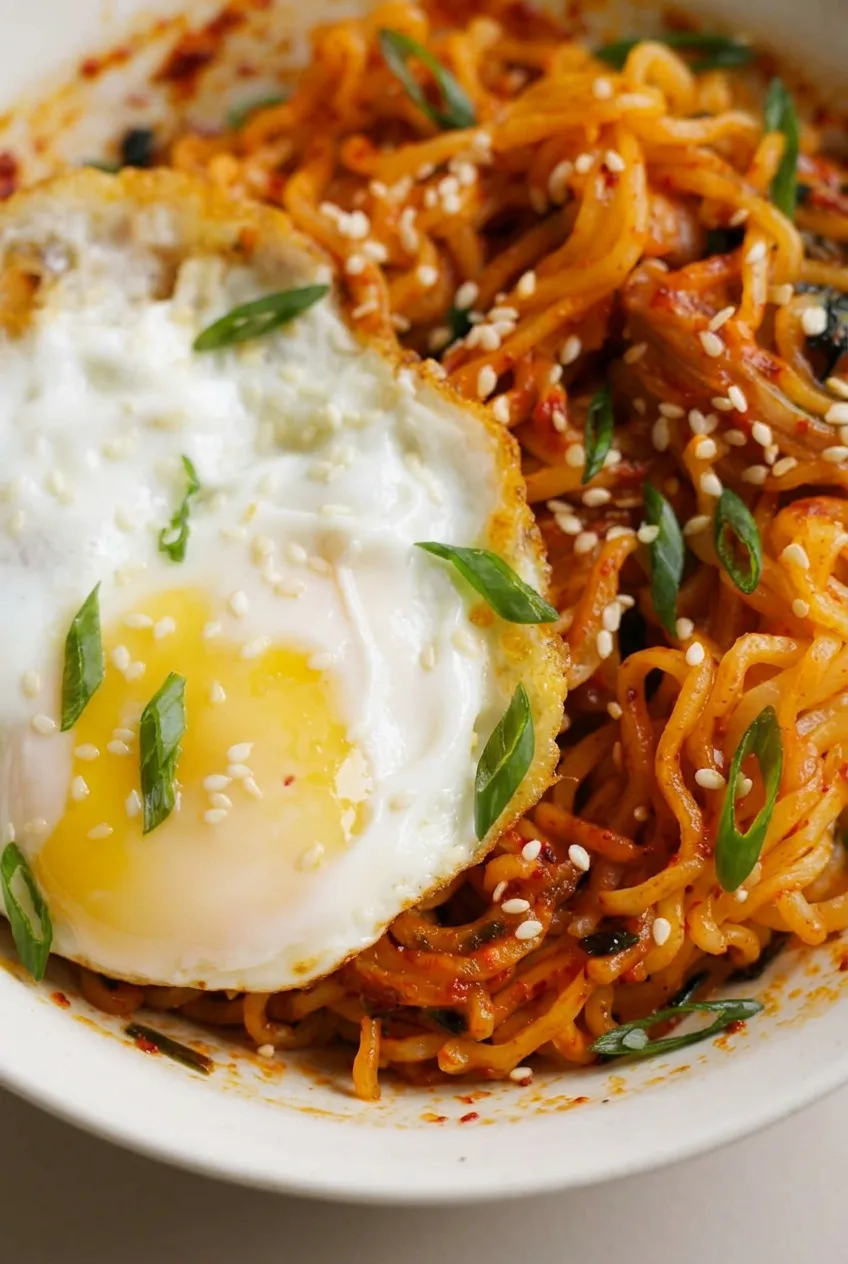
  • 1 tablespoon plus 1 teaspoon neutral vegetable or canola oil, divided
  • 2 teaspoons gochugaru
  • 2 garlic cloves, finely minced
  • 1 scallion, thinly sliced, whites and greens separated
  • 2 teaspoons soy sauce
  • 1 teaspoon rice vinegar
  • 1 large egg
  • 1 teaspoon white sesame seeds

Yield: 1 generous serving. Time: 5 minutes prep, 8–10 minutes cooking, 13–15 minutes total.

How to Make Chili Oil Ramen Noodles

Complete bowl of chili oil ramen with a fried egg, scallions, and sesame on a pale tabletop
  1. Prepare the aromatics: Put the gochugaru, garlic, and scallion whites in a dry, roomy heatproof bowl. Keep the soy sauce, vinegar, scallion greens, and sesame seeds nearby.
  2. Fry the egg: Heat 1 teaspoon oil in a small nonstick skillet over medium-low heat. Add the egg and cook without flipping for about 2–4 minutes, until the white is fully opaque and the yolk is soft. Briefly cover the skillet only if the top of the white needs help setting. Transfer the egg to a plate.
  3. Cook the ramen: Boil the noodles uncovered in a saucepan of actively boiling water, separating the strands as they loosen. Use the package time as a guide—often about 2–3 minutes—and start checking early for a chewy texture. Reserve about 1/4 cup cooking water, then drain the noodles well.
  4. Bloom the chili oil: Heat the remaining 1 tablespoon oil in the skillet over medium heat until it shimmers but does not smoke. Slowly pour it over the aromatics in the heatproof bowl, keeping your hands clear as they sizzle. Once the bubbling subsides, stir in the soy sauce and rice vinegar.
  5. Toss and serve: Add the drained noodles and toss until evenly coated. If the strands cling together, add reserved noodle water 1–2 teaspoons at a time, just until the coating looks glossy; there should be no pool of liquid. Transfer to a shallow bowl, place the egg partly over the noodles, and scatter the scallion greens and sesame seeds on top. Serve immediately.

How to Get an Even Chili Oil Coating

Shimmering oil looks slightly rippled across the surface; it does not need to smoke. Pour it slowly onto the aromatics in the heatproof bowl, not directly onto wet noodles, which can cause splattering. Toss the noodles thoroughly before adding any cooking water so you can judge whether they need it.

Noodle and Egg Timing

Fry the egg first so the noodles can be sauced as soon as they drain. Remove the egg when its white is set, even if the yolk still looks soft. Ramen thickness varies by brand, so drain when the strands are separate and springy rather than relying on the package time alone.

Ingredient Swaps and Heat

Gochugaru varies in heat by brand. For a milder bowl, start with less than 2 teaspoons; add a pinch to the finished noodles if you want more heat. Chinese black vinegar can replace rice vinegar, though it will taste different. Low-sodium soy sauce also works; taste before adding more seasoning.

If using fresh or thicker ramen, follow its cooking directions. A small handful of cooked greens or mushrooms can go alongside the noodles without replacing the egg. For a different, less chili-forward bowl, try these sesame garlic ramen noodles.

Storing and Reheating

Refrigerate leftover noodles promptly in an airtight container for up to 2 days; they will soften as they sit. Reheat in a skillet over medium heat or in the microwave until hot, adding a small splash of water to loosen them. For a soft-yolk topping, fry a fresh egg when serving.

You can prepare the aromatics ahead, but cook and toss the noodles close to serving time. Do not freeze the assembled bowl; the noodle texture suffers.

Nutrition

Approximate nutrition per serving: 660 calories, 18g protein, 39g fat, and 59g carbohydrates. Approximate nutrition per 100g of finished noodles and toppings: 210 calories, 6g protein, 13g fat, and 19g carbohydrates. Estimates assume a finished bowl of about 310g; values vary with the ramen brand and the amount of water the noodles absorb.

Chili Oil Ramen Noodles

Chewy ramen noodles are tossed in garlic-chili oil with soy sauce and rice vinegar, then topped with a fried egg, scallions, and sesame seeds.
Course: Main Course
Cuisine: Global
Prep: 5 min
Cook: 9 min
Total: 14 min
Servings: 1 Calories: 660 kcal

Equipment

  • Saucepan
  • Small nonstick skillet
  • Heatproof bowl

Ingredients

  • 1 package instant ramen noodles, about 3 oz (85 g); set aside the seasoning packet
  • 1 tablespoon plus 1 teaspoon neutral vegetable or canola oil, divided
  • 2 teaspoons gochugaru
  • 2 garlic cloves, finely minced
  • 1 scallion, thinly sliced, whites and greens separated
  • 2 teaspoons soy sauce
  • 1 teaspoon rice vinegar
  • 1 large egg
  • 1 teaspoon white sesame seeds

Instructions

  1. Place the gochugaru, minced garlic, and scallion whites in a dry, roomy heatproof bowl. Keep the soy sauce, rice vinegar, scallion greens, and sesame seeds nearby.
  2. Heat 1 teaspoon oil in a small nonstick skillet over medium-low heat. Add the egg and cook without flipping for 2–4 minutes, until the white is fully opaque. Briefly cover the skillet if needed to set the top of the white, then transfer the egg to a plate.
  3. Boil the noodles uncovered in a saucepan of actively boiling water, separating the strands as they loosen. Use the package time as a guide, often 2–3 minutes, and check early for a chewy texture. Reserve about 1/4 cup cooking water, then drain the noodles well.
  4. Heat the remaining 1 tablespoon oil in the skillet over medium heat until it shimmers but does not smoke. Slowly pour it over the aromatics in the heatproof bowl, keeping your hands clear as they sizzle.
  5. When the bubbling subsides, stir in the soy sauce and rice vinegar.
  6. Add the drained noodles and toss until evenly coated. If the strands cling together, add reserved noodle water 1–2 teaspoons at a time until the coating looks glossy, with no pool of liquid.
  7. Transfer the noodles to a shallow bowl. Place the egg partly over the noodles and scatter the scallion greens and sesame seeds on top. Serve immediately.

Tips

  • Cook the noodles just until chewy and springy; ramen cooking times vary by brand.
  • Let the oil shimmer, but do not let it smoke.
  • Pour the hot oil over the aromatics in the heatproof bowl, not directly onto wet noodles.
  • Toss the noodles thoroughly before adding any cooking water, then add it a teaspoon or two at a time.
  • Fry the egg first so the noodles can be sauced as soon as they drain.

Variations

  • Milder or Hotter Chili Ramen: Use less than 2 teaspoons gochugaru for a milder bowl, or add a pinch to the finished noodles for more heat.
  • Black Vinegar Ramen: Replace the rice vinegar with Chinese black vinegar for a different flavor.
  • Ramen with Greens or Mushrooms: Serve a small handful of cooked greens or mushrooms alongside the noodles.

Notes

Refrigerate leftovers in an airtight container for up to 2 days. Reheat in a skillet or microwave until hot, adding a splash of water to loosen; fry a fresh egg for serving. Do not freeze the assembled bowl.

Nutrition

Calories: 660 kcal | Protein: 18 g | Fat: 39 g | Carbohydrates: 59 g | Per 100g Calories: 210 kcal | Per 100g Protein: 6 g | Per 100g Fat: 13 g | Per 100g Carbohydrates: 19 g