Author

Julia

Browsing

Chicken Ramen Stir Fry

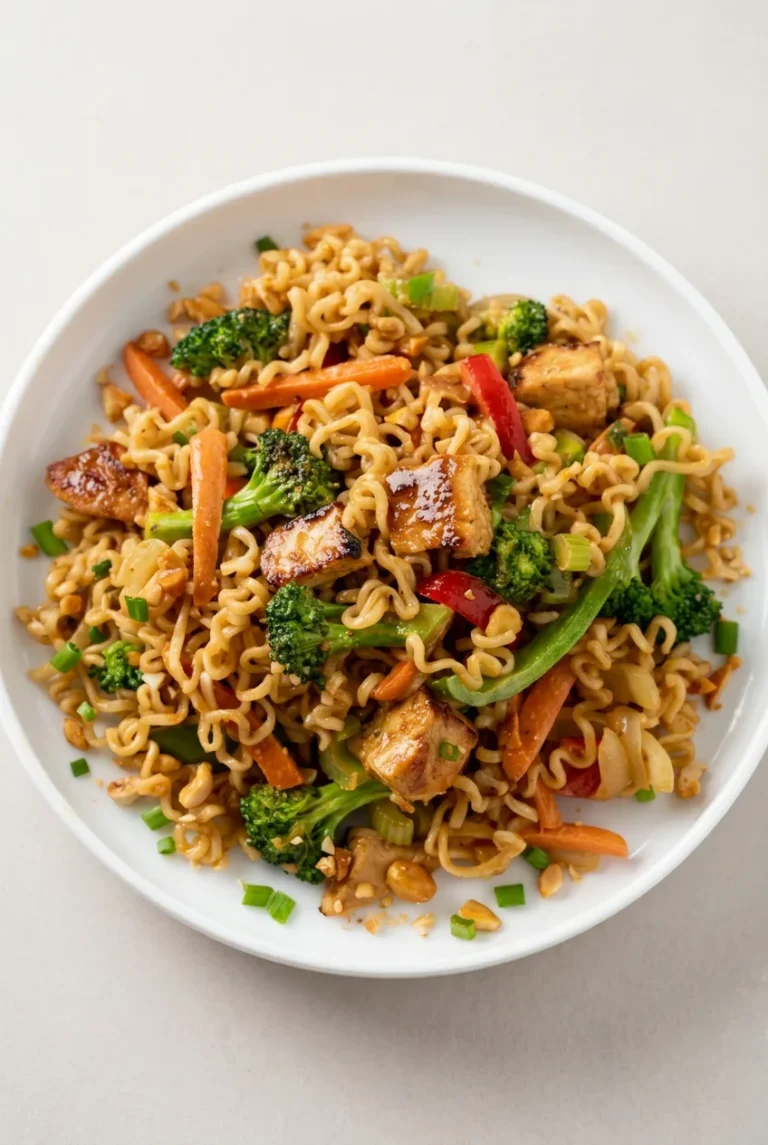
Curly ramen, browned chicken, broccoli, carrots, and red and green peppers come together in a light peanut-soy sauce. Chopped peanuts and green onions finish each bowl. The noodles should stay separate and springy, with just enough sauce to coat them.

Cook the firm vegetables before adding the peppers, and boil the ramen only until its strands loosen. A brief final toss in the skillet heats the noodles without turning them soft. The ramen seasoning packets are not used; the measured sauce seasons the dish.

Ingredients for Chicken Ramen Stir Fry
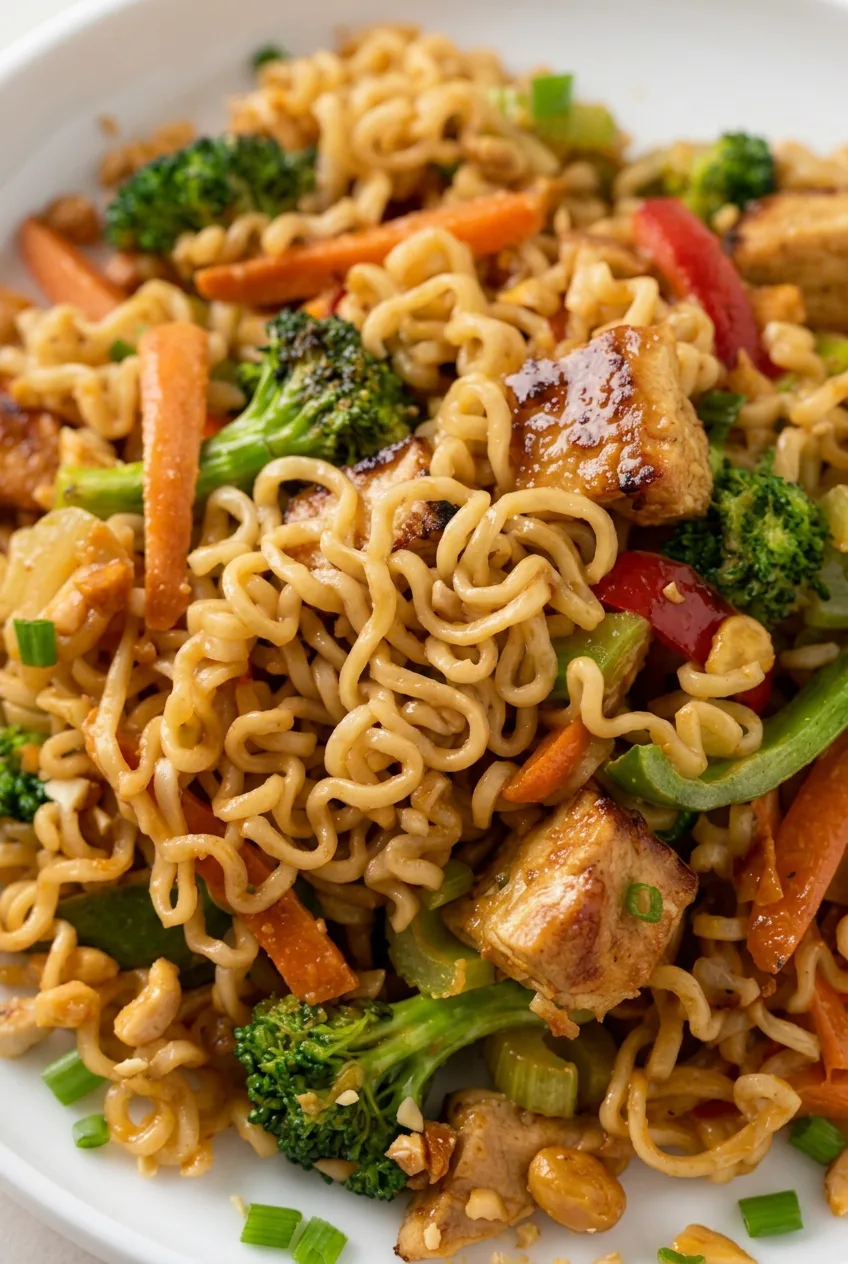
Close view of glossy ramen curls, browned chicken, broccoli, and chopped peanuts
  • 1 lb boneless, skinless chicken breast, cut into roughly 3/4-inch pieces (450g)
  • 3 packages instant ramen noodles, about 3 oz each (255g total); discard the seasoning packets
  • 3 cups small broccoli florets (225g)
  • 1 large carrot, cut into thin matchsticks (about 75g)
  • 1/2 medium red bell pepper, thinly sliced (about 75g)
  • 1/2 medium green bell pepper, thinly sliced (about 75g)
  • 2 tablespoons neutral cooking oil, divided
  • 2 tablespoons creamy peanut butter (about 30g)
  • 3 tablespoons low-sodium soy sauce
  • 1/3 cup water, plus more as needed
  • 1 tablespoon honey
  • 1 tablespoon rice vinegar
  • 2 garlic cloves, minced
  • 1 teaspoon finely grated fresh ginger
  • 1/4 cup chopped roasted peanuts (about 35g)
  • 2 green onions, thinly sliced

For optional heat, add 1 to 2 teaspoons sriracha to the sauce or serve it at the table. This dish contains peanut butter and peanuts.

How to Make Chicken Ramen Stir Fry
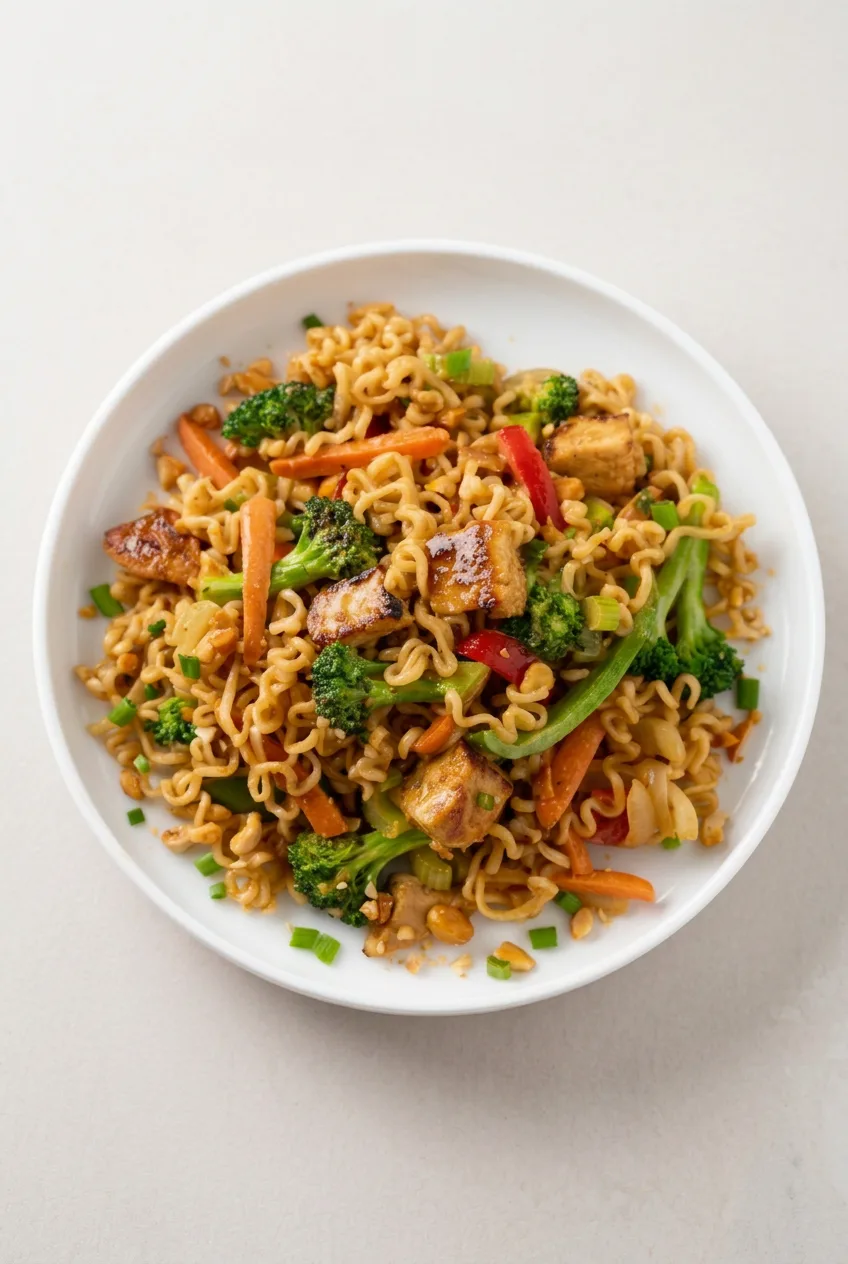
Full bowl of chicken ramen stir fry on a pale surface, with colorful vegetables visible
  1. Prepare the sauce: Whisk the peanut butter, soy sauce, 1/3 cup water, honey, rice vinegar, garlic, and ginger until smooth and pourable. Cut the chicken and vegetables before heating the skillet; the cooking moves quickly.
  2. Brown the chicken: Heat a 12-inch skillet or wok over medium-high heat. Add 1 tablespoon oil and, once it shimmers, add the chicken in an uncrowded layer. Cook for roughly 5 to 8 minutes, turning to brown more than one side, until a thick piece reaches 165°F (75°C). Cook in two batches if needed so the chicken browns rather than steams. Transfer to a plate.
  3. Cook the vegetables: Add the remaining tablespoon of oil to the skillet. Stir-fry the broccoli and carrots until they begin to soften, then add both peppers. Cook for about 5 to 7 minutes total, stirring, until the broccoli is bright green, the carrots bend slightly, and the peppers still hold their shape. If large broccoli florets remain hard, add 1 to 2 tablespoons water and cover briefly before adding the peppers. Uncover and let the water evaporate.
  4. Boil the ramen: While the vegetables cook, boil the noodles in a separate saucepan. Start checking around 1 1/2 to 2 minutes; noodle thickness and package directions vary. Drain as soon as the strands separate and are flexible but still slightly firm. If they must wait, rinse briefly with cool water and drain thoroughly.
  5. Toss and serve: Reduce the skillet heat to medium or medium-low. Return the chicken to the pan and add the sauce and drained ramen. Gently lift and toss for 1 to 2 minutes, just until hot and evenly coated. If the sauce gathers in thick patches, add water 1 tablespoon at a time until it lightly glosses the noodles without pooling. Divide among four bowls and top with chopped peanuts and green onions.

How to Keep the Ramen Springy

Take the ramen out of the boiling water while its curls are flexible but not fully soft; it finishes cooking during the skillet toss. Time the noodles near the end of the vegetable step so they do not sit warm and clump. A brief cool rinse helps if they must wait, but drain them well so excess water does not dilute the sauce.

Getting the Vegetables and Sauce Right

Small broccoli florets and thin carrot sticks cook quickly, but they need a head start before the pepper strips. Adding everything at once can leave the broccoli hard by the time the peppers are limp.

Peanut butter thickens as it heats. Whisk the sauce until smooth before it reaches the skillet, keep the final toss short, and add only enough extra water to give the noodles a light, glossy coating.

Chicken Ramen Stir Fry Variations

Boneless, skinless chicken thighs can replace the breast. Cut them into bite-size pieces, adjust the skillet time as needed, and check that they reach 165°F. For a different sauce and vegetable combination, try teriyaki chicken ramen with bok choy and carrots.

Leftovers and Make-Ahead

Refrigerate leftovers promptly in an airtight container for up to 3 days. The noodles will soften somewhat. Reheat gently in a skillet with a splash of water, or microwave until hot, stirring partway through.

To prepare ahead, cut the vegetables and whisk the sauce in advance, but cook the ramen close to serving. For a freezer meal, freeze the cooked chicken and vegetables separately from the sauce and noodles. Cook fresh ramen when ready to serve, then heat and toss everything together. Fully assembled ramen is unlikely to retain its springy texture after freezing.

Nutrition

Approximate nutrition per serving, based on 4 servings: 650 calories, 40g protein, 30g fat, and 56g carbohydrates. Estimated per 100g of finished stir fry: 150 calories, 9g protein, 7g fat, and 13g carbohydrates. Values vary with the ramen brand, sauce ingredients, and final cooked weight.

Chicken Ramen Stir Fry

Curly ramen, browned chicken, broccoli, carrots, and peppers are tossed in a light peanut-soy sauce and topped with peanuts and green onions.
Course: Main Course
Cuisine: Asian
Prep: 20 min
Cook: 18 min
Total: 38 min
Servings: 4 Calories: 650 kcal

Equipment

  • 12-inch skillet or wok
  • Saucepan
  • Whisk
  • Instant-read thermometer

Ingredients

For the Stir Fry

  • 1 lb boneless, skinless chicken breast, cut into roughly 3/4-inch pieces (450g)
  • 3 packages instant ramen noodles, about 3 oz each (255g total), seasoning packets discarded
  • 3 cups small broccoli florets (225g)
  • 1 large carrot, cut into thin matchsticks (about 75g)
  • 1/2 medium red bell pepper, thinly sliced (about 75g)
  • 1/2 medium green bell pepper, thinly sliced (about 75g)
  • 2 tablespoons neutral cooking oil, divided

For the Sauce

  • 2 tablespoons creamy peanut butter (about 30g)
  • 3 tablespoons low-sodium soy sauce
  • 1/3 cup water, plus more as needed
  • 1 tablespoon honey
  • 1 tablespoon rice vinegar
  • 2 garlic cloves, minced
  • 1 teaspoon finely grated fresh ginger
  • Optional: 1 to 2 teaspoons sriracha

For Serving

  • 1/4 cup chopped roasted peanuts (about 35g)
  • 2 green onions, thinly sliced

Instructions

  1. Whisk the peanut butter, soy sauce, 1/3 cup water, honey, rice vinegar, garlic, and ginger until smooth and pourable. Add sriracha if desired.
  2. Cut the chicken and vegetables before heating the skillet.
  3. Heat a 12-inch skillet or wok over medium-high heat. Add 1 tablespoon oil. When it shimmers, add the chicken in an uncrowded layer.
  4. Cook the chicken for roughly 5 to 8 minutes, turning to brown more than one side, until a thick piece reaches 165°F (75°C). Cook in batches if needed, then transfer to a plate.
  5. Add the remaining tablespoon of oil to the skillet. Stir-fry the broccoli and carrots until they begin to soften, then add both peppers.
  6. Cook the vegetables for about 5 to 7 minutes total, stirring, until the broccoli is bright green, carrots bend slightly, and peppers still hold their shape. If large broccoli florets are hard, add 1 to 2 tablespoons water and cover briefly; uncover and let the water evaporate before continuing.
  7. While the vegetables cook, boil the ramen in a separate saucepan. Start checking at 1 1/2 to 2 minutes and drain when the strands separate and are flexible but still slightly firm. If the noodles must wait, rinse briefly with cool water and drain thoroughly.
  8. Reduce the skillet heat to medium or medium-low. Return the chicken to the skillet and add the sauce and drained ramen.
  9. Gently lift and toss for 1 to 2 minutes, until hot and evenly coated. Add water 1 tablespoon at a time if needed to give the noodles a light gloss without pooling.
  10. Divide among four bowls and top with chopped peanuts and green onions.

Tips

  • Boil the ramen only until the strands loosen; it will finish cooking in the skillet.
  • Cook the broccoli and carrots before adding the peppers so the firm vegetables have a head start.
  • Cook the chicken in batches if the skillet is crowded, so it browns rather than steams.
  • If the noodles must wait after draining, rinse them briefly with cool water and drain well.
  • Add extra water gradually during the final toss to keep the sauce light and glossy.

Variations

  • Chicken Thigh Ramen Stir Fry: Replace the chicken breast with bite-size pieces of boneless, skinless chicken thighs and cook until they reach 165°F.
  • Spicy Chicken Ramen Stir Fry: Add 1 to 2 teaspoons sriracha to the sauce or serve it at the table.
Notes

Refrigerate leftovers promptly in an airtight container for up to 3 days. Reheat gently in a skillet with a splash of water or microwave until hot, stirring partway through. The noodles soften somewhat in storage.

Nutrition

Calories: 650 kcal | Protein: 40 g | Fat: 30 g | Carbohydrates: 56 g | Per 100g: 150 calories, 9 g protein, 7 g fat, 13 g carbohydrates

Egg Ramen Noodles

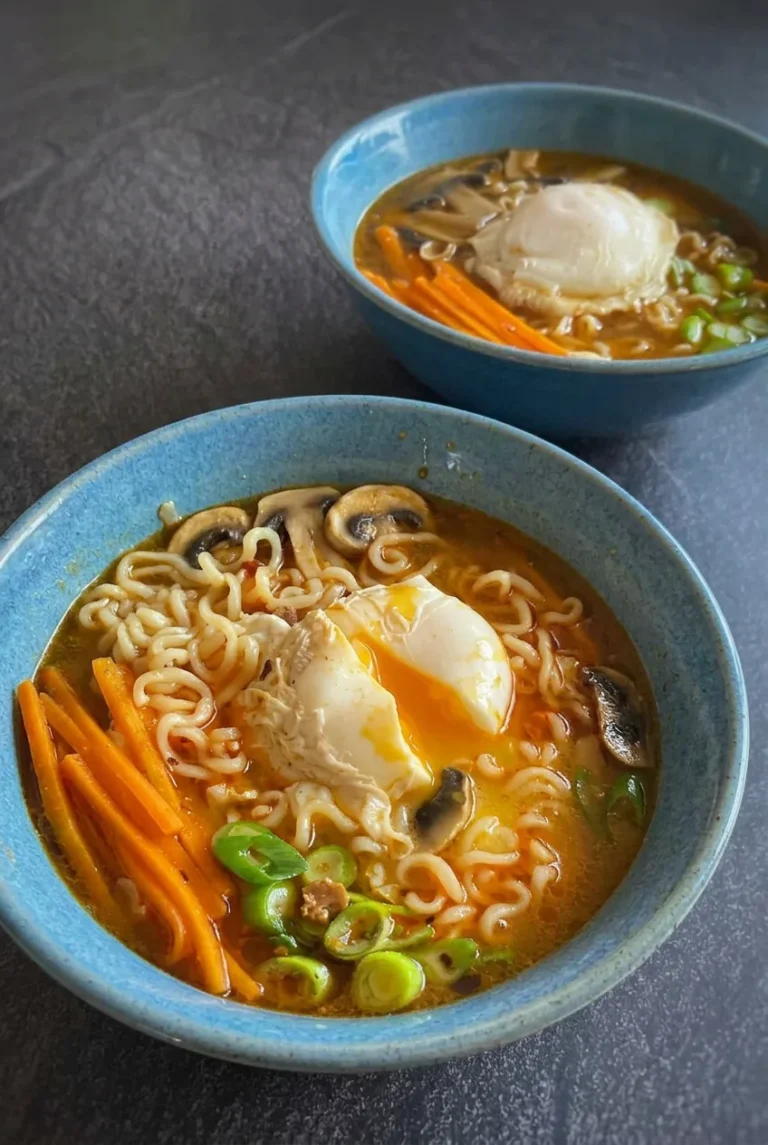
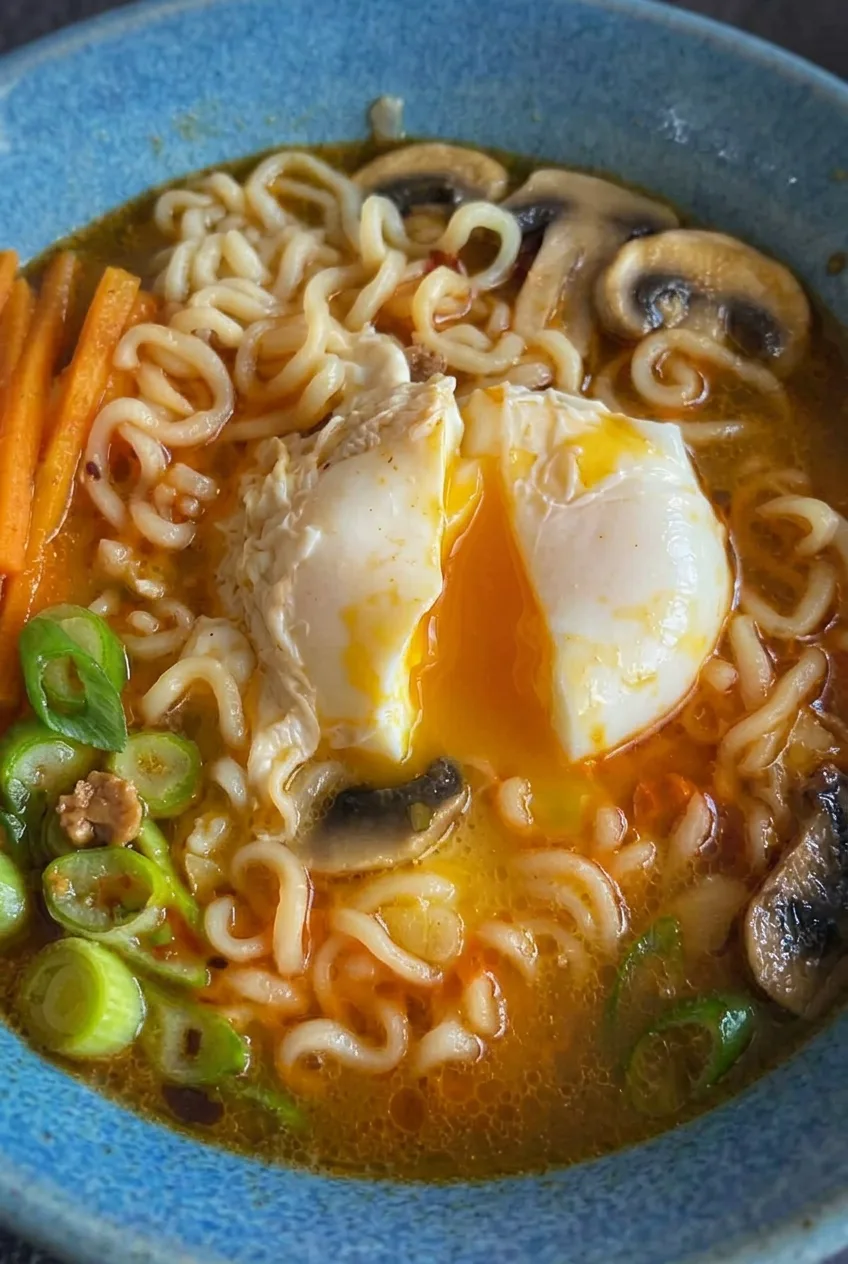
Curly ramen noodles, carrots, and mushrooms sit in a savory broth, with a soft poached egg on each bowl. Soy sauce, ginger, garlic, sesame oil, and chili oil season the broth without the ramen packets.

The noodles come out of the saucepan before the eggs go in. This keeps them springy while the egg whites set. Add the hot broth just before serving, then open an egg so the yolk runs into the noodles.

Ingredients for Egg Ramen Noodles

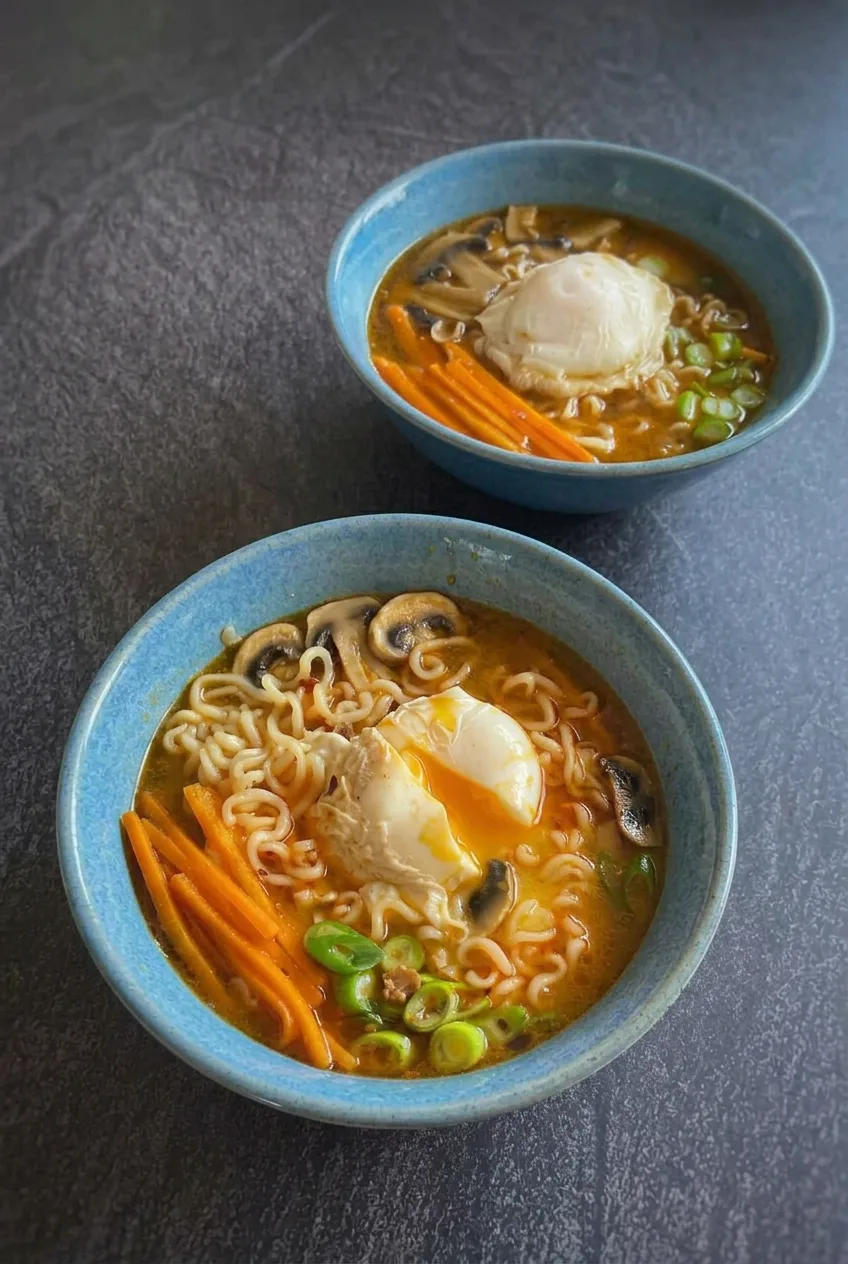
Close view of a soft poached egg spilling yolk over curly ramen noodles, mushrooms, carrots, and broth
  • 4 cups low-sodium chicken broth
  • 2 instant ramen noodle cakes, about 3 oz each (170g total), seasoning packets discarded
  • 2 large eggs
  • 1 medium carrot, cut into thin matchsticks
  • 4 oz cremini or button mushrooms, sliced (115g)
  • 2 scallions, thinly sliced
  • 1 tablespoon low-sodium soy sauce
  • 1 teaspoon grated fresh ginger
  • 1 garlic clove, minced
  • 1 teaspoon toasted sesame oil
  • 1 teaspoon chili oil

Yield: 2 bowls. Time: About 8 minutes to prepare and 10–12 minutes to cook; about 20 minutes total.

How to Make Egg Ramen Noodles

Two complete blue bowls of brothy egg ramen noodles with poached eggs and vegetables on a dark table
  1. Prepare the vegetables and eggs: Cut the carrot into thin matchsticks and slice the mushrooms and scallions. Crack each egg into a separate small cup, keeping the yolks intact.
  2. Bring the broth to a boil: Combine the broth, soy sauce, ginger, garlic, sesame oil, and chili oil in a 3- to 4-quart saucepan. Bring to a steady boil over medium-high heat. Taste the broth before adding the noodles; leave out the ramen seasoning packets.
  3. Cook the vegetables and noodles: Add the carrot and mushrooms and simmer uncovered for about 2 minutes. Add the noodle cakes and stir gently to loosen them. Start checking at 2 minutes, using the package time as a guide. When the curls separate easily but are still slightly shy of tender—about 2–3 minutes for many instant noodles—lift the noodles and vegetables into two soup bowls.
  4. Poach the eggs: Reduce the broth to a gentle simmer over medium-low heat. Lower each egg from its cup close to the surface, leaving space between them. Cover loosely and cook without stirring for about 3–4 minutes. Start checking at 3 minutes: the whites should be fully opaque and set, while the yolks remain soft. Carefully lift out the eggs with a slotted spoon.
  5. Finish the bowls: Ladle hot broth around the noodles, leaving some curls visible. Top each bowl with an egg and scatter the scallions over the noodles. Serve immediately, opening an egg just before eating if you want the yolk to flow into the broth.

How to Keep the Noodles Springy

Instant ramen continues to soften in hot broth. Take it out just before it reaches full tenderness, then add the broth only when the eggs are ready. Package cooking times vary, so use the loosened, springy curls as your guide.

How to Poach the Eggs in Broth

Keep the broth at a gentle simmer rather than a rolling boil. Lowering the eggs from cups close to the surface helps the whites stay together. Use a saucepan wide enough to hold both eggs without crowding; otherwise, poach them one at a time.

Egg size and simmer strength affect the timing. Judge doneness by the whites, which should be opaque and hold together when lifted. Poach longer for firmer yolks. Anyone who needs fully cooked eggs should cook until both the whites and yolks are firm.

Seasoning Without the Ramen Packets

The broth and soy sauce already supply seasoning, so adding the ramen packets could make the soup too salty. Chili oil varies in heat; taste a finished bowl before adding any extra drops.

For a meat-free bowl, use vegetable broth and check the noodle ingredients. For a gluten-free bowl, use gluten-free ramen and tamari, checking both labels.

Make-Ahead and Leftovers

These bowls are best eaten as soon as they are assembled. The noodles absorb broth as they sit, and reheating will not restore their original texture or the soft eggs.

To prepare ahead, refrigerate the sliced vegetables and unused broth separately. Bring the broth to a boil, then cook the vegetables, noodles, and eggs close to serving time. Freezing assembled bowls is not recommended.

Nutrition

Approximate per bowl (1 of 2): 525 calories, 23g protein, 24g fat, and 61g carbohydrates. Approximate per 100g: 75 calories, 3g protein, 3g fat, and 8g carbohydrates. Values vary with the ramen, broth, chili oil, and amount of broth served.

Egg Ramen Noodles

Curly ramen noodles, vegetables, and soft-poached eggs are served in a savory ginger, garlic, and sesame broth.
Course: Soup
Cuisine: Japanese
Prep: 8 min
Cook: 12 min
Total: 20 min
Servings: 2 Calories: 525 kcal

Equipment

  • 3- to 4-quart saucepan
  • Small cups
  • Slotted spoon
  • Soup bowls

Ingredients

  • 4 cups low-sodium chicken broth
  • 2 instant ramen noodle cakes, about 3 oz each (170 g total), seasoning packets discarded
  • 2 large eggs
  • 1 medium carrot, cut into thin matchsticks
  • 4 oz cremini or button mushrooms, sliced (115 g)
  • 2 scallions, thinly sliced
  • 1 tablespoon low-sodium soy sauce
  • 1 teaspoon grated fresh ginger
  • 1 garlic clove, minced
  • 1 teaspoon toasted sesame oil
  • 1 teaspoon chili oil

Instructions

  1. Cut the carrot into thin matchsticks and slice the mushrooms and scallions.
  2. Crack each egg into a separate small cup, keeping the yolks intact.
  3. Combine the broth, soy sauce, ginger, garlic, sesame oil, and chili oil in a 3- to 4-quart saucepan. Bring to a steady boil over medium-high heat.
  4. Add the carrot and mushrooms and simmer uncovered for about 2 minutes.
  5. Add the noodle cakes and stir gently to loosen them. Start checking at 2 minutes, using the package time as a guide. When the curls separate easily but are still slightly shy of tender, lift the noodles and vegetables into two soup bowls.
  6. Reduce the broth to a gentle simmer over medium-low heat. Lower each egg from its cup close to the broth’s surface, leaving space between the eggs. Cover loosely and cook without stirring for about 3–4 minutes, until the whites are opaque and set and the yolks remain soft.
  7. Carefully lift out the eggs with a slotted spoon.
  8. Ladle the hot broth around the noodles, top each bowl with an egg, and scatter the scallions over the noodles. Serve immediately.

Tips

  • Remove the noodles just before they reach full tenderness so they stay springy in the hot broth.
  • Keep the broth at a gentle simmer when poaching the eggs; a rolling boil can break up the whites.
  • Lower eggs from cups close to the broth’s surface to help the whites stay together.
  • Use a saucepan wide enough to hold both eggs without crowding, or poach them one at a time.
  • Taste the broth before serving; chili oil varies in heat.

Variations

  • Meat-Free Ramen: Use vegetable broth and check the noodle ingredients.
  • Gluten-Free Ramen: Use gluten-free ramen and tamari, checking both labels.

Notes

Best eaten as soon as assembled; noodles soften as they sit, and reheating will not restore their original texture. Prepare ahead by refrigerating sliced vegetables and unused broth separately. Cook eggs until both whites and yolks are firm if fully cooked eggs are needed.

Nutrition

Calories: 525 kcal | Protein: 23 g | Fat: 24 g | Carbohydrates: 61 g

Korean Gochujang Ramen

Curly ramen and browned ground beef are tossed in a glossy, orange-red gochujang sauce for a hot, brothless noodle dish. Boil the noodles separately, then give them only a brief toss in the skillet so they stay loose and liftable.

Start with 2 tablespoons of gochujang and add more only after tasting the warm sauce; brands vary in heat and saltiness. Leave out the ramen seasoning packets—the gochujang, soy sauce, mirin, and sesame oil season the dish.

Ingredients for Korean Gochujang Ramen

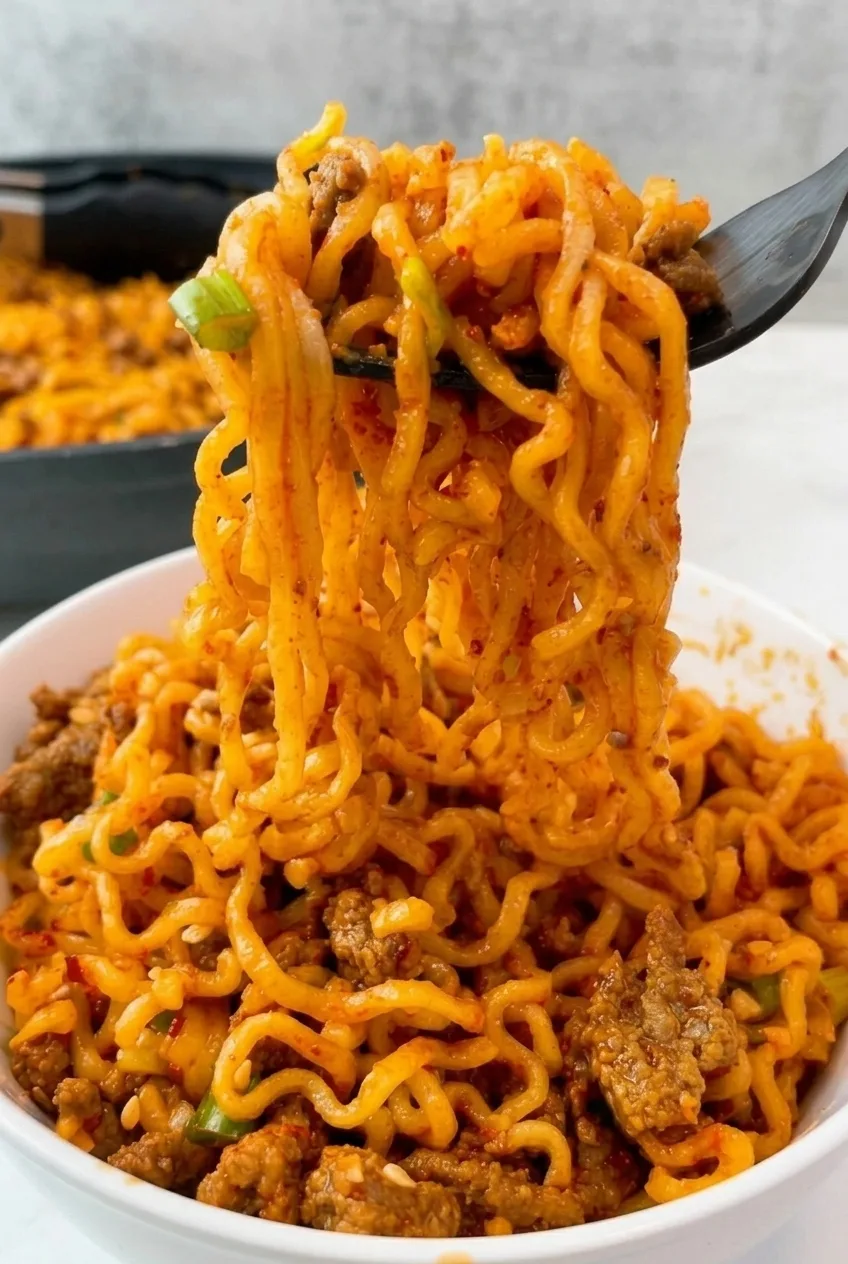
Close view of glossy gochujang-coated ramen strands, browned beef crumbles, green onions, and sesame seeds
  • 3 packages instant ramen noodles, about 9 oz dry total (255g); discard the seasoning packets
  • 1 lb lean ground beef (450g)
  • 1 teaspoon neutral cooking oil
  • 3 garlic cloves, minced
  • 2 tablespoons gochujang, plus up to 1 tablespoon more to taste
  • 2 tablespoons soy sauce
  • 1 tablespoon mirin
  • 2 teaspoons toasted sesame oil
  • 3 green onions, thinly sliced
  • 2 teaspoons toasted sesame seeds

Reserve 1/2 cup of the ramen cooking water before draining. You will likely use only 1 to 4 tablespoons to loosen the sauce.

How to Make Gochujang Ramen

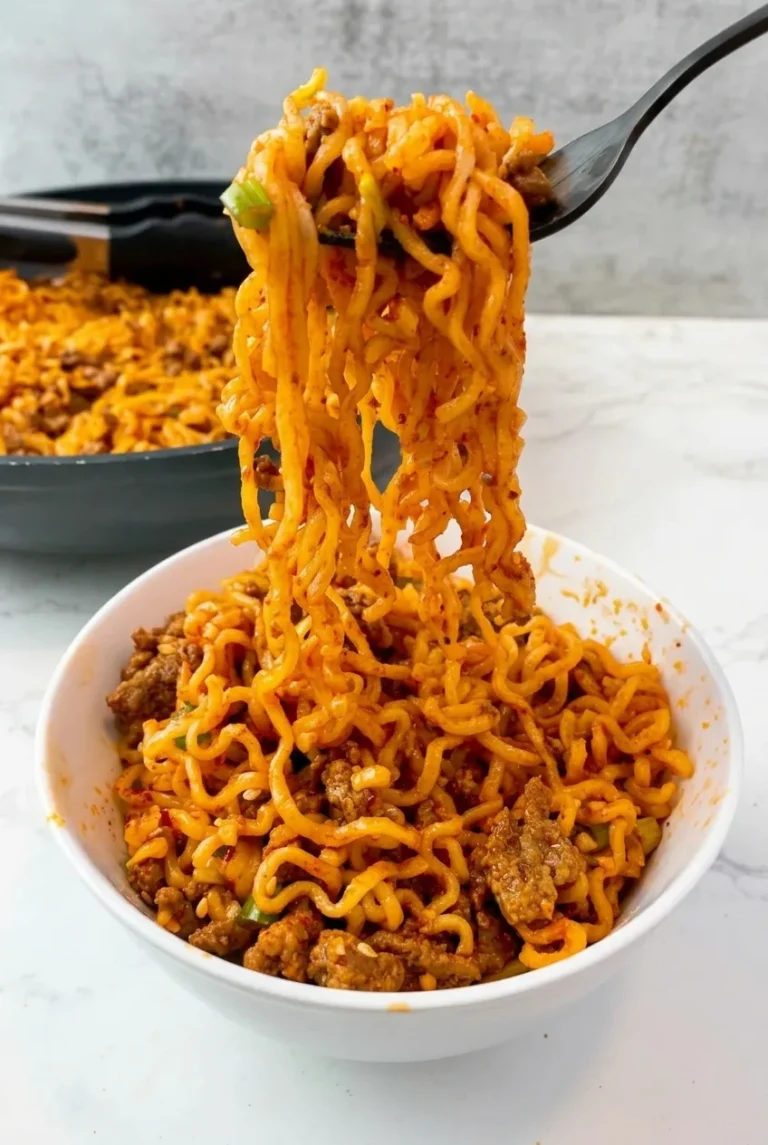
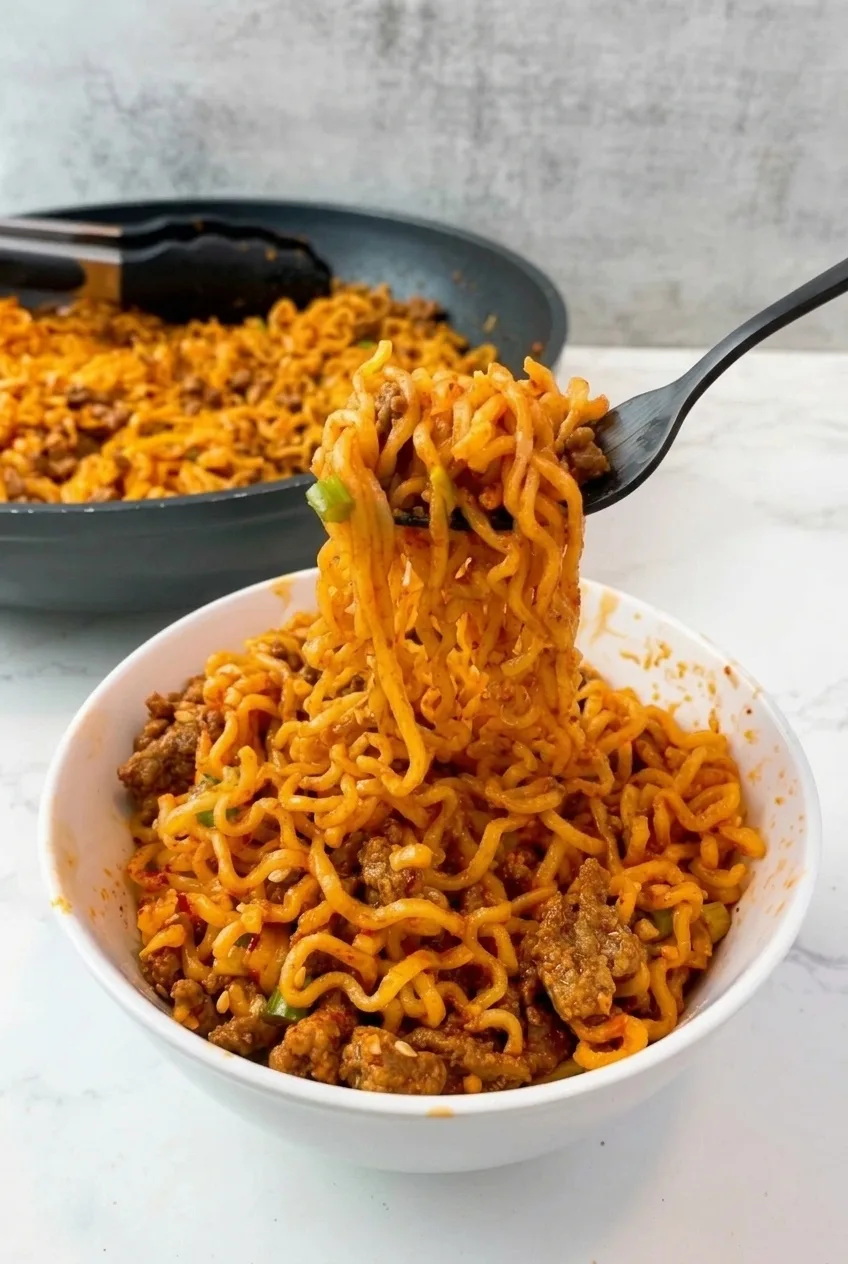
Full bowl of Korean gochujang ramen with ground beef and a skillet of noodles behind it
  1. Whisk the sauce: In a small bowl, whisk 2 tablespoons gochujang with the soy sauce, mirin, and sesame oil until smooth. Set the extra gochujang aside.
  2. Cook the ramen: Boil the noodles according to the package directions, checking at the earliest stated time. They should be tender but intact. Reserve 1/2 cup cooking water, then drain without rinsing.
  3. Brown the beef: Heat the oil in a 12-inch skillet over medium-high heat until it shimmers. Add the beef and cook uncovered, stirring and breaking it into crumbles, for about 5 to 7 minutes, until browned and fully cooked. If using a thermometer, ground beef should reach 160°F (70°C). Drain excess fat if needed, then stir in the garlic for 30 to 60 seconds, until fragrant.
  4. Warm the sauce: Reduce the heat to medium-low. Stir the sauce into the beef and let it bubble gently for 2 to 3 minutes. Taste before adding any extra gochujang.
  5. Toss the noodles: Add the drained ramen and most of the green onions. Turn with tongs for 1 to 2 minutes, adding reserved noodle water 1 tablespoon at a time as needed. Stop when the strands are separate, shiny, and evenly coated, with no dry patches or substantial liquid pooling in the skillet.
  6. Serve: Divide among four bowls. Top with the remaining green onions and toasted sesame seeds, and serve hot.

How to Keep the Sauce Glossy, Not Soupy

Gochujang is thick and can cling to noodles in patches. Add a little reserved cooking water while tossing to spread the sauce across the strands, stopping as soon as the noodles lift freely. Keep the skillet toss short: the ramen is already cooked and will soften further if left over the heat.

Adjusting the Heat and Making Swaps

For extra heat in individual bowls, add a pinch of gochugaru at the table rather than making the whole skillet spicier.

Ground turkey, chicken, or pork can replace the beef; cook any substituted ground meat fully. Other noodles will work differently and will not give the dish the same curly ramen texture. For another brothless noodle dinner, try Sesame Garlic Ramen Noodles.

Storing and Warming Leftovers

Cool leftovers promptly and refrigerate in a covered container. The noodles absorb sauce as they stand, so they will be less loose than when freshly made. When warming them, add a small splash of water if needed to help separate the strands. Freezing is not recommended for preserving the finished noodles’ texture.

Nutrition

Approximate nutrition per serving, based on 4 servings: 560 calories, 30g protein, 26g fat, and 46g carbohydrates. Per 100g of finished ramen: approximately 170 calories, 9g protein, 8g fat, and 14g carbohydrates. Values are estimates and will vary with ramen package size, beef leanness, sauce brands, and the amount of cooking water used.

Korean Gochujang Ramen

Curly ramen and browned ground beef are tossed in a glossy gochujang sauce and topped with green onions and sesame seeds.
Course: Main Course
Cuisine: Korean
Prep: 10 min
Cook: 15 min
Total: 25 min
Servings: 4 Calories: 560 kcal per serving; 170 kcal per 100 g

Equipment

  • Small bowl
  • Whisk
  • Large pot
  • Colander
  • 12-inch skillet
  • Tongs

Ingredients

For the Ramen

  • 3 packages instant ramen noodles, about 9 oz dry total (255 g); discard seasoning packets
  • 1 lb lean ground beef (450 g)
  • 1 teaspoon neutral cooking oil
  • 3 garlic cloves, minced
  • 1/2 cup ramen cooking water, reserved for loosening the sauce as needed

For the Sauce and Toppings

  • 2 tablespoons gochujang, plus up to 1 tablespoon more to taste
  • 2 tablespoons soy sauce
  • 1 tablespoon mirin
  • 2 teaspoons toasted sesame oil
  • 3 green onions, thinly sliced
  • 2 teaspoons toasted sesame seeds

Instructions

  1. Whisk 2 tablespoons gochujang with the soy sauce, mirin, and sesame oil in a small bowl until smooth. Set any extra gochujang aside.
  2. Boil the ramen according to the package directions, checking at the earliest stated time. Cook until tender but intact.
  3. Reserve 1/2 cup of the cooking water, then drain the noodles without rinsing.
  4. Heat the oil in a 12-inch skillet over medium-high heat until shimmering. Add the beef and cook uncovered for 5 to 7 minutes, stirring and breaking it into crumbles, until browned and fully cooked. Ground beef should reach 160°F (70°C). Drain excess fat if needed.
  5. Stir the garlic into the beef and cook for 30 to 60 seconds, until fragrant.
  6. Reduce the heat to medium-low. Stir in the sauce and let it bubble gently for 2 to 3 minutes. Taste before adding more gochujang.
  7. Add the drained ramen and most of the green onions. Toss with tongs for 1 to 2 minutes, adding reserved cooking water 1 tablespoon at a time as needed, until the noodles are shiny and evenly coated.
  8. Divide among four bowls. Top with the remaining green onions and sesame seeds, and serve hot.

Tips

  • Start with 2 tablespoons of gochujang; brands vary in heat and saltiness, so taste the warm sauce before adding more.
  • Reserve the noodle cooking water before draining, and add it a tablespoon at a time to loosen the sauce.
  • Do not rinse the ramen after draining.
  • Keep the skillet toss brief so the cooked noodles stay loose and do not soften too much.

Variations

  • Ground Turkey, Chicken, or Pork Ramen: Replace the ground beef with ground turkey, chicken, or pork, and cook the substituted meat fully.
  • Extra-Spicy Ramen: Add a pinch of gochugaru to individual bowls at the table.
Notes

Refrigerate cooled leftovers in a covered container. Reheat with a small splash of water to help separate the noodles. Freezing is not recommended for the finished noodles’ texture.

Nutrition

Calories: 560 kcal per serving; 170 kcal per 100 g | Protein: 30 g per serving; 9 g per 100 g | Fat: 26 g per serving; 8 g per 100 g | Carbohydrates: 46 g per serving; 14 g per 100 g

Sesame Garlic Ramen Noodles

These ramen noodles are coated in a thin, glossy sesame-soy sauce rather than served in broth. Garlic and a little brown sugar round out the sauce, while a generous finish of white sesame seeds and sliced green onions adds texture and freshness.

Cook the noodles separately and discard the seasoning packets. Then toss the drained noodles briefly in a skillet—long enough to coat them, but not so long that they turn gummy. Ramen brands vary, so use the package directions and check for a just-tender texture.

Ingredients for Sesame Garlic Ramen Noodles

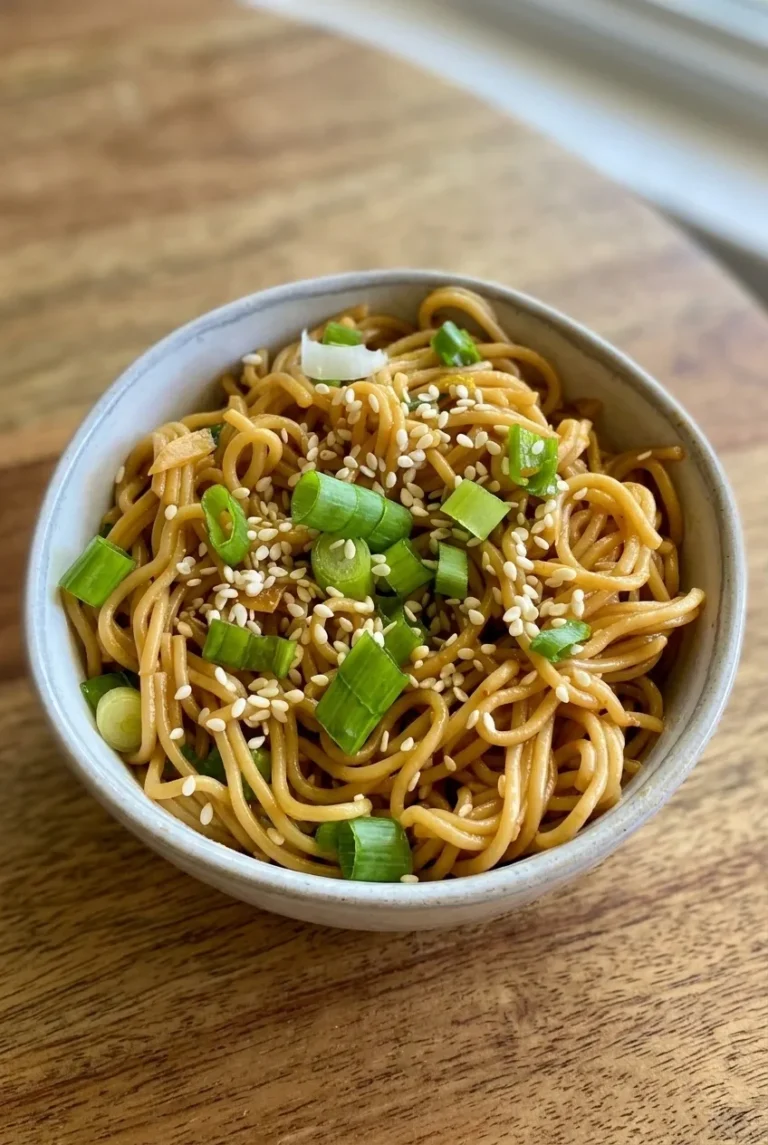
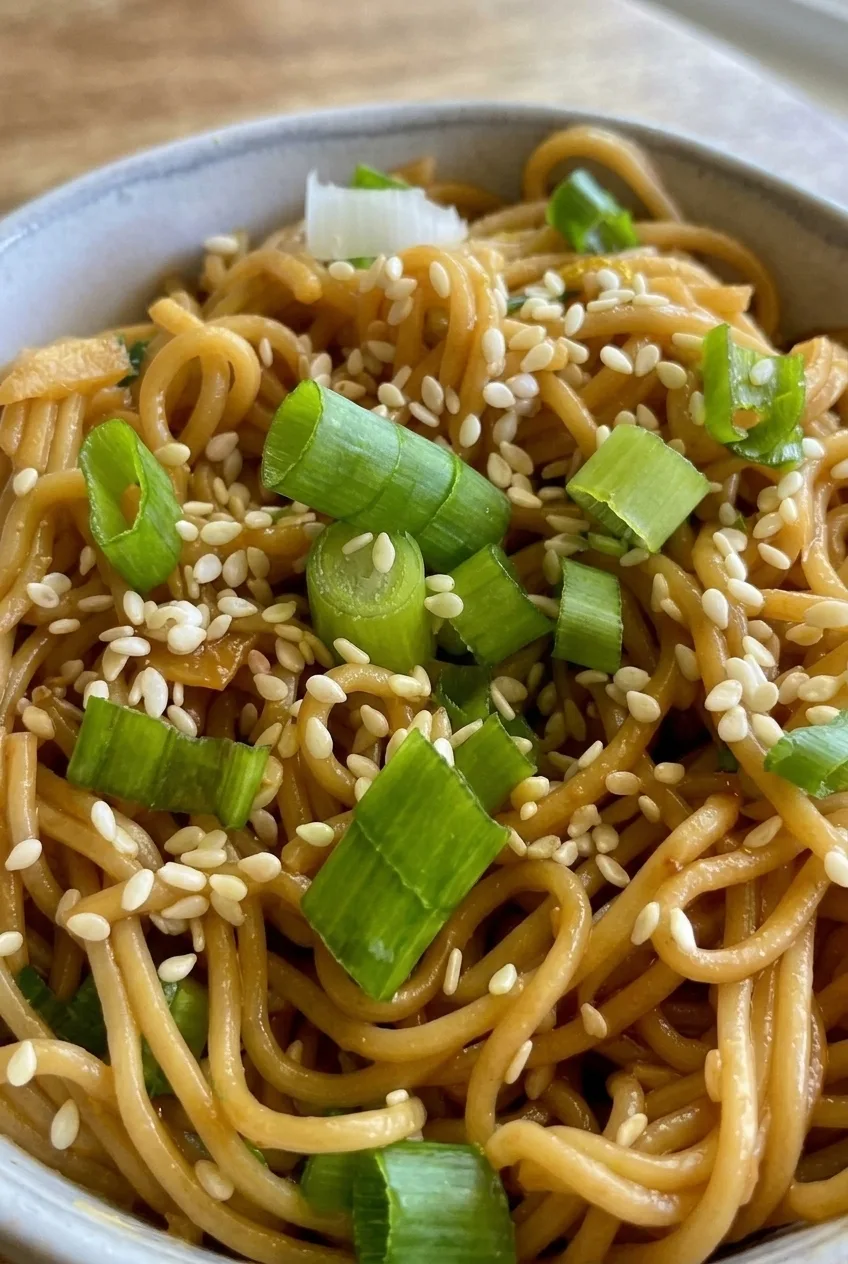
Close view of glossy ramen strands with white sesame seeds and chunky green onion slices

Servings: 2 light main-dish servings or 3–4 side servings. Time: About 12–15 minutes.

  • 2 blocks instant ramen noodles, about 6 oz total (170g), seasoning packets discarded
  • 2 tablespoons low-sodium soy sauce
  • 2 teaspoons packed brown sugar
  • 1 tablespoon toasted sesame oil
  • 3 garlic cloves, minced
  • 2 green onions, sliced into visible pieces
  • 2 teaspoons white sesame seeds
  • Optional: 1 teaspoon sriracha, or to taste

Ramen block weights vary. If using dried ramen instead of instant blocks, use about 6 oz and follow its package directions. For a gluten-free version, use gluten-free rice ramen and gluten-free tamari, checking both labels.

How to Make Sesame Garlic Ramen Noodles

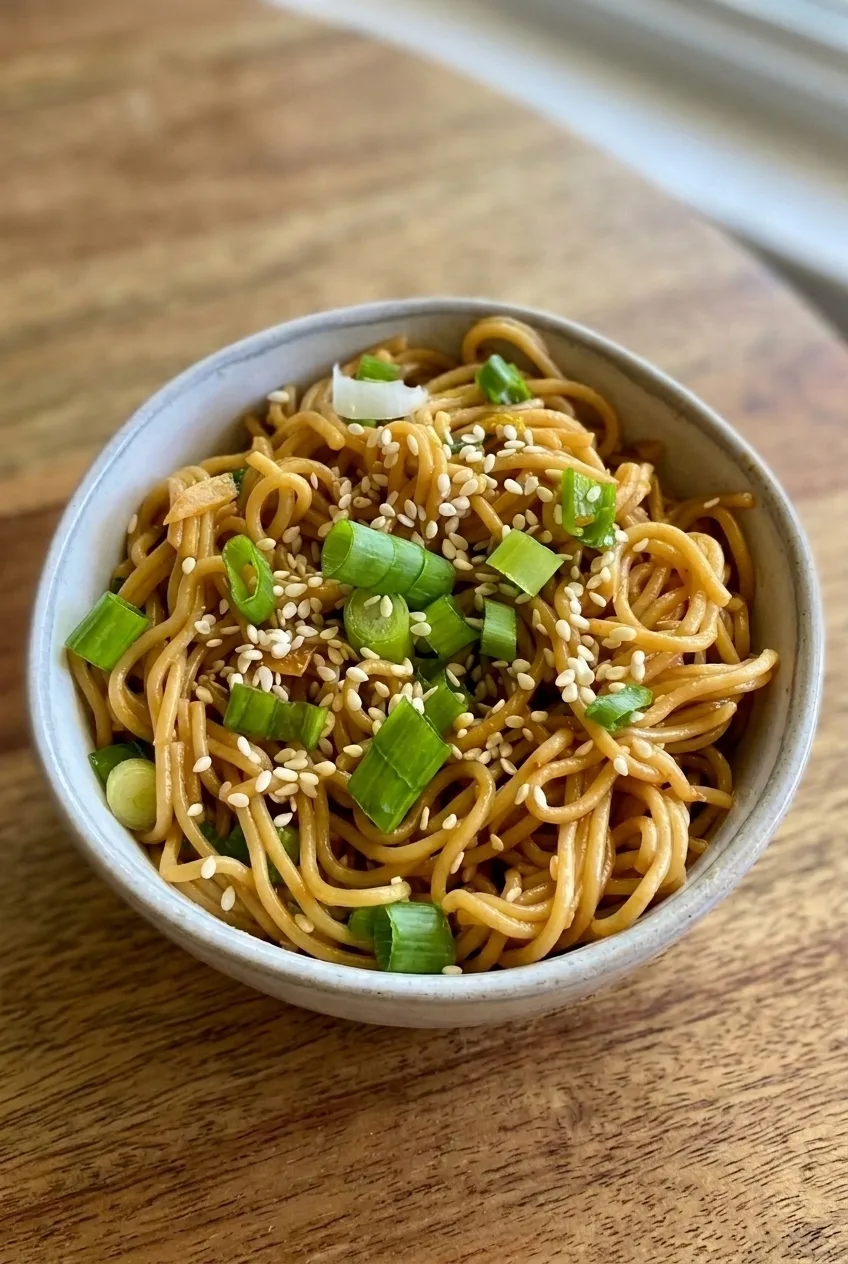
Complete bowl of sesame garlic ramen noodles on a wooden table, topped with sesame seeds and green onions
  1. Mix the sauce: Whisk the soy sauce and brown sugar in a small bowl until the sugar is mostly dissolved. Whisk in the sriracha, if using. Mince the garlic and slice the green onions before heating the skillet so the sauce is ready when the garlic is fragrant.
  2. Cook the noodles: Bring a medium saucepan of water to a boil. Discard the seasoning packets and cook the ramen uncovered according to the package, checking near the earliest suggested time. Once the noodles have separated and are just tender, reserve about 1/4 cup cooking water. Drain promptly without rinsing.
  3. Warm the garlic: Add the sesame oil and garlic to a 10- to 12-inch skillet over medium-low heat. Stir continuously for about 30–60 seconds, until fragrant. Pour in the soy mixture before the garlic turns dark brown and bitter.
  4. Coat the noodles: Reduce the heat to low. Add the drained noodles and toss for about 30–60 seconds, until evenly golden-brown and glossy. If the sauce is too tight to coat them, add reserved cooking water 1 tablespoon at a time. Stop when a thin sheen clings to the noodles without liquid pooling underneath.
  5. Garnish and serve: Pile the noodles loosely into bowls. Scatter the green onions and white sesame seeds generously across the top and serve immediately.

How to Keep the Noodles Glossy, Not Gummy

Drain the ramen as soon as it is just tender; it will warm again during the skillet toss. Don’t leave it simmering in the sauce. If the noodles absorb the sauce and look dry, toss in a tablespoon of reserved cooking water before adding more. The finished noodles should be distinct and coated, not sitting in broth.

Easy Adjustments

Leave out the sriracha for a mild bowl, or add it to taste for heat. To make a larger meal, add separately cooked tofu, chicken, shrimp, or vegetables after saucing the noodles. If using full-sodium soy sauce, start with less than the listed amount and adjust after tasting.

For a different garlic-forward noodle dish, try garlic butter ramen noodles with kale and egg yolk. For a broth-based bowl instead, see creamy spicy ramen with pork and miso broth.

Leftovers and Reheating

Refrigerate leftovers in an airtight container for up to 3 days. The coating tightens as the noodles sit; reheat gently in a skillet or microwave with a splash of water, tossing until coated again. If preparing ahead, keep the sauce and cooked noodles separate when practical and combine shortly before serving. Freezing the dressed noodles is not recommended because their texture may suffer.

Nutrition

Approximate nutrition per light main-dish serving (1/2 recipe): 485 calories, 10g protein, 22g fat, and 61g carbohydrates. Approximate values per 100g of prepared noodles: 200 calories, 4g protein, 9g fat, and 25g carbohydrates. Values vary by ramen brand and the amount of water retained after draining.

Sesame Garlic Ramen Noodles

Instant ramen noodles are tossed in a glossy sesame-soy sauce with garlic, brown sugar, green onions, and sesame seeds.
Course: Main Course
Cuisine: Asian
Prep: 5 min
Cook: 10 min
Total: 15 min
Servings: 2 Calories: 485 kcal

Equipment

  • Small bowl
  • Medium saucepan
  • 10- to 12-inch skillet

Ingredients

  • 2 blocks instant ramen noodles, about 6 oz total (170 g), seasoning packets discarded
  • 2 tablespoons low-sodium soy sauce
  • 2 teaspoons packed brown sugar
  • 1 tablespoon toasted sesame oil
  • 3 garlic cloves, minced
  • 2 green onions, sliced
  • 2 teaspoons white sesame seeds
  • 1 teaspoon sriracha, optional, or to taste

Instructions

  1. Whisk the soy sauce and brown sugar in a small bowl until the sugar is mostly dissolved. Whisk in the sriracha, if using.
  2. Bring a medium saucepan of water to a boil. Discard the ramen seasoning packets and cook the noodles uncovered according to the package directions, checking near the earliest suggested time.
  3. When the noodles are separated and just tender, reserve about 1/4 cup cooking water. Drain the noodles promptly without rinsing.
  4. Add the sesame oil and garlic to a skillet over medium-low heat. Stir continuously for 30–60 seconds, until fragrant.
  5. Pour the soy sauce mixture into the skillet before the garlic turns dark brown.
  6. Reduce the heat to low. Add the drained noodles and toss for 30–60 seconds, until evenly coated and glossy.
  7. If the sauce is too thick to coat the noodles, add reserved cooking water 1 tablespoon at a time. Stop when a thin sheen clings to the noodles without liquid pooling underneath.
  8. Divide the noodles among bowls. Top generously with green onions and sesame seeds, and serve immediately.

Tips

  • Check the noodles near the earliest package cooking time and drain as soon as they are just tender.
  • Stir the garlic continuously and add the soy mixture before the garlic darkens.
  • Toss the noodles briefly to keep them from turning gummy.
  • If the noodles look dry, add reserved cooking water 1 tablespoon at a time.

Variations

  • Spicy Sesame Garlic Ramen: Add sriracha to the sauce to taste.
  • Heartier Ramen Noodles: Add separately cooked tofu, chicken, shrimp, or vegetables after saucing the noodles.
  • Gluten-Free Ramen Noodles: Use gluten-free rice ramen and gluten-free tamari, checking both labels.

Notes

Refrigerate leftovers in an airtight container for up to 3 days. Reheat gently with a splash of water, tossing until coated again. Freezing dressed noodles is not recommended.

Nutrition

Calories: 485 kcal | Protein: 10 g | Fat: 22 g | Carbohydrates: 61 g

Spicy Peanut Butter Ramen

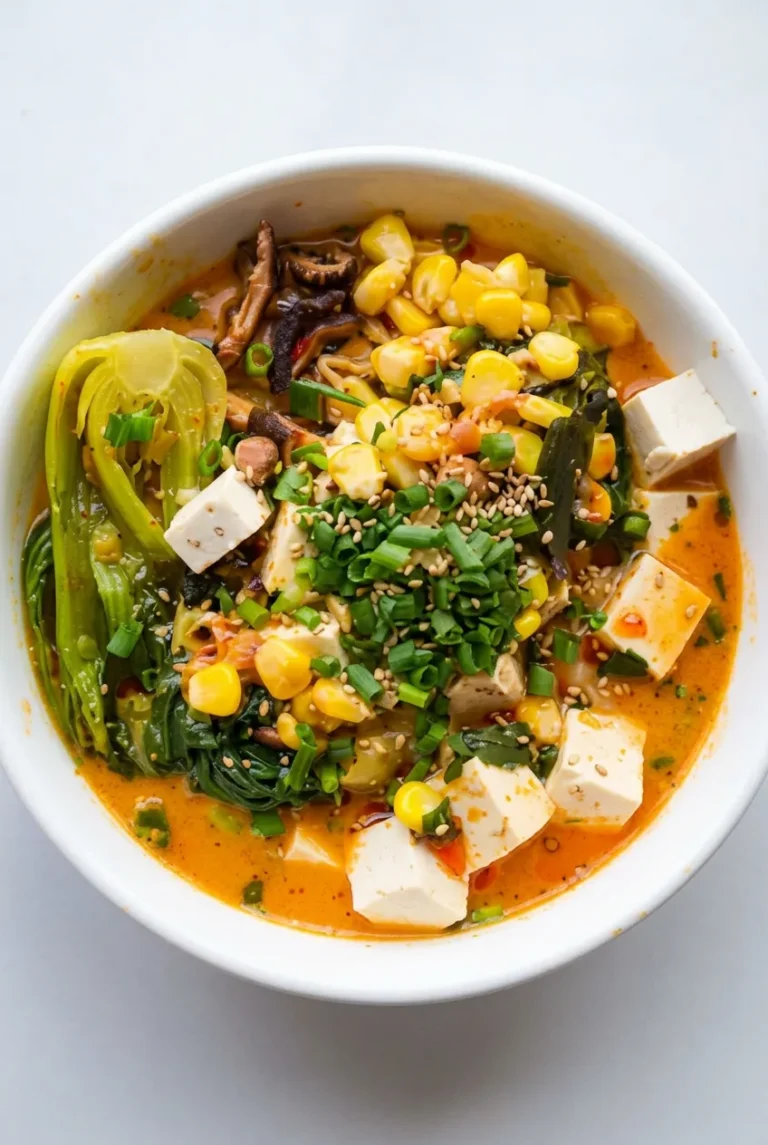
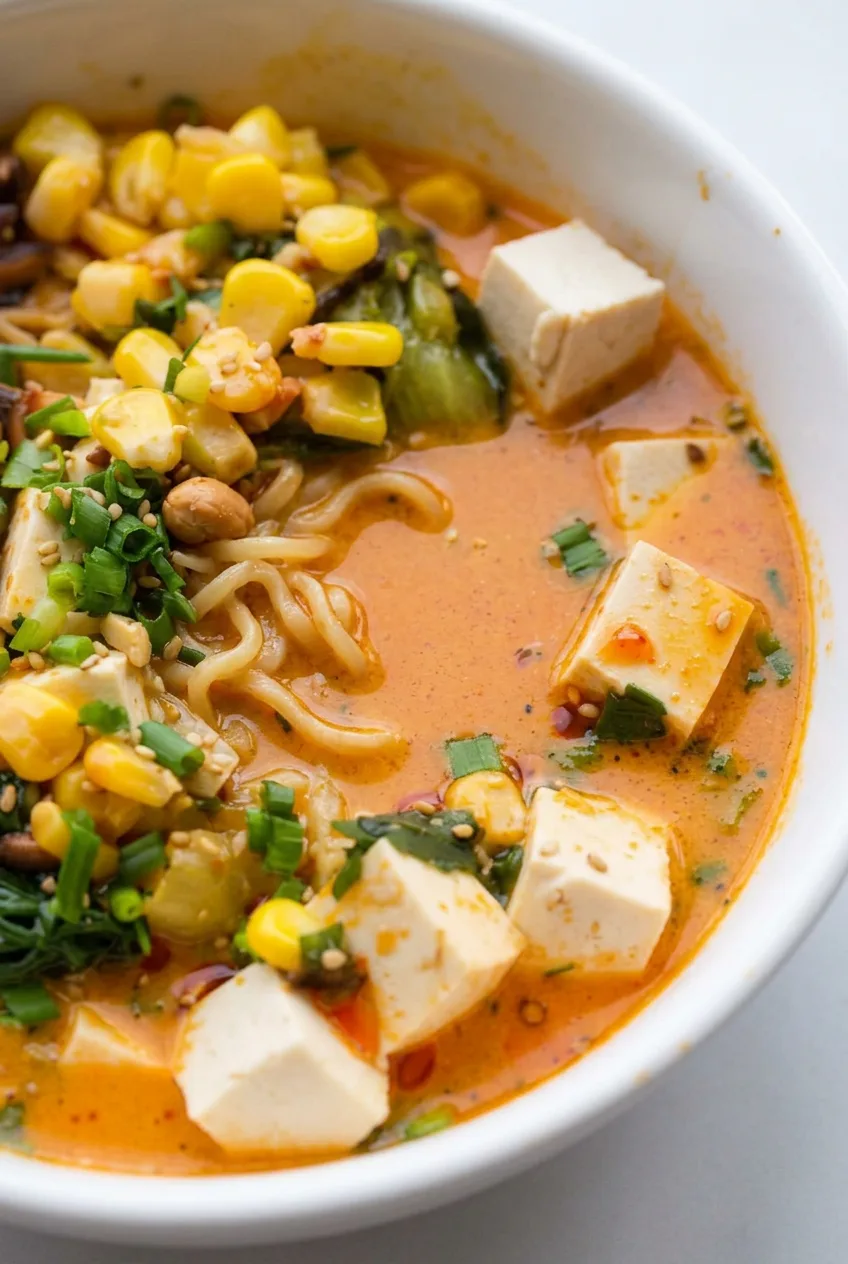
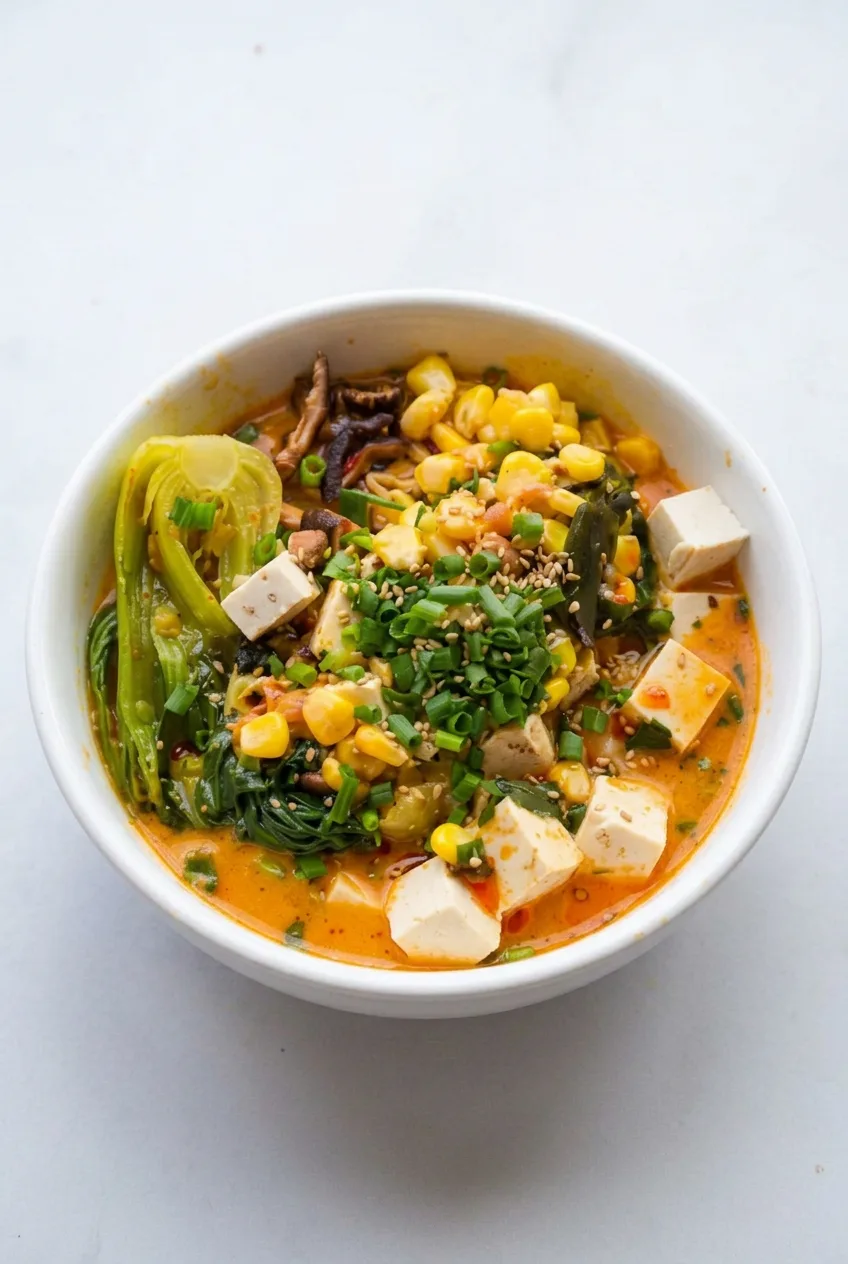
This spicy peanut butter ramen is a soup, not noodles coated in peanut sauce. Peanut butter, gochujang, and soy sauce give the orange-red broth a savory, creamy texture while leaving it thin enough to ladle. Pale tofu cubes, corn, and baby bok choy warm gently in the broth and stay distinct in each bowl. Cook the noodles separately and add them just before serving so they stay tender without absorbing the soup.

Ingredients for Spicy Peanut Butter Ramen

Close view of peanut ramen broth around pale tofu cubes, corn, bok choy, and a few noodle strands

Makes 2 generous bowls. Prep time: 10 minutes. Cook time: 15 minutes. Total time: 25 minutes.

  • 2 packages ramen noodles, about 6 ounces total (170g), seasoning packets discarded
  • 2 teaspoons neutral cooking oil
  • 2 garlic cloves, minced
  • 1 teaspoon grated fresh ginger
  • 1/3 cup creamy peanut butter (85g)
  • 1 tablespoon gochujang (18g), plus more to taste
  • 1 tablespoon soy sauce
  • 4 cups vegetable broth, plus more to adjust
  • 7 ounces firm tofu (200g), drained and cut into 3/4-inch cubes
  • 2 small heads baby bok choy (about 200g), halved lengthwise and rinsed between the leaves
  • 1/2 cup corn kernels (about 80g), fresh, thawed, or drained
  • 2 scallions, thinly sliced
  • 2 tablespoons chopped roasted peanuts
  • 1 teaspoon chili oil total, or to taste

Optional: 1 to 2 teaspoons lime juice, added after tasting the finished broth.

How to Make Spicy Peanut Butter Ramen

Complete bowl of spicy peanut butter ramen on a pale surface, with tofu, corn, and bok choy visible
  1. Prepare the toppings: Drain and cube the tofu. Halve the bok choy and rinse between its leaves to remove any grit. Measure the corn, slice the scallions, and chop the peanuts.
  2. Start the noodle water: Bring a separate pot of water to a boil. Cook the ramen near the end of the broth preparation, following the package directions and checking at the early end of the stated time. Drain when tender.
  3. Cook the aromatics: Warm the neutral oil in a 3- to 4-quart saucepan over medium heat. Add the garlic and ginger and stir frequently for about 1 minute, until fragrant but not deeply browned.
  4. Whisk the broth: Add about 1/2 cup of the vegetable broth, the peanut butter, gochujang, and soy sauce. Whisk until smooth, then gradually whisk in the remaining broth. Reduce the heat to medium-low and bring to a gentle simmer, not a hard boil.
  5. Warm the tofu and vegetables: Add the bok choy, corn, and tofu. Simmer uncovered for about 3 to 5 minutes, stirring gently to keep the tofu intact. Check the bok choy after 2 minutes; its leaves should wilt and its stems should be just tender. The tofu and corn should be hot. If the broth is too thick to ladle easily, add hot broth or water a few tablespoons at a time.
  6. Assemble the bowls: Taste the broth and add more gochujang if desired. For brightness, stir in the optional lime juice off the heat. Divide the drained noodles between two soup bowls and ladle the broth over them. Group the bok choy to one side, with the tofu and corn visible and broth around the toppings. Finish with scallions, peanuts, and a few droplets of chili oil. Serve immediately.

How to Keep Peanut Ramen Brothy

Ramen noodles absorb liquid as they sit. Boiling them in water and adding the broth only at serving keeps the finished bowls soupy. The peanut broth should look creamy but flow readily from a ladle; loosen it with hot broth or water if it begins to resemble a coating sauce.

Getting a Smooth Peanut Broth

Whisk the peanut butter with the first 1/2 cup of broth before adding the rest. This works out lumps while the mixture is still thick enough to whisk easily. Peanut butter varies in thickness, and gochujang varies in heat, so use the finished broth’s consistency and flavor as your guide. Add chili oil sparingly to the bowls and offer more at the table. Taste before adding any salt; the broth, soy sauce, and gochujang may provide enough.
Leftovers and Reheating

For leftovers, promptly refrigerate the noodles and broth with toppings in separate covered containers when possible, and use within 3 days. Keeping them apart helps prevent the noodles from soaking up the soup. Reheat the broth and toppings gently until hot, then add separately warmed or freshly cooked noodles just before serving.

The broth and toppings can be prepared ahead, with fresh noodles cooked when you are ready to eat. Freezing assembled bowls is not recommended because the noodles lose texture.

For another vegetable-forward bowl, try easy vegetable ramen with miso broth.

Nutrition

Approximate nutrition per generous bowl (1 of 2 servings): 945 calories, 39g protein, 53g fat, and 87g carbohydrates. Approximate values per 100g of prepared soup: 95 calories, 4g protein, 5g fat, and 9g carbohydrates. Values vary with noodle brands, peanut butter, broth, and the amount of liquid in each bowl.

Spicy Peanut Butter Ramen

A brothy ramen with a creamy peanut, gochujang, and soy broth, tofu, corn, and baby bok choy.
Course: Soup
Cuisine: Global
Prep: 10 min
Cook: 15 min
Total: 25 min
Servings: 2 Calories: 945 kcal

Equipment

  • 3- to 4-quart saucepan
  • Pot
  • Whisk

Ingredients

For the soup

  • 2 teaspoons neutral cooking oil
  • 2 garlic cloves, minced
  • 1 teaspoon grated fresh ginger
  • 1/3 cup creamy peanut butter (85 g)
  • 1 tablespoon gochujang (18 g), plus more to taste
  • 1 tablespoon soy sauce
  • 4 cups vegetable broth, plus more to adjust
  • 7 ounces firm tofu (200 g), drained and cut into 3/4-inch cubes
  • 2 small heads baby bok choy (about 200 g), halved lengthwise and rinsed between the leaves
  • 1/2 cup corn kernels (about 80 g), fresh, thawed, or drained

For serving

  • 2 packages ramen noodles, about 6 ounces total (170 g), seasoning packets discarded
  • 2 scallions, thinly sliced
  • 2 tablespoons chopped roasted peanuts
  • 1 teaspoon chili oil total, or to taste
  • Optional: 1 to 2 teaspoons lime juice

Instructions

  1. Drain and cube the tofu. Halve the bok choy and rinse between the leaves. Measure the corn, slice the scallions, and chop the peanuts.
  2. Bring a separate pot of water to a boil. Cook the ramen according to the package directions, checking at the early end of the stated cooking time. Drain when tender.
  3. Warm the neutral oil in a 3- to 4-quart saucepan over medium heat. Add the garlic and ginger and stir frequently for about 1 minute, until fragrant but not deeply browned.
  4. Add about 1/2 cup of the vegetable broth, the peanut butter, gochujang, and soy sauce. Whisk until smooth, then gradually whisk in the remaining broth.
  5. Reduce the heat to medium-low and bring the broth to a gentle simmer. Add the bok choy, corn, and tofu. Simmer uncovered for 3 to 5 minutes, stirring gently. Check the bok choy after 2 minutes; its leaves should wilt and its stems should be just tender, and the tofu and corn should be hot.
  6. If the broth is too thick to ladle easily, add hot broth or water a few tablespoons at a time. Taste and add more gochujang if desired. For brightness, stir in the optional lime juice off the heat.
  7. Divide the drained noodles between two soup bowls and ladle the broth over them. Add the bok choy, tofu, and corn, then finish with scallions, peanuts, and a few drops of chili oil. Serve immediately.

Tips

  • Cook the noodles separately and add them just before serving so they do not absorb the broth.
  • Whisk the peanut butter with the first 1/2 cup of broth before adding the rest to help prevent lumps.
  • Keep the broth at a gentle simmer rather than a hard boil.
  • Add hot broth or water a few tablespoons at a time if the broth becomes too thick to ladle.
  • Taste before adding salt; the broth, soy sauce, and gochujang may provide enough.

Notes

Refrigerate noodles, broth, and toppings in separate covered containers when possible and use within 3 days. Reheat the broth and toppings gently until hot, then add warmed or freshly cooked noodles. Freezing assembled bowls is not recommended.

Nutrition

Calories: 945 kcal | Protein: 39 g | Fat: 53 g | Carbohydrates: 87 g

Easy Vegetable Ramen

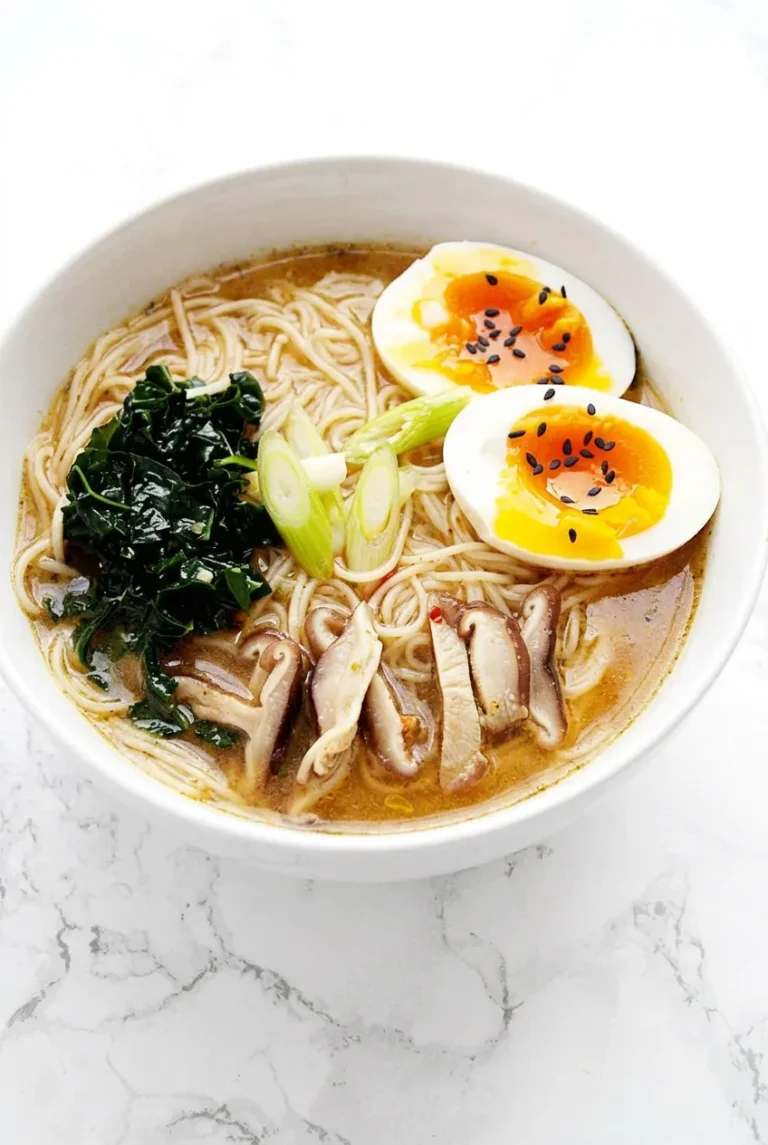
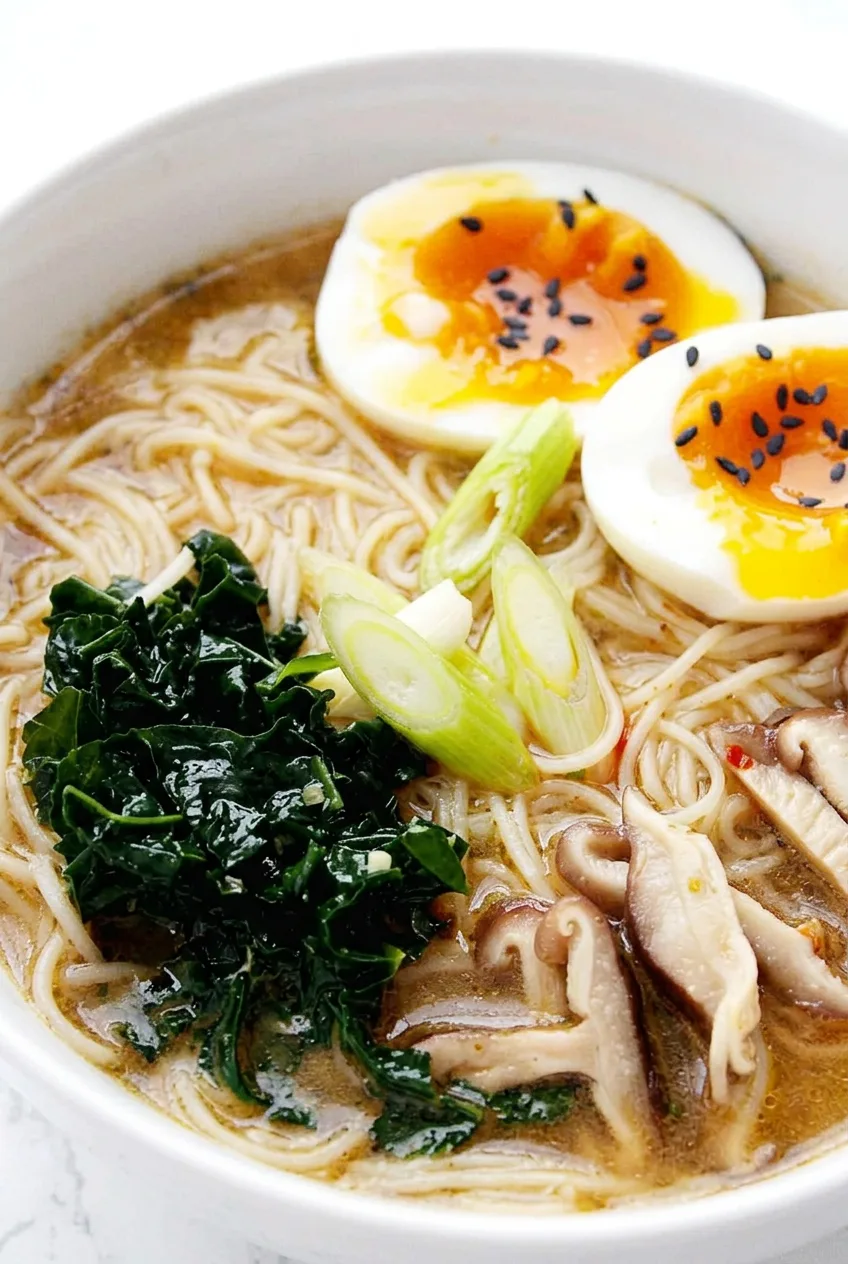
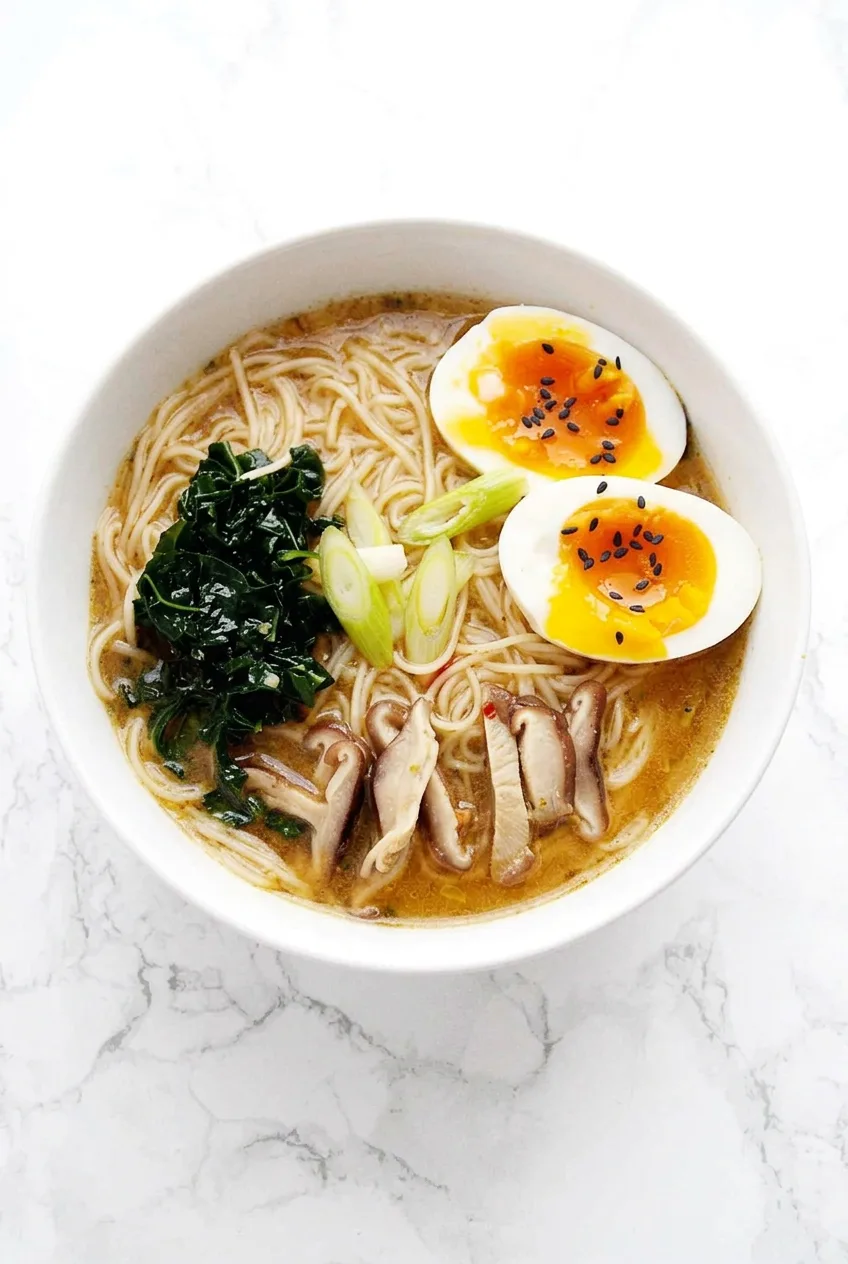
This vegetable ramen has thin noodles in a generous ginger-miso broth, with sliced shiitake mushrooms, dark greens, scallions, and a jammy egg on each bowl. Prepared vegetable broth keeps the stovetop method manageable. Cook the noodles separately and add the broth just before serving so the strands stay tender and the toppings remain distinct.

Ingredients for Easy Vegetable Ramen

Close view of ramen noodles, sliced shiitake mushrooms, wilted kale, and sesame-topped jammy egg halves

Makes 2 generous bowls. Allow about 10 minutes to prep and 15–20 minutes to cook, or 25–30 minutes total.

  • 2 large eggs
  • 6 ounces dried ramen noodles, without seasoning packets (170g)
  • 1 tablespoon neutral cooking oil
  • 6 ounces shiitake mushrooms, stems removed and caps sliced (170g)
  • 1 tablespoon grated fresh ginger
  • 2 garlic cloves, minced
  • 4 cups low-sodium vegetable broth
  • 1 tablespoon soy sauce, plus more to taste if needed
  • 2 packed cups chopped kale, tough stems removed (about 65g)
  • 2 tablespoons white miso paste
  • 2 scallions, thinly sliced
  • 1 teaspoon black sesame seeds

How to Make Vegetable Ramen

Complete bowl of vegetable ramen with noodles, kale, mushrooms, scallions, and jammy egg on pale marble
  1. Prepare the toppings: Slice the mushrooms and scallions, chop the kale, grate the ginger, and mince the garlic. Keep the mushroom slices large enough to remain recognizable in the bowls.
  2. Cook the eggs: Lower the eggs into gently boiling water and cook for 6½–7 minutes. Transfer them promptly to cold water so the yolks stay soft. Peel when cool enough to handle, and halve just before serving.
  3. Cook the mushrooms: Heat the oil in a medium saucepan or soup pot over medium heat. Add the mushrooms and cook uncovered, stirring occasionally, until softened and lightly browned at the edges, about 5–6 minutes. Add the ginger and garlic for the last 30–60 seconds, stirring until fragrant but not browned. Set aside some mushroom slices for topping.
  4. Simmer the broth: Add the vegetable broth and 1 tablespoon soy sauce. Bring to a gentle simmer, then add the kale. Cook uncovered for about 2 minutes, until the leaves are wilted but still dark green. Keep some greens available to arrange on top.
  5. Cook the noodles and add the miso: Boil the noodles in a separate pot of water, checking at the earliest time on the package. Drain when tender. Turn off the heat under the broth. Whisk the miso with a ladleful of hot broth in a small bowl until smooth, then stir it into the pot. Taste before adding more soy sauce; the miso also adds salt. If the broth is too salty, dilute it with a little hot water or unsalted broth.
  6. Assemble: Divide the noodles between two bowls and ladle the hot broth over them. Arrange the kale and mushroom slices in separate groups, add the scallions, and place one halved egg cut-side up in each bowl. Sprinkle black sesame seeds over the eggs. Serve immediately, with broth visible around the noodles and toppings.

Coordinating the Eggs, Broth, and Noodles

Start the eggs early so they have time to cool while the mushrooms and broth cook. Wilt the kale near the end, and wait until the broth is nearly ready before cooking the noodles. If burner space is limited, reuse the egg pot for the noodles; this may add a few minutes.

How to Keep the Noodles from Getting Mushy

Ramen brands have different cooking times, so follow the package rather than a fixed number of minutes. Boiling the noodles separately also keeps excess starch out of the broth. Drain them when tender and assemble the bowls right away: noodles left in hot soup continue to absorb liquid.

Vegetable Ramen Variations

Cremini mushrooms can replace shiitake, though the flavor and appearance will differ. Baby bok choy can replace kale; cook it briefly until bright green and tender.

For a vegan variation, replace the egg with tofu or omit it, and check the noodle, broth, and miso labels. The finished bowl will look different without the egg topping. Add chili oil to individual bowls if you want heat.

For a nonvegetarian option, try shrimp ramen noodle soup.

Storing and Reheating Vegetable Ramen

Refrigerate leftover broth and vegetables in airtight containers, separate from the cooked noodles. Keep any leftover eggs separate as well.

Reheat the broth and vegetables until hot, then combine with the noodles shortly before serving. Noodles stored submerged in broth will soften as they sit.

Nutrition

Approximate nutrition per generous bowl, based on 2 servings: 570 calories, 24g protein, 18g fat, and 83g carbohydrates. Per 100g of prepared ramen: approximately 75 calories, 3g protein, 2g fat, and 11g carbohydrates. Values vary with the noodles, broth, and miso used.

Easy Vegetable Ramen

Thin ramen noodles are served in ginger-miso broth with shiitake mushrooms, kale, scallions, and a jammy egg.
Course: Soup
Cuisine: Japanese
Prep: 10 min
Cook: 18 min
Total: 28 min
Servings: 2 Calories: 570 kcal

Equipment

  • Medium saucepan or soup pot
  • Pot for eggs and noodles
  • Small bowl
  • Whisk

Ingredients

For the ramen

  • 2 large eggs
  • 6 ounces dried ramen noodles, without seasoning packets (170g)
  • 1 tablespoon neutral cooking oil
  • 6 ounces shiitake mushrooms, stems removed and caps sliced (170g)
  • 1 tablespoon grated fresh ginger
  • 2 garlic cloves, minced
  • 4 cups low-sodium vegetable broth
  • 1 tablespoon soy sauce, plus more to taste if needed
  • 2 packed cups chopped kale, tough stems removed (about 65g)
  • 2 tablespoons white miso paste
  • 2 scallions, thinly sliced
  • 1 teaspoon black sesame seeds

Instructions

  1. Slice the mushrooms and scallions, chop the kale, grate the ginger, and mince the garlic.
  2. Lower the eggs into gently boiling water and cook for 6½–7 minutes. Transfer them to cold water, then peel when cool enough to handle. Halve just before serving.
  3. Heat the oil in a medium saucepan or soup pot over medium heat. Add the mushrooms and cook uncovered, stirring occasionally, until softened and lightly browned at the edges, about 5–6 minutes.
  4. Add the ginger and garlic and cook for 30–60 seconds, stirring until fragrant but not browned. Set aside some mushroom slices for topping.
  5. Add the vegetable broth and 1 tablespoon soy sauce. Bring to a gentle simmer, then add the kale and cook uncovered for about 2 minutes, until wilted but still dark green. Reserve some greens for topping.
  6. Boil the noodles in a separate pot of water, checking them at the earliest time listed on the package. Drain when tender.
  7. Turn off the heat under the broth. Whisk the miso with a ladleful of hot broth in a small bowl until smooth, then stir it into the pot. Taste and add more soy sauce only if needed.
  8. Divide the noodles between two bowls and ladle the hot broth over them. Arrange the kale and reserved mushrooms on top, add the scallions, and place one halved egg cut-side up in each bowl. Sprinkle with black sesame seeds and serve immediately.

Tips

  • Cook the noodles separately to keep excess starch out of the broth.
  • Follow the noodle package timing and check at its earliest suggested time.
  • Add the miso after turning off the heat and dissolve it in hot broth before stirring it into the pot.
  • Taste the broth before adding extra soy sauce, since miso also adds salt.
  • Assemble the bowls right before serving so the noodles do not continue absorbing broth.

Variations

  • Cremini Mushroom Ramen: Replace the shiitake mushrooms with cremini mushrooms.
  • Bok Choy Ramen: Replace the kale with baby bok choy and cook it briefly until bright green and tender.
  • Vegan Vegetable Ramen: Replace the egg with tofu or omit it, and check that the noodles, broth, and miso are vegan.
  • Spicy Vegetable Ramen: Add chili oil to individual bowls.

Notes

Refrigerate leftover broth and vegetables separately from the noodles, and keep leftover eggs separate. Reheat the broth and vegetables until hot, then combine with the noodles shortly before serving.

Nutrition

Calories: 570 kcal | Protein: 24 g | Fat: 18 g | Carbohydrates: 83 g | Per 100g: Approximately 75 kcal, 3 g protein, 2 g fat, and 11 g carbohydrates

Shrimp Ramen Noodle Soup

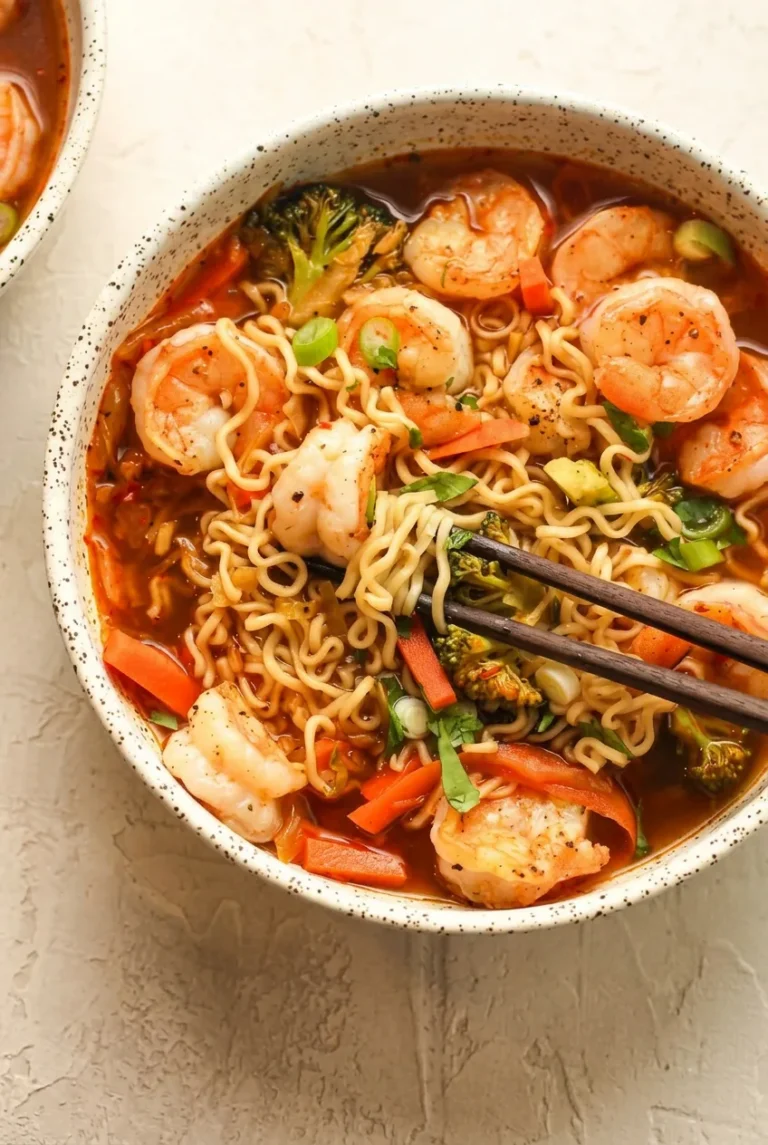
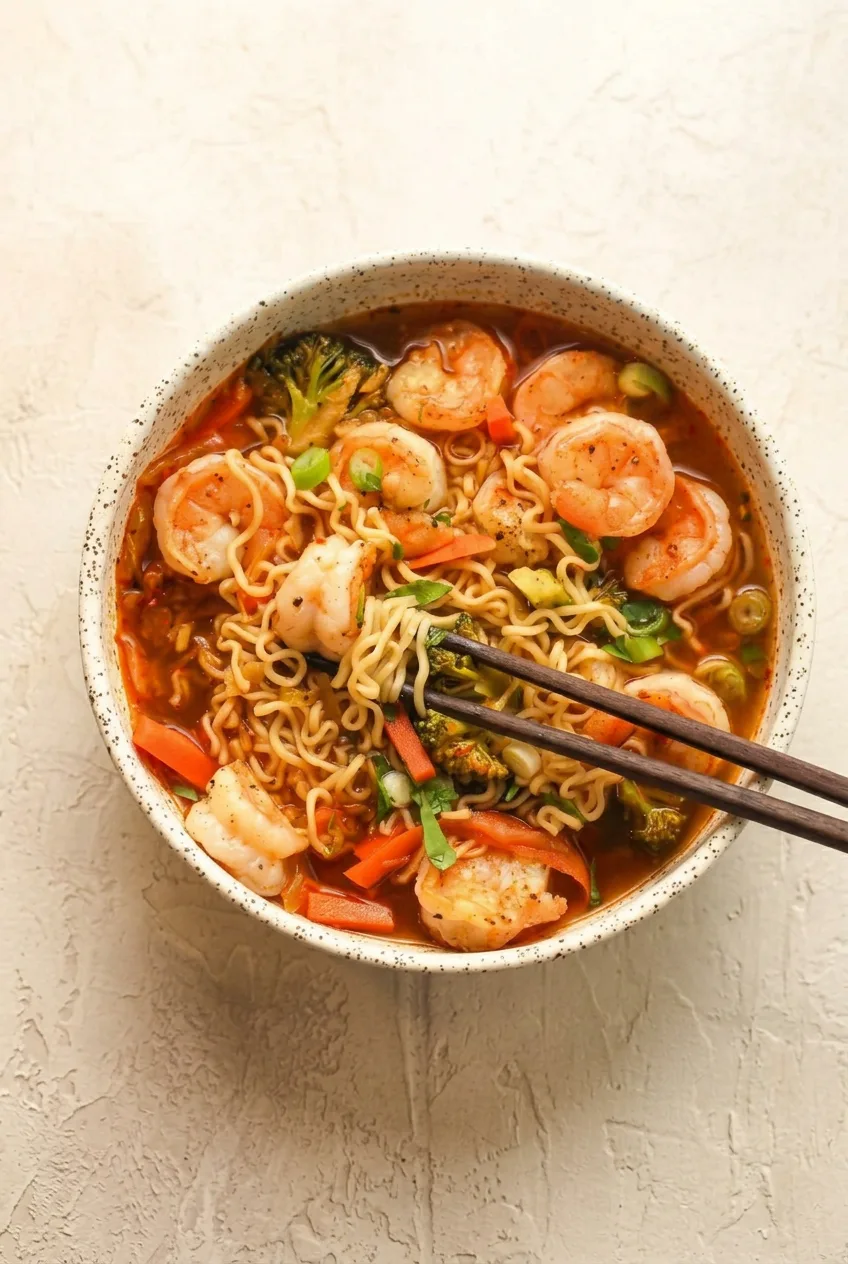
Curly ramen noodles, whole shrimp, broccoli, and thin carrot strips fill this chili-garlic soup. The broth stays light and fluid, with a little chili oil adding a red-orange sheen. It takes about 30 minutes on the stovetop.

The order of ingredients matters: vegetables get a head start, noodles go in near the end, and shrimp cooks only for the final few minutes. Serve the soup as soon as everything is done so the shrimp stays tender and the noodles keep their spring.

Ingredients for Shrimp Ramen Noodle Soup

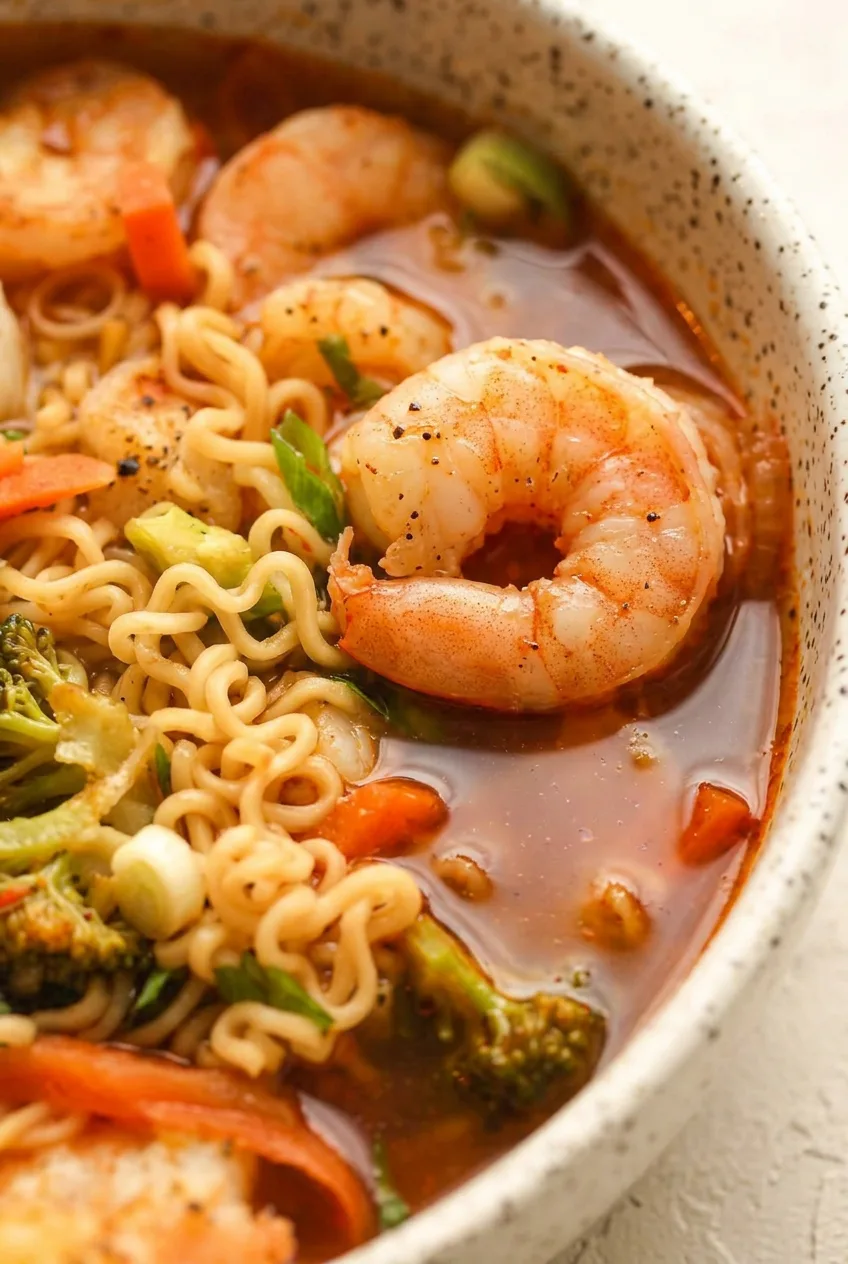
Close view of pink shrimp, curly ramen noodles, vegetables, and glossy chili-garlic broth
  • 1 tablespoon neutral oil
  • 3 garlic cloves, minced
  • 1 tablespoon grated fresh ginger
  • 6 cups low-sodium chicken broth
  • 2 tablespoons low-sodium soy sauce
  • 1 tablespoon chili-garlic sauce, or less to taste
  • 2 cups broccoli, cut into small florets (about 140g)
  • 1 medium carrot, cut into thin matchsticks (about 70g)
  • 3 packages instant ramen noodles, about 3 ounces each (about 255g total); discard the seasoning packets
  • 1 lb raw large shrimp, peeled and deveined (about 450g)
  • 3 scallions, thinly sliced
  • 2 teaspoons chili oil

How to Make Shrimp Ramen Noodle Soup

Complete bowl of shrimp ramen noodle soup on a neutral tabletop, with broth and vegetables visible
  1. Prepare the ingredients: Cut the broccoli into small florets and the carrot into thin matchsticks so they cook in the short simmer. Slice the scallions for serving. If using frozen shrimp, thaw it completely before cooking.
  2. Build the broth: Warm the neutral oil in a 4- to 5-quart soup pot over medium heat. Stir in the garlic and ginger for 30 to 60 seconds, until fragrant but not browned. Add the broth, soy sauce, and chili-garlic sauce. Increase the heat to medium-high and bring to a boil.
  3. Cook the vegetables: Reduce the heat to medium and keep the uncovered pot at a lively simmer. Add the broccoli and carrot and cook for 2 to 3 minutes. The broccoli should be bright green, but the vegetables should not be fully soft.
  4. Add the noodles, then the shrimp: Submerge the ramen blocks and gently loosen them as they soften. After about 1 minute, add the shrimp, turning it in the broth if needed. Simmer for about 2 to 3 minutes more, until the shrimp is pink, opaque, and firm and the noodles are tender but still springy. Start checking the noodles after 2 minutes of cooking, and follow the package timing if it differs.
  5. Serve: Remove the pot from the heat. Taste the broth and adjust the seasoning if needed. Divide the noodles, vegetables, shrimp, and plenty of broth among four deep bowls. Arrange the shrimp visibly on top, scatter with scallions, and drizzle the chili oil across the bowls. Serve immediately.

When to Add the Shrimp and Noodles

Shrimp size and noodle brands affect the final few minutes of cooking. Check the shrimp for opacity rather than relying on the clock alone, and stop cooking before the noodles become swollen or soft. Leaving the finished soup in the hot pot can make the shrimp rubbery and cause the ramen to absorb too much broth.

Seasoning the Broth Without Ramen Packets

Broth, soy sauce, garlic, ginger, and chili-garlic sauce replace the instant ramen seasoning packets. Discard the packets so the soup does not become too salty. Chili-garlic sauces vary in heat and salt; start with less than a tablespoon for a milder broth, then taste before adding more. Reducing the sauce or finishing oil will also make the broth less red.

Make-Ahead and Leftovers

For the best texture, prepare the broth and cut the vegetables ahead, then cook the noodles and shrimp when ready to serve. For planned leftovers, refrigerate cooked noodles separately from the broth in covered containers and use promptly.

Reheat the broth and vegetables until steaming, warm the cooked shrimp briefly, and add the noodles just before serving. Freezing assembled ramen is not recommended because the noodles are likely to lose their texture.

For another brothy dinner, try lemon chicken orzo soup with spinach. For a different boldly seasoned soup, try brothy chicken taco soup.

Nutrition

Approximate nutrition per serving, based on 4 servings: 490 calories, 33g protein, 17g fat, and 45g carbohydrates. Approximate values per 100g of prepared soup: 80 calories, 5g protein, 3g fat, and 7g carbohydrates. Values will vary with the ramen, broth, and chili products used.

Shrimp Ramen Noodle Soup

Curly ramen, shrimp, broccoli, and carrot simmer in a light chili-garlic broth.
Course: Soup
Cuisine: Global
Prep: 10 min
Cook: 20 min
Total: 30 min
Servings: 4 Calories: 490 kcal

Equipment

  • 4- to 5-quart soup pot
  • Knife
  • Cutting board

Ingredients

For the Soup

  • 1 tablespoon neutral oil
  • 3 garlic cloves, minced
  • 1 tablespoon grated fresh ginger
  • 6 cups low-sodium chicken broth
  • 2 tablespoons low-sodium soy sauce
  • 1 tablespoon chili-garlic sauce, or less to taste
  • 2 cups broccoli, cut into small florets (about 140 g)
  • 1 medium carrot, cut into thin matchsticks (about 70 g)
  • 3 packages instant ramen noodles, about 3 ounces each (about 255 g total); discard the seasoning packets
  • 1 lb raw large shrimp, peeled and deveined (about 450 g)

For Serving

  • 3 scallions, thinly sliced
  • 2 teaspoons chili oil

Instructions

  1. Cut the broccoli into small florets, cut the carrot into thin matchsticks, and slice the scallions. If using frozen shrimp, thaw it completely.
  2. Warm the neutral oil in a 4- to 5-quart soup pot over medium heat. Stir in the garlic and ginger for 30 to 60 seconds, until fragrant but not browned.
  3. Add the broth, soy sauce, and chili-garlic sauce. Increase the heat to medium-high and bring the broth to a boil.
  4. Reduce the heat to medium and maintain an uncovered, lively simmer. Add the broccoli and carrot and cook for 2 to 3 minutes, until the broccoli is bright green but the vegetables are not fully soft.
  5. Submerge the ramen blocks and gently loosen them as they soften. After about 1 minute, add the shrimp, turning it in the broth if needed.
  6. Simmer for about 2 to 3 minutes more, until the shrimp is pink, opaque, and firm and the noodles are tender but springy. Start checking the noodles after 2 minutes of cooking and follow the package timing if it differs.
  7. Remove the pot from the heat and taste the broth, adjusting the seasoning if needed. Divide the noodles, vegetables, shrimp, and broth among four deep bowls.
  8. Arrange the shrimp on top, scatter with scallions, drizzle with chili oil, and serve immediately.

Tips

  • Cut the broccoli and carrot small so they cook quickly.
  • Add the shrimp near the end and check for opacity to avoid overcooking.
  • Check the ramen early and follow package timing if it differs.
  • Discard the seasoning packets to keep the broth from becoming too salty.
  • Use less chili-garlic sauce for a milder broth, then taste before adding more.

Notes

For planned leftovers, refrigerate the cooked noodles separately from the broth in covered containers and use promptly. Reheat the broth and vegetables until steaming, warm the shrimp briefly, and add the noodles just before serving. Freezing assembled soup is not recommended.

Nutrition

Calories: 490 kcal | Protein: 33 g | Fat: 17 g | Carbohydrates: 45 g

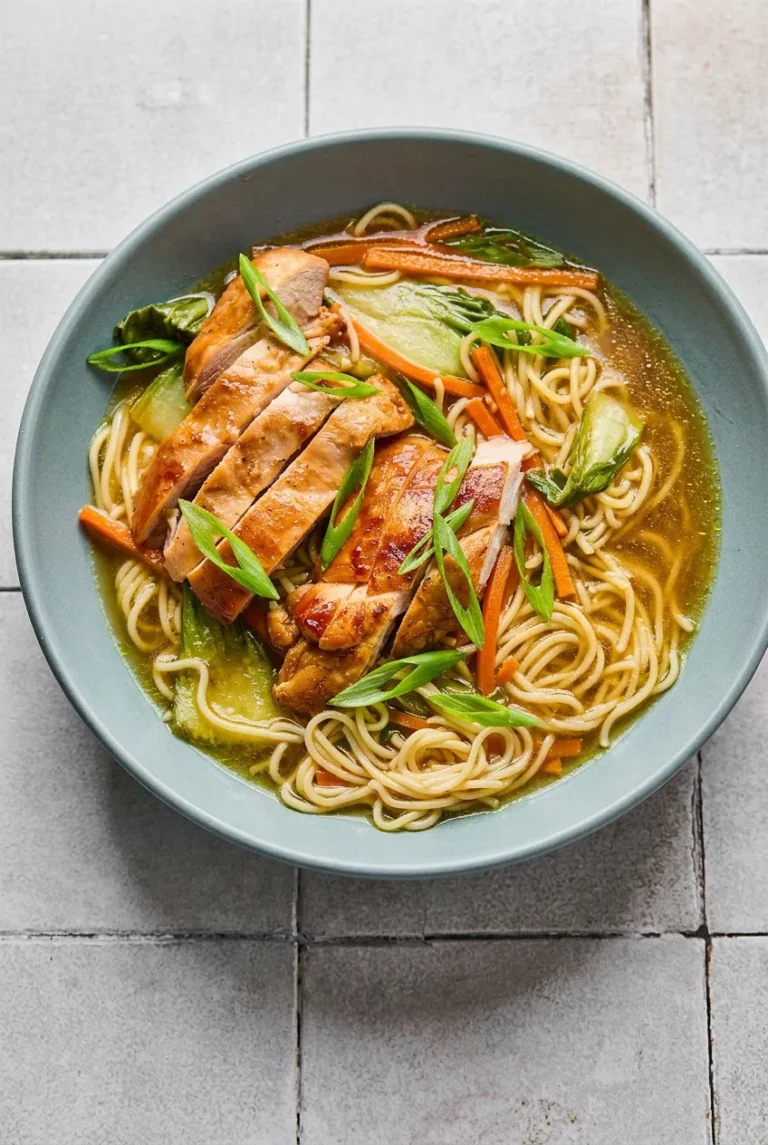
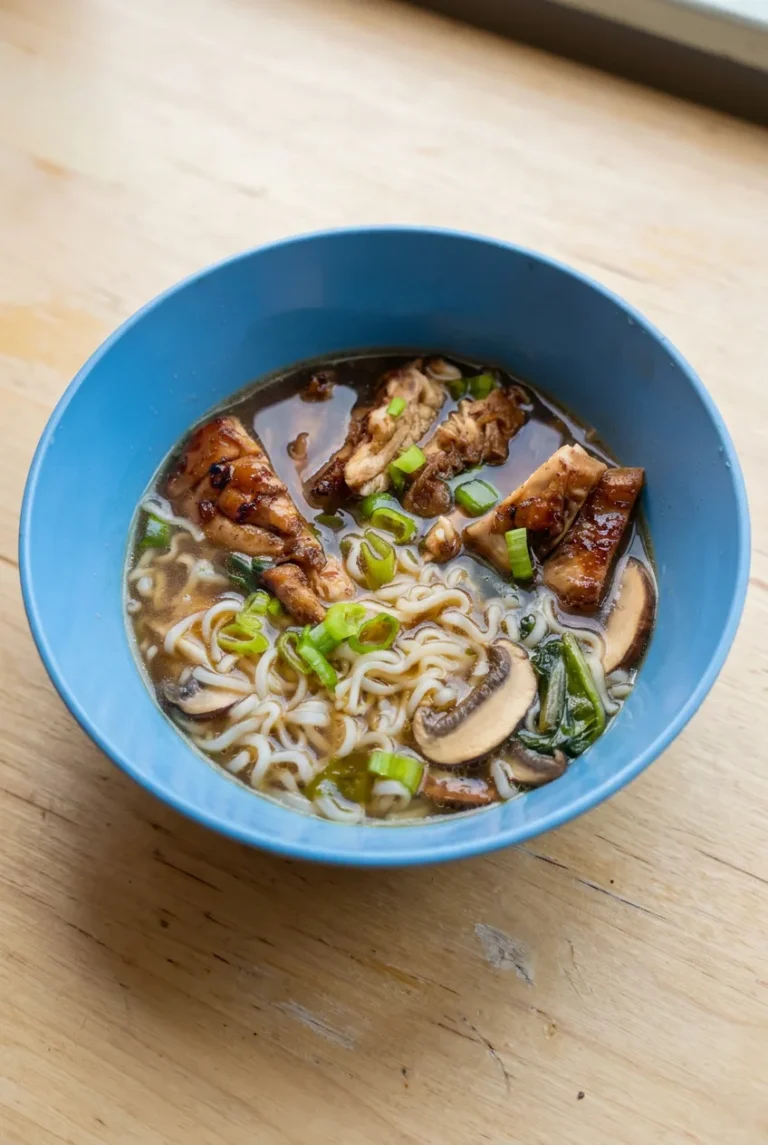
Teriyaki Chicken Ramen

These brothy ramen bowls have substantial slices of teriyaki-glazed chicken over noodles, baby bok choy, and thin carrots in a ginger-garlic broth. Most of the sauce coats the chicken, so the broth stays savory and pourable rather than thick and sweet. Cook the noodles separately and assemble the bowls just before serving to keep the strands distinct.

Makes 4 bowls. Allow about 15 minutes to prepare and 25 minutes to cook.

Ingredients for Teriyaki Chicken Ramen

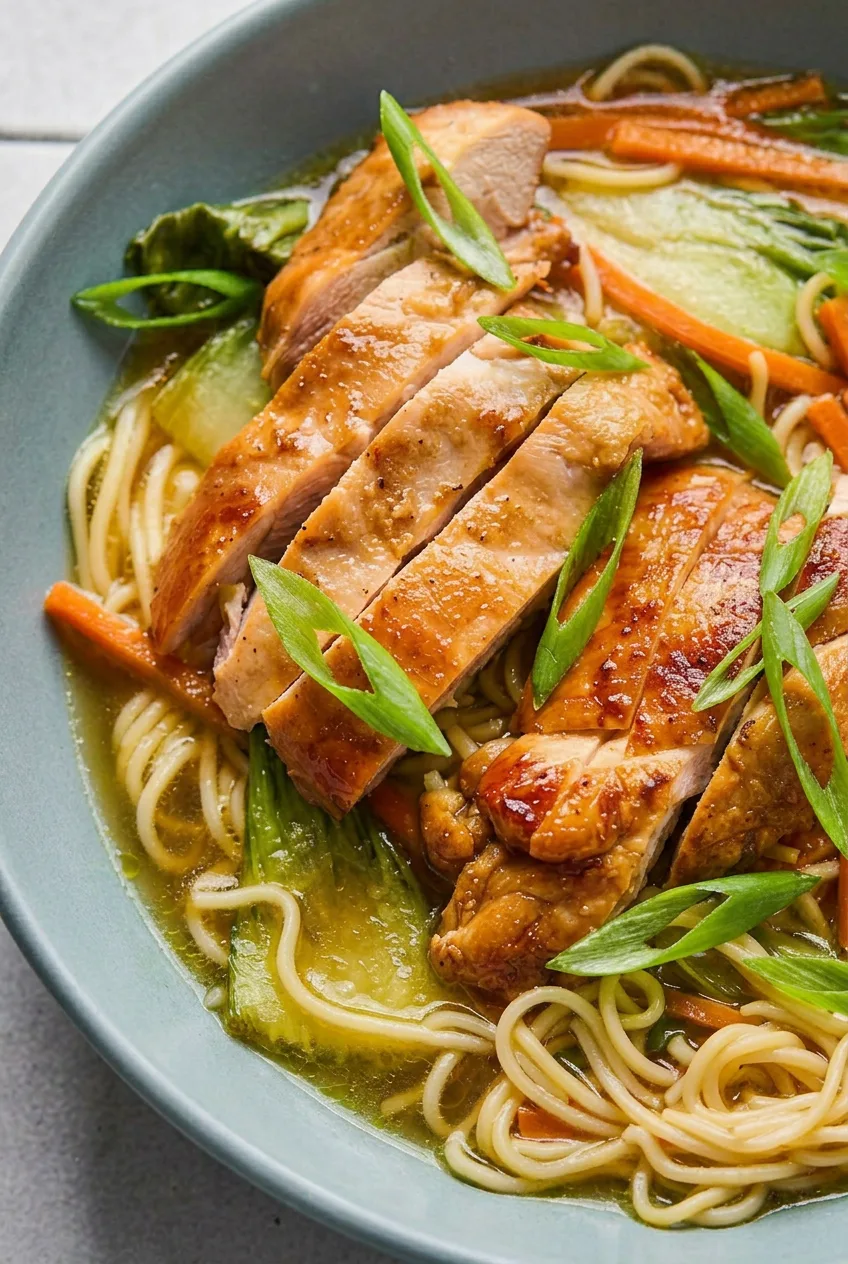
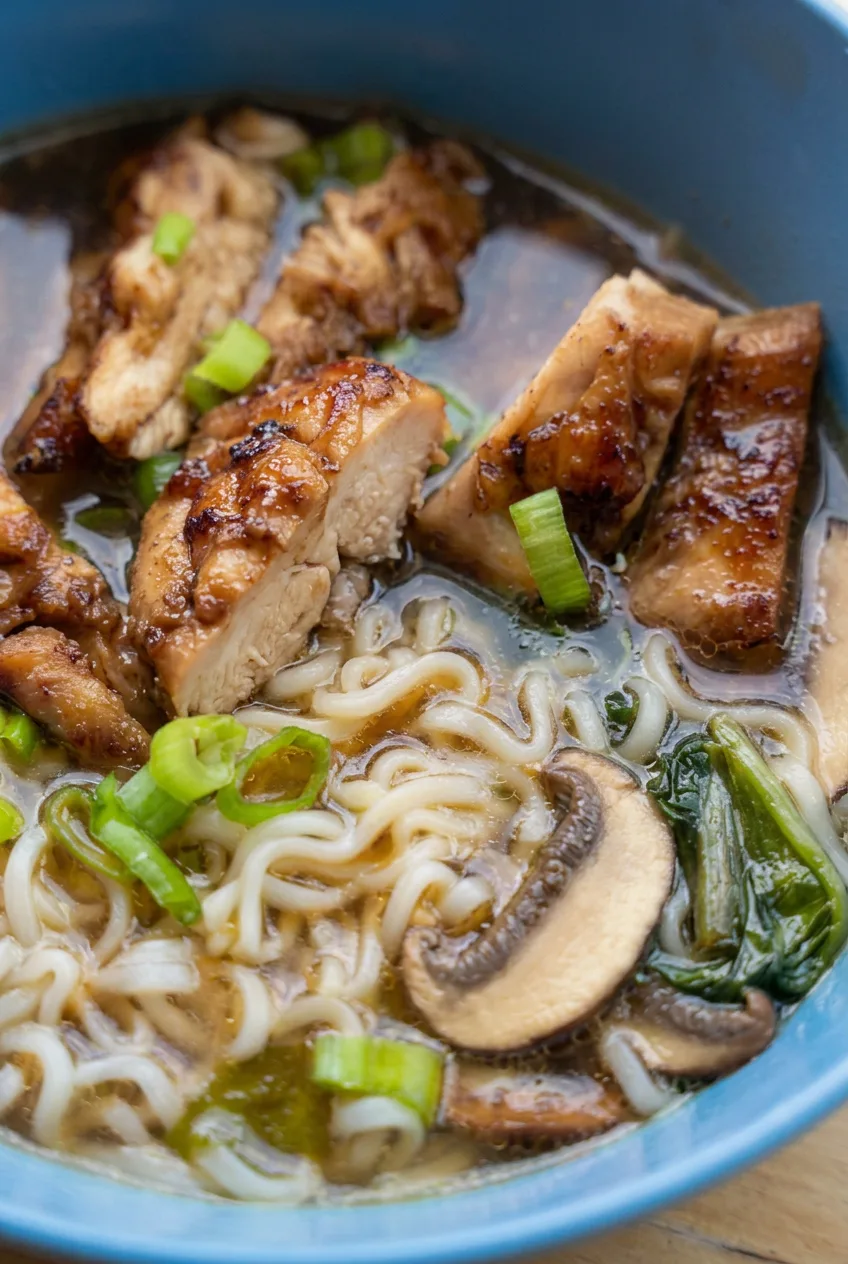
Close view of glazed chicken slices, distinct ramen noodles, bok choy, and amber broth
  • 1 1/2 pounds boneless skinless chicken thighs (about 680g)
  • 1/2 cup bottled teriyaki sauce (about 120g), divided: 1/3 cup for the chicken, 2 tablespoons for the broth, and the remaining 2 teaspoons for adjusting to taste if needed
  • 1 tablespoon neutral cooking oil
  • 6 cups low-sodium chicken broth
  • 1 tablespoon finely grated fresh ginger
  • 2 garlic cloves, minced
  • 2 medium carrots, cut into thin matchsticks (about 120g)
  • 4 small heads baby bok choy, halved or quartered lengthwise (about 450g)
  • 4 packages instant ramen noodles, about 3 ounces each (about 340g total); discard the seasoning packets
  • 3 green onions, thinly sliced on the diagonal

How to Make Teriyaki Chicken Ramen

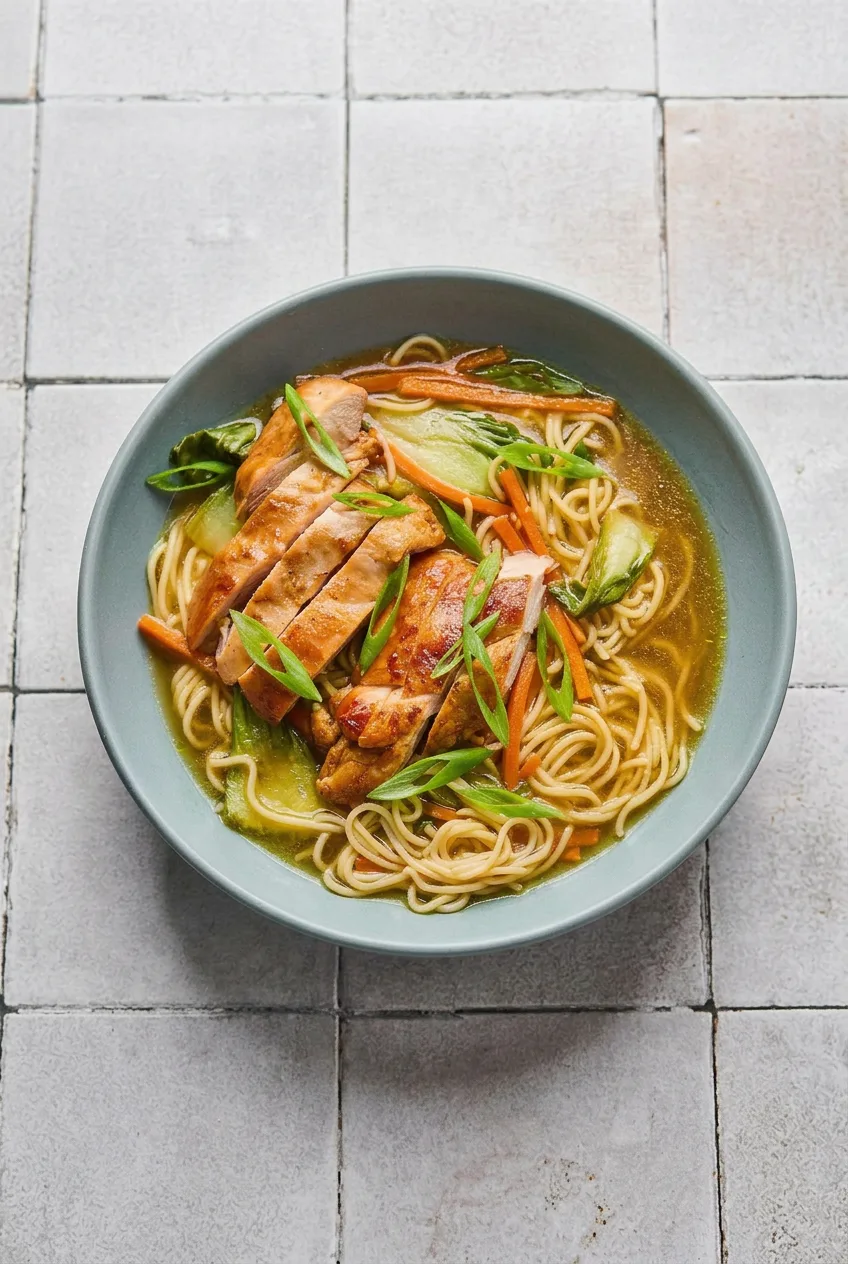
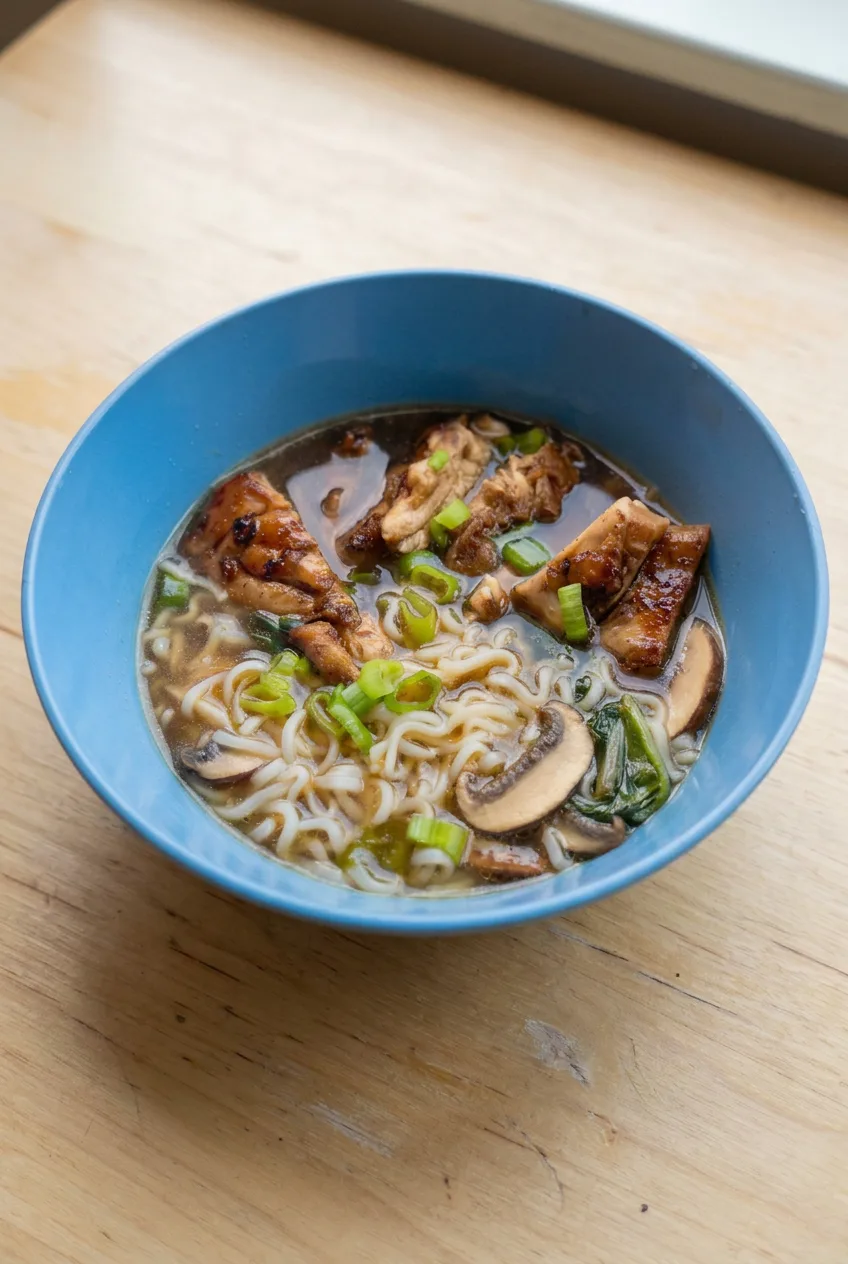
Complete bowl of teriyaki chicken ramen on a light gray tiled table
  1. Prepare the ingredients: Cut the carrots into thin matchsticks. Halve or quarter the bok choy lengthwise, keeping the stems and leaves attached. Slice the green onions and pat the chicken dry.
  2. Brown the chicken: Heat the oil in a 12-inch skillet over medium heat. Add the thighs in one layer; cook in batches if they would crowd the pan. Cook uncovered, turning once, until browned and nearly cooked through, about 10 to 14 minutes total depending on thickness. Start checking the first side after about 5 minutes. Meanwhile, bring a separate pot of water to a boil for the noodles and begin warming the broth in a saucepan.
  3. Glaze and rest: Reduce the skillet heat to medium-low. Add 1/3 cup teriyaki sauce and turn the chicken for 1 to 2 minutes, until glossy. Check the thickest part with an instant-read thermometer: the chicken must reach at least 165°F (75°C). Thighs can cook to about 175°F (80°C) for a more tender result. Transfer to a board, rest for about 5 minutes, then cut into substantial slices across the grain.
  4. Simmer the vegetables: Add the ginger, garlic, and 2 tablespoons teriyaki sauce to the warming broth. Bring to a gentle simmer, then add the carrots and bok choy with the stem ends submerged. Simmer uncovered for about 5 to 7 minutes, pressing the leafy tops into the broth only toward the end. The carrots and stems should be just tender and the leaves still green. Taste the broth before adding any more teriyaki sauce.
  5. Cook the noodles: Boil the ramen in plain water according to the package directions, usually 2 to 4 minutes. Stir to separate the strands and start checking at the short end of the package range. Drain when just tender; do not use the seasoning packets.
  6. Assemble the bowls: Divide the noodles among four deep bowls. Ladle in the vegetables and enough hot broth to visibly surround the noodles. Arrange the sliced chicken on top, scatter with green onions, and serve immediately.

Why Cook the Noodles Separately?

Ramen keeps absorbing liquid after it cooks. Draining the noodles when just tender and adding broth at serving keeps them from becoming swollen and leaves the broth lighter. It also lets you store leftover noodles apart from the soup.

Getting the Broth and Glaze Right

Teriyaki sauce contains sugar that can scorch during a long sear. Brown the chicken first, then lower the heat and coat it briefly for a glossy glaze.

Bottled sauces vary in saltiness and sweetness. Taste the broth before using the reserved sauce; if it is already too strong, dilute it with a little more low-sodium broth. It should remain pourable around the noodles.

Chicken and Noodle Options

Boneless skinless chicken breast can replace the thighs, but its skillet time will depend on thickness. Check the thickest part and cook to 165°F rather than following the thigh timing. For a gluten-free bowl, use certified gluten-free ramen and check that the teriyaki sauce and broth meet your needs. Add a few drops of chili oil to individual bowls if desired.

For another chicken noodle bowl, try honey garlic chicken ramen.

Make-Ahead and Leftovers

The chicken and broth can be prepared ahead; cook the noodles close to serving when practical. Refrigerate leftovers within 2 hours in airtight containers, keeping the noodles separate from the broth, chicken, and vegetables. Use refrigerated leftovers within 2 days.

Reheat the broth and chicken until hot on the stovetop or in the microwave, then assemble with the noodles. Leftover noodles may be softer than freshly cooked ones. Avoid freezing assembled bowls; the noodles may lose their texture when thawed.

Nutrition

Approximate per bowl, based on 4 generously filled bowls: 745 calories, 46g protein, 33g fat, and 69g carbohydrates. Approximate per 100g of finished ramen: 85 calories, 5g protein, 4g fat, and 8g carbohydrates. Values vary with the ramen, teriyaki sauce, chicken, and amount of broth served.

Teriyaki Chicken Ramen

Brothy ramen bowls with teriyaki-glazed chicken, bok choy, carrots, and ginger-garlic broth.
Course: Soup
Cuisine: Global
Prep: 15 min
Cook: 25 min
Total: 40 min
Servings: 4 Calories: 745 kcal per bowl; 85 kcal per 100 g

Equipment

  • 12-inch skillet
  • Saucepan
  • Large pot
  • Cutting board
  • Knife
  • Instant-read thermometer
  • Colander

Ingredients

Chicken

  • 1 1/2 pounds boneless skinless chicken thighs (about 680 g)
  • 1 tablespoon neutral cooking oil
  • 1/3 cup bottled teriyaki sauce

Broth and Vegetables

  • 6 cups low-sodium chicken broth
  • 1 tablespoon finely grated fresh ginger
  • 2 garlic cloves, minced
  • 2 medium carrots, cut into thin matchsticks (about 120 g)
  • 4 small heads baby bok choy, halved or quartered lengthwise (about 450 g)
  • 2 tablespoons bottled teriyaki sauce, plus up to 2 teaspoons reserved for adjusting to taste

Noodles and Garnish

  • 4 packages instant ramen noodles, about 3 ounces each (about 340 g total); discard seasoning packets
  • 3 green onions, thinly sliced on the diagonal

Instructions

  1. Cut the carrots into thin matchsticks, halve or quarter the bok choy lengthwise, slice the green onions, and pat the chicken dry.
  2. Heat the oil in a 12-inch skillet over medium heat. Add the chicken in one layer, working in batches if needed.
  3. Cook uncovered, turning once, until browned and nearly cooked through, about 10 to 14 minutes total. Start checking the first side after about 5 minutes.
  4. While the chicken cooks, bring a pot of water to a boil for the noodles and begin warming the broth in a saucepan.
  5. Reduce the skillet heat to medium-low. Add 1/3 cup teriyaki sauce and turn the chicken for 1 to 2 minutes, until glossy.
  6. Check the thickest part of the chicken with an instant-read thermometer; it must reach at least 165°F (75°C). For more tender thighs, cook to about 175°F (80°C). Transfer to a board and rest for about 5 minutes, then slice across the grain.
  7. Add the ginger, garlic, and 2 tablespoons teriyaki sauce to the warming broth. Bring to a gentle simmer.
  8. Add the carrots and bok choy, keeping the stem ends submerged. Simmer uncovered for 5 to 7 minutes, pressing the leafy tops into the broth toward the end, until the carrots and stems are just tender and the leaves remain green.
  9. Taste the broth before adding any of the reserved teriyaki sauce.
  10. Boil the ramen in plain water according to package directions, usually 2 to 4 minutes. Stir to separate the strands and start checking at the shorter end of the time range.
  11. Drain the noodles when just tender. Divide them among four deep bowls, then add the vegetables and enough hot broth to surround the noodles.
  12. Arrange the sliced chicken on top, scatter with green onions, and serve immediately.

Tips

  • Brown the chicken before adding teriyaki sauce to help prevent the sauce’s sugar from scorching.
  • Cook the noodles separately and drain them when just tender to keep the broth light and the strands distinct.
  • Taste the broth before using the reserved teriyaki sauce; dilute with extra low-sodium broth if it is too strong.
  • Keep the leafy bok choy tops out of the simmering broth until near the end so they stay green.

Variations

  • Chicken Breast Ramen: Replace the thighs with boneless skinless chicken breast and cook according to thickness, checking that the thickest part reaches 165°F (75°C).
  • Gluten-Free Ramen: Use certified gluten-free ramen and check that the teriyaki sauce and broth meet your needs.
  • Chili Oil Ramen: Add a few drops of chili oil to individual bowls before serving.

Notes

Refrigerate leftovers within 2 hours in airtight containers, keeping noodles separate, and use within 2 days. Reheat the broth and chicken until hot; leftover noodles may soften. Avoid freezing assembled bowls.

Nutrition

Calories: 745 kcal per bowl; 85 kcal per 100 g | Protein: 46 g per bowl; 5 g per 100 g | Fat: 33 g per bowl; 4 g per 100 g | Carbohydrates: 69 g per bowl; 8 g per 100 g

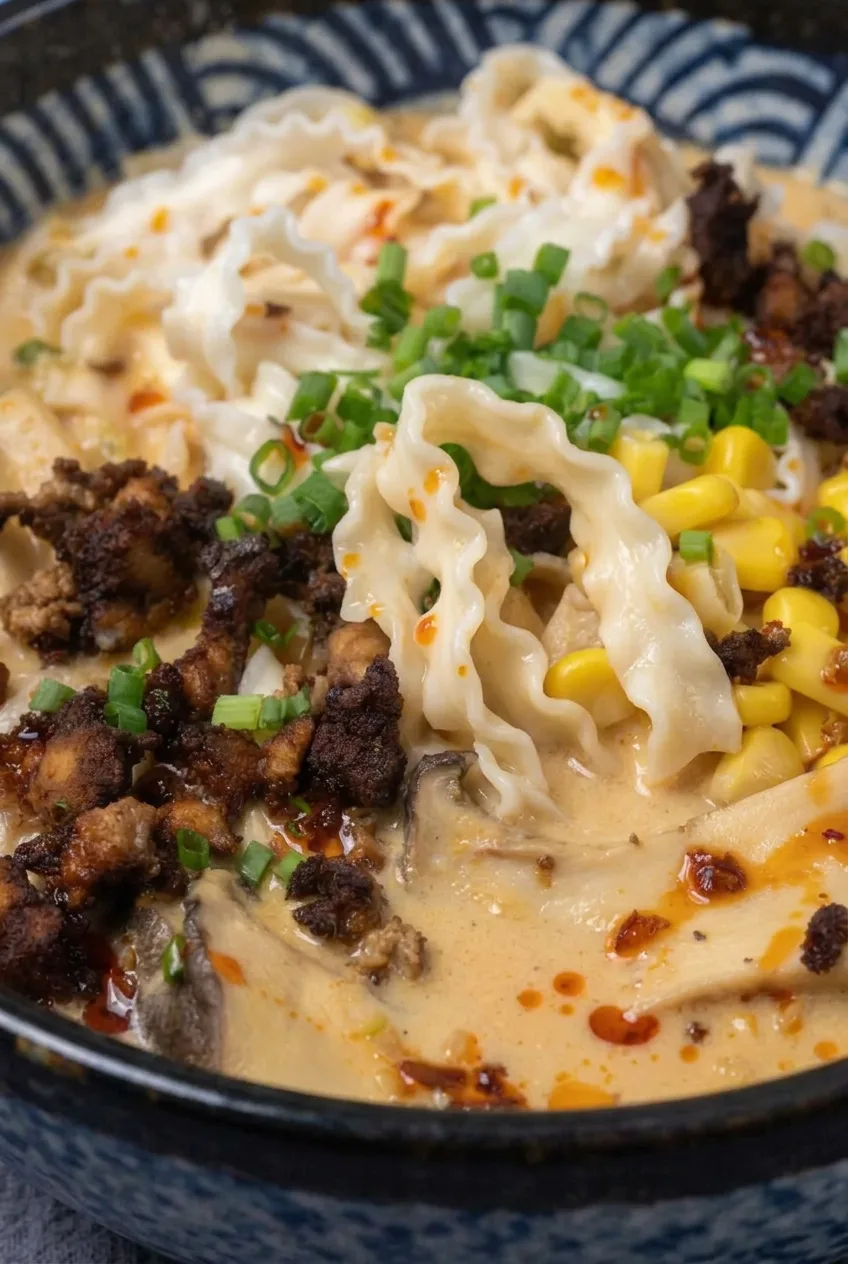
Creamy Spicy Ramen

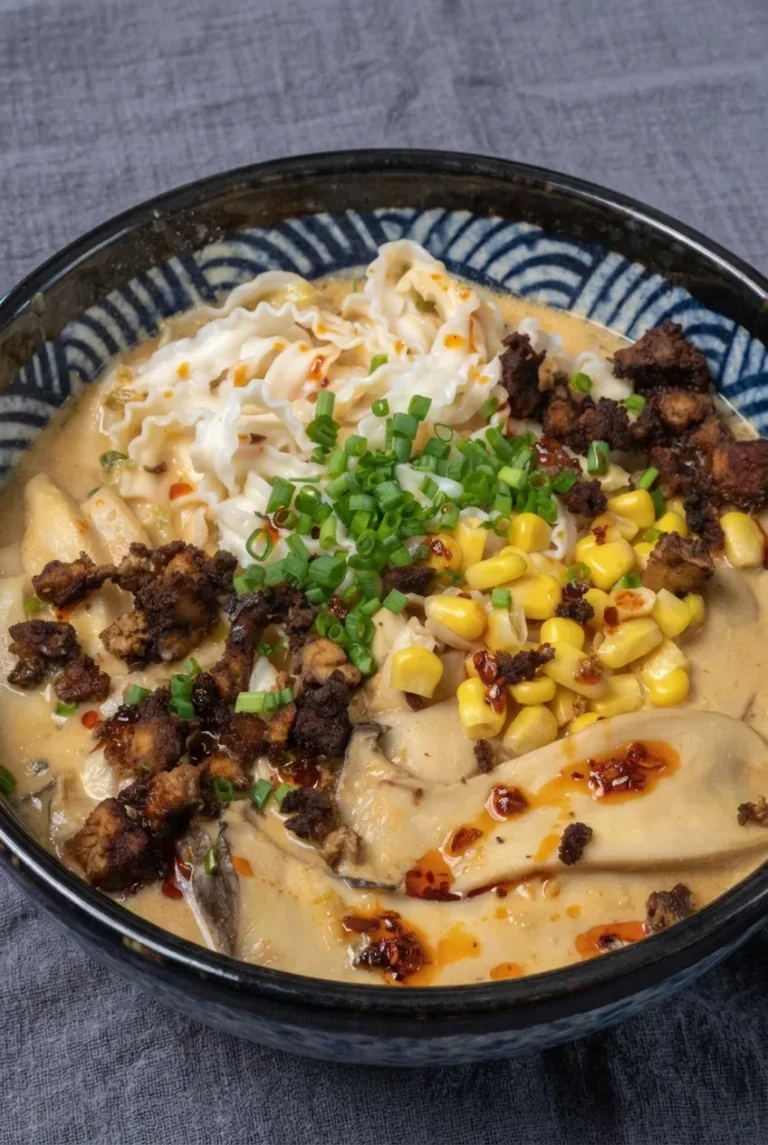
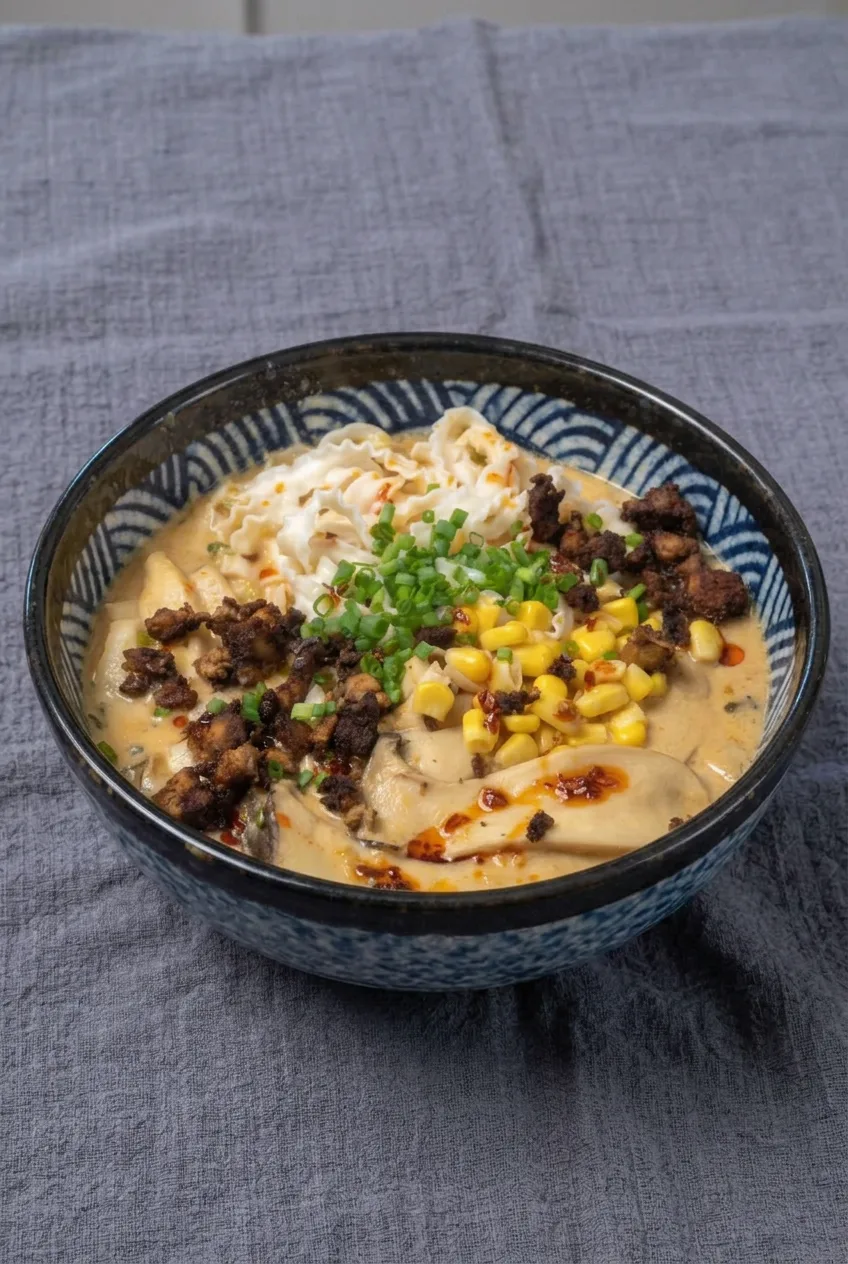
Wavy noodles sit in a pale-orange soy-milk-and-miso broth, topped with browned pork, mushrooms, corn, scallions, and chili oil. Doubanjiang gives the soup savory heat; the chili oil adds a little more heat at the table without turning the whole broth red.

This version is deliberately brothy rather than sauce-coated. Cook the noodles in a separate pot and add them just before serving so they keep their bite and the broth stays smooth and pourable. It makes two generous bowls in about 30 minutes.

Ingredients for Creamy Spicy Ramen

Close view of wavy ramen noodles, browned pork and chili-oil droplets in creamy broth
  • 2 teaspoons neutral cooking oil
  • 8 ounces ground pork (about 225g)
  • 4 ounces cremini or white mushrooms, sliced (about 115g)
  • 3 garlic cloves, minced
  • 2 teaspoons grated fresh ginger
  • 3 green onions, sliced, whites and greens separated
  • 2 teaspoons doubanjiang (fermented chili bean paste), plus more to taste
  • 1 1/2 cups low-sodium chicken broth
  • 1 tablespoon white miso
  • 2 cups unsweetened, unflavored soy milk
  • 2 blocks dry wavy ramen noodles, about 6 ounces total (170g); discard the seasoning packets
  • 1/2 cup sweet corn kernels, thawed if frozen
  • 2 teaspoons chili crisp or chili oil, plus more to taste

Optional: Up to 1 teaspoon low-sodium soy sauce, added only after tasting the broth. The doubanjiang and miso may provide enough salt.

How to Make Creamy Spicy Ramen

Complete bowl of creamy spicy ramen on a neutral tabletop, with its toppings and broth visible
  1. Prepare the toppings: Slice the mushrooms and green onions, keeping the onion whites separate from the greens. Mince the garlic, grate the ginger, and have the corn and chili oil ready.
  2. Brown the pork: Heat the oil in a 3- to 4-quart pot or deep saucepan over medium-high heat. Use a pot wide enough that the pork can brown rather than steam. Add the pork, break it into small crumbles, and cook uncovered for 5 to 7 minutes, turning occasionally, until fully cooked with dark browned edges. Ground pork should reach 160°F (70°C) if checked with a thermometer. Transfer it to a plate, leaving a little rendered fat in the pot.
  3. Cook the mushrooms and aromatics: Reduce the heat to medium. Add the mushrooms and cook for about 4 minutes, stirring, until softened. Set aside a few slices for topping. Add the green onion whites, garlic, and ginger; stir briefly until fragrant but not browned. Stir in the doubanjiang.
  4. Make the broth: Pour in the chicken broth and scrape up the browned bits from the pot. In a small bowl, whisk the miso with a little warm broth until smooth, then stir it into the pot. Add the soy milk and reduce the heat to low or medium-low. Heat uncovered for 4 to 5 minutes, until steaming with only occasional gentle bubbles; do not let it boil vigorously. Taste before adding optional soy sauce or more doubanjiang.
  5. Cook the noodles separately: While the broth heats, bring a second pot of water to a boil. Add the ramen without its seasoning packets. Start checking about 1 minute before the package time ends; drain without rinsing when the noodles separate easily but still have a little bite.
  6. Assemble the bowls: Warm the corn briefly in the hot broth, then spoon it out for topping. Divide the noodles between two deep bowls. Ladle the broth and mushrooms around them, leaving some wavy noodles above the surface. Arrange the pork, reserved mushroom slices, and corn in separate clusters. Add the green onion greens and drizzle chili crisp or oil over the broth. Serve immediately.

How to Keep the Broth Creamy

Whisking miso with warm broth helps it dissolve evenly. Once the soy milk is added, gentle heat keeps the soup smooth: it should steam, not boil hard. The 3 1/2 cups of broth and soy milk should remain pourable, with liquid visible around the noodles.

Plain unsweetened oat milk can replace soy milk, but its flavor and texture may differ. Heat it gently, too.

How to Keep the Noodles from Getting Soggy

Hot broth continues to soften ramen noodles. Stop cooking while they still have a little bite, and keep them out of the broth if serving is delayed. For a less-brothy noodle dish, see these garlic butter ramen noodles.

Adjusting the Spice and Salt

Doubanjiang seasons the broth, while chili crisp or oil adds finishing heat. Brands vary in saltiness and heat, so start with the listed amounts and taste the broth before adding soy sauce. Offer extra chili oil at the table rather than stirring it all into the pot.

Storing and Reheating

Refrigerate the broth and pork toppings in airtight containers, separate from cooked noodles, for up to 3 days. Reheat the broth and toppings gently on the stovetop over medium-low heat until hot, without a hard boil. Cook fresh noodles while they reheat when possible; noodles stored in broth will be softer.

If freezing, freeze the broth without noodles for up to 2 months. Thaw it in the refrigerator before gently reheating, and cook fresh noodles for serving.

Nutrition

Approximate nutrition per generous bowl, based on 2 servings: 930 calories, 39g protein, 53g fat, and 75g carbohydrates. Approximate values per 100g of prepared ramen: 110 calories, 5g protein, 6g fat, and 9g carbohydrates. Values vary with the pork, soy milk, chili oil, noodle brand, and amount of water the noodles absorb.

Creamy Spicy Ramen

Wavy ramen noodles are served in a creamy soy milk and miso broth with browned pork, mushrooms, corn, scallions, and chili oil.
Course: Soup
Cuisine: Japanese
Prep: 10 min
Cook: 20 min
Total: 30 min
Servings: 2 Calories: 930 kcal

Equipment

  • 3- to 4-quart pot
  • Pot for noodles
  • Small bowl
  • Whisk
  • Meat thermometer

Ingredients

For the Broth and Toppings

  • 2 teaspoons neutral cooking oil
  • 8 ounces ground pork (about 225g)
  • 4 ounces cremini or white mushrooms, sliced (about 115g)
  • 3 garlic cloves, minced
  • 2 teaspoons grated fresh ginger
  • 3 green onions, sliced, whites and greens separated
  • 2 teaspoons doubanjiang (fermented chili bean paste), plus more to taste
  • 1 1/2 cups low-sodium chicken broth
  • 1 tablespoon white miso
  • 2 cups unsweetened, unflavored soy milk
  • 1/2 cup sweet corn kernels, thawed if frozen
  • 2 teaspoons chili crisp or chili oil, plus more to taste
  • Optional: up to 1 teaspoon low-sodium soy sauce, to taste

For the Noodles

  • 2 blocks dry wavy ramen noodles, about 6 ounces total (170g); discard the seasoning packets

Instructions

  1. Slice the mushrooms and green onions, keeping the onion whites separate from the greens. Mince the garlic and grate the ginger.
  2. Heat the oil in a 3- to 4-quart pot over medium-high heat. Add the pork, break it into small crumbles, and cook uncovered for 5 to 7 minutes, turning occasionally, until fully cooked and browned. Check that it reaches 160°F (70°C). Transfer the pork to a plate, leaving a little rendered fat in the pot.
  3. Reduce the heat to medium. Add the mushrooms and cook for about 4 minutes, stirring, until softened. Set aside a few slices for topping.
  4. Add the green onion whites, garlic, and ginger. Stir briefly until fragrant but not browned, then stir in the doubanjiang.
  5. Pour in the chicken broth and scrape up the browned bits. Whisk the miso with a little warm broth in a small bowl until smooth, then stir it into the pot.
  6. Add the soy milk and reduce the heat to low or medium-low. Heat uncovered for 4 to 5 minutes, until steaming with only occasional gentle bubbles. Taste before adding optional soy sauce or more doubanjiang.
  7. While the broth heats, bring a second pot of water to a boil. Cook the ramen without its seasoning packets, starting to check about 1 minute before the package time ends. Drain without rinsing when the noodles separate easily but still have a little bite.
  8. Warm the corn briefly in the hot broth, then spoon it out for topping.
  9. Divide the noodles between two deep bowls. Ladle the broth and mushrooms around them, then arrange the pork, reserved mushroom slices, and corn in separate clusters.
  10. Top with the green onion greens and drizzle with chili crisp or chili oil. Serve immediately.

Tips

  • Cook the noodles separately and add them just before serving to keep them from getting soggy.
  • Whisk the miso with warm broth before adding it so it dissolves smoothly.
  • Keep the soy milk broth at a gentle heat; do not let it boil vigorously.
  • Taste the broth before adding soy sauce because the miso and doubanjiang may provide enough salt.
  • Serve extra chili oil at the table so each person can adjust the heat.

Variations

  • Oat Milk Ramen: Replace the soy milk with plain, unsweetened oat milk and heat it gently.

Notes

Refrigerate broth and pork toppings separately from the noodles for up to 3 days. Reheat gently without boiling; cook fresh noodles when possible. Freeze broth without noodles for up to 2 months. Approximate nutrition per 100g: 110 calories, 5g protein, 6g fat, and 9g carbohydrates.

Nutrition

Calories: 930 kcal | Protein: 39 g | Fat: 53 g | Carbohydrates: 75 g

Honey Garlic Chicken Ramen

Glossy honey-garlic chicken tops curly noodles in a savory broth with mushrooms and spinach. The chicken is glazed in a skillet, then cut into pieces that stay visible above the noodles. Green onions add a fresh finish to each bowl.

Keeping the glaze on the chicken, rather than stirring it into the pot, prevents the broth from becoming too sweet. The noodles also cook separately and go into the bowls just before serving, so they retain some spring. This stovetop recipe makes four generous bowls in about 40 minutes.

Ingredients for Honey Garlic Chicken Ramen

Close view of glossy chicken pieces above curly ramen noodles, mushrooms, spinach, and brown broth
  • 1 lb boneless skinless chicken thighs (450g)
  • 1 tablespoon neutral oil or olive oil
  • 3 tablespoons honey (about 65g)
  • 3 tablespoons low-sodium soy sauce, divided
  • 4 garlic cloves, minced
  • 2 tablespoons water, plus more for boiling the noodles
  • 6 cups low-sodium chicken broth
  • 8 oz sliced mushrooms (225g)
  • 2 packed cups baby spinach (about 60g)
  • 8 oz dry ramen noodles, usually 4 small blocks (225g); discard the seasoning packets
  • 3 green onions, thinly sliced

Optional: Add a pinch of red pepper flakes to the broth for heat, or add 1 teaspoon freshly grated ginger to the glaze.

How to Make Honey Garlic Chicken Ramen

Complete blue bowl of honey garlic chicken ramen on a light surface, with broth and toppings visible
  1. Mix the glaze: Whisk together the honey, 2 tablespoons soy sauce, garlic, and 2 tablespoons water. Add the ginger here if using. Have the spinach and green onions ready.
  2. Simmer the broth: In a soup pot large enough to hold 6 cups of broth and the vegetables, bring the broth and mushrooms to a gentle simmer. Cook uncovered for 7 to 10 minutes, until the mushrooms are tender. Taste, then add up to the remaining 1 tablespoon soy sauce. Add red pepper flakes if using. Keep the broth at a gentle simmer while the chicken cooks.
  3. Sear the chicken: Heat the oil in a 10- to 12-inch skillet over medium-high heat until it shimmers. Add the thighs without crowding them so they brown rather than steam. Cook uncovered, turning once, for about 5 to 7 minutes per side. Start checking after about 5 minutes per side; an instant-read thermometer inserted into the thickest part must register 165°F (75°C). If the outside browns before the center is done, lower the heat and finish cooking before adding the glaze.
  4. Glaze and rest: Reduce the skillet heat to medium-low. Pour in the honey-garlic mixture and turn the chicken, or spoon the glaze over it, for 1 to 2 minutes. Transfer the chicken to a board as soon as the glaze lightly coats it and looks glossy, before it darkens or smokes. Rest for about 5 minutes, then cut into substantial pieces.
  5. Cook the noodles and spinach: While the chicken rests, boil the ramen in a separate pot of water for about 1 minute less than the package directs. Drain when the noodles have loosened but still feel springy. Stir the spinach into the hot broth just until wilted.
  6. Assemble the bowls: Divide the noodles among four deep bowls. Ladle in the hot broth, mushrooms, and spinach, leaving some broth visible around the noodles. Arrange the chicken on top and scatter with green onions. If desired, spoon a little remaining skillet glaze over the chicken rather than into the broth. Serve immediately.

How to Keep the Glaze from Burning

Finish cooking the chicken before adding the honey mixture. Honey darkens quickly in a hot skillet, so reduce the heat and stop glazing once the coating turns glossy. If the broth tastes too salty, dilute it with a little hot water rather than adding more glaze.

Why the Noodles Cook Separately

Hot broth continues to soften ramen after assembly. Package times vary, so drain the noodles about a minute early and combine them with the broth just before serving. If dinner is delayed, hold the drained noodles apart from the broth.

Chicken Breast Option

Boneless skinless chicken breast can replace the thighs. Adjust the skillet time to the thickness of the breast and check that it reaches 165°F before adding the glaze.

For another glazed thigh dinner, try cranberry glazed chicken thighs.

How to Store and Reheat Leftovers

Refrigerate leftovers promptly in covered containers and use within 3 to 4 days. Keep the noodles separate from the broth and chicken when possible so they absorb less liquid. Gently reheat the broth and chicken until thoroughly hot, then add the noodles just long enough to warm.

Freezing assembled bowls is not recommended because the noodles and greens lose texture. For best quality, the broth and cooked chicken can be frozen separately for up to about 2 months; prepare fresh noodles and greens when serving.

Nutrition

Approximate per bowl (1 of 4): 560 calories, 32g protein, 23g fat, and 56g carbohydrates. Approximate per 100g: 80 calories, 5g protein, 3g fat, and 8g carbohydrates. Values are estimates; noodle and broth brands, portion sizes, and the amount of glaze served can change them.

Honey Garlic Chicken Ramen

Curly ramen noodles, mushrooms, and spinach are served in savory broth with honey-garlic glazed chicken and green onions.
Course: Soup
Cuisine: Japanese-inspired
Prep: 10 min
Cook: 30 min
Total: 40 min
Servings: 4 Calories: 560 kcal

Equipment

  • Soup pot
  • 10- to 12-inch skillet
  • Separate pot for noodles
  • Instant-read thermometer

Ingredients

For the Chicken and Glaze

  • 1 lb boneless skinless chicken thighs (450 g)
  • 1 tablespoon neutral oil or olive oil
  • 3 tablespoons honey (about 65 g)
  • 2 tablespoons low-sodium soy sauce
  • 4 garlic cloves, minced
  • 2 tablespoons water
  • 1 teaspoon freshly grated ginger (optional)

For the Broth and Noodles

  • 6 cups low-sodium chicken broth
  • 8 oz sliced mushrooms (225 g)
  • Up to 1 tablespoon low-sodium soy sauce
  • Pinch of red pepper flakes (optional)
  • 8 oz dry ramen noodles, usually 4 small blocks (225 g); discard seasoning packets
  • Water for boiling the noodles

To Finish

  • 2 packed cups baby spinach (about 60 g)
  • 3 green onions, thinly sliced

Instructions

  1. Whisk together the honey, 2 tablespoons soy sauce, garlic, and 2 tablespoons water. Add the ginger if using.
  2. Bring the chicken broth and mushrooms to a gentle simmer in a soup pot. Cook uncovered for 7 to 10 minutes, until the mushrooms are tender.
  3. Taste the broth and add up to 1 tablespoon more soy sauce. Add red pepper flakes if using, then keep the broth at a gentle simmer.
  4. Heat the oil in a 10- to 12-inch skillet over medium-high heat until it shimmers. Add the chicken thighs without crowding the pan.
  5. Cook the chicken uncovered, turning once, for about 5 to 7 minutes per side. Check that the thickest part reaches 165°F (75°C). If the outside browns before the center is done, lower the heat and finish cooking before glazing.
  6. Reduce the skillet heat to medium-low. Add the honey-garlic mixture and turn the chicken or spoon the glaze over it for 1 to 2 minutes, until lightly coated and glossy.
  7. Transfer the chicken to a board before the glaze darkens or smokes. Rest for about 5 minutes, then cut into substantial pieces.
  8. While the chicken rests, boil the ramen in a separate pot of water for about 1 minute less than the package directs. Drain when loosened but still springy.
  9. Stir the spinach into the hot broth just until wilted.
  10. Divide the noodles among four deep bowls. Ladle in the broth, mushrooms, and spinach, then arrange the chicken on top and scatter with green onions. Spoon any remaining skillet glaze over the chicken if desired, and serve immediately.

Tips

  • Cook the chicken through before adding the honey glaze, which can darken quickly in a hot skillet.
  • Stop glazing as soon as the coating looks glossy.
  • Cook the noodles separately and drain them about a minute before the package time so they stay springy.
  • If the broth tastes too salty, dilute it with a little hot water rather than adding more glaze.

Variations

  • Ginger Honey Garlic Ramen: Add 1 teaspoon freshly grated ginger to the honey-garlic glaze.
  • Spicy Honey Garlic Ramen: Add a pinch of red pepper flakes to the broth.
  • Chicken Breast Ramen: Replace the thighs with boneless skinless chicken breast, adjust the skillet time for thickness, and cook to 165°F (75°C) before glazing.

Notes

Refrigerate leftovers in covered containers and use within 3 to 4 days. Store noodles separately when possible; reheat the broth and chicken until thoroughly hot, then add noodles just to warm. Freeze broth and cooked chicken separately for up to about 2 months; freezing assembled bowls is not recommended. Approximate nutrition per 100 g: 80 calories, 5 g protein, 3 g fat, and 8 g carbohydrates.

Nutrition

Calories: 560 kcal | Protein: 32 g | Fat: 23 g | Carbohydrates: 56 g | Per 100g Calories: 80 kcal | Per 100g Protein: 5 g | Per 100g Fat: 3 g | Per 100g Carbohydrates: 8 g