Author

Julia

Browsing

Gluten-Free Mac and Cheese

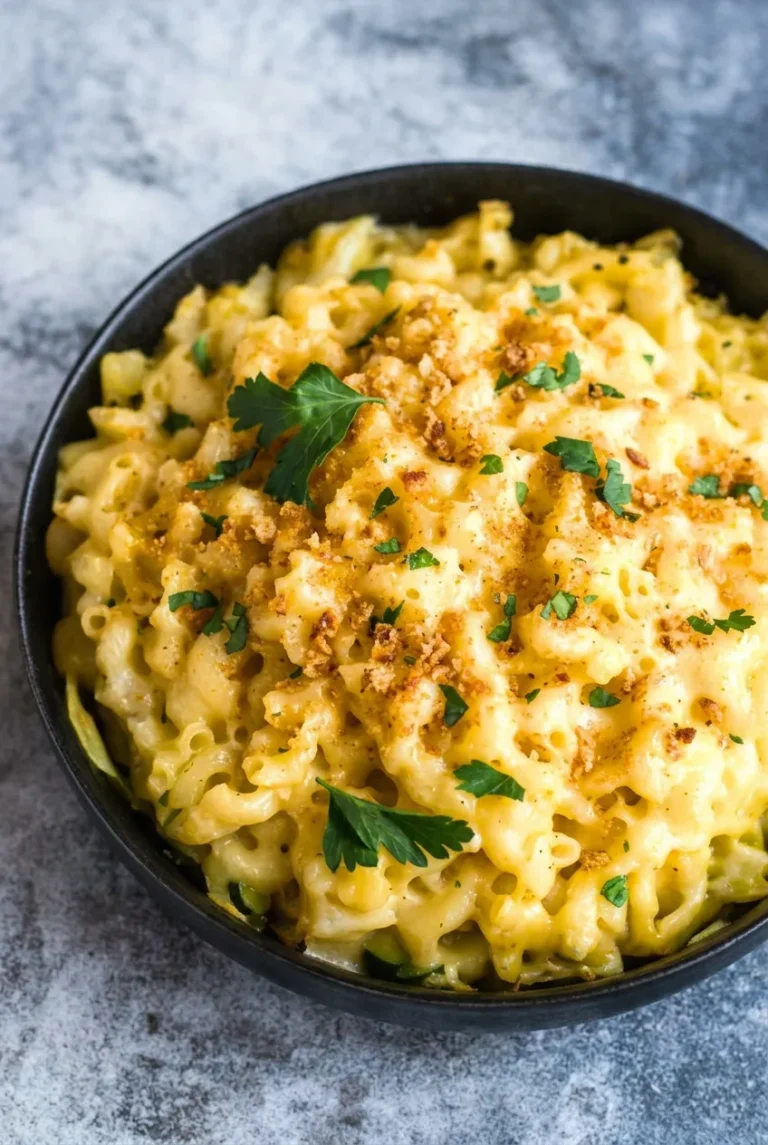
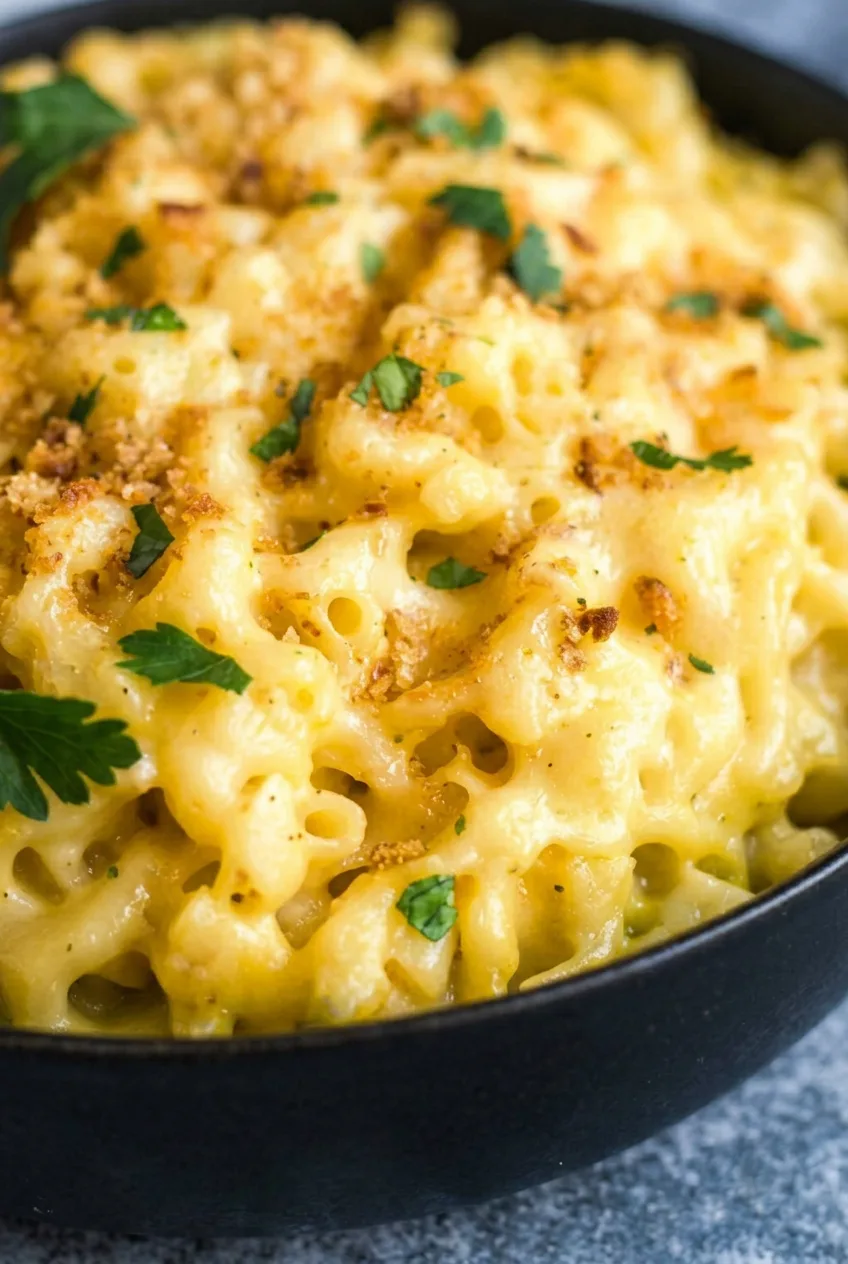
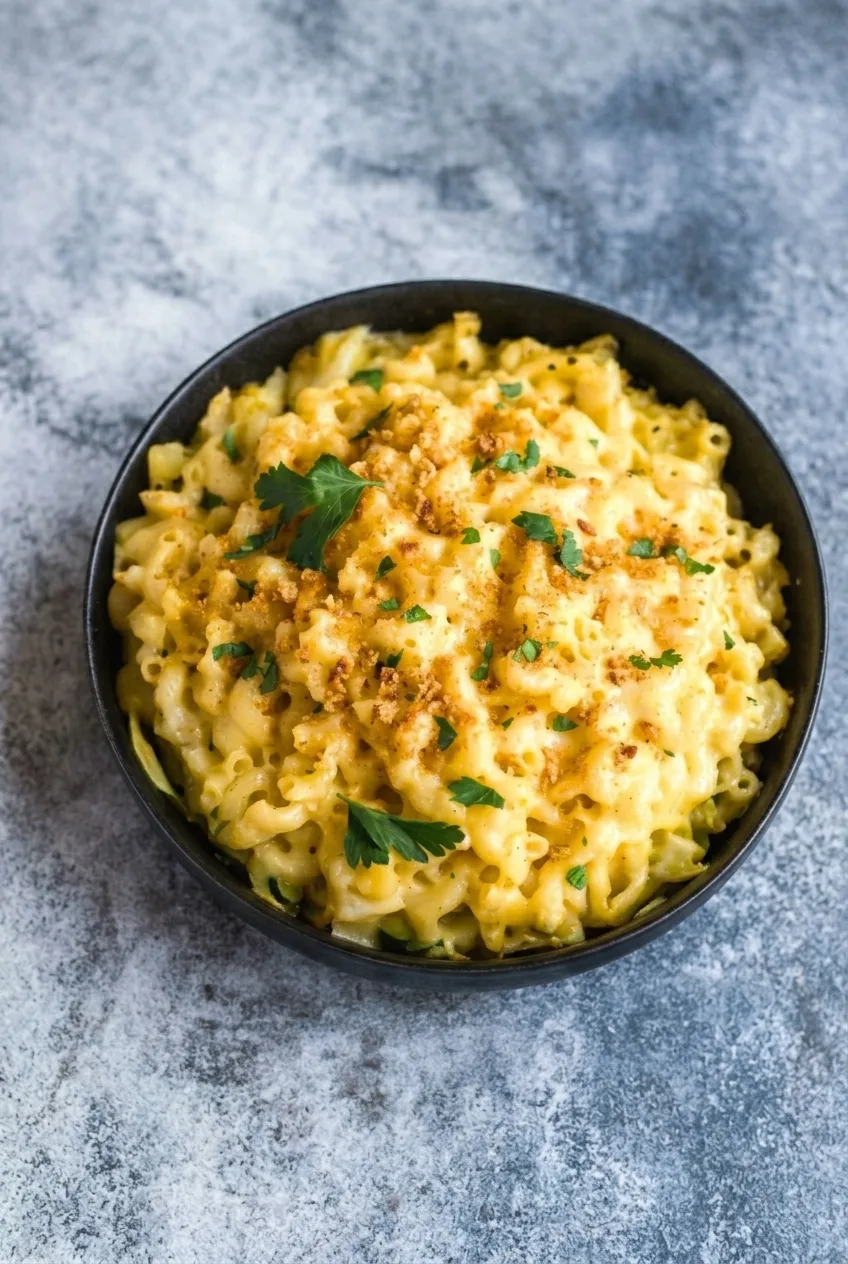
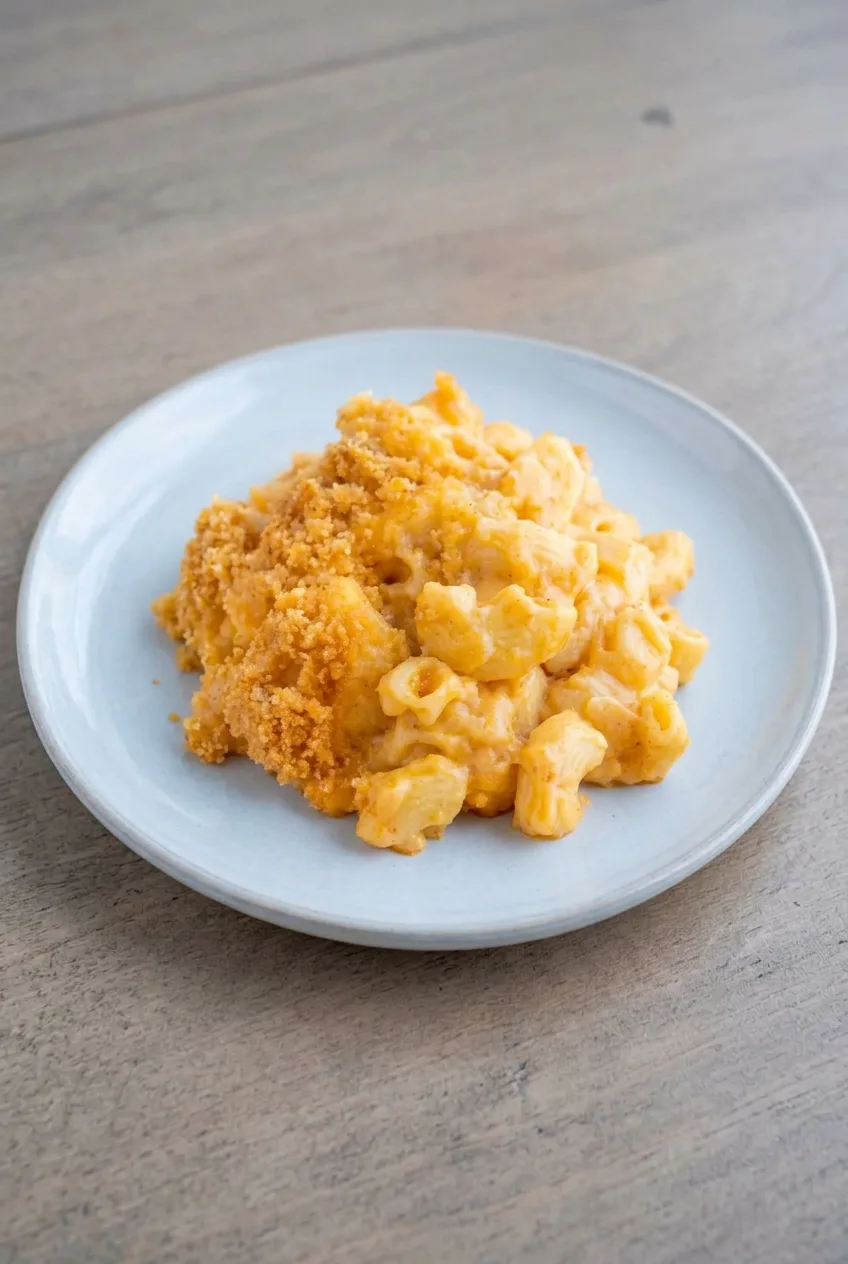
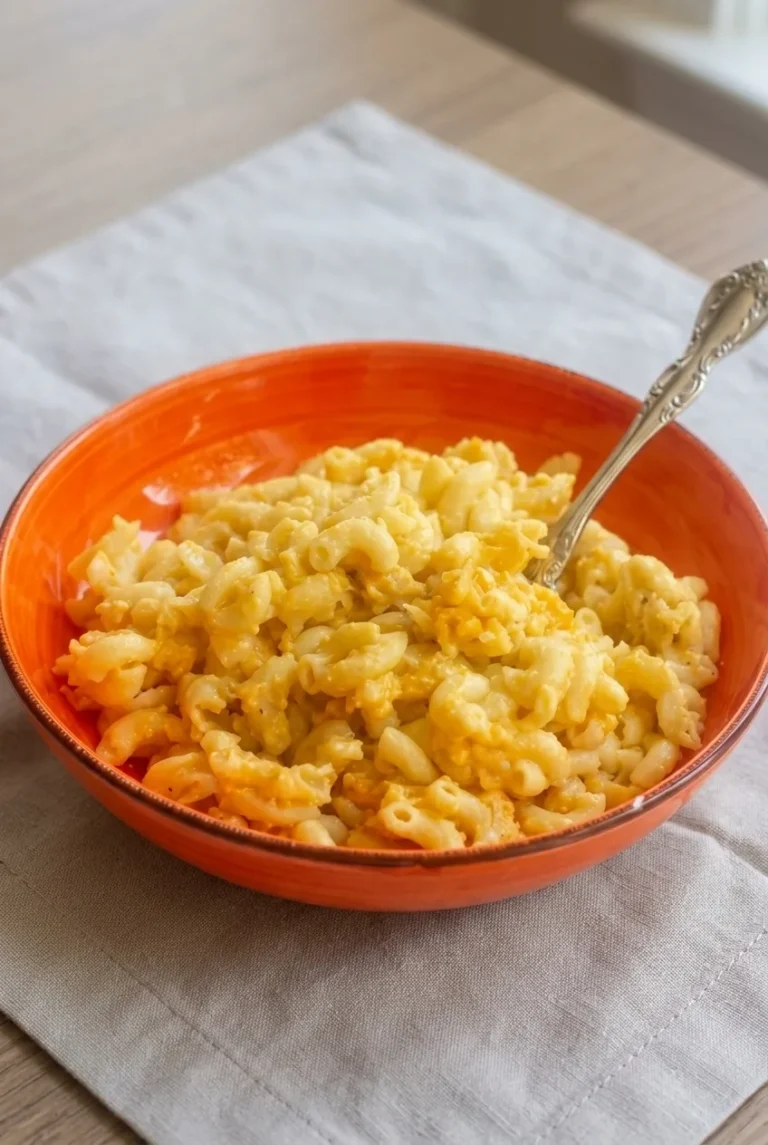
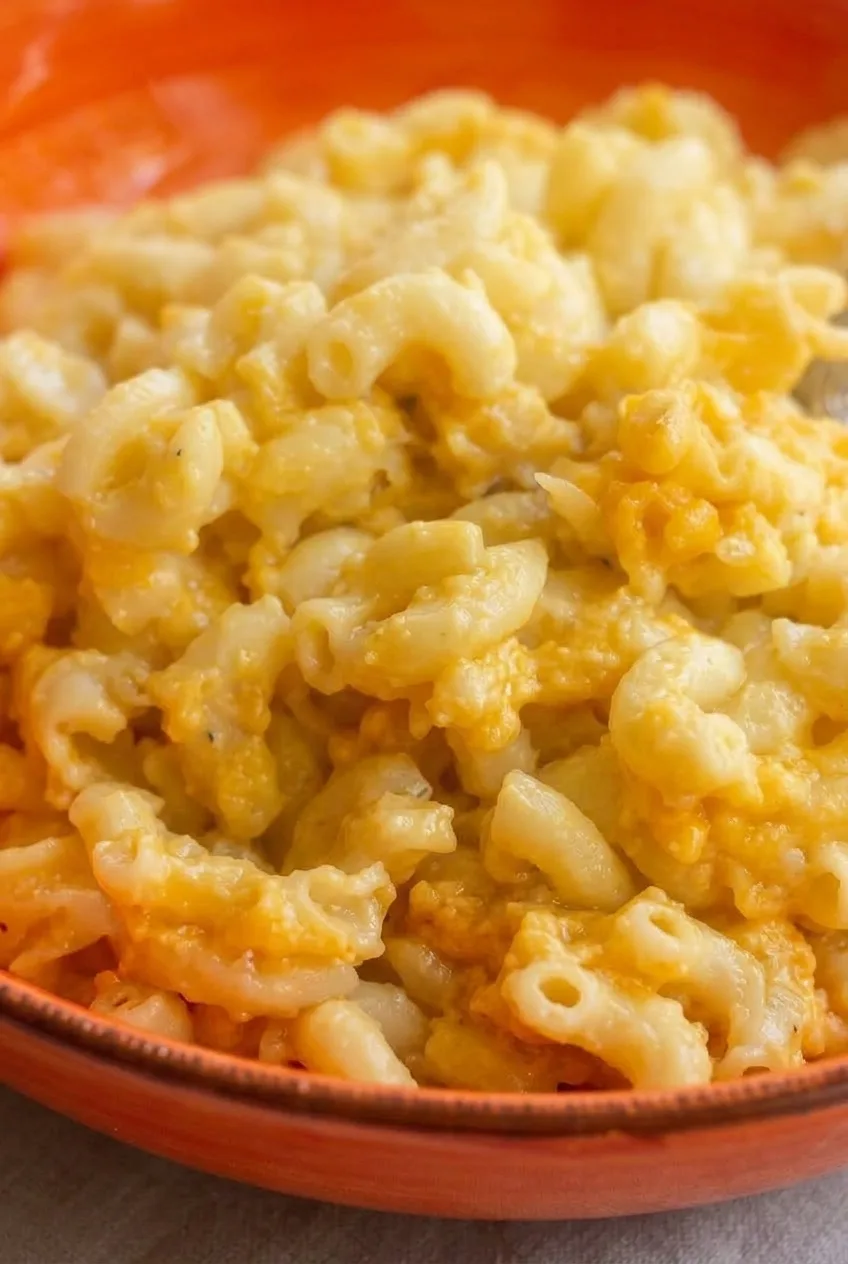
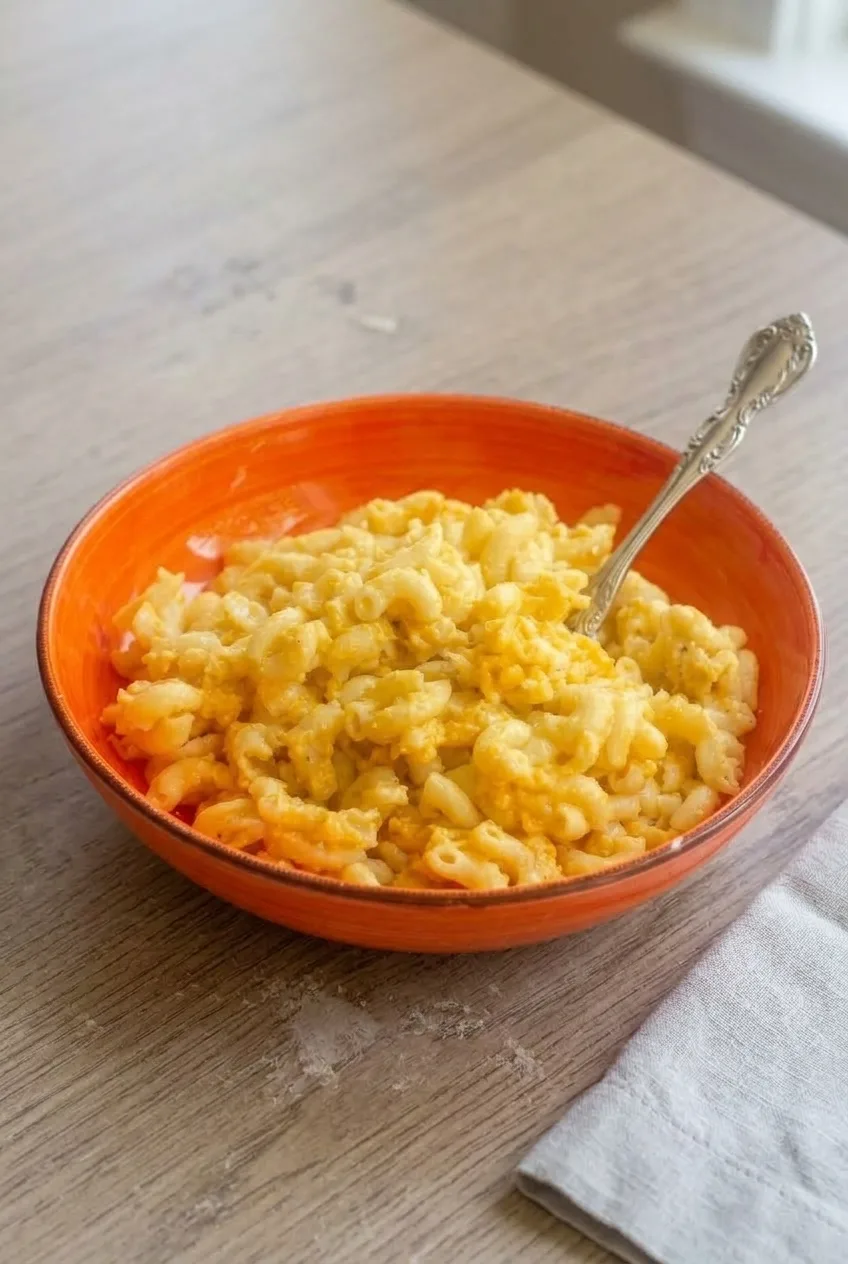
This baked gluten-free mac and cheese has short pasta coated in creamy cheddar sauce beneath a loose, golden panko topping. Chopped chives go on after baking for a fresh finish. Because gluten-free pasta can soften quickly, cook it only until slightly firm before mixing it with the sauce. A brief, uncovered bake heats the casserole and toasts the crumbs without cooking the pasta much further.

Servings: 6 | Prep: 15 minutes | Cook: 30–35 minutes | Total: 45–50 minutes

Ingredients for Gluten-Free Mac and Cheese
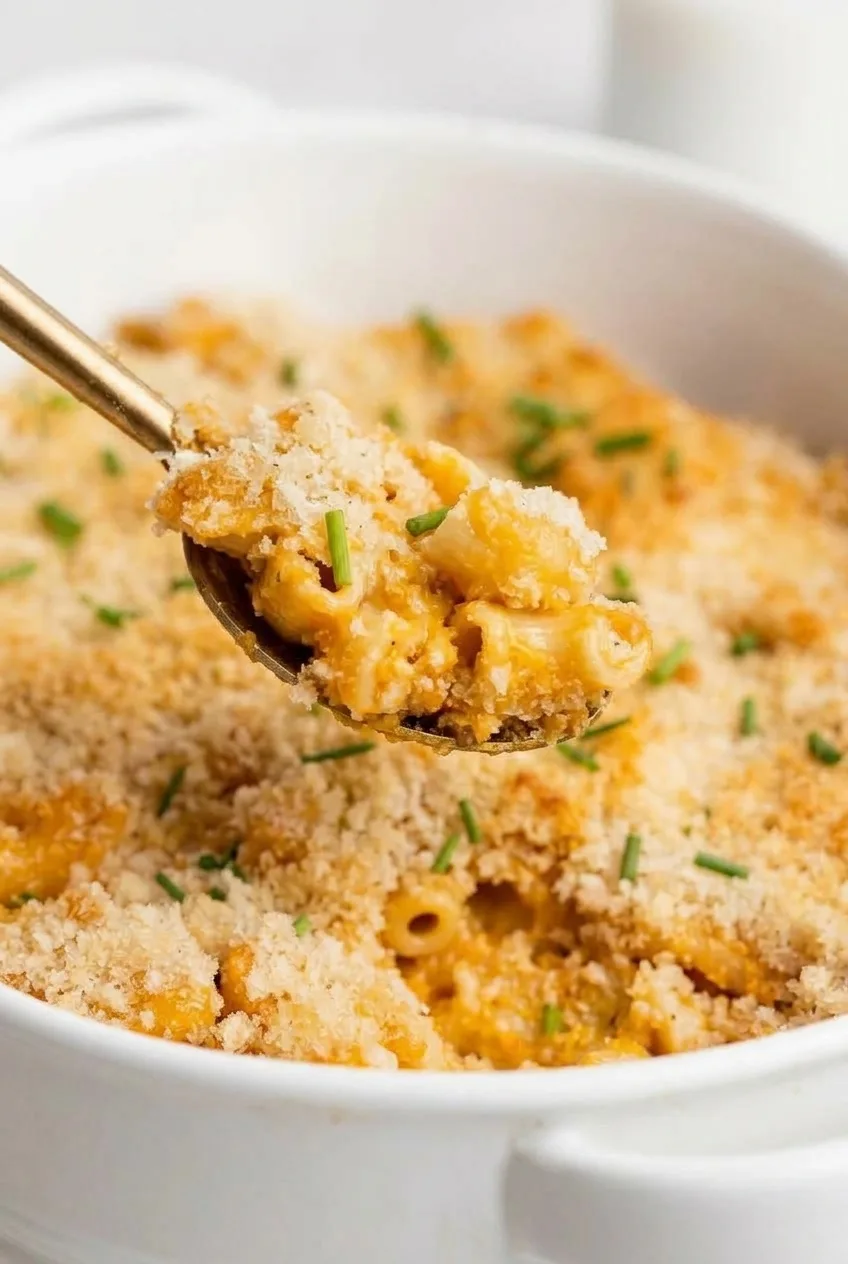
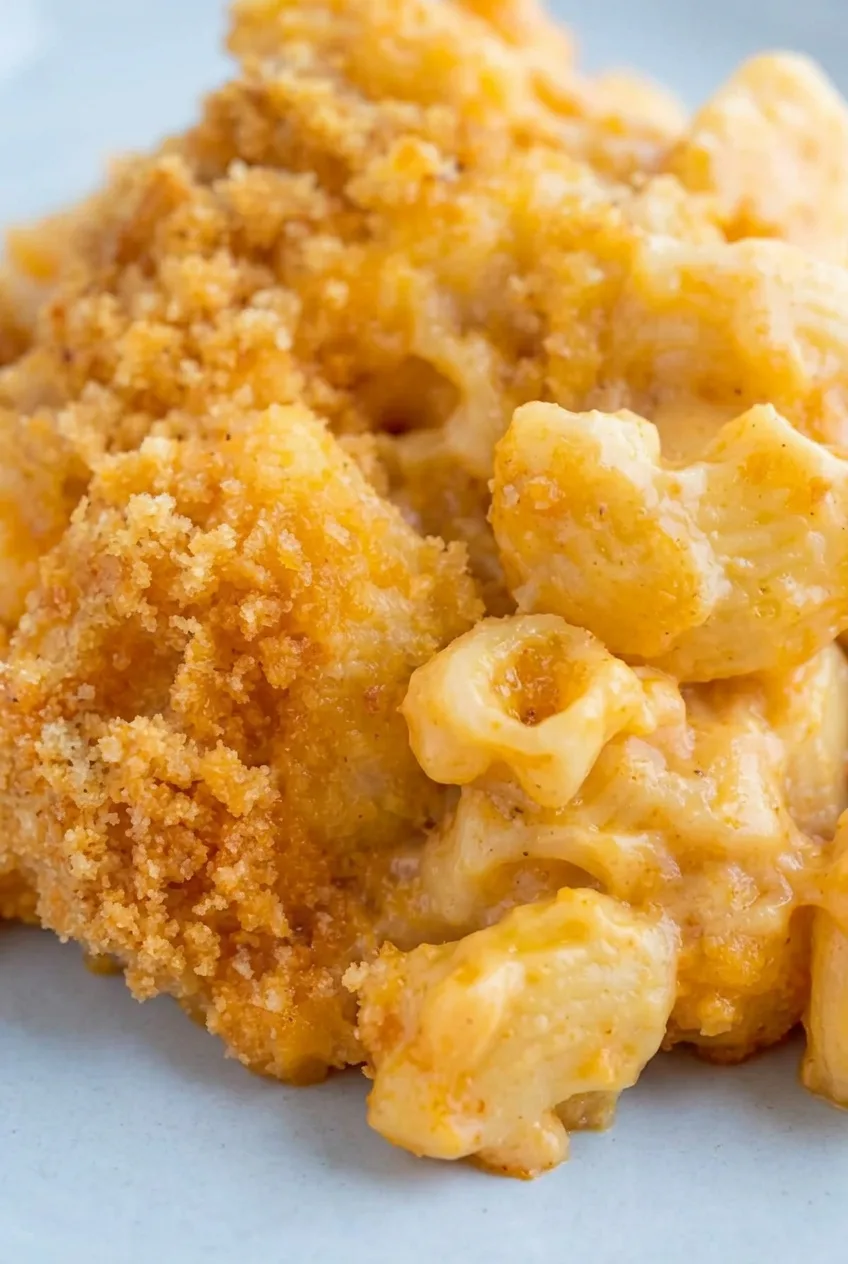
Close view of cheddar-coated macaroni beneath loose golden crumbs and chopped chives
  • 12 ounces gluten-free elbow macaroni (340g)
  • 2 tablespoons unsalted butter (30g)
  • 2 cups whole milk, divided (480g)
  • 1/2 cup heavy cream (120g)
  • 2 tablespoons cornstarch (15g)
  • 12 ounces sharp cheddar cheese, freshly shredded, about 3 cups (340g)
  • 1 teaspoon Dijon mustard
  • 1/2 teaspoon fine salt, plus more for the pasta water; adjust to taste
  • 1/4 teaspoon black pepper
  • 3/4 cup certified gluten-free panko breadcrumbs (45g)
  • 1 tablespoon olive oil
  • 2 tablespoons finely chopped fresh chives

Check the labels on the pasta, panko, mustard, and other packaged ingredients if the dish needs to be gluten-free. Ordinary panko often contains wheat. This cheddar version contains dairy.

How to Make Baked Gluten-Free Mac and Cheese
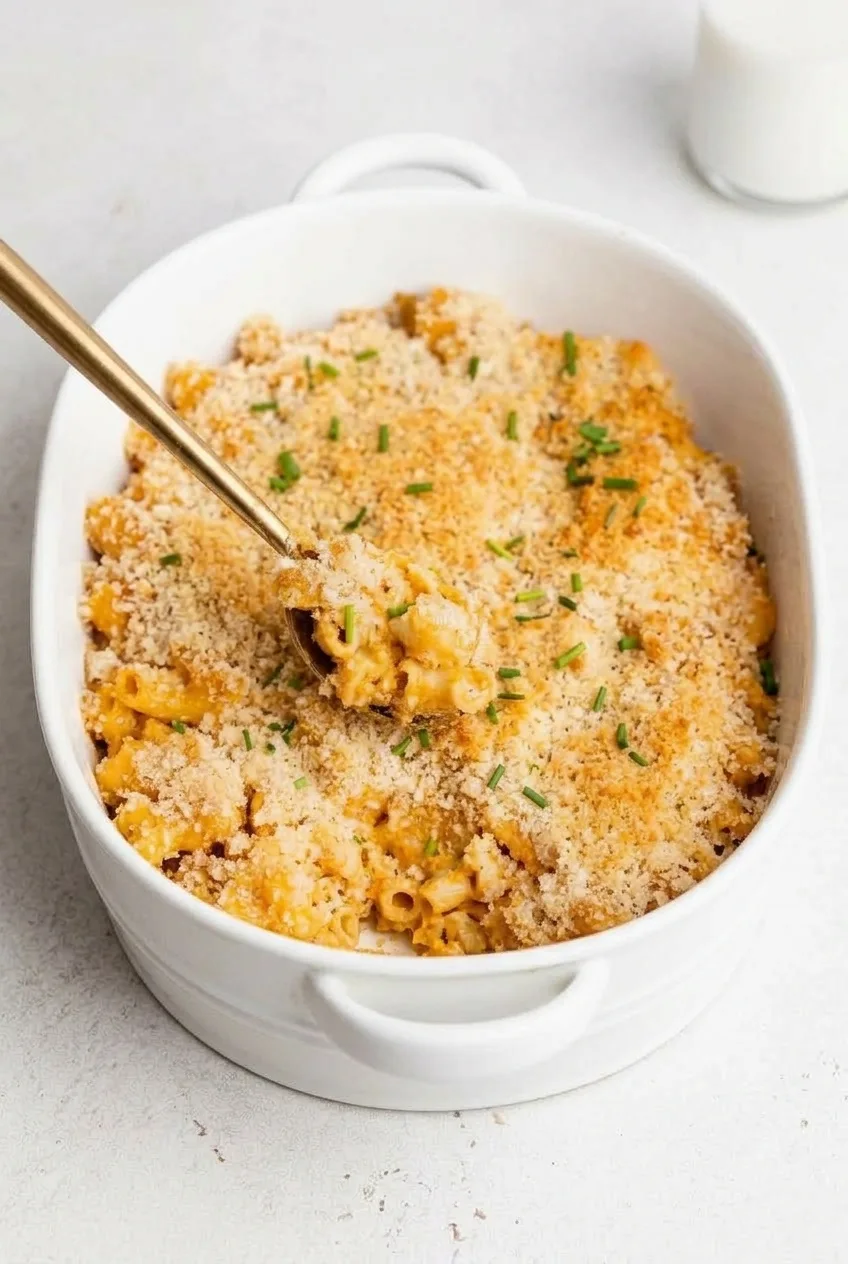
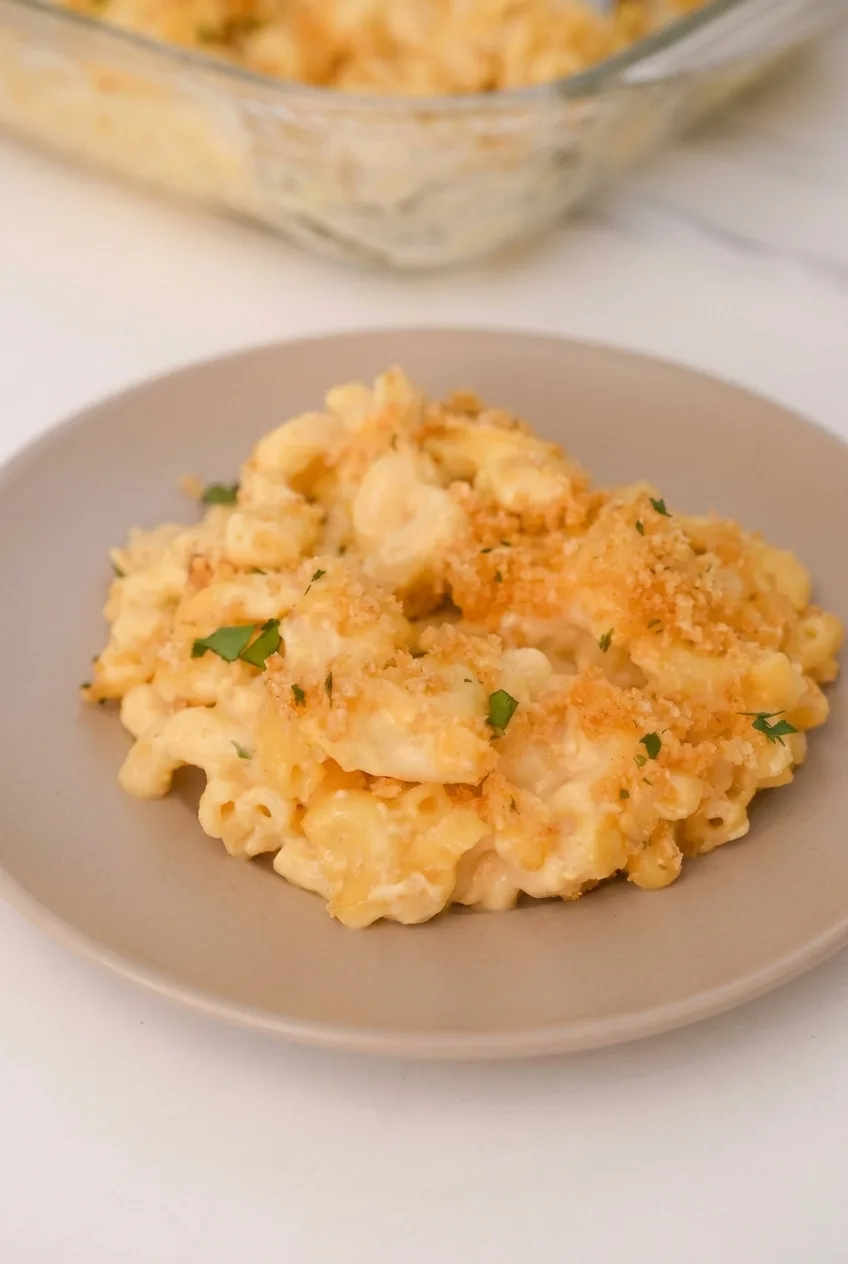
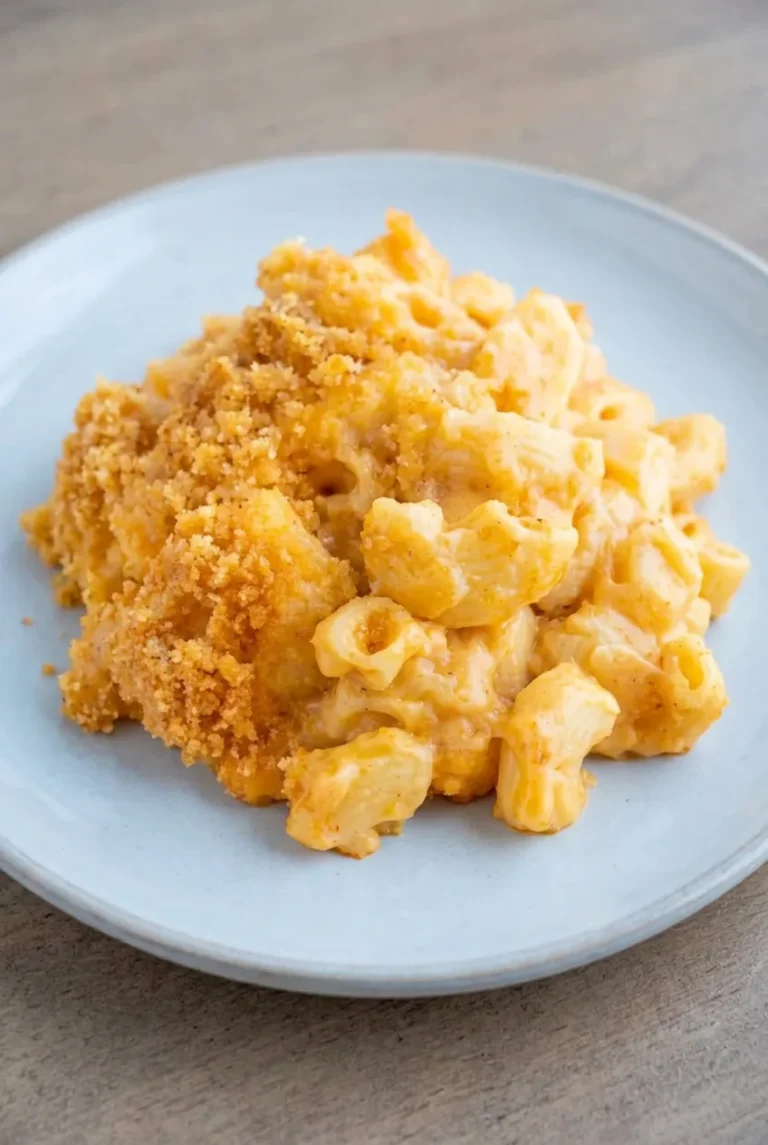
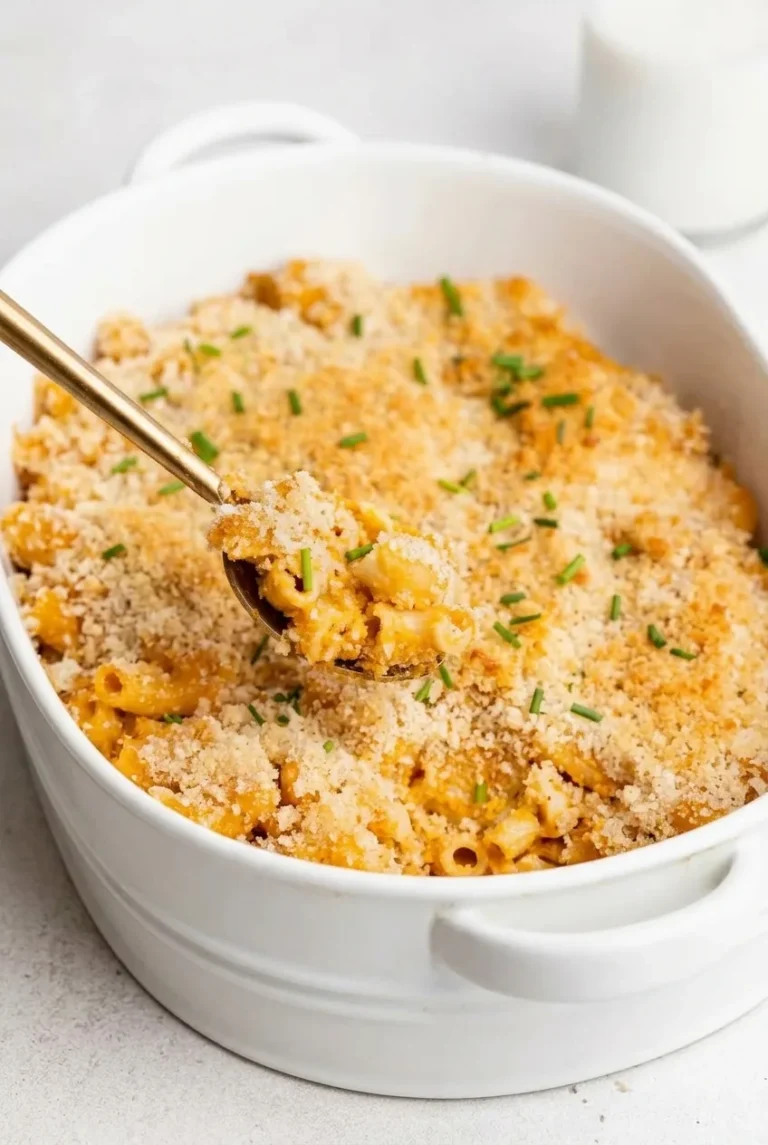
Complete white casserole of gluten-free mac and cheese with golden panko and chives on a pale countertop
  1. Prepare the oven and dish: Preheat the oven to 400°F (205°C). Lightly grease a shallow 2-quart baking dish. Shred the cheddar and reserve 1/4 cup of the cold milk for the cornstarch slurry.
  2. Cook the macaroni: Boil the pasta in a large pot of salted water. Use the package directions as a guide, but start checking before the earliest suggested time. Drain when the pieces are distinct and still slightly firm when bitten; they will soften further in the oven.
  3. Thicken the sauce base: Whisk the cornstarch into the reserved cold milk until smooth. Melt the butter in a medium saucepan over medium-low heat. Add the remaining milk and the cream, then whisk in the slurry. Continue whisking as the mixture reaches a gentle simmer, about 3–5 minutes, until it coats the back of a spoon.
  4. Add the cheese: Reduce the heat to low. Stir in the cheddar gradually until melted and smooth; do not let the sauce boil hard. Stir in the Dijon, 1/2 teaspoon salt, and pepper. Taste and adjust the seasoning. The sauce should be creamy and pourable. If it is too thick to coat the pasta easily, stir in a small splash of milk.
  5. Assemble: Fold the drained macaroni into the sauce and spread it in the baking dish. Toss the gluten-free panko with the olive oil in a small bowl, then scatter the crumbs loosely over the pasta.
  6. Bake and finish: Bake uncovered for 15–20 minutes, checking at 15 minutes. The edges should be hot and gently bubbling, with irregular golden patches on the crumbs. Rest for about 5 minutes, then scatter the chives over the top. Spoon through the crumbs to serve.

Choosing and Cooking Gluten-Free Pasta

Different gluten-free pastas soften at different rates, so check the texture rather than relying on a fixed cooking time. Elbows or another short shape should hold together and retain a little firmness when drained. If the pasta is fully soft before it goes into the dish, the oven finish may make it mushy.

Keeping the Cheese Sauce Smooth

Whisking cornstarch into cold milk disperses it before it reaches the warm pan. Let the dairy thicken until it coats a spoon, then lower the heat and add the cheddar a little at a time. Vigorous boiling after the cheese melts can leave the sauce uneven.

Getting a Golden Crumb Topping

Toss the gluten-free panko with oil so the crumbs are lightly coated, and scatter them without pressing them into the sauce. Bake uncovered to toast the topping. Take the casserole out when the crumbs have golden patches and the edges bubble gently; leaving it in longer can soften the pasta.

Stovetop and Dairy-Free Alternatives

For a stovetop version, serve the macaroni as soon as it is coated in cheddar sauce, omitting the crumbs and baking step. It will not have the baked topping. For a separate crumb-free recipe, see this creamy stovetop mac and cheese; check its ingredients if you need it to be gluten-free.

Replacing the milk alone will not make this cheddar sauce dairy-free. For a different approach, try this separate baked vegan mac and cheese.

Storing and Reheating Leftovers

Refrigerate leftovers promptly in a covered container and use within 3–4 days. Reheat portions until hot throughout; a small splash of milk can help loosen the sauce. The crumbs will be softer after refrigeration, so serve the casserole shortly after baking for the freshest topping. Freezing may change the texture of the pasta and crumbs.

Nutrition

Approximate per serving (1/6 of the casserole): 635 calories, 22g protein, 36g fat, and 57g carbohydrates. Approximate per 100g: 225 calories, 8g protein, 13g fat, and 20g carbohydrates, based on an estimated finished weight. Values will vary with the ingredients used and the final casserole weight.

Gluten-Free Mac and Cheese

Gluten-free elbow macaroni is coated in creamy cheddar sauce, topped with golden panko, and finished with fresh chives.
Course: Main Course
Cuisine: American
Prep: 15 min
Cook: 35 min
Total: 50 min
Servings: 6 Calories: 635 kcal

Equipment

  • 2-quart baking dish
  • Large pot
  • Colander
  • Medium saucepan
  • Whisk
  • Small bowl

Ingredients

For the Mac and Cheese

  • 12 ounces gluten-free elbow macaroni (340g)
  • 2 tablespoons unsalted butter (30g)
  • 2 cups whole milk, divided (480g)
  • 1/2 cup heavy cream (120g)
  • 2 tablespoons cornstarch (15g)
  • 12 ounces sharp cheddar cheese, freshly shredded, about 3 cups (340g)
  • 1 teaspoon Dijon mustard
  • 1/2 teaspoon fine salt, plus more for the pasta water
  • 1/4 teaspoon black pepper

For the Topping

  • 3/4 cup certified gluten-free panko breadcrumbs (45g)
  • 1 tablespoon olive oil
  • 2 tablespoons finely chopped fresh chives

Instructions

  1. Preheat the oven to 400°F (205°C) and lightly grease a shallow 2-quart baking dish.
  2. Shred the cheddar and set aside 1/4 cup of the cold milk for the cornstarch slurry.
  3. Boil the macaroni in salted water, checking before the earliest package cooking time. Drain when the pasta is still slightly firm.
  4. Whisk the cornstarch into the reserved cold milk until smooth.
  5. Melt the butter in a medium saucepan over medium-low heat. Add the remaining milk and cream, then whisk in the slurry.
  6. Whisk as the sauce reaches a gentle simmer, about 3–5 minutes, until it coats the back of a spoon.
  7. Reduce the heat to low and gradually stir in the cheddar until melted and smooth. Stir in the Dijon, salt, and pepper; adjust the seasoning.
  8. Fold the drained macaroni into the sauce and spread it in the prepared baking dish.
  9. Toss the panko with the olive oil and scatter the crumbs loosely over the pasta.
  10. Bake uncovered for 15–20 minutes, checking at 15 minutes, until the edges are gently bubbling and the crumbs have golden patches.
  11. Rest for about 5 minutes, scatter the chives over the top, and serve.

Tips

  • Check gluten-free pasta early and drain it while it is still slightly firm.
  • Whisk cornstarch into cold milk before adding it to the warm pan to prevent lumps.
  • Add the cheddar over low heat and avoid boiling the sauce after the cheese melts.
  • Coat the panko lightly with oil and scatter it without pressing it into the sauce.
  • Check the casserole at 15 minutes to avoid overbaking and softening the pasta.

Variations

  • Stovetop Mac and Cheese: Serve the macaroni as soon as it is coated in cheddar sauce, omitting the panko and baking step.
Notes

Check labels on the pasta, panko, mustard, and other packaged ingredients to ensure they are gluten-free. This recipe contains dairy. Refrigerate leftovers in a covered container for 3–4 days; reheat until hot throughout, adding a splash of milk if needed. Approximate nutrition per 100g: 225 calories, 8g protein, 13g fat, and 20g carbohydrates.

Nutrition

Calories: 635 kcal | Protein: 22 g | Fat: 36 g | Carbohydrates: 57 g

Cauliflower Mac and Cheese

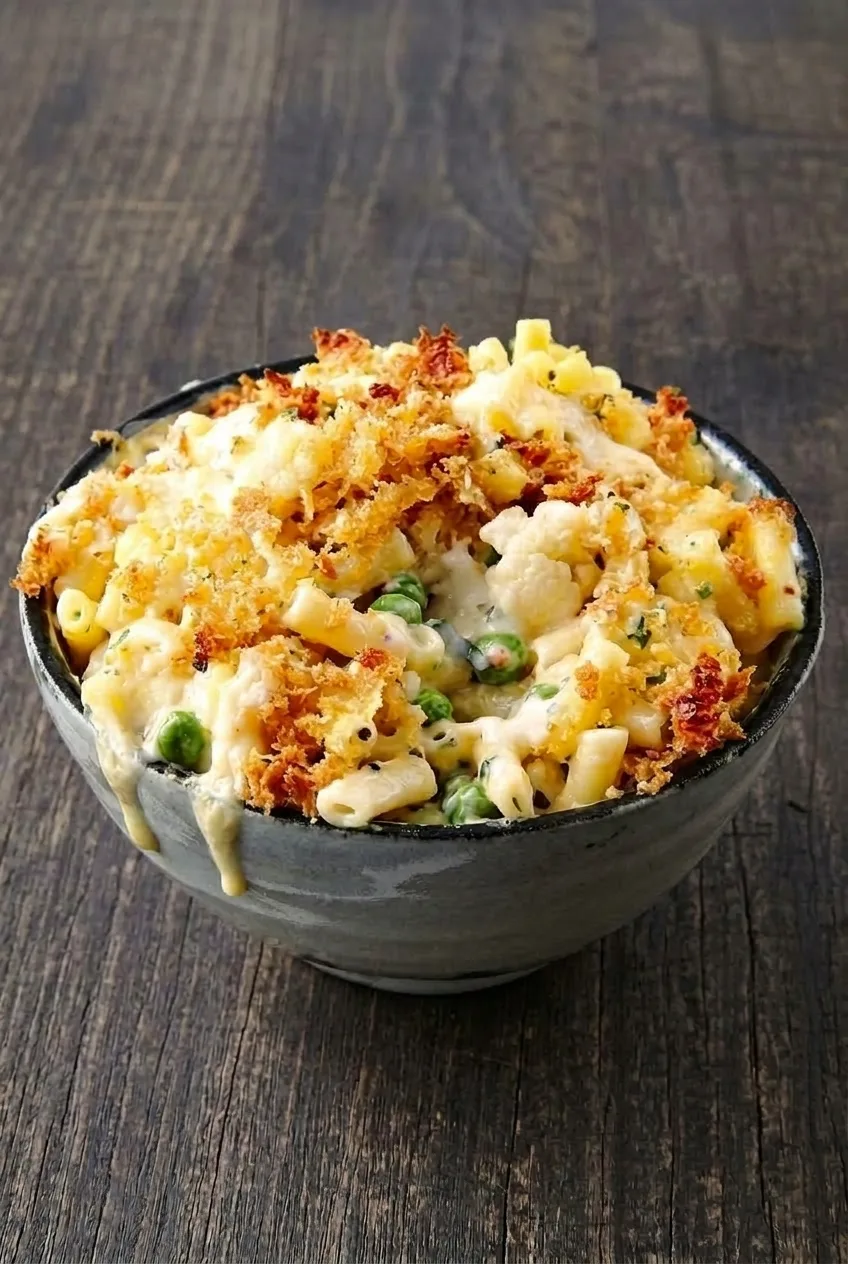
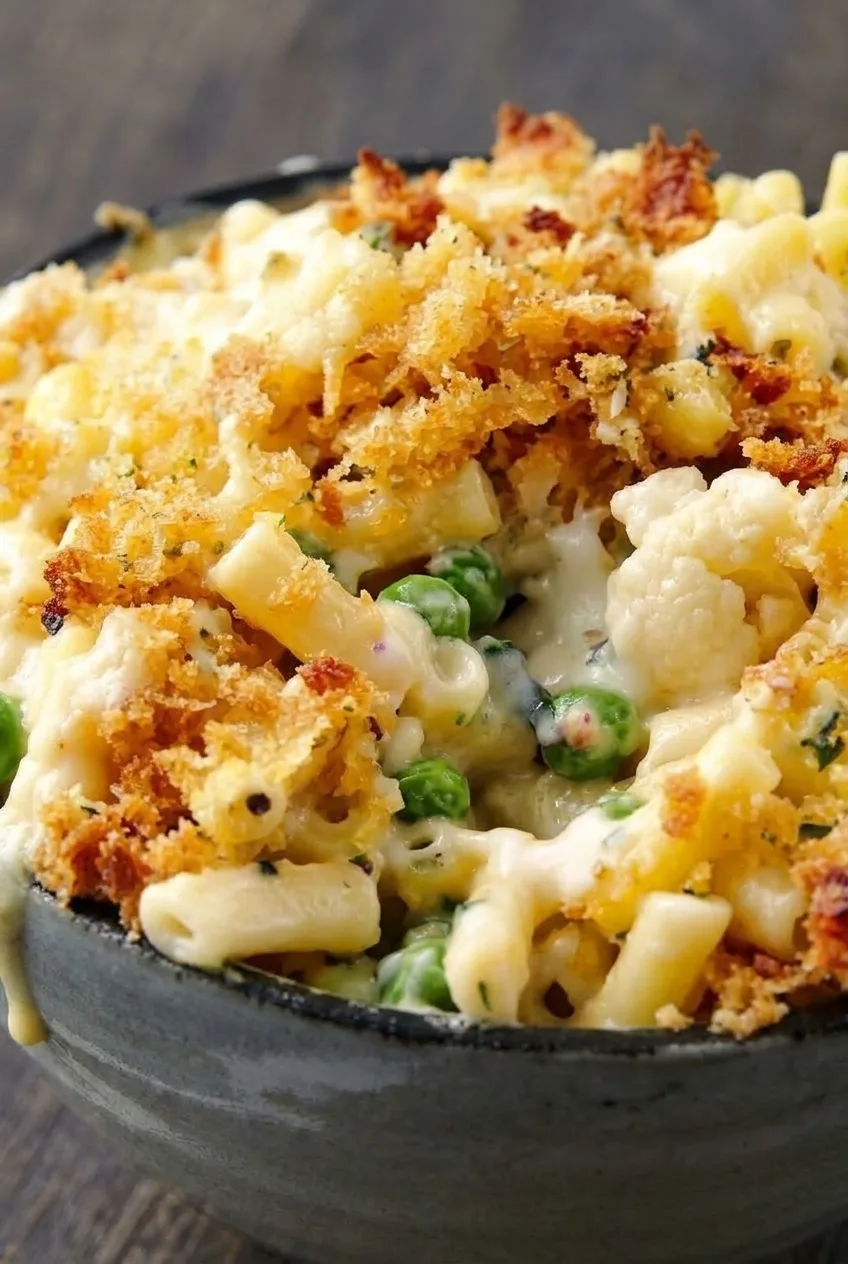
Cauliflower does not replace the pasta in this baked mac and cheese. Roasted florets and green peas sit among the elbow macaroni, all coated in a pale white-cheddar sauce. Buttered panko bakes into uneven golden patches that stay on top when the casserole is scooped into bowls.

Roasting the cauliflower until just tender helps it hold its shape. Leaving any pan juices behind—and draining the pasta and peas well—keeps extra water out of the sauce. For a version without vegetables, try classic baked mac and cheese.

Ingredients for Cauliflower Mac and Cheese

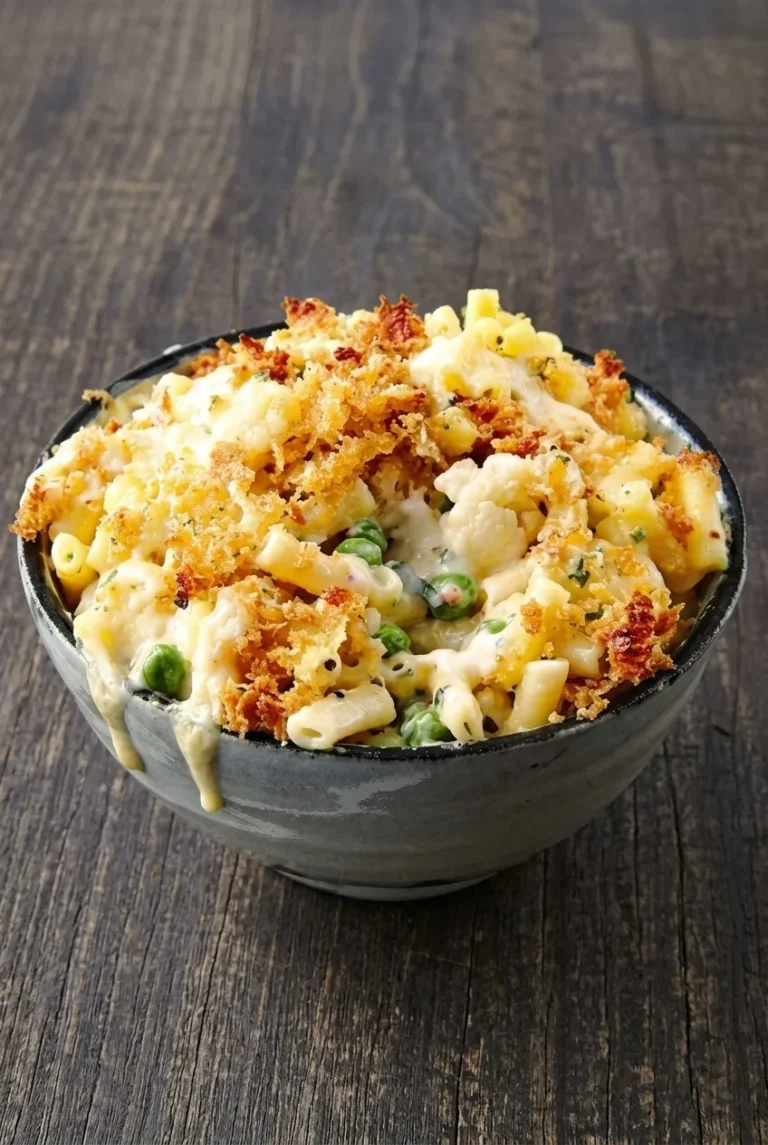
Close view of sauce-coated macaroni, cauliflower, peas and crisp crumbs in a dark bowl
  • 1 lb fresh cauliflower florets, cut into bite-size pieces (450g)
  • 1 1/2 tablespoons olive oil
  • 8 oz dry elbow macaroni (225g)
  • 3/4 cup frozen green peas (105g)
  • 4 tablespoons unsalted butter, divided: 3 tablespoons for the sauce and 1 tablespoon for the topping (55g total)
  • 3 tablespoons all-purpose flour (25g)
  • 2 1/2 cups whole milk (600g)
  • 8 oz white sharp cheddar, freshly grated, about 2 cups (225g)
  • 1/2 teaspoon garlic powder
  • About 1 teaspoon fine salt, divided, plus more for the pasta water
  • 1/4 teaspoon freshly ground black pepper
  • 3/4 cup panko breadcrumbs (45g)

Optional: 1 teaspoon Dijon mustard for a little tang in the sauce.

Yield: 6 main-dish servings or 8 side servings. Allow about 20 minutes to prep and about 65 minutes total, including the rest.

How to Make Cauliflower Mac and Cheese

Full dark bowl of cauliflower mac and cheese on a wooden table, with its golden topping visible
  1. Roast the cauliflower: Preheat the oven to 425°F (220°C). Toss the florets with the olive oil and 1/4 teaspoon salt. Spread them in one layer on a rimmed sheet pan and roast for 20 to 25 minutes, turning halfway through. Start checking at 20 minutes: the edges should be lightly golden and the florets just tender but intact. Leave any pooled liquid on the pan when transferring the cauliflower.
  2. Cook the macaroni and peas: While the cauliflower roasts, cook the macaroni in salted boiling water until about 1 minute shy of the package’s al dente time. Add the frozen peas for the final minute, then drain both thoroughly. The pasta will finish cooking in the oven.
  3. Make the cheese sauce: Melt 3 tablespoons butter in a medium saucepan over medium heat. Whisk in the flour and cook for about 1 minute. Gradually whisk in the milk; cook, stirring, until the sauce lightly coats a spoon, about 7 to 10 minutes. Remove from the heat. If using Dijon, whisk it in now. Stir in the cheddar a handful at a time, then add the garlic powder, pepper, and remaining 3/4 teaspoon salt. Taste and adjust the salt as needed. Keep the sauce off the heat while the cheese melts.
  4. Assemble: Reduce the oven to 400°F (205°C). Gently fold the macaroni, peas, cauliflower, and sauce together in a 2- to 2 1/2-quart baking dish, keeping the florets intact. The mixture should sit in a substantial layer rather than spread thinly across the dish. Melt the remaining tablespoon of butter, toss it with the panko, and scatter the crumbs unevenly on top, leaving some sauce visible.
  5. Bake and serve: Bake uncovered for 15 to 20 minutes. Check at 15 minutes; the edges should be bubbling and the crumbs golden and crisp. If the crumbs darken before the casserole is hot, cover the dish loosely and continue baking. Rest for about 5 minutes, then scoop gently into bowls so each serving keeps some crumb clusters on top.

How to Keep the Sauce Creamy

Give the cauliflower room on the pan so it roasts rather than steams. Leaving its juices behind and draining the macaroni and peas thoroughly prevents that moisture from thinning the sauce. Cooking the pasta just shy of al dente also keeps it from getting too soft during the final bake.

Thicken the milk sauce before adding the cheddar, then stir in the cheese off the heat. Boiling the sauce as the cheese melts can make it grainy.

When Is the Casserole Ready?

Look for bubbling edges and irregular golden crumb patches, not a firm center. A deeper dish or larger cauliflower florets may need more time, so use those cues along with the baking range. The topping will break into crunchy pieces as you scoop. For another version with a crisp topping, see baked mac and cheese with panko.

Storage and Reheating

Cool leftovers and refrigerate them in an airtight container for up to 3 days. Reheat covered in a 350°F (175°C) oven until hot, or microwave individual portions gently. Add a splash of milk if the sauce has thickened.

The breadcrumbs soften in storage, so they are crispest soon after baking. Freezing is not recommended for this dairy sauce and crumb topping.

Nutrition

Approximate nutrition per serving, based on 6 main-dish servings: 525 calories, 21g protein, 28g fat, and 48g carbohydrates. Approximate values per 100g of finished casserole: 165 calories, 7g protein, 9g fat, and 15g carbohydrates. Values vary with the ingredients used and moisture lost during cooking.

Cauliflower Mac and Cheese

Elbow macaroni, roasted cauliflower, and peas bake in a white cheddar sauce under a crisp panko topping.
Course: Main Course
Cuisine: American
Prep: 20 min
Cook: 45 min
Total: 65 min
Servings: 6 Calories: 525 kcal

Equipment

  • Rimmed sheet pan
  • Large pot
  • Medium saucepan
  • Whisk
  • 2- to 2 1/2-quart baking dish

Ingredients

Vegetables and Pasta

  • 1 lb fresh cauliflower florets, cut into bite-size pieces (450 g)
  • 1 1/2 tablespoons olive oil
  • 8 oz dry elbow macaroni (225 g)
  • 3/4 cup frozen green peas (105 g)

Cheese Sauce

  • 4 tablespoons unsalted butter, divided: 3 tablespoons for the sauce and 1 tablespoon for the topping (55 g total)
  • 3 tablespoons all-purpose flour (25 g)
  • 2 1/2 cups whole milk (600 g)
  • 8 oz white sharp cheddar, freshly grated, about 2 cups (225 g)
  • 1/2 teaspoon garlic powder
  • About 1 teaspoon fine salt, divided, plus more for the pasta water
  • 1/4 teaspoon freshly ground black pepper
  • Optional: 1 teaspoon Dijon mustard

Topping

  • 3/4 cup panko breadcrumbs (45 g)

Instructions

  1. Preheat the oven to 425°F (220°C). Toss the cauliflower with the olive oil and 1/4 teaspoon salt. Spread in one layer on a rimmed sheet pan and roast for 20 to 25 minutes, turning halfway, until just tender and lightly golden. Leave any pooled liquid on the pan.
  2. Cook the macaroni in salted boiling water until about 1 minute shy of the package’s al dente time. Add the peas for the final minute, then drain thoroughly.
  3. Melt 3 tablespoons butter in a medium saucepan over medium heat. Whisk in the flour and cook for about 1 minute.
  4. Gradually whisk in the milk. Cook, stirring, for 7 to 10 minutes, until the sauce lightly coats a spoon.
  5. Remove the sauce from the heat. Whisk in the Dijon, if using. Stir in the cheddar a handful at a time, then add the garlic powder, pepper, and remaining 3/4 teaspoon salt. Taste and adjust the salt as needed.
  6. Reduce the oven to 400°F (205°C). Gently fold the macaroni, peas, cauliflower, and sauce together in a 2- to 2 1/2-quart baking dish, keeping the florets intact.
  7. Melt the remaining tablespoon of butter, toss it with the panko, and scatter the crumbs over the casserole.
  8. Bake uncovered for 15 to 20 minutes, until the edges bubble and the crumbs are golden and crisp. If the crumbs darken before the casserole is hot, cover loosely and continue baking.
  9. Rest for about 5 minutes before serving.

Tips

  • Spread the cauliflower in one layer so it roasts rather than steams.
  • Leave the cauliflower’s pan juices behind and drain the pasta and peas well to keep excess moisture out of the sauce.
  • Cook the pasta just shy of al dente so it does not become too soft in the oven.
  • Add the cheddar off the heat to help keep the sauce smooth.
  • Check the casserole at 15 minutes; deeper dishes or larger florets may need more baking time.

Variations

  • Dijon White Cheddar Mac and Cheese: Whisk 1 teaspoon Dijon mustard into the sauce for a little tang.

Notes

Refrigerate leftovers in an airtight container for up to 3 days. Reheat covered in a 350°F (175°C) oven until hot, or microwave individual portions gently; add a splash of milk if needed. Freezing is not recommended.

Nutrition

Calories: 525 kcal | Protein: 21 g | Fat: 28 g | Carbohydrates: 48 g

Velveeta Mac and Cheese

This baked Velveeta mac and cheese is meant to be scooped, not sliced. Elbow macaroni stays coated in a creamy, pale-orange sauce beneath a thin layer of golden buttered panko. Velveeta is the only cheese needed.

The key is to cook the pasta until just tender and keep the sauce slightly loose before it goes into the oven. A short bake browns the crumbs without drying out the macaroni underneath.

Servings: 6–8 side-dish servings. Prep time: 15 minutes. Cook time: About 40 minutes. Total time: About 60 minutes, including a short rest.

Ingredients for Velveeta Mac and Cheese

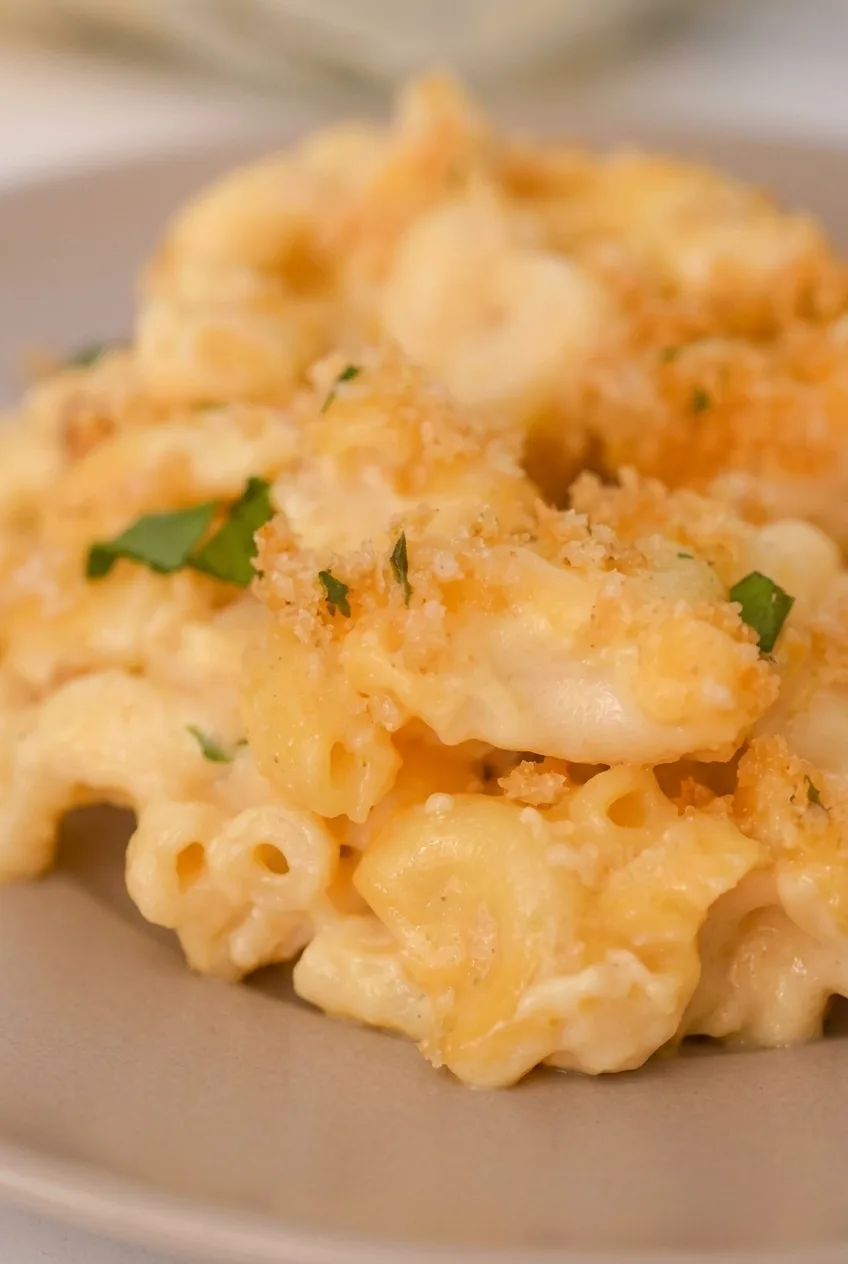
Close view of creamy sauce between elbow macaroni beneath fine golden crumbs and parsley
  • 12 ounces dry elbow macaroni (340g)
  • 6 tablespoons unsalted butter (85g), divided, plus a little for the baking dish
  • 1/4 cup all-purpose flour (30g)
  • 3 cups whole milk
  • 16 ounces Velveeta, cubed (450g)
  • 3/4 cup fine panko breadcrumbs (45g)
  • 1 tablespoon finely chopped fresh parsley

Optional: Add 1/2 teaspoon dry mustard or freshly ground black pepper to taste. Taste the sauce before adding salt; Velveeta is already salty.

How to Make Baked Velveeta Mac and Cheese

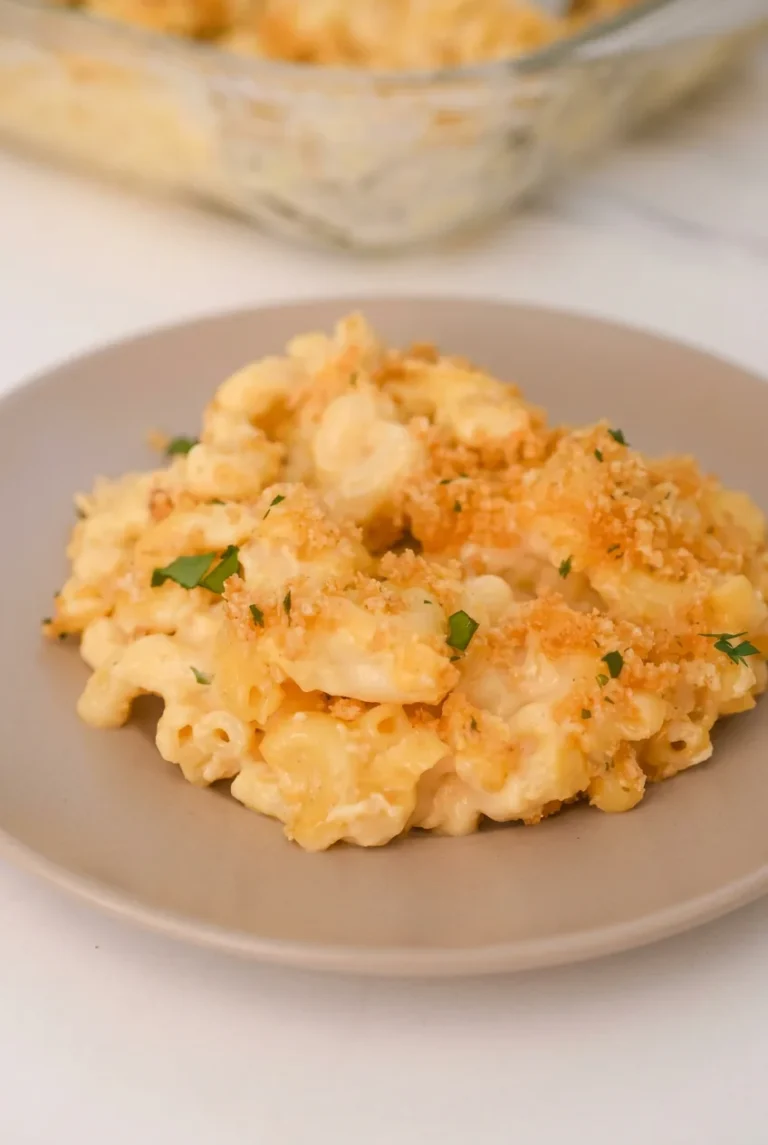
Full plate of creamy baked Velveeta mac and cheese with a casserole dish softly visible behind it
  1. Cook the macaroni: Preheat the oven to 350°F (175°C) and lightly butter a 9-by-13-inch or comparable 3-quart baking dish. Boil the macaroni in salted water until just tender, about 8–10 minutes or according to the package directions. Drain without rinsing.
  2. Make the sauce base: Melt 4 tablespoons butter in a medium saucepan over medium heat. Whisk in the flour and cook briefly, stirring. Gradually whisk in the milk to prevent lumps. Cook, stirring, until the sauce lightly coats a spoon but still pours easily, about 5–7 minutes.
  3. Melt the cheese: If using dry mustard, whisk it into the sauce. Reduce the heat to low and add the cubed Velveeta in batches, stirring until smooth, about 3–5 minutes. Add pepper if using, then taste before adding any salt. The sauce should still look slightly loose.
  4. Assemble: Fold the macaroni into the sauce and spread it in the prepared dish. Sauce should be visible between the pasta pieces. Melt the remaining 2 tablespoons butter, toss with the panko, and scatter the crumbs in a thin, even layer over the top.
  5. Bake: Bake uncovered for about 20–25 minutes. Start checking around 18–20 minutes. Take the dish out when the crumbs are lightly golden, the edges bubble gently, and the pasta beneath still looks moist. Do not bake until the center is firm.
  6. Rest and serve: Let stand for about 5 minutes. Spoon out loose portions and sprinkle the parsley sparingly over each serving.

How to Keep Baked Mac and Cheese Creamy

Just-tender macaroni needs only a short bake to heat through. Pasta that is still hard in the center will absorb more sauce in the oven, while a sauce that is already thick before baking leaves less moisture for the finished dish.

Use the topping and edges to judge doneness rather than waiting for the center to set. For another oven-baked take, try this classic baked mac and cheese.

Getting a Light Golden Crumb Topping

Coating the fine panko with melted butter helps it brown during the short, uncovered bake. Keep the layer thin so the creamy macaroni remains visible. If your baking dish is especially wide, watch the crumb color and remove the casserole once the edges bubble gently.

Serving Velveeta Mac and Cheese

Serve loose scoops alongside ham or roast pork, or add a vegetable side for dinner. For a larger comfort-food spread, pair it with homemade green bean casserole.

Storing and Reheating Leftovers

Refrigerate leftovers in an airtight container for about 3 days. Reheat gently on the stovetop or in the microwave, stirring in a splash of milk if the pasta has absorbed the sauce. The breadcrumb topping will soften during storage and reheating.

Portions can also be frozen tightly wrapped for up to 3 months, though the crumbs may lose their crispness.

Nutrition

Approximate nutrition per serving, based on 8 side-dish servings: 485 calories, 18g protein, 25g fat, and 49g carbohydrates. Approximate values per 100g of finished mac and cheese: 185 calories, 7g protein, 9g fat, and 19g carbohydrates. Values will vary with ingredient brands, portion size, and moisture lost during baking.

Velveeta Mac and Cheese

Elbow macaroni is folded into a creamy Velveeta sauce, topped with buttered panko, and baked until lightly golden.
Course: Side Dish
Cuisine: American
Prep: 15 min
Cook: 40 min
Total: 60 min
Servings: 8 Calories: 485 kcal

Equipment

  • Large pot
  • Colander
  • Medium saucepan
  • Whisk
  • 9-by-13-inch baking dish

Ingredients

For the macaroni and cheese

  • 12 ounces dry elbow macaroni (340g)
  • 6 tablespoons unsalted butter (85g), divided, plus a little for the baking dish
  • 1/4 cup all-purpose flour (30g)
  • 3 cups whole milk
  • 16 ounces Velveeta, cubed (450g)

For the topping

  • 3/4 cup fine panko breadcrumbs (45g)
  • 1 tablespoon finely chopped fresh parsley

Optional

  • 1/2 teaspoon dry mustard
  • Freshly ground black pepper, to taste
  • Salt, to taste

Instructions

  1. Preheat the oven to 350°F (175°C). Lightly butter a 9-by-13-inch or comparable 3-quart baking dish.
  2. Boil the macaroni in salted water until just tender, about 8–10 minutes or according to the package directions. Drain without rinsing.
  3. Melt 4 tablespoons of butter in a medium saucepan over medium heat. Whisk in the flour and cook briefly, stirring.
  4. Gradually whisk in the milk. Cook, stirring, for about 5–7 minutes, until the sauce lightly coats a spoon but still pours easily.
  5. If using, whisk the dry mustard into the sauce. Reduce the heat to low and add the Velveeta in batches, stirring until smooth, about 3–5 minutes. Add pepper if desired and taste before adding salt. Keep the sauce slightly loose.
  6. Fold the macaroni into the sauce and spread it in the prepared baking dish, leaving visible sauce between the pasta pieces.
  7. Melt the remaining 2 tablespoons of butter and toss with the panko. Scatter the crumbs in a thin, even layer over the macaroni.
  8. Bake uncovered for about 20–25 minutes, checking around 18–20 minutes. Remove when the crumbs are lightly golden, the edges bubble gently, and the pasta beneath still looks moist.
  9. Let stand for about 5 minutes. Serve in loose scoops and sprinkle with parsley.

Tips

  • Cook the macaroni until just tender before baking.
  • Keep the cheese sauce slightly loose; it will thicken as it bakes.
  • Use a thin layer of buttered panko so the creamy macaroni remains visible.
  • Judge doneness by the golden crumbs and gently bubbling edges rather than waiting for the center to set.
  • Taste the sauce before adding salt because Velveeta is already salty.

Notes

Refrigerate leftovers in an airtight container for about 3 days. Reheat gently, adding a splash of milk if needed. Portions can be frozen for up to 3 months; the topping may soften. Nutrition is approximate per serving based on 8 servings.

Nutrition

Calories: 485 kcal | Protein: 18 g | Fat: 25 g | Carbohydrates: 49 g

Chick-fil-A Mac and Cheese Copycat

This copycat-style mac and cheese keeps the elbows creamy and spoonable beneath a lightly browned cheddar top. American cheese helps the sauce melt smoothly, while extra-sharp cheddar and Parmesan-Romano cheese give it a sharper flavor. A brief broil adds scattered golden spots without turning the pasta into a firm casserole.

A light scattering of panko and parsley gives this version its finished look; neither is presented as part of the restaurant’s formula. Allow about 15 minutes to prep and 20–25 minutes to cook. Makes 6 side-dish servings.

Ingredients for Chick-fil-A-Style Mac and Cheese

Close view of creamy cheese-coated elbows beneath lightly browned cheddar and scattered parsley
  • 8 ounces dry elbow macaroni (about 225g)
  • 2 tablespoons unsalted butter (about 30g)
  • 2 tablespoons all-purpose flour (about 15g)
  • 2 cups half-and-half, plus a splash if needed
  • 4 ounces American cheese, torn or chopped (about 115g)
  • 6 ounces extra-sharp cheddar, freshly shredded and divided: 4 ounces for the sauce and 2 ounces for the top (about 170g total)
  • 1 ounce finely grated Parmesan and Romano cheese, approximately equal parts (about 30g total)
  • 1/4 teaspoon paprika
  • 1/4 teaspoon fine salt to start, plus more to taste
  • 2 tablespoons panko breadcrumbs
  • 1 tablespoon chopped fresh flat-leaf parsley, plus a few small leaves

How to Make Chick-fil-A-Style Mac and Cheese

Complete round dish of creamy mac and cheese on a gray surface, seen from a wider serving view
  1. Cook the elbows: Boil the macaroni in a large pot of salted water, following the package timing but stopping about 1 minute before al dente. Drain. Elbow macaroni varies by brand, and it will soften a little more in the hot sauce.
  2. Make the sauce base: Melt the butter in a medium, heavy-bottomed saucepan over medium heat. Whisk in the flour until no dry pockets remain, then cook briefly. Gradually whisk in the 2 cups of half-and-half. Stir until the sauce gently thickens and coats a spoon, about 5–7 minutes. Reduce the heat if it bubbles hard; the sauce should still flow easily.
  3. Melt in the cheeses: Turn the heat to low or off. Stir in the American cheese, 4 ounces of cheddar, Parmesan and Romano, paprika, and 1/4 teaspoon salt. Stir for about 2–3 minutes, until smooth. Taste before adding more salt, since the cheeses vary in saltiness.
  4. Fill the dish: Turn on the broiler according to your oven’s instructions. Fold the drained elbows into the sauce. If the sauce looks too thick to coat them generously, stir in a splash of warm half-and-half. Spoon the hot pasta into a shallow, round, approximately 2-quart broiler-safe dish or 9-inch broiler-safe skillet. Scatter the remaining 2 ounces of cheddar unevenly over the top.
  5. Broil: Scatter the panko lightly over the cheddar. Broil uncovered, watching continuously and checking the top after about 1 minute. Remove the dish when the cheese bubbles, scattered spots turn golden brown, and the crumbs are lightly toasted—roughly 1–4 minutes, depending on the broiler.
  6. Rest and serve: Let stand for 3–5 minutes, until the top stops actively bubbling. Sprinkle with the chopped parsley and a few small leaves. Serve from the dish while the pasta is still soft and spoonable.

How to Keep the Cheese Sauce Creamy

Melt the cheeses over low or residual heat rather than boiling them in the sauce. Before the pasta goes in, the sauce should coat a spoon but still flow easily. If it tightens around the elbows, loosen it with a splash of warm half-and-half. The broiler only browns the already-hot top; it does not need to cook the pasta through.

American cheese helps the sauce melt smoothly, while cheddar and Parmesan-Romano cheese add sharper flavor. Whole milk can replace the half-and-half for a less-rich sauce, though the result will not be quite as creamy.

Watch the Broiler, Not the Clock

Use a vessel the manufacturer explicitly rates for broiler use; a dark serving bowl is not automatically safe. Follow your oven and dish manufacturers’ guidance for clearance beneath the heating element. Broilers can brown the cheese and crumbs quickly, so remove the dish at scattered golden patches rather than waiting for an even crust.

For a simpler cheese-only top, omit the panko and parsley but keep the broiled cheddar. If you prefer a longer-baked dish, see this classic baked mac and cheese.

Storing and Reheating

Cool leftovers and refrigerate promptly in an airtight container for up to 3 days. For a larger portion, cover in an oven-safe dish and reheat at 350°F (175°C) until hot, approximately 20–25 minutes. Uncover for the last few minutes only if you want to brown the top again.

Microwave individual portions covered in short intervals, stirring between intervals. Add a splash of milk or half-and-half if the sauce has thickened. For longer storage, freeze tightly covered for up to 2 months for best quality. Thaw in the refrigerator before reheating; the sauce may be less smooth after freezing.

Nutrition

Approximate nutrition per side-dish serving (1/6 of the recipe): 480 calories, 20g protein, 29g fat, and 36g carbohydrates. Estimated per 100g of prepared mac and cheese: 215 calories, 9g protein, 13g fat, and 16g carbohydrates. Values will vary with the cheeses used and the finished weight of the dish.

Chick-fil-A Mac and Cheese Copycat

Creamy elbow macaroni is coated in an American cheese, cheddar, and Parmesan-Romano sauce, then topped with broiled cheddar.
Course: Side Dish
Cuisine: American
Prep: 15 min
Cook: 25 min
Total: 45 min
Servings: 6 Calories: 480 kcal

Equipment

  • Large pot
  • Medium heavy-bottomed saucepan
  • Whisk
  • Shallow 2-quart broiler-safe dish or 9-inch broiler-safe skillet

Ingredients

Pasta

  • 8 ounces dry elbow macaroni (about 225 g)

Cheese Sauce

  • 2 tablespoons unsalted butter (about 30 g)
  • 2 tablespoons all-purpose flour (about 15 g)
  • 2 cups half-and-half, plus a splash if needed
  • 4 ounces American cheese, torn or chopped (about 115 g)
  • 4 ounces extra-sharp cheddar, freshly shredded
  • 1 ounce finely grated Parmesan and Romano cheese, approximately equal parts (about 30 g total)
  • 1/4 teaspoon paprika
  • 1/4 teaspoon fine salt, plus more to taste

Topping

  • 2 ounces extra-sharp cheddar, freshly shredded
  • 2 tablespoons panko breadcrumbs
  • 1 tablespoon chopped fresh flat-leaf parsley, plus a few small leaves

Instructions

  1. Boil the macaroni in a large pot of salted water, following the package timing but stopping about 1 minute before al dente. Drain.
  2. Melt the butter in a medium, heavy-bottomed saucepan over medium heat. Whisk in the flour until no dry pockets remain and cook briefly.
  3. Gradually whisk in the half-and-half. Stir until the sauce gently thickens and coats a spoon, about 5–7 minutes. Reduce the heat if it bubbles hard; keep the sauce flowing easily.
  4. Turn the heat to low or off. Stir in the American cheese, 4 ounces of cheddar, Parmesan-Romano cheese, paprika, and 1/4 teaspoon salt for 2–3 minutes, until smooth. Taste and add more salt if needed.
  5. Turn on the broiler according to your oven’s instructions. Fold the drained macaroni into the sauce. Add a splash of warm half-and-half if needed to loosen the sauce.
  6. Spoon the pasta into a shallow, approximately 2-quart broiler-safe dish or a 9-inch broiler-safe skillet. Scatter the remaining cheddar over the top.
  7. Scatter the panko over the cheddar. Broil uncovered, checking after about 1 minute and watching continuously. Remove when the cheese bubbles, golden spots appear, and the crumbs are lightly toasted, about 1–4 minutes.
  8. Let stand for 3–5 minutes, until the top stops actively bubbling. Sprinkle with chopped parsley and small parsley leaves, then serve.

Tips

  • Stop cooking the macaroni about 1 minute before al dente so it does not over-soften in the sauce.
  • Melt the cheeses over low or residual heat; avoid boiling the sauce after adding them.
  • Keep the sauce loose enough to flow easily before mixing in the pasta, and loosen it with warm half-and-half if needed.
  • Use a dish explicitly rated for broiler use and follow the manufacturer’s clearance guidance.
  • Watch the broiler continuously; remove the dish when golden patches appear rather than waiting for an even crust.

Variations

  • Cheese-Only Topping: Omit the panko and parsley, and broil the cheddar topping as directed.
  • Lighter Sauce: Replace the half-and-half with whole milk for a less-rich, slightly less-creamy sauce.

Notes

Refrigerate leftovers promptly in an airtight container for up to 3 days. Reheat a larger portion covered at 350°F (175°C) for about 20–25 minutes, or microwave individual portions covered in short intervals, stirring between intervals. Freeze tightly covered for up to 2 months for best quality; thaw in the refrigerator before reheating. Approximate nutrition per 100 g: 215 calories, 9 g protein, 13 g fat, and 16 g carbohydrates.

Nutrition

Calories: 480 kcal | Protein: 20 g | Fat: 29 g | Carbohydrates: 36 g

Panera Mac and Cheese Copycat

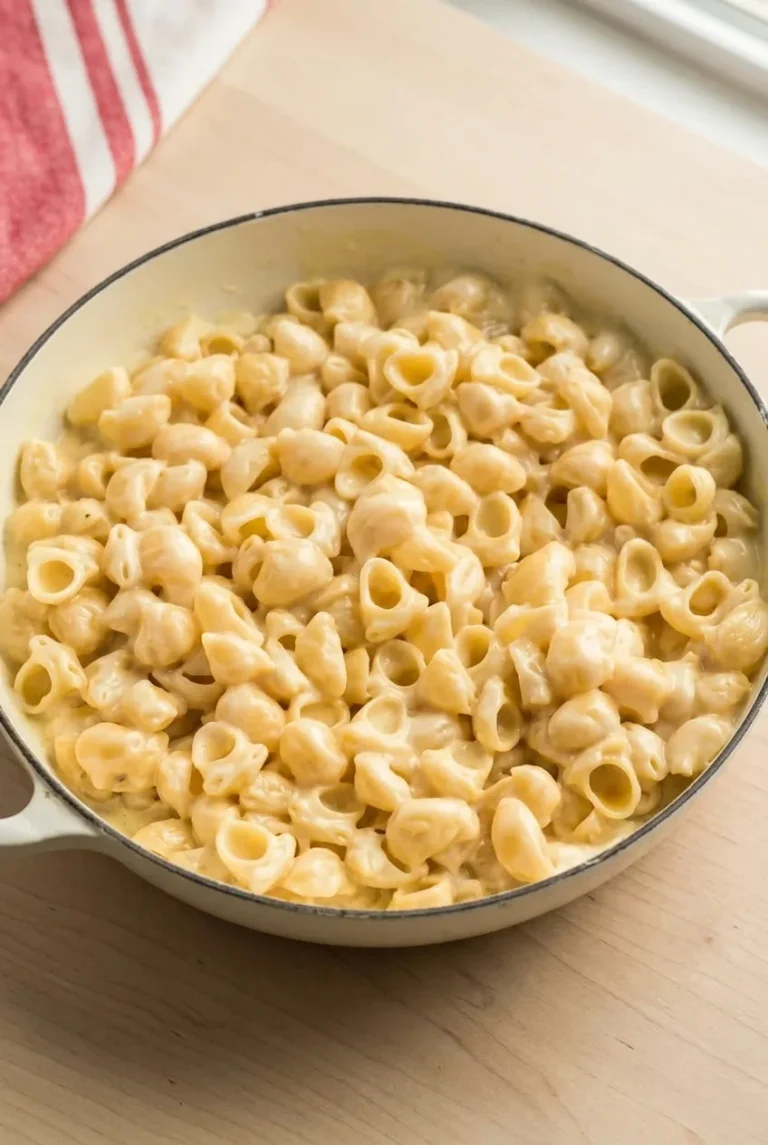
Small, hollow pasta coated in glossy white cheddar sauce gives this stovetop mac and cheese its familiar look. Sharp white cheddar provides the flavor, while a smaller amount of white American cheese helps the sauce melt smoothly. The milk base thickens before the cheese goes in; then the pot comes off the heat to keep the finished sauce creamy rather than grainy. Serve it straight from the pot, without baking or adding a topping.

Ingredients

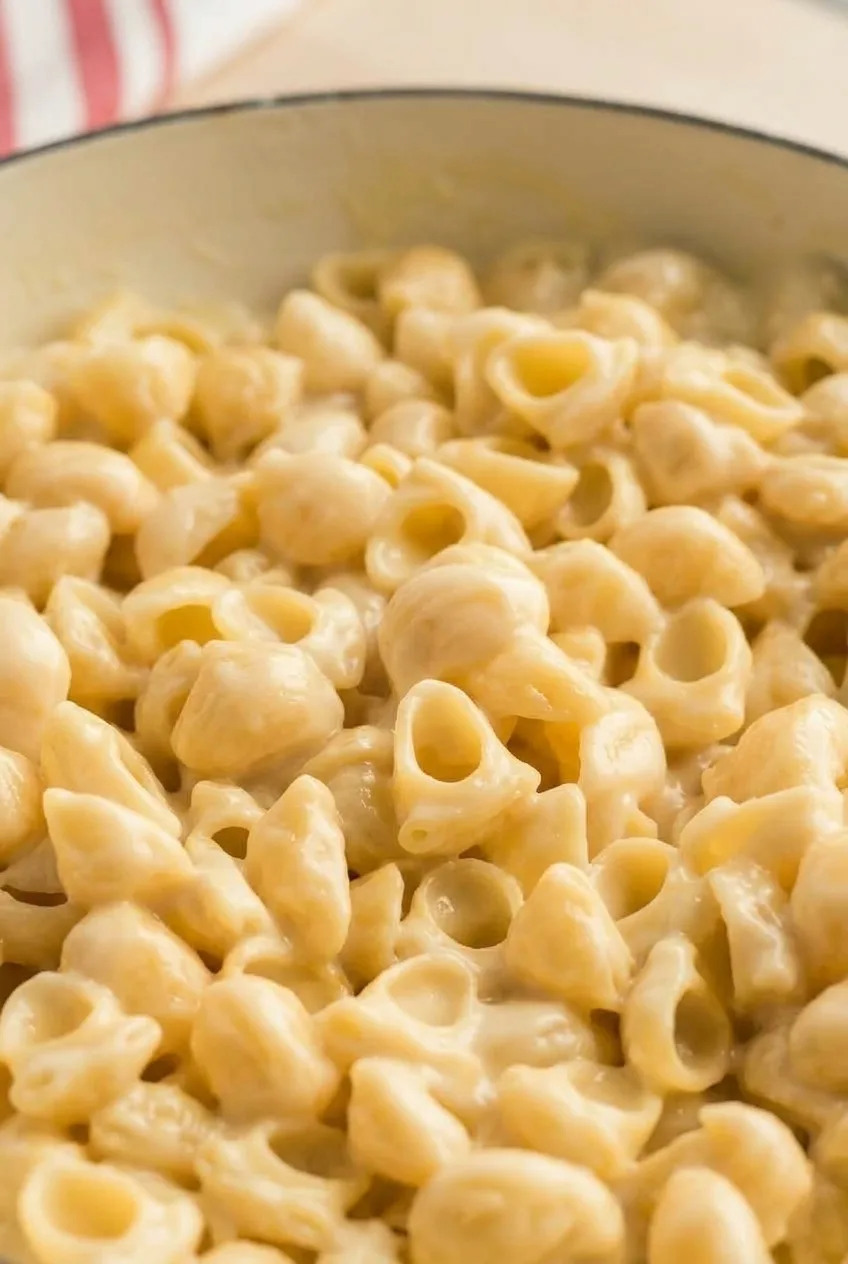
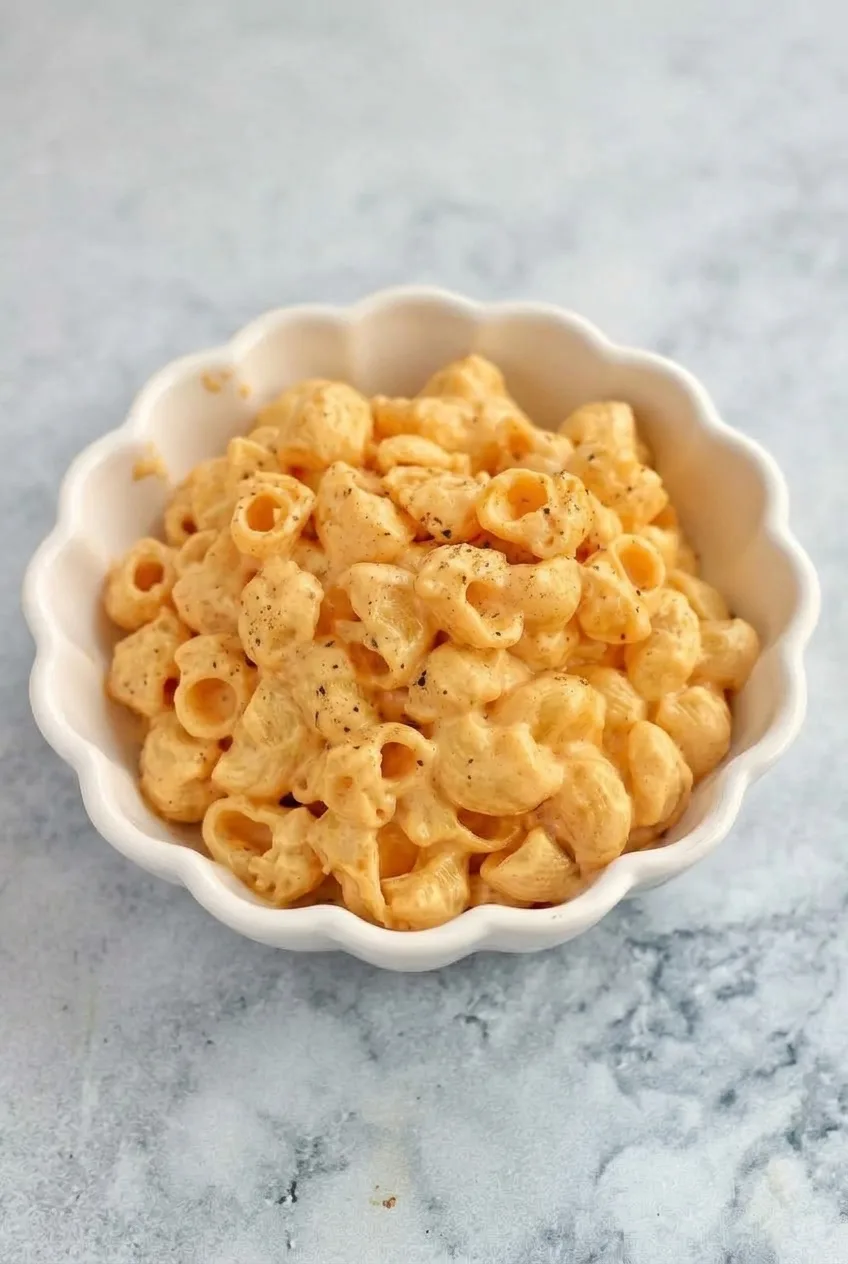
Close view of hollow pipette pasta coated in smooth white cheddar sauce
  • 12 ounces pipette rigate pasta (340g)
  • 3 tablespoons unsalted butter (about 45g)
  • 3 tablespoons all-purpose flour (about 25g)
  • 2 1/2 cups whole milk, plus a little more if needed
  • 8 ounces sharp white cheddar, freshly shredded (about 225g)
  • 4 ounces white American cheese, cut or torn into small pieces (about 115g)
  • 1/2 teaspoon Dijon mustard
  • 1/4 teaspoon salt, plus more to taste and for the pasta water
  • Optional: 1/4 teaspoon mild hot sauce

Yield: 6 servings. Time: 10 minutes prep, 20 minutes cook, 30 minutes total.

How to Make Panera-Style Mac and Cheese

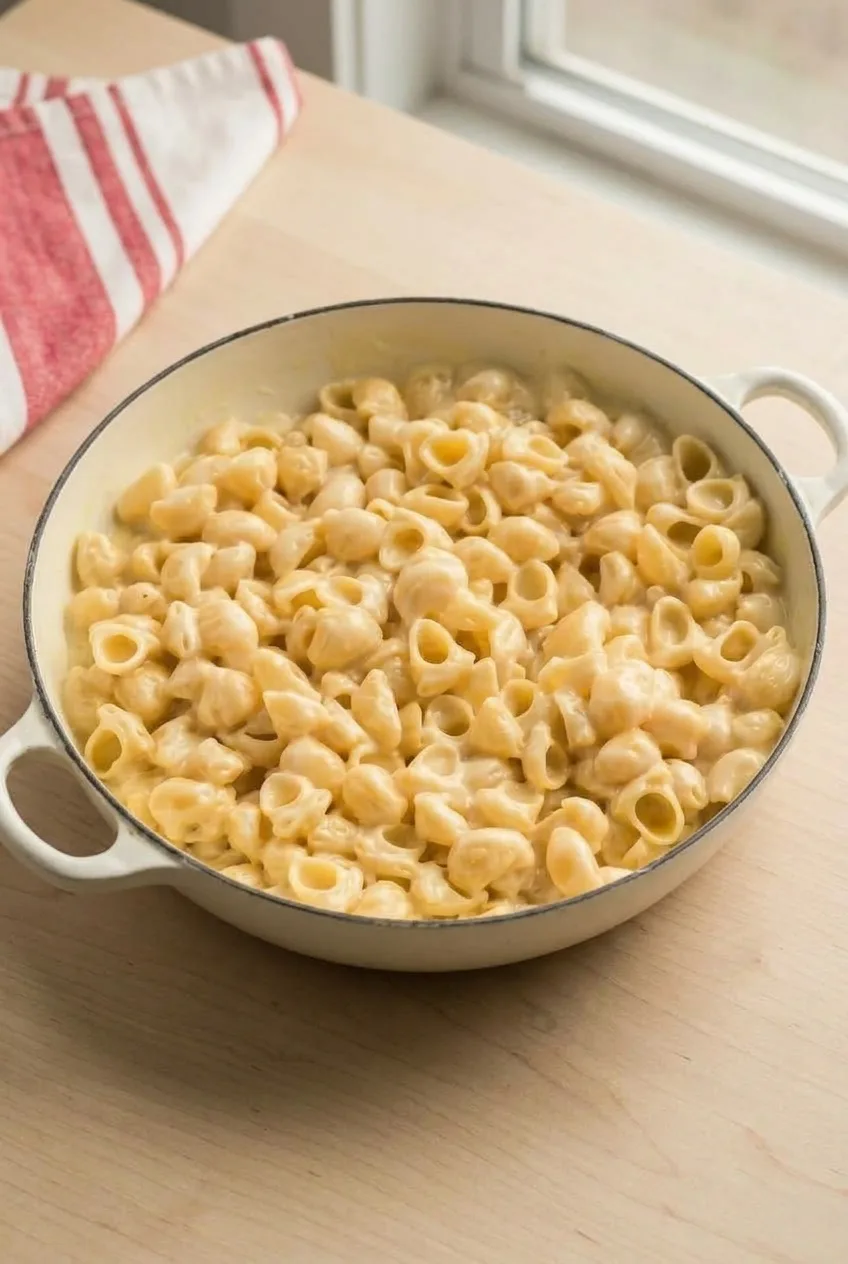
Full pot of creamy, untopped Panera-style mac and cheese on a pale tabletop
  1. Prepare the pasta and cheese: Bring a large pot of salted water to a boil over high heat. Shred the cheddar and cut or tear the white American cheese into small pieces.
  2. Cook the pasta: Add the pipette rigate to the boiling water. Follow the package timing, checking 1 to 2 minutes early. Drain when tender with a slight bite; do not rinse. Make the sauce while the pasta cooks.
  3. Cook the roux: Melt the butter in a large saucepan or Dutch oven over medium heat. Use a pot large enough to hold the sauce and all the cooked pasta. Whisk in the flour and cook for about 1 minute, until smooth and lightly bubbling but not browned.
  4. Thicken the milk base: Whisk in the first splashes of milk gradually, smoothing out each addition before adding more. Whisk in the remaining milk. Cook uncovered over medium to medium-low heat, whisking frequently and scraping the bottom and edges of the pot. After about 5 to 8 minutes, it should gently bubble and lightly coat the back of a spoon.
  5. Melt the cheese: Remove the pot from the heat. Stir in the white American cheese and cheddar in several additions, letting each addition melt before adding more. Stir in the Dijon, 1/4 teaspoon salt, and optional hot sauce. The sauce should be smooth and glossy. Taste before adding more salt; do not boil the cheese sauce.
  6. Coat and serve: Fold the drained pasta into the sauce off heat until evenly coated. If the sauce is too thick to flow around the pasta, stir in a small splash of milk. Serve promptly, without a topping. If the pasta has cooled, warm it briefly over low heat, stirring gently.

How to Keep the Cheese Sauce Smooth

Thicken the milk base before adding cheese. Gentle bubbles and a light coating on the back of a spoon mean the flour has done its job; the cheese then needs only to melt into the sauce, not cook in it.

Shred cheddar from a block rather than using pre-shredded cheese, which can melt less evenly. Add the cheeses in portions off heat, and avoid boiling the finished sauce. Pasta continues to absorb liquid after it is mixed in, so serve soon or loosen the coating with a little milk.

Choosing Pasta and Cheese

Pipette rigate has small, curved tubes that catch sauce while leaving their hollow openings visible. Small shells or elbows work if pipette is unavailable.

Sharp white cheddar gives the sauce its main flavor; white American cheese helps it melt smoothly. The small amount of Dijon stays in the background rather than making the sauce taste mustard-forward. For a cheddar-only version, replace the white American cheese with 4 ounces of freshly shredded white cheddar. The sauce may be less forgiving, so take particular care to melt it off heat.

Storing and Reheating

Refrigerate leftovers in an airtight container for up to 3 days. Reheat over low heat with a splash of milk, stirring gently until creamy. For a microwave portion, add a little milk and stir during reheating. The sauce will be thicker after chilling than when freshly made.

Freezing is possible but not preferred: the dairy sauce may separate or reheat less smoothly.

Nutrition

Approximate per serving, based on 6 servings: 540 calories, 24g protein, 27g fat, and 52g carbohydrates. Approximate per 100g of prepared mac and cheese: 180 calories, 8g protein, 9g fat, and 17g carbohydrates. Values vary with the cheeses used, cooked pasta yield, and any milk added to loosen the sauce.

Panera Mac and Cheese Copycat

Pipette rigate pasta is coated in a smooth white cheddar and American cheese sauce.
Course: Side Dish
Cuisine: American
Prep: 10 min
Cook: 20 min
Total: 30 min
Servings: 6

Equipment

  • Large pot
  • Large saucepan or Dutch oven
  • Whisk
  • Colander
  • Box grater

Ingredients

  • 12 ounces pipette rigate pasta (340 g)
  • 3 tablespoons unsalted butter (about 45 g)
  • 3 tablespoons all-purpose flour (about 25 g)
  • 2 1/2 cups whole milk, plus a little more if needed
  • 8 ounces sharp white cheddar, freshly shredded (about 225 g)
  • 4 ounces white American cheese, cut or torn into small pieces (about 115 g)
  • 1/2 teaspoon Dijon mustard
  • 1/4 teaspoon salt, plus more to taste and for the pasta water
  • Optional: 1/4 teaspoon mild hot sauce

Instructions

  1. Bring a large pot of salted water to a boil. Shred the cheddar and cut or tear the white American cheese into small pieces.
  2. Add the pasta to the boiling water and cook according to the package timing, checking 1 to 2 minutes early. Drain when tender with a slight bite; do not rinse.
  3. While the pasta cooks, melt the butter in a large saucepan or Dutch oven over medium heat. Whisk in the flour and cook for about 1 minute, until smooth and lightly bubbling but not browned.
  4. Gradually whisk in the first splashes of milk, smoothing each addition before adding more. Whisk in the remaining milk.
  5. Cook the milk mixture uncovered over medium to medium-low heat, whisking frequently and scraping the bottom and edges, until it gently bubbles and lightly coats the back of a spoon, about 5 to 8 minutes.
  6. Remove the pot from the heat. Stir in the cheeses in several additions, letting each addition melt before adding more.
  7. Stir in the Dijon, 1/4 teaspoon salt, and optional hot sauce. Taste and add more salt if needed; do not boil the cheese sauce.
  8. Fold the drained pasta into the sauce off the heat until evenly coated. If the sauce is too thick, stir in a small splash of milk. Serve promptly without a topping.

Tips

  • Shred cheddar from a block for a more even melt.
  • Thicken the milk base until it lightly coats the back of a spoon before adding cheese.
  • Add the cheeses in portions with the pot off the heat, and do not boil the finished sauce.
  • Serve soon after combining, or loosen the sauce with a little milk if it thickens.

Variations

  • Cheddar-Only Version: Replace the white American cheese with 4 ounces of freshly shredded white cheddar, and melt it carefully off the heat.
  • Alternative Pasta: Use small shells or elbow pasta if pipette rigate is unavailable.

Notes

Refrigerate leftovers in an airtight container for up to 3 days. Reheat gently over low heat or in the microwave with a splash of milk, stirring until creamy. Freezing is not preferred because the sauce may separate.

Nutrition

Per Serving Calories: 540 kcal | Per Serving Protein: 24 g | Per Serving Fat: 27 g | Per Serving Carbohydrates: 52 g | Per 100g Calories: 180 kcal | Per 100g Protein: 8 g | Per 100g Fat: 9 g | Per 100g Carbohydrates: 17 g

Vegan Mac and Cheese

Elbow macaroni stays creamy beneath a generous golden breadcrumb topping in this baked vegan mac and cheese. The pale orange-yellow sauce comes from tender potato, carrots, and onion blended with softened cashews; nutritional yeast adds savory, cheese-like flavor.

Cook the pasta just to al dente and keep the sauce thick but pourable before baking. That way, the macaroni holds its shape and stays moist while the crumbs brown.

Ingredients for Vegan Mac and Cheese

Close detail of crisp breadcrumbs beside moist, sauce-coated elbow macaroni
  • 12 ounces dry elbow macaroni (340g)
  • 1 medium Yukon Gold potato, peeled and diced, about 5 ounces (140g)
  • 2 medium carrots, peeled and diced, about 4 ounces (115g)
  • ½ small yellow onion, chopped, about 2 ounces (55g)
  • ½ cup raw unsalted cashews (70g)
  • ½ cup unsweetened canned coconut milk (120g)
  • ⅓ cup nutritional yeast (20g)
  • 1 tablespoon lemon juice
  • 1 teaspoon garlic powder
  • ¾ teaspoon fine salt, plus more to taste and for the pasta water
  • ½ to ¾ cup reserved vegetable cooking water, as needed
  • ¾ cup fine plain dry breadcrumbs (80g), checked for non-vegan ingredients
  • 1½ tablespoons olive oil

Optional: Add ¼ teaspoon paprika to the sauce for a subtle warm seasoning note. Use unsweetened canned coconut milk, not sweetened coconut milk or a coconut beverage. This recipe contains cashews.

How to Make Baked Vegan Mac and Cheese

Full plate of baked vegan mac and cheese on a simple tabletop
  1. Soak the cashews: Cover with hot water and let stand for about 20 minutes while you prepare the vegetables. Drain before blending.
  2. Cook the vegetables: Put the potato, carrots, and onion in a medium pot and cover with water. Bring to a boil and cook for 10 to 15 minutes, checking at 10 minutes. A fork should pass easily through both the potato and carrots. Reserve at least ¾ cup cooking water, then drain.
  3. Cook the macaroni: Preheat the oven to 350°F (175°C). Boil the macaroni in salted water according to the package directions, stirring occasionally. Drain when al dente, with a slight bite; it will heat again in the oven.
  4. Blend the sauce: Add the drained vegetables and cashews to a blender with the coconut milk, nutritional yeast, lemon juice, garlic powder, ¾ teaspoon salt, and ½ cup reserved cooking water. Let steam subside briefly and vent the lid as directed by your blender. Blend until completely smooth, adding more reserved water a splash at a time if needed. The sauce should coat a spoon but still flow from it. Taste and adjust the salt.
  5. Assemble: Coat the macaroni thoroughly with the sauce and spread it in an approximately 2½-quart baking dish. Toss the breadcrumbs with the olive oil and scatter them generously over the pasta.
  6. Bake: Bake uncovered for 15 to 20 minutes, checking at 15 minutes. Remove when the crumbs are golden and the pasta beneath is hot and moist. Let stand for about 5 minutes, then spoon out loose portions with both topping and creamy macaroni.

How to Keep the Sauce Creamy

The potato and carrots must be completely fork-tender before blending; firm pieces can leave the sauce grainy. Soaked cashews also blend more readily, though a less powerful blender may need extra time. If the sauce looks pasty before baking, blend in a little more reserved cooking water until it pours easily.

Getting a Golden Breadcrumb Top

Fine breadcrumbs make a substantial, crisp topping, and coating them with oil helps them brown evenly. Go by their color rather than baking for the full time if the crumbs are already golden and the pasta is hot. A deeper layer in a smaller dish may take longer to heat through.

Serving and Variations

Spoon the mac and cheese onto plates rather than cutting it into squares. Simply dressed mixed greens make a contrasting side.

For a stovetop version, serve the macaroni as soon as it is coated with sauce, omitting the breadcrumbs and baking. It will be creamy throughout but will not have the crisp crust. Small shells can replace the elbows at the same weight, though they will give the finished dish a different shape.

For another plant-based meal idea, try Mediterranean lentils and rice.

Nutrition

Approximate nutrition per serving, based on 6 servings: 440 calories, 14g protein, 14g fat, and 65g carbohydrates. Approximate values per 100g of finished dish: 165 calories, 5g protein, 5g fat, and 24g carbohydrates. Values vary with the pasta, coconut milk, breadcrumbs, and finished weight of the dish.

Vegan Mac and Cheese

Elbow macaroni is coated in a creamy potato, carrot, and cashew sauce, topped with breadcrumbs, and baked until golden.
Course: Main Course
Cuisine: American
Prep: 20 min
Cook: 40 min
Total: 60 min
Servings: 6 Calories: 440 kcal

Equipment

  • Medium pot
  • Blender
  • 2½-quart baking dish
  • Oven

Ingredients

For the pasta and sauce

  • 12 ounces dry elbow macaroni (340 g)
  • 1 medium Yukon Gold potato, peeled and diced, about 5 ounces (140 g)
  • 2 medium carrots, peeled and diced, about 4 ounces (115 g)
  • ½ small yellow onion, chopped, about 2 ounces (55 g)
  • ½ cup raw unsalted cashews (70 g)
  • ½ cup unsweetened canned coconut milk (120 g)
  • ⅓ cup nutritional yeast (20 g)
  • 1 tablespoon lemon juice
  • 1 teaspoon garlic powder
  • ¾ teaspoon fine salt, plus more to taste and for the pasta water
  • ½ to ¾ cup reserved vegetable cooking water, as needed
  • Optional: ¼ teaspoon paprika

For the topping

  • ¾ cup fine plain dry breadcrumbs (80 g), checked for non-vegan ingredients
  • 1½ tablespoons olive oil

Instructions

  1. Cover the cashews with hot water and soak for about 20 minutes. Drain before blending.
  2. Put the potato, carrots, and onion in a medium pot, cover with water, and bring to a boil. Cook for 10 to 15 minutes, checking at 10 minutes, until the vegetables are fork-tender. Reserve at least ¾ cup cooking water, then drain.
  3. Preheat the oven to 350°F (175°C).
  4. Boil the macaroni in salted water according to the package directions, stirring occasionally. Drain when al dente.
  5. Add the drained vegetables and cashews to a blender with the coconut milk, nutritional yeast, lemon juice, garlic powder, ¾ teaspoon salt, and ½ cup reserved cooking water. Let steam subside briefly and vent the blender lid as directed.
  6. Blend until completely smooth. Add more reserved cooking water a splash at a time until the sauce coats a spoon but still flows. Taste and adjust the salt.
  7. Coat the macaroni thoroughly with the sauce and spread it in an approximately 2½-quart baking dish.
  8. Toss the breadcrumbs with the olive oil and scatter them over the pasta.
  9. Bake uncovered for 15 to 20 minutes, checking at 15 minutes, until the crumbs are golden and the pasta is hot and moist. Rest for about 5 minutes before serving.

Tips

  • Cook the macaroni just to al dente so it holds its shape in the oven.
  • Make sure the potato and carrots are completely fork-tender before blending to avoid a grainy sauce.
  • Add reserved cooking water gradually until the sauce is thick but pourable.
  • Coat the breadcrumbs evenly with oil to help them brown.
  • Check the topping and pasta at 15 minutes; a deeper layer in a smaller dish may need longer.

Variations

  • Stovetop Vegan Mac and Cheese: Serve the macaroni as soon as it is coated with sauce, omitting the breadcrumbs and baking.
  • Small Shells: Replace the elbow macaroni with small shells at the same weight.
  • Paprika Sauce: Add ¼ teaspoon paprika to the sauce for a subtle warm seasoning note.

Notes

Contains cashews. Use unsweetened canned coconut milk and check that the breadcrumbs are vegan.

Nutrition

Calories: 440 kcal | Protein: 14 g | Fat: 14 g | Carbohydrates: 65 g

Bacon Mac and Cheese

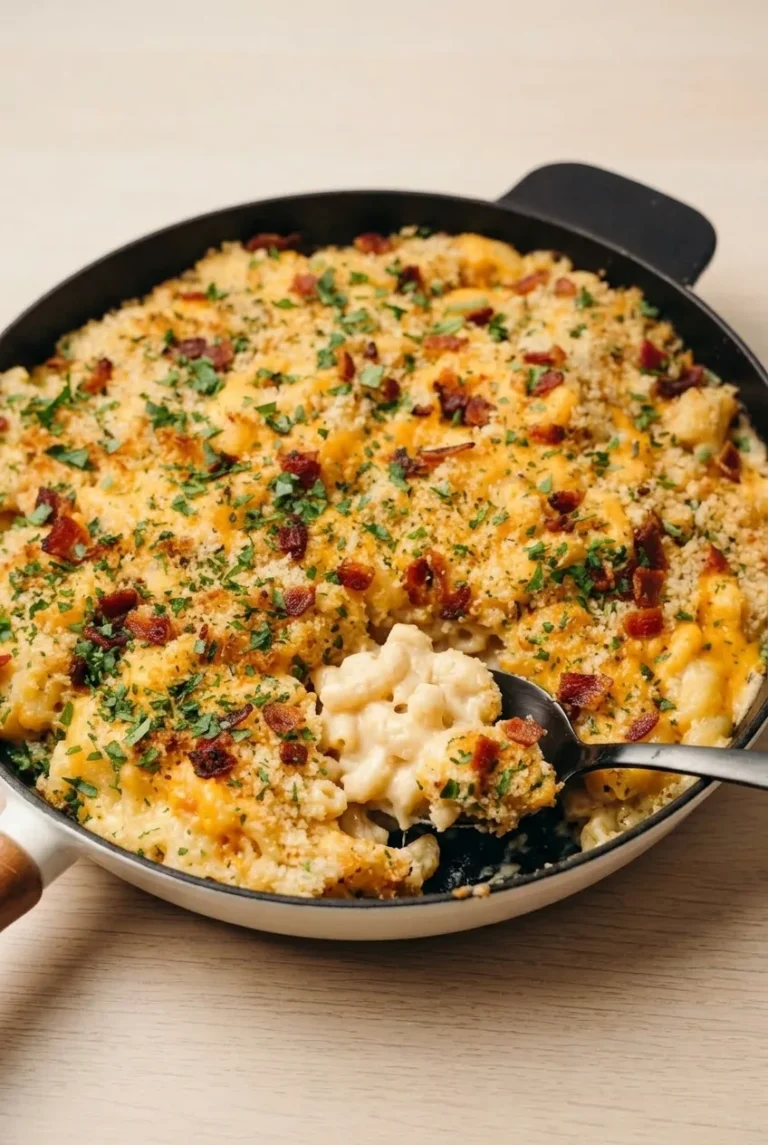
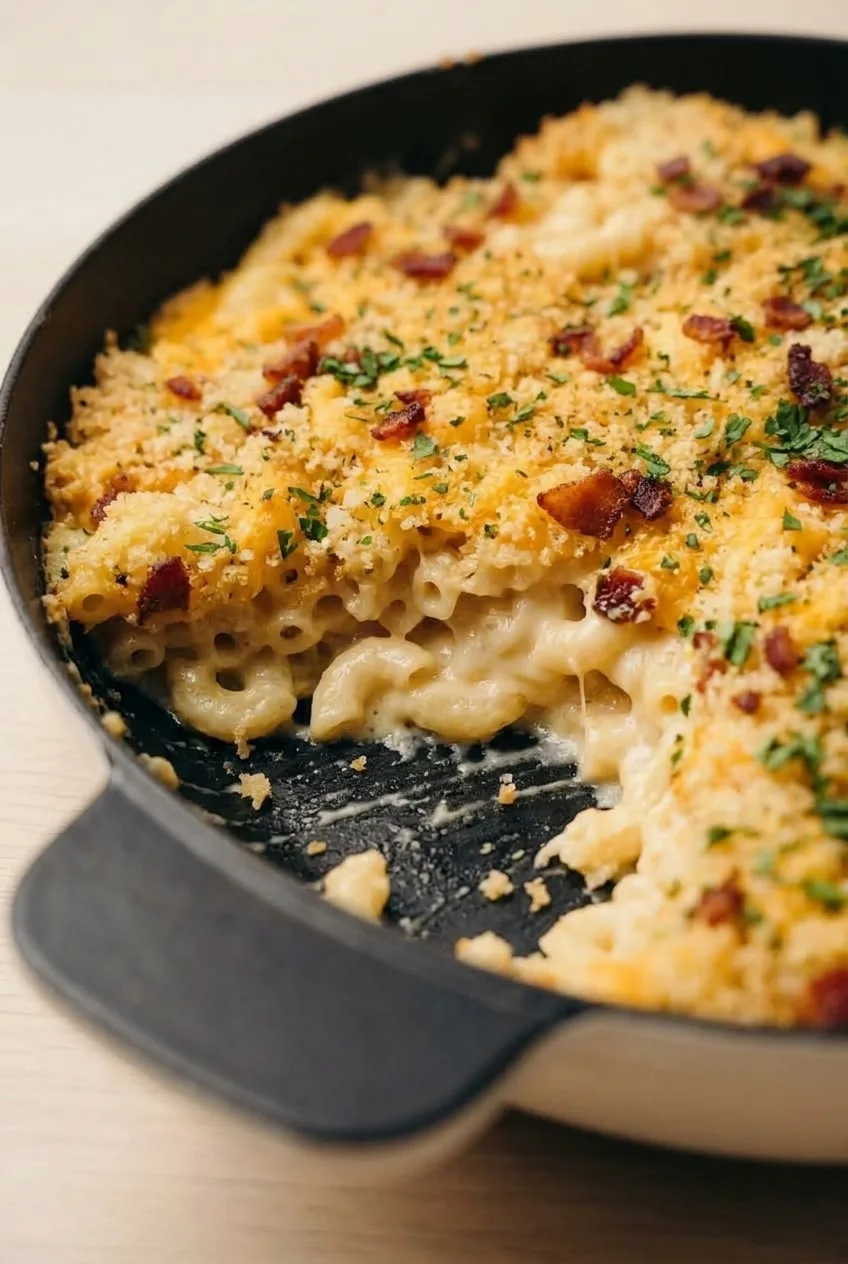
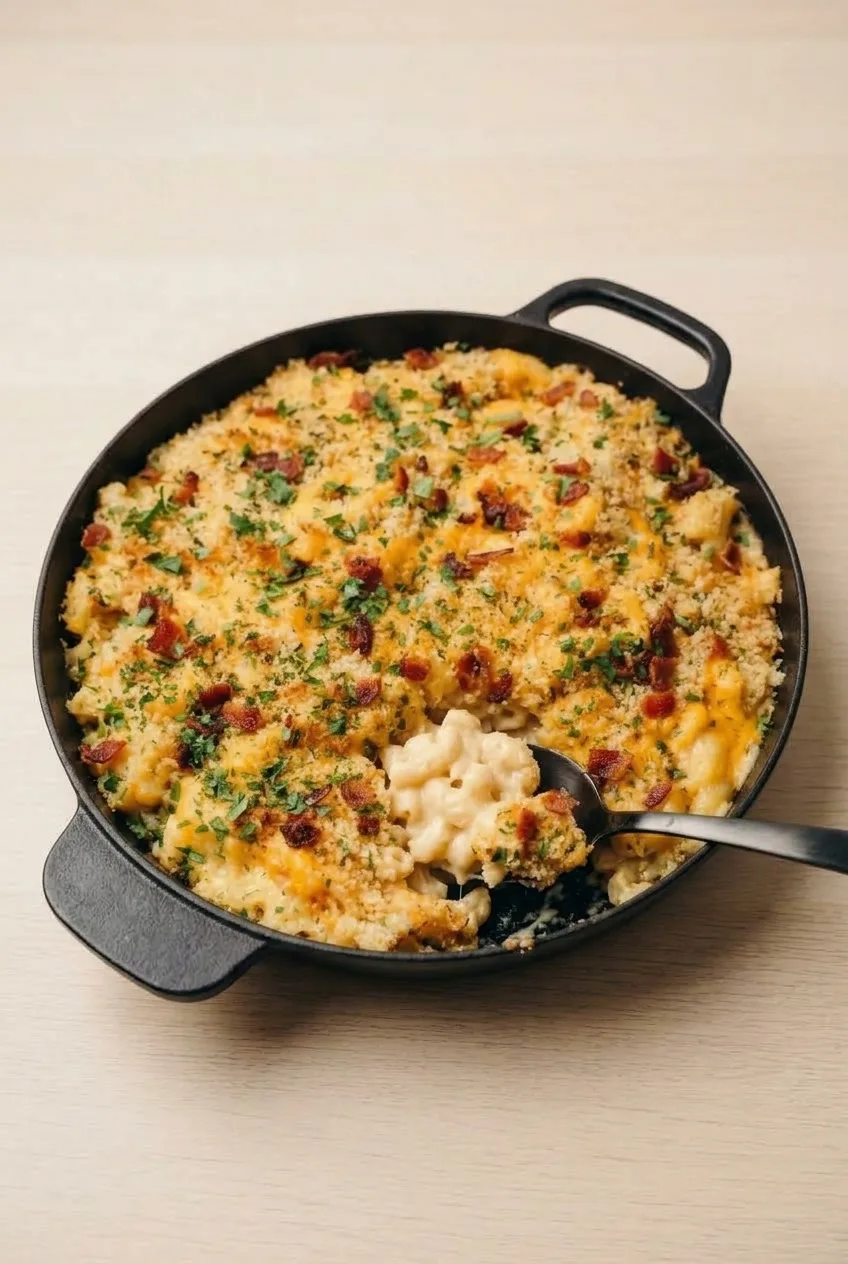
This skillet-baked bacon mac and cheese has a lightly golden panko-and-cheddar topping over a creamy center. Half the crisp bacon is folded into the macaroni; the rest goes on after baking so it stays crisp. The key is to assemble the pasta while it still looks saucy, then pull the skillet from the oven as soon as the edges bubble and the top is lightly browned.

Time: 15 minutes prep, 35–40 minutes cooking, plus a 5-minute rest. Yield: 6 generous portions or 8 side portions.

Ingredients for Bacon Mac and Cheese

Close view of creamy macaroni beneath the crisp topping of baked bacon mac and cheese
  • 12 ounces dry elbow macaroni (340g)
  • 8 slices bacon, about 8 ounces (225g)
  • 3 tablespoons unsalted butter
  • 3 tablespoons all-purpose flour
  • 3 cups whole milk
  • 12 ounces sharp cheddar, freshly shredded, about 3 cups (340g), divided
  • 1/4 teaspoon freshly ground black pepper, or to taste
  • 3/4 cup panko breadcrumbs (40g)
  • 2 tablespoons finely chopped fresh flat-leaf parsley
  • Kosher salt, only if needed after tasting

Use a deep, round 10- to 12-inch oven-safe skillet that holds at least 3 quarts. Check that the handle is oven-safe. If the pasta and sauce would reach the rim, use a 3-quart baking dish for the oven step instead.

How to Make Bacon Mac and Cheese

Full skillet of baked bacon mac and cheese with parsley and crisp bacon on a light tabletop
  1. Preheat and cook the pasta: Heat the oven to 375°F (190°C). Boil the macaroni in modestly salted water for 1–2 minutes less than the package’s al dente time, usually about 6–9 minutes. It should still be slightly firm in the center. Drain promptly.
  2. Crisp the bacon: Cook the bacon in the skillet over medium heat, turning occasionally, until browned and crisp, about 8–12 minutes. Transfer it to drain, then chop. Reserve 1 tablespoon of the rendered fat for the breadcrumbs and discard the rest.
  3. Thicken the milk sauce: Melt the butter in the skillet over medium-low heat. Whisk in the flour and cook for about 1 minute. Gradually whisk in the milk, adding a little at a time at first to prevent lumps. Cook, stirring, for about 6–8 minutes, until the sauce coats the back of a spoon but still flows easily.
  4. Add the cheddar: Turn the heat to low or off. Set aside 1/2 cup of the cheddar for the topping. Stir the rest into the sauce in several batches until smooth, then add the pepper. Taste before adding salt; the cheese and bacon may provide enough.
  5. Assemble the skillet: Fold in the drained macaroni and half the chopped bacon. The pasta should be evenly coated, with sauce still visible between the pieces. If the skillet is too full, transfer the mixture to a 3-quart baking dish. Toss the panko with the reserved tablespoon of bacon fat, then scatter it over the pasta with the remaining cheddar.
  6. Bake and finish: Bake uncovered, starting to check at 18 minutes. Remove it when the edges bubble and the topping is lightly golden with a few darker melted-cheese patches, usually after 18–22 minutes. Rest for 5 minutes, then scatter the remaining bacon and parsley on top. Use a dry oven mitt to handle the hot skillet.

How to Keep the Center Creamy

The macaroni continues to soften in the sauce and oven, which is why it goes into the skillet slightly undercooked. Before baking, the mixture should look generously saucy rather than merely coated. Don’t wait for a dark crust: bubbling edges and light browning are the cues to take it out. A deeper baking dish may take longer to bubble than a shallow skillet.

Serving and Stovetop Option

Serve generous portions with a green salad, or offer smaller portions alongside Parmesan roasted Brussels sprouts. For a bacon-free alternative, try classic baked mac and cheese.

To serve this recipe from the stovetop, stop after folding the macaroni and half the bacon into the sauce. Add the remaining bacon and parsley before serving, and omit the panko-topped bake. The pasta will have a softer surface rather than a browned topping.

Storing and Reheating

Cool leftovers and refrigerate in an airtight container for up to 5 days. The pasta will absorb sauce as it sits, and the breadcrumb topping will soften.

For an individual portion, add a splash of milk and microwave for 1 minute. Stir, then heat in 30-second increments until steaming. For a larger amount, add a splash of milk if needed and reheat in a baking dish at 350°F (175°C) for about 15–20 minutes, until heated through.

Nutrition

Approximate nutrition per generous portion, based on 6 servings: 710 calories, 33g protein, 39g fat, and 57g carbohydrates. Per 100g: approximately 215 calories, 10g protein, 12g fat, and 17g carbohydrates. Values are estimates; ingredient brands, discarded bacon fat, and finished weight will affect the totals.

Bacon Mac and Cheese

Elbow macaroni is folded into a creamy cheddar sauce with crisp bacon, topped with panko and baked until lightly golden.
Course: Main Course
Cuisine: American
Prep: 15 min
Cook: 40 min
Total: 60 min
Servings: 6 Calories: 710 kcal

Equipment

  • 10- to 12-inch oven-safe skillet
  • 3-quart baking dish (if needed)
  • Large pot
  • Colander
  • Whisk
  • Dry oven mitt

Ingredients

For the Mac and Cheese

  • 12 ounces dry elbow macaroni (340 g)
  • 8 slices bacon, about 8 ounces (225 g)
  • 3 tablespoons unsalted butter
  • 3 tablespoons all-purpose flour
  • 3 cups whole milk
  • 12 ounces sharp cheddar, freshly shredded, about 3 cups (340 g), divided
  • 1/4 teaspoon freshly ground black pepper, or to taste
  • Kosher salt, only if needed after tasting

For the Topping

  • 3/4 cup panko breadcrumbs (40 g)
  • 2 tablespoons finely chopped fresh flat-leaf parsley

Instructions

  1. Preheat the oven to 375°F (190°C).
  2. Boil the macaroni in modestly salted water for 1–2 minutes less than the package’s al dente time, usually 6–9 minutes. Drain promptly while it is still slightly firm in the center.
  3. Cook the bacon in the skillet over medium heat, turning occasionally, until browned and crisp, about 8–12 minutes. Transfer it to drain, then chop. Reserve 1 tablespoon of the bacon fat for the breadcrumbs and discard the rest.
  4. Melt the butter in the skillet over medium-low heat. Whisk in the flour and cook for about 1 minute.
  5. Gradually whisk in the milk, adding a little at a time at first. Cook, stirring, for 6–8 minutes, until the sauce coats the back of a spoon but still flows easily.
  6. Turn the heat to low or off. Set aside 1/2 cup of the cheddar for the topping. Stir the remaining cheddar into the sauce in several batches until smooth, then add the pepper. Taste before adding salt.
  7. Fold the drained macaroni and half of the chopped bacon into the sauce. If the skillet is too full, transfer the mixture to a 3-quart baking dish.
  8. Toss the panko with the reserved tablespoon of bacon fat. Scatter it and the reserved cheddar over the pasta.
  9. Bake uncovered, checking at 18 minutes. Remove when the edges bubble and the topping is lightly golden, usually after 18–22 minutes.
  10. Rest for 5 minutes, then top with the remaining bacon and parsley. Handle the hot skillet with a dry oven mitt.

Tips

  • Cook the macaroni slightly under al dente so it does not become too soft in the oven.
  • Before baking, keep the mixture generously saucy, with sauce visible between the pasta pieces.
  • Check for bubbling edges and light browning rather than waiting for a dark crust.
  • A deeper baking dish may take longer to bubble than a shallow skillet.
  • Taste the sauce before adding salt because the bacon and cheese may be salty enough.

Variations

  • Stovetop Bacon Mac and Cheese: Skip the panko topping and baking step. Fold the macaroni and half the bacon into the sauce, then top with the remaining bacon and parsley before serving.
Notes

Refrigerate leftovers in an airtight container for up to 5 days. Reheat individual portions with a splash of milk in the microwave, or reheat a larger amount in a baking dish at 350°F (175°C) for about 15–20 minutes, adding milk if needed.

Nutrition

Calories: 710 kcal | Protein: 33 g | Fat: 39 g | Carbohydrates: 57 g

Slow Cooker Four Cheese Mac and Cheese

Dry elbow macaroni cooks in whole milk and evaporated milk, so there’s no separate pasta pot. Cream cheese, sharp cheddar, Havarti, and Gruyere melt around the elbows for a rich, golden coating. The finished mac and cheese should be moist and scoopable, with distinct pieces of pasta rather than a firm casserole.

Cook it on LOW, stir thoroughly after the first hour, and begin tasting an elbow at about 1 hour 20 minutes. Pasta tenderness—not a fixed cook time—determines when it’s ready.

Ingredients for Slow Cooker Four Cheese Mac and Cheese

Close view of distinct elbow macaroni coated in uneven golden four-cheese sauce

Makes 8 side-dish servings. Prep time: about 15 minutes. Cook time: about 1 hour 20 minutes to 2 hours.

  • 12 ounces dry elbow macaroni (340g)
  • 2 cups whole milk
  • 1 (12-fluid-ounce) can evaporated milk
  • 4 ounces cream cheese, cubed (115g)
  • 8 ounces sharp cheddar, freshly shredded (225g)
  • 4 ounces Havarti, shredded (115g)
  • 4 ounces Gruyere, shredded (115g)
  • 3/4 teaspoon fine salt, plus more to taste
  • 1/2 teaspoon ground mustard
  • 1/2 teaspoon garlic powder

Add the elbows dry. Boiling them first would change how much liquid they absorb in the slow cooker.

How to Make Four Cheese Mac and Cheese in the Slow Cooker

Full orange bowl of slow cooker four cheese mac and cheese on a neutral table
  1. Prepare the insert: Lightly coat a 4- to 6-quart slow-cooker insert with nonstick spray. Shred the cheddar, Havarti, and Gruyere, and cube the cream cheese.
  2. Combine and cook: Add the dry elbows, whole milk, evaporated milk, all four cheeses, and salt. Stir to distribute the pasta and cheese. Cover and cook on LOW for 1 hour.
  3. Stir in the seasonings: Scrape the sides of the insert and fold the pasta from the edges toward the center, breaking up any patches of cheese or pasta. Stir in the ground mustard and garlic powder. Cover and continue cooking on LOW for 20 to 30 minutes.
  4. Check the pasta: Starting at about 1 hour 20 minutes total, taste an elbow. If it has a hard center, cover and continue cooking on LOW in 15-minute increments, stirring and tasting at each check. Stop when the elbows are tender and the melted cheese coats them. Total cooking time is usually about 1 hour 20 minutes to 2 hours, depending on the cooker.
  5. Serve: Turn off the cooker and taste for salt. If the finished mac and cheese is too thick to scoop loosely, fold in warm whole milk 1 tablespoon at a time as needed. Serve promptly in shallow bowls, without a baked finish or topping.

When Is Slow Cooker Mac and Cheese Done?

The elbows should be tender without a hard center, and the cheese should cling to them without a pool of thin liquid. The pasta will keep absorbing sauce as it sits, so turn off the cooker once it reaches that point. This version is not meant to cook for 3 to 4 hours.

A 4-quart insert holds this batch more deeply than a 6-quart insert, which may affect the timing. Begin checking at the stated time regardless of cooker size.

How to Keep the Cheese Sauce Creamy

The one-hour stir redistributes cheese that may have collected in patches and pasta sitting against the insert’s edges. Keep the lid on between checks. If the sauce tightens after cooking, fold small amounts of warm milk into the finished dish until the elbows are creamy and scoopable again.

Serving Ideas

Serve the mac and cheese plain, or offer chopped parsley or toasted buttered breadcrumbs separately. For a vegetable side, try Parmesan roasted Brussels sprouts. For an oven-finished alternative, try classic baked mac and cheese.

Storing and Reheating Leftovers

Refrigerate leftovers within 2 hours in a covered container and use within 3 to 4 days. Reheat gently until hot throughout, stirring in a splash of milk if the sauce is too thick. The elbows will be softer than when freshly cooked. Freezing is not preferred because the pasta and dairy sauce may lose their original texture.

Nutrition

Approximate per side-dish serving (1/8 of the recipe): 530 calories, 26g protein, 29g fat, and 41g carbohydrates. Approximate per 100g of cooked mac and cheese: 250 calories, 12g protein, 14g fat, and 19g carbohydrates. Values exclude optional milk added at serving and will vary with cheese brands and finished weight.

Slow Cooker Four Cheese Mac and Cheese

Dry elbow macaroni cooks in milk and four cheeses in the slow cooker until tender and creamy.
Course: Side Dish
Cuisine: American
Prep: 15 min
Cook: 120 min
Total: 135 min
Servings: 8 Calories: 530 kcal

Equipment

  • 4- to 6-quart slow cooker
  • Box grater

Ingredients

For the Mac and Cheese

  • 12 ounces dry elbow macaroni (340 g)
  • 2 cups whole milk, plus more as needed
  • 1 (12-fluid-ounce) can evaporated milk
  • 4 ounces cream cheese, cubed (115 g)
  • 8 ounces sharp cheddar, freshly shredded (225 g)
  • 4 ounces Havarti, shredded (115 g)
  • 4 ounces Gruyere, shredded (115 g)
  • 3/4 teaspoon fine salt, plus more to taste
  • 1/2 teaspoon ground mustard
  • 1/2 teaspoon garlic powder

Instructions

  1. Lightly coat a 4- to 6-quart slow-cooker insert with nonstick spray.
  2. Add the dry macaroni, whole milk, evaporated milk, cream cheese, cheddar, Havarti, Gruyere, and salt. Stir to distribute.
  3. Cover and cook on LOW for 1 hour.
  4. Scrape the sides of the insert and fold the pasta from the edges toward the center, breaking up any patches. Stir in the ground mustard and garlic powder.
  5. Cover and continue cooking on LOW for 20 to 30 minutes.
  6. Starting at about 1 hour 20 minutes total, taste an elbow. If it has a hard center, cover and cook on LOW in 15-minute increments, stirring and tasting each time, until tender and coated in cheese.
  7. Turn off the cooker and taste for salt. If the mac and cheese is too thick to scoop loosely, fold in warm whole milk 1 tablespoon at a time. Serve promptly.

Tips

  • Add the macaroni dry; boiling it first changes how much liquid it absorbs.
  • Stir thoroughly after the first hour to redistribute the cheese and pasta.
  • Begin checking the pasta for tenderness at about 1 hour 20 minutes; doneness depends on the cooker.
  • Keep the lid on between checks.
  • Turn off the cooker once the pasta is tender, since it will continue absorbing sauce as it sits.

Notes

Refrigerate leftovers within 2 hours in a covered container and use within 3 to 4 days. Reheat gently until hot throughout, adding a splash of milk if needed. Freezing is not preferred because the pasta and sauce may lose their texture.

Nutrition

Calories: 530 kcal | Protein: 26 g | Fat: 29 g | Carbohydrates: 41 g

Creamy Stovetop Mac and Cheese

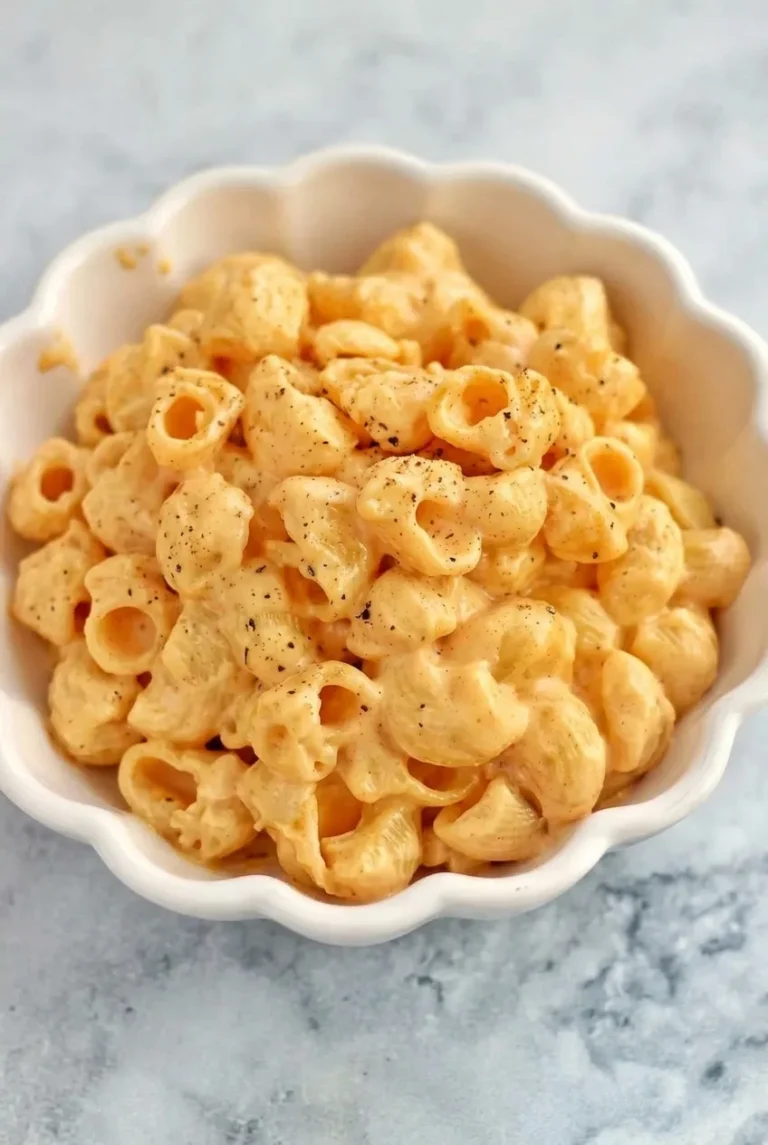
Elbow macaroni gets a generous coating of smooth, cheddar-forward cheese sauce in this stovetop mac and cheese. The pasta cooks separately while butter, flour, and whole milk form a sauce that lightly coats a spoon but still pours easily.

Stirring the shredded cheese in off heat helps keep the sauce glossy rather than grainy. Toss in the elbows, loosen the coating with a little milk if needed, and serve right away with freshly ground black pepper.

Ingredients for Creamy Stovetop Mac and Cheese

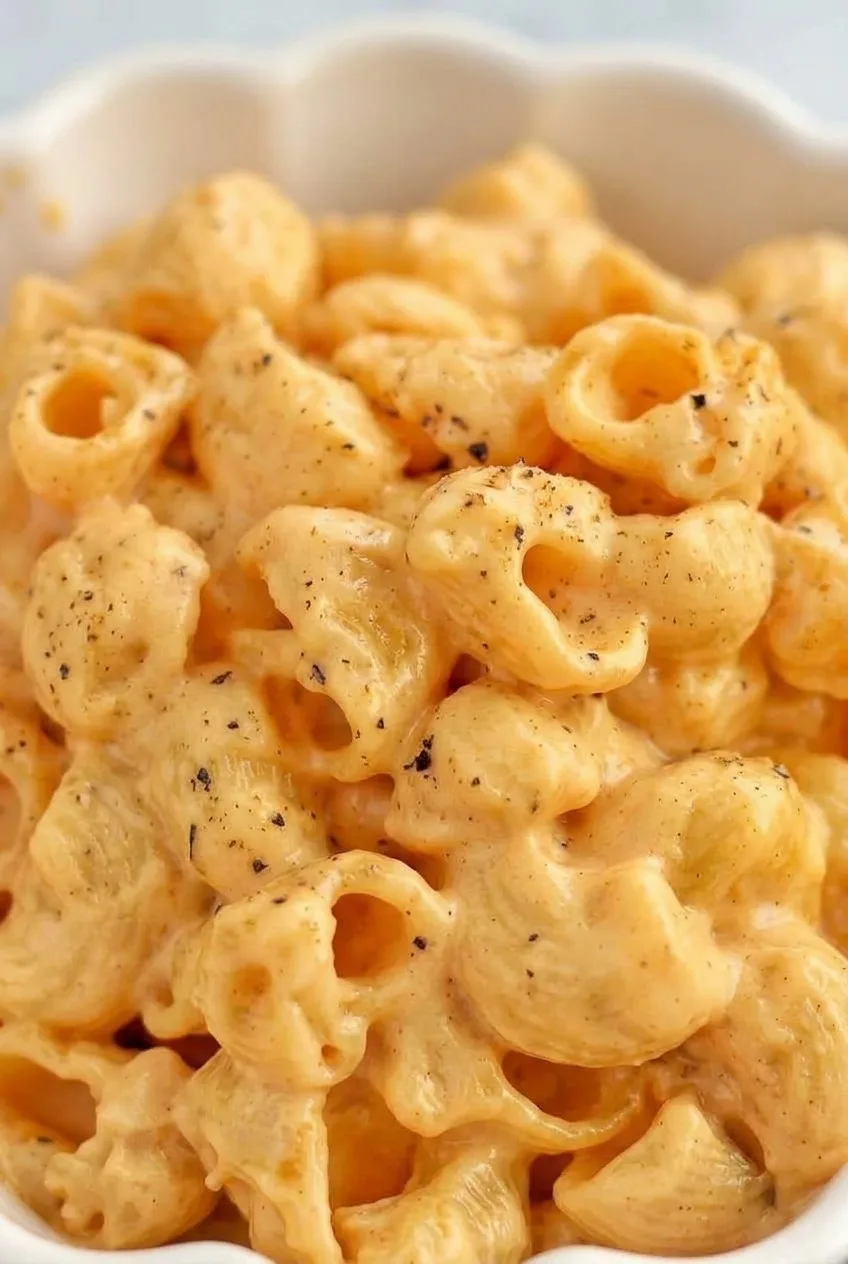
Close view of hollow elbow macaroni coated in glossy cheese sauce and flecked with black pepper
  • 12 ounces dry elbow macaroni (340g)
  • 3 tablespoons unsalted butter (about 45g)
  • 3 tablespoons all-purpose flour (about 25g)
  • 2 1/2 cups whole milk (about 600g), plus up to 1/2 cup more as needed
  • 8 ounces sharp cheddar cheese, freshly shredded (about 2 cups or 225g)
  • 4 ounces Monterey Jack cheese, freshly shredded (about 1 cup or 115g)
  • 1/2 teaspoon dry mustard powder
  • 1/2 teaspoon kosher salt, plus more for the pasta water
  • 1/2 teaspoon freshly ground black pepper, divided

Yield: About 6 side-dish servings or 4 main-dish servings. Time: About 10 minutes prep and 15 to 20 minutes cooking, or 25 to 30 minutes total when the pasta and sauce cook concurrently.

How to Make Creamy Stovetop Mac and Cheese

Full white scalloped bowl of creamy stovetop mac and cheese on a neutral surface
  1. Prepare the cheese and water: Shred both cheeses. Bring a large pot of water to a full boil and salt it. Keep the extra milk nearby for adjusting the sauce.
  2. Cook the macaroni: Boil the elbows uncovered, stirring occasionally. Start checking 1 to 2 minutes before the package’s suggested al dente time. Drain when tender with slight resistance and still holding their shape. Make the sauce while the pasta cooks.
  3. Cook the roux: In a heavy-bottomed saucepan large enough to hold the pasta, melt the butter over medium-low heat. Whisk in the flour and cook for 1 to 2 minutes, until smooth and lightly bubbling but not browned.
  4. Add the milk: Slowly whisk in a splash of the 2 1/2 cups milk until the roux is smooth, then gradually whisk in the rest. Add the mustard powder and 1/2 teaspoon salt. Cook uncovered over medium to medium-low heat, stirring, for about 4 to 6 minutes. Keep the sauce at a gentle simmer until it lightly coats the back of a spoon but still pours easily.
  5. Melt the cheese: Remove the saucepan from the heat. Stir in the cheddar and Monterey Jack a handful at a time until melted and glossy. Add half the black pepper, then taste and adjust the salt. Do not boil the sauce after adding the cheese.
  6. Coat the pasta: Fold in the drained macaroni. If the sauce looks stiff, stir in extra milk 1 to 2 tablespoons at a time until the elbows are separate and glossy. If needed, warm briefly over very low heat while stirring. If the saucepan is too small, combine the pasta and sauce in the pasta pot off heat.
  7. Serve: Spoon into bowls immediately and scatter the remaining black pepper over the top. A white scalloped bowl matches the pictured presentation.

How to Keep the Cheese Sauce Smooth

Whisk the first splash of milk into the roux slowly to make a smooth base before adding more. Once the milk sauce has thickened, take the pan off the heat and stir in freshly shredded cheese by handfuls. Residual heat melts the cheese without the hard bubbling that can make the sauce grainy or oily.

Getting the Right Creamy Consistency

The milk sauce should coat a spoon, not become paste-thick. Cheese and pasta will thicken it further, and the elbows will absorb moisture as they sit. If the finished mac and cheese starts to clump, stir in warm milk a tablespoon or two at a time until sauce clings to the individual pieces again.

Cheese and Pasta Choices

Sharp cheddar gives the sauce its main flavor and light-orange color; Monterey Jack adds a milder, smooth-melting portion. Shred both from blocks when possible. Medium shells or cavatappi can replace the elbows, but the finished dish will look different, and each shape needs its own package-time check.

Serving, Storing, and Reheating

Serve promptly as a main dish or a side. A small portion can accompany sheet-pan salmon and garlic asparagus.

Refrigerate leftovers in an airtight container for up to 3 days. Reheat gently in a saucepan over low heat, stirring frequently and adding a splash of milk as needed. For one portion, microwave in short intervals, stirring between them. The reheated sauce may not be as smooth as when freshly made.

Nutrition

Approximate nutrition per side-dish serving, based on 6 servings and excluding extra milk: 555 calories, 25g protein, 28g fat, and 51g carbohydrates. A main-dish serving, based on 4 servings, has approximately 835 calories, 38g protein, 42g fat, and 76g carbohydrates.

Approximate values per 100g of prepared mac and cheese: 185 calories, 8g protein, 9g fat, and 17g carbohydrates. Values vary with the cheeses, how much water the pasta absorbs, and any additional milk.

Creamy Stovetop Mac and Cheese

Elbow macaroni is coated in a smooth cheddar and Monterey Jack sauce made on the stovetop.
Course: Side Dish
Cuisine: American
Prep: 10 min
Cook: 20 min
Total: 30 min
Servings: 6 Calories: 555 kcal

Equipment

  • Large pot
  • Heavy-bottomed saucepan
  • Whisk
  • Colander
  • Cheese grater

Ingredients

For the Pasta

  • 12 ounces dry elbow macaroni (340 g)
  • Kosher salt, for the pasta water

For the Cheese Sauce

  • 3 tablespoons unsalted butter (about 45 g)
  • 3 tablespoons all-purpose flour (about 25 g)
  • 2 1/2 cups whole milk (about 600 g), plus up to 1/2 cup more as needed
  • 8 ounces sharp cheddar cheese, freshly shredded (about 2 cups or 225 g)
  • 4 ounces Monterey Jack cheese, freshly shredded (about 1 cup or 115 g)
  • 1/2 teaspoon dry mustard powder
  • 1/2 teaspoon kosher salt, plus more to taste
  • 1/2 teaspoon freshly ground black pepper, divided

Instructions

  1. Shred the cheddar and Monterey Jack. Bring a large pot of water to a full boil and salt it. Keep the extra milk nearby.
  2. Boil the macaroni uncovered, stirring occasionally. Begin checking 1 to 2 minutes before the package’s suggested al dente time. Drain when tender with slight resistance, and make the sauce while the pasta cooks.
  3. Melt the butter in a heavy-bottomed saucepan over medium-low heat. Whisk in the flour and cook for 1 to 2 minutes, until smooth and lightly bubbling but not browned.
  4. Slowly whisk a splash of the measured milk into the roux until smooth, then gradually whisk in the remaining milk. Add the mustard powder and 1/2 teaspoon salt.
  5. Cook the sauce uncovered over medium to medium-low heat, stirring, for 4 to 6 minutes. Keep it at a gentle simmer until it lightly coats the back of a spoon but still pours easily.
  6. Remove the saucepan from the heat. Stir in the shredded cheeses a handful at a time until melted and glossy. Add half the black pepper and adjust the salt to taste. Do not boil the sauce after adding the cheese.
  7. Fold in the drained macaroni. If the sauce is stiff, add extra milk 1 to 2 tablespoons at a time until the pasta is coated and glossy. Warm briefly over very low heat while stirring if needed. If the saucepan is too small, combine the pasta and sauce in the pasta pot off the heat.
  8. Serve immediately and scatter the remaining black pepper over the top.

Tips

  • Whisk the first splash of milk into the roux gradually to make a smooth base.
  • Shred cheese from blocks for a smooth, glossy sauce.
  • Remove the sauce from the heat before adding the cheese, and do not boil it afterward.
  • Add extra milk a tablespoon or two at a time if the finished pasta becomes too thick.

Variations

  • Shell or Cavatappi Mac and Cheese: Replace the elbow macaroni with medium shells or cavatappi, checking each shape for doneness according to its package time.

Notes

Refrigerate leftovers in an airtight container for up to 3 days. Reheat gently on the stovetop over low heat or in short microwave intervals, stirring and adding a splash of milk as needed. Nutrition is approximate per side-dish serving based on 6 servings and excludes extra milk.

Nutrition

Calories: 555 kcal | Protein: 25 g | Fat: 28 g | Carbohydrates: 51 g

Southern Baked Mac and Cheese

Southern baked mac and cheese has a golden, spot-browned cheese top and a moist center that serves in soft scoops. This version bakes in a deep, round skillet, with sharp cheddar and Monterey Jack mixed through the macaroni and reserved for the top.

Eggs and evaporated milk form a filling that looks loose before baking but sets around the pasta in the oven. Check the center rather than judging by the browned top alone, then let the skillet rest before serving.

Ingredients for Southern Baked Mac and Cheese

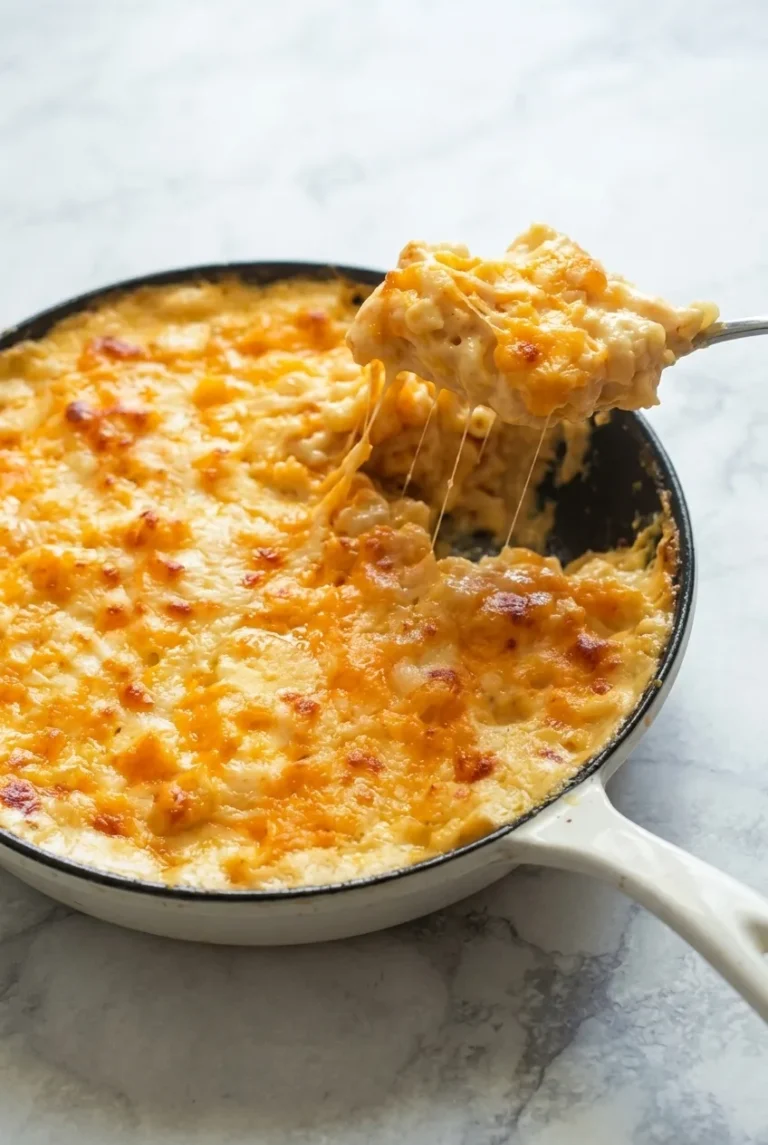
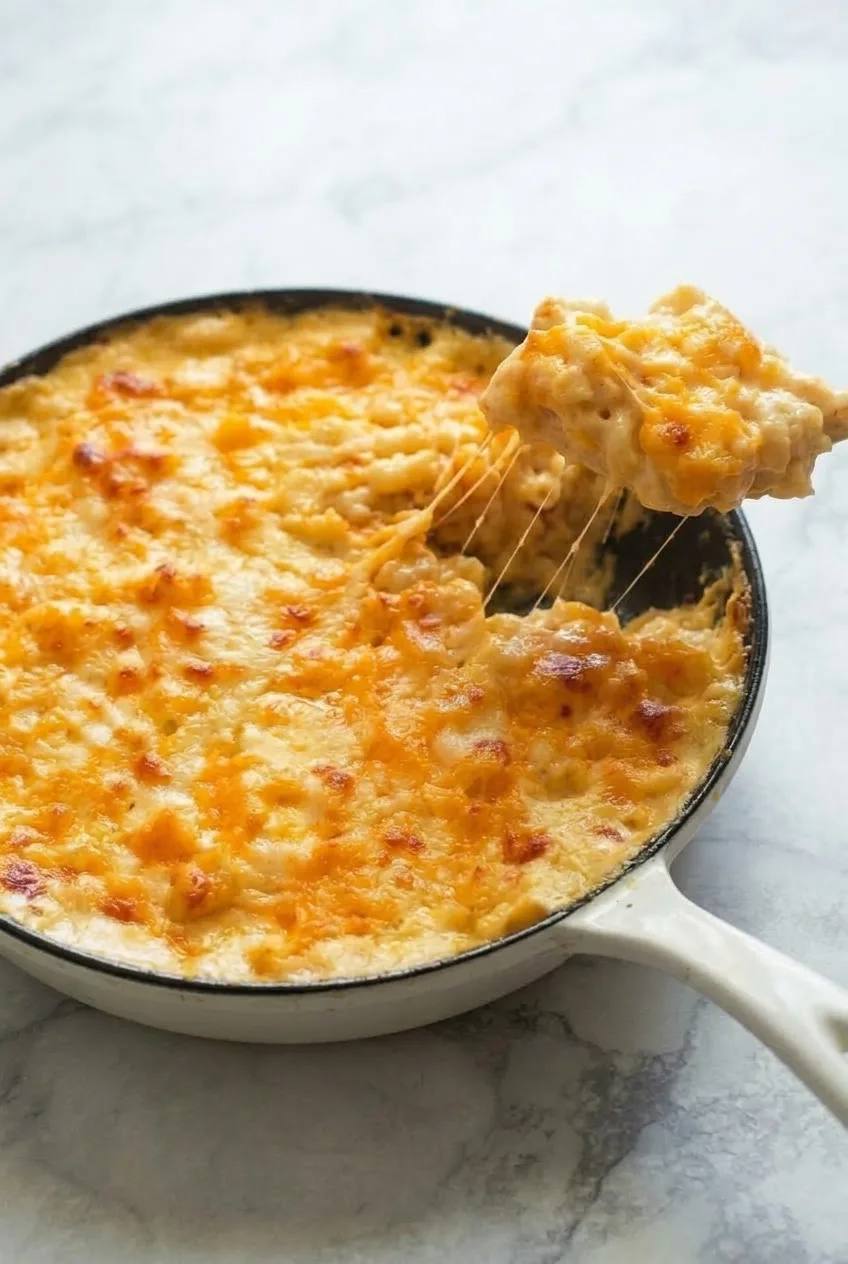
Full white skillet of Southern baked mac and cheese on a light surface, with one soft scoop lifted
  • 10 ounces dry elbow macaroni (about 285g)
  • 2 tablespoons unsalted butter, divided (about 30g)
  • 1 can (12 fluid ounces) evaporated milk
  • 3/4 cup whole milk
  • 2 large eggs
  • 8 ounces sharp cheddar cheese, freshly shredded (about 2 cups or 225g)
  • 4 ounces Monterey Jack cheese, freshly shredded (about 1 cup or 115g)
  • 1/2 teaspoon fine salt, plus more for the pasta water
  • 1/4 teaspoon ground black pepper
  • Pinch of cayenne pepper (optional)

Use a deep, oven-safe skillet with at least a 3-quart capacity and room below the rim for bubbling. Confirm that the handle is oven-safe. A similarly sized baking dish will work, though its depth may change the baking time and it will not give the casserole the same skillet presentation.

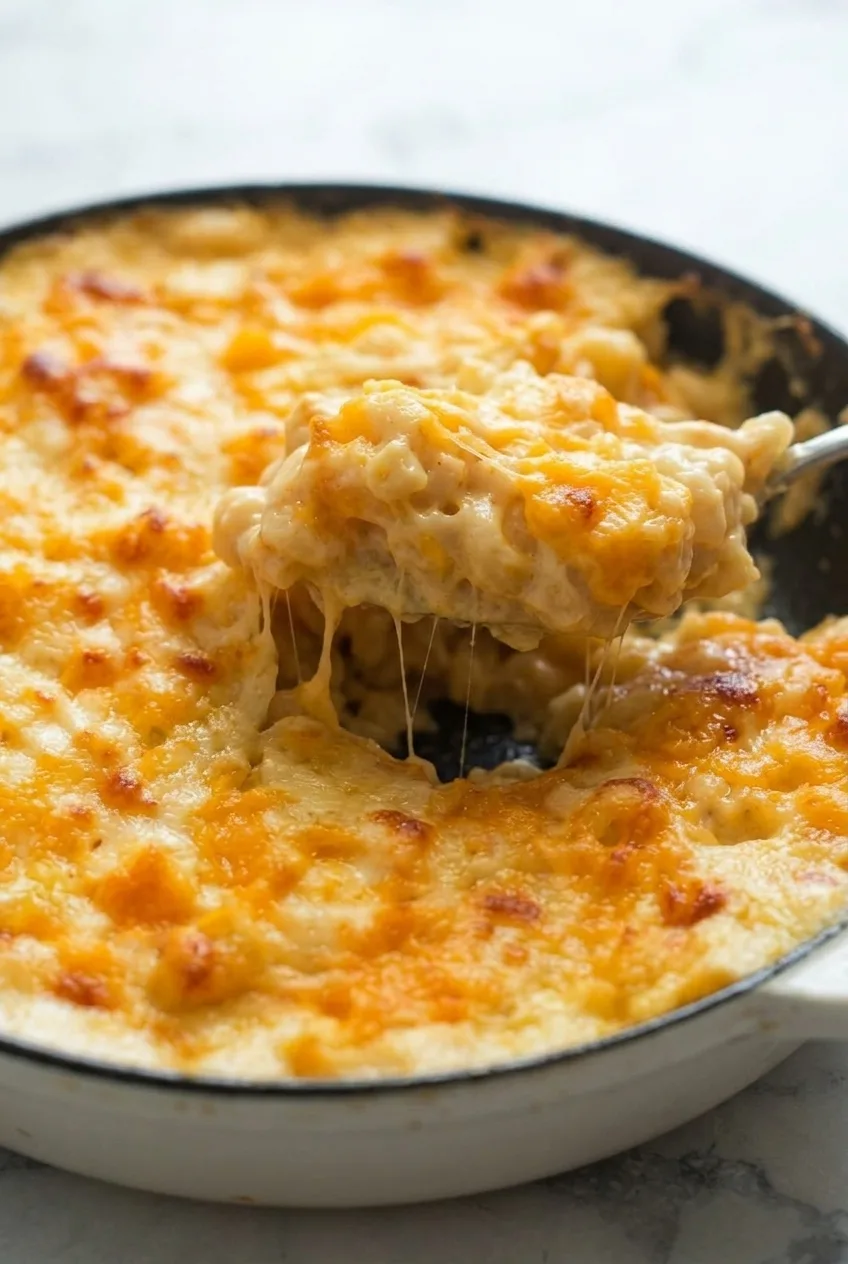
Close view of moist macaroni and melted cheese beneath the browned top of skillet-baked mac and cheese

How to Bake Southern Mac and Cheese

  1. Prepare the skillet: Place a rack near the center of the oven and preheat to 375°F (190°C). Grease the skillet with 1 tablespoon of the butter.
  2. Cook the macaroni: Boil it in salted water until about 1 minute shy of fully tender, using the package time as a guide. Drain well, then toss the hot macaroni with the remaining tablespoon of butter.
  3. Whisk the filling: In a large bowl, whisk the evaporated milk, whole milk, eggs, salt, black pepper, and optional cayenne until no streaks of egg remain. Mix the cheddar and Monterey Jack together, then reserve about 1 cup of the combined cheese for the top.
  4. Assemble: Combine the macaroni and unreserved cheese in the skillet. Pour the egg-and-milk mixture over them and gently distribute it between the noodles. Scatter the reserved cheese evenly over the surface. Some liquid may still be visible.
  5. Bake: Bake uncovered and start checking at 30 minutes. Expect approximately 30–40 minutes, until the edges bubble, the cheese has irregular golden-brown spots, and liquid filling does not pool near the center. If the top browns before the center sets, tent it loosely with foil and keep baking. Rotate the skillet once only if your oven browns unevenly.
  6. Rest and serve: Let the skillet rest for 10–15 minutes so the filling settles, then serve in soft scoops. Use oven mitts; the handle will still be hot.

Why the Filling Looks Loose Before Baking

The egg-and-milk mixture is liquid when it goes into the skillet and sets as it bakes. Do not drain it or add flour to thicken it. Resting helps the finished casserole hold together in scoops, but it is not meant to cut into firm squares.

How to Tell When the Center Is Done

A browned cheese top can finish before the center, especially in a deeper skillet. Gently check beneath the surface near the middle: the filling should be hot and set enough that liquid custard does not pool. If using an instant-read thermometer, aim for at least 160°F (70°C) in the egg-containing center without touching the skillet. A broad, shallow vessel may finish sooner, so use these cues alongside the baking window.

Serving and Leftovers

Serve warm directly from the skillet. For a larger meal, pair it with homemade green bean casserole or Parmesan roasted Brussels sprouts.

Refrigerate leftovers promptly in a covered container and use within 3–4 days. Reheat covered portions gently until hot throughout. A small splash of milk may help if they seem dry, though the texture may be less creamy than when freshly baked.

Nutrition

Approximate nutrition per serving, based on 8 side-dish servings: 410 calories, 20g protein, 23g fat, and 32g carbohydrates. Approximate values per 100g of finished mac and cheese: 205 calories, 10g protein, 11g fat, and 16g carbohydrates. Values will vary with the cheeses used, pasta yield, and moisture lost during baking.

Southern Baked Mac and Cheese

Elbow macaroni bakes with sharp cheddar, Monterey Jack, and an egg-and-milk filling beneath a golden cheese top.
Course: Side Dish
Cuisine: American
Prep: 15 min
Cook: 50 min
Total: 80 min
Servings: 8 Calories: 410 kcal

Equipment

  • Deep oven-safe skillet (at least 3 quarts)
  • Large pot
  • Colander
  • Large bowl
  • Whisk
  • Oven mitts

Ingredients

  • 10 ounces dry elbow macaroni (about 285 g)
  • 2 tablespoons unsalted butter, divided (about 30 g)
  • 1 can (12 fluid ounces) evaporated milk
  • 3/4 cup whole milk
  • 2 large eggs
  • 8 ounces sharp cheddar cheese, freshly shredded (about 2 cups or 225 g)
  • 4 ounces Monterey Jack cheese, freshly shredded (about 1 cup or 115 g)
  • 1/2 teaspoon fine salt, plus more for the pasta water
  • 1/4 teaspoon ground black pepper
  • Pinch of cayenne pepper (optional)

Instructions

  1. Place a rack near the center of the oven and preheat to 375°F (190°C). Grease a deep oven-safe skillet with 1 tablespoon of butter.
  2. Boil the macaroni in salted water until about 1 minute shy of fully tender, using the package time as a guide. Drain well and toss with the remaining tablespoon of butter.
  3. Whisk the evaporated milk, whole milk, eggs, salt, black pepper, and optional cayenne in a large bowl until no streaks of egg remain.
  4. Mix the cheddar and Monterey Jack together and reserve about 1 cup of the combined cheese for the top.
  5. Combine the macaroni and remaining cheese in the skillet. Pour the egg-and-milk mixture over the pasta and gently distribute it between the noodles.
  6. Scatter the reserved cheese evenly over the top.
  7. Bake uncovered for approximately 30–40 minutes, starting to check at 30 minutes. The edges should bubble, the top should have irregular golden-brown spots, and liquid filling should not pool near the center.
  8. If the top browns before the center sets, tent the skillet loosely with foil and continue baking. Rotate the skillet once only if the oven browns unevenly.
  9. Rest for 10–15 minutes before serving in soft scoops. Use oven mitts because the skillet handle will be hot.

Tips

  • Use a deep skillet of at least 3-quart capacity with room below the rim for bubbling, and check that its handle is oven-safe.
  • Cook the macaroni about 1 minute shy of fully tender so it can finish baking in the skillet.
  • Shred the cheeses fresh and reserve about 1 cup of the mixture for the topping.
  • Check the center rather than relying on the browned top; tent with foil if the top finishes first.
  • If using an instant-read thermometer, check the egg-containing center for at least 160°F (70°C) without touching the skillet.

Notes

Refrigerate leftovers promptly in a covered container and use within 3–4 days. Reheat covered portions gently until hot throughout; add a small splash of milk if they seem dry. The skillet handle stays hot after baking.

Nutrition

Calories: 410 kcal | Protein: 20 g | Fat: 23 g | Carbohydrates: 32 g