Author

Julia

Browsing

Cajun Shrimp Pasta

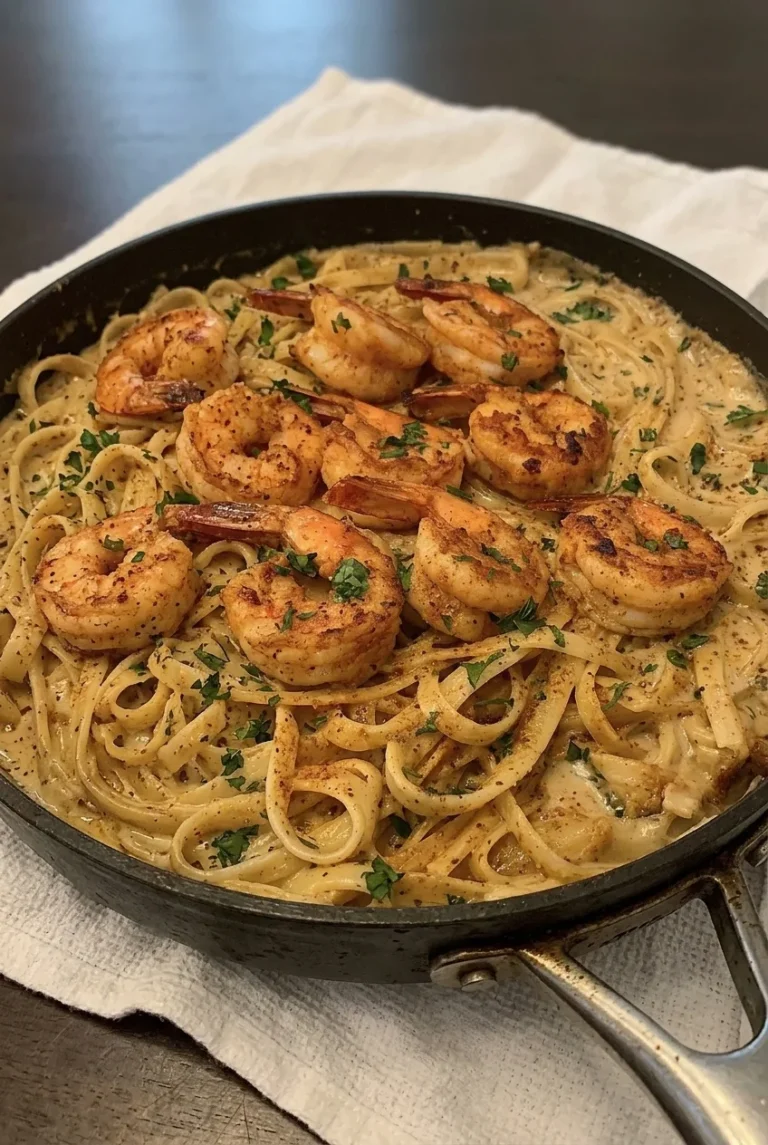
Broad fettuccine coated in a glossy Cajun-Parmesan cream sauce makes a base for seared, tail-on shrimp and fresh parsley. This version stays tomato-free, with garlic and Cajun seasoning flavoring the sauce.

The shrimp cook quickly, so sear them first and set them aside while the sauce comes together in the same skillet. Boil the pasta separately and reserve some cooking water to loosen the sauce after tossing. Because Cajun blends vary in salt and heat, taste before adding more seasoning.

Prep time: 15 minutes | Cook time: 20 minutes | Total time: 35 minutes | Serves: 4

Ingredients for Cajun Shrimp Pasta
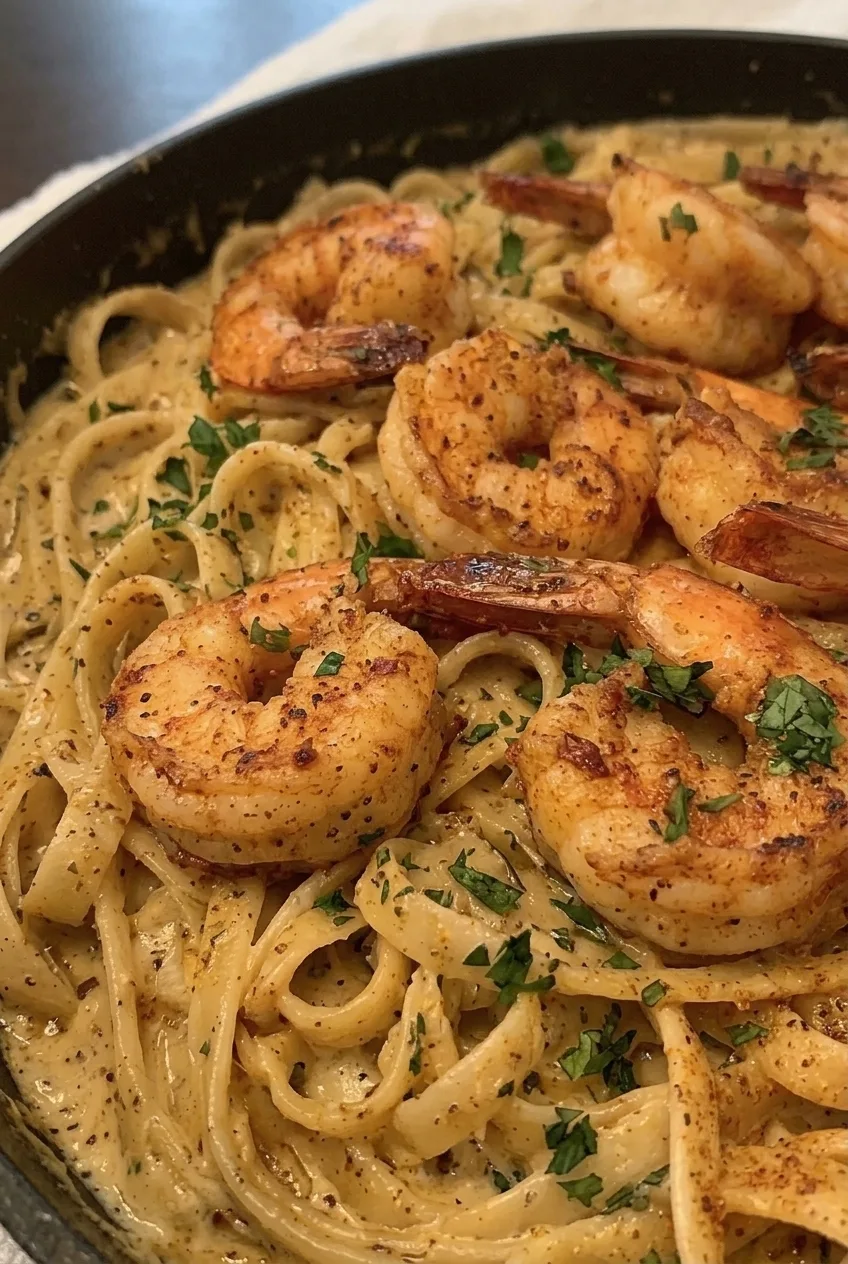
Close view of seared Cajun shrimp, parsley, and glossy cream sauce clinging to fettuccine
  • 12 ounces fettuccine (340g)
  • 1 1/4 pounds large raw shrimp, peeled and deveined, tails on (about 565g)
  • 2 teaspoons Cajun seasoning, divided, plus more to taste
  • 1 tablespoon olive oil
  • 2 tablespoons unsalted butter
  • 3 garlic cloves, minced
  • 1 1/2 cups heavy cream
  • 3/4 cup finely grated Parmesan (75g), plus more for serving if desired
  • 2 tablespoons chopped fresh parsley, plus more for garnish
  • Kosher salt, for the pasta water; add to the sauce only after tasting
  • Up to 1 cup reserved pasta water, as needed

Optional: A pinch of crushed red pepper or cayenne for more heat, or 1–2 teaspoons lemon juice stirred in at the end.

How to Make Cajun Shrimp Pasta
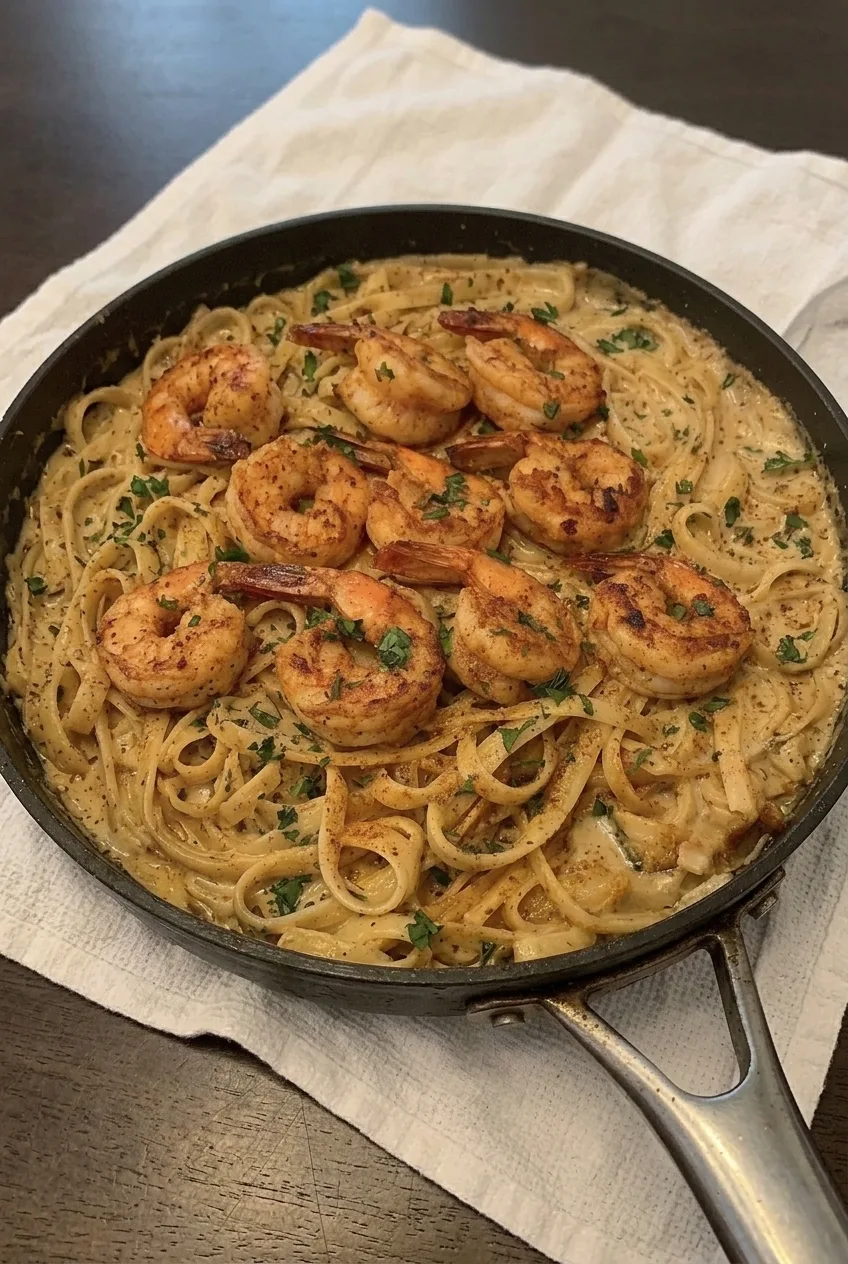
Wide view of a full skillet of creamy Cajun shrimp fettuccine with parsley
  1. Boil the fettuccine: Bring a large pot of salted water to a boil. Cook the pasta until al dente according to the package directions, usually 8–12 minutes; begin checking at the lower end of the range. Reserve about 1 cup of pasta water, then drain.
  2. Sear the shrimp: Pat the shrimp dry and toss with 1 teaspoon Cajun seasoning. Heat a 12-inch skillet over medium-high heat, then add the olive oil. Arrange the shrimp in a single layer, working in batches if needed. Check after about 1 minute; flip when the first side is lightly browned and releases from the pan. Cook for about 1–2 minutes per side, until pink and opaque through the thickest part. Transfer promptly to a plate.
  3. Start the sauce: Reduce the heat to medium or medium-low. Melt the butter in the same skillet, then stir in the garlic just until fragrant, without letting it brown. Add the cream and remaining 1 teaspoon Cajun seasoning. Bring to a gentle simmer and cook for about 3–4 minutes; do not boil hard.
  4. Add the Parmesan: Reduce the heat to low or medium-low and stir in the Parmesan until smooth. Simmer gently for about 2–4 minutes, until the sauce lightly coats the back of a spoon. Taste before adding salt, more Cajun seasoning, or optional cayenne.
  5. Toss the pasta: Add the drained fettuccine and 2 tablespoons parsley. Toss with tongs over low heat until coated. If the sauce is too thick, add reserved pasta water a splash at a time until it clings to the strands without becoming watery. You may not need the full cup.
  6. Finish and serve: Arrange the shrimp over the pasta and turn them once in the warm sauce, just long enough to heat through. Keep the shrimp visible on top, scatter with more parsley, and serve promptly from the skillet or a wide platter. Stir in optional lemon juice just before serving.

How to Keep the Shrimp Tender

Dry shrimp brown more readily than wet shrimp, and an uncrowded skillet lets moisture escape instead of steaming them. Shrimp size and skillet heat affect cooking time, so use the color and opacity of the thickest part as your guide. Once cooked, leave the shrimp off the heat while the sauce simmers; they need only a brief return at the end.

Adjusting the Cajun Cream Sauce

Parmesan and some Cajun blends add plenty of salt, so season the finished sauce by taste rather than adding salt automatically. If it looks too loose before the pasta goes in, let it simmer gently a little longer.

Judge the final thickness after tossing the fettuccine: pasta absorbs sauce as it sits. Reserved pasta water loosens a thick sauce without making it thin when added a splash at a time.

Cajun Shrimp Pasta Variations

  • Tail-off shrimp: Remove the tails before cooking for easier eating; keep the same brief sear and late return to the sauce.
  • Tomato-accented: Add a modest amount of diced or fire-roasted tomatoes to the sauce. The main version is tomato-free.
  • With andouille: Brown sliced andouille in the skillet before searing the shrimp, then add it to the finished pasta. Taste before adding salt, since the sausage can make the dish saltier.

Another pasta shape can work, though fettuccine gives this version its broad, sauce-coated strands.

Serving Cajun Shrimp Pasta

Serve right away with parsley and a little extra Parmesan, if desired. Garlic bread or a simple green salad makes an easy accompaniment.

How to Store and Reheat Cajun Shrimp Pasta

Refrigerate leftovers promptly in an airtight container and plan to use them within about 2 days for best quality. The cream sauce may thicken or change texture after chilling, so this dish is best assembled just before serving.

Reheat gently in a skillet over low to medium-low heat with a small splash of cream or water. Stir slowly and avoid boiling; the sauce may not be as smooth as it was when freshly made.

Nutrition

Approximate nutrition per serving, based on 4 servings: 910 calories, 49g protein, 48g fat, and 67g carbohydrates. Approximate nutrition per 100g: 210 calories, 11g protein, 11g fat, and 15g carbohydrates. Values vary with the ingredients and Cajun seasoning used.

Cajun Shrimp Pasta

Fettuccine and seared shrimp are tossed in a tomato-free Cajun-Parmesan cream sauce with garlic and parsley.
Course: Main Course
Cuisine: Cajun
Prep: 15 min
Cook: 20 min
Total: 35 min
Servings: 4 Calories: 910 kcal

Equipment

  • Large pot
  • 12-inch skillet
  • Colander
  • Tongs

Ingredients

Pasta and Shrimp

  • 12 ounces fettuccine (340g)
  • 1 1/4 pounds large raw shrimp, peeled and deveined, tails on (about 565g)
  • 2 teaspoons Cajun seasoning, divided, plus more to taste
  • 1 tablespoon olive oil
  • Kosher salt, for the pasta water

Sauce and Garnish

  • 2 tablespoons unsalted butter
  • 3 garlic cloves, minced
  • 1 1/2 cups heavy cream
  • 3/4 cup finely grated Parmesan (75g), plus more for serving if desired
  • 2 tablespoons chopped fresh parsley, plus more for garnish
  • Up to 1 cup reserved pasta water, as needed

Optional

  • Pinch of crushed red pepper or cayenne
  • 1–2 teaspoons lemon juice

Instructions

  1. Bring a large pot of salted water to a boil. Cook the fettuccine al dente according to package directions, usually 8–12 minutes, checking at the lower end of the range. Reserve about 1 cup of pasta water, then drain.
  2. Pat the shrimp dry and toss with 1 teaspoon Cajun seasoning.
  3. Heat a 12-inch skillet over medium-high heat and add the olive oil. Arrange the shrimp in a single layer, working in batches if needed. Cook for about 1–2 minutes per side, flipping when lightly browned and released from the pan, until pink and opaque through the thickest part. Transfer to a plate.
  4. Reduce the heat to medium or medium-low. Melt the butter in the same skillet, then stir in the garlic just until fragrant without browning it.
  5. Add the cream and remaining 1 teaspoon Cajun seasoning. Bring to a gentle simmer and cook for 3–4 minutes; do not let it boil hard.
  6. Reduce the heat to low or medium-low. Stir in the Parmesan until smooth, then simmer gently for 2–4 minutes, until the sauce lightly coats the back of a spoon. Taste before adding salt, more Cajun seasoning, or optional cayenne.
  7. Add the drained fettuccine and 2 tablespoons parsley. Toss over low heat until coated, adding reserved pasta water a splash at a time if needed.
  8. Arrange the shrimp over the pasta and turn them once in the warm sauce just long enough to heat through. Garnish with more parsley and Parmesan if desired. Stir in optional lemon juice just before serving.

Tips

  • Pat the shrimp dry and avoid crowding the skillet so they sear instead of steam.
  • Use the color and opacity of the thickest part of the shrimp to judge doneness.
  • Set cooked shrimp aside while the sauce simmers, then return them briefly at the end to help keep them tender.
  • Taste the sauce before adding salt because Parmesan and Cajun seasoning can already be salty.
  • Add reserved pasta water a splash at a time and judge the sauce thickness after tossing with the pasta.

Variations

  • Tail-Off Shrimp: Remove the shrimp tails before cooking for easier eating.
  • Tomato-Accented: Add a modest amount of diced or fire-roasted tomatoes to the sauce.
  • With Andouille: Brown sliced andouille in the skillet before searing the shrimp, then add it to the finished pasta.
  • Extra Heat or Lemon: Add a pinch of crushed red pepper or cayenne for more heat, or stir in 1–2 teaspoons lemon juice just before serving.
Notes

Refrigerate leftovers promptly in an airtight container and use within about 2 days. Reheat gently in a skillet over low to medium-low heat with a splash of cream or water; avoid boiling. The sauce may change texture after chilling.

Nutrition

Calories: 910 kcal | Protein: 49 g | Fat: 48 g | Carbohydrates: 67 g

One Pot Taco Pasta

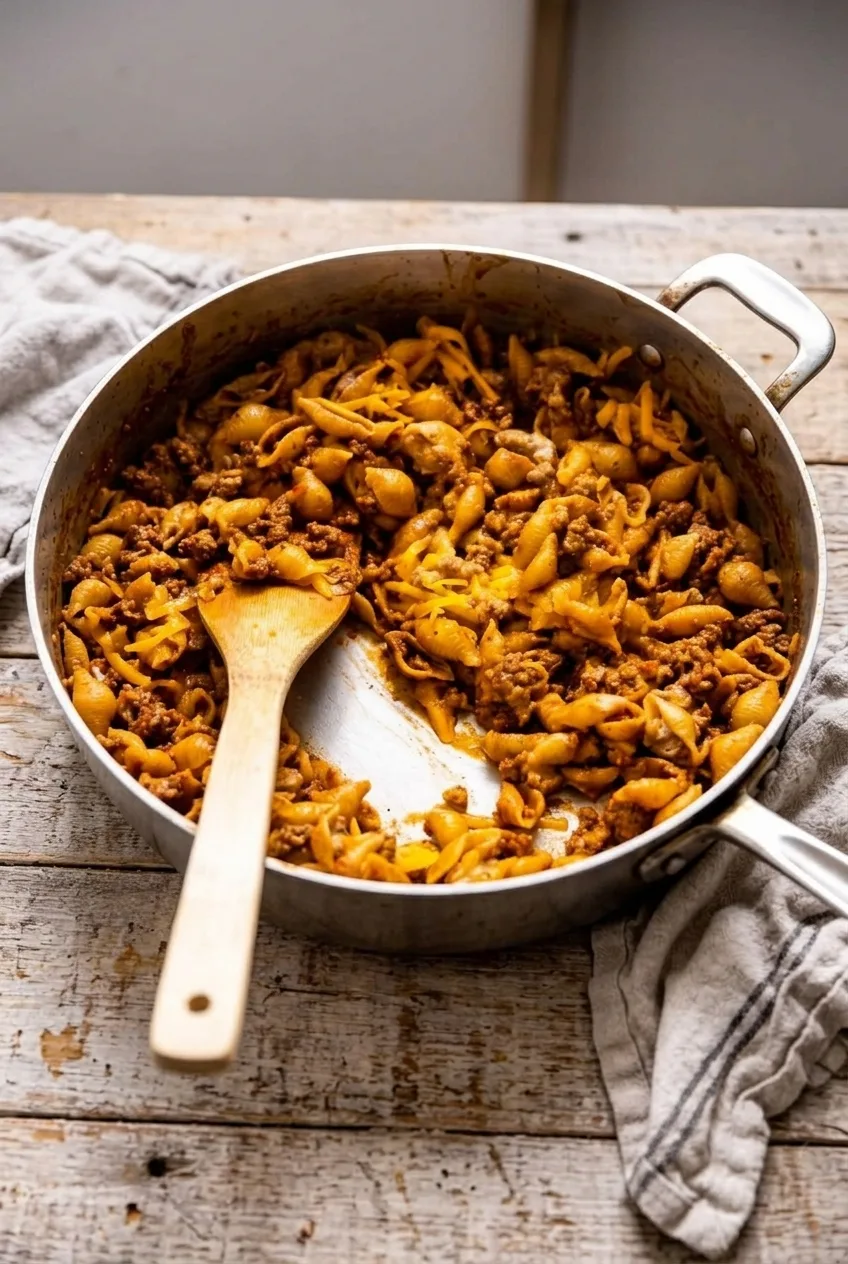
Medium shells and crumbled ground beef cook together in a taco-seasoned tomato sauce, then get a finish of cheddar. The dry pasta simmers directly in the skillet, so there’s no separate pot of boiling water. Stir the shells during cooking and check them before the timer is up: they should be tender, with a glossy sauce that coats them but still looks a little loose. The pasta will absorb more liquid as it stands.

Prep: 10 minutes. Cook: 20–25 minutes. Makes 6 servings.

Ingredients for One Pot Taco Pasta

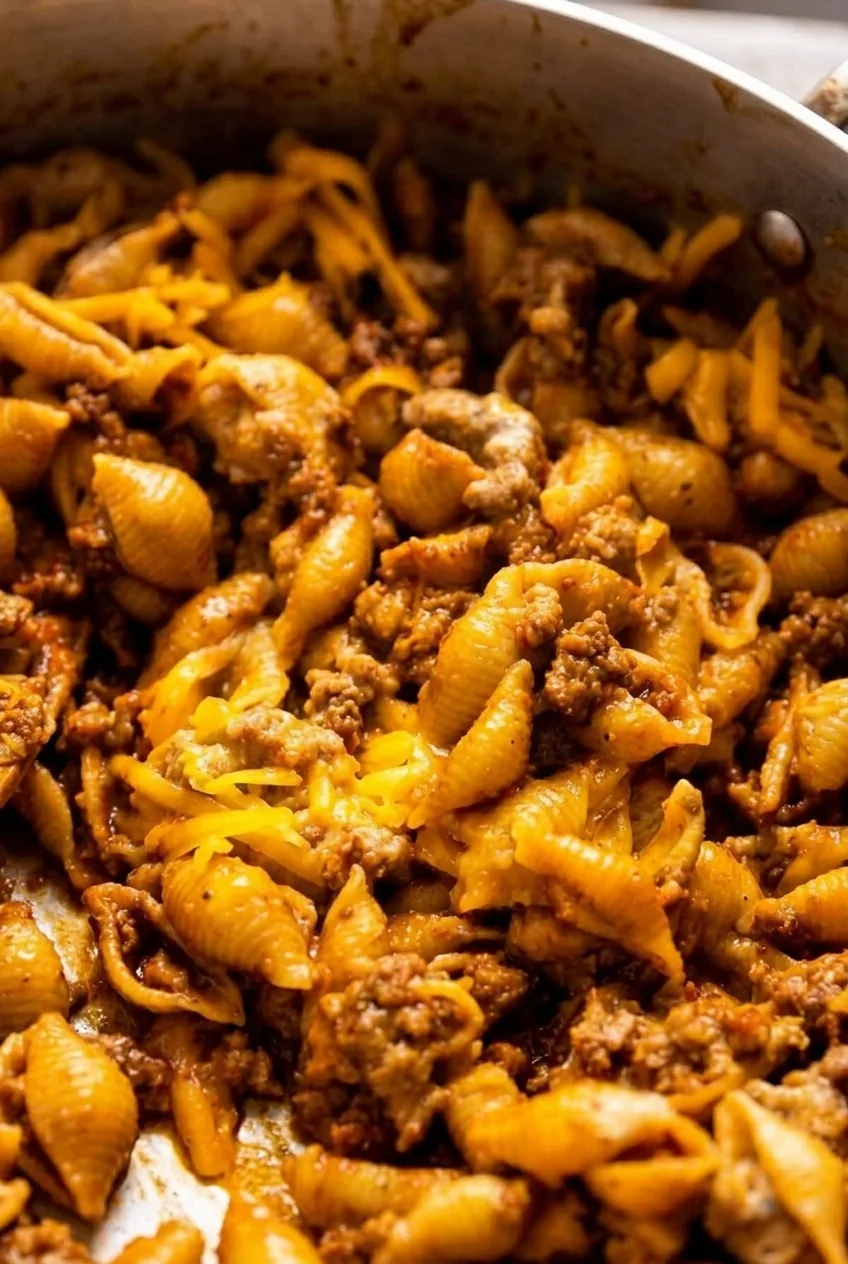
Close detail of taco pasta showing sauce-coated shell ridges, browned beef crumbles, and softened cheddar shreds.
  • 1 pound lean ground beef (450g)
  • 1 small yellow onion, finely diced (about 100g)
  • 2 garlic cloves, minced
  • 1 (1-ounce) packet taco seasoning (28g), or about 2 tablespoons
  • 1 cup tomato sauce
  • 3 cups beef broth, plus up to 1/2 cup more as needed
  • 12 ounces dry medium pasta shells (340g)
  • 1 1/2 cups shredded cheddar cheese (170g), divided
  • 1 teaspoon neutral cooking oil, only if needed

Ingredient note: Taco seasoning and broth vary in saltiness. Cheddar grated from a block may melt more smoothly than packaged shreds, though either works.

How to Make One Pot Taco Pasta

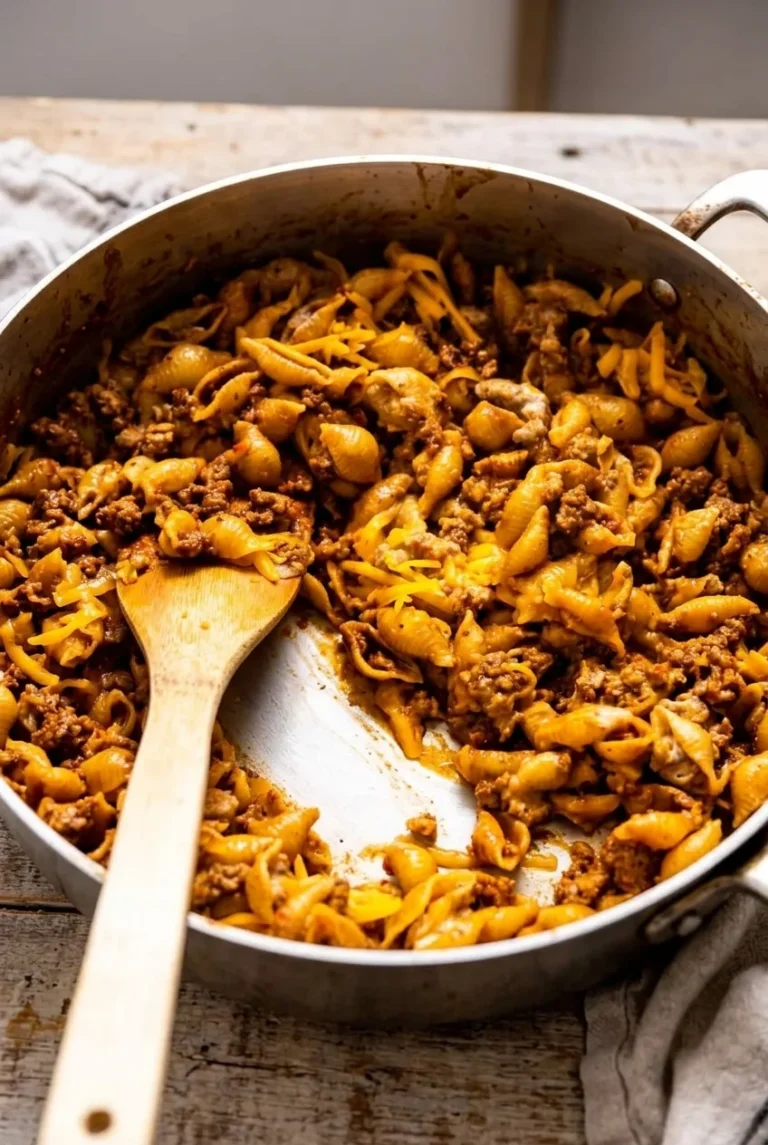
A full skillet of One Pot Taco Pasta with shells, ground beef, and cheddar, shown with more of the surrounding surface.
  1. Brown the beef: Heat a deep 12-inch lidded skillet or Dutch oven over medium-high heat. If the beef is very lean or the pan tends to stick, add the oil. Add the beef and cook for 5–7 minutes, breaking it into small crumbles, until browned with no pink remaining. Spoon off excess grease, leaving a little fat to cook the onion.
  2. Cook the aromatics: Reduce the heat to medium. Add the onion and cook until it begins to soften, about 3–4 minutes. Stir in the garlic and taco seasoning briefly, then add the tomato sauce and 3 cups of broth. Scrape up the browned bits from the bottom of the pan.
  3. Add the shells: Stir in the dry pasta so it is evenly distributed and most shells are submerged. Bring the liquid to a steady simmer before covering the pan.
  4. Simmer until tender: Cover and reduce the heat to medium-low, adjusting the burner to maintain a gentle simmer. Cook for about 10–14 minutes, stirring once or twice and gently scraping the bottom. Start checking the shells and liquid level at 9–10 minutes. They are ready when tender with a slight bite, not chalky in the center.
  5. Add the cheddar: Turn off the heat. Stir in 1 cup of cheddar until softened, then scatter the remaining 1/2 cup over the pasta. Cover for 1–2 minutes, until the cheese on top has softened but some shreds remain visible.
  6. Serve: The sauce should cling to the shells and beef without pooling like soup. If it has become too thick, gently stir in a small splash of broth or water. Serve from the skillet while the pasta is still saucy.

What If the Sauce Thickens Before the Shells Are Tender?

If the shells are still firm but the pan looks dry, add hot broth or water a splash at a time. Cover again and continue simmering until the pasta is tender. Shell size, brand, and the amount of liquid lost from the pan can all affect when the pasta finishes.

A deep, wide pan gives the shells room to move when stirred, while a tight-fitting lid limits evaporation. Stir well before covering and once or twice during the simmer so shells do not sit against the hot bottom throughout cooking.

Serving and Storing Leftovers

Serve hot from the skillet with the cheddar visible on top. Sour cream or salsa can be offered on the side.

Cool leftovers promptly and refrigerate in a covered airtight container for up to 4 days. The shells will absorb more sauce in the refrigerator. Reheat gently in a skillet over low to medium-low heat with a splash of broth or water, stirring until loosened. Microwave individual portions in short intervals, stirring between them and adding liquid as needed.

Freezing is possible, but the shells may soften after thawing. If freezing, cool promptly, seal in a freezer-safe container, and use within about 2 months for best quality.

For another beef-and-pasta skillet dinner, try Bowtie Pasta Lasagna. For a different one-pot pasta, see One Pot Creamy Tomato Pasta.

Nutrition

Approximate nutrition per serving, based on 6 servings (about 300g each): 500 calories, 32g protein, 19g fat, and 52g carbohydrates. Approximate nutrition per 100g: 165 calories, 11g protein, 6g fat, and 17g carbohydrates. Values will vary with the ingredients used and the amount of liquid remaining after cooking.

One Pot Taco Pasta

Ground beef and pasta shells simmer together in taco-seasoned tomato sauce and are finished with cheddar.
Course: Main Course
Cuisine: American
Prep: 10 min
Cook: 25 min
Total: 35 min
Servings: 6 Calories: 500 kcal

Equipment

  • Deep 12-inch lidded skillet or Dutch oven

Ingredients

For the pasta

  • 1 pound lean ground beef (450g)
  • 1 small yellow onion, finely diced (about 100g)
  • 2 garlic cloves, minced
  • 1 (1-ounce) packet taco seasoning (28g), or about 2 tablespoons
  • 1 cup tomato sauce
  • 3 cups beef broth, plus up to 1/2 cup more as needed
  • 12 ounces dry medium pasta shells (340g)
  • 1 1/2 cups shredded cheddar cheese (170g), divided
  • 1 teaspoon neutral cooking oil, only if needed

Instructions

  1. Heat a deep 12-inch lidded skillet or Dutch oven over medium-high heat. Add the oil if the beef is very lean or the pan tends to stick.
  2. Add the beef and cook for 5–7 minutes, breaking it into small crumbles, until browned with no pink remaining. Spoon off excess grease, leaving a little fat in the pan.
  3. Reduce the heat to medium. Add the onion and cook for 3–4 minutes, until it begins to soften.
  4. Stir in the garlic and taco seasoning briefly. Add the tomato sauce and 3 cups of broth, then scrape up the browned bits from the bottom of the pan.
  5. Stir in the dry pasta, distributing the shells evenly so most are submerged. Bring the liquid to a steady simmer.
  6. Cover the pan and reduce the heat to medium-low. Simmer gently for about 10–14 minutes, stirring once or twice and gently scraping the bottom. Start checking the pasta and liquid level at 9–10 minutes; cook until the shells are tender with a slight bite.
  7. Turn off the heat. Stir in 1 cup of cheddar, then scatter the remaining 1/2 cup over the pasta. Cover for 1–2 minutes, until the topping softens but some shreds remain visible.
  8. Check the sauce; if it is too thick, stir in a small splash of broth or water. Serve hot while the pasta is still saucy.

Tips

  • Start checking the shells at 9–10 minutes because pasta size and brand affect cooking time.
  • If the pan looks dry before the pasta is tender, add hot broth or water a splash at a time, cover, and continue simmering.
  • Use a deep, wide pan and a tight-fitting lid to give the shells room to move and limit evaporation.
  • Stir the pasta before covering and once or twice during cooking so the shells do not stick to the bottom.
  • Grate cheddar from a block for a smoother melt, though packaged shreds also work.

Notes

Taco seasoning and broth vary in saltiness. Refrigerate leftovers in an airtight container for up to 4 days; reheat gently with a splash of broth or water. Freezing is possible for about 2 months, though the shells may soften after thawing.

Nutrition

Calories: 500 kcal | Protein: 32 g | Fat: 19 g | Carbohydrates: 52 g | Per 100g Calories: 165 kcal | Per 100g Protein: 11 g | Per 100g Fat: 6 g | Per 100g Carbohydrates: 17 g

Creamy Mushroom Pasta

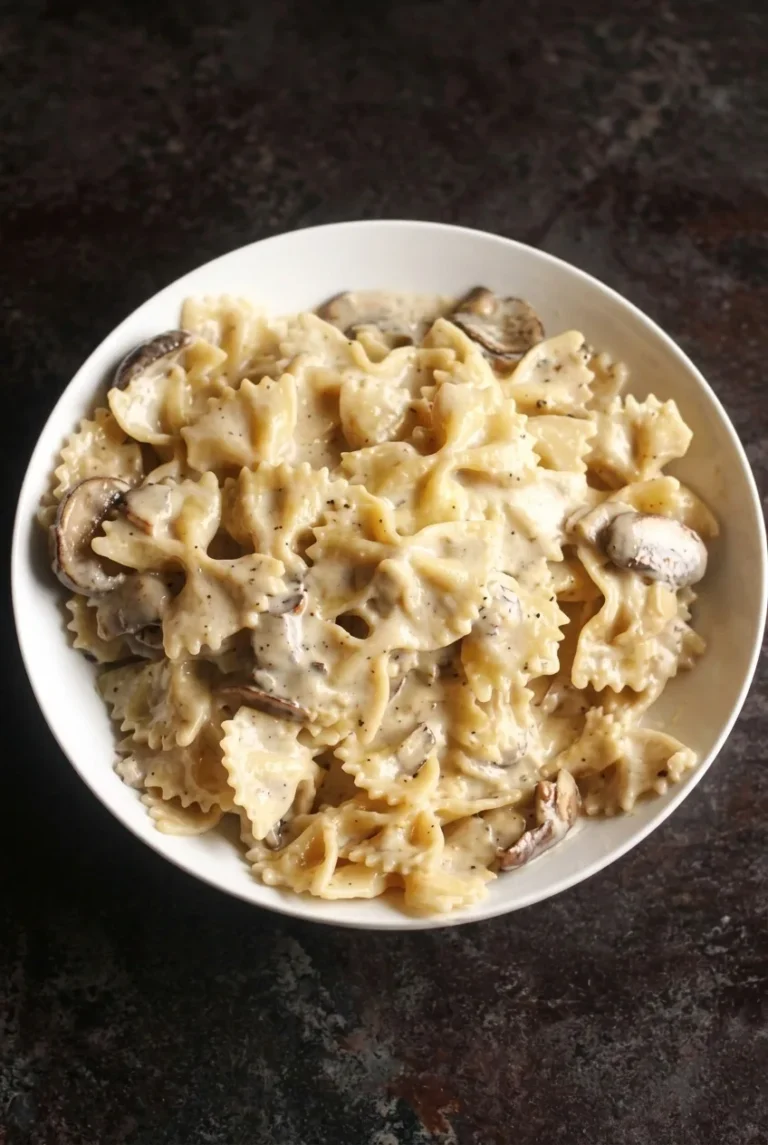
Bowtie-shaped farfalle, sliced cremini mushrooms, garlic, cream, and Parmesan make a stovetop pasta with a pale sauce that clings to every piece. Browning the mushrooms before adding the garlic gives them time to release their moisture and develop lightly browned edges.

Use a wide skillet so the mushrooms brown instead of steam. Finish the slightly undercooked farfalle in the sauce, adding reserved pasta water a little at a time to keep the coating smooth and supple. Makes 4 servings; allow about 10 minutes to prepare and 25 minutes to cook.

Ingredients for Creamy Mushroom Pasta

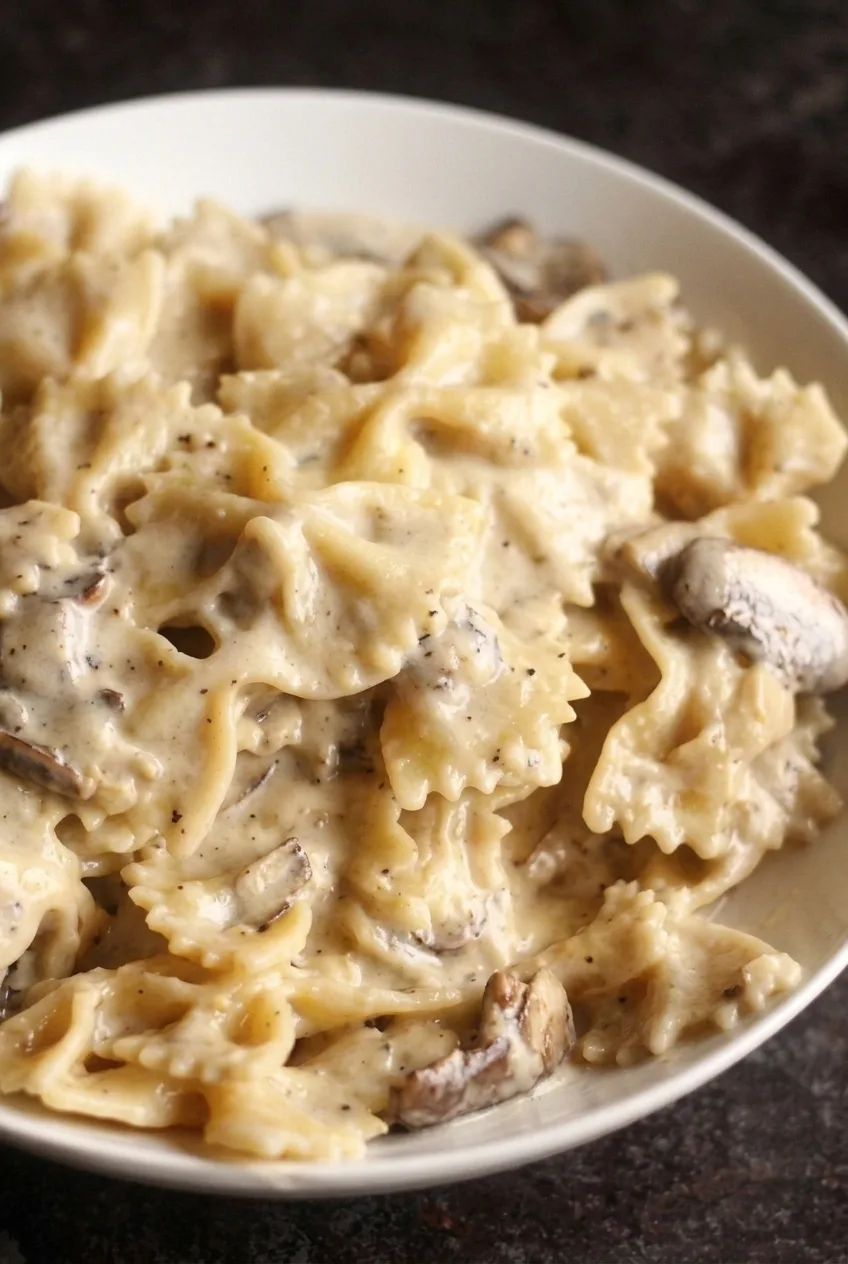
Close detail of creamy farfalle folds and tender sliced mushrooms coated in Parmesan cream sauce.
  • 12 ounces dried farfalle (bowtie pasta) (340g)
  • 1 pound fresh cremini mushrooms, cleaned and sliced (450g)
  • 1 tablespoon olive oil
  • 2 tablespoons unsalted butter
  • 3 garlic cloves, finely minced
  • 1 cup heavy cream
  • 3/4 cup finely grated Parmesan (75g), plus more for serving if desired
  • Kosher salt, for the pasta water and to taste
  • 1/4 teaspoon freshly ground black pepper, plus more to taste
  • Up to 1 cup reserved pasta water, as needed

Button mushrooms can replace the cremini. Grate the Parmesan from a block for a smoother finish.

How to Make Creamy Mushroom Pasta

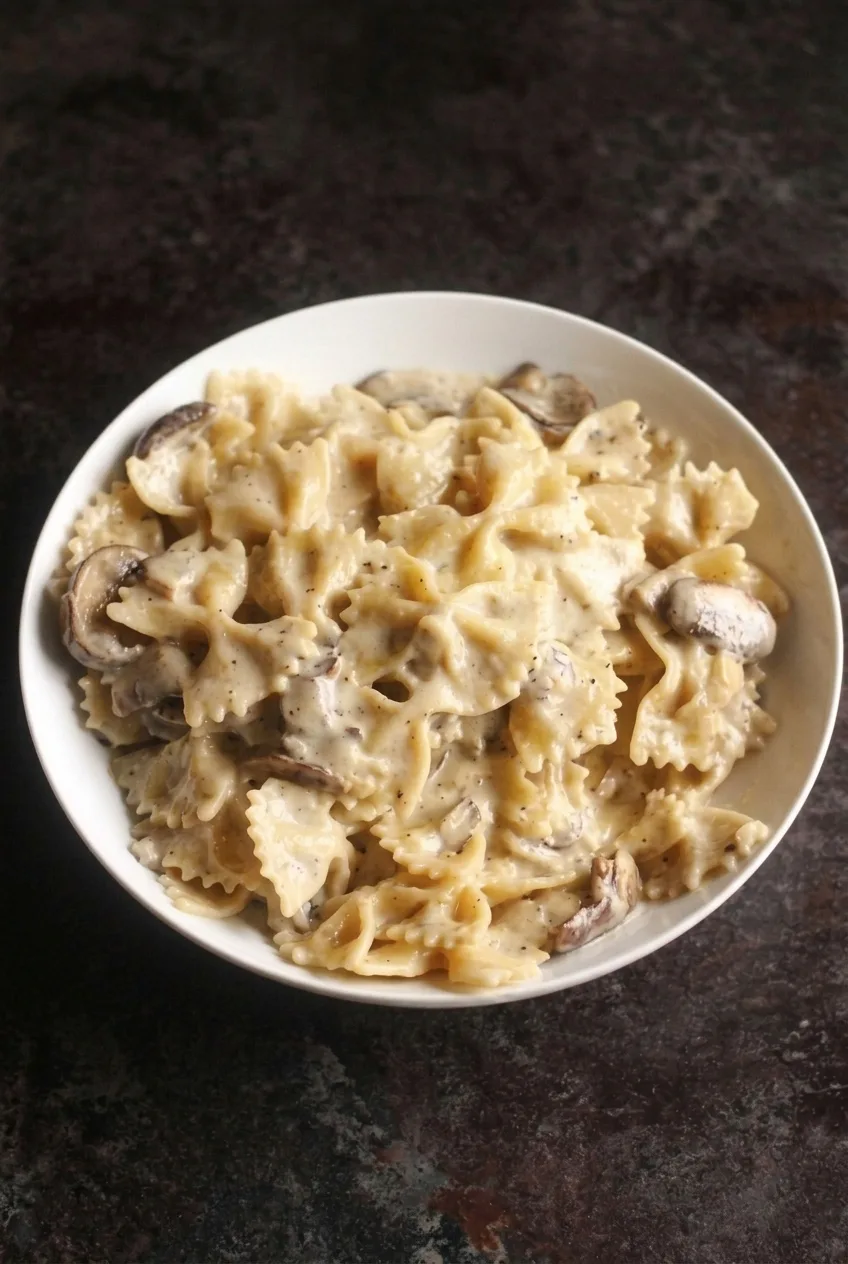
A full bowl of creamy mushroom farfalle centered on a dark countertop with room around it.
  1. Prepare the ingredients: Wipe the mushrooms with a damp paper towel rather than soaking them, then slice them evenly. Mince the garlic and grate the Parmesan.
  2. Boil the farfalle: Bring a large pot of well-salted water to a boil. Cook the pasta according to the package directions, checking at the earliest suggested al dente time. Drain when it is just shy of al dente, reserving at least 1 cup of pasta water first.
  3. Brown the mushrooms: Heat the olive oil in a 12-inch skillet over medium-high heat. Add the mushrooms in a roomy layer and cook uncovered, letting them sit briefly between occasional turns. Start checking after about 6 minutes; continue until their released moisture has mostly evaporated and the slices have lightly browned edges, about 8 to 12 minutes or longer if cooking in batches. If they overlap heavily, brown them in batches and return them all to the skillet before continuing.
  4. Add the garlic and butter: Reduce the heat to medium. Add the butter and garlic and stir for 30 to 60 seconds, until the garlic is fragrant but not browned. Season lightly with salt and the black pepper.
  5. Simmer the cream: Stir in the cream and reduce the heat to medium-low. Simmer gently for 3 to 4 minutes, until slightly thickened but still pourable. Avoid a hard boil.
  6. Finish the pasta: Add the farfalle and toss to coat. Reduce the heat to low or turn it off, then add the Parmesan while tossing. Add reserved pasta water a few tablespoons at a time until the sauce looks glossy and coats the bowties without becoming pasty. Toss just until the pasta reaches al dente, about 1 to 3 minutes.
  7. Season and serve: Taste before adding more salt, since the Parmesan is salty. Adjust the pepper and divide among shallow bowls, keeping the mushroom slices visible throughout. Serve promptly, with extra Parmesan if desired.

How to Brown the Mushrooms

If the mushrooms look pale and liquid is still collecting in the skillet, give them more time before adding the garlic. Pan size and mushroom moisture affect how quickly they brown. A crowded skillet may need batches; the goal is evaporated moisture and browned patches, not a fixed number of minutes.

How to Keep the Sauce Smooth

Finely grated Parmesan melts more evenly when added over low or off heat. Toss in pasta water gradually: the sauce should cling to the farfalle but still move easily as you stir. If it thickens while the pasta finishes cooking, add another small splash of the reserved water. Serve as soon as the pasta is al dente, because the sauce continues to thicken as it stands.

Storing and Reheating Leftovers

Refrigerate leftovers promptly in an airtight container and use within 3 days. Reheat gently in a skillet over low heat or in the microwave, stirring in a splash of water or milk to loosen the sauce.

Freezing is not recommended for the best texture. The farfalle may soften, and the cream sauce may lose its smooth consistency.

Nutrition Information

Approximate nutrition per serving, based on 4 servings: 700 calories, 23g protein, 37g fat, and 69g carbohydrates. Approximate nutrition per 100g: 190 calories, 6g protein, 10g fat, and 18g carbohydrates. Values are estimates and vary with the ingredients and final portion weight.

Creamy Mushroom Pasta

Farfalle is tossed with browned cremini mushrooms, garlic, cream, Parmesan, and pasta water for a smooth, savory sauce.
Course: Main Course
Cuisine: Italian
Prep: 10 min
Cook: 25 min
Total: 35 min
Servings: 4 Calories: 700 kcal

Equipment

  • Large pot
  • 12-inch skillet
  • Colander
  • Grater

Ingredients

For the Pasta

  • 12 ounces dried farfalle (bowtie pasta) (340g)
  • Kosher salt, for the pasta water

For the Sauce

  • 1 pound fresh cremini mushrooms, cleaned and sliced (450g)
  • 1 tablespoon olive oil
  • 2 tablespoons unsalted butter
  • 3 garlic cloves, finely minced
  • 1 cup heavy cream
  • 3/4 cup finely grated Parmesan (75g), plus more for serving if desired
  • Kosher salt, to taste
  • 1/4 teaspoon freshly ground black pepper, plus more to taste
  • Up to 1 cup reserved pasta water, as needed

Instructions

  1. Wipe the mushrooms with a damp paper towel and slice them evenly. Mince the garlic and grate the Parmesan.
  2. Bring a large pot of well-salted water to a boil. Cook the farfalle according to the package directions, checking at the earliest suggested al dente time. Drain when just shy of al dente, reserving at least 1 cup of pasta water.
  3. Heat the olive oil in a 12-inch skillet over medium-high heat. Add the mushrooms in a roomy layer and cook uncovered, turning occasionally, until their moisture mostly evaporates and they have lightly browned edges, about 8 to 12 minutes. Brown in batches if needed, then return all the mushrooms to the skillet.
  4. Reduce the heat to medium. Add the butter and garlic and stir for 30 to 60 seconds, until fragrant but not browned. Season lightly with salt and black pepper.
  5. Stir in the cream and reduce the heat to medium-low. Simmer gently for 3 to 4 minutes, until slightly thickened but still pourable.
  6. Add the farfalle and toss to coat. Reduce the heat to low or turn it off, then add the Parmesan while tossing. Add pasta water a few tablespoons at a time until the sauce is glossy and coats the pasta. Toss for 1 to 3 minutes, until the farfalle reaches al dente.
  7. Taste and adjust the salt and pepper. Divide among bowls and serve promptly with extra Parmesan if desired.

Tips

  • Use a wide skillet and avoid crowding the mushrooms so they brown instead of steam.
  • Give the mushrooms more time if they are pale or liquid is still collecting in the skillet.
  • Add finely grated Parmesan over low or off heat so it melts evenly.
  • Add reserved pasta water gradually to keep the sauce smooth and supple.

Variations

  • Button Mushroom Pasta: Replace the cremini mushrooms with button mushrooms.

Notes

Refrigerate leftovers in an airtight container for up to 3 days. Reheat gently with a splash of water or milk. Freezing is not recommended; the pasta may soften and the sauce may lose its smooth texture.

Nutrition

Calories: 700 kcal | Protein: 23 g | Fat: 37 g | Carbohydrates: 69 g | Per 100g Calories: 190 kcal | Per 100g Protein: 6 g | Per 100g Fat: 10 g | Per 100g Carbohydrates: 18 g

Bowtie Pasta Lasagna

Bowtie pasta lasagna has the tomato, beef, and cheese flavors of lasagna, but it is served as a loose, creamy pasta skillet—not layered or baked. Farfalle is boiled separately so the bows can be drained while they still have a slight bite, then folded briefly into the sauce without falling apart.

Browned ground beef and marinara form the base. Sour cream goes in over low heat to keep the sauce smooth, mozzarella melts through the pasta, and grated Parmesan finishes the top. The result should be moist and scoopable, with sauce clinging to the bowties.

Serves 6. Prep time: 10 minutes. Cook time: about 20 minutes.

For a baked pasta dinner with a more layered casserole feel, try Million Dollar Spaghetti Casserole.

Ingredients for Bowtie Pasta Lasagna

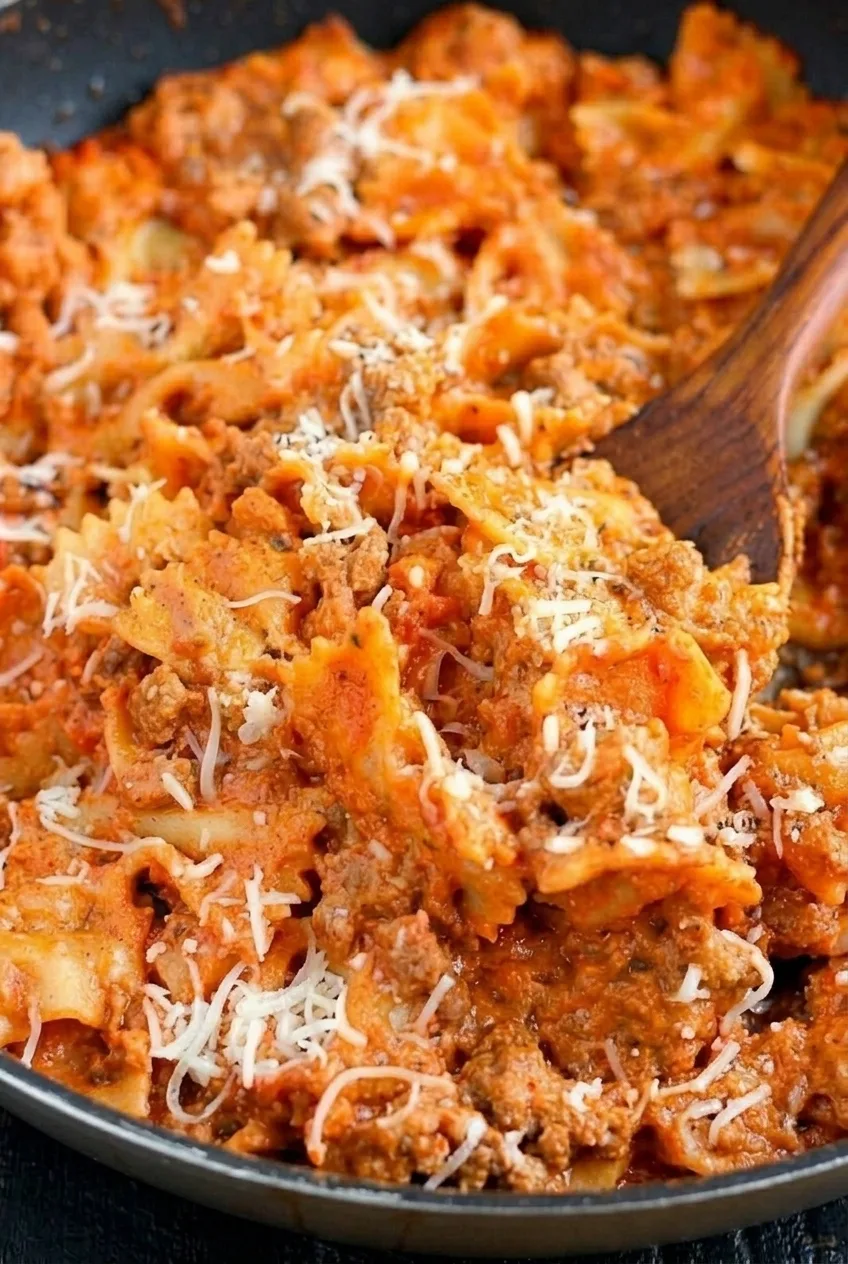
Close detail of bowtie pasta coated in creamy beef and tomato sauce with grated Parmesan
  • 12 ounces farfalle (bowtie pasta) (340g)
  • 1 pound ground beef (450g)
  • 1 teaspoon olive oil, as needed
  • 2 garlic cloves, minced
  • 1 teaspoon Italian seasoning
  • 24 ounces marinara sauce (about 3 cups) (680g)
  • 1/2 cup sour cream (120g)
  • 1 cup shredded mozzarella (110g)
  • 1/3 cup finely grated Parmesan (30g), plus more for serving
  • Kosher salt, for the pasta water
  • Black pepper, to taste

How to Make Bowtie Pasta Lasagna

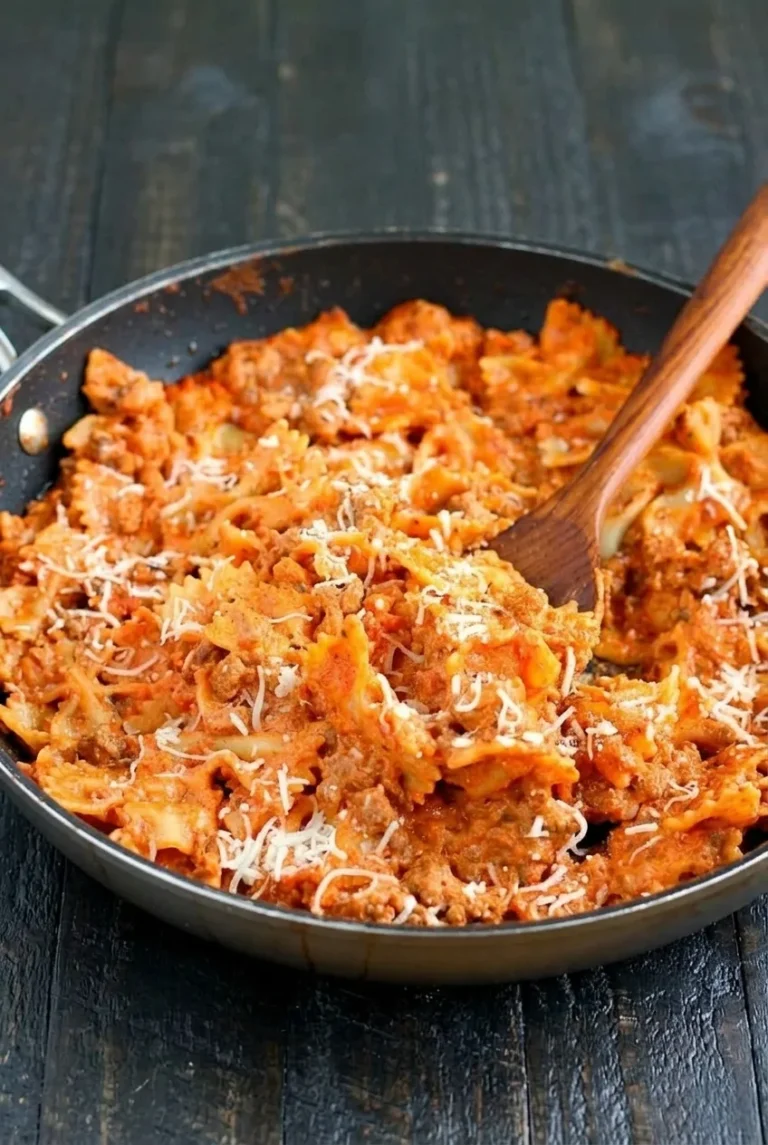
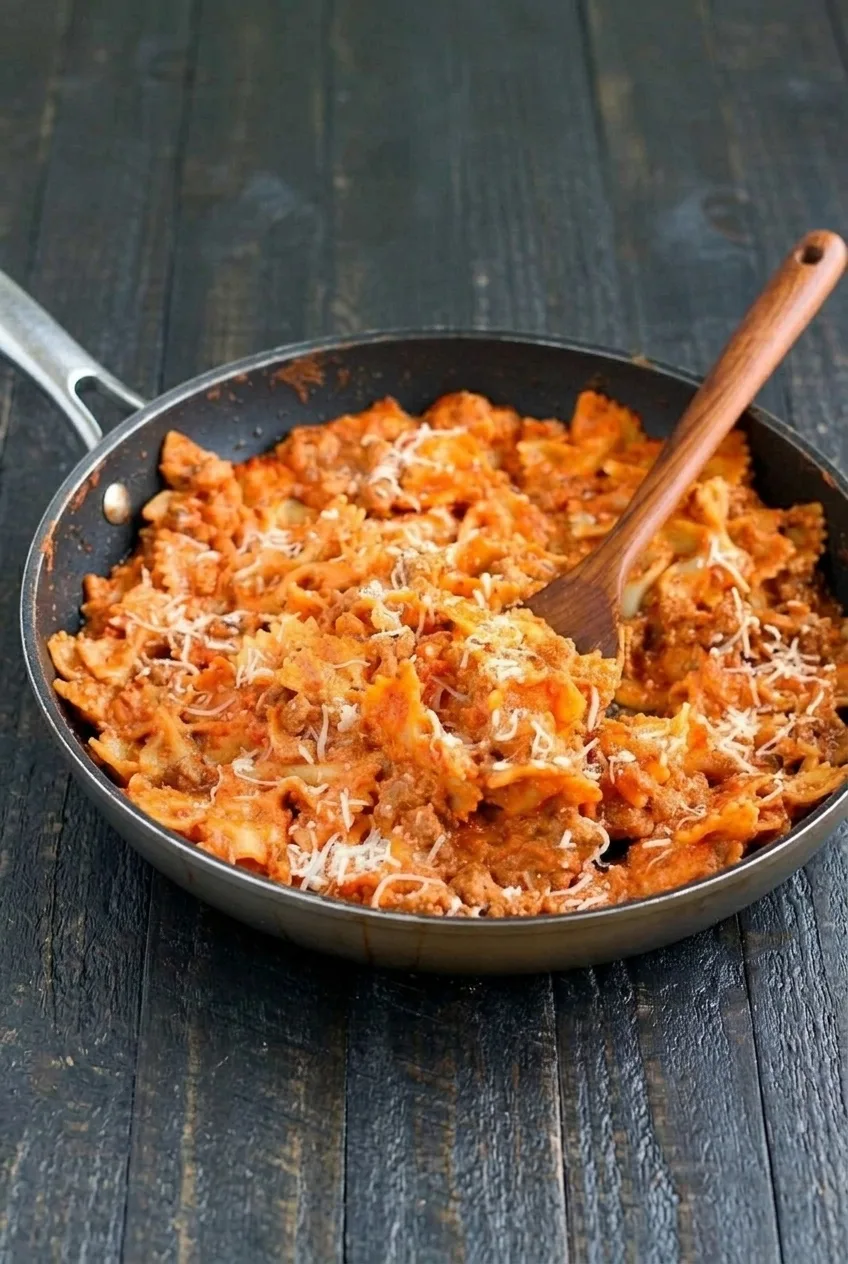
Wide view of the complete bowtie pasta lasagna skillet with farfalle, beef, and Parmesan
  1. Boil the pasta: Bring a large pot of salted water to a boil. Cook the farfalle according to the package directions, starting to check 1 to 2 minutes before the suggested al dente time. When the bows are tender with a slight firm bite, reserve a little pasta water and drain. If the sauce is not ready, toss the pasta with a little olive oil to prevent sticking.
  2. Brown the beef: While the pasta cooks, warm a 12-inch deep skillet over medium to medium-high heat. Add the beef, using the olive oil only if the meat is very lean or the skillet needs it. Break it into small crumbles and cook for 6 to 8 minutes, stirring occasionally, until browned with no pink remaining. Ground beef should reach 160°F (70°C). Drain excess fat before adding the sauce.
  3. Simmer the sauce: Stir in the garlic and Italian seasoning for about 30 seconds, until fragrant but not browned. Add the marinara and black pepper. Simmer gently, uncovered, over medium-low heat for 5 to 7 minutes, stirring occasionally. The sauce should thicken slightly but remain moist.
  4. Add the sour cream: Reduce the heat to low and stir in the sour cream until evenly blended. Do not let the sauce boil.
  5. Fold in the pasta and mozzarella: Add the drained farfalle and mozzarella. Fold gently over low heat for 1 to 2 minutes, just until the pasta is coated and the cheese melts. If the sauce is too thick, add a small splash of reserved pasta water. It should cling to the bows without pooling in the skillet.
  6. Finish: Remove the skillet from the heat, scatter the Parmesan over the pasta, and serve hot with more Parmesan if desired.

How to Keep the Bowties Intact

The pasta warms again when it is folded into the sauce. Draining it while it still has a slight bite and keeping that final skillet step brief helps the bows hold their shape. A wide, deep skillet also gives you room to fold the pasta gently rather than stirring and breaking it.

How to Keep the Sauce Creamy

Lower the heat before adding the sour cream. Hard bubbling afterward can make the tomato sauce look separated or oily. If the sauce tightens around the pasta, loosen it with a small splash of reserved pasta water rather than simmering the bowties longer.

Bowtie Pasta Lasagna Variations

  • Italian sausage: Replace the ground beef with bulk Italian sausage. Drain excess fat before adding the marinara; the finished sauce will be more strongly seasoned.
  • Meatless: Replace the beef with finely chopped vegetables. Sauté them until tender before adding the marinara.

Short, sturdy pasta shapes such as penne, macaroni, or fusilli also work, though farfalle gives this dish its bowtie shape. For a tomato pasta made with a different, one-pot method, see One Pot Creamy Tomato Pasta with Fusilli.

Serving and Leftovers

Serve the pasta straight from the skillet. A green salad or garlic toast can round out the meal.

For leftovers, cool promptly, refrigerate in a covered container, and use within 3 to 4 days. Reheat gently on the stovetop or in the microwave with a splash of water or marinara. The sauce may thicken or change texture as it reheats. Freezing quality is uncertain because the sour cream sauce may not thaw as smoothly.

Nutrition

Approximate nutrition per serving, based on 6 servings: 530 calories, 30g protein, 24g fat, and 51g carbohydrates. Per 100g: about 145 calories, 8g protein, 7g fat, and 14g carbohydrates. Values vary with the ground beef, marinara, and cheese used.

Bowtie Pasta Lasagna

Farfalle, ground beef, and marinara are folded with sour cream and mozzarella into a creamy, skillet-style pasta.
Course: Main Course
Cuisine: Italian
Prep: 10 min
Cook: 20 min
Total: 30 min
Servings: 6 Calories: 530 kcal

Equipment

  • Large pot
  • 12-inch deep skillet
  • Colander

Ingredients

Pasta and Sauce

  • 12 ounces farfalle (bowtie pasta) (340g)
  • 1 pound ground beef (450g)
  • 1 teaspoon olive oil, as needed
  • 2 garlic cloves, minced
  • 1 teaspoon Italian seasoning
  • 24 ounces marinara sauce (about 3 cups) (680g)
  • 1/2 cup sour cream (120g)
  • 1 cup shredded mozzarella (110g)
  • 1/3 cup finely grated Parmesan (30g), plus more for serving
  • Kosher salt, for the pasta water
  • Black pepper, to taste

Instructions

  1. Bring a large pot of salted water to a boil. Cook the farfalle according to package directions, checking 1 to 2 minutes before the suggested al dente time. Reserve a little pasta water, then drain when the pasta still has a slight firm bite.
  2. While the pasta cooks, heat a 12-inch deep skillet over medium to medium-high heat. Add the beef, using olive oil only if needed. Break the beef into small crumbles and cook for 6 to 8 minutes, until browned with no pink remaining and it reaches 160°F (70°C). Drain excess fat.
  3. Stir the garlic and Italian seasoning into the beef for about 30 seconds, until fragrant. Add the marinara and black pepper. Simmer uncovered over medium-low heat for 5 to 7 minutes, stirring occasionally.
  4. Reduce the heat to low. Stir in the sour cream until evenly blended; do not let the sauce boil.
  5. Add the drained farfalle and mozzarella. Fold gently over low heat for 1 to 2 minutes, until the pasta is coated and the cheese melts. Add a small splash of reserved pasta water if the sauce is too thick.
  6. Remove the skillet from the heat. Scatter Parmesan over the pasta and serve hot, with more Parmesan if desired.

Tips

  • Drain the farfalle while it still has a slight bite so it holds its shape when folded into the sauce.
  • Use a wide, deep skillet and fold gently to avoid breaking the pasta.
  • Keep the heat low after adding sour cream; boiling can make the sauce look separated or oily.
  • Loosen a thick sauce with reserved pasta water instead of cooking the pasta longer.

Variations

  • Italian Sausage: Replace the ground beef with bulk Italian sausage and drain excess fat before adding the marinara.
  • Meatless: Replace the beef with finely chopped vegetables and sauté them until tender before adding the marinara.

Notes

Cool leftovers promptly, refrigerate in a covered container, and use within 3 to 4 days. Reheat gently with a splash of water or marinara. Freezing may affect the sour cream sauce’s texture.

Nutrition

Calories: 530 kcal | Protein: 30 g | Fat: 24 g | Carbohydrates: 51 g

Creamy Tuscan Chicken Pasta

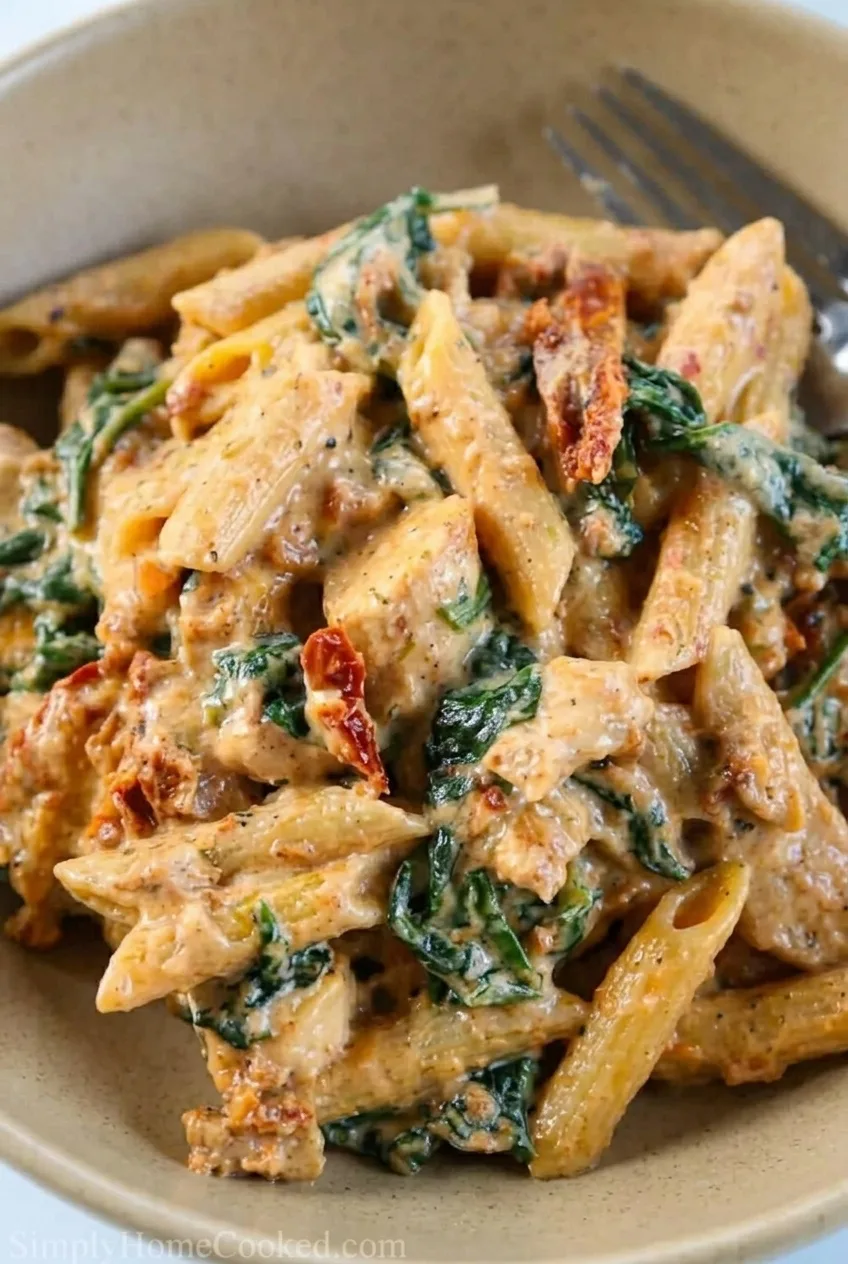
Penne, bite-size chicken, spinach, and sun-dried tomatoes are tossed in a Parmesan cream sauce that coats the pasta without pooling in the bowl. The penne cooks separately, so it can finish briefly in the skillet without getting too soft. Reserve some pasta water before draining: a splash loosens the sauce as the penne absorbs it.

Keep the heat gentle once the cream and Parmesan go in. A hard boil can make the sauce separate.

Prep: 15 minutes · Cook: about 20 minutes · Total: about 35 minutes · Serves 4

Ingredients

Close view of creamy penne coated in Parmesan sauce with chicken, wilted spinach, and sun-dried tomatoes.
  • 12 ounces penne (340g)
  • 1 pound boneless, skinless chicken breast (450g), cut into evenly sized bite-size pieces or short strips
  • 1 tablespoon olive oil
  • 1 tablespoon unsalted butter
  • 3 garlic cloves, minced
  • 1/2 cup sun-dried tomatoes (75g), chopped or sliced and drained if oil-packed
  • 1/2 cup chicken broth, plus more as needed
  • 1 cup heavy cream
  • 3/4 cup finely grated Parmesan (75g), plus more for serving
  • 4 ounces fresh baby spinach (about 4 packed cups; 115g)
  • 1 teaspoon Italian seasoning
  • About 1 teaspoon kosher salt for the chicken and sauce, plus more for the pasta water
  • 1/2 teaspoon black pepper, plus more to taste

Optional: A pinch to 1/4 teaspoon red pepper flakes, or a few torn fresh basil leaves for serving.

How to Make Creamy Tuscan Chicken Pasta

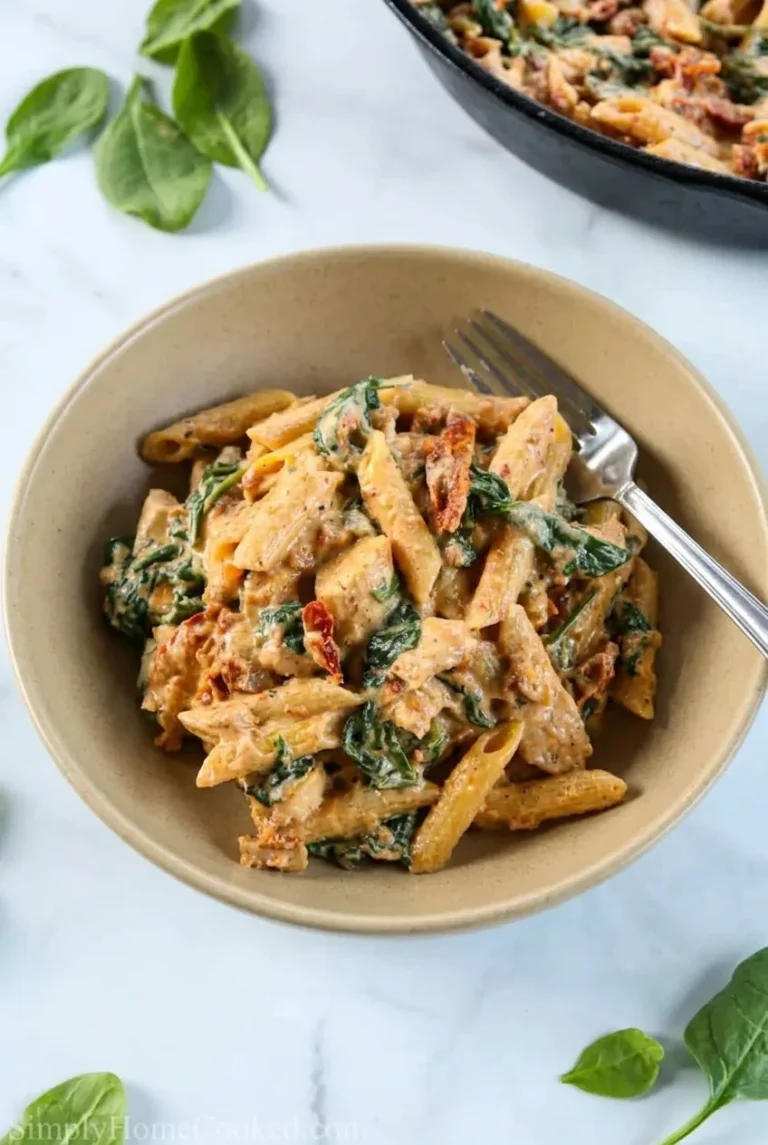
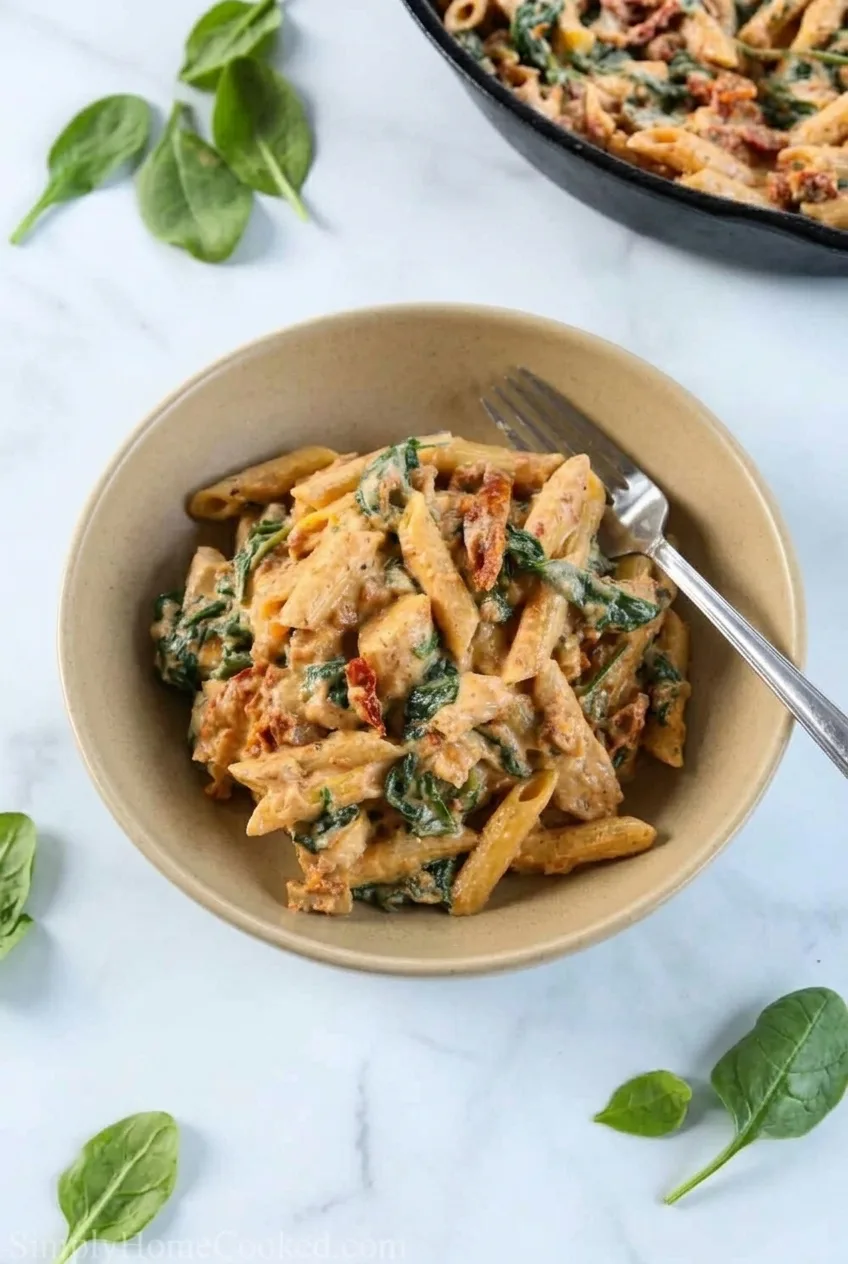
A full bowl of creamy Tuscan chicken pasta centered on a marble surface, with penne, spinach, and tomatoes visible.
  1. Boil the penne: Bring a large pot of well-salted water to a boil. Cook the penne, checking at the lower end of the package’s timing range. Drain when just shy of al dente; it will finish in the sauce. Reserve about 1 cup of pasta water before draining.
  2. Sear the chicken: Season the chicken with the Italian seasoning, salt, and pepper. Heat a 12-inch skillet over medium-high heat, then add the olive oil and chicken in a single layer. Work in batches if needed so the pieces brown rather than steam. Turn once the first side has browned and cook for about 6 to 10 minutes total, depending on piece size and batches. Start checking small pieces after about 3 minutes on the first side. The thickest piece should reach 165°F (75°C). Transfer to a plate.
  3. Build the sauce base: Reduce the heat to medium. Add the butter, garlic, and sun-dried tomatoes. Stir briefly, until the garlic is fragrant but not browned. Pour in the broth and scrape up the browned bits from the skillet.
  4. Add the cream and Parmesan: Stir in the cream and bring it to a gentle simmer, uncovered. Reduce the heat to medium-low and gradually stir in the Parmesan until smooth. The sauce should lightly coat a spoon, with small bubbles at the edges rather than a rolling boil.
  5. Wilt the spinach: Add the spinach in handfuls and stir until just wilted but still green, about 1 to 2 minutes. Return the chicken and any juices on the plate to the skillet.
  6. Finish the penne: Add the drained pasta and toss over low heat for 1 to 2 minutes, until al dente and evenly coated. If the sauce is too thick, add reserved pasta water a splash at a time. It should move easily around the pasta without pooling.
  7. Serve: Taste and adjust the seasoning. Spoon into shallow bowls with extra Parmesan or torn basil, if desired. Serve promptly; if the pasta thickens while waiting, stir in a little more warm pasta water.

How to Keep the Sauce Creamy

Do not hard-boil the sauce after adding the cream and Parmesan. If it looks separated, take the skillet off the heat and stir gently rather than continuing to boil it. As the penne sits, it absorbs sauce; loosen it gradually with reserved pasta water, or a little broth if the pasta water is gone.

Variations

  • Half-and-half: Use it instead of heavy cream for a lighter sauce. Keep the heat especially gentle, as it is more prone to separating.
  • Red pepper flakes: Add a pinch to 1/4 teaspoon with the garlic and sun-dried tomatoes for mild heat.
  • Rotisserie chicken: Fold cooked chicken into the sauce near the end to warm through. It will not have the browned flavor of freshly seared chicken.

Farfalle, rigatoni, or rotini can replace the penne, though penne is the main shape for this version. For a pesto-forward alternative with spinach and sun-dried tomatoes, try Creamy Chicken Pesto Pasta.

How to Store and Reheat

Refrigerate leftovers in a sealed container within two hours and use within three days. The pasta will absorb sauce and soften as it sits.

Reheat gently in a skillet over low heat with a splash of milk, broth, or water, stirring until the sauce loosens. To use a microwave, heat in short intervals, stirring between them and adding a little liquid as needed. Freezing is possible, but the cream sauce and pasta may change texture. Thaw in the refrigerator and reheat gently with added liquid.

Serve with a simple green salad or garlic bread. For another creamy chicken pasta with sun-dried tomatoes, see Marry Me Chicken Pasta with Sun-Dried Tomatoes.

Nutrition

Approximate nutrition per serving, based on 4 servings: 850 calories, 47g protein, 40g fat, and 72g carbohydrates. Per 100g: approximately 195 calories, 11g protein, 9g fat, and 17g carbohydrates. Values vary with the ingredients used and the amount of sauce served.

Creamy Tuscan Chicken Pasta

Penne, chicken, spinach, and sun-dried tomatoes are tossed in a creamy Parmesan sauce.
Course: Main Course
Cuisine: Italian
Prep: 15 min
Cook: 20 min
Total: 35 min
Servings: 4 Calories: 850 kcal

Equipment

  • Large pot
  • Colander
  • 12-inch skillet

Ingredients

Pasta

  • 12 ounces penne (340 g)
  • Salt, for the pasta water

Chicken

  • 1 pound boneless, skinless chicken breast (450 g), cut into bite-size pieces or short strips
  • 1 tablespoon olive oil
  • 1 teaspoon Italian seasoning
  • About 1 teaspoon kosher salt
  • 1/2 teaspoon black pepper

Sauce

  • 1 tablespoon unsalted butter
  • 3 garlic cloves, minced
  • 1/2 cup sun-dried tomatoes (75 g), chopped or sliced and drained if oil-packed
  • 1/2 cup chicken broth, plus more as needed
  • 1 cup heavy cream
  • 3/4 cup finely grated Parmesan (75 g), plus more for serving
  • 4 ounces fresh baby spinach (about 4 packed cups; 115 g)

Optional

  • A pinch to 1/4 teaspoon red pepper flakes
  • A few torn fresh basil leaves, for serving

Instructions

  1. Bring a large pot of well-salted water to a boil. Cook the penne, checking at the lower end of the package timing range, until just shy of al dente. Reserve about 1 cup of pasta water, then drain.
  2. Season the chicken with the Italian seasoning, salt, and pepper. Heat a 12-inch skillet over medium-high heat, then add the olive oil and chicken in a single layer. Cook in batches if needed, turning once the first side has browned. Cook for about 6 to 10 minutes total, depending on piece size, until the thickest piece reaches 165°F (75°C). Transfer to a plate.
  3. Reduce the heat to medium. Add the butter, garlic, and sun-dried tomatoes. Stir briefly until the garlic is fragrant but not browned.
  4. Pour in the broth and scrape up the browned bits from the skillet.
  5. Stir in the cream and bring to a gentle simmer. Reduce the heat to medium-low and gradually stir in the Parmesan until smooth. Keep the sauce at a gentle simmer, not a rolling boil.
  6. Add the spinach in handfuls and stir for 1 to 2 minutes, until just wilted but still green. Return the chicken and any plate juices to the skillet.
  7. Add the drained pasta and toss over low heat for 1 to 2 minutes, until al dente and evenly coated. Add reserved pasta water a splash at a time if the sauce is too thick.
  8. Taste and adjust the seasoning. Serve promptly with extra Parmesan or torn basil, if desired.

Tips

  • Reserve pasta water before draining; use a splash at a time to loosen the sauce.
  • Cook the chicken in batches if needed so it browns rather than steams.
  • Keep the heat gentle after adding the cream and Parmesan to help prevent the sauce from separating.
  • Check small chicken pieces early and confirm the thickest piece reaches 165°F (75°C).
  • If the pasta thickens while waiting, stir in a little warm pasta water.

Variations

  • Half-and-Half: Replace the heavy cream with half-and-half for a lighter sauce, keeping the heat especially gentle.
  • Red Pepper Flakes: Add a pinch to 1/4 teaspoon with the garlic and sun-dried tomatoes for mild heat.
  • Rotisserie Chicken: Fold cooked rotisserie chicken into the sauce near the end and warm it through.
  • Other Pasta Shapes: Replace the penne with farfalle, rigatoni, or rotini.

Notes

Refrigerate leftovers in a sealed container within two hours and use within three days. Reheat gently with a splash of milk, broth, or water. Freezing is possible, though the pasta and cream sauce may change texture.

Nutrition

Calories: 850 kcal | Protein: 47 g | Fat: 40 g | Carbohydrates: 72 g

Ground Beef Stroganoff Pasta

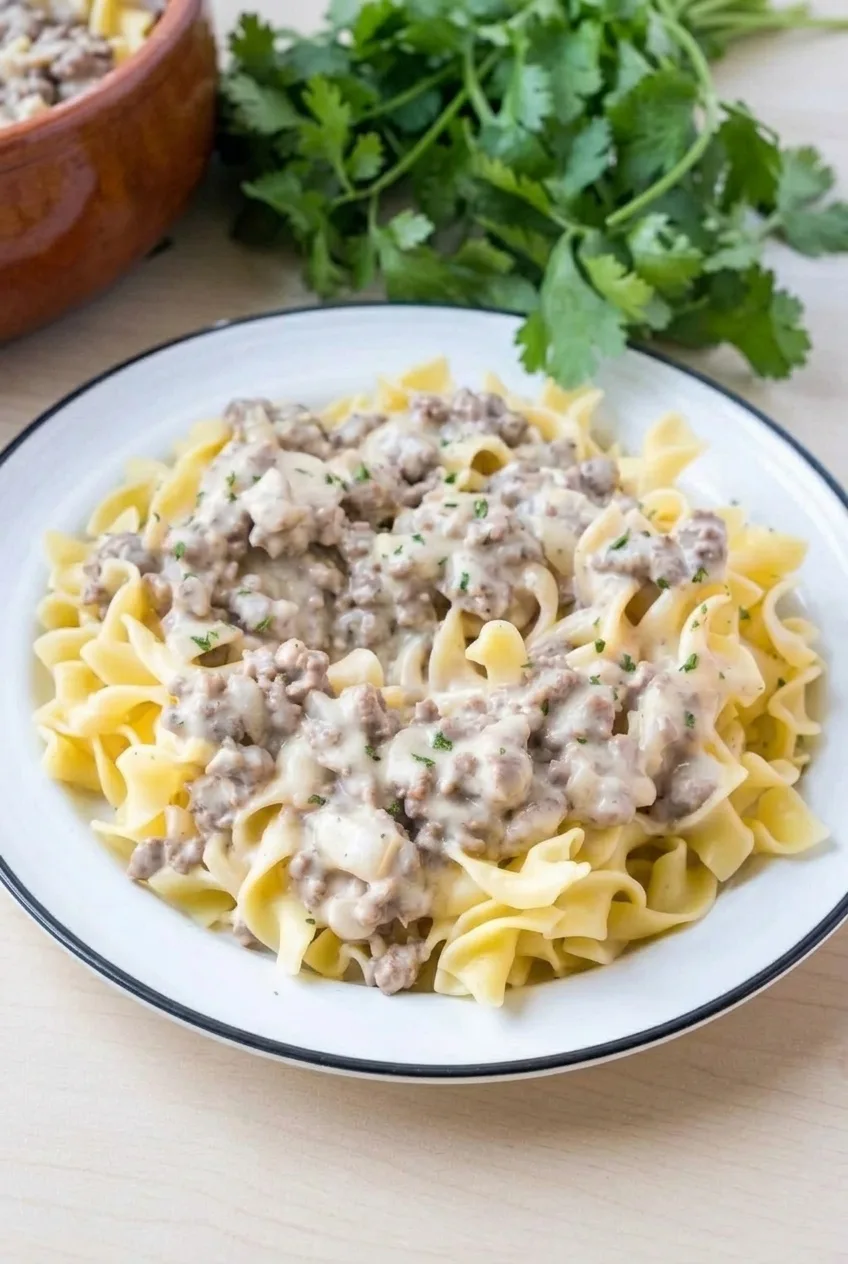
Wide egg noodles make a tender base for a pale, creamy sauce with browned ground beef and finely chopped mushrooms. The sauce gets its body from flour and broth, then its tang from sour cream stirred in off the heat.

The noodles boil separately, so you can check their tenderness without changing the sauce’s liquid or cooking time. Cook the mushrooms until little moisture remains in the skillet, and finish thickening the sauce before adding the sour cream. This recipe makes 4 servings and takes about 15 minutes to prep and 25 minutes to cook.

Ingredients for Ground Beef Stroganoff Pasta

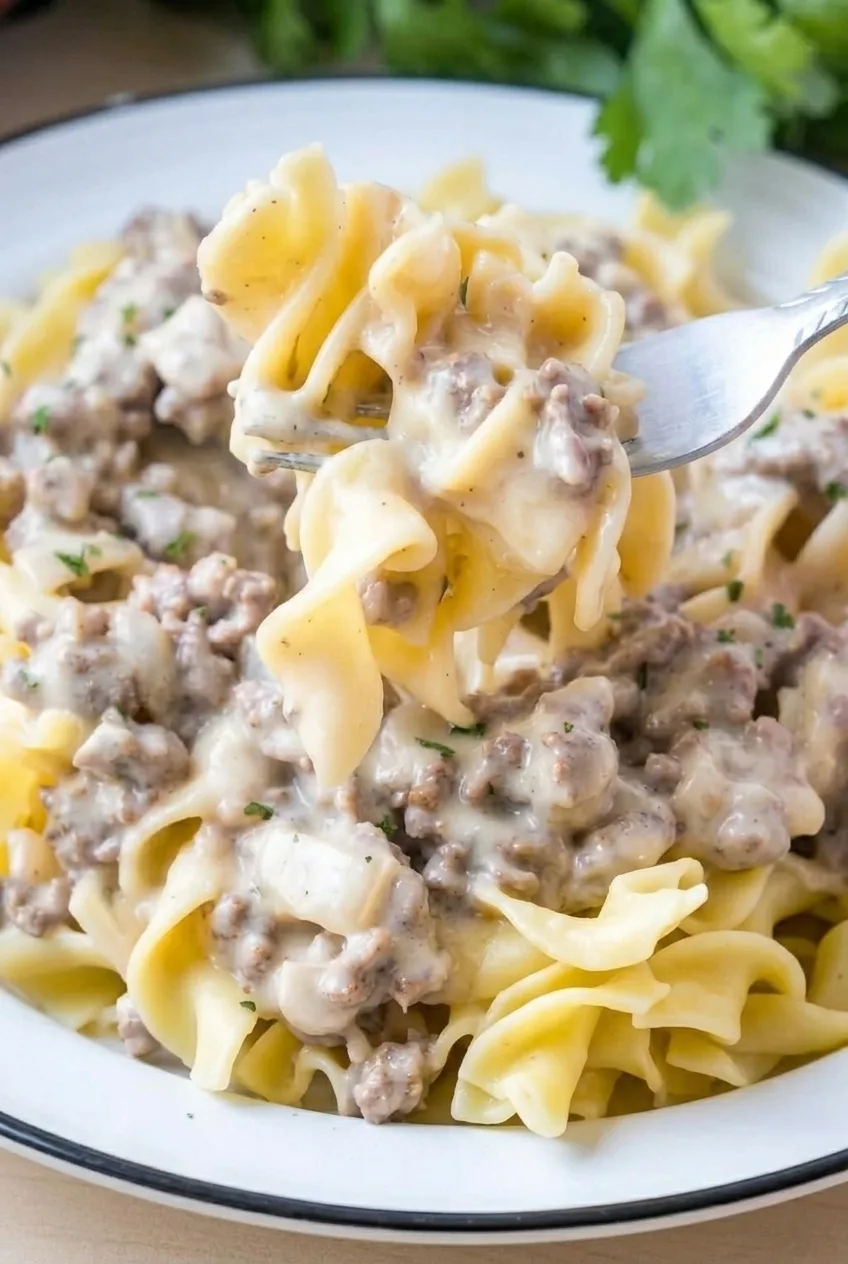
Close view of creamy stroganoff sauce and browned beef crumbles coating wide egg noodles
  • 12 ounces wide egg noodles (340g)
  • 1 pound ground beef, preferably 85% lean (450g)
  • 8 ounces cremini or white button mushrooms, finely chopped (225g)
  • 1 small yellow onion, finely chopped (about 100g)
  • 2 garlic cloves, minced
  • 1 tablespoon unsalted butter or neutral oil, as needed
  • 2 tablespoons all-purpose flour
  • 1 1/2 cups beef broth, plus more as needed
  • 1 tablespoon Worcestershire sauce
  • 3/4 cup sour cream
  • Kosher salt and black pepper, to taste

Optional: 1 teaspoon Dijon mustard for the sauce and 1 tablespoon finely chopped fresh parsley for serving.

How to Make Ground Beef Stroganoff Pasta

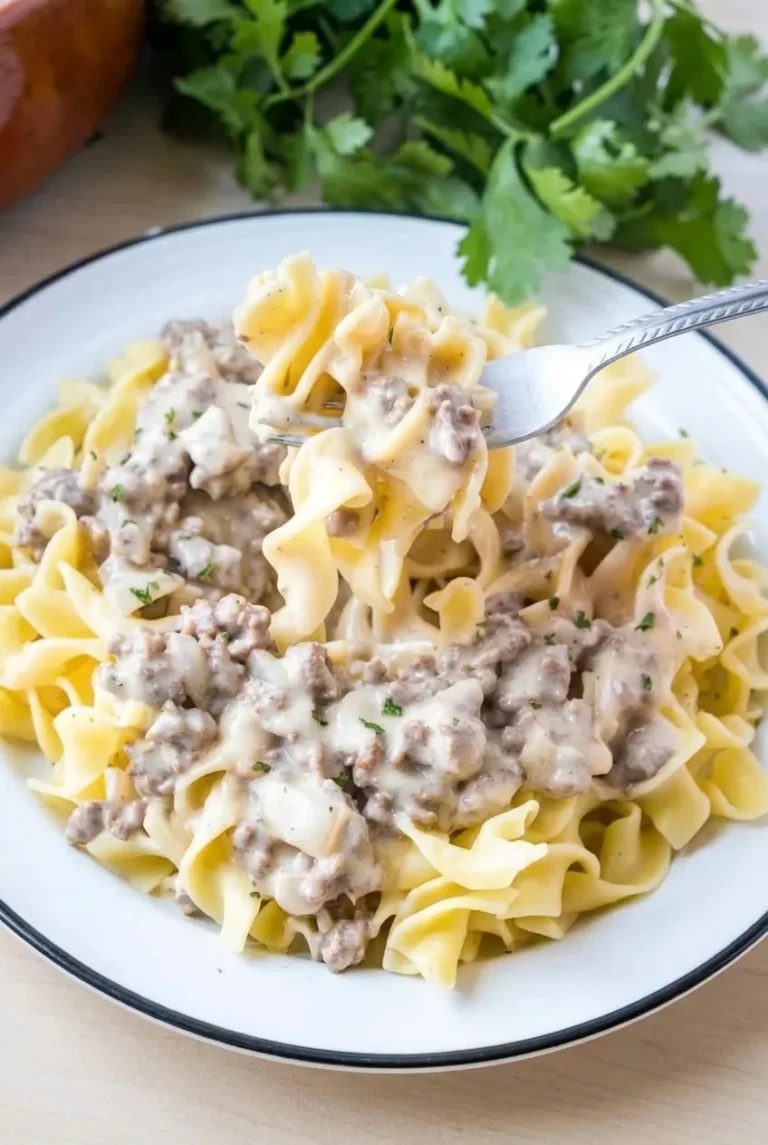
A full plate of ground beef stroganoff pasta with wide egg noodles and creamy sauce
  1. Boil the noodles: Bring a large pot of salted water to a boil. Cook the egg noodles according to the package directions, starting to check at the earliest suggested time. Drain when tender but still holding their shape.
  2. Brown the beef: While the water heats, heat a large 12-inch skillet over medium-high heat. Add the beef and break it into small crumbles. Cook for about 5 to 7 minutes, until browned and cooked through with no pink remaining. Ground beef should reach 160°F (70°C). If the skillet looks greasy, drain excess fat, leaving a thin coating.
  3. Cook the mushrooms and onion: Reduce the heat to medium. Add the mushrooms and onion, using the butter or oil only if the skillet is dry. Cook uncovered, stirring occasionally, for about 5 to 7 minutes, until softened with little mushroom liquid left in the skillet. A crowded pan may take longer. Stir in the garlic and cook for about 30 seconds, until fragrant.
  4. Thicken the sauce: Sprinkle the flour over the beef and vegetables and stir for about 1 minute. Gradually stir in the broth and Worcestershire, scraping up any browned bits. If using Dijon, stir it in now. Simmer gently, uncovered, for 3 to 5 minutes, stirring, until the sauce lightly coats a spoon.
  5. Add the sour cream: Remove the skillet from the heat and let active bubbling stop. Stir in the sour cream until smooth, then season with salt and pepper. Do not boil the sauce after adding sour cream.
  6. Serve: Spoon the sauce over and among the drained noodles, leaving some noodles visible. If the sauce has thickened while standing, stir in a splash of broth until creamy and spoonable. Sprinkle lightly with parsley, if using.

Why the Noodles Cook Separately

Boiling the noodles in their own pot makes it easier to stop cooking when they are tender, while the sauce thickens independently in the skillet. Cooking dry noodles directly in the sauce is a different method: the broth amount and timing would need to change, and both can vary with the noodle brand and pan.

How to Adjust the Sauce

If the broth sauce is too thin, let it simmer gently for another minute or two before adding the sour cream. If the finished sauce is too thick, stir in broth a little at a time. Avoid simmering it down after the sour cream goes in; boiling can make the sauce grainy or separated.

Storing and Reheating

Refrigerate leftovers promptly in airtight containers and use within 3 days. Store the noodles and sauce separately when practical, since noodles soften as they absorb sauce.

Reheat gently over low heat on the stovetop or in the microwave, stirring as needed. Add a splash of broth or water to loosen the sauce, and do not let it boil. Freezing is possible, but the noodles may soften and the sour cream sauce may separate. For better texture, freeze the sauce before adding sour cream; thaw and reheat it gently, stir in the sour cream off the heat, and cook fresh noodles to serve.

Nutrition Information

Approximate nutrition per serving, based on 4 servings: 720 calories, 39g protein, 30g fat, and 74g carbohydrates. Approximate nutrition per 100g: 175 calories, 10g protein, 7g fat, and 18g carbohydrates. Values vary with the beef, noodles, broth, sour cream, and amount of fat used.

Ground Beef Stroganoff Pasta

Wide egg noodles are served with browned ground beef, mushrooms, and a creamy sour cream sauce.
Course: Main Course
Cuisine: American
Prep: 15 min
Cook: 25 min
Total: 40 min
Servings: 4 Calories: 720 kcal

Equipment

  • Large pot
  • 12-inch skillet
  • Colander

Ingredients

Main Ingredients

  • 12 ounces wide egg noodles (340 g)
  • 1 pound ground beef, preferably 85% lean (450 g)
  • 8 ounces cremini or white button mushrooms, finely chopped (225 g)
  • 1 small yellow onion, finely chopped (about 100 g)
  • 2 garlic cloves, minced
  • 1 tablespoon unsalted butter or neutral oil, as needed
  • 2 tablespoons all-purpose flour
  • 1 1/2 cups beef broth, plus more as needed
  • 1 tablespoon Worcestershire sauce
  • 3/4 cup sour cream
  • Kosher salt and black pepper, to taste

Optional

  • 1 teaspoon Dijon mustard
  • 1 tablespoon finely chopped fresh parsley, for serving

Instructions

  1. Bring a large pot of salted water to a boil. Cook the egg noodles according to the package directions, checking at the earliest suggested time. Drain when tender but still holding their shape.
  2. While the water heats, warm a large skillet over medium-high heat. Add the ground beef and break it into small crumbles. Cook for 5 to 7 minutes, until browned and cooked through with no pink remaining; it should reach 160°F (70°C). Drain excess fat if needed, leaving a thin coating.
  3. Reduce the heat to medium. Add the mushrooms and onion, adding butter or oil only if the skillet is dry. Cook uncovered, stirring occasionally, for 5 to 7 minutes, until softened and little mushroom liquid remains. Stir in the garlic and cook for about 30 seconds, until fragrant.
  4. Sprinkle the flour over the beef and vegetables and stir for about 1 minute. Gradually stir in the broth and Worcestershire sauce, scraping up browned bits. Add the Dijon if using. Simmer gently, uncovered, for 3 to 5 minutes, stirring until the sauce lightly coats a spoon.
  5. Remove the skillet from the heat and wait for active bubbling to stop. Stir in the sour cream until smooth, then season with salt and pepper. Do not boil the sauce after adding the sour cream.
  6. Spoon the sauce over and among the drained noodles. If the sauce has thickened while standing, stir in a splash of broth until creamy and spoonable. Sprinkle with parsley if using.

Tips

  • Cook the noodles separately so you can check their tenderness without changing the sauce’s liquid or cooking time.
  • Cook the mushrooms until little moisture remains; a crowded skillet may take longer.
  • Thicken the broth sauce before stirring in the sour cream.
  • If the finished sauce is too thick, loosen it with broth a little at a time.
  • Do not boil the sauce after adding sour cream, as it may become grainy or separate.

Variations

  • Dijon Stroganoff: Stir 1 teaspoon Dijon mustard into the sauce with the broth and Worcestershire.

Notes

Refrigerate leftovers promptly in airtight containers and use within 3 days. Store noodles and sauce separately when practical. Reheat gently without boiling, adding broth or water as needed. Ground beef should reach 160°F (70°C).

Nutrition

Calories: 720 kcal | Protein: 39 g | Fat: 30 g | Carbohydrates: 74 g

Creamy Lemon Garlic Pasta

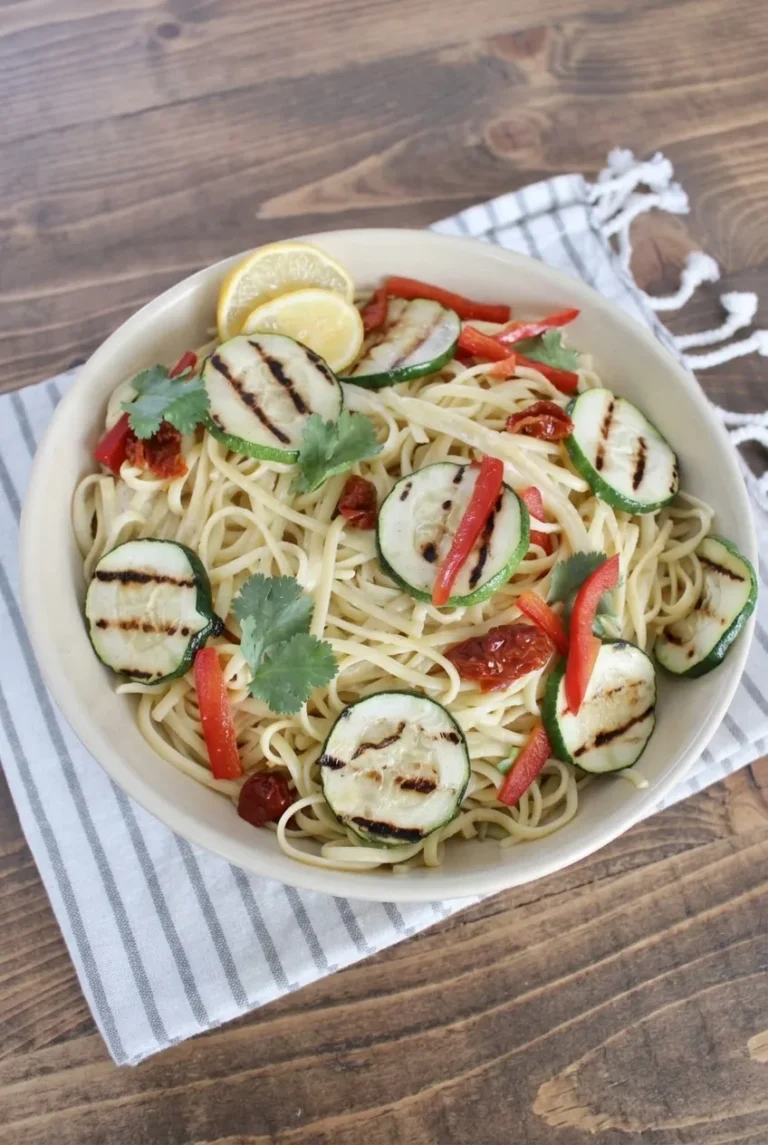
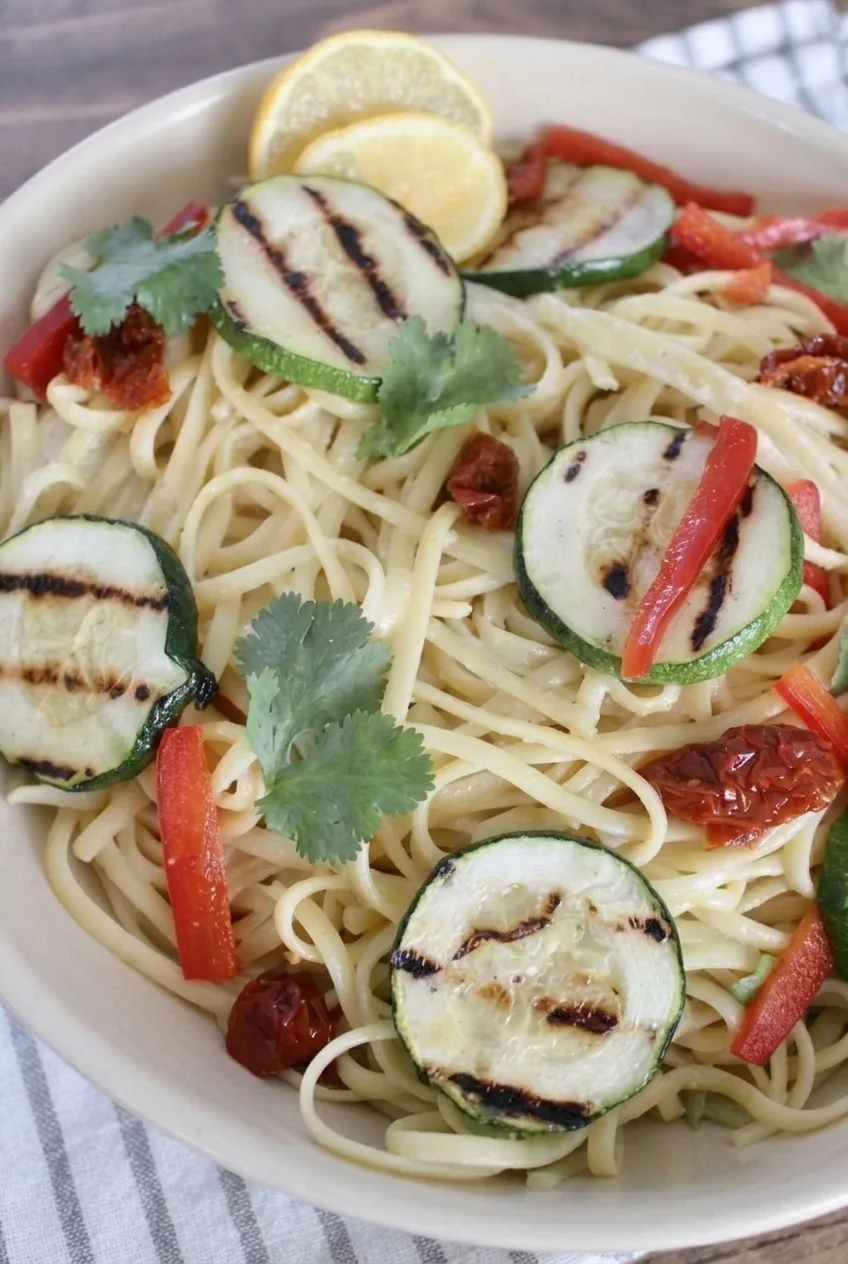
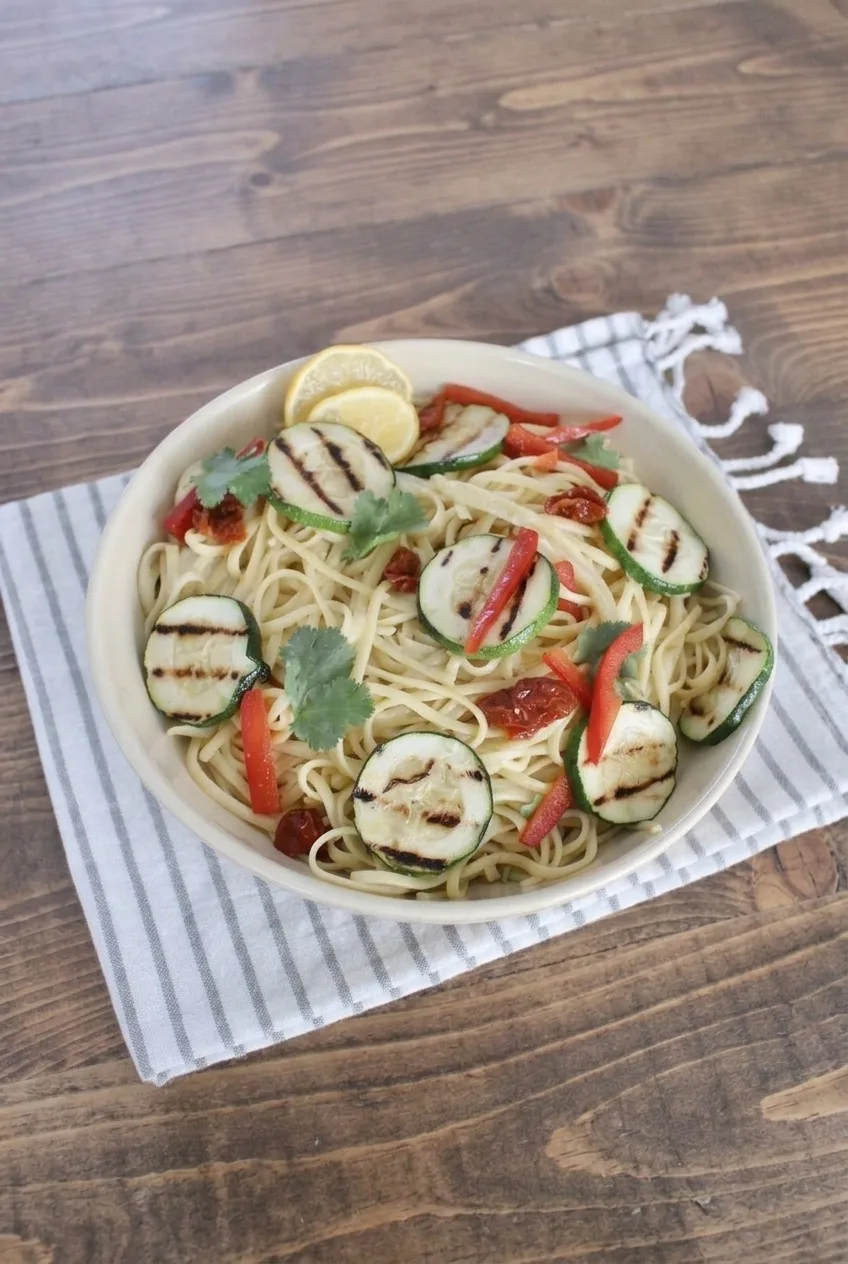
Linguine gets a light coating of lemon-garlic Parmesan sauce, then a topping of grilled zucchini, red bell pepper, sun-dried tomatoes, and parsley. Lemon slices finish the family-style bowl.

Cook the pasta separately so it stays al dente, and save some of its cooking water to loosen the sauce as you toss. Keep the heat low when adding Parmesan and lemon juice; a hard boil can make the cream sauce grainy.

Ingredients

Close view of creamy lemon garlic linguine with Parmesan-coated strands, grilled zucchini marks and colorful vegetable toppings
  • 12 ounces linguine (340g)
  • Kosher salt, for the pasta water and to taste
  • 2 medium zucchini, sliced into 1/2-inch rounds (400g)
  • 1 red bell pepper, cut into thin strips (150g)
  • 1 tablespoon olive oil
  • 3 tablespoons unsalted butter (45g)
  • 3 garlic cloves, finely minced
  • 3/4 cup heavy cream (180g)
  • 1 large lemon, for zest and juice, plus 3 to 4 thin lemon slices for serving
  • 3/4 cup freshly grated Parmesan (75g), plus more for serving if desired
  • 1/3 cup sun-dried tomatoes, drained if oil-packed and cut into small pieces (45g)
  • 2 tablespoons chopped flat-leaf parsley, plus a few leaves for serving
  • Black pepper, to taste

Makes 4 servings. Allow about 15 minutes to prep and 20 minutes to cook.

How to Make Creamy Lemon Garlic Pasta

Full bowl of creamy lemon garlic linguine with grilled vegetables and lemon, shown on a rustic wood surface
  1. Prepare the toppings: Slice the zucchini and pepper. Zest and juice the lemon, and set out the lemon slices for serving. Drain and chop the sun-dried tomatoes if needed.
  2. Cook the linguine: Bring a large pot of well-salted water to a boil. Cook the linguine uncovered, stirring occasionally and checking at the earliest package time. Drain when tender with a slight bite, first reserving at least 1 cup of pasta water.
  3. Grill the vegetables: Preheat a large grill pan over medium-high heat for several minutes. Pat the zucchini dry and brush it and the pepper lightly with the olive oil. Arrange the zucchini in a single layer; leave it undisturbed until dark grill marks form, about 2 minutes on the first side. Turn once and cook until tender but still holding its shape. Grill the pepper strips, turning as needed, until slightly softened with a few browned edges but still bright red. Work in batches rather than crowding the pan, then transfer the vegetables to a plate.
  4. Start the sauce: Melt the butter in a large skillet or saucepan over medium-low heat. Add the garlic and cook just until fragrant, without browning it. Stir in the cream and lemon zest. Simmer gently, uncovered, for 3 to 5 minutes, until the sauce lightly coats the back of a spoon. It should bubble at the edges, not boil hard.
  5. Add the cheese and lemon: Reduce the heat to low. Stir in the Parmesan a little at a time until melted, then add the lemon juice gradually, stirring and tasting as you go. Do not let the sauce boil. If it becomes too thick, add a splash of reserved pasta water.
  6. Toss the pasta: Add the drained linguine and sun-dried tomatoes to the skillet. Toss over low heat for 1 to 2 minutes, adding pasta water a splash at a time until the sauce clings lightly to the strands without pooling. Season with black pepper and salt to taste.
  7. Serve: Pile the pasta loosely in a shallow serving bowl. Arrange the zucchini and pepper on top, leaving the grill marks visible. Scatter over the parsley and tuck overlapping lemon slices at the rim. Serve promptly.

Keeping the Sauce Smooth

Gentle heat matters most once the cream, Parmesan, and lemon come together. Add the cheese in small handfuls and the juice gradually; boiling the sauce at this stage can make it grainy or separated. If it starts to look uneven, take the skillet off the heat and toss the pasta with a splash of reserved pasta water.

The linguine will continue absorbing sauce as it stands. Add another splash of pasta water if it looks dry before serving.

Getting Grill Marks on the Zucchini

Dry slices and a preheated grill pan help the zucchini mark instead of steam. Leave space between the rounds and wait for dark stripes before turning them. A regular skillet can brown the zucchini if you do not have a grill pan, but it will not produce the same defined stripes.

Variations

Use Half-and-Half

Replace the heavy cream with half-and-half for a less rich sauce. Keep the heat low, especially after adding the lemon, and do not let the sauce boil.

Add Chicken or Shrimp

Serve with or fold in about 1 pound of separately cooked chicken or shrimp just before serving. The grilled vegetables remain part of the base version.

Serving and Related Recipes

Offer extra Parmesan and black pepper at the table. A simple garden salad or garlic bread pairs well with the pasta. For other pasta options, try Creamy Garlic Parmesan Pasta, Baked Feta Pasta, or Creamy Garlic Shrimp Pasta.

How to Store and Reheat

Refrigerate leftovers in an airtight container for up to 3 days. Reheat gently in a skillet over low to medium-low heat with a splash of water or cream, stirring until warmed through. To use a microwave, add a splash of water, cover, and heat in short intervals, stirring between them. Freezing is not recommended if you want to preserve the creamy texture.

Nutrition

Approximate nutrition per serving, based on 4 servings: 720 calories, 22g protein, 35g fat, and 78g carbohydrates. Approximate nutrition per 100g: 165 calories, 5g protein, 8g fat, and 18g carbohydrates. Values vary with ingredient brands and portions.

Creamy Lemon Garlic Pasta

Linguine tossed in a creamy lemon-garlic Parmesan sauce and topped with grilled zucchini, red bell pepper, sun-dried tomatoes, and parsley.
Course: Main Course
Cuisine: Italian
Prep: 15 min
Cook: 20 min
Total: 35 min
Servings: 4 Calories: 720 kcal

Equipment

  • Large pot
  • Colander
  • Grill pan
  • Large skillet or saucepan
  • Citrus zester

Ingredients

Pasta and sauce

  • 12 ounces linguine (340 g)
  • Kosher salt, for the pasta water and to taste
  • 3 tablespoons unsalted butter (45 g)
  • 3 garlic cloves, finely minced
  • 3/4 cup heavy cream (180 g)
  • 1 large lemon, zested and juiced
  • 3/4 cup freshly grated Parmesan (75 g), plus more for serving if desired
  • Black pepper, to taste

Vegetables and garnish

  • 2 medium zucchini, sliced into 1/2-inch rounds (400 g)
  • 1 red bell pepper, cut into thin strips (150 g)
  • 1 tablespoon olive oil
  • 1/3 cup sun-dried tomatoes, drained if oil-packed and cut into small pieces (45 g)
  • 2 tablespoons chopped flat-leaf parsley, plus a few leaves for serving
  • 3 to 4 thin lemon slices, for serving

Instructions

  1. Slice the zucchini and red bell pepper. Zest and juice the lemon, and prepare the lemon slices for serving. Drain and chop the sun-dried tomatoes if needed.
  2. Bring a large pot of well-salted water to a boil. Cook the linguine uncovered, stirring occasionally, until tender with a slight bite. Reserve at least 1 cup of pasta water, then drain the linguine.
  3. Preheat a large grill pan over medium-high heat for several minutes. Pat the zucchini dry and lightly brush the zucchini and pepper with olive oil.
  4. Grill the zucchini in a single layer without moving it until dark grill marks form, about 2 minutes on the first side. Turn once and cook until tender but still holding its shape.
  5. Grill the pepper strips, turning as needed, until slightly softened with a few browned edges but still bright red. Work in batches to avoid crowding, then transfer the vegetables to a plate.
  6. Melt the butter in a large skillet or saucepan over medium-low heat. Add the garlic and cook just until fragrant, without browning.
  7. Stir in the cream and lemon zest. Simmer gently, uncovered, for 3 to 5 minutes, until the sauce lightly coats the back of a spoon. Keep it bubbling gently at the edges; do not let it boil hard.
  8. Reduce the heat to low. Stir in the Parmesan a little at a time until melted, then gradually stir in the lemon juice. If the sauce becomes too thick, add a splash of reserved pasta water.
  9. Add the linguine and sun-dried tomatoes. Toss over low heat for 1 to 2 minutes, adding pasta water a splash at a time until the sauce lightly coats the pasta. Season with black pepper and salt to taste.
  10. Transfer the pasta to a shallow serving bowl. Arrange the zucchini and pepper on top, scatter with parsley, and tuck the lemon slices around the rim. Serve promptly.

Tips

  • Reserve at least 1 cup of pasta water before draining; use a splash at a time to loosen the sauce.
  • Add the Parmesan gradually and the lemon juice slowly over low heat to help keep the sauce smooth.
  • Pat the zucchini dry and leave space between the slices so they grill rather than steam.
  • Let the grill pan preheat and wait for dark grill marks before turning the zucchini.
  • Add another splash of pasta water if the linguine absorbs the sauce while it stands.

Variations

  • Half-and-Half: Replace the heavy cream with half-and-half for a less rich sauce. Keep the heat low and do not let the sauce boil.
  • Chicken or Shrimp: Fold in about 1 pound of separately cooked chicken or shrimp just before serving.

Notes

Refrigerate leftovers in an airtight container for up to 3 days. Reheat gently in a skillet over low to medium-low heat with a splash of water or cream, or microwave covered with a splash of water in short intervals. Freezing is not recommended for the best creamy texture.

Nutrition

Calories: 720 kcal | Protein: 22 g | Fat: 35 g | Carbohydrates: 78 g | Per 100g Calories: 165 kcal | Per 100g Protein: 5 g | Per 100g Fat: 8 g | Per 100g Carbohydrates: 18 g

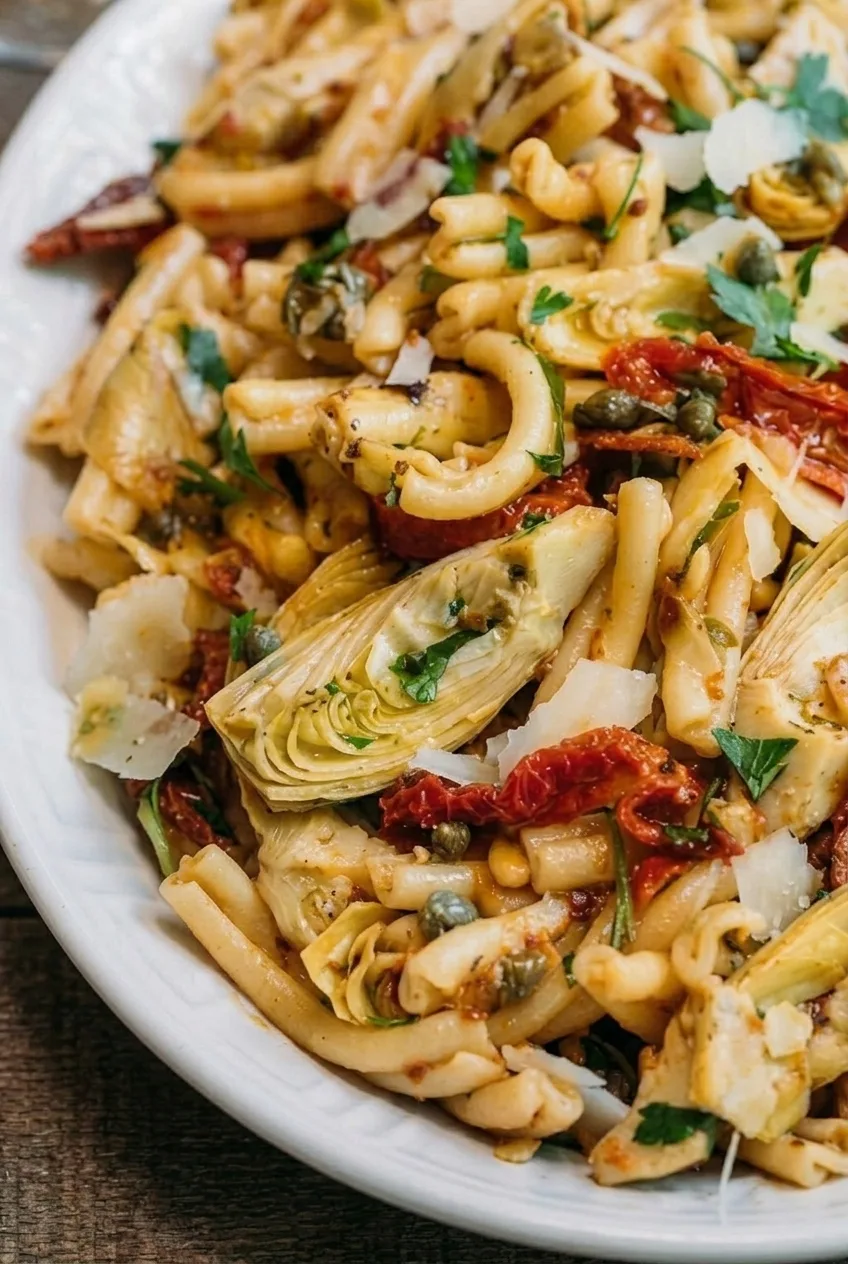
Sun-Dried Tomato Pasta Salad

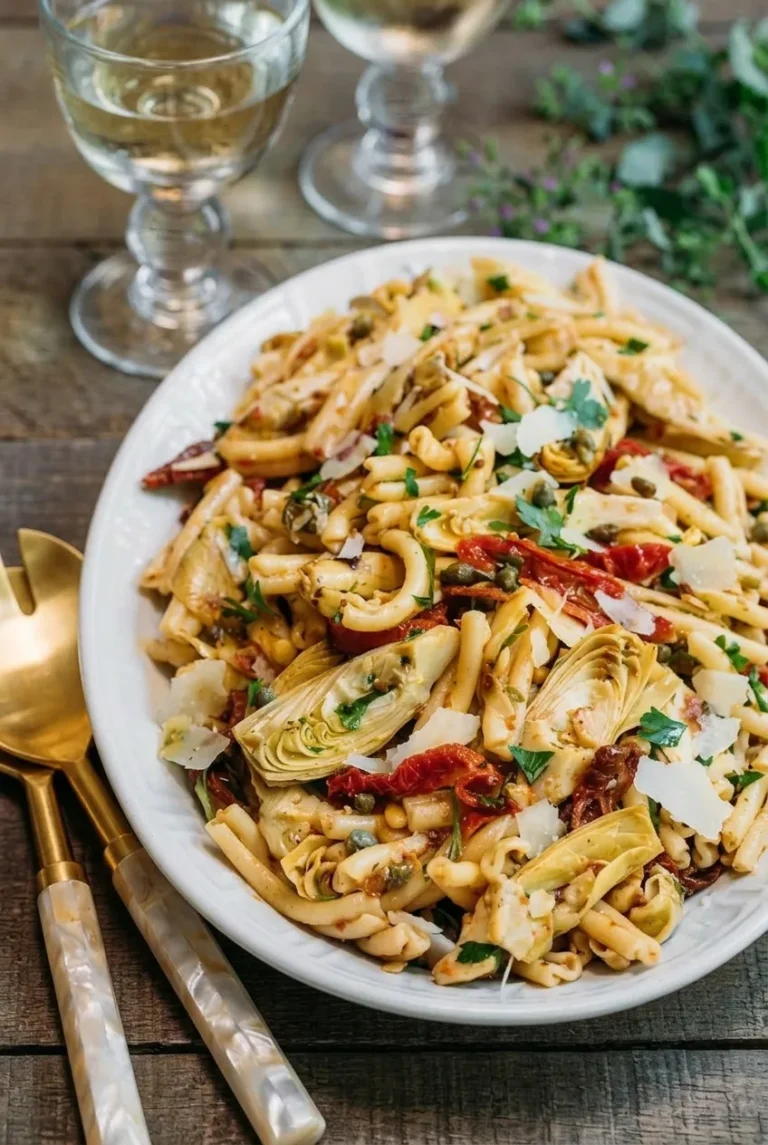
Sun-dried tomato strips and large artichoke quarters give this chilled pasta salad plenty of texture, while parsley and shaved Parmesan finish it. A red wine vinaigrette coats the short pasta lightly rather than making it creamy.

Cook the pasta until tender with a slight bite, then cool and drain it well so the dressing stays bright instead of watery. Hold back a little vinaigrette to stir in just before serving, especially if the salad has been made ahead.

Makes 6 to 8 side-dish servings. Allow about 20 minutes to prepare, 10 to 12 minutes to cook the pasta depending on the package, and at least 30 minutes to chill.

Ingredients

Close-up of Sun-Dried Tomato Pasta Salad showing glossy pasta, layered artichoke hearts, tomato strips, and Parmesan
  • 1 lb short pasta, such as casarecce, fusilli, or rotini (450g)
  • 1 cup oil-packed sun-dried tomatoes, drained and sliced into strips (150g)
  • 1 (14-ounce) can or jar artichoke hearts, drained and quartered (about 230g drained)
  • 1/3 cup total extra-virgin olive oil, or a combination of olive oil and measured sun-dried tomato jar oil
  • 3 tablespoons red wine vinegar
  • 1 small garlic clove, finely minced
  • 1 teaspoon dried oregano
  • 1/2 teaspoon fine salt to start, plus more to taste
  • 1/4 teaspoon black pepper, or to taste
  • 1/4 cup chopped fresh parsley (15g)
  • 1/2 cup loosely packed shaved Parmesan (30g)

If using oil from the tomato jar, count it toward the 1/3 cup total oil rather than adding it on top. Jarred tomatoes, artichokes, and Parmesan vary in saltiness, so adjust the final seasoning after tasting the salad.

How to Make Sun-Dried Tomato Pasta Salad

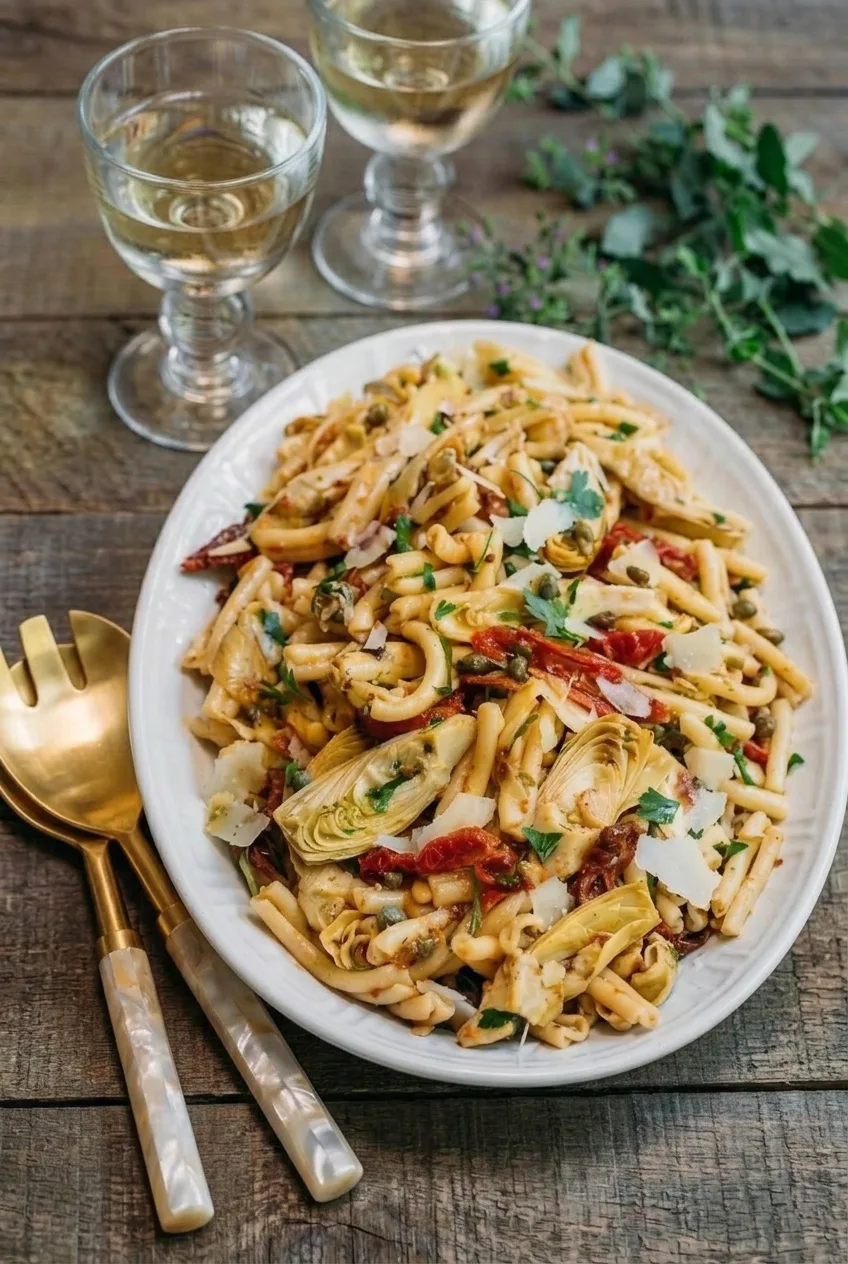
A full platter of Sun-Dried Tomato Pasta Salad with artichokes and tomatoes, photographed with more table space around it
  1. Cook the pasta: Bring a large pot of salted water to a boil over high heat. Add the pasta, stir, and cook uncovered at a steady boil, stirring occasionally. Start tasting near the early end of the package’s time range. Drain when tender with a slight bite, before it becomes soft or starts to break apart.
  2. Cool and drain: Rinse the pasta briefly under cold water until cool, then let it drain thoroughly in a colander. Transfer it to a large mixing bowl.
  3. Prepare the mix-ins: Slice the drained tomatoes into strips. Quarter the artichoke hearts and pat them dry if they are wet from brine. Chop the parsley and shave the Parmesan, reserving a little of each for serving.
  4. Make the vinaigrette: Whisk the measured oil with the vinegar, garlic, oregano, salt, and pepper. Set aside a few tablespoons of dressing to refresh the salad after chilling.
  5. Toss gently: Coat the cooled pasta with most of the vinaigrette. Fold in the tomatoes, most of the parsley, the artichoke quarters, and some of the Parmesan. Keep the artichokes in recognizable pieces rather than stirring until they break apart. Taste before adding more salt.
  6. Chill and refresh: Cover and refrigerate for at least 30 minutes. Stir gently before serving. If the pasta looks dry, add the reserved vinaigrette a little at a time until it is lightly glossy, without dressing pooling at the bottom.
  7. Serve: Pile the salad loosely onto a shallow platter. Leave some artichoke quarters and tomato strips visible on top, then scatter over the remaining parsley and Parmesan shavings.

Choosing the Pasta

Curved or ridged short shapes hold the vinaigrette and sit well alongside the artichoke quarters. Bowties or penne also work. Pasta shape and brand affect cooking time, so use the package directions and taste for doneness. For gluten-free pasta, follow its own package directions and check its texture as it cooks.

Make-Ahead and Storage

You can cook and cool the pasta, prepare the dressing, and cut the mix-ins ahead of time. Once assembled, keep the salad covered in the refrigerator. Pasta absorbs dressing as it sits, so stir it gently and add the reserved vinaigrette just before serving.
Store leftovers in an airtight container in the refrigerator for up to 3 days. Serve chilled; reheating is not needed.

Serving Ideas

Serve as a side with grilled meats or sandwiches, or as a light lunch. For a more substantial lunch, fold in 1 to 2 cups of cooked, chilled chicken. For another cookout side, serve it alongside Mexican Street Corn Casserole.

Nutrition

Approximate nutrition per serving, based on 1/8 of the recipe: 360 calories, 10g protein, 14g fat, and 49g carbohydrates. Approximate nutrition per 100g: 185 calories, 5g protein, 7g fat, and 25g carbohydrates. Values vary with the pasta, tomatoes, and amount of oil retained after draining.

Sun-Dried Tomato Pasta Salad

Short pasta is tossed with sun-dried tomatoes, artichokes, parsley, Parmesan, and a red wine vinaigrette.
Course: Salad
Cuisine: Italian
Prep: 20 min
Cook: 12 min
Total: 62 min
Servings: 8 Calories: 360 kcal

Equipment

  • Large pot
  • Colander
  • Large mixing bowl
  • Whisk
  • Knife
  • Cutting board

Ingredients

For the Salad

  • 1 lb short pasta, such as casarecce, fusilli, or rotini (450g)
  • 1 cup oil-packed sun-dried tomatoes, drained and sliced into strips (150g)
  • 1 (14-ounce) can or jar artichoke hearts, drained and quartered (about 230g drained)
  • 1/4 cup chopped fresh parsley (15g)
  • 1/2 cup loosely packed shaved Parmesan (30g)

For the Vinaigrette

  • 1/3 cup total extra-virgin olive oil, or a combination of olive oil and measured sun-dried tomato jar oil
  • 3 tablespoons red wine vinegar
  • 1 small garlic clove, finely minced
  • 1 teaspoon dried oregano
  • 1/2 teaspoon fine salt to start, plus more to taste
  • 1/4 teaspoon black pepper, or to taste

Instructions

  1. Bring a large pot of salted water to a boil. Add the pasta and cook, stirring occasionally, until tender with a slight bite, using the package directions as a guide.
  2. Drain the pasta, rinse briefly under cold water until cool, and let it drain thoroughly. Transfer it to a large mixing bowl.
  3. Slice the drained sun-dried tomatoes into strips. Quarter the artichoke hearts and pat them dry if needed. Chop the parsley and shave the Parmesan, reserving a little of each for serving.
  4. Whisk together the oil, red wine vinegar, garlic, oregano, salt, and pepper. Set aside a few tablespoons of vinaigrette for refreshing the salad later.
  5. Toss the cooled pasta with most of the vinaigrette. Fold in the tomatoes, most of the parsley, the artichoke quarters, and some of the Parmesan, keeping the artichokes in recognizable pieces.
  6. Taste the salad and adjust the salt if needed. Cover and refrigerate for at least 30 minutes.
  7. Stir gently before serving. Add the reserved vinaigrette a little at a time if the pasta looks dry.
  8. Serve on a platter and top with the reserved parsley and Parmesan, leaving some tomato strips and artichoke quarters visible.

Tips

  • Start tasting the pasta near the early end of the package cooking-time range so it stays firm.
  • Drain the pasta thoroughly after rinsing to keep the dressing from becoming watery.
  • Count any sun-dried tomato jar oil toward the 1/3 cup total oil rather than adding it on top.
  • Taste before adding extra salt because the tomatoes, artichokes, and Parmesan can be salty.
  • Reserve a few tablespoons of vinaigrette to refresh the salad after chilling.

Variations

  • Chicken Pasta Salad: Fold in 1 to 2 cups of cooked, chilled chicken for a more substantial lunch.
  • Alternative Pasta Shapes: Use bowties or penne instead of casarecce, fusilli, or rotini; follow the package directions for cooking.

Notes

Store leftovers in an airtight container in the refrigerator for up to 3 days. Serve chilled; reheating is not needed.

Nutrition

Calories: 360 kcal | Protein: 10 g | Fat: 14 g | Carbohydrates: 49 g

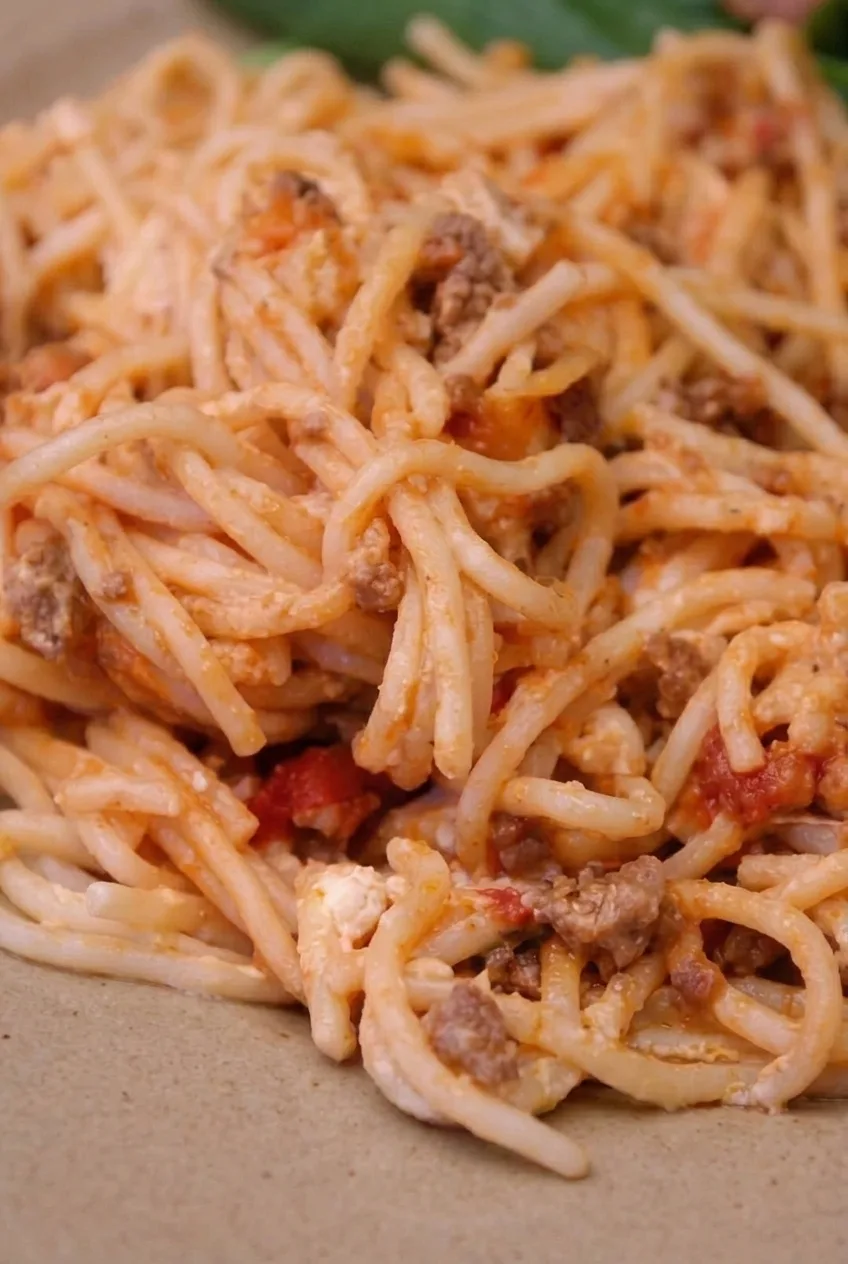
Million Dollar Spaghetti

Million Dollar Spaghetti is a baked casserole with layers of spaghetti, ground beef in tomato sauce, and a creamy center of cream cheese, cottage cheese, and sour cream. Mozzarella melts through the layers, but the finished pasta stays moist and saucy rather than forming a thick browned crust.

Cook the spaghetti just to al dente: it will soften further in the oven. After a short rest, scoop it onto plates in loose portions so the tomato-coated strands, beef, and creamy cheese are visible together. The cheese mixture varies between versions; this is the combination used here.

Ingredients for Million Dollar Spaghetti

Close detail of Million Dollar Spaghetti showing saucy strands, browned beef crumbles, and creamy cheese
  • 1 lb spaghetti (450g)
  • Kosher salt, for the pasta water and to taste
  • 1 lb ground beef (450g)
  • 1 small yellow onion, finely chopped (about 110g)
  • 1 jar marinara or spaghetti sauce, 24 oz (680g)
  • 8 oz cream cheese, softened (225g)
  • 1 cup small-curd cottage cheese (225g)
  • 1/2 cup sour cream (120g)
  • 2 cups shredded mozzarella, divided (225g)
  • 2 tablespoons butter (30g)
  • 1/2 teaspoon black pepper, or to taste

Optional additions: Add 2 minced garlic cloves, 1 teaspoon Italian seasoning, or a pinch of red pepper flakes to the beef sauce. Stir 1–2 tablespoons chopped fresh parsley into the cheese mixture or scatter it over the finished servings.

How to Make Million Dollar Spaghetti

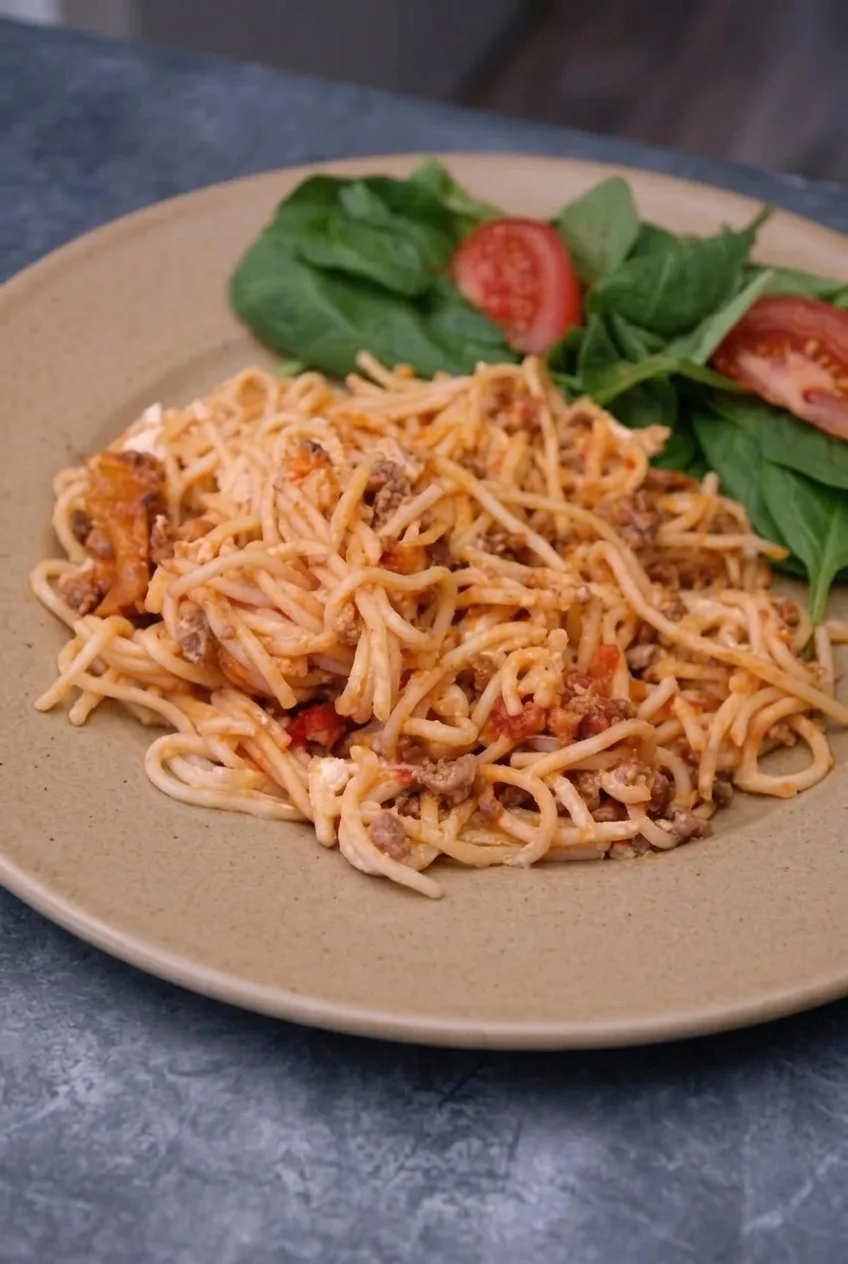
A full plate of loose, saucy Million Dollar Spaghetti centered on a neutral surface
  1. Prepare the oven and dish: Preheat the oven to 350°F (175°C). Lightly grease a 9-by-13-inch baking dish.
  2. Cook the spaghetti: Boil the spaghetti in salted water until just al dente, following the package timing. Drain promptly without rinsing. Toss with a few spoonfuls of marinara so the strands do not stick; reserve the remaining sauce for the beef.
  3. Make the beef sauce: In a large skillet over medium to medium-high heat, cook the beef and onion, breaking up the meat, until the beef is browned with no pink remaining and the onion is soft. Drain excess fat. If using garlic, cook it briefly with the beef and onion before adding the sauce. Stir in the remaining marinara, along with Italian seasoning or red pepper flakes if using. Simmer briefly over medium-low heat until hot.
  4. Mix the creamy layer: Stir the softened cream cheese, cottage cheese, sour cream, and black pepper together until evenly combined and spreadable. Taste and add a little salt if needed.
  5. Layer the casserole: Spread a thin layer of beef sauce in the dish. Add half the spaghetti, then spread the creamy mixture over it. Sprinkle with 1 cup of the mozzarella. Add the remaining spaghetti, dot it with the butter, and spoon the remaining beef sauce over the top, spreading it to the edges. Keep the pasta loose rather than pressing it down.
  6. Bake: Bake uncovered for 20–25 minutes, then scatter the remaining 1 cup mozzarella over the top. Bake for another 10–15 minutes, about 30–40 minutes total. Start checking around 30 minutes: the sauce should bubble at the edges, the mozzarella should be melted, and the center should be hot throughout. If the cheese browns before the center is hot, loosely cover the dish with foil.
  7. Rest and serve: Let the casserole rest for 10–15 minutes so the layers settle. Scoop loose portions onto plates; a longer rest will give you neater portions.

How to Keep the Spaghetti from Getting Mushy

Stop boiling the spaghetti while it still has a slight firm bite, and drain it promptly. The strands continue to soften and absorb sauce during baking and resting. Avoid leaving the cooked pasta warm for a long time before assembly, and take the casserole out once the edges bubble and the center is hot rather than baking longer just to brown the cheese.

How to Tell When It Is Done

Use the 30–40-minute range as a guide, not the only test. Look for bubbling sauce around the edges and melted mozzarella, then check that the center is hot throughout. A deeper dish or a casserole baked straight from the refrigerator may take longer.

Million Dollar Spaghetti Variations

Use Ricotta Instead of Cottage Cheese

Replace the cottage cheese with ricotta for a smoother, more lasagna-like creamy layer. Keep the cream cheese and sour cream as listed.

Add Italian Sausage

Replace part of the ground beef with Italian sausage for a richer, more strongly seasoned sauce. Brown it with the beef and drain excess fat before adding the marinara.

How to Serve It

Scoop the casserole into loose mounds so the sauced strands, beef, and creamy cheese show in each portion. A leafy green salad with tomato or garlic bread makes a simple side.

Make-Ahead, Storage, and Freezing

To make it ahead, assemble the casserole, cover, and refrigerate it until ready to bake. Keep the spaghetti al dente and allow extra baking time for a cold casserole. If using a glass dish, let it sit out while the oven preheats and follow the bakeware maker’s guidance; do not put a refrigerator-cold glass dish directly into a hot oven.

Cool leftovers, then cover or transfer them to an airtight container and refrigerate for 3–4 days. Reheat individual portions in the microwave or larger portions in the oven until hot. The time will depend on the portion size and appliance.

For longer storage, freeze the assembled, unbaked casserole tightly covered for about 1–2 months for best quality. Thaw overnight in the refrigerator before baking when possible. Baking from frozen will take substantially longer; loosely cover the top if it browns before the center is hot.

Nutrition

Approximate nutrition per serving, based on 1/8 of the casserole: 645 calories, 31g protein, 35g fat, and 53g carbohydrates. Approximate nutrition per 100g: 180 calories, 9g protein, 10g fat, and 15g carbohydrates. Values vary with ingredient brands and fat content.

Million Dollar Spaghetti

A baked spaghetti casserole layered with beef marinara, a creamy cheese mixture, and melted mozzarella.
Course: Main Course
Cuisine: Italian-American
Prep: 25 min
Cook: 40 min
Total: 80 min
Servings: 8 Calories: 645 kcal

Equipment

  • 9-by-13-inch baking dish
  • Large pot
  • Colander
  • Large skillet
  • Mixing bowl

Ingredients

For the casserole

  • 1 lb spaghetti (450g)
  • Kosher salt, for the pasta water and to taste
  • 1 lb ground beef (450g)
  • 1 small yellow onion, finely chopped (about 110g)
  • 1 jar marinara or spaghetti sauce, 24 oz (680g)
  • 8 oz cream cheese, softened (225g)
  • 1 cup small-curd cottage cheese (225g)
  • 1/2 cup sour cream (120g)
  • 2 cups shredded mozzarella, divided (225g)
  • 2 tablespoons butter (30g)
  • 1/2 teaspoon black pepper, or to taste

Optional additions

  • 2 garlic cloves, minced
  • 1 teaspoon Italian seasoning
  • Pinch of red pepper flakes
  • 1–2 tablespoons chopped fresh parsley

Instructions

  1. Preheat the oven to 350°F (175°C). Lightly grease a 9-by-13-inch baking dish.
  2. Boil the spaghetti in salted water until just al dente, following the package timing. Drain promptly without rinsing.
  3. Toss the spaghetti with a few spoonfuls of marinara to keep it from sticking. Reserve the remaining sauce.
  4. Cook the ground beef and onion in a large skillet over medium to medium-high heat, breaking up the meat, until the beef is browned with no pink remaining and the onion is soft. Drain excess fat.
  5. If using garlic, add it to the skillet and cook briefly. Stir in the remaining marinara and any optional Italian seasoning or red pepper flakes. Simmer over medium-low heat until hot.
  6. Stir the cream cheese, cottage cheese, sour cream, and black pepper together until evenly combined and spreadable. Taste and add salt if needed.
  7. Spread a thin layer of beef sauce in the baking dish. Add half the spaghetti, spread the creamy mixture over it, and sprinkle with 1 cup of mozzarella.
  8. Add the remaining spaghetti and dot it with butter. Spoon the remaining beef sauce over the top and spread it to the edges, keeping the pasta loose.
  9. Bake uncovered for 20–25 minutes. Sprinkle the remaining 1 cup of mozzarella over the top and bake for another 10–15 minutes, about 30–40 minutes total. The sauce should bubble at the edges, the cheese should melt, and the center should be hot throughout. Loosely cover with foil if the cheese browns before the center is hot.
  10. Rest the casserole for 10–15 minutes before serving. Scoop into loose portions, or rest longer for neater servings.
  11. If desired, stir chopped parsley into the cheese mixture or scatter it over the finished servings.

Tips

  • Cook the spaghetti just to al dente; it will soften further in the oven.
  • Drain the pasta promptly and avoid leaving it warm for a long time before assembly.
  • Keep the pasta loose rather than pressing down the casserole layers.
  • Use bubbling sauce at the edges and a hot center to judge doneness, rather than baking longer just to brown the cheese.
  • Allow extra baking time if the assembled casserole is cold.

Variations

  • Ricotta Instead of Cottage Cheese: Replace the cottage cheese with ricotta for a smoother, more lasagna-like creamy layer; keep the cream cheese and sour cream.
  • Add Italian Sausage: Replace part of the ground beef with Italian sausage. Brown it with the beef and drain excess fat before adding the marinara.

Notes

Refrigerate leftovers in a covered container for 3–4 days and reheat until hot. Freeze the assembled, unbaked casserole tightly covered for about 1–2 months; thaw overnight in the refrigerator when possible. Do not put a refrigerator-cold glass dish directly into a hot oven.

Nutrition

Calories: 645 kcal | Protein: 31 g | Fat: 35 g | Carbohydrates: 53 g | Per100g Calories: 180 kcal | Per100g Protein: 9 g | Per100g Fat: 10 g | Per100g Carbohydrates: 15 g

Chicken Tetrazzini

Chicken tetrazzini is often baked, but this version stays loose and creamy in the skillet. Spaghetti, bite-size pieces of cooked chicken, and red bell pepper are coated in a quick cream of mushroom sauce, then finished with Parmesan and parsley.

Cook the spaghetti separately until just al dente, then toss it briefly with the hot sauce. That keeps the strands distinct rather than soft. Rotisserie chicken or leftover cooked chicken works well. Serves 4 to 6; allow about 15 minutes to prep and 20 minutes to cook.

Ingredients for Chicken Tetrazzini

Close view of creamy chicken tetrazzini showing sauce-coated spaghetti, chicken, red pepper, and parsley
  • 12 ounces spaghetti (340 g)
  • 3 cups cooked chicken, cut into bite-size pieces (about 400 g)
  • 1 tablespoon unsalted butter (15 g)
  • 1/2 cup finely diced red bell pepper (about 75 g)
  • 1 small garlic clove, minced
  • 1 can condensed cream of mushroom soup (10.5 ounces or 298 g)
  • 3/4 cup low-sodium chicken broth (180 ml), plus more as needed
  • 1/3 cup sour cream (about 80 g)
  • 1/2 cup finely grated Parmesan (about 50 g), plus more for serving if desired
  • 2 tablespoons chopped fresh parsley, divided
  • Kosher salt and black pepper

Use low-sodium broth if possible. The soup and Parmesan both contribute salt, so season the sauce only after adding the cheese.

How to Make Stovetop Chicken Tetrazzini

A full skillet of chicken tetrazzini centered on a neutral countertop, with spaghetti, chicken, red pepper, and parsley
  1. Cook the spaghetti: Bring a large pot of generously salted water to a boil. Add the spaghetti and start checking at the earliest time on the package. Cook until the strands bend easily but still have slight firmness at the center. Reserve a little pasta water, then drain thoroughly.
  2. Soften the pepper: While the pasta cooks, melt the butter in a wide 12-inch skillet over medium heat. Add the red bell pepper and cook, stirring, for 3 to 4 minutes, until it begins to soften but remains bright. Add the garlic near the end and stir just until fragrant.
  3. Make the sauce: Whisk the condensed soup into the skillet, gradually adding the broth until smooth. Cook uncovered over medium heat until steaming and gently bubbling, about 4 to 5 minutes. Reduce the heat to medium-low and stir in the sour cream and Parmesan. Keep the sauce at a gentle simmer, not a hard boil.
  4. Warm the chicken: Fold the cooked chicken into the sauce and heat for 2 to 3 minutes, until hot throughout. Add black pepper, then taste before adding any salt.
  5. Toss the spaghetti: Add the drained spaghetti and gently toss with tongs over low to medium-low heat for 1 to 2 minutes, just until hot and evenly coated. If the sauce becomes too thick, add a small splash of broth or reserved pasta water. It should cling to the strands while remaining loose and creamy, without a pool of thin liquid in the skillet.
  6. Finish and serve: Stir in half the parsley and scatter the rest over the skillet. Let the pasta stand off the heat for 2 to 3 minutes, then serve while it is still glossy and easy to lift with tongs.

How to Keep the Sauce Creamy

Whisking broth into the condensed soup makes a sauce that coats the spaghetti rather than sitting on it as a thick paste. Lower the heat before adding the sour cream, and avoid boiling the sauce hard.

Spaghetti absorbs sauce as it sits, including during the brief rest before serving. If the pasta starts to look dry, toss in a little more broth. A wide skillet gives the long strands room to mix without breaking them.
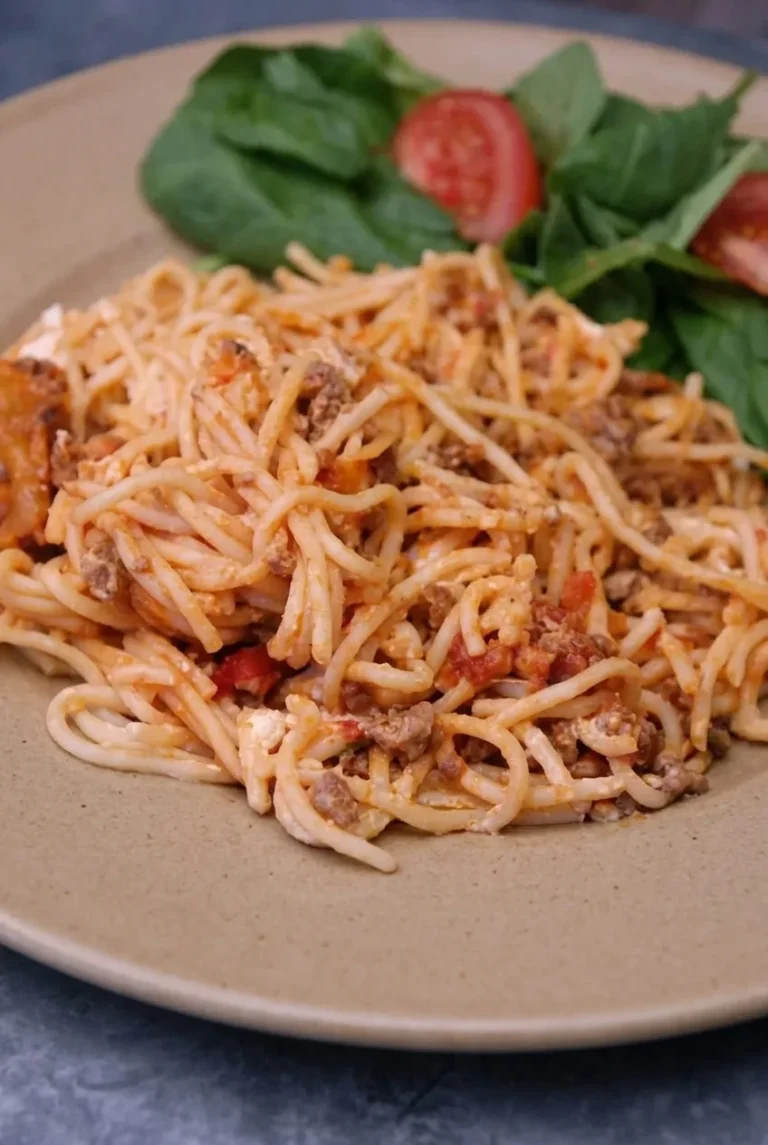
Fresh mushrooms are not needed because the soup provides mushroom flavor. For a fresh-mushroom variation, add 4 ounces (about 115 g) sliced mushrooms with the pepper and sauté until their released moisture cooks off before making the sauce.

How to Store and Reheat Chicken Tetrazzini

Cool leftovers promptly and refrigerate in an airtight container for 3 to 4 days. Reheat gently on the stovetop or in the microwave with a splash of chicken broth or milk to loosen the sauce. In the microwave, use short intervals and stir between them.

Freezing is possible, but the spaghetti and creamy sauce may soften after thawing. If freezing, use an airtight freezer-safe container. Thaw overnight in the refrigerator, then reheat gently with a little broth.

Serve with a simple green salad or sautéed spinach. For another creamy chicken pasta dinner, try Creamy Chicken Pesto Pasta with Spinach and Sun-Dried Tomatoes. For a different chicken skillet meal, see Chicken Pot Pie Orzo.

Nutrition Information

Approximate nutrition per serving, based on 6 servings: 445 calories, 33 g protein, 13 g fat, and 47 g carbohydrates. Approximate nutrition per 100 g: 140 calories, 11 g protein, 4 g fat, and 15 g carbohydrates. Values vary with the chicken, soup, and Parmesan used.

Chicken Tetrazzini

Spaghetti, cooked chicken, and red bell pepper are tossed in a creamy mushroom sauce and finished with Parmesan and parsley.
Course: Main Course
Cuisine: American
Prep: 15 min
Cook: 20 min
Total: 35 min
Servings: 6 Calories: 445 kcal

Equipment

  • Large pot
  • Colander
  • 12-inch skillet
  • Whisk
  • Tongs

Ingredients

For the Pasta

  • 12 ounces spaghetti (340 g)
  • Kosher salt, for the pasta water

For the Sauce

  • 1 tablespoon unsalted butter (15 g)
  • 1/2 cup finely diced red bell pepper (about 75 g)
  • 1 small garlic clove, minced
  • 1 can condensed cream of mushroom soup (10.5 ounces or 298 g)
  • 3/4 cup low-sodium chicken broth (180 ml), plus more as needed
  • 1/3 cup sour cream (about 80 g)
  • 1/2 cup finely grated Parmesan (about 50 g), plus more for serving if desired
  • 3 cups cooked chicken, cut into bite-size pieces (about 400 g)
  • 2 tablespoons chopped fresh parsley, divided
  • Black pepper
  • Kosher salt, as needed

Instructions

  1. Bring a large pot of generously salted water to a boil. Cook the spaghetti until just al dente, checking at the earliest time listed on the package.
  2. Reserve a little pasta water, then drain the spaghetti thoroughly.
  3. While the pasta cooks, melt the butter in a wide 12-inch skillet over medium heat.
  4. Add the red bell pepper and cook, stirring, for 3 to 4 minutes, until beginning to soften but still bright. Add the garlic near the end and stir until fragrant.
  5. Whisk the condensed soup into the skillet. Gradually add the broth, whisking until smooth.
  6. Cook uncovered over medium heat for about 4 to 5 minutes, until steaming and gently bubbling.
  7. Reduce the heat to medium-low. Stir in the sour cream and Parmesan, keeping the sauce at a gentle simmer rather than a hard boil.
  8. Fold in the cooked chicken and heat for 2 to 3 minutes, until hot throughout. Add black pepper and taste before adding salt.
  9. Add the drained spaghetti and gently toss with tongs over low to medium-low heat for 1 to 2 minutes, until hot and evenly coated.
  10. If the sauce is too thick, add a small splash of broth or reserved pasta water until it is loose and creamy.
  11. Stir in half the parsley and scatter the remaining parsley over the skillet. Let stand off the heat for 2 to 3 minutes, then serve.

Tips

  • Cook the spaghetti just until al dente so it stays distinct when tossed with the sauce.
  • Use low-sodium broth and taste the sauce before adding salt because the soup and Parmesan are already salty.
  • Lower the heat before adding sour cream and avoid boiling the sauce hard.
  • Loosen thickening sauce with a small splash of broth or reserved pasta water.
  • Use a wide skillet to toss the spaghetti without breaking the strands.

Variations

  • Fresh Mushroom Chicken Tetrazzini: Add 4 ounces (about 115 g) sliced mushrooms with the bell pepper and sauté until their released moisture cooks off before making the sauce.

Notes

Refrigerate leftovers in an airtight container for 3 to 4 days. Reheat gently with a splash of broth or milk; thaw frozen leftovers overnight in the refrigerator before reheating.

Nutrition

Calories: 445 kcal | Protein: 33 g | Fat: 13 g | Carbohydrates: 47 g