Author

Julia

Browsing

Gingerbread Sandwich Cookies with Cream Cheese Filling

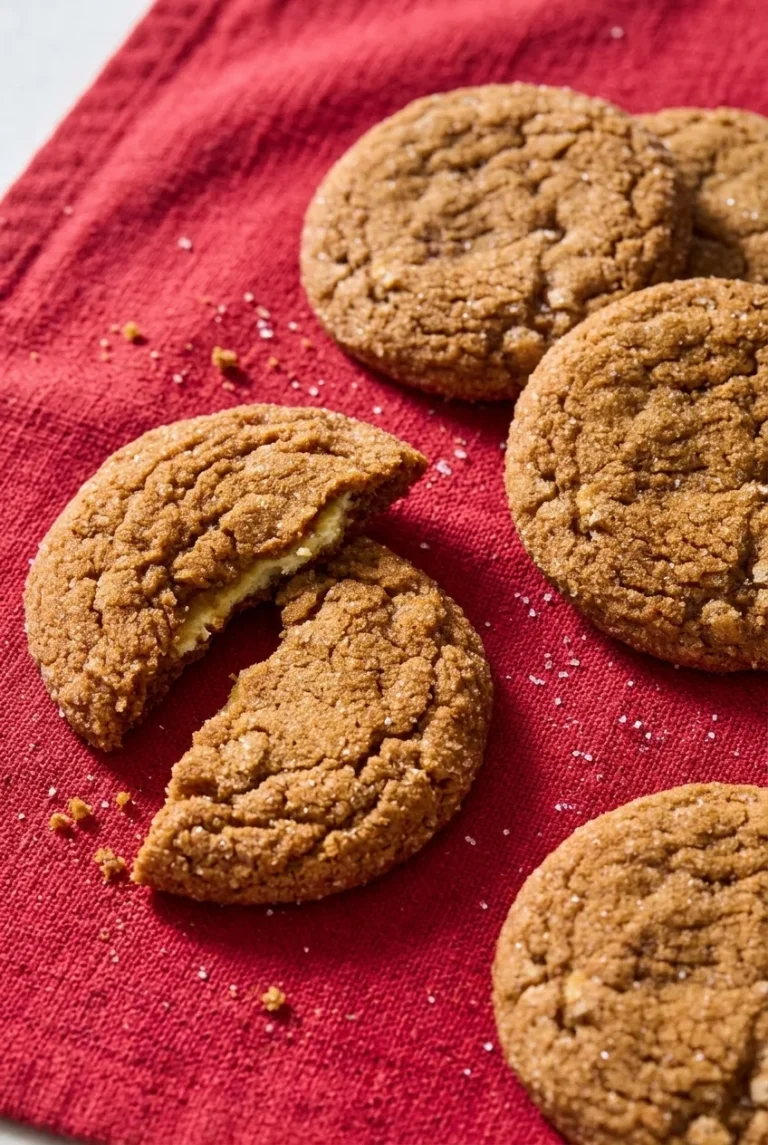
Soft molasses-ginger cookies get a coating of granulated sugar before baking, giving their round tops a little sparkle and a gentle crinkle. A thick vanilla cream cheese filling sits between each pair. These are scooped drop cookies, not rolled cut-outs; a short chill makes the dough easier to portion and coat.

For a tender sandwich cookie, watch the bake rather than waiting for the centers to feel firm. Let the cookies cool completely before filling them. The recipe makes about 12 sandwiches and takes about 1 hour 20 minutes, depending on baking batches and cooling time.

Ingredients
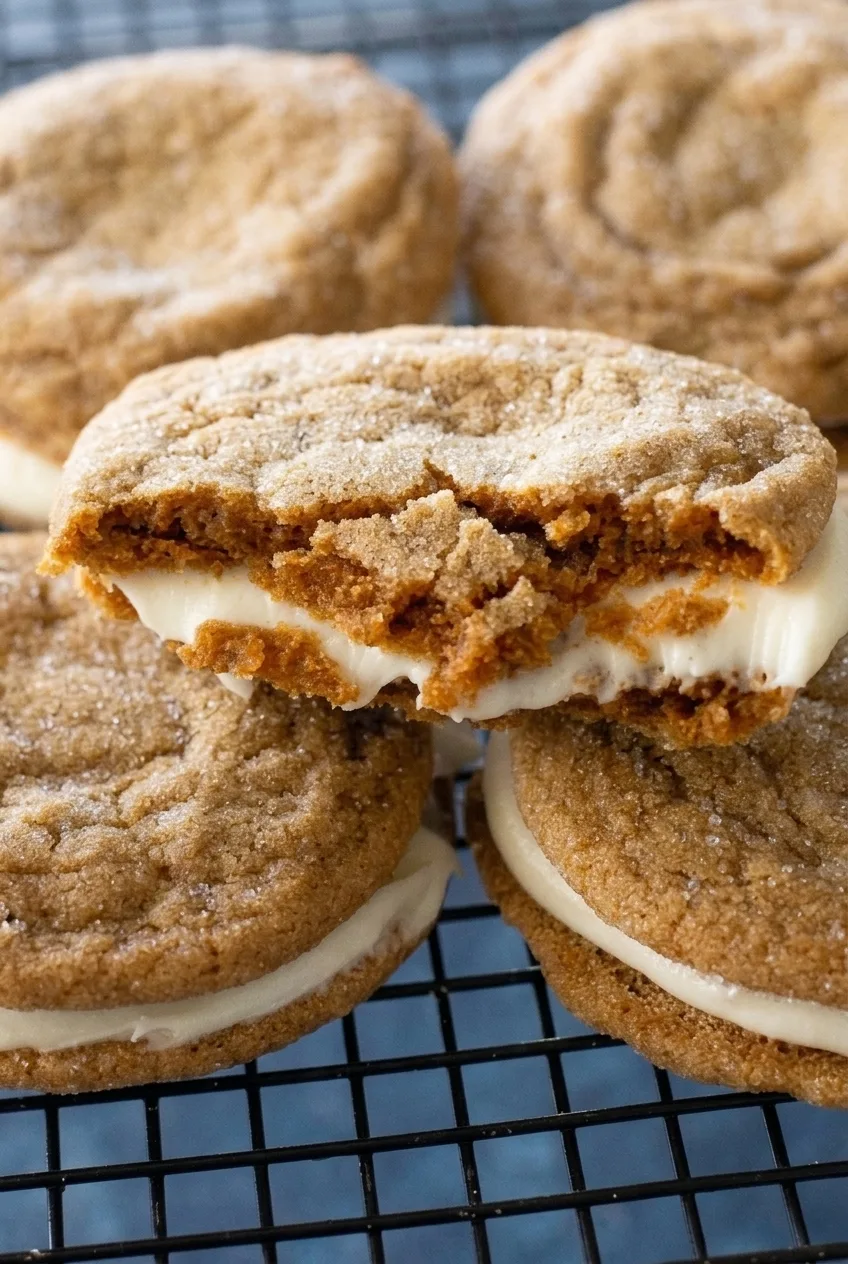
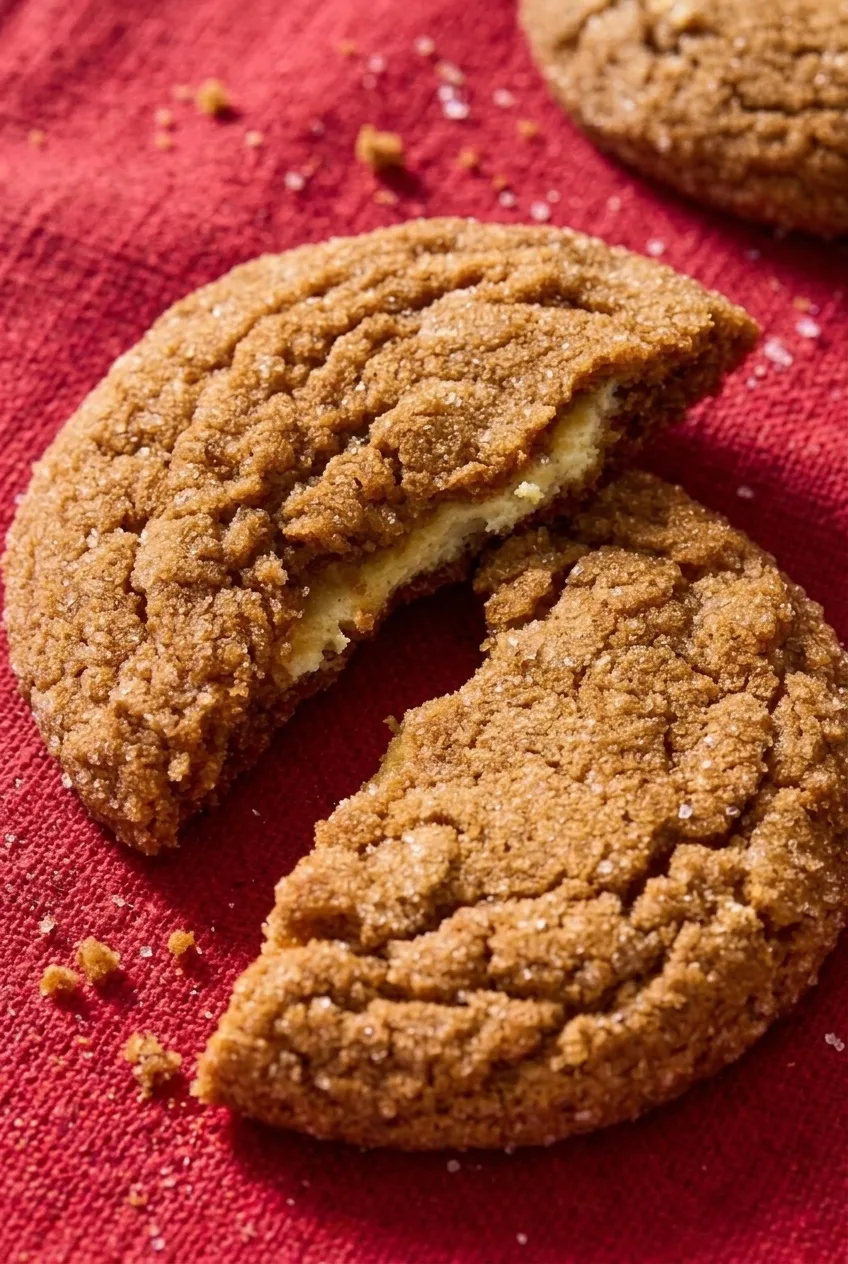
Close detail of a broken gingerbread sandwich cookie showing its tender crumb and thick cream cheese filling.

For the cookies

  • 2 1/4 cups all-purpose flour (280g)
  • 1 teaspoon baking soda
  • 1/2 teaspoon fine salt
  • 2 teaspoons ground ginger
  • 1 1/2 teaspoons ground cinnamon
  • 1/4 teaspoon ground cloves
  • 3/4 cup unsalted butter, softened (170g)
  • 3/4 cup packed light brown sugar (150g)
  • 1/4 cup granulated sugar (50g)
  • 1 large egg
  • 1/4 cup unsulphured molasses (85g); avoid blackstrap molasses, which can taste bitter
  • 1 teaspoon vanilla extract
  • About 1/3 cup granulated sugar, for coating (65g)

For the cream cheese filling

  • 4 ounces full-fat block cream cheese, softened (115g)
  • 4 tablespoons unsalted butter, softened (55g)
  • 1 1/2 cups powdered sugar (180g)
  • 1 teaspoon vanilla extract
  • 1–2 teaspoons milk, only if needed to loosen the filling

Block cream cheese helps the filling stay thick; spreadable tub cream cheese may make it too loose. If you need a molasses-free option, use a separate formula such as these gingerbread cookies without molasses rather than leaving the molasses out of this dough.

How to Make Gingerbread Sandwich Cookies
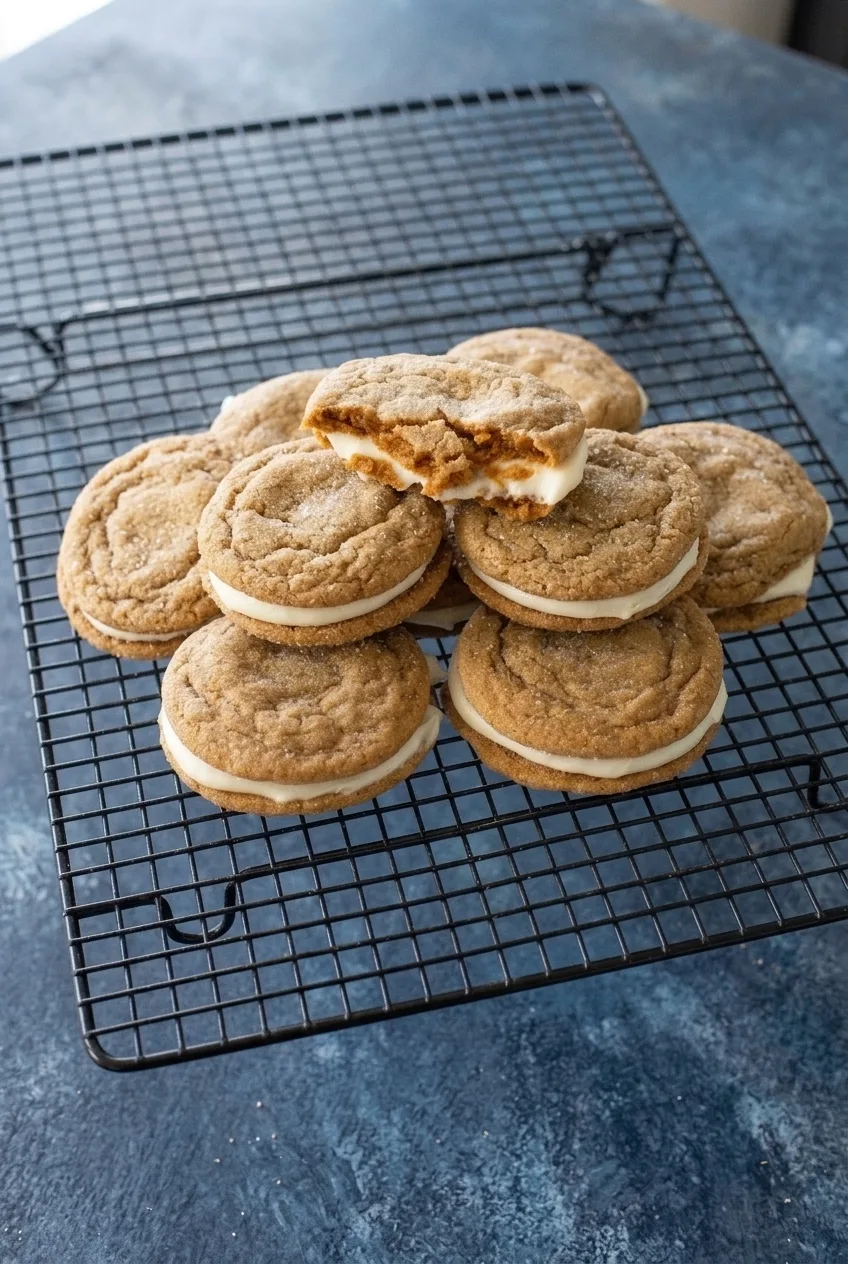
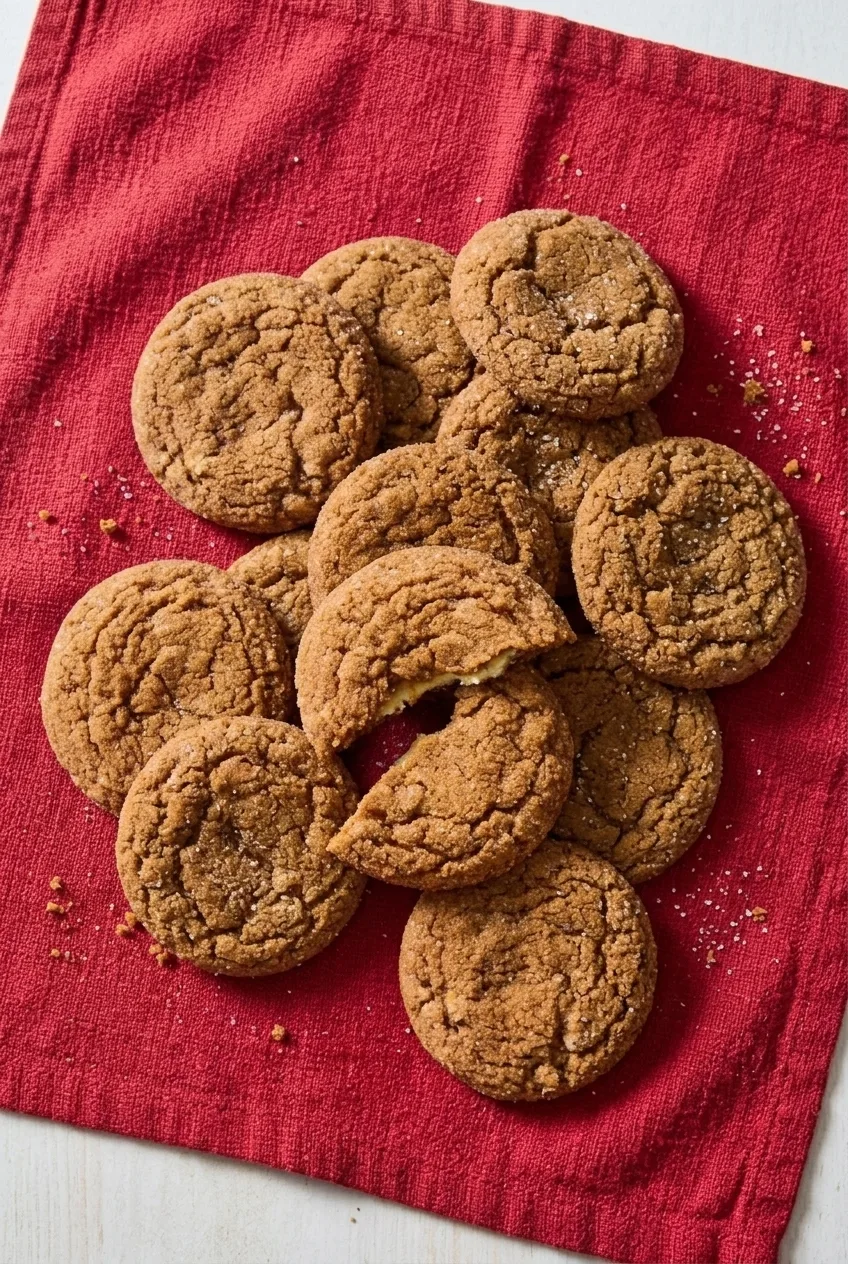
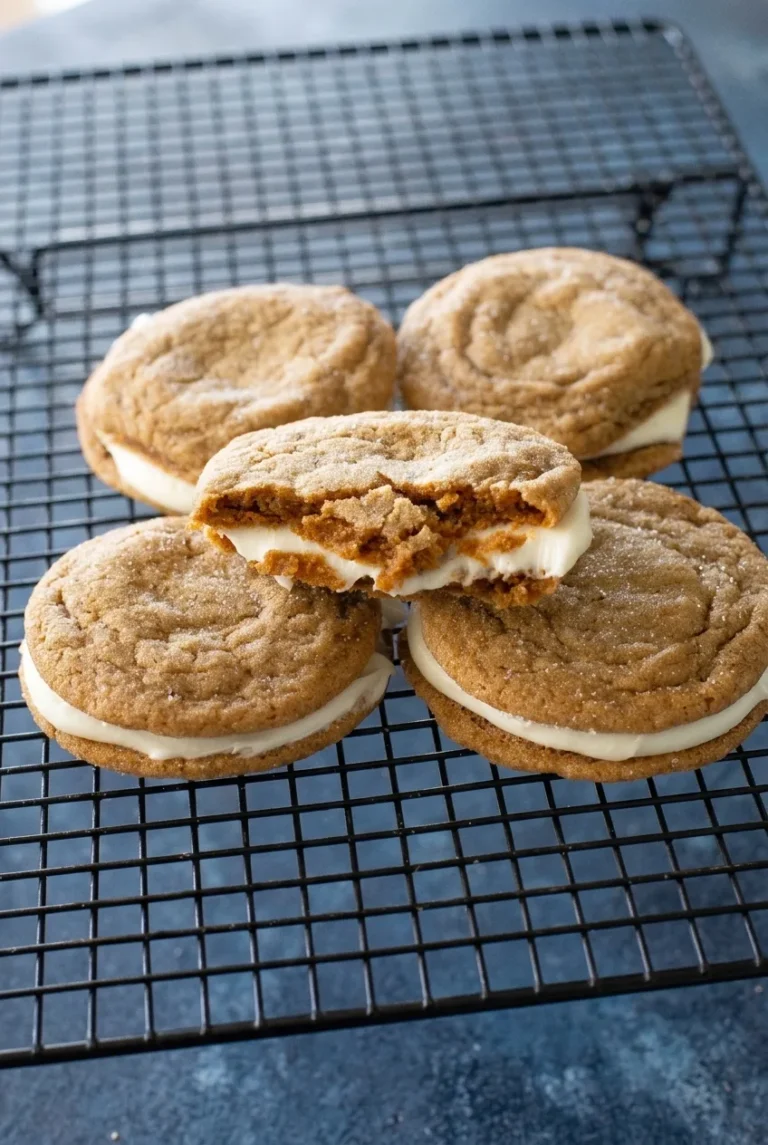
A wider view of gingerbread sandwich cookies arranged on a wire rack, with one opened to reveal the filling.
  1. Mix the dry ingredients: Whisk the flour, baking soda, salt, ginger, cinnamon, and cloves in a medium bowl.
  2. Make the dough: Beat the butter, brown sugar, and 1/4 cup granulated sugar until creamy. Beat in the egg, molasses, and vanilla. Add the dry ingredients and mix just until no flour remains. The dough will be thick and soft.
  3. Chill and preheat: Cover and refrigerate the dough for about 30 minutes, until less sticky but still easy to scoop. Set an oven rack in the center, preheat to 350°F (175°C), and line light-colored rimmed baking sheets with parchment.
  4. Portion and coat: Scoop 2-tablespoon portions of dough and roll them into balls. Coat each ball in the remaining granulated sugar and place about 2 inches apart on the prepared sheets.
  5. Bake: Bake one sheet at a time for about 9–11 minutes, checking at 9 minutes. Remove the cookies when the edges are set and the tops are no longer shiny; small cracks may appear, and the centers can still feel soft.
  6. Cool: Leave the cookies on the baking sheet for about 5 minutes so they firm up enough to move. Transfer carefully to a wire rack and cool completely.
  7. Make the filling: Beat the cream cheese and butter until smooth. Add the powdered sugar and vanilla, then beat until thick and creamy. If it is too stiff to spread, add milk 1 teaspoon at a time.
  8. Assemble: Pair cookies of similar size. Spread or pipe filling onto the flat side of half the cookies, leaving a narrow border. Top with the remaining cookies and press gently until the filling is visible at the edges.

How to Tell When the Cookies Are Done

Look for set edges and tops that have lost their shine, even if the centers still seem soft. The cookies continue to firm up during their 5-minute rest on the hot sheet. Baking until they feel fully firm in the oven can make them crisp instead of tender. Smaller portions may finish sooner, while larger ones may need longer.

How to Keep the Filling in Place

Even a little warmth in the cookies can loosen the cream cheese filling, so wait until they are completely cool. Keep the filling thick, match similar-sized cookies, and press lightly rather than flattening the sandwiches. Break or cut one open when serving to show the soft crumb and filling.

Storage and Make-Ahead

Refrigerate assembled sandwiches in an airtight container and use within about 3 days. The cookies may soften as they sit. Let them stand briefly at room temperature for a softer bite, but do not heat them; the filling can melt.

Keep unfilled cookies in a sealed container for 2–3 days, or make the cookies and filling ahead separately and refrigerate the filling. For longer dough storage, freeze portioned balls before coating them in sugar. Thaw in the refrigerator, roll in sugar, and bake as directed, checking for doneness. Freezing the assembled sandwiches is not recommended because their texture after thawing is uncertain.

For another spiced sandwich-cookie idea, try gingerbread oatmeal cream pies.

Nutrition

Approximate nutrition per sandwich cookie, based on 12 sandwiches: 425 calories, 4g protein, 19g fat, and 60g carbohydrates. Approximate nutrition per 100g: 440 calories, 4g protein, 20g fat, and 63g carbohydrates. Values vary with cookie size, ingredient brands, and how much coating sugar adheres.

Gingerbread Sandwich Cookies with Cream Cheese Filling

Soft molasses-ginger cookies coated in sugar are sandwiched with a thick vanilla cream cheese filling.
Course: Dessert
Cuisine: American
Prep: 60 min
Cook: 20 min
Total: 80 min
Servings: 12 Calories: 425 kcal

Equipment

  • Mixing bowls
  • Electric mixer
  • Baking sheets
  • Parchment paper
  • Cookie scoop
  • Wire rack

Ingredients

For the cookies

  • 2 1/4 cups all-purpose flour (280g)
  • 1 teaspoon baking soda
  • 1/2 teaspoon fine salt
  • 2 teaspoons ground ginger
  • 1 1/2 teaspoons ground cinnamon
  • 1/4 teaspoon ground cloves
  • 3/4 cup unsalted butter, softened (170g)
  • 3/4 cup packed light brown sugar (150g)
  • 1/4 cup granulated sugar (50g)
  • 1 large egg
  • 1/4 cup unsulphured molasses (85g)
  • 1 teaspoon vanilla extract
  • About 1/3 cup granulated sugar, for coating (65g)

For the cream cheese filling

  • 4 ounces full-fat block cream cheese, softened (115g)
  • 4 tablespoons unsalted butter, softened (55g)
  • 1 1/2 cups powdered sugar (180g)
  • 1 teaspoon vanilla extract
  • 1–2 teaspoons milk, only if needed to loosen the filling

Instructions

  1. Whisk the flour, baking soda, salt, ginger, cinnamon, and cloves in a medium bowl.
  2. Beat the butter, brown sugar, and 1/4 cup granulated sugar until creamy.
  3. Beat in the egg, molasses, and vanilla. Add the dry ingredients and mix just until no flour remains.
  4. Cover the dough and refrigerate for about 30 minutes, until less sticky but still easy to scoop.
  5. Set a rack in the center of the oven, preheat to 350°F (175°C), and line light-colored rimmed baking sheets with parchment.
  6. Scoop 2-tablespoon portions of dough and roll into balls. Coat each ball in the remaining granulated sugar and place about 2 inches apart on the baking sheets.
  7. Bake one sheet at a time for about 9–11 minutes, checking at 9 minutes. Remove when the edges are set and the tops are no longer shiny.
  8. Cool the cookies on the baking sheet for about 5 minutes, then transfer carefully to a wire rack and cool completely.
  9. Beat the cream cheese and butter until smooth. Add the powdered sugar and vanilla and beat until thick and creamy. If needed, add milk 1 teaspoon at a time.
  10. Pair cookies of similar size. Spread or pipe filling onto the flat side of half the cookies, leaving a narrow border.
  11. Top with the remaining cookies and press gently until the filling is visible at the edges.

Tips

  • Chill the dough to make it less sticky and easier to scoop and coat.
  • Use full-fat block cream cheese to keep the filling thick; spreadable tub cream cheese may make it too loose.
  • Take the cookies out when the edges are set and the tops have lost their shine, even if the centers still feel soft.
  • Let the cookies cool completely before filling so the cream cheese filling does not loosen.
  • Match similar-sized cookies and press the sandwiches together gently.
Notes

Use unsulphured molasses, not blackstrap, which can taste bitter. Refrigerate assembled sandwiches in an airtight container and use within about 3 days. Unfilled cookies keep sealed for 2–3 days.

Nutrition

Calories: 425 kcal | Protein: 4 g | Fat: 19 g | Carbohydrates: 60 g

Gingerbread Biscotti

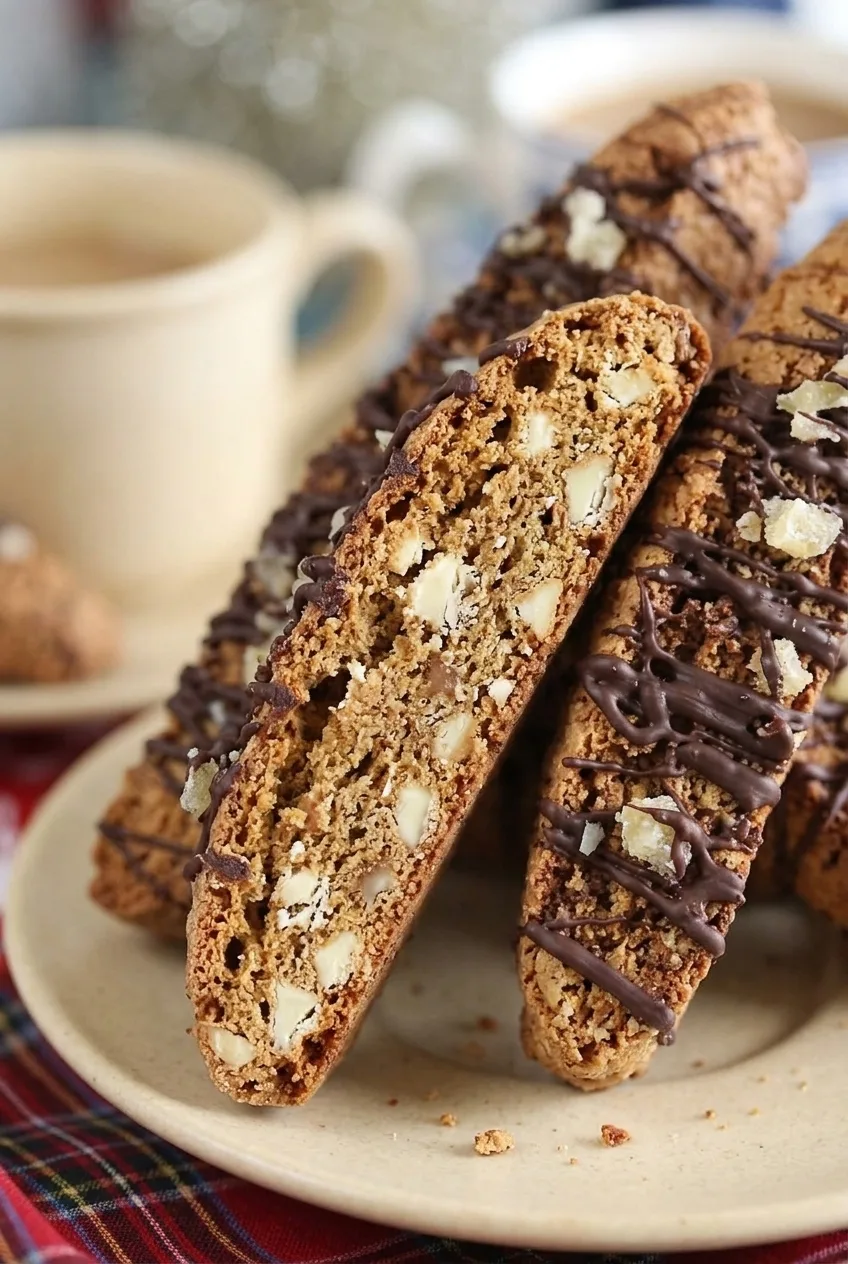
Gingerbread biscotti get their firm, dunkable texture from two bakes: first as molasses-and-spice logs, then as long diagonal slices. Small white chocolate chunks dot the crumb, and a thin dark chocolate drizzle finishes the cooled slices.

The dough is tacky, so shape it with lightly damp hands. Slice the logs while they’re still slightly warm, then bake the slices until their cut faces look dry. They’ll firm further as they cool.

For another crisp molasses-and-ginger cookie, try crispy gingersnap cookies.

Ingredients for Gingerbread Biscotti

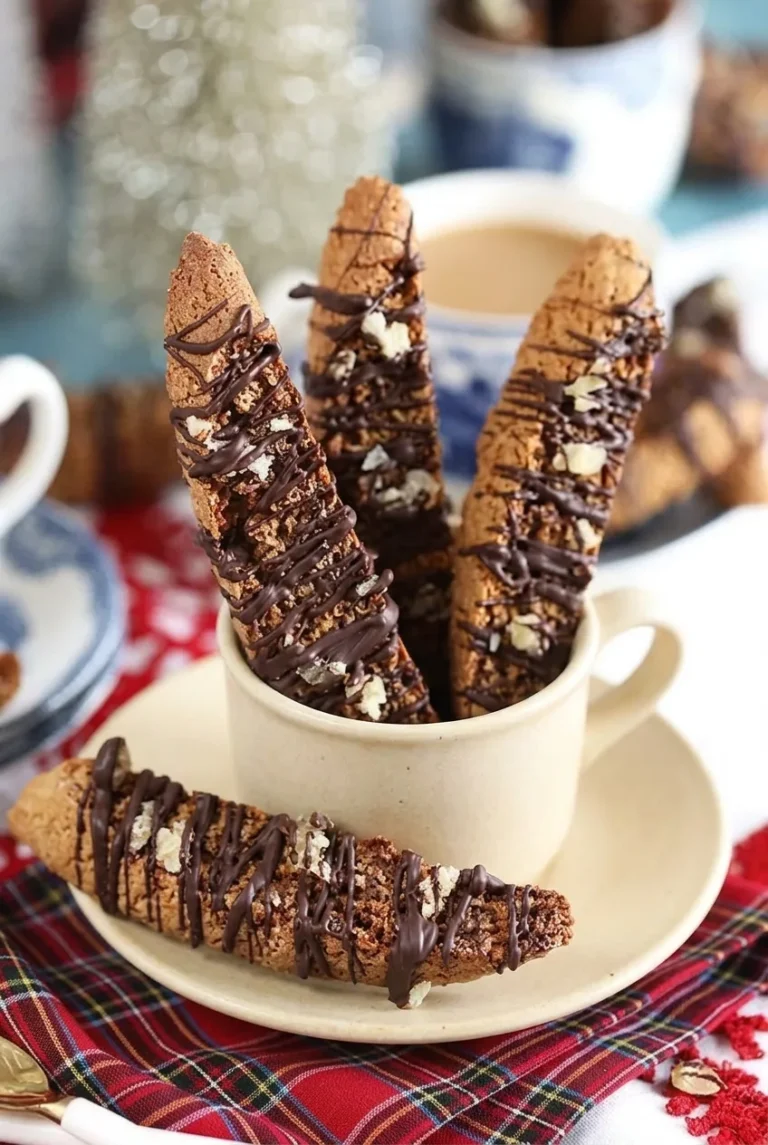
Close-up of crisp gingerbread biscotti showing pale chocolate chunks, spiced crumb, and dark chocolate drizzle
  • 2 cups all-purpose flour (250g)
  • 1 teaspoon baking powder
  • 2 teaspoons ground ginger
  • 1 1/2 teaspoons ground cinnamon
  • 1/4 teaspoon ground cloves
  • 1/2 teaspoon fine salt
  • 5 tablespoons unsalted butter, softened (70g)
  • 1/2 cup packed light brown sugar (100g)
  • 2 large eggs
  • 1/4 cup unsulphured molasses, not blackstrap (85g)
  • 1 teaspoon vanilla extract
  • 1/2 cup white chocolate, chopped into small chunks (85g)
  • 3 ounces semisweet or dark chocolate, chopped (85g)

How to Make Gingerbread Biscotti

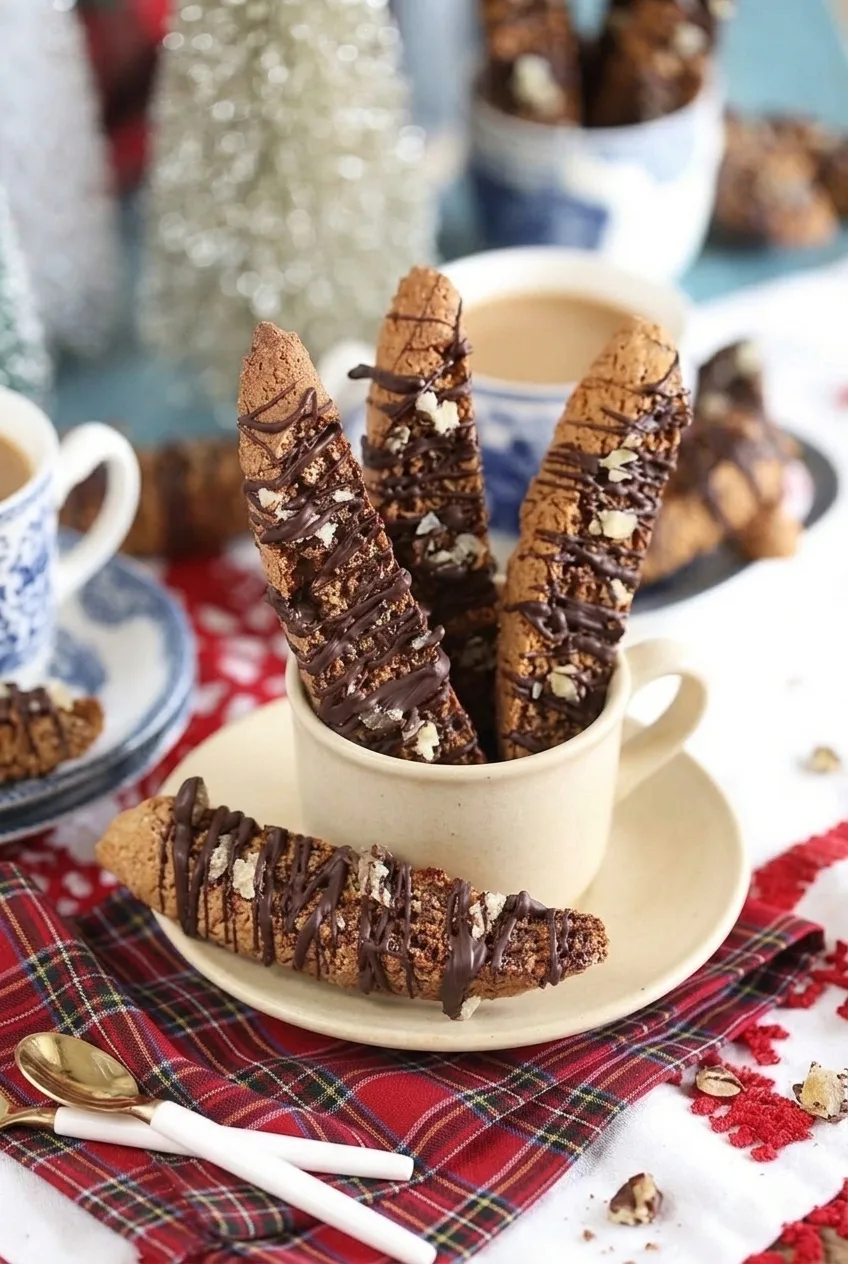
A wider view of chocolate-drizzled gingerbread biscotti in a ceramic cup with extra slices on a plate
  1. Prepare the oven and pan: Preheat the oven to 350°F (175°C) with a rack in the center. Line a rimmed baking sheet with parchment. Whisk together the flour, baking powder, ginger, cinnamon, cloves, and salt.
  2. Mix the dough: Beat the butter and brown sugar until combined. Mix in the eggs, molasses, and vanilla. Add the dry ingredients and mix just until a thick, tacky dough forms. Fold in the white chocolate chunks.
  3. Shape the logs: Divide the dough in half. With lightly damp hands, shape two flattened logs on the prepared sheet, each about 10 inches long and 3 inches wide. Leave generous space between them for spreading; use a second sheet if needed. Avoid working extra flour into the dough.
  4. Bake the logs: Bake uncovered for about 25 minutes, checking at 22 minutes. The surfaces should look set and the edges lightly browned, though the logs may still have a little give. Cool on the pan for 10 to 15 minutes, until manageable but still slightly warm.
  5. Slice diagonally: Reduce the oven to 325°F (165°C). Using a serrated knife and a gentle sawing motion, cut the logs diagonally into slices about 1/2 inch thick. Arrange the slices cut-side down with a little space between them, using a second sheet if necessary.
  6. Bake the slices again: Bake for about 10 minutes, turn each slice, then bake for about 10 minutes more. Start checking around 8 minutes on each side. Remove the biscotti when the cut faces look dry and lightly golden, not deeply browned. Cool completely before judging their final crispness.
  7. Drizzle with chocolate: Melt the semisweet or dark chocolate gently over low heat or in short microwave intervals, stirring until smooth. Drizzle thin lines over the completely cooled biscotti. Let the chocolate set before serving or storing.

How to Slice Biscotti Without Crumbling

Don’t wait for the first-baked logs to cool completely. After a 10- to 15-minute rest, they should be sturdy enough to handle but still slightly warm and easier to cut. Saw gently rather than pressing down, especially when the knife meets a white chocolate chunk. Slices about 1/2 inch thick hold together well while keeping the long shape.

How to Tell When the Second Bake Is Done

The second bake dries the cut faces; its exact timing depends on slice thickness and how the oven bakes. Look for dry surfaces and light golden color. The biscotti may have a little give when hot, so let them cool completely before deciding whether they need more drying time. Baking until they feel rock-hard in the oven can leave them too hard once cooled.

Serving and Storing Gingerbread Biscotti

Serve with coffee, tea, or hot cocoa for dunking. For a softer gingerbread cookie instead, try soft and chewy gingerbread cookies. For another coffee-inspired gingerbread bake, see these gingerbread latte cookies.

Let the biscotti cool fully and the drizzle harden before stacking them. Store in an airtight container at room temperature for up to 2 weeks. For longer storage, freeze fully baked, cooled biscotti in an airtight container for up to 3 months and thaw at room temperature. For the cleanest finish, freeze them before drizzling and add the chocolate after thawing.

Nutrition

Approximate nutrition per biscotti, based on 22 pieces: 145 calories, 2g protein, 6g fat, and 20g carbohydrates. Approximate nutrition per 100g: 455 calories, 7g protein, 19g fat, and 64g carbohydrates. Values will vary with slice size and the chocolate used.

Gingerbread Biscotti

Twice-baked gingerbread biscotti with white chocolate chunks and a dark chocolate drizzle.
Course: Dessert
Cuisine: American
Prep: 20 min
Cook: 45 min
Total: 110 min
Servings: 22 Calories: 145 kcal

Equipment

  • Rimmed baking sheet
  • Parchment paper
  • Mixing bowls
  • Whisk
  • Electric mixer
  • Serrated knife

Ingredients

For the biscotti

  • 2 cups all-purpose flour (250g)
  • 1 teaspoon baking powder
  • 2 teaspoons ground ginger
  • 1 1/2 teaspoons ground cinnamon
  • 1/4 teaspoon ground cloves
  • 1/2 teaspoon fine salt
  • 5 tablespoons unsalted butter, softened (70g)
  • 1/2 cup packed light brown sugar (100g)
  • 2 large eggs
  • 1/4 cup unsulphured molasses, not blackstrap (85g)
  • 1 teaspoon vanilla extract
  • 1/2 cup white chocolate, chopped into small chunks (85g)

For the drizzle

  • 3 ounces semisweet or dark chocolate, chopped (85g)

Instructions

  1. Preheat the oven to 350°F (175°C) with a rack in the center. Line a rimmed baking sheet with parchment.
  2. Whisk together the flour, baking powder, ginger, cinnamon, cloves, and salt.
  3. Beat the butter and brown sugar until combined. Mix in the eggs, molasses, and vanilla.
  4. Add the dry ingredients and mix just until a thick, tacky dough forms. Fold in the white chocolate chunks.
  5. Divide the dough in half. With lightly damp hands, shape two flattened logs on the prepared sheet, each about 10 inches long and 3 inches wide. Leave space between them or use a second sheet.
  6. Bake the logs for about 25 minutes, checking at 22 minutes, until set with lightly browned edges. Cool on the pan for 10 to 15 minutes, until manageable but still slightly warm.
  7. Reduce the oven to 325°F (165°C). Use a serrated knife and gentle sawing motion to cut the logs diagonally into slices about 1/2 inch thick.
  8. Arrange the slices cut-side down with space between them, using a second sheet if needed. Bake for about 10 minutes, turn each slice, then bake for about 10 minutes more. Start checking around 8 minutes on each side; remove when the cut faces look dry and lightly golden.
  9. Cool the biscotti completely. Melt the semisweet or dark chocolate gently over low heat or in short microwave intervals, stirring until smooth.
  10. Drizzle the melted chocolate over the cooled biscotti and let it set before serving or storing.

Tips

  • Shape the tacky dough with lightly damp hands and avoid working extra flour into it.
  • Leave generous space between the logs because they spread; use a second baking sheet if needed.
  • Slice the logs while they are still slightly warm, using a gentle sawing motion rather than pressing down.
  • Check the second bake early; look for dry, lightly golden cut faces rather than deeply browned edges.
  • Let the biscotti cool completely before judging their final crispness.

Notes

Store fully cooled biscotti with set chocolate in an airtight container at room temperature for up to 2 weeks. Freeze for up to 3 months; for the cleanest finish, freeze before drizzling and add the chocolate after thawing. Nutrition is approximate per piece, based on 22 pieces.

Nutrition

Calories: 145 kcal | Protein: 2 g | Fat: 6 g | Carbohydrates: 20 g

Vegan Gingerbread Cookies

These gingerbread-person cookies have a warm molasses flavor, matte brown surfaces, and simple white icing faces and buttons. Vegan butter and a flax egg make a firm dough that can be rolled and cut; chilling it for at least an hour makes the narrow arms and legs easier to handle.

Roll the dough about 1/4 inch thick and bake until the edges are set. The centers may still feel slightly soft when the cookies come out of the oven, but they firm as they cool. The recipe makes about 16 cookies, depending on cutter size.

Ingredients for Vegan Gingerbread Cookies

Close detail of a vegan gingerbread cookie's cracked matte surface and raised white icing face and buttons

For the cookies

  • 1 tablespoon ground flaxseed
  • 3 tablespoons water
  • 3 cups all-purpose flour (375g)
  • 1 teaspoon baking soda
  • 2 teaspoons ground ginger
  • 1 teaspoon ground cinnamon
  • 1/4 teaspoon ground cloves
  • 1/2 teaspoon fine salt
  • 1/2 cup vegan butter, softened (115g)
  • 1/2 cup packed brown sugar (100g)
  • 1/2 cup unsulphured molasses (160g)
  • 1 teaspoon vanilla extract
  • Optional: up to 1/2 teaspoon extra ground ginger for a stronger spice flavor

For the icing

  • 1 cup powdered sugar (120g)
  • 1–2 tablespoons unsweetened plant milk, as needed
  • 1/4 teaspoon vanilla extract

Check that the powdered sugar is vegan. This dough uses vegan butter and flaxseed together; oil, shortening, and other egg replacements are not direct equal-quantity swaps. For a separately formulated option, try gluten-free gingerbread cookies with white icing rather than assuming a flour swap will work in this dough.

How to Make Vegan Gingerbread Cookies

A wider view of a full serving of iced vegan gingerbread people arranged on a pale wooden surface
  1. Make the flax egg: Stir the ground flaxseed and water together. Set aside for 5–10 minutes, until thick and gel-like.
  2. Mix the dough: Whisk the flour, baking soda, ginger, cinnamon, cloves, and salt in a bowl, adding the optional extra ginger if using. In a separate bowl, beat the softened vegan butter and brown sugar until creamy. Mix in the molasses, vanilla, and thickened flax mixture. Add the dry ingredients and mix just until a firm dough holds together. If it remains dry and crumbly, add plant milk 1 teaspoon at a time, only until it comes together.
  3. Chill: Divide the dough into two discs, wrap, and refrigerate for at least 1 hour.
  4. Roll and cut: Preheat the oven to 350°F (175°C). Line a light-colored baking sheet with parchment; do not grease it. Work with one disc at a time, lightly flouring the surface, rolling pin, and gingerbread-person cutter as needed. Roll to about 1/4 inch thick. Press the cutter straight down without twisting, then lift the shapes with a thin spatula and place them about 1 inch apart on the sheet. If the dough softens or becomes sticky, chill it briefly before continuing.
  5. Bake: Bake one sheet at a time for about 9–11 minutes, starting to check at 9 minutes. Remove the cookies when the edges look set and are just beginning to deepen in color. The surfaces should look matte and may have small cracks; the centers can still feel slightly soft. Smaller or thinner cut-outs may finish sooner.
  6. Cool: Leave the cookies on the baking sheet for about 5 minutes to firm up, then transfer them to a wire rack. Cool completely before icing.
  7. Ice the cookies: Stir the powdered sugar and vanilla together. Add plant milk gradually, starting with 1 tablespoon, until the icing holds a raised dot and line. If it runs, add a little more powdered sugar; if too stiff to pipe, add plant milk a few drops at a time. Pipe two eyes, a curved smile, and buttons down each cookie’s torso. Let the icing set before stacking.

How to Keep the Cut-Out Shapes Neat

Chilling makes the dough less sticky and helps the gingerbread people keep their outlines. If a disc is too firm to roll straight from the refrigerator, let it sit briefly at room temperature. Use only enough flour to prevent sticking; too much can leave the dough dry and prone to cracking.

Pressing the cutter straight down keeps the edges of the arms and legs defined. Transfer each shape with a thin spatula rather than pulling it by a narrow limb, and rechill soft cut-outs before baking. For another shape-focused option, see no-spread gingerbread cutout cookies.

How to Tell When the Cookies Are Done

For 1/4-inch cookies, look for set edges and a dry-looking, matte surface rather than waiting for the centers to feel hard. They will firm as they cool. A slightly longer bake gives a firmer, crisper cookie, but watch closely so the edges do not become deeply browned. Cutter size, dough thickness, pan, and oven can all affect the timing.

Serving and Storage

Arrange the decorated gingerbread people in a loose, overlapping pile on a platter or pale wooden board. Serve plain or with tea or plant milk. For a related non-vegan version, see classic gingerbread man cookies with simple icing.

Wrapped dough can be refrigerated for up to about 3 days or frozen for about 1 month. Thaw frozen dough overnight in the refrigerator, then let it sit briefly at room temperature if too firm to roll.

Once the icing has set, store the cookies in an airtight container at room temperature for about 4–7 days, with parchment between decorated layers. Baked cookies can also be frozen in an airtight container with parchment between layers; thaw before serving. No reheating is needed.

Nutrition

Approximate nutrition per cookie, based on 16 cookies and including icing: 225 calories, 3g protein, 6g fat, and 40g carbohydrates. Approximate nutrition per 100g: 400 calories, 5g protein, 11g fat, and 71g carbohydrates. Values vary with cookie size, vegan butter, plant milk, and amount of icing used.

Vegan Gingerbread Cookies

Molasses gingerbread-person cookies made with vegan butter and a flax egg, then decorated with simple white icing.
Course: Dessert
Cuisine: American
Prep: 95 min
Cook: 22 min
Total: 117 min
Servings: 16 Calories: 225 kcal

Equipment

  • Mixing bowls
  • Whisk
  • Electric mixer
  • Rolling pin
  • Gingerbread-person cutter
  • Baking sheet
  • Parchment paper
  • Thin spatula
  • Wire rack
  • Piping bag

Ingredients

For the cookies

  • 1 tablespoon ground flaxseed
  • 3 tablespoons water
  • 3 cups all-purpose flour (375g)
  • 1 teaspoon baking soda
  • 2 teaspoons ground ginger
  • 1 teaspoon ground cinnamon
  • 1/4 teaspoon ground cloves
  • 1/2 teaspoon fine salt
  • 1/2 cup vegan butter, softened (115g)
  • 1/2 cup packed brown sugar (100g)
  • 1/2 cup unsulphured molasses (160g)
  • 1 teaspoon vanilla extract
  • Optional: up to 1/2 teaspoon extra ground ginger

For the icing

  • 1 cup powdered sugar (120g)
  • 1–2 tablespoons unsweetened plant milk, as needed
  • 1/4 teaspoon vanilla extract

Instructions

  1. Stir the ground flaxseed and water together. Set aside for 5–10 minutes, until thick and gel-like.
  2. Whisk the flour, baking soda, ginger, cinnamon, cloves, and salt together, adding the optional extra ginger if using.
  3. Beat the vegan butter and brown sugar in a separate bowl until creamy.
  4. Mix in the molasses, vanilla, and thickened flax mixture.
  5. Add the dry ingredients and mix just until a firm dough forms. If it is dry and crumbly, add plant milk 1 teaspoon at a time until it comes together.
  6. Divide the dough into two discs, wrap, and refrigerate for at least 1 hour.
  7. Preheat the oven to 350°F (175°C). Line a light-colored baking sheet with parchment paper; do not grease it.
  8. Working with one disc at a time, lightly flour the surface and rolling pin, then roll the dough about 1/4 inch thick.
  9. Cut out gingerbread people by pressing the cutter straight down without twisting. Lift the shapes with a thin spatula and place them about 1 inch apart on the baking sheet.
  10. Bake one sheet at a time for about 9–11 minutes, checking at 9 minutes. Remove the cookies when the edges are set and just beginning to deepen in color.
  11. Cool the cookies on the baking sheet for about 5 minutes, then transfer them to a wire rack to cool completely.
  12. Stir the powdered sugar and vanilla together. Gradually add plant milk, starting with 1 tablespoon, until the icing holds a raised dot and line.
  13. Pipe eyes, a curved smile, and buttons onto each cookie. Let the icing set before stacking.

Tips

  • Chill the dough for at least 1 hour to make it less sticky and help the cut-out shapes hold their outlines.
  • Use only enough flour to prevent sticking; too much can make the dough dry and prone to cracking.
  • If chilled dough is too firm to roll, let it sit briefly at room temperature.
  • Transfer cut-outs with a thin spatula rather than pulling on their narrow arms or legs.
  • If the dough or cut-outs soften while working, chill them briefly before continuing.
  • Look for set edges and a matte surface; the centers may still feel slightly soft when the cookies come out.

Notes

Check that the powdered sugar is vegan. Store iced cookies in an airtight container at room temperature for 4–7 days, with parchment between layers. Dough can be refrigerated for up to 3 days or frozen for about 1 month. Nutrition is approximate per cookie, based on 16 cookies and including icing.

Nutrition

Calories: 225 kcal | Protein: 3 g | Fat: 6 g | Carbohydrates: 40 g

Gluten-Free Gingerbread Cookies

These gingerbread cookies are rolled and cut into five-pointed stars, then piped with a white icing outline that leaves each brown center bare. Molasses, ginger, cinnamon, and cloves give the cookies their flavor; a measure-for-measure gluten-free flour blend makes the dough workable for cutouts.

Chill the dough before rolling to help the star points hold their shape. Bake until the edges are set and slightly darker than the centers, then let the cookies firm on the pan before moving them. The recipe makes about 20 cookies, depending on cutter size.

Ingredients for Gluten-Free Gingerbread Cookies

Close view of a gingerbread star cookie showing its matte, spiced surface and raised white icing outline

For the cookies

  • 2 1/2 cups measure-for-measure gluten-free flour blend (350g), preferably one containing xanthan gum
  • 2 teaspoons ground ginger
  • 1 teaspoon ground cinnamon
  • 1/4 teaspoon ground cloves
  • 1/2 teaspoon baking soda
  • 1/2 teaspoon fine salt
  • 1/2 cup unsalted butter, softened (113g)
  • 2/3 cup packed brown sugar (135g)
  • 1/3 cup molasses (115g)
  • 1 large egg

For the white icing

  • 1 cup powdered sugar (120g)
  • 1 1/2 teaspoons meringue powder
  • 2 to 3 tablespoons water, added gradually as needed

If the flour blend contains no xanthan gum or equivalent binder, add 1/2 teaspoon xanthan gum to the dry ingredients. Do not add it if the blend already contains a binder.

How to Make Gluten-Free Gingerbread Cookies

A wider view of outlined gluten-free gingerbread stars on a full plate and cooling rack over blue fabric
  1. Whisk the dry ingredients: In a bowl, whisk together the flour blend, ginger, cinnamon, cloves, baking soda, and salt. Add the optional xanthan gum here if needed.
  2. Mix the dough: Beat the butter and brown sugar until creamy. Mix in the molasses and egg, then add the dry ingredients. Mix just until the dough holds together and no dry flour remains.
  3. Chill: Divide the dough in half and flatten each portion into a disk. Wrap and refrigerate for about 1 to 2 hours, until cool and firm but still rollable.
  4. Roll and cut: Preheat the oven to 350°F (175°C) with a rack in the center. Roll one disk about 1/4 inch thick between sheets of parchment or on a lightly dusted surface. Cut five-pointed stars in a mix of sizes, gently rerolling the scraps. Keep the remaining dough refrigerated.
  5. Bake: Arrange the stars about 1 inch apart on a light-colored baking sheet lined with parchment or a silicone mat. Bake uncovered, one sheet at a time, for about 9 to 11 minutes. Start checking small stars at 8 to 9 minutes; larger ones may need closer to 11 minutes. Remove them when the edges are set and slightly darker than the centers and the centers look dry rather than glossy.
  6. Cool: Leave the cookies on the baking sheet for 5 to 10 minutes so they can firm up, then transfer them carefully to a rack. Cool completely before decorating.
  7. Pipe the outlines: Mix the powdered sugar and meringue powder. Add water gradually until the icing is thick but pipeable and holds a raised line; add it a few drops at a time as you approach that consistency. Pipe around each star’s perimeter, following the points and leaving the center bare. Let the icing set before packing the cookies.

How to Keep the Star Points Neat

Work with one chilled dough disk at a time. If the dough softens or the points stretch during transfer, refrigerate it briefly before continuing. Support each cutout with a thin spatula, or cut the stars directly on parchment and chill the lined sheet briefly before baking if the shapes become distorted.

For another cutout style, try No-Spread Gingerbread Cutout Cookies with White Icing.

Choosing a Gluten-Free Flour Blend

Use a measure-for-measure blend intended for baking, and check whether it already contains xanthan gum or another binder. Blends absorb moisture differently, so the dough may feel slightly different from one brand to another. Almond flour is not a one-for-one substitute; it needs a separate cookie formula.

Storage and Freezing

Once the cookies are fully cool and the icing has set, store them in an airtight container at room temperature for about 3 to 4 days. Wait until the outlines are firm before stacking, and separate layers with parchment if needed.

Wrapped dough can be frozen for up to 3 months; thaw it overnight in the refrigerator before rolling. For the best appearance, freeze baked cookies undecorated and pipe the outlines after they thaw.

For a different shape, see Classic Gingerbread Man Cookies with Simple Icing. For a different formula rather than a direct molasses swap, see Gingerbread Cookies Without Molasses.

Nutrition

Approximate nutrition per cookie, based on 20 cookies: 175 calories, 1g protein, 5g fat, and 31g carbohydrates. Per 100g: approximately 440 calories, 3g protein, 13g fat, and 78g carbohydrates. Values vary with the flour blend, cutter size, and amount of icing used.

Gluten-Free Gingerbread Cookies

Cutout gingerbread stars made with gluten-free flour, molasses, and warm spices, finished with piped white icing outlines.
Course: Dessert
Cuisine: American
Prep: 30 min
Cook: 20 min
Total: 150 min
Servings: 20 Calories: 175 kcal

Equipment

  • Mixing bowls
  • Whisk
  • Electric mixer
  • Rolling pin
  • Star cookie cutters
  • Baking sheet
  • Parchment paper
  • Cooling rack
  • Piping bag

Ingredients

For the cookies

  • 2 1/2 cups measure-for-measure gluten-free flour blend (350 g), preferably with xanthan gum
  • 2 teaspoons ground ginger
  • 1 teaspoon ground cinnamon
  • 1/4 teaspoon ground cloves
  • 1/2 teaspoon baking soda
  • 1/2 teaspoon fine salt
  • 1/2 teaspoon xanthan gum, optional if the flour blend has no binder
  • 1/2 cup unsalted butter, softened (113 g)
  • 2/3 cup packed brown sugar (135 g)
  • 1/3 cup molasses (115 g)
  • 1 large egg

For the white icing

  • 1 cup powdered sugar (120 g)
  • 1 1/2 teaspoons meringue powder
  • 2 to 3 tablespoons water, added gradually as needed

Instructions

  1. Whisk together the flour blend, ginger, cinnamon, cloves, baking soda, and salt. Add the optional xanthan gum if the flour blend contains no binder.
  2. Beat the butter and brown sugar until creamy. Mix in the molasses and egg.
  3. Add the dry ingredients and mix just until the dough holds together and no dry flour remains.
  4. Divide the dough in half, flatten each portion into a disk, wrap, and refrigerate for 1 to 2 hours, until cool and firm but still rollable.
  5. Preheat the oven to 350°F (175°C) with a rack in the center.
  6. Roll one disk about 1/4 inch thick between sheets of parchment or on a lightly dusted surface. Cut out five-pointed stars, gently rerolling scraps, and keep the remaining dough refrigerated.
  7. Arrange the stars about 1 inch apart on a parchment-lined or silicone-mat-lined light-colored baking sheet.
  8. Bake one sheet at a time for 9 to 11 minutes. Start checking small stars at 8 to 9 minutes; remove the cookies when the edges are set and slightly darker than the centers and the centers look dry rather than glossy.
  9. Cool the cookies on the baking sheet for 5 to 10 minutes, then carefully transfer them to a rack and cool completely.
  10. Mix the powdered sugar and meringue powder. Add water gradually until the icing is thick, pipeable, and holds a raised line.
  11. Pipe an outline around each star, following the points and leaving the center bare. Let the icing set before packing.

Tips

  • Check whether the gluten-free flour blend already contains xanthan gum or another binder before adding more.
  • Work with one chilled dough disk at a time and refrigerate it again if it softens.
  • Use a thin spatula to support cutouts during transfer, or cut the stars directly on parchment.
  • Watch smaller stars closely because they may finish baking sooner than larger ones.
  • Wait until the cookies are completely cool before decorating, and let the icing set before stacking.

Notes

Store cooled, iced cookies in an airtight container at room temperature for 3 to 4 days, separating layers with parchment if needed. Freeze wrapped dough for up to 3 months and thaw overnight in the refrigerator. For the best appearance, freeze baked cookies undecorated and ice after thawing.

Nutrition

Calories: 175 kcal | Protein: 1 g | Fat: 5 g | Carbohydrates: 31 g

Gingerbread Cookies Without Molasses

Honey and brown sugar sweeten these rolled gingerbread cutouts without molasses. The cookies bake golden brown with defined edges, then get white piped outlines, dots, and filled icing details.

Honey dough can feel tacky, so chill it before rolling and work with one portion at a time. Roll it about 1/4 inch thick and check the cookies early: size and bake time affect their texture, and they firm up as they cool.

Ingredients for Gingerbread Cookies Without Molasses

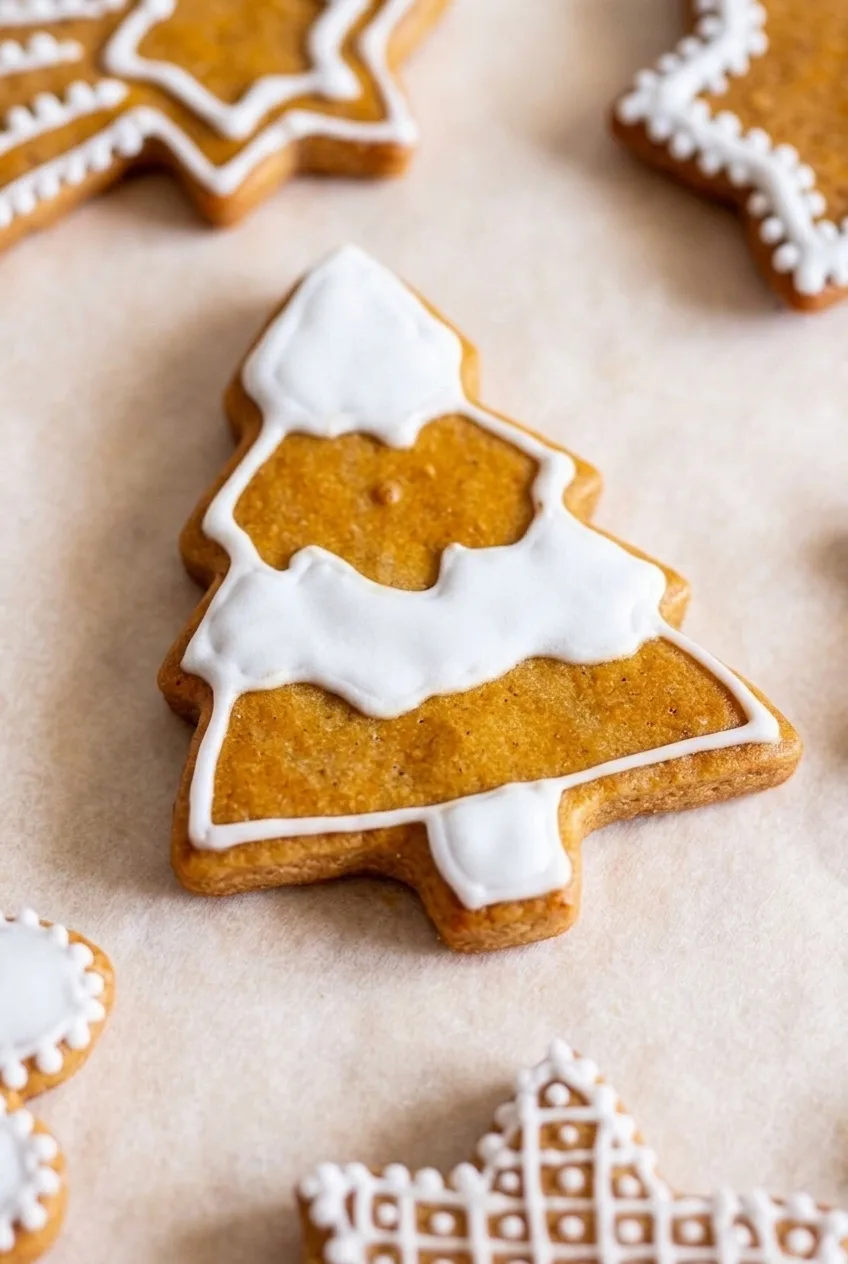
Close detail of a golden gingerbread tree cookie with smooth white icing and a defined baked edge

Cookies

  • 3 cups all-purpose flour (375g)
  • 2 teaspoons ground ginger
  • 1 teaspoon ground cinnamon
  • 1/4 teaspoon ground cloves
  • 1 teaspoon baking soda
  • 1/2 teaspoon fine salt
  • 1/2 cup unsalted butter, softened (1 stick; 115g)
  • 1/2 cup packed light brown sugar (100g)
  • 1/2 cup honey (170g)
  • 1 large egg
  • 1 teaspoon vanilla extract

White icing

  • 3 cups powdered sugar (360g)
  • 2 tablespoons meringue powder (about 20g)
  • About 4–6 tablespoons water, added gradually

Optional: A little extra all-purpose flour for rolling, if needed. Use it sparingly so the cookies do not become dry.

How to Make Gingerbread Cutout Cookies

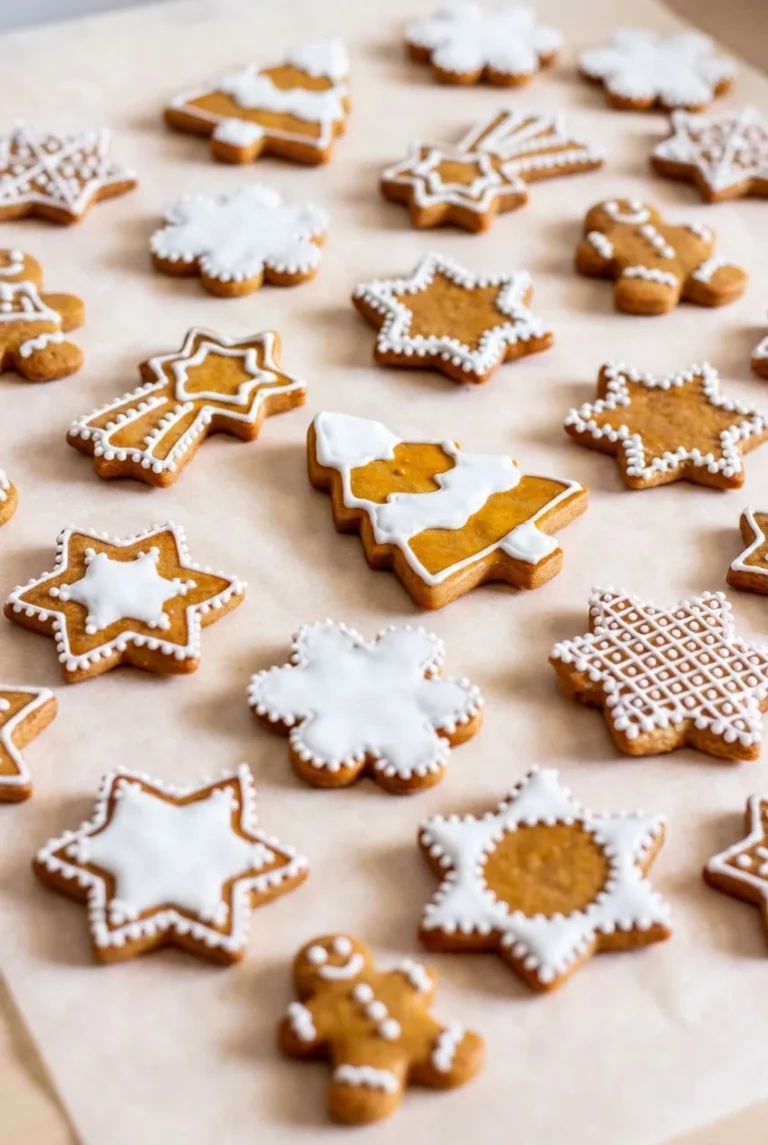
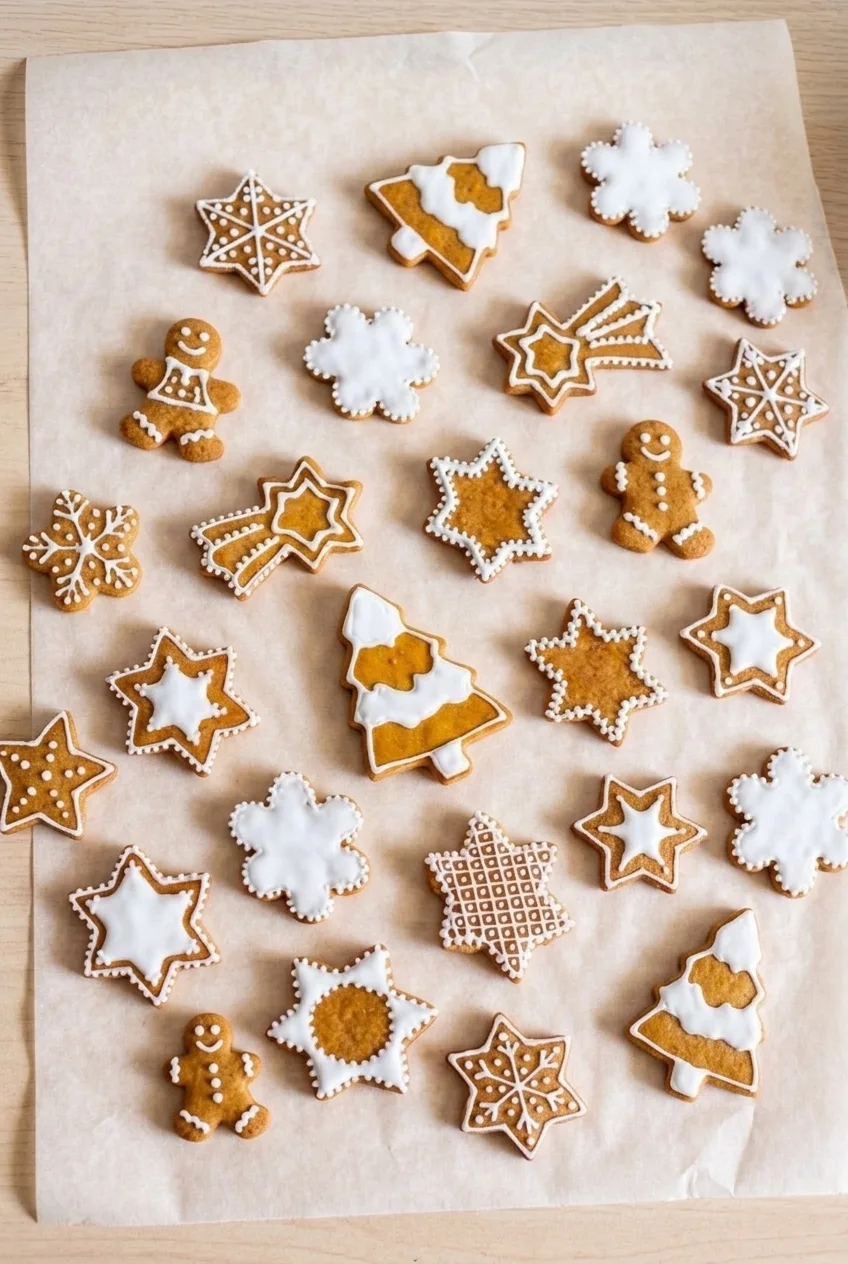
A wider view of assorted white-iced gingerbread cutouts arranged on light parchment
  1. Mix the dry ingredients: Whisk together the flour, ginger, cinnamon, cloves, baking soda, and salt.
  2. Make the dough: Beat the butter and brown sugar until creamy. Mix in the honey, egg, and vanilla. Add the dry ingredients and mix just until no dry flour remains. The dough will be soft and may feel slightly tacky.
  3. Chill: Divide the dough into two flat discs, wrap them, and refrigerate for at least 2 hours or overnight.
  4. Roll and cut: Position a rack in the center of the oven and preheat to 350°F (175°C). Roll one disc at a time between sheets of parchment or on a lightly floured surface to about 1/4 inch thick; keep the other disc refrigerated. Cut a mix of shapes, such as trees, stars, and gingerbread people. Arrange similar-sized cutouts about 1 inch apart on parchment-lined, light-colored baking sheets. If the shapes soften during transfer, chill the sheet briefly before baking.
  5. Bake: Bake one sheet at a time, uncovered, for about 8–10 minutes. Start checking small or thin shapes at 7 minutes. The edges should be set and lightly darker than the centers, and the centers should look dry rather than glossy. Rotate the sheet halfway through only if your oven browns unevenly.
  6. Cool: Leave the cookies on the sheet for a few minutes, then transfer them to a wire rack. Cool completely, at least 30 minutes, before icing.
  7. Make the icing: Beat the powdered sugar, meringue powder, and 4 tablespoons water until smooth. Add more water gradually if needed, keeping some icing thick enough to hold a piped line. Thin a separate portion a few drops at a time until it settles smoothly inside an outline without running off the cookie.
  8. Decorate: Pipe white outlines, dots, and lines onto the cool cookies. Fill selected outlined areas with the thinner icing. Leave the cookies undisturbed until the icing is firm enough to handle and stack, about 1–3 hours or longer depending on its thickness and room conditions.

How to Keep the Cutouts Neat

Measure the honey accurately; too much can make the dough harder to handle. If it sticks while rolling, return it to the refrigerator rather than working in a large amount of extra flour. Parchment also helps prevent sticking.

Very cold dough may crack. Let it stand briefly until pliable, rotate it as you roll, and press small cracks together. Keep the thickness even so the shapes bake at roughly the same rate. For another cutout option, see No-Spread Gingerbread Cutout Cookies with White Icing.

How to Tell When the Cookies Are Done

Remove the cookies when their edges are set and their centers look dry, even if they still feel tender. Waiting for them to feel firm in the oven can leave them hard or too dark after cooling. Larger shapes may need longer than small ones, so bake different sizes separately when possible.

How to Adjust the White Icing

Outline icing should hold its shape when piped. If the lines spread, mix a little powdered sugar into that portion. Use the thinner icing only for filling outlined areas, and make sure the cookies are fully cool so the decoration does not smear.

Serving and Storage

Serve the cookies with tea, hot chocolate, or milk. Store fully cooled cookies in an airtight container at room temperature. Let decorated cookies’ icing set before stacking them, and place parchment between layers if needed. Humidity and icing can soften the cookies during storage.

For make-ahead baking, refrigerate the wrapped dough discs overnight. Freezing this honey dough is another possible option, though results may vary; thaw it in the refrigerator until pliable before rolling.

Nutrition

Approximate nutrition per cookie, based on 24 cookies and including the icing: 200 calories, 2g protein, 4g fat, and 38g carbohydrates. Approximate nutrition per 100g: 385 calories, 5g protein, 8g fat, and 73g carbohydrates. Values vary with cookie size and the amount of icing used.

Gingerbread Cookies Without Molasses

Honey and brown sugar sweeten these spiced cutout cookies, finished with white royal icing.
Course: Dessert
Cuisine: American
Prep: 45 min
Cook: 30 min
Total: 405 min
Servings: 24 Calories: 200 kcal

Equipment

  • Mixing bowls
  • Electric mixer
  • Whisk
  • Rolling pin
  • Cookie cutters
  • Baking sheets
  • Parchment paper
  • Wire rack
  • Piping bags

Ingredients

Cookies

  • 3 cups all-purpose flour (375g), plus a little extra for rolling if needed
  • 2 teaspoons ground ginger
  • 1 teaspoon ground cinnamon
  • 1/4 teaspoon ground cloves
  • 1 teaspoon baking soda
  • 1/2 teaspoon fine salt
  • 1/2 cup unsalted butter, softened (1 stick; 115g)
  • 1/2 cup packed light brown sugar (100g)
  • 1/2 cup honey (170g)
  • 1 large egg
  • 1 teaspoon vanilla extract

White Icing

  • 3 cups powdered sugar (360g)
  • 2 tablespoons meringue powder (about 20g)
  • 4–6 tablespoons water, added gradually

Instructions

  1. Whisk together the flour, ginger, cinnamon, cloves, baking soda, and salt.
  2. Beat the butter and brown sugar until creamy. Mix in the honey, egg, and vanilla.
  3. Add the dry ingredients and mix just until no dry flour remains. The dough will be soft and may feel slightly tacky.
  4. Divide the dough into two flat discs, wrap them, and refrigerate for at least 2 hours or overnight.
  5. Position a rack in the center of the oven and preheat to 350°F (175°C).
  6. Roll one disc at a time between sheets of parchment or on a lightly floured surface to about 1/4 inch thick. Keep the other disc refrigerated.
  7. Cut out shapes and arrange similar-sized cookies about 1 inch apart on parchment-lined, light-colored baking sheets. Briefly chill the sheet if the shapes soften during transfer.
  8. Bake one sheet at a time for about 8–10 minutes, checking small or thin shapes at 7 minutes. Bake until the edges are set and lightly darker than the centers and the centers look dry. Rotate the sheet halfway through only if your oven browns unevenly.
  9. Cool the cookies on the baking sheet for a few minutes, then transfer them to a wire rack. Cool completely, at least 30 minutes.
  10. Beat the powdered sugar, meringue powder, and 4 tablespoons water until smooth. Add more water gradually as needed, keeping some icing thick enough to hold a piped line.
  11. Thin a separate portion of icing a few drops at a time until it settles smoothly inside an outline without running off the cookie.
  12. Pipe outlines, dots, and lines onto the cool cookies. Fill selected outlined areas with the thinner icing, then leave the cookies undisturbed until the icing is firm, about 1–3 hours or longer.

Tips

  • Measure the honey accurately; too much can make the dough difficult to handle.
  • If the dough sticks while rolling, chill it again rather than adding a large amount of flour.
  • If very cold dough cracks, let it stand briefly until pliable and press small cracks together.
  • Keep the dough an even 1/4 inch thick so the cookies bake at a similar rate.
  • Bake different cookie sizes separately when possible, and check small shapes early.
  • Keep outline icing thick and use thinner icing only to fill outlined areas.

Notes

Store fully cooled cookies in an airtight container at room temperature. Let icing set before stacking; parchment between layers can help. Approximate nutrition is for one cookie and includes icing.

Nutrition

Calories: 200 kcal | Protein: 2 g | Fat: 4 g | Carbohydrates: 38 g | Calories Per 100g: 385 kcal | Protein Per 100g: 5 g | Fat Per 100g: 8 g | Carbohydrates Per 100g: 73 g

Gingerbread Latte Cookies

These molasses-spiced cookies come from one dough but take two shapes: thick, crackled rounds and a smaller batch of gingerbread-person and tree cutouts. Espresso powder adds a mild coffee note beneath the ginger and cinnamon. Some rounds get a sparkling sugar coating, and broad ribbons of brown-butter icing finish selected cookies.

The molasses dough is tacky, so chill it until it is easy to shape, then briefly firm the cutouts in the freezer. Bake the rounds until their edges are set but their centers are still soft; they finish setting on the baking sheet. Makes about 24 cookies: 16 rounds and 8 small cutouts.

Ingredients for Gingerbread Latte Cookies

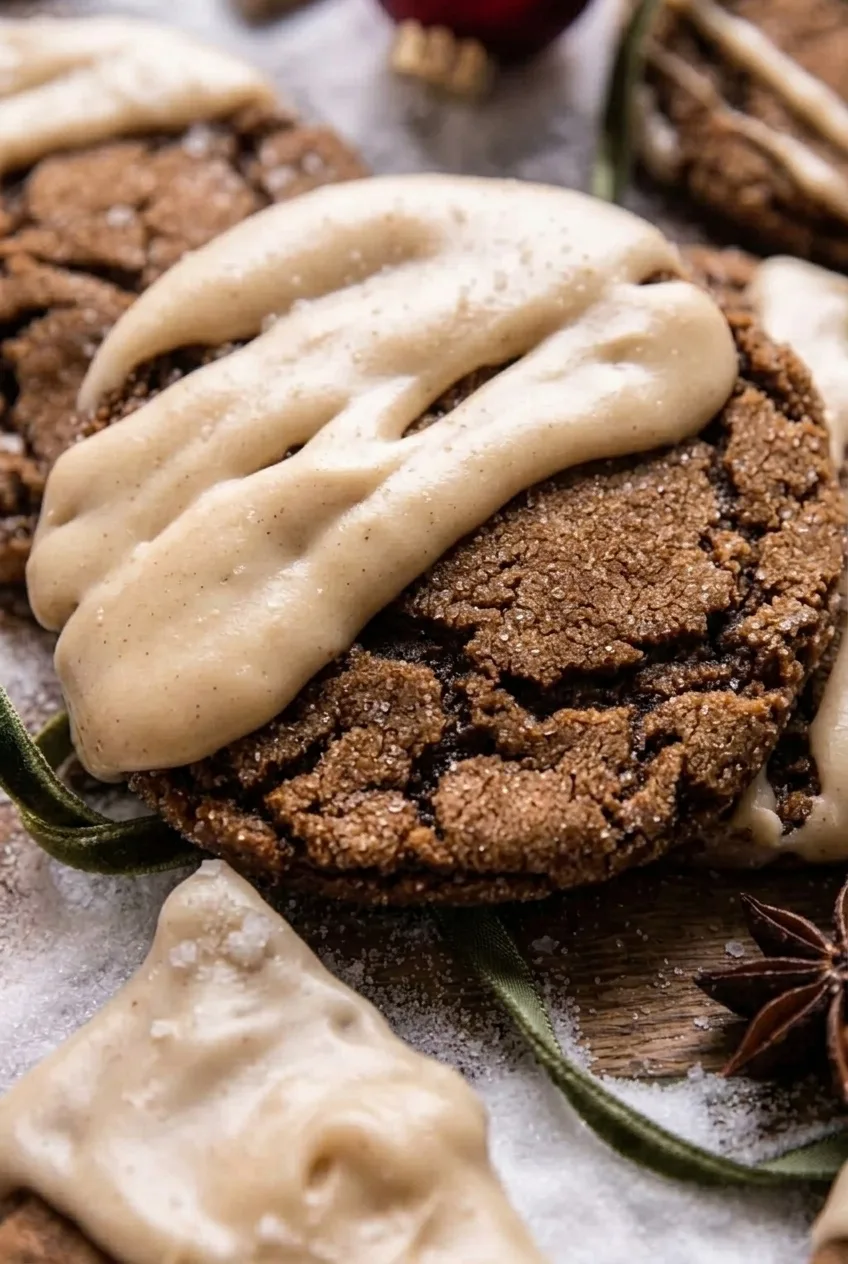
Close view of a crackle-top gingerbread latte cookie with sparkling sugar and thick brown-butter icing.
  • 2 1/4 cups all-purpose flour (280g)
  • 3/4 cup unsalted butter, softened (170g)
  • 3/4 cup packed brown sugar (150g)
  • 1/3 cup unsulphured dark molasses (115g)
  • 1 large egg
  • 1 teaspoon vanilla extract
  • 2 teaspoons espresso powder
  • 1 teaspoon baking soda
  • 2 teaspoons ground ginger
  • 1 1/2 teaspoons ground cinnamon
  • 1/4 teaspoon ground cloves
  • 1/4 teaspoon ground nutmeg
  • 1/2 teaspoon fine salt
  • 1/3 cup granulated sugar, for rolling some of the rounds (65g)
  • 4 tablespoons butter, for the icing (55g)
  • 1 1/2 cups powdered sugar, for the icing (180g)
  • 1–2 tablespoons milk, as needed for the icing

Optional: A small pinch of flaky sea salt for the wet icing.

How to Make Gingerbread Latte Cookies

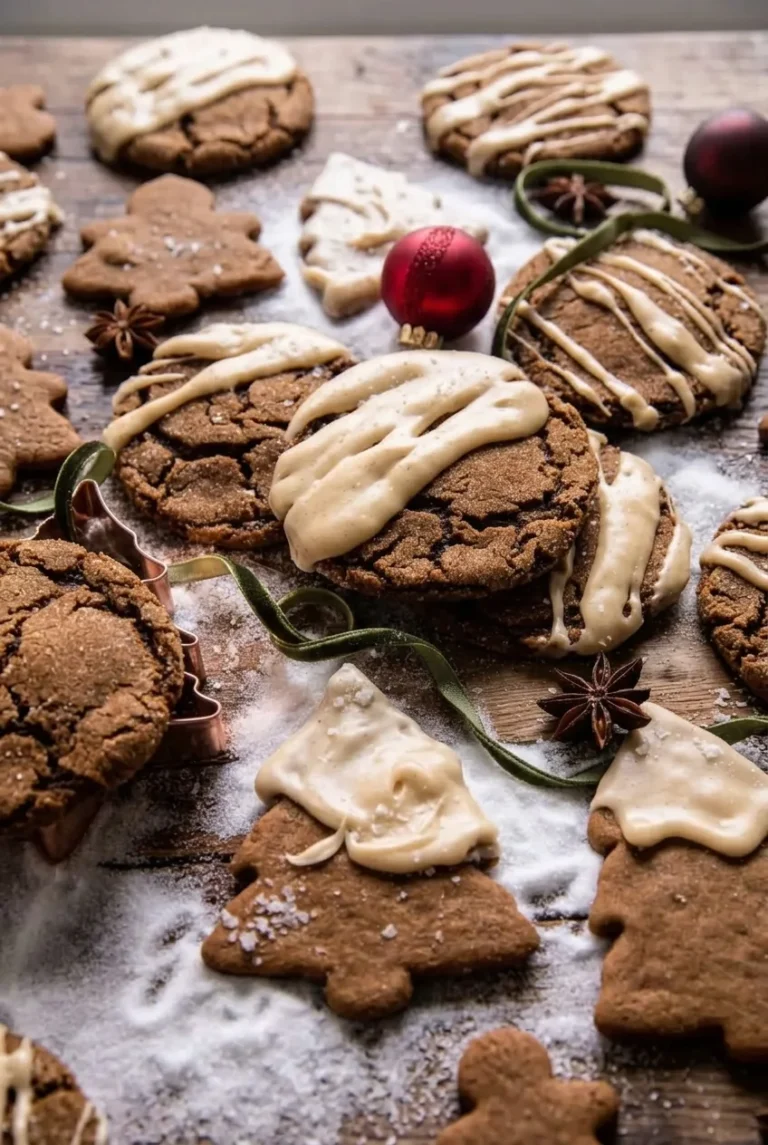
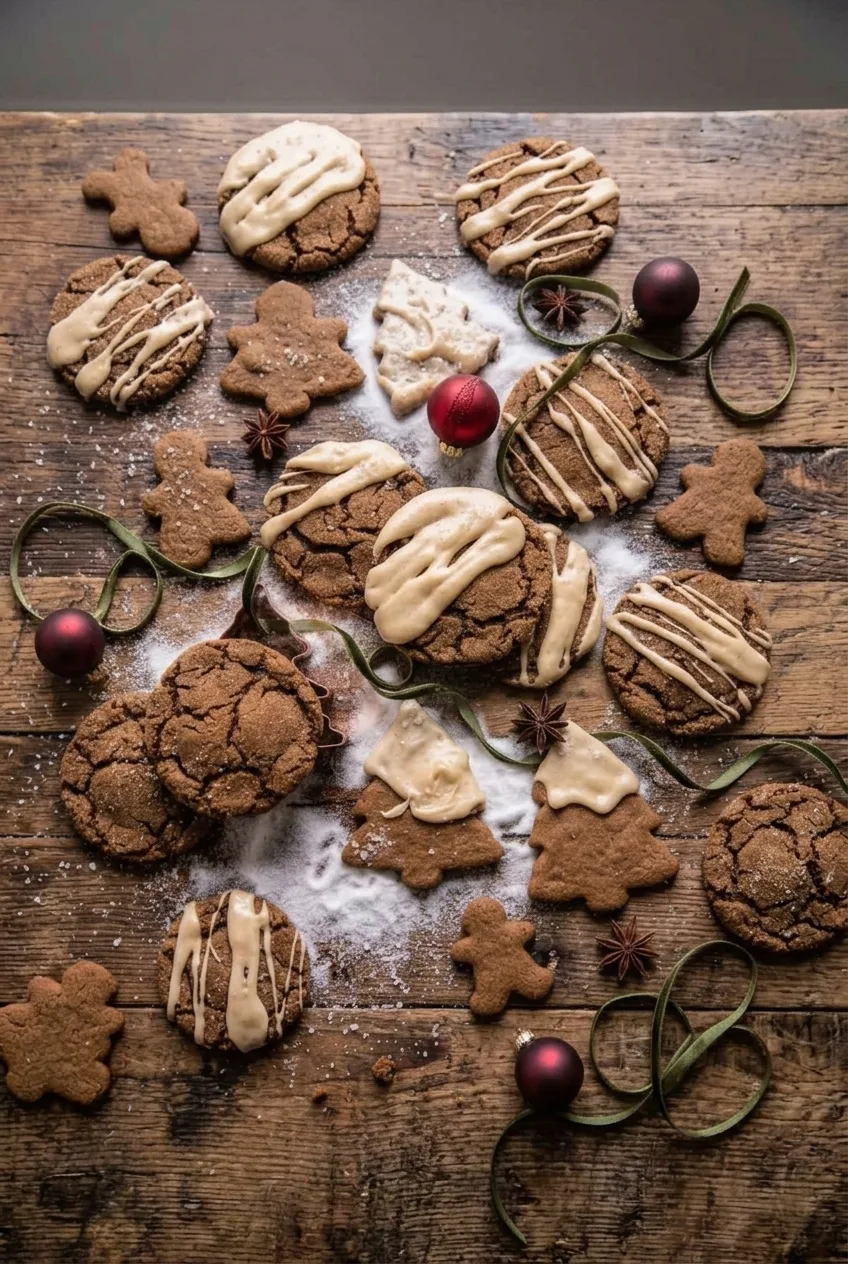
A wider view of gingerbread latte cookies, including iced rounds and small person and tree cutouts.
  1. Mix the dry ingredients: Whisk the flour, espresso powder, baking soda, ginger, cinnamon, cloves, nutmeg, and salt in a medium bowl.
  2. Make the dough: Beat the softened butter and brown sugar in a large bowl until creamy. Beat in the egg, molasses, and vanilla. Add the dry ingredients and mix just until no dry flour remains. The dough will be thick and tacky.
  3. Chill and divide: Cover and refrigerate for about 30 minutes, or until the dough is manageable. Reserve roughly one-third for cutouts. If it still smears or sticks heavily, chill it longer rather than working in a lot of extra flour.
  4. Shape the cutouts: Roll the reserved dough about 1/4 inch thick on a lightly floured surface. Cut small gingerbread-person and tree shapes and transfer them gently to a parchment-lined baking sheet. Freeze briefly, until their edges feel firm.
  5. Shape the rounds and preheat: Preheat the oven to 350°F (175°C) with a rack in the center. Scoop the remaining dough into roughly 2-tablespoon portions. Roll some in granulated sugar and place them about 2 inches apart on a separate parchment-lined baking sheet. Keep the portions similar in size.
  6. Bake: Bake one sheet at a time when possible. Start checking the cutouts at 8 minutes; they will usually take 8–10 minutes. Start checking the rounds at 9 minutes; they will usually take 9–11 minutes. Remove the cutouts when their edges are set and the shapes hold. The rounds should be cracked, with set edges and soft, slightly puffy centers. If baking two sheets at once, rotate their positions halfway through.
  7. Cool: Leave the cookies on their baking sheets for about 5 minutes, then transfer them to a wire rack to cool completely.
  8. Make the icing: Melt the icing butter in a small saucepan over medium-low heat. Cook, swirling the pan, until it smells nutty and has golden-brown flecks; do not let the flecks turn black. Let the butter cool until warm but not hot. Whisk in the powdered sugar, then add milk a little at a time until the icing falls in thick ribbons.
  9. Finish: Drizzle broad ribbons of icing over some of the cooled rounds and cutouts, leaving others uniced. Add a light pinch of flaky salt to the wet icing, if using. Let the icing set before stacking.

Why Chill the Dough and Cutouts Separately?

The first chill makes the molasses dough easier to scoop and roll. About 30 minutes is a starting point: work with one portion at a time, and refrigerate it longer if it still sticks heavily. Adding too much flour to make it workable can leave the cookies dry.

The cutouts need a second, brief firming step after shaping. Transfer them gently, then freeze them until their edges feel firm so the small figures and trees are less likely to distort in the oven. For a recipe devoted to sharply defined shapes, see No-Spread Gingerbread Cutout Cookies with White Icing.

How to Tell When the Cookies Are Done

Check the smaller cutouts separately from the rounds; their edges may set sooner. The rounds are ready when their surfaces are cracked and their edges look set, even though the centers still look soft. They continue to set during the 5-minute rest on the hot sheet, so waiting for firm centers in the oven can make them dry.

For a coffee-free cookie with a similar soft texture, try Soft and Chewy Gingerbread Cookies with White Icing.

Molasses, Coffee, and Icing Notes

Unsulphured dark molasses gives the cookies their deep color and pronounced gingerbread flavor. Blackstrap molasses can taste more bitter and intense, so it is not a flavor-neutral substitute. If espresso powder is unavailable, use the same amount of finely powdered instant coffee. Ordinary ground coffee can leave the dough gritty.

Cool the cookies completely before icing so the ribbons stay visible rather than melting into the surface. Add milk gradually: the icing should fall slowly from a spoon and briefly hold a raised ribbon. If it becomes too thin, whisk in a little more powdered sugar.

Serving and Storage

Arrange the iced and uniced cookies together on a platter so both the pale icing and crackled, sugar-coated tops show. For gifting, let the icing set first.

Store fully cooled cookies in an airtight container at room temperature for about 4–5 days. Place parchment between layers of iced cookies to reduce smearing. For longer storage, freeze uniced baked cookies in a well-sealed container for up to about 1 month; thaw at room temperature before icing.

The dough can be made ahead and chilled. If it becomes too firm to roll, let it sit briefly at room temperature until workable. Portioned dough can be frozen for up to about 1 month; thaw it before baking so it can spread as intended.

Nutrition

Approximate nutrition per cookie, based on 1 of 24 cookies and including the sugar coating and icing: 195 calories, 2g protein, 8g fat, and 29g carbohydrates. Approximate nutrition per 100g: 445 calories, 4g protein, 19g fat, and 68g carbohydrates. Values will vary with cookie size and how much icing is used.

Gingerbread Latte Cookies

Molasses-spiced cookies with espresso, baked as crackled rounds and small cutouts, with optional sugar coating and brown-butter icing.
Course: Dessert
Cuisine: American
Prep: 70 min
Cook: 25 min
Total: 110 min
Servings: 24 Calories: 195 kcal

Equipment

  • Mixing bowls
  • Electric mixer
  • Whisk
  • Rolling pin
  • Cookie cutters
  • Baking sheets
  • Parchment paper
  • Wire rack
  • Small saucepan

Ingredients

For the cookies

  • 2 1/4 cups all-purpose flour (280 g)
  • 3/4 cup unsalted butter, softened (170 g)
  • 3/4 cup packed brown sugar (150 g)
  • 1/3 cup unsulphured dark molasses (115 g)
  • 1 large egg
  • 1 teaspoon vanilla extract
  • 2 teaspoons espresso powder
  • 1 teaspoon baking soda
  • 2 teaspoons ground ginger
  • 1 1/2 teaspoons ground cinnamon
  • 1/4 teaspoon ground cloves
  • 1/4 teaspoon ground nutmeg
  • 1/2 teaspoon fine salt
  • 1/3 cup granulated sugar (65 g), for rolling some of the rounds

For the icing

  • 4 tablespoons butter (55 g)
  • 1 1/2 cups powdered sugar (180 g)
  • 1–2 tablespoons milk, as needed
  • Small pinch flaky sea salt, optional

Instructions

  1. Whisk the flour, espresso powder, baking soda, ginger, cinnamon, cloves, nutmeg, and salt in a medium bowl.
  2. Beat the softened butter and brown sugar until creamy. Beat in the egg, molasses, and vanilla.
  3. Add the dry ingredients and mix just until no dry flour remains.
  4. Cover the tacky dough and refrigerate for about 30 minutes, or until manageable. Reserve roughly one-third for cutouts.
  5. Roll the reserved dough about 1/4 inch thick on a lightly floured surface. Cut small gingerbread-person and tree shapes and transfer them to a parchment-lined baking sheet.
  6. Freeze the cutouts briefly, until their edges feel firm.
  7. Preheat the oven to 350°F (175°C) with a rack in the center.
  8. Scoop the remaining dough into roughly 2-tablespoon portions. Roll some in granulated sugar and place them about 2 inches apart on a separate parchment-lined baking sheet.
  9. Bake one sheet at a time when possible. Bake cutouts for 8–10 minutes and rounds for 9–11 minutes. Remove cutouts when their edges are set and rounds when cracked with set edges and soft, slightly puffy centers. If baking two sheets at once, rotate their positions halfway through.
  10. Let the cookies rest on the baking sheets for about 5 minutes, then transfer them to a wire rack to cool completely.
  11. Melt the icing butter in a small saucepan over medium-low heat. Swirl the pan and cook until the butter smells nutty and has golden-brown flecks. Let it cool until warm but not hot.
  12. Whisk the powdered sugar into the browned butter. Add milk gradually until the icing falls in thick ribbons.
  13. Drizzle icing over some cooled cookies and add a light pinch of flaky salt if desired. Let the icing set before stacking.

Tips

  • If the dough still sticks heavily after chilling, refrigerate it longer instead of adding lots of flour.
  • Work with one portion of dough at a time and keep the rest chilled.
  • Firm the cutouts in the freezer after shaping to help them hold their shapes.
  • Remove the rounds while their centers still look soft; they continue setting on the hot baking sheet.
  • Add milk to the icing gradually so it stays thick enough to form ribbons.

Notes

Store cooled cookies airtight at room temperature for 4–5 days, with parchment between iced layers. Freeze uniced baked cookies for up to 1 month. Approximate nutrition per 100 g: 445 calories, 4 g protein, 19 g fat, and 68 g carbohydrates.

Nutrition

Calories: 195 kcal | Protein: 2 g | Fat: 8 g | Carbohydrates: 29 g

Gingerbread Oatmeal Cream Pies

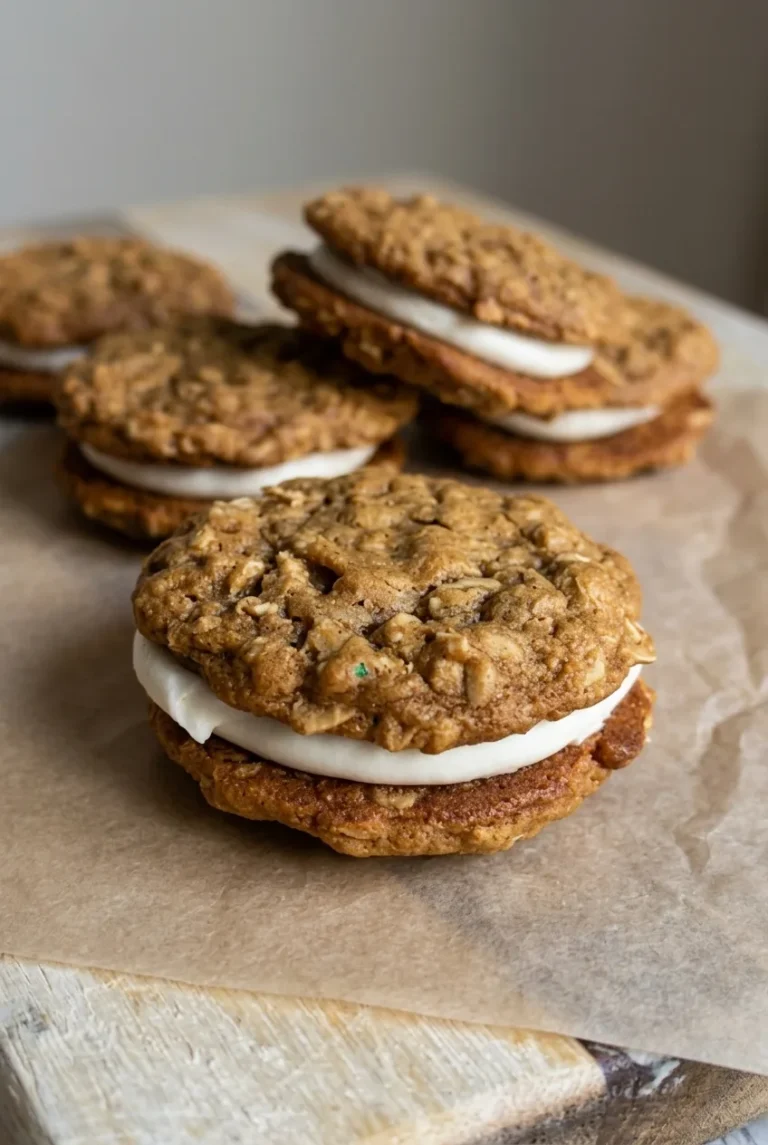
Molasses, dark brown sugar, ginger, cinnamon, and cloves give these oatmeal cookies their gingerbread flavor. Old-fashioned rolled oats leave the cookies visibly oat-studded, while a thick vanilla cream filling makes each pair into a soft, rustic sandwich. This version has no caramel layer; salted caramel is an optional variation.

For chewy cookies, remove them when the edges are set but the centers still look soft. Let them cool completely before adding the filling so the cream holds its shape.

Ingredients for Gingerbread Oatmeal Cream Pies

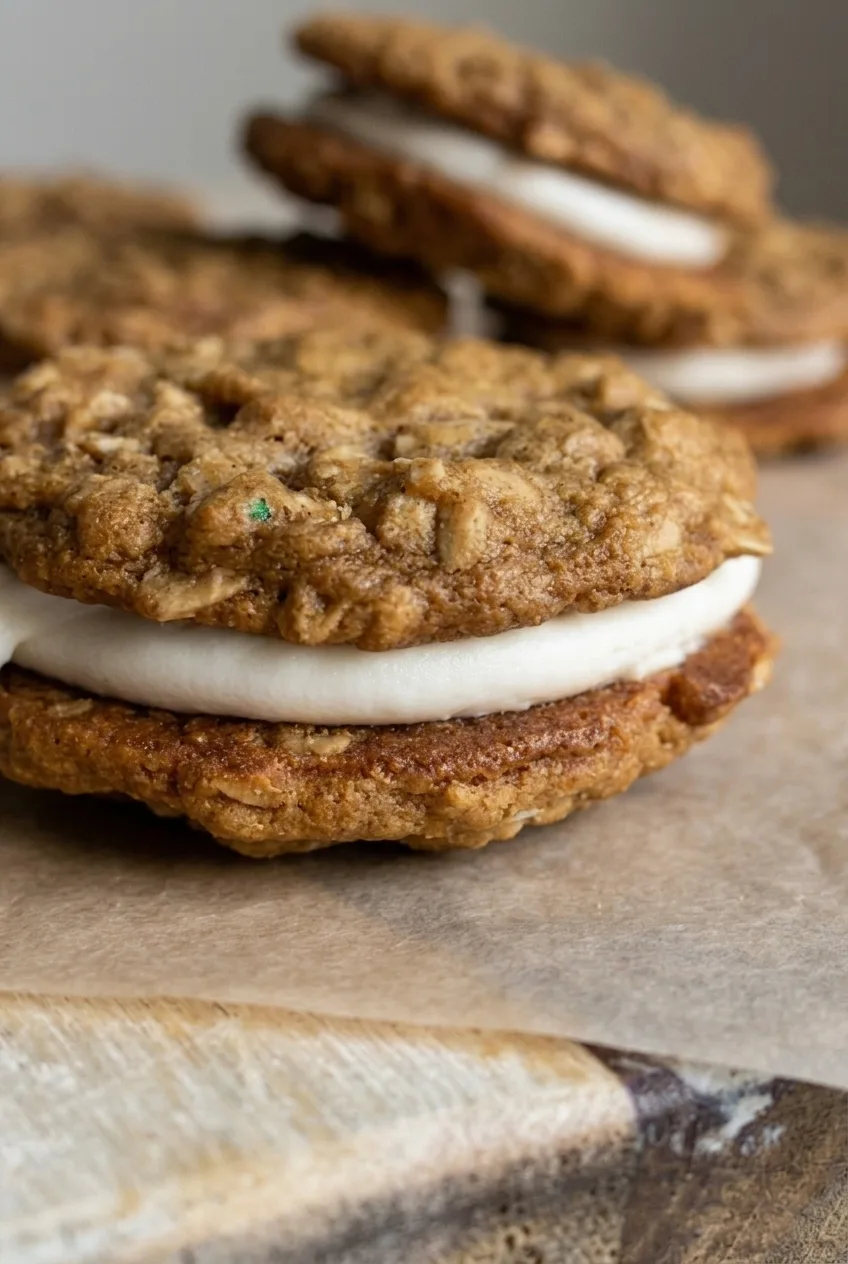
Close-up of a gingerbread oatmeal cream pie showing its chewy oat texture and thick white filling

Makes about 12 sandwiches, depending on cookie size.

For the cookies

  • 3/4 cup unsalted butter, softened (170g)
  • 1 cup packed dark brown sugar (220g)
  • 1/3 cup molasses (115g)
  • 1 large egg
  • 1 teaspoon vanilla extract
  • 1 1/2 cups all-purpose flour (190g)
  • 2 cups old-fashioned rolled oats (180g)
  • 2 teaspoons ground ginger
  • 1 teaspoon ground cinnamon
  • 1/4 teaspoon ground cloves
  • 1 teaspoon baking soda
  • 1/2 teaspoon fine salt

For the vanilla filling

  • 1/4 cup unsalted butter, softened (55g)
  • 2 cups confectioners’ sugar (240g)
  • 1 teaspoon vanilla extract
  • 1/4 teaspoon fine salt
  • 2–3 tablespoons heavy cream, as needed

How to Make Gingerbread Oatmeal Cream Pies

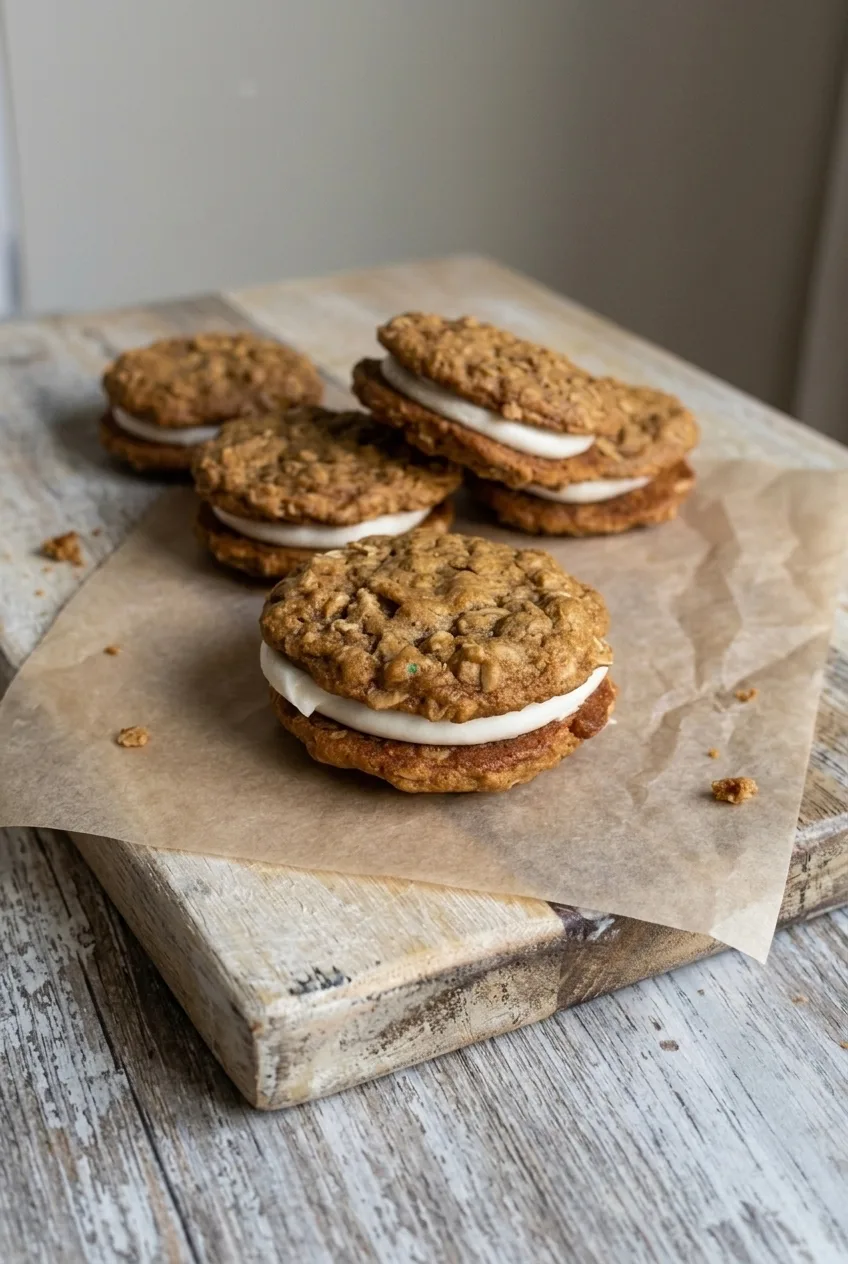
A wider serving of gingerbread oatmeal cream pies arranged on parchment over a wood surface
  1. Prepare the oven: Preheat to 375°F (190°C). Line a rimmed baking sheet with parchment paper and set out a wire cooling rack.
  2. Mix the dough: Beat the 3/4 cup butter and brown sugar until smooth. Beat in the molasses, egg, and 1 teaspoon vanilla. In a separate bowl, whisk together the flour, oats, ginger, cinnamon, cloves, baking soda, and 1/2 teaspoon salt. Add to the butter mixture and mix just until combined. The dough should be thick and visibly studded with oats.
  3. Portion the cookies: Scoop approximately 2-tablespoon portions onto the prepared sheet, leaving about 3 inches between them. Bake in batches rather than crowding the sheet.
  4. Bake: Bake for 10–13 minutes per batch, starting to check at 10 minutes. Remove the cookies when the edges are set and lightly browned but the centers still look soft. If your oven browns unevenly, rotate the sheet near the end of baking.
  5. Cool completely: Leave the cookies on the sheet for about 5 minutes so they firm up enough to move, then transfer them to the rack. Do not fill them while they are warm.
  6. Make the filling: Beat the remaining 1/4 cup butter with the confectioners’ sugar, remaining 1 teaspoon vanilla, and 1/4 teaspoon salt. Add the heavy cream a little at a time, beating until the filling is smooth and thick enough to hold a soft mound.
  7. Assemble: Pair cookies of similar size. Pipe or spread filling onto the flat side of half the cookies, keeping it toward the center. Add the remaining cookies and press gently until a thick band of cream shows around the edges.

How to Keep the Cookies Soft and Chewy

The 10–13 minute bake time is a starting range: cookie size, baking sheet, and oven can change when a batch is ready. Judge the cookies by their set edges and soft-looking centers rather than waiting for them to feel firm in the oven. They continue setting during the 5-minute rest on the sheet.

Oats and Ingredient Notes

Old-fashioned rolled oats give the cookies their coarse surface. Quick oats produce a finer texture and may change how the dough spreads. Use softened butter that is pliable, not melted or greasy, to help limit excess spread. Light brown sugar can replace dark brown sugar, though the molasses flavor will be less pronounced.

For a gingerbread cookie without oatmeal or cream filling, try these soft and chewy gingerbread cookies.

Salted Caramel Variation

For a sweeter version, add a modest amount of prepared salted caramel—about 1/3 cup for the batch—alongside the vanilla filling. Keep the white cream visible, and add a small pinch of flaky sea salt to each sandwich if desired. Caramel is not part of the standard version.

How to Store and Make Ahead

Refrigerate assembled sandwiches in an airtight container for up to 3 days, with parchment between stacked layers. Let them sit briefly at room temperature before serving for a softer bite; do not leave them out for extended storage.

To make the cookies ahead, freeze them fully cooled and unfilled in an airtight container for up to 3 months. Thaw before making the filling and assembling. Freezing the cookies unfilled helps preserve the filling’s texture.

Nutrition

Approximate nutrition per sandwich, based on 12 sandwiches: 440 calories, 5g protein, 18g fat, and 71g carbohydrates. Approximate nutrition per 100g: 450 calories, 5g protein, 18g fat, and 72g carbohydrates. Values vary with cookie size and the amount of filling used.

Gingerbread Oatmeal Cream Pies

Chewy molasses-spiced oatmeal cookies are sandwiched with thick vanilla cream filling.
Course: Dessert
Cuisine: American
Prep: 25 min
Cook: 26 min
Total: 66 min
Servings: 12 Calories: 440 kcal

Equipment

  • Stand mixer or hand mixer
  • Mixing bowls
  • Baking sheet
  • Parchment paper
  • Wire cooling rack
  • Cookie scoop

Ingredients

For the cookies

  • 3/4 cup unsalted butter, softened (170 g)
  • 1 cup packed dark brown sugar (220 g)
  • 1/3 cup molasses (115 g)
  • 1 large egg
  • 1 teaspoon vanilla extract
  • 1 1/2 cups all-purpose flour (190 g)
  • 2 cups old-fashioned rolled oats (180 g)
  • 2 teaspoons ground ginger
  • 1 teaspoon ground cinnamon
  • 1/4 teaspoon ground cloves
  • 1 teaspoon baking soda
  • 1/2 teaspoon fine salt

For the vanilla filling

  • 1/4 cup unsalted butter, softened (55 g)
  • 2 cups confectioners’ sugar (240 g)
  • 1 teaspoon vanilla extract
  • 1/4 teaspoon fine salt
  • 2–3 tablespoons heavy cream, as needed

Instructions

  1. Preheat the oven to 375°F (190°C). Line a rimmed baking sheet with parchment paper and set out a wire cooling rack.
  2. Beat 3/4 cup butter with the brown sugar until smooth. Beat in the molasses, egg, and 1 teaspoon vanilla.
  3. Whisk together the flour, oats, ginger, cinnamon, cloves, baking soda, and 1/2 teaspoon salt in a separate bowl.
  4. Add the dry ingredients to the butter mixture and mix just until combined.
  5. Scoop approximately 2-tablespoon portions onto the prepared baking sheet, leaving about 3 inches between cookies. Bake in batches.
  6. Bake each batch for 10–13 minutes, checking from 10 minutes. Remove the cookies when the edges are set and lightly browned but the centers still look soft. Rotate the sheet near the end if your oven browns unevenly.
  7. Leave the cookies on the baking sheet for about 5 minutes, then transfer them to the cooling rack and cool completely.
  8. Beat the remaining 1/4 cup butter with the confectioners’ sugar, remaining 1 teaspoon vanilla, and 1/4 teaspoon salt. Add the heavy cream a little at a time, beating until smooth and thick enough to hold a soft mound.
  9. Pair cookies of similar size. Pipe or spread filling toward the center of the flat side of half the cookies, then top with the remaining cookies and press gently.

Tips

  • Use softened, pliable butter rather than melted or greasy butter to help limit cookie spread.
  • Use old-fashioned rolled oats for the coarsely textured cookies; quick oats may change the texture and spread.
  • Remove cookies while their centers still look soft; they continue setting as they rest on the baking sheet.
  • Cool the cookies completely before filling so the cream holds its shape.
  • Use light brown sugar in place of dark brown sugar if needed, though the molasses flavor will be less pronounced.

Variations

  • Salted Caramel: Add about 1/3 cup prepared salted caramel alongside the vanilla filling, keeping some white cream visible. Add a small pinch of flaky sea salt to each sandwich if desired.

Notes

Refrigerate assembled sandwiches in an airtight container for up to 3 days, with parchment between stacked layers. Let them sit briefly at room temperature before serving. Freeze cooled, unfilled cookies for up to 3 months.

Nutrition

Calories: 440 kcal | Protein: 5 g | Fat: 18 g | Carbohydrates: 71 g

Crispy Gingersnap Cookies

Molasses, ginger, and cinnamon give these round gingersnaps their warm flavor and amber color. Small dough balls get a light coating of granulated sugar before baking, then spread into thin to moderately thin cookies with lightly cracked tops. Bake until the edges are set and the surfaces look dry, but wait until the cookies have cooled completely to judge their crispness.

Prep time: 20 minutes | Cook time: 11–13 minutes per batch | Total time: About 45–55 minutes | Yield: About 24 cookies

Ingredients for Crispy Gingersnap Cookies

Close view of an amber gingersnap cookie's lightly cracked, pebbled surface and fine sugar coating.
  • 2 cups plus 2 tablespoons all-purpose flour (265g)
  • 2 teaspoons ground ginger
  • 1 teaspoon ground cinnamon
  • 1 teaspoon baking soda
  • 1/4 teaspoon fine salt
  • 3/4 cup unsalted butter, softened (170g)
  • 1 cup granulated sugar (200g)
  • 1 large egg
  • 1/4 cup molasses (80g)
  • 1/3 cup granulated sugar, as needed for rolling (about 65g)

Check that the ginger and cinnamon still smell fragrant; stale ground spices can leave the cookies tasting flat.

How to Make Crispy Gingersnap Cookies

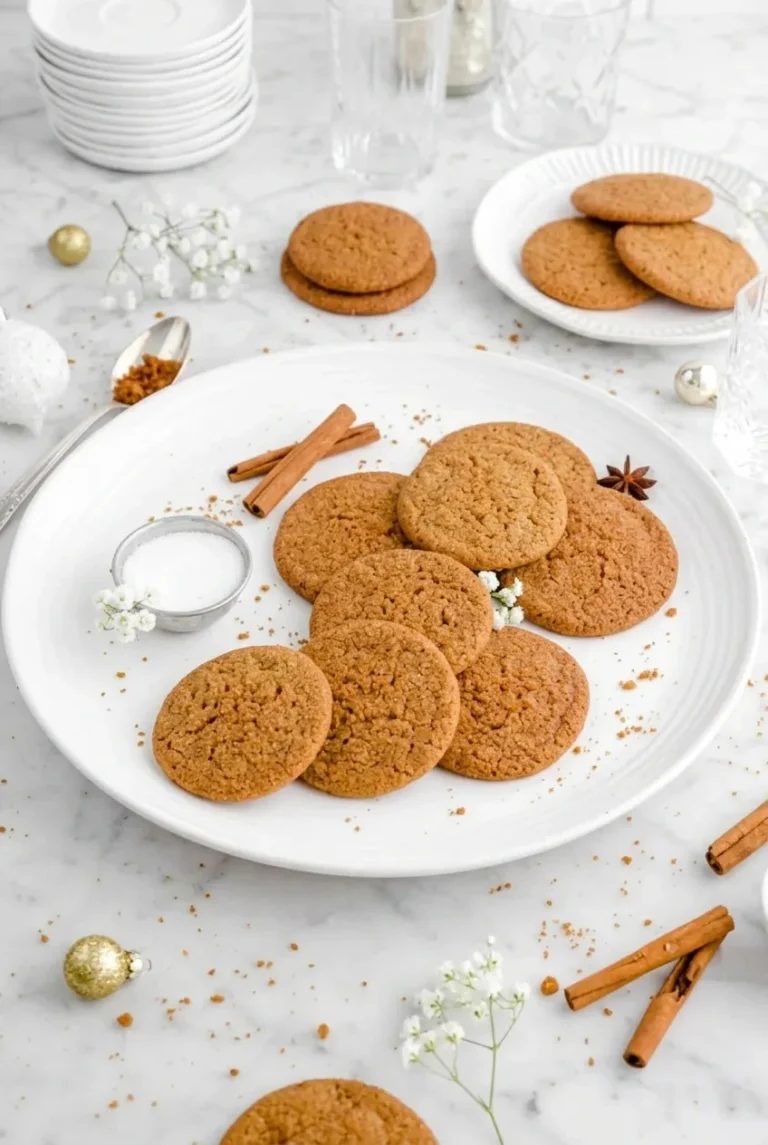
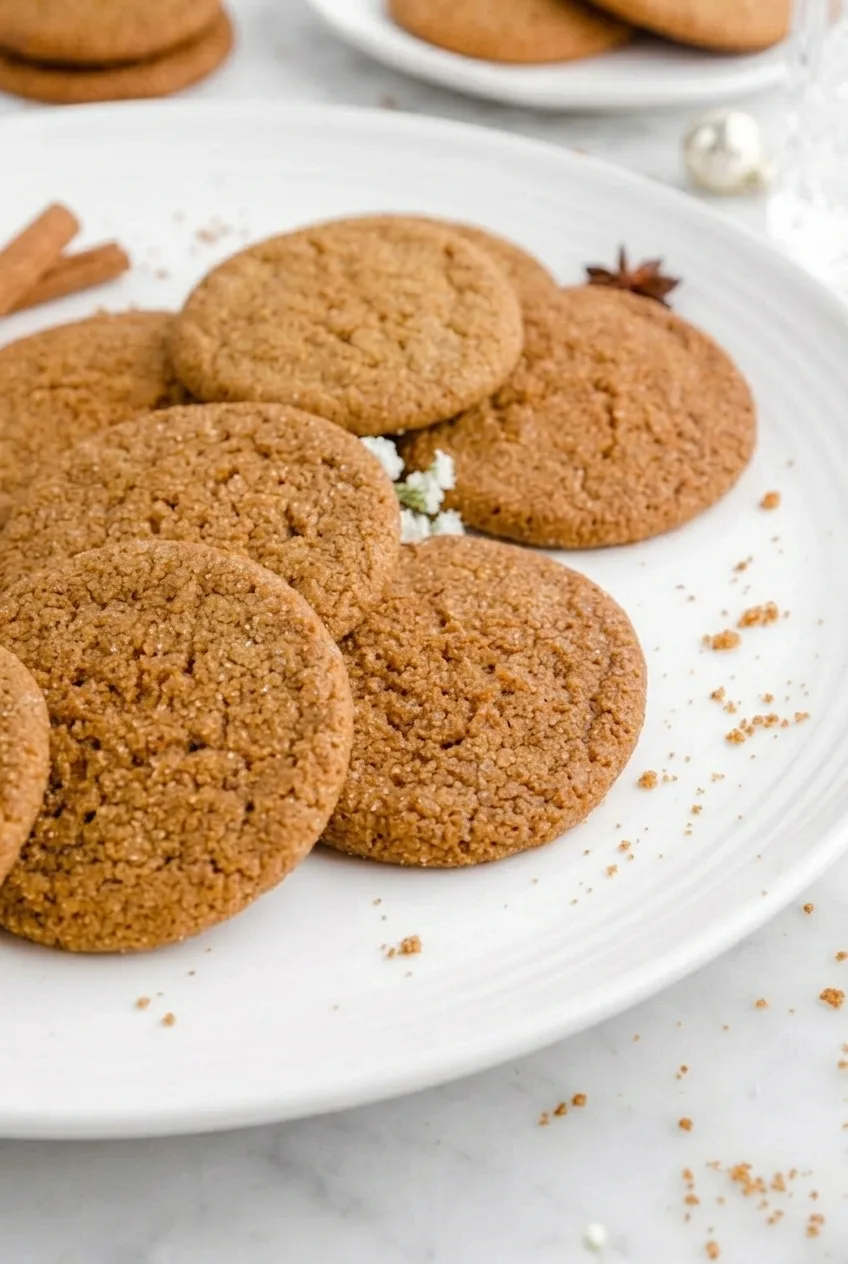
A full white platter of round gingersnap cookies on a marble surface, with a small plate of cookies nearby.
  1. Prepare the oven and pans: Preheat the oven to 350°F (175°C) with a rack in the center. Line rimmed baking sheets with parchment paper.
  2. Mix the dry ingredients: Whisk the flour, ginger, cinnamon, baking soda, and salt in a medium bowl until evenly combined.
  3. Cream the butter and sugar: Beat the softened butter with 1 cup of granulated sugar until creamy. Beat in the egg and molasses until combined.
  4. Finish the dough: Add the flour mixture and mix on low just until no dry flour remains.
  5. Portion and coat: Scoop level 1-tablespoon portions and roll them into balls. Coat each lightly in the remaining sugar, then arrange them about 2 inches apart on the prepared sheets. Bake in batches rather than crowding the pans.
  6. Bake until set: Bake one sheet at a time for 11–13 minutes, checking at 11 minutes. The edges should be set and lightly browned, and the tops should look dry and lightly cracked. If the centers still look wet or shiny, bake briefly longer and check again.
  7. Cool completely: Leave the cookies on the baking sheet for about 5 minutes, then transfer them to a wire rack. Let them cool completely before serving or storing.

How to Get a Crisp Finish

Gingersnaps can feel soft and delicate straight from the oven, even when their edges are set. Judge the texture only after they have cooled completely. If a cooled cookie is softer than you want, bake the next batch a little longer, watching for set edges and a dry-looking surface.

A 300°F (150°C), 30-minute bake belongs to a different, low-temperature gingersnap formula. It is not a timing substitute for this dough; keep this recipe at 350°F and use its doneness cues.

For a softer ginger cookie, try Soft and Chewy Gingerbread Cookies with White Icing.

Serving and Storing Gingersnap Cookies

Serve the cooled cookies plain with tea, coffee, or milk. They can also be crumbled over ice cream or used as crumbs for a pie, tart, or cheesecake crust.

Cool the cookies completely before sealing them in a zip-top bag or lidded container; sealing them while warm can soften their crisp finish. Store at room temperature for about 5–7 days, or freeze baked cookies in a freezer-safe zip-top bag for up to 3 months.

Nutrition Information

Approximate nutrition per cookie, based on 24 cookies: 140 calories, 1g protein, 6g fat, and 21g carbohydrates. Per 100g: about 485 calories, 5g protein, 21g fat, and 72g carbohydrates. Values vary with cookie size and how much rolling sugar adheres.

Crispy Gingersnap Cookies

These molasses gingersnaps are coated in sugar and baked until their edges are set and their tops are lightly cracked.
Course: Dessert
Cuisine: American
Prep: 20 min
Cook: 13 min
Total: 50 min
Servings: 24 Calories: 140 kcal

Equipment

  • Rimmed baking sheets
  • Parchment paper
  • Mixing bowls
  • Whisk
  • Electric mixer
  • Wire rack

Ingredients

  • 2 cups plus 2 tablespoons all-purpose flour (265 g)
  • 2 teaspoons ground ginger
  • 1 teaspoon ground cinnamon
  • 1 teaspoon baking soda
  • 1/4 teaspoon fine salt
  • 3/4 cup unsalted butter, softened (170 g)
  • 1 cup granulated sugar (200 g)
  • 1 large egg
  • 1/4 cup molasses (80 g)
  • 1/3 cup granulated sugar, for rolling (about 65 g)

Instructions

  1. Preheat the oven to 350°F (175°C) with a rack in the center. Line rimmed baking sheets with parchment paper.
  2. Whisk the flour, ginger, cinnamon, baking soda, and salt together in a medium bowl.
  3. Beat the softened butter with 1 cup of granulated sugar until creamy.
  4. Beat in the egg and molasses until combined.
  5. Add the flour mixture and mix on low just until no dry flour remains.
  6. Scoop level 1-tablespoon portions and roll them into balls.
  7. Lightly coat each ball in the remaining sugar and arrange them about 2 inches apart on the prepared baking sheets.
  8. Bake one sheet at a time for 11–13 minutes, checking at 11 minutes. Bake until the edges are set and lightly browned and the tops look dry and lightly cracked.
  9. Cool the cookies on the baking sheet for about 5 minutes, then transfer them to a wire rack to cool completely.

Tips

  • Check that the ground ginger and cinnamon are fragrant; stale spices can make the cookies taste flat.
  • Bake in batches rather than crowding the baking sheets.
  • If the centers look wet or shiny, bake briefly longer and check again.
  • Judge the crispness only after the cookies have cooled completely.
  • If a cooled cookie is softer than you prefer, bake the next batch a little longer.

Notes

Cool completely before storing in a sealed container; store at room temperature for 5–7 days or freeze for up to 3 months.

Nutrition

Calories: 140 kcal | Protein: 1 g | Fat: 6 g | Carbohydrates: 21 g

Maple Glazed Gingerbread Cookies

These rolled gingerbread cookies have soft centers, warm molasses-and-spice flavor, and a floral pattern pressed into each round. A thin maple glaze adds a pale finish while leaving the brown stamped design visible.

Cool dough is the key to keeping that pattern clear: chill it before rolling, then briefly freeze the stamped rounds before baking. For cookies rolled about 1/4 inch thick, watch for set edges and slightly soft centers rather than relying on the clock alone.

Yield: About 18 cookies, depending on cutter size and rerolling
Prep: 30 minutes active, plus 1 hour chilling
Bake: 9–11 minutes per batch
Glaze setting: 30–60 minutes

Ingredients for Maple Glazed Gingerbread Cookies

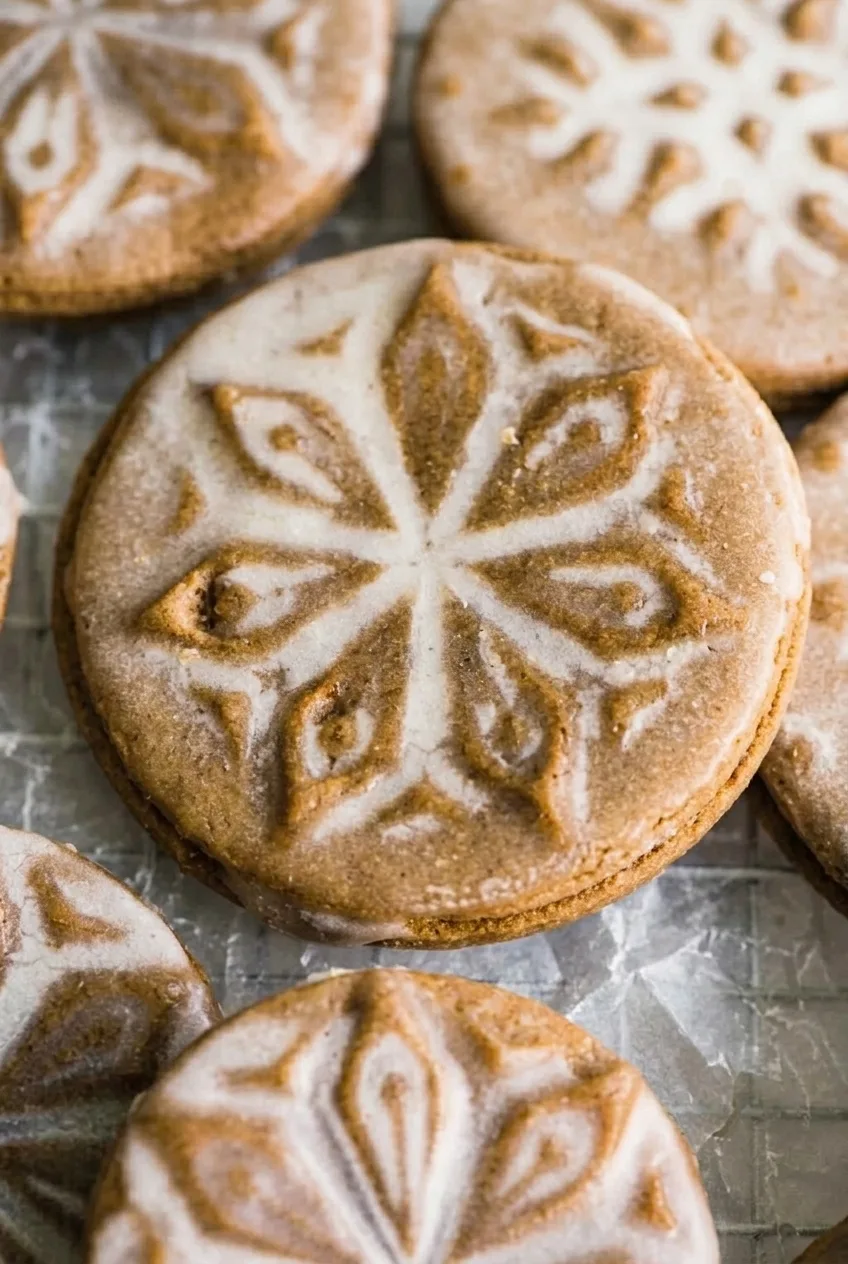
Close view of a stamped gingerbread cookie showing its brown ridges and thin pale maple glaze

Cookie dough

  • 2 1/2 cups all-purpose flour, spooned and leveled, plus a little for rolling (315g)
  • 2 teaspoons ground ginger
  • 1 teaspoon ground cinnamon
  • 1/4 teaspoon ground cloves
  • 1 teaspoon baking soda
  • 1/2 teaspoon fine salt
  • 1/2 cup unsalted butter, softened (115g)
  • 1/2 cup packed brown sugar (100g)
  • 1/3 cup regular unsulphured molasses (115g)
  • 1 large egg
  • 1 teaspoon vanilla extract

Maple glaze

  • 1 cup powdered sugar (120g)
  • 2 tablespoons pure maple syrup (40g)
  • 1–2 teaspoons warm water, only as needed

Use regular unsulphured molasses for a balanced gingerbread flavor. Blackstrap molasses can make the cookies taste more intense and bitter.

How to Make Maple Glazed Gingerbread Cookies

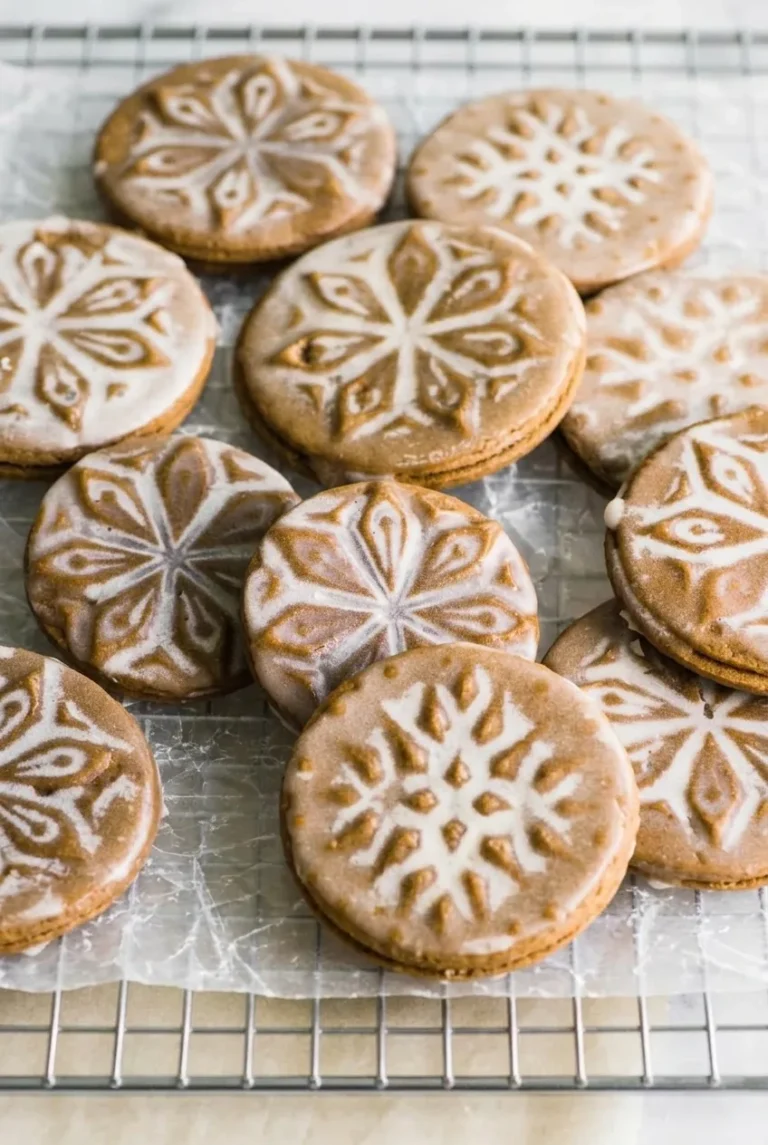
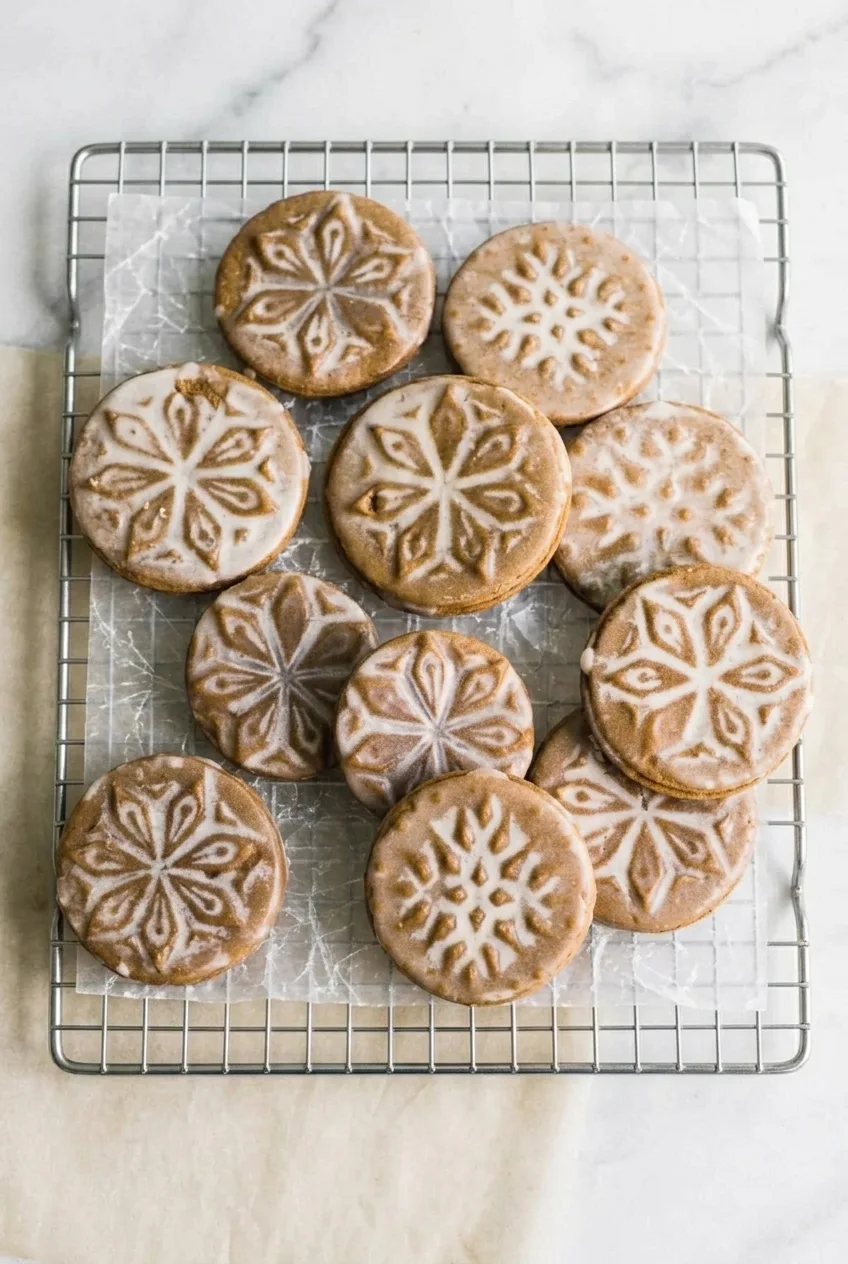
A wider view of a full group of floral stamped maple glazed gingerbread cookies on a wire rack
  1. Mix the dry ingredients: Whisk the flour, ginger, cinnamon, cloves, baking soda, and salt in a medium bowl.
  2. Make and chill the dough: Beat the butter and brown sugar until creamy. Mix in the molasses, egg, and vanilla. Add the dry ingredients and mix just until no flour remains and the dough is soft and cohesive. Cover and refrigerate for about 1 hour.
  3. Roll, stamp, and cut: Line a light-colored baking sheet with parchment. On a lightly floured surface, roll the dough to about 1/4 inch thick. Press a floral or geometric stamp firmly into the dough without cutting through it, then cut rounds with an approximately 3-inch cutter. Place them about 2 inches apart on the sheet. Keep unused dough chilled.
  4. Firm the rounds: Freeze the sheet of stamped cookies for about 10 minutes. Meanwhile, position a rack in the center of the oven and preheat to 350°F (175°C).
  5. Bake: Bake one sheet at a time, uncovered, for about 9–11 minutes. Start checking at 8 minutes, especially if the rounds are smaller or your oven runs hot. Remove them when the edges look set and may be lightly browned; the centers should still feel slightly soft. They will firm as they cool.
  6. Cool completely: Leave the cookies on the baking sheet until sturdy enough to move, then transfer them to a wire rack. Let the sheet cool before using it for another batch.
  7. Glaze: Stir the powdered sugar and maple syrup until smooth. If needed, add warm water a few drops at a time until the glaze is thin enough to brush but not watery. Brush a light coat over the completely cooled cookies, leaving the stamped pattern visible.
  8. Let the glaze set: Leave the cookies uncovered in a single layer for 30–60 minutes, until the glaze feels dry and no longer transfers easily.

How to Keep the Stamped Pattern Clear

If the dough sticks to the stamp or work surface, use a light dusting of flour rather than working more flour into it. If it becomes warm and sticky while you shape the cookies, chill it again. Firm dough, a clear impression, a cool baking sheet, and the brief freezer rest all help keep the design from spreading flat. For another shaped-cookie option, try no-spread gingerbread cutout cookies.

Maple Glaze Consistency

Mix the powdered sugar and maple syrup before adding any water; the amount needed can vary. Add water only a few drops at a time. The glaze should brush on lightly enough to accent the pattern, not pool over it. If it becomes too thin, stir in a little more powdered sugar.

Make-Ahead, Storage, and Freezing

Covered dough can be made ahead and refrigerated. Let it soften only enough to roll while keeping it cool. Dough can also be frozen; thaw it in the refrigerator until workable, then roll and stamp.

Once the glaze has fully set, store the cookies in an airtight container at room temperature for up to about a week, separating layers with parchment if needed. Baked cookies can be frozen in a well-wrapped, airtight container and thawed before serving.

Nutrition

Approximate nutrition per cookie, based on 18 cookies: 180 calories, 2g protein, 6g fat, and 31g carbohydrates. Approximate nutrition per 100g: 390 calories, 5g protein, 12g fat, and 67g carbohydrates. Values vary with cookie size and the amount of glaze used.

Maple Glazed Gingerbread Cookies

Soft-centered gingerbread cookies are stamped with a floral pattern and finished with a thin maple glaze.
Course: Dessert
Cuisine: American
Prep: 100 min
Cook: 11 min
Total: 171 min
Servings: 18 Calories: 180 kcal

Equipment

  • Mixing bowls
  • Whisk
  • Electric mixer
  • Rolling pin
  • Cookie stamp
  • 3-inch round cutter
  • Baking sheet
  • Parchment paper
  • Wire rack
  • Pastry brush

Ingredients

Cookie dough

  • 2 1/2 cups all-purpose flour, spooned and leveled, plus a little for rolling (315g)
  • 2 teaspoons ground ginger
  • 1 teaspoon ground cinnamon
  • 1/4 teaspoon ground cloves
  • 1 teaspoon baking soda
  • 1/2 teaspoon fine salt
  • 1/2 cup unsalted butter, softened (115g)
  • 1/2 cup packed brown sugar (100g)
  • 1/3 cup regular unsulphured molasses (115g)
  • 1 large egg
  • 1 teaspoon vanilla extract

Maple glaze

  • 1 cup powdered sugar (120g)
  • 2 tablespoons pure maple syrup (40g)
  • 1–2 teaspoons warm water, only as needed

Instructions

  1. Whisk the flour, ginger, cinnamon, cloves, baking soda, and salt in a medium bowl.
  2. Beat the butter and brown sugar until creamy. Mix in the molasses, egg, and vanilla.
  3. Add the dry ingredients and mix just until no flour remains and the dough is soft and cohesive. Cover and refrigerate for about 1 hour.
  4. Line a light-colored baking sheet with parchment. On a lightly floured surface, roll the dough to about 1/4 inch thick.
  5. Press a floral or geometric stamp firmly into the dough without cutting through it, then cut rounds with an approximately 3-inch cutter. Place them about 2 inches apart on the sheet and keep unused dough chilled.
  6. Freeze the sheet of stamped cookies for about 10 minutes. Meanwhile, position a rack in the center of the oven and preheat to 350°F (175°C).
  7. Bake one sheet at a time for about 9–11 minutes, checking from 8 minutes. Remove the cookies when the edges look set and may be lightly browned while the centers still feel slightly soft.
  8. Leave the cookies on the baking sheet until sturdy enough to move, then transfer them to a wire rack. Let the sheet cool before using it for another batch.
  9. Stir the powdered sugar and maple syrup until smooth. Add warm water a few drops at a time if needed, until the glaze is thin enough to brush but not watery.
  10. Brush a light coat of glaze over the completely cooled cookies, leaving the stamped pattern visible.
  11. Leave the cookies uncovered in a single layer for 30–60 minutes, until the glaze feels dry and no longer transfers easily.

Tips

  • Use regular unsulphured molasses for a balanced flavor; blackstrap can taste more intense and bitter.
  • Use a light dusting of flour if dough sticks to the stamp or work surface rather than mixing extra flour into the dough.
  • Chill the dough again if it becomes warm and sticky while shaping.
  • Keep the dough firm and the baking sheet cool to help preserve the stamped design.
  • Add water to the glaze a few drops at a time; if it becomes too thin, stir in a little more powdered sugar.
  • Start checking smaller cookies or cookies in a hot-running oven at 8 minutes.

Notes

Once the glaze has fully set, store cookies in an airtight container at room temperature for up to about a week. Baked cookies can be frozen in a well-wrapped, airtight container. Approximate nutrition is per cookie, based on 18 cookies.

Nutrition

Calories: 180 kcal | Protein: 2 g | Fat: 6 g | Carbohydrates: 31 g

Gingerbread Cheesecake Cookies

These round gingerbread cookies have crackled, sugar-coated tops and a pale cheesecake center tucked inside. Molasses and warm spices give the dough its deep flavor, while the centers stay soft after baking. Freeze small portions of cream-cheese filling before wrapping them in chilled dough; firm filling is easier to enclose. Let the baked cookies cool completely before breaking one open so the filling has time to set.

Makes about 16 cookies. Allow about 35 minutes of active prep, at least 1 hour to freeze the filling, about 30 minutes to chill the dough, and 11–13 minutes of baking per batch.

Ingredients for Gingerbread Cheesecake Cookies

Close view of a broken gingerbread cheesecake cookie showing its pale cream cheese filling and sugar-crusted surface.

Cheesecake filling

  • 6 ounces full-fat brick cream cheese, softened (170g)
  • ⅓ cup powdered sugar (40g)
  • ½ teaspoon vanilla extract

Gingerbread dough

  • ¾ cup unsalted butter, softened (1½ sticks; 170g)
  • 1 cup packed dark brown sugar (200g)
  • ⅓ cup unsulphured molasses (113g)
  • 1 large egg
  • ½ teaspoon vanilla extract
  • 2½ cups all-purpose flour, spooned and leveled (300g)
  • 1 teaspoon baking soda
  • 2 teaspoons ground ginger
  • 1½ teaspoons ground cinnamon
  • ¼ teaspoon ground cloves
  • ½ teaspoon fine salt

For rolling

  • ⅓ cup coarse sparkling or sanding sugar (65g)

Weigh the flour if possible, or spoon it into the measuring cup and level it off. Packed flour can make the cookies cakier. Granulated sugar can replace the coarse sugar for rolling, though the coating will have smaller crystals.

How to Make Gingerbread Cheesecake Cookies

A wider arrangement of whole and broken gingerbread cheesecake cookies on red fabric, with the creamy center visible.
  1. Freeze the filling: Beat the cream cheese, powdered sugar, and ½ teaspoon vanilla until smooth. Portion into 16 small mounds, about 2 teaspoons each, on a tray or plate. Freeze for at least 1 hour, until firm enough to lift without smearing.
  2. Mix the dry ingredients: Whisk the flour, baking soda, ginger, cinnamon, cloves, and salt together.
  3. Make the dough: Beat the butter and brown sugar until fluffy. Beat in the molasses, egg, and remaining ½ teaspoon vanilla. Add the dry ingredients and mix just until no dry flour remains. Cover and refrigerate for about 30 minutes, until the soft dough is firm enough to shape.
  4. Fill the cookies: Preheat the oven to 350°F (175°C) with a rack in the center. Line light-colored baking sheets with parchment. For each cookie, flatten about 2 tablespoons of dough in your palm, place a frozen filling portion in the center, and bring the dough up around it. Pinch the seam completely closed, check for exposed filling, then roll gently into a ball. Coat in coarse sugar. Keep unused filling portions frozen while you work.
  5. Bake: Space the cookies 2–3 inches apart on the prepared sheets. Bake uncovered for about 11–13 minutes per batch, starting to check at 10 minutes. The edges should look set and the tops crackled and no longer glossy; the centers can still look soft and slightly puffy. If baking two sheets at once and your oven browns unevenly, swap and rotate them halfway through.
  6. Cool: Leave the cookies on the baking sheet for about 10 minutes, then transfer to a wire rack to cool completely. Break one open after cooling to show the cheesecake center.

How to Keep the Filling Inside

Firm, modest-sized filling portions are easier to cover than soft or overfilled ones. Keep the portions in the freezer until needed, and make sure dough covers each one without thin spots or gaps at the seam. If the dough becomes too sticky to seal, return it to the refrigerator until workable.

How to Tell When the Cookies Are Done

Look for set edges and crackled tops rather than waiting for the centers to feel firm in the oven. Cookie size, dough temperature, and oven behavior can shift the bake time. The cookies continue to set on the pan, and a warm cheesecake center may seem runny before it has cooled fully.

Storage and Make-Ahead

Store completely cooled cookies in an airtight container in the refrigerator for up to 3 days. Separate stacked layers with parchment. For a softer bite, let chilled cookies stand briefly at room temperature before serving.

The filling portions can be frozen ahead, and the dough can be chilled until it is manageable. Unbaked stuffed dough balls can also be frozen airtight. Bake them from frozen, allowing extra time and checking for set edges and crackled tops rather than relying only on the clock. A small test batch can help establish the timing for your cookie size and oven.

For an unfilled option, try these soft and chewy gingerbread cookies. For shaped cookies instead of stuffed rounds, see these gingerbread cutout cookies.

Nutrition

Approximate nutrition per cookie, based on 1 of 16 cookies: 280 calories, 4g protein, 13g fat, and 39g carbohydrates. Approximate nutrition per 100g: 430 calories, 5g protein, 20g fat, and 60g carbohydrates. Values vary with ingredient brands, cookie size, and the amount of sugar picked up during rolling.

Gingerbread Cheesecake Cookies

Spiced molasses cookies with crackled sugar-coated tops and a soft cheesecake center.
Course: Dessert
Cuisine: American
Prep: 125 min
Cook: 13 min
Total: 148 min
Servings: 16 Calories: 280 kcal

Equipment

  • Stand mixer or hand mixer
  • Mixing bowls
  • Whisk
  • Tray or plate
  • Parchment paper
  • Baking sheets
  • Wire rack

Ingredients

Cheesecake filling

  • 6 ounces full-fat brick cream cheese, softened (170g)
  • 1/3 cup powdered sugar (40g)
  • 1/2 teaspoon vanilla extract

Gingerbread dough

  • 3/4 cup unsalted butter, softened (1 1/2 sticks; 170g)
  • 1 cup packed dark brown sugar (200g)
  • 1/3 cup unsulphured molasses (113g)
  • 1 large egg
  • 1/2 teaspoon vanilla extract
  • 2 1/2 cups all-purpose flour, spooned and leveled (300g)
  • 1 teaspoon baking soda
  • 2 teaspoons ground ginger
  • 1 1/2 teaspoons ground cinnamon
  • 1/4 teaspoon ground cloves
  • 1/2 teaspoon fine salt

For rolling

  • 1/3 cup coarse sparkling or sanding sugar (65g)

Instructions

  1. Beat the cream cheese, powdered sugar, and 1/2 teaspoon vanilla until smooth.
  2. Portion the filling into 16 small mounds, about 2 teaspoons each, on a tray or plate. Freeze for at least 1 hour, until firm enough to lift without smearing.
  3. Whisk the flour, baking soda, ginger, cinnamon, cloves, and salt together.
  4. Beat the butter and brown sugar until fluffy. Beat in the molasses, egg, and remaining 1/2 teaspoon vanilla.
  5. Add the dry ingredients and mix just until no dry flour remains. Cover and refrigerate for about 30 minutes, until firm enough to shape.
  6. Preheat the oven to 350°F (175°C) with a rack in the center. Line light-colored baking sheets with parchment.
  7. Flatten about 2 tablespoons of dough in your palm. Place a frozen filling portion in the center, wrap the dough around it, and pinch the seam completely closed. Check for exposed filling, then roll gently into a ball and coat in coarse sugar. Keep unused filling portions frozen as you work.
  8. Place the cookies 2–3 inches apart on the prepared sheets. Bake for about 11–13 minutes per batch, starting to check at 10 minutes. The edges should look set and the tops crackled and no longer glossy; the centers can remain soft and slightly puffy.
  9. If baking two sheets at once and the oven browns unevenly, swap and rotate the sheets halfway through.
  10. Cool the cookies on the baking sheet for about 10 minutes, then transfer them to a wire rack to cool completely.

Tips

  • Freeze modest-sized filling portions until firm so they are easier to enclose.
  • Spoon and level the flour, or weigh it; packed flour can make the cookies cakier.
  • Seal the dough completely around the filling and check for thin spots or gaps.
  • If the dough becomes too sticky to seal, refrigerate it until workable.
  • Use set edges and crackled tops to judge doneness; the centers will continue to set as the cookies cool.

Variations

  • Unfilled gingerbread cookies: Make the gingerbread cookies without the cheesecake filling for a soft and chewy version.
  • Gingerbread cutout cookies: Shape the gingerbread dough into cutout cookies instead of stuffed rounds.

Notes

Store completely cooled cookies in an airtight container in the refrigerator for up to 3 days, separating layers with parchment. Frozen stuffed dough balls can be baked from frozen; allow extra time and check for set edges and crackled tops.

Nutrition

Calories: 280 kcal | Protein: 4 g | Fat: 13 g | Carbohydrates: 39 g