Author

Julia

Browsing

Southern Smothered Pork Chops with Onion Gravy

Browned pork chops finish in a skillet of soft onions and thick, spoonable gravy. This version uses a light flour coating on the chops and a little cream in the broth-based gravy; neither is required for every style of smothered pork chops. For juicy pork, keep the gravy at a gentle simmer and use a thermometer rather than a fixed cooking time. The recipe makes 4 servings in about 40 to 45 minutes.

Ingredients
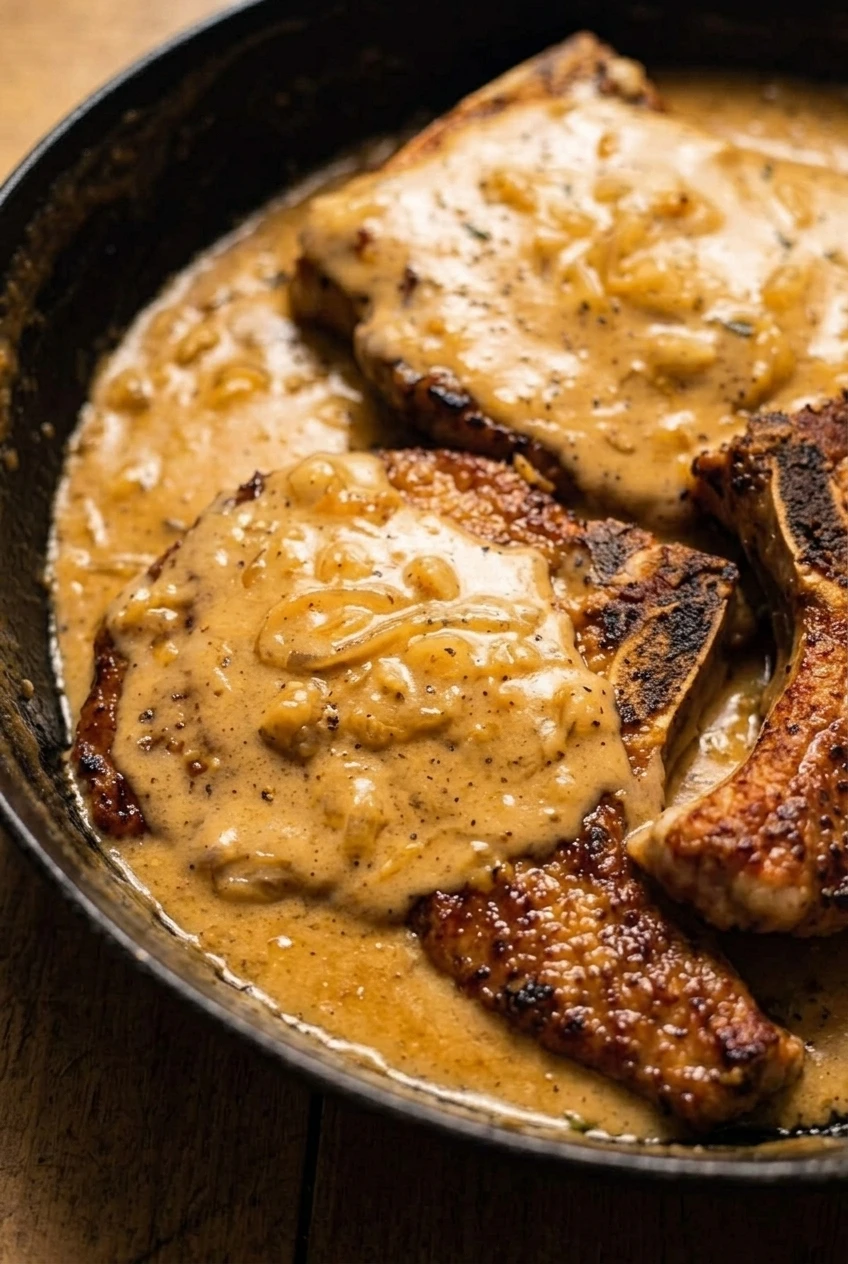
Close detail of browned pork chop edges, soft onions, and thick creamy onion gravy.
  • 4 bone-in pork chops, about 1 inch thick and 2 to 2 1/2 pounds total (about 1 kg)
  • 1 teaspoon kosher salt, divided
  • 1/2 teaspoon black pepper
  • 1/2 teaspoon garlic powder
  • 1/2 teaspoon paprika
  • 1/3 cup all-purpose flour (40g)
  • 2 tablespoons neutral oil
  • 2 tablespoons unsalted butter
  • 2 medium yellow onions, thinly sliced (about 300g)
  • 1 1/2 cups low-sodium chicken broth (360ml), plus more as needed
  • 1/2 cup heavy cream (120ml)
  • 1/2 teaspoon dried thyme

How to Make Smothered Pork Chops
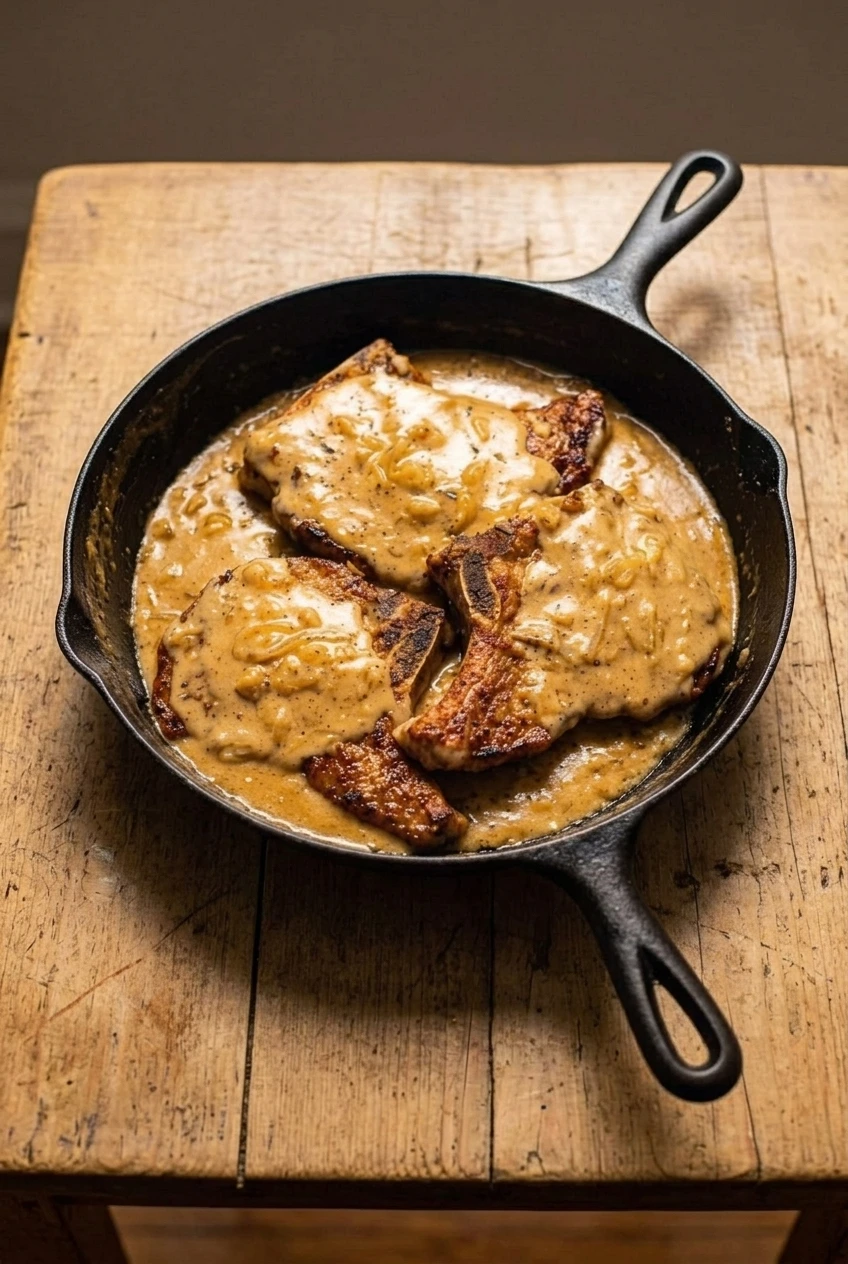
A full dark skillet of Southern smothered pork chops with onion gravy, shown with more surrounding surface.
  1. Season and dredge: Pat the chops dry and season both sides with 1/2 teaspoon of the salt. Mix the remaining salt, pepper, garlic powder, and paprika into the flour. Set aside 2 tablespoons of the seasoned flour before dredging the raw pork. Lightly coat the chops with the remaining flour and shake off the excess.
  2. Brown the chops: Heat the oil in a 12-inch heavy skillet over medium-high heat until it shimmers. Sear the chops in a single layer for about 3 to 4 minutes per side, until well browned. Work in batches if they do not fit without crowding; crowded chops will steam instead of brown. Transfer to a plate. Lower the heat if the flour coating darkens too quickly.
  3. Soften the onions: Reduce the heat to medium. Add the butter and onions and cook uncovered for 8 to 10 minutes, stirring occasionally, until soft and lightly golden. If the browned bits in the skillet start to scorch, lower the heat and add a small splash of broth.
  4. Make the gravy: Stir the reserved flour and thyme into the onions and butter for about 1 minute. Gradually whisk in the broth, scraping up the browned bits. Stir in the cream and bring the gravy to a gentle simmer. It should coat a spoon but still pour easily.
  5. Finish the pork: Reduce the heat to low. Nestle the chops into the gravy and spoon some over their tops. Simmer gently, turning or basting once. Start checking the thickest chop after about 4 minutes; finishing may take roughly 4 to 8 minutes, depending on thickness. Check away from the bone and remove each chop when it reaches 145°F (65°C).
  6. Rest and serve: Take the skillet off the heat and rest the chops in the gravy for 3 minutes. If some chops finish earlier than others, hold them on a plate, then return them to the gravy once the skillet is off the heat. Loosen gravy that has become too thick with a splash of broth or water. Serve with the onions and gravy spooned over the pork.

How to Keep the Pork Chops Juicy

The timing is based on roughly 1-inch bone-in chops. A hard boil or a longer-than-needed simmer can dry them out, so keep the gravy bubbling gently and rely on the thermometer. Thinner or boneless chops may finish sooner; begin checking them earlier and give each chop its 3-minute rest after it reaches 145°F.

Getting Smooth Onion Gravy

Stirring the reserved flour into the butter and onions before adding broth helps prevent lumps. Add the broth gradually while whisking, and keep the browned skillet bits in the gravy for flavor. The gravy will thicken as it stands; add a little broth or water until it flows easily from a spoon.

Serving and Variations

Serve the chops from the skillet with mashed potatoes or rice to catch the gravy. Green beans, another simple vegetable, or cornbread can go alongside.

For a dairy-free gravy, omit the cream and use additional broth. It will be less creamy than the main version. Boneless chops also work, but check their temperature earlier rather than following the bone-in timing exactly.

How to Store and Reheat

Refrigerate the chops and gravy together in an airtight container for 3 to 4 days. Reheat gently in a saucepan over medium-low heat until hot throughout, stirring the gravy and adding a few tablespoons of broth or water if it has thickened.

Cooked chops and gravy can be frozen in a freezer-safe container for up to 3 months. Remove as much air as possible before freezing.

Nutrition

Approximate nutrition per serving, based on 4 servings of one pork chop with gravy: 740 calories, 42g protein, 55g fat, and 16g carbohydrates. Per 100g of finished dish: approximately 200 calories, 11g protein, 15g fat, and 4g carbohydrates. Values vary with chop size, fat content, and the amount of gravy served.

Southern Smothered Pork Chops with Onion Gravy

Bone-in pork chops are browned, then gently simmered with soft onions in a creamy chicken-broth gravy.
Course: Main Course
Cuisine: American
Prep: 15 min
Cook: 30 min
Total: 45 min
Servings: 4 Calories: 740 kcal

Equipment

  • 12-inch heavy skillet
  • Instant-read thermometer
  • Whisk

Ingredients

For the Pork Chops

  • 4 bone-in pork chops, about 1 inch thick and 2 to 2 1/2 pounds total (about 1 kg)
  • 1 teaspoon kosher salt, divided
  • 1/2 teaspoon black pepper
  • 1/2 teaspoon garlic powder
  • 1/2 teaspoon paprika
  • 1/3 cup all-purpose flour (40g)
  • 2 tablespoons neutral oil

For the Onion Gravy

  • 2 tablespoons unsalted butter
  • 2 medium yellow onions, thinly sliced (about 300g)
  • 1 1/2 cups low-sodium chicken broth (360ml), plus more as needed
  • 1/2 cup heavy cream (120ml)
  • 1/2 teaspoon dried thyme

Instructions

  1. Pat the pork chops dry and season both sides with 1/2 teaspoon of the salt.
  2. Mix the remaining salt, pepper, garlic powder, and paprika into the flour. Set aside 2 tablespoons of the seasoned flour before dredging the pork.
  3. Lightly coat the chops with the remaining flour and shake off the excess.
  4. Heat the oil in a 12-inch heavy skillet over medium-high heat until shimmering. Sear the chops in a single layer for 3 to 4 minutes per side, working in batches if needed. Transfer to a plate.
  5. Reduce the heat to medium. Add the butter and onions and cook uncovered for 8 to 10 minutes, stirring occasionally, until soft and lightly golden. Add a small splash of broth if the browned bits begin to scorch.
  6. Stir the reserved flour and thyme into the onions and butter for about 1 minute.
  7. Gradually whisk in the broth, scraping up the browned bits. Stir in the cream and bring the gravy to a gentle simmer.
  8. Reduce the heat to low. Nestle the chops into the gravy and spoon some gravy over them. Simmer gently, turning or basting once, until each chop reaches 145°F (65°C) when checked away from the bone.
  9. Remove the skillet from the heat and rest the chops in the gravy for 3 minutes. Loosen the gravy with a splash of broth or water if needed, then serve with the onions and gravy.

Tips

  • Cook the chops in batches if needed so they brown instead of steam.
  • Lower the heat if the flour coating darkens too quickly or the onions begin to scorch.
  • Add broth gradually while whisking to help keep the gravy smooth.
  • Keep the gravy at a gentle simmer and use a thermometer; thinner or boneless chops may finish sooner.
  • Check the thickest part of each chop away from the bone.

Variations

  • Dairy-Free Onion Gravy: Omit the cream and use additional chicken broth for a less creamy gravy.
  • Boneless Pork Chops: Use boneless chops and check their temperature earlier, since they may finish sooner.
Notes

Refrigerate chops and gravy together in an airtight container for 3 to 4 days. Reheat gently over medium-low heat, adding broth or water if needed. Freeze for up to 3 months.

Nutrition

Calories: 740 kcal | Protein: 42 g | Fat: 55 g | Carbohydrates: 16 g

Skillet Lasagna

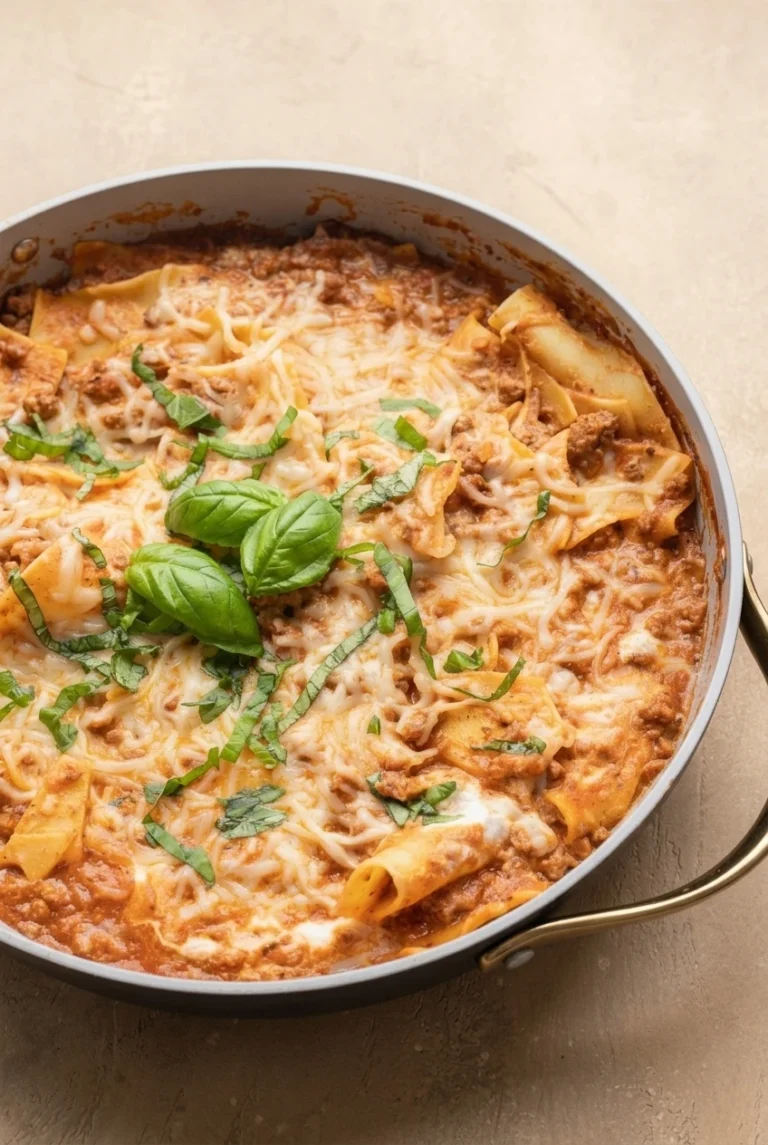
Broken lasagna noodles simmer directly in a ground-beef and marinara sauce, so there’s no separate pot of pasta to boil. The finished skillet is saucy and unlayered, with broad noodle pieces, creamy ricotta dollops, melted mozzarella, and fresh basil.

Keep the noodles mostly submerged as they cook. They usually soften in 18 to 25 minutes, but the skillet, heat, and noodle brand can change the timing. Check for tenderness and add a little warm liquid if the sauce thickens before the pasta is done.

Ingredients for Skillet Lasagna

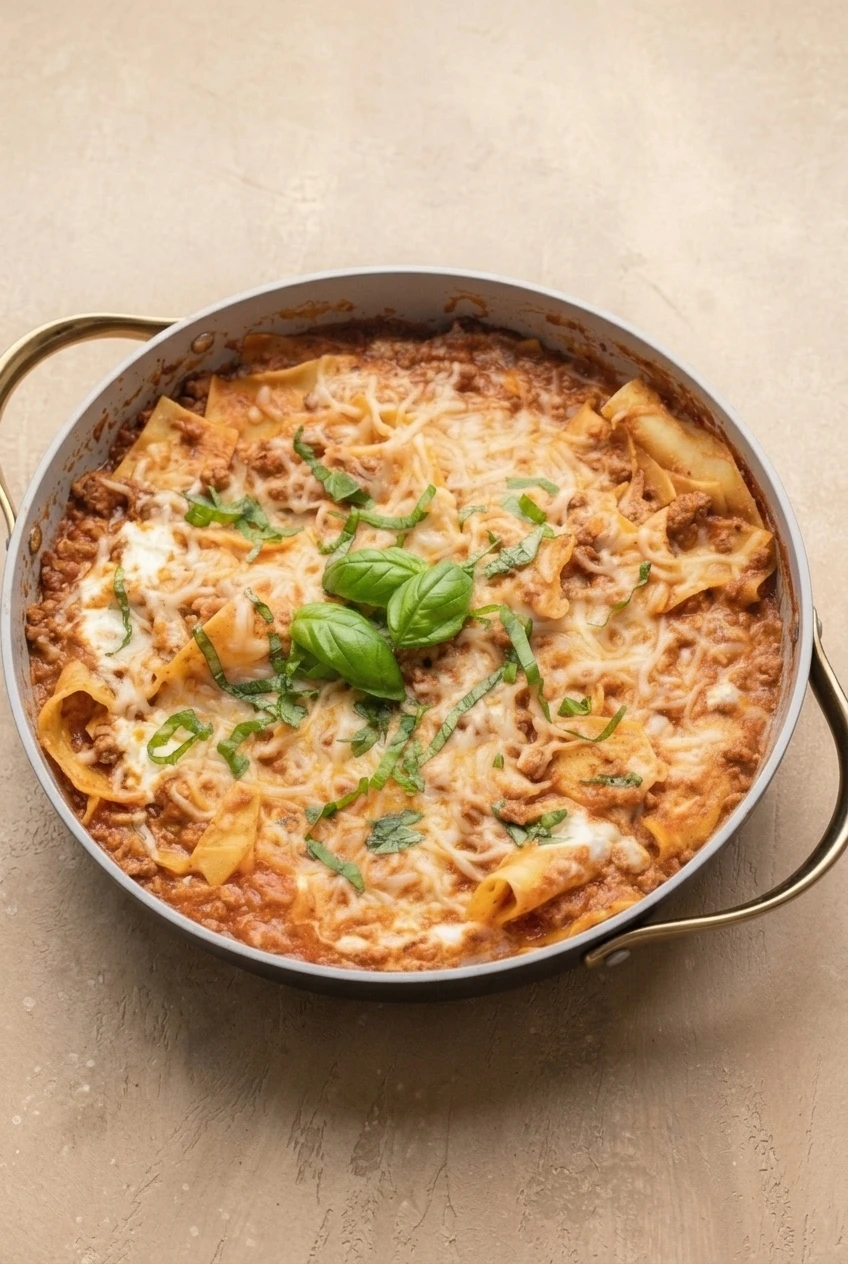
Close view of tender lasagna noodles coated in beef sauce with melted mozzarella, ricotta, and basil
  • 1 tablespoon olive oil
  • 1 lb ground beef (450g)
  • 1 small yellow onion, finely chopped (110g)
  • 3 garlic cloves, minced
  • 1 teaspoon Italian seasoning
  • 1 jar marinara sauce (24 oz; 680g)
  • 2 cups low-sodium chicken broth or water, plus more as needed
  • 8 oz regular dried lasagna noodles, broken into broad, irregular 2- to 3-inch pieces (225g)
  • 1 cup ricotta cheese (245g)
  • 1 1/2 cups shredded low-moisture mozzarella (170g)
  • 1/2 cup loosely packed fresh basil leaves, some left whole and some thinly sliced
  • Kosher salt and black pepper, to taste; start with about 1/2 teaspoon salt and 1/4 teaspoon pepper

Optional: Add a pinch of red pepper flakes with the garlic, or finish with 2 to 3 tablespoons finely grated Parmesan.

How to Make Skillet Lasagna

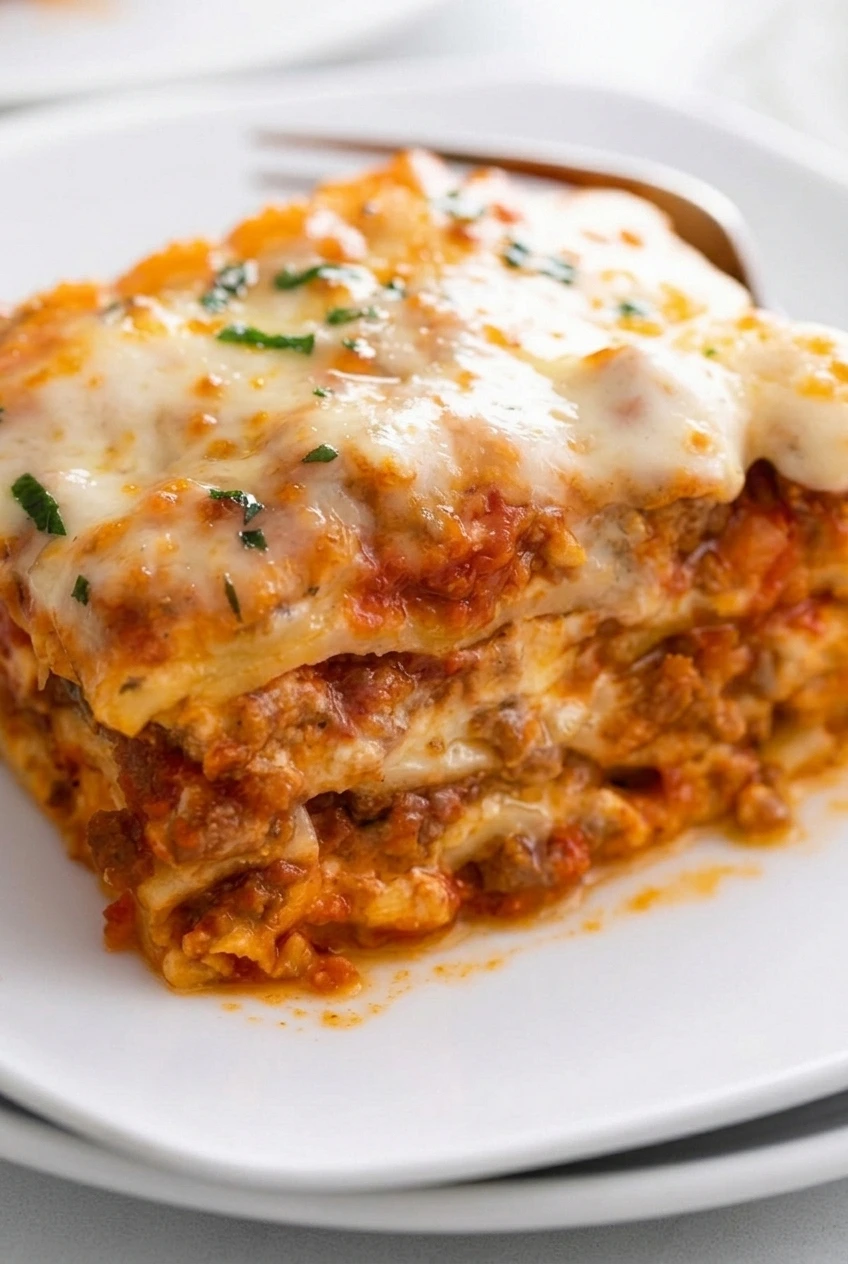
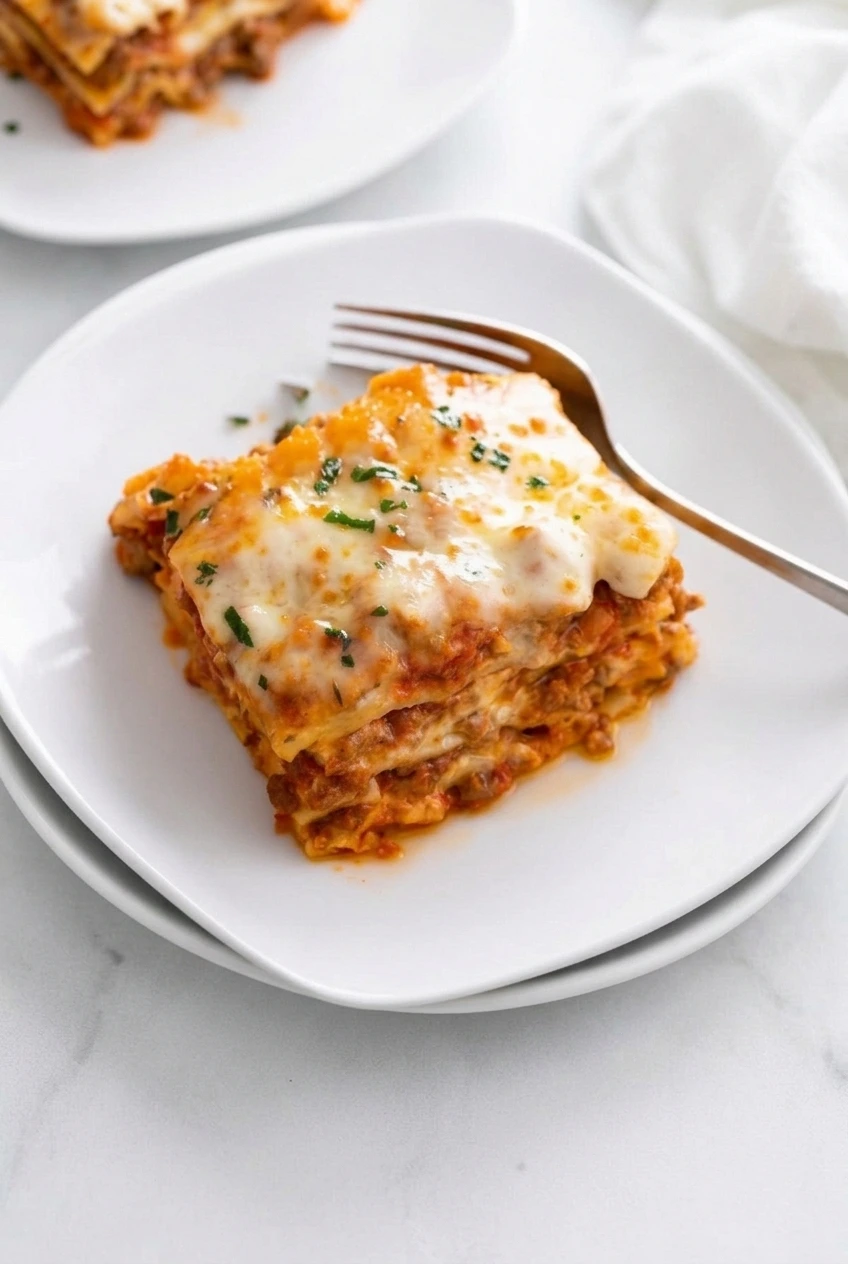
Whole skillet of beef lasagna noodles with ricotta, mozzarella, and basil on a neutral tabletop
  1. Brown the beef: Heat a 12-inch deep skillet with a lid over medium-high heat. Add the olive oil, beef, and onion. Season with about 1/2 teaspoon salt and 1/4 teaspoon pepper. Cook for 6 to 8 minutes, breaking up the beef, until it is browned through and the onion is soft. Drain excess fat if needed. Reduce the heat to medium, add the garlic and Italian seasoning, and stir briefly until fragrant.
  2. Add the sauce and noodles: Stir in the marinara and 2 cups broth or water. Add the broken noodles, pressing and turning them gently until most pieces are covered by the sauce. Taste the sauce and adjust the seasoning, allowing for the salt already in the marinara and broth.
  3. Simmer until tender: Bring to a gentle simmer, cover, and reduce the heat to medium-low. Every 3 to 4 minutes, uncover to stir, gently scrape the bottom, and tuck exposed noodles back under the sauce. Start checking at 15 minutes; the noodles usually take 18 to 25 minutes. If the sauce thickens while they are still firm, add warm broth or water about 1/4 cup at a time. Cook until the noodles have no hard, dry center and the sauce is thick and spoonable. A little loose liquid is fine.
  4. Add the cheeses: Reduce the heat to low. Spoon the ricotta over the pasta in distinct dollops, then scatter the mozzarella across the top. Leave some ricotta and meat sauce visible rather than stirring the cheeses in.
  5. Melt and garnish: Cover for 2 to 3 minutes, just until the mozzarella melts without browning. Remove from the heat and add the whole basil leaves and thin ribbons. Rest for about 5 minutes before serving from the skillet; the sauce will thicken slightly.

Choosing the Skillet and Noodles

Use a wide, deep skillet so there is room to stir and keep the noodle pieces mostly under the sauce. If your skillet is too shallow or crowded, use a wide pot with a lid instead.

Regular dried lasagna noodles are the choice for the liquid amount and timing above. No-boil sheets may need different adjustments, so don’t assume they will cook the same way.

Why the Ricotta Goes on Top

Dolloping ricotta over the cooked pasta leaves soft, creamy patches distinct from the tomato sauce. The lid melts the mozzarella gently on the stovetop, without a broiler or a browned crust.

Skillet Lasagna Variations

  • Italian sausage: Replace the beef with ground Italian sausage. It may add more fat, salt, and spice, so taste before adding more salt.
  • Vegetarian: Omit the beef, use vegetable broth or water, and add sautéed mushrooms or another vegetable. Cook off excess moisture from the vegetables before adding the sauce and noodles.
  • Cottage cheese: Use it in place of ricotta for creamy patches with a less smooth texture.

Serve with a simple green salad or garlic bread. For another lasagna-inspired skillet dinner, try Bowtie Pasta Lasagna. For a different one-pot ground-beef pasta, see One Pot Taco Pasta.

Storage and Reheating

Refrigerate leftovers in an airtight container for up to 4 days. Reheat gently in the microwave or a covered skillet until hot, adding a splash of water if the pasta has absorbed the sauce.

Portions can be frozen for up to 3 months, though the pasta may soften after thawing.

Nutrition

Approximate nutrition per serving, based on 1/6 of the skillet: 600 calories, 35g protein, 30g fat, and 45g carbohydrates. Approximate nutrition per 100g: 165 calories, 10g protein, 8g fat, and 12g carbohydrates. Values vary with the ground beef, marinara, and cheese used.

Skillet Lasagna

Broken lasagna noodles simmer in beef marinara and are finished with ricotta, mozzarella, and fresh basil.
Course: Main Course
Cuisine: Italian
Prep: 15 min
Cook: 40 min
Total: 60 min
Servings: 6 Calories: 600 kcal per serving; 165 kcal per 100 g

Equipment

  • 12-inch deep skillet with lid

Ingredients

  • 1 tablespoon olive oil
  • 1 lb ground beef (450g)
  • 1 small yellow onion, finely chopped (110g)
  • 3 garlic cloves, minced
  • 1 teaspoon Italian seasoning
  • 1 jar marinara sauce (24 oz; 680g)
  • 2 cups low-sodium chicken broth or water, plus more as needed
  • 8 oz regular dried lasagna noodles, broken into broad, irregular 2- to 3-inch pieces (225g)
  • 1 cup ricotta cheese (245g)
  • 1 1/2 cups shredded low-moisture mozzarella (170g)
  • 1/2 cup loosely packed fresh basil leaves, some whole and some thinly sliced
  • Kosher salt and black pepper, to taste; start with about 1/2 teaspoon salt and 1/4 teaspoon pepper
  • Optional: pinch of red pepper flakes
  • Optional: 2 to 3 tablespoons finely grated Parmesan

Instructions

  1. Heat the olive oil in a 12-inch deep skillet with a lid over medium-high heat.
  2. Add the ground beef and onion. Season with about 1/2 teaspoon salt and 1/4 teaspoon pepper.
  3. Cook for 6 to 8 minutes, breaking up the beef, until browned through and the onion is soft. Drain excess fat if needed.
  4. Reduce the heat to medium. Add the garlic and Italian seasoning and stir briefly until fragrant.
  5. Stir in the marinara and 2 cups broth or water.
  6. Add the broken noodles and gently press and turn them until most pieces are covered by the sauce.
  7. Taste the sauce and adjust the seasoning, accounting for the salt in the marinara and broth.
  8. Bring the mixture to a gentle simmer, cover, and reduce the heat to medium-low.
  9. Every 3 to 4 minutes, uncover and stir, gently scrape the bottom, and tuck exposed noodles under the sauce.
  10. Start checking the noodles at 15 minutes; they usually take 18 to 25 minutes to soften. If the sauce thickens while the noodles are still firm, add warm broth or water about 1/4 cup at a time.
  11. Cook until the noodles have no hard, dry center and the sauce is thick and spoonable. A little loose liquid is fine.
  12. Reduce the heat to low. Spoon the ricotta over the pasta in distinct dollops, then scatter the mozzarella on top.
  13. Cover for 2 to 3 minutes, just until the mozzarella melts.
  14. Remove the skillet from the heat and add the basil leaves and ribbons.
  15. Rest for about 5 minutes before serving.

Tips

  • Use a wide, deep skillet so there is room to stir and keep the noodles mostly submerged.
  • If your skillet is too shallow or crowded, use a wide pot with a lid.
  • Check the noodles for tenderness rather than relying only on the cooking time; skillet and noodle brands can affect timing.
  • Use regular dried lasagna noodles for the stated liquid amount and timing; no-boil sheets may need adjustments.
  • Taste before adding extra salt, since the marinara and broth may already be salty.

Variations

  • Italian Sausage: Replace the ground beef with ground Italian sausage and taste before adding extra salt.
  • Vegetarian: Omit the beef, use vegetable broth or water, and add sautéed mushrooms or another vegetable. Cook off excess moisture before adding the sauce and noodles.
  • Cottage Cheese: Use cottage cheese in place of ricotta for creamy patches with a less smooth texture.

Notes

Refrigerate leftovers in an airtight container for up to 4 days. Reheat gently in the microwave or a covered skillet, adding a splash of water if needed. Freeze portions for up to 3 months; the pasta may soften after thawing. Nutrition is approximate and based on 1/6 of the skillet.

Nutrition

Calories: 600 kcal per serving; 165 kcal per 100 g | Protein: 35 g per serving; 10 g per 100 g | Fat: 30 g per serving; 8 g per 100 g | Carbohydrates: 45 g per serving; 12 g per 100 g

Lazy Lasagna Casserole

Farfalle takes the place of lasagna sheets in this scoopable casserole. The pasta is coated in beef marinara, with small pockets of ricotta inside and melted mozzarella, Parmesan, and fresh basil on top.

Cook the pasta just shy of tender before assembling the dish. It will soften further during the covered bake, while a short uncovered finish melts the cheese and gives it a few golden spots. Serves 6–8; allow about 1 hour.

Ingredients

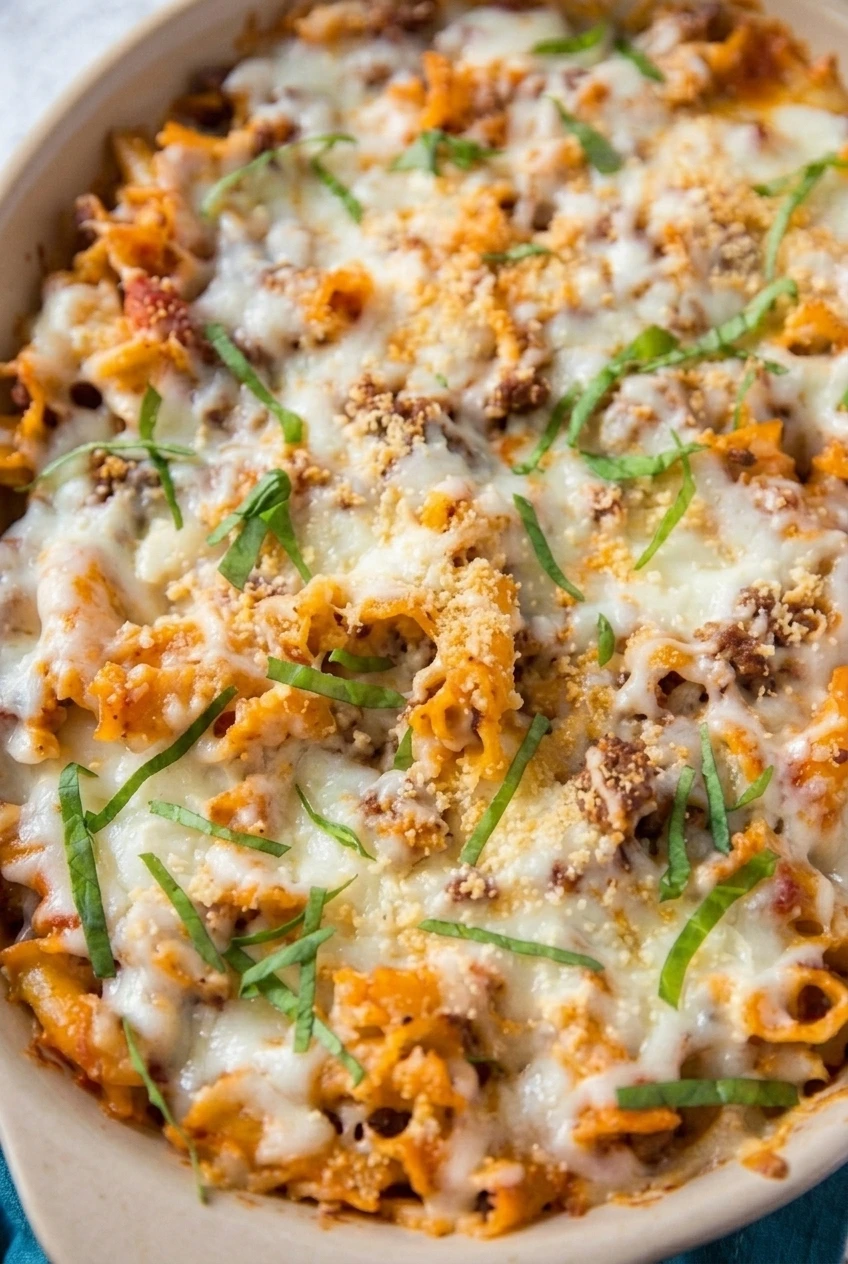
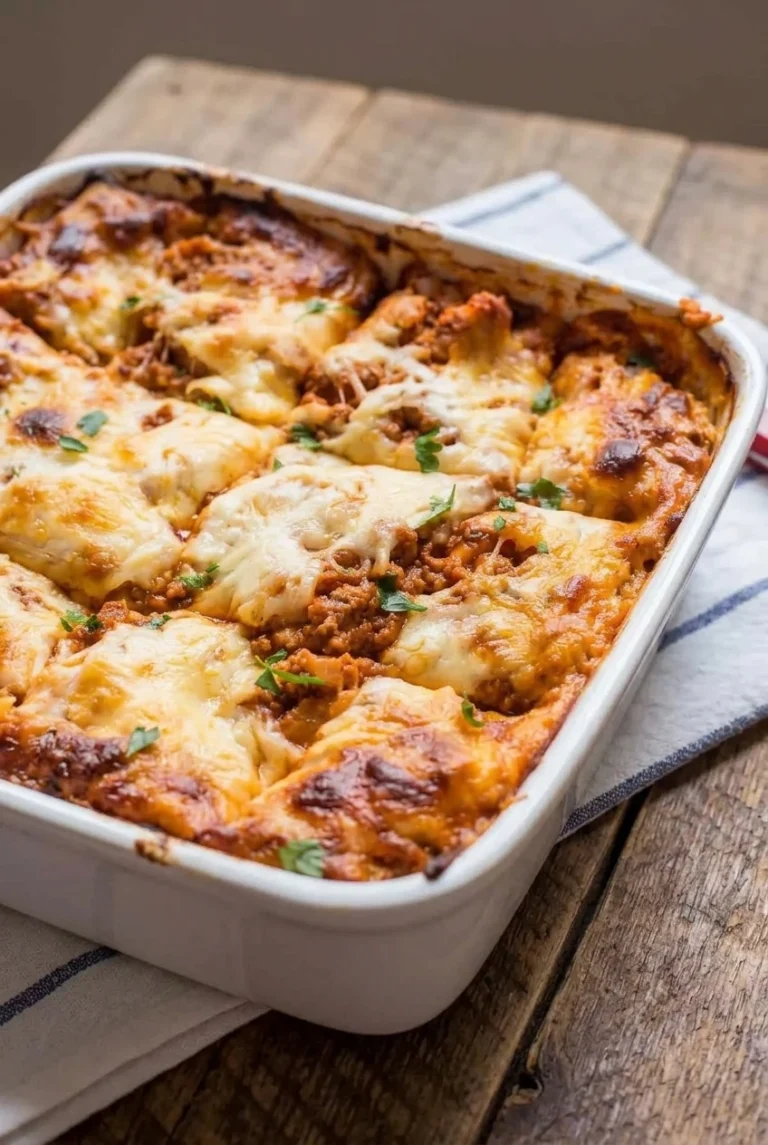
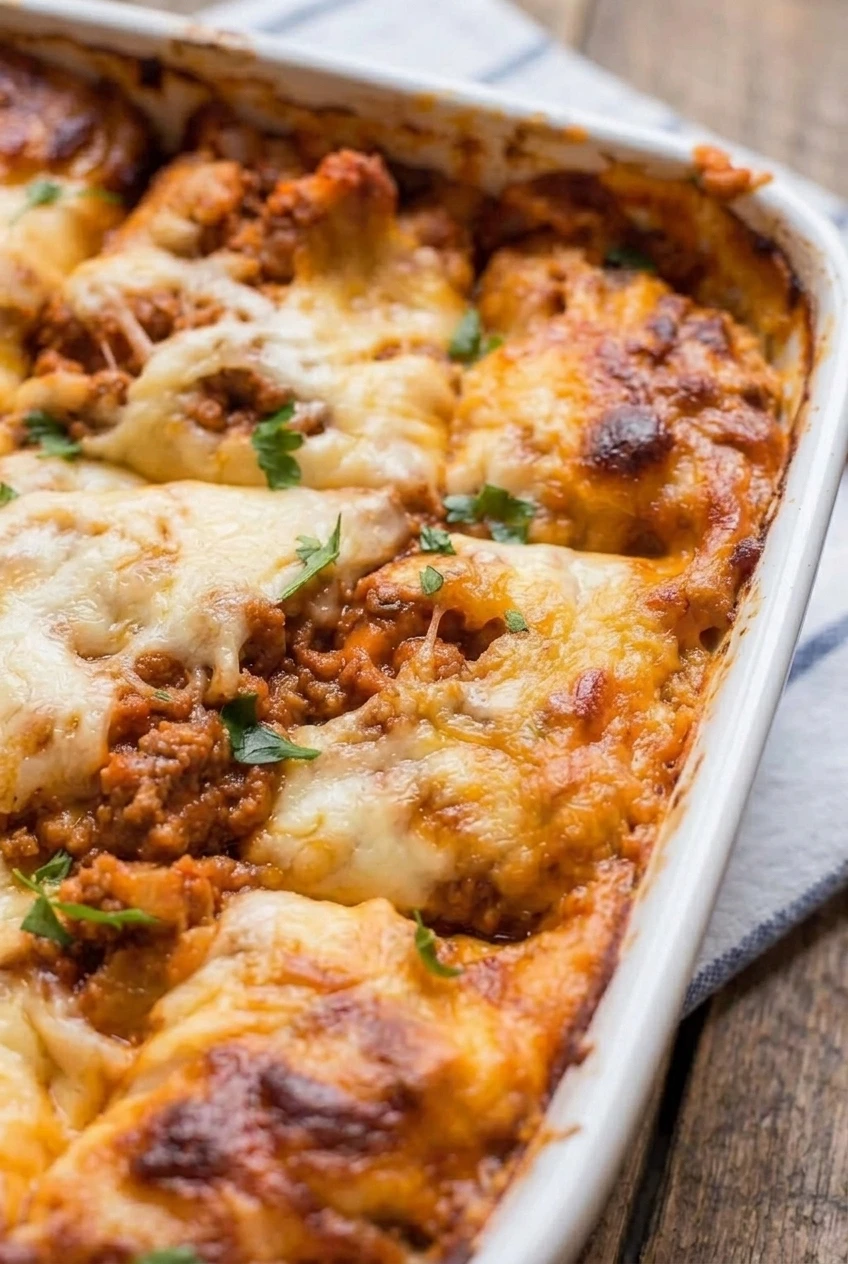
Close detail of saucy farfalle, browned beef, melted mozzarella, Parmesan, and basil in lazy lasagna casserole
  • 12 ounces farfalle pasta (340 g)
  • 1 pound ground beef (450 g)
  • 1 small yellow onion, finely diced (about 100 g)
  • 2 cloves garlic, minced
  • 1 teaspoon Italian seasoning
  • 1 jar marinara sauce, about 24 ounces (680 g)
  • 1 cup ricotta cheese (about 250 g)
  • 1/2 cup grated Parmesan, divided (about 50 g)
  • 2 cups shredded mozzarella (about 200 g)
  • 2 tablespoons loosely packed fresh basil leaves, cut into thin ribbons
  • Kosher salt and black pepper, to taste; start with about 1/2 teaspoon salt and 1/4 teaspoon pepper for the beef

Salt the pasta water before cooking. For optional additions, use a pinch of red pepper flakes or up to 1 cup of sautéed mushrooms or spinach. Cook off excess moisture from the vegetables before adding them to the sauce.

How to Make Lazy Lasagna Casserole

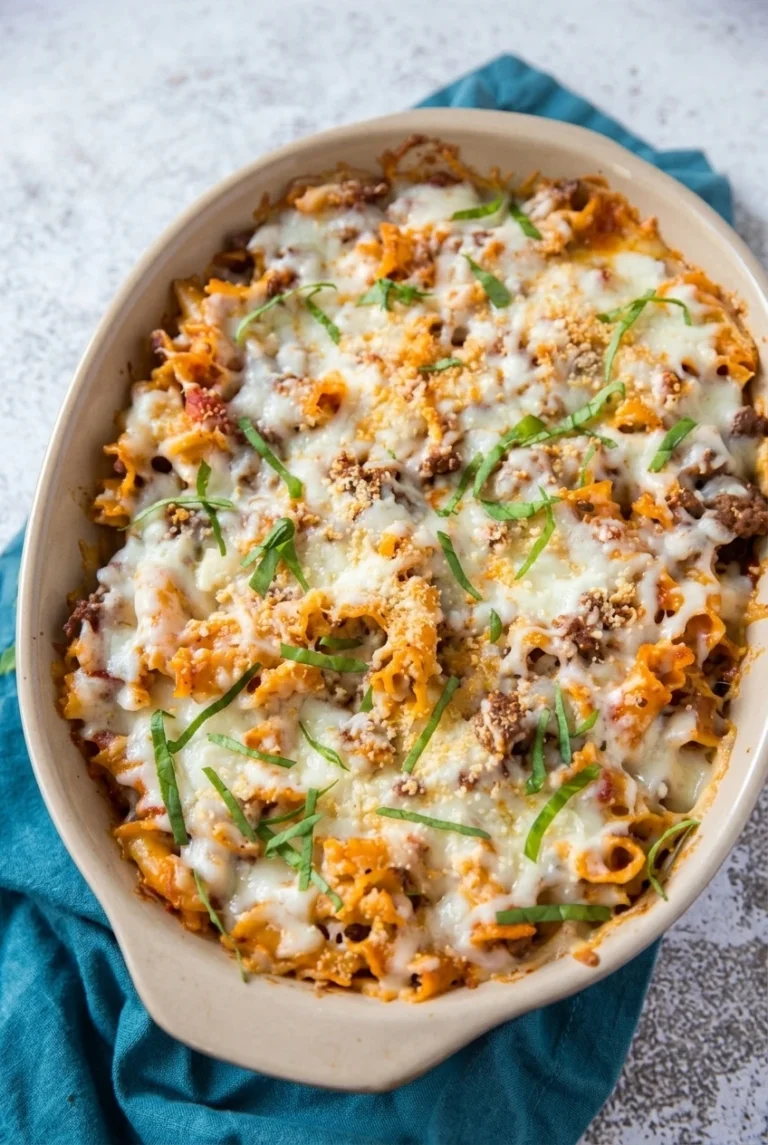
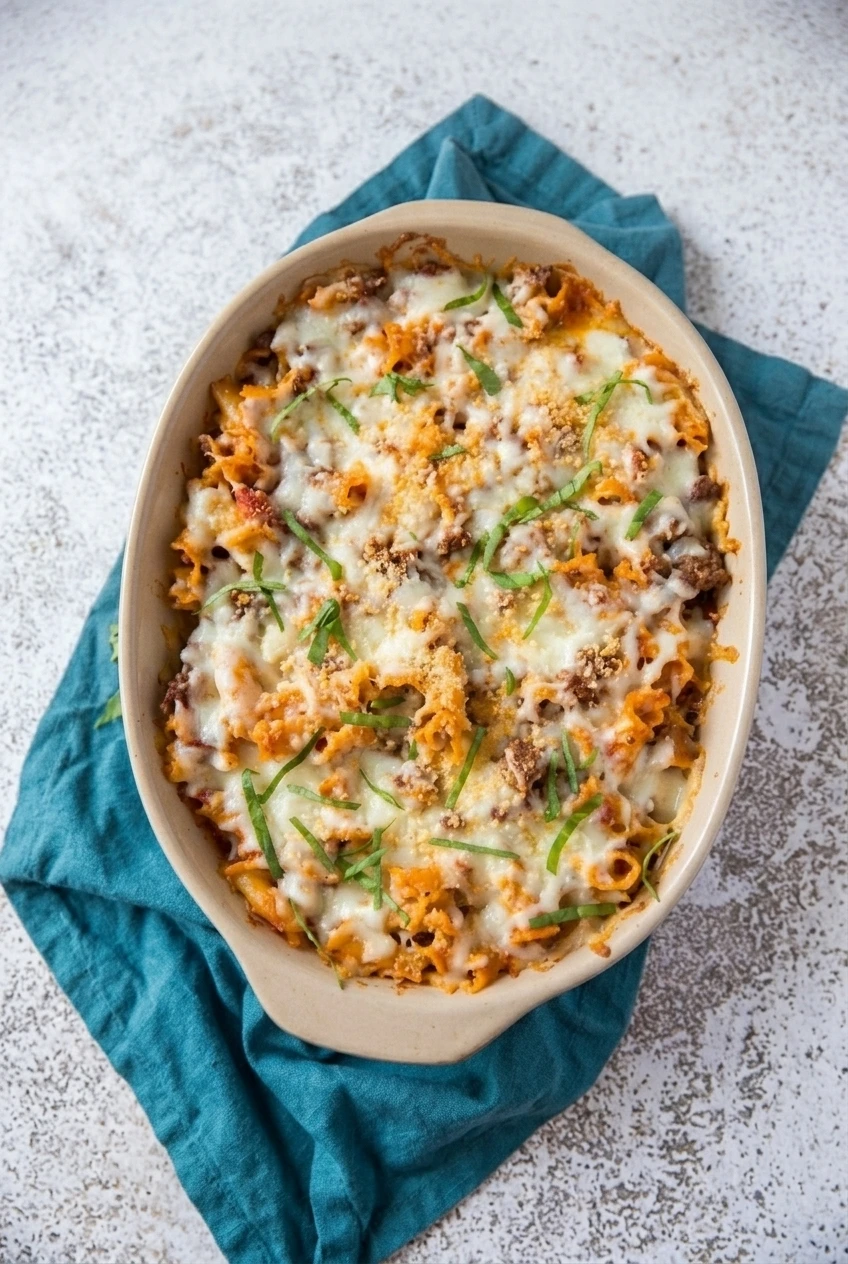
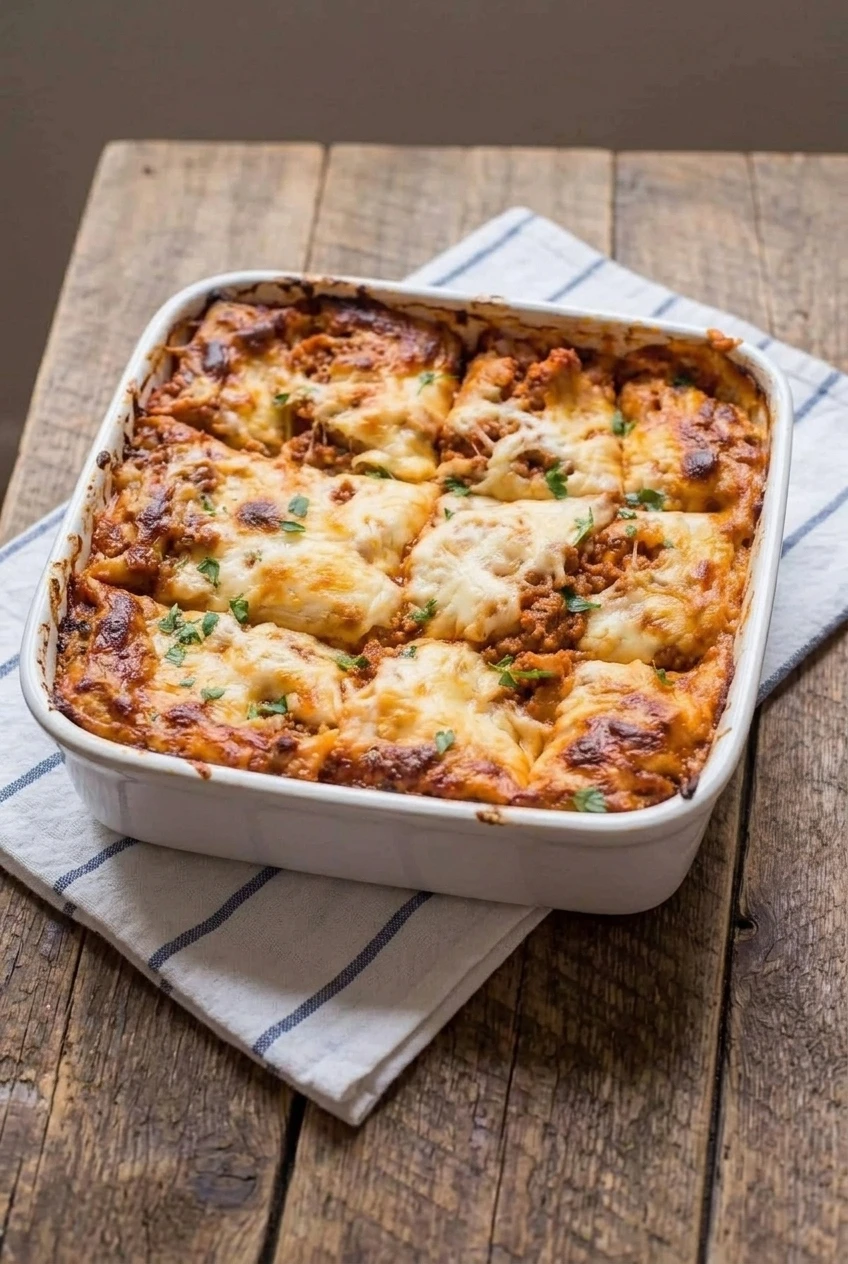
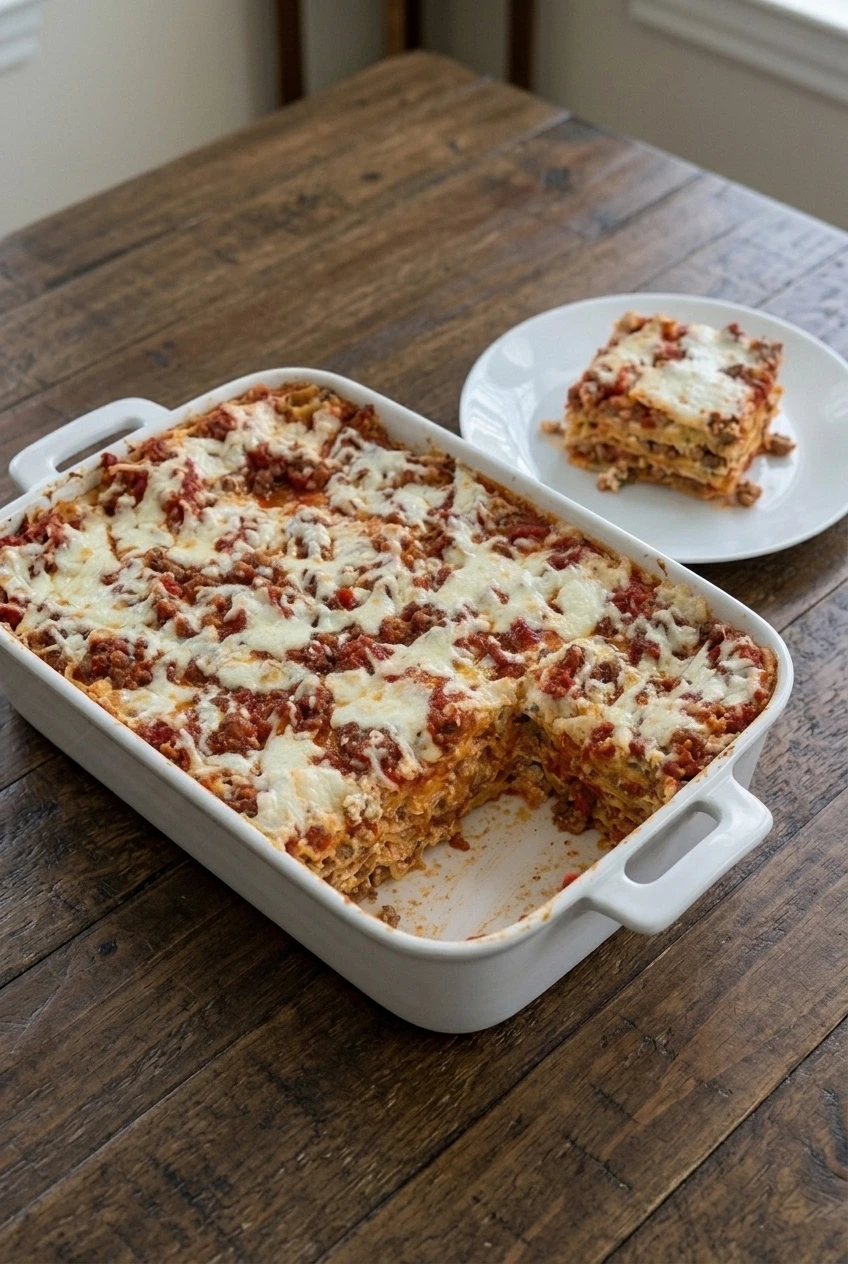
A full oval dish of lazy lasagna casserole with beef, farfalle, melted cheese, and basil on a pale counter
  1. Preheat and prepare the dish: Heat the oven to 350°F (175°C). Lightly grease a 9-by-13-inch baking dish or a similar-capacity oval casserole dish.
  2. Cook the pasta: Boil the farfalle in salted water, starting to check it 1–2 minutes before the package’s full cooking time. Drain thoroughly without rinsing when the pasta is flexible but still has a slight firm bite.
  3. Make the beef sauce: While the pasta cooks, brown the beef and onion in a large skillet over medium heat, breaking the meat into small crumbles. Season with salt and pepper. Drain excess fat, then stir in the garlic and Italian seasoning briefly. Add the marinara and bring to a gentle simmer.
  4. Combine: Stir the drained pasta into the beef sauce. In a small bowl, mix the ricotta with half of the Parmesan. Gently fold spoonfuls through the pasta, leaving small pockets of ricotta rather than blending it completely into the sauce.
  5. Fill and top: Spread the pasta mixture evenly in the prepared dish without packing it down. Scatter the mozzarella and remaining Parmesan over the top, leaving some pasta visible.
  6. Bake: Cover with foil and bake for about 25 minutes. Check that the casserole is hot and beginning to bubble at the edges, then uncover and bake for another 5–10 minutes, until the mozzarella is melted with a few golden spots. A deep dish or one starting cold may need more covered time; keep it covered if the cheese browns before the center is hot.
  7. Rest and serve: Let the casserole rest for 5–10 minutes so it settles slightly. Scatter the basil ribbons over the top and scoop portions directly from the dish.

How to Keep the Pasta from Getting Mushy

Do not boil the farfalle until fully tender: it continues to cook as the casserole bakes. Drain it well, too. Water left on the pasta can thin the sauce, while excess fat left in the skillet can make the finished dish greasy. Once the center is hot, the edges are bubbling, and the cheese has melted, take the casserole out rather than baking it longer for a darker crust.

Why the Bake Time Depends on the Pasta

The 30–35-minute bake is for short pasta that has already been boiled. Oven-ready lasagna noodles and refrigerated or frozen ravioli need different amounts of liquid and different baking instructions; they are not direct swaps in this casserole.

Substitutions and Serving

Penne, shells, rotini, or ziti can replace the farfalle; cook the chosen shape just shy of tender according to its package timing. Ground turkey or Italian sausage can replace the beef. Cottage cheese can replace ricotta, though it has a different texture; drain it if especially wet.

Serve with a green salad, garlic bread, or a simple side of broccoli or green beans. For a version made in a skillet rather than baked, try bowtie pasta lasagna.

Make-Ahead, Storage, and Reheating

To make the casserole ahead, assemble and cover it, then refrigerate for about 24–36 hours before baking. Allow extra covered baking time if it goes into the oven cold, and uncover only after the center is hot and the edges begin to bubble.

Refrigerate leftovers in an airtight container for 3–4 days. Microwave individual portions until hot, or cover a larger amount and reheat it in a 350°F oven until heated through.

The assembled, unbaked casserole can be frozen tightly covered. Thaw it overnight in the refrigerator before baking, and allow extra covered time if it is still cold.

Nutrition

Approximate nutrition per serving, based on 1 of 8 portions: 480 calories, 30 g protein, 22 g fat, and 40 g carbohydrates. Approximate nutrition per 100 g: 155 calories, 10 g protein, 7 g fat, and 13 g carbohydrates. Values will vary with the beef, cheese, marinara, and portion size.

Lazy Lasagna Casserole

Farfalle, beef marinara, and pockets of ricotta bake under a melted mozzarella and Parmesan topping.
Course: Main Course
Cuisine: Italian
Prep: 20 min
Cook: 40 min
Total: 60 min
Servings: 8 Calories: 480 kcal

Equipment

  • 9-by-13-inch baking dish
  • Large skillet
  • Large pot
  • Colander
  • Small mixing bowl
  • Aluminum foil

Ingredients

For the casserole

  • 12 ounces farfalle pasta (340 g)
  • 1 pound ground beef (450 g)
  • 1 small yellow onion, finely diced (about 100 g)
  • 2 cloves garlic, minced
  • 1 teaspoon Italian seasoning
  • 1 jar marinara sauce, about 24 ounces (680 g)
  • 1 cup ricotta cheese (about 250 g)
  • 1/2 cup grated Parmesan, divided (about 50 g)
  • 2 cups shredded mozzarella (about 200 g)
  • 2 tablespoons loosely packed fresh basil leaves, cut into thin ribbons
  • Kosher salt and black pepper, to taste
  • Salt, for the pasta water

Optional additions

  • Pinch of red pepper flakes
  • Up to 1 cup sautéed mushrooms or spinach

Instructions

  1. Heat the oven to 350°F (175°C). Lightly grease a 9-by-13-inch baking dish or a similar-capacity casserole dish.
  2. Boil the farfalle in salted water, checking it 1–2 minutes before the package’s full cooking time. Drain thoroughly without rinsing when it is flexible but still slightly firm.
  3. While the pasta cooks, brown the beef and onion in a large skillet over medium heat, breaking the beef into small crumbles. Season with salt and pepper; start with about 1/2 teaspoon salt and 1/4 teaspoon pepper.
  4. Drain excess fat from the skillet. Stir in the garlic and Italian seasoning briefly, then add the marinara and bring to a gentle simmer.
  5. Stir the drained pasta into the beef sauce.
  6. Mix the ricotta with half of the Parmesan in a small bowl. Gently fold spoonfuls of the mixture through the pasta, leaving small pockets of ricotta.
  7. Spread the pasta mixture evenly in the prepared dish without packing it down. Scatter the mozzarella and remaining Parmesan over the top, leaving some pasta visible.
  8. Cover the dish with foil and bake for about 25 minutes, until hot and beginning to bubble at the edges.
  9. Uncover and bake for another 5–10 minutes, until the mozzarella is melted with a few golden spots. If the center is not hot yet, cover and continue baking.
  10. Rest the casserole for 5–10 minutes. Scatter the basil over the top and serve.

Tips

  • Cook the pasta just shy of tender because it will continue cooking in the oven.
  • Drain the pasta thoroughly so extra water does not thin the sauce.
  • Drain excess fat from the beef to help keep the casserole from becoming greasy.
  • If adding mushrooms or spinach, cook off excess moisture before stirring them into the sauce.
  • For a cold or deep casserole, allow extra covered baking time and uncover only when the center is hot and the edges bubble.

Variations

  • Alternative pasta shapes: Replace the farfalle with penne, shells, rotini, or ziti, and cook the pasta just shy of tender.
  • Ground turkey or sausage: Use ground turkey or Italian sausage in place of the ground beef.
  • Cottage cheese: Replace the ricotta with cottage cheese; drain it first if it is especially wet.
  • Vegetable or spicy addition: Add up to 1 cup of sautéed mushrooms or spinach, or a pinch of red pepper flakes.

Notes

Refrigerate leftovers in an airtight container for 3–4 days. Reheat individual portions in the microwave or a larger amount covered in a 350°F oven until hot. The assembled unbaked casserole can be frozen tightly covered; thaw overnight in the refrigerator before baking. Approximate nutrition per 100 g: 155 calories, 10 g protein, 7 g fat, and 13 g carbohydrates.

Nutrition

Calories: 480 kcal | Protein: 30 g | Fat: 22 g | Carbohydrates: 40 g

Cottage Cheese Lasagna

Cottage cheese gives this beef-and-marinara lasagna a soft, lightly curdy filling beneath layers of noodles and melted mozzarella. Regular lasagna noodles are boiled just shy of tender, so they finish cooking in the sauce without needing extra water. The casserole bakes covered to heat the layers through, then uncovered until the cheese has golden-brown spots. Let it rest before cutting so the hot filling has time to settle.

Prep time: 35 minutes | Cook time: 55–60 minutes | Rest time: 15–20 minutes | Total time: About 1 hour 50 minutes | Serves: 8–10

Ingredients for Cottage Cheese Lasagna

Close detail of cottage cheese lasagna with melted mozzarella, browned spots, chunky meat sauce, and parsley
  • 12 regular lasagna noodles, about 12 oz (340g)
  • 1 tablespoon olive oil, as needed
  • 1 medium yellow onion, finely chopped, about 1 cup (150g)
  • 3 garlic cloves, minced
  • 1 lb lean ground beef (450g)
  • Two 24-oz jars marinara sauce, 48 oz total (about 1,350g)
  • 2 teaspoons Italian seasoning
  • About 1 teaspoon kosher salt, divided, or to taste
  • 1/2 teaspoon black pepper, divided
  • 24 oz small-curd cottage cheese (680g)
  • 1 large egg
  • 1 cup grated Parmesan, divided (90g)
  • 4 cups shredded low-moisture mozzarella, divided (450g)
  • 2 tablespoons chopped fresh parsley

How to Make Cottage Cheese Lasagna

A full white casserole dish of cottage cheese lasagna centered on a simple kitchen surface
  1. Preheat and boil the noodles: Heat the oven to 350°F (175°C). Boil the noodles in a large pot of salted water until just shy of tender, following the package timing. They should bend without breaking but still feel slightly firm. Drain and lay them flat on parchment or a lightly oiled tray so they do not stick together.
  2. Make the meat sauce: Heat the olive oil in a large skillet or saucepan over medium heat. Cook the onion until softened, then add the garlic and ground beef. Cook, breaking up the beef, until no raw-looking pieces remain. Drain excess fat. Stir in the marinara, Italian seasoning, about half the salt, and half the pepper. Reduce the heat to medium-low and simmer briefly, stirring, until the sauce is combined and spoonable.
  3. Mix the filling: If the cottage cheese has noticeable excess liquid, strain it first. Stir it together with the egg, half the Parmesan, and the remaining salt and pepper. Leave the curds intact for the main version; for a smoother filling, briefly blend the cottage cheese before mixing it with the other ingredients.
  4. Layer the lasagna: Spread a thin layer of meat sauce in a 9-by-13-inch baking dish. Add four noodles, a third of the cottage-cheese filling, meat sauce, and some mozzarella. Repeat twice with the remaining noodles and filling, saving enough sauce and mozzarella to cover the top. Finish with sauce, the remaining mozzarella, and the remaining Parmesan. Leave room below the dish’s rim; if it is close to full, set it on a rimmed baking sheet to catch any bubbling sauce.
  5. Bake covered: Tent the dish loosely with foil so it does not touch the cheese, or lightly grease the underside of the foil. Bake for about 40 minutes, then check for sauce beginning to bubble around the edges.
  6. Brown the top: Remove the foil and bake for another 15–20 minutes, beginning to check after 15 minutes. The sauce should bubble at the edges, the center should be hot, and the mozzarella should be melted with scattered golden-brown spots. A deep dish or a casserole baked straight from the refrigerator may take longer.
  7. Rest and serve: Let the lasagna stand for 15–20 minutes, until vigorous bubbling subsides and the layers begin to settle. Scatter the parsley over the top, then cut and serve from the baking dish.

Cottage Cheese: Curdy or Smooth?

Unblended cottage cheese makes a softly curdy filling. Blending it briefly produces a smoother texture, but it is not needed to make the layers hold together. Strain the cheese only if you can see excess liquid; otherwise, use it as it is.

Why This Lasagna Uses Boiled Noodles

Regular noodles are boiled just shy of tender so they can finish cooking in the casserole. The measured marinara provides the moisture they need; do not add water. Oven-ready noodles absorb sauce differently and need their own moisture and baking directions, so they are not a direct swap for this method.

How to Avoid Watery Layers

Drain excess fat after browning the beef, and strain cottage cheese only when it is noticeably wet. Use the measured marinara without adding water. Resting the baked lasagna also gives the hot sauce and filling time to settle before slicing.

Make-Ahead, Storage, and Reheating

To make it ahead, assemble the lasagna, cover it, and refrigerate it until ready to bake. A chilled casserole may need longer than the listed bake time; look for bubbling edges and a hot center.

Refrigerate cooked leftovers promptly in a covered container and use within 3–4 days. Reheat portions covered in the oven until hot throughout, or microwave in short intervals. Loosen the cover near the end of oven reheating if you want a less-steamed top.

Freeze baked portions or an assembled, unbaked casserole tightly wrapped in a freezer-safe dish. For best quality, use within about 2–3 months. Thaw overnight in the refrigerator when practical. If baking from frozen, keep it covered until heated through and allow substantially more time; the timing will depend on the dish and casserole depth.

Serve with a green salad, Caesar salad, or garlic bread. For a different beef-and-pasta dinner, try Bowtie Pasta Lasagna. High-Protein Taco Pasta is another beef-and-cottage-cheese pasta dish with a different flavor profile.

Nutrition

Approximate nutrition per serving, based on 1 of 9 servings: 580 calories, 39g protein, 22g fat, and 48g carbohydrates. Approximate nutrition per 100g: 140 calories, 9g protein, 5g fat, and 11g carbohydrates. Values vary with the brands of marinara, cottage cheese, and other cheeses used.

Cottage Cheese Lasagna

Boiled lasagna noodles are layered with beef marinara, cottage cheese filling, and mozzarella, then baked until bubbling and golden.
Course: Main Course
Cuisine: Italian
Prep: 35 min
Cook: 58 min
Total: 110 min
Servings: 9 Calories: 580 kcal

Equipment

  • Large pot
  • Large skillet or saucepan
  • 9-by-13-inch baking dish
  • Rimmed baking sheet
  • Aluminum foil

Ingredients

For the Lasagna

  • 12 regular lasagna noodles, about 12 oz (340g)
  • 1 tablespoon olive oil, as needed
  • 1 medium yellow onion, finely chopped, about 1 cup (150g)
  • 3 garlic cloves, minced
  • 1 lb lean ground beef (450g)
  • Two 24-oz jars marinara sauce, 48 oz total (about 1,350g)
  • 2 teaspoons Italian seasoning
  • About 1 teaspoon kosher salt, divided, or to taste
  • 1/2 teaspoon black pepper, divided
  • 24 oz small-curd cottage cheese (680g)
  • 1 large egg
  • 1 cup grated Parmesan, divided (90g)
  • 4 cups shredded low-moisture mozzarella, divided (450g)
  • 2 tablespoons chopped fresh parsley

Instructions

  1. Heat the oven to 350°F (175°C).
  2. Boil the lasagna noodles in a large pot of salted water until just shy of tender, following the package timing. Drain and lay them flat on parchment or a lightly oiled tray.
  3. Heat the olive oil in a large skillet or saucepan over medium heat. Cook the onion until softened, then add the garlic and ground beef.
  4. Cook the beef, breaking it up, until no raw-looking pieces remain. Drain excess fat.
  5. Stir in the marinara, Italian seasoning, about half the salt, and half the pepper. Simmer briefly over medium-low heat until combined and spoonable.
  6. If the cottage cheese has noticeable excess liquid, strain it. Mix the cottage cheese with the egg, half the Parmesan, and the remaining salt and pepper.
  7. Spread a thin layer of meat sauce in a 9-by-13-inch baking dish. Add four noodles, a third of the cottage cheese filling, meat sauce, and some mozzarella.
  8. Repeat the layers twice, reserving enough sauce and mozzarella to cover the top. Finish with the remaining sauce, mozzarella, and Parmesan.
  9. Tent the dish loosely with foil, keeping it from touching the cheese, or lightly grease the underside of the foil. Set the dish on a rimmed baking sheet if it is close to full.
  10. Bake covered for about 40 minutes, until sauce begins to bubble around the edges.
  11. Remove the foil and bake for another 15–20 minutes, beginning to check after 15 minutes. Bake until the edges bubble, the center is hot, and the mozzarella has scattered golden-brown spots.
  12. Let the lasagna rest for 15–20 minutes. Scatter the parsley over the top, then cut and serve.

Tips

  • Boil the noodles just shy of tender so they finish cooking in the casserole.
  • Do not add water to the measured marinara; it provides moisture for the noodles.
  • Strain the cottage cheese only if it has noticeable excess liquid.
  • Keep foil from touching the cheese, or grease its underside to prevent sticking.
  • Rest the lasagna before cutting so the layers can settle.
  • Use a rimmed baking sheet under a nearly full dish to catch bubbling sauce.

Variations

  • Smooth Cottage Cheese Filling: Briefly blend the cottage cheese before mixing it with the egg, Parmesan, salt, and pepper for a smoother filling.

Notes

Refrigerate cooked leftovers promptly in a covered container and use within 3–4 days. Reheat covered in the oven until hot throughout or microwave in short intervals. Freeze tightly wrapped for best quality within 2–3 months; thaw overnight in the refrigerator when practical. Make-ahead or frozen casseroles may need additional baking time.

Nutrition

Calories: 580 kcal | Protein: 39 g | Fat: 22 g | Carbohydrates: 48 g

Five Cheese Lasagna

Ground-turkey tomato sauce, boiled lasagna noodles, and five cheeses bake into thick, distinct layers beneath a melted, lightly golden top. Ricotta and Parmesan make the creamy filling; mozzarella, cheddar, and provolone add cheese between the noodles and across the surface.

The sauce should be thick enough to cling to the turkey before you assemble the lasagna. After baking, give it 15–20 minutes to rest so you can cut and lift substantial square servings without the layers sliding apart.

Ingredients for Five Cheese Lasagna

Close detail of five cheese lasagna showing stacked noodles, tomato meat sauce, creamy cheese layers, and a golden melted top
  • 12 dried lasagna noodles (about 300g)
  • 1 tablespoon olive oil
  • 1 medium yellow onion, finely chopped (about 150g)
  • 3 garlic cloves, minced
  • 1 lb ground turkey (450g)
  • 1 can (28 ounces) crushed tomatoes (about 800g)
  • 1 jar (24 ounces) tomato-basil pasta sauce (about 680g)
  • 2 teaspoons dried Italian seasoning
  • 1 teaspoon kosher salt, divided, or to taste
  • 1/2 teaspoon black pepper
  • 1 container (15 ounces) ricotta cheese (about 425g)
  • 1 large egg
  • 1 cup grated Parmesan, divided (about 90g)
  • 1 cup shredded sharp cheddar, divided (about 115g)
  • 1 cup shredded provolone, divided (about 115g)
  • 3 cups shredded low-moisture mozzarella, divided (about 335g)

Optional: 1/2 teaspoon lightly crushed fennel seeds for the sauce; 1 tablespoon chopped fresh parsley for serving.

How to Make Five Cheese Lasagna

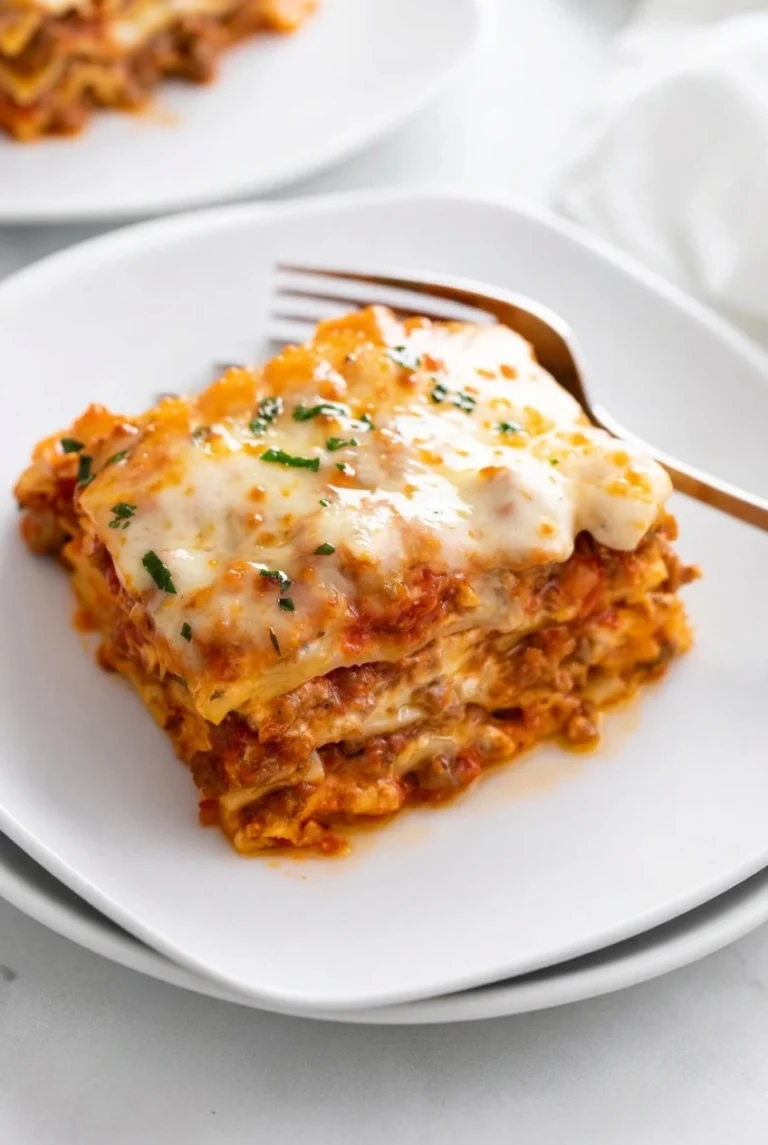
A full plate with a square serving of five cheese lasagna, showing its layered cut sides and melted cheese topping
  1. Preheat and boil the noodles: Heat the oven to 375°F (190°C). Cook the dried noodles in a large pot of boiling water according to the package directions until al dente, stirring as they cook. Drain and lay them separately so they do not stick together.
  2. Make the turkey sauce: Heat the olive oil in a large skillet or saucepan over medium heat. Cook the onion until softened, then add the garlic. Add the turkey and optional fennel seeds; cook, breaking up the meat, until no pink remains. Stir in the crushed tomatoes, pasta sauce, Italian seasoning, about 1/2 teaspoon of the salt, and the pepper. Reduce to medium-low and simmer, stirring occasionally, until the sauce clings to the meat rather than pooling as thin liquid.
  3. Mix the cheese filling: Combine the ricotta, egg, 1/2 cup Parmesan, 1 cup mozzarella, and 1/2 cup cheddar. Season with some or all of the remaining salt to taste. Set aside 1 cup mozzarella, 1/2 cup provolone, the remaining cheddar, and the remaining Parmesan for the top. Keep the last cup of mozzarella and 1/2 cup provolone for the interior layers.
  4. Layer the lasagna: Spread a thin layer of sauce in a deep 9-by-13-inch baking dish. Add four noodles, then one-third of the remaining sauce, half the ricotta filling, and half the cheeses reserved for the interior. Repeat with four noodles and the same amounts of sauce, filling, and interior cheeses. Finish with the last four noodles, the remaining sauce, and the cheeses reserved for the top. If the dish is close to full, set it on a rimmed baking sheet to catch bubbling sauce.
  5. Bake covered: Lightly grease the underside of a piece of foil and tent it over the dish so it does not touch the cheese. Bake on the center rack for about 35 minutes.
  6. Uncover and finish: Remove the foil and bake for another 15–20 minutes. Start checking after about 15 minutes uncovered. The lasagna is ready when the edges bubble, the center is thoroughly hot, and the cheese is fully melted with scattered light golden spots.
  7. Rest and serve: Let the lasagna rest for 15–20 minutes, until the bubbling subsides. Cut into squares and lift each portion with a broad spatula. Sprinkle lightly with parsley, if using.

How to Keep the Layers Intact

A thin layer of sauce beneath the first noodles prevents sticking, while a thick sauce helps keep the finished portions from turning loose and watery. Spread the ricotta filling gently across each interior layer so the pasta, sauce, and cheese remain distinct.

Let the baked lasagna rest before cutting. A sharp knife will cut through the noodles more cleanly, and a broad spatula will support each square as you lift it.

Can You Use Different Lasagna Noodles?

The method above is written for dried noodles boiled to al dente. Fresh or oven-ready noodles require different preparation, and oven-ready noodles may need a different amount of moisture. Follow the package directions rather than boiling or layering them exactly as directed here.

If provolone is unavailable, another mild melting cheese will keep five distinct cheeses in the dish. You can use an equal amount of mozzarella instead, but the lasagna will then contain four kinds of cheese.

Make-Ahead, Storage, and Reheating

Assemble the unbaked lasagna, cover it, and refrigerate it for up to 1–2 days before baking. A cold casserole may need longer in the oven; check for bubbling edges, a thoroughly hot center, and a melted, lightly golden top.

Refrigerate leftovers in an airtight container for up to 3 days. Reheat portions in a lightly greased, covered baking dish at 350°F (175°C) for about 20–25 minutes, until hot throughout. Larger portions may take longer.

Baked leftovers or an assembled unbaked lasagna can be frozen for up to 3 months. Thaw an unbaked lasagna completely before baking.

Serve square portions with garlic bread or a simple green salad. For a separate skillet-style dinner, try Bowtie Pasta Lasagna.

Nutrition Information

Approximate nutrition per serving, based on 8 servings: 700 calories, 49g protein, 35g fat, and 47g carbohydrates. Approximate nutrition per 100g: 150 calories, 10g protein, 8g fat, and 10g carbohydrates. Values vary with the brands and products used.

Five Cheese Lasagna

Boiled lasagna noodles are layered with thick turkey tomato sauce, ricotta filling, and four additional cheeses, then baked until bubbling.
Course: Main Course
Cuisine: Italian
Prep: 30 min
Cook: 75 min
Total: 125 min
Servings: 8 Calories: 700 kcal per serving; 150 kcal per 100 g

Equipment

  • Large pot
  • Colander
  • Large skillet or saucepan
  • 9-by-13-inch baking dish
  • Aluminum foil
  • Rimmed baking sheet
  • Broad spatula

Ingredients

For the Lasagna

  • 12 dried lasagna noodles (about 300g)
  • 1 tablespoon olive oil
  • 1 medium yellow onion, finely chopped (about 150g)
  • 3 garlic cloves, minced
  • 1 lb ground turkey (450g)
  • 1 can (28 ounces) crushed tomatoes (about 800g)
  • 1 jar (24 ounces) tomato-basil pasta sauce (about 680g)
  • 2 teaspoons dried Italian seasoning
  • 1 teaspoon kosher salt, divided, or to taste
  • 1/2 teaspoon black pepper

For the Cheese Filling and Layers

  • 1 container (15 ounces) ricotta cheese (about 425g)
  • 1 large egg
  • 1 cup grated Parmesan, divided (about 90g)
  • 1 cup shredded sharp cheddar, divided (about 115g)
  • 1 cup shredded provolone, divided (about 115g)
  • 3 cups shredded low-moisture mozzarella, divided (about 335g)

Optional

  • 1/2 teaspoon lightly crushed fennel seeds, for the sauce
  • 1 tablespoon chopped fresh parsley, for serving

Instructions

  1. Preheat the oven to 375°F (190°C).
  2. Boil the lasagna noodles according to package directions until al dente, stirring as they cook. Drain and lay the noodles separately so they do not stick.
  3. Heat the olive oil in a large skillet or saucepan over medium heat. Cook the onion until softened, then add the garlic.
  4. Add the turkey and optional fennel seeds. Cook, breaking up the meat, until no pink remains.
  5. Stir in the crushed tomatoes, pasta sauce, Italian seasoning, about 1/2 teaspoon of the salt, and the pepper. Reduce the heat to medium-low and simmer, stirring occasionally, until the thick sauce clings to the turkey.
  6. Combine the ricotta, egg, 1/2 cup Parmesan, 1 cup mozzarella, and 1/2 cup cheddar. Season with some or all of the remaining salt to taste.
  7. Set aside 1 cup mozzarella, 1/2 cup provolone, the remaining cheddar, and the remaining Parmesan for the top. Reserve the remaining 1 cup mozzarella and 1/2 cup provolone for the interior layers.
  8. Spread a thin layer of sauce in a deep 9-by-13-inch baking dish. Add four noodles, one-third of the remaining sauce, half the ricotta filling, and half the interior cheeses.
  9. Repeat with four noodles and the same amounts of sauce, filling, and interior cheeses. Finish with the last four noodles, the remaining sauce, and the cheeses reserved for the top.
  10. If the dish is close to full, place it on a rimmed baking sheet to catch bubbling sauce. Lightly grease the underside of a piece of foil and tent it over the dish so it does not touch the cheese.
  11. Bake on the center rack, covered, for about 35 minutes.
  12. Remove the foil and bake for another 15–20 minutes, checking after about 15 minutes. The lasagna is ready when the edges bubble, the center is thoroughly hot, and the cheese is melted with scattered light golden spots.
  13. Rest for 15–20 minutes, until the bubbling subsides. Cut into squares and lift with a broad spatula. Sprinkle with parsley, if using.

Tips

  • Simmer the turkey sauce until it is thick enough to cling to the meat, rather than pooling as thin liquid.
  • Lay the drained noodles separately to prevent them from sticking together.
  • Spread the ricotta filling gently so the pasta, sauce, and cheese remain distinct.
  • Grease the underside of the foil and tent it above the cheese to prevent sticking.
  • Rest the lasagna before cutting, then use a broad spatula to support each portion.

Variations

  • Mozzarella Instead of Provolone: Replace the provolone with an equal amount of mozzarella; the lasagna will contain four kinds of cheese.

Notes

Assemble, cover, and refrigerate unbaked lasagna for up to 1–2 days; a cold casserole may need extra baking time. Refrigerate leftovers in an airtight container for up to 3 days and reheat covered at 350°F (175°C) for about 20–25 minutes, until hot throughout. Freeze baked leftovers or assembled unbaked lasagna for up to 3 months; thaw unbaked lasagna completely before baking.

Nutrition

Calories: 700 kcal per serving; 150 kcal per 100 g | Protein: 49 g per serving; 10 g per 100 g | Fat: 35 g per serving; 8 g per 100 g | Carbohydrates: 47 g per serving; 10 g per 100 g

Italian Sausage Lasagna

Browned Italian sausage and marinara give this lasagna its hearty tomato filling, while ricotta and mozzarella form creamy layers between the pasta. This version uses regular noodles cooked just to al dente, so their tenderness is easier to judge before the casserole goes into the oven. Bake it covered until the center heats through, then uncover it for a lightly golden cheese top. A 15–20 minute rest helps each square slice hold its layers.

Ingredients for Italian Sausage Lasagna

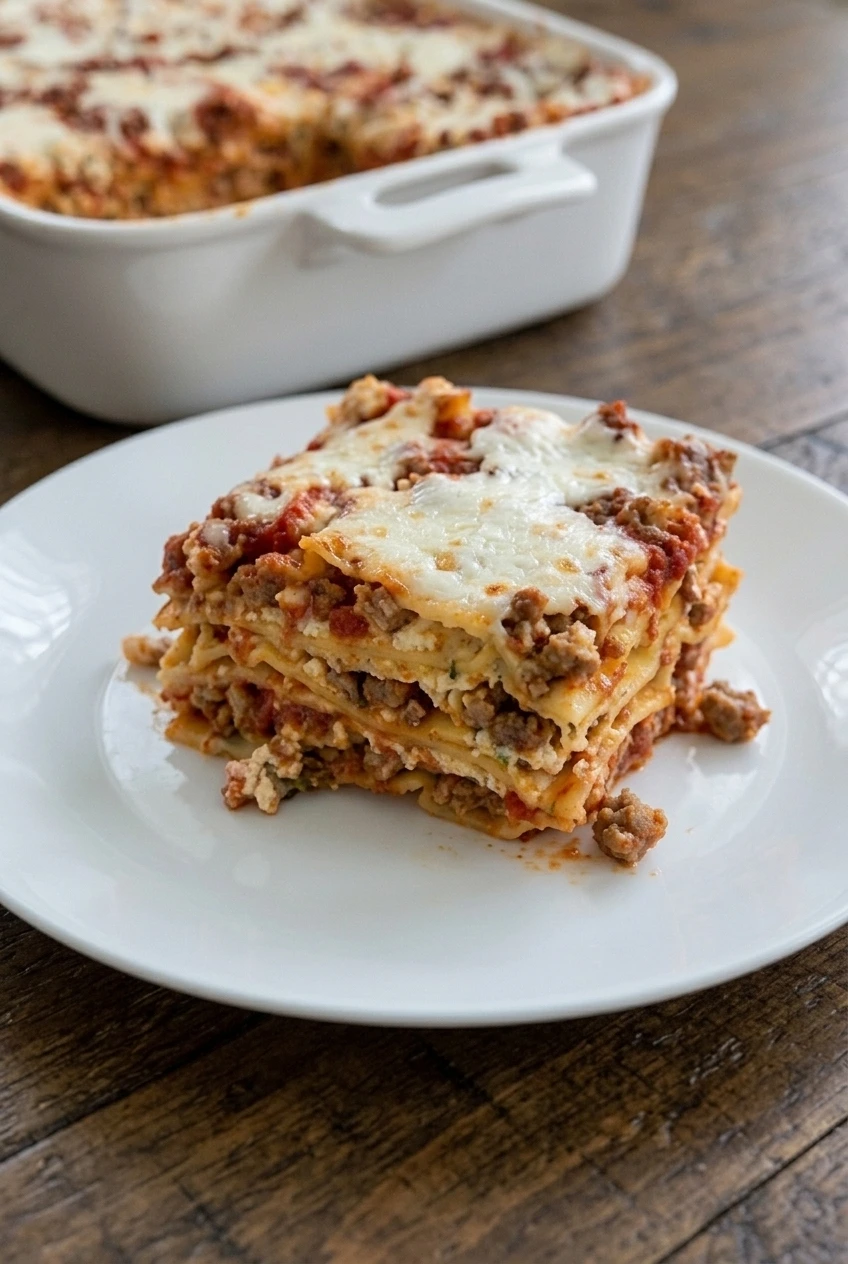
Close view of a lasagna slice showing tender noodles, sausage marinara, ricotta, and melted mozzarella
  • 12 regular lasagna noodles, or enough for 3 layers (340g)
  • 1 tablespoon olive oil
  • 1 small yellow onion, finely chopped (110g)
  • 3 garlic cloves, minced
  • 1 1/2 pounds mild or sweet Italian pork sausage (680g)
  • Two 24-ounce jars thick marinara sauce (about 1,350g total)
  • 1 teaspoon dried Italian seasoning, divided
  • 24 ounces whole-milk ricotta (680g)
  • 1 large egg
  • 1 cup grated Parmesan, divided (90g)
  • 1/2 teaspoon kosher salt, to start
  • 1/4 teaspoon black pepper
  • 16 ounces shredded mozzarella, divided (450g)

For optional heat, add 1/4–1/2 teaspoon crushed red pepper flakes to the sausage sauce. Season the ricotta conservatively; the sausage, marinara, and Parmesan also contain salt.

How to Make Italian Sausage Lasagna

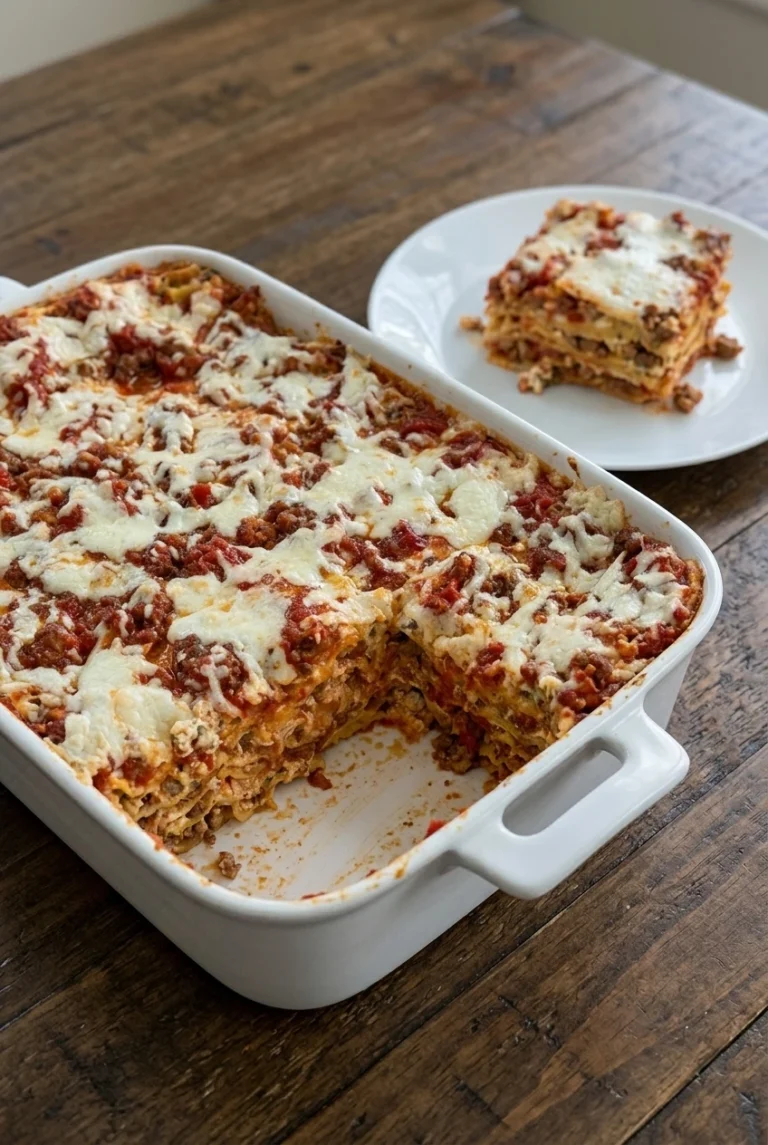
Full Italian sausage lasagna casserole and plated square slice in a wider view on a wood surface
  1. Cook the noodles: Preheat the oven to 375°F (190°C). Boil the noodles according to the package directions until just al dente. They should bend without breaking but still feel slightly firm. Drain well and keep them from sticking together.
  2. Make the sausage sauce: Heat the olive oil in a large skillet over medium heat. Cook the onion until softened, then stir in the garlic briefly until fragrant. Add the sausage and break it into small crumbles as it cooks. Once browned and no longer pink, drain excess grease if needed. Stir in the marinara and half the Italian seasoning.
  3. Mix the ricotta: In a bowl, combine the ricotta, egg, half the Parmesan, salt, pepper, and remaining Italian seasoning. The filling should be creamy and spreadable, not runny.
  4. Layer the lasagna: Spread a thin layer of sausage sauce in the bottom of a deep 9-by-13-inch baking dish. Add noodles, then some ricotta filling, sausage sauce, and mozzarella. Repeat for three noodle layers, reserving enough sauce, mozzarella, and Parmesan to finish the top. Cover the noodles with sauce so no dry patches remain, and leave a little room at the top for bubbling.
  5. Bake: Cover tightly with foil and bake for 30–35 minutes. Uncover and bake for another 10–15 minutes, until the sauce bubbles around the edges and the mozzarella is melted with a few light golden spots. Begin checking after about 40 minutes total. A knife should pass through the center without meeting firm noodles. If the center is not hot or the noodles are still firm, cover again and bake in short increments. A cold or especially deep casserole may need longer.
  6. Rest and serve: Let the lasagna rest for 15–20 minutes, until the bubbling settles. Cut into squares and lift each portion carefully to keep the pasta, sausage sauce, and cheese layers together.

Why Use Cooked Lasagna Noodles?

Cooking regular noodles just to al dente gives them a reliable starting texture. Drain them thoroughly so extra water does not loosen the filling. Oven-ready noodles are an option, but they are not a direct swap: follow their package directions, provide adequate sauce coverage, and expect the baking time and texture to differ.

How to Keep the Layers from Sliding

Use thick marinara rather than a watery sauce, and leave the lasagna undisturbed for the full 15–20 minute rest before cutting. If adding vegetables, remove excess moisture first; wet additions can make a square slice slump.

Italian Sausage Lasagna Variations

Spinach Italian Sausage Lasagna

Mix about 5 ounces of thawed frozen chopped spinach into the ricotta, or spread it in one layer. Squeeze it thoroughly dry first. For a different sausage-and-spinach dinner, try Creamy Sausage and Spinach Pasta with Farfalle.

Spicy Italian Sausage Lasagna

Replace the mild sausage with hot Italian sausage, or add crushed red pepper flakes to the sauce. If using hot sausage, taste the sauce before adding extra heat.

Make-Ahead, Storage, and Reheating

To make ahead, assemble the lasagna, cover it, and refrigerate overnight. Bake as directed, allowing extra covered time for the cold casserole to heat through. Check that the center is hot and the noodles are tender before finishing the top uncovered.

Refrigerate leftovers promptly in an airtight container for 3–4 days. Reheat individual portions covered in the microwave or oven, adding a spoonful of sauce if they seem dry.

For longer storage, freeze baked or unbaked lasagna tightly wrapped for up to 3 months for best quality. Thaw overnight in the refrigerator when practical, then bake or reheat covered until hot. Uncover near the end if the cheese needs refreshing.

Serve square slices with a simple green salad and bread. For a quicker skillet-style meal with lasagna flavors, see Bowtie Pasta Lasagna.

Nutrition

Approximate nutrition per serving, based on 1 of 12 portions: 575 calories, 34g protein, 32g fat, and 34g carbohydrates. Per 100g: about 190 calories, 11g protein, 11g fat, and 11g carbohydrates. Values vary with the sausage, marinara, and cheeses used.

Italian Sausage Lasagna

Italian sausage marinara, ricotta, and mozzarella are layered with al dente noodles and baked until bubbling.
Course: Main Course
Cuisine: Italian
Prep: 35 min
Cook: 50 min
Total: 105 min
Servings: 12 Calories: 575 kcal

Equipment

  • Large pot
  • Colander
  • Large skillet
  • Mixing bowl
  • 9-by-13-inch baking dish
  • Aluminum foil

Ingredients

For the Lasagna

  • 12 regular lasagna noodles, or enough for 3 layers (340 g)
  • 1 tablespoon olive oil
  • 1 small yellow onion, finely chopped (110 g)
  • 3 garlic cloves, minced
  • 1 1/2 pounds mild or sweet Italian pork sausage (680 g)
  • Two 24-ounce jars thick marinara sauce (about 1,350 g total)
  • 1 teaspoon dried Italian seasoning, divided
  • 16 ounces shredded mozzarella, divided (450 g)

For the Ricotta Filling

  • 24 ounces whole-milk ricotta (680 g)
  • 1 large egg
  • 1 cup grated Parmesan, divided (90 g)
  • 1/2 teaspoon kosher salt, to start
  • 1/4 teaspoon black pepper

Optional

  • 1/4–1/2 teaspoon crushed red pepper flakes, for heat

Instructions

  1. Preheat the oven to 375°F (190°C).
  2. Boil the lasagna noodles according to package directions until just al dente. Drain well and keep the noodles from sticking together.
  3. Heat the olive oil in a large skillet over medium heat. Cook the onion until softened, then briefly stir in the garlic until fragrant.
  4. Add the sausage and break it into small crumbles as it cooks. Cook until browned and no longer pink; drain excess grease if needed.
  5. Stir the marinara and half the Italian seasoning into the sausage.
  6. In a bowl, combine the ricotta, egg, half the Parmesan, salt, pepper, and remaining Italian seasoning.
  7. Spread a thin layer of sausage sauce in the bottom of a deep 9-by-13-inch baking dish. Layer noodles, ricotta filling, sausage sauce, and mozzarella. Repeat to make three noodle layers, reserving enough sauce, mozzarella, and Parmesan for the top.
  8. Finish with the reserved sauce, mozzarella, and Parmesan. Cover the noodles with sauce so no dry patches remain, and leave room at the top for bubbling.
  9. Cover tightly with foil and bake for 30–35 minutes. Uncover and bake for another 10–15 minutes, until the sauce bubbles around the edges and the cheese is melted with a few light golden spots.
  10. Check that a knife passes through the center without meeting firm noodles. If the center is not hot or the noodles are still firm, cover again and bake in short increments.
  11. Rest for 15–20 minutes, then cut into squares and serve.

Tips

  • Cook regular noodles just to al dente and drain them thoroughly so excess water does not loosen the filling.
  • Use thick marinara to help the layers hold together.
  • Season the ricotta conservatively because the sausage, marinara, and Parmesan also contain salt.
  • Leave the lasagna undisturbed for the full 15–20 minute rest before cutting.
  • If adding vegetables, remove excess moisture first.

Variations

  • Spinach Italian Sausage Lasagna: Mix about 5 ounces of thawed frozen chopped spinach into the ricotta or spread it in one layer; squeeze it thoroughly dry first.
  • Spicy Italian Sausage Lasagna: Use hot Italian sausage or add crushed red pepper flakes to the sauce. Taste the sauce before adding extra heat if using hot sausage.

Notes

Assemble ahead and refrigerate overnight; allow extra covered baking time when starting cold. Refrigerate leftovers in an airtight container for 3–4 days and reheat covered, adding a spoonful of sauce if dry. Freeze baked or unbaked lasagna for up to 3 months for best quality. Approximate nutrition per 100 g: 190 calories, 11 g protein, 11 g fat, and 11 g carbohydrates.

Nutrition

Calories: 575 kcal | Protein: 34 g | Fat: 32 g | Carbohydrates: 34 g | Per 100g Calories: 190 kcal | Per 100g Protein: 11 g | Per 100g Fat: 11 g | Per 100g Carbohydrates: 11 g

Zucchini Lasagna

Thin zucchini ribbons curl around a ricotta filling in this vegetarian lasagna casserole. Marinara settles between the rolls, while mozzarella and Parmesan brown in patches on top; fresh basil goes on after baking. The curls make it spoonable rather than neatly layered like pasta lasagna.

Zucchini releases water in the oven, so the ribbons are briefly salted, blotted, and precooked before rolling. Thick marinara and ricotta that isn’t watery help keep the casserole from becoming loose.

Ingredients for Zucchini Lasagna

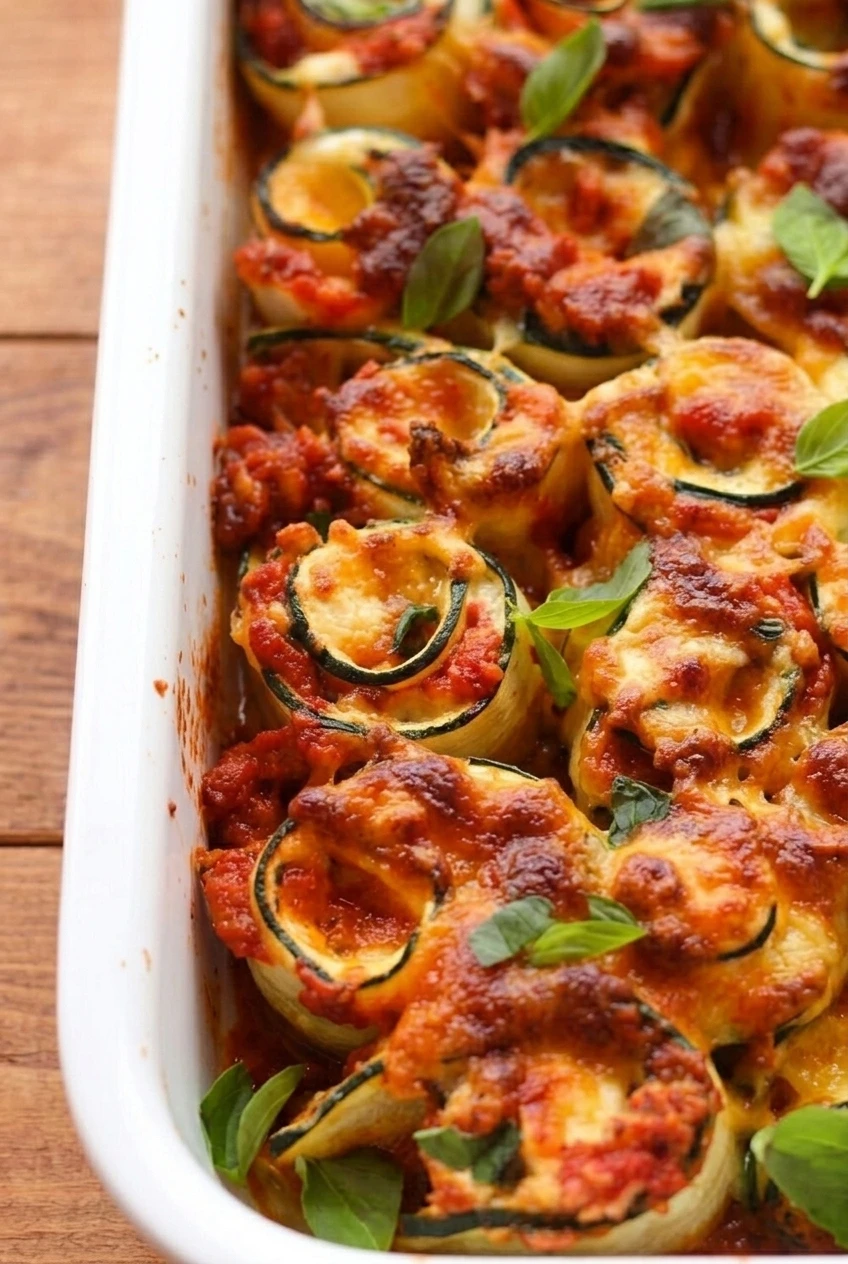
Close detail of zucchini lasagna curls with red marinara, browned melted cheese, basil, and creamy ricotta filling.
  • 4 medium zucchini (about 2½–3 lb; 1,200g)
  • 1 teaspoon kosher salt, for the zucchini
  • 15 oz whole-milk ricotta (425g), drained briefly if watery
  • 1 large egg
  • ½ cup grated Parmesan (50g), divided
  • 2 cups shredded low-moisture mozzarella (225g), divided
  • 2 cups thick marinara sauce (500g)
  • ¼ teaspoon black pepper
  • ¼ cup loosely packed fresh basil leaves (5g)
  • Optional: ¼ teaspoon garlic powder, if the marinara is mild

How to Make Zucchini Lasagna

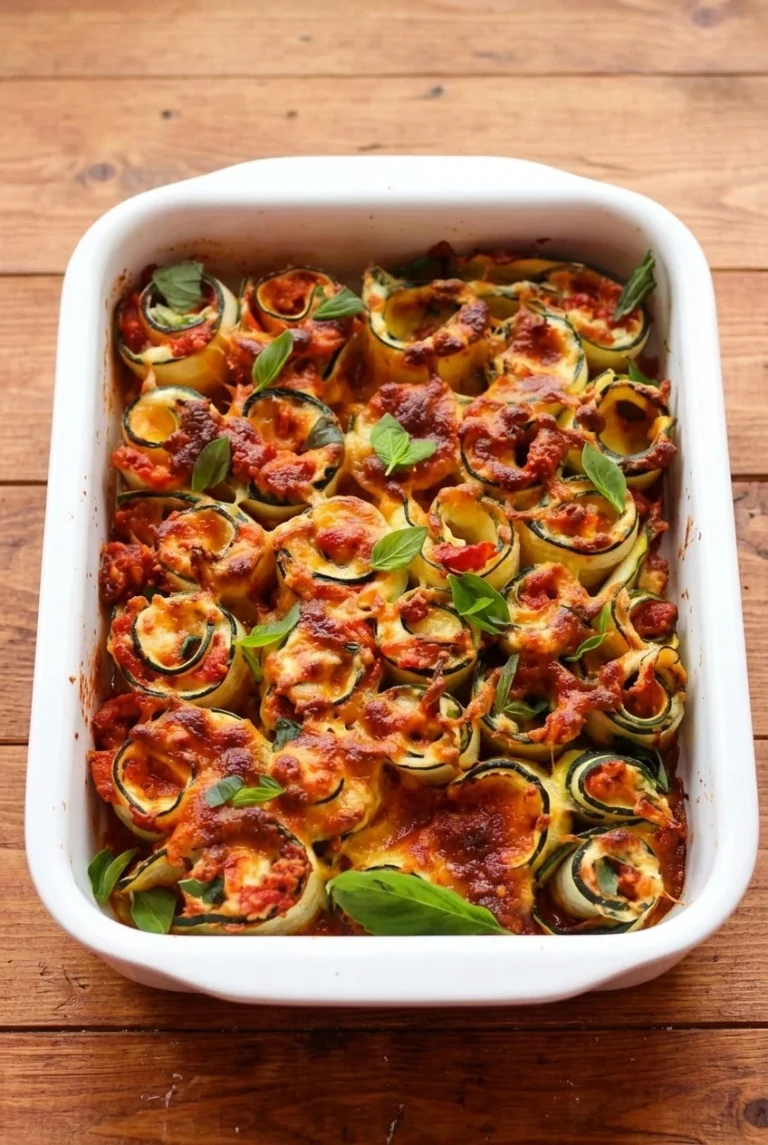
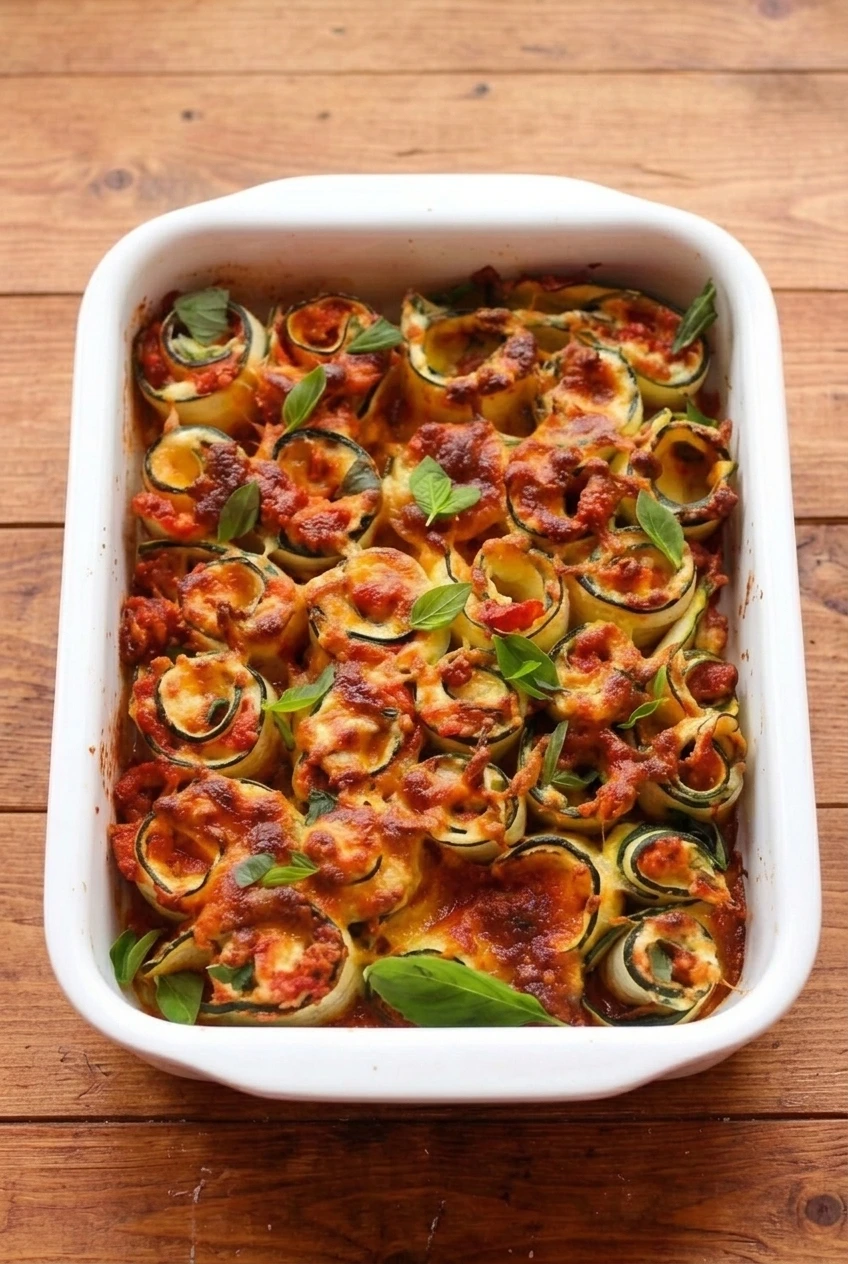
Full white casserole of curled zucchini lasagna with marinara, browned cheese, and basil on a wooden surface.
  1. Cut and salt the zucchini: Preheat the oven to 400°F (205°C). Trim the zucchini and slice it lengthwise into wide, even ribbons about ⅛ inch thick. Use a vegetable peeler, a mandoline with its hand guard, or a sharp knife. Lay the ribbons on clean towels, sprinkle with the salt, and let stand for about 20 minutes, until moisture beads on the surface.
  2. Blot and precook: Blot both sides of the ribbons well. Arrange them in a single layer on parchment-lined rimmed sheet pans and bake for 8–10 minutes, until flexible and beginning to look drier but not browned. Rotate the pans if they are drying unevenly. Let cool until easy to handle.
  3. Mix the filling: If the ricotta looks watery, drain it briefly. Stir it with the egg, black pepper, half the Parmesan, and the optional garlic powder, if using. The filling should be creamy, not runny.
  4. Fill and roll: Spread a thin layer of filling along each ribbon, then roll it loosely into a curl. Use just enough filling that it stays inside rather than squeezing out.
  5. Arrange the casserole: Reduce the oven to 375°F (190°C). Spread a thin layer of marinara in a 9-by-13-inch rectangular baking dish. Nestle the curls close together in one layer without crushing them. Spoon the remaining sauce in small patches among and over the curls. Scatter about ½ cup of the mozzarella between the curls, then distribute the remaining mozzarella and Parmesan over the top, leaving some zucchini and sauce visible.
  6. Bake uncovered: Bake for 30–40 minutes, checking at 30 minutes. The sauce should bubble at the edges, the center should be hot, and the zucchini should be tender while still holding its curled shape. The cheese should be melted and browned in spots. If it browns deeply before the center is hot, tent the dish loosely with foil while it finishes.
  7. Rest and finish: Let the casserole rest for 15–20 minutes so the sauce and filling settle. Scatter the basil over the top and serve from the baking dish.

How to Keep Zucchini Lasagna from Getting Watery

Salting brings moisture to the surface; blotting removes it before the ribbons go into the oven. Brief precooking also makes them pliable enough to roll. These steps limit excess liquid, though zucchini can still release some water during the final bake.

Use thick marinara, drain ricotta that looks wet, and avoid adding water to the dish. Baking uncovered allows moisture to evaporate while the cheese browns. Ribbon thickness, sauce consistency, and pan choice can affect timing, so look for bubbling edges and a hot, settled center rather than relying on the clock alone.

Serving and Storage

The rested casserole can be spooned or lifted into portions, but the curls will not cut into uniform, flat lasagna layers. Serve it with a simple green salad; garlic bread or focaccia also works alongside it.

Cover and refrigerate leftovers for 3–4 days. Reheat covered in a 350°F (175°C) oven until hot, or microwave individual portions in short intervals. You can assemble the casserole ahead and refrigerate it, but it will need longer to bake from chilled; check for bubbling sauce and a hot center.

Freezing is possible, but the zucchini may soften or release water after thawing.

Nutrition

Approximate nutrition per serving, based on 1 of 8 servings: 255 calories, 19g protein, 16g fat, and 10g carbohydrates. Estimated per 100g: 95 calories, 7g protein, 6g fat, and 4g carbohydrates. Values vary with the ingredients used, moisture lost during baking, and portion size.

Zucchini Lasagna

Zucchini ribbons rolled around a ricotta filling bake in marinara with mozzarella, Parmesan, and fresh basil.
Course: Main Course
Cuisine: Italian
Prep: 45 min
Cook: 50 min
Total: 115 min
Servings: 8 Calories: 255 kcal

Equipment

  • Vegetable peeler or mandoline
  • Rimmed sheet pans
  • Parchment paper
  • Mixing bowl
  • 9-by-13-inch baking dish

Ingredients

For the Zucchini

  • 4 medium zucchini (about 2½–3 lb; 1,200g)
  • 1 teaspoon kosher salt

For the Filling

  • 15 oz whole-milk ricotta (425g), drained briefly if watery
  • 1 large egg
  • ½ cup grated Parmesan (50g), divided
  • ¼ teaspoon black pepper
  • Optional: ¼ teaspoon garlic powder, if the marinara is mild

For Assembly

  • 2 cups shredded low-moisture mozzarella (225g), divided
  • 2 cups thick marinara sauce (500g)
  • ¼ cup loosely packed fresh basil leaves (5g)

Instructions

  1. Preheat the oven to 400°F (205°C).
  2. Trim the zucchini and slice lengthwise into even ribbons about ⅛ inch thick using a vegetable peeler, mandoline with its hand guard, or sharp knife.
  3. Lay the ribbons on clean towels, sprinkle with the salt, and let stand for about 20 minutes, until moisture beads on the surface.
  4. Blot both sides of the zucchini ribbons well. Arrange in a single layer on parchment-lined rimmed sheet pans.
  5. Bake the ribbons for 8–10 minutes, until flexible and beginning to look drier but not browned. Rotate the pans if they dry unevenly, then let the ribbons cool until easy to handle.
  6. If the ricotta looks watery, drain it briefly. Stir it with the egg, black pepper, half the Parmesan, and optional garlic powder until creamy, not runny.
  7. Spread a thin layer of filling along each zucchini ribbon, then roll it loosely into a curl.
  8. Reduce the oven to 375°F (190°C). Spread a thin layer of marinara in a 9-by-13-inch baking dish and nestle the curls close together in one layer without crushing them.
  9. Spoon the remaining marinara in small patches among and over the curls. Scatter about ½ cup of mozzarella between the curls, then top with the remaining mozzarella and Parmesan, leaving some zucchini and sauce visible.
  10. Bake uncovered for 30–40 minutes, checking at 30 minutes, until the sauce bubbles at the edges, the center is hot, the zucchini is tender, and the cheese is melted and browned in spots. Tent loosely with foil if the cheese browns deeply before the center is hot.
  11. Rest for 15–20 minutes, scatter the basil over the top, and serve from the baking dish.

Tips

  • Salt the zucchini ribbons, then blot both sides well to remove surface moisture.
  • Precook the ribbons until flexible but not browned so they are easy to roll.
  • Use thick marinara and drain ricotta that looks watery.
  • Bake uncovered so excess moisture can evaporate.
  • Check for bubbling edges and a hot center; baking time can vary with ribbon thickness, sauce, and pan.

Notes

Refrigerate covered leftovers for 3–4 days. Reheat covered in a 350°F (175°C) oven until hot, or microwave portions in short intervals. Freezing is possible, but the zucchini may soften or release water after thawing.

Nutrition

Calories: 255 kcal | Protein: 19 g | Fat: 16 g | Carbohydrates: 10 g

Spinach and Ricotta Lasagna

Spinach and ricotta lasagna should be creamy inside, with distinct pasta layers, red tomato sauce, and a melted mozzarella top. This version uses regular dried noodles boiled before assembly, so the sauce does not need extra water to cook the pasta. Squeeze the thawed spinach thoroughly, spread the filling in even layers, and let the baked lasagna rest before cutting. Those steps help a square portion hold together when lifted from the dish.

Ingredients for Spinach and Ricotta Lasagna

Close view of spinach and ricotta lasagna layers with green-flecked filling, pasta, marinara, and melted cheese.
  • 12 regular dried lasagna noodles (about 300g), or enough for 4 noodle layers in a 9-by-13-inch dish
  • 10 ounces frozen chopped spinach (about 285g), thawed and squeezed very dry
  • 15 ounces whole-milk ricotta (425g); drain briefly if watery
  • 1 large egg
  • 1 cup finely grated Parmesan (90g), divided
  • 3 cups shredded low-moisture mozzarella (340g), divided
  • 24 ounces marinara sauce (about 3 cups; 680g)
  • 1/2 teaspoon kosher salt, plus more for the pasta water
  • 1/4 teaspoon black pepper
  • A few fresh basil leaves, for serving

Optional: Add 1/2 teaspoon garlic powder or a small pinch of ground nutmeg to the ricotta filling.

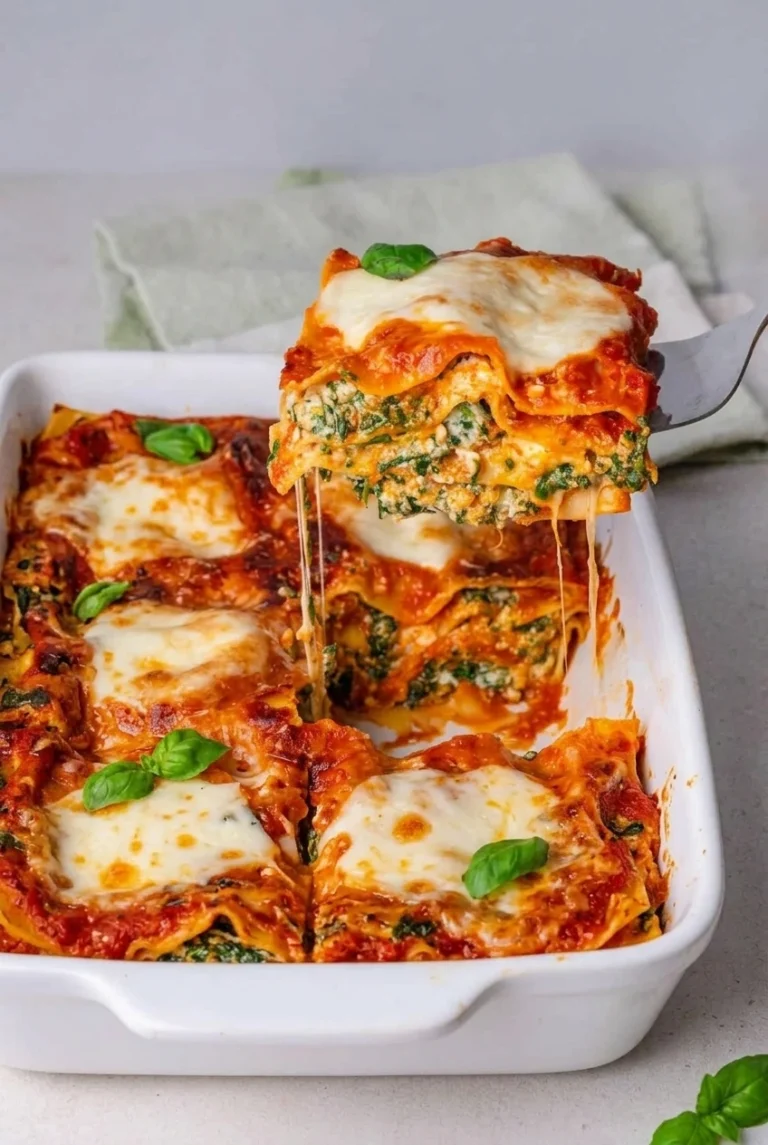
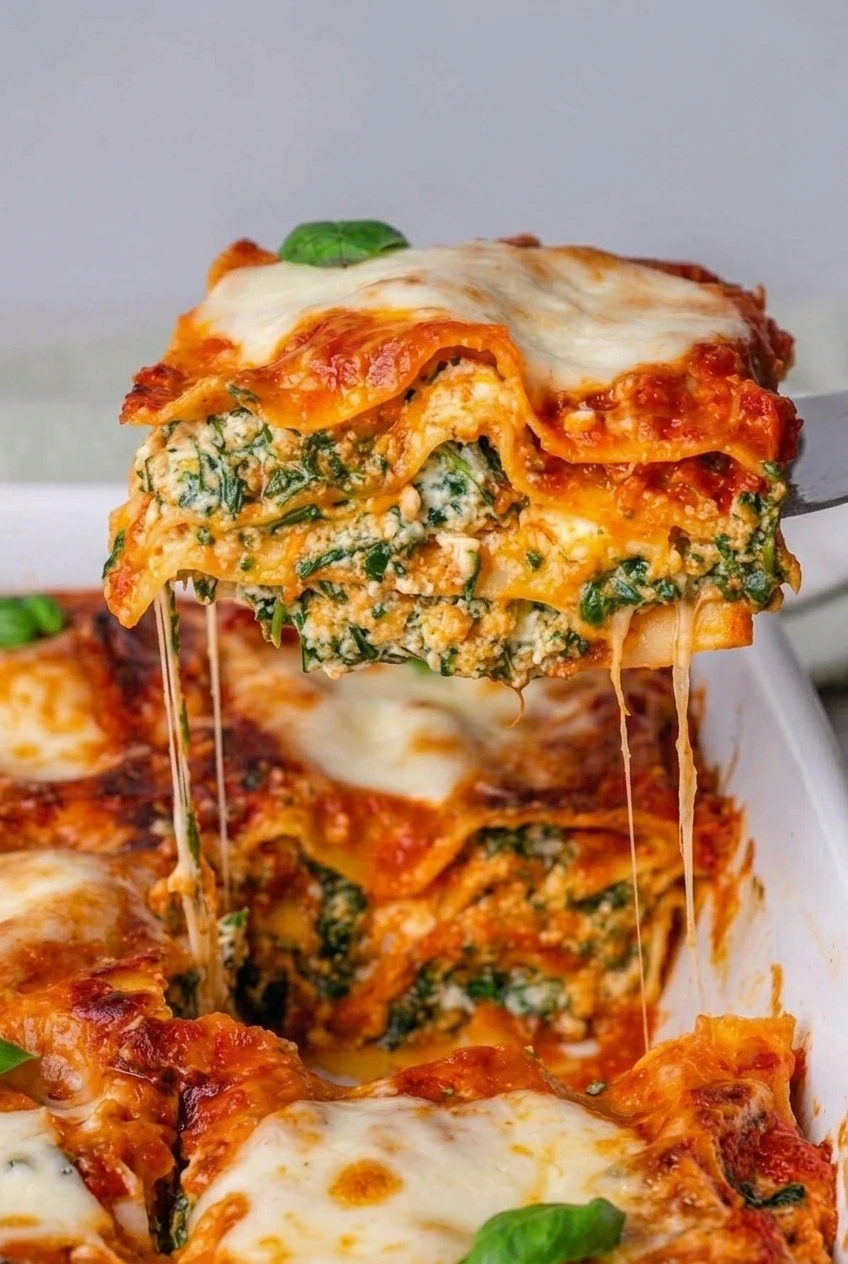
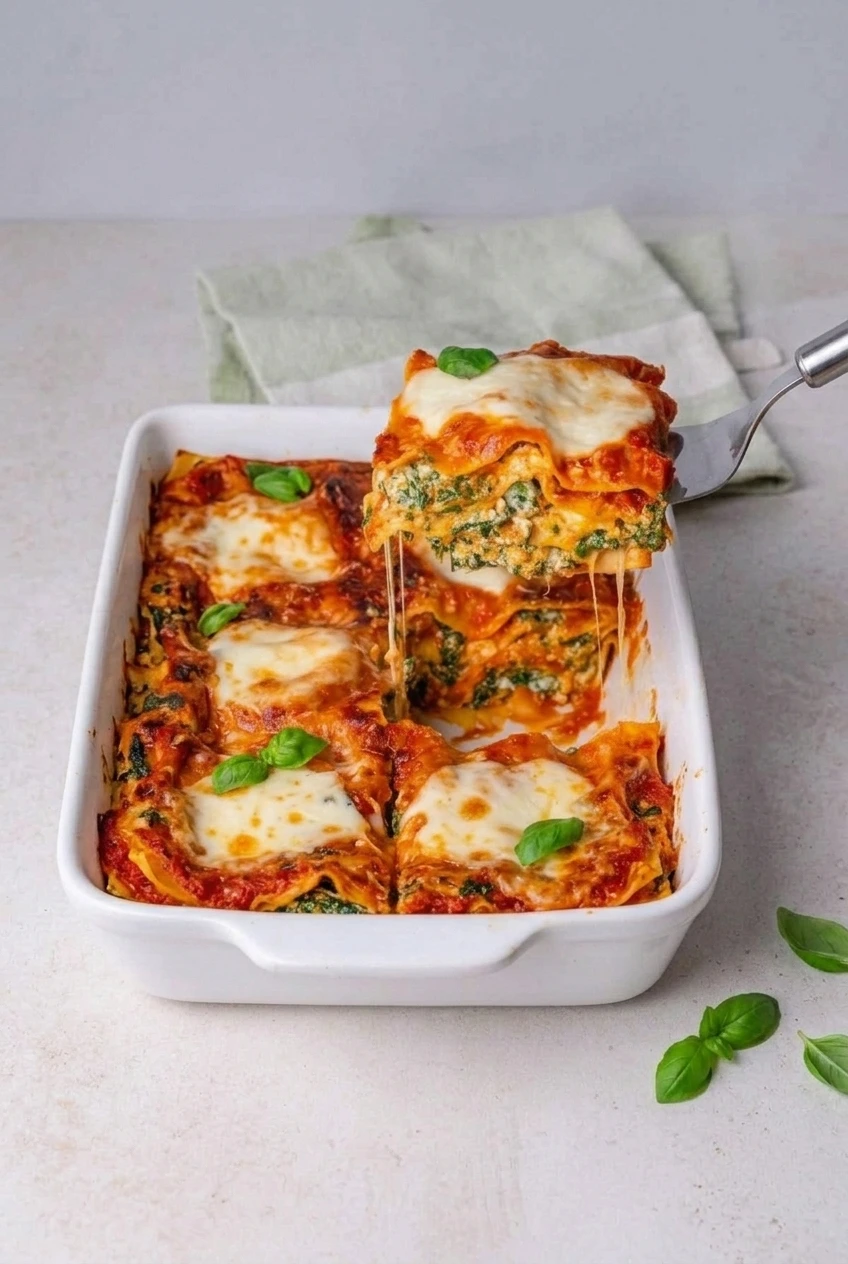
How to Make Spinach and Ricotta Lasagna

A rectangular dish of spinach and ricotta lasagna with a square serving lifted to show its layered interior.
  1. Heat the oven: Preheat to 400°F (205°C). Lightly grease a 9-by-13-inch baking dish deep enough to hold the layers.
  2. Dry the spinach: Squeeze the thawed spinach firmly in a clean kitchen towel or with your hands until it no longer releases liquid. Break up any compacted clumps.
  3. Cook the noodles and mix the filling: Boil the noodles in well-salted water until just shy of al dente, using the package timing as a guide. Drain. In a large bowl, mix the spinach, ricotta, egg, about 3/4 cup of the Parmesan, salt, and pepper. Stir in the optional garlic powder or nutmeg, if using.
  4. Build the layers: Spread a thin coating of marinara in the dish. Add a noodle layer, then one-third of the spinach-ricotta filling, some sauce, and some mozzarella. Repeat twice, spreading the filling evenly rather than leaving thick mounds. Finish with a fourth noodle layer, the remaining sauce, mozzarella, and Parmesan. Cover the top noodles completely with sauce and cheese; do not add extra water.
  5. Bake covered: Cover loosely with foil, keeping it off the cheese if possible. Bake for 25 minutes. Set the dish on a rimmed baking sheet if it is close to full.
  6. Finish uncovered: Remove the foil and bake for about 15–20 minutes more. Start checking at about 40 minutes total. The sauce should bubble at the edges and near the center, the cheese should be melted and lightly golden in spots, and a knife should pass through tender pasta. If the top browns before the pasta is tender, tent it loosely with foil and continue baking, checking in short intervals.
  7. Rest and serve: Let the lasagna stand for 15–20 minutes before cutting into 8 portions. Add a few basil leaves and lift the squares with a broad spatula.

How to Keep the Lasagna from Turning Watery

The squeezed spinach should feel damp, but no liquid should run out when pressed. Drain ricotta if it looks loose, and use low-moisture mozzarella rather than fresh mozzarella, which can release extra liquid. Choose a marinara that is not unusually thin, and spread it between the layers without flooding them.

Fresh spinach can replace frozen spinach, but cook or wilt it first and press out the excess liquid. The method above is for regular dried noodles boiled before layering; no-boil sheets need different moisture and baking directions.

Serving, Storing, and Reheating

Serve with a crisp green salad or crusty bread. For a different, skillet-style pasta dinner, try Bowtie Pasta Lasagna.

Refrigerate covered leftovers for up to 4 days. Reheat portions covered in a 400°F oven until heated through; the time depends on the size and starting temperature of each portion. Freeze cooked portions for up to 2 months for best quality, then thaw in the refrigerator before reheating.

The lasagna can also be assembled ahead and refrigerated before baking. If it goes into the oven cold, allow extra baking time and check for bubbling sauce and tender pasta rather than relying on the usual time range.

Nutrition Information

Approximate nutrition per serving, based on 8 servings: 480 calories, 29g protein, 23g fat, and 41g carbohydrates. Approximate values per 100g: 175 calories, 11g protein, 8g fat, and 15g carbohydrates. Values vary with the ingredients and brands used.

Spinach and Ricotta Lasagna

A layered lasagna with spinach-ricotta filling, marinara, and melted mozzarella, made with boiled dried noodles.
Course: Main Course
Cuisine: Italian
Prep: 25 min
Cook: 45 min
Total: 90 min
Servings: 8 Calories: 480 kcal

Equipment

  • 9-by-13-inch baking dish
  • Large pot
  • Large mixing bowl
  • Kitchen towel
  • Aluminum foil
  • Rimmed baking sheet
  • Broad spatula

Ingredients

For the Lasagna

  • 12 regular dried lasagna noodles (about 300g), or enough for 4 noodle layers
  • 10 ounces frozen chopped spinach (about 285g), thawed and squeezed very dry
  • 15 ounces whole-milk ricotta (425g); drain briefly if watery
  • 1 large egg
  • 1 cup finely grated Parmesan (90g), divided
  • 3 cups shredded low-moisture mozzarella (340g), divided
  • 24 ounces marinara sauce (about 3 cups; 680g)
  • 1/2 teaspoon kosher salt, plus more for the pasta water
  • 1/4 teaspoon black pepper

Optional and for Serving

  • 1/2 teaspoon garlic powder or a small pinch of ground nutmeg, optional
  • A few fresh basil leaves

Instructions

  1. Preheat the oven to 400°F (205°C). Lightly grease a 9-by-13-inch baking dish deep enough to hold the layers.
  2. Squeeze the thawed spinach in a clean kitchen towel or with your hands until no liquid runs out. Break up any compacted clumps.
  3. Boil the noodles in well-salted water until just shy of al dente, following the package timing as a guide. Drain.
  4. Mix the spinach, ricotta, egg, about 3/4 cup of the Parmesan, salt, and pepper in a large bowl. Stir in the optional garlic powder or nutmeg, if using.
  5. Spread a thin coating of marinara in the baking dish. Add a layer of noodles, followed by one-third of the filling, some sauce, and some mozzarella. Repeat twice, spreading the filling evenly.
  6. Add the fourth noodle layer. Top with the remaining sauce, mozzarella, and Parmesan, covering the noodles completely. Do not add extra water.
  7. Cover loosely with foil, keeping it off the cheese if possible. Bake for 25 minutes. Set the dish on a rimmed baking sheet if it is close to full.
  8. Remove the foil and bake for 15–20 minutes more, until the sauce bubbles, the cheese is melted and lightly golden in spots, and a knife passes through tender pasta. If the top browns too quickly, tent it loosely with foil and continue baking.
  9. Rest the lasagna for 15–20 minutes. Cut into 8 portions, garnish with basil, and lift the squares with a broad spatula.

Tips

  • Squeeze the thawed spinach thoroughly; it should feel damp but release no liquid when pressed.
  • Drain ricotta briefly if it looks loose, and use low-moisture mozzarella to reduce excess liquid.
  • Choose a marinara that is not unusually thin and avoid flooding the layers with sauce.
  • Spread the filling evenly rather than leaving thick mounds so the portions hold together.
  • Let the baked lasagna rest before cutting.

Variations

  • Garlic or Nutmeg Ricotta Filling: Stir 1/2 teaspoon garlic powder or a small pinch of ground nutmeg into the filling.
  • Fresh Spinach Lasagna: Replace the frozen spinach with fresh spinach; cook or wilt it first, then press out the excess liquid.

Notes

Refrigerate covered leftovers for up to 4 days. Reheat portions covered in a 400°F oven until heated through. Freeze cooked portions for up to 2 months for best quality and thaw in the refrigerator before reheating. If baking the lasagna straight from the refrigerator, allow extra time and check for bubbling sauce and tender pasta. Approximate nutrition per 100g: 175 calories, 11g protein, 8g fat, and 15g carbohydrates.

Nutrition

Calories: 480 kcal | Protein: 29 g | Fat: 23 g | Carbohydrates: 41 g

Classic Vegetable Lasagna

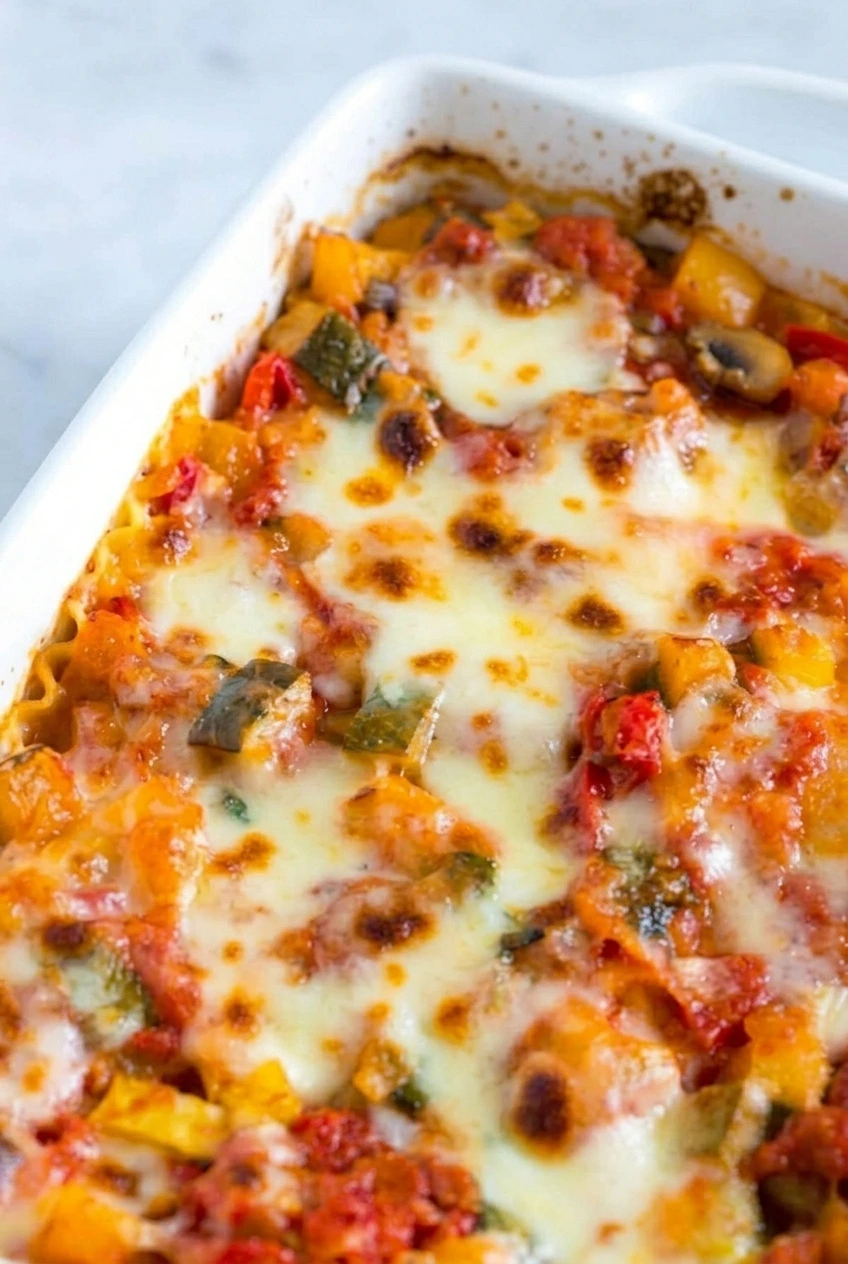
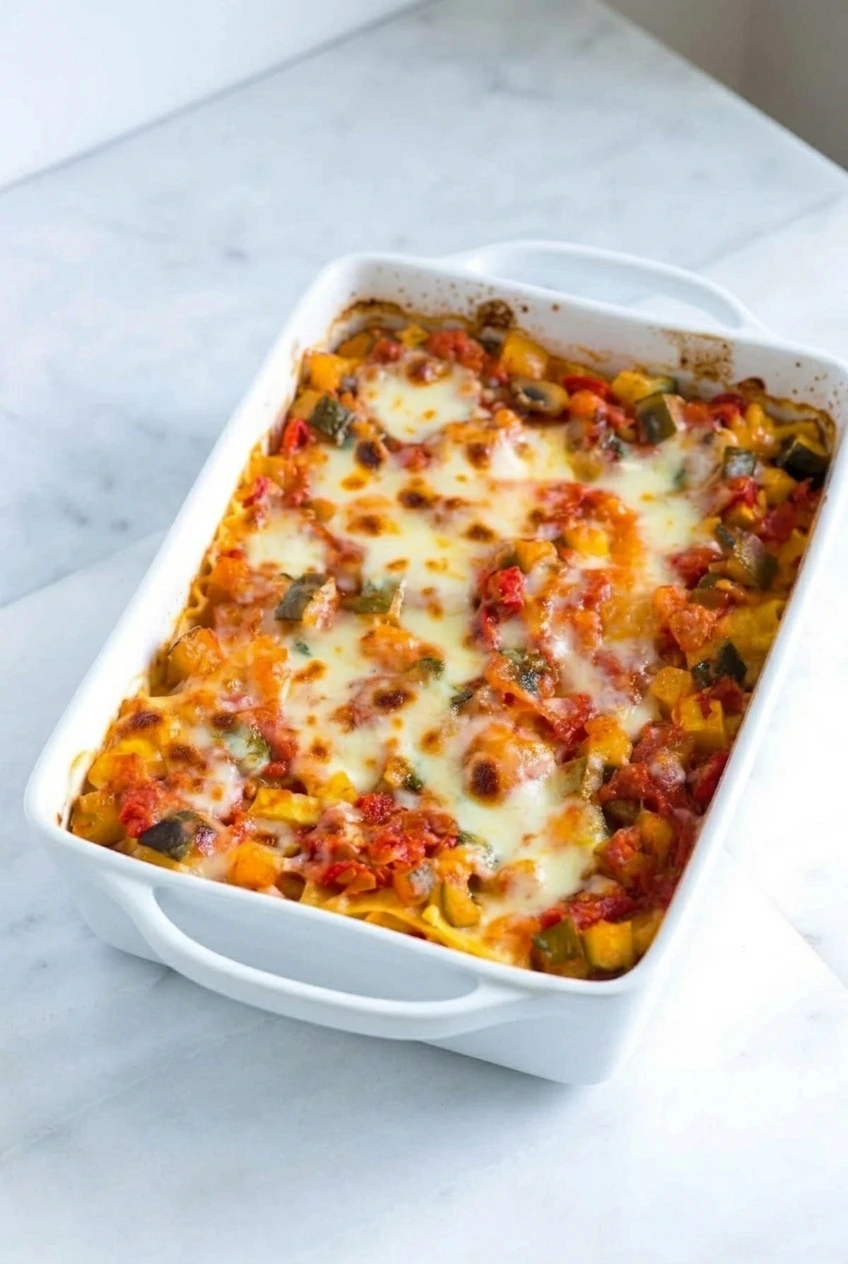
Classic vegetable lasagna layers tender zucchini, bell peppers, mushrooms, tomato sauce, and creamy ricotta between sheets of pasta. Chunky vegetables stay visible on top, with mozzarella scattered over them in browned patches rather than a solid layer of cheese.

This version uses regular lasagna noodles boiled before assembly. Cooking the vegetables until their released liquid evaporates helps keep the layers from getting watery. After baking, a short rest makes the lasagna easier to cut.

Ingredients for Classic Vegetable Lasagna

Close detail of classic vegetable lasagna with saucy zucchini, peppers, and mushrooms between melted mozzarella patches.
  • 12 regular lasagna noodles, or enough for three layers (about 340g)
  • 2 tablespoons olive oil
  • 1 medium yellow onion, finely chopped (about 150g)
  • 3 garlic cloves, minced
  • 8 ounces cremini mushrooms, chopped (225g)
  • 1 medium zucchini, diced (about 200g)
  • 1 large red bell pepper, diced (about 180g)
  • 1 large yellow bell pepper, diced (about 180g)
  • Two 24-ounce jars marinara sauce (about 1.35kg total)
  • 15 ounces ricotta cheese (425g)
  • 1 large egg
  • 3 cups shredded mozzarella cheese, divided (340g)
  • 1/2 cup grated Parmesan cheese, divided (50g)
  • About 1 teaspoon kosher salt, divided, to taste
  • 1/2 teaspoon black pepper

Optional: A pinch to 1/4 teaspoon crushed red pepper flakes, added with the garlic, or 1–2 tablespoons chopped fresh basil or parsley for serving.

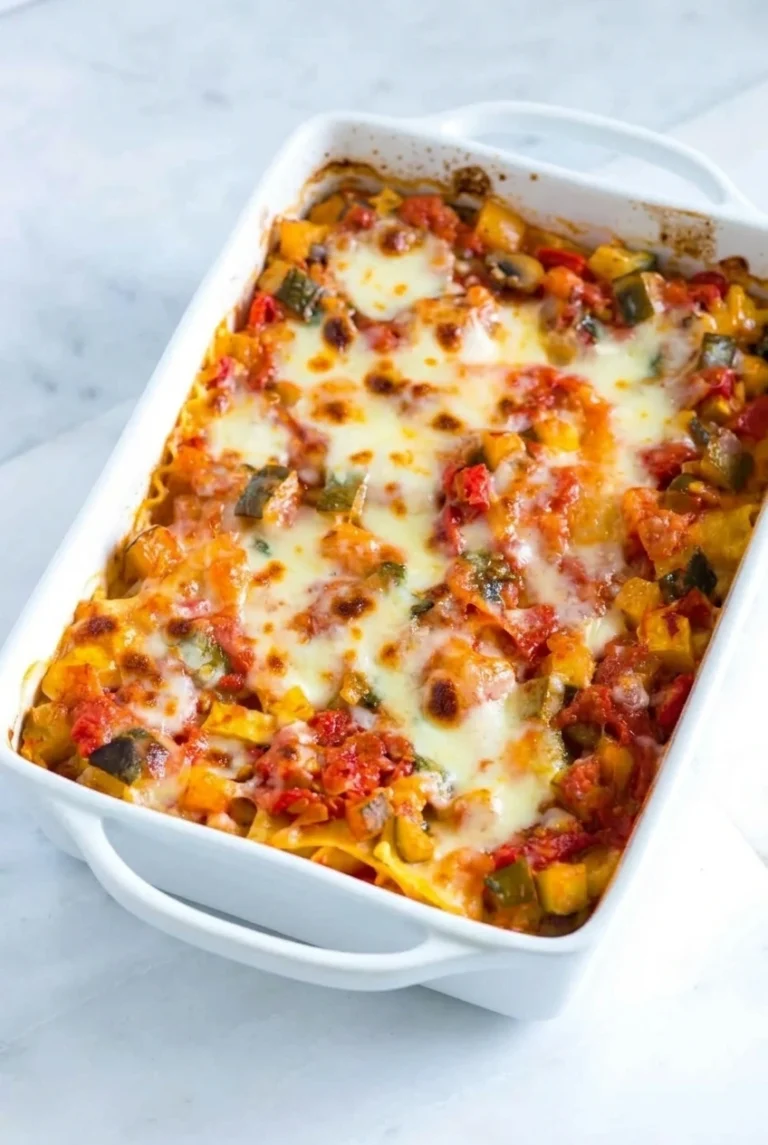
How to Make Vegetable Lasagna

A complete white casserole of classic vegetable lasagna centered on a pale countertop with room around the dish.
  1. Preheat the oven and cook the noodles: Heat the oven to 375°F (190°C). Boil the regular lasagna noodles according to the package directions until just shy of tender. Drain and lay them flat on a lightly oiled tray so they do not stick together.
  2. Cook the vegetables: Heat the olive oil in a large skillet over medium to medium-high heat. Add the onion, mushrooms, zucchini, and bell peppers. Cook for 12–18 minutes, stirring occasionally, until tender and little liquid remains in the skillet. Season with some of the salt. Add the garlic near the end and cook briefly, until fragrant. Add the optional red pepper flakes with the garlic.
  3. Prepare the fillings: Set aside a little plain marinara for the bottom of the dish. Stir the remaining marinara into the vegetables, then reserve a generous portion of this chunky sauce for the top. In a bowl, mix the ricotta, egg, half the Parmesan, the black pepper, and the remaining salt.
  4. Layer the lasagna: Spread the plain marinara in a 9-by-13-inch baking dish deep enough for three noodle layers. Add a layer of noodles, then some ricotta mixture and vegetable sauce. Repeat to make three noodle layers, scattering mozzarella between the layers and saving some for the top. Finish with the reserved chunky vegetable sauce. Scatter the remaining mozzarella and Parmesan over it, leaving plenty of vegetables visible.
  5. Bake covered: Place the dish on a rimmed baking sheet to catch any sauce that bubbles over. Cover with foil, placing parchment underneath or tenting the foil so it does not touch the cheese. Bake for about 30 minutes, until the layers are hot and sauce begins bubbling at the edges.
  6. Uncover and brown: Remove the cover and bake for another 15–20 minutes, checking after 15 minutes. The lasagna is ready when the edges bubble, the mozzarella has golden-brown spots, and a knife passes easily through the center. Rotate the dish during this phase only if the top is browning unevenly.
  7. Rest: Let the lasagna stand for about 20 minutes before cutting. The layers will settle as it rests, though portions may still be soft while hot.

How to Keep Vegetable Lasagna from Getting Watery

Do not layer the vegetables while they are still releasing liquid. Keep them in the skillet until they are tender but hold their shape, with little moisture pooling around them. Use the stated amount of marinara rather than adding extra sauce, and let the baked lasagna rest before slicing.

Using Regular Lasagna Noodles

The baking schedule above is for regular noodles boiled before assembly. Oven-ready noodles need package-specific liquid and baking guidance; do not use them with this schedule unchanged. Yellow squash can replace the zucchini, but cook off its excess moisture in the same way.

Serving Suggestions

Serve with a green salad and garlic bread or focaccia. If using fresh basil or parsley, scatter it lightly over the finished lasagna.

Make-Ahead, Storage, and Freezing

The lasagna can be assembled ahead and refrigerated before baking. A cold casserole may need extra oven time; check for bubbling edges, tender pasta, and browned cheese rather than relying only on the usual timing.

Refrigerate leftovers covered or in an airtight container for about 3–4 days. Reheat individual portions in the microwave until hot throughout. For a larger portion, cover and warm in a moderate oven until steaming hot, then uncover briefly if you want to brown the top again.

Freeze baked or unbaked lasagna tightly covered for up to about 3 months. Thaw overnight in the refrigerator when practical before baking or reheating, and check that the center is hot and the noodles are tender.

Nutrition

Approximate nutrition per serving, based on 1/8 of the casserole (about 450g): 550 calories, 28g protein, 23g fat, and 53g carbohydrates. Per 100g: about 125 calories, 6g protein, 5g fat, and 12g carbohydrates. Values vary with the marinara and cheese used.

Classic Vegetable Lasagna

Tender zucchini, peppers, and mushrooms are layered with marinara, ricotta, and noodles, then baked until bubbling and golden.
Course: Main Course
Cuisine: Italian
Prep: 30 min
Cook: 70 min
Total: 120 min
Servings: 8 Calories: 550 kcal

Equipment

  • Large pot
  • Large skillet
  • Mixing bowl
  • 9-by-13-inch baking dish
  • Rimmed baking sheet
  • Aluminum foil

Ingredients

For the lasagna

  • 12 regular lasagna noodles, or enough for three layers (about 340 g)
  • 2 tablespoons olive oil
  • 1 medium yellow onion, finely chopped (about 150 g)
  • 3 garlic cloves, minced
  • 8 ounces cremini mushrooms, chopped (225 g)
  • 1 medium zucchini, diced (about 200 g)
  • 1 large red bell pepper, diced (about 180 g)
  • 1 large yellow bell pepper, diced (about 180 g)
  • Two 24-ounce jars marinara sauce (about 1.35 kg total)
  • About 1 teaspoon kosher salt, divided, to taste
  • 1/2 teaspoon black pepper

For the ricotta filling and topping

  • 15 ounces ricotta cheese (425 g)
  • 1 large egg
  • 3 cups shredded mozzarella cheese, divided (340 g)
  • 1/2 cup grated Parmesan cheese, divided (50 g)

Optional garnish

  • A pinch to 1/4 teaspoon crushed red pepper flakes
  • 1–2 tablespoons chopped fresh basil or parsley

Instructions

  1. Preheat the oven to 375°F (190°C).
  2. Boil the noodles according to package directions until just shy of tender. Drain and lay them flat on a lightly oiled tray.
  3. Heat the olive oil in a large skillet over medium to medium-high heat. Add the onion, mushrooms, zucchini, and bell peppers.
  4. Cook for 12–18 minutes, stirring occasionally, until the vegetables are tender and little liquid remains. Season with some of the salt.
  5. Add the garlic and, if using, red pepper flakes. Cook briefly until fragrant.
  6. Set aside a little plain marinara for the bottom of the baking dish. Stir the remaining marinara into the vegetables, then reserve a generous portion of the chunky sauce for the top.
  7. In a bowl, mix the ricotta, egg, half the Parmesan, black pepper, and the remaining salt.
  8. Spread the reserved plain marinara in a 9-by-13-inch baking dish. Layer noodles, ricotta mixture, and vegetable sauce, repeating to make three noodle layers. Scatter mozzarella between the layers and save some for the top.
  9. Finish with the reserved chunky vegetable sauce. Scatter the remaining mozzarella and Parmesan over it, leaving plenty of vegetables visible.
  10. Place the dish on a rimmed baking sheet. Cover with foil, using parchment underneath or tenting the foil so it does not touch the cheese.
  11. Bake covered for about 30 minutes, until the layers are hot and sauce begins bubbling at the edges.
  12. Uncover and bake for another 15–20 minutes, checking after 15 minutes, until the edges bubble, the mozzarella has golden-brown spots, and a knife passes easily through the center.
  13. Let the lasagna rest for about 20 minutes before cutting. Garnish with basil or parsley, if desired.

Tips

  • Cook the vegetables until little liquid remains in the skillet to help prevent watery layers.
  • Use the stated amount of marinara rather than adding extra sauce.
  • Keep the foil from touching the cheese to prevent sticking.
  • Let the baked lasagna rest before slicing so the layers can settle.

Variations

  • Yellow Squash Lasagna: Replace the zucchini with yellow squash and cook off its excess moisture in the skillet.
  • Spicy Vegetable Lasagna: Add a pinch to 1/4 teaspoon crushed red pepper flakes with the garlic.

Notes

Refrigerate leftovers covered for 3–4 days and reheat until hot throughout. Freeze baked or unbaked lasagna, tightly covered, for up to 3 months. Thaw overnight in the refrigerator when practical; a cold assembled casserole may need extra baking time.

Nutrition

Calories: 550 kcal | Protein: 28 g | Fat: 23 g | Carbohydrates: 53 g

White Chicken Lasagna with Spinach

White chicken lasagna layers shredded chicken and spinach-ricotta filling between pasta sheets and a homemade broth-and-milk sauce. Mozzarella melts over the top, while the cut slices stay creamy enough to show the chicken and spinach between the noodles.

For a lasagna that is moist but not watery, wilt and drain the spinach before assembly. This version uses regular noodles boiled to al dente, then bakes covered before a short uncovered finish. A 20-minute rest helps the sauce settle so the layers hold together when sliced.

Ingredients for White Chicken Lasagna

Close detail of creamy white chicken lasagna layers with shredded chicken, spinach, ricotta, and tender noodles.
  • 12 regular lasagna noodles, plus 1 or 2 extra in case of tearing (about 340g)
  • 4 tablespoons unsalted butter (55g)
  • 1/3 cup all-purpose flour (40g)
  • 2 cups low-sodium chicken broth
  • 2 cups whole milk
  • 2 garlic cloves, finely minced
  • About 1 teaspoon kosher salt and 1/2 teaspoon black pepper, divided, plus salt for the pasta water
  • 3 cups cooked, shredded chicken (about 420g); rotisserie chicken works well
  • 10 ounces fresh spinach (about 280g)
  • 15 ounces whole-milk ricotta (about 425g)
  • 1 large egg
  • 3/4 cup grated Parmesan, divided (about 75g)
  • 3 cups shredded low-moisture mozzarella, divided (about 340g)
  • 1 teaspoon dried Italian seasoning
  • Optional: 1 tablespoon chopped fresh parsley, for serving

How to Make White Chicken Lasagna

A full plate with a rectangular slice of white chicken lasagna, showing its creamy chicken and spinach layers.
  1. Prepare the noodles: Heat the oven to 375°F (190°C) and lightly grease a deep 9-by-13-inch baking dish. Boil the noodles in salted water until just al dente, following the package directions. Drain and lay them separately on parchment or a lightly oiled tray so they do not stick or tear.
  2. Wilt the spinach: Cook the spinach in a large skillet over medium heat, stirring and working in batches if needed, until wilted but still green. Transfer it to a colander or clean towel and press out the released liquid. Roughly chop it when cool enough to handle.
  3. Make the white sauce: Melt the butter in a medium saucepan over medium heat. Stir in the garlic briefly, then whisk in the flour and cook for about 1 minute. Gradually whisk in the broth and milk until smooth. Continue cooking and whisking until the sauce coats a spoon but still pours easily. Season with some of the salt and pepper.
  4. Mix the filling: Combine the ricotta, egg, Italian seasoning, about half the Parmesan, and the drained spinach. Season with some of the remaining salt and pepper. If using seasoned rotisserie chicken, taste the sauce and filling before adding more salt.
  5. Layer the lasagna: Spread a thin layer of white sauce in the dish. Arrange 3 noodles over it, then add one-third each of the ricotta-spinach filling and chicken, followed by sauce and some mozzarella. Repeat twice more. Finish with the last 3 noodles, the remaining sauce, mozzarella, and Parmesan. Make sure the sauce covers the noodle edges so they stay moist.
  6. Bake: Cover with foil, tenting it or lightly greasing the underside if it might touch the cheese. Bake for about 30 minutes; the sauce should be hot and bubbling around the edges. If it is not bubbling yet, keep the dish covered a little longer. Uncover and bake for about 15 minutes more, checking the cheese after 10 minutes. Stop when it is melted with a few light golden spots, not deeply browned.
  7. Rest and serve: Let the lasagna stand for about 20 minutes. Cut it into rectangular portions with a sharp knife and lift each slice with a broad spatula. Sprinkle lightly with parsley if desired.

How to Keep the Lasagna from Getting Watery

Spinach releases a surprising amount of liquid as it wilts. Press it well before mixing it into the ricotta; there should be no liquid pooling around the filling. If using frozen spinach instead, thaw it completely and squeeze it very dry.

The sauce and bake time here are intended for regular noodles boiled to al dente. Oven-ready noodles may need different sauce moisture and baking directions, so they are not a direct swap.

Serving and Leftovers

Serve a generous slice with a Caesar or Italian-style salad, or with garlic bread or focaccia. For another creamy baked chicken dinner, try Chicken Alfredo Bake with Broccoli.

To make the lasagna ahead, assemble it, cover, and refrigerate it until ready to bake. A cold casserole will need additional covered baking time; uncover it once the edges are hot and bubbling, then finish melting the cheese.

Cool leftovers before covering and refrigerating them in an airtight container for about 3 to 4 days. Reheat portions gently in short microwave intervals or in a covered oven at 350°F (175°C) until hot. Add a small splash of water or milk if the sauce looks dry. Freezing is possible, but the cream-based sauce may change texture; thaw frozen lasagna overnight in the refrigerator before reheating.

Nutrition

Approximate nutrition per serving, based on 8 generous portions: 620 calories, 46g protein, 29g fat, and 43g carbohydrates. Per 100g, that is approximately 170 calories, 12g protein, 8g fat, and 12g carbohydrates. Values vary with ingredients, brands, and portion size.

White Chicken Lasagna with Spinach

Shredded chicken and spinach-ricotta filling are layered with lasagna noodles, homemade white sauce, and melted mozzarella.
Course: Main Course
Cuisine: Italian
Prep: 35 min
Cook: 55 min
Total: 110 min
Servings: 8 Calories: 620 kcal

Equipment

  • Deep 9-by-13-inch baking dish
  • Large pot
  • Large skillet
  • Medium saucepan
  • Colander
  • Whisk
  • Foil

Ingredients

For the lasagna

  • 12 regular lasagna noodles, plus 1 or 2 extra in case of tearing (about 340 g)
  • 3 cups cooked, shredded chicken (about 420 g)
  • 10 ounces fresh spinach (about 280 g)
  • 3 cups shredded low-moisture mozzarella, divided (about 340 g)

For the white sauce

  • 4 tablespoons unsalted butter (55 g)
  • 1/3 cup all-purpose flour (40 g)
  • 2 cups low-sodium chicken broth
  • 2 cups whole milk
  • 2 garlic cloves, finely minced
  • About 1 teaspoon kosher salt and 1/2 teaspoon black pepper, divided, plus salt for the pasta water

For the ricotta filling

  • 15 ounces whole-milk ricotta (about 425 g)
  • 1 large egg
  • 3/4 cup grated Parmesan, divided (about 75 g)
  • 1 teaspoon dried Italian seasoning

For serving

  • 1 tablespoon chopped fresh parsley, optional

Instructions

  1. Heat the oven to 375°F (190°C) and lightly grease a deep 9-by-13-inch baking dish.
  2. Boil the noodles in salted water until just al dente, following the package directions. Drain and lay them separately on parchment or a lightly oiled tray.
  3. Cook the spinach in a large skillet over medium heat, stirring and working in batches if needed, until wilted but still green.
  4. Press the spinach in a colander or clean towel to remove the released liquid. Roughly chop it once cool enough to handle.
  5. Melt the butter in a medium saucepan over medium heat. Briefly stir in the garlic, then whisk in the flour and cook for about 1 minute.
  6. Gradually whisk in the broth and milk until smooth. Cook, whisking, until the sauce coats a spoon but still pours easily. Season with some of the salt and pepper.
  7. Combine the ricotta, egg, Italian seasoning, about half the Parmesan, and the drained spinach. Season with some of the remaining salt and pepper.
  8. Spread a thin layer of white sauce in the baking dish. Arrange 3 noodles over it, then add one-third of the ricotta-spinach filling and chicken, followed by sauce and some mozzarella. Repeat twice more.
  9. Top with the remaining 3 noodles, white sauce, mozzarella, and Parmesan. Make sure the sauce covers the noodle edges.
  10. Cover the dish with foil, tenting it or lightly greasing the underside if it may touch the cheese. Bake for about 30 minutes, until the sauce is hot and bubbling around the edges. If it is not bubbling, continue baking covered a little longer.
  11. Uncover and bake for about 15 minutes more, checking the cheese after 10 minutes. Remove when melted with a few light golden spots.
  12. Rest the lasagna for about 20 minutes. Cut into portions with a sharp knife, lift with a broad spatula, and sprinkle with parsley if desired.

Tips

  • Press the wilted spinach very dry before mixing it into the ricotta to help prevent watery lasagna.
  • If using frozen spinach, thaw it completely and squeeze it very dry.
  • Keep the sauce covering the noodle edges so they stay moist during baking.
  • If using seasoned rotisserie chicken, taste the sauce and filling before adding more salt.
  • Let the lasagna rest for 20 minutes before cutting so the layers hold together.

Notes

Assemble ahead and refrigerate covered; a cold casserole will need extra covered baking time. Refrigerate leftovers in an airtight container for 3 to 4 days. Reheat gently in short microwave intervals or covered in a 350°F (175°C) oven until hot; add a splash of water or milk if the sauce looks dry. Frozen lasagna may change texture; thaw overnight in the refrigerator before reheating.

Nutrition

Calories: 620 kcal | Protein: 46 g | Fat: 29 g | Carbohydrates: 43 g | Per 100g Calories: 170 kcal | Per 100g Protein: 12 g | Per 100g Fat: 8 g | Per 100g Carbohydrates: 12 g