Author

Julia

Browsing

Shepherd’s Pie Soup

Shepherd’s Pie Soup brings browned ground beef, tender potatoes, peas, carrots, and corn into a thick, creamy broth. This one-pot version keeps the potatoes in visible pieces rather than blending them into the soup, so each bowl stays chunky and easy to ladle.

Flour gives the broth body, and half-and-half adds creaminess near the end. Add the broth gradually to prevent lumps, then keep the simmer gentle and scrape the pot regularly so the thick soup does not scorch. Serve with cornbread alongside, if you like.

Ingredients for Shepherd’s Pie Soup
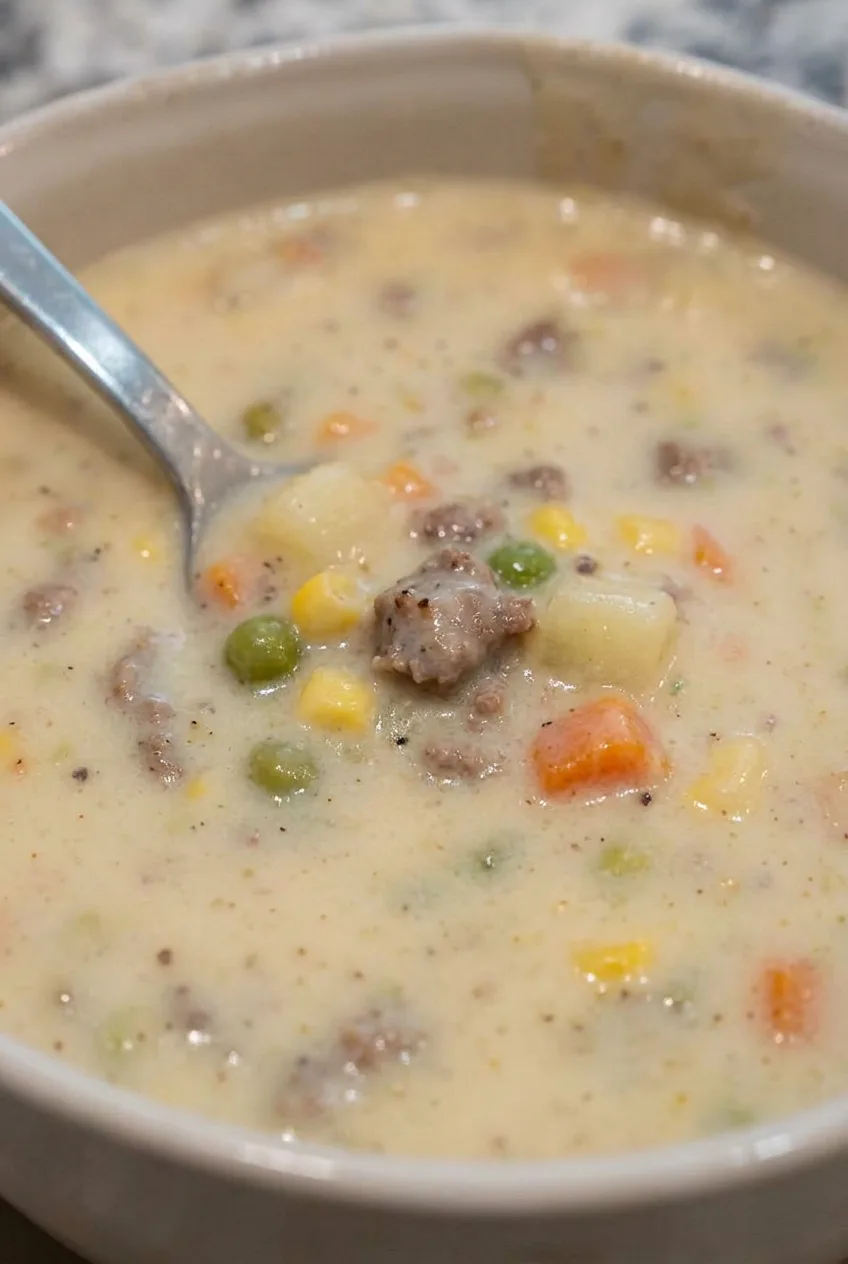
Close view of creamy Shepherd’s Pie Soup showing beef crumbles, potato cubes, peas, carrots, and corn.

Prep: 15 minutes | Cook: 25 minutes | Total: 40 minutes | Servings: 6

  • 1 lb ground beef, preferably 85% to 90% lean (450g)
  • 1 medium yellow onion, finely diced (about 1 cup or 150g)
  • 3 garlic cloves, minced
  • 1 tablespoon Worcestershire sauce
  • 1 teaspoon Italian seasoning
  • 1 teaspoon kosher salt, plus more to taste
  • 1/2 teaspoon black pepper, plus more to taste
  • 1/4 cup all-purpose flour (30g)
  • 4 to 5 cups beef broth, divided
  • 1 1/2 lb Yukon Gold or russet potatoes, peeled and cut into 1/2-inch dice (about 680g)
  • 2 cups frozen mixed vegetables containing peas, carrots, and corn (about 280g)
  • 1 cup half-and-half
  • 6 small wedges or squares of cornbread, optional, for serving

Use 4 cups of broth to make the soup and reserve up to 1 cup to adjust its thickness. If the beef is very lean and the pot looks dry after browning, add up to 1 tablespoon butter or olive oil before cooking the onion.

How to Make Shepherd’s Pie Soup
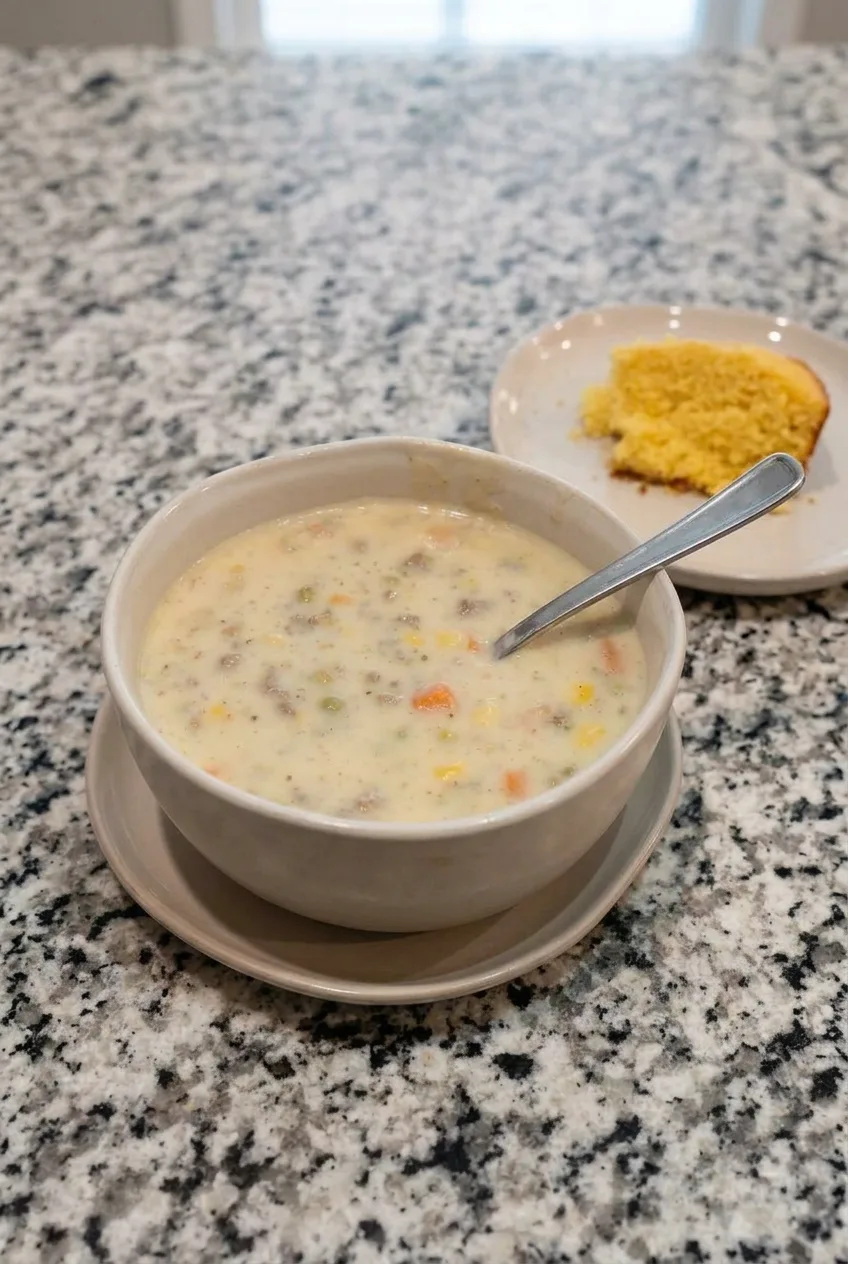
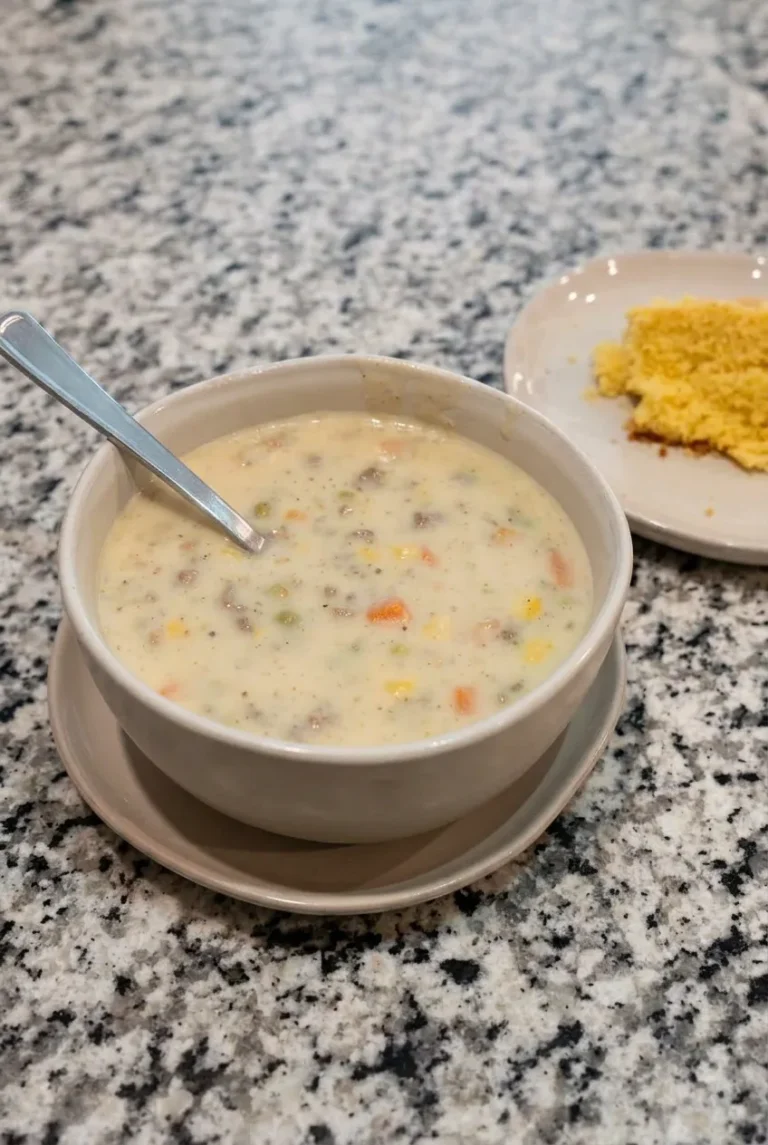
Wider view of a bowl of chunky creamy Shepherd’s Pie Soup with a spoon and cornbread on a small plate.
  1. Brown the beef: Warm a 5- to 6-quart Dutch oven or heavy-bottomed soup pot over medium-high heat. Add the beef and cook for 5 to 7 minutes, breaking it into small crumbles, until browned and no pink remains. Drain excess fat if needed, leaving about 1 tablespoon in the pot.
  2. Soften the aromatics: Reduce the heat to medium. Add the onion and cook until soft and translucent. Stir in the garlic, Worcestershire sauce, Italian seasoning, salt, and pepper; cook until the garlic is fragrant but not browned. Allow about 3 to 4 minutes for this stage.
  3. Make the thickened broth: Sprinkle the flour over the beef mixture. Stir until no dry flour remains and cook for 1 minute. Whisk in a small splash of the 4 cups of broth, scraping the bottom of the pot, then gradually whisk in the rest until smooth.
  4. Simmer the potatoes: Stir in the potatoes and bring the soup to a gentle simmer. Reduce the heat to medium-low and cook mostly uncovered for about 10 to 12 minutes, stirring and scraping the bottom frequently. Start checking at 10 minutes: the potatoes should yield easily to a fork but still hold their shape. If the soup gets too thick before they are tender, add reserved broth a little at a time.
  5. Add the vegetables and half-and-half: Stir in the frozen vegetables and half-and-half. Cook over low to medium-low heat for 4 to 5 minutes, stirring and scraping every minute or two, until the vegetables are hot and the soup is steaming. Do not let it boil hard. Add more reserved broth as needed until the soup is thick but ladles easily.
  6. Rest and serve: Taste and adjust the salt and pepper. Let the soup stand off the heat for 5 minutes, then ladle into bowls with an even mix of beef, potatoes, and vegetables. Serve cornbread separately alongside.

How to Keep the Soup Creamy and Chunky

Cut the potatoes into even 1/2-inch pieces and check them as soon as they begin to soften. A hard boil or extra cooking time can break them down and make the soup too thick. This version does not need blending: the flour thickens the broth while the beef, potatoes, and vegetables remain distinct.

Add frozen mixed vegetables near the end so they heat through without turning mushy. The half-and-half should go in at the same stage, over gentle heat, to keep the broth smooth.

How to Prevent Lumps and Scorching

After cooking the flour briefly, start with just a splash of broth and whisk it into the flour-coated beef and onion. Add the rest gradually; pouring it all in at once makes flour lumps harder to work out.

Once the broth thickens, it can catch on the bottom. A heavy-bottomed pot helps, but regular scraping matters too. If the soup begins to stick, lower the heat and scrape the bottom with a wooden spoon or heatproof spatula.

Serving and Variations

Cornbread is a fitting side, though crusty bread, dinner rolls, or a simple green salad also work. For another filling beef soup, try Hearty Stuffed Pepper Soup with Beef and Rice.

Ground lamb can replace the beef in the same amount for a more shepherd’s-pie-style flavor; ground turkey is another option. Shredded sharp cheddar is optional at the table, not needed in the pot. For a cheese-forward soup instead, try Creamy Bacon Cheeseburger Soup.

For a separate smooth variation, cook the potatoes until very soft and blend the potato base before adding the cooked beef and vegetables. The 10- to 12-minute potato simmer in the main method is intended for pieces that hold their shape.

Storage and Reheating

Cool leftovers promptly and refrigerate in an airtight container for up to 3 days. Store cornbread separately. The soup will thicken as the flour and potato starches absorb liquid.

Reheat over medium-low heat, stirring often, until steaming hot throughout. Add broth, milk, or water a splash at a time to make it ladleable again. For the microwave, cover loosely, heat in intervals, and stir between intervals. You can make the soup a day ahead; expect to loosen it when reheating.

Freezing is an option, though the creamy potato texture may be less consistent after thawing. Cool completely, freeze in a freezer-safe container for up to 3 months, and thaw overnight in the refrigerator. Reheat gently, adding liquid as needed.

Nutrition

Approximate nutrition per serving of soup, based on 6 servings and excluding cornbread and optional garnishes: 355 calories, 22g protein, 13g fat, and 34g carbohydrates. Approximate values per 100g of soup: 80 calories, 5g protein, 3g fat, and 8g carbohydrates. Values vary with the leanness of the beef, the amount of fat drained, and the broth used.

Shepherd’s Pie Soup

A thick, creamy beef and potato soup with peas, carrots, corn, and tender chunks of potato.
Course: Soup
Cuisine: American
Prep: 15 min
Cook: 25 min
Total: 40 min
Servings: 6 Calories: 355 kcal

Equipment

  • 5- to 6-quart Dutch oven or heavy-bottomed soup pot
  • wooden spoon or heatproof spatula
  • whisk
  • ladle

Ingredients

For the Soup

  • 1 lb ground beef, preferably 85% to 90% lean (450g)
  • 1 medium yellow onion, finely diced (about 1 cup or 150g)
  • 3 garlic cloves, minced
  • 1 tablespoon Worcestershire sauce
  • 1 teaspoon Italian seasoning
  • 1 teaspoon kosher salt, plus more to taste
  • 1/2 teaspoon black pepper, plus more to taste
  • 1/4 cup all-purpose flour (30g)
  • 4 to 5 cups beef broth, divided
  • 1 1/2 lb Yukon Gold or russet potatoes, peeled and cut into 1/2-inch dice (about 680g)
  • 2 cups frozen mixed vegetables with peas, carrots, and corn (about 280g)
  • 1 cup half-and-half

For Serving

  • 6 small wedges or squares cornbread, optional

Instructions

  1. Heat a 5- to 6-quart Dutch oven or heavy-bottomed soup pot over medium-high heat. Add the ground beef and cook for 5 to 7 minutes, breaking it into small crumbles, until browned and no pink remains. Drain excess fat if needed, leaving about 1 tablespoon in the pot.
  2. Reduce the heat to medium. Add the onion and cook until soft and translucent, about 3 to 4 minutes.
  3. Stir in the garlic, Worcestershire sauce, Italian seasoning, salt, and pepper. Cook until the garlic is fragrant but not browned.
  4. Sprinkle the flour over the beef mixture and stir until no dry flour remains. Cook for 1 minute.
  5. Whisk in a small splash of 4 cups of beef broth, scraping the bottom of the pot, then gradually whisk in the remaining broth until smooth.
  6. Stir in the potatoes and bring the soup to a gentle simmer. Reduce the heat to medium-low and cook mostly uncovered for 10 to 12 minutes, stirring and scraping the bottom frequently, until the potatoes are fork-tender but still hold their shape.
  7. Stir in the frozen mixed vegetables and half-and-half. Cook over low to medium-low heat for 4 to 5 minutes, stirring often, until the vegetables are hot and the soup is steaming. Do not boil hard.
  8. Add reserved broth as needed until the soup is thick but easy to ladle. Taste and adjust the salt and pepper.
  9. Remove from the heat and let stand for 5 minutes. Ladle into bowls and serve with cornbread, if desired.

Tips

  • Use 4 cups of broth initially and reserve up to 1 cup to thin the soup as needed.
  • Whisk the broth in gradually after adding flour to prevent lumps.
  • Cut potatoes into even 1/2-inch pieces so they cook evenly and remain chunky.
  • Keep the soup at a gentle simmer and scrape the bottom frequently to prevent scorching.
  • Add the frozen vegetables and half-and-half near the end, and avoid a hard boil to keep the broth smooth.
  • If using very lean beef and the pot seems dry, add up to 1 tablespoon butter or olive oil before cooking the onion.

Variations

  • Ground Lamb Shepherd’s Pie Soup: Replace the ground beef with an equal amount of ground lamb for a more traditional shepherd’s-pie-style flavor.
  • Turkey Shepherd’s Pie Soup: Use ground turkey instead of ground beef for a lighter variation.
  • Cheddar-Topped Soup: Serve bowls with shredded sharp cheddar cheese at the table.
  • Smooth Potato Base: Cook the potatoes until very soft and blend the potato base before adding cooked beef and vegetables.
Notes

Refrigerate cooled leftovers in an airtight container for up to 3 days and store cornbread separately. Reheat gently over medium-low heat, stirring often and adding broth, milk, or water as needed. Freeze for up to 3 months, though the creamy potato texture may change after thawing.

Nutrition

Calories: 355 kcal | Protein: 22 g | Fat: 13 g | Carbohydrates: 34 g

Pasta Fagioli

This tomato-based pasta fagioli is a chunky soup with cannellini beans, kidney beans, diced tomatoes, and spinach in an orange-red broth. Mashing a few beans gives the broth body while leaving it loose enough to ladle.

The ditalini cooks separately and goes into each bowl at serving time. That keeps the pasta distinct instead of letting it swell and absorb the broth—especially useful when there will be leftovers. The recipe serves 6.

Ingredients for Pasta Fagioli

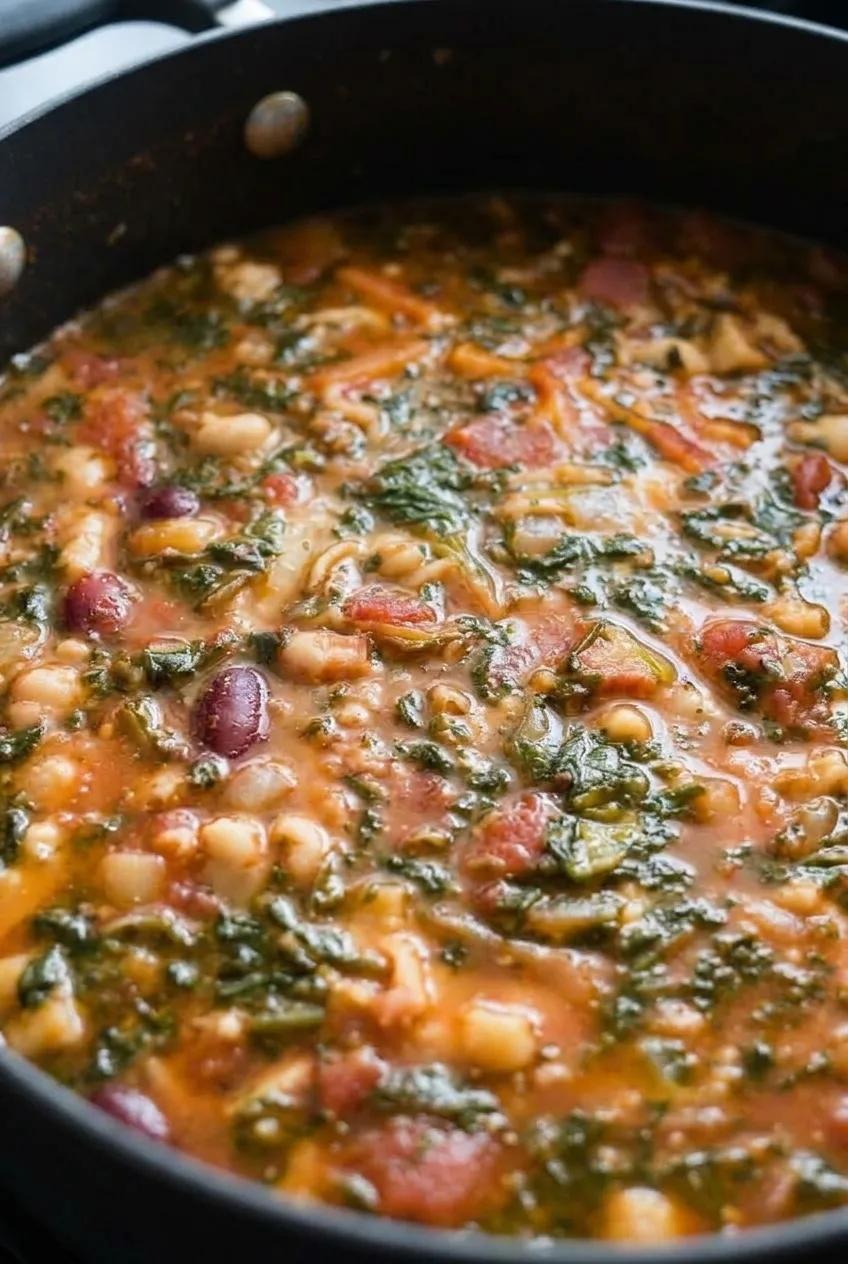
Close view of pasta fagioli showing tender beans, ditalini, diced tomatoes, and wilted spinach in tomato broth.
  • 2 tablespoons olive oil
  • 1 medium yellow onion, diced (about 1 1/2 cups; 225g)
  • 2 medium carrots, diced (about 1 cup; 130g)
  • 2 celery ribs, diced (about 3/4 cup; 90g)
  • 4 garlic cloves, minced
  • 2 tablespoons tomato paste
  • 1 teaspoon dried Italian seasoning
  • 1/4 teaspoon red pepper flakes
  • 1 can (14.5 ounces) diced tomatoes, undrained
  • 5 cups vegetable broth, plus more as needed
  • 1 can (15 ounces) cannellini beans, drained and rinsed
  • 1 can (15 ounces) kidney beans, drained and rinsed
  • 1 cup dry ditalini pasta (about 170g)
  • 4 packed cups fresh baby spinach, roughly chopped (about 120g)
  • Kosher salt and black pepper, to taste
  • Up to 1/2 cup grated Parmesan, for serving (optional)

How to Make Pasta Fagioli

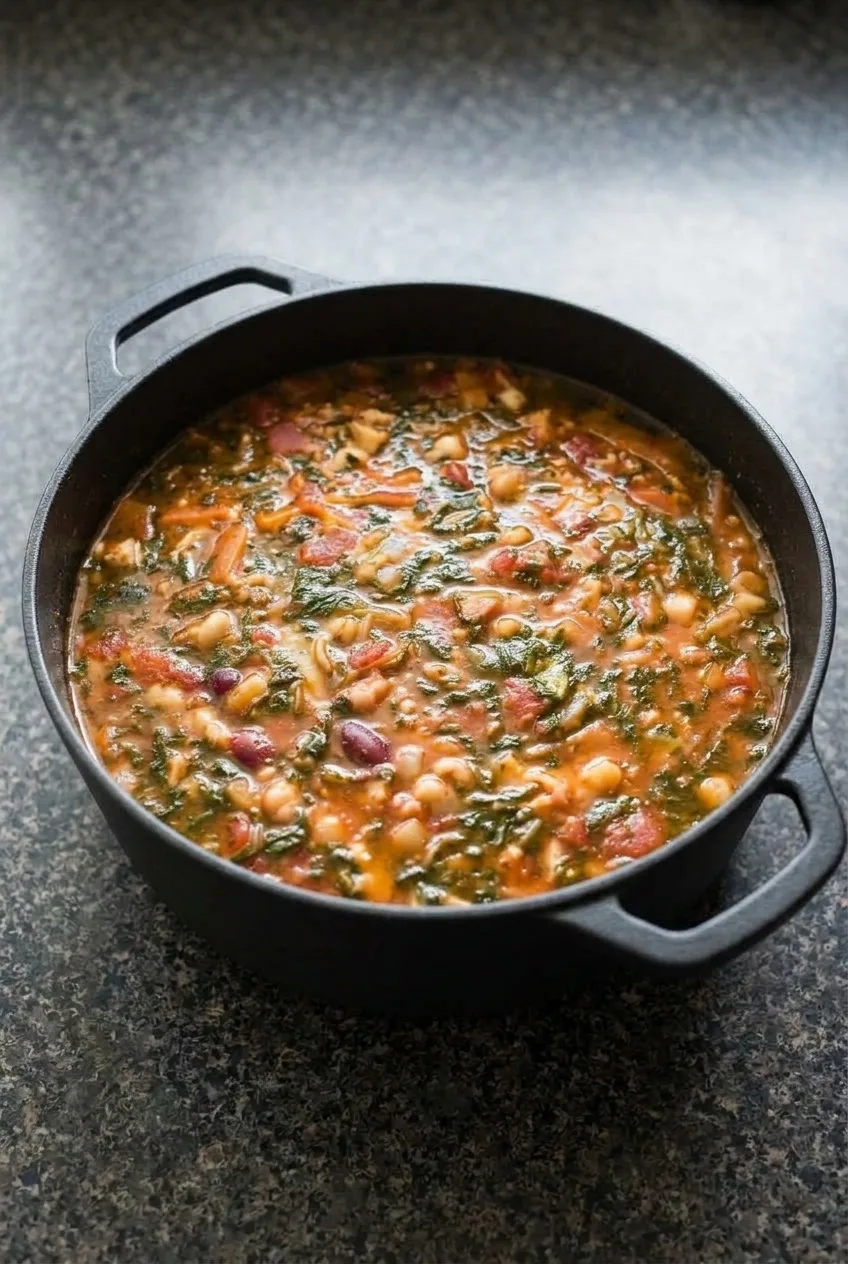
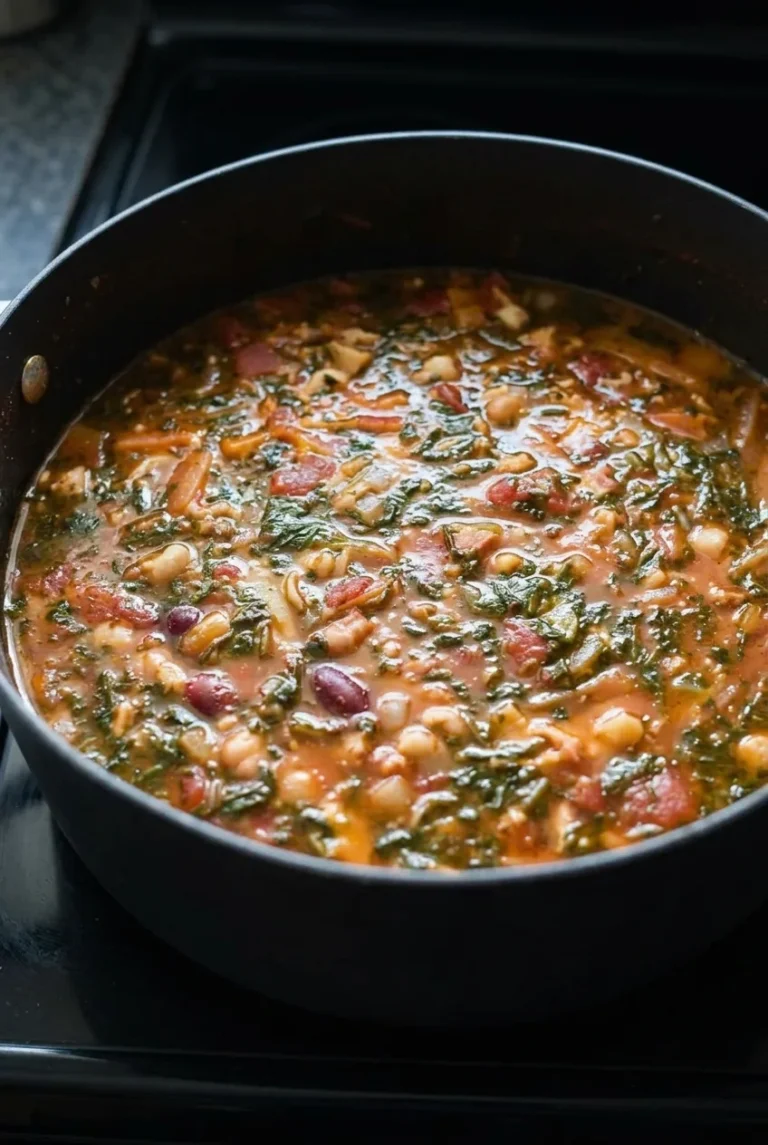
Wide view of a black Dutch oven filled with brothy tomato pasta fagioli on a dark neutral surface.
  1. Cook the pasta separately: Bring a medium saucepan of well-salted water to a boil. Cook the ditalini according to the package directions until al dente, about 8 to 10 minutes. Drain without rinsing and set aside. Start the soup while the pasta cooks.
  2. Soften the vegetables: Heat the olive oil in a 5- to 6-quart Dutch oven or heavy soup pot over medium heat. Add the onion, carrots, celery, and a pinch of salt. Cook, stirring occasionally, for 7 to 9 minutes; start checking after 6 minutes. The onion should be translucent, and the carrots and celery should be softened. Add the garlic, Italian seasoning, and red pepper flakes and cook for 1 minute, until fragrant.
  3. Cook the tomato paste: Stir in the tomato paste and cook for 1 to 2 minutes, stirring constantly, until it darkens slightly and coats the vegetables without scorching.
  4. Simmer the soup: Add the diced tomatoes with their juices, the vegetable broth, and both kinds of beans. Bring just to a boil, then reduce the heat to medium-low. Simmer gently, partially covered or uncovered, for 15 to 20 minutes, stirring every few minutes. Look for small bubbles rather than a rolling boil.
  5. Give the broth body: After 15 minutes of simmering, taste the broth and check its consistency. If it seems thin, simmer uncovered for a few more minutes. Mash about 1 cup of beans against the side of the pot with a spoon or potato masher, then stir them into the broth. Most of the beans should remain whole. Add a splash of broth if the soup becomes too thick.
  6. Wilt the spinach: Stir in the spinach and cook over low heat for 2 to 3 minutes, just until wilted and dark green. Season with kosher salt and black pepper to taste. Remove the pot from the heat and let it stand for 5 minutes.
  7. Serve: Divide the ditalini among bowls and ladle the hot soup over it. Top with Parmesan if desired. If serving the whole batch immediately, you can stir the pasta into the soup just before ladling; otherwise, keep it separate.

How to Keep the Soup Brothy

The finished broth should lightly coat a spoon but still pour freely, with whole beans, diced tomatoes, and greens visible throughout. Mashing only a portion of the beans thickens it without turning the soup into a puree. If it thickens as it stands, stir in a little broth or water.

Cooked pasta absorbs liquid even after it leaves the heat. Adding it to individual bowls keeps the soup brothy and prevents the pasta from becoming soft and swollen in leftovers.

Bean, Pasta, and Broth Swaps

Great Northern beans can replace cannellini beans. If ditalini is unavailable, use elbow macaroni or small shells and cook them separately until al dente. Chicken broth works in place of vegetable broth if a vegetarian base is not needed. Dried beans are not a direct swap: they require a different cooking time and liquid plan.

For a meatier version, brown 8 ounces of Italian sausage or pancetta in the soup pot first, draining excess fat if needed. Cook the vegetables as directed, then return the meat during the final simmer. A small Parmesan rind can be added with the broth for more savory depth; remove it before serving. For frozen spinach, use 10 ounces, thawed and squeezed dry, and add it during the final 2 to 3 minutes.

Storage, Reheating, and Freezing

Cool leftovers promptly and refrigerate the soup and pasta in separate airtight containers for 2 to 3 days. Reheat the soup gently over medium-low heat, adding broth or water until it is brothy again. Add pasta to an individual portion only long enough to warm through.

The soup base can be made 2 to 3 days ahead; cook the pasta when needed. To freeze, cool and freeze the soup without pasta. Thaw and reheat it gently, adding broth if needed, and serve with freshly cooked pasta.

Nutrition

Approximate per serving, based on 6 servings and excluding optional Parmesan and other additions: 290 calories, 12g protein, 5g fat, and 49g carbohydrates. Approximate per 100g of prepared soup with pasta: 55 calories, 2g protein, 1g fat, and 9g carbohydrates. Values vary with the broth, canned beans, and final amount of liquid.

Pasta Fagioli

A brothy tomato-based Italian bean soup with cannellini beans, kidney beans, spinach, and separately cooked ditalini pasta.
Course: Soup
Cuisine: Italian
Prep: 15 min
Cook: 35 min
Total: 55 min
Servings: 6 Calories: 290 kcal

Equipment

  • Medium saucepan
  • Colander
  • 5- to 6-quart Dutch oven or soup pot
  • Potato masher or spoon

Ingredients

For the Soup

  • 2 tablespoons olive oil
  • 1 medium yellow onion, diced (about 1 1/2 cups; 225g)
  • 2 medium carrots, diced (about 1 cup; 130g)
  • 2 celery ribs, diced (about 3/4 cup; 90g)
  • 4 garlic cloves, minced
  • 2 tablespoons tomato paste
  • 1 teaspoon dried Italian seasoning
  • 1/4 teaspoon red pepper flakes
  • 1 can (14.5 ounces) diced tomatoes, undrained
  • 5 cups vegetable broth, plus more as needed
  • 1 can (15 ounces) cannellini beans, drained and rinsed
  • 1 can (15 ounces) kidney beans, drained and rinsed
  • 4 packed cups fresh baby spinach, roughly chopped (about 120g)
  • Kosher salt and black pepper, to taste

For Serving

  • 1 cup dry ditalini pasta (about 170g)
  • Up to 1/2 cup grated Parmesan, optional

Instructions

  1. Bring a medium saucepan of well-salted water to a boil. Cook the ditalini according to package directions until al dente, about 8 to 10 minutes. Drain without rinsing and set aside.
  2. Heat the olive oil in a 5- to 6-quart Dutch oven or heavy soup pot over medium heat. Add the onion, carrots, celery, and a pinch of salt; cook, stirring occasionally, until softened and the onion is translucent, 7 to 9 minutes.
  3. Add the garlic, Italian seasoning, and red pepper flakes. Cook for 1 minute, until fragrant.
  4. Stir in the tomato paste and cook, stirring constantly, until slightly darkened and coating the vegetables, 1 to 2 minutes.
  5. Add the diced tomatoes with their juices, vegetable broth, cannellini beans, and kidney beans. Bring just to a boil, then reduce the heat to medium-low.
  6. Simmer gently, partially covered or uncovered, for 15 to 20 minutes, stirring every few minutes.
  7. Mash about 1 cup of beans against the side of the pot with a spoon or potato masher, then stir them into the soup. Add a splash of broth if the soup is too thick.
  8. Stir in the spinach and cook over low heat until wilted and dark green, 2 to 3 minutes. Season with salt and black pepper, then remove from the heat and let stand for 5 minutes.
  9. Divide the cooked ditalini among bowls and ladle the soup over it. Top with Parmesan, if desired.

Tips

  • Cook the pasta separately to keep it from absorbing too much broth, especially for leftovers.
  • Maintain a gentle simmer with small bubbles rather than a rolling boil.
  • Mash only some of the beans to thicken the broth while keeping the soup chunky.
  • Add broth or water if the soup thickens as it stands.
  • If serving the entire batch immediately, stir the pasta into the soup just before ladling.

Variations

  • Bean and Pasta Swaps: Use Great Northern beans instead of cannellini beans, or substitute elbow macaroni or small shells for ditalini; cook any pasta separately until al dente.
  • Meaty Pasta Fagioli: Brown 8 ounces of Italian sausage or pancetta in the soup pot first, drain excess fat if needed, and return the meat during the final simmer.
  • Parmesan Rind Version: Add a small Parmesan rind with the broth for extra savory depth, then remove it before serving.
  • Frozen Spinach Version: Use 10 ounces frozen spinach, thawed and squeezed dry, and add it during the final 2 to 3 minutes.
  • Chicken Broth Version: Use chicken broth in place of vegetable broth if a vegetarian soup is not needed.

Notes

Refrigerate soup and pasta separately in airtight containers for 2 to 3 days. Reheat soup gently with additional broth or water as needed. Freeze the soup without pasta for best texture, then serve with freshly cooked pasta.

Nutrition

Calories: 290 kcal | Protein: 12 g | Fat: 5 g | Carbohydrates: 49 g

Creamy Roasted Garlic Tomato Soup

Roasted tomatoes and a whole head of garlic give this smooth soup its deep, mellow flavor. Blend the vegetables with their pan juices, then add a little cream over low heat for a silky finish. Before roasting, cut four thick tomato rounds and keep them out of the blender: one wrinkled, browned slice tops each bowl with a few fresh basil leaves.

Ingredients for Creamy Roasted Garlic Tomato Soup

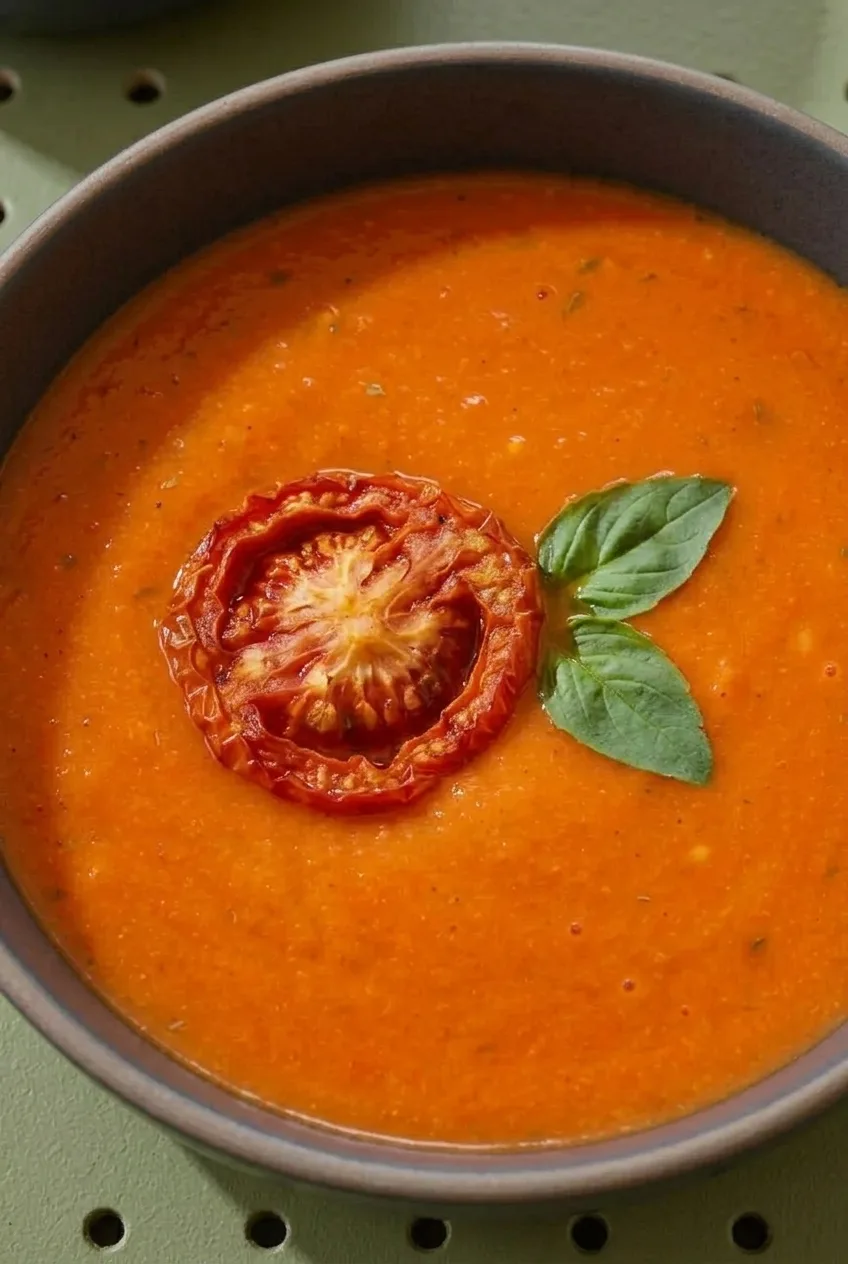
Close view of silky roasted garlic tomato soup with a wrinkled roasted tomato slice and basil garnish
  • 3 pounds Roma tomatoes, about 10 to 12 medium (1,350g)
  • 1 medium yellow onion, cut into 1-inch chunks (about 200g)
  • 1 large head garlic, halved crosswise
  • 3 tablespoons olive oil
  • 1 1/2 teaspoons kosher salt, plus more to taste
  • 1/2 teaspoon black pepper, plus more to taste
  • 2 to 3 cups vegetable or chicken broth, divided
  • 1/2 cup heavy cream (120g)
  • 1/4 cup loosely packed fresh basil leaves, divided

Yield: 4 servings. Time: About 20 minutes prep and 45 minutes cooking, or 1 hour 5 minutes total; roasting may take longer with especially juicy tomatoes.

How to Make Creamy Roasted Garlic Tomato Soup

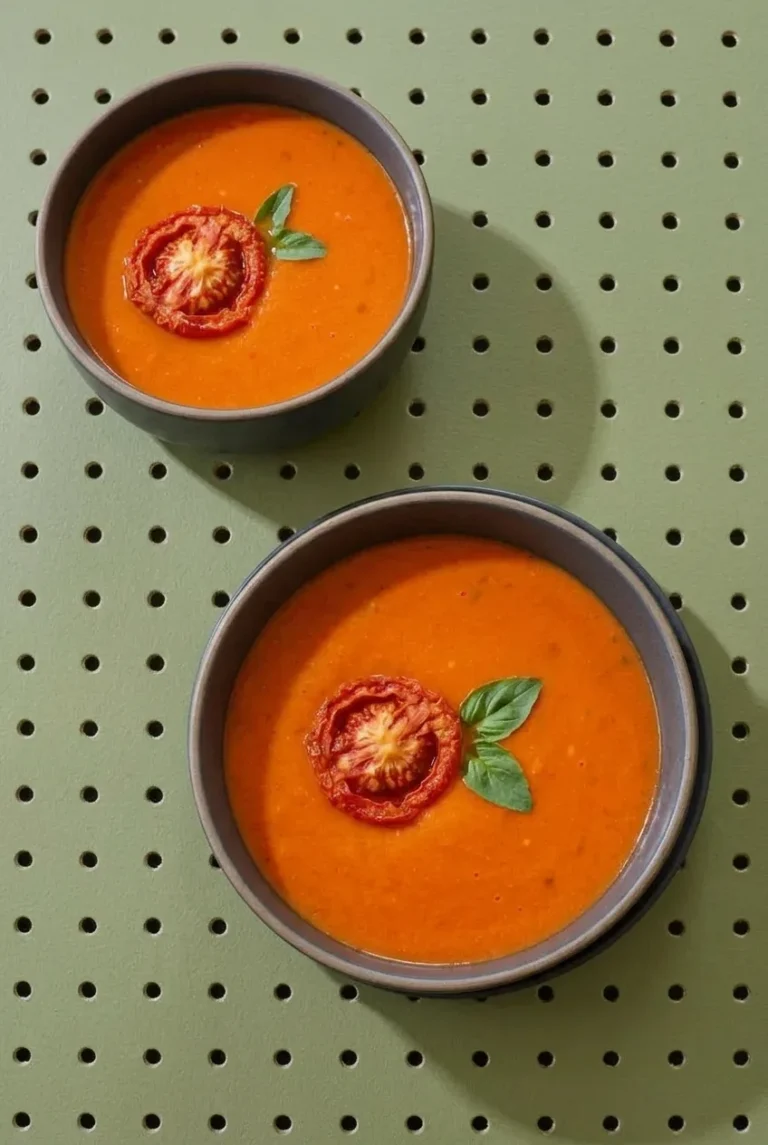
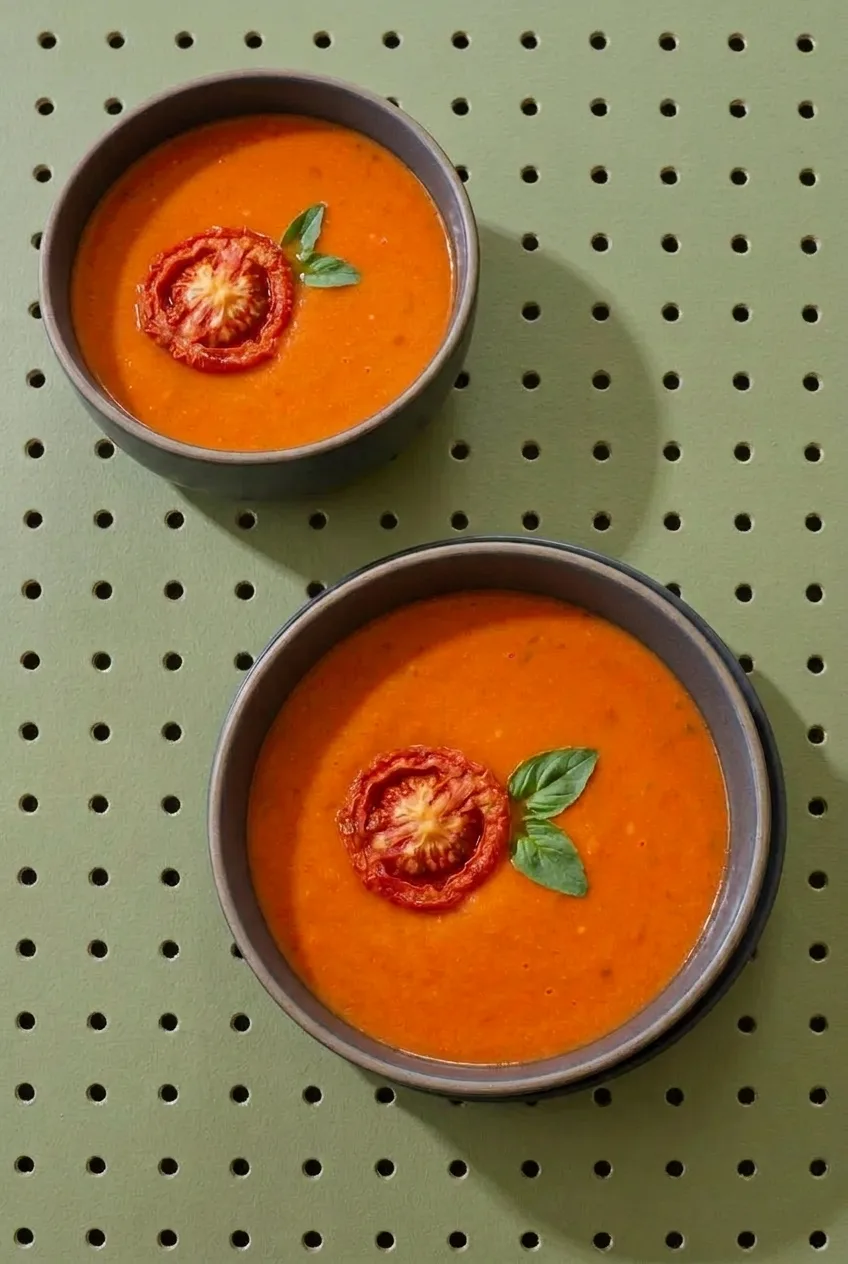
Two bowls of creamy roasted garlic tomato soup with roasted tomato rounds on a sage-green surface
  1. Prepare the vegetables: Heat the oven to 400°F (205°C). Cut four roughly 1/2-inch-thick center rounds from the largest tomatoes and place them at one end of a large rimmed sheet pan. Cut the remaining tomatoes into wedges. Spread the wedges and onion over the rest of the pan in a mostly single layer.
  2. Roast: Drizzle the tomatoes and onion with most of the olive oil and season with the salt and pepper. Place the garlic halves cut-side up on a small piece of foil, drizzle with the remaining oil, and wrap loosely. Set the packet on the pan. Roast for 35 to 45 minutes, checking from 30 minutes onward. If the oven browns unevenly, rotate the pan around the 25-minute mark; no flipping is needed.
  3. Reserve the tomato rounds: When the rounds are wrinkled, deep red, browned at the edges, and still intact, lift them gently with a thin spatula and set aside. Continue roasting the wedges and onion as needed until the tomatoes are collapsed and juicy with browned, lightly shriveled edges. The onion should be soft with some browning, and the garlic cloves should squeeze easily from their skins.
  4. Blend: Let the roasted vegetables stand for 5 to 10 minutes. Squeeze the garlic cloves into a blender. Add the tomato wedges, onion, all the pan juices and oil, 2 cups broth, and most of the basil. Save a few small basil leaves for each bowl. Blend until very smooth, working in batches and venting the lid if the contents are hot.
  5. Simmer and finish: Pour the puree into a 4- to 5-quart soup pot. Bring to a gentle simmer over medium heat and cook for 8 to 10 minutes, uncovered or with the lid slightly ajar. Add up to 1 more cup broth if you want a thinner soup. Reduce the heat to low, stir in the cream, and warm gently for 1 to 2 minutes without boiling hard. Taste and adjust the salt and pepper.
  6. Serve: Ladle into four shallow bowls. Place one reserved roasted tomato round on each serving, with a small cluster of basil leaves beside it.

How to Tell When the Tomatoes Are Roasted

Use the tomatoes’ appearance rather than the clock alone. The wedges should be very tender and collapsed, with released juices and browned, shriveled edges. Large or especially juicy tomatoes may need the longer end of the roasting range. Scrape every bit of juice and oil from the pan into the blender; leaving it behind weakens the soup’s roasted flavor.

How to Blend Hot Tomato Soup Safely

Let the vegetables cool briefly before blending. If they are still hot, fill the blender only partway, remove the lid’s center cap, and cover the opening loosely with a towel so steam can escape. Blend in batches if needed.

A countertop blender gives the smoothest result. An immersion blender works but may leave a more rustic texture. There is no need to peel the tomatoes; for an especially fine puree, pass the blended soup through a fine-mesh sieve.

Adjusting the Soup’s Thickness

Start with 2 cups broth because tomato moisture varies. Add more after blending only if needed: the soup should lightly coat a spoon but still pour easily. If it is too thin, simmer it uncovered a little longer before adding the cream. Keep the heat low once the cream goes in to help the soup stay smooth.

Roma tomatoes generally make a thicker soup. Ripe slicing tomatoes also work, but they may need a longer roast or less broth. For a dairy-free version, use vegetable broth and replace the heavy cream with 1/3 to 1/2 cup full-fat coconut cream; it may add a faint coconut note.

Serve with grilled cheese or toasted bread on the side, leaving the roasted tomato round and basil visible on each bowl. For another blended roasted soup, try Roasted Butternut Squash Soup with Pepitas.

Storage, Reheating, and Freezing

Cool leftovers promptly and refrigerate in an airtight container for 3 to 4 days. Store unused roasted tomato rounds separately so they remain intact. Reheat the soup gently in a saucepan over medium-low to medium heat, stirring occasionally. Add a splash of broth if it has thickened.

To make the soup ahead, roast and blend the base up to one day before serving. Reheat it gently and add the cream shortly before serving. For the most reliable texture when freezing, freeze the blended base before adding cream in airtight freezer-safe containers for up to 3 months. Thaw overnight in the refrigerator, reheat gently, and stir in the cream. Keep the basil and tomato-round garnishes out of the freezer.

Nutrition

Approximate nutrition per serving (one-fourth of the recipe), made with 2 cups vegetable broth: 300 calories, 5g protein, 22g fat, and 24g carbohydrates. Approximate values per 100g of finished soup: 60 calories, 1g protein, 4g fat, and 5g carbohydrates. Values vary with the broth, cream, liquid added, and moisture lost during cooking.

Creamy Roasted Garlic Tomato Soup

A smooth tomato soup made with roasted Roma tomatoes, onion, garlic, basil, broth, and cream, topped with a reserved roasted tomato round.
Course: Soup
Cuisine: American
Prep: 20 min
Cook: 45 min
Total: 65 min
Servings: 4 Calories: 300 kcal

Equipment

  • Large rimmed sheet pan
  • Aluminum foil
  • Thin spatula
  • Blender
  • 4- to 5-quart soup pot

Ingredients

For the Soup

  • 3 pounds Roma tomatoes, about 10 to 12 medium (1,350g)
  • 1 medium yellow onion, cut into 1-inch chunks (about 200g)
  • 1 large head garlic, halved crosswise
  • 3 tablespoons olive oil
  • 1 1/2 teaspoons kosher salt, plus more to taste
  • 1/2 teaspoon black pepper, plus more to taste
  • 2 to 3 cups vegetable or chicken broth, divided
  • 1/2 cup heavy cream (120g)
  • 1/4 cup loosely packed fresh basil leaves, divided

Instructions

  1. Preheat the oven to 400°F (205°C).
  2. Cut four roughly 1/2-inch-thick center rounds from the largest tomatoes and place them at one end of a large rimmed sheet pan.
  3. Cut the remaining tomatoes into wedges and spread them with the onion in a mostly single layer on the rest of the pan.
  4. Drizzle the tomatoes and onion with most of the olive oil, then season with the salt and pepper.
  5. Place the garlic halves cut-side up on a small piece of foil, drizzle with the remaining olive oil, wrap loosely, and place the packet on the sheet pan.
  6. Roast for 35 to 45 minutes, checking after 30 minutes and rotating the pan around 25 minutes if the oven browns unevenly.
  7. Remove the tomato rounds once they are wrinkled, deep red, browned at the edges, and still intact; set aside for garnish.
  8. Continue roasting the tomato wedges and onion until the tomatoes are collapsed and juicy with browned edges, the onion is soft and browned, and the garlic cloves squeeze easily from their skins.
  9. Let the roasted vegetables stand for 5 to 10 minutes.
  10. Squeeze the garlic cloves into a blender. Add the roasted tomato wedges, onion, all pan juices and oil, 2 cups broth, and most of the basil, reserving a few small basil leaves for garnish.
  11. Blend until very smooth, working in batches and venting the blender lid if the mixture is hot.
  12. Pour the puree into a 4- to 5-quart soup pot and bring to a gentle simmer over medium heat.
  13. Simmer for 8 to 10 minutes, uncovered or with the lid slightly ajar. Add up to 1 cup more broth if a thinner soup is desired.
  14. Reduce the heat to low, stir in the cream, and warm gently for 1 to 2 minutes without boiling hard. Taste and adjust the salt and pepper.
  15. Ladle the soup into four shallow bowls and top each serving with one reserved roasted tomato round and a few basil leaves.

Tips

  • Roast the tomatoes until they are collapsed, juicy, and browned at the edges rather than relying on the clock alone.
  • Scrape all juices and oil from the sheet pan into the blender for the fullest roasted flavor.
  • Vent the blender lid and blend in batches when pureeing hot vegetables.
  • Start with 2 cups of broth and add more only after blending if the soup is too thick.
  • Keep the heat low after adding the cream to prevent the soup from separating.
  • For an extra-smooth texture, strain the blended soup through a fine-mesh sieve.

Variations

  • Dairy-Free Tomato Soup: Use vegetable broth and replace the heavy cream with 1/3 to 1/2 cup full-fat coconut cream; the soup may have a faint coconut flavor.
  • Rustic Immersion-Blended Soup: Use an immersion blender instead of a countertop blender for a more rustic texture.

Notes

Refrigerate leftovers in an airtight container for 3 to 4 days, storing roasted tomato-round garnishes separately. Reheat gently with a splash of broth if needed. Freeze the blended soup base without cream for up to 3 months; thaw overnight, reheat, and add cream before serving.

Nutrition

Calories: 300 kcal | Protein: 5 g | Fat: 22 g | Carbohydrates: 24 g

Butternut Squash Soup

Roasting butternut squash in halves gives this soup a savory, lightly caramelized flavor without peeling and cubing hard raw squash. The tender flesh blends with onion, garlic, sage, and vegetable broth into a thick, silky soup. Start with less broth so you can control the texture after blending.

The soup base contains no dairy. To finish each bowl, add a visible cream swirl, toasted pepitas, and chopped parsley just before serving.

Ingredients for Butternut Squash Soup

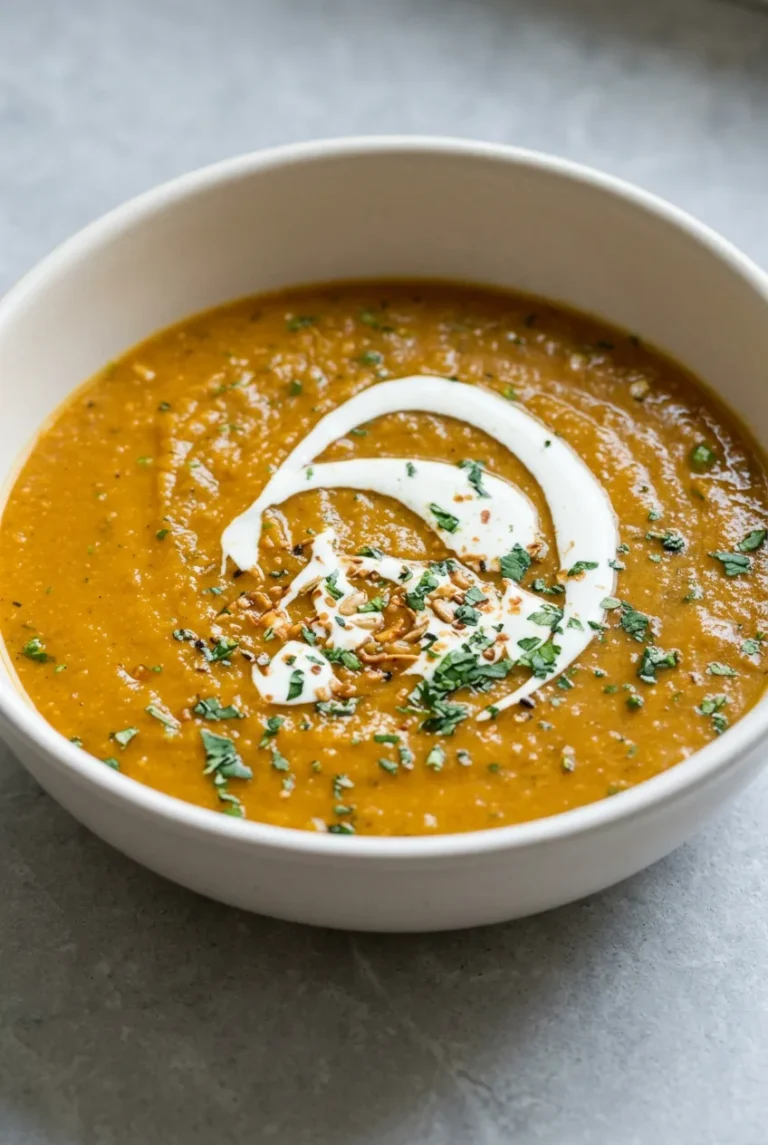
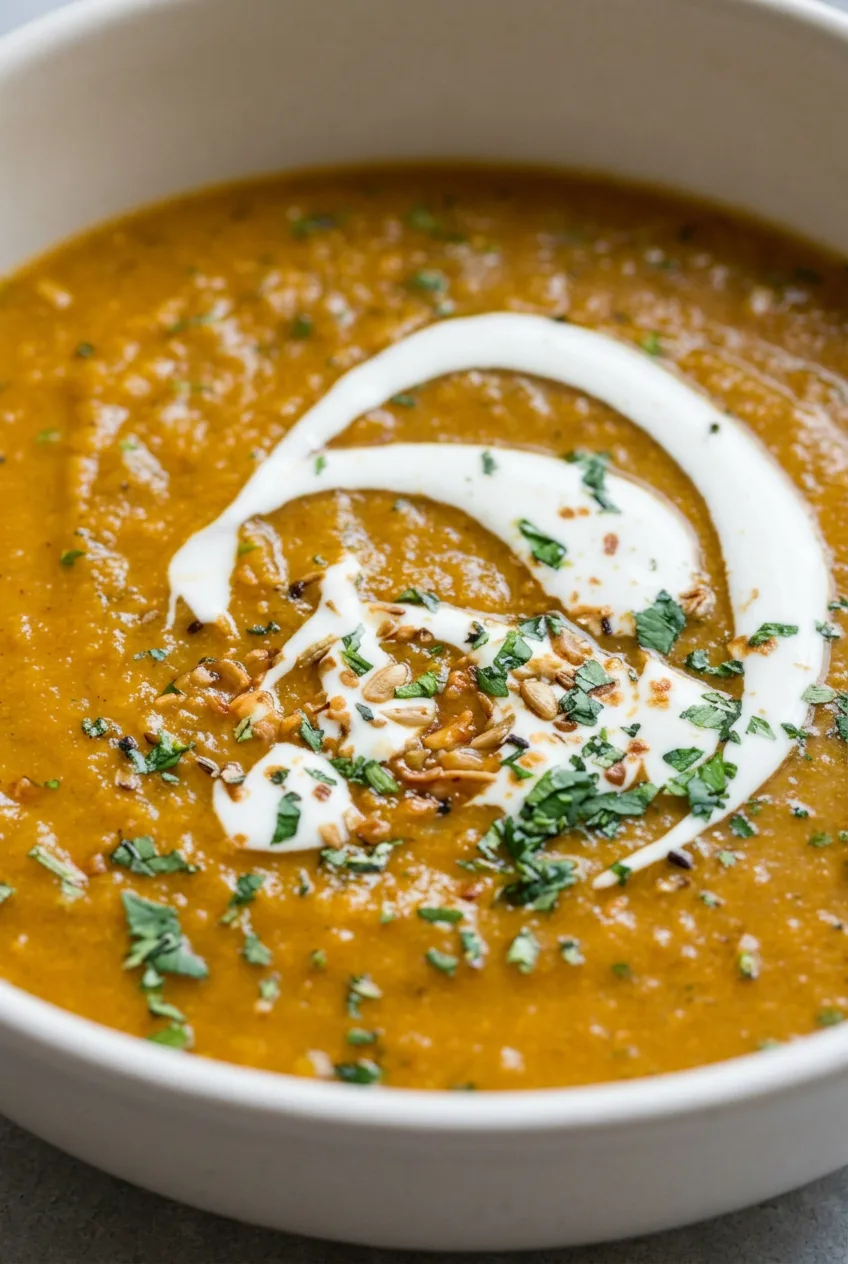
Close view of silky butternut squash soup with a white cream swirl, crunchy pepitas, and parsley.
  • 2 medium butternut squash, about 4 1/2 to 5 lb total (about 2.2kg)
  • 2 tablespoons olive oil, divided
  • 1 large yellow onion, diced (about 200g)
  • 3 garlic cloves, minced
  • 1 tablespoon finely chopped fresh sage
  • 1/4 teaspoon ground nutmeg
  • 3 to 4 cups low-sodium vegetable broth, warmed
  • 1 1/4 teaspoons kosher salt, plus more to taste
  • 1/2 teaspoon black pepper, plus more to taste
  • 1/3 cup heavy cream or crème fraîche, for serving (about 80g)
  • 1/3 cup toasted pepitas, for serving (about 40g)
  • 2 tablespoons finely chopped fresh parsley, for serving

Keep the fourth cup of broth in reserve until after blending. Squash yields vary, and low-sodium broth leaves room to adjust the seasoning at the end.

How to Make Roasted Butternut Squash Soup

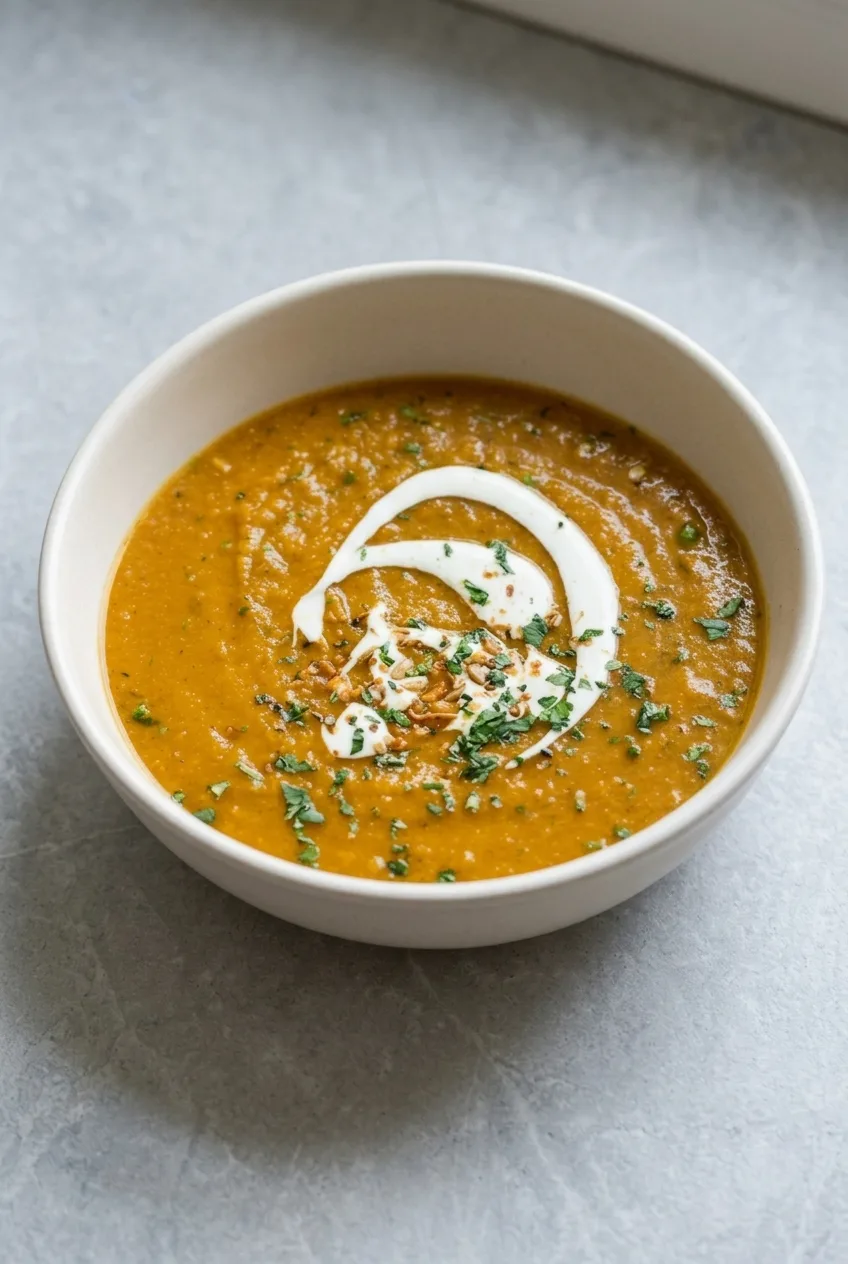
Wide serving of roasted butternut squash soup in a white bowl with cream, pepitas, and parsley.
  1. Prepare the squash: Preheat the oven to 400°F (205°C). Halve the squash lengthwise on a stable cutting board and scrape out the seeds and stringy centers. Rub the cut sides with 1 tablespoon olive oil and season lightly with some of the salt and pepper. Place cut-side down on a parchment-lined rimmed baking sheet.
  2. Roast until tender: Roast uncovered for 45 to 55 minutes, starting to check at 45 minutes. A knife should slide easily through the thickest part, including the neck, and the flesh should scoop easily from the skin. Let cool for 5 to 10 minutes, then scoop out the flesh.
  3. Cook the aromatics: Heat the remaining 1 tablespoon olive oil in a 5- to 6-quart soup pot over medium heat. Add the onion and a pinch of the salt. Cook for 6 to 8 minutes, stirring occasionally, until soft and translucent. Add the sage, nutmeg, and garlic for the final 30 seconds, stirring until fragrant. Keep the garlic pale so it does not turn bitter.
  4. Blend the soup: Add the roasted squash and 3 cups of warm broth to the pot. Remove from the heat or turn the heat to low, then purée with an immersion blender until smooth, with no visible chunks or fibers. Add more warm broth a little at a time only if needed. The soup should coat a spoon but still pour slowly.
  5. Warm and season: Heat the soup over medium-low for 5 to 10 minutes, stirring occasionally, until hot throughout and gently simmering. Avoid a hard boil. Taste and add the remaining salt and pepper as needed.
  6. Finish each bowl: Ladle into wide white bowls. Drizzle the cream or crème fraîche in a loose swirl over each serving, cluster the toasted pepitas near the center, and scatter parsley over the surface. Serve immediately so the cream stays distinct and the pepitas stay crunchy.

How to Keep the Soup Thick and Silky

Blend with 3 cups of broth before deciding whether to add the fourth; if the squash yields less flesh than expected, start with a little less. For a thinner soup, blend in warm broth a few tablespoons at a time. If it becomes too thin, simmer gently, uncovered, stirring often, until it reduces slightly.

If the soup tastes flat after blending, adjust the salt and pepper. If it tastes overly sweet or heavy, stir in 1 to 2 teaspoons of lemon juice or apple cider vinegar, then taste again.

How to Blend Hot Soup Safely

An immersion blender purées the soup in the pot without transferring hot liquid. If using a countertop blender, let the soup cool briefly off the heat and work in small batches. Fill the blender no more than halfway, vent the lid according to its instructions, and cover the lid with a kitchen towel. Do not tightly seal a blender full of hot soup; trapped steam can force the lid open.

Serving and Dairy-Free Options

Toasted chopped hazelnuts can replace the pepitas. For a dairy-free serving, use a thick unsweetened plant-based cream for the white swirl, or omit the swirl and finish with olive oil, pepitas, and parsley. Omitting the swirl changes the appearance of the main serving.

Serve with crusty bread or a simple green salad. For another plant-forward soup, try this Vegan Garlic Chickpea Soup with Kale.

Make-Ahead, Storage, and Reheating

Cool the ungarnished soup and refrigerate it in an airtight container for a few days. Keep the cream, pepitas, and parsley separate. Reheat over medium-low heat, stirring occasionally, until hot throughout; add a splash of broth if the soup has thickened.

For longer storage, freeze the ungarnished soup in portions with room for expansion. Thaw before reheating gently on the stovetop, then add the cream, pepitas, and parsley to each bowl.

Nutrition

Approximate nutrition per serving, based on 6 servings and 3 cups of broth, including the cream, pepitas, and parsley: 270 calories, 6g protein, 13g fat, and 38g carbohydrates. Approximate values per 100g of prepared soup: 65 calories, 1g protein, 3g fat, and 9g carbohydrates. Values vary with squash yield, broth added, and moisture lost during cooking.

Roasted Butternut Squash Soup

A thick, silky butternut squash soup made with roasted squash, onion, garlic, sage, and vegetable broth, finished with cream, pepitas, and parsley.
Course: Soup
Cuisine: American
Prep: 20 min
Cook: 65 min
Total: 90 min
Servings: 6 Calories: 270 kcal

Equipment

  • Rimmed baking sheet
  • Parchment paper
  • 5- to 6-quart soup pot
  • Immersion blender
  • Chef's knife
  • Cutting board

Ingredients

For the Soup

  • 2 medium butternut squash, about 4 1/2 to 5 lb total (about 2.2 kg)
  • 2 tablespoons olive oil, divided
  • 1 large yellow onion, diced (about 200 g)
  • 3 garlic cloves, minced
  • 1 tablespoon finely chopped fresh sage
  • 1/4 teaspoon ground nutmeg
  • 3 to 4 cups low-sodium vegetable broth, warmed
  • 1 1/4 teaspoons kosher salt, plus more to taste
  • 1/2 teaspoon black pepper, plus more to taste

For Serving

  • 1/3 cup heavy cream or crème fraîche (about 80 g)
  • 1/3 cup toasted pepitas (about 40 g)
  • 2 tablespoons finely chopped fresh parsley

Instructions

  1. Preheat the oven to 400°F (205°C) and line a rimmed baking sheet with parchment paper.
  2. Halve the squash lengthwise and scrape out the seeds and stringy centers. Rub the cut sides with 1 tablespoon olive oil and season lightly with salt and pepper.
  3. Place the squash cut-side down on the prepared baking sheet. Roast for 45 to 55 minutes, until a knife slides easily through the thickest part.
  4. Let the squash cool for 5 to 10 minutes, then scoop the flesh from the skins.
  5. Heat the remaining 1 tablespoon olive oil in a 5- to 6-quart soup pot over medium heat. Add the onion and a pinch of salt; cook for 6 to 8 minutes, stirring occasionally, until soft and translucent.
  6. Add the sage, nutmeg, and garlic. Cook for 30 seconds, stirring until fragrant.
  7. Add the roasted squash and 3 cups warm vegetable broth. Purée with an immersion blender until completely smooth.
  8. Add additional warm broth a little at a time as needed, keeping the soup thick enough to coat a spoon while still pouring slowly.
  9. Warm the soup over medium-low heat for 5 to 10 minutes until hot and gently simmering. Taste and adjust the salt and pepper.
  10. Ladle into bowls and finish each serving with a swirl of cream or crème fraîche, toasted pepitas, and parsley. Serve immediately.

Tips

  • Start with 3 cups of broth and add the fourth cup only after blending, since squash moisture and yield can vary.
  • Roast the squash until the flesh scoops easily from the skin, including at the thick neck end.
  • Keep the garlic pale when cooking the aromatics to prevent bitterness.
  • For thinner soup, add warm broth a few tablespoons at a time.
  • If the soup becomes too thin, simmer it uncovered over low heat until slightly reduced.
  • If the flavor tastes flat, adjust with salt and pepper; add 1 to 2 teaspoons lemon juice or apple cider vinegar if it tastes overly sweet or heavy.

Variations

  • Dairy-Free Butternut Squash Soup: Use a thick unsweetened plant-based cream for the swirl, or omit the cream and finish with olive oil, pepitas, and parsley.
  • Hazelnut Topping: Replace the toasted pepitas with toasted chopped hazelnuts.

Notes

Cool ungarnished soup before storing. Refrigerate in an airtight container for a few days or freeze in portions with room for expansion. Reheat gently over medium-low heat, adding a splash of broth if needed; keep garnishes separate until serving. For countertop blending, work in small batches and vent the lid to avoid steam pressure.

Nutrition

Calories: 270 kcal | Protein: 6 g | Fat: 13 g | Carbohydrates: 38 g

Stuffed Pepper Soup

Stuffed pepper soup has the beef, bell peppers, tomatoes, and rice of stuffed peppers in a thick, spoonable tomato broth. Brown the beef first, then simmer the red and green peppers until tender. Stir cooked rice into the soup near serving so the grains stay distinct. If you plan to save leftovers, keep the extra rice separate; it will otherwise continue absorbing broth as the soup sits.

Prep: 15 minutes, plus rice cooking time if needed | Cook: about 35 minutes | Total: about 50 minutes | Servings: 6

Ingredients for Stuffed Pepper Soup

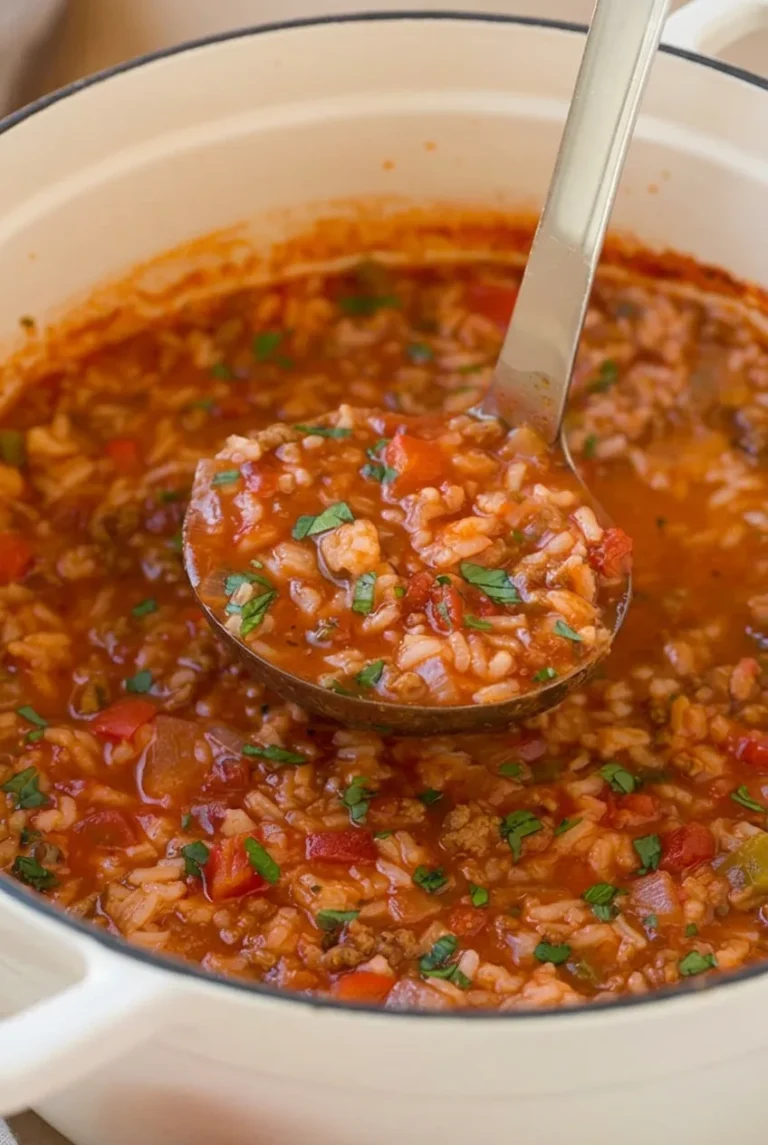
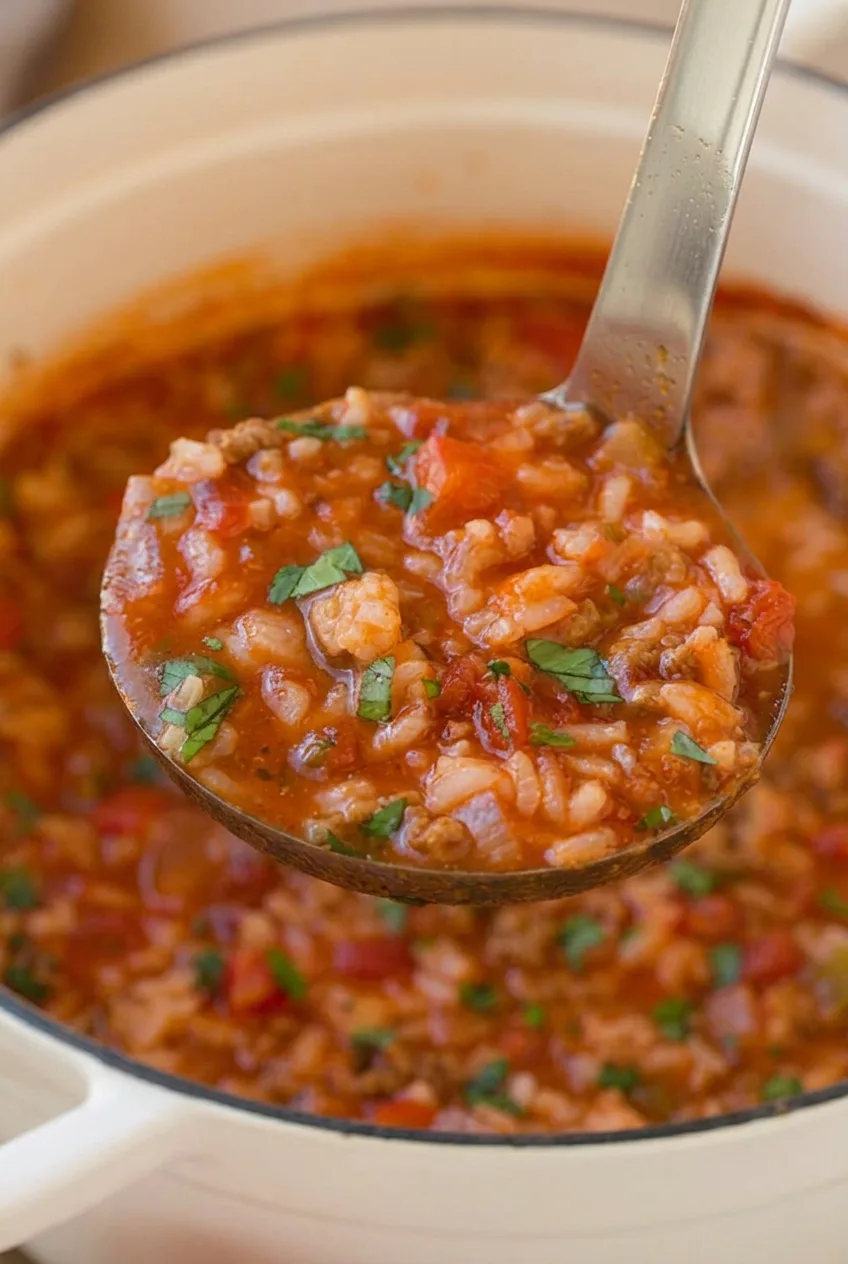
Close spoonful of stuffed pepper soup showing rice, beef crumbles, tender peppers, and parsley.
  • 1 lb lean ground beef, preferably 85% to 90% lean (about 450g)
  • 1 medium yellow onion, finely diced (about 150g)
  • 1 medium green bell pepper, diced (about 150g)
  • 1 medium red bell pepper, diced (about 150g)
  • 3 garlic cloves, minced
  • 2 tablespoons tomato paste (about 30g)
  • 1 can (28 oz) no-salt-added diced tomatoes, with their juices
  • 1 can (15 oz) tomato sauce
  • 4 cups beef broth
  • 1 1/2 teaspoons Italian seasoning
  • 3/4 teaspoon kosher salt, plus more to taste
  • 1/2 teaspoon black pepper
  • 2 cups cooked long-grain white rice (about 315g), plus more as desired for serving
  • 2 tablespoons chopped fresh flat-leaf parsley

How to Make Stuffed Pepper Soup

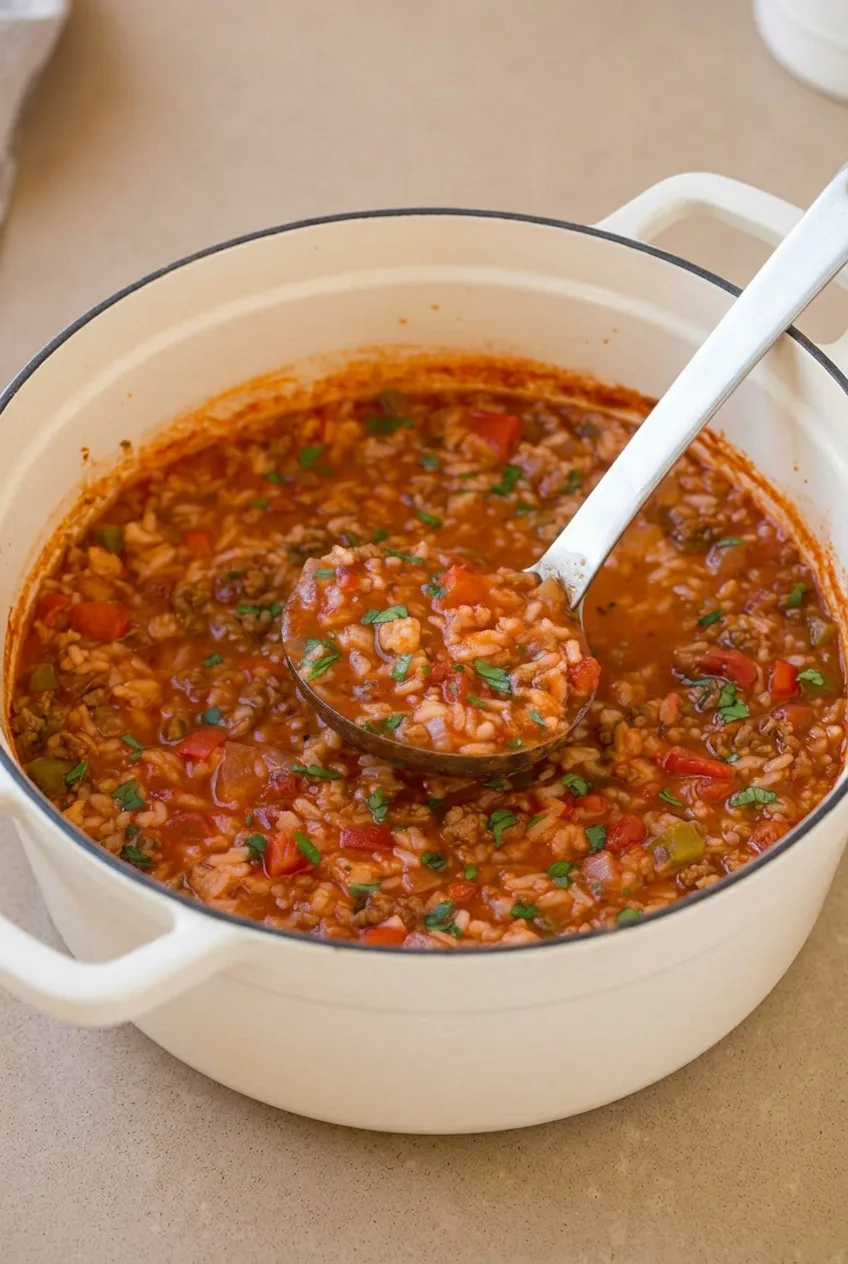
Wide view of stuffed pepper soup in a cream Dutch oven with chunky tomato broth and parsley.
  1. Prepare the rice: Cook the rice according to its package directions while starting the soup, or use leftover cooked rice. Fluff it and set it aside. The listed 2 cups is the amount after cooking.
  2. Brown the beef: Warm a 5- to 6-quart Dutch oven or heavy soup pot over medium-high heat. Add the beef and cook for 5 to 7 minutes, breaking it into small crumbles, until browned with no pink remaining. Carefully drain excess fat if more than a light coating remains in the pot.
  3. Soften the vegetables: Reduce the heat to medium. Add the onion and both bell peppers; cook, stirring often, for about 4 minutes. Add the garlic and cook for about 1 minute more. The onion should be softening, and the peppers should look glossy but still hold their shape.
  4. Build the tomato base: Stir in the tomato paste, Italian seasoning, salt, and black pepper for about 30 seconds. Add the diced tomatoes with their juices, tomato sauce, and beef broth. Stir, scraping up any browned bits from the bottom of the pot.
  5. Simmer: Bring the soup just to a boil, then reduce the heat to medium-low. Partially cover and simmer gently for 25 to 30 minutes, stirring occasionally. Start checking at 25 minutes: a fork should pierce the peppers easily, but the pieces should still be visibly diced. Simmer a little longer if needed. The tomato broth should lightly coat a spoon.
  6. Add the rice: Stir the 2 cups cooked rice into the soup you plan to serve immediately and warm over low heat for 2 to 3 minutes. If saving some soup, add rice only to the portion being served and store the rest separately. The soup should be thick and chunky but still spoonable.
  7. Finish: Taste and adjust the salt and pepper. Rest off the heat for 5 minutes, then scatter the parsley over the soup. Serve with a spoonful that shows the beef, rice, and peppers.

How to Adjust the Thickness

Start with the listed 4 cups of broth. If the peppers are tender but the tomato base looks thin, simmer uncovered for 5 to 10 minutes before adding the rice. If the soup becomes too thick after the rice goes in, stir in warm beef broth a few tablespoons at a time; up to 1/2 to 1 cup more may be needed. Avoid prolonged simmering once the rice is added, or the grains may turn mushy.

Serving and Simple Swaps

Serve with crusty bread or a green salad. Shredded cheese or a dollop of sour cream can be offered as an optional topping for individual bowls.

Ground turkey can replace the beef; brown it fully, then add 1 tablespoon olive oil before sautéing the vegetables if the pot is dry. Chicken broth works in place of beef broth. Fully cooked brown rice can replace white rice using the same cooked volume. A mix of red and green peppers gives the soup color contrast, but one pepper color will work if needed.

For another beef-and-rice soup, try this easy cabbage roll soup.

How to Store, Reheat, and Freeze

Cool the soup promptly and refrigerate it in an airtight container for 3 to 4 days. Store extra cooked rice separately. Reheat the soup gently on the stovetop or in the microwave until steaming hot, then add the rice near the end. If rice was already mixed into the leftovers, add a splash of broth while reheating to loosen the soup.

You can make the soup base up to 3 days ahead and keep the cooked rice separate. For longer storage, freeze the cooled soup base without rice in airtight containers for up to 3 months. Thaw overnight in the refrigerator, reheat, and add freshly cooked or separately reheated rice.

Nutrition

Approximate nutrition per serving, based on 6 servings and excluding optional toppings: 300 calories, 19g protein, 10g fat, and 32g carbohydrates. Approximate values per 100g of finished soup: 60 calories, 4g protein, 2g fat, and 6g carbohydrates. Values vary with the leanness of the beef, the broth, and how much the soup reduces.

Stuffed Pepper Soup

A hearty tomato-based soup with ground beef, bell peppers, diced tomatoes, and cooked rice.
Course: Soup
Cuisine: American
Prep: 15 min
Cook: 35 min
Total: 50 min
Servings: 6 Calories: 300 kcal

Equipment

  • 5- to 6-quart Dutch oven or heavy soup pot
  • wooden spoon
  • can opener

Ingredients

For the Soup

  • 1 lb lean ground beef, preferably 85% to 90% lean (about 450 g)
  • 1 medium yellow onion, finely diced (about 150 g)
  • 1 medium green bell pepper, diced (about 150 g)
  • 1 medium red bell pepper, diced (about 150 g)
  • 3 garlic cloves, minced
  • 2 tablespoons tomato paste (about 30 g)
  • 1 can (28 oz) no-salt-added diced tomatoes, with juices
  • 1 can (15 oz) tomato sauce
  • 4 cups beef broth
  • 1 1/2 teaspoons Italian seasoning
  • 3/4 teaspoon kosher salt, plus more to taste
  • 1/2 teaspoon black pepper

For Serving

  • 2 cups cooked long-grain white rice (about 315 g), plus more as desired
  • 2 tablespoons chopped fresh flat-leaf parsley
  • Shredded cheese or sour cream, optional

Instructions

  1. Cook the rice according to package directions, if needed. Fluff and set aside.
  2. Heat a 5- to 6-quart Dutch oven or heavy soup pot over medium-high heat. Add the ground beef and cook for 5 to 7 minutes, breaking it into small crumbles, until browned and no pink remains.
  3. Drain excess fat if more than a light coating remains in the pot.
  4. Reduce the heat to medium. Add the onion, green bell pepper, and red bell pepper. Cook, stirring often, for about 4 minutes.
  5. Add the garlic and cook for about 1 minute.
  6. Stir in the tomato paste, Italian seasoning, salt, and black pepper. Cook for about 30 seconds.
  7. Add the diced tomatoes with their juices, tomato sauce, and beef broth. Scrape up any browned bits from the bottom of the pot.
  8. Bring the soup just to a boil, then reduce the heat to medium-low. Partially cover and simmer gently for 25 to 30 minutes, stirring occasionally, until the peppers are tender but still diced.
  9. Stir 2 cups cooked rice into the portion of soup being served and warm over low heat for 2 to 3 minutes.
  10. Taste and adjust the salt and pepper. Remove from the heat, rest for 5 minutes, and garnish with parsley before serving.

Tips

  • Add rice near serving so it stays distinct and does not absorb too much broth.
  • Store leftover rice separately from the soup whenever possible.
  • If the soup is thin before adding rice, simmer uncovered for 5 to 10 minutes.
  • If the soup becomes too thick after adding rice, stir in warm beef broth a few tablespoons at a time.
  • Avoid prolonged simmering after the rice is added to prevent mushy grains.

Variations

  • Ground Turkey Stuffed Pepper Soup: Replace the beef with ground turkey and add 1 tablespoon olive oil before cooking the vegetables if the pot is dry.
  • Chicken Broth Version: Use chicken broth instead of beef broth for a lighter flavor.
  • Brown Rice Version: Use fully cooked brown rice in the same amount as the cooked white rice.
  • Single-Pepper Version: Use only red or only green bell pepper if both colors are not available.

Notes

Refrigerate cooled soup in an airtight container for 3 to 4 days, keeping rice separate. Freeze the soup base without rice for up to 3 months. Reheat until steaming hot and add rice near the end.

Nutrition

Calories: 300 kcal | Protein: 19 g | Fat: 10 g | Carbohydrates: 32 g

Marry Me Chicken Soup

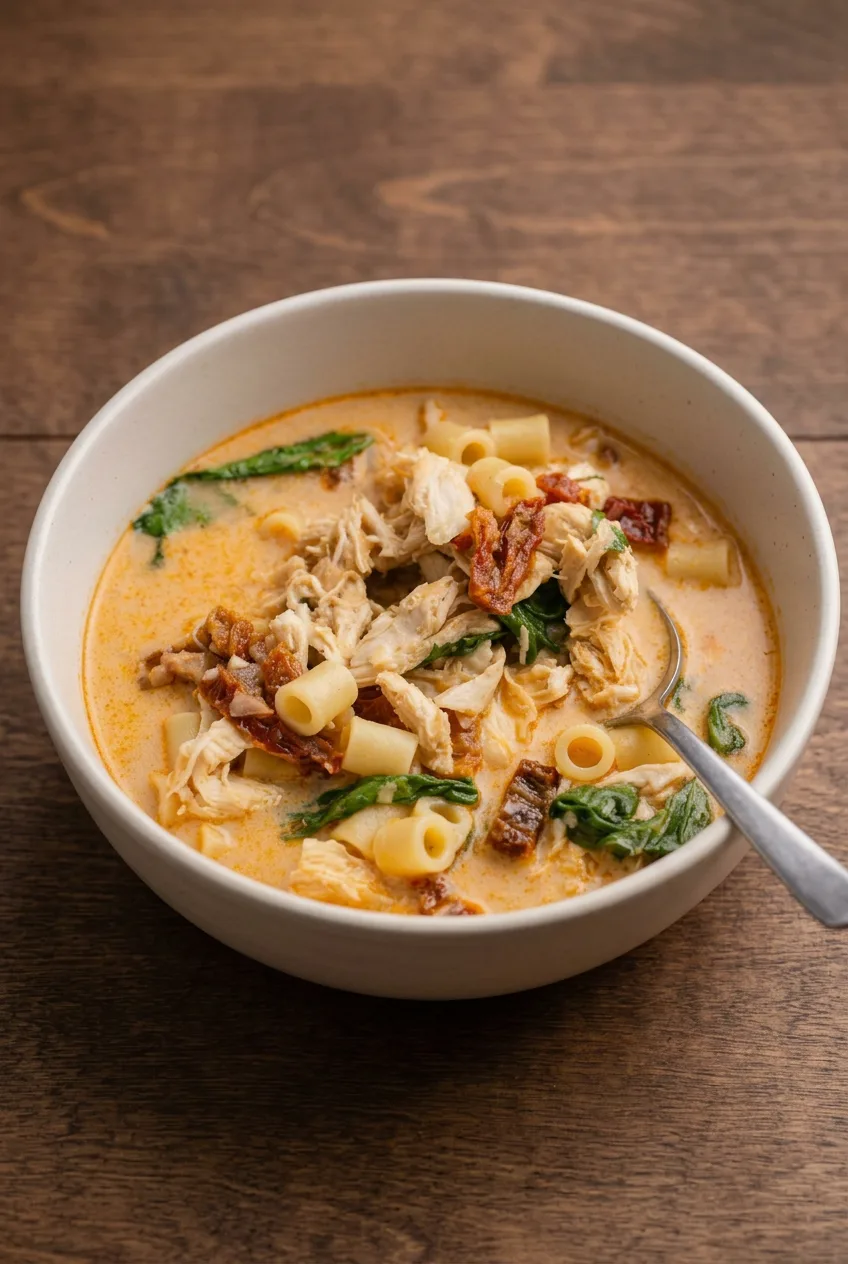
Marry Me Chicken Soup combines shredded chicken, sun-dried tomatoes, garlic, spinach, and ditalini in a creamy Parmesan broth. A little tomato paste and oil from the sun-dried tomato jar give the broth its warm orange tint without turning it into a thick tomato sauce.

Cooked chicken keeps this stovetop soup quick. The pasta cooks in a separate saucepan and goes into each bowl just before serving, so it stays distinct and does not absorb the broth during storage.

Ingredients for Marry Me Chicken Soup

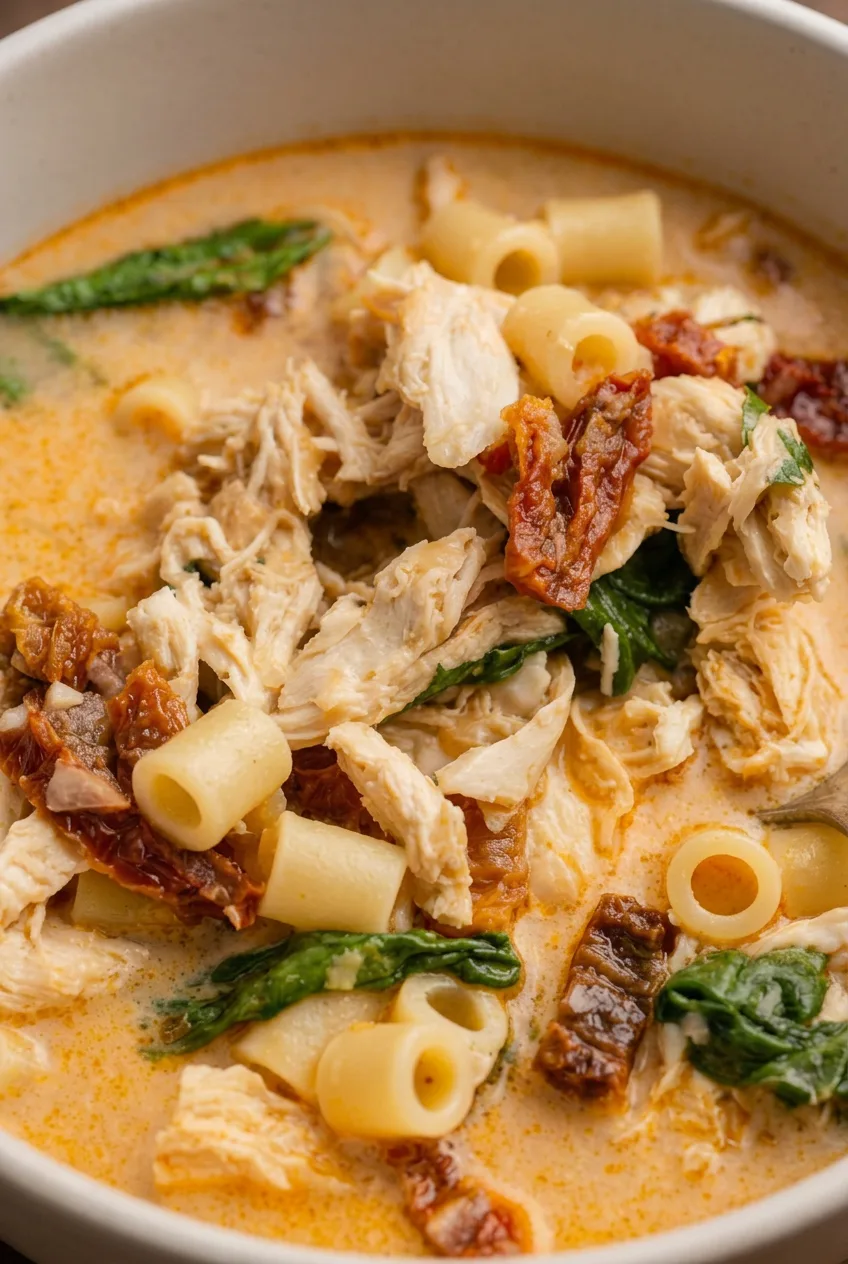
Close view of creamy Marry Me Chicken Soup showing tender chicken shreds, ditalini, spinach, and sun-dried tomatoes.

Makes 6 main-course bowls. Prep time: 15 minutes. Cook time: about 20 minutes. Total time: about 35 minutes.

  • 1 1/2 cups dry ditalini or other small short tube pasta (225g)
  • 1/2 cup chopped oil-packed sun-dried tomatoes (85g), plus 1 tablespoon oil from the jar
  • 1 medium yellow onion, finely chopped (about 150g)
  • 4 garlic cloves, minced
  • 1 tablespoon tomato paste
  • 1 1/2 teaspoons Italian seasoning
  • 1/4 teaspoon crushed red pepper flakes
  • 6 cups low-sodium chicken broth, plus more as needed
  • 3 cups cooked shredded chicken, including rotisserie chicken (about 425g)
  • 3/4 cup heavy cream
  • 3/4 cup finely grated Parmesan cheese (about 65g), divided
  • 4 packed cups baby spinach (about 120g)
  • Kosher salt and black pepper, to taste

Measure the sun-dried tomato oil rather than pouring it directly from the jar; if there is not enough, make up the difference with olive oil. Use low-sodium broth and wait until the Parmesan has melted before adding salt. The chicken, tomatoes, and cheese can all contribute saltiness.

How to Make Marry Me Chicken Soup

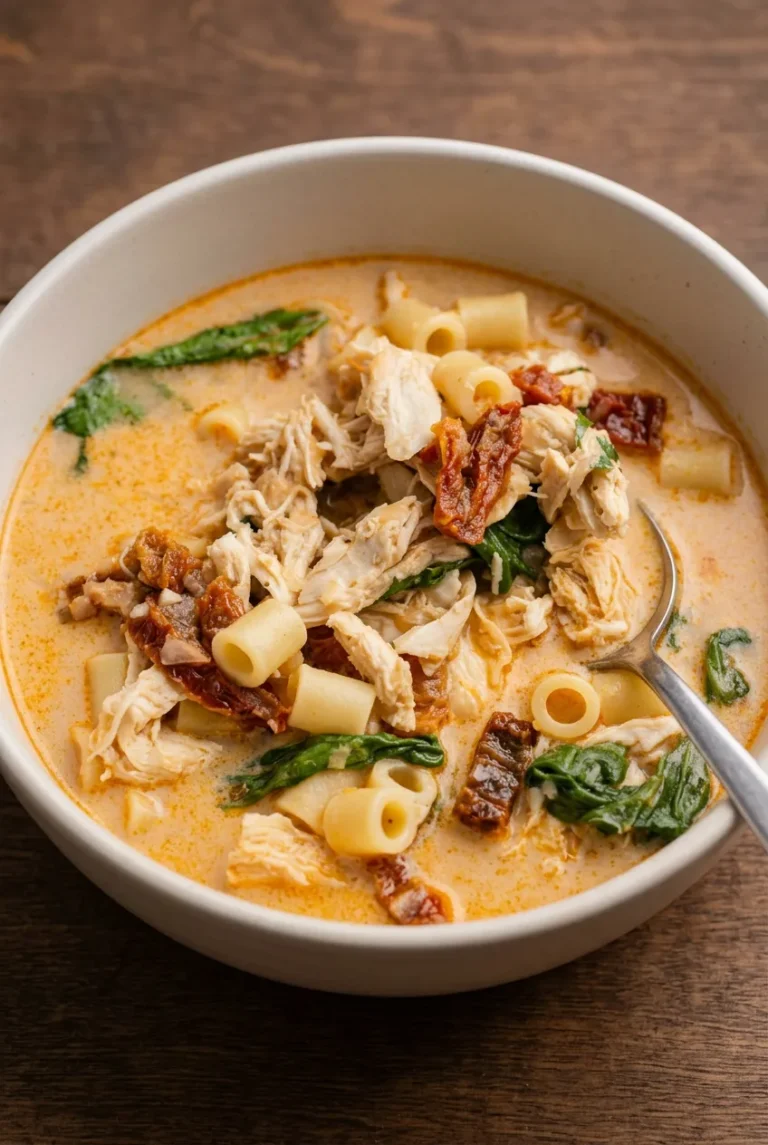
Wide serving of Marry Me Chicken Soup in a bowl with creamy orange broth, chicken, pasta, spinach, and tomatoes.
  1. Cook the pasta: Bring a medium saucepan of salted water to a boil. Cook the ditalini until just al dente, checking it 1 to 2 minutes before the package time. Drain thoroughly. You can cook it while the soup simmers.
  2. Build the tomato base: Warm a 5- to 6-quart Dutch oven or heavy soup pot over medium heat. Add the tablespoon of sun-dried tomato oil and the onion. Cook, stirring occasionally, for 5 to 6 minutes, until the onion is soft with lightly golden edges. Add the garlic, sun-dried tomatoes, tomato paste, Italian seasoning, and red pepper flakes. Stir constantly for about 1 minute, until the garlic is fragrant and the paste darkens slightly.
  3. Simmer the chicken: Pour in 6 cups of broth, scraping the bottom of the pot. Bring to a gentle simmer over medium-low heat. Add the cooked chicken and simmer uncovered or partially covered for 8 to 10 minutes, until the chicken is steaming hot. Keep the bubbles small and steady rather than letting the broth boil hard.
  4. Add the cream and cheese: Reduce the heat to low or remove the pot from the heat. Stir in the cream, then gradually stir in 1/2 cup of the Parmesan until melted. The broth should be pale orange and creamy but still pour easily from a ladle. Taste before adding salt, and season with black pepper.
  5. Wilt the spinach: Fold in the spinach for 1 to 2 minutes, just until wilted and deep green. Stir in more broth if the soup is thicker than you like. Let stand for 3 to 5 minutes.
  6. Serve: Divide the ditalini among six wide bowls. Ladle the soup over it, making sure each bowl gets chicken, sun-dried tomatoes, and spinach. Top with the remaining Parmesan, if desired.

Why Cook the Pasta Separately?

Ditalini continues absorbing liquid after it is cooked. Adding it to individual bowls keeps the soup brothy and lets you store leftovers without the pasta turning overly soft.

For a one-pot version you plan to serve right away, cook the dry ditalini in the simmering broth until tender, before adding the cream, Parmesan, and spinach. The soup will thicken considerably as it sits; add more broth as needed.

How to Keep the Broth Smooth

Use finely grated Parmesan and lower the heat before adding it and the cream. A hard boil after the dairy goes in can make the cheese clump or the broth look grainy. Reheat gently, adding broth a little at a time if the soup becomes too thick.

Marry Me Chicken Soup Variations

  • Different pasta: Use small shells, elbows, or gluten-free short pasta. Cook it separately according to its package directions.
  • Without pasta: Omit the ditalini for a lighter bowl. The chicken, sun-dried tomatoes, and spinach remain the main ingredients.
  • Less rich: Use half-and-half instead of heavy cream. The broth will be less rich; keep the heat low after adding it.
  • More heat: Add extra crushed red pepper flakes to individual bowls.

Serving, Storage, and Reheating

Serve in wide bowls with the reserved Parmesan. Crusty garlic bread or a simple green salad works alongside the soup.

Cool leftovers promptly, then refrigerate the soup and pasta in separate airtight containers for 3 to 4 days. Reheat the soup over low to medium-low heat, stirring occasionally. Warm the pasta separately or add it near the end, and stir in more broth to restore a brothy consistency. Pasta stored in the soup will be softer.

For freezing, leave out the pasta and use the soup within about 2 to 3 months for best quality. Thaw overnight in the refrigerator and whisk gently while reheating. The cream may separate slightly after thawing.

For a more traditional option, try this Classic Chicken Noodle Soup with Egg Noodles. For another creamy pasta-filled soup, see Creamy Sausage Tortellini Soup.

Nutrition

Approximate nutrition per main-course bowl, based on 6 servings: 510 calories, 37g protein, 25g fat, and 36g carbohydrates. Approximate values per 100g: 100 calories, 7g protein, 5g fat, and 7g carbohydrates. Values vary with the chicken, sun-dried tomatoes, broth, and portion size.

Marry Me Chicken Soup

A creamy chicken soup with sun-dried tomatoes, spinach, Parmesan, and ditalini pasta in a lightly tomato-tinted broth.
Course: Soup
Cuisine: Italian
Prep: 15 min
Cook: 20 min
Total: 35 min
Servings: 6 Calories: 510 kcal

Equipment

  • Medium saucepan
  • Colander
  • 5- to 6-quart Dutch oven or soup pot
  • Ladle

Ingredients

For the Pasta

  • 1 1/2 cups dry ditalini or other small short tube pasta (225 g)

For the Soup

  • 1/2 cup chopped oil-packed sun-dried tomatoes (85 g)
  • 1 tablespoon oil from the sun-dried tomato jar
  • 1 medium yellow onion, finely chopped (about 150 g)
  • 4 garlic cloves, minced
  • 1 tablespoon tomato paste
  • 1 1/2 teaspoons Italian seasoning
  • 1/4 teaspoon crushed red pepper flakes
  • 6 cups low-sodium chicken broth, plus more as needed
  • 3 cups cooked shredded chicken, such as rotisserie chicken (about 425 g)
  • 3/4 cup heavy cream
  • 3/4 cup finely grated Parmesan cheese (about 65 g), divided
  • 4 packed cups baby spinach (about 120 g)
  • Kosher salt, to taste
  • Black pepper, to taste

Instructions

  1. Bring a medium saucepan of salted water to a boil. Cook the ditalini until just al dente, checking it 1 to 2 minutes before the package time. Drain thoroughly and set aside.
  2. Warm a 5- to 6-quart Dutch oven or heavy soup pot over medium heat. Add the sun-dried tomato oil and onion, then cook for 5 to 6 minutes, stirring occasionally, until the onion is soft and lightly golden.
  3. Add the garlic, sun-dried tomatoes, tomato paste, Italian seasoning, and red pepper flakes. Stir constantly for about 1 minute, until fragrant and the tomato paste darkens slightly.
  4. Pour in the chicken broth, scraping up any browned bits from the bottom of the pot. Bring to a gentle simmer over medium-low heat.
  5. Add the shredded chicken and simmer uncovered or partially covered for 8 to 10 minutes, until the chicken is heated through.
  6. Reduce the heat to low or remove the pot from the heat. Stir in the heavy cream, then gradually stir in 1/2 cup Parmesan until melted. Taste and season with black pepper and salt as needed.
  7. Fold in the spinach and cook for 1 to 2 minutes, until wilted. Add more broth if the soup is thicker than desired, then let stand for 3 to 5 minutes.
  8. Divide the cooked ditalini among 6 bowls. Ladle the soup over the pasta and top with the remaining Parmesan, if desired.

Tips

  • Measure the oil from the sun-dried tomato jar; use olive oil if the jar does not contain enough.
  • Use low-sodium broth and taste after the Parmesan melts before adding salt.
  • Keep the broth at a gentle simmer rather than a hard boil.
  • Lower the heat before adding cream and Parmesan to prevent a grainy or clumpy broth.
  • Cook and store the pasta separately so it does not absorb too much broth.

Variations

  • Different Pasta: Use small shells, elbow macaroni, or gluten-free short pasta, cooked separately according to package directions.
  • Without Pasta: Omit the ditalini for a lighter chicken, sun-dried tomato, and spinach soup.
  • Less Rich: Use half-and-half instead of heavy cream and keep the heat low after adding it.
  • More Heat: Add extra crushed red pepper flakes to individual bowls.

Notes

Refrigerate leftover soup and pasta separately in airtight containers for 3 to 4 days. Reheat the soup gently with extra broth as needed. For freezing, omit the pasta and freeze the soup for up to 2 to 3 months; the cream may separate slightly after thawing.

Nutrition

Calories: 510 kcal | Protein: 37 g | Fat: 25 g | Carbohydrates: 36 g

Cabbage Roll Soup

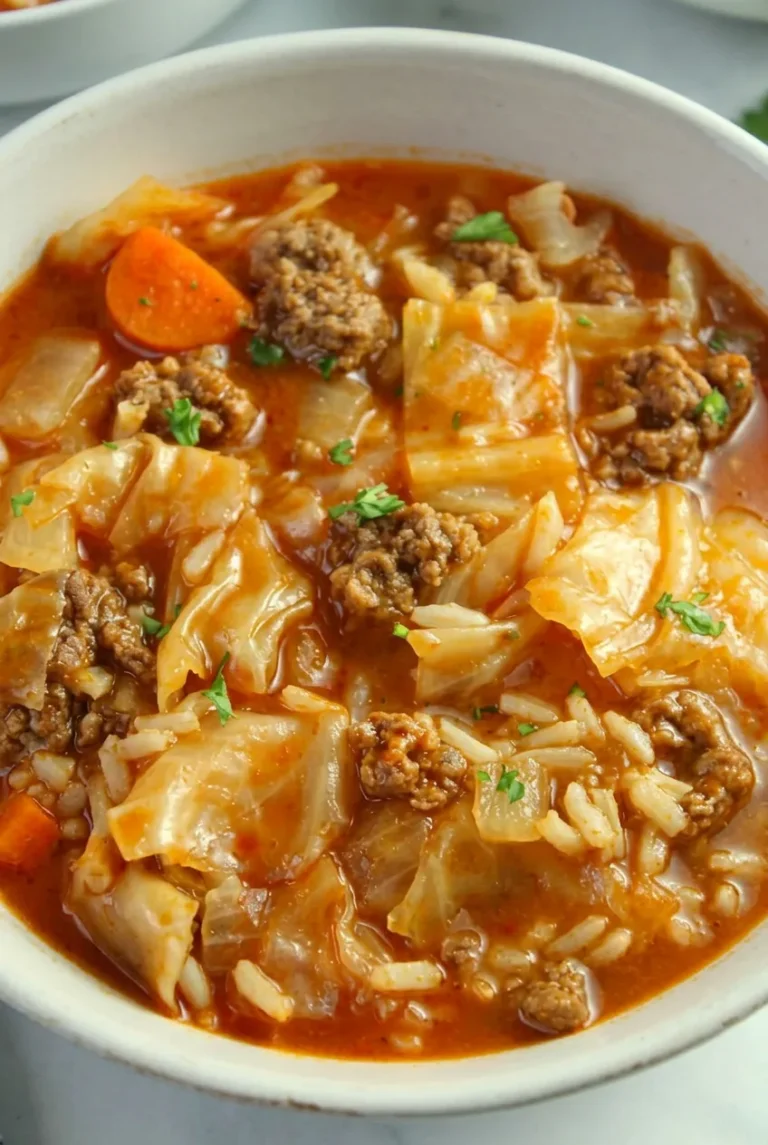
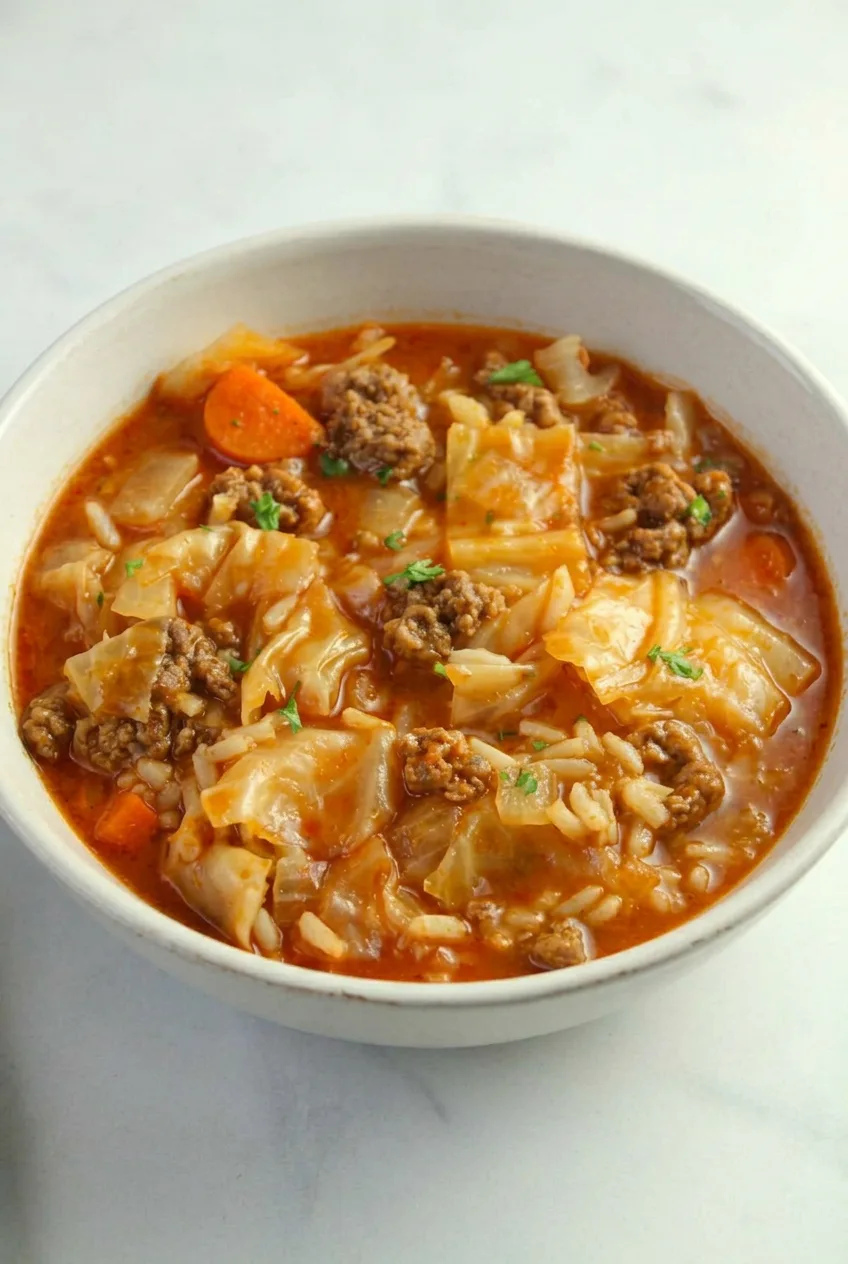
Cabbage roll soup has the ground beef, cabbage, rice, and tomato flavors of cabbage rolls without the rolling. This stovetop version is chunky but brothy, with tender cabbage pieces, carrot rounds, and beef crumbles in a red-orange broth.

Rinsed, uncooked rice goes straight into the pot. Keep the simmer gentle and stir regularly so it cooks without sticking. The rice will continue absorbing broth after cooking, so have extra broth ready if the soup thickens.

Ingredients for Cabbage Roll Soup

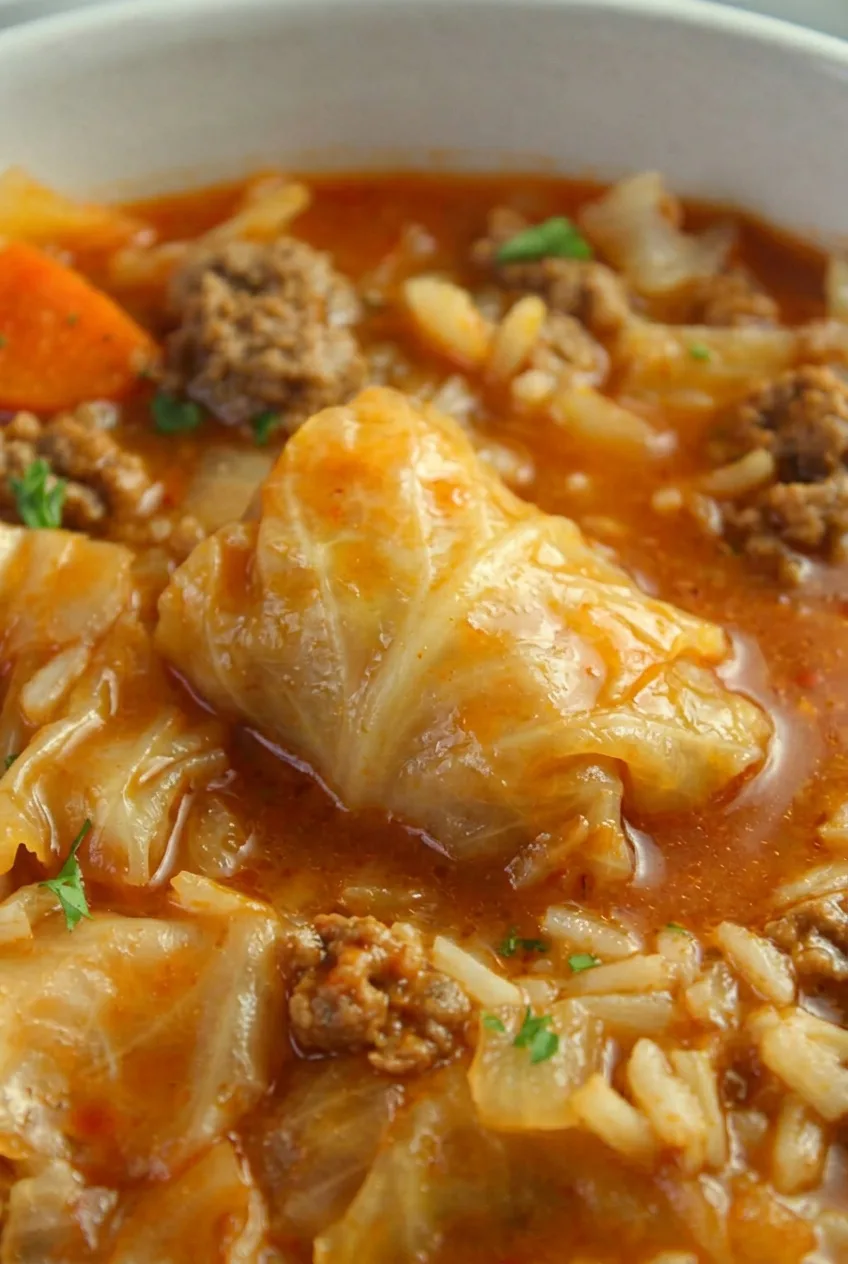
Close view of cabbage roll soup showing glossy tomato broth, rice grains, beef crumbles, carrots, and folded cabbage.

Makes 6 generous servings. Prep time: 20 minutes. Cook time: about 35 minutes. Total time: about 55 minutes.

  • 1 pound lean ground beef (about 450g)
  • 1 tablespoon olive oil, if needed
  • 1 medium yellow onion, diced (about 180g)
  • 2 medium carrots, thinly sliced into rounds (about 150g)
  • 3 garlic cloves, minced
  • 1 small head green cabbage, cut into roughly 1-inch irregular pieces (about 6 cups or 600g)
  • 6 cups beef broth, plus 1 to 2 cups as needed for thinning
  • 1 can (15 ounces) tomato sauce (about 425g)
  • 1 can (14.5 ounces) diced tomatoes, with juices (about 410g)
  • 3/4 cup uncooked long-grain white rice, rinsed (about 145g)
  • 1 tablespoon brown sugar
  • 1 bay leaf
  • 1 teaspoon kosher salt, plus more to taste
  • 1/2 teaspoon black pepper, plus more to taste
  • 1 to 2 teaspoons apple cider vinegar or white wine vinegar, as needed to taste
  • 2 tablespoons chopped fresh parsley

How to Make Cabbage Roll Soup

Wide serving of cabbage roll soup with cabbage, ground beef, rice, carrots, and parsley in a neutral ceramic bowl.
  1. Brown the beef: Heat a 5- to 6-quart Dutch oven or heavy soup pot over medium-high heat. Add the beef and cook for 6 to 8 minutes, breaking it into small-to-medium crumbles, until browned with no pink remaining. Drain excess fat, leaving about 1 tablespoon in the pot.
  2. Soften the vegetables: Reduce the heat to medium. If the pot is dry, add the olive oil. Add the onion and carrots and cook for 5 to 6 minutes, until the onion softens and the carrots begin to soften. Stir in the garlic for the last 30 seconds.
  3. Build the broth: Add 6 cups beef broth, the tomato sauce, diced tomatoes and their juices, brown sugar, bay leaf, salt, and pepper. Scrape the bottom of the pot to release any browned bits. Bring the broth just to a simmer.
  4. Add the cabbage and rice: Stir in the cabbage and rinsed, uncooked rice. Press the cabbage toward the liquid as it wilts, and stir to distribute the rice. Reduce the heat to medium-low and partially cover the pot.
  5. Simmer gently: Cook for 25 to 30 minutes at small, steady bubbles, stirring about every 5 minutes and scraping the bottom to prevent the rice from sticking. Start checking at 25 minutes. The rice should have no hard center, the carrots should be fork-tender, and the cabbage should be tender and flexible but still in distinct pieces. If the rice is tender before the cabbage, simmer for another 3 to 5 minutes, adding broth if needed.
  6. Season and serve: Remove the bay leaf. Taste the broth and adjust the salt and pepper. If it needs brightness, stir in 1 teaspoon vinegar; taste before adding more. Add warm beef broth if the soup has become too thick. Rest off the heat for 5 minutes, then ladle into wide bowls, distributing the cabbage, beef, carrots, and rice evenly. Finish with a light sprinkle of parsley.

How to Keep the Soup Brothy

Rice absorbs liquid while it cooks and continues to do so as the soup rests. Stop simmering when the rice is tender rather than extending the cooking time unnecessarily. If the soup becomes thicker than you like, stir in warm beef broth a little at a time until it is loose and spoonable.

Why the Cabbage Cut Matters

Roughly 1-inch irregular pieces stay visible as they soften, giving the soup its chunky texture. Fine shreds break down more quickly and can make the bowl feel thicker. A gentle simmer helps the cabbage become tender without losing its shape.

Balancing the Tomato Broth

The brown sugar rounds out the tomatoes without making the soup taste sweet. Tomato products and broths vary, so treat the vinegar as a final adjustment rather than a required amount. Check the salt and pepper first if the broth tastes flat, then add vinegar gradually if it still needs brightness.

Serving and Variations

Serve hot with crusty bread, dinner rolls, or garlic toast for the broth. For a more tomato-forward soup, replace up to 1 cup of the beef broth with tomato juice; taste before adding extra salt or vinegar. Ground turkey or chicken can replace the beef. Use the olive oil if needed when browning lean poultry, and use chicken broth if preferred.

For another hearty soup, try this Classic Chicken Noodle Soup with Egg Noodles.

How to Store and Reheat Cabbage Roll Soup

Cool leftovers promptly and refrigerate in airtight containers for 2 to 3 days. The rice will absorb more broth as the soup chills. Reheat gently over medium-low heat, stirring occasionally, or microwave individual portions in short intervals. Add broth as it warms until the soup is brothy again. If making it a day ahead, add the parsley just before serving.

Freeze cooled individual portions in airtight containers for up to 3 months for best quality. Thaw overnight in the refrigerator when possible, then reheat gently with additional broth. The rice and cabbage will be softer than when freshly cooked.

Nutrition

Approximate nutrition per serving, based on 6 generous servings and including the tablespoon of olive oil: 350 calories, 22g protein, 11g fat, and 41g carbohydrates. Approximate values per 100g of finished soup: 60 calories, 4g protein, 2g fat, and 7g carbohydrates. Values vary with the beef, broth, tomato products, and amount of extra broth used.

Cabbage Roll Soup

A chunky, brothy stovetop soup with ground beef, tender cabbage, rice, carrots, and tomatoes.
Course: Soup
Cuisine: American
Prep: 20 min
Cook: 35 min
Total: 55 min
Servings: 6 Calories: 350 kcal

Equipment

  • 5- to 6-quart Dutch oven or heavy soup pot
  • wooden spoon
  • ladle

Ingredients

For the Soup

  • 1 pound lean ground beef (about 450g)
  • 1 tablespoon olive oil, if needed
  • 1 medium yellow onion, diced (about 180g)
  • 2 medium carrots, thinly sliced into rounds (about 150g)
  • 3 garlic cloves, minced
  • 1 small head green cabbage, cut into roughly 1-inch pieces (about 6 cups or 600g)
  • 6 cups beef broth, plus 1 to 2 cups as needed for thinning
  • 1 can (15 ounces) tomato sauce (about 425g)
  • 1 can (14.5 ounces) diced tomatoes, with juices (about 410g)
  • 3/4 cup uncooked long-grain white rice, rinsed (about 145g)
  • 1 tablespoon brown sugar
  • 1 bay leaf
  • 1 teaspoon kosher salt, plus more to taste
  • 1/2 teaspoon black pepper, plus more to taste
  • 1 to 2 teaspoons apple cider vinegar or white wine vinegar, as needed

For Serving

  • 2 tablespoons chopped fresh parsley

Instructions

  1. Heat a 5- to 6-quart Dutch oven or heavy soup pot over medium-high heat. Add the ground beef and cook for 6 to 8 minutes, breaking it into small-to-medium crumbles, until browned and no pink remains.
  2. Drain excess fat, leaving about 1 tablespoon in the pot. Reduce the heat to medium and add olive oil if the pot is dry.
  3. Add the onion and carrots. Cook for 5 to 6 minutes, until the onion softens and the carrots begin to soften. Stir in the garlic and cook for 30 seconds.
  4. Add 6 cups beef broth, tomato sauce, diced tomatoes with their juices, brown sugar, bay leaf, salt, and pepper. Scrape up any browned bits and bring the mixture just to a simmer.
  5. Stir in the cabbage and rinsed rice. Press the cabbage into the liquid as it wilts, then reduce the heat to medium-low and partially cover the pot.
  6. Simmer gently for 25 to 30 minutes, stirring and scraping the bottom about every 5 minutes to prevent the rice from sticking. Cook until the rice is tender, carrots are fork-tender, and cabbage is tender but still in distinct pieces.
  7. Remove the bay leaf. Taste and adjust the salt and pepper, then add 1 teaspoon vinegar if needed for brightness. Add warm beef broth as needed if the soup is too thick.
  8. Rest the soup off the heat for 5 minutes. Ladle into bowls and sprinkle with parsley.

Tips

  • Keep the soup at small, steady bubbles rather than a hard boil so the cabbage holds its shape.
  • Stir every 5 minutes and scrape the bottom of the pot to keep the rice from sticking.
  • Check the rice at 25 minutes; stop simmering once it is tender to keep the soup brothy.
  • Use roughly 1-inch cabbage pieces so they stay visible and chunky in the finished soup.
  • Add warm broth a little at a time if the rice thickens the soup during cooking or resting.
  • Adjust salt and pepper before adding vinegar, then add vinegar gradually for brightness.

Variations

  • Tomato-Forward Soup: Replace up to 1 cup of the beef broth with tomato juice, then taste before adding extra salt or vinegar.
  • Turkey or Chicken Cabbage Roll Soup: Replace the ground beef with ground turkey or chicken, using olive oil as needed and chicken broth if preferred.

Notes

Refrigerate cooled leftovers in airtight containers for 2 to 3 days, adding broth when reheating as the rice absorbs liquid. Freeze individual portions for up to 3 months; thaw overnight when possible and reheat gently with extra broth.

Nutrition

Calories: 350 kcal | Protein: 22 g | Fat: 11 g | Carbohydrates: 41 g

Cheeseburger Soup

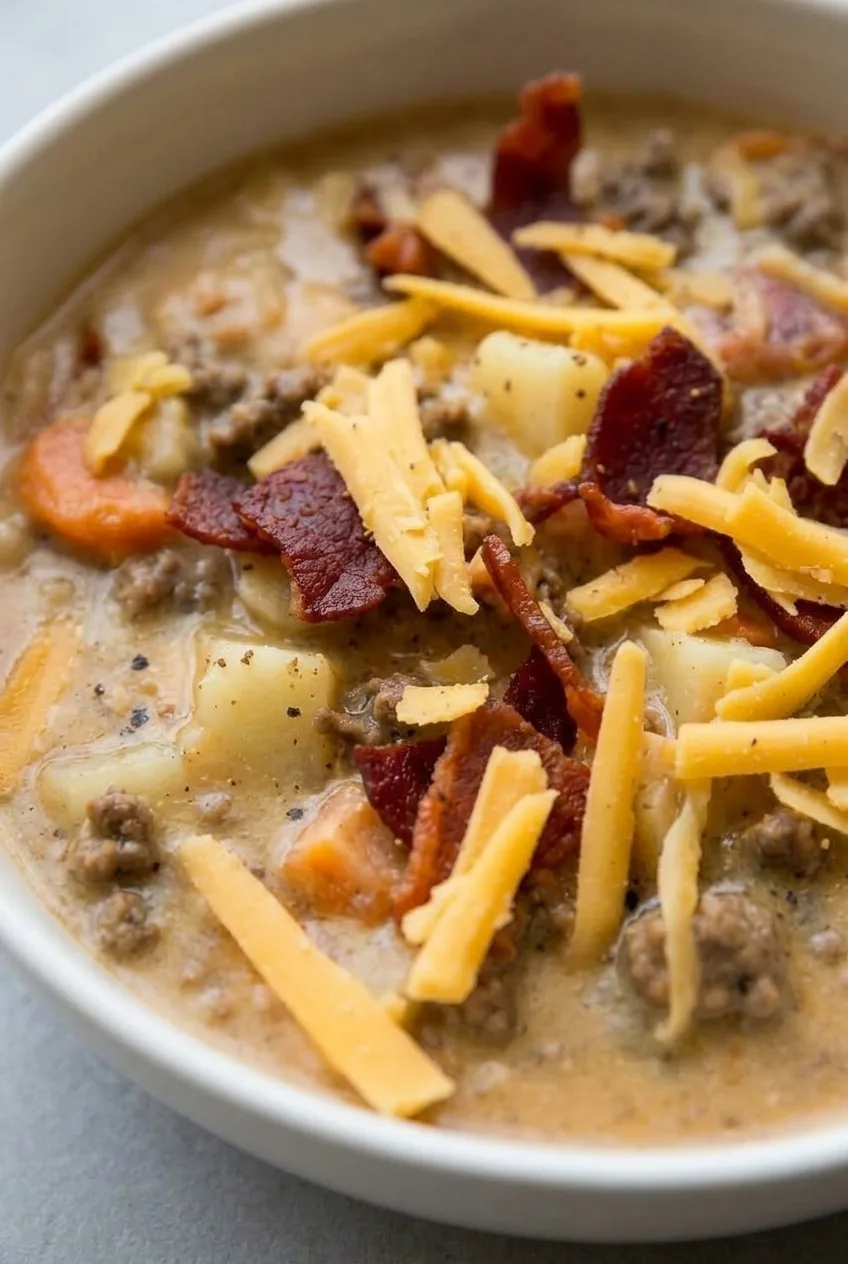
Ground beef, potatoes, and carrots make this cheeseburger soup chunky, while a butter-flour roux gives the cheddar broth enough body to coat a spoon without becoming too thick to ladle. Dijon and Worcestershire add a restrained burger-style tang without turning the soup tomato-forward.

Simmer the potatoes until tender before adding the milk and cheese, then keep the heat low for a smooth broth. Crisp bacon, fresh cheddar shreds, and black pepper go on each bowl just before serving.

Ingredients for Cheeseburger Soup

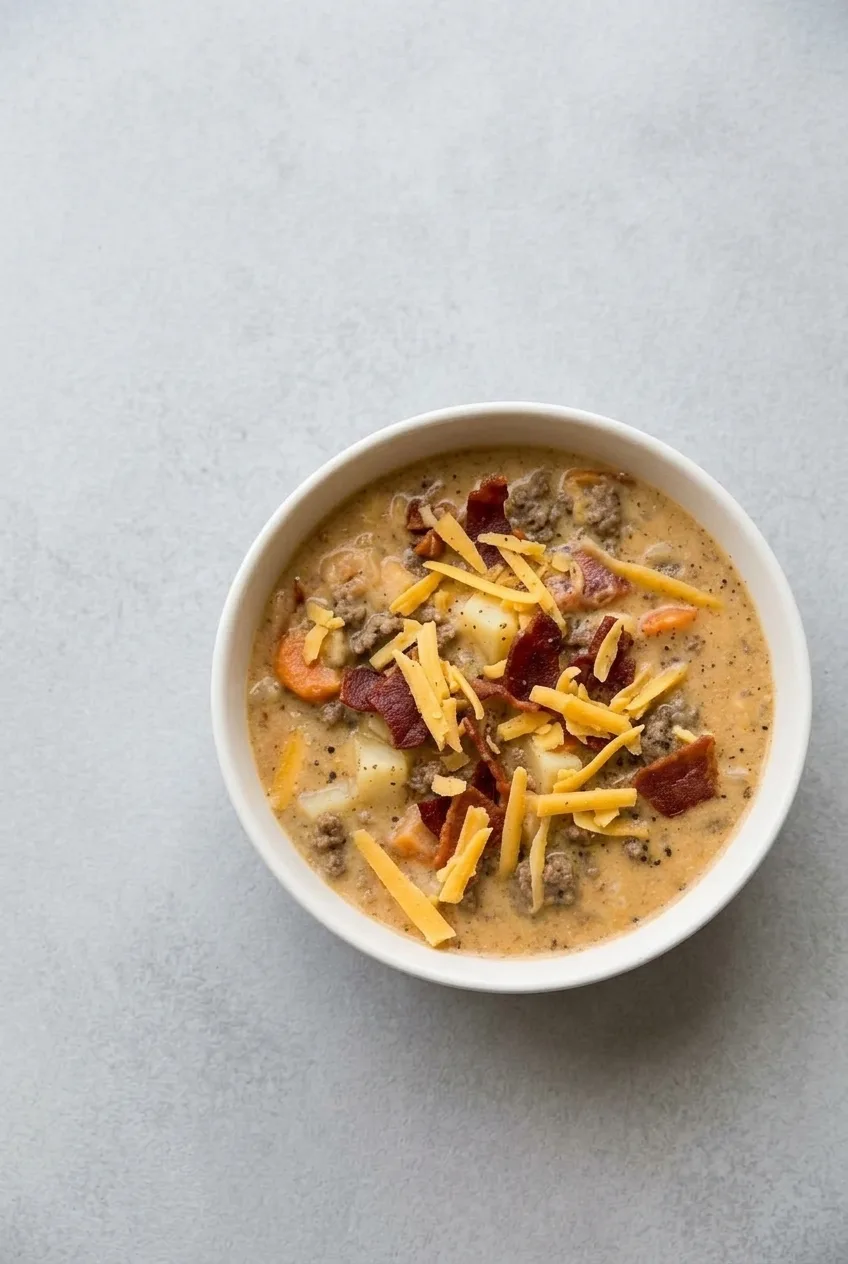
Close view of creamy cheeseburger soup showing potato cubes, beef crumbles, carrots, melted cheddar, and crisp bacon.

Makes 6 servings.

  • 6 slices thick-cut bacon (about 170g)
  • 1 lb lean ground beef (about 450g)
  • 1 medium yellow onion, finely diced (about 1 cup or 150g)
  • 2 medium carrots, diced small (about 1 cup or 120g)
  • 2 garlic cloves, minced
  • 3 tablespoons unsalted butter (about 45g)
  • 1/4 cup all-purpose flour (30g)
  • 4 cups beef broth
  • 1 1/2 lb russet potatoes, peeled and cut into even 1/2-inch cubes (about 680g)
  • 2 cups whole milk
  • 2 cups freshly shredded sharp cheddar cheese, divided (about 225g)
  • 1 teaspoon Dijon mustard
  • 1 teaspoon Worcestershire sauce
  • 1/2 teaspoon kosher salt, plus more to taste
  • 1/2 teaspoon black pepper, plus more for serving

Reserve 1/2 cup of the cheddar for topping; the remaining 1 1/2 cups goes into the soup. Chicken broth can replace beef broth if needed. Taste before adding extra salt, since the broth, bacon, and cheese all contribute seasoning.

How to Make Cheeseburger Soup

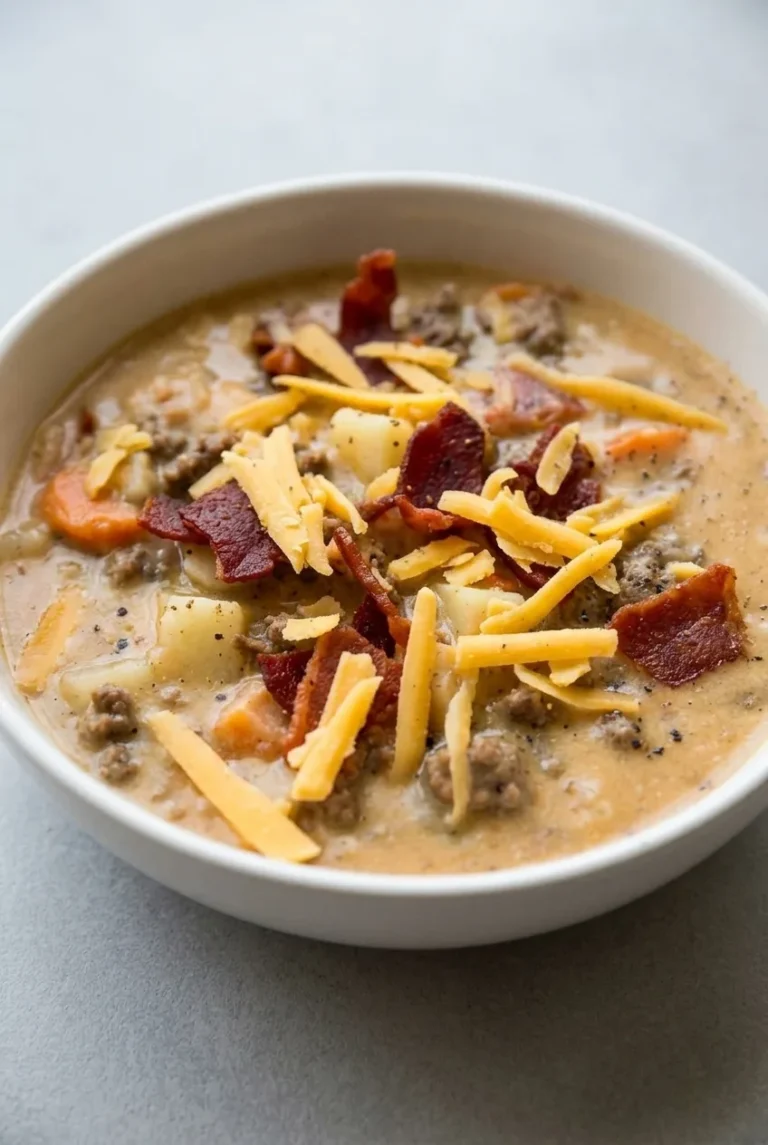
Near-overhead view of bacon cheeseburger soup topped with cheddar shreds and black pepper in a wide bowl.
  1. Crisp the bacon: In a 5- to 6-quart Dutch oven or heavy soup pot, cook the bacon over medium heat for 7 to 9 minutes, turning or stirring occasionally, until deep reddish-brown and crisp. Transfer to a paper-towel-lined plate. Leave no more than 1 tablespoon of drippings in the pot; crumble the bacon when cool enough to handle.
  2. Brown the beef: Add the ground beef and cook over medium heat for 5 to 7 minutes, breaking it into small crumbles, until browned with no pink remaining. Drain off excess fat, then return the beef to the pot. This keeps the finished soup from becoming greasy.
  3. Soften the vegetables: Add the onion and carrots. Cook for 5 to 6 minutes, stirring occasionally, until the onion is translucent and the carrots begin to soften. Stir in the garlic for the last 30 seconds.
  4. Build the soup base: Add the butter and let it melt. Sprinkle in the flour and stir for about 1 minute to coat the beef and vegetables. Gradually whisk in the beef broth until no flour clumps remain. Stir in the Dijon, Worcestershire, salt, and 1/2 teaspoon black pepper.
  5. Simmer the potatoes: Add the potatoes and bring the soup to a gentle simmer. Cook partially covered or uncovered for about 12 to 16 minutes, stirring occasionally. Start checking at 12 minutes: the potatoes should pierce easily with a fork but still hold their shape. If the base thickens before they are tender, add a small splash of broth and continue simmering.
  6. Add the milk and cheese: Reduce the heat to low or medium-low. Stir in the milk, then add 1 1/2 cups cheddar a handful at a time, stirring until each addition melts. Heat for 3 to 5 minutes, until the soup is gently steaming and the cheese has melted. Do not let it boil. If it is too thick to ladle easily, stir in broth or milk 1/4 cup at a time.
  7. Rest and serve: Remove from the heat and let stand for 5 minutes. Taste and adjust the salt. Ladle into wide bowls, leaving some beef, potatoes, and carrots visible. Top each bowl with crisp bacon, reserved cheddar shreds, and freshly ground black pepper.

How to Keep Cheeseburger Soup Creamy

Wait until the potatoes are fork-tender before adding the milk and cheddar. The dairy then needs only a few minutes of gentle heat. Add the cheese gradually and stop heating once it melts; a hard boil can leave the broth grainy.

How Thick Should the Soup Be?

The broth should lightly coat a spoon while still flowing around the beef and vegetables. It will thicken a little during the 5-minute rest and more after refrigeration. If needed, stir in warm broth or milk 1/4 cup at a time over medium-low heat until the soup is ladleable.
Bacon, Cheese, and Other Toppings

Keep the bacon separate until serving so it stays crisp, and scatter the reserved cheddar over the hot soup so the shreds remain visible as they soften. Sour cream, diced dill pickles, or a little sliced green onion can be offered at the table.

Storage, Reheating, and Freezing

Cool the soup promptly and refrigerate it in an airtight container for 3 to 4 days. Store leftover bacon separately when possible.

Reheat over medium-low heat, stirring often and adding splashes of broth or milk as the soup loosens. Individual portions can be microwaved in short intervals, stirring between them. Add bacon and extra cheddar after reheating.

The cooled soup can be frozen, but the potatoes may be softer or mealier after thawing. Thaw overnight in the refrigerator and reheat gently with extra liquid as needed. Keep the bacon garnish separate.

For another topping-friendly potato soup, try this Creamy Loaded Baked Potato Soup.

Nutrition

Approximate nutrition per serving, based on 6 servings: 590 calories, 35g protein, 34g fat, and 34g carbohydrates. Approximate nutrition per 100g: 115 calories, 7g protein, 7g fat, and 7g carbohydrates. Values vary with the beef, bacon, broth, cheese, and amount of rendered fat drained.

Cheeseburger Soup

A chunky cheeseburger-inspired soup with ground beef, potatoes, carrots, cheddar, and crisp bacon.
Course: Soup
Cuisine: American
Prep: 20 min
Cook: 40 min
Total: 65 min
Servings: 6 Calories: 590 kcal

Equipment

  • 5- to 6-quart Dutch oven or heavy soup pot
  • whisk
  • paper towels
  • ladle

Ingredients

For the Soup

  • 6 slices thick-cut bacon (about 170 g)
  • 1 lb lean ground beef (about 450 g)
  • 1 medium yellow onion, finely diced (about 1 cup or 150 g)
  • 2 medium carrots, diced small (about 1 cup or 120 g)
  • 2 garlic cloves, minced
  • 3 tablespoons unsalted butter (about 45 g)
  • 1/4 cup all-purpose flour (30 g)
  • 4 cups beef broth
  • 1 1/2 lb russet potatoes, peeled and cut into 1/2-inch cubes (about 680 g)
  • 2 cups whole milk
  • 1 1/2 cups freshly shredded sharp cheddar cheese
  • 1 teaspoon Dijon mustard
  • 1 teaspoon Worcestershire sauce
  • 1/2 teaspoon kosher salt, plus more to taste
  • 1/2 teaspoon black pepper

For Serving

  • 1/2 cup freshly shredded sharp cheddar cheese
  • Crisp crumbled bacon
  • Freshly ground black pepper

Instructions

  1. Cook the bacon in a 5- to 6-quart Dutch oven over medium heat for 7 to 9 minutes, stirring or turning occasionally, until crisp. Transfer to a paper-towel-lined plate, leaving no more than 1 tablespoon drippings in the pot.
  2. Add the ground beef and cook over medium heat for 5 to 7 minutes, breaking it into small crumbles, until browned with no pink remaining. Drain excess fat and return the beef to the pot.
  3. Add the onion and carrots and cook for 5 to 6 minutes, stirring occasionally, until the onion is translucent and the carrots begin to soften. Stir in the garlic and cook for 30 seconds.
  4. Add the butter and melt it. Sprinkle in the flour and stir for 1 minute. Gradually whisk in the beef broth until smooth, then stir in the Dijon, Worcestershire sauce, salt, and black pepper.
  5. Add the potatoes and bring the soup to a gentle simmer. Cook for 12 to 16 minutes, partially covered or uncovered, stirring occasionally, until the potatoes are fork-tender but still hold their shape.
  6. Reduce the heat to low or medium-low. Stir in the milk, then add 1 1/2 cups cheddar a handful at a time, stirring until melted after each addition. Heat for 3 to 5 minutes until gently steaming; do not boil.
  7. Remove the soup from the heat and let it rest for 5 minutes. Taste and adjust the salt as needed.
  8. Ladle into bowls and top with crumbled bacon, reserved cheddar, and freshly ground black pepper.

Tips

  • Reserve no more than 1 tablespoon of bacon drippings to prevent a greasy soup.
  • Add the milk and cheese only after the potatoes are fork-tender.
  • Keep the heat low after adding cheddar, since boiling can make the broth grainy.
  • Add warm broth or milk 1/4 cup at a time if the soup becomes too thick.
  • Keep bacon separate until serving so it stays crisp.

Variations

  • Chicken Broth Version: Use chicken broth in place of beef broth if needed.
  • Extra Toppings: Serve with sour cream, diced dill pickles, or sliced green onion.

Notes

Refrigerate cooled soup in an airtight container for 3 to 4 days and store bacon separately. Reheat gently over medium-low heat with splashes of broth or milk. The soup can be frozen, though potatoes may become softer after thawing.

Nutrition

Calories: 590 kcal | Protein: 35 g | Fat: 34 g | Carbohydrates: 34 g

Chicken Noodle Soup

Wide egg noodles, tender chicken, carrot coins, and celery fill a clear, golden broth in this stovetop chicken noodle soup. Cooked chicken keeps preparation quick, while softened onion, garlic, and thyme give the broth a flavorful base. The noodles go in only after the carrots are nearly tender, and the chicken goes in last. That sequence keeps the soup brothy and the chicken tender. Finish each bowl with fresh parsley.

Ingredients for Chicken Noodle Soup

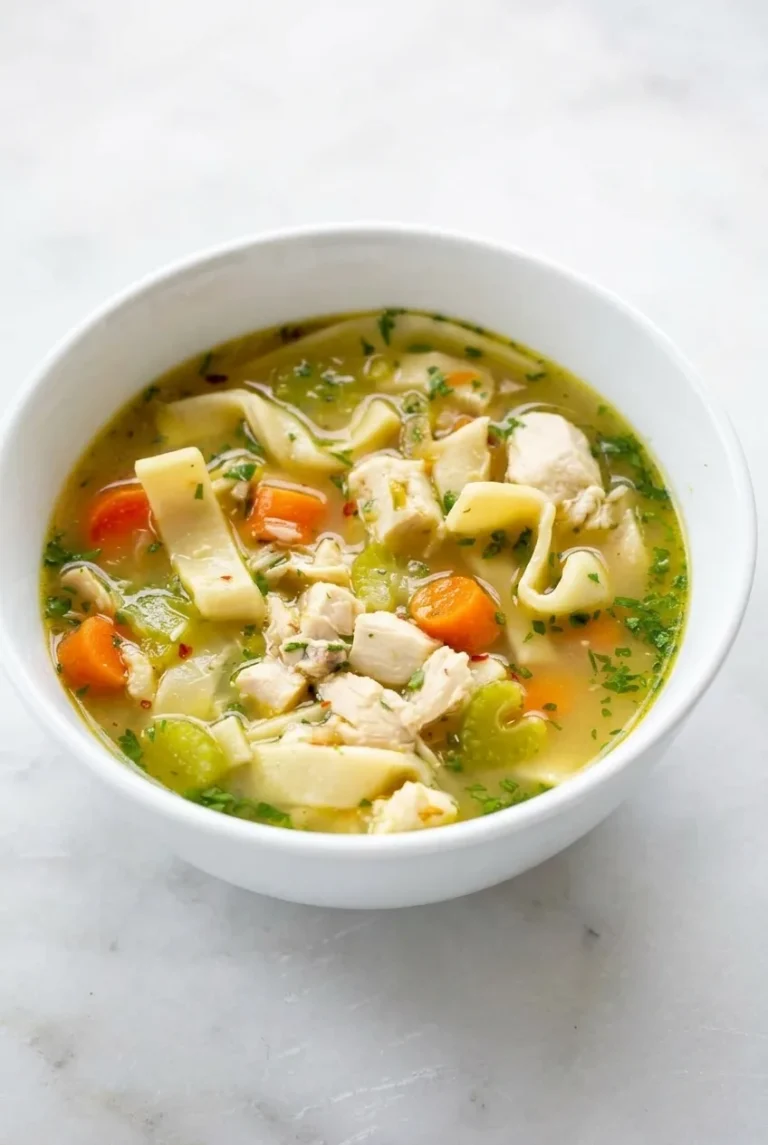
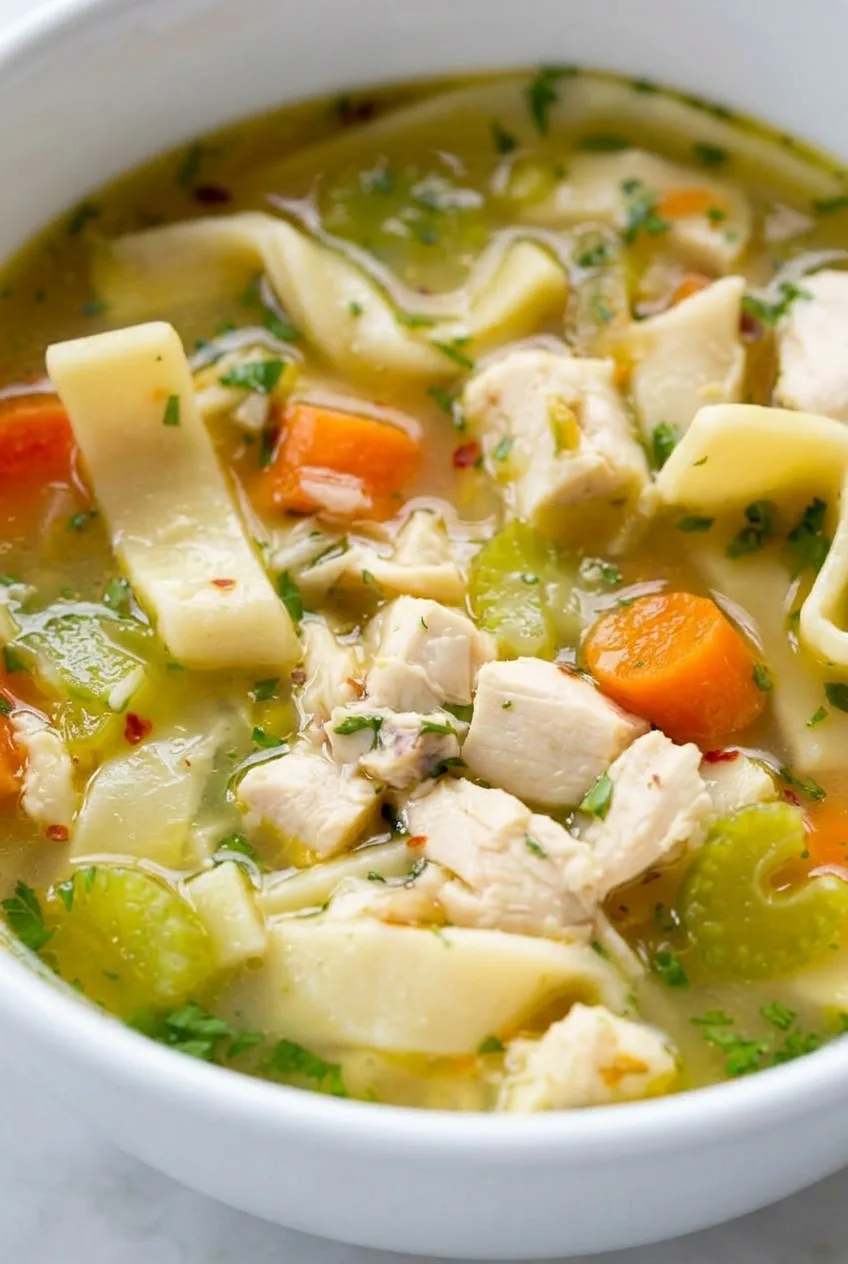
Close view of glossy chicken noodle soup showing curled egg noodles, tender chicken, carrot coins, celery, and parsley.
  • 1 tablespoon olive oil or unsalted butter
  • 1 medium yellow onion, finely diced (about 1 cup or 150g)
  • 3 medium carrots, sliced into 1/4-inch coins (about 1 1/2 cups or 180g)
  • 3 celery ribs, sliced (about 1 1/2 cups or 150g)
  • 3 garlic cloves, minced
  • 8 cups low-sodium chicken broth or stock
  • 1 bay leaf
  • 1/2 teaspoon dried thyme
  • 1/2 teaspoon freshly ground black pepper, plus more to taste
  • 8 ounces dry wide egg noodles (about 225g)
  • 3 cups cooked shredded or chopped chicken, such as rotisserie chicken (about 375g)
  • Kosher salt to taste, starting with 1/4 teaspoon if needed
  • 1/4 cup finely chopped fresh parsley (about 15g), plus more for serving

Optional: Add a pinch to 1/4 teaspoon crushed red pepper flakes with the garlic, or scatter a few over the finished bowls. Low-sodium broth makes it easier to adjust the salt, especially when using seasoned rotisserie chicken.

How to Make Chicken Noodle Soup

Overhead view of a full white bowl of clear golden chicken noodle soup with egg noodles and vegetables.
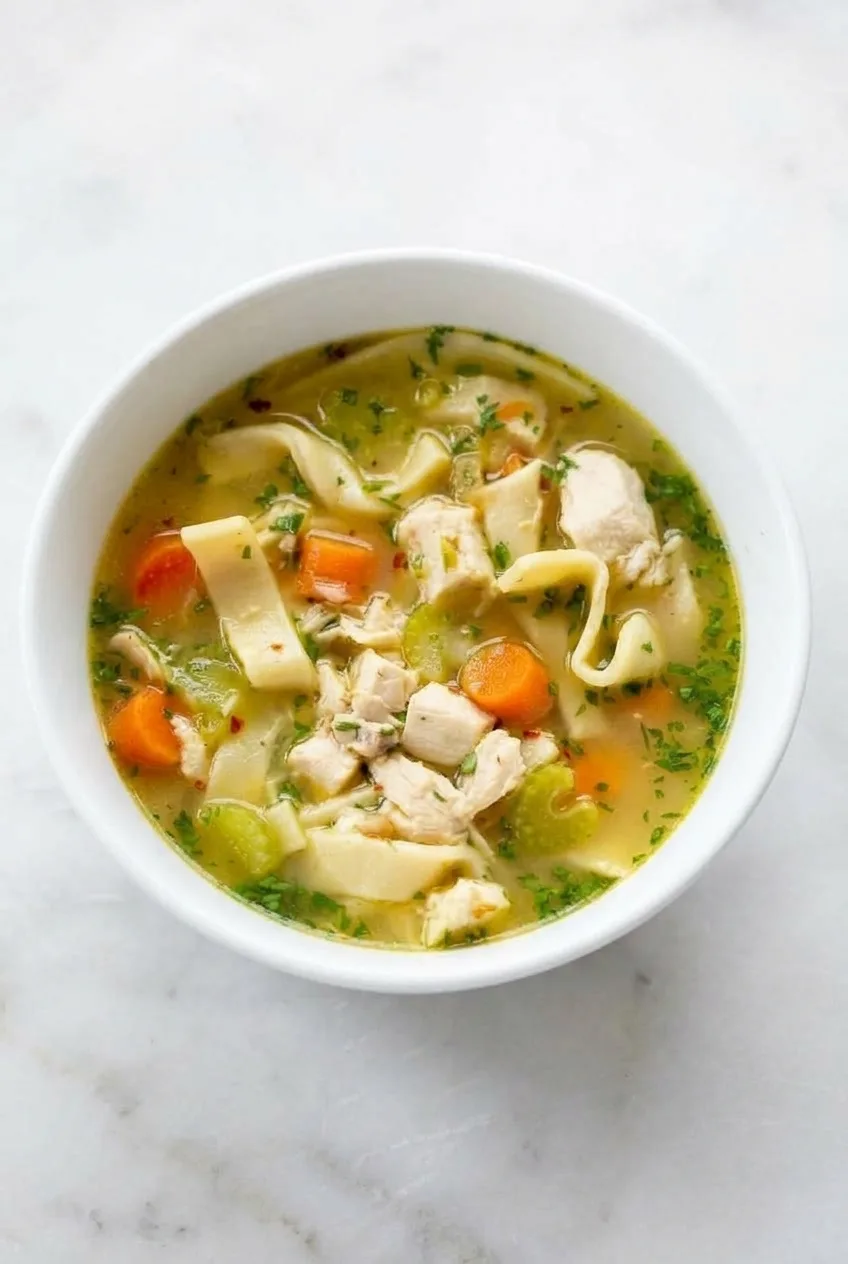
Prep: 15 minutes. Cook: about 20 minutes. Total: about 35 minutes. Serves: 6.

  1. Soften the vegetables: Heat the oil or butter in a 5- to 6-quart Dutch oven or soup pot over medium heat. Add the onion, carrots, celery, and a small pinch of salt. Cook uncovered, stirring occasionally, for 5 to 7 minutes, until the onion is translucent and the vegetables begin to soften without browning. Stir in the garlic and optional red pepper flakes for the last 30 seconds.
  2. Simmer the broth: Add the broth, bay leaf, thyme, and black pepper. Bring to a boil over medium-high heat, then reduce to a gentle simmer. Cook mostly uncovered, or with the lid slightly ajar, for 8 to 10 minutes. The carrots should be nearly tender but still hold their shape. Keep the bubbles small and steady rather than boiling hard, which can break up the vegetables and reduce the broth too quickly.
  3. Cook the noodles: Add the egg noodles and stir to separate them. Simmer gently, stirring once or twice, until just tender, about 5 to 7 minutes depending on the brand. Start checking 2 minutes before the earliest package cook time. The noodles should no longer taste chalky but can retain a little firmness at the center.
  4. Warm the chicken: Stir in the cooked chicken and parsley. Simmer over low to medium-low heat for 2 to 3 minutes, just until the chicken is hot. Remove the bay leaf. Taste the broth before adding salt, then adjust the salt and pepper as needed.
  5. Serve: Ladle into deep bowls, distributing the noodles, chicken, carrots, and celery evenly. Top with more parsley and optional red pepper flakes. Serve promptly while the soup is loose and brothy.

How to Keep Chicken Noodle Soup Brothy

Egg noodles absorb broth while they cook and continue absorbing it as the soup sits. Use the full 8 cups of broth, stop cooking when the noodles are just tender, and serve right away. If the soup thickens, add more chicken broth until it ladles easily. For meals made ahead, keep the noodles separate or cook them fresh when reheating the soup base.

Chicken Options

Rotisserie chicken, leftover roast chicken, and poached chicken all work. Shred or chop the cooked meat into bite-size pieces and add it near the end so it heats through without a long simmer.

If using raw boneless chicken instead, simmer it gently in the broth until it reaches 165°F (75°C). Remove and shred it before cooking the noodles, then return it to the soup near the end. This takes longer than the cooked-chicken method. Bone-in chicken calls for a separate, longer broth-building method.

Serving and Variations

Serve with crusty bread, dinner rolls, or a simple green salad. For a gluten-free version, use gluten-free noodles and follow their package directions; cooking them separately can help protect their texture.

If the finished broth tastes flat, stir in 1 to 2 teaspoons lemon juice or 1/2 to 1 teaspoon chicken base. Taste first and add salt cautiously, particularly if using chicken base.

This soup is deliberately clear and brothy. For a distinct creamy egg-noodle soup, see Creamy Turkey Soup with Spinach and Egg Noodles. For a different chicken soup seasoning profile, try Anti-Inflammatory Turmeric Chicken Soup.

Make-Ahead, Storage, and Reheating

For the best make-ahead texture, prepare the broth, vegetables, and chicken without the noodles. Cool promptly and refrigerate the soup base in an airtight container for up to 3 to 4 days. Bring it to a simmer and cook the noodles just before serving. If you cook noodles ahead, refrigerate them separately from the base.

Reheat leftovers gently on the stovetop or in the microwave until hot. Noodles stored in the broth will soften and absorb liquid; add more chicken broth as needed. Avoid prolonged boiling, which can soften the noodles further and toughen the chicken.

Freeze cooled soup base without noodles in freezer-safe containers for up to 3 months. Thaw overnight in the refrigerator, reheat, and cook fresh noodles before serving.

Nutrition

Approximate nutrition per serving (1/6 of the recipe): 330 calories, 29g protein, 10g fat, and 34g carbohydrates. Approximate values per 100g: 70 calories, 6g protein, 2g fat, and 7g carbohydrates. Values vary with the broth, chicken, and noodles used.

Chicken Noodle Soup

A clear, golden chicken noodle soup with tender chicken, egg noodles, carrots, celery, and fresh parsley.
Course: Soup
Cuisine: American
Prep: 15 min
Cook: 20 min
Total: 35 min
Servings: 6 Calories: 330 kcal

Equipment

  • 5- to 6-quart Dutch oven or soup pot
  • Ladle

Ingredients

For the Soup

  • 1 tablespoon olive oil or unsalted butter
  • 1 medium yellow onion, finely diced (about 1 cup or 150 g)
  • 3 medium carrots, sliced into 1/4-inch coins (about 1 1/2 cups or 180 g)
  • 3 celery ribs, sliced (about 1 1/2 cups or 150 g)
  • 3 garlic cloves, minced
  • 8 cups low-sodium chicken broth or stock
  • 1 bay leaf
  • 1/2 teaspoon dried thyme
  • 1/2 teaspoon freshly ground black pepper, plus more to taste
  • 8 ounces dry wide egg noodles (about 225 g)
  • 3 cups cooked shredded or chopped chicken, such as rotisserie chicken (about 375 g)
  • Kosher salt, to taste
  • 1/4 cup finely chopped fresh parsley (about 15 g), plus more for serving

Optional

  • Pinch to 1/4 teaspoon crushed red pepper flakes

Instructions

  1. Heat the olive oil or butter in a 5- to 6-quart Dutch oven or soup pot over medium heat.
  2. Add the onion, carrots, celery, and a small pinch of salt. Cook uncovered for 5 to 7 minutes, stirring occasionally, until the onion is translucent and the vegetables begin to soften without browning.
  3. Stir in the garlic and optional red pepper flakes; cook for 30 seconds.
  4. Add the chicken broth, bay leaf, thyme, and black pepper. Bring to a boil over medium-high heat, then reduce to a gentle simmer.
  5. Simmer mostly uncovered, or with the lid slightly ajar, for 8 to 10 minutes, until the carrots are nearly tender.
  6. Add the egg noodles and stir to separate them. Simmer gently for 5 to 7 minutes, stirring once or twice, until just tender.
  7. Stir in the cooked chicken and parsley. Simmer over low to medium-low heat for 2 to 3 minutes, until the chicken is hot.
  8. Remove the bay leaf. Taste and adjust the salt and pepper as needed.
  9. Ladle into bowls, distribute the noodles and vegetables evenly, and top with additional parsley and optional red pepper flakes.

Tips

  • Keep the soup at a gentle simmer rather than a hard boil to protect the vegetables and prevent excess reduction.
  • Add the noodles only after the carrots are nearly tender.
  • Start checking noodles 2 minutes before the earliest package cook time to avoid overcooking.
  • Add cooked chicken near the end so it warms through without becoming tough.
  • Serve promptly, as egg noodles continue to absorb broth as the soup sits.
  • Add extra chicken broth to leftovers if the soup thickens.

Variations

  • Spicy Chicken Noodle Soup: Add a pinch to 1/4 teaspoon crushed red pepper flakes with the garlic or sprinkle them over individual bowls.
  • Gluten-Free Chicken Noodle Soup: Use gluten-free noodles according to package directions; cook them separately if needed to preserve their texture.
  • Lemon Chicken Noodle Soup: Stir 1 to 2 teaspoons lemon juice into the finished broth if it tastes flat.
  • Raw Chicken Version: Simmer boneless raw chicken in the broth until it reaches 165°F (75°C), remove and shred it, then return it near the end.

Notes

For make-ahead meals, refrigerate or freeze the soup base without noodles. Refrigerate the base for 3 to 4 days or freeze for up to 3 months. Reheat gently and cook fresh noodles before serving; add broth as needed for leftovers.

Nutrition

Calories: 330 kcal | Protein: 29 g | Fat: 10 g | Carbohydrates: 34 g

Vegan Garlic Chickpea Soup

This stovetop soup keeps whole chickpeas and dark-green kale in a loose, amber-golden broth. Garlic, cumin, and smoked paprika give the broth warmth; white miso adds savory depth, and lemon brightens it at the end.

The key is a gentle, partially covered simmer. It gives the diced celery time to soften without reducing too much broth or breaking down the chickpeas. Add the kale only in the final minutes, then finish each bowl with a scattering of nutritional yeast.

Ingredients for Vegan Garlic Chickpea Soup

Close view of whole chickpeas, wilted kale, diced aromatics, and nutritional yeast in amber broth
  • 1 tablespoon olive oil
  • 1 medium yellow onion, finely diced (about 1 1/2 cups or 200g)
  • 2 celery ribs, finely diced (about 3/4 cup or 100g)
  • 5 garlic cloves, minced
  • 1 teaspoon ground cumin
  • 1 teaspoon smoked paprika
  • 4 cups low-sodium vegetable broth, plus up to 1 cup more if needed
  • 2 cans chickpeas (15 ounces each), drained and rinsed (about 500g drained)
  • 1 tablespoon white miso paste
  • 4 packed cups chopped lacinato or curly kale, stems removed (about 100g)
  • 2 tablespoons nutritional yeast, divided
  • 1 tablespoon lemon juice
  • 1/4 teaspoon freshly ground black pepper, plus more to taste
  • Fine sea salt, to taste

Optional: Add a pinch to 1/4 teaspoon red pepper flakes with the cumin and paprika.

How to Make Vegan Garlic Chickpea Soup

Overhead serving of vegan garlic chickpea soup with kale in a pale bowl on neutral stone

Yield: 4 servings. Prep: 10 minutes. Cook: about 22–25 minutes. Total: about 32–35 minutes.

  1. Prepare the ingredients: Dice the onion and celery into small, spoon-friendly pieces. Mince the garlic, chop the kale into bite-size pieces, and drain and rinse the chickpeas.
  2. Soften the aromatics: Warm the olive oil in a 5- to 6-quart Dutch oven or soup pot over medium heat. Add the onion and celery. Cook, stirring occasionally, until soft and translucent, about 7 minutes. Add the garlic, cumin, smoked paprika, and optional red pepper flakes. Stir for about 30 seconds, until fragrant but not browned. Adding the garlic after the vegetables soften helps keep it from burning.
  3. Simmer the chickpeas: Add the broth and chickpeas. Bring just to a boil over medium-high heat, then reduce to a gentle medium-low simmer. Partially cover with the lid slightly ajar and cook for 12–15 minutes. Start checking the celery after 12 minutes; simmer a few minutes longer if it is still firm. The chickpeas should be hot and still whole.
  4. Add the kale and miso: Ladle about 1/4 cup warm broth into a small bowl and whisk in the miso until smooth. Stir the mixture and kale into the pot. Simmer gently for 4–6 minutes, folding the kale through once or twice. Check after 4 minutes: it should be dark green, wilted, and tender but not mushy. Stir in 1 tablespoon nutritional yeast.
  5. Finish and serve: Remove the pot from the heat. Stir in the lemon juice and black pepper, then taste before adding salt; the broth and miso may provide enough. If the soup has reduced too much, add hot broth a few tablespoons at a time. Let stand for 3–5 minutes, then ladle into bowls and scatter the remaining tablespoon of nutritional yeast over the four servings.

How to Keep the Soup Brothy

Keep the simmer to small, steady bubbles and leave the lid slightly ajar to limit evaporation. The broth should pool around the whole chickpeas rather than cling to them like a thick stew. If the soup reduces during cooking or reheating, stir in hot broth a little at a time.

For a deliberately thicker variation, mash about 1/2 cup of the chickpeas against the side of the pot after simmering. Leave the rest whole. For a velvety bean-based alternative, try this Tuscan White Bean Soup.

Seasoning and Simple Swaps

Low-sodium broth makes it easier to account for the salt in the miso. Whisk the miso into warm broth so it disperses without clumps, then taste after adding the lemon. If the soup tastes flat, adjust with a little more lemon, pepper, or nutritional yeast before adding salt. Keep some nutritional yeast for the visible golden finish on each bowl.

For an oil-free version, soften the onion and celery in 2–3 tablespoons vegetable broth, adding small splashes if they stick. The broth-sautéed version will taste slightly less rich. Spinach can replace kale; add it during only the final 1–2 minutes because it wilts much faster.

Serving, Storage, and Reheating

Serve the soup hot with crusty bread for dipping. Cool leftovers promptly and refrigerate in an airtight container for up to 4 days. The kale will soften as the soup sits.

Reheat gently over medium-low heat until hot, adding a splash of broth or water if needed to restore the loose consistency. To reheat in the microwave, cover loosely and heat in short intervals, stirring between them. For make-ahead soup with more distinct greens, prepare the base without kale and add it while reheating.

Freeze cooled soup in freezer-safe containers for up to 3 months, leaving room for expansion. For the best kale texture, freeze the base before adding the greens. Thaw overnight in the refrigerator, then reheat gently and add fresh kale.

Nutrition

Approximate nutrition per serving (1/4 of the recipe): 310 calories, 15g protein, 8g fat, and 48g carbohydrates. Per 100g of prepared soup: approximately 65 calories, 3g protein, 2g fat, and 10g carbohydrates. Values vary with the broth, chickpeas, miso, and amount of liquid remaining after simmering.

Vegan Garlic Chickpea Soup

A brothy vegan chickpea soup with kale, garlic, cumin, smoked paprika, white miso, and lemon.
Course: Soup
Cuisine: Global
Prep: 10 min
Cook: 25 min
Total: 35 min
Servings: 4 Calories: 310 kcal

Equipment

  • 5- to 6-quart Dutch oven or soup pot
  • Cutting board
  • Chef's knife
  • Small bowl
  • Whisk
  • Ladle

Ingredients

For the Soup

  • 1 tablespoon olive oil
  • 1 medium yellow onion, finely diced (about 1 1/2 cups or 200 g)
  • 2 celery ribs, finely diced (about 3/4 cup or 100 g)
  • 5 garlic cloves, minced
  • 1 teaspoon ground cumin
  • 1 teaspoon smoked paprika
  • 4 cups low-sodium vegetable broth, plus up to 1 cup more as needed
  • 2 cans chickpeas (15 ounces each), drained and rinsed (about 500 g drained)
  • 1 tablespoon white miso paste
  • 4 packed cups chopped lacinato or curly kale, stems removed (about 100 g)
  • 2 tablespoons nutritional yeast, divided
  • 1 tablespoon lemon juice
  • 1/4 teaspoon freshly ground black pepper, plus more to taste
  • Fine sea salt, to taste

Optional

  • Pinch to 1/4 teaspoon red pepper flakes

Instructions

  1. Finely dice the onion and celery, mince the garlic, chop the kale into bite-size pieces, and drain and rinse the chickpeas.
  2. Warm the olive oil in a 5- to 6-quart Dutch oven or soup pot over medium heat.
  3. Add the onion and celery and cook, stirring occasionally, until soft and translucent, about 7 minutes.
  4. Add the garlic, cumin, smoked paprika, and optional red pepper flakes. Stir for about 30 seconds, until fragrant.
  5. Add the vegetable broth and chickpeas. Bring just to a boil over medium-high heat.
  6. Reduce the heat to medium-low, partially cover the pot with the lid slightly ajar, and simmer gently for 12 to 15 minutes, until the celery is tender and the chickpeas are hot but still whole.
  7. Ladle about 1/4 cup of warm broth into a small bowl and whisk in the miso until smooth.
  8. Stir the miso mixture and kale into the soup. Simmer gently for 4 to 6 minutes, until the kale is wilted and tender.
  9. Stir in 1 tablespoon of the nutritional yeast.
  10. Remove from the heat and stir in the lemon juice and black pepper. Taste and add salt only as needed.
  11. Add hot broth a few tablespoons at a time if the soup has reduced too much. Let stand for 3 to 5 minutes.
  12. Ladle into bowls and sprinkle the remaining 1 tablespoon nutritional yeast over the servings.

Tips

  • Keep the soup at a gentle simmer with the lid slightly ajar to maintain a brothy consistency.
  • Add garlic after the onion and celery soften to prevent it from browning or burning.
  • Whisk miso with warm broth before adding it to prevent clumps.
  • Taste after adding lemon before seasoning with salt, since miso and broth may already be salty.
  • Add hot broth gradually during cooking or reheating if the soup becomes too thick.

Variations

  • Oil-Free Soup: Soften the onion and celery in 2 to 3 tablespoons of vegetable broth instead of olive oil, adding small splashes if needed.
  • Spinach Chickpea Soup: Replace the kale with spinach and add it during the final 1 to 2 minutes of cooking.
  • Thicker Chickpea Soup: Mash about 1/2 cup of the chickpeas against the side of the pot after simmering, leaving the remaining chickpeas whole.

Notes

Refrigerate cooled leftovers in an airtight container for up to 4 days. Reheat gently with a splash of broth or water as needed. Freeze for up to 3 months; for best kale texture, freeze the soup base before adding greens.

Nutrition

Calories: 310 kcal | Protein: 15 g | Fat: 8 g | Carbohydrates: 48 g